Peru to Build OPV(s) With Aid From S. Korea’s HHI

Artist impression of the Frigate, Offshore Patrol Vessel (OPV) and two Landing Craft Units (LCUs) for the Peruvian Navy. HD HHI image.

Naval News reports, that Peruvian shipyard Servicios Industriales de la Marina (SIMA) will be building the first of a new class of Offshore Patrol Vessels (OPV) for the Peruvian Navy, along with a frigate and two LCUs. Korean Shipbuilder Hyundai Heavy Industries (HHI) will provide the design, equipment & material package, and technical support.

“The OPV ordered is based on HD HHI’s HDP-2200 OPV solution, which is 95 meters long, 14.3 meters wide, with a maximum speed of 20 knots and a range of 6,000 nautical miles, capable of operating medium-sized maritime operation helicopters. She is designed with space for two containerized mission modules enabling versatile capabilities.”

Another four OPVs of the class are planned. These Offshore Patrol Vessels appear to be closely related to six similar ships being built by HHI in Korea for the Philippine Navy.

Note, it appears at least some versions of this design have a stern launch system. The other versions of the design also claim to have a top speed of 22 knots, so this may apply to the Peruvian ships as well.

This will not be the first time SIMA has teamed with a South Korean shipbuilder. SIMA also built BAP Pisco (AMP-156), an 11,394 ton full load Makassar-class landing platform dock, designed by Daesun Shipbuilding & Engineering Co., Ltd. commissioned in 2018. They have reportedly launched a second. In the 1980s SIMA completed two Italian designed Lupo class Frigates.

UK Deploys OPV to Guyana, gCaptain/Reuters

The River-class offshore patrol vessel HMS Trent (P224) passes the Vorontsov Lighthouse while arriving in Odesa, Ukraine to participate in Exercise Sea Breeze 2021, July 2, 2021. Exercise Sea Breeze is a multinational maritime exercise cohosted by the U.S. Sixth Fleet and the Ukrainian Navy since 1997. Sea Breeze 2021 is designed to enhance interoperability of participating nations and strengthens maritime security and peace in the region. (U.S. Navy photo by Damon Grosvenor/Released)

gCaptain reports,

Britain will deploy a naval ship off Guyana later this month, its ministry of defense said on Sunday, as the South American nation faces a border dispute with neighbor Venezuela over the oil-rich Essequibo region.

The deployment follows a visit by a British junior foreign minister to Guyana earlier this month, intended to offer the UK’s support for the country, an ally and former British colony.

We have talked about Venezuela’s claim on territory internationally recognized as part of Guyana. There is a recent BBC report here.

I found it interesting that the Royal Navy is sending an Offshore Patrol Vessel to this region of potential conflict. HMS Trent is about the size of a 270 and is armed with a 30mm gun in what is essentially the same mount the US Navy is calling the Mk38 Mod4.

It is likely 4th Fleet will also have some units (probably CG cutters and maybe an LCS) in the area.

None of these ships is likely to be a match for the Venezuelan Navy, but the US could quickly have overwhelming amounts of airpower over the area.

Buoy Tender, FRC, C-130 Used for International Fisheries Enforcement–Operation Southern Shield

PERU, 10.06.2023, Courtesy Photo, USCG District 11
San Francisco based USCGC Alder (WLB-216) raises the South Pacific Regional Fisheries Management Organization (SPRFMO) flag while patrolling the Eastern Pacific Ocean during Operation Southern Shield in October 2023. The Coast Guard recently completed the first high-seas boardings and inspections off the coast of Peru under a newly adopted multi-lateral agreement to monitor fishing and transshipment operations within the SPRFMO Convention Area, a region which encompasses nearly a quarter of the Earth’s high seas. (U.S. Coast Guard photo by Petty Officer 2nd Class Kenneth Honore)

Below is a District 11 news release. It came with 24 photos. I have included a few here. The captions are informative. I have edited some of the captions to include homeports and minimize duplication. I have also added a few links and the schematic below.

SPRFMO CONVENTION AREA
This schematic is available only to illustrate the Area of application of the SPRFMO Convention, which is described in legal terms in Article 5. The schematic is not part of the Convention text and has no legal status; it is not intended to reflect exactly the maritime spaces of adjoining coastal states.

PERU, 10.07.2023, Courtesy Photo, USCG District 11
The Coast Guard Cutter Alder approaches a squid fishing vessel while CG-2007, a C-130 from Air Station Barbers Point in Hawaii, flies over (upper left) during Operation Southern Shield 2023, October 2023. The Coast Guard recently completed the first high-seas boardings and inspections off the coast of Peru under a newly adopted multi-lateral agreement to monitor fishing
and transshipment operations within the South Pacific Regional Fisheries Management Organization (SPRFMO)Convention Area. (U.S. Coast Guard photo)

LIMA, PERU, 10.06.2023, Courtesy Photo, USCG District 11
The aircrew of the Coast Guard 2007, an HC-130 based out of U.S. Coast Guard
Air Station Barbers Point, Hawaii, poses for a picture with observers from the Peruvian Navy and Air Force, in Lima Peru, October 2023. During the course of two weeks, Peruvian observers accompanied the USCG aircrew as they conducted overflights of the fishing fleet on the high seas during Operation Southern Shield 2023. (U.S. Coast Guard photo by pilot-in-charge, Lt. Zachary Hunter)

There was a Webber Class WPC involved as well. This follows the pattern of pairing a WLB with an FRC for distant operations that we have also seen in the Western Pacific.

PERU, 10.06.2023, Courtesy Photo, USCG District 11
The crew of San Pedro based USCGC Terrell Horne (WPC-1131) conducts a patrol in the Eastern Pacific Ocean in support of Operation Southern Shield 2023, October 2023. (U.S. Coast Guard photo)

These operations followed an international exercise, GALAPEX 2023.

09.23.2023, Courtesy Photo, USCG District 11
Participants in GALAPEX 2023 pose for a group picture following a law enforcement boarding exercise during GALAPEX 2023, Sept. 23, 2023. Coast Guard Cutters Alder and Terrell Horne conducted a boarding of Ecuador Bae Isla Floreana as the first major exercise and introduction to GALAPEX, a recurring multi-national maritime exercise led by Ecuador and included participation with delegates from Argentina, Brazil, Chile, Colombia, Costa Rica, the European Union, France, Italy, Mexico, Panama, Peru, the United Kingdom, and the United States. (U.S. Coast Guard photo by Lt. j.g. Kimberly Byron)

09.25.2023, Courtesy Photo, USCG District 11
U.S. Coast Guard Cutter Alder (background) transits in formation alongside Peru BAP (Buque Armada Peruana) Bolognesi (FM-57) as it prepares for the next exercise during GALAPEX 2023, Sept.25, 2023. (U.S. Coast Guard photo)


 Oct. 16, 2023

Coast Guard Cutter crews conduct first high-seas boardings off the coast of Peru, under new SPRFMO measure

ALAMEDA, Calif. — The crews of the Coast Guard Cutters Alder, Terrell Horne and an HC-130 Hercules aircraft recently completed the first high-seas boardings and inspections, in the Eastern Pacific Ocean, under a newly adopted conservation and management measure to monitor and inspect fishing and transshipment operations at-sea in the South Pacific Regional Fisheries Management Organization (SPRFMO) Convention Area.

As part of Operation Southern Shield, the Coast Guard conducted boardings and overflights within the SPRFMO Convention Area on the high seas off the coast of Peru. For years, the Coast Guard has executed counter-illegal, unreported, or unregulated (IUU) fishing operations and participated in high seas boarding inspections (HSBI) around the globe. This operation was significant as it was timed to implement newly adopted rules in the SPRFMO Convention Area, which comprises nearly a quarter of the Earth’s high seas. The SPRFMO Commission consists of 17 members from Asia, Europe, the Americas, and Oceania, as well as two cooperating non-contracting parties. The primary species targeted in the Convention area are jack mackerel and jumbo flying squid.

Just prior to Operation Southern Shield, the Coast Guard participated in GALAPEX 2023, a recurring joint and multinational exercise hosted by Ecuador and executed in the vicinity of the Galapagos Islands. The Coast Guard conducted communications exercises, practiced counter-narcotics boarding scenarios, and hosted observers from Peru, Ecuador, and Brazil. GALAPEX culminated with full-scale exercises focused on a coordinated multinational response to counter IUU fishing. At the conclusion of the exercise, the Coast Guard patrolled south to focus on high seas boarding inspections off the coast of Peru.

“The U.S. Coast Guard remains committed to conducting combined maritime operations and exercises throughout the Eastern Pacific and will continue to capitalize on every opportunity to work with, learn from, and coordinate through our partners,” said Capt. James O’Mara, Chief of Enforcement for Coast Guard 11th District.  “The relationships our services build while planning and executing these operations are essential. The logistics required to enable these operations are significant, and it only happens with the tremendous support of partners like Ecuador and Peru.”

IUU fishing has replaced piracy as the leading global maritime security threat. Areas out on the high seas, beyond any country’s exclusive economic zone, can be exploited by fishermen engaged in IUU fishing, as they fish beyond the reach of most law enforcement entities. The Coast Guard’s actions provide inspection presence on the high seas among a distant water fishing fleet made up of more than 400 fishing and transshipment vessels. Much of the fishing in the Eastern Pacific is accomplished by these distant water fishing vessels, some which remain at sea for years at a time, and many of which are supported by transshipment vessels. The Coast Guard’s recent operation directly supported Central and South American partners and their desire to monitor and expand maritime domain awareness of fishing activity near their exclusive economic zones.

Each day during the operation a Coast Guard C-130 aircraft flew sorties over the fishing fleet on the high seas with observers from the Peruvian Navy and Air Force. The crew of the Coast Guard Cutter Terrell Horne also diverted to assist the Peruvian Navy in a search and rescue operation. The Terrell Horne located the vessel, then transported an injured fisherman back to shore to receive further medical care from local Peruvian officials.

“The U.S. Coast Guard is committed to working with our allies and partners to strengthen the international fisheries enforcement regime and stop the pervasive IUU fishing threat,” said Rear Adm. Andrew Sugimoto, commander, Coast Guard 11th District. “Operation Southern Shield is just the latest example of that commitment, and we will continue to model and support rules-based order. We applaud the SPRFMO Commission for adopting these latest inspection guidelines and hope to see additional management measures adopted in the future to ensure the sustainability of our ocean resources. Last year we operated off the Galapagos, this year off the coast of Peru, and we will continue to deploy aircraft, cutters, and personnel to support our partners and monitor these distant water fleets wherever they roam. These operations help bring like-minded countries closer together to protect vulnerable fish stocks, support the economic stability of coastal nations, the livelihoods of small-scale and artisanal fishermen, and safeguard ocean resources that fuel global populations and economies.”

“UNITAS LXIV to begin in Colombia” –USNAVSOUTH/4TH FLEET PUBLIC AFFAIRS

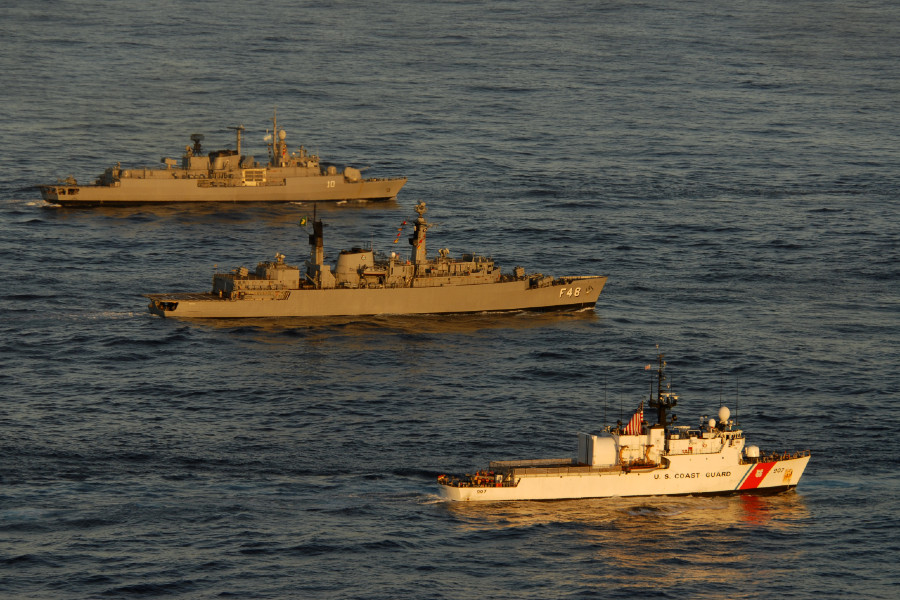
The US Coast Guard cutter USCGC Escanaba (WMEC 907), Brazlian Navy ship BNS Bosisio (F 48) and Argentinian navy ship ARA Almirante Brown (D-10) move into formation for a photo exercise during the Atlantic phase of UNITAS 52 on May 4, 2011. The formation included a total of ten ships from the US, Brazil, Mexico and Argentina. (Photo: US Navy/Mass Communication Specialist 1st Class Steve Smith)

Below is a news release announcing the start of exercise UNITAS LXIV (64 if you are not up on your Roman numerals). There is no mention of Coast Guard participation, but maybe they “simply forgot us.” Think we can bet there are some Coasties involved.

Britain’s Royal Navy also sent one of their highly regarded destroyers, HMS Dauntless.

With 26 surface vessels and three submarines participating, I think this is larger than most of the recent UNITAS exercises. In 2022 it was 19 ships, one submarine, 21 aircraft, accounting for approximately 5,500 total military personnel.

This year will see an attempt at large scale integration of unmanned systems into the exercise by 4th Fleet.


July 11, 2023

UNITAS LXIV to begin in Colombia

By USNAVSOUTH/4TH FLEET PUBLIC AFFAIRS

– U.S. Navy and Marine forces are set to arrive in Cartagena in support of UNITAS LXIV, the world’s longest-running multinational maritime exercise in the world, scheduled to start July 11, 2023.

The Colombian navy will host this year’s UNITAS, which will feature 26 warships/vessels, three submarines, 25 aircraft (fixed wing/helicopter), and approximately 7,000 people from 20 partner nations. Forces will conduct training operations off the coast of Cartagena, Colombia, and ashore in Covenas and Barranquilla, Colombia, through July 21. This year marks the 64th iteration of the exercise. Additionally, this year Colombia will celebrate the bicentennial of its navy, a historical milestone commemorating 200 years of the country’s maritime forces.

“UNITAS is so much more than a two week exercise. All participating nations have given much time, energy and effort into the months of planning leading up to what will be one of the most complex UNITAS to date,” said Rear Admiral Jim Aiken, commander U.S. Naval Forces Southern Command/U.S. 4th Fleet. “Utilizing air, surface, sub-surface, and unmanned assets, and land units, UNITAS will provide the multinational force a challenging environment in which to conduct training across the full spectrum of maritime operations. UNITAS strengthens maritime partnerships, enhances proficiency and improves interoperability of the participating forces, which is why so many partner nations are taking part this year.”

As part of the U.S. Navy’s future hybrid fleet, the Chief of Naval Operations has tasked U.S. 4th Fleet to scale unmanned platforms to the fleet level. An addition to this year’s UNITAS will include the integrated operations of unmanned air, surface, and subsurface systems into the exercise. UNITAS’ challenging training address key aspects of multinational and combined operations such as technology standardization and common operating procedures.

“This is our first opportunity to integrate unmanned systems into our operations at sea,” said Rear Adm. Aiken. “UNITAS has often served as a test bed for technology, so it is appropriate that we begin our unmanned integration campaign to operationalize the hybrid fleet here in UNITAS.”

In addition to the United States, UNITAS LXIV will bring together 19 nations from all over the world to train forces in joint maritime operations that enhance tactical proficiency and increase interoperability. Participating nations include Belize, Brazil, Canada, Chile, Colombia, Dominican Republic, Ecuador, France, Germany, Honduras, Jamaica, Mexico, Panama, Peru, Paraguay, Spain, South Korea, United Kingdom, United States, and Uruguay.

Following the UNITAS LXIV Opening Ceremony on July 12, the in port phase of the exercise will feature subject matter expert exchanges, professional symposia, ship rider exchanges, and operations meetings. During this time, Marines and Sailors will conduct expeditionary training events in Covenas to include riverine operations and diving and salvage operations.

During the UNITAS LXIV Underway Phase, forces will participate in events testing all warfare operations, to include live-fire exercises such as a SINKEX and an amphibious ship-to-shore landing and force retraction.

“Marines and Sailors from across the United States will travel to Colombia to not only train alongside our partner nations’ militaries, but to hone the skills required to operate as part of a larger maritime force focused on sea control and sea denial,” said Lt. Gen. David G. Bellon, commander, U.S. Marine Corps Forces, South, and U.S. Marine Corps Forces, Reserve. “We will be exercising command and control from a forward position as Marines set up and employ Expeditionary Advanced Base Operations to enhance naval capabilities as part of UNITAS.”

U.S. forces participating in UNITAS LXIV include USS New York (LPD 21), USS Cole (DDG 67), USS Little Rock (LCS 9), USS Pasadena (SSN 752), and USNS Burlington (T-EPF 10). Other U.S. participants include Patrol Squadron Five (VP 5), Mobile Diving and Salvage Unit (MDSU) 2, Explosive Ordnance Disposal Mobile Unit (EOD) 612, Mine Countermeasures Group 3, (MCMGRU 3), Expeditionary Mine Countermeasures EOD Company 61 (EODMU 61), East-coast based Naval Special Warfare units, Helicopter Sea Combat Squadron 22 (HSC 22), Helicopter Maritime Strike Squadron 70 Detachment 2 (HSM 70 Det 2), Joint Communications Support Element (JCSE), Fleet Surgical Team (FST) Eight, and the Meteorological Environmental Team (MET). U.S. Marine forces include 3rd Battalion, 23rd Marine Regiment (3/23), 4th Amphibious Assault Battalion (4th AABn), 8th Combat Logistic Battalion (CLB 8), 4th Combat Engineer Battalion (4th CEB), Marine Medium Tiltrotor Squadron 774 (VMM 774), Marine Light Helicopter Attack Squadron 775 (HMLA 775), Marine Aerial Refueler Transport Squadron 234 (VMGR-234), Marine Aircraft Control Group – 48 (MACG-48), and Marine Fighter Attack Squadron 112 (VMFA-112). Finally, Commander, Destroyer Squadron 40, (COMDESRON 40), Commander, Amphibious Squadron Four (COMPHIBRON FOUR), U.S Marine Corps Forces South (MARFORSOUTH), Special Operations Command South (SOCSOUTH), USNAVSOUTH/FOURTHFLT, and U.S. Southern Command (USSOUTHCOM) are participating in UNITAS LXIV.

UNITAS, which is Latin for unity, united, or oneness, was conceived in 1959 during a previous era of strategic competition when representatives at the first Inter-American Naval Conference in Panama agreed to conduct an annual maritime exercise with one another. Prior to UNITAS I in 1960, U.S. Chief of Naval Operations Adm. Arleigh Burke reviewed preparations for the multinational exercise. He commended planners for their progress, especially in building compatible communication systems among navies, and predicted that UNITAS would build strong relationships among Sailors of the Western Hemisphere.

U.S. Naval Forces Southern Command/U.S. 4th Fleet supports U.S. Southern Command’s joint and combined military operations by employing maritime forces in cooperative maritime security operations to maintain access, enhance interoperability, and build enduring partnerships in order to enhance regional security and promote peace, stability and prosperity in the Caribbean, Central and South American region.

U.S. Marine Corps Forces, South is the Marine Corps component to U.S. Southern Command, is responsible for planning exercises, operations, and overall Marine Corps support for the SOUTHCOM assigned area of responsibility.

USCGC Stone arrives in Montevideo, Uruguay for scheduled visit” –LANTAREA

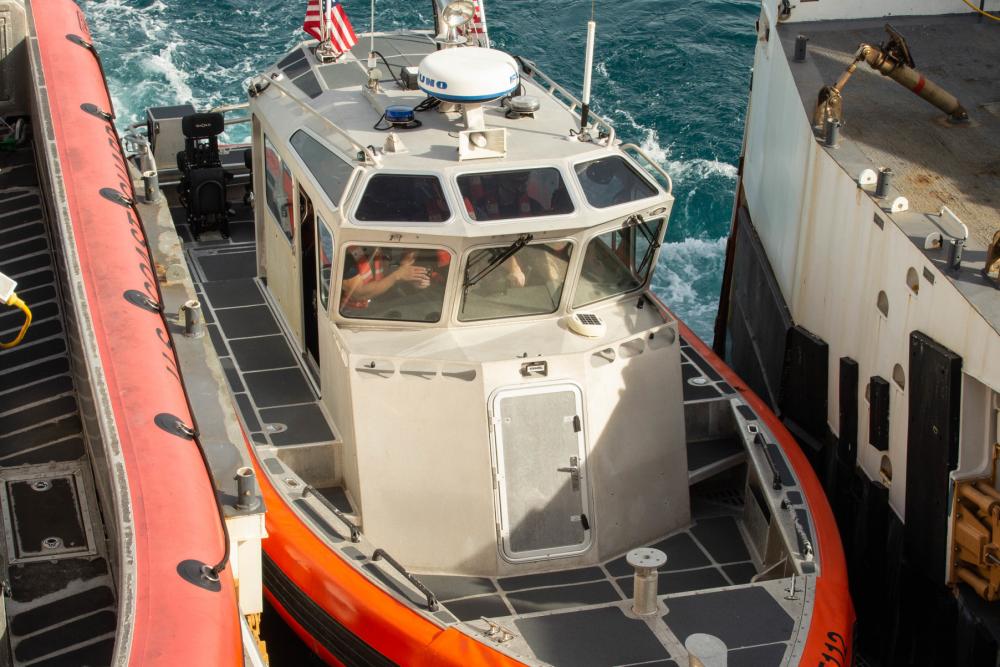
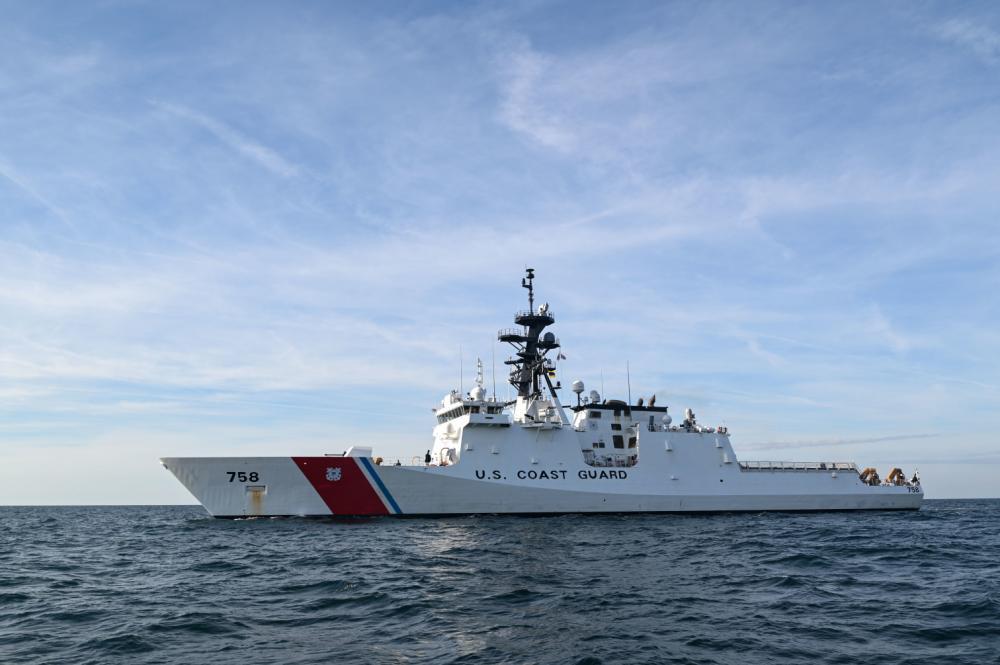
USCGC Stone’s (WMSL 758) 35-foot long range interceptor small boat crew conducts vessel on vessel use of force training in the Atlantic Ocean, Jan. 18, 2023. Stone is the ninth Legend-class national security cutter in the Coast Guard fleet and currently homeports in Charleston, South Carolina. (U.S. Marine Corps photo by Cpl. Ethan Craw)

Below is a press release from Atlantic Area. Seems cutters are going everywhere lately. We had a report of a previous port call on this deployment. “Expanding partnerships: U.S. Coast Guard Cutter Stone arrives in Port of Suape, Brazil” –LANTAREA, Jan. 31, 2023

This is Stone’s second deployment to the Atlantic coast of South America. The first was done before she was even commissioned. The weather should be nice, Summer in Montevideo.

Other reports of her previous deployment to South America.


Feb. 19, 2023

USCGC Stone arrives in Montevideo, Uruguay for scheduled visit

USCGC Stone (WMSL 758)  USCGC Stone small boat launch

Editor’s Note: To view more or download high-resolution imagery, click on the photos above.

MONTEVIDEO, Uruguay — The USCGC Stone (WMSL 758) arrived in the Port of Montevideo, Uruguay for a scheduled visit Sunday.

Stone is conducting a multi-mission deployment in the South Atlantic Ocean, exercising the U.S. Coast Guard’s partnership with the host nation to counter illicit maritime activity and promote maritime law enforcement throughout the region. Stone’s deployment focuses on developing partnerships and increasing U.S. interoperability with South American nations to counter illegal, unreported, and unregulated (IUU) fishing.

“Illegal, unreported, and unregulated fishing has replaced piracy as the leading global maritime security threat,” said U.S. Coast Guard Capt. Clinton Carlson, Stone’s commanding officer. “The United States stands with Uruguay in our shared commitment to countering this threat and we are working hand-in-hand to uphold our mutual security interests in the region.”

Uruguay and the United States are party to the Port State Measures Agreement, the first binding international agreement that targets IUU fishing. The agreement brings together best practices to strengthen enforcement measures for signatories to apply when foreign fishing and fishing support vessels seek entry into their ports to prevent IUU-caught fish and fish products from being landed or transshipped, eliminating the economic incentives that drive IUU fishing.

Both nations also participate in the International Commission for the Conservation of Atlantic Tunas (ICCAT), which coordinates the conservation and management of highly migratory fish species throughout the Atlantic Ocean, including through shared science and joint monitoring. Stone’s visit is intended to build a mutual understanding and rapport among the nations’ maritime forces to advance our shared efforts to strengthen the Commission’s tools against IUU fishing.

“U.S. maritime law enforcement presence in South American waters is not unusual,” said Carlson. “Many of the illicit actors operating in this region come from all over the world to fish in other nations’ exclusive economic zones. Partnering with these nations’ maritime forces allows us to identify those who are violating our partners’ maritime sovereignty, fishing migratory species to near extinction, and impacting the economic livelihoods of coastal communities that rely on sustainable fish stocks.”

Stone last visited Uruguay in January of 2021 on a similar mission to address port security and threats posed by IUU fishing, and to help facilitate safe and lawful maritime commerce and travel.

Stone’s second visit to Montevideo in as many years comes at an opportune time, as the United States and Uruguay mark the 70th anniversary of the 1953 Mutual Defense Assistance Agreement between the nations. The accord served as the foundation of the long history of cooperation between the two democracies in defense equipment, training, and peacekeeping operations around the world that continues to thrive today.

Stone is the ninth Legend-class national security cutter in the Coast Guard fleet and currently homeports in Charleston, South Carolina. The national security cutters can execute the most challenging national security missions, including support to U.S. combatant commanders.

Stone is under the command of U.S. Coast Guard Atlantic Area. Based in Portsmouth, Virginia, U.S. Coast Guard Atlantic Area oversees all Coast Guard operations east of the Rocky Mountains to the Arabian Gulf. In addition to surge operations, they also allocate ships to work with partner commands and deploy to the Caribbean and Eastern Pacific to combat transnational organized crime and illicit maritime activity.

Information about the U.S. Coast Guard’s efforts to combat IUU-F, including the Coast Guard’s IUU-F Strategic Outlook, the National 5-Year Strategy for Combatting IUU-F, and other resources, can be found here.

For information on how to join the U.S. Coast Guard, visit GoCoastGuard.com to learn about active duty, reserve, officer, and enlisted opportunities. Information on how to apply to the U.S. Coast Guard Academy can be found here.

“Navy to establish additional unmanned task forces inspired by Task Force 59” –Defense Scoop

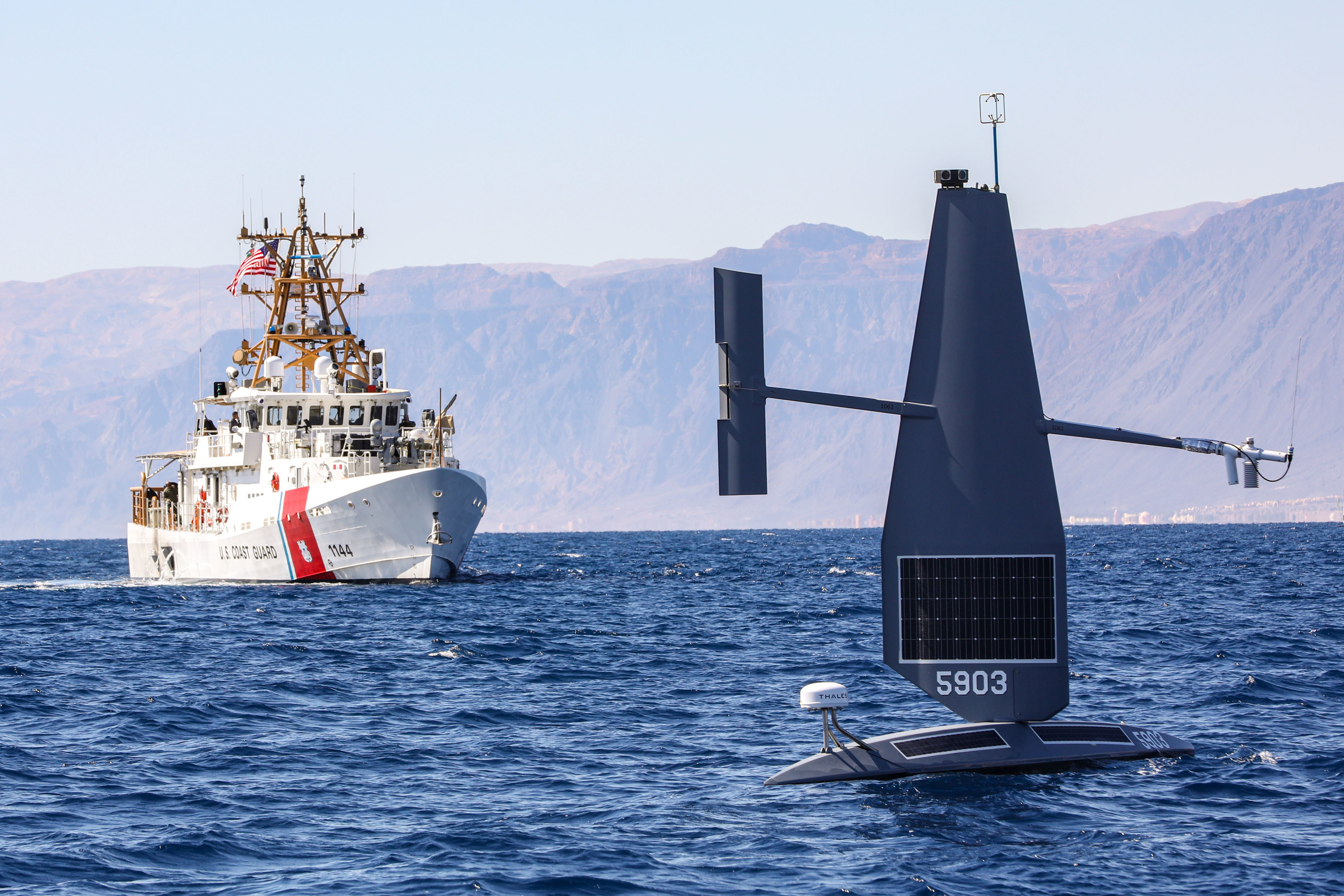
GULF OF AQABA (Feb. 13, 2022) The U.S. Coast Guard Sentinel-class cutter USCGC Glen Harris (WPC 1144) sails near a U.S sail drone explorer during the International Maritime Exercise/Cutlass Express (IMX) 2022, Feb. 13, 2022. IMX/CE 2022 is the largest multinational training event in the Middle East, involving more than 60 nations and international organizations committed to enhancing partnerships and interoperability to strengthen maritime security and stability. (U.S. Army photo by Cpl. DeAndre Dawkins)

Defense Scoop reports:

“The Navy plans to stand up additional unmanned task forces around the globe modeled after Task Force 59 in the Middle East, Navy Secretary Carlos Del Toro told reporters Saturday…“We’ve demonstrated with Task Force 59 how much more we can do with these unmanned vehicles — as long as they’re closely integrated together in a [command and control] node that, you know, connects to our manned surface vehicles. And there’s been a lot of experimentation, it’s going to continue aggressively. And we’re going to start translating that to other regions of the world as well,” Del Toro said during a media roundtable at the Reagan National Defense Forum.”

The report goes on to mention 4th Fleet and Oceana specifically, both regions of intense interest to the Coast Guard in regard to drug interdiction and Illegal, Unregulated, Unreported (IUU) fishing respectively.

This could be a big boost to our Maritime Domain Awareness. In the Eastern Pacific Drug Transit Zone we might need uncrewed surface vessels with passive acoustic sensors since the targets of interest are poor targets for radar and optical sensors. That could lead to practical experience that could improve our ASW capability.

Antarctic Support Ship “Almirante Saldanha” for Brazil

SeaWaves reports,

After research and studies conducted by the Brazilian Navy (MB), the future Antarctic Support Ship (NApAnt) had its name chosen: “Almirante Saldanha”. TheNApAntwill reduce the refueling time of the Comandante Ferraz Antarctic Station (EACF), due to cranes with greater load and maneuverability, and will be better equipped for the launch of camps and will have greater autonomy to expand support for research.

The new ship will replace the Oceanographic Support Ship “Ary Rongel” and will have more modern technical resources such as the navigation and control system, which will allow closer approach of the ship to the beach for landing personnel and material, safely.

There is no indication that the ship is an icebreaker, but it will certainly be ice strengthened. According to Janes, the ship will be delivered in 2025 and,

“The ship will displace approximately 5,880 tonnes for a length of 93.9 m, a width of 18.5 m, a draught of 6 m, cruising speed of 12 kt, endurance of 70 days, and a crew of 95, including 26 researchers.”

This is the ship being replaced:

Oceanographic support vessel ‘Ary Rongel’. Marinha do Brasil picture


“Colombia inks deal that could see Damen build five Sigma frigates” –Defense News

Colombian Navy SIGMA frigate

Defense News reports, one of our primary partners in drug interdiction efforts is expected to significantly upgrade their naval capabilities.

Colombia is launching a $2 billion shipbuilding program that would see its Navy acquire five frigates.

The announcement, made last week, was followed by the signing on Tuesday of an initial contract between local shipbuilder Cotecmar and Dutch company Damen to adapt the latter’s Sigma 10514 design to meet the Colombian Navy’s requirements.

This is a significant step toward self sufficiency in naval construction. It is a step up after Cotemar built three Fassmer 80 meter Offshore Patrol Vessels.

The new ships will replace four smaller 95 meter, 1850 ton full load, German built light frigate/corvettes that were commissioned in 1983/84.

If these new ships are in fact 120 meters in length and at least 2800 tons full load, they will be the largest ships of the SIGMA series. (At one time I expected a SIGMA series ship would have been a contender in the Offshore Patrol Cutter program.)

Apparently they have not made a final choice of weapons and sensors. I would not be surprised if they were equipped much like the Mexican SIGMA frigate, which is armed with weapons sourced from the US, including RGM-84L Harpoon Block II, eight Mk56 VLS for ESSM, MK 54 Mod 0 lightweight torpedoes with two MK 32 Surface Vessel Torpedo Tubes (SVTT) triple tube launchers, Block II Rolling Airframe Missile (RAM) missiles and Bofors 57 mm gun.

It seems likely the additional length compared to the Mexican ship will be to improve some capability, I would guess ASW. Mk41 VLS would allow greater flexibility including launch of ASROC and potentially land attack missiles.

It is widely known Colombia and Venezuela have not been getting along well. Colombia probably considers Venezuela their pacing threat. If that is the case, most, if not all five of the new ships will likely be based on the Caribbean side. These ships should provide an advantage vs the Venezuelan Navy.

Major naval bases of the Colombian Navy (Armada de la República de Colombia – ARC)
Colombian Navy (ARC) Marine Infantry Primary base and training school, Covenas
Source: Iceman0108. Background map: Mapa de Colombia (relieve-ríos) by Milenioscuro

Below, video of the latest SIGMA series ship, Mexican frigate ARM Benito Juárez (F 101), as it arrives for participation in RIMPAC 2022: 

“U.S. Maritime Forces Arrive for UNITAS LXIII hosted by Brazil” –Seapower

LOOKING BACK: The US Coast Guard cutter USCGC Escanaba (WMEC 907), Brazlian Navy ship BNS Bosisio (F 48) and Argentinian navy ship ARA Almirante Brown (D-10) move into formation for a photo exercise during the Atlantic phase of UNITAS 52 on May 4, 2011. The formation included a total of ten ships from the US, Brazil, Mexico and Argentina. (Photo: US Navy/Mass Communication Specialist 1st Class Steve Smith)

The Navy League’s on line magazine, Seapower, reports on the upcoming 63rd UNITAS exercise,

RIO DE JANEIRO, Brazil — Navy and Marine forces are set to arrive in Rio de Janeiro in support of UNITAS LXIII, the world’s longest-running multinational maritime exercise scheduled to take place Sept. 8-22, the U.S. Naval Forces Southern Command / U.S. 4th Fleet said in a Sept. 1 release.

This year’s exercise is hosted by the Brazilian navy and will included 20 participating nations, 19 ships, one submarine, 21 aircraft, accounting for approximately 5,500 total military personnel that will conduct operations principally off the coast of Rio de Janeiro.

USCG Pacific Area Tactical Law Enforcement Team (PAC AREA TACLET) will be there, but apparently no other Coast Guard units.

Notably, Argentina is not participating.

“Ecuador combats Chinese fleet’s illegal fishing with Canadian satellite technology” –Indo-Pacific Defense Forum

Indo-Pacific Defense Forum reports,

The Ecuadorian government is using Canadian technology to monitor the Chinese fleet’s illegal, unreported and unregulated (IUU) fishing around the Galápagos Islands.  In early June 2022, the government detected 180 Chinese vessels near the islands’ exclusive economic zone (EEZ), fishing for large Humboldt squid and threatening the region’s biodiversity and economy.

The Ecuadorian Navy patrols to prevent illicit fishing in the protected zone. “As long as these vessels are far from the insular EEZ, more than 100 miles [more than 160 kilometers] away, we monitor them by satellite,” Ecuadorian Navy Rear Adm. John Merlo León, commander of naval operations, told Ecuadorian television network Teleamazonas.

Reportedly, Ecuador uses both space technology company MDA, based in Brampton, Ontario, to provice satellite tracking, remote sensing and the ability to synthesize large amounts of data and Global Fishing Watch, a Google-backed website that tracks commercial fishing and interprets vessel movements, including fishing in prohibited areas.