“Naval Warfare, Naval Doctrine Publication 1”

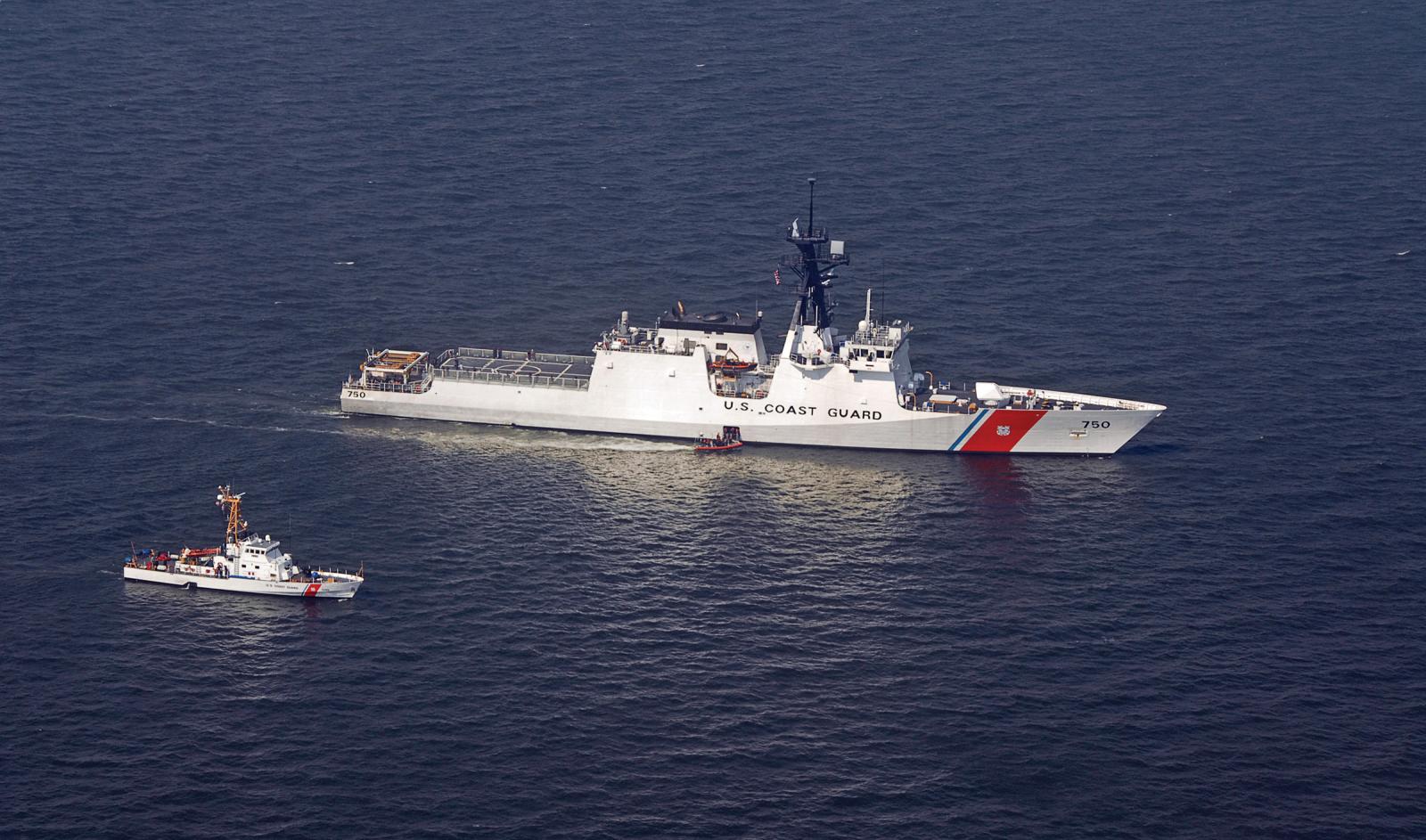
The U.S. Coast Guard Cutter Waesche (WMSL 751) conducts a replenishment-at-sea with the fleet replenishment oiler USNS Laramie (T-AO 203) while patrolling the Eastern Pacific Ocean, April 20, 2020. Waesche is deployed to the U.S. Southern Command area of responsibility to support Joint Interagency Task Force South’s mission, which includes counter illicit drug trafficking in the Caribbean and Eastern Pacific. U.S. Coast Guard photo by Chief Petty Officer Dave Horning.

CIMSEC has provided us with both a pdf copy of the new Naval Warfare Doctrine and a comparative analysis of the 2020 version with the preceding 2010 version, done by Jimmy Drennan, President of the Center for International Maritime Security (CIMSEC).

The doctrine is jointly published under the signature of the Coast Guard Commandant as well as that of the CNO and Commandant of the Marine Corps. The Coast Guard is mentioned 58 times in the 88 pdf pages.

The new doctrine is easy to read, and appears to be written for a wide audience. Acronyms are kept to a minimum. It is really a return to the fundamental concepts of Seapower. In particular it talks about five enduring functions:

  • Sea Control,
  • Power Projection,
  • Deterrence,
  • Maritime Security, and
  • Sea Lift

The Coast Guard certainly has major roles in Maritime Security and Sea Lift, along with possible lesser roles in other areas.

It is not difficult reading at all, 68 pages in the basic document, in large format, with lots of pictures. There is a ten page glossary and just over a page of acronyms at the end, most of which you will not need.
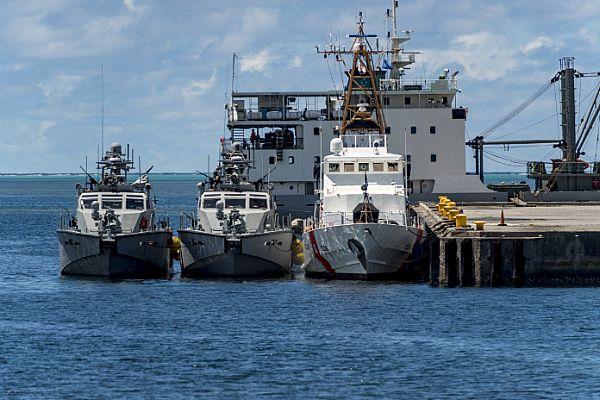
COLONIA, Yap (July 4, 2019) The U.S. Coast Guard Island-class patrol boat USCGC Kiska and Mark VI patrol boats assigned to Coastal Riverine Squadron (CRS) 2, Coastal Riverine Group 1, Detachment Guam, moored in the Micronesia port of Yap. CRG 1, Det. Guam’s visit to Yap, and engagement with the People of Federated States of Micronesia underscores the U.S. Navy’s commitment to partners in the region. The Mark VI patrol boat is an integral part of the expeditionary forces support to 7th Fleet, capability of supporting myriad of missions throughout the Indo-Pacific. (U.S. Navy photo by Mass Communication Specialist 2nd Class Jasen Moreno-Garcia/Released)

“Coast Guard Sails Medium Cutter North of Arctic Circle as Nanook Exercise Kicks Off” –USNI

The US Naval Institute News reports that

“The Coast Guard for the first time in years sent one of its medium-endurance cutters to the Atlantic Ocean north of the Arctic Circle, as the sea service joins the U.S. and Canadian navies for a yearly maritime exercise.”

This is Operation NANOOK-TUUGAALIK 2020, the maritime portion of Operation NANOOK. In past years, when the Coast Guard participated, we usually sent a buoy tender. I don’t believe it has ever happened before, but this year the US Navy is sending a destroyer. According to Naval Technology,

“Participating assets include USS Thomas Hudner (DDG 116) guided-missile destroyer, the Royal Canadian Navy ships HMCS Glace Bay, HMCS Ville de Quebec, and MV Asterix; DDG 116, US Helicopter Maritime Strike (HSM) 46.2, the US Coast Guard cutter USCGC Tahoma, French Navy coastal patrol vessel FS Fulmar, and the Royal Danish Navy frigate HDMS Triton.” (Photos below–Chuck)

The Navy seems to be particularly concerned about doing small boat ops in the Arctic environment.

“We’ve really heavily relied on partners, including the Coast Guard, who have recent experience operating there,” he said.

Arleigh Burke-class guided missile destroyer USS Thomas Hudner (DDG 116) (U.S. Navy photo by Mass Communication Specialist 1st Class Brian G. Reynolds/Released)

Canadian frigate HMCS Ville de Quebec

Danish frigate HDMS Triton F358 in Reykjavik – Iceland (2016). Photo credit: CJ Sayer via Wikipedia

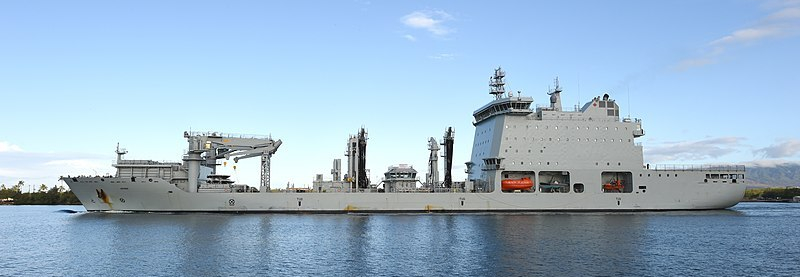
Royal Canadian Navy supply ship MV Asterix (U.S. Navy photo by Mass Communication Specialist 1st Class Jimmie Crockett/Released)

Canadian navy Kingston-class maritime coastal defense vessel HMCS Glace Bay (MM 701) (U.S. Navy photo by Mass Communication Specialist 2nd Class Rafael Martie/Released)

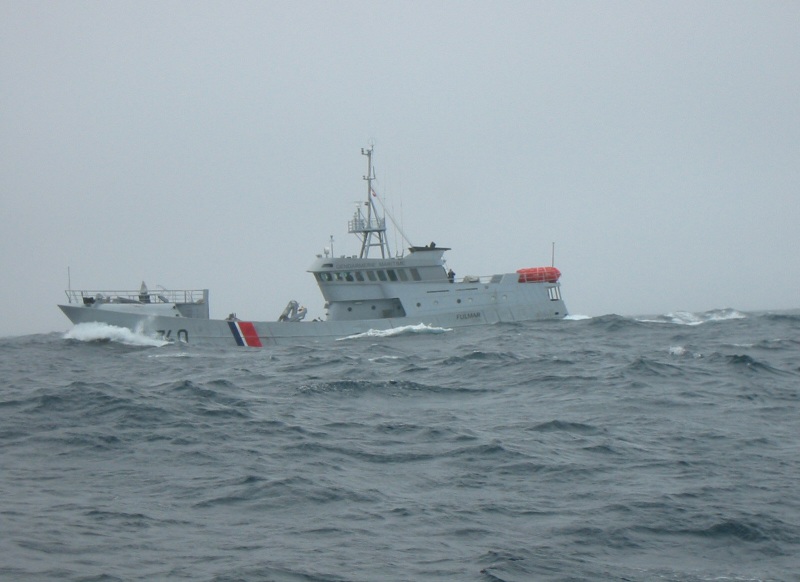
FS FULMAR P740. Description: Owned by French Navy and crewed by Gendarmarie. Built as fishing vessel ‘Jonathan’1991 at Boulogne,re-built 1996/97 at Lorient for French Navy as patrol boat, LOA 39M; beam 8.5M; draught 4.7M. Displmt:680 tons full load. Note French Coastguard (AEM) stripes on bow. Vessel based on St.Pierre et Miquelon,off S.West coast Newfoundland.Photo credit © tabarly

USCGC Tahoma (WMEC-908)

Containerized Sonar

Naval News reports that the French Navy is testing a containerized Thales CAPTAS-1 active/passive variable depth sonar (VDS).

This not the only such sonar available. The Canadians offer a similar system.

Should it be necessary, such systems could conceivably allow sonar systems to be added to all Coast Guard cutters the size of the Webber class Fast Response Cutters and larger.

Happy Coast Guard Day

I am passing along this from Coast Guard Mutual Assistance.

Alternate text

Happy Birthday to the Coast Guard, marking 230 years of faithful service to our nation!

Now is the time to celebrate the people, the mission, and the incredible history of the USCG!

Today, August 4th, marks the founding of the Revenue Cutter Service in 1790 and the origins of the United States Coast Guard. Every day members of the Coast Guard are securing our borders, interdicting illicit drugs, and protecting our national interests.

Impressively on an average day, the United States Coast Guard:

  • conducts 45 search and rescue cases
  • saves 10 lives
  • saves over $1.2M in property
  • seizes 874 pounds of cocaine and 214 pounds of marijuana
  • conducts 57 waterborne patrols of critical maritime infrastructure
  • interdicts 17 illegal migrants
  • escorts 5 high-capacity passenger vessels
  • conducts 24 security boardings in and around U.S. ports
  • screens 360 merchant vessels for potential security threats prior to arrival in U.S. ports
  • conducts 14 fisheries conservation boardings
  • services 82 buoys and fixed aids to navigation
  • investigates 35 pollution incidents
  • completes 26 safety examinations on foreign vessels
  • conducts 105 marine inspections
  • investigates 14 marine casualties involving commercial vessels
  • facilitates movement of $8.7B worth of goods and commodities through the Nation’s Maritime Transportation System

Even though Coast Guard Day looks a little different this year, we know you are still ready to celebrate this amazing branch of service! The United States Coast Guard is resilient and ready for anything no matter what storm may surge or threat arise. This is why CGMA just rolled out 6 new programs to assist CG families through the challenges and uncertainties of COVID-19. You can learn more about these programs on our website: cgmahq.org.

Alternate text

Now we are witnessing COVID-19 cases increase nationwide, there is a national crisis in the availability of child care, and schools are beginning to announce plans for the fall semester.

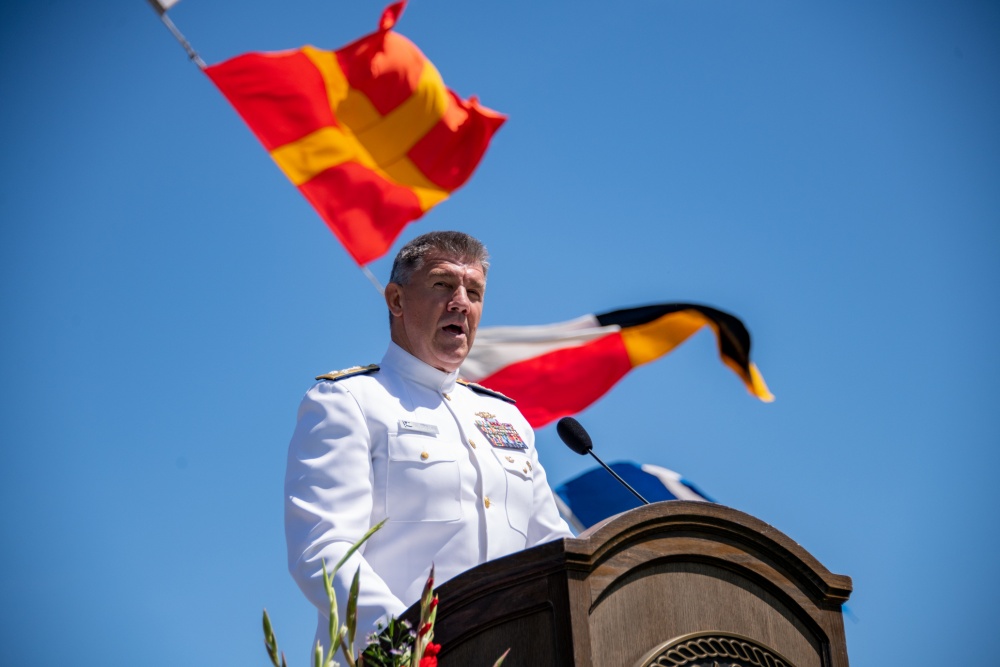
– ADM Karl Schultz, USCG Commandant, Chairman, CGMA Board of Control

Last year, 1 in 5 Active Duty Coast Guard members received support from CG Mutual Assistance. You can help our Coast Guard remain mission ready and provide the peace of mind they need when they face financial emergencies. Support their families and their future through CGMA emergency, education, and family support programs.

Join me in celebration of the mission of the USCG by applauding the men and women of the Coast Guard for their incredible dedication and focus on the mission of our service. The funds raised will fuel the programs that reach the Coast Guard community. It is only through your generous donations that we can help our own! Charles, for your generosity to the shipmates of the Coast Guard — THANK YOU!

Semper Paratus,

Alternate text

RADM Cari Thomas, USCG, Ret.

Chief Executive Officer

P.S. Don’t miss the party. How will you join the celebration? Give a special gift today. Together we can honor the past and secure the future.

Coast Guard Mutual Assistance, 1005 North Glebe Road, Ste 220 Arlington, VA 22201

Image


“British Coast Guard To Trial CAMCOPTER VTOL UAV For Unmanned SAR Missions” –Naval News

Bristow’s Sikorsky S-92 SAR helicopter flying alongside a Camcopter VTOL UAV. Bristow picture.

Naval News reports that the British Coast Guard is conducting trials using the Schiebel S-100. (We have talked about this UAV before.)

These systems provide us with an option to keep our Sikorsky S92 helicopter crew at Caernarfon on standby for lifesaving events, while the unmanned aircraft are tasked with providing safety overwatch and monitoring which those manned aircraft would otherwise have been sent to carry out. Bristow began initial testing with Schiebel in 2018, with a view to bringing these UAVs into service during the current UKSAR contract. We are proud to have successfully completed these first missions on behalf of HM Coastguard.”

“Chinese boats wreaking havoc in North Korea waters, study says” –UPI

Chinese squid-fishing vessels in waters near South Korea’s Ulleungdo in September 2016 | ⓒ THE OUTLAW OCEAN PROJECT / VIA KYODO

We have a UPI report that,

“Chinese fishing vessels operating illegally may have hollowed out North Korean waters and likely contributed to an 80 percent decline in local fish stocks, according to a new joint study of Chinese activity in North Korea.”


High levels of Chinese fishing activity in North Korea have also pushed out North Korean fishermen to more dangerous waters. The North Koreans have been moved out north, toward Russia, and may be risking their lives. The study pointed out in recent years Japanese coastal towns have reported the appearance of North Korean “ghost boats” that arrive empty or with human remains.

China seems to be North Korea’s only friend (although there is technology exchange with Iran) but with friends like these…

If anything this makes North Korean even more dependent on the Chinese. This is a pattern I think we are seeing elsewhere–impoverishing local economies by removing local food sources and then offering other forms of economic aid that will result in debt and subservience to China. It is also effecting South Korean and Japanese economies.  More here.

“The scale of the fleet involved in this illegal fishing is about one-third the size of China’s entire distant water fishing fleet,” said Jaeyoon Park, senior data scientist at Global Fishing Watch. “It is the largest known case of illegal fishing perpetrated by vessels originating from one country operating in another nation’s waters.”

It may also mean the the North Korean government will be even more inclined to do something rash and foolish.

If this is in fact a violation of UN sanctions. It might be something the USCG could move against under UN authority, perhaps in cooperation with the Japanese and S. Korean Coast Guards.

Thanks to Sven for bringing this to my attention. 

August, Coast Guard Edition of USNI Proceedings

It is August so we have a “Coast Guard” edition of the US Naval Institute Proceedings. I have not gotten my hard copy yet, but it is up on line and much of it is avail to non-members including the thee prize winning Coast Guard essays.

Feel free to comment on any of these articles here as well as on the USNI post directly.

“The Coast Guard’s Own COVID-19 Challenges” –Seapower Magazine

Masked members of the cutter James crew and Commandant Adm. Karl L. Schultz (front, center), along with interagency partners, stand among interdicted narcotics at Port Everglades, Florida, on June 9. U.S. COAST GUARD / Petty Officer 3rd Class Brandon Murray

The Navy League Magazine (on-line) has a short article about Coast Guard Operations in the COVID-19 environment.

“Coast Guard releases draft request for proposal for river buoy and inland construction tenders” –CG-9

USCGC Smilax (WLIC-315)

The Acquisition Directorate reports they have released a draft request for proposal (RFP) to “design a River Buoy Tender (WLR) and an Inland Construction Tender (WLIC) – two variants of one design – and build 16 WLRs and 11 WLICs.” I have duplicated their post below:

The Coast Guard released a draft request for proposal (RFP) July 29, 2020, for detailed design and construction of the river buoy and inland construction tenders as part of its Waterways Commerce Cutter acquisition program. The draft RFP is available here.

The deadline to submit feedback on the draft RFP is Sept. 18, 2020.

The Coast Guard is recapitalizing its 35 river, construction and inland buoy tenders, which collectively average more than 55 years in service. The fleet is responsible for maintaining more than 28,200 marine aids throughout 12,000 miles of inland waterways, facilitating the movement of 630 million tons of cargo annually.

There are currently 18 river buoy tenders and 13 construction tenders in the inland tender fleet. Based on extensive analysis of mission needs, the Coast Guard plans to replace these ships with newly designed river buoy tenders and construction tenders that have greater endurance, speed and deck load capacity than their predecessors. The Coast Guard plans to acquire these two variants on the same contract due to major design commonality including hull form, deck layout and standardized equipment. The inland buoy tender replacements will be acquired separately.

Replacing the aging fleet is critical to sustaining the overall safety of the U.S. Marine Transportation System, which accounts for $5.4 trillion of economic activity annually and sustains approximately 30.7 million jobs.

For more information: Waterways Commerce Cutter program page. Additional resources and previous industry engagement materials can be located under the “Resources” tab at the bottom of the page.

Navy to Decommission Cyclone Class Patrol Craft

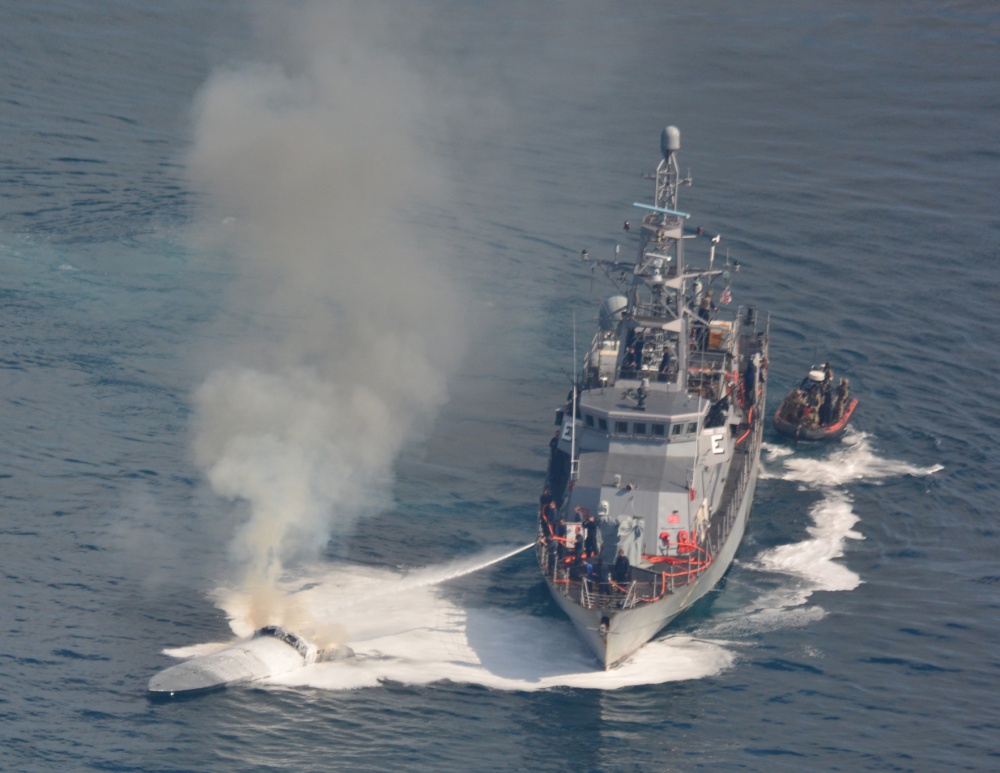
Cyclone-class patrol coastal USS Zephyr (PC 8) crew conducts ship-to-ship firefighting to extinguish a fire aboard a low-profile go-fast vessel suspected of smuggling in international waters of the Eastern Pacific Ocean April 7, 2018. Photo by Petty Officer 1st Class Mark Barney

I learned recently that the Navy expects to decommission their 13 Cyclone class patrol craft in FY2021. This is significant for the Coast Guard for a couple of reasons.

The three based in Mayport have consistently been used to augment Coast Guard vessels, hosting Law Enforcement Detachments for drug enforcement (a recent example). .

Second, these vessels frequently partner with Coast Guard patrol boats of PATFORSWA based in Bahrain. Their decommissioning may put a greater load on the Coast Guard unit as it begins to receive Webber class as replacements for the existing six Island class patrol boats.

ARABIAN GULF (Sept. 16, 2018) A MK-60 Griffin surface-to-surface missile is launched from coastal patrol ship USS Thunderbolt (PC 12). (Photo by MC2 Kevin Steinberg)

For the Island class cutters in the Persian Gulf, the Cyclone class have served as better armed, big brothers, adding a bit of muscle to escort missions where Iranian Fast Inshore Attack Craft might be encountered. While the Webber class, that will be replacing the Island class, are a bit better armed than the 110s, unless they are extensively modified, they will not come close to replacing the missile armed Cyclone class. LCS are supposed to replace the Cyclone class, but they still have not demonstrated the ability to sustain a reasonable number of vessels in a remote theater. LCS are also too large to go many of the places the Cyclone class were able to.

USS Hurricane (PC-3)

These little ships have seemed to count for very little to the Navy. Regularly we see a count of “Battleforce ships”“Battleforce ships” that includes everything from aircraft carriers down to civilian crewed, unarmed fleet tugs (T-ATF), salvage ships (T-ARS), and high speed intra-theater transports (T-EPF, really aluminum hulled, high speed ferries). The Cyclone class were only included in the count one year (2014), so their loss will be largely invisible. (Significantly, this count of what many must assume is the National Fleet also makes no mention of Coast Guard assets either.)

Until ten of the class found a home in Bahrain, the Navy seemed to have had a hard time figuring out what to do with them. Originally intended to support the special warfare community, they were considered to large for that mission. Of the original fourteen one was transferred to the Philippine Navy. Five had been temporarily commissioned as Coast Guard cutters.

Other than the far larger LCS, the navy has no plans to replace these little ships, that have reportedly been the busiest ships in the Navy.

DAHLGREN, Va. (Nov. 6, 2004) Coast Guard Cutter Shamal (WPC-13) . USCG photo by Joseph P. Cirone, USCG AUX