Something is Happening in Venezuela

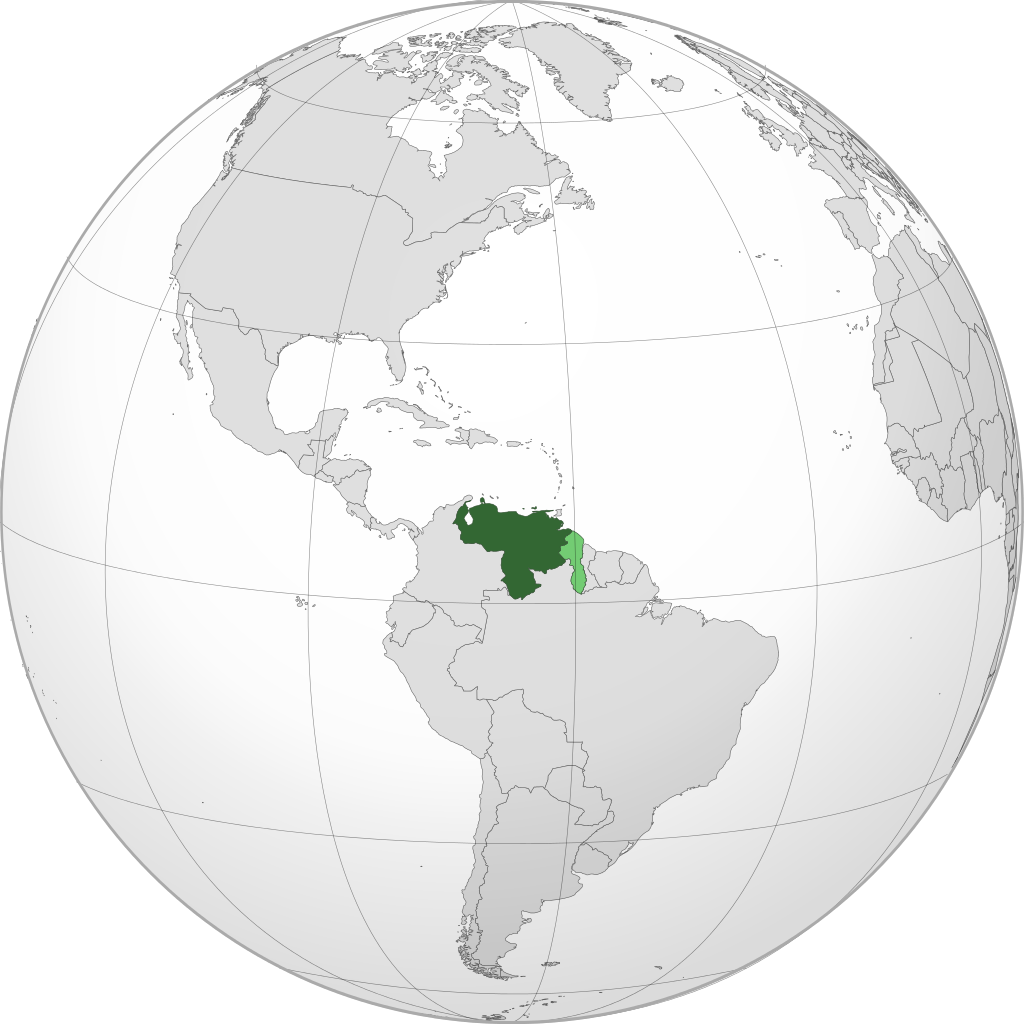
Orthographic map of Venezuela centered on Caracas. Controlled territory in dark green. Claimed territory in light green. From Wikipedia, author: Addicted04

Venezuela is in an area vital to the Coast Guard’s drug interdiction effort.

CBS is reporting,

President Trump recognized the chief opposition leader in Venezuela, National Assembly President Juan Guaido, as the country’s legitimate interim president. The rare move by the White House comes as large anti-government protests erupted across the South American nation on Wednesday.

The Organization of American States (OAS) recently passed a resolution agreeing not to recognize the legitimacy of Maduro’s new term, which began on January 10.

What happens next is anybody’s guess. Civil war is possible, and it already looks like a humanitarian crisis. That our cutters may become involved in some way is not out of the question.

Thanks to Andres for bringing this to my attention.

Alameda-based Coast Guard cutter and crew depart for Western Pacific patrol


Got a news release reporting the departure of Bertholf from Alameda California for a Patrol in the Western Pacific which I have quoted below. Normally I would leave reporting of ship deployments to other sites, but, I don’t think this is routine.

We have sent cutters into the Western Pacific (since Vietnam). Munro (WMSL-755) visited Fiji and the Solomon Islands in 2018 (Paying More Attention to the Western Pacific, Dec. 8, 2018). Waesche made the trip back in 2012 (Waesche Enroute to SE Asia Apr. 4, 2012).There could have been others, but I don’t think there were a lot more, but coming on the heels of Munro’s deployment this may be a trend.

There is also a video here. The Captain tells the crew, “We’re going to be doing a national security mission. When we get underway, we are going to be working for the United States Indo-Pacific Command, Combatant Commander. We’re going to be executing national security operation throughout the Pacific.”

What is the mission? Certainly they will be doing some capacity building, exercising with partner navies and coast guards. They will probably do some fisheries enforcement both, in the US EEZ and with shipriders to assist in the EEZs of friendly nations, certainly in Oceana and perhaps in SE Asia. We have a huge expanded Pacific Remote Islands Marine National Monument wit  490,000 square statute miles or about 390,000 square nautical miles of Ocean to police (Huge New Marine Reserve, Pacific Remote Islands Marine National Monument, Sep. 26, 2014). Plus there are the island nations of Micronesia, the Marshall Islands, and Palau joined with the U.S. in “Compacts of Free Association.”
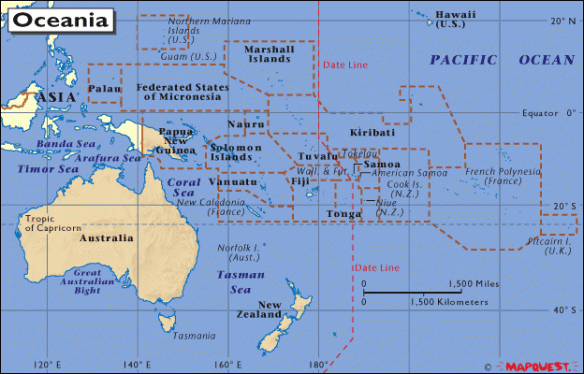
There have been calls for more US Coast Guard presence in the Pacific from New Zealand and from the 7th Fleet. Some, including the previous Commandant see the US Coast Guard as a counter weight to China Coast Guard in the South China Sea.

Maybe Bertholf will stop in at Guam and check it out as a possible future base for Offshore Patrol Cutters. We already have indication three Webber class FRCs will replace the two 110s currently there.) Will they operate in the South China Sea? Will they do Freedom of Navigation Ops? Taking Vietnamese ship riders aboard and doing fisheries enforcement in the Vietnam EEZ inside the Chinese claimed Nine Dash Line, could get exciting. Guess we will have to wait and see.

Will they have a UAS aboard? And If we have no budget or continuing resolution to pay our people, how are we paying for fuel?

The News Release

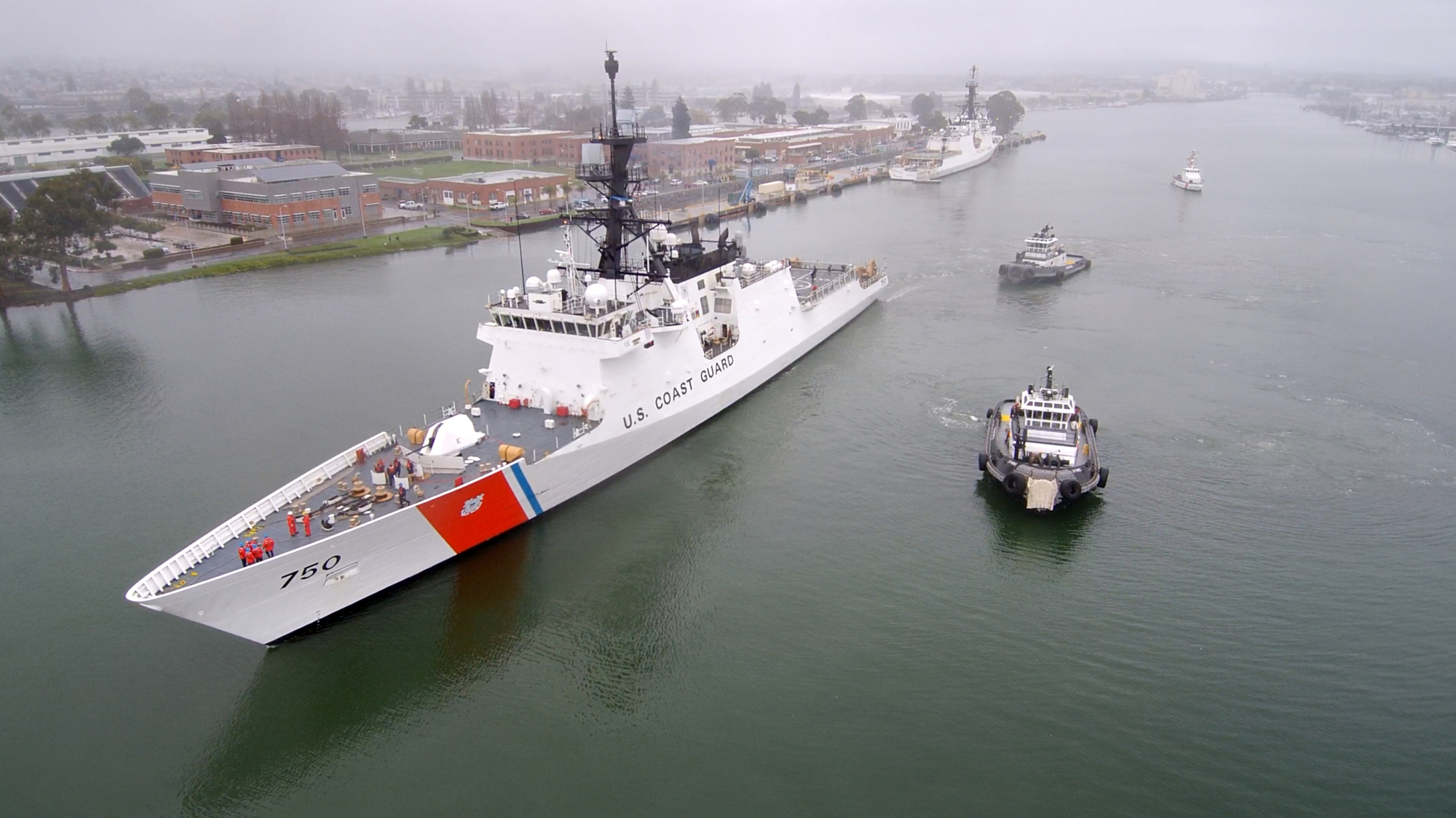
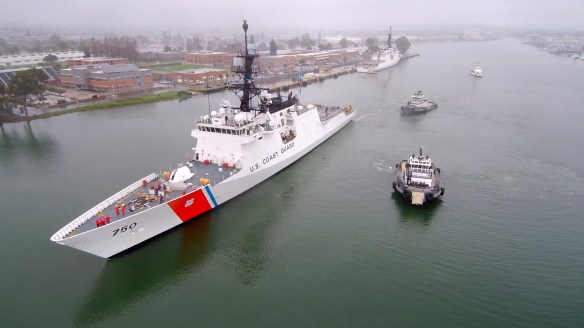
On a gray and foggy morning, tears intermingled with rain as family members braved the elements to say goodbye to the 170 crewmembers of Coast Guard Cutter Bertholf (WMSL-750), a 418-foot national security cutter, which departed Alameda, California, Sunday for a patrol in the Western Pacific Ocean.

The U.S. Coast Guard has an enduring role in the Indo-Pacific going back over 150 years. The service’s ongoing deployment of resources to the region directly supports U.S. foreign policy and national security objectives in the Indo-Pacific Strategy and the National Security Strategy.

“The United States is a Pacific nation,” said Vice Adm. Linda Fagan, commander Coast Guard Pacific Area, who was present to see the cutter depart. “We have deep and long-standing ties with our partners in the region, and more importantly, we share a strong commitment to a free and open Indo-Pacific, governed by a rules-based international system that promotes peace, security, prosperity and sovereignty of all nations.”

Bertholf will be operating in support of United States Indo-Pacific Command, which oversees military operations in the region. As part of its planned operations, the cutter will engage in professional exchanges and capacity building with partner nations.

“Security abroad equals security at home,” said Fagan. “Enhancing our partners’ capabilities is a force multiplier in combating transnational criminal and terrorist organizations and deterring our adversaries.”

As both a federal law enforcement agency and an armed force, the Coast Guard is uniquely positioned to conduct defense operations in support of Combatant Commanders on all seven continents. The service routinely provides forces in joint military operations worldwide, including the deployment of cutters, boats, aircraft and deployable specialized forces.

“I’m excited to see Bertholf sail today to the Indo-Pacific region of operations,” said Fagan, who described the cutter as one of the most capable in the Coast Guard fleet.

“They will be serving alongside other DoD military forces, particularly the U.S. Navy, and I know they will contribute key capabilities to that mission set. This crew has worked incredibly hard to get ready for today’s sailing, and I can’t think of a better ship and crew to be sending to the Indo-Pacific.”

Commissioned in 2008, Bertholf is the first of the Coast Guard’s legend class national security cutters. These advanced ships are 418-feet long, 54-feet wide, and have a 4,600 long-ton displacement. They have a top speed in excess of 28 knots, a range of 12,000 nautical miles, endurance of up to 90 days and can hold a crew of up to 170.

The cutter is named for Coast Guard legend Ellsworth P. Bertholf, who served as captain of the Revenue Cutter Bear during the famous Overland Relief Expedition, earning the Congressional Gold Medal. As the Coast Guard’s fourth commandant, Bertholf oversaw the transfer of the Coast Guard into the Department of the Navy during World War I and advocated for the successful postwar reconstitution of the service.

National security cutters feature advanced command and control capabilities, aviation support facilities, stern cutter boat launch and increased endurance for long-range patrols to disrupt threats to national security further offshore.

The Coast Guard is scheduled to commission its seventh national security cutter, the Coast Guard Cutter Kimball, in 2019. Kimball, along with the Midgett, which is currently under construction, will be homeported in Honolulu and will enhance the Coast Guard’s presence throughout the Indo-Pacific.

“The U.S. Coast Guard’s unique authorities, capabilities, and missions make us the maritime safety and security partner of choice for sea-going countries around the world,” said Capt. John Driscoll, Bertholf’s commanding officer. “Our increased presence throughout the Indo-Pacific will enhance regional stability and improve maritime governance and security.”

In an address to the families and crew before the cutter set sail, Driscoll emphasized how critical family support is to crew wellbeing and readiness.

“Support from our families, wherever they live, is vital to ensuring we are ready to sail and answer the demands of our nation,” Driscoll said. “We must ensure our families are ready to weather the storm at home. We operate in a dangerous and high-consequence environment, and your ability to focus on mission can become easily compromised if you are worried about family.”

Fagan acknowledged the current lapse in appropriations and government shutdown has added stress and feelings of uncertainty to the typical emotions that surround a cutter departure.

“I know it is hard for these crews to be leaving behind their dependents and spouses – it’s a thousand times more so when everyone is wondering when our next paycheck will be, and how they can support the family they are leaving behind,” Fagan said.

“There has been an incredible outpouring of support for the families here in the Alameda area, but the tension and the anxiety for the crew is real,” said Fagan. “We are standing by to help support those families who are left behind the same way that we are going to support the crew as they sail for the Western Pacific.”

Polar Star –Doing the Job, but with Difficulties

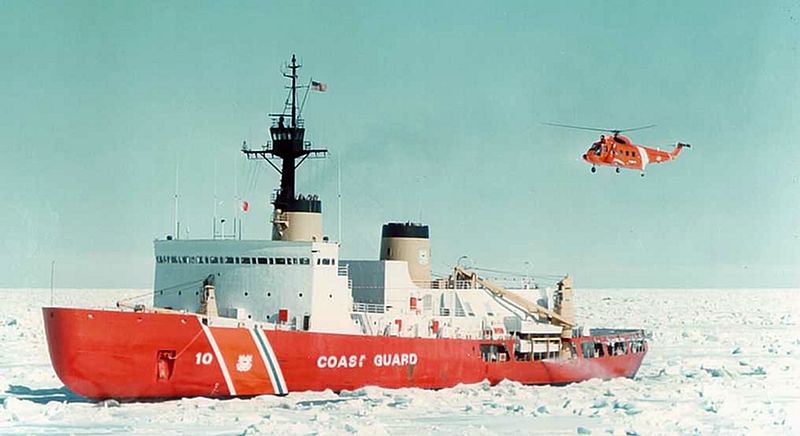
USCGC Polar Star. USCGC photo.

While we have this government shutdown, progress on the new Icebreaker (Polar Security Cutter) has certainly slowed, if not stopped entirely. Meanwhile the Polar Star and her crew soldier on. Naval Today reports:

During this year’s deployment, one of the ship’s electrical systems began to smoke, the Coast Guard said, causing damage to wiring in an electrical switchboard, and one of the ship’s two evaporators used to make drinkable water failed.

The ship also experienced a leak from the shaft that drives the ship’s propeller, which halted icebreaking operations in order to send scuba divers in the water to repair the seal around the shaft. A hyperbaric chamber on loan from the US Navy aboard the ship allows Coast Guard divers to make external emergency repairs and inspections of the ship’s hull.

The Polar Star also experienced ship-wide power outages while breaking ice. Crew members spent nine hours shutting down the ship’s power plant and rebooting the electrical system in order to remedy the outages.

No one knows how long the crew can keep her going, but there is a good chance we are going to see serious problems before the new ship is ready.

Thanks to Lee for bringing this to my attention. 


“UPDATE TO EXPANDED CGMA LOAN LIMITS AND PROCESS”–ALCOAST 013/19

I am providing a copy of an ALCOAST found linked on Vince Patton’s Facebook page (Thanks Vince). 

ALCOAST 013/19 – JAN 2019 UPDATE TO EXPANDED CGMA LOAN LIMITS AND PROCESS

R 181702 JAN 19
FM COMDT COGARD WASHINGTON DC//CG-1//
TO ALCOAST
UNCLAS //N07220//
ALCOAST 013/19
COMDTNOTE 7220
SUBJ:  UPDATE TO EXPANDED CGMA LOAN LIMITS AND PROCESS
A. ALCOAST 434/18 COAST GUARD MUTUAL ASSISTANCE (CGMA) AVAILABILITY DURING THE LAPSE
IN DHS APPROPRIATIONS
B. ALCOAST 012/19 EXPANDED LIMITS TO CGMA LOANS DURING LAPSE IN APPROPRIATIONS
1. This notice announces a further increase to Coast Guard Mutual Assistance (CGMA) interest
free loans. As donations continue to pour in to CGMA, we will continue to evaluate the maximum
amount that a member may borrow. There is no limit to the number of loans that a member may
request from CGMA; only a total loan ceiling. 
2. Updated total limit for CGMA lapse assistance interest-free loans:
   a. Up to $1500 for personnel with dependents;
   b. Up to $1000 for personnel without dependents;
   c. An unchanged condition is that if individual circumstances dictate, any person may apply
for funds in excess of the established limits (a-b above). They must personally visit a local
CGMA representative to complete the full application process.
3. Procedures: Procedures for both requesting a loan and recoupment remain the same.
4. Current lapse in appropriations information can be found at: http://www.dcms.uscg.mil/budget,
this site contains authoritative documents, Frequently Asked Questions, an interactive mailbox,
a Resources Guide, a helpline, and other useful information. As always, CG SUPRT is available to
help (1-855-CG SUPRT (247-8778)) https://www.cgsuprt.com/.
5. For more information on how to receive assistance, please see your local CGMA representatives.
6. RDML Matthew Sibley, Acting Assistant Commandant for Human Resources, sends.
7. Internet release is authorized.

RAFNAR Hull –A New Kind of Hull For Reduced Slamming

gCaptain had a report on this new hull form, which a University of Iceland study found reduced slamming as much as 95% compared to a deep-v hull. It explains the development of the hull, I needed more information to understand how it worked.

The company website has many much clearer photographs as well as the video above.

Claimed advantages are:

  • Exceptionally smooth and comfortable due to limited slam on waves.
  • Significantly reduced slamming results in less mechanical and equipment fatigue, extending the lifetime of expensive electronic equipment on board.
  • Greater on-board safety from significantly reduced slamming means reduced risk of injury, lower crew & passenger fatigue and related costs
  • Precision performance without compromising cruising or top speed.
  • Immediate handling response with no sliding
  • No wake created behind vessel, resulting in less water disturbance
  • Exceptional stability and balance when idle and at speed
  • High payload capacity without compromising cruising or top speed

Could this concept be scaled up for a Motor Surf Boat? Apparently the Icelandic Association for Search and Rescue is already looking into the possibility of a 15 meter (49 foot) MLB.

Thanks to Lee for bringing this to my attention


“Breaking Faith with America’s Coast Guard” –USNI

Coast Guard Commandant Adm. Paul Zukunft (right) meets with then-Southern Command chief Gen. John Kelly.

The US Naval Institute has published 25th Commandant, Admiral Zukunft’s, thoughts on the impact of the government shutdown on the Coast Guard.

He makes a good case, but one statement in particular really hit me.

“…yet on any given day, over one-third of our operational resources are deployed in support of the military geographic combatant commanders around the globe.”

I have been reading the USNI news feed, and every week they have a story titled “Fleet and Marine Tracker,” that talks about ongoing operations and includes a breakout of vessels deployed and vessels underway. I don’t actually have a definitive average, but it has been pretty consistent in showing one fourth of the fleet underway and one third deployed. If the statement above is correct, then, in addition to Coast Guard operations under Coast Guard operational control, We are also deploying in support of Combatant Commanders at essentially the same rate as the Navy.

You might also want to look at a report of 23rd Commandant, Thad Allen’s remarks.

You may not be aware but several bills have been introduced that would provide pay to either the Coast Guard or to all Federal employees. So far the Senate Majority leader has refused to allow a vote on any of them.


The New Hyper-Velocity Round and an Old Five Inch Gun Make a Revolutionary Combo

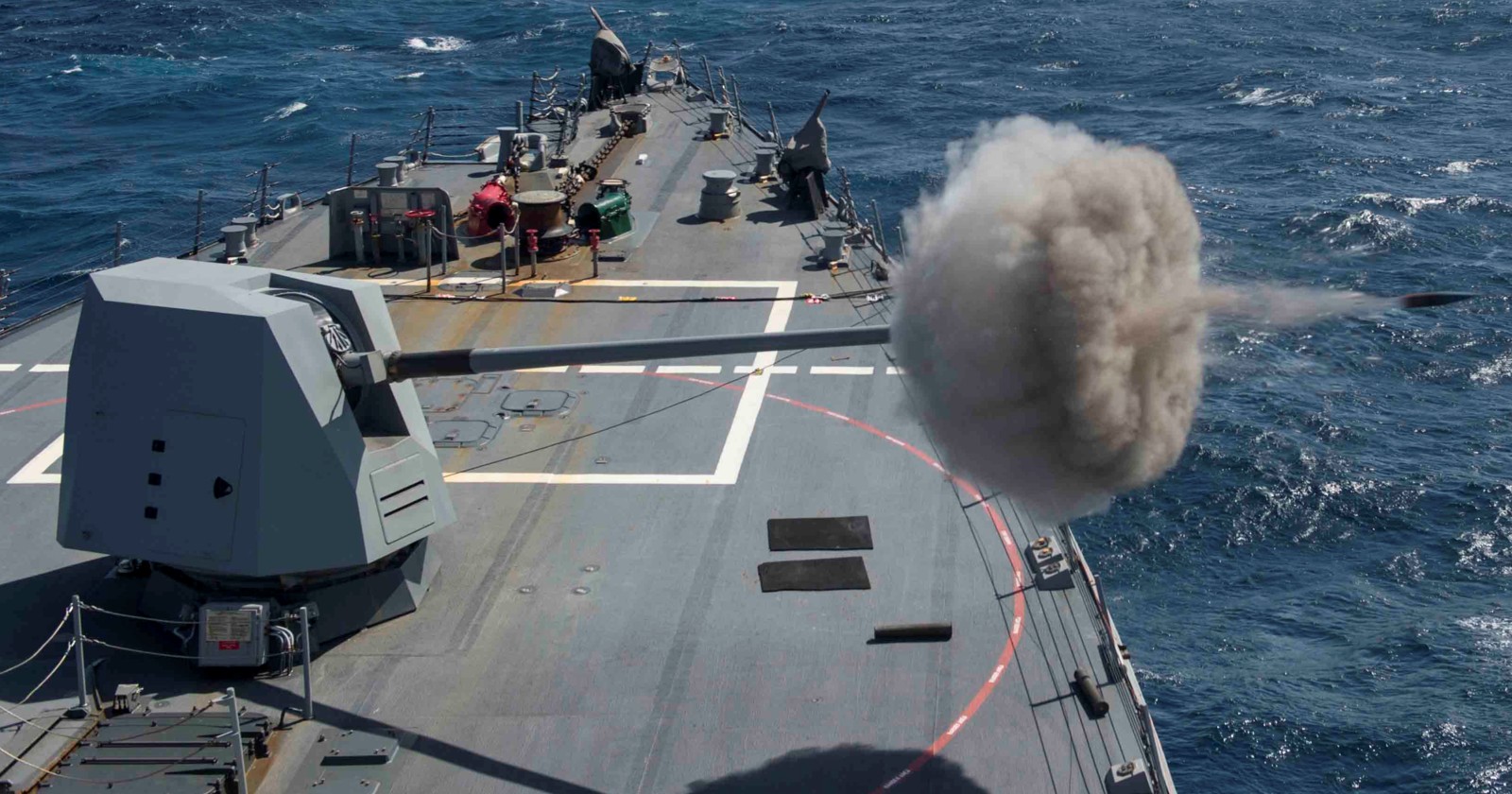
Mk45 Mod4, a 5″ gun 62 calibers in length

The US Naval Institute reports that during an unclassified exercise as part of RIMPAC USS Dewey (DDG-105) fired 20 hyper velocity projectiles (HVP). The rounds were fired from a 5″/62 Mk45 Mod4.

Back in 2012, I published a post “Case for the Five Inch Gun.” My conclusion was

In choosing the Mk110 57mm because it was seen as a better AAW weapon, a better anti-swarm weapon, as lighter, cheaper, easier to maintain or man, for whatever reason, the Coast Guard will have a weapon that is at best only marginally more capable, perhaps even less capable, of performing the most likely missions–stopping/sinking a surface target or performing NSFS–than the weapons of 60 to 90 years ago.

While the size, toughness, and survivability of merchant ships has increased dramatically, the Coast Guard has not provided its ships with a significantly improved capability to stop or sink a ship since the introduction of the 5″/51 in 1921. I still think the Coast Guard should add a light weight anti-surface vessel torpedo to its inventory as the cheapest way to have a truly effective ship stopper that can be made widely available. But until such a weapon becomes available, the Mk45 5″ is the best alternative available.

The 5″ Mk45 is a versatile weapon. Equipping the OPCs with this weapon make the ships more capable of performing both the PWCS and probable wartime mission and significantly enhances the NSFS capability of US Naval forces in a major conflict.

I think the argument for the 5″ just got a lot stronger. The test involved shooting guided rounds at a target of cruise missile size and speed. That has got to mean extreme accuracy against even moving targets.

Adding this capability to Cutters would increase both their survivability and their offensive capability. In addition it would substantially increase their capability to forcibly stop a vessel of almost any size since the projectiles, about seven times heavier than an 57mm round, would be traveling at near hypersonic speeds, they would likely disable any engine it hits by kinetic energy alone.

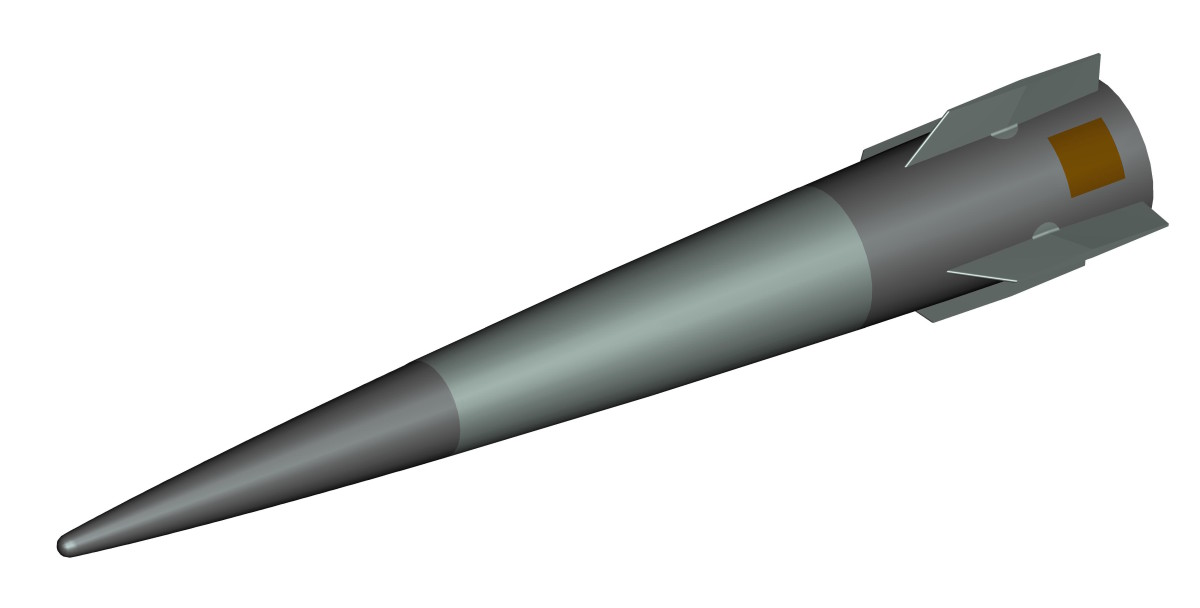
An artist’s conception of BAE Systems’ Hyper Velocity Projectile. BAE Systems Image

I have not seen any particular kind of guidance identified for this test. The illustration above does appear to show a panel, presumably one of four, between the fins at the base of the projectile.

“So if you think about the kinds of threats you might face in the Middle East, the lower-end cruise missiles or a larger UAV, now you have a way to shoot them down that doesn’t require you use a $2 million ESSM or $1 million RAM because a hyper velocity projectile – even in the highest-end estimates have it in the $75,000 to $100,000 range, and that’s for the fanciest version of it with an onboard seeker,” he said.

An added benefit of using HVP in powder guns is the gun’s high rate of fire and a large magazine capacity.

The projectiles apparently weigh about 45 pounds, and may cost as little as $25,000, far less than even the relatively cheap RAM short range anti-air missile at about $1M each. Range is expected to be about 40 miles when fired from a 5″ gun.

The Mk45 Mod4 was first installed on the USS Winston Churchill (DDG-81) commissioned in 2001, superseding the earlier 5″/54 Mk45 mods. Since then it has been the standard USN 5″ gun. It is also in service with the Australian, South Korean, Japanese, and Danish Navies, and they will arm the British Type 26 frigate. Earlier models of the 5″ Mk45 also serve in the Navies of New Zealand, Greece, Spain, Turkey and Thailand.

The gun mount is not a lot larger than the 5″/38 Mk30 mounts that were used on over 50 Coast Guard cutters (255s, 311s, 327s, 378s, and icebreakers) between the early 1940s and their removal from the 378s in the late ’80s and early 90s. In fact the early models of the Mk45 were designed as a drop in replacement for the 5″/38.

Earlier 5″/38 mounts used by the Coast Guard were highly manpower intensive requiring 14 to 15 to fully man the mount and pass projectiles and powder. Full manning for a Mk45 Mod4 is only six, a Gun Captain, Panel Operator and four ammunition Ioperators, all below deck. It can fire up to twenty rounds before the four ammunition operators arrive on station, allowing relatively easy Condition III manning.

The 5″/38 mount weighed about 41,000 pounds. The Mk45 Mod4 is estimated to weigh 50,456 lbs. (22,886 kg) without a lower hoist and 54,398 lbs. (24,674 kg) with a four-flight lower hoist. that is at most a 33% increase.

Time to Think about an OPC “B class” 

What the Soviets used to call the correlation of forces is changing. The Navy’s top surface warfare officer told a gathering at the Surface Navy Association Seminar, For the ship crews, “we need to have them prepared on a moment’s notice to turn the readiness we are building into lethality,” that they had to be ready to fight now.

It is time for the Coast Guard to start reasserting its military nature. Hopefully we have at least a few years to rebuild the Coast Guard’s capability as a naval force which was discarded after the Soviet Union fell apart

It is not too early to start thinking about a “B class” OPC. Replace the 57mm with the 5″/62 Mk45 mod4, replace the 25mm Mk38 with SeaRAM. Add the sensors from the LCS ASW mission module at the stern. Add some Anti-Ship Cruise Missiles Forward. Make sure we have space to support MH-60R ASW helos it is supposed to be able to hangar with torpedoes and sonobuoys. That is not a whole lot different from the systems we had on the FRAM 378s, and the OPC is a third again as large.

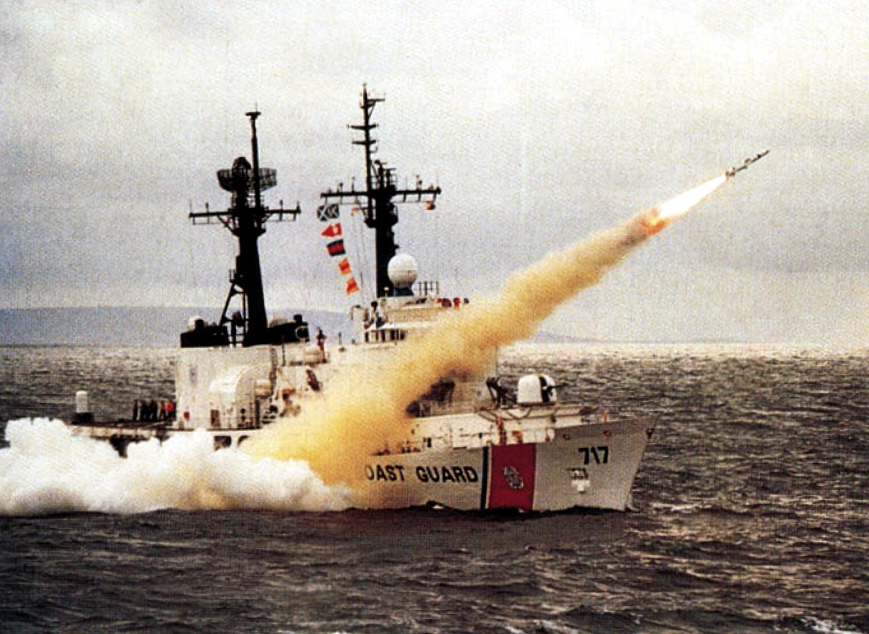
USCGC Mellon seen here launching a Harpoon anti-ship cruise missile in 1990.


“Call for Articles: The Distributed Maritime Operations (DMO) Concept” –CIMSEC

120727-N-VD564-015
PACIFIC OCEAN (July 27, 2012) Ships and submarines participating in Rim of the Pacific (RIMPAC) exercise 2012 are in formation in the waters around the Hawaiian islands. Twenty-two nations, more than 40 ships and submarines, more than 200 aircraft and 25,000 personnel are participating in the biennial Rim of the Pacific (RIMPAC) exercise from June 29 to Aug. 3, in and around the Hawaiian Islands. The world’s largest international maritime exercise, RIMPAC provides a unique training opportunity that helps participants foster and sustain the cooperative relationships that are critical to ensuring the safety of sea lanes and security on the world’s oceans. RIMPAC 2012 is the 23rd exercise in the series that began in 1971. (U.S. Navy photo by Chief Mass Communication Specialist Keith Devinney/Released)

The Center for International Maritime Security (CIMSEC) has issued a call for articles. I am passing this along because I think the readership may have something to contribute. The entire solicitation is quoted below. I have corresponded with Dmitry Filipoff, he is a good man to work with. 

—-

Call for Articles: The Distributed Maritime Operations (DMO) Concept

By Dmitry Filipoff

Articles Due: February 25, 2019
Week Dates: March 4-8, 2019

Article Length: 1000-3500 words 
Submit to: Nextwar@cimsec.org

The U.S. Navy is pursuing a new Distributed Maritime Operations (DMO) concept that will help redefine how the Navy fights and operates. This major operating concept will soon play a significant role in how the Navy organizes its future force development. This important line of effort was highlighted in the Chief of Naval Operations’ recently released Design For Maintaining Maritime Superiority 2.0:

“Continue to mature the Distributed Maritime Operations (DMO) concept and key supporting concepts. Design the Large Scale Exercise (LSE) 2020 to test the effectiveness of DMO. LSE 2020 must include a plan to incorporate feedback and advance concepts in follow-on wargames, experiments, and exercises, and demonstrate significant advances in subsequent LSE events.”

CIMSEC invites authors to discuss the Distributed Maritime Operations concept and what it means for the future of naval power. What will it take to make this vision come alive? What new strategies and operational approaches could this concept enable? Authors are invited to discuss these questions and more as the U.S. Navy seeks to orient itself around this new concept.

For related reading on distributed naval power, check out below the two topics weeks CIMSEC previously launched in partnership with the Navy’s Distributed Lethality Task Force.

Distributed Lethality Topic Week February 2016

Distributed Lethality Topic Week September 2016

Dmitry Filipoff is CIMSEC’s Director of Online Content. Contact him at Nextwar@cimsec.org