A Billion Dollar, Once in a Lifetime Opportunity

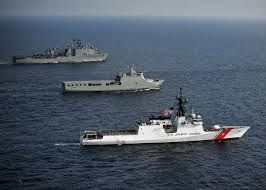
IMG_4128

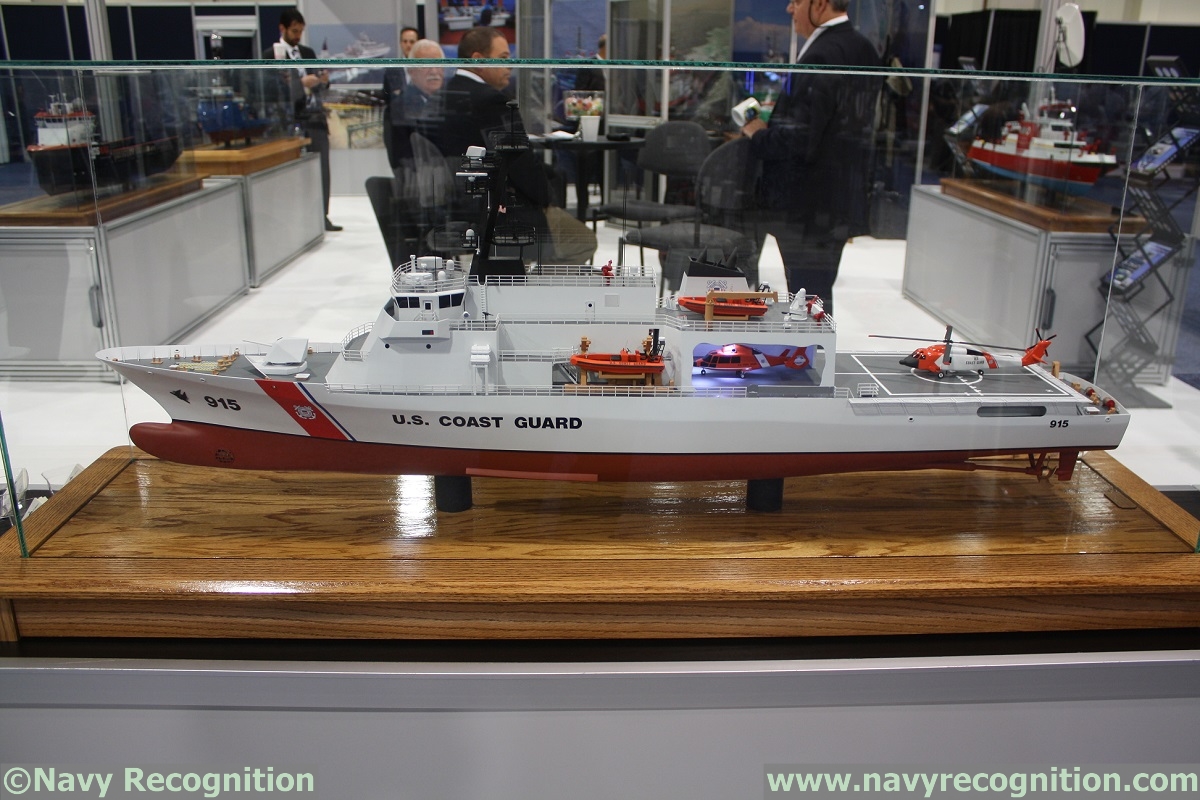
I have been reading over Congressional Research Service’s Specialist in Naval Affairs Ronald O’Rourke’s prepared statement before the House Transportation and Infrastructure Committee’s Coast Guard and Maritime Transportation Subcommittee Hearing on The Status of Coast Guard Cutter Acquisition Programs, February 3, 2016. The implications are a bit startling.

By using Block Buy Contracting (BBC) and Multi-Year Procurement (MYP), the Coast Guard might save as much as $1.2B. This is an opportunity that may not come again for at least 30 years.  

This breaks down to about $100M on contracting for the remaining 26 Fast Response Cutters, $100M on a contract for two heavy icebreakers, and a whopping $1B over the life of the Offshore Patrol Cutter procurement.

We have never used these contracting methods before, but the Navy has with great success in their Burke class DDG, Virginia class submarine, and LCS programs.

The Congress has already granted authority to use Multi-Year Procurement (MYP) for the Offshore Patrol Cutter program, but because of the requirement of the law covering MYP a contract under these provisions probably could not be negotiated until at least FY2022 by which time the first five ships would have already been contracted for. Block Buy Contracting would require specific enabling legislation but could allow additional savings beginning in FY2018.

I would encourage reading the entire statement. There are only seven pages of testimony and ten pages of background appendices, but I’ll provide a “Reader’s Digest” version. Hopefully the author will forgive me for re-editing his work.

“The Coast Guard has used contracts with options in cutter acquisition programs. A contract with options may look like a form of multiyear contracting, but operates more like a series of annual contracts. Contracts with options do not achieve the reductions in acquisition costs that are possible with MYP and BBC.

“MYP can reduce the unit procurement costs of ships by roughly 10%, compared to unit procurement costs under the standard or default approach of annual contracting. BBC can reduce the unit procurement costs of ships by amounts comparable to those of MYP, if the authority granted for using BBC explicitly includes authority for making economic order quantity (EOQ) purchases (i.e., up-front batch purchases) of components. If the authority granted for using BBC does not explicitly include authority for making EOQ purchases, then the savings from BBC will be less—in the range of roughly 5%. EOQ authority comes automatically with MYP authority, but must be explicitly included in legislation granting BBC authority.

BBC, unlike MYP, can be used at the outset of a shipbuilding program, starting with the lead ship in the class. (emphasis applied–Chuck) MYP, in contrast, cannot be used until the lead ship has completed construction. Thus, for a class of ships that is procured at a rate of one ship per year and in which each ship takes five years to build, BBC can be a contracting option starting with the first ship in the class, and MYP can become a contracting option starting with the fifth or sixth ship in the class. This difference is due to the requirement under the statute governing MYP (10 U.S.C. 2306b) that a program must demonstrate design stability to qualify for MYP. In a shipbuilding program, design stability is typically demonstrated by completing the construction of the lead ship in the class.

“The Coast Guard wants to procure a total of 25 OPCs, and currently plans to use a contract with options for acquiring the first 9 to 11 ships in the program. The OPC program can be viewed as a candidate for instead using BBC for the initial ships in the program, and either BBC or MYP for later ships in the program. If using BBC and MYP were to reduce the acquisition costs of OPCs by about 10% (compared to costs under a contract with options), the savings would amount to roughly $1 billion. An alternate way to characterize such savings would be to say that using BBC or MYP would enable the Coast Guard to get about two and a half of the 25 OPCs for “free,” or to pay for the acquisition of a polar icebreaker.

“The Coast Guard plans to soon award a contract with options for acquiring the final 26 ships in the 58- ship FRC program. The final 26 ships in the program can be viewed as a candidate for instead using either MYP or BBC. If using MYP or BBC were to reduce the acquisition costs of OPCs by about 10% (compared to costs under a contract with options), the savings would amount to more than $100 million. An alternate way to characterize such savings would be to say that using MYP or BBC could enable the Coast Guard to get about two and a half of the 26 FRCs for “free.”

“The Offshore Patrol Cutter (OPC) program and the polar icebreaker (PIB) program can be viewed as candidates for using BBC, and the Fast Response Cutter (FRC) program can be viewed as a candidate for using either MYP or BBC. Using MYP and BBC for all three of these programs might produce savings totaling about $1.2 billion, an amount roughly equivalent to the average annual funding level in the Coast Guard’s Acquisition, Construction, and Improvements (AC&I) account. In considering whether to grant authority for using MYP or BBC for these programs, Congress may weigh the potential savings of these contracting mechanisms against the tradeoffs…From a congressional perspective, tradeoffs in making greater use of MYP and BBC include the following:  reduced congressional control over year-to-year spending, and tying the hands of future Congresses;  reduced flexibility for making changes in Coast Guard acquisition programs in response to unforeseen changes in strategic or budgetary circumstances (which can cause any needed funding reductions to fall more heavily on acquisition programs not covered by MYP or BBC contracts);  a potential need to shift funding from later fiscal years to earlier fiscal years to fund EOQ purchases of components;  the risk of having to make penalty payments to shipbuilders if multiyear contracts need to be terminated due to unavailability of funds needed for the continuation of the contracts; and  the risk that materials and components purchased for ships to be procured in future years might go to waste if those ships are not eventually procured.”

There seems little doubt we will need all the ships currently planned. The commitment is only a minuscule percentage of the Federal Budget, and therefore constitutes an extremely small risk. Use of Block Buy and Multi-Year Procurement could bring stability to the Coast Guard’s AC&I funding and result savings equal to an entire year’s worth of AC&I funding.

Naval Science and Technology, “Future Force”

Eaglespeak has brought to my attention a quarterly magazine that is available on line, that I had not been previously aware of: Naval Science and Technology, “Future Force”

It has a number of interesting articles, including:

  • Weather satellites
  • Wave Prediction
  • Ice prediction
  • Using unmanned ground vehicles for maritime interdiction boardings, and
  • Detecting Lasers

I have added the magazine to the recommended blog lis for future reference.


Argentine Coast Guard Sinks Chinese Fishing Vessel

This Video does not appear to show the sinking of the fishing vessel. Speckles on the hull of the F/V seen at time 0:20 and 0:50 may be bullet holes. The video does appear to show the participants.  

We have reports (here and here) that the Argentine Coast Guard (Prefectura Naval Argentina (PNA)) fired on and sank a Chinese fishing vessel (F/V), the Lu Yan Yuan Yu 010, believed to have been fishing illegally, after the F/V failed to stop after shots were fired across its bow and it allegedly attempted to ram the Coast Guard vessel. The crew reportedly was rescued, without fatalities, four by the Argentine vessel and the rest of the crew by another Chinese F/V.

ArgentineCutter

Photo by Diegoventu: PNA Doctor Manuel Mantilla (GC-24), a sistership of the Argentine vessel involved.

The PNA vessel seen in the video, Prefecto Durbes (GC-28) is one of five offshore patrol vessels (OPVs) built in Spain for Argentina. The Mexican Navy also has six similar vessels with larger flight decks and more powerful engines. In size they slot between the Reliance Class and the Bear Class, being 67 meters (220 feet) overall. Unlike the Reliance class, they have a hangar for their version of the H-65.

In addition to machine guns, these ships are reportedly armed with a Bofors 40mm/70, but looking at the video, the location where the gun was mounted (on the platform forward of the bridge and one deck above the foc’sle) is vacant. This suggest that the damage was probably done by .50 cal. machine guns. We know from our Vietnam experience that .50 cal. can sink fishing vessels, but the ranges are very short. Looking at the video the ships appeared to be no more than 300 yards apart.

It is a bit surprising no casualties were reported, although the reports say no fatalities, they do not say no injuries so that is still a possibility. Did the crew of the OPV order the Chinese crew to abandon before sinking the F/V, or did they perhaps tell them where they were not going to shoot so that the crew could assemble safely? It does not sound like it. We have only this statement from an Argentine representative that after actions by the Chinese vessel,  “…the order was given to fire on different sections of the vessel, damaging it,” It is unlikely, but not impossible, the crew helped the ship sink to destroy any evidence of wrong doing.

More on the Navy’s New Design for Maintaining Maritime Superiority

Waesche Carat 2012

This is a post I wrote for CIMSEC. under the title “A Design for Maintaining Maritime Superiority”–A Coastie’s View.” It is an expanded version of an earlier post that appeared here. The rewrite really begins about half way down under the header, “What I Want to See.”

Recently the new Chief of Naval Operations issued a document “Design for Maintaining Maritime Superiority” that outlines how, hopefully, the US Navy can maintain a maritime superiority our foes will recognize and avoid confronting.

If you look for anything specifically regarding the Coast Guard here, you will not find it (other than the cutter in the formation on the cover). The Coast Guard is not mentioned even once, but it does talk about some things that are Coast Guard related. Perhaps the Coast Guard should not feel bad about this. It only mentions the Marine Corps once.

Three Forces that are Changing the Environment

  • The first global force is the traffic on the oceans, seas, and waterways, including the sea floor – the classic maritime system.
  • A second increasingly influential force is the rise of the global information system – the information that rides on the servers, undersea cables, satellites, and wireless networks that increasingly envelop and connect the globe.
  • The third interrelated force is the increasing rate of technological creation and adoption.

Obviously the Coast Guard facilitates and regulates marine traffic, and is tapped into the global information system. In wartime, these contacts will become essential since they will form the basis for naval control of shipping. He also talks about new trade routes opening in the Arctic. These will only be reliable if we have new icebreakers. He also talks about illegal trafficking.

“This maritime traffic also includes mass and uncontrolled migration and illicit shipment of material and people.”

A Document That Explicitly Recognizes the Competition

“For the first time in 25 years, the United States is facing a return to great power competition. Russia and China both have advanced their military capabilities to act as global powers. Their goals are backed by a growing arsenal of high-end warfighting capabilities, many of which are focused specifically on our vulnerabilities and are increasingly designed from the ground up to leverage the maritime, technological and information systems. They continue to develop and field information-enabled weapons, both kinetic and non-kinetic, with increasing range, precision and destructive capacity. Both China and Russia are also engaging in coercion and competition below the traditional thresholds of high-end conflict, but nonetheless exploit the weakness of accepted norms in space, cyber and the electromagnetic spectrum. The Russian Navy is operating with a frequency and in areas not seen for almost two decades, and the Chinese PLA(N) is extending its reach around the world.

“…Coupled with a continued dedication to furthering its nuclear weapons and missile programs, North Korea’s provocative actions continue to threaten security in North Asia and beyond.

“…while the recent international agreement with Iran is intended to curb its nuclear ambitions, Tehran’s advanced missiles, proxy forces and other conventional capabilities continue to pose threats to which the Navy must remain prepared to respond.

“…international terrorist groups have proven their resilience and adaptability and now pose a long-term threat to stability and security around the world.”

Recognizing Budgetary Limitations

“There is also a fourth ‘force’ that shapes our security environment. Barring an unforeseen change, even as we face new challenges and an increasing pace, the Defense and Navy budgets likely will continue to be under pressure. We will not be able to “buy” our way out of the challenges that we face. The budget environment will force tough choices but must also inspire new thinking.”

Throughout there is an emphasis on understanding history and the strategic concepts of the past. There is also a recognition of the need to work with partners.

“EXPAND AND STRENGTHEN OUR NETWORK OF PARTNERS: Deepen operational relationships with other services, agencies, industry, allies and partners – who operate with the Navy to support our shared interests.”

Other than the Marine Corps, the US Navy has no closer partner than the US Coast Guard. And while only about one eighth the size of the US Navy, in terms of personnel, the US Coast Guard is larger than Britain’s Royal Navy or the French Navy. The partnership has been a long and successful one, but I would like to see the Navy be a better partner to the Coast Guard. This is how the Navy can help the Coast Guard help the Navy.

What I Want to See

If we have a “run out of money, now we have to think” situation, one thing we can do is to try to get the maximum return from the relatively small investment needed to make the Coast Guard an effective naval reserve force.

WPC Kathleen_Moore

We need explicit support from the Navy at every level, particularly within Congress and the Administration, for Coast Guard recapitalization. While the Navy’s fleet averages approximately 14 years old. The Coast Guard’s major cutters average over 40. The proposed new ships, are more capable than those they replace. They are better able to work cooperatively with the Navy. The nine unit 4,500 ton “National Security Cutter”program is nearing completion with funds for the ninth ship in the FY2016 budget. The 58 unit, 154 foot, 353 ton Webber Class  program is well underway with 32 completed, building, or funded. But the Coast Guard is about to start its largest acquisition in history, 25 LCS sized Offshore Patrol Cutters. Unfortunately, it appears that while the first ship will be funded in FY2018 the last will not be completed until at least 2035. This program really needs to be accelerated.

We need an explicit statement from the Navy that they expect the Coast Guard to defend ports against unconventional threats, so that they can keep more forces forward deployed. This is in fact the current reality. The Sea Frontiers are long gone. Navy vessels no longer patrol the US coast. The surface Navy is concentrated in only a handful of ports. No Navy surface combatants are homeported on the East Coast north of the Chesapeake Bay. If a vessel suspected of being under the control of terrorists approaches the US coast the nearest Navy surface vessel may be hundreds of miles away.

We need the Navy to supply the weapons the Coast Guard need to defend ports against unconventional attack using vessels of any size, with a probability approaching 100%. These should include small missile systems like Hellfire or Griffin to stop small, fast, highly maneuverable threats and we need a ship stopper, probably a light weight anti-ship torpedoes that target propellers to stop larger threats. We need these systems on not just the largest cutters, in fact they are needed more by the the smaller cutters that are far more likely to be in a position to make a difference. These include the Webber class and perhaps even the smaller WPBs.

We need to reactivate the Coast Guard’s ASW program and ensure that all the new large cutters (National Security Cutters and Offshore Patrol Cutters) have an ASW capability, if not installed on all of the cutters, at least planned, prototyped, tested, and practiced on a few ships (particularly in the Pacific). The National Security Cutters and the Offshore Patrol Cutters are (or will be) capable of supporting MH-60R ASW helicopters. Adding a towed array likeCAPTAS-4 (the basis for the LCS ASW module) or CAPTAS-2 would give them a useful ASW capability that could be used to escort ARGs, fleet train, or high value cargo shipments. Towed arrays might even help catch semi-submersible drug runners in peacetime.

IMG_4128

The Coast Guard is the low end of America’s Naval high-low mix. It is a source of numbers when numbers are needed. The Coast Guard has more assets for low end functions like blockade than the Navy. The Navy has about 105 cruisers, destroyers, LCS, PCs, and is not expected to have more than 125 similar assets for the forseeable future. The Coast Guard has about 165 patrol cutters  including 75 patrol boats 87 feet long, about 50 patrol craft 110 to 154 feet in length (58 Webber class WPCs are planned), and about 40 ships 210 foot or larger that can be called on, just as they were during the Vietnam War, when the Coast Guard operated as many as 33 vessels off the coast in support of Operation MarketTime, in spite of the fact that the Navy had almost three times as many surface warships as they do now. The current program of record will provide 34 new generation cutters including nine 4500 ton National Security Cutters and 25 Offshore Patrol Cutters that should be at least 2500 tons.

The Coast Guard provides peacetime maritime security, but is currently under-armed even for this mission. A small investment could make it far more useful in wartime.

(Note there is another post on this looking at the “design” from a Navy point of view.)

Japan CG Vice Commandant for Ops Interview

Maritime Reporter & Engineering News interviews VADM Satoshi NAKAJIMA, Vice Commandant for Operations, Japan Coast Guard.

The Japan Coast Guard has a long association with the USCG, Capt. Frank Meals provided advice, prior to its formation.

It is apparent Chinese claims regarding, and actions around, the Senkaku Islands are much on his mind. The Japan Coast Guard making moves to assist similar organizations, notably the Coast Guards of Vietnam and the Philippines.

There is also a brief description of the Japan Coast Guard.


Sensor Hosting Autonomous Remote Craft (SHARC)

These little Unmanned Surface Vehicles (USVs) may be one way to enhance our Maritime Domain Awareness. They have already traveled a million nautical miles.

NavyRecognition has the story.

I could see a line of these in the Eastern Pacific, used to detect drug smuggling semi-submersibles.

Perhaps we will also see them used to cue Anti-Submarine Warfare Continuous Trail Unmanned Vessels.(ACTUV) or maritime patrol aircraft to the presence of submarines. It might not be too expensive to provide a line of them covering an entire trans oceanic route.

There will almost certainly be a war time role for launching these or something similar. Maybe a role for our buoy tenders.

Loss of the Leopold, 9 March 1944

Leopold_DE-319

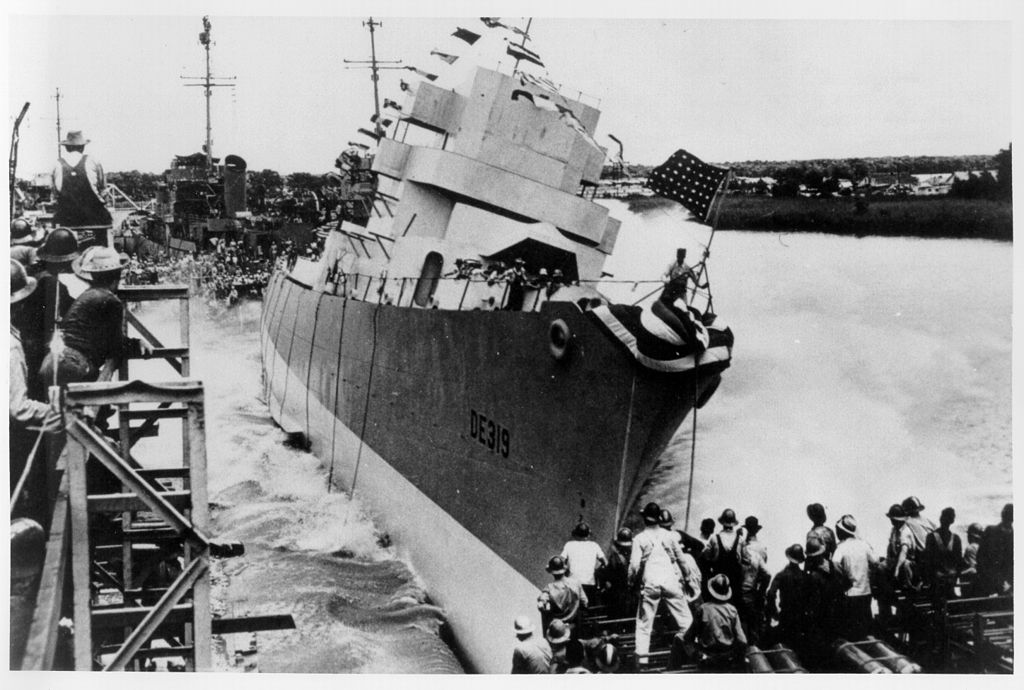
On 9 March 1944, one of the 30 destroyer escorts the Coast Guard manned during WWII, USS Leopold (DE-319), was sunk south of Iceland, in the midst of a Gale, by what was then a new, cutting edge weapon, an acoustic homing torpedo.

All of the Leopold’s 13 officers and 158 of her complement of 186 enlisted men were lost.  There were only 28 survivors.

This was the second largest loss of life (171) in a single incident in Coast Guard history, exceeded only by the Explosion of the USS Serpens (AK-97) which killed 196 Coastguardsmen. It is more than the USCGC Tampa (111), the Escanaba (103), or the USCGC Muskeget (116) and many more than D-Day of the Normandy invasion (13).

USS_Joyce_(DE-317)_during_WWII

USS Joyce (DE-317), also Coast Guard manned, was Leopold’s sistership. She rescued 28 survivors from a crew of 199.

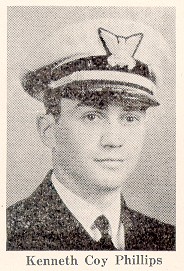
LeopoldCO_LCDR_Kenneth_Coy_Phillips

Photo: Leopold’s CO, LCdr Phillips 

Specifications for the Leopold and Joyce. Edsall Class Destroyer Escort

  • Displacement: 1,253 tons standard; 1,590 tons full load
  • Length: 306’ (93.3 m) oa
  • Beam: 36’7” (11.2 m)
  • Draft: 10′ 5′ (3.2 m) full load
  • Machinery: 2-shaft Fairbanks Morse diesels, 6,000 bhp
  • Range:  10,800 nmi at 12 knots
  • Top Speed: 21 knots
  • Complement: 186 
  • Armament: 3 x 3”/50; 2 x 40mm; 8 x 20mm; 3 x 21″ torpedo tubes; 2 x depth charge tracks; 8 x depth charge projectors; 1 x hedge hog.

Twelve of this class were transferred to the Coast Guard 1951 to 1954 for service as Ocean Station Vessels. Ten of those had been Coast Guard manned during WWII. This class had the logistics and training advantage, that they had the same engines as the 311 foot cutters

Rogue Wave Prediction

gCaptain reports that MIT claims to have developed an algorithm that can provide warning of incoming rogue waves two to three minutes before they arrive.

“Rogue waves can measure eight times higher than the surrounding seas and can strike in otherwise calm waters, with virtually no warning … To put the algorithm into practice, he says ships and offshore platforms will have to utilize high-resolution scanning technologies such as LIDAR and radar to measure the surrounding waves.”

Having been on the old Mackinaw on a relatively calm day and suddenly taking a 53 degree role without any warning, I am a believer.