Why the “J-model” C-130s Make Such a Difference

LIMA, PERU, 10.06.2023, Courtesy Photo, USCG District 11
The aircrew of the Coast Guard 2007, an HC-130 based out of U.S. Coast Guard
Air Station Barbers Point, Hawaii, poses for a picture with observers from the Peruvian Navy and Air Force, in Lima Peru, October 2023. During the course of two weeks, Peruvian observers accompanied the USCG aircrew as they conducted overflights of the fishing fleet on the high seas during Operation Southern Shield 2023. (U.S. Coast Guard photo by pilot-in-charge, Lt. Zachary Hunter.) Note the six bladed props that identify the C-130J. 

Below is a news release, “Coast Guard accepts 16th missionized HC-130J into fleet,” from the Acquisitions Directorate (CG-9). There is more here than the announcement of a newly missionized aircraft. The post goes on to talk about the advantages the C-130Js bring to the service, particularly in the Pacific.

The C-130Js provide a 20 percent increase in speed and a 40 percent increase in range over the HC-130H, as well as much improved avionics. The Coast Guard is moving to a fleet of 22 HC-130Js and retiring all their C-130Hs.

The Coast Guard also has 14 HC-27Js and 18 HC-144s all being equipped with Minotaur.

HC-130J Characteristics

  • Length: 97 feet 9 inches
  • Wingspan: 132 feet 7 inches
  • Height: 38 feet 11 inches
  • Maximum Weight: 175,000 pounds
  • Cruise Speed: 320 knots true airspeed
  • Range: 4,900 nautical miles
  • Endurance: 20+ hours

HC-130J Features

  • Standardized Minotaur mission system across all Coast Guard fixed-wing aircraft
  • Real-time tracking and Rescue 21 integration to enhance common operating picture and maritime domain awareness
  • Advanced radar and electro-optical/infrared sensors for search and rescue, law enforcement and intelligence gathering missions; the Coast Guard’s Super Hercules is the first HC-130 aircraft in the world with a 360-degree, belly-mounted, multimode surface search radar
  • Commonality of command, control, communication, computers, cyber, intelligence, surveillance and reconnaissance components and capabilities with those on the Coast Guard’s medium range surveillance aircraft

Minotaur Features

  • Commonality of command, control, communications, computers, cyber, intelligence, surveillance and reconnaissance components and capabilities across all Coast Guard fixed-wing surveillance aircraft
  • Interoperability with multiple Defense and Homeland Security department platforms
  • Real-time tracking and Rescue 21 integration to enhance common operating picture and maritime domain awareness
  • Automatic Dependent Surveillance – Broadcast technology to receive traffic and weather broadcasts and information about other aircraft, including identification, position and altitude
  • Tactical screen replay to review a target’s entire flight in seconds and track the target via its trajectory, even if the target stops broadcasting information or otherwise evades the sensors

The Coast Guard has nine air stations operating fixed wing search aircraft. There are six in the Atlantic Area, which includes the Gulf of Mexico.

  • Cape Cod, MA (C-144)
  • Elizabeth City, NC (C-130, C-27, C-144)
  • Miami, FL (C-144)
  • Clearwater, FL (C-130)
  • Mobile, AL (C-144)
  • Corpus Christi, TX (C-144)

There are only three Coast Guard air stations operating fixed wing search aircraft in the Pacific Area.

  • Sacramento (C-27)
  • Barbers Point, HI (C-130)
  • Kodiak, AK (C-130)

Kodiak and Barbers Point certainly needed the additional range and on-station time that the C-130Js provide.

Barbers Point is the only Coast Guard air station in the 14th District, despite the fact that the 14th District includes 48% of the entire US’s Exclusive Economic Zone (EEZ), and has additional responsibilities to assist the Federated States of Micronesia (FSM), the Republic of the Marshall Islands (RMI), and the Republic of Palau under the Compact of Free Association which together have an EEZ total equal to more than 49% that of the US.


Coast Guard accepts 16th missionized HC-130J into fleet
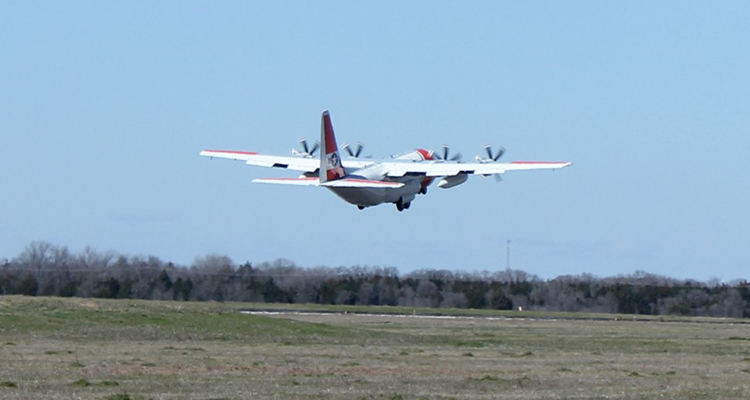
The Coast Guard’s 16th fully missionized HC-130J takes off for its first test flight following the year-long missionization and Block Upgrade 8.1 modification at L3Harris in Waco, Texas. U.S. Coast Guard photo.


The Coast Guard accepted delivery of its 16th fully missionized HC-130J long range surveillance aircraft, CGNR 2016, Feb. 19 following completion of Minotaur mission system integration and Block Upgrade 8.1 installation at L3Harris in Waco, Texas.

The aircraft was delivered to Air Station Elizabeth City in Elizabeth City, North Carolina, returning that air station to its full complement of five HC-130J aircraft. The air station was temporarily operating with four aircraft while an Elizabeth City HC-130J was assigned to Air Station Barbers Point, Hawaii, to complete the transition of that facility to HC-130J operations.

The more advanced engines, six-blade propellors and Minotaur-integrated sensors of the HC-130J enable the Coast Guard to better respond to mariners in peril by improving response times, extending time on scene for search and rescue and law enforcement patrols, and increasing effectiveness and versatility. Regarding the latest air station transition, the improvements are ideally suited for Barbers Point’s vast jurisdiction – 12.2 million square miles of open ocean, atolls and island chains, which make up the Coast Guard’s Fourteenth District.

Three recent natural disasters in Air Station Barbers Point’s area of responsibility have highlighted the value of the improved aircraft, especially the 26% increase in patrol range over the legacy HC-130H.

  • A Barbers Point HC-130J flew 2,300 miles to be the first aircraft on scene after Typhoon Mawar struck Saipan in May 2023, performing overflight assessments and delivering critically needed relief supplies. Over a week, the aircraft flew over 97 flight hours and dispatched 400,000 pounds of cargo and 169 passengers.
  • Barbers Point aircrews responded when wildfires burned thousands of acres in Maui, Hawaii, in August 2023, providing search and rescue and damage assessment along with moving passengers and cargo for disaster relief.
  • Barbers Point HC-130J aircrews answered the call when Tropical Cyclone Lola slammed the island nation of Vanuatu in October 2023, assessing the damage to ports, airports and critical infrastructure. Aircrews also delivered over 80,000 pounds of relief supplies.

The HC-130J and its Minotaur system also play a vital role in identifying and monitoring illegal fishing by providing surveillance and gathering intelligence on suspicious fishing activities. That information is shared with local and national authorities and aids in determining what vessels need to be boarded for inspection.

The service’s Super Hercules aircraft carry out many Coast Guard missions, including search and rescue, drug and migrant interdiction, cargo and personnel transport, and maritime stewardship, as well as providing critical support to Department of Homeland Security partners. The aircraft also can serve as a command and control or surveillance platform capable of identifying and classifying objects and sharing that information with operational forces.

For more information: HC-130J Long Range Surveillance Aircraft Program page and Minotaur Mission System page
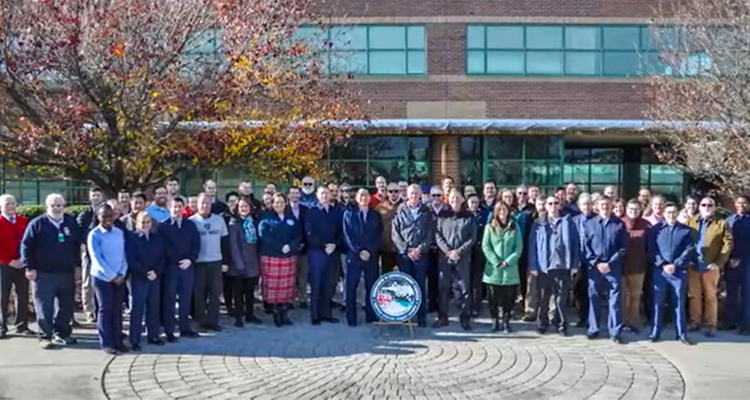
“Research and Development Center projects continue to enhance Coast Guard mission success” –CG-9

The Coast Guard Research and Development Center workforce is based in New London, Connecticut. U.S. Coast Guard photo.

Below is a news release from the Acquisitions Directorate (CG-9). If you follow the links there is a huge amount of information.

There is a lot of ongoing work, including cooperation with 4th Fleet in their efforts to operationalize unmanned systems. I had hoped the Coast Guard was doing that, and it’s gratifying to see they in fact are.

The projects listed are wide ranging and may potentially impact every mission area.

Perhaps the biggest surprise was that they are working on detect and avoid systems for small UAS. It appears they are looking at beyond visual line of sight UAS that could be used by the Fast Response Cutters and other vessels that do not have a flight deck. Apparently, they are also looking at using Unmanned Surface Vessels (USVs) to fire warning shots, presumably to stop drug runners. Would that mean they would also use USVs for disabling fire?

They are also looking at counter UAS alternatives, at ways to operate more effectively in polar regions, maritime domain awareness, and a lot more. It’s very impressive, especially when you consider how little the Coast Guard spends on R&D.


In fiscal year 2023, the Coast Guard Research and Development Center in New London, Connecticut, supported a research portfolio of 54 projects, covering the full scope of the Coast Guard’s missions. This video highlights a few of those projects, including beyond visual line of sight unmanned aircraft system detect and avoid technology, cutter-based unmanned systems integration with the Ship Control and Navigation Training System, International Maritime Organization polar code validation through advanced simulation modeling, and laser corrosion removal.

View video here.

Related: FY24 RDT&E Project Portfolio

For more information: Research and Development Center page and Research, Development, Test & Evaluation and Innovation Program page


“USS LEYTE GULF DEPLOYS FROM NORFOLK TO U.S. 4TH FLEET” –2ND FLEET

040501-N-7586B-122, Gulf of Oman (May 1, 2004) – Members of the Vessel Board Search and Seizure (VBSS) team return to the guided missile cruiser USS Leyte Gulf (CG 55) in a Rigid Hull Inflatable Boat (RHIB) after searching several fishing dhows in the Gulf of Oman. U.S. Navy photo by Photographer’s Mate 1st Class Bart Bauer. (RELEASED)

Below is a US 2nd Fleet news release.

News about Navy ships deployed to 4th Fleet has been sparse, but recently I noted the return of a destroyer, USS Farragut, from the 4th Fleet and remarked on how I was surprised they used a DDG rather than an LCS for this drug interdiction mission. Before they were all decommissioned, these missions were typically done by Perry class frigates. DDGs have been used in the past but lately the mission has been done almost exclusively by LCS. At one point in 2020, the administration made a big point of “surging” ships to the Drug interdiction zone, but in fact, that only happened because the carrier in a carrier strike group was unable to make its deployment and the escorts were suddenly at loose ends and available.

Cruisers are normally AAW coordinators for carrier strike groups. Deploying one independently to 4th Fleet is rare indeed.

Again, I suspect they may be there for reasons unrelated to drug interdiction. The DDG apparently stayed in the Caribbean rather than entering the Eastern Pacific, where we have a greater shortage of capable drug interdiction assets.


USS LEYTE GULF DEPLOYS FROM NORFOLK TO U.S. 4TH FLEET

By Lt.J.G. Jayden Hodgson, USS Leyte Gulf Public Affairs

28 January 2024, 

The Ticonderoga-class guided-missile cruiser USS Leyte Gulf (CG 55) departed Naval Station Norfolk on deployment, Jan. 28.

Leyte Gulf will independently deploy to the U.S. 4th Fleet area of operations.

Throughout the fall, the ship conducted extensive underway operations throughout the Western Atlantic in preparation for their tasking.

“Leyte Gulf and her crew are excited to work with our partner nations and services to maintain maritime security and interoperability in the Caribbean and South American areas of operation,” said Capt. Nate Diaz, commanding officer of Leyte Gulf.

The ship’s crew is comprised of more than 40 officers and nearly 350 enlisted Sailors.

“The crew continued to display a high level of proficiency and readiness during our sustainment phase,” said Leyte Gulf Command Master Chief Jason Kutsch. “We look forward to exercising the capabilities of our ship and crew while deployed.”

While deployed, Leyte Gulf will host Helicopter Maritime Strike Squadron (HSM) 50 and Coast Guard Law Enforcement Detachment 404 to provide robust expertise in keeping illegal drugs from reaching the shores of the U.S. and its regional partner nations. Leyte Gulf is scheduled to conduct passing exercises with other regional partners as well as several theater security cooperation port visits to strengthen maritime partnerships, enhance U.S. maritime posture and counter threats such as illicit drug trafficking.

Leyte Gulf was commissioned Sept. 26, 1987, and commemorates the largest naval battle in modern history fought in Oct. 1944. The Battle of Leyte Gulf was critical in turning the tide in the Pacific during World War II.

“USS Farragut Returns Home Following a Successful SOUTHCOM Deployment” –4th Fleet

190914-N-KK394-029.MAYPORT, Fla. (Sept. 14, 2019) USS Farragut (DDG 99) (U.S. Navy photo by Mass Communication Specialist 2nd Class Anderson W. Branch/Released)

Below is a news release from USNAVSOUTH/4TH FLEET PUBLIC AFFAIRS.

We have not seen much recently about Navy support of drug interdiction efforts. The US Naval Institute’s Fleet and Marine Tracker no longer includes tabular information about the number of Navy ships deployed to the various fleets, which used to give us some indication. Hopefully we will be seeing more reports like the one below.

Does seem like an LCS would have been a more appropriate choice for the operation, but perhaps there were other considerations. Farragut was deployed for more than three months. Sounds like they spent their time in the Caribbean rather than the Eastern Pacific. Their Deployment began long before the Venezuela/Guyana flap, but I am sure Guyana and the British felt more comfortable, knowing a DDG and other assets were in the neighborhood.


Feb. 3, 2024

MAYPORT, Fla. – The Arleigh Burke-Class Destroyer USS Farragut (DDG 99) returned to U.S. Naval Station Mayport, Fla., Feb. 3, 2024, following the ship’s successful deployment under U.S. 4th Fleet to the U.S. Southern Command area of responsibility.

Farragut, along with the “Valkyries” of Helicopter Maritime Strike Squadron (HSM) 50 Det 2 deployed in September 2023 to support Joint Interagency Task Force (JIATF)-South’s counter-narcotics operations in the Caribbean Sea.

During the deployment, Farragut, with her embarked U.S. Coast Guard Law Enforcement Detachment (LEDET), apprehended or disrupted an estimated 1,770 kilograms of cocaine worth an estimated street value of more than $44 million and the detention of 18 suspected illicit drug runners.

“Every Sailor and Coast Guardsmen had a role in this team effort,” said Farragut Commanding Officer Cmdr. Tom Roberts. “We, alongside allies and partners, seized the opportunity to advance regional and strategic objectives in the area of operations, supporting our nation and our Navy. I could not be more proud of our team and their accomplishments.”

Farragut, the LEDET, and HSM 50 Det 2 conducted operations with the Dominican Navy and British Royal Navy to assist with the apprehension and transfer of personnel and cargo. Farragut also conducted deck landing qualifications with Joint Task Force Bravo (JTF-B) Soldiers, qualifying 18 UH-60A Black Hawk helicopter pilots for maritime operations.

Farragut’s port visits included Willemstad, Curacao, where the ship hosted local students and military personnel to showcase the capabilities of Farragut and discuss the daily lives of Sailors onboard a U.S. naval warship.

“The crew of USS Farragut demonstrated tremendous proficiency and professionalism while executing theater security cooperation events and counter illicit trafficking operations throughout their extended 4-month deployment.” said Capt. Bryan Gallo, Commodore of Task Force FOUR FIVE.

CTF 45 is the U.S. 4th Fleet surface task force charged with executing combined naval operations, building and strengthening regional maritime partnerships, and acting as a DoD-ready service provider to JIATF-South in support of counter-illicit trafficking operations in Central and South American waters.

U.S. Naval Forces Southern Command/U.S. 4th Fleet is the trusted maritime partner for Caribbean, Central and South America maritime forces leading to improved unity, security and stability.

“U.S. Approves Potential $3.9B MQ-9B UAV Sale to India” –USNI

An MQ-9 Sea Guardian unmanned maritime surveillance aircraft system flies over the Pacific Ocean during U.S. Pacific Fleet’s Unmanned Systems Integrated Battle Problem (UxS IBP) 21, April 21. UxS IBP 21 integrates manned and unmanned capabilities into challenging operational scenarios to generate warfighting advantages. US Navy Photo

The US Naval Institute News Service reports,

The State Department greenlit a potential $3.9 billion deal of General Atomics MQ-9B drones to India today…The proposed package for the Indian military includes 31 SkyGuardian unmanned aerial vehicles, 310 Small Diameter Bombs and 170 Hellfire missiles. Associated radars and anti-submarine equipment for the maritime-focused SeaGuardian variant, a derivative of the SkyGuardian, were also included.

It appears, India will join Allies Australia, Belgium, Canada, Italy, Japan (Coast Guard and Maritime Self Defense Force), the Netherlands, and the UK as operators of the MQ-9 for Maritime Domain Awareness.

$3.9B is a scary number if you are the Coast Guard, but this is a large, comprehensive, and probably multi-year procurement, probably including training and support. This is also a joint service procurement with the Indian Air Force getting eight aircraft, the Indian Army eight, and the Indian Navy sixteen.

This is what the US Coast Guard Acquistions Directorate (CG-9) says about Land-based UAS,

“The Coast Guard has validated a mission need for land-based UAS to significantly enhance ocean surveillance in support of the service’s operations. Coast Guard land-based UAS flight crews are jointly operating maritime-variant Predator UAS (Guardian) on maritime missions with Customs and Border Protection to enhance the Coast Guard’s understanding of potential land-based UAS solutions and support the development of a land-based UAS requirements package.”

That sounds suspiciously like, we are doing the same thing we have been doing for what, the last two decades? I can understand the hesitance to get into land based UAS before Sense and Avoid systems, allowing Remotely Piloted Air Systems (RPAS) to operate in the national airspace, were developed, but they are available now. Time to move on this.

We don’t have to jump in with both feet. We can do what we are still doing with Scan Eagle and use contractor owned and operated systems, but let’s at least see what the latest systems can do for us.

Maybe a detachment of land based UAS like the MQ-9B Sea Guardians in Florida or Puerto Rico, where they can support the 20 Webber class District 7 FRCs that do not have organic air assets.

” U.S., CARICOM reaffirm cooperation on guns, drugs and youth violence” –The Watch

Map of the Caribbean Sea and its islands. Photo credit: Wikipedia Commons, author–Kmusser, all data from Vector Map.

Below is a post from the NORTHCOM on-line magazine “The Watch.” This seems to suggest we will be getting better Caribbean Maritime Domain Awareness.


THE WATCH STAFF, Jan. 17, 2024

The U.S. and the Caribbean Community (CARICOM, an intergovernmental organization linking 15 member states), along with the Dominican Republic, have reaffirmed their efforts to combat illegal activities in the Caribbean that threaten their national security interests.

The signatory nations released a diplomatic note on November 22, 2023, outlining steps to achieve three goals: substantially reduce illicit trafficking, advance public safety and security, and prevent youth crime and violence in the Caribbean.

The agreement reiterates goals set out in a 2010 agreement, the note states, and promises new efforts to tackle regional issues.

CARICOM, the Dominican Republic and the U.S. also “welcome” a U.N. mission to restore safety and security in Haiti, according to the statement.

The agreement authorizes work to strengthen maritime prosecutions and encourage regional cooperation on maritime law enforcement, implementing the Caribbean Maritime Security Strategy to improve defense and law enforcement cooperation, as well as operational capacity and security.

Maritime domain awareness technology will be employed to disrupt criminal networks and deter narcotics, firearms, human trafficking, and illegal fishing. To do that, the agreement states, CARICOM countries will need to complete a memorandum of understanding to access and share information via live feeds from sensors, radars and identification systems.

The U.S., CARICOM and the Dominican Republic pledged to create two working groups on maritime issues and border and port security in 2024.

The agreement also bolsters efforts to stem youth violence, tighten efforts to bring transnational criminal organizations to justice, and promises help to improve Caribbean judicial and law enforcement capabilities.

The goals echo homeland defense objectives articulated by the commander of U.S. Northern Command and the North American Aerospace Defense Command, Gen. Glen D. VanHerck, who singled out the Bahamas, a key Caribbean ally, as crucial to the defense of the southeastern approaches to the homeland.

VanHerck praised the Bahamas for its cooperation in increasing domain awareness in the region and enhancing Caribbean security.

“Our partners in the Royal Bahamian Defence Force (RBDF) continue to punch above their weight as they continue to provide important contributions to regional security. USNORTHCOM and the RBDF operate maritime surveillance systems at Great Inagua and Coral Harbour, and plans are on track to add a third site in the coming years. That shared capability has significant benefits for domain awareness in the southern approaches to North America,” VanHerck told Congress in March 2023 testimony.

The agreement also promises to increase cooperation with France, the Netherlands and U.K. to improve regional security in their Caribbean overseas territories.

“Navy’s 4th Fleet sets sights on command center upgrades for drone ops” –Defense Scoop

Commercial operators deploy Saildrone Voyager Unmanned Surface Vessels (USVs) out to sea in the initial steps of U.S. 4th Fleet’s Operation Windward Stack during a launch from Naval Air Station Key West’s Mole Pier and Truman Harbor, Sept. 13, 2023. (U.S. Navy photo by Danette Baso Silvers/Released)

Defense Scoop reports,

“We have the robots and we’re making lots of progress there, but in terms of what we have at the headquarters and how we actually manage the command for it [and] how we manage that data — it’s overwhelming,” Rear Adm. Jim Aiken said.
I have been a bit disappointed, we have heard so little from 4th Fleet about their effort to integrate uncrewed systems into their operations.
4th Fleet is particularly important to the Coast Guard since it manages drug interdiction operations in the Caribbean and Eastern Pacific. There are also a significant number of Coast Guard personnel on the 4th Fleet staff, so there is an opportunity to learn a lot from their experience with uncrewed systems.
From what we had heard, 4th Fleet has had a good picture of drug smuggling traffic but were short of surface assets to do the actual intercepts and boardings. The uncrewed assets are obviously not helping with that. While they almost certainly provide some good data, they are also introducing a lot of noise into the system that 4th Fleet was not ready to filter out.

“Coast Guard reports fatality following counter drug mission in Caribbean Sea” –Coast Guard News

Below is a press release from Coast Guard news.

Coast Guard reports fatality following counter drug mission in Caribbean Sea

MIAMI – A Coast Guard crew’s airborne use of force to stop a non-compliant vessel suspected of smuggling illicit narcotics in the Caribbean Sea resulted in a fatality, Jan. 2, 2024.

Two other suspected smugglers were apprehended and face prosecution in U.S. federal courts by the Department of Justice. The seized contraband, approximately 385 kilograms of cocaine with an estimated wholesale value of $11.1 million, will be transferred ashore at a later date.

On Jan. 1, a U.S. Coast Guard law enforcement detachment deployed aboard a U.S. Navy ship in the Caribbean Sea for a counter drug patrol identified a vessel suspected of smuggling narcotics and attempted to stop the vessel. The vessel failed to stop and Coast Guard District Seven authorized airborne use of force in accordance with policy, including warning shots and disabling fire, for a non-compliant vessel suspected of smuggling illicit narcotics in international waters.

The law enforcement boarding team arrived on scene and identified that one of the crewmembers suffered an injury as a result of the use of force. Navy and Coast Guard members performed first aid and transferred the injured individual to the Navy ship before they were medically evacuated by a Navy helicopter to higher level care ashore in the Dominican Republic. The Coast Guard later received a report from Dominican authorities that the patient, a Dominican national, succumbed to their injuries.

“The critical homeland security missions the Coast Guard conducts every day as America’s primary maritime law enforcement agency are inherently dangerous,” said Lt. Cmdr. John W. Beal, Coast Guard District Seven public affairs officer. “The Coast Guard takes any loss of life seriously and is working to investigate the incident in accordance with Coast Guard policy.”

Detecting and interdicting illegal drug traffickers on the high seas involves significant interagency and international coordination. Once interdiction becomes imminent, the law enforcement phase of the operation begins and control of the operation shifts to the U.S. Coast Guard throughout the interdiction and apprehension phases. Interdictions in the Caribbean Sea are performed by members of the U.S. Coast Guard under the authority and control of the Coast Guard’s Seventh District, headquartered in Miami.

“Royal Bermuda Regiment hosts Caribbean overseas territories to improve SAR capability” –The Watch

British Overseas Territories in the Caribbean in blue. Credit: Bild der Karte:

Royal Bermuda Regiment hosts Caribbean overseas territories to improve SAR capabilities–Jan 5, 2024

Five British Overseas Territories recently took part in a two-week training session led by the United Kingdom Coast Guard and the Royal National Lifeboat Institute (RNLI), a nonprofit that trains coast guards globally, with the goal of improving the interoperability of Caribbean search and rescue (SAR) operations.

Anguilla, the British Virgin Islands, the Cayman Islands, Montserrat, and the Turks and Caicos Islands participated in water-based exercises and tabletop exercises at the Royal Bermuda Regiment’s Coast Guard headquarters in Sandys.

His Majesty’s Coastguard Cmdr. Callum Jarvis said one of the key elements of the training was to introduce new scenarios to the Caribbean coast guards.

A big part of this has been using the experiences of the guys — they’ve worked within their own organizations and had their own experiences, so we’ve been drawing those out of them but also exposing them to things that don’t happen so often, so not your usual type of cases but still a potential threat,” Callum said in a Royal Bermuda Regiment news release.

“We’ve looked at the general trend of what happens in Bermuda — lots of small leisure boats, that sort of thing — and we’ve also covered incidents with merchant vessels, for example, which guys here aren’t quite so used to. We focused on Bermuda as a location, but things can happen anywhere globally and hopefully now if there is something they’re less familiar with, they will be well prepared for it.”
The training scenarios included locating overdue vessels and setting up mayday relay protocols.

Dave Whiddon, a RNLI senior international programs manager, said, “The whole idea of our international work is to help organizations build their search and rescue capacity. We like to be able to share our expertise and knowledge, but also it’s a good opportunity for us to learn as well and bring back learning to our own organizations.”
Royal Bermuda Regiment Lance Cpl. Quinton Burgess said the value of the exercise is that he can now train others.

“They’ve been here training us to be trainers, to take the information and impart it to the rest of our teams. We’ve been doing lots of things: search and rescue coordination, search and rescue tasking, man overboard drills, docking drills, coming alongside, anchoring drills and a lot of class work as well,” said Burgess in the news release.

“These are skills that we will use and they’re also things that we will teach new recruits when they come to the Coast Guard.”

Midshipman Ericka Rockett-McBean of the Cayman Islands Coast Guard enjoyed the opportunity to learn next to crews from different jurisdictions.

“It’s nice to know and relate to people in other overseas territories.”

“FS Dumont d’Urville Makes First Visit to Florida” –SeaWaves

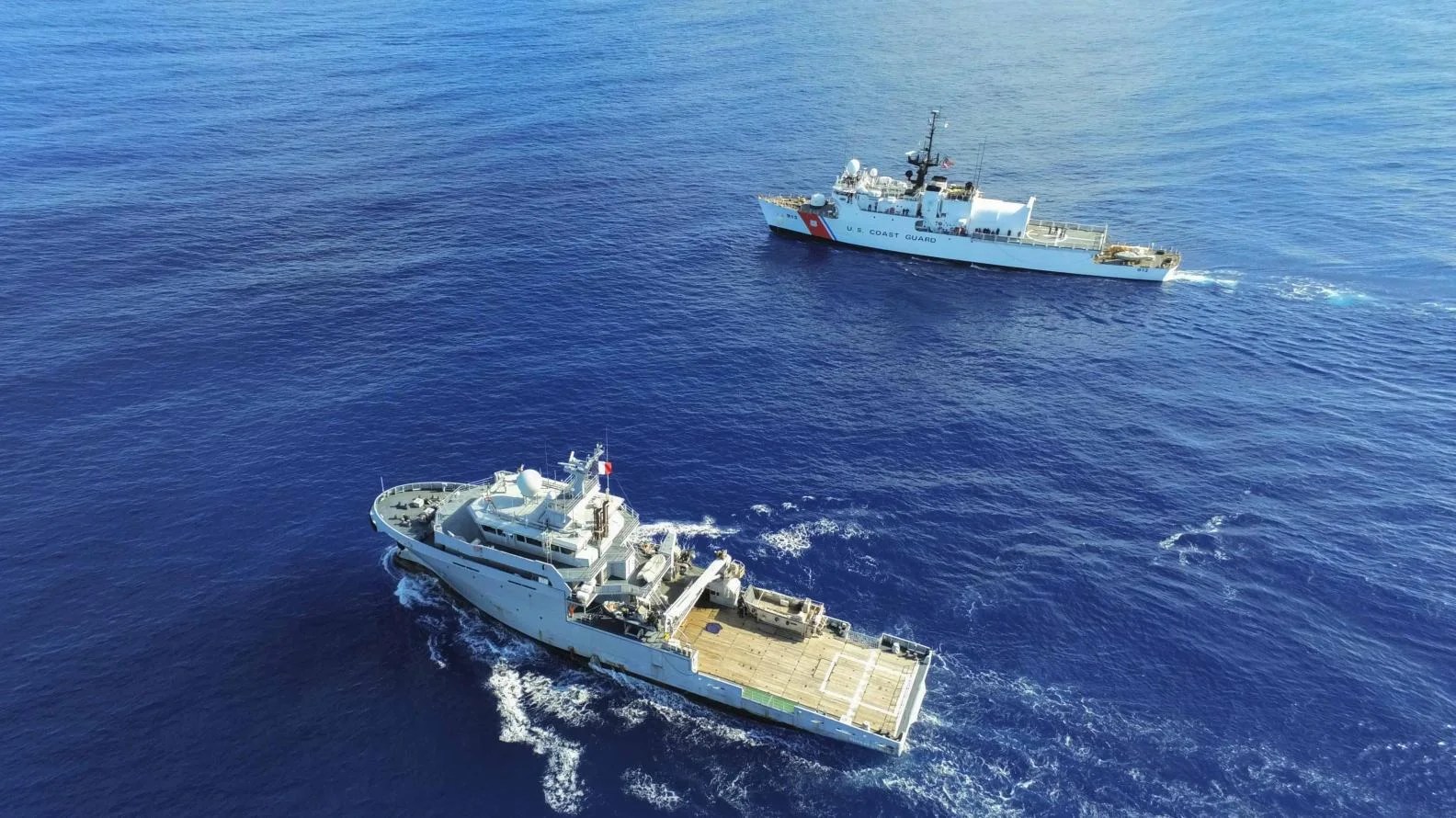
FS Dumont d’Urville and USCGC Mohawk conduct joint exercises, Dec. 6,2023

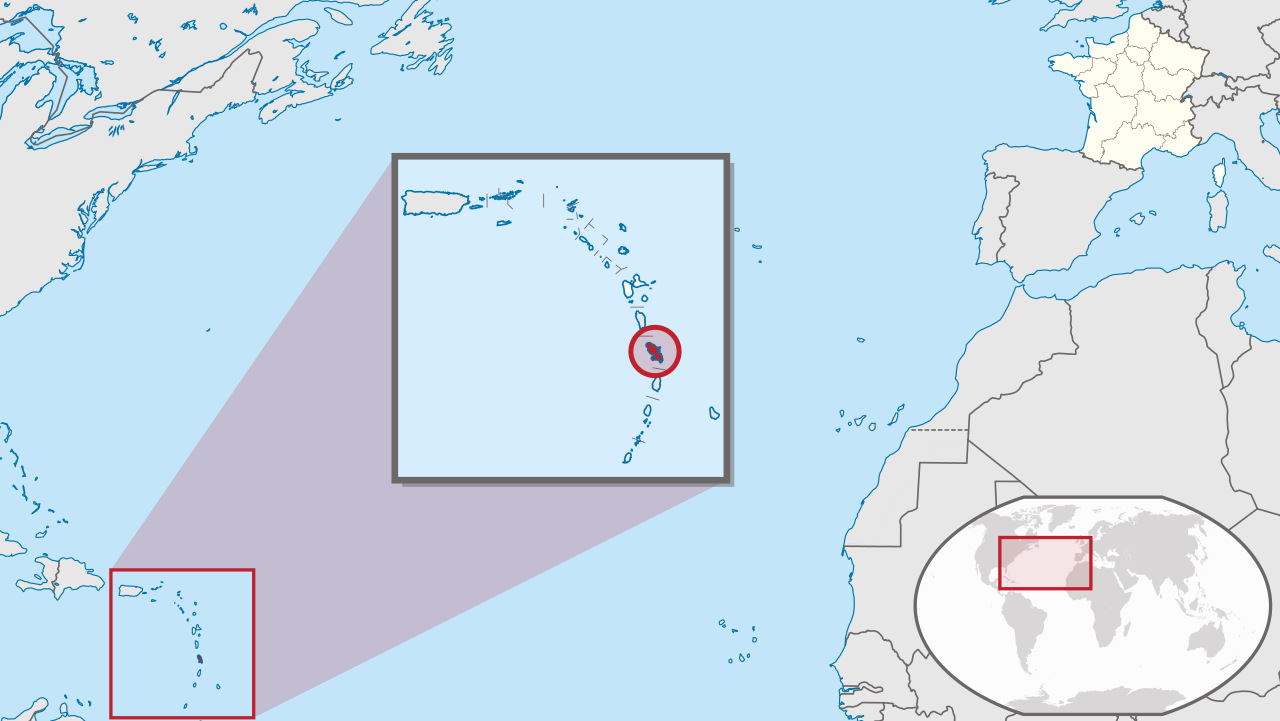
SeaWaves reports on a visit by the French “Overseas Support and Assistance Building” (BSAOM) ship Dumont d’Urville to Coast Guard Base Miami following its first operational mission. The ship is based in Fort-de-France, Martinique.

Location of Martinique, a department of France. Author: Tubs, via Wikipedia.

We talked about this class of four ships before. There is a lot of information, including additional links, in the comments.

d’Entrecasteux-class / BSAOM vessels main characteristics:

Length overall: 64.95 m (213′)
Breadth: 14 m (46′)
Draft: 4.20 m
Displacement (full load): 2,300 tons
Displacement (light): 1,500 tons
Speed (max): 13 knots (also reported as high as 15 knots)
Hull / superstructure: Steel
Amenities: 23 (crew) + 60 passengers
Cargo capacity: 200 tons (solid cargo) / 150 m3 of water / 180 m3 of fuel
Endurance: 30 days at sea