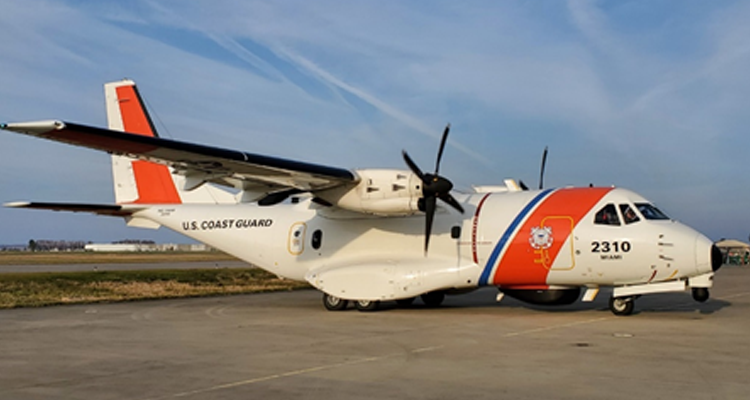
CGNR 2310 departs for its second test flight after completing Minotaur missionization. It is the Coast Guard’s ninth HC-144B Ocean Sentry outfitted with both Ocean Sentry Refresh modifications and the Minotaur mission system. U.S. Coast Guard photo by Aviation Engineering Warrant Officer 3 Randy Jopp.
The Coast Guard accepted delivery of its ninth HC-144B Ocean Sentry medium range surveillance aircraft outfitted with both the Ocean Sentry Refresh (OSR) modifications and the Minotaur mission system Dec. 16, 2020. Modifications to CGNR 2310 were completed at the Aviation Logistics Center in Elizabeth City, North Carolina. The aircraft will be based at Coast Guard Air Station Miami.
The OSR project upgrades the aircraft with a new flight management system, which manages communication control, navigation and equipment monitoring. After the OSR upgrade is completed, each aircraft is redesignated as an HC-144B.
Minotaur integrates installed sensors and radar and provides dramatically improved data fusion as well as information processing and sharing capabilities.
Completion of missionization and upgrade of a 10th HC-144 is scheduled for June 2021. The service plans to upgrade each of the service’s 18 HC-144s by 2024.
New Minotaur operator workstations are being installed on all HC-144Bs. Minotaur provides dramatically improved data fusion and integrates installed sensors and radar. U.S. Coast Guard photo by Aviation Engineering Warrant Officer 3 Randy Jopp.
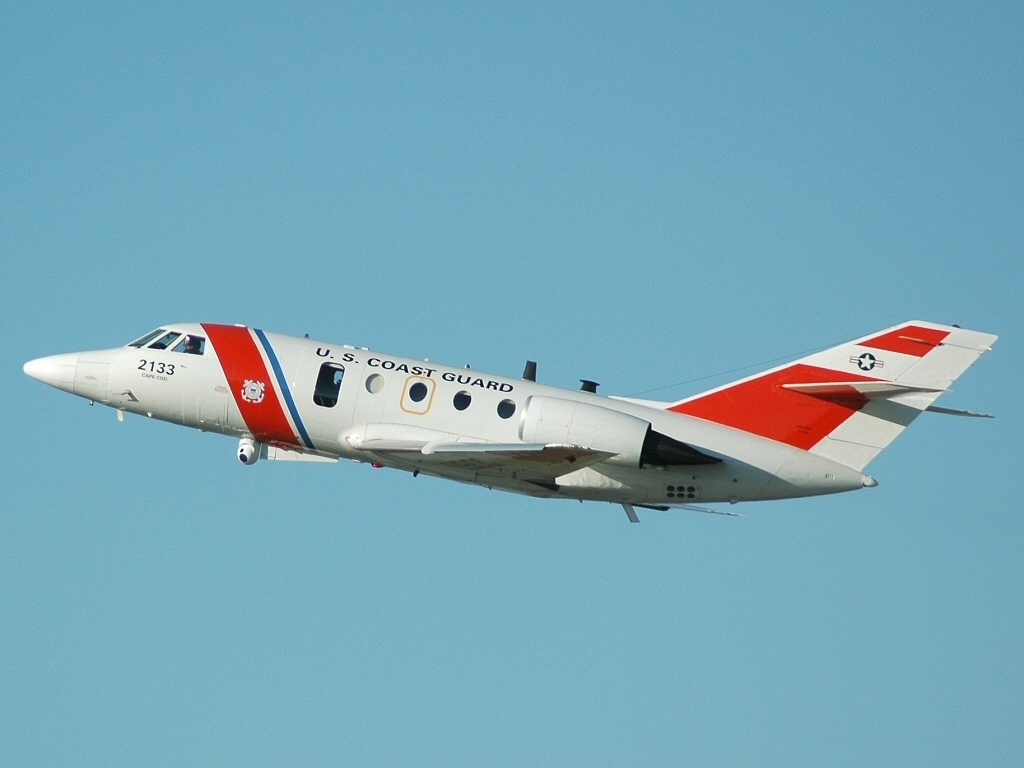
Naval news reports that the French Navy is buying some Falcon Jet aircraft from Dassault. Maybe they look familiar. This aircraft is a bit different, but the family resemblance is clear. Maybe some Nostalgia?
The deal means Airbus will supply 16 C295s to replace six de Havilland Canada CC-155 Buffalos and 13 CC-130H Hercules at four bases spread across Canada, providing search and rescue services from the Arctic to the southern border with the USA.
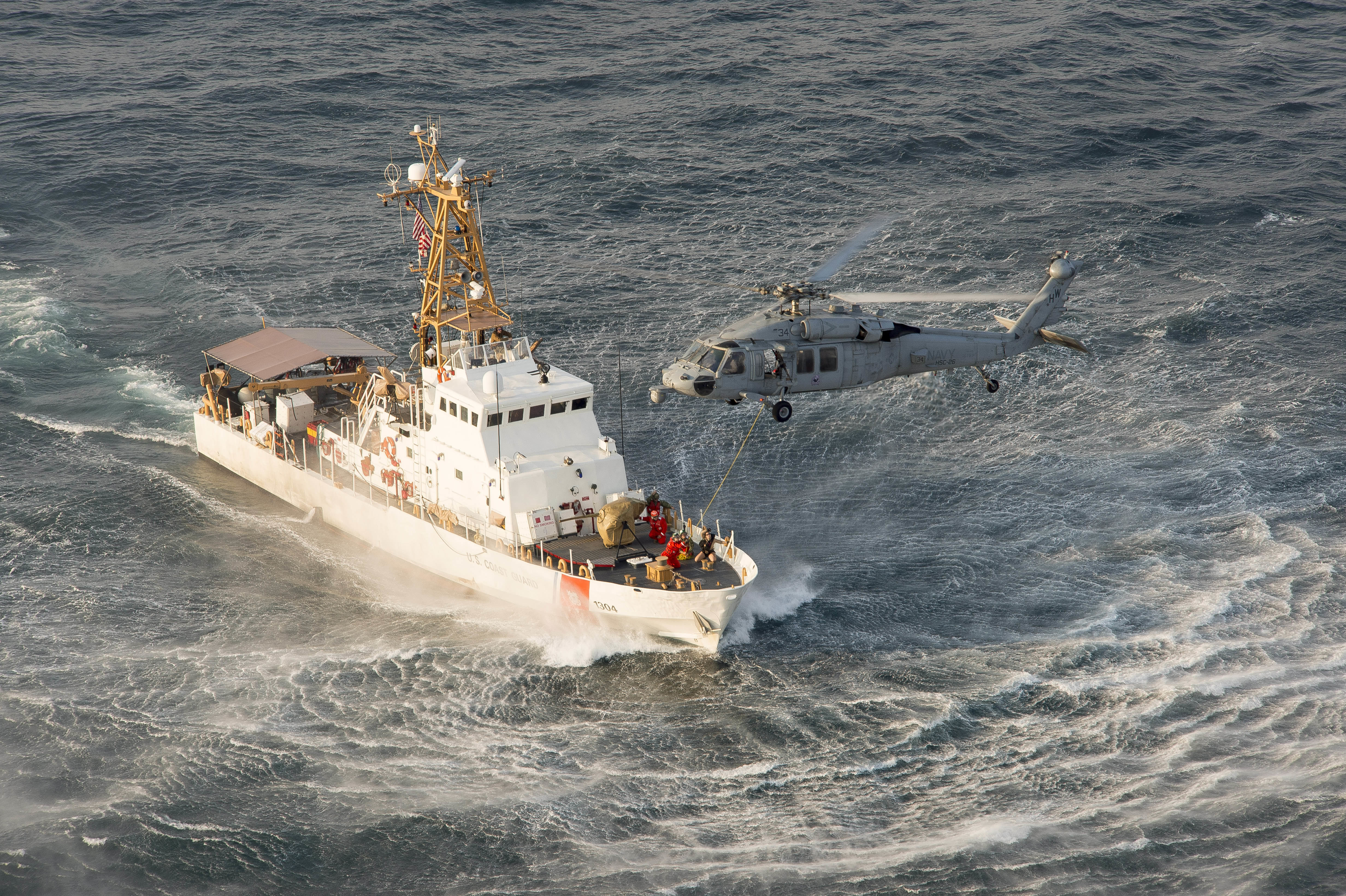
141219-N-DX365-258 BAHRAIN (Dec. 19, 2014) Helicopter Sea Combat Squadron (HSC) 26, Det. 1, conducts a vertical onboard delivery with the U.S. Coast Guard Cutter Maui (WPB 1304). HSC-26 is a forward deployed naval force asset attached to Commander, Task Force 53 to provide combat logistics and search and rescue capability throughout the U.S. 5th Fleet area of responsibility. (U.S. Navy photo by Mass Communication Specialist 1st Class Joan E. Jennings/Released)
Forbes points to growing strain in the Navy/Coast Guard relationship as defense focus shifts from counter terrorism to near peer conflict.
The author, Craig Hooper, points to limits on reimbursement of Coast Guard costs in support of DOD, limited Navy support for drug interdiction and law enforcement efforts, a push for more Coast Guard assets in the Western Pacific, a need to recapitalize the Coast Guard Yard as a national asset, and possible deployment of Navy personnel and assets, particularly rotary wing, to aid in the execution of missions.
“Reorienting the Coast Guard to address “new” state-based threats is a complex problem that will require patient investment and a lot of preparatory work to be successful. The Coast Guard is part of America’s large National Fleet, and the tighter integration of Coast Guard forces—along with the U.S. Merchant Marine, NOAA’s research fleet and other Federal maritime assets—into the U.S. national security mission space merits thoughtful consideration…”
The topic raises a number of issues.
The Coast Guard is simply underfunded. If the Coast Guard’s defense related missions were properly recognized and funded as part of our very day missions, no reimbursement would be necessary. Certainly fisheries patrols in the US Western Pacific EEZ are a real everyday Coast Guard mission.
As cutters go increasingly into harms way, maybe they need to be better equipped for the possibility of combat.
Mobilization planning really should address how Navy Reserve Personnel and equipment, notably ASW helicopters, LCS mission modules, and ASW, EW, and Weapons operators and support personnel, could augment cutters and bring them up to a wartime compliment.
DefenseSyetems reports the Coast Guard is working with DOD’s Joint Artificial Intelligence Center (JAIC)
“We’re looking see how do a better job doing predictive maintenance for aircraft, helicopters in particular,”
—
So far, JAIC has released the first version of an algorithm to help with H60 Blackhawk maintenance to the Special Operations Command that will then head to the Army, Air Force and Navy. It is also working on solutions to help firefighters predict a fire’s movements and intensity and aid humanitarian assistance and disaster relief efforts, like California’s wildfires.
Schiebel’s Camcopter S-100 will start tests with the Norwegian Coast Guard in fall 2019. Schiebel
Seapower Magazine is reporting that the Norwegian Coast Guard is to begin a second set of tests to confirm the usefulness of a vertical Take-off and Landing (VTOL) Unmanned Air System (UAS) for SAR in the Arctic environment.
The UAS, the Schiebel Camcopter S-100, has a max takeoff weight of 200 kg (441 lb), a length of 3.11 m (10 ft 2 in), and a main rotor diameter of 3.4 m (11 ft 2 in). The system is widely used, including operation by the German, Italian, and Chinese Navies and the Russian Coast Guard. (More here). It is much more compact than even the smaller MQ-8B version of Fire Scout which has a max. takeoff weight: of 3,150 lb (1,430 kg), a length of 23.95 ft (7.3 m), and a main rotor diameter of 27.5 ft (8.4 m)
We might want to ask if we could send an observer or at least get the results of their evaluation.
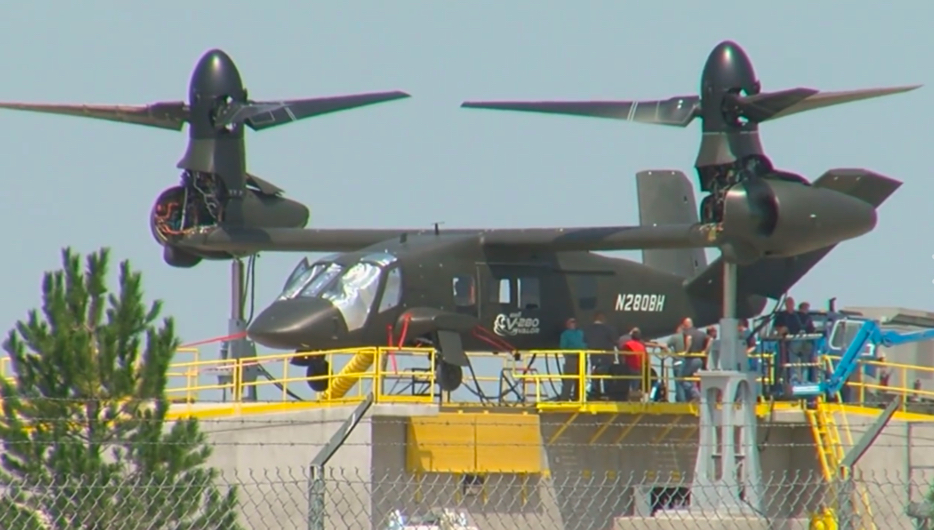
A recent DefenseNews post reports that the Army has issued a Request for Information (RFI) (read it here) for a Future Long Range Assault Aircraft (FLRAA) to be fielded by FY2030. This would be a replacement for their H-60 Blackhawks.
There are some details of what they expect.
Price: “… roughly $43 million per unit.”
“FLRAA — at a minimum — to have a 95% maximum rated power to perform a 500 feet per minute vertical rate of climb from a hover-out-of-ground effect. The helicopter should be able to fly at 6,000 feet in 95 degree heat with 12 passengers.…objective requirements for the aircraft to maintain 100% maximum continuous power in a 500 feet per minute vertical climb.”
Range: Threshold 1,725 nautical miles one way without refueling. Objective 2,449.
170327-N-VS214-002 SAN DIEGO (March 27, 2017) A MQ-8C Fire Scout helicopter sits in the hangar bay of the littoral combat ship USS Montgomery (LCS 8). (U.S. Navy photo by Mass Communication Specialist 3rd Class Zachary Eshleman/Released)
“What’s important to us right now is making sure we have the right sensors, a good multi-function radar, some kind of passive targeting capability and the right networks to push that information to the right people at the right times.”
When the Navy finally gets around to deploying LCS to the drug transit zones, these could be very useful.
Reportedly they will provide, “…a circle of influence and sea control out to about 300 miles” although probability of detection almost certainly depends on target size and characteristics.
Leonardo’s Osprey AESA radar. The two panel configuration allows 240 degree coverage. A three panel configuration allows 360 degree coverage as on Norway’s AW101 SAR helicopters. Configurations of up to four panels are possible (Photo by Leonardo)
“Each antenna contains 256 Transmit and Receive Modules (TRM) – 25% more than that the single array on the Seaspray 7500E radar fitted to U.S. Coast Guard HC-130J Hercules search aircraft (also a Leonardo product–Chuck). The antennas, which can be used in several different modes including surface search, air-to-air and synthetic aperture radar and moving target indication, are controlled through a single processing unit which collects the data and displays it as presenting a single radar picture.”
Ultimately as more of the “C” models are built, we might see them on Coast Guard cutters. There is also the possibility that as more of the larger “C” models come on line, the Coast Guard may be able to get some of the smaller “B” models. The “B” model did operate for Bertholf for two weeks.
The larger C model, with its higher speed, greater payload, better sensors, and 11+ hour endurance, would certainly be an improvement over the ScanEagle currently planned for the National Security Cutters. Whether the “B” model‘s presumably better sensors but shorter range/endurance would allow a greater effective search area compared to the ScanEagle I could only speculate, but I suspect it would also be an improvement, using perhaps two flights per day.
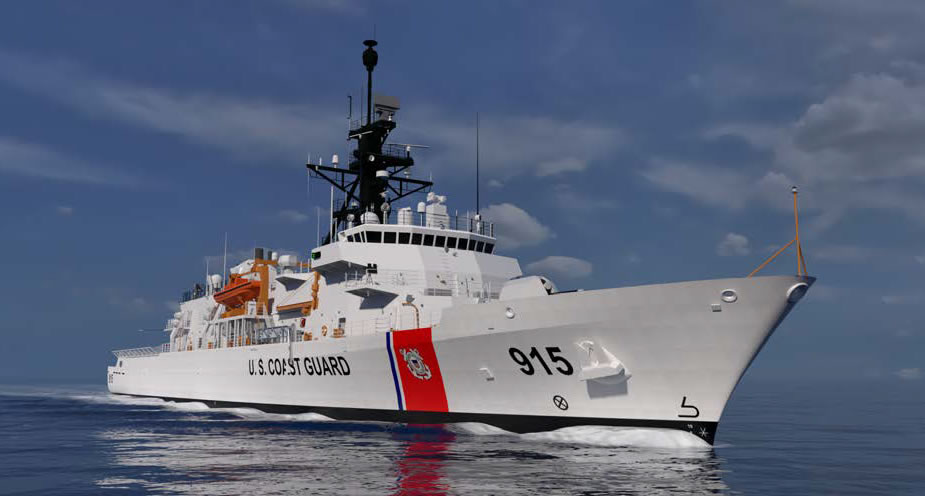
The National Security Cutters could certainly support both an H-65 and an MQ-8C, since they can support two H-65s. It is less clear if the OPC could support both. They reportedly can support an MH-60 or an H-65 and a UAS, but what size UAS?
These systems suggest that at some point, at least on our largest cutters, we may be able to relieve shipboard manned helicopters the routine search function.
$1,507.6M For Ships (LLTI refers to Long Lead Time Material):
$675M for the first Polar Security Cutter and LLTM for the second
$400M for the second Offshore Patrol Cutter and LLTM for the third
$340M for six Fast Response Cutters
$72.6M for the National Security Cutter program
$15M for life extension work on Polar Star
$5M for initial work on procuring an additional Great Lakes Icebreaker
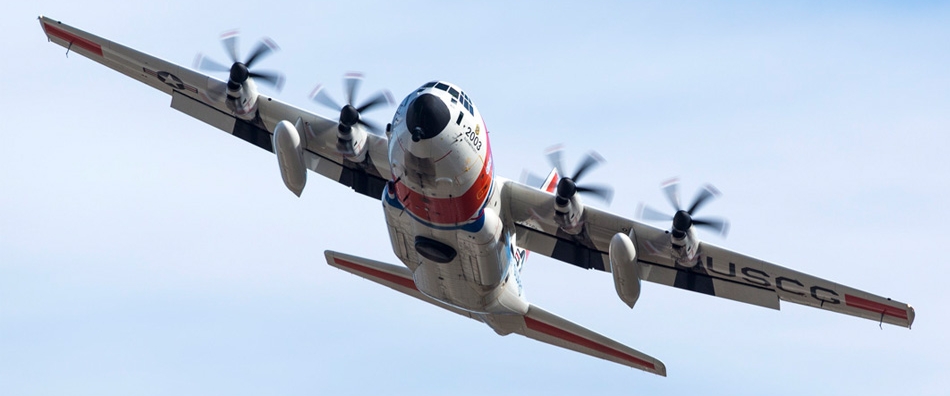
Coast Guard C-130J
$208M For Aircraft:
$105 for the HC-130J program (I think that is one aircraft)
$95M for MH-60T recapitalization (reworking existing aircraft I believe)
$8M for upgrades to the MH-65s
That is $1,715M for the items above. This, hopefully, is not all. I don’t have a figure for the Waterways Commerce Cutter (a small figure at this point), no information on unmanned systems, and there should also be money to address the backlog of shoreside improvements, but this does seem to show a recognition of the real needs of the Coast Guard for recapitalization. Looks like the $2+B annually for PC&I the Coast Guard has been saying they need is within reach.
180710-G-ZV557-1313 PACIFIC OCEAN (July 10, 2018) Crewmembers aboard the USCGC Bertholf (WMSL 750) check the flight deck July 10, 2018, alongside the flight crew of the a U.S. Navy HSC-4 Black Knight MH-60 helicopter 15 miles south of Oahu, Hawaii, while in support of RIMPAC 2018. Photo by Petty Officer 2nd Class David Weydert
We previously discussed the fact that the Coast Guard is working on life extension programs for both the MH-65s and the MH-60s, but a recent post from the Naval Institute News Service brought up an interesting possibility that might offer increased capability.
We would like to enlarge the MH-65 fleet, but, because that now appears impossible, we will be obtaining and rejuvenating some Navy H-60 airframes.
“Part of the Coast Guard’s strategy includes refurbishing used Navy MH-60 Seahawks and keep them flying for about 20,000 more hours.”
Presumably these airframes will bring along their folding rotor blades and tails that would permit them to be hangered on most of our larger ships.
I’m wondering if we will retain the ability to take these helicopters to sea. It could substantially improve shipboard helicopter range, endurance, and weight carrying ability.. Perhaps the helicopter Interdiction Tactical Squadron (HITRON) in Jacksonville should get some of these aircraft. (They currently have ten MH-65Ds. They will probably need to retain some H-65s as long as we are using 210s for drug interdiction.)









 Chuck Hill's CG Blog
