“UNITAS LXV Begins in Valparaiso, Chile” –SOUTHCOM

UNITAS LXV commenced today in Valparaiso, Chile, with 17 ships, two submarines, and 23 aircraft operated and supported by more than 4,300 Sailors and Marines from 24 nations. UNITAS is the world’s longest-running multinational maritime exercise, conceived in 1959 and executed without fail since 1960.

Below is a U.S. Naval Forces Southern Command / U.S. 4th Fleet Public Affairs news release. 

Notably there are no Coast Guard floating units or aircraft participating this year but U.S. Coast Guard (USCG) Tactical Law Enforcement Team (TACLET) Pacific Law Enforcement Detachment (LEDET); and USCG Maritime Security Response Team East (MSRTE) Direct Action Section are providing their special expertise.

This exercise is about disaster response and law enforcement as much as war fighting.

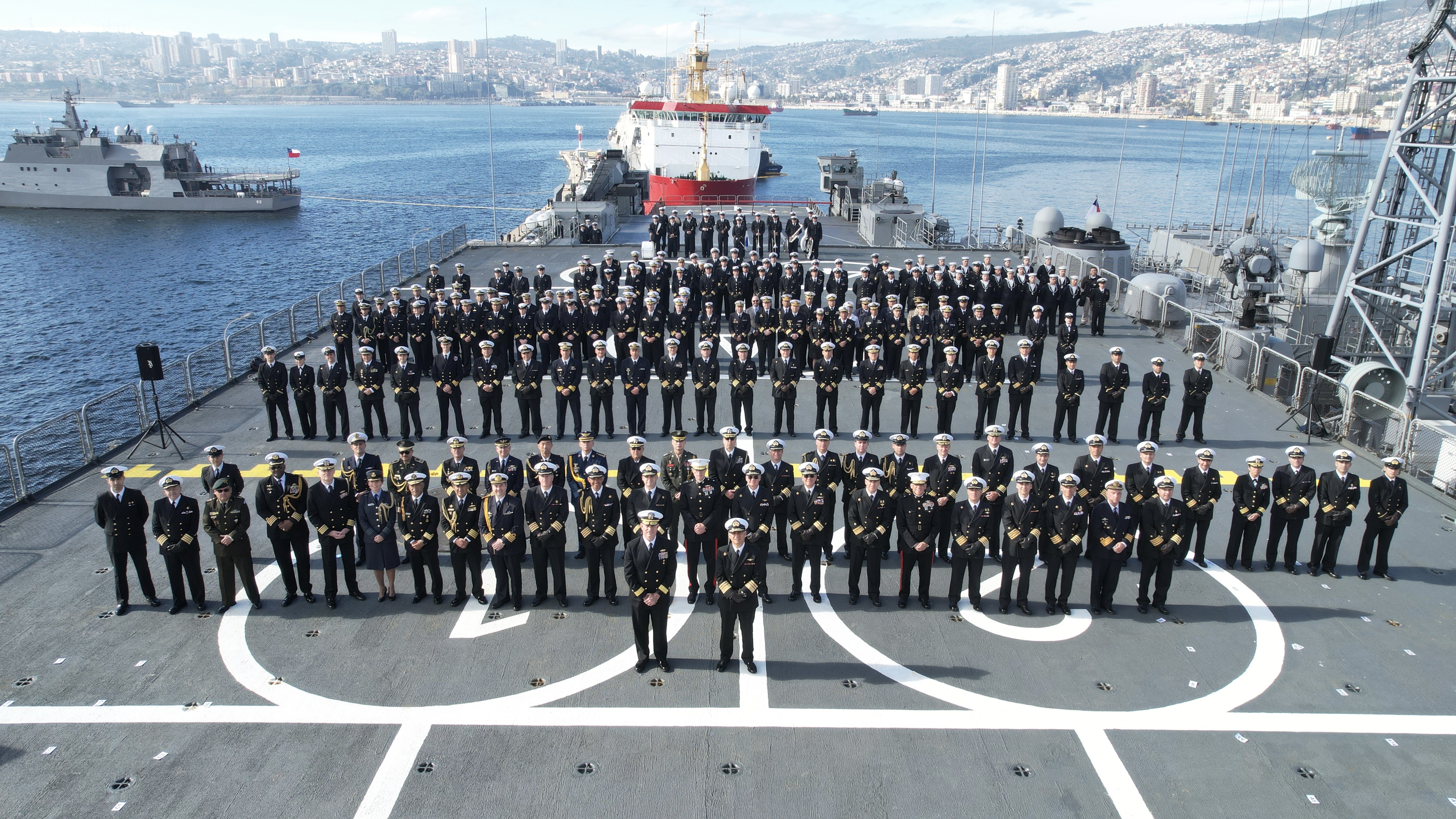
The ship visible in the upper left hand of the photo is a Fassmer designed 80-meter Offshore Patrol Vessel (OPV). It is the Chilean Navy’s Comandante Policarpo Toro (OPV-82). Chile has four ships and Colombia three ships built to this design.

The ship immediately astern (red hull and white superstructure) appears to be an icebreaker, but I don’t recognize it.


Sept. 2, 2024

UNITAS LXV Begins in Valparaiso, Chile

VALPARAISO, Chile – Navy and Marine forces arrived in Valparaiso in support of UNITAS LXV (65), the world’s longest-running multinational maritime exercise in the world, which officially commenced September 2, 2024. 

The Chilean navy is hosting this year’s UNITAS, which will feature 17 warships/vessels, two submarines, 20 aircraft (fixed wing/helicopter), and more than 4,300 personnel from 24 partner nations. Forces will conduct operations off the coast of Valparaiso, Chile, and ashore in the vicinity of Puerto Aldea, Chile, through September 12.

Rear Adm. Rich Lofgren provided opening remarks as U.S. Naval Forces Southern Command/U.S. 4th Fleet Deputy Commander, addressing the opportunities to build relationships ashore, including subject matter exchanges, operations briefs, and a Women, Peace, and Security symposium. Creating these spaces to build relationships on shore will pay dividends at during the at-sea phase of the exercise and beyond.

“Sailors go to sea,” Lofgren added. “I look forward with great excitement to joining you at sea, as we conduct combined and joint operations. We will enhance our capabilities and improve our interoperability in these maritime events – together. Make no mistake, all of us will work hard the next 12 days. But we will communicate effectively – together. We will operate effectively – together. And we will overcome obstacles – together.”

UNITAS, which is Latin for unity, united, or oneness, was conceived in 1959 when representatives at the first Inter-American Naval Conference in Panama agreed to conduct an annual maritime exercise with one another. Prior to UNITAS I in 1960, U.S. Chief of Naval Operations Adm. Arleigh Burke reviewed preparations for the multinational exercise. He commended planners for their progress, especially in building compatible communication systems among navies, and predicted that UNITAS would build strong relationships among Sailors of the Western Hemisphere.

UNITAS I took place in 1960 with forces from Argentina, Brazil, Chile, Colombia, Ecuador, Peru, Uruguay, the United States, and Venezuela. This year marks the 65th iteration of the world’s longest-running annual multinational maritime exercise.

Including the United States, UNITAS LXV will bring together 24 nations from all over the world to train forces in joint maritime operations that enhance tactical proficiency and increase interoperability. Participating nations include Argentina, Brazil, Canada, Chile, Colombia, Dominican Republic, Ecuador, France, Germany, Guatemala, Honduras, Italy, Jamaica, Japan, Mexico, Paraguay, Peru, Portugal, South Korea, Spain, Trinidad and Tobago, United Kingdom, United States, and Uruguay.

Following the UNITAS LXV Opening Ceremony on September 2, the in-port phase of the exercise will feature subject matter expert exchanges, professional symposia, ship rider exchanges, and operations meetings. During this time, Marines and Sailors will conduct training events in Valparaiso to include medical, cyber defense, and diving and salvage operations.

During the UNITAS LXV Underway Phase, forces will participate in events testing all warfare operations, to include live-fire exercises such as a SINKEX and an amphibious ship-to-shore landing and force withdrawal.

Unmanned and hybrid fleet systems will return for a second year to UNITAS with the presence of unmanned undersea vehicles. As part of the U.S. Navy’s future hybrid fleet, the Chief of Naval Operations has tasked U.S. 4th Fleet to scale unmanned platforms to the fleet level.

There are many U.S. forces participating in UNITAS LXV, including USS Germantown (LSD 42), USS St Louis (LCS 19), and USS Hampton (SSN 767). Other U.S. participants include Patrol Squadron Five (VP 5); Mobile Diving and Salvage Unit (MDSU) 2; Explosive Ordnance Disposal Mobile Unit (EOD) 2; Mine Countermeasures Group 2 (MCMGRU TWO); Helicopter Maritime Strike Squadron 50 Detachment 4 (HSM 50 Det 4); 2nd Battalion, 7th Marines (2/7); 1st Battalion, 24th Marine Regiment (1/24); 4th Light Armored Reconnaissance Battalion (4th LAR); 4th Reconnaissance Battalion (4th Recon); Combat Logistic Regiment 4 (CLR 4); 2nd Battalion, 14th Marines (2/14); Marine Aerial Refueler Transport Squadron 234 (VMGR-234); Marine Wing Communications Squadron 48 (MWCS-48); Marine Aircraft Control Group – 48 (MACG-48); Marine Fighter Attack Squadron 112 (VMFA-112); U.S. Coast Guard (USCG) Tactical Law Enforcement Team (TACLET) Pacific Law Enforcement Detachment (LEDET); and USCG Maritime Security Response Team East (MSRTE) Direct Action Section. Operational and tactical level leadership will be provided by Commander, Destroyer Squadron 40, (COMDESRON 40); Commander, Amphibious Squadron Seven (COMPHIBRON SEVEN); U.S Marine Corps Forces South (MARFORSOUTH); USNAVSOUTH/FOURTHFLT; and U.S. Southern Command (USSOUTHCOM).

U.S. Naval Forces Southern Command/U.S. 4th Fleet supports U.S. Southern Command’s joint and combined military operations by employing maritime forces in cooperative maritime security operations to maintain access, enhance interoperability, and build enduring partnerships in order to enhance regional security and promote peace, stability and prosperity in the Caribbean, Central and South American region.

U.S. Marine Corps Forces, South is the Marine Corps component to U.S. Southern Command, is responsible for planning exercises, operations, and overall Marine Corps support for the SOUTHCOM assigned area of responsibility.
Atlantic Area Cutter Back in the Eastern Pacific Drug Transit Zone

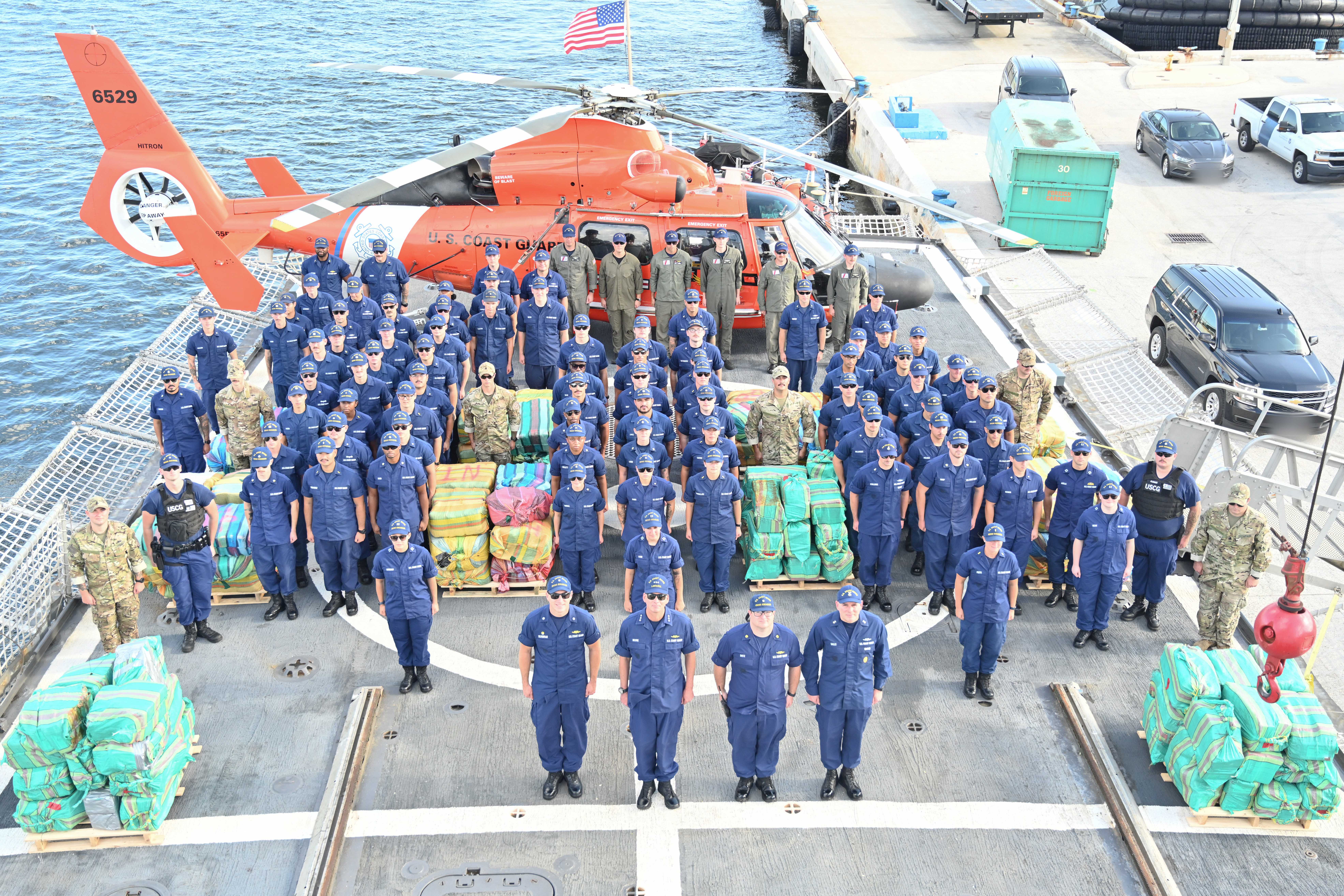
The crew of Coast Guard Cutter Escanaba (WMEC 907) poses for a group photo on the cutter’s flight deck during a contraband offload, Aug. 23, 2024, alongside select personnel from Coast Guard Cutters Spencer (WMEC 905), Legare (WMEC 912), Coast Guard Helicopter Interdiction Tactical Squadron, Pacific Area Tactical Law Enforcement Team, and Coast Guard Atlantic Area Command while moored to the pier in Fort Lauderdale, Florida. Escanaba conducted a 46-day counter-drug patrol in the Eastern Pacific Ocean. (U.S. Coast Guard photo by Petty Officer 2nd Class Brandon Hillard)

Below is a news release from Coast Guard News.

Two things of note in what would normally be a routine report:

First, despite the fact that most Atlantic Area cutters are closer to the Eastern Pacific drug transit zone than those based on the West coast, recently they have been too busy with migrant interdiction to do drug enforcement in the Pacific. This patrol marks a return to previous practice of having LANTAREA cutters, as well as those from the Pacific Area, working the drug problem in the Pacific.

Second, reading the caption of the photo above, you may note that the crew included “...select personnel from Coast Guard Cutters Spencer (WMEC 905), Legare (WMEC 912)…” Spencer and Legare are at the Coast Guard yard as the first and second of six Bear class WMEC270s that will receive full Service Life Extension Program (SLEP) upgrades.  The crews are reassigned after the ships enter SLEP, so it appears some were temporarily assigned to Escanaba to make up for shortfalls in the crew. The shortfalls may have been exacerbated because the patrol was over the summer transfer season.


 Aug. 29, 2024

Coast Guard Cutter Escanaba completes 46-day counter-drug patrol in Eastern Pacific Ocean

PORTSMOUTH, Va. — The crew of the Coast Guard Cutter Escanaba (WMEC 907) returned home to Portsmouth, Wednesday, following a 46-day counter-drug patrol in the Eastern Pacific Ocean.

While deployed, crew members supported the Coast Guard Eleventh District, headquartered in Alameda, California, and Joint Interagency Task Force – South, headquartered in Key West, Florida.

During the patrol, Escanaba’s crew disrupted illegal narcotics smuggling, interdicting 3,408 pounds of cocaine and 4,418 pounds of marijuana valued at nearly $50 million during two separate interdictions. The drugs were offloaded in Port Everglades, Florida on Aug. 23. Additional information about Escanaba’s drug offload, including photos and video, can be found here.

Escanaba’s drug seizures contributed directly to furthering Coast Guard objectives to combat transnational criminal organizations and enhance regional stability and security.

While at sea, Escanaba’s crew was assisted by members of Helicopter Interdiction Tactical Squadron (HITRON), based in Jacksonville, Florida and members of Tactical Law Enforcement Team (TACLET) Pacific – Law Enforcement Detachment (LEDET) 107, based in San Diego, California.

HITRON crew members delivered air support for the use of force and enhanced long-range detection capabilities while deployed aboard Escanaba. The TACLET Pacific LEDET supplied skilled boarding personnel critical for mission execution and served as a force multiplier for other law enforcement activities.

“The crew of Escanaba and our shipmates from HITRON and TACLET are to be commended for executing a demanding mission with professionalism and precision,” said Cmdr. Jared Silverman, commanding officer of Escanaba. “In concert with the Coast Guard’s partner agencies and with support from Joint Interagency Task Force – South, the accomplishments of Escanaba serve as a reminder of how vital this mission is.”

Escanaba is a 270-foot, Famous-class medium-endurance cutter homeported in Portsmouth, Virginia. The cutter’s primary duties are counter-narcotics operations, migrant interdiction, living marine resources protection, and search and rescue in support of U.S. Coast Guard operations throughout the Western Hemisphere.

For information on how to join the U.S. Coast Guard, visit GoCoastGuard.com to learn about active duty, reserve, officer, and enlisted opportunities. Information on how to apply to the U.S. Coast Guard Academy can be found here.

For more, follow us on Facebook, Instagram and X.

“New Trend: Transatlantic Narco Submarines” –Covert Shores

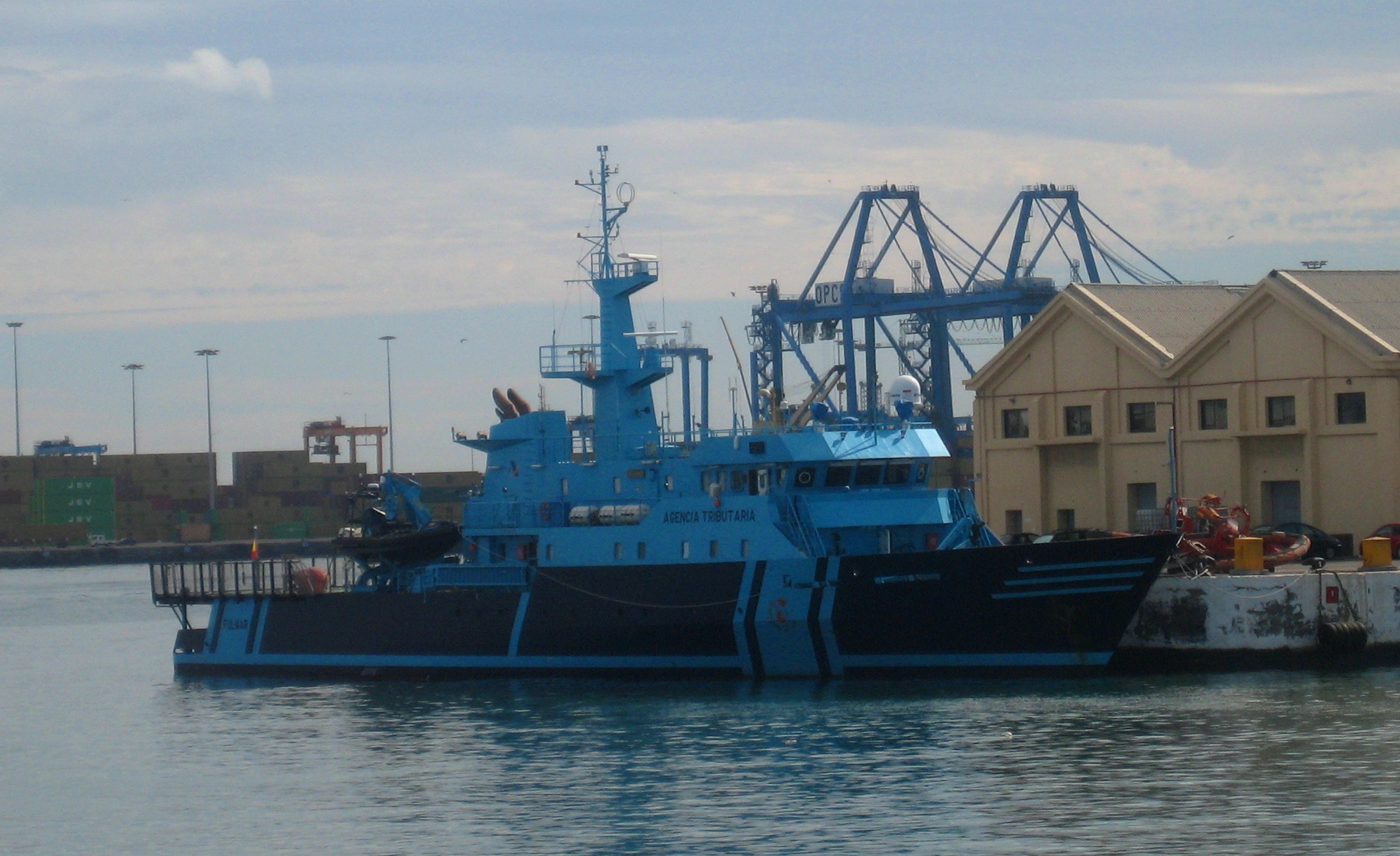
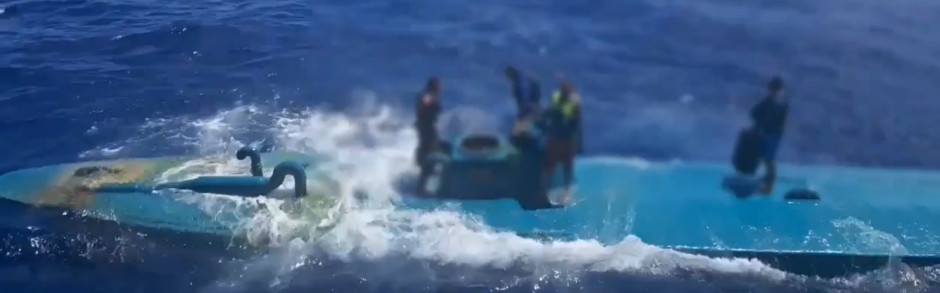
On June 26, 2024 Spanish police aboard SVA Fulmar interdicted a narco submarine 200 miles from the Canary Islands. The vessel was carrying 900kg of cocaine. The 4 crew scuttled the vessel before being rescued and arrested.–Covert Shores.

Covert Shores reports what appears to be a trend that self-propelled semi-submersibles are being used to transport cocaine directly from Latin America to Europe based on three interceptions beginning, one in March and two in June.

The use of internal diesel engines rather than outboards should not be surprising, considering they are much more fuel efficient that outboards, for the long distances involved.

Spanish Tax Agency vessel SVA Fulmar. 20 Nov. 2007. Photo credit: Outisnn via Wikipedia

“U.S. Coast Guard Cutters return home after successful Central American deployment” –D11 News Release

USCGC Forrest Rednour (WPC 1129) and Blackfin (WPB 87317) in Costa Rica

Below is a District 11 news release. Did an earlier post on this unusual deployment.

The 800 operational hours claimed for each vessel works out to 33.3 operational days out of 49 deployed, so I presume that means about 16 days in transit, there and back.

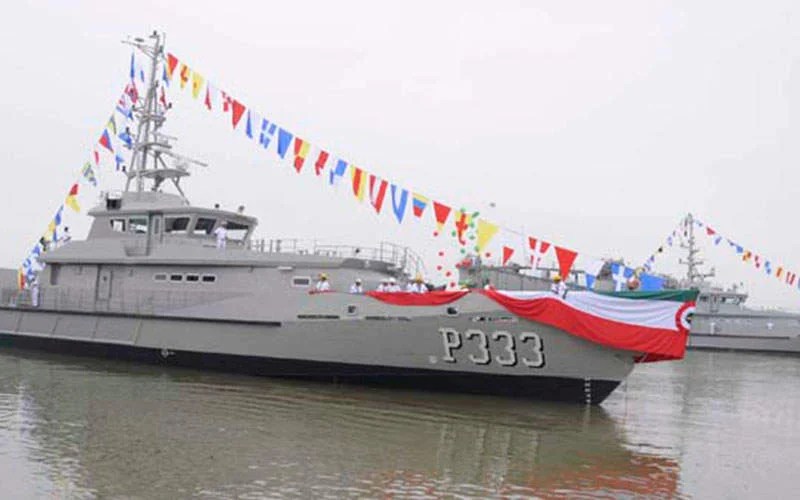
The Mexican Navy vessel mentioned, ARM PALENQUE, the third of ten Tenochtitlan-class patrol vessels, looks a lot like a Webber class Fast Response Cutter. It is also a Damen design, but a bit smaller (a Stan Patrol 4207 vs 4708 for the FRC). Damen has been very successful with this design. More than 50 have been built for more than a dozen agencies. (USCGC Blackfin and the other Marine Protector class patrol boats are also based on a Damen design.)

Mexican Navy ARM Palenque (PC-333) at launching March 2014. Credit Secrtaria de Marina.


June 10, 2024

U.S. Coast Guard Cutters return home after successful Central American deployment

SAN PEDRO, Calif. — U.S. Coast Guard cutters Forrest Rednour and Blackfin have returned to their homeports after a 49-day deployment in Central America, where they played a crucial role in multiple operations.

During this period, both cutters demonstrated outstanding readiness and operational capability, significantly contributing to international cooperation, search and rescue missions, and efforts to combat criminal activities. This deployment was part of a broader strategy to enhance regional security and strengthen partnerships. Throughout the mission, Forrest Rednour covered over 8,200 miles and logged 800 operational hours, while Blackfin covered over 8,300 miles and also logged 800 operational hours.

“The amount of effort and commitment from both crews during this 49-day deployment was remarkable,” said Rear Adm. Andrew Sugimoto, commander, Coast Guard District 11. “Their readiness and professional exchanges provided an invaluable experience to our partner nations and crews. The enthusiasm to lead multiple engagements with several international maritime organizations helped strengthen ties and fortify continued collaboration between all.”

Key Achievements:

Search and Rescue Exercises (SAREX):

  • Manzanillo, Mexico: Blackfin led a successful SAR operation, including helicopter rescue exercises with the Mexican Navy.
  • Puerto Quetzal, Guatemala: Hosted tours and conducted SAR exercises with the Guatemalan Navy, building stronger maritime partnerships.
  • La Union, El Salvador: Rednour led a SAR exercise and joint operations with the Salvadoran Navy, marking the first U.S. vessel visit to this port in two years.

Partnership and Training:

  • Amapala, Honduras: Engaged in discussions and training on maritime law enforcement and security with the Honduran Navy and Merchant Marine.
  • Golfito, Costa Rica: Shared knowledge on maritime governance with the Costa Rican Coast Guard, enhancing mutual understanding.
  • Rodman, Panama: Provided damage control and medical evacuation training to Panamanian forces, marking the first U.S.-Panama Coast Guard engagement in over two years.
  • PASSEX with ARM PALENQUE: Forrest Rednour and Blackfin conducted a passage exercise (PASSEX) with the Mexican Navy’s ARM PALENQUE. This included formation steaming, code exercises, and a crew exchange to enhance mutual operational understanding and cooperation.

“This patrol was truly an amazing experience and a testament to the incredible devotion to duty that the crews of the Forrest Rednour and Blackfin have,” said Lt. Kevin Ng, commanding officer of Coast Guard Cutter Forrest Rednour. “Both crews adapted and overcame several challenges leading up to and during the patrol, but never took their eyes off the main objective. As a result, the Coast Guard was able to strengthen the valuable relationships that the United States has with our international partners throughout Central America and unify our efforts to address critical maritime security initiatives in the Eastern Pacific. Thank you to crews on a job well done, District 11 and Sector Los Angeles/Long Beach for the coordination, and the families and friends of the crew for all of the support; the success of this historic patrol could not have been accomplished without them all.”

“I could not be prouder of both crews for the incredible amount of hard work they have dedicated to making this historic patrol possible. The success of this Surface Action Group is a testament to the Coast Guard’s ability to overcome dynamic challenges in the completion of unprecedented mission sets. It also signifies the Coast Guard’s steadfast commitment to advancing our vital maritime partnerships in the Eastern Pacific. The international relationships formed and strengthened during this deployment have set the groundwork for future engagements which I look forward to watching,” said Lt. j.g. James Morrison, commanding officer of Coast Guard Cutter Blackfin.

Commissioned in 2018, the Coast Guard Cutter Forrest Rednour is one of the Coast Guard’s Sentinel-class fast response cutters homeported in San Pedro, California. Sentinel-class cutters are 154 feet long and 25 feet wide and have a 353 long-ton displacement. They have a top speed in excess of 28 knots and a range of 2,500 nautical miles. They can hold a crew of up to 24. The namesake of the Forrest Rednour is Petty Officer 2nd Class Forrest O. Rednour, who heroically rescued survivors from the torpedoed USAT (US Army Transport–Chuck) Dorchester during World War II and was posthumously awarded the Navy and Marine Corps Medal.

Commissioned in 2000, the USCGC Blackfin is one of the Coast Guard’s Marine Protector-class patrol boats homeported in Santa Barbara, California. Marine Protector-class patrol boats are 87 feet long and 19.5 feet wide and have a 100 long-ton displacement. They have a top speed of 25 knots and a range of 900 nautical miles. They can hold a crew of up to 10. The Blackfin is equipped with advanced electronics and navigation systems for multi-mission operations, including search and rescue, law enforcement, and homeland security. The Blackfin shares the name of the USS Blackfin (SS-322), a submarine that participated in World War II and the Korean War.

Three Apparent Fatalities in Drug Interdiction Incident

HNLMS Groningen’s crew interdicts a suspected drug boat in the Caribbean Sea, Sept. 27, 2020. HNLMS Groningen is a Holland-class offshore patrol vessel operated by the Royal Netherlands Navy. (Royal Netherlands Navy photo)

Below is a news release from District 7. It is unusual in that smugglers apparently turned toward the boarding party and prompted a response using deadly force. It appears likely this resulted in three fatalities among the smugglers. “There were no reported injuries to the combined law enforcement team members.”


June 6, 2024

Coast Guard, Dutch suspend search for missing persons following counter drug mission in Caribbean Sea

MIAMI – The U.S. Coast Guard, Royal Netherlands Navy and Dutch Caribbean Coast Guard suspended a search for three suspected smugglers who went overboard during pursuit of a non-compliant vessel suspected of smuggling illicit narcotics in the Caribbean Sea, June 4, 2024.

Active search efforts were suspended, Tuesday evening, pending new information.

In the early morning hours on Tuesday, a Royal Netherlands Navy ship with an embarked U.S. Coast Guard law enforcement detachment deployed for a counter drug patrol identified a vessel suspected of smuggling narcotics in international waters. The vessel failed to stop when signaled and the smuggling vessel operator instead increased speed and changed direction toward the Dutch pursuit boat, called a fast-raiding interception and special forces craft (FRISC).

The FRISC boat crew, consisting of Dutch and U.S. Coast Guard boarding team members, discharged their weapons at the go-fast vessel in self-defense and defense of others in response to the life-threatening situation. The go-fast vessel caught fire and sank, and three suspected smugglers went overboard into the water and were not recovered.

There were no reported injuries to the combined law enforcement team members.

“The Coast Guard is America’s primary maritime law enforcement agency, and our crews work hard to safely bring suspected smugglers to face federal prosecution in the United States for alleged crimes,” said Lt. Cmdr. John W. Beal, Coast Guard District Seven public affairs officer. “The missions our Coast Guard servicemembers and allied partners do every day to deny transnational criminal organizations access to maritime smuggling routes are inherently dangerous. The decision to suspend active search efforts is not one we take lightly, and the Coast Guard is working to investigate the incident in accordance with Coast Guard policy.”

Assets and crews involved in the search efforts included:

  • Royal Netherlands Navy ship HNLMS Groningen
  • Royal Netherlands Navy ship HNLMS Pelikaan
  • U.S. Coast Guard helicopter
  • Kustwacht Caribisch Gebied helicopter
  • Kustwacht Caribisch Gebied cutter Jaguar

Detecting and interdicting illegal drug traffickers on the high seas involves significant interagency and international coordination. Once interdiction becomes imminent, the law enforcement phase of the operation begins, and control of the operation shifts to the U.S. Coast Guard throughout the interdiction and apprehension phases. Interdictions in the Caribbean Sea are performed by members of the U.S. Coast Guard under the authority and control of the Coast Guard’s Seventh District, headquartered in Miami.

“U.S. Coast Guard Cutter Munro holds a change of command ceremony” –News Release

Royal Navy vessel HMS Spey (P234) (foreground) conducts coordinated ship maneuvers with U.S. Coast Guard Cutter Munro (WMSL 755) Sept. 17, 2023, in the South China Sea. Munro is deployed to the Indo-Pacific to advance relationships with ally and partner nations to build a more stable, free, open and resilient region with unrestricted, lawful access to the maritime commons. (U.S. Navy photo by Chief Petty Officer Brett Cote)

Below is a news release. Routine change of command, but the Munro’s recent activities are interesting for their variety, three very different activities in widely dispersed areas, Eastern Pacific, Western Pacific, and far Northern Pacific. More info in these earlier news releases:


 May 31, 2024

U.S. Coast Guard Cutter Munro holds a change of command ceremony

SAN DIEGO — The U.S. Coast Guard Cutter Munro (WMSL 755) held a change of command ceremony Thursday in San Diego.

Vice Adm. Andrew J. Tiongson, Commander, U.S. Coast Guard Pacific Area, presided over the ceremony in which Capt. James O’Mara IV relieved Capt. Rula Deisher as Munro’s commanding officer.

Deisher served as Munro’s commanding officer from May 2022 to May 2024, sailing over 73,000 nautical miles to 17 ports, including eight foreign countries during patrols in the Bering Sea, Western Pacific, and Eastern Pacific.

Most recently, Munro and the crew were responsible for the interdiction and seizure of illegal narcotics worth an estimated $460 million in wholesale value and over $2 billion in street value while patrolling the Eastern Pacific Ocean in support of the Joint Interagency Task Force-South. Munro’s crew also supported Operation Southern Shield during their recent patrol by conducting 16 fisheries boardings in the Southern Pacific Regional Fisheries Management Organization convention area, upholding the maritime rules-based order.

During Munro’s Western Pacific patrol, the cutter and crew hosted multiple engagements with foreign partners, including a discussion about the SAPPHIRE agreement with Japanese Coast Guard officers, a subject matter expert exchange, an at-sea engagement with the Korea Coast Guard, and participated in CARAT Brunei, where Munro worked alongside the Royal Brunei Navy in professional subject matter expert exchanges, leadership conferences, and an at-sea engagement.

While patrolling the Bering Sea, Munro conducted 24 fisheries boardings and two search-and-rescue cases, including the medical evacuation of a critical patient from Dutch Harbor, Alaska, to Anchorage, Alaska.

“To the crew of Munro, thank you,” said Deisher. “I am so proud of your endless dedication and care toward each other and our mission. This crew is phenomenal, and it has been an honor and privilege to sail with them and learn from them.”

Deisher’s next assignment is to serve as the Seventeenth District’s Response Division chief.

O’Mara, the incoming commanding officer, brings a wealth of experience to Munro.

Reporting from the Coast Guard’s Eleventh District as the Enforcement Branch chief, O’Mara oversaw assets across 1,000 miles of shoreline from the California-Oregon state line to the Mexico border and 73 federal waterways. He also worked closely with the Department of Defense Joint Interagency Task Forces and the Department of Homeland Security Joint Task Force West to conduct effective drug and law enforcement interdiction efforts across the Eastern Pacific.

Munro will be O’Mara’s seventh ship and fourth command, following previous commands aboard the Coast Guard Cutters Active (WMEC 618), Farallon (WPB 1301), Monomoy (WPB 1326), and Narwhal (WPB 87335).

The change of command ceremony, a time-honored tradition, is a significant event conducted before the assembled company of a command. It confirms to the unit’s men and women that the authority of command is maintained. The ceremony symbolizes a transfer of total responsibility, authority, and accountability from one individual to another, marking a new chapter in the command’s history.

Commissioned in 2017, Munro is one of four Coast Guard Legend-class national security cutters homeported in Alameda. National security cutters, measuring 418 feet long and 54 feet wide, boast a top speed of over 28 knots, a range of 12,000 nautical miles, endurance of up to 90 days, and can hold a crew of up to 170. The advanced technologies of the national security cutter class ships support the national objective of maintaining the security of America’s maritime boundaries and providing long-range search and rescue capabilities.

“Combating Transnational Drug Flows,” A Conversation with the Deputy Director of Joint Interagency Task Force –South

The US Naval Institute brings us this video from the Center for Strategic and International Studies.

The accompanying article provides a brief overview, but I really recommend watching the entire interview. It is excellent. It even touches on Illegal, Unregulated, Unreported fishing.

There is an acknowledgement that resources made available for interdiction have declined even while seizures are up (as is the traffic in illegal drugs), but there is also good news in the successes of partner nations.

Again, there is no substitute for watching the interview.

“U.S. Coast Guard Cutter Active returns home from Eastern Pacific patrol; one life saved, $50.8M worth of cocaine interdicted” –CG News Release

The USCGC Active (WMEC 618) crew rescue a solo sailor stranded on a disabled vessel in the Eastern Pacific Ocean near the Galapagos Islands, Apr. 13, 2024. Active’s crew diverted over 200 nautical miles at high speed to conduct the search and rescue operation for the sailor whose sailboat was disabled and adrift at sea after a pod of whales damaged the boat. U.S. Coast Guard photo by U.S. Navy Midshipman Caden Dale.

Below is a Coast Guard News Release. With the exception of the SAR case mentioned in the photo above, the cruise seems to have been pretty typical of an Eastern Pacific drug interdiction patrol, but I would point out that Active’s homeport, Port Angeles, is further away from the patrol area than the homeports of most other cutters that might have this assignment. It is counter-intuitive, but East coast ports are generally closer to the patrol area than West coast ports. For Example, Charleston is closer to the patrol area than San Diego, and much closer than Alameda or Port Angeles.

There is a troubling detail in this release.  Active was “the sole U.S. surface asset operating in the region for 28 days in support of Joint Interagency Task Force-South’s counter-narcotics campaign.”


May 3, 2024

U.S. Coast Guard Cutter Active returns home from Eastern Pacific patrol; one life saved, $50.8M worth of cocaine interdicted

PORT ANGELES, Wash. — The U.S. Coast Guard Cutter Active (WMEC 618) and crew returned home to Port Angeles Friday after completing a 54-day multi-mission patrol in support of a Joint Interagency Task Force-South (JIATF-S) counternarcotics patrol in the Eastern Pacific Ocean.

During the patrol, Active’s crew interdicted 3,858 pounds of cocaine worth an estimated $50.8 million in a coordinated effort involving both airborne and surface units, resulting in a safe and successful interdiction.

In addition to the cocaine interdiction, Active’s crew disrupted two other smuggling events while serving as the sole U.S. surface asset operating in the region for 28 days in support of Joint Interagency Task Force-South’s counter-narcotics campaign. Throughout the deployment, the cutter patrolled over 12,000 nautical miles, a distance roughly equivalent to five spans of the continental U.S.

“Any interdiction at sea is challenging, with a variety of factors at every step, and no two are ever the same,” said Cmdr. Adam Disque, Active’s commanding officer. “The cases we encountered on this patrol were particularly difficult, and the crew fought through obstacles at every turn, working extremely hard to accomplish this mission. I could not be more proud of the team as they fully embodied our cutter’s nickname, ‘The Li’l Tough Guy’.”

On April 12, Active received notification of a single-handed sailor in distress more than 300 nautical miles northeast of the Galapagos Islands. The sailor’s boat was disabled, and he was adrift at sea after reporting a pod of whales damaged his sailboat.

Active diverted over 200 nautical miles at high speed to conduct a search and rescue operation. Upon arrival, the crew safely embarked the mariner and brought him back to shore.

“This sailor was very fortunate that we happened to be in the area; he was far from normal shipping lanes and well out of range for any coastal rescue system,” said Petty Officer 3rd Class Gordon Smith, an Active crewmember who participated in the search planning. “It was fortunate that we were able to find him relatively quickly and get him on board before the weather or situation deteriorated.”

Active’s two pursuit boats were supplemented by an MH-65E helicopter and aircrew from the Helicopter Interdiction Tactical Squadron (HITRON) to respond in a multi-mission environment on the high seas. HITRON, based in Jacksonville, Florida, conducts airborne use of force to stop vessels suspected of breaking U.S. and international laws on the high seas.

During this patrol, specialized law enforcement members from the Coast Guard’s Pacific Tactical Law Enforcement Team and the Maritime Security and Response Team – West deployed aboard to support their mission and augment Active’s crew.

Active regularly patrols international waters off southern Mexico and Central America to combat transnational organized crime in the Western Hemisphere, specifically the smuggling of narcotics.

Active, a 57-year-old medium endurance cutter, is homeported in Port Angeles. The multi-mission cutter falls under the operational command of the Coast Guard Pacific Area Commander. Patrolling from the northernmost part of the contiguous United States to the equator, Active is critical in conducting search and rescue, counter-narcotics law enforcement, living marine resource protection, and homeland defense operations.

“Canadian-Led CTF 150 Seize Nearly 2,000kg of Narcotics in Two Interdictions in a Single Day” –Combined Maritime Forces

Apr 14, 2024
ARABIAN SEA – 240410-N-NO146-1005 ARABIAN SEA (April 10, 2024) Bags of illegal narcotics seized from a vessel are stacked on the deck of the U.S. Coast Guard Sentinel-class fast-response cutter USCGC Clarence Sutphin Jr. (WPC 1147) in the Arabian Sea, April 10. Clarence Sutphin Jr. was operating under Combined Task Force 150, one of five task forces under Combined Maritime Forces, the largest multinational naval partnership in the world. CTF 150 focuses on maritime security operations outside the Arabian Gulf. Crimson Barracuda counters terrorist and criminal organizations’ use of the high seas to smuggle narcotics, weapons, and other illicit substances in the Indian Ocean, Arabian Sea and Gulf of Oman.

Below is a news release from Combined Maritime Forces Public Affairs.

I would note two things about this particular incident. The use of “Canadian space-based intelligence” to cue the cutter’s interdiction, and second, that you can see Long Range Acoustic Devices mounted on the cutter in the photo above. Below is a close-up.

Long Range Acoustic Device.


MANAMA, Bahrain —The Canadian-led Combined Task Force (CTF) 150 carried out two drug interdictions at sea in a single day as part of Focused Operation Crimson Barracuda in the Arabian Sea, April 10. The two interdictions resulted in the seizure of a combined total of nearly 2,000 kg of drugs.

The Royal Navy’s HMS Lancaster, a Duke-class Type 23 frigate, seized over 800 kg of hashish, 390 kg of methamphetamines and 110 kg of heroine from a stateless dhow in the Arabian Sea. This was the crew’s first day of deployment after completing a crew swap a few weeks before.

“I am exceptionally proud of the entire team in Lancaster executing this interdiction on the first day of our deployment,” said Royal Navy Cmdr. Chris Sharp, HMS Lancaster’s commanding officer. “Complex interdictions in such a challenging environment require true teamwork across the entire ship’s company. This success is shared with our partners in CTF 150 who provided essential support to the operation.”

Then, using Canadian space-based intelligence, the Sentinel-class fast-response cutter USCGC Clarence Sutphin Jr. (WPC 1147) seized 257 kg of methamphetamines, 92 kg of heroine, 17 kg of amphetamines, 296 kg of hashish, and 15 kg of marijuana from another dhow in the Arabian Sea. After weighing and documenting the hauls, the crew disposed of the narcotics.

Clarence Sutphin Jr is forward deployed to Bahrain as part of a contingent of U.S. Coast Guard ships under Patrol Forces Southwest Asia (PATFORSWA). PATFORSWA deploys Coast Guard personnel and ships alongside U.S. and regional naval forces throughout the Middle East.

“These two interdictions have made a significant dent in criminal and terrorist organizations’ ability to use drugs to fund their activities,” said Royal Canadian Navy Capt. Colin Matthews, Commander Combined Task Force 150. “The collaboration of our assets and personnel allowed us to become a precise and highly effective team that not only undermined the efforts of these organizations, but also nearly 2,000 kg of drugs from hitting the streets.”

Crimson Barracuda counters terrorist and criminal organizations’ use of the high seas to smuggle narcotics, weapons, and other illicit substances in the Indian Ocean, Arabian Sea and Gulf of Oman.

CTF 150 is one of five task forces under Combined Maritime Forces, the world’s largest international naval partnership. CTF 150’s mission is to deter and disrupt the ability of non-state actors to move weapons, drugs and other illicit substances in the Indian Ocean, the Arabian Sea and the Gulf of Oman.

Combined Maritime Forces is a 42-nation naval partnership upholding the international rules-based order by promoting security and stability across 3.2 million square miles of water encompassing some of the world’s most important shipping lanes.

“CMF’s Combined Task Force 150 Seizes Nearly 400 Kilograms in Illegal Narcotics in the Arabian Sea”

Below is a news release from U.S. Naval Forces Central Command Public Affairs. USCGC Glen Harris has been busy. I know, she had at least seven successful drug interdictions since she joined PATFORSWA.


240404-N-NO146-1002 ARABIAN SEA (April 4, 2024) A Sailor removes illegal narcotics from the hull of a vessel seized by the U.S. Coast Guard Sentinel-class fast response cutter USCGC Glen Harris (WPC 1144) in the Arabian Sea, April 4. Glen Harris was operating under Combined Task Force 150, one of five task forces under Combined Maritime Forces, the largest multinational naval partnership in the world. CTF 150 focuses on maritime security operations outside the Arabian Gulf. Photo By: U.S. Coast Guard

MANAMA, Bahrain —April 08, 2024

A U.S. Coast Guard cutter, working in direct support of Combined Task Force (CTF) 150, of Combined Maritime Forces, seized nearly 400 kilograms of illegal drugs from a dhow in the Arabian Sea, April 4.

Crewmembers from the Sentinel-class fast response cutter USCGC Glen Harris (WPC 1144) discovered and seized 15 kilograms of heroin and 375 kilograms of methamphetamine aboard the dhow. After weighing and documenting the haul, the crew properly disposed of the narcotics.

“This is the second major interdiction of the USCGC Glen Harris and the CTF-150 team with a combined total of 1,160 kg of drugs seized to date, denying income to criminal and terrorist organizations from the profits of illicit narcotics,” said Capt. (N) Colin Matthews, commander of CTF-150. “This exceptional multinational cooperation between our two teams is an example of the impacts we can make when we work together.”

On March 5, Glen Harris, working in support of CTF 150, seized 770 kilograms of methamphetamines from a dhow in the Arabian Sea.

Glen Harris is forward deployed to Bahrain. The fast response cutter is part of a contingent of U.S. Coast Guard ships forward-deployed to the region under Patrol Forces Southwest Asia (PATFORSWA). PATFORSWA deploys Coast Guard personnel and ships alongside U.S. and regional naval forces throughout the Middle East.

CTF 150 is one of five task forces under Combined Maritime Forces, the world’s largest international naval partnership. CTF 150’s mission is to deter and disrupt the ability of non-state actors to move weapons, drugs and other illicit substances in the Indian Ocean, the Arabian Sea and the Gulf of Oman.

Combined Maritime Forces is a 42-nation naval partnership upholding the international rules-based order by promoting security and stability across 3.2 million square miles of water encompassing some of the world’s most important shipping lanes.