There have been numerous improvement since the introduction of the S-100 over a decade ago. It has been integrated with more sensors including a synthetic aperture radar. A heavy fuel engine compatible with JP-5, Jet A-1 or JP-8 jet fuels is now optional, as a replacement for the original gasoline engine. Using an auxiliary fuel tank it now possible to extend its normal six hour endurance to up to 10 hours.
The S-100 is very widely used. Operators or those who are buying the system include the German Navy, the French Navy, the Italian Navy, the Australian Navy, and the Chinese Navy. The Russian Coast Guard uses a license built version.
The S-100 at 440 pounds max take-off is about nine times greater than that of the 48.5 pound ScanEagle, but less than a seventh that of the MQ-8B Fire Scout (3,150 lb). It doesn’t have the endurance of the ScanEagle, but with a ten times larger payload (75 lb vice 7.5 lb), given better sensors, it may be able to search a larger area per sortie. With a higher speed (120 knots max vice 80) it can get to a probability area and search it faster.
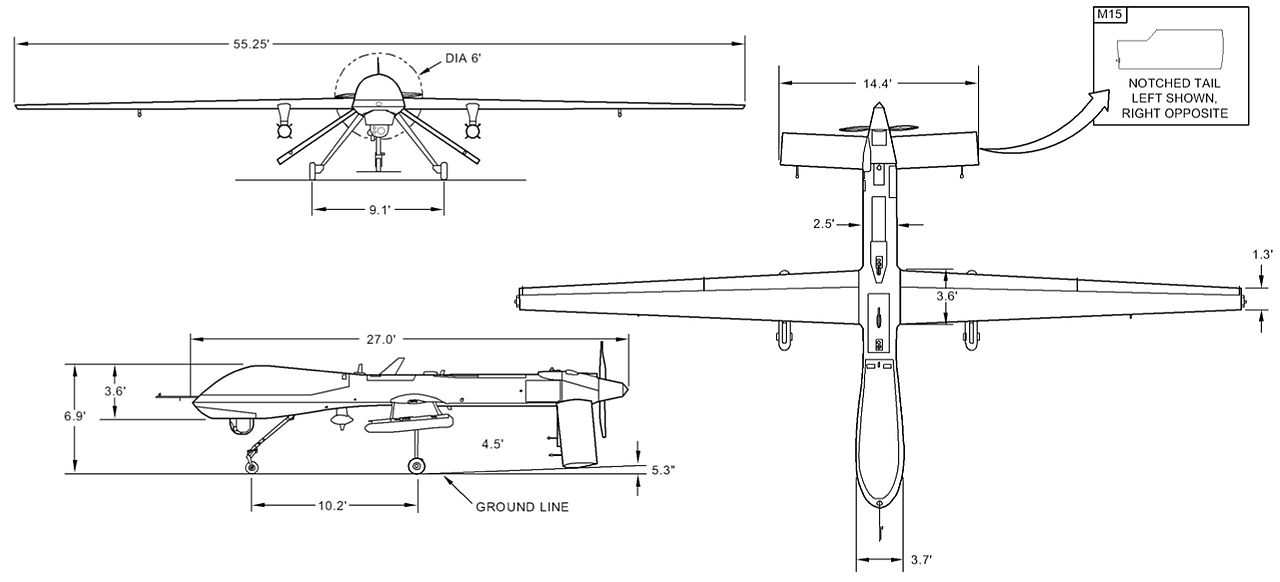
3-View line drawing and dimensions of MQ-1B Predator UAV, – Department of the Air Force, Engineering Technical Letter (ETL) 09-1: Airfield Planning and Design Criteria for Unmanned Aircraft Systems (UAS), 28 Sept 2009
Predator Unmanned Aerial Vehicle (UAV) flies on a simulated Navy aerial reconnaissance flight near the aircraft carrier USS Carl Vinson (CVN 70) off the coast of southern California on Dec. 5, 1995. The Predator provides near, real-time infrared and color video to intelligence analysts and controllers on the ground and the ship. This is the Predator’s first maritime mission with a carrier battle group. The UAV was launched from San Nicholas Island off the coast of southern California. DoD photo by Petty Officer 3rd Class Jeffrey S. Viano, U.S. Navy.
Industry Input Sought On UAS Technology Demonstration
April 6, 2018
The Coast Guard on March 26 released a draft solicitation for long range/ultra-long endurance (LR/U-LE) unmanned aircraft system (UAS) technology demonstration and flight services requirements. Industry is invited to submit questions, comments and feedback on draft items including the statement of work, proposal requirements and evaluation methodology. The draft solicitation is available here.
The draft solicitation is part of congressionally directed market research to examine the feasibility, costs and benefits of using land-based LR/U-LE UAS to conduct intelligence, surveillance and reconnaissance missions. Responses are due by April 9 at 5 p.m. EST. The formal solicitation for the contract is planned for release later this spring.
3-View line drawing and dimensions of MQ-1B Predator UAV, – Department of the Air Force, Engineering Technical Letter (ETL) 09-1: Airfield Planning and Design Criteria for Unmanned Aircraft Systems (UAS), 28 Sept 2009
Note the video does not really start until approximately time (17m08s).
This is going to be a hodgepodge, but it is all about the 2019 budget. There is a video above. There will be my own observations on the video. There will be a brief outline of the Procurement, Construction, and Improvement (formerly AC&I) portion of the budget copied from the “Summary of Subject Matter.” At the tail end I have reproduced the Commandant’s prepared statement that was presented at the hearing
You can look here for the FY2018 budget request. I haven’t found the actual final FY2018 as enacted.
ABOUT THE VIDEO
Above is a video of a 14 March, 2018, House Coast Guard and Maritime Transportation Subcommittee. The commandant testified as well as Master Chief Steven W. Cantrell, Master Chief Petty Officer of the Coast Guard, United States Coast Guard, Rear Admiral Mark H. Buzby, USN, Ret., Administrator, Maritime Administration, and The Honorable Michael A. Khouri, Acting Chairman, Federal Maritime Commission
You can find more information including all the prepared statements and the subcommittee chairman’s opening remarks here.
MY OBSERVATIONS
This subcommittee has been highly supportive of the Coast Guard, and we see the same in this hearing. The chairman, Duncan Hunter (R, CA), (17m30s) expressed his opinion that the Coast Guard was not fairing well under the Department of Homeland Security (DHS). He also noted the apparent obstruction of measures of effectiveness by DHS.
Ranking member, John Garamendi (D, CA), (22m) noted that there had been a welcomed significant bump in Coast Guard funding, but questioned if this would continue or would it prove an anomaly. He noted that attempting to stop drug trafficking would be better served by putting more money into the Coast Guard than by building a border wall.
(29m30s) The Coast Guard’s unfunded priority list, submitted long ago is still hung up in the administration.
(33m30s) MCPO Cantrell addressed quality of life concerns.
(55m30) Ranking member Garamendi noted the addition of $720M added to the budget for Heavy Polar Icebreaker(s) (HPIB) in addition to $30M already in the budget, and stated that he saw this as money for the second icebreaker because the DOD was not relieved of their obligation to fund a HPIB.
(1h03m) Commandant expressed his confidence in the helicopter life extension programs expected to keep them in operation until 2033 when the Coast Guard would be able to join in the Army lead Future Vertical Lift program. He suggested that a single helicopter type might be able to replace both the MH-65 and MH-60s.
(1h07m) Commandant answering a question about AMIO in the Caribbean noted that the Webber class Fast Response Cutters (FRC) we working well in this role, but there is a shortage of ISR assets that he believed might be addressed by land based unmanned air systems (UAS).
(1h17m) In answer to a question about replacement of the Island Class six 110 foot Island class cutters currently assigned to CENTCOM as PATFORSWA, the Commandant, noting the 110s would time out in 2022, said this has been discussed at the highest levels with the Navy and there was a possibility that Webber class replacements could be funded by the Navy. Interestingly, he also noted that the Navy’s Cyclone class patrol craft would time out in 2023 suggesting to me perhaps he believes the Navy is considering a version of the Webber class.
(1h39m) Concern was expressed that while the Commandant has consistently expressed a need for $2B annual in the AC&I account (now PC&I) and $1.8B was provided in FY2018 and $1.9B in FY2019, that the current projection is only $1.4B in FY2020.
There is also a note on a change in accounting procedure.
In FY 2019, the Coast Guard will transition to the DHS Common Appropriations Structure (CAS). Accordingly, activities funded through the previous Operating Expenses, Reserve Training, Environmental Compliance and Restoration, and Medicare Eligible Retiree Health Care Fund Contribution are included as part of the new Operations and Support (O&S) account. In addition, acquisition personnel costs previously funded through the Acquisition, Construction, and Improvements account ($118.2m in the FY2018 budget request–Chuck) are included as part of the O&S account. The Acquisition, Construction, and Improvements account transitions into the Procurement, Construction, and Improvements account and the Research, Development, Test and Evaluation account becomes the new Research and Development account.
Below is the summary information on the PC&I section that replaces the AC&I portion of the budget.
Procurement, Construction, and Improvements (previously Acquisitions, Construction, and Improvements)The President requests $1.89 billion for the Procurement, Construction, and Improvements (PC&I) account, a $516.7 million (or 37.7 percent) increase over the FY 2017 enacted level. The PC&I account funds the acquisition, procurement, construction, rebuilding, and physical improvements of Coast Guard owned and operated vessels, aircraft, facilities, aids-to-navigation, communications and information technology systems, and related equipment.The FY 2019 budget request includes $1.76 billion for the acquisition of aircraft, vessels, and the continued build-out of Command, Control, Communications, Computer, Intelligence, Surveillance, and Reconnaissance (C4ISR) systems. This represents an increase of $597.1 million (or 51.7 percent) from the FY 2017 enacted level. The budget request includes:$30 million for the construction of a Heavy Polar Icebreaker. The FY 2019 Budget Addendum included an additional $720 million, for a total of $750 million;
$65 million to conduct Post Delivery Activities on National Security Cutters (NSC) 7 through 9;
$240 million for the production of four Fast Response Cutters (FRC);
$400 million for the construction of the second Offshore Patrol Cutter (OPC) and to facilitate evaluation of the Long Lead Time Materials for OPC 3. The OPCs will replace the Service’s aging 210-foot and 270foot Medium Endurance Cutters (MEC);
$80 million to fund the requirement to establish logistics for 14 newly acquired HC-27J aircraft. The request funds HC-27J Asset Project Office activities, logistics, training, and engineering studies to assess and resolve aircraft obsolescence issues;
$20 million for the continued modernization and sustainment of the HH-65 Dolphin helicopter fleet;
$23.3 million for C4ISR design, development, and integration; and
No funding for the Alteration of Bridges program in FY 2019. The program did not receive funding in FY 2017 or FY 2016. Established by the Truman-Hobbs Act of 1940 (33 U.S.C. 511 et. seq.), the Alteration of Bridges program authorizes the Coast Guard to share with a bridge’s owner the cost of altering or removing privately or publicly owned railroad and highway bridges that are determined by the Service to obstruct marine navigation.
The budget requests $135 million to construct or renovate shore facilities and aids-to-navigation. This request is a $35.5 million (or 26.3 percent) increase over the FY 2017 enacted level. The Coast Guard currently has a backlog of 95 prioritized shore facility improvement projects with an estimated combined cost of over $1.5 billion
____
THE COMMANDANT’S PREPARED TESTIMONY
Below you will find “TESTIMONY OF ADMIRAL PAUL F. ZUKUNFT COMMANDANT, U.S. COAST GUARD ON “THE COAST GUARD’S FISCAL YEAR 2019 BUDGET REQUEST” BEFORE THE HOUSE COAST GUARD AND MARITIME TRANSPORTATION SUBCOMMITTEE” which I have copied in full.
Introduction
Mr. Chairman and distinguished members of the Committee, I appreciate the opportunity to testify today. Thank you for your enduring support of the United States Coast Guard, particularly the significant investments provided in the FY 2017 Consolidated Appropriations Act, recent Hurricane Supplemental, and ongoing deliberations to support our FY 2018 and FY 2019 President’s Budget requests.
As the world’s premier, multi-mission, maritime service, the Coast Guard offers a unique and enduring value to the Nation. The only branch of the U.S. Armed Forces within the Department of Homeland Security (DHS), a federal law enforcement agency, a regulatory body, a first responder, and a member of the U.S. Intelligence Community – the Coast Guard is uniquely positioned to help secure the maritime border, combat transnational criminal organizations (TCO), and safeguard commerce on America’s waterways.
The Coast Guard’s combination of broad authorities and complementary capabilities squarely aligns with the President’s national security and economic prosperity priorities; furthermore, it offers an agile toolset to address the Nation’s most pressing challenges. Appropriately positioned in DHS, the Coast Guard is a military service and a branch of the Armed Forces of the United States at all times.1 We are also an important part of the modern Joint Force2 and currently have forces assigned to each of the five geographic Combatant Commanders, as well as Cyber Command.
As demonstrated in the 2017 record hurricane season, the Coast Guard is the Nation’s “maritime first responder” and plays a leading role in executing the National Response Plan (NRP) for disaster situations. Our ability to rapidly surge in response to emerging threats or contingencies are critical to success across the spectrum of missions we prosecute.
We live in an increasingly volatile, uncertain, complex, and ambiguous world. Rapid technological advancement, increasing globalization, and intensifying threats from state and nonstate actors alike challenge international norms and threaten global governance.
To ensure we meet the demands of today while preparing for tomorrow, the Coast Guard is guided by a five-year Strategic Intent and suite of regional and functional strategies that drive our Service’s operations and investments.
These strategic efforts are informed by the National Security Strategy and applicable DHS strategies, and are coordinated to augment Department of Defense (DoD) priorities. Using these strategies as guideposts, leveraging the intelligence community, and employing a risk-based approach to focus our limited resources allows us to address maritime threats with the greatest precision and effect.
Strategic Effects
Fueled by the Service’s unique authorities and capabilities, our Western Hemisphere Strategy continues to yield large-scale successes in our counter-drug mission. The Coast Guard’s persistent offshore presence and associated interdiction efforts sever the supply lines of criminal networks where they are most vulnerable—at sea. Leveraging over 30 multilateral and bilateral agreements with a host of government organizations, the Coast Guard’s long-term counter-TCO efforts promote stability and strengthen the rule of law throughout these regions. Working with interagency partners, the Coast Guard seized 223 metric tons of cocaine and detained and transferred 606 smugglers for criminal prosecution in FY 2017. Highlighting our record-breaking mission performance for drug interdiction was the STRATTON’s offload of over 50,000 pounds of illicit narcotics, with an estimated street value of over $6.1 billion. This was a result of collaborative efforts between four U.S. Coast Guard cutters, DHS maritime patrol aircraft, and a U.S. Navy ship in over 25 separate interdictions. Beyond the important task of removing cocaine from the illicit system that gets it to U.S. streets, prosecuting smugglers facilitates deeper understanding of TCOs and ultimately helps our unified efforts to dismantle them.
Without question, National Security Cutters (NSC) have been a game-changer not only for our drug interdiction and counter-TCO operations in the southern maritime transit zone, but also in contributing to other national security priorities, such as supporting DoD Combatant Commander requirements across the globe and projecting sovereign rights in the Arctic.
Looking forward, the Offshore Patrol Cutter (OPC) will provide the tools to more effectively enforce Federal laws, secure our maritime borders, disrupt TCOs, and respond to 21st century threats. Continued progress on this acquisition is absolutely vital to recapitalizing our aging fleet of Medium Endurance Cutters (MECs), some of which will be over 55 years old when the first OPC is delivered in 2021. In concert with the extended range and capability of the NSC and the enhanced coastal patrol capability of the Fast Response Cutter (FRC), OPCs will be the backbone of the Coast Guard’s strategy to project and maintain offshore presence.
As one of the five Armed Forces, the Coast Guard deploys world-wide to execute our statutory Defense Operations mission in support of national security priorities. On any given day, 11 cutters, two maritime patrol aircraft, five helicopters, two specialized boarding teams, and an entire Port Security Unit are supporting DoD Combatant Commanders on all seven continents. In the Middle East, our squadron of six patrol boats continues to police the waters of the Northern Arabian Gulf in close cooperation with the U.S. Navy, promoting regional peace and stability. Likewise, as one of the principal Federal agencies performing detection and monitoring in the southern maritime transit zone, the Coast Guard provides more than 4,000 hours of maritime patrol aircraft support and 2,000 major cutter days to DoD’s Southern Command each year.
In the high latitudes, the Arctic region is becoming increasingly accessible at a time when global interests in energy, clean water, and subsistence continue to intensify. The Coast Guard is committed to the safety, security, and environmental stewardship of the Arctic, and we will remain closely engaged with our partners, including Russia, via the Arctic Coast Guard Forum. By focusing on collaboration over conflict, we are promoting governance and building a shared approach to prevention and response challenges in the region.
Meanwhile, the 42-year old POLAR STAR recently completed another Operation DEEP FREEZE patrol in Antarctica. Just one major casualty away from leaving the Nation without any heavy icebreaking capability, POLAR STAR supported U.S. strategic interests and the National Science Foundation by breaking a navigable shipping lane to deliver fuel and critical supplies to the U.S. base at McMurdo Sound.
I appreciate your support for the $150 million appropriated in Shipbuilding and Conversion, Navy (SCN) funding in the FY 2017 Omnibus. This is a great step forward to secure our future in the Polar Regions and finally recapitalize the Nation’s icebreaker fleet. This funding coupled with the $750 million in the FY 2019 President’s Budget, would enable the Coast Guard to award a contract for detail design and construction and deliver the first new heavy polar icebreaker in 2023. These critical investments reflect our interests and standing as an Arctic Nation and affirm the Coast Guard’s role in providing assured access to the Polar Regions.
At the same time the Service was conducting counter-drug missions in the Eastern Pacific and projecting sovereign rights in the Arctic, the Coast Guard also launched one of the largest responses in history during a historic 2017 hurricane season. Over a five week period, Hurricanes HARVEY, IRMA, MARIA, and NATE impacted over 2,540 miles of shoreline3, and Coast Guard men and women in helicopters, boats, cutters, vehicles and on foot rescued over 11,300 people and over 1,500 pets.
During our 2017 hurricane response, the Coast Guard resolved over 1,269 aids to navigation discrepancies, handled 290 pollution cases, located and assessed more than 3,623 grounded vessels, with more than 1,585 removed to date. Within hours after each storm’s passage, Coast Guard damage and recovery assessment teams were on-scene determining the status of ports and waterways, leveraging electronic aids to navigation when feasible to facilitate the rapid reopening of key ports and waterways, and assessing impacts to Coast Guard facilities and capabilities. This enabled a vital portion of the country’s waterways to reopen, helping maintain our Maritime Transportation System (MTS) which contributes $4.6 trillion annually to our Gross Domestic Product.
The daily activities of Coast Guard men and women are heroic, as they support nearly every facet of the Nation’s maritime interests, protect our homeland, and secure our economic prosperity. In addition to the hurricane responses, the Coast Guard prosecuted over 16,000 search-and-rescue cases and saved more than 4,200 lives; interdicted more than 2,500 undocumented migrants; completed over 9,100 Safety of Life at Sea safety exams on foreign vessels; and responded to over 12,200 reports of pollution incidents.
Beyond operations, we earned our fifth consecutive clean financial audit opinion – the only Armed Service that can make such a claim. Further, our major acquisition programs and product lines are delivering new assets on schedule and on budget that have proven to meet our operational requirements. To better guide our modernization, we developed a Long Term Major Acquisitions Plan (LTMAP), a roadmap to field modern platforms to address 21st century threats. We have been working with the Administration to finalize the details of the LTMAP and are committed to delivering this report to Congress as soon as possible.
Our greatest strength is undoubtedly our people. Coast Guard operations require a resilient, capable workforce that draws upon the broad range of skills, talents, and experiences found in the American population. In FY 2019, the Coast Guard will maintain a proficient, diverse, and adaptable workforce that responds effectively to changing technology, an increasingly complex operating environment, and dynamic partnerships. Together, modern platforms and a strong, resilient workforce will maximize the Coast Guard’s capacity to meet future challenges.
Conclusion
History has proven that a responsive, capable, and agile Coast Guard is an indispensable instrument of national security. Funding 21st century Coast Guard platforms and people are especially prudent investments given today’s challenging fiscal environment. I firmly believe no other investment will return more operational value on every dollar than the extraordinary men and women of the U.S. Coast Guard—which includes 48,000 Active Duty and Reserve members, 8,500 civilians, and over 27,000 volunteer members of the Coast Guard Auxiliary. As illustrated by our sustained response to an historic hurricane season, another record year removing illicit narcotics from the maritime approaches, and unique support to Combatant Commanders around the globe; our ability to rapidly surge resources to emerging threats continues yield unprecedented results for the Nation.
With the continued support of the Administration and Congress, the Coast Guard will continue to live up to our motto – Semper Paratus – Always Ready. Thank you for all you do for the men and women of the Coast Guard.
HMCS Saskatoon, a Kingston class Coastal Defence Vessel, near Esquimalt, British Columbia and A CH-149 Cormorant helicopter that is practicing personnel transfers. Date March 2007 Photo by Rayzlens
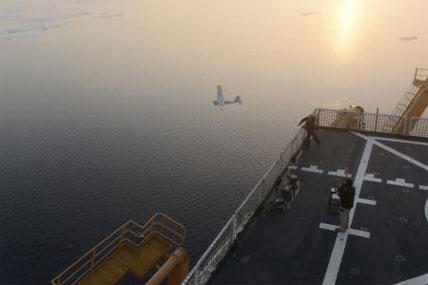
John Ferguson and Chris Thompson, Unmanned Aircraft System operators for AeroVironment, release a Puma All Environment UAS from the flight deck of the Coast Guard Cutter Healy during an exercise in the Arctic Aug. 18, 2014. (U.S. Coast Guard Photo)
Below can be seen the Mantis i45 sensor as installed on the Puma sUAS
Mantis i45 sensor
This might be a candidate for a sUAS to operate from the Webber class WPCs. I can see some useful scenarios, such as providing overwatch while doing a law enforcement boarding, but I still think we need something more capable of providing a more persistent and more wide-ranging search. Still a combination of a sUAS like this and the TALONS (Towed Airborne Lift of Naval Systems) might be very effective. The recovery methods I have seen so far, for this system, either landing on the flight deck of an icebreaker or landing in the water don’t seem satisfactory.
Still I would suggest we take a look at what the Canadians are doing. We might want to send an R&D rep who has participated in our previous examination of sUAS to ride one of these ships during the last half of a drug interdiction patrol, so they can get input from both the Canadians and the LEDET.
Seapower, a Navy League Magazine and web site, reports, the Coast Guard issued a Request for Proposal on February 7, for “Indefinite Delivery Indefinite Quantity Competitive and Unrestricted Commercial Services Combined Synopsis/Solicitation for Unmanned Aircraft Systems for National Security Cutters (NSCs) for the United States Coast Guard.” Proposals are due by March 9. (Pretty quick turn around.)
In particular they identify two competing systems, the Scan Eagle from Insitu and Textron Systems Aerosonde sUAS. We have been talking about the Scan Eagle for almost seven years. Also the Coast Guard has been using Scan Eagle operationally, but since we have not talked about the Aerosonde I thought, perhaps we should take a look.
For a rough comparison, Scan Eagle has a max Take Off Weight 44-48.5 lb. (22 kg), Aerosonde has a max TO weight of 80 lb (36.4 kg), and the RQ-21A Blackjack a max TO weight of 135 lb (61.4 kg).
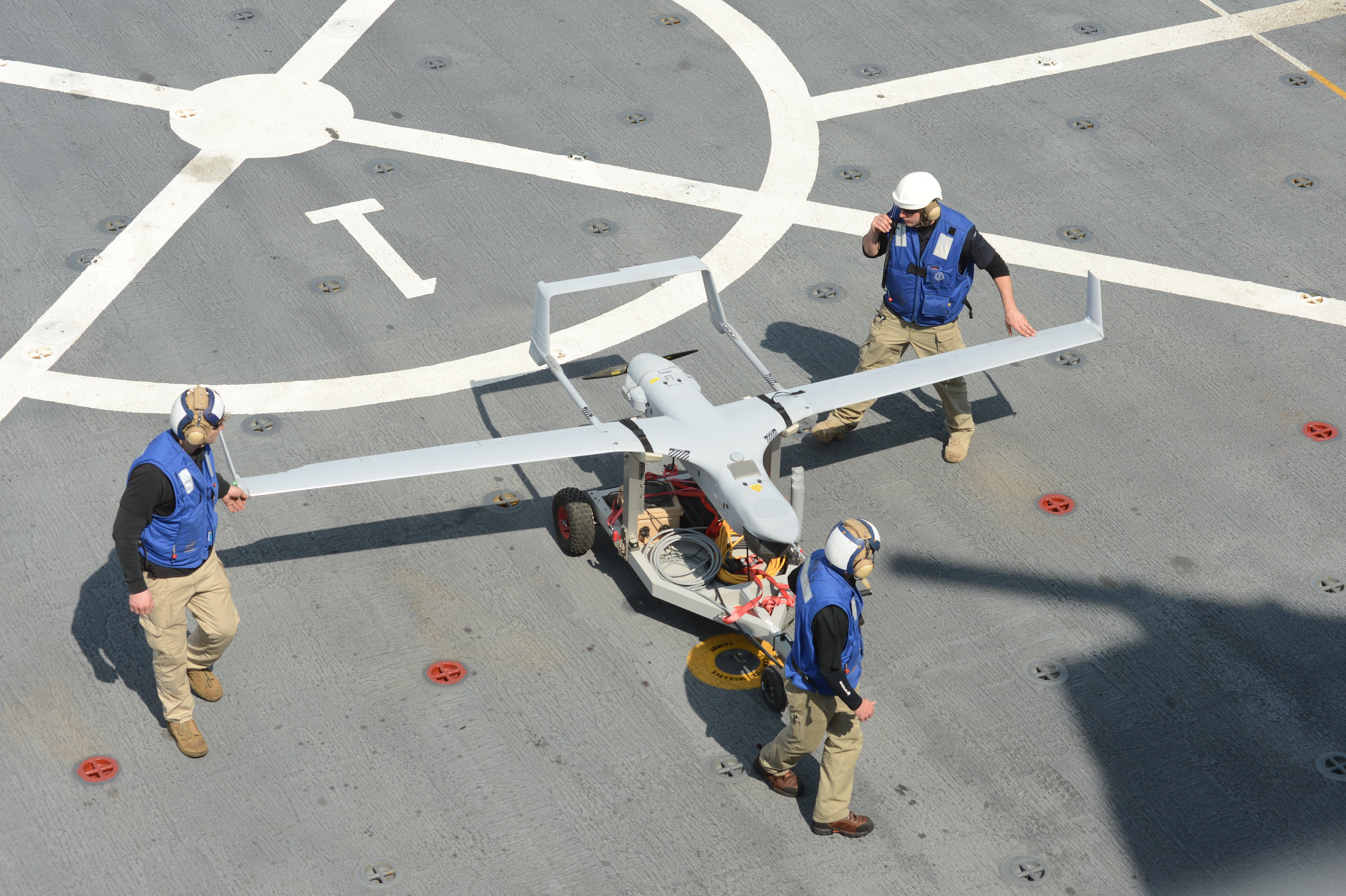
GULF OF MEXICO (Feb. 10, 2013) Members of the RQ-21A Small Tactical Unmanned Air System (STUAS) test team transport the RQ-21A across the flight deck of the amphibious transport dock USS Mesa Verde (LPD 19) after its first flight at sea. Mesa Verde is underway conducting exercises. (U.S. Navy photo by Mass Communication Specialist 3rd Class Sabrina Fine/Released) 130210-N-NB538-195
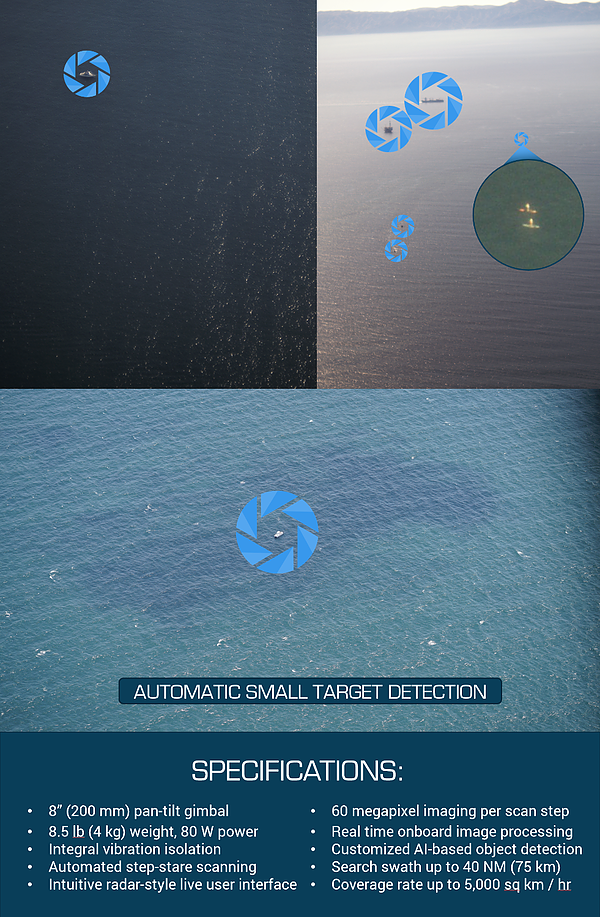
“The U.S. Coast Guard customer has expressed unique technology and operational requirements in its Small Unmanned Aircraft Systems (SUAS) RfP,” so we are not simply going to buy what the Navy already has. Using the usual optical systems is like looking through a straw. I expect the Coast Guard is going to want an area search capability, radar or perhaps ViDAR.
Figuring out how best to use these is going to be an interesting Operations Research problem. What search pattern? at what altitude? How far out can we fly these and still communicate and have the cutter provide sense and avoid to prevent a mid-air?
A drone reaches people in the water and drops an inflatable float. This might be useful as a response to a man-over-board, particularly if the drone were equipped with low light level/IR. The drone could not only drop a float but could also hold position over the person in the water until the ship can come back for a pick-up. A light on the drone might help.
US Naval Institute news service brings us a report of another unconventional attack by remote controlled boats, this time on a commercial tanker. We have seen this type of attack before, but apparently this was “at least the sixth time Houthis used remote-controlled boats to attack shipping and oil assets in the Red Sea, according to a tally of Saudi and Gulf region news reports.”
This report is buried in a report about a drone attack on Russian bases in Syria, but there are some interesting details.
The post reports an examination of a captured remote controlled boat,
The 30-foot long patrol boat, originally manufactured by the UAE-based company Al Fattan Ship Industry, was one of at least 60 donated by the UAE Coast Guard to the Yemeni Navy before the civil war kicked off in 2015.
The boat’s control unit was connected to a remotely operated video camera and a Garmin GPS antenna, suggesting the operator was able to stream live footage of the boat’s progress during the attack, and was fitted with a Soviet-manufactured P-15 Termit anti-ship missile and shaped explosive charge.
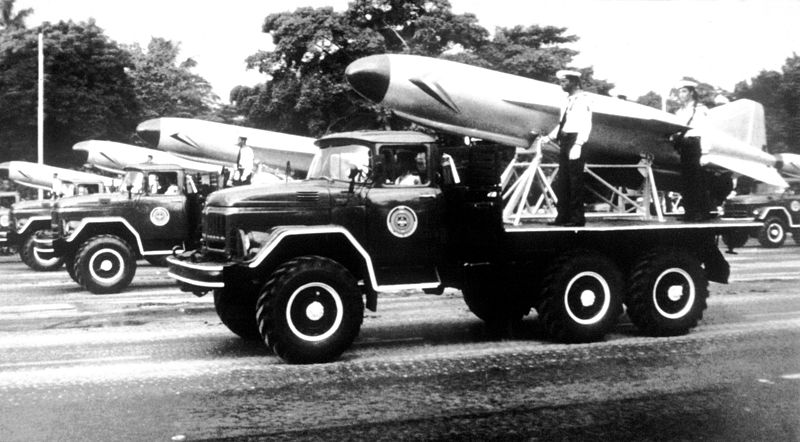
The P-15 Termit is another designation for the Styx, an early Soviet anti-ship missile. It is 5.8 m (19 ft) long and weighs 2,580 kg (5,690 lb).
SS-N-2 Styx/P-15 Termit
In countering the sUAV attack, the Russians used both hard and soft kill. The Pantsir-S reportedly use to shoot down seven of the drones is a short range, combined gun and missile, anti-air system. Six more were brought down by electronic counter-measures.
According to the report, Putin said, “These aerial vehicles were disguised – I would like to stress that – as homemade. But it is obvious that some high-tech equipment was used,” Perhaps Putin is not aware, or simply refuses to acknowledge, how sophisticated hobby drone auto-pilots have become. All you need is Google Earth for targeting and you can set in way-points and altitudes and have it fly to any point within the range of the aircraft.
3-View line drawing and dimensions of MQ-1B Predator UAV, – Department of the Air Force, Engineering Technical Letter (ETL) 09-1: Airfield Planning and Design Criteria for Unmanned Aircraft Systems (UAS), 28 Sept 2009
The Coast Guard Compass has a post on the Coast Guard’s investigation of possible future procurement of land based long-range and ultra-long endurance unmanned aircraft systems (LR/ULE UAS).
The Air Force has recently decided to retire all their MQ-1 Predator UAVs replacing them with the MQ-9 Reaper. Perhaps we could get a near term interim capability and gain valuable experience by taking over some of the Air Force Predators and modifying them for a Maritime role..
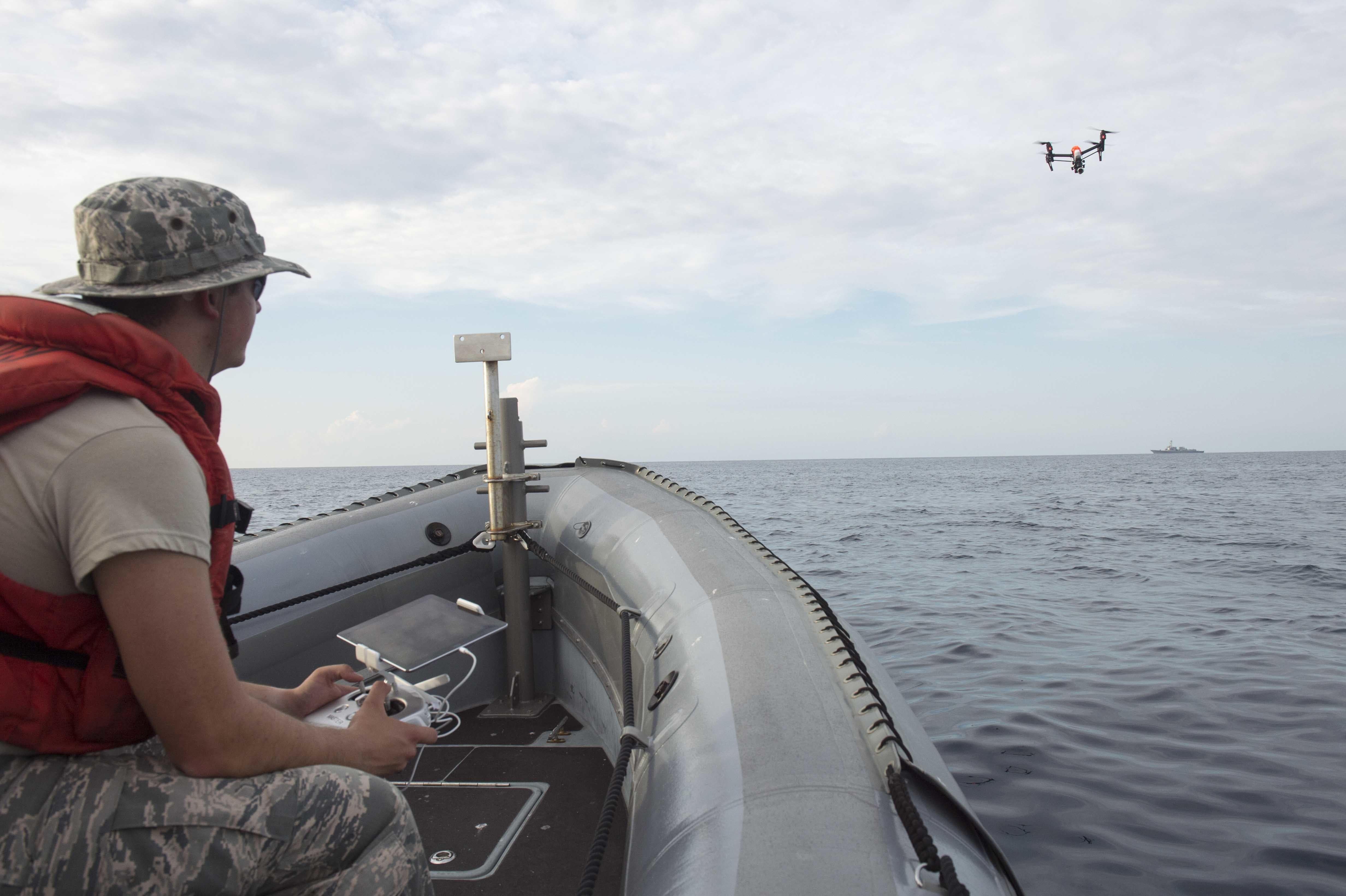
160919-N-AT101-177 GULF OF MEXICO (Sept. 19, 2016) Cadet 1st Class Hanson Oxford, a student at the U.S. Air Force Academy, operates an unmanned aerial system aboard a rigid hull inflatable boat during exercise Black Dart, Sept. 19. Black Dart is the largest Department of Defense (DoD) live-fly, live-fire, counter Unmanned Aerial Systems (UAS) technology demonstration. (U.S. Navy photo by Mass Communication Specialist 1st Class Maddelin Angebrand/Released)
There is a new ALCOAST that addresses short range unmanned air system. I have reproduced it below.
These are the commonly available battery powered “drones” that generally cost a few hundred to a few thousand dollars. They must weigh less than 55 pounds (25 kilos). Unless restrictions are waived by the FAA, they can generally only be operated below 400 feet AGL (above ground level) during hours of day light and civil twilight.
U.S. Coast Guard sent this bulletin at 01/05/2018 05:13 PM EST
R 051700Z JAN 18 FM COMDT COGARD WASHINGTON DC//CG-7// TO ALCOAST UNCLAS //N03710// ALCOAST 004/18 SUBJ: AUTHORIZED USE OF COAST GUARD UNMANNED AIRCRAFT SYSTEMS (UAS) A. SMALL UNMANNED AIRCRAFT SYSTEMS, 14 CFR Part 107 B. COAST GUARD AIR OPERATIONS MANUAL, COMDTINST M3710.1 (SERIES) C. COMDT (CG-7) memo 3700 of 15 May 2017 1. Short-Range UAS (SR-UAS) constitutes one of the most significant new and emerging technologies available to the Coast Guard today. In support of the COMDT’s strategic commitment to invest in new technologies, the Office of Aviation Forces (CG-711) is leveraging opportunities to deliver this new technology to the field. Pursuant to REF C, COMDT (CG-711) established the Group-1 UAS Prototype Program Initiative (GUPPI) as a mechanism for testing SR-UAS use in the fleet while simultaneously developing a sustainable Program of Record (PoR). GUPPI will develop and test potential capability solutions to integrate, train, and standardize this technology. 2. The USCG recognizes that small, hand-launched SR-UAS have the potential to be a highly effective and affordable tool for many missions. In the future, SR-UAS may supplement or even replace legacy capabilities in order to meet existing mission requirements. GUPPI will assist units in identifying mission requirements which are more effectively met through the use of SR-UAS. Ice reconnaissance, post-storm survey, pollution response, antenna tower inspection, search and rescue, and law enforcement are a small sample of the potential uses of SR-UAS. 3. GUPPI is a pilot program that will provide SR-UAS capabilities to meet the operational commander’s needs at the deck-plate level, employing properly trained personnel to test potential SR-UAS capability solutions. Simultaneously, SR-UAS remote pilots will generate the doctrine, training, and TTP necessary to validate a long-term PoR. The GUPPI team, consisting of FAA-certified remote pilots within COMDT (CG-711), will equip six fleet units with SR-UAS and assist unit personnel with obtaining the necessary training and certification to operate the device for authorized missions. As operations progress and mature through 2018-2019, GUPPI membership will expand and authority to approve SR-UAS operations will be disseminated and delegated down to the appropriate level. This initiative will sunset once a formal PoR has been established to fund and sustain the SR-UAS fleet. To understand our customers’ needs most effectively, I request that units forward any internally- identified UAS requirements up their respective chains of command for consideration by the mission managers and COMDT (CG-711). 4. In August 2016, REF (A) established a viable certification method and operating procedures for both public and private operators to operate SR-UAS within the National Air Space. GUPPI was founded to explore potential avenues for Coast Guard operation of SR-UAS and will likely incorporate large elements for REF (A) into REF (B). Unit personnel interested in obtaining their Part 107 Remote Pilot certification are encouraged to visit the COMDT (CG-711) SR-UAS Portal Page for further guidance: https://cg.portal.uscg.mil/units/ cg711/SR-UAS/default.aspx Units interested in participating in GUPPI shall route their request to COMDT (CG-711) through the appropriate chain of command for consideration. 5. In addition to GUPPI, units are authorized to contract select UAS services from commercial vendors in order to obtain cost effective near-term solutions to current capability gaps. Units are reminded that the USCG should not acquire any property or retain any property rights in the UAS or associated hardware, or technology under these service contracts. a. Notify COMDT (CG-711) and the next level chain of command prior to initiating any UAS contract obligations. b. Coast Guard units are authorized to seek photo or video imagery services from commercial UAS operators, in accordance with established contracting procedures. The following apply for any UAS services: 1) The UAS may be used for photo or video imagery in support of infra- structure inspections, environmental observation, pollution response, post-storm survey, ice survey, communications support, and public relations. Commercial UAS support for other missions, including law enforcement, intelligence, defense operations, or search and rescue requires explicit COMDT (CG-711) and chain of command approval. 2) The UAS shall not be used to collect any Personally Identifiable Information (PII). 3) CG units contracting for UAS services, and their servicing legal offices, will ensure that the contract specifies that the commercial UAS operator shall be solely responsible for the operation of the UAS and compliance with applicable FAA laws and regulations. 4) CG units contracting for UAS services or flying organic UAS shall contact the nearest CG AIRSTA and District (DM) to ensure that CG manned aircrews are aware of the UAS operations and have a plan to deconflict the airspace. c. Use of commercial UAS for missions not listed here or for any uses other than capturing photo or video imagery requires further review by COMDT (CG-711) and shall be forwarded for consideration. 6. Units may also partner with local, State, or Federal government agencies that operate UAS to obtain information from their UAS operations in support of Coast Guard operations. 7. SR-UAS will require specific operator qualifications, airworthiness certifications, and spectrum authority, at a minimum. SR-UAS operations could subject the USCG to liability for any associated damage, injury, or death. GUPPI is addressing these challenges and policies by identifying a controlled, risk-mitigated, environment for SR-UAS operational development. 8. The U.S. Army, Navy, and Marine Corps ceased all use of the prolific, industry-standard DJI SR-UAS products on 02 August, 2017. This manufacturer of SR-UAS was found to have significant cyber security concerns, and current USCG policy is in alignment with our DoD counterparts. The Office of the Secretary of Defense plans to release DoD-wide guidance shortly on which COTS systems will be authorized by the DoD. 9. The Research and Development Center and the Coast Guard Academy currently have authorization from COMDT (CG-711) for UAS use in support of education and research activities. Units may request GUPPI team support through their chain of command in support of field missions. Unless specifically provided in this ALCOAST, all other access to SR-UAS by fleet units remains prohibited. 10. POC is CDR Daniel Broadhurst, COMDT (CG-7114). 11. RDML M.P. Ryan, Assistant Commandant for Capability, sends. 12. Internet release is authorized.




 Chuck Hill's CG Blog