Survivable? “U.S. Navy Turns Away From Small Warships Despite Growing Demand, Tactical Relevance” –Forbes

USS Newcomb (DD-586), named after Revenue Cutter Service officer Frank H. Newcomb, who captained the cutter Hudson during the Spanish American War, was awarded eight battlestars, was struck by five Kamikazes off Okinawa, but survived.

Forbes has a recent post by Craig Hooper, about a topic close to my heart,

While small ships jostle in the South China Sea, the U.S. Navy is celebrating their departure from the messy business of managing small combatants. After shedding fourteen long-unloved Cyclone class (PC-1) coastal patrol ships, the Navy has effectively handed the responsibility for managing small ship operations, engagement and training to the already overtasked and poorly-funded U.S. Coast Guard.

I will interject here that while the Cyclone class were largely seen by “Big Navy,” which tends to be run by aviators (mostly fighter and attack aircraft types) and submariners, to be irrelevant, they were not unloved by those that sailed them. I have communicated with several former PC sailors, and they all loved them. They were also the busiest ships in the US Navy, being underway more than larger Navy ships, so apparently the fleet commanders found them useful.

Hooper says the Navy sees small ships as Unsurvivable. The US Navy has no surface combatants between the 44 foot patrol boats and the 3500 ton Littoral Combat Ships, and they are not really happy with the survivability of the LCS. I think the Navy knows they need a lot more ships and that some of them can be small. Not every ship needs to be able to do everything. They are talking about building more small ships, but mostly they will be unmanned.

A 2015 post addressed small warship survivability, but it appears we need to look at this again.

If the Navy thinks all small ships need to be unmanned because they are not survivable, I will point out that that reasoning is not supported by history. In fact, they have been misled by looking at only part of the survivability question, passive survivability.

Why was this?

Because the enemy gets a vote. They will expend much more effort looking for and attacking the major units. Yes, big combatants can take more hits, but they are also more likely to be hit, and can also expect to be hit more often.

No ship, no matter how large, is unsinkable, especially when the enemy sees it as their primary threat. Carriers in particular have a huge bullseye painted on their flight decks. Given the opportunity, every weapon will be pointed at them until they are all eliminated.

Whether a unit will survive depends on in part on its passive survivability, but also on its self-defense capability, the area defense capability of assets with them, where and how the asset is used, and particularly on how the enemy sees the asset. Is it an immediate threat? Is destroying it key to success?

Historic Context:

Looking at the figures I found researching for my earlier post.

The US fleet at the beginning of the war (WWII), it included 233 major surface combatants of which 46 or 19.7% were sunk by enemy action during the course of the war. If we break it down by type it looks like this:

  • Type: Number in Commission, Dec. 7, 1941 / Number sunk / % lost to enemy action
  • Aircraft Carriers (CV): 7 / 4 / 57.1%
  • Escort Carrier (CVE): 1 / 0 / 0%
  • Battleships (BB): 17 / 5 / 29.4% (of the 5 sunk, all were at Pearl Harbor, 3 were salvaged)
  • Cruisers (CA/CL): 37 / 8 / 21.6%
  • Destroyers (DD): 171 / 29 / 17%

Notably, Carriers had the highest loss rate. Battleships, surface combatants that should have been the most “survivable,” were the second most likely type to be sunk.

I don’t have similar figures across all major types like this for the Royal Navy and the Japanese Navy but a look at only their largest ships shows similar or higher loss rates.

Of the ships that the Royal Navy had in commission when they declared war on Germany in September 1939, four of 15 battleships and battlecruisers were sunk (26.7%), five of seven aircraft carriers were sunk (71.4%).

Of the ships that the Imperial Japanese Navy had in commission at the time of the Attack on Pearl Harbor in December 1941, 8 of 10 Battleships were sunk by enemy action (80%) (one was destroyed by a non-combat related magazine explosion) and nine of ten aircraft carriers (90%) were sunk. Their only surviving aircraft carrier was their oldest and smallest (probably least “survivable”) that had been used only as a training carrier.

Certainly, the British and Japanese experience offers nothing to suggest that larger, supposedly, more “survivable” ships are more likely to survive.

Small ships may not be priority targets.

As I noted in the earlier post, I will add a bit of anecdotal evidence. As part of Operation Overlord, the Normandy Invasion, 60 US Coast Guard 83 foot patrol boats were assigned to rescue those unlucky enough to find themselves in the water or sinking. 30 went to the American beachheads and 30 went to the British and Canadian beachheads. Being wooden hulled and gasoline powered, they certainly would not have been considered “survivable.” Apparently, they were in the thick of it, because they rescued 1438 men from the water and sinking craft. In spite of all the fire from shore, not a single boat was sunk and not a single crewman was killed. Apparently, the German gunners were too busy with the landing craft hitting the beach and the warships that were shelling them. They simply were not a priority target.

Some of the USN’s least survivable ships, 450 and 850 ton subchasers also suffered few losses. Combat losses for the PC-461 class built 1941-44 were miniscule (8 of 343, 2.3%here). For the PCE-842 class, all commissioned between 1943 and the end of the war, losses were non-existent (none of the 68 completed was lost, 0%here). 

Generally small ships don’t confront major of enemy forces alone. They are part of a fleet. Before the LCS got the Mine Counter Measures (MCM) mission, the US Navy’s MCM ships were the Avenger class. Some are still in commission. They had a wood and fiberglass hull and were armed with four .50 caliber machine guns. There was no great cry that they were not survivable. Fleet commanders are not stupid. If ships that are needed to do a job cannot defend themselves, then, crewed or uncrewed, they will be escorted and defended.

Not sunk but damaged:

Damage gets much less attention than sinkings, but many of the “more survivable” ships suffered serious but survivable damage that reduced their capabilities or took them out of the fight.

The two pre-war built fleet carriers that spent the War in the Pacific and survived were both seriously damaged more than once. Saratoga was torpedoed on two occasions and took four kamikaze hits and two bombs on another. Enterprise was hit by bombs four different times and by kamikazes on two others.

Because they are more likely to survive the many hits they are likely to take, the larger, “more survivable” ships are more likely to be out of the fight having their damage repaired, even if they do not sink.

Looking at the Essex class carriers, none of which were lost, only Essex was in commission by the end of 1942, but even she did not reach the Pacific until May 1943. Only seven were commissioned before 1944. Only 14 before 1945. In spite of this, ten ships of the class (CVs 9,10,11,13,14,15,16, 17,18, and 19) were hit on a total of 22 different occasions, CV-11 and CV-13 each five times. In most cases the damage was minor, but it does demonstrate the high priority the enemy placed on neutralizing them. At least in some cases the ships had to terminate combat to address the damage. USS Franklin (CV-13) and USS Bunkerhill (CV-17) had to return to the states to address extensive damage. It is a tribute to the mobile support provided at advanced bases that more time was not lost. 

All four USN fleet aircraft carriers that were sunk were hit by multiple torpedoes. Only two torpedoes hit Essex class carriers, only a single torpedo in each case, USS Lexington, in Dec 1943, that kept her out of action for three months, and USS Intrepid, in Feb 1944, that kept her out of action for seven months.

It appears that the difference between the loss rate of aircraft carriers sunk in the first year of the war (57.1%) and the Essex class during the last two years of the war (0%) had much more to do with improved defensive capabilities (radar, CICs, fighter direction, anti-aircraft guns and firecontrol, proximity fuses, etc.) than improvements in passive survivability.

All the Essex class carriers survived the war, but so did most of the less survivable ships, particularly if they did not see action until the last two years of the war as the Essex class did.

How about now?

In WWII the Navy had an extensive mobile repair and support team that allowed most damage to be corrected close to the scene of action without the long transits to and from yards in the continental US. They could drydock carriers and battleships in advanced bases like Ulithi.
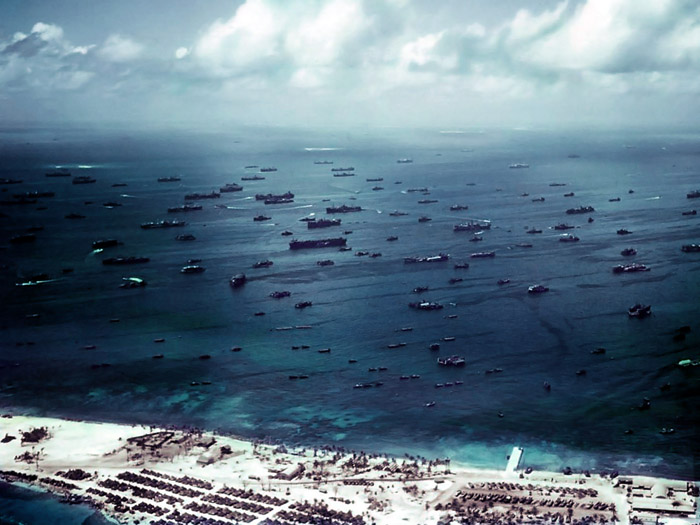
Ulithi Atoll north anchorage and Sorlen Island, late 1944.

Given our current shortage of major ship repair facilities in the US and the near total lack of the capability to quickly establish advanced bases, it is unlikely we would be able to return damaged ships, particularly large ones, to service as quickly as we did during WWII.

In short, smaller, less “survivable” ships that are less likely to be targeted and sunk or damaged and are more easily supported, are more likely to be available for combat operations than larger ships.
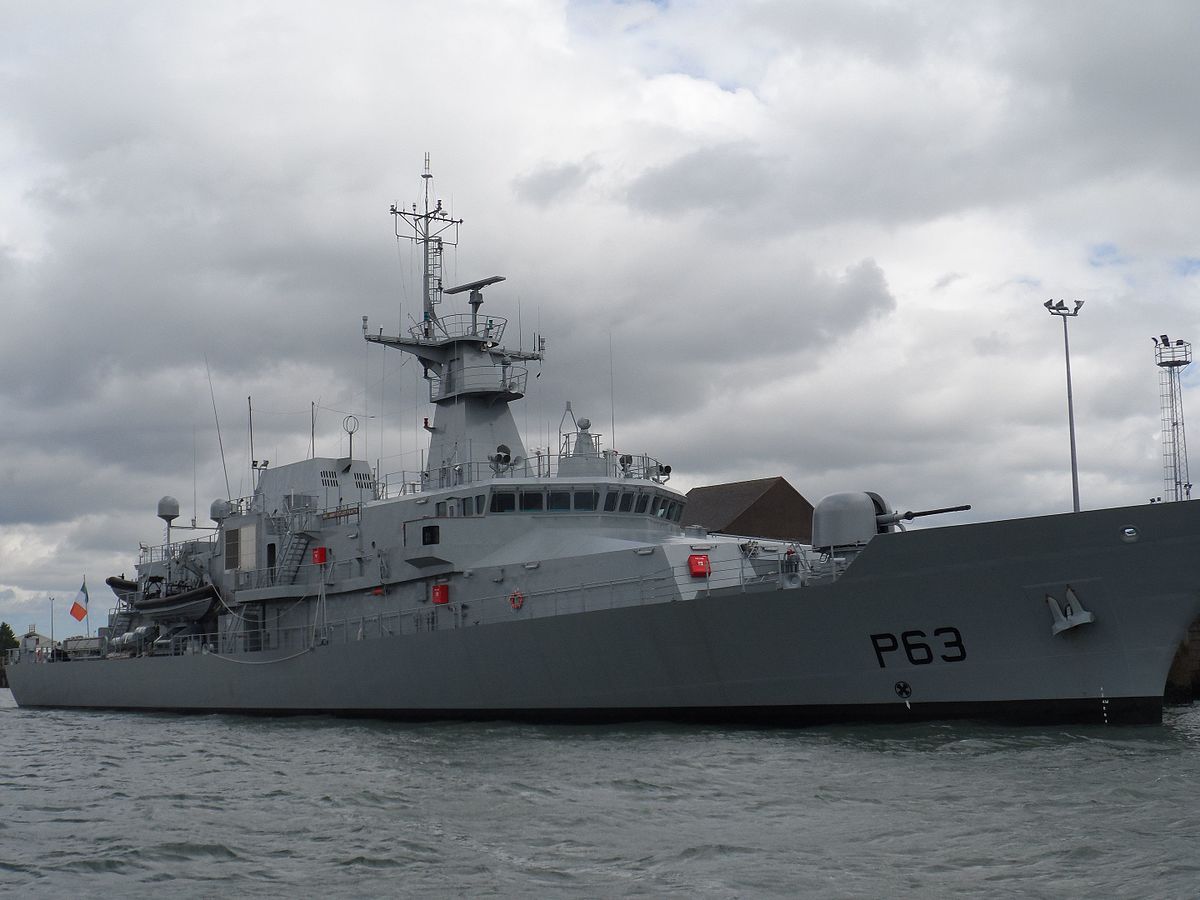
“Irish Forces Raid Bulk Carrier and Find ‘Significant Quantity’ of Drugs” –gCaptain

“Irish Forces Raid Bulk Carrier and Find ‘Significant Quantity’ of Drugs”

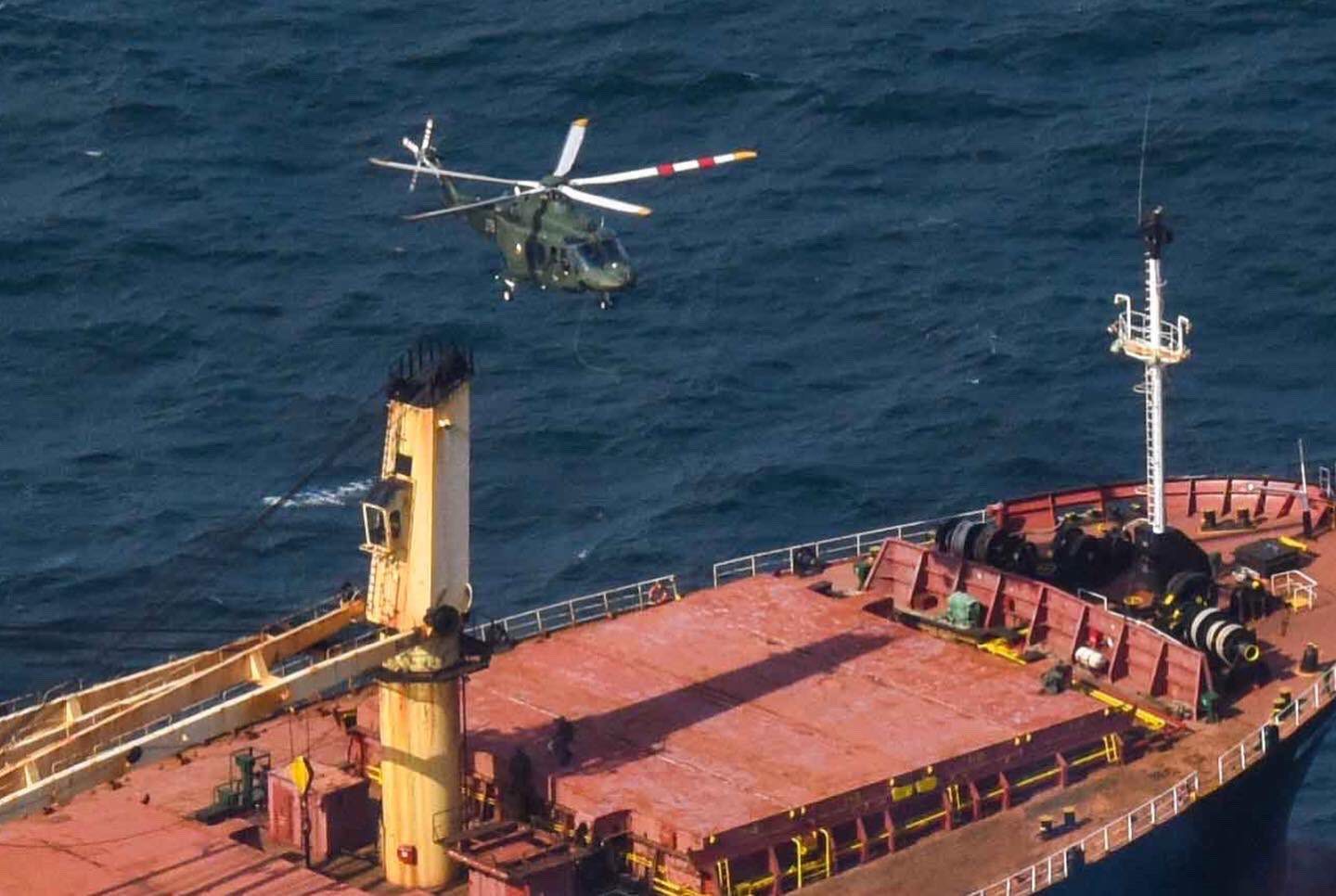
gCaptain reports, Irish forces forcibly boarded M/V Matthew and found drugs.

Found it interesting how little detail there is in this story. Did the boarding party fast rope down? Did the helo land? The accompanying video only shows the helicopter hovering nearby. No indication of the type of quantity of drugs.

Offshore Patrol Vessel LÉ William Butler Yeats reportedly fired warning shots.

(Much more information in the comments below.)

LÉ William Butler Yeats in Cobh harbour. 24 July 2016. Photo credit Debbiesw

“USCGC Myrtle Hazard crew concludes 46-day patrol in the Pacific, strengthening ties and security with regional partners” –U.S. Coast Guard Forces Micronesia/Sector Guam

Mk38 on USCGC Myrtle Hazard during joint patrol with Papua New Guinea.

Below is a news release from U.S. Coast Guard Forces Micronesia/Sector Guam. Photos of the homecoming and underway operations available on the link.

Sept. 25, 2023

USCGC Myrtle Hazard crew concludes 46-day patrol in the Pacific, strengthening ties and security with regional partners

SANTA RITA, Guam — Marking the culmination of a 46-day patrol, the USCGC Myrtle Hazard (WPC 1139) crew completed a series of operations in partnership with Papua New Guinea and other regional allies, bolstering maritime security and resource management in exclusive economic zones (EEZs) and on the high seas, returning to Guam on Sept. 24, 2023.

The recent patrol operation specifically supported the Pacific Islands Forum Fisheries Agency’s annual Operation Island Chief at the outset of the patrol and the broader U.S. Coast Guard’s Operation Blue Pacific, further solidifying the U.S. commitment to resource security and regional stability.

Expanded Partnerships and Engagements

Illegal, Unreported, and Unregulated (IUU) fishing fundamentally erodes national security and exacerbates existing maritime governance gaps. This patrol significantly contributed to closing those gaps. By navigating the EEZs of the United States, the Federated States of Micronesia, and Papua New Guinea, Myrtle Hazard’s crew strengthened the rule of law at sea, which the U.S. Coast Guard is uniquely positioned to enforce.

They also made port calls in Manus Island, Rabaul, Port Moresby, Lae in Papua New Guinea, and Cairns, Australia. This visit was the first by a U.S. Coast Guard vessel to Lae, laying the foundation for future visits. These stops also facilitated engagement with agency representatives throughout Papua New Guinea, including the government of Papua New Guinea, their National Fisheries Authority and Customs Service, and the U.S. Embassy in Port Moresby. In multiple locations, the crew worked with the PNG Defence Force, and in Manus, they also hosted the deployed U.S. Navy Seabees Naval Mobile Construction Battalion THREE. The team was fortunate to observe PNG Independence Day in Lae, deepening cultural bonds.

The recent joint maritime patrol between the U.S. Coast Guard and multiple Papua New Guinea agencies was a historic step forward in U.S.-PNG relations. The collaborative operation led to advancements in maritime domain awareness and law enforcement expertise and successfully countered illegal activities like unregulated fishing. With the Western and Central Pacific Oceans being a significant source of the world’s tuna, the joint effort emphasized the mutual commitment to protect valuable marine resources. The patrol yielded six contact and observation reports, one of which led to immediate action by the PNG Fisheries Authority against a foreign fishing vessel crew for a Vessel Monitoring System violation. Additionally, four boardings of foreign fishing vessels took place to enforce regulations and deter illegal activity in PNG’s EEZ. These outcomes highlight the operation’s regional impact and set a strong foundation for future cooperation.

In Cairns, Australia, the Myrtle Hazard team engaged in memorable interactions with the Australian Royal Navy and Border Force. Notably, an all-out, full-court, officiated basketball game took place, with members from both services participating—highlighting the ever-growing camaraderie. They also spent time at the Great Barrier Reef International Marine College.

Milestone Achievements and Experiences

“Our 46-day patrol has been an exceptional journey. The sheer dedication and grit exhibited by my crew have been nothing short of remarkable,” said Lt. Jalle Merritt, commanding officer of the USCGC Myrtle Hazard. “From once-in-a-lifetime experiences like observing PNG Independence Day to earning new qualifications, this patrol signifies the hard work, joy of human connection, and increased competence we’ve gained.”

During the patrol, a line-crossing ceremony at the equator en route to Guam marked a significant rite of passage for the crew, symbolizing their transformation into more seasoned mariners.

“I had the honor of serving aboard a 110-foot Island-class patrol boat based out of Guam early in my career. Due to the platform’s capabilities, we were limited in our operational reach to Palau and portions of the Federated States of Micronesia. Today, the FRCs based here are redefining the dynamic for our Service and our regional partners,” said Capt. Nick Simmons, commander of U.S. Coast Guard Forces Micronesia/Sector Guam. “From Guam, we’ve expanded our area of operations to areas that include our partners in the Republic of Palau and the Federated States of Micronesia, but also the Republic of Marshall Islands, Papua New Guinea, Australia, and Nauru. And we have plans to reach the Philippines soon. Most FRCs are engaged in near-coastal operations, but ours are venturing farther, more frequently, substantiating the U.S. Coast Guard’s role as a significant maritime security actor across the Indo-Pacific.”

Strategic Impact

Building upon last year’s visit by a Guam-based fast response cutter crew and the recently ratified bilateral agreement with PNG, the Myrtle Hazard’s team patrolled 7,484 nautical miles, significantly bolstering maritime security and resource protection in multiple EEZs. The patrol enhanced interoperability with regional allies like PNG and Australia and advanced U.S. national priorities through targeted operations and cultural diplomacy. The patrol also contributed to the broader objectives of the PIF Forum Fisheries Agency’s annual Operation Island Chief and the U.S. Coast Guard’s Operation Blue Pacific, strengthening both bilateral and multilateral relationships in the region.

The Long View

The U.S. Coast Guard 14th District, based out of Honolulu, Hawaii, and U.S. Coast Guard Forces Micronesia/Sector Guam, continue to foster enduring partnerships with regional allies. With humanitarian Service at its core, the U.S. Coast Guard remains committed to maritime safety, security, and stewardship, solidifying its longstanding reputation in the Pacific as a trusted partner. Plans and additional patrols are already underway for further engagement with regional partners.

— USCG —

The Myrtle Hazard is the 39th 154-foot Sentinel-class FRC, named in honor of the first enlisted woman in the U.S. Coast Guard who served as an electrician and radio operator. The Guam-based cutters serve as a cornerstone for the U.S. Coast Guard’s ongoing commitment to the people of Oceania, focusing on maritime safety, security, and stewardship.

Guns as Counter-UAS Weapons

A couple of videos from a The Drive post, “Gepard’s 35mm Cannons Blast Russian Drones Out Of The Sky In First-Person Video.”

TheFlakpanzer Gepard was not designed specifically for UAS. It was designed in the ’60s and fielded in the ’70s to protect against low flying aircraft like attack helicopters and the Soviet counterpart of the A-10 attack aircraft, the SU-25 Frogfoot.

The twin 35 mm guns are much more powerful weapons than the 25 and 30 mm weapons mounted on the Mk38 gun systems. Presumably in the counter UAS role they are using the “AHEAD” anti-missile rounds, rounds that might have been designed specifically to take out UAS, that fire 152, 3.3 gram tungsten metal sub-projectiles. The guns have a very high muzzle velocity (3,400 ft/sec for the AHEAD round) and a much higher rate of fire (550 rounds per minute per gun).

With the AHEAD round, the projectile weight is 1.65 lbs. (0.750 kg) compared with 0.406 lbs. (0.184 kg) for the 25mm HEI and HEI-T rounds, and 0.79 lbs. (0.362 kg) 30mm HEI-T round so the potential radius of destruction is substantially greater.

Still the 30mm with airburst ammunition should be effective, but it will probably require more rounds to get the job done and will have shorter effective range. Unless the 25mm has an airburst round it is unlikely to be effective.

It might be worth considering that while the Gepard’s firecontrol is radar, the Mk38 firecontrol is electrooptic. I can’t say unequivocally that that is a disadvantage, but it might be. Surely the drone builders will attempt to include countermeasures against both types of firecontrol.

Force Protection Lesson from the Russo-Ukrainian War

Business Insider has a post reporting the successes of Ukraine’s kamikaze USV program as evaluated by Ukrainian intelligence chief Kyrylo Budanov. It included some information I had not seen in earlier reports.

“Budanov noted one occasion when a sea drone had been destroyed as it approached Russia’s Admiral Essen frigate in Sevastopol Bay…”It seemed unsuccessful. But the blast wave, because it was destroyed about 100 meters from the ship, and the charge was quite powerful, the wreckage completely damaged some of the ship’s electronic equipment, antennas, certain systems, and the hydroacoustic system. And it took 3-and-a-half months to repair,” Budanov said.”

This suggests to me that because kamikaze USVs with large explosive charges can do significant damage at 100 meters, then crew served machine guns on the target vessel are not sufficient protection.

These threats need to be destroyed well before they get within 100 meters (110 yards) of their target.

“Drone Boat Leading Navy Ships In The Strait Of Hormuz A Sign Of Things To Come” –The Drive

Strait of Hormuz, August 6, USS Thomas Hudner (DDG-116), Lewis and Clark class cargo ship USNS Amelia Earhart (T-AKE-6) and USCGC Charles Moulthrope (WPC-1141) with L3Harris Arabian Fox uncrewed surface vessel (USV) in the foreground.

The Drive has a post discussing 5th Fleet/NAVCENT’s pioneering work with Unmanned surface systems (UAS) and the creation of Task Force 59.

Coast Guard Webber class patrol craft are prominent in the operation as they have been in previous UAS operations. I suspect this is because the WPCs are readily available to the 5th Fleet commander. Their size and maneuverability make them easier to operate in close proximity to the small UAS (and in the vicinity of Iranian Revolutionary Guard Corp (IRGC) small craft). They are heavily armed enough to prevent the IRGC from stealing the UAS. They have tried to do it in the past

Specs on the 13 foot L3 Harris Arabian Fox (40 knot maximum speed and 36 hour endurance) lend credibility to the long-range reported for Ukrainian Kamikaze UAS, up to 450 nautical miles (approximately 833 km).

“Birdon America awards first Waterway Commerce Cutter (WCC) subcontracts” –Marine Log

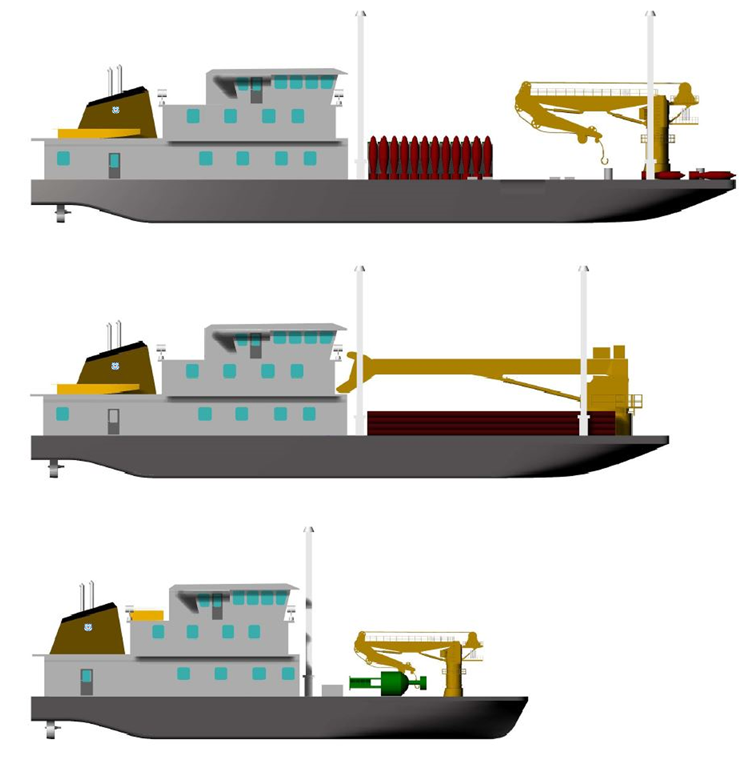
Shown above are Coast Guard indicative designs of a river buoy tender, inland construction tender and inland buoy tender.

Marine Log reports,

Denver-based Birdon America, Inc. a subsidiary of Australia’s Birdon Pty Ltd, reports that it has awarded a first round of major subcontracts in support its $1.187 billion contract to design and build 27 Waterways Commerce Cutters (WCC) for the U.S. Coast Guard.

Follow the links to previous reporting.

Thanks to Paul for bringing this to my attention.

“AIS: Harnessing state of the art maritime solutions to uncover hidden fishing vessel movements in the Pacific” –a webinar

For those who might be interested

I am passing along this announcement. This does not constitute and endorsement. I have no idea who these people are.

Illegal, unreported and unregulated (IUU) fishing for tuna in the Pacific region is estimated to amount to almost 200,000 tonns annually. Fisheries are of critical importance to the region with many nations working collaboratively to combat IUU fishing and increase traceability.

Learn how Starboard Maritime Intelligence and Spire Maritime have joined forces to help tackle this issue in the Pacific Ocean, using real-time AIS, AIS Position Validation, algorithms, and machine learning. AIS Position Validation is the new and unique data set from Spire Maritime that independently calculates a vessel’s location at the time of AIS transmission, even when AIS messages do not include valid GPS data.

Join our webinar on 9th August 11AM UTC with Iain Goodridge, Senior Director of RFGL at Spire, and Joseph Corbett, Chief Data Scientist at Starboard to find out how you can partner with our solutions to combat this growing concern. Learn how real-time AIS, and AIS Position Validation along with algorithms and machine learning, can be used to:

  • Understand fishing vessel manoeuvres and confirm compliance with measures to combat IUU fishing.
  • Uncover more intel on the location of fishing vessels that have gone dark.

AIS Position Validation:

Uncover vessel behavior anomalies and spoofing, in real time.

If you are interested to learn more about all the capabilities of AIS Position Validation, and how this unique data set allows you to independently validate a vessel’s reported position, detect vessels not reporting a validated GPS position or detect vessels reporting an incoherent position, then don’t hesitate to get in touch with us.

Best regards,

Spire Maritime team

“First US deep water port for the Arctic to host military, cruise ships” –Navy Times

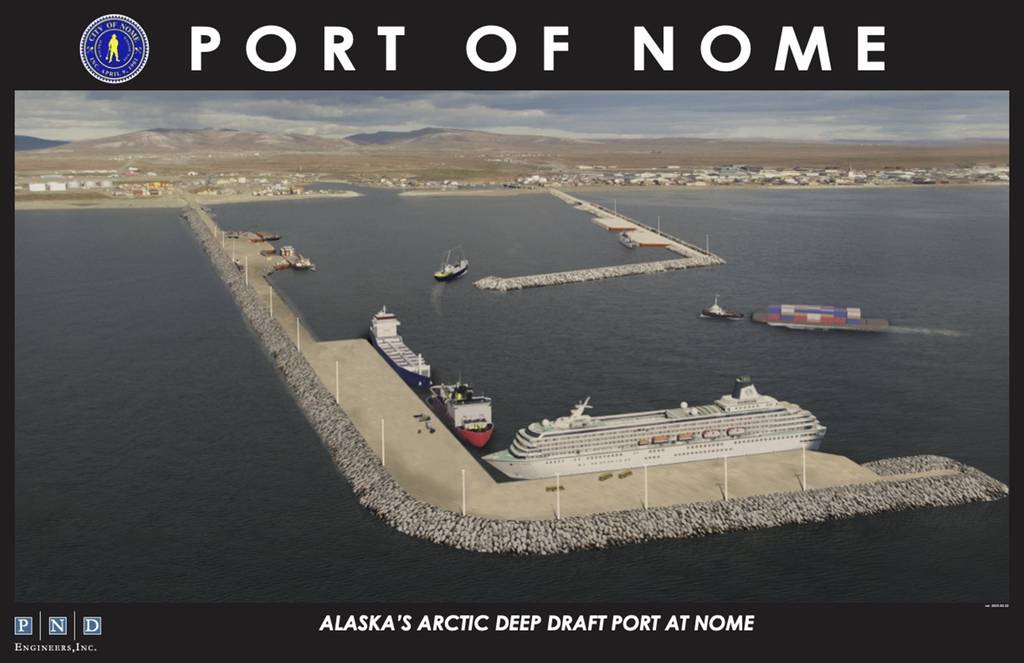
This rendering provided by the City of Nome shows how the Port of Nome, Alaska, will appear following an expansion project that will cost more than $600 million. Shipping lanes that were once clogged with ice for much of the year along Alaska’s western and northern coasts have relented thanks to global warming, and the nation’s first deep water Arctic port should be operational in Nome by the end of the decade. (PND Engineers Inc./City of Nome via AP)

Navy Times reports,

Workers will dredge a new basin 40 feet (12.2 meters) deep, allowing large cruises ships, cargo vessels, and every U.S. military ship except aircraft carriers to dock, Port Director Joy Baker said.

Nome in red. Adapted from Wikipedia’s AK borough maps by en:User:Seth Ilys.

We have been talking about a deepwater port in the area for some time,

Alaska and the Bering Strait

Nome isn’t actually in the Arctic, despite the fact that the US government defines the Arctic to include the Bering Sea. The Arctic Circle runs just a little North of Nome, essentially at the Bering Strait. The Bering Strait connects the Pacific with the Arctic Ocean and is about 44 nautical miles (82 kilometers) wide at its narrowest point. Whoever controls the Bering Strait can regulate traffic between the Pacific and the Arctic Oceans. Having a nearby deepwater port would certainly help, if it were desirable to regulate that traffic. Nome is within 160 nautical miles of the Russian side of the Strait.

Traffic through the Strait has increased and the possibility of a cruise ship disaster in the Arctic is probably a District 17 nightmare, but I think the probability is low that large numbers of CG units will be based at Nome. As noted earlier, I don’t think we will see either large patrol cutters (unless it is the Alex Haley) or FRCs based there but moving one of the Juniper class seagoing buoy tenders there, with its light icebreaking capability might make sense. A medium icebreaker might be a possibility, but that is a very long shot.

As I have noted before, the US Navy’s Pacific Fleet surface ships have not really shown much interest in operating in the Arctic. Their “Arctic” exercises have been in the Gulf of Alaska or little, if at all, North of the Aleutians.

We might see Air Force and Marines in the area in time of War. Airpower and/or shore based anti-ship missiles could control surface traffic through the Strait. Those forces would have to be supplied, which would mean logistics shipping to what we now know will be the deepwater port at Nome. The shipping would presumably require naval protection, air and/or surface.


Coast Guard in Oceania in the News

The USCGC Oliver Henry (WPC 1140) crew arrives in Manus, Papua New Guinea, on Aug. 14, 2022, from Guam as part of a patrol headed south to assist partner nations in upholding and asserting their sovereignty while protecting U.S. national interests. The U.S. Coast Guard is participating with partners to support the Pacific Islands Forum Fisheries Agency-led Operation Island Chief and the larger Operation Blue Pacific through patrols in the Western Pacific in August and September 2022. (U.S. Coast Guard photo by SW3 Victor Villanueva, NMCB-FOUR)

A couple of recent articles about the US relations with Palau and Papua New Guinea.

Map of the exclusive economic zones in the Pacific.

There has long been interest in a US base on Manus, Papua New Guinea, but this is politically sensitive. Basing cutters there that protect an important economic resource and occasionally rescue the locals when they get in trouble, would probably be most welcome.

On the map above, Manus and Guam do not look that far apart, but Manus is 1,737.88 km (938 nautical miles) SSE of Guam. That is about the distance from Miami to New York City. 

Cutters based in Manus would be closer to parts Freely Associated States (FAS) of Palau and Federated States of Micronesia than cutters based in Guam and much closer to most non-FAS Micronesian nations. It might also be a good place to site a fixed wing forward operating base (CGAS Honolulu DET).

I am beginning to think we will see two new bases in the Western Pacific, one in American Samoa and one in Manus.

If we do end up with additional Webber class based outside Hawaii and Guam, we might need a squadron support organization similar to, and perhaps even larger than, PATFORSWA, to support all FRCs based in the Pacific South and West of Hawaii, e.g. a PATFORSWPAC.