“Coast Guard detects 16 unauthorized drones during Seafair Weekend Festival” –CG News

Coast Guard members, in collaboration with the FAA, the Seattle Police Department (SPD), and Mercer Island Police Department (MIPD), employ Counter-Unmanned Aircraft Systems (UAS) capabilities to enforce the FAA-issued Temporary Flight Restrictions on Lake Washington during the 2023 Seafair Weekend Festival in support of the Airshow August 3, 2023. This was the first year Coast Guard Counter-UAS has been employed at Seafair. (U.S. Coast Guard courtesy photo)

Below is a news release from Coast Guard News.

We have seen counter UAS equipment added to the Webber class cutters in Southwest Asia, but this is the first time I have seen public acknowledgement of domestic counter UAS operations by the Coast Guard.

As a drone operator myself, I was happy to see that the effort was primarily educational, but the Coast Guard does need a robust domestic counter UAS capability for contingencies.


Aug. 9, 2023

Coast Guard detects 16 unauthorized drones during Seafair Weekend Festival

SEATTLE — The Coast Guard employed Counter-Unmanned Aircraft Systems (UAS) capabilities in collaboration with the Federal Aviation Administration (FAA), Seattle Police Department (SPD), and Mercer Island Police Department (MIPD) to enforce the FAA-issued temporary flight restrictions on Lake Washington during the 2023 Seafair Weekend Festival in support of the airshow.

This is the first year Coast Guard counter-UAS has been employed at Seafair.

The Coast Guard detected 16 UAS operators violating airspace restrictions during the H1 Unlimited Hydroplane Races and Boeing Air Show. Officers from SPD and MIPD were able to contact eight UAS operators and provide education on airspace restrictions as well as safe UAS operations.

One operator was cited for reckless endangerment by the Seattle Police Department.

“Unauthorized UAS can be extremely dangerous to airshow pilots, as well as spectators,” said Cmdr. Scott McGrew, the Coast Guard incident commander for SeaFair. “Our robust partnership with the FAA, Seattle Police and Mercer Island Police Department is vital to ensure unauthorized UAS operators are intercepted and educated on safe operations and reminded of the FAA Temporary Flight Restrictions in place to support the airshow.”

UAS operators are reminded to check tfr.faa.gov or the b4ufly app to verify the airspace is authorized for UAS flight.

UNITAS 2023

I had expected that at least some Coast Guard units would participate in UNITAS 2023, July 11-21, given the Coast Guard’s prominent role in 4th Fleet, but I find no mention of CG participation.

Also bit disappointed we don’t have a listing of non-US units participating too.

Below is SOUTHCOM’s summary of the event. The incorporation of unmanned systems should have been very interesting.


Overview

UNITAS is an annual exercise conducted in Atlantic and Pacific waters around Central and South America. UNITAS LXIV included maritime and amphibious phases and, for the first time ever, included integrated operations of unmanned systems in the exercise. The exercise was held July 11-21, 2023, in Colombia.

The exercise develops and sustains relationships that increase the capacity of our emerging and enduring partners’ maritime forces to achieve common desired effects.

Training Scenarios

UNITAS’ challenging training addresses key aspects of multinational and combined operations such as technology standardization and common operating procedures. Training included scenarios addressing electronic warfare, anti-air warfare and air defense, anti-surface warfare, live fire, maritime interdiction, littoral operations, and amphibious operations.

UNITAS LXIV consisted of two concurrent phases: at sea and amphibious. The maritime domain included the littorals which incorporates not only the ocean, but also the area inland from the shore that can be supported and defended directly from the sea. The majority of the amphibious training took place along the coast where marines and naval infantry trained in support of greater naval operations. The amphibious phase consisted of riverine operations and culminated in a landing from naval vessels.

Unmanned Systems training: In April the Secretary of the Navy and the Chief of Naval Operations announced that the Navy will scale unmanned systems to the fleet level by operationalizing unmanned systems in the U.S. 4th Fleet area of operations. Specific to UNITAS LXIV, the Navy deployed and exercised several unmanned systems to enhance maritime domain awareness, conduct battle damage assessment in support of the UNITAS LXIV live-fire sink exercise, or SINKEX, and integrate unmanned system operations with partner nation navies. The deployment of multiple unmanned systems is new to UNITAS but will become the standard as NAVSOUTH/4th Fleet takes lessons learned to inform the Navy’s hybrid fleet coming in the next decade. Additionally, the U.S. Marine Corps employed unmanned systems in support of its Force Design 2030 concept and will refine tactics, techniques, and procedures (TTPs) to inform the service on operational employment.

Women, Peace and Security Symposium: UNITAS LXIV featured a forum on the topic of women, peace and security. The forum is part of a global effort to support the contributions of women in the defense and security sectors around the world. The program is a cornerstone to SOUTHCOM’s mission of promoting security partnerships across the Western Hemisphere.

Participating Countries

UNITAS LXIV featured 20 participating countries: Belize, Brazil, Canada, Chile, Colombia, Dominican Republic, Ecuador, France, Germany, Honduras, Jamaica, Mexico, Panama, Paraguay, Peru, Spain, South Korea, United Kingdom, Uruguay, and the United States.

Participating U.S. Forces

  • USS New York (LPD 21)
  • USS Cole (DDG 67)
  • USS Little Rock (LCS 9)
  • USS Pasadena (SSN 752)
  • USNS Burlington (T-EPF 10)
  • Patrol Squadron Five (VP 5)
  • Mobile Diving and Salvage Unit (MDSU) 2
  • Explosive Ordnance Disposal Mobile Unit (EOD) 612
  • Mine Countermeasures Group 3 (MCMGRU 3)
  • Expeditionary Mine Countermeasures EOD Company 61 (EODMU 61)
  • Helicopter Sea Combat Squadron 22 (HSC 22)
  • Helicopter Maritime Strike Squadron 70 Detachment 2 (HSM 70 Det 2)
  • Joint Communications Support Element (JCSE)
  • Fleet Surgical Team (FST) Eight
  • Meteorological Environmental Team (MET)
  • 3rd Battalion, 23rd Marine Regiment (3/23)
  • 4th Amphibious Assault Battalion (4th AABn)
  • 8th Combat Logistic Battalion (CLB 8)
  • 4th Combat Engineer Battalion (4th CEB)
  • Marine Medium Tiltrotor Squadron 774 (VMM 774)
  • Marine Light Helicopter Attack Squadron 775 (HMLA 775)
  • Marine Aerial Refueler Transport Squadron 234 (VMGR-234)
  • Marine Aircraft Control Group – 48 (MACG-48)
  • Marine Fighter Attack Squadron 112 (VMFA-112)
  • Commander, Destroyer Squadron 40 (COMDESRON 40)
  • Commander, Amphibious Squadron Four (COMPHIBRON FOUR)
  • U.S Marine Corps Forces South (MARFORSOUTH)
  • Special Operations Command South (SOCSOUTH)
  • U.S. Naval Forces Southern Command/U.S. 4th Fleet
  • U.S. Southern Command (USSOUTHCOM)

Background

UNITAS I took place in 1960 with forces from Argentina, Brazil, Chile, Colombia, Ecuador, Peru, Uruguay, the United States, and Venezuela. This year marks the 64th iteration of the world’s longest-running annual multinational maritime exercise. Additionally, this year Colombia celebrated the bicentennial of its navy, a historical milestone commemorating 200 years of the country’s maritime forces.

“Navy orders 24 unmanned aerial vehicles (UAVs) and 62 sensor payloads in $32 million deal to Boeing Insitu” –Military+Aerospace Electronics

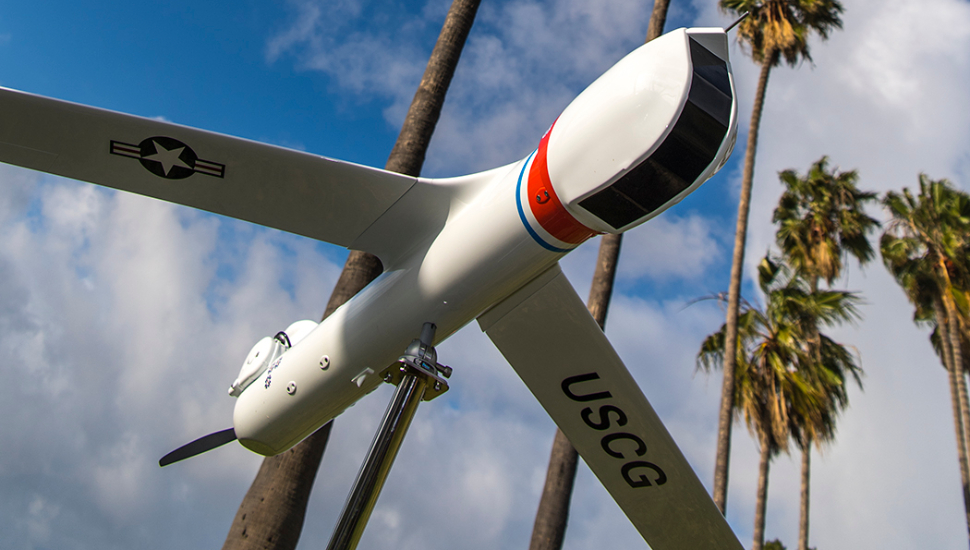
Insitu Scan Eagle in Coast Guard colors

Military+Aerospace Electronics reports,

Officials of the Naval Air Systems Command at Patuxent River Naval Air Station, Md., announced a $32 million order late last month to Boeing Insitu Inc. in Bingen, Wash., for four RQ-21A Blackjacks, 20 ScanEagles, 62 ScanEagle payloads and turrets, as well as support equipment and spare parts.

Could some of these systems be going to the Coast Guard? And, if not, why not? The Coast Guard regularly buys equipment, including aircraft, by adding on to DOD contracts.

The Coast Guard is, I believe, still contracting for vendor operated Scan Eagles. It’s about time they were integrated into the service and operated by enlisted Coast Guardsmen.

I suggested the Coast Guard should take a look at this system in 2011. Probably not because of my suggestion, but the Coast Guard started testing the systems at least as early as 2014. Scan Eagle was flown from USCGC Bertholf and made its “first bust” in 2014, nine years ago. The decision to put Scan Eagle on the National Security Cutters was made in 2020. Presumably Scan Eagle or something similar will be on the Offshore Patrol Cutters as well. The Coast Guard still needs long range shore based UAS, and I think there is a good case for small shore based UAS at the group level.

Point being, we are passed the initial research stage. We know there will be UAS operated by the Coast Guard for the foreseeable future. The number of unmanned systems in the Coast Guard should grow rapidly.

Scan Eagle was developed to be operated by commercial fishermen from Tuna boats. It’s not rocket science. It should be obvious the Coast Guard needs to own the equipment and develop in house unmanned system expertise.

Buy the equipment. Make unmanned operation and maintenance a rating or a special qualification and career path. At least follow the Navy/Marine Corps lead.

Exercises–RIMARCTIC? and Unmanned in UNITAS in July

National Defense has a short post, “JUST IN: Gilday Calls for Massive International Exercise in Arctic.” It talks about doing an exercise comparable to RIMPAC in the Arctic. Chief of Naval Operations, Adm. Michael Gilday is almost certainly talking about an exercise on the Atlantic side of the Arctic, in the Norwegian Sea, above the Greenland-Iceland-UK gap. If the Exercise were held as far North as the Barents Sea, the Russians would probably get very excited.

The Arctic Circle runs just North of Iceland and North of the upper end of the Baltic Sea. Credit: CIA

The Coast Guard would almost certainly participate. The Canadians already host an Arctic Exercise, Nanook, but it is very small scale. It takes place west of Greenland and the US Navy has not generally participated.

(I have serious doubts that this RIMARCTIC is ever going to happen, at least not as something on the scale of RIMPAC. Everyone wants to go to Hawaii.)

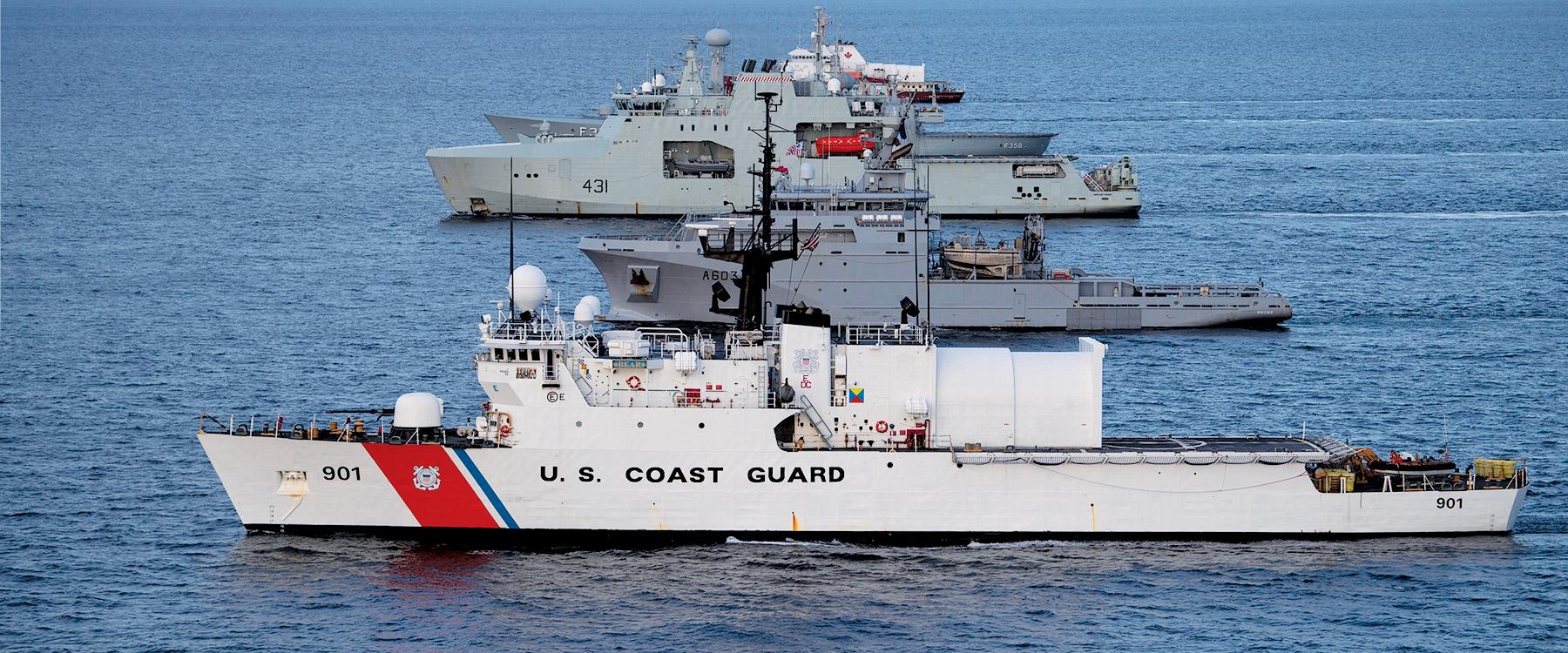
The USCGC Bear (WMEC-901) and allied ships from Canada, Norway, France, and Denmark steam in formation in the North Atlantic Ocean during Operation Nanook in August 2022. 

The post also talks about China’s massive investment in Oceanography and there is an interesting footnote. We have heard 4th Fleet would be start experimenting with Unmanned systems soon, paralleling what has been done in 5th Fleet with Task Force 59. Apparently, it will begin with UNITAS.

The Navy plans to introduce unmanned vessels to their South American partners as a part of the UNITAS naval exercise in July. Uncrewed surface and subsurface boats can monitor sea lanes and search for nefarious activities such as drug smuggling and illegal fishing, he said.

These “potentially unmanned [capabilities] give us, along with allies and partners —which is really key here — the ability to keep an unblinking eye on that kind of activity and collect data,” he said.

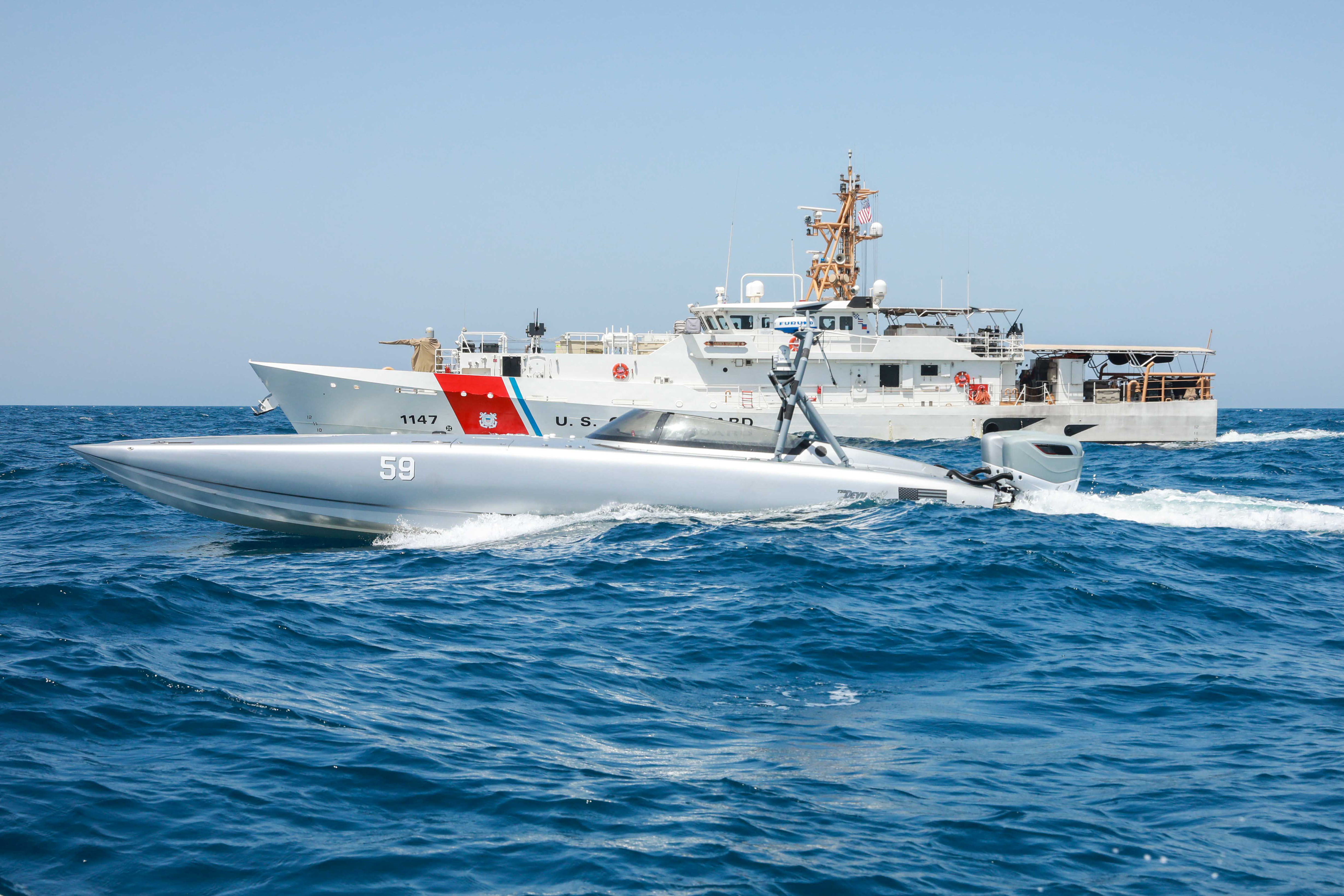
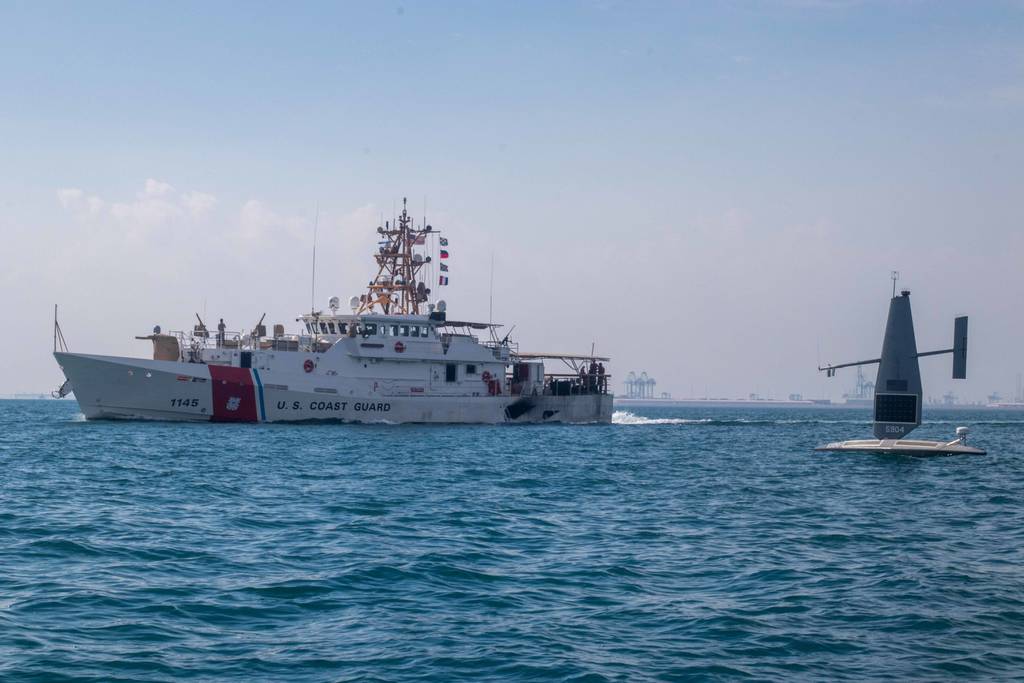
The Coast Guard fast response cutter Clarence Sutphin Jr. sails alongside an unmanned surface vessel in the Persian Gulf during exercise Eagle Resolve 23, June 1, 2023. Eagle Resolve is a combined joint all-domain exercise that improves interoperability with the U.S. military and partner nations, including Saudi Arabia.

“Video: Interview With VADM Cooper On TF 59 Milestones, US 5th Fleet” –Naval News

Naval News provides a video of an interview with 5th Fleet/NAVCENT commander VAdm Charles Bradford (Brad) Cooper II. In addition to the video above, the Naval News post provides a transcript of the interview (always appreciated).

The video provides more than talking heads. There are snippets of video showing the operation of unmanned systems and the people mentioned.

PATFORSWA Webber class cutters show up in the video three times.

Task Force 59 is an exciting development. It appears likely this model will be replicated in other areas including with the 4th Fleet in the Drug Transit Zone. Hopefully the Coast Guard is taking the opportunity to learn as much as possible from these operations. If the Coast Guard does not have a Coast Guard R&D liaison to Task Force 59 we are missing a good bet.

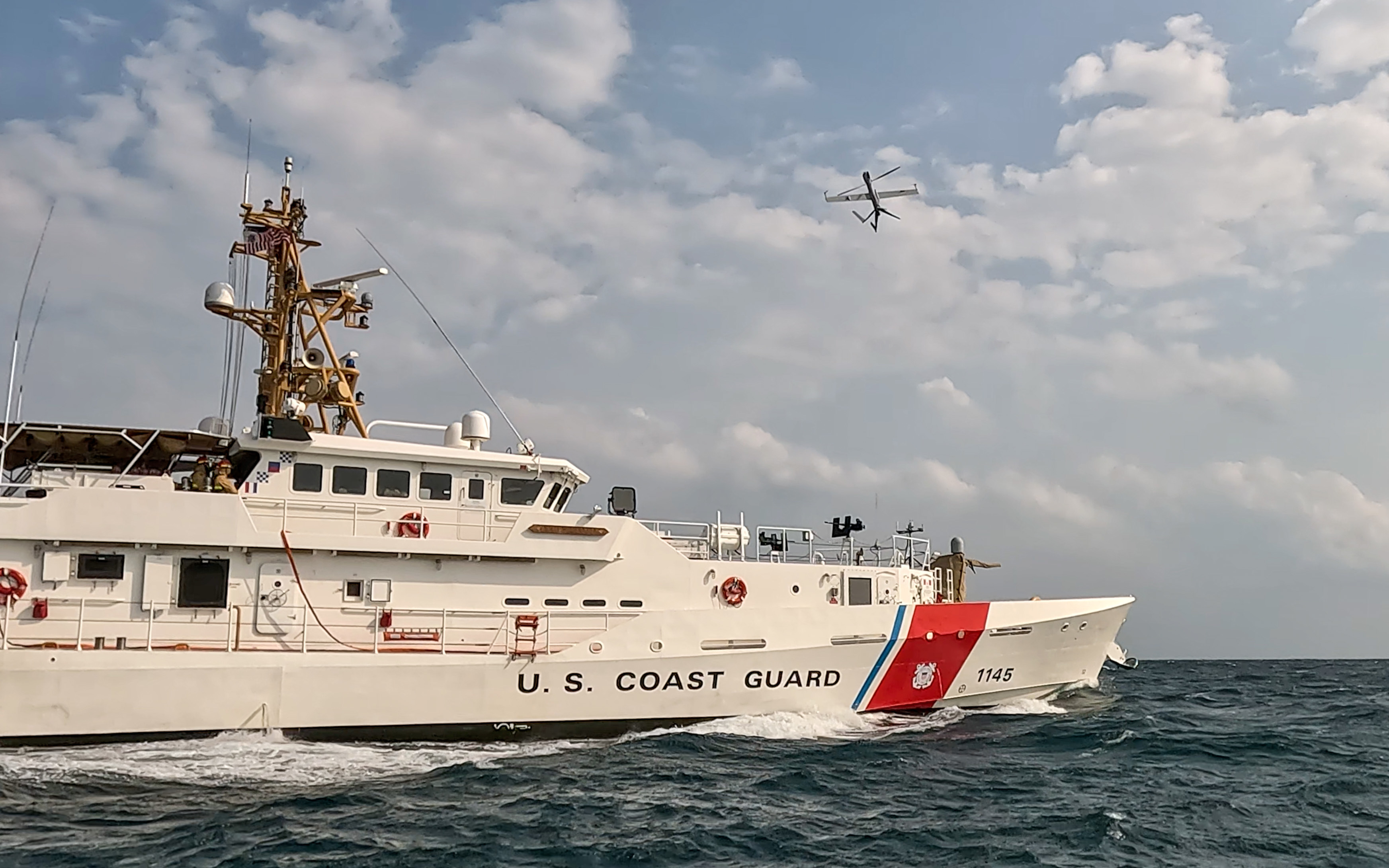
221207-N-NO146-1001 ARABIAN GULF (Dec. 7, 2022) An Aerovel Flexrotor unmanned aerial vehicle (UAV) takes off from U.S. Coast Guard fast response cutter USCGC Emlen Tunnell (WPC 1145) transiting the Arabian Gulf, Dec. 7. U.S. 5th Fleet’s Task Force 59 launched the UAV during Digital Horizon, a three-week event focused on integrating new unmanned and artificial intelligence platforms, including 10 that are in the region for the first time. (U.S. Navy photo)

Related:

“The More ‘Eyes On The Water’, The Better” –Marine News

221207-N-NO146-1001 ARABIAN GULF (Dec. 7, 2022) An Aerovel Flexrotor unmanned aerial vehicle (UAV) takes off from U.S. Coast Guard fast response cutter USCGC Emlen Tunnell (WPC 1145) transiting the Arabian Gulf, Dec. 7. U.S. 5th Fleet’s Task Force 59 launched the UAV during Digital Horizon, a three-week event focused on integrating new unmanned and artificial intelligence platforms, including 10 that are in the region for the first time. (U.S. Navy photo)

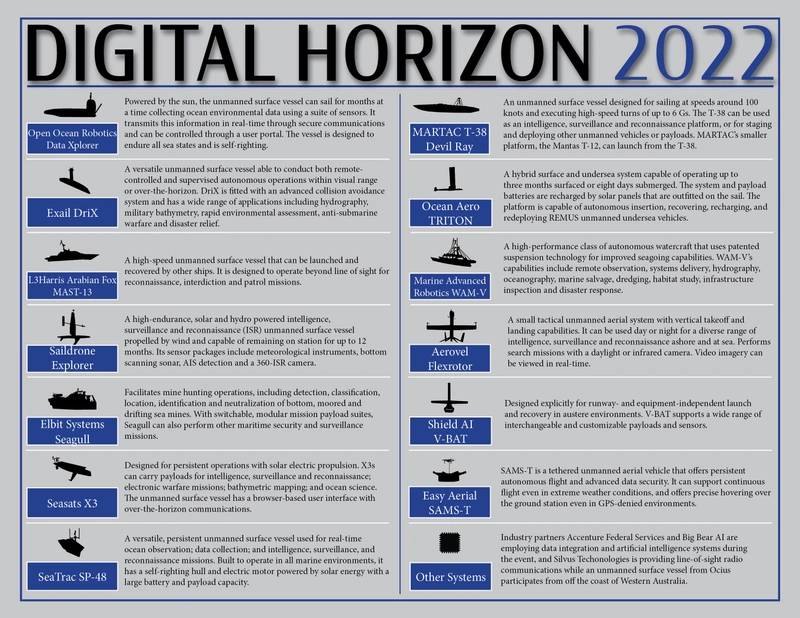
Marine News has an interesting story that discusses both PATFORSWA’s operations using the recently arrived Webber class WPCs and the recent Digital Horizon 2022 exercise. There is also a bit of a tie in between the two in that at least one WPC was operating as part of Task Force 59, the 5th Fleet element charged with operating unmanned systems. We have heard a bit about the exercise before, but the list of participants in the graphic below seems particularly revealing.

Graphic illustration depicting the unmanned systems that participated in exercise Digital Horizon.

“Navy’s Digital Horizon exercise showcases power of ‘mesh networks,’ AI” –Defense News

A Saildrone Explorer unmanned surface vessel operates alongside U.S. Coast Guard fast response cutter USCGC Emlen Tunnell (WPC 1145) in the Arabian Gulf, Nov. 29, during Digital Horizon 2022. (Sgt. Brandon Murphy/US Army)

Defense News reports on 5th Fleet’s “Digital Horizon” exercise.

“We have done a lot of work with AI previously, and we’ve done computer vision, we’ve done anomalous behavior detection, we’ve done AI-enabled [command and control], but we’ve done all of those separately,” the commodore explained. “At Digital Horizon, for the first time ever, we did that together on a single stack, and that’s all integrated on a single pane of glass.”

They have been trying a number of new systems, “10 of which are being operated in 5th Fleet for the first time.” We got a look at a portion of this exercise earlier, “Task Force 59 Launches Aerial Drone from Coast Guard Ship in Middle East” –NAVCENT. Also, among the systems they tested was V-Bat UAS.

There is also confirmation here that a similar effort will be going into 4th Fleet (Latin American/Caribbean Waters); that it will involve partner nations; and that it will look at IUU fishing as well as drug interdiction.

Fortunately, it looks like Coast Guard personnel and assets have been intimately involved in this effort and it looks like it will benefit our Maritime Domain Awareness (MDA) efforts.

(Will the Coast Guard’s next class of ships be USV tenders?)

“First Three SMDM Fixed-Wing UAS Delivered To The French Navy” –Naval News

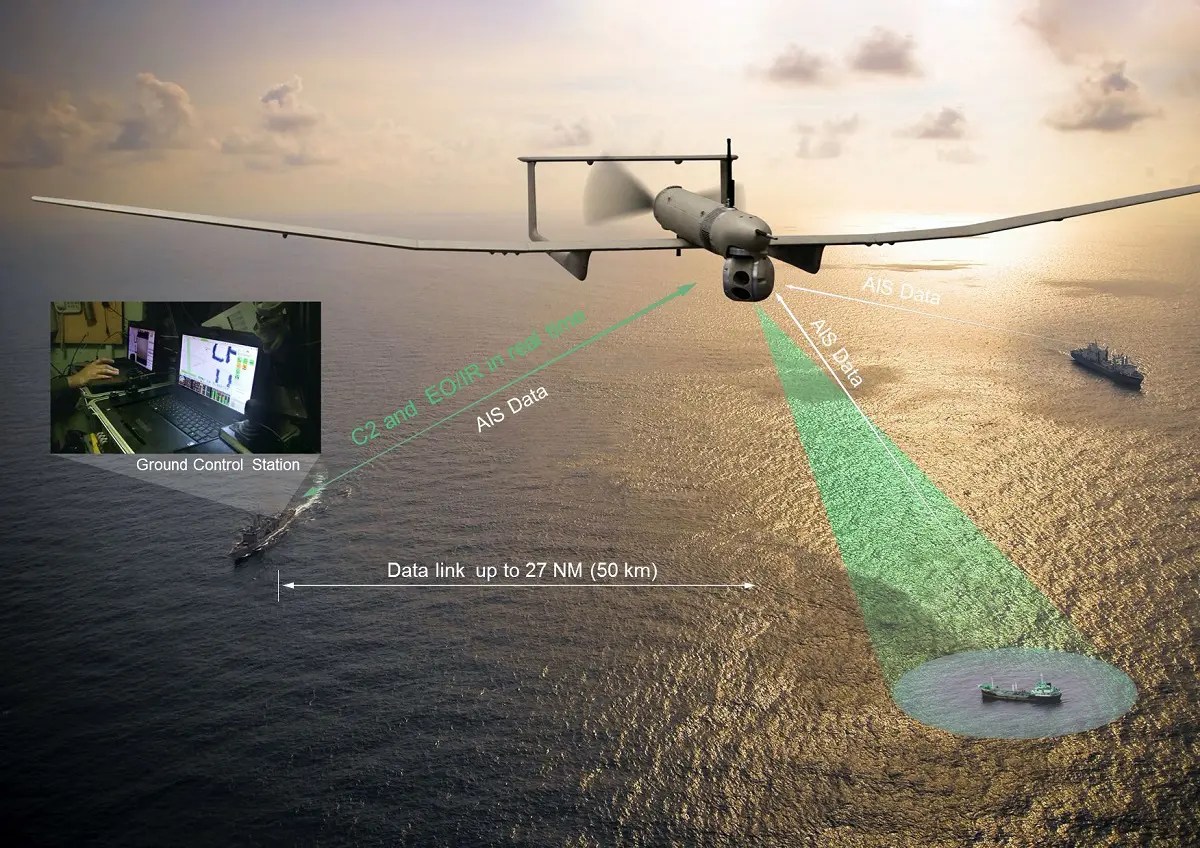
“The Aliaca maritime UAS is a high endurance versatile system allowing up to 3 hours missions over a 50 km (27 Nm) range, perfectly adapted to maritime missions with high gyro stabilized EO/IR payload performances and qualified to operate in severe environmental conditions. Airbus Defence and Space/ Survey COPTER image.”

Naval News reports first deliveries under the French Navy’s “Système de Mini Drones aériens embarqués pour la Marine” (On-board Mini Aerial Drone System for the Navy), or SMDM program intended to provide small, fixed wing, unmanned aircraft to support their Offshore Patrol Vessels. 

The DGA ordered 11 SMDMs at the end of 2020 to the SME Survey Copter, a subsidiary of Airbus Group, for an amount of 19.7 million euros, including procurement of systems and support services. Deliveries will be staggered until 2023…An SMDM is composed of two Aliaca UAVs from Survey Copter. The Aliaca is set to be deployed aboard the future offshore patrol vessels of the French Navy (both the POM and future Patrouilleur Oceanique) and surveillance frigates. Integration on the Mistral-class LHD is also considered.

These electric powered UAVs will fill essentially the same role as the Scan Eagles being used on the Bertholf class National Security Cutters (NSC). They are very nearly the same size. At first glance, at least, Scan Eagle appears more capable in every way.

Electric powered UAS are clean, quiet, and usually extremely reliable. The vessels that will be operating these UAS are all smaller than the 4,600 ton NSCs, the 1,300 ton POMs very much smaller.

It does sound like these will be Navy owned and operated, rather than operated by contractors, like the Coast Guard’s Scan Eagles.

Photos below were found in this French language report: “Marine nationale : une première capacité opérationnelle du SMDM espérée cet été”

Campagne d’essais en 2014 sur un PHM (© : MARINE NATIONALE)
© Mer et Marine https://www.meretmarine.com/fr/marine-nationale-une-premiere-capacite-operationnelle-du-smdm-esperee-cet-ete

“Coast Guard releases request for information for medium-range unmanned aircraft systems” –CG-9

Insitu Scan Eagle in Coast Guard colors. Notably the RFI requires, “…the UA shall incorporate low-visibility, counter-shaded paint scheme consisting of FED-STD-595C FS 36320 (or similar) matte gray upper surfaces and FED-STD-595C FS 36375 (or similar) matte gray lower surfaces,” much like an Air Force F-16.

Below is an Acquisitions Directorate (CG-9) statement regarding a Request for Information,

The Coast Guard released a request for information (RFI) Aug. 5 to determine the potential sources and the technical capability of industry to provide Group II and Group III unmanned aircraft systems (UAS), capable of deploying from Coast Guard cutters.

The RFI can be found here.

So what are “Group II and Group III unmanned aircraft systems (UAS)?” Wikipedia identifies the groups and provides examples.

  • Group II: Maximum weight 21 to 55 pounds (25 kg); Nominal Operating Altitude <3500 feet above ground level (AGL) (1,067 meters); speed less than 250 knots
  • Group III: Maximum weight <1320 pounds (600 kg); Nominal Operating Altitude < flight level 180 (about 18,000 feet or 5,488 meters); speed less than 250 knots

Notably the Navy’s Fire Scout is a Group IV UAS, so will not be considered. These groups do include both Insitu’s Scan Eagle, currently being used on National Security Cutters and their larger RQ-21 Blackjack. Also included are the V-Bat which has been tested on a Coast Guard WMEC and a number other vertical take-off and landing capable UAS.

The RFI appendix 1, entitled “Draft System Performance Specifications (SPS)” is 11 pages long and provides much more detail. I will mention only some highlights and these are only the minimums, there are also higher objective criteria:

  • Endurance: 12 hours
  • Dash speed: 70 knots
  • Cruise speed: 50 knots
  • Service ceiling: 3,000 feet
  • Range: 40 nmi in clear weather, 35 in light rain
  • The UA shall provide fully automated flight operations, including launch and recovery.
  • The UA shall have space, weight, and power to concurrently operate: Electro-Optical (EO) sensor, Infra-Red (IR) sensor, AIS, VHF/UHF communications relay, aeronautical transponder, and non-visible IR marker. [KPP]
  • At an operating altitude of 3,000 feet when the UAS is directly overhead of the target of interest (no slant range), the UA shall be acoustically non–detectable per MIL STD-1474 (series), Level 1 requirements (quiet rural area with the closest heavily used highway and community noises at least 2.5 miles away).

Notably there is no mention of radar or vidar, although Vidar is an EO sensor currently used by Scan Eagle UAS operating from National Security Cutters. There is also this,

The UA shall be capable of accepting modular payloads. Modular payloads are defined as payloads that can be replaced or interchanged with the previously-installed EO or IR payload(s) within one to two hours (elapsed time). Modular payloads may be government provided.

I did find this interesting, “The UA shall launch and recover while a static MH-65 is spotted with blades unfolded on the flight deck.”

The drawings contained in Appendix 2 indicate that these Unmanned Aircraft are intended for Bertholf class “National Security” cutters. Appendix 1 also sounded like these would be contractor operated, as are the Scan Eagles currently being deployed on National Security Cutters.

Since these specs are not too different from the Scan Eagles already being used on National Security Cutters, the Coast Guard may be just checking the competition to see what else is out there. On the other hand, perhaps some of the requirements may not be being met by the Scan Eagle UAS we are currently using. That the RFI provided only 17 days from issue to deadline for response, suggests the Coast Guard had already been been in communications with “the usual suspects.”


Coast Guard releases request for information for medium-range unmanned aircraft systems

The Coast Guard released a request for information (RFI) Aug. 5 to determine the potential sources and the technical capability of industry to provide Group II and Group III unmanned aircraft systems (UAS), capable of deploying from Coast Guard cutters.

The Coast Guard is interested in UAS that include fully automatic flight operations, have a minimum endurance of 12 hours and can be launched and recovered from a cutter flight deck. For Coast Guard mission success, UAS need to be capable of carrying a payload including electro-optical and infrared sensors and communications relay. Technological readiness level and degree of commonality and interoperability with existing Department of Homeland Security or Department of Defense programs are also of interest.

The full RFI is available here. Responses are due by 1 p.m. EDT Aug. 22.

For more information: Unmanned Aircraft Systems Program page

Contracts For “Continued Studies of a Large Unmanned Surface Vessel”

MetalCraft Marine 7 meter “The Watcher” Autonomous Surface Vessel (ASV)

I have to believe that the Navy’s efforts in Unmanned Surface Vessels will ultimately have a significant implact on the way the Coast Guard does its business, so a recent series of contract awards reported in “The US Department of Defense Daily Digest Bulletin, Contracts for July 29, 2022” is of interest. 


Marinette Marine Corp., Marinette, Wisconsin, is awarded a $10,212,620 firm-fixed-price modification to previously awarded contract N00024-20-C-6317 for continued studies of a large unmanned surface vessel. Work will be performed in Marinette, Wisconsin, and is expected to be completed by September 2024. Fiscal 2022 research, development, test and evaluation (Navy) funds in the amount of $149,841 will be obligated at time of award and will not expire at the end of the current fiscal year. The Naval Sea Systems Command, Washington, D.C., is the contracting activity.

Bollinger Shipyards Lockport LLC, Lockport, Louisiana, is awarded a $9,428,770 firm-fixed-price modification to previously awarded contract N00024-20-C-6316 for continued studies of a large unmanned surface vessel. This contract modification includes options which, if exercised, would bring the cumulative value of this contract modification to $13,958,770. Work will be performed in Lockport, Louisiana, and is expected to be completed by September 2024. If all options are exercised, work will continue through September 2024. Fiscal 2022 research, development, test and evaluation (Navy) funds in the amount of $149,933 will be obligated at time of award and will not expire at the end of the current fiscal year. The Naval Sea Systems Command, Washington, D.C., is the contracting activity.

Austal USA LLC, Mobile, Alabama, is awarded a $9,115,310 firm-fixed-price modification to previously awarded contract N00024-20-C-6315 for continued studies of a large unmanned surface vessel. This contract modification includes options which, if exercised, would bring the cumulative value of this contract modification to $13,285,309. Work will be performed in Mobile, Alabama, and is expected to be completed by September 2024. If all options are exercised, work will continue through September, 2024. Fiscal 2022 research, development, test and evaluation (Navy) funds in the amount of $149,878 will be obligated at time of award and will not expire at the end of the current fiscal year. The Naval Sea Systems Command, Washington, D.C., is the contracting activity.

Gibbs & Cox Inc., Arlington, Virginia, is awarded an $8,981,231 firm-fixed-price modification to previously awarded contract N00024-20-C-6318 for continued studies of a large unmanned surface vessel. This contract modification includes options which, if exercised, would bring the cumulative value of this contract modification to $15,071,231. Work will be performed in Arlington, Virginia, and is expected to be completed by September 2024. If all options are exercised, work will continue through September 2024. Fiscal 2022 research, development, test and evaluation (Navy) funds in the amount of $149,899 will be obligated at time of award and will not expire at the end of the current fiscal year. The Naval Sea Systems Command, Washington, D.C., is the contracting activity.