“Iran Reveals World’s First Air Defense Small Boat” –Covert Shores

Camera drone’s-eye view of IRGC boats on display, March 2023. A) The air defense boat. B) Light missile boat with Bladerunner hull. C) light missile boats on Interceptor hull. D) light missile boats on Interceptor hull (alternative design). E) Missile boat, with type of missile unclear. F) RIB, possibly explosive boat or uncrewed. G) RIB with lightweight anti-ship torpedoes, can be carried aboard a Shahid Soleimani-class missile corvette. H) Interceptor boat. I) Interceptor boat with new type of missile.

Covert Shore has a post about a new Iranian Revolutionary Guard Corps (IRGC) Navy boat armed with vertical launch anti-aircraft missile, believed to be the first such craft in the world, but I found the photo above and the accompanying caption particularly interesting.

These are far different from the familiar, prototypical IRGC boats armed with a single machine gun and a few unguided rockets.

“U.S. Coast Guard, Guam Fire Department conduct rescue hoist training in Guam” –Forces Micronesia / Sector Guam

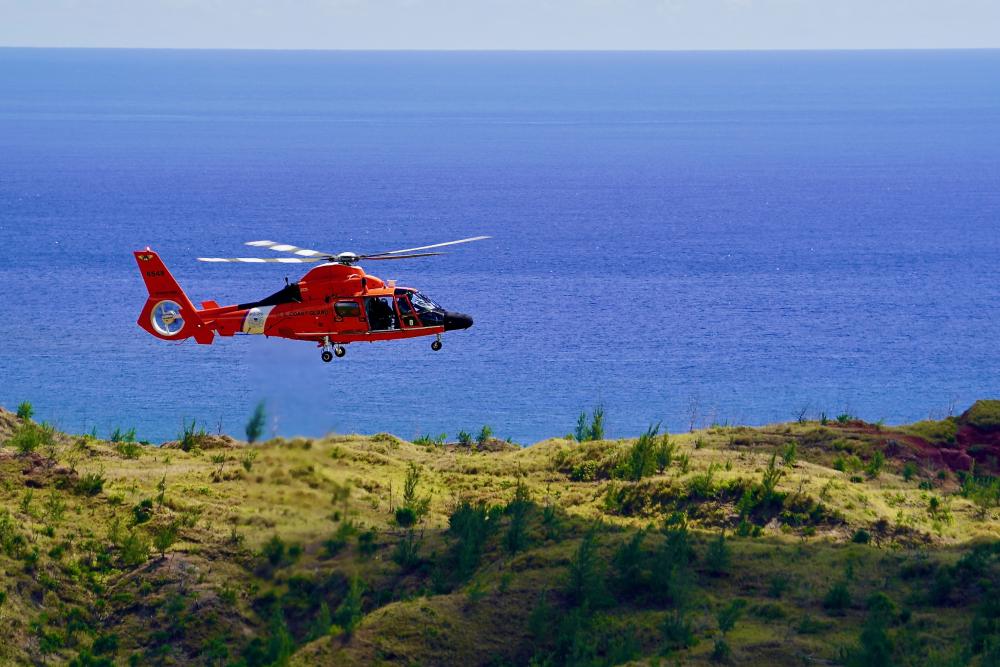
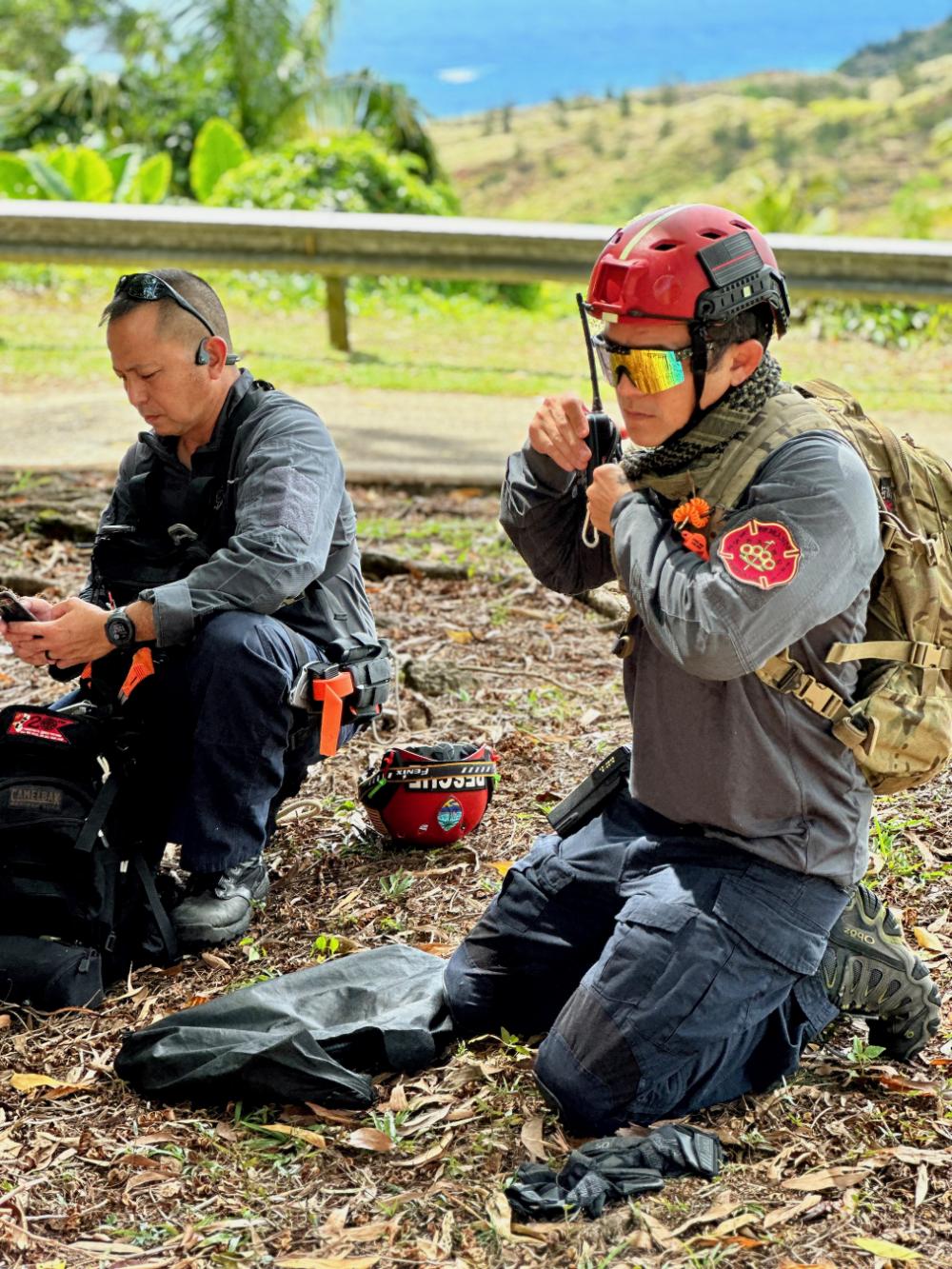
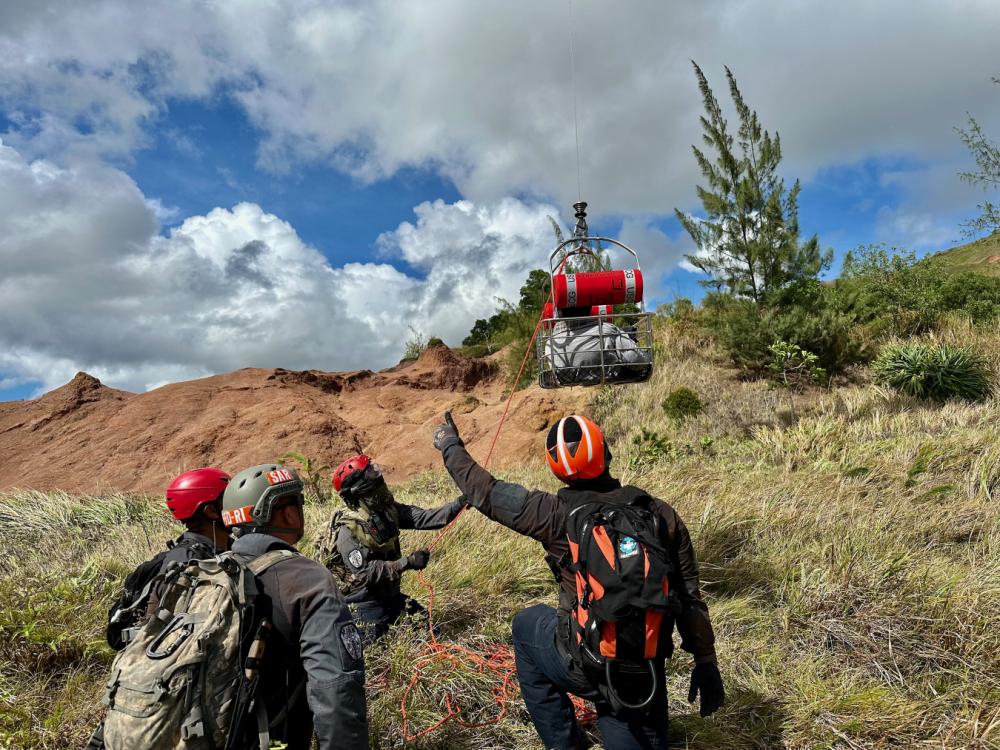
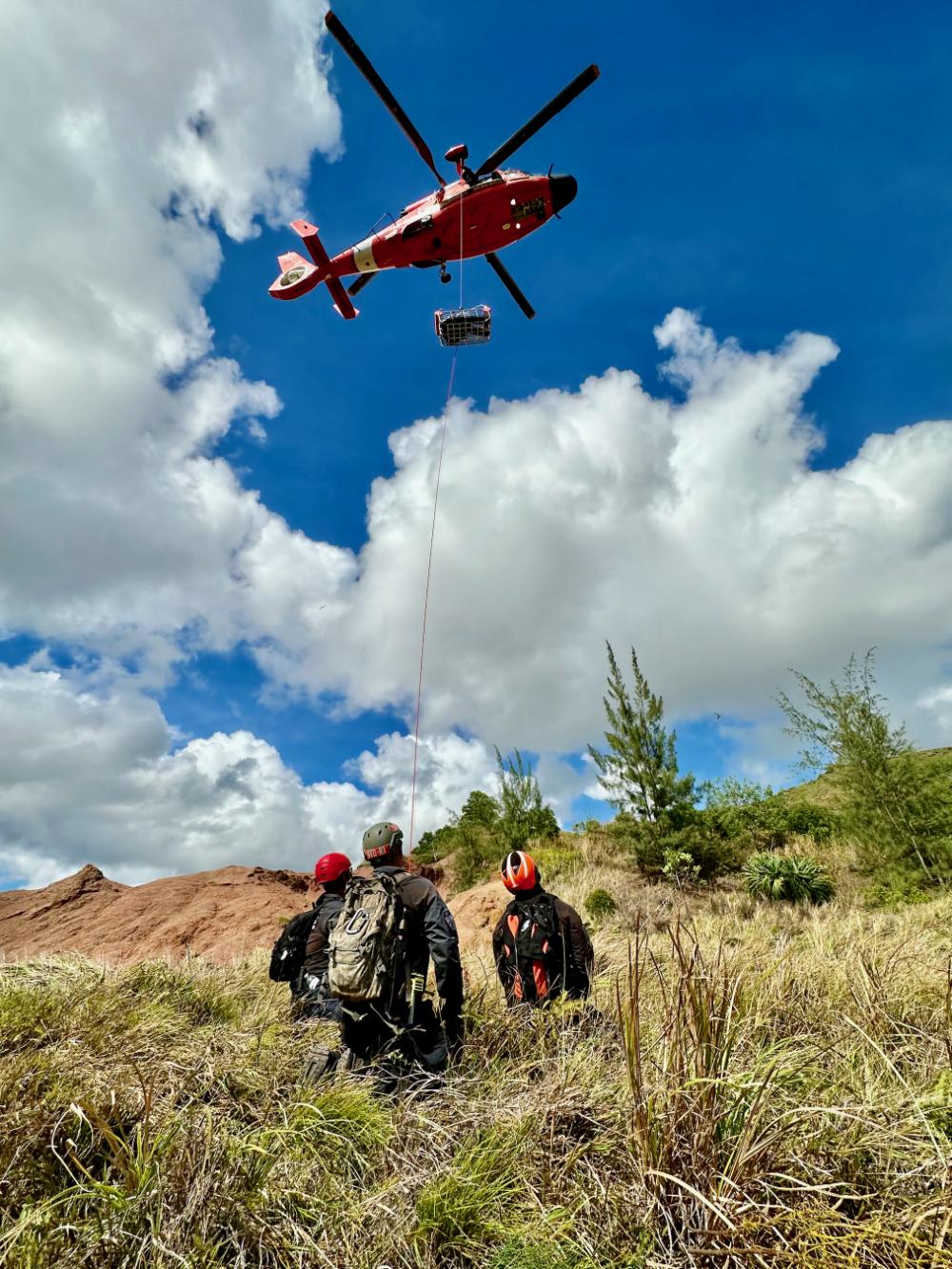
Guam Fire Department and U.S. Coast Guard members conduct rescue hoist training at Sella Bay Overlook in Guam on March 8, 2023. The exercise allowed the crews to assess the procedures each agency is familiar with and practice hoisting a rescue basket and a rescue swimmer from the aircraft. For the aircrew, it also served as an area familiarization to better understand the terrain and winds common on Guam’s southwest coast. (U.S. Coast Guard photo by Petty Officer 2nd Class Ethan Bray)

The news release below is surprising and raises some questions. A helicopter from Barbers Point, Hawaii conducts training with the Guam Fire Department. How did the Helicopter get there? There is currently no Coast Guard airstation in Guam. A Navy helicopter squadron provides SAR coverage for Guam, so what was the point? Is the Coast Guard going to establish an aviation facility of some kind in Guam?

News Release

U.S. Coast Guard Forces Micronesia / Sector Guam

U.S. Coast Guard, Guam Fire Department conduct rescue hoist training in Guam

An MH-65 Dolphin helicopter crew deployed to Guam from U.S. Coast Guard Air Station Barbers Point in Hawaii flies patterns to assess winds and terrain before conducting rescue hoist training at Sella Bay Overlook in Guam on March 8, 2023. Members of the Guam Fire Department prepare to hike down from Sella Bay Overlook for rescue hoist training in Guam with a deployed MH-65 Dolphin helicopter crew from Hawaii on March 8, 2023.  Guam Fire Department and U.S. Coast Guard members conduct rescue hoist training at Sella Bay Overlook in Guam on March 8, 2023.  Guam Fire Department and U.S. Coast Guard members conduct rescue hoist training at Sella Bay Overlook in Guam on March 8, 2023.

Editor’s Note: Click on the images above to view more or download high-resolution photos and b-roll videos.

SANTA RITA, Guam — Guam Fire Department and U.S. Coast Guard members conducted rescue hoist training at Sella Bay Overlook in Guam on March 8, 2023.

“We appreciate the ongoing strong relationship with Guam Fire and are eager to bring any capability to bear that benefits the people of Guam and our partners,” said Capt. Nick Simmons, commander of U.S. Coast Guard Forces Micronesia/Sector Guam. “As the U.S. Coast Guard continues to adapt our approach to service in the region, we are working closely with U.S. Coast Guard District 14 and the team from the Air Station at Barbers Point to find the best ways to employ our aircrews and increase the amount of organic aviation support we have for search and rescue and law enforcement missions here.”

Eight members of GFD’s Battalion A worked with the aircrew of an MH-65 Dolphin helicopter deployed to Guam from U.S. Coast Guard Air Station Barbers Point in Hawaii and personnel from the U.S. Coast Guard Forces Micronesia/Sector Guam response department. Guam Fire Department crews execute the majority of on-land search and rescue operations. They also maintain the best capability for on-land response with a wealth of experience regarding the terrain and conditions.

“Our partnership with the U.S. Coast Guard on Guam has expanded dramatically over the years. The increase in U.S. Coast Guard assets assigned to Guam extends our potential for positive outcomes in search and rescue missions benefiting our island community,” said Battalion Chief Roderick Meno, GFD rescue commander. “The opportunity to train together provided an avenue to test capabilities and share best practices. The U.S. Coast Guard helicopter’s availability gives us another valuable resource to conduct the diverse array of missions we perform here on Guam.”

The training allowed the crews to assess the procedures each agency is familiar with and practice hoisting a rescue basket and a rescue swimmer from the aircraft. For the aircrew, it also served as an area familiarization to better understand the terrain and winds common on Guam’s southwest coast. This training occurred near the location of a recent case of a missing hiker, a common place for foot traffic. The trail quickly descends from the trailhead into the jungle with steep ravines and many trip hazards, and it is very hot whether people are under tree cover or exposed to the sun. The conditions may easily overcome inexperienced hikers.

The MH-65 Dolphin helicopter is a short-range recovery helicopter used by the crew to perform search and rescue, law enforcement, and homeland security missions. It is certified for all-weather and night-time operations, except for icy conditions, and it routinely deploys aboard certified cutters providing manned airborne surveillance and interdiction capabilities. The airframe was first added to the Coast Guard inventory in 1984 and has undergone several upgrades.

In recent memory, these operations mark the first deployment of a Dolphin helicopter crew to Guam. The District 14 assigned aircraft are primarily used as a search and rescue platform in the Main Hawaiian Islands and as an augment aboard major cutters on deployment to extend their range for search and rescue, law enforcement, and surveillance while at sea. The aircrews frequently participate in community relations events and subject matter exchanges to build awareness for service capabilities and encourage interest in the aviation career field.

“This asset is not a replacement for any other agency but another resource to help us accomplish our missions and serve the people of Guam and the Commonwealth of the Mariana Islands,” said Simmons. “They are currently here on a six-week deployment as we field test the feasibility of their operating here in a greater capacity. This approach is an innovative way to employ aircrews in the Indo-Pacific for increased presence and value. We hope to get them out here more frequently and are pleased to have the support of the Air Station and the District 14 command.”

The operations have precedent. In 1947 the service established a Coast Guard air detachment consisting of one PBY-6A Catalina, an amphibious aircraft, and crew at the Naval Air Station in Agana, Guam, to provide aerial logistics support for LORAN stations in the southern Marianas and Western Caroline Islands. The Catalina was well suited to operations in the islands, able to haul cargo but also land in the shallow lagoons and offload to skiffs. The primary mission of the air detachment was to resupply the Marianas section LORAN stations, although they did assist in search and rescue missions when needed. The need for Coast Guard air support decreased as the LORAN mission shifted over time and commercial aviation services became more readily available. The Coast Guard air detachment, by then called an air station, was disestablished in 1972.

U.S. Coast Guard Forces Micronesia/Sector Guam comprises nearly 300 personnel throughout the response, prevention, administrative, and logistics departments supporting the Joint Rescue Sub-Center, three fast response cutters, a small boat station, and a marine safety detachment in Saipan. The unit provides a significant portion of the U.S. Coast Guard’s enduring regional presence serving the people of the Pacific by conducting our six major operational mission programs: maritime law enforcement, maritime response, maritime prevention, marine transportation system management, maritime security operations, and defense operations.

For more U.S. Coast Guard Forces Micronesia/Sector Guam news, visit us on DVIDS or subscribe! You can also visit us on Facebook or Instagram at @USCGForcesMicronesia or Twitter @USCGFMSG. 

“Coast Guard Commandant delivers her first State of the Coast Guard Address” –YOUTUBE

Above is a video of the Commandant’s State of the Coast Guard. It’s definitely worth a listen. I think I am becoming a fan.

Sounds like she is proceeding with procurement of a Great Lakes Icebreaker.

The Coast Guard is getting Coast Guard doctors (vs Public Health Service).

Three new teams are being stood up: a talent management task force, a data analytics team, and a West Coast cyber protection team.

Looking at the newly available option of passing going before a promotion board, when an officer has to make that decision, it would be good to know what instructions are being given to the promotion board.

In fact, why does failure to be promoted automatically mean you are out? Shouldn’t it be the service’s decision whether the officer should be retained. Perhaps an automatic continuation board for those who are not promoted with the option of permitting continued service.

A New Website on the Recommended Blog Page and Feedback for Coast Guard PAOs

It seems recently press releases from the Coast Guard have been coming out in a different format. There is a brief description of the story and a link to the full story on the “United States Coast Guard News” page.

The USCG NEWS page is not really new. Stories there go back to 31 August 2022, but somehow, I had not recognized its reemergence. I like it and have added it to my list of recommended blogs. It is searchable by keyword, region, and date.

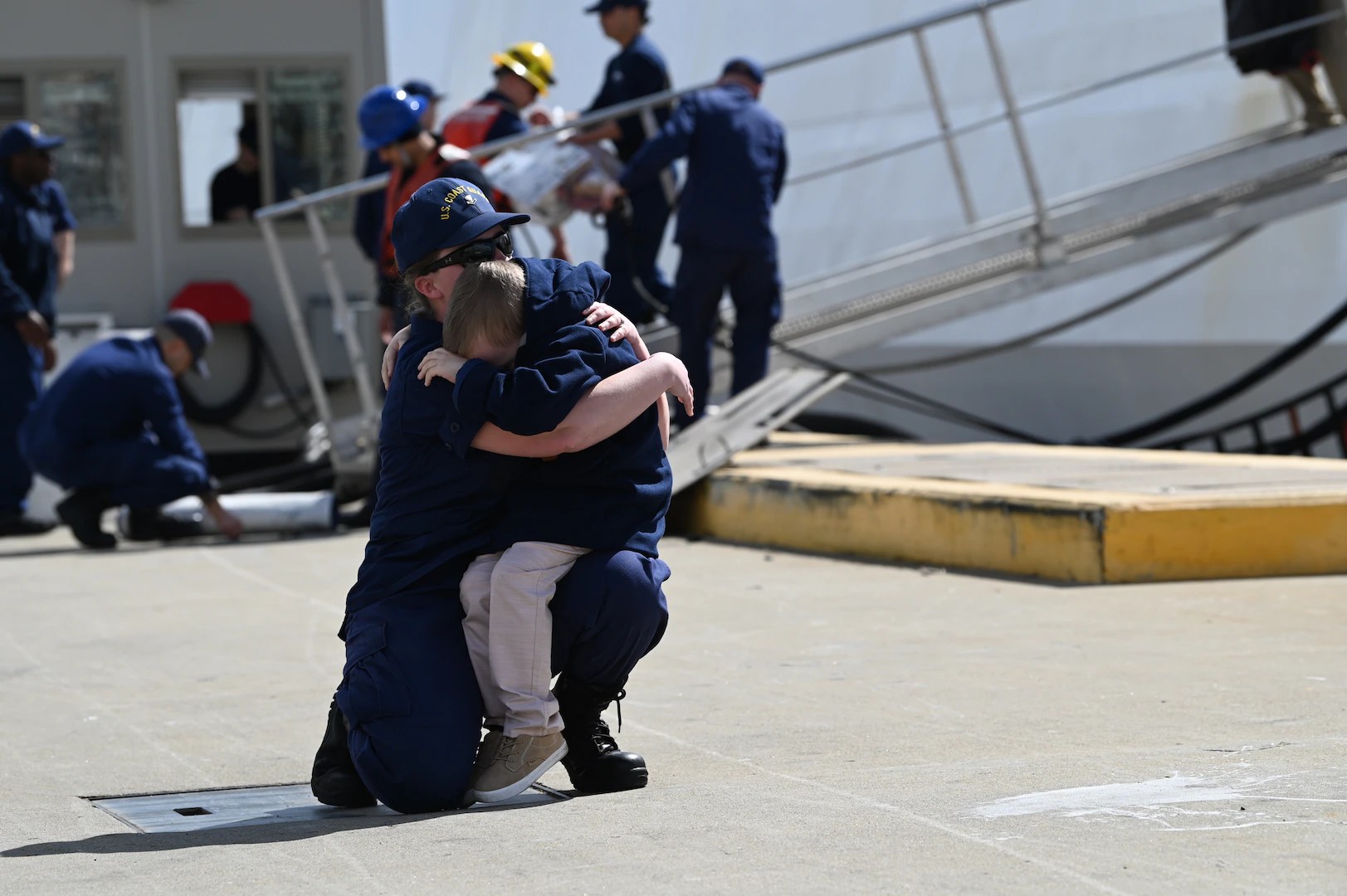
I would like to make a comment on the format used on the news page. Got a news release pointing me to this story on USCGC Munro’s return to Alameda after a 105 day Winter Alaska Patrol. There are eleven photos that accompany the story, but when I down loaded the one above you will note, that there is no caption, no identification as a  “US Coast Guard photograph,” and no credit for the photographer.

“Brazil and the United States Partner to Combat Illegal Fishing as USCGC Stone arrives in Rio de Janeiro” –LANTAREA

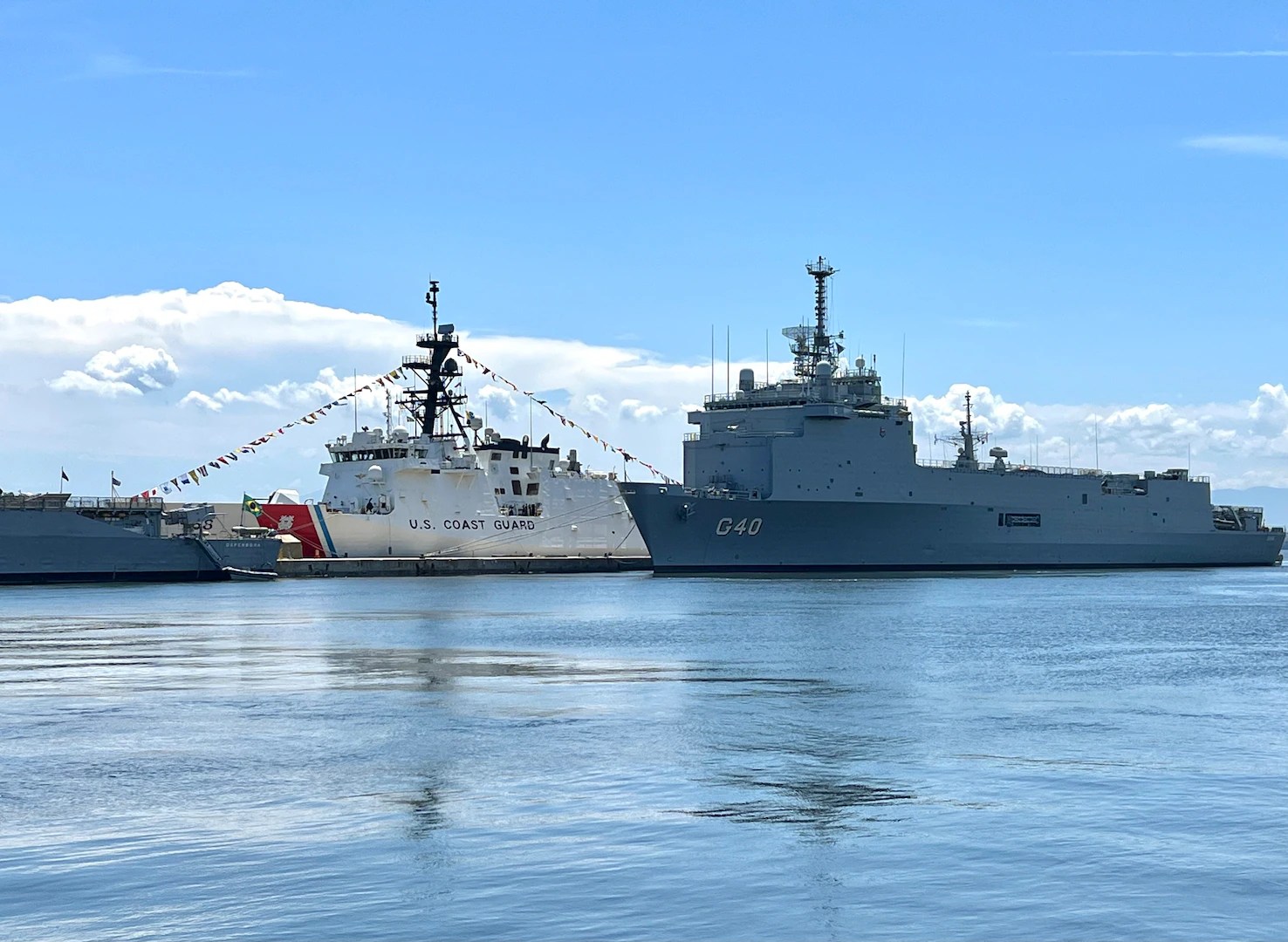
USCGC Stone in Rio de Janeiro

Below is a news release from Atlantic Area.

RIO DE JANEIRO — USCGC Stone (WMSL 758) arrived in the port of Rio de Janeiro, Brazil for a scheduled visit, Tuesday.

The visit is Stone’s second stop in Brazil as the cutter continues its multi-mission deployment in the South Atlantic Ocean, exhibiting the U.S. Coast Guard’s partnership with Brazil and strengthening the interoperability of the two nations’ maritime forces to counter illicit maritime activity and promote maritime sovereignty throughout the region.

“This deployment has already proven the effectiveness of our interagency and international partnerships,” said U.S. Coast Guard Capt. Clinton Carlson, Stone’s commanding officer. “On our first stop in Brazil in Recife in February 2023, we embarked representatives from the Brazilian Navy who have consistently provided invaluable insight and enhanced our capabilities, allowing us to more readily conduct maritime law enforcement to safeguard and protect international waters.”

Brazil and the United States’ naval services both use unmanned aerial systems to provide increased maritime domain awareness across a variety of mission sets.  The embarked Brazilian officers are part of Brazil’s first ship-based unmanned aerial systems squadron, and the embarkation of these officers aboard Stone highlights the robust partnership between the two nations and their shared commitment to upholding the rules-based international order at sea.

“While deployed with the Stone we have been working to counter illegal fishing,” said Brazil Navy Lt. Caio Cardinot. “It’s been a real pleasure to build this partnership, sharing knowledge and expertise with each other. With common UAS capabilities, a very robust communication center, and a hardworking crew, we have been very impressed during our time here.”

In recent years, the United States and Brazil have partnered to share and exchange maritime tactics, techniques, and procedures. Since 2009, the U.S. Coast Guard provided 34 mobile training team deployments and three resident training courses to Brazil in the areas of crisis management, mobile command systems, port security, maritime law enforcement, search and rescue, and disaster response. Additionally, Stone previously visited Rio de Janeiro in 2021 while conducting a South Atlantic Ocean deployment.

Both countries are dedicated to the responsible management of marine resources, demonstrating their shared commitment through the continued integration of their naval forces.

“This deployment is about partnerships,” Carlson said. “Not only have we embarked officers from the Brazilian Navy, but we’ve also embarked U.S. Navy and Marine Corps personnel augments as well. As we work with Brazil’s maritime forces, we’re strengthening our domestic partnerships as well, bringing both joint and combined capabilities to combat illegal, unreported, and unregulated fishing around the world. These partnerships create new opportunities for us to maintain free and sustainable access to maritime resources for all.”

Stone is the ninth Legend-class national security cutter in the Coast Guard fleet, homeported in Charleston, South Carolina. The national security cutters can execute the most challenging national security missions, including support to U.S. combatant commanders.

Stone is under the command of U.S. Coast Guard Atlantic Area. Based in Portsmouth, Virginia, U.S. Coast Guard Atlantic Area oversees all Coast Guard operations east of the Rocky Mountains to the Arabian Gulf. In addition to surge operations, they also allocate ships to work with partner commands and deploy to the Caribbean and Eastern Pacific to combat transnational organized crime and illicit maritime activity.

For information on how to join the U.S. Coast Guard, visit GoCoastGuard.com to learn about active duty and reserve, officer and enlisted opportunities. Information on how to apply to the U.S. Coast Guard Academy can be found here.

“Women Leaders Discuss Benefits of Military Service” –DOD

Passing along this news release from DOD that features the Commandant.

Thanks to Paul for bringing this to my attention.

Women Leaders Discuss Benefits of Military Service

The leaders spoke today at the Military Women’s Memorial in Arlington, Virginia.

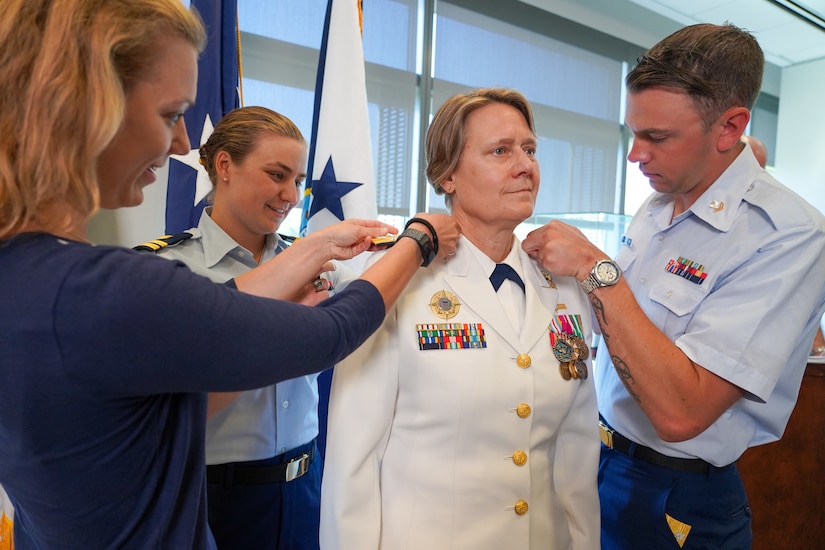
Three people in military dress uniform add rank pins onto a female military officer.

Coast Guard Adm. Linda L. Fagan, commandant of the U.S. Coast Guard, said the Coast Guard of the 1980s was a lot different than what it is today.

“This just speaks to the journey and so many people that have made the opportunity for us here today,” she said.

One of her primary focus areas as commandant, she said, concerns talent and workforce management, making it easier for not only women, but all who want to serve and be able to take advantage of all the opportunities.

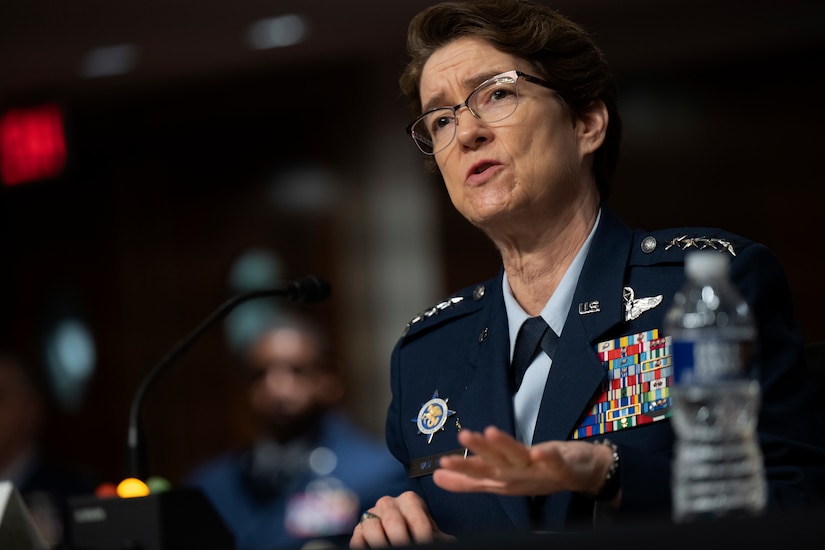
Air Force Gen. Jacqueline D. Van Ovost, commander of U.S. Transportation Command, said women have come a long way since they were first allowed to serve 75 years ago.

A woman in military dress uniform speaks.

Restrictions were lifted 30 years ago on women being allowed to fly fighter aircraft in combat and 10 years ago restrictions on women being in ground combat were removed, she said.

“Our progress has been accelerating, but we have a way to go, and we’re working on that,” she said.

Historically, militaries reflected the societies that support them. This year marks the 50th anniversary of the all-volunteer force, she said. The force will continue to evolve to incorporate all talents and demographics of America. And this is especially true today during the era of global strategic competition.

Van Ovost said we need diversity of thought, experience and capabilities all pulled together, because we’re dealing with hard problems and strategic competition and we need everyone at the table supporting us.

“That’s why we have to continue to recruit and retain talented women and men in our service, capable of thinking creatively, differently, innovating with the technology that we have, so that we can create new concepts and capabilities so that we can remain first and foremost, the most lethal fighting force in the world,” she said.

Army Gen. Laura J. Richardson, commander of U.S. Southern Command, said we have a way to go to connect with the U.S. population, particularly youngsters, and explain the benefits of service.

A woman in military uniform speaks to three men in military uniform. A helicopter is in the background.

There is a wide variety of jobs in the military, many of which would interest young people, she said.

About 72% of today’s youth doesn’t know much about the military or opportunities available to them, she said. It’s incumbent on those who serve or have served to get the word out.

“You are impacting national security and global security every single day in the military you wake up,” she said.

Navy Adm. Lisa Franchetti, vice chief of naval operations said March, which is Women’s History Month, is a nice time “to pause and reflect on those pioneers and leaders [who] went before us who were able to work hard, break down barriers and put in place the changes in law, in policy and culture that enabled all of us to be here today,” she said.
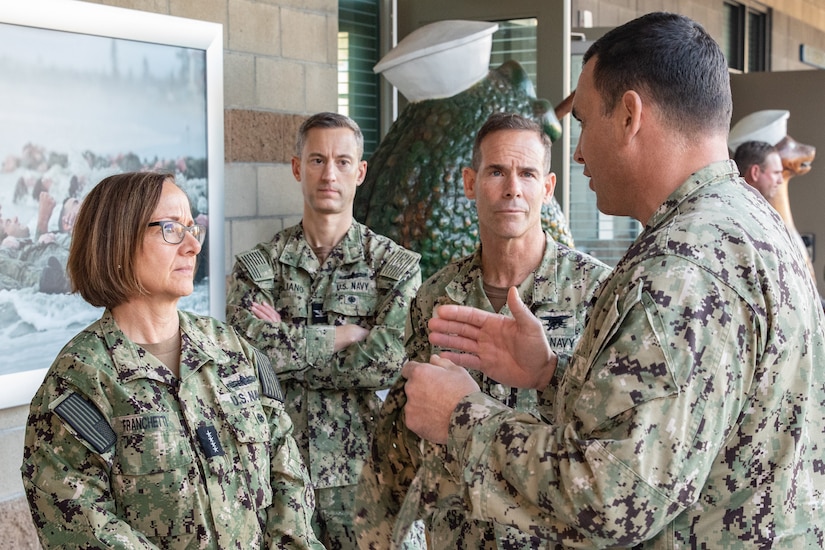
Four people in military uniform hold a discussion.

The theme of today’s event, she said, is “Beyond Firsts.”

“I am really happy to see us nearing an end of all the firsts,” she said, referring to women breaking the military glass ceiling.

Women help to bring the “critical thinking skills, that we need to be able to be the world’s most formidable fighting force, ready to deter, fight and win whenever the nation needs us to do so,” she said.

All four women discussed how difficult it was three decades ago to serve and to gain respect from male leaders and how they persevered.

Following the discussion, a portrait unveiling ceremony was held in honor of the first female African American Air Force general officer, Maj. Gen. Marcelite J. Harris.

“Frozen in Time: National Marine Sanctuary Researchers Discover Lost Shipwreck Ironton” –National Marine Sanctuaries

Members from the June 2021 expedition team pose on board the USCGC Mobile Bay; the remotely-operated vehicle sits ready for deployment on deck. Photo: Ocean Exploration Trust/NOAA

An interesting story with a bit of a Coast Guard connection, the 140 foot icebreaking tug, USCGC Mobile Bay (WTGB-103).

“In June 2021, Thunder Bay National Marine Sanctuary and Ocean Exploration Trust returned to the site to carry out a more thorough investigation of Ironton. Conducting ROV operations aboard U.S. Coast Guard Cutter Mobile Bay, the research team partnered with the University of North Carolina’s Undersea Vehicle Program to collect high-resolution video and further document the wreck. Resting upright and incredibly well preserved by Lake Huron’s cold freshwater, Ironton looks almost ready to load cargo.”

“PPG launches “breakthrough” fouling release coating” –Marine Log

“Sigmaglide 2390 fouling release coating has a super-smooth, near friction-free surface when immersed in water” –PPG

Marine Log reports,

PPG (NYSE: PPG) has launched a biocide-free fouling release coating that, it says, uses a breakthrough approach to help shipowners lower power consumption and carbon emissions and meet demands for higher performance with no adverse impact on the marine environment.

Called PPG Sigmaglide 2390, the coating is based on PPG’s HydroReset technology. This modifies the coating when it is immersed in water to create a super-smooth, almost friction-free surface that marine organisms do not recognize and cannot adhere to.

This almost certainly a PPG news release, but if true, it is potentially very significant. Let’s hope so.

“Video: Interview With VADM Cooper On TF 59 Milestones, US 5th Fleet” –Naval News

Naval News provides a video of an interview with 5th Fleet/NAVCENT commander VAdm Charles Bradford (Brad) Cooper II. In addition to the video above, the Naval News post provides a transcript of the interview (always appreciated).

The video provides more than talking heads. There are snippets of video showing the operation of unmanned systems and the people mentioned.

PATFORSWA Webber class cutters show up in the video three times.

Task Force 59 is an exciting development. It appears likely this model will be replicated in other areas including with the 4th Fleet in the Drug Transit Zone. Hopefully the Coast Guard is taking the opportunity to learn as much as possible from these operations. If the Coast Guard does not have a Coast Guard R&D liaison to Task Force 59 we are missing a good bet.

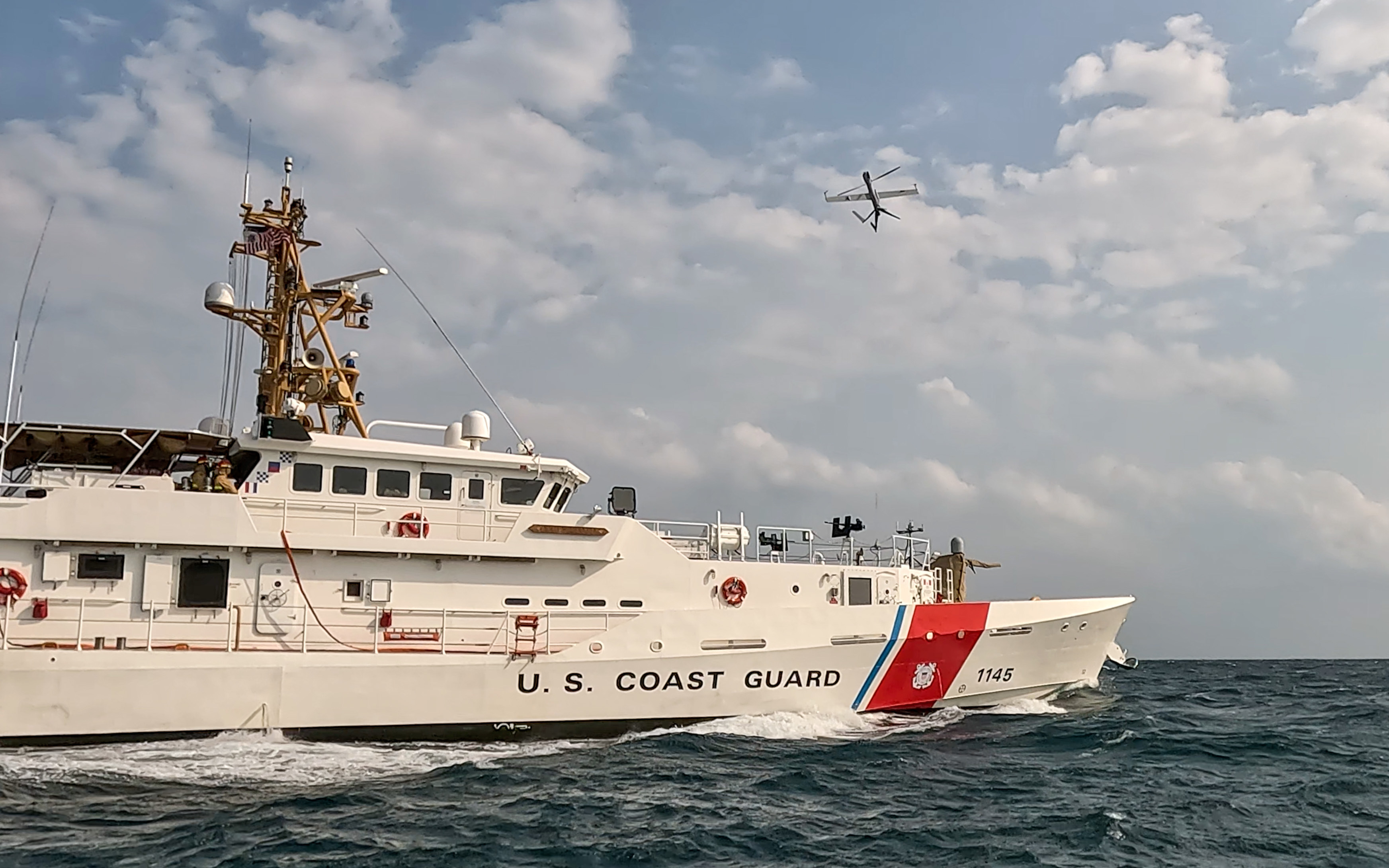
221207-N-NO146-1001 ARABIAN GULF (Dec. 7, 2022) An Aerovel Flexrotor unmanned aerial vehicle (UAV) takes off from U.S. Coast Guard fast response cutter USCGC Emlen Tunnell (WPC 1145) transiting the Arabian Gulf, Dec. 7. U.S. 5th Fleet’s Task Force 59 launched the UAV during Digital Horizon, a three-week event focused on integrating new unmanned and artificial intelligence platforms, including 10 that are in the region for the first time. (U.S. Navy photo)

Related:

“Ship Class Designations Have Meaning” –USNI

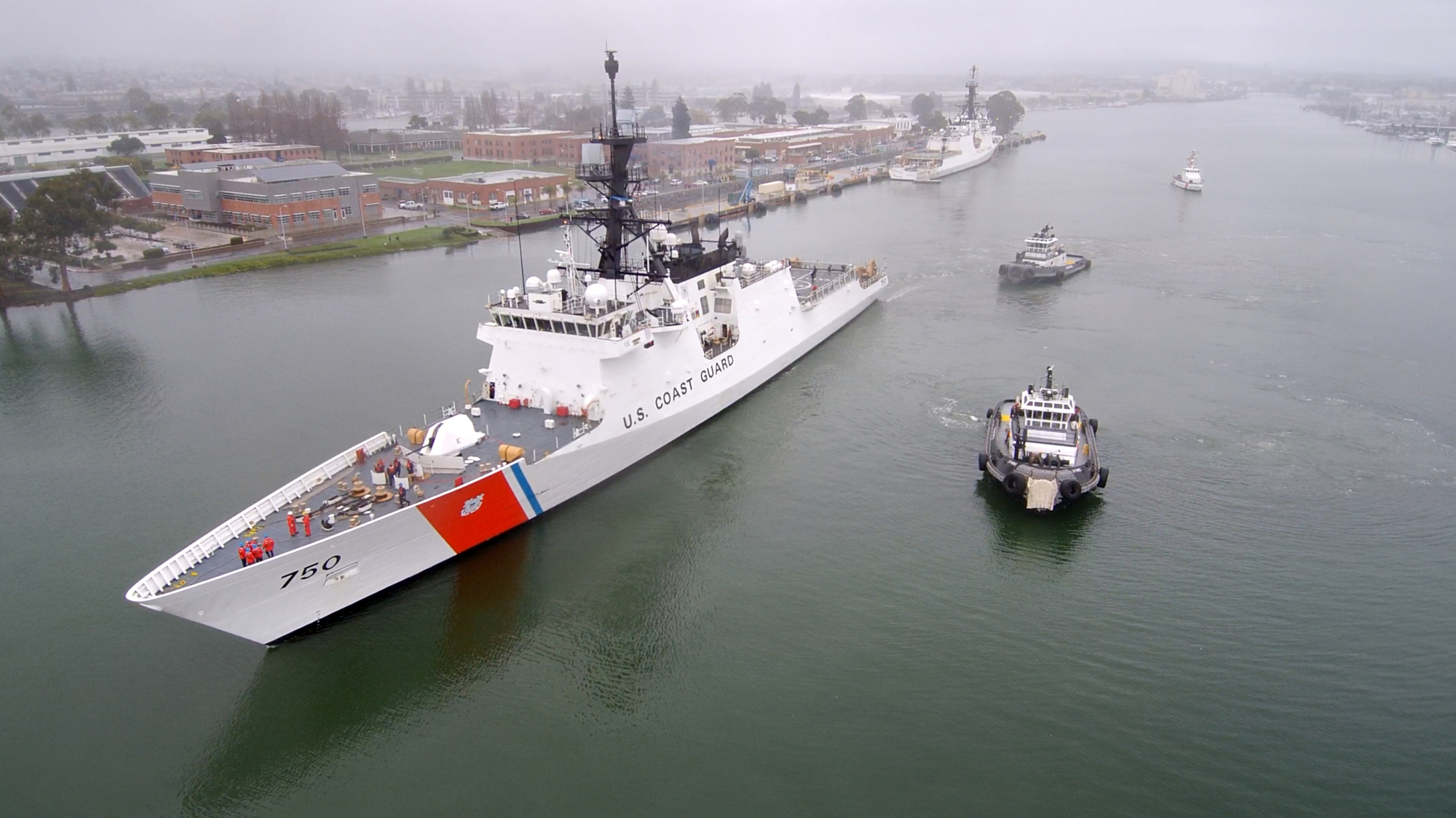
USCGC BERTHOLF (WPF-750 or maybe WPL-750)

The March 2023 issue of US Naval Institute Proceedings has an opinion piece in the “Nobody Asked Me, But…” section. The author notes,

“The Navy does itself a disservice with the public, Congress, and U.S. allies when it allows a program’s Pentagon PowerPoint acronym to become the class designation. There was some recent recognition of this issue when the JHSV (Joint High Speed Vessel) became the T-EPFs (expedition-ary fast transports), the MLP/AFSB (Mobile Landing Platform/Afloat For-ward Staging Base) became ESDs/ESBs (expeditionary transfer docks/expedition-ary sea bases), and the pending LAW (Light Amphibious Warship) became the LSM (landing ship medium), but there is still room for improvement.”

The author goes on to suggest several additional redesignations.

I have pointed out in the past that Coast Guard designations for the Bertholf class NSCs (WMSL) and the Argus class OPCs (WMSM) are particularly egregious examples of departure from historical and current standard US Navy and NATO designation practices.

Virtually no one outside the Coast Guard knows what they are supposed to mean, not to mention that there is virtually no difference in size between the NSCs and OPCs, so why are the NSCs “large” and the OPCs “medium?”

Really, WPF, Coast Guard Patrol Frigate or WPL, Coast Guard Patrol Large, would do nicely for both. If you still want to give the OPCs a lower rank or perhaps for the existing WMECs, WPK, Coast Guard Patrol Corvette (K for Corvette is a NATO standard) or WPM, Coast Guard Patrol Medium, would work.

If you really want to differentiate further, take a look at what the Japanese Coast Guard did–neat, simple, easily understood.

  • PLH (Patrol Vessel Large with Helicopter)
  • PL (Patrol Vessel Large)
  • PM (Patrol Vessel Medium)
  • PS (Patrol Vessel Small)
  • PC (Patrol Craft)
  • CL (Craft Large)

Really, WPB, WPC, WPK and WPF or just WPB, WPC, WPM, and WPL would work just fine.

We changed the designation system in the late ’60s. The Navy has changed some of their designations. Maybe it is time for the Coast Guard to return to a more rationale, easily understood, and meaningful system.