WINNER ANNOUNCEMENT – 2018 HOPLEY YEATON CUTTER EXCELLENCE AND SUPERIOR CUTTERMAN AWARDS

Just Passing this along. 

R 301515 JAN 19
FM COMDT COGARD WASHINGTON DC//CG-7//
TO ALCOAST
UNCLAS //N01650//
ALCOAST 020/19
COMDTNOTE 1650
SUBJ:  WINNER ANNOUNCEMENT – 2018 HOPLEY YEATON CUTTER EXCELLENCE AND SUPERIOR CUTTERMAN AWARDS
1. The Douglas Munro Chapter of the Surface Navy Association is honored to announce and
congratulate the recipients of the 2018 Hopley Yeaton Cutter Excellence and Superior
Cutterman Awards. Each of the winners were selected from amongst a highly competitive pool
of nominees. This year’s winners are:
   A. Cutter Excellence Award (Large Cutter): CGC HAMILTON (WMSL 753)
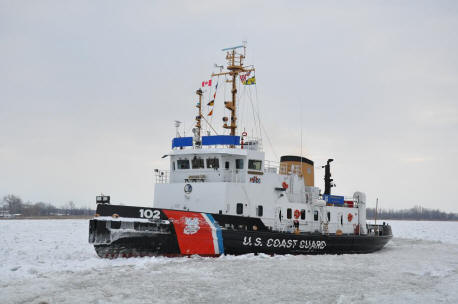
   B. Cutter Excellence Award (Small Cutter): CGC BRISTOL BAY (WTGB 102)
   C. Superior Cutterman Award (Officer): CWO Jared Crotwell – CGC BRISTOL BAY (WTGB 102)
   D. Superior Cutterman Award (Enlisted): SK2 Mathew Wilson – CGC JAMES (WMSL 754)
2. Hopley Yeaton Cutter Excellence Award (Large):
   A. Masterfully balancing law enforcement operations in the Caribbean Sea, Eastern Pacific,
and natural disaster response, the crew of CGC HAMILTON seized 4,983 kilograms of cocaine,
detained 19-suspected narco-traffickers, and directed post-hurricane response operations in
2018. The crew conducted two separate and simultaneous multi-vessel (go-fast) interdictions
employing airborne use of force and multiple synchronized long-range cutter boat intercepts.
In the middle of a major dockside availability, CGC HAMILTON executed a storm-evasion sortie
ahead of Hurricane FLORENCE after restoring severely degraded systems and equipment. The
cutter went on to lead a Surface Action Group of seven cutters, executing vital command
control on behalf of Sector North Carolina, conducting damage assessments of Wilmington and
the Cape Fear River, and assisting Stations Oak Island, Wrightsville Beach, and Ft. Macon
by removing debris and repairing station response infrastructure.
   B. Honorable Mentions for the Large Cutter Award are:
      CGC HARRIET LANE (WMEC 903)
      CGC SPENCER (WMEC 905)
      CGC MACKINAW (WLBB 30)
3. Hopley Yeaton Cutter Excellence Award (Small):
   A. The crew of CGC BRISTOL BAY capably balanced critical maintenance periods and operational
commitments, and sailed 143 days away from homeport, amassing 2,010 underway hours, 112% of their
programmed employment standard, with less than 24 hours of unscheduled maintenance on a 39 year
old cutter. CGC BRISTOL BAY performed 80 direct assists of commercial vessels during 1,174 hours
of icebreaking, which facilitated domestic and international trade on the Great Lakes. The crew
played a pivotal role in completing 2018 OPERATION SPRING RESTORE, servicing 129 floating aids
in 12 days following a casualty to another buoy tender and providing a reliable aids to
navigation constellation to mariners. Servicing 207 floating aids in total, CGC BRISTOL BAY
achieved an annual Aid Availability Rating of 99.7%, exceeding targeted standards.
   B. Honorable Mentions for the Small Cutter Award are:
      CGC DONALD HORSLEY (WPC 1117)
      CGC BAILEY BARCO (WPC 1122)
      CGC BONITO (WPB 87341)
4. Hopley Yeaton Superior Cutterman Award (Officer):
   A. CWO2 Crotwell, a 13 year cutterman assigned as Engineer Officer aboard CGC BRISTOL BAY,
compressed maintenance efforts into port calls achieving a maintenance currency rating of
89.1%. As a result, CGC BRISTOL BAY did not log a single day of unscheduled Charlie amidst
1,174 operational hours of icebreaking. CWO2 Crotwell also led CGC BRISTOL BAY through a 60 day,
$512,000 dockside availability. While many of the crew experienced some measure of rest and
recuperation after a grueling year of 2,010 underway hours and 143 days away from homeport,
CWO2 Crotwell carefully managed completion of 19 contracted work items while leading preparations
for Tailored Ship’s Training Availability. Routinely arriving to the cutter before dawn and
departing with merely enough time to say goodnight to his family, he worked an exhaustive pace
to repair the unit’s weight handling gear. Displaying innovation and skill, he designed a
trouble-shooting process to isolate the source of hydraulic power loss on the buoy handling crane.
   B. Honorable Mentions for the Superior Cutterman Award (Officer) are:
      CWO2 Justin Young-CGC HEALY (WAGB 20)
      CWO2 James Cullers-CGC WAESCHE (WMSL 751)
      CWO2 Adam Barton-CGC WALNUT (WLB 205)
5. Hopley Yeaton Superior Cutterman Award (Enlisted):
   A. SK2 Wilson, a six year cutterman, serves as a Pursuit Crewman and Gunner on CGC JAMES’ law
enforcement team. In 2018, SK2 Wilson participated in 3 interdictions resulting in the seizure
of 1,957 kilograms and detention of 11 suspected narco-traffickers. Additionally, he served as
a boat crewman during Airborne Use of Force recertification and coordinated internal
“Boat Colleges” to train and qualify aspiring coxswains and crewmen. Tirelessly working 12 hour
shifts, SK2 Wilson supported Hurricane MARIA response operations for nearly two weeks to
reconstitute Sector San Juan and assist with transporting parts, critical food supplies, and
passengers critical to relief efforts. When not directly involved in reconstitution efforts,
SK2 Wilson led and participated in work parties to clear storm debris at Sector San Juan and
Coast Guard housing in Puerto Rico. SK2 Wilson leaps at every challenge and opportunity
presented to him. SK2 Wilson stands qualified engineering machinery watches, serves as a
small boat engineer and crewman, chairs the LDAC, serves on the unit’s boarding and pursuit
teams, and fills flight quarters billets, all while delivering exceptional performance in his
role as an SK2 and pursuing a college degree. SK2 Wilson processed $126K in backlog funding
in less than three days overcoming latent underway internet connectivity and a hectic pace
of operations to ensure all funds were properly obligated.
   B. Honorable Mentions for the Superior Cutterman Award (Enlisted) are:
      ME1 Kelly Brockett-CGC MUNRO (WMSL 755)
      BMC Christopher Hopton-CGC DILIGENCE (WMEC 616)
      BMCS Matthew Jordan-CGC BLACKTIP (WPB 87326)
6. The SNA will coordinate with OPCONs to recognize this year’s winners.
7. Bravo Zulu and great work to all of this year’s Hopley Yeaton Award recipients and nominees.
As always, we continue to be impressed by the sheer volume of praiseworthy nominees, as well as
the high quality award write-ups. Thank you to all commands for submitting and reviewing nominations.
8. RDML Michael P. Ryan, Assistant Commandant for Capability, sends.
9. Internet release is authorized.
Blue Water Agent Orange Decision

Coast Guard 82 foot WPB and Navy Swift Boat on River in Vietnam

Some good news for those that may have been exposed to Agent Orange during the Vietnam War while serving in coastal waters.

Stars and Stripes reports that a court decision issued today, 29 Jan., 2019, has reversed an earlier decision and determined that those that served afloat in the territorial waters of the Republic of (South) Vietnam are entitled to a presumption that they were exposed to Agent Orange.

It is still possible the government may appeal this decision to the Supreme Court.


“Texas Navy” Hydrofoil Assisted Catamaran Patrol Boat

MarineLog reports a contract for an interesting new patrol boat for the Texas Parks and Wildlife Department.

“JANUARY 28, 2019 — All American Marine, Inc. (AAM), Bellingham Bay, WA, has won a contract from the Texas Parks and Wildlife Department (TWPD) for construction of an 80’ x 27’ Teknicraft design aluminum catamaran for operation in Texas State waters and offshore in the Gulf of Mexico.

This long-range hydrofoil-assisted catamaran will be … designed as a patrol vessel for an “Offshore on an Oceans” route.”


“…TPWD and Texas Game Wardens also patrol an additional 200 nautical miles into the U.S. exclusive economic zones through a joint enforcement agreement with the National Oceanic and Atmospheric Agency.”

A good look at this might inform our selection of future replacements for the 87 foot WPBs.

Coast Guard Founded this Day, 1915

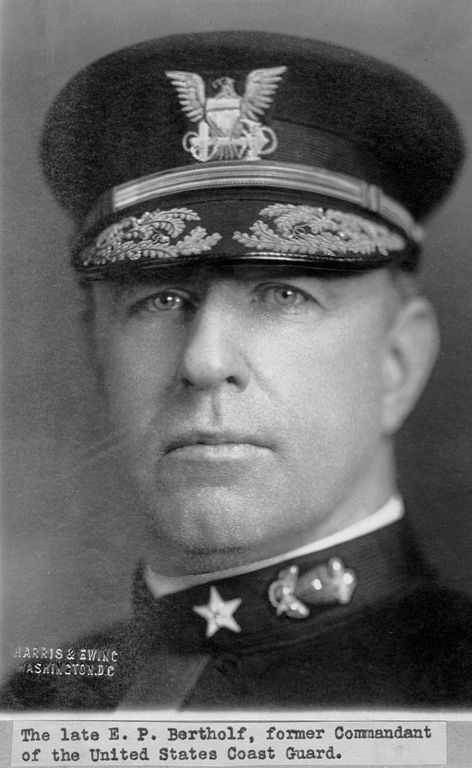
Photograph of Ellsworth P. Bertholf, Commandant of the U.S. Revenue Cutter Service from 1911 to 1915 and Commandant of the U.S. Coast Guard from 1915 to 1919. Coast Guard photo.

We all know August 4th as Coast Guard Day, but it was actually January 28, 1915 that the Coast Guard was formed by the joining of the Lifesaving Service with the Revenue Cutter Service by Act of Congress.

Take a look at the law in the link above. Its is pretty detailed and shows how different things were then. Of course it has been 104 years.

Thanks to brymar-consulting.com for reminding me and providing the link

Commissionings Delayed Due to Shutdown

USCGC Kimball (WMSL 756) arrives in Honolulu Dec. 22, 2018. (U.S. Coast Guard photo by Chief Petty Officer Sara Muir/Released)

Commissioning of at least two recently delivered vessels have been delayed due to the partial government shutdown.

The seventh Bertholf class NSC USCGC Kimball was to have been commissioned in Hawaii in January. Not sure when the rescheduled commissioning is.

USCGC Robert Ward (WPC-1130) was to have been commissioned Feb. 2, but it has been postponed until March 2 (I plan to go)..

Problem of course is that there may be another shutdown before these rescheduled commissionings.

The Coast Guard Cutter Robert Ward (WPC-1130) is shown shortly after mooring for the first time at its homeport at Coast Guard Base Los Angeles-Long Beach, Oct. 31, 2018. The Robert Ward is the second of four new Fast Response Cutters to be stationed in San Pedro. (U.S. Coast Guard photo by Chief Petty Officer Brandyn Hill)

Pardon me a moment while I rant. 

Forcing people to work without pay is called slavery. It was supposed to have been abolished in the US more than 150 years ago. When a worker is hired, military or civilian, they and the employer enter into a contract. When the government fails to pay its workers, it has broken that contract. Private enterprise could not get away with this.

It is not that the money was not available. The Treasury continued to receive taxes. It is not like the government was not going to ultimately pay people who actually did no useful work during this period, so the American Tax payer has had to pay people not to work.

All that is required is to change the law to permit people already hired to be continued to be paid until their employment is terminated.

This is not political. This is good government. This is doing what is right by your employees. Congress on both sides should want this. Republicans should want to deny some future Democrat President the opportunity to hold Congress and the American people hostage to a presidential agenda, just as surely as Democrats want it now.

“Coast Guard patrols South Pacific in support of international fisheries”

A boarding team from the Coast Guard Cutter Mellon (WHEC 717) approach a fishing vessel on the high seas in January 2019 while patrolling in support of counter-Illegal, Unregulated and Unreported fishing and global security missions. Mellon’s crew is supporting international fisheries on the high seas and enforcement of the Western Central Pacific Fisheries Commission (WCPFC). (U.S. Coast Guard photo by Coast Guard Cutter Mellon)

When I reported Betholf’s departure for the Western Pacific, Jan. 22, 2019, I speculated that after Munro’s visit to the Solomon Islands and Fiji, reported Dec. 8, 2018, that perhaps we were seeing the start of a new trend. Apparently I was a bit late in my prediction because, apparently Mellon had already followed Munro into the Western Pacific, departing Seattle shortly after Christmas. The CCGD14 news release below will explain.

Something else I noticed in the news release, was that while in Hawaiian waters, Mellon had conducted Astern Re-fueling-at-Sea training with the U.S. Coast Guard Cutter Joseph Gerczak (WPC 1126). We also had a report of an underway refueling of a Webber Class Cutter when USCGC Oliver F. Berry (WPC-1124) completed a 2,200 mile transit for Operations in the Marshall Islands. Could this be preparation for multi-unit operations in the Western Pacific?

Crew from the U.S. Coast Guard Cutter Mellon performed two community outreach events while in Suva, Fiji, in January 2019. Children admitted at the Colonial War Memorial Hospital in Suva had the opportunity to meet with and hear stories from the crew during their community relations event at the hospital led by Petty Officer 3rd Class Sarah Patanapaiboon and the crew also refurbished the hospital gardens. (U.S. Coast Guard photo by Coast Guard Cutter Mellon)

The News Release

HONOLULU — Following a stop in Fiji in late January, the crew of the Coast Guard Cutter Mellon (WHEC 717) continue their South Pacific patrol in support of counter-Illegal, Unregulated and Unreported fishing and global security missions.
 
The presence of a high endurance Coast Guard cutter conducting operations in the region demonstrates the U.S. commitment to regional partnerships and strengthening a coalition of like-minded countries to strengthen regional maritime governance and promote a rules-based regime for fisheries.
 
Mellon’s crew is supporting international fisheries on the high seas and enforcement of the Western Central Pacific Fisheries Commission (WCPFC). Upon arrival in the WCPFC convention area, they partnered with the Canadian Armed Forces who flew seven reconnaissance flights improving maritime domain awareness and aiding in the enforcement of the WCPFC convention. Patrolling over 1,110 square miles within the WCPFC convention area, the Mellon’s law enforcement team boarded two vessels, one fishing vessel and one bunkering vessel. Both boardings resulted in potential violations of conservation management measures including high seas transshipment and specifications for the marking and identification of fishing vessels. 
 
“Participating in the WCPFC ties into a broader strategy the Coast Guard is pursuing in the Indo-Pacific region,” said Capt. Stephen Burdian, commanding officer, cutter Mellon. “Throughout the area, the U.S., and by extension the Coast Guard, is encouraging relationships respecting the sovereignty, supporting fair and reciprocal trade, and the rule of law in an open and free Oceania. Through a tactical lens, that strategy looks like a Coast Guard boarding of a foreign fishing vessel, while on the high seas or in a sovereign Exclusive Economic Zone (EEZ) jointly with a member of that country’s enforcement team. On this patrol, we are fortunate to have excellent support from the U.S. Navy, U.S. Marine Corps, and our Canadian counterparts.”
 
While on a port call in conjunction with the US Embassy in Suva, Fiji, the crew strengthened partnerships with Pacific Islands Nation communities by participating in community relations events at a local animal shelter, children’s hospital and garden.  At the animal shelter crew members engaged with kittens and puppies while giving animals baths and general clean-up of the shelter.  At the children’s hospital and garden, the crew read books to children and tidied up the garden area.  
 
Mellon’s crew of 150 departed their homeport of Seattle shortly after Christmas. They made a brief stop in Hawaii for fuel and supplies. This stop was leveraged for training as the crew conducted Astern Re-fueling-at-Sea training with the U.S. Coast Guard Cutter Joseph Gerczak (WPC 1126). Also, they worked with Air Station Barbers Point crews to complete 72 shipboard helicopter evolutions over three days, resulting in the qualification of three M H-65 Dolphin helicopter pilots and 10 flight deck personnel aboard Mellon.  The cutter also embarked two Canadian Department of Fisheries and Oceans Officers, two U.S. Navy Aerographer’s Mates, and one U.S. Marine Corps Mandarin translator while in Hawaii for the upcoming operations. The crew is more than 8,000 miles into their patrol and have taken every opportunity for professional development with more than 40 crew earning new qualifications.
 
Oceania covers an area of 3.3 million square miles and has a population of 40 million and is home to some of our valued strategic partners in the Pacific Island Nations as well as Australia and New Zealand, with whom the U.S. has aligned for more than a century.
 
The importance of the Pacific Islands is very evident as the Coast Guard continues operations in the region and the U.S. strengthens partnerships with the governments of these nations. We recognize tourism and exports, both requiring a great deal of commercial vessel traffic, are a primary economic driver. Tuna represented a nearly $5 billion industry in 2015 with more than half the world’s tuna is sourced from the Western Pacific. In 2017 reported landings were 2.5 million tons of fish.
 
The presence of a high-endurance cutter in this part of the Pacific to enforce Conservation and Management Measures established by the Western and Central Pacific Fisheries Commission represents the U.S. and the Service’s commitment to our partnerships in the region. This body represents another essential collaboration. The WCPFC is an international body made up of 43 nations and international organizations. Members agree to allow the 13-enforcer nations in the pact to board and record any potential violations on their nationally flagged vessels. The findings go to the WCPFC who notifies the vessel’s flag state of the suspected infraction for further investigation.
 
“The U.S. Coast Guard and the Canadian Department of Fisheries and Oceans have a long history of working together to ensure the viability of fish stocks off North America.  Working with experts from Canada and regional leaders like Fiji is vital to ensuring food security and the rule of law in Oceania,” said Capt. Robert Hendrickson, Chief of Response for Coast Guard 14th District. “Working together we are helping to ensure a more secure, free and open Indo-Pacific.”

Command at Sea –Coast Guard vs Navy

First, let me say, I can not provide exact figures here, but what I do have is, I believe, close enough to be representative.

The opportunities for command afloat are much greater in the Coast Guard, than they are in the Navy, and those opportunities come earlier in an officer’s career. This should not surprise anyone who has considered this, but the degree of difference may be surprising.

The Navy

The Navy is about eight times larger than the Coast Guard in terms of numbers of personnel. The Navy counts its “Battle Force” as 287 ships. That does not include the 13 Cyclone class patrol craft or twelve 84 foot MkVI patrol boats, but it does include over 40 auxiliary ships which are commanded by civilian Mariners and 11 Aircraft Carriers which by law must be commanded by aviators. The total number of ships commanded by Surface Warfare Officers and Submariners is about 260, perhaps a few more, but less than 270. This number should grow as more LCS and the FFG(X)s enter the fleet, but it is not likely to exceed 310 and a bit over 70 of these are submarine commands, so fewer than 240 afloat command for Surface Warfare Officers for the foreseeable future.

Apparently, the only command afloat billets for Surface Warfare Officers O-4 and below are 13 Mine Countermeasures ships, 13 Cyclone class patrol craft, 12 MkVI patrol boats, and four positions in command of three boat MkVI patrol boat sections for a total of 42 billets.

The Coast Guard 

Over and above a large number of craft commanded by senior enlisted and warrant officers, the Coast Guard has about 208 cutters typically commanded by Officers O-2 and above. A few of these may be commanded by Senior enlisted or Warrant Officers, so about 200 billets for Commissioned Cuttermen. Of these, about 40 are exclusively O-5 and above CO billets. This leaves roughly 160 for O-4 and junior commissioned officers.

This means that proportionately, even at the O-5/O-6 level Cuttermen have greater opportunities for command at sea than their Navy counterparts. At lower ranks with about four times as many billets for a population only an eighth as large, the likelihood of being selected for command at sea is probably about 30 times higher in the Coast Guard.

Implications:

This raises questions for me:

  • Is the Navy’s policy of trying to make every SWO a generalist realistic? Perhaps they should have specialization early on like the British, in Weapons, ASW, Engineers, and Navigators? Maybe after a bit of aptitude testing? They could perhaps broaden experience later in careers. They certainly don’t have sufficient opportunities to even attempt to training every officer as a shiphandler.
  • The Coast Guard will have a number of experienced skippers available for the larger ships. What does that mean for those who never got early command but gained experience as department heads and XOs? Are those that did get early command also getting department head and XO experience before being selected for O-5/O-6 commands?

Something for the Coast Guard as “Navy Squeezing Costs Out of FFG(X) Program as Requirements Solidify”–USNI


The US Naval Institute News Service has provided an update on the FFG(X) program, based on a Jan. 15, 2019 presentation at the Surface Navy Association Symposium, by Regan Campbell, Program Executive Office, Unmanned and Small Combatants, which provides both a projected lower unit cost approaching $800M for follow on units (not a lot more than the Coast Guard was paying for its National Security Cutters) and a list of minimal equipment to be included in each ship

There is one particular item on the list of equipment that may be significant for the Coast Guard, “57mm gun (with ALaMO)”. That means the Advanced Low Cost Munition Ordnance” or ALaMO program to provide guided projectiles for the 57mm Mk110 gun is still on track. Apparently ALaMO uses the same guidance system developed for the Hyper-Velocity Round

The FFG(X) will also share, in common with all the NSCs, the Mk160 Gun Fire Control System, and with the later NSCs, the Mk20 Electro-Optic Sensor System (Mods may be different). This means we can expect continued Navy support of these systems over the long-term.

Request for Proposal is to be issued Q4FY2019. Contract award is expected Q4FY2020.

I note there is still no image available for Huntington Ingalls proposal which may be based on the National Security Cutter.

Below is a list of equipment for the FFG(X) found on page three of the presentation. I can not claim to recognize all the acronyms. Interestingly there is space and weight reservation for a 150 kW Laser Weapon.

Guided Missile Frigate (FFG(X)) Capabilities

AW

3x3x3 fixed-face EASR (Enterprise Air Surveillance Radar)
Mk41 VLS (32 cell)
SM-2 Blk IIIC
ESSM Blk 2
21 cell RAM launcher (Rolling Airframe Missile)
UPX-29 IFF
CEC (Cooperative Engagement Capability)

EW/IO

SLQ-32(V)6 (SEWIP Blk II) w/ HGHS and Specific Emitter
Identification (SEI)
Spectral (Follow on to SSEE Inc F)
AOEW (on airborne asset)
SWAP-C reservation for SLQ-32C(V)7 (SEWIP Blk III Lite)
SWAP-C reservation for 150kw laser

WATERCRAFT

7m RHIB (x2)

SUW

57mm gun (with ALaMO)
Mk160 GFCS
Mk20 Mod 1EOSS
OTH fire control system
OTH 2x4 (T)/ 2x8 (Obj)
50 caliber machine guns
iStalker w/3600 coverage
NGSSR

AVIATION
Organic MH-60R (x1)
Organic MQ-8C (x1)
Secure & Traverse Aircraft Handling
System
Horizon Reference System
Night Vision Device Compatibility

ASW
AN/SQS-62 Variable Depth Sonar
or Low Band Hull Array
TB-37 MFTA w/ TACI
AN/SQQ-89(V)15
USW-DSS
AN/SLQ-61 Lightweight Tow or
SLQ-25 NIXIE
ADC (Torp CM)
Mk41 VLS supports VLA (Vertical Launch ASROC) for allwx stand-off ASW weapon
(future)
SVTT – Shipboard Torpedo
Launch (Obj)

C4I/ CMS
CANES
ICOP
Link-11/22
Link-16
LOS/STJ/JRE
HF/VHF/UHF LOS
UHF/SHF/EHF
SATCOM
NTCDL
Frigate Weapon
System (FWS)
Advanced Cyber
Design
GPNTS & ECDIS

Something is Happening in Venezuela

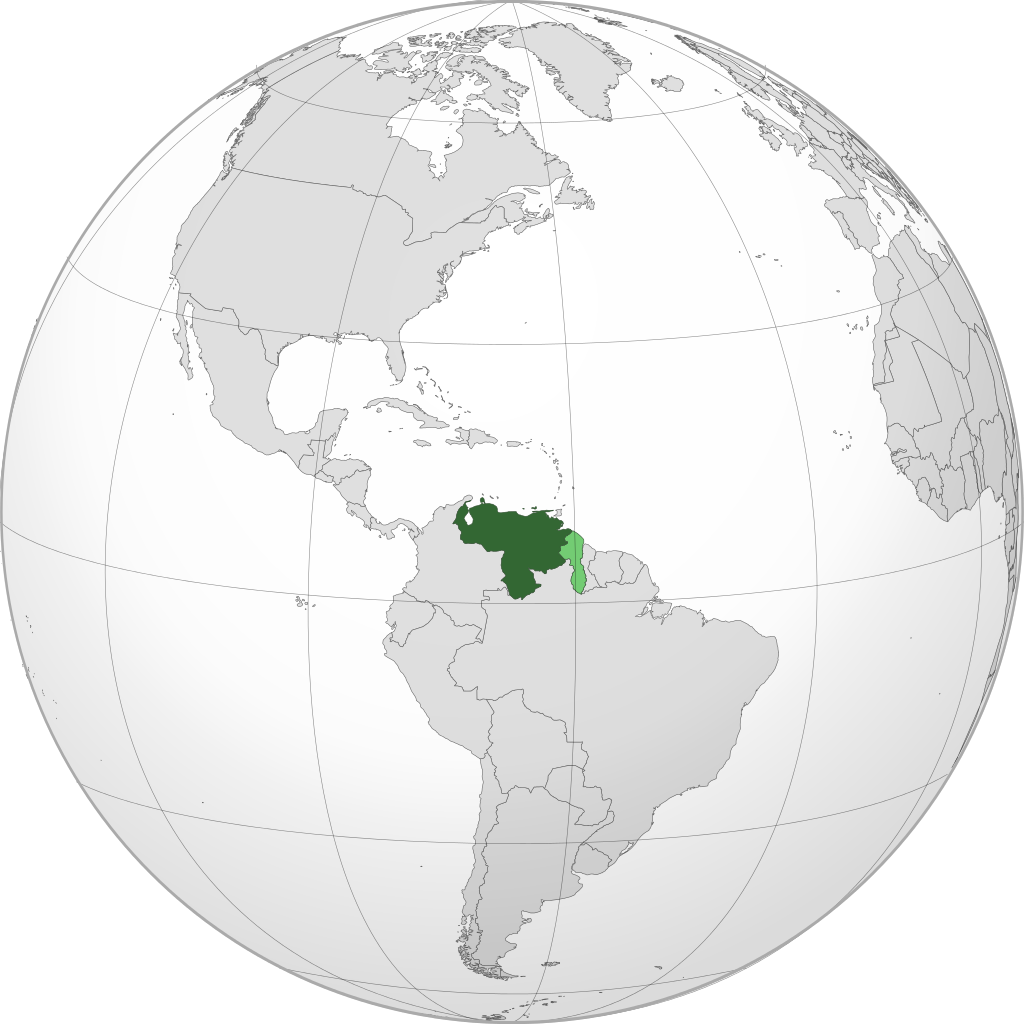
Orthographic map of Venezuela centered on Caracas. Controlled territory in dark green. Claimed territory in light green. From Wikipedia, author: Addicted04

Venezuela is in an area vital to the Coast Guard’s drug interdiction effort.

CBS is reporting,

President Trump recognized the chief opposition leader in Venezuela, National Assembly President Juan Guaido, as the country’s legitimate interim president. The rare move by the White House comes as large anti-government protests erupted across the South American nation on Wednesday.

The Organization of American States (OAS) recently passed a resolution agreeing not to recognize the legitimacy of Maduro’s new term, which began on January 10.

What happens next is anybody’s guess. Civil war is possible, and it already looks like a humanitarian crisis. That our cutters may become involved in some way is not out of the question.

Thanks to Andres for bringing this to my attention.

Alameda-based Coast Guard cutter and crew depart for Western Pacific patrol


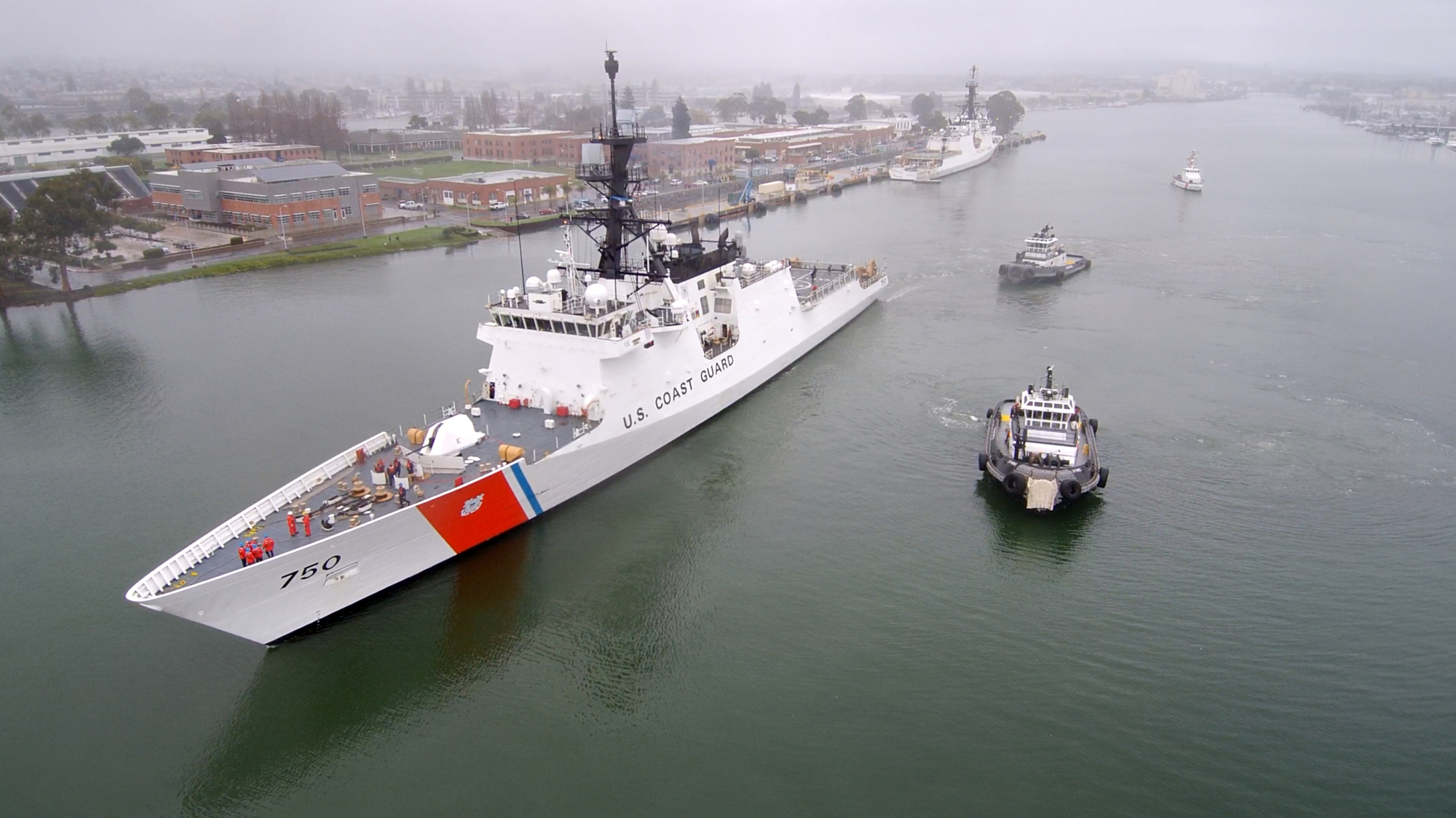
Got a news release reporting the departure of Bertholf from Alameda California for a Patrol in the Western Pacific which I have quoted below. Normally I would leave reporting of ship deployments to other sites, but, I don’t think this is routine.

We have sent cutters into the Western Pacific (since Vietnam). Munro (WMSL-755) visited Fiji and the Solomon Islands in 2018 (Paying More Attention to the Western Pacific, Dec. 8, 2018). Waesche made the trip back in 2012 (Waesche Enroute to SE Asia Apr. 4, 2012).There could have been others, but I don’t think there were a lot more, but coming on the heels of Munro’s deployment this may be a trend.

There is also a video here. The Captain tells the crew, “We’re going to be doing a national security mission. When we get underway, we are going to be working for the United States Indo-Pacific Command, Combatant Commander. We’re going to be executing national security operation throughout the Pacific.”

What is the mission? Certainly they will be doing some capacity building, exercising with partner navies and coast guards. They will probably do some fisheries enforcement both, in the US EEZ and with shipriders to assist in the EEZs of friendly nations, certainly in Oceana and perhaps in SE Asia. We have a huge expanded Pacific Remote Islands Marine National Monument wit  490,000 square statute miles or about 390,000 square nautical miles of Ocean to police (Huge New Marine Reserve, Pacific Remote Islands Marine National Monument, Sep. 26, 2014). Plus there are the island nations of Micronesia, the Marshall Islands, and Palau joined with the U.S. in “Compacts of Free Association.”

There have been calls for more US Coast Guard presence in the Pacific from New Zealand and from the 7th Fleet. Some, including the previous Commandant see the US Coast Guard as a counter weight to China Coast Guard in the South China Sea.

Maybe Bertholf will stop in at Guam and check it out as a possible future base for Offshore Patrol Cutters. We already have indication three Webber class FRCs will replace the two 110s currently there.) Will they operate in the South China Sea? Will they do Freedom of Navigation Ops? Taking Vietnamese ship riders aboard and doing fisheries enforcement in the Vietnam EEZ inside the Chinese claimed Nine Dash Line, could get exciting. Guess we will have to wait and see.

Will they have a UAS aboard? And If we have no budget or continuing resolution to pay our people, how are we paying for fuel?

The News Release

On a gray and foggy morning, tears intermingled with rain as family members braved the elements to say goodbye to the 170 crewmembers of Coast Guard Cutter Bertholf (WMSL-750), a 418-foot national security cutter, which departed Alameda, California, Sunday for a patrol in the Western Pacific Ocean.

The U.S. Coast Guard has an enduring role in the Indo-Pacific going back over 150 years. The service’s ongoing deployment of resources to the region directly supports U.S. foreign policy and national security objectives in the Indo-Pacific Strategy and the National Security Strategy.

“The United States is a Pacific nation,” said Vice Adm. Linda Fagan, commander Coast Guard Pacific Area, who was present to see the cutter depart. “We have deep and long-standing ties with our partners in the region, and more importantly, we share a strong commitment to a free and open Indo-Pacific, governed by a rules-based international system that promotes peace, security, prosperity and sovereignty of all nations.”

Bertholf will be operating in support of United States Indo-Pacific Command, which oversees military operations in the region. As part of its planned operations, the cutter will engage in professional exchanges and capacity building with partner nations.

“Security abroad equals security at home,” said Fagan. “Enhancing our partners’ capabilities is a force multiplier in combating transnational criminal and terrorist organizations and deterring our adversaries.”

As both a federal law enforcement agency and an armed force, the Coast Guard is uniquely positioned to conduct defense operations in support of Combatant Commanders on all seven continents. The service routinely provides forces in joint military operations worldwide, including the deployment of cutters, boats, aircraft and deployable specialized forces.

“I’m excited to see Bertholf sail today to the Indo-Pacific region of operations,” said Fagan, who described the cutter as one of the most capable in the Coast Guard fleet.

“They will be serving alongside other DoD military forces, particularly the U.S. Navy, and I know they will contribute key capabilities to that mission set. This crew has worked incredibly hard to get ready for today’s sailing, and I can’t think of a better ship and crew to be sending to the Indo-Pacific.”

Commissioned in 2008, Bertholf is the first of the Coast Guard’s legend class national security cutters. These advanced ships are 418-feet long, 54-feet wide, and have a 4,600 long-ton displacement. They have a top speed in excess of 28 knots, a range of 12,000 nautical miles, endurance of up to 90 days and can hold a crew of up to 170.

The cutter is named for Coast Guard legend Ellsworth P. Bertholf, who served as captain of the Revenue Cutter Bear during the famous Overland Relief Expedition, earning the Congressional Gold Medal. As the Coast Guard’s fourth commandant, Bertholf oversaw the transfer of the Coast Guard into the Department of the Navy during World War I and advocated for the successful postwar reconstitution of the service.

National security cutters feature advanced command and control capabilities, aviation support facilities, stern cutter boat launch and increased endurance for long-range patrols to disrupt threats to national security further offshore.

The Coast Guard is scheduled to commission its seventh national security cutter, the Coast Guard Cutter Kimball, in 2019. Kimball, along with the Midgett, which is currently under construction, will be homeported in Honolulu and will enhance the Coast Guard’s presence throughout the Indo-Pacific.

“The U.S. Coast Guard’s unique authorities, capabilities, and missions make us the maritime safety and security partner of choice for sea-going countries around the world,” said Capt. John Driscoll, Bertholf’s commanding officer. “Our increased presence throughout the Indo-Pacific will enhance regional stability and improve maritime governance and security.”

In an address to the families and crew before the cutter set sail, Driscoll emphasized how critical family support is to crew wellbeing and readiness.

“Support from our families, wherever they live, is vital to ensuring we are ready to sail and answer the demands of our nation,” Driscoll said. “We must ensure our families are ready to weather the storm at home. We operate in a dangerous and high-consequence environment, and your ability to focus on mission can become easily compromised if you are worried about family.”

Fagan acknowledged the current lapse in appropriations and government shutdown has added stress and feelings of uncertainty to the typical emotions that surround a cutter departure.

“I know it is hard for these crews to be leaving behind their dependents and spouses – it’s a thousand times more so when everyone is wondering when our next paycheck will be, and how they can support the family they are leaving behind,” Fagan said.

“There has been an incredible outpouring of support for the families here in the Alameda area, but the tension and the anxiety for the crew is real,” said Fagan. “We are standing by to help support those families who are left behind the same way that we are going to support the crew as they sail for the Western Pacific.”