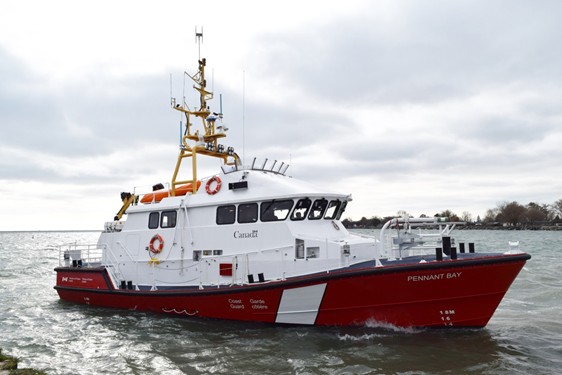
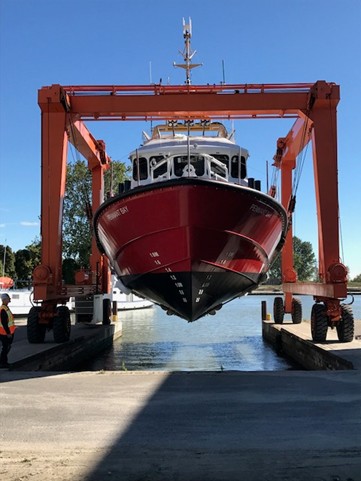
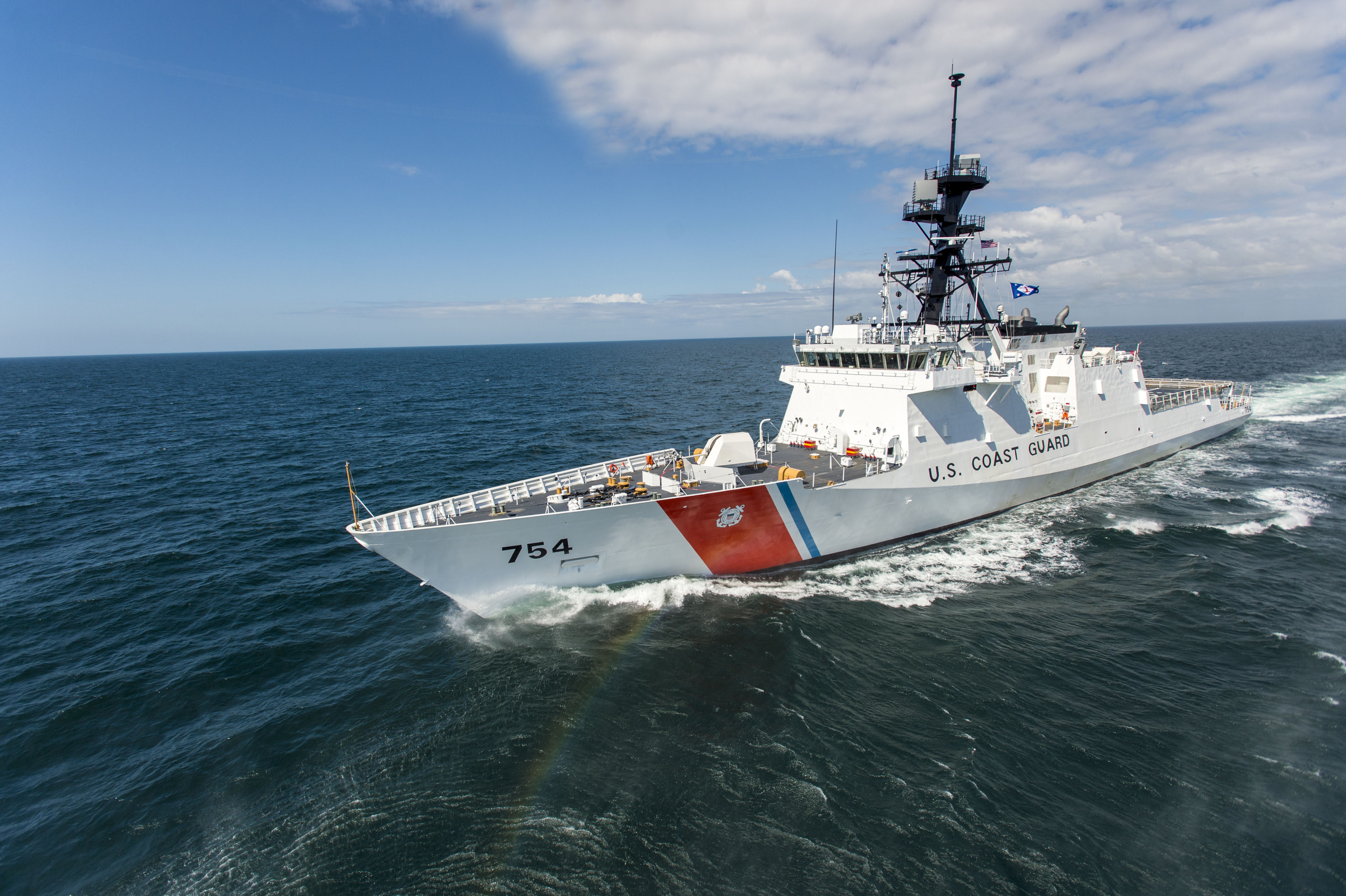
The US Naval Institute has a short post that proposes a new type of combatant, and it could potentially be based on the Webber class Fast Response Cutter, or as it is referred to in the post, the Sentinel class.
The author suggests some relatively straight forward upgrades for dealing with low-end (swarming) threats, but the heart of the proposal is to think about arming and equipping them much like the FA-18 Hornet including link 16, cooperative engagement capability, and electronic warfare equipment.
“To create the best system, get past the question of the hull; start with weapons and sensors and ask what they can do. A good starting place might be, “Can we accomplish anti-surface warfare (ASuW) if we put Super Hornet capabilities onto a patrol boat?” … the boat should employ a small unmanned aerial vehicle (UAV) such as the Boeing RQ-21 Blackjack to give it extended sensing for independent operations. “
All the basic weapons upgrades suggested and a UAS are probably feasible without making serious changes to the Webber class’s basic configuration. The next step up is going to require some compromises.
The author suggests a four-cell Mk-57 vertical-launch system (VLS) which would weigh about 20 tons. This would likely replace the 8 meter over the horizon boat on the stern. That is a lot of weight to be positioned that far aft, but there are alternatives. Inclined deck launchers using the MK41 VLS system have been proposed and would be lighter. Dedicated launchers for Harpoon and particularly NSM would be a lot lighter. All these missiles are shorter than the over the horizon boat.
The Naval Strike Missile certainly seems the most likely since in has been chosen for the Navy’s small combatants, including all LCSs. Because of its smaller size it might be possible to carry more missiles than would be possible with the larger weapons.
Keep in mind that the Navy is going to have to replace it Cyclone class patrol craft. the oldest of the thirteen is now over 25 years old.
It the Navy chose to replace the Cyclone class with modified Webber class, while the over the horizon boat is certainly useful, they could find a lot of potential alternative uses for the stern ramp other than a place for missile launchers including:
- Support for unmanned surface and sub-surface system that might conduct Mine Counter Measures (MCM) and possibly other missions.
- Transporting and deploying a Swimmer Delivery Vehicle for SEAL Team operations
- Sonar systems for coastal Anti-Submarine Warfare in conjunction with installation of torpedo tubes as suggested earlier.
In reading over the comments on the USNI post there was a good question, forgive me for paraphrasing,
Since the price is about the same why not just buy strike aircraft? The aircraft can get there, release its weapons, return, rearm and strike again.
All true, but total costs are not the same. The aircraft operating and support cost are much higher, including the aircraft carrier, big deck amphib, or airfield it operates from.
A patrol craft has can remain on station much longer than an aircraft.
A group of patrol craft can be spread out in ways a group of aircraft tied to its base afloat or ashore cannot.
Yes, these patrol craft would be easy to kill, but they can only be killed one at a time, and may not be that easy to find. On the other hand, if an anti-ship cruise missile hits a carrier, it may still kill more people than the crew of a patrol craft and when it leaves the theater for months to have the damage repaired, she also takes those 70 or so $100M airplanes with her. If the carrier is sunk, we may lose not only a 7-12 billion dollar carrier, but also the 70 or so $100M aircraft aboard are likely to go down with it. The actual survivability of small warships is usually understated, not because they can take a hit, but because they are usually never hit at all, while the survivability of large warships is overstated, because there is always a huge effort to find, fix, and destroy them. Also the opportunity costs when large ships are taken out of the fight for repairs is often over looked.
Patrol craft are the Naval equivalent of boots on the ground. They see things those flying at 25,000 feet cannot. You don’t try to fight a land war without infantry. You can’t fight a naval war without the small boys.








 Chuck Hill's CG Blog