Once again Sanjay Badri-Maharaj provides a look inside the Trinidad and Tobago Coast Guard, (TTCG). This time, he relates its often frustrating history and its recent attempts to return to relevancy. The story should make USCG members feel very fortunate. Sanjay’s earlier post related to the TTCG’s most recent major procurement, “How the SPa was Chosen – The Trinidad and Tobago Coast Guard’s Spa 5009 fleet.”

British built OPV that was to have been the Trinidad and Tabago Ship (TTS) Port of Spain, seen here in TTS colors. Now the Brazilian Ship Amazonas.
At the Visakhapatnam International Fleet Review 2016, a ship graced the show with her presence – the Brazilian Navy Offshore Patrol Vessel (OPV) BN Amazonas (P120) commanded by Commander Alessander Felipe Imamura Carneiro. While this ship would have gone largely unnoticed by the naval fraternity so gathered, being as it is, of sound but unspectacular design and performance, the vessel has a peculiar significance for the Trinidad and Tobago Coast Guard (TTCG) as it was originally built for the said formation and was very nearly commissioned as the TTS Port of Spain. However, an abrupt and controversial cancellation of the order in September 2010, following a change in government in May 2010, brought an end to a planned expansion plan that would have allowed the TTCG to regain its place as the premiere naval unit of the Caribbean. The cancellation of the OPV contract combined with poor serviceability of surviving assets led to a scramble for assets between the years 2013 and 2015 which culminated in the procurement of a fleet of vessels that have restored a degree of capability and viability to the TTCG surface ship squadron.
Trinidad and Tobago’s Maritime Domain:
Source: Trinidad and Tobago Coast Guard
As an archipelagic island state, Trinidad and Tobago’s Maritime Domain and the TTCG’s ability to patrol and secure the same are of paramount importance for the security and the economic well-being of the country. The Maritime Domain can be divided into three parts:
Exclusive Economic Zone
Trinidad and Tobago claims an Exclusive Economic Zone (EEZ) of up to two hundred nautical miles (200 n.m.).
Territorial Sea
The territorial sea limits are up to 12 nautical miles from the archipelagic baseline.
Internal Waters
Internal waters, of up to 3 nautical miles from the archipelagic baseline are also part of the responsibility of the Coast Guard.
Activities within the Maritime Domain
Energy Exploration and Exploitation
- The offshore oil and natural gas sectors are estimated to provide some 48% of the revenue of the Government of Trinidad and Tobago.
Commercial Shipping and Maritime Transport
- 30 shipping companies – international and regional
Fisheries
- 2,300 registered vessels including trawlers
Search and Rescue
- Under the 1979 International Convention on Maritime Search and Rescue Trinidad and Tobago has an area of responsibility 68,500 sq nautical miles.
- Trinidad and Tobago also has obligations under the ICAO for search and rescue.
- Trinidad and Tobago also hosts the Regional Maritime Rescue Coordinating Centre
Trafficking in Narcotics, Arms and Ammunition
- The connection between drug trafficking and violent crime is obvious. Equally well known are the destabilizing economic and socio-political effects of the corruption and social degeneration that follows in its wake.
- Contrary to popular belief, The majority of drugs smuggled into Trinidad are transported, not by small fast boats, but by large, slow transport vessels. They are also transported by aircraft, submersibles, and fishing boats. Until 2016, the ability of the Trinidad and Tobago Coast Guard to intercept this multiplicity of smuggling avenues was severely limited, particularly along the South and East coasts. Furthermore, civilian marinas also provide a largely unpoliced entry route for illegal narcotics.
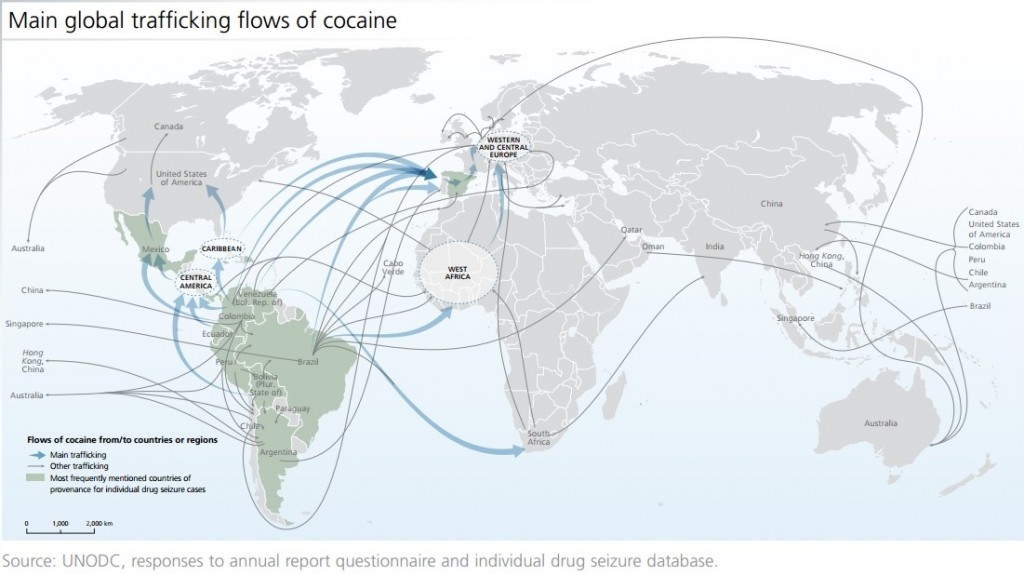
- Thus, acquiring the capability to stop the transshipment of narcotics (primarily from South America to North America and Europe) through local waters and reducing the associated arms and ammunition trade locally, is the key immediate goal of the TTCG.
Natural Resource Poaching
- Trinidad and Tobago claims an EEZ consistent with the United Nations Convention on the Law of the Sea. It must therefore carry out surveillance to the extremities of its EEZ (out to 200NM) to prevent unauthorized and illegal activity. Encroachments into the EEZ are always a possibility with Barbadian and Venezuelan illegal exploitation of local fisheries having occurred with regularity.
Human Trafficking and Illegal Immigration
- The main routes of ingress and egress in the human trafficking trade are by sea. Illegal immigration from the South American mainland by sea is increasing. An increase in illegal immigration and human trafficking has been observed within local waters.
Maritime Terrorism/ Piracy/ Natural Disasters
- Worldwide, the emergence of a widening range of non-state actors, including terror networks and criminal gangs has prompted a major shift in National Security Policy. These threats cannot be ignored and it can be expected that TTCG vessels may be deployed to support Counter Terrorism operations locally and regionally.
- Piracy has not happened to any noticeable extent, but there have been incidents within the Caribbean. Maritime crime, however, is not uncommon and needs to be addressed by deployment of Coast Guard assets. Maritime crime has been occurring in the cross border areas of local waters.
Development of the TTCG Surface Fleet
The Trinidad and Tobago Coast Guard began its operational history with two 103ft Vosper Ltd patrol boats – the TTS Trinity (CG-1) and the TTS Courland Bay (CG-2) – commissioned on 20th February 1965, each 31.4m long, displacing 123 tons. These were followed by TTS Chaguaramas (CG-3) and the TTS Buccoo Reef (CG-4), commissioned on 18th March 1972, each 31.5m long, displacing 125 tons. CG-1 and CG-2 were decommissioned in 1986 and CG-3 and CG-4 in 1992.
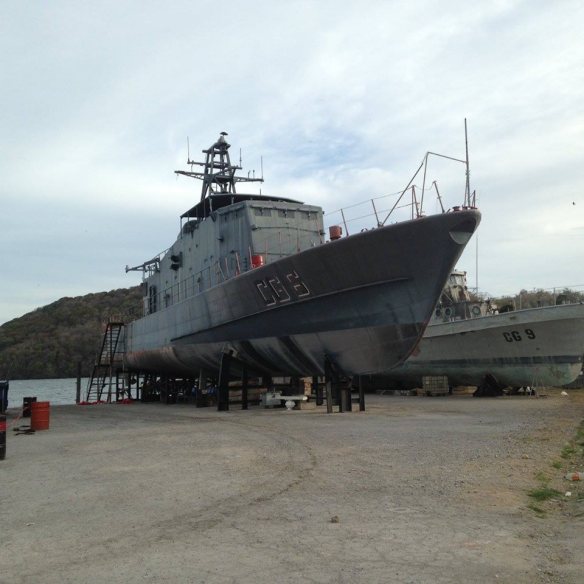
Photo by Sanjay Badri-Maharaj
These Vospers were followed on 15th June 1980 by two modified Spica class vessels – TTS Barracuda (CG-5) and TTS Cascadura (CG-6) – each 40.6m long and displacing 210 tons. After a failed attempt at local repair and refurbishment, these vessels were decommissioned after nearly 15 years of inactivity. CG-5 was scrapped while CG-6 remains at Chaguaramas Heliport completely derelict, bereft of sensors, engines, weapons and accommodation, yet the vessel remains ostensibly in commission.
On 27th August 1982, 4 Souter Wasp 17 metre class (TTS Plymouth CG27, TTS Caroni CG28, TTS Galeota CG29, TTS Moruga CG30) were commissioned. In addition, the Coast Guard was augmented in the mid-to-late 1980s with vessels from the disbanded Police Marine Branch – 1 Sword Class patrol craft (TTS Matelot CG 33) , and 2 Wasp 20 metre class (TTS Kairi CG31 & TTS Moriah CG 32). All of these vessels have now been decommissioned.
The years 1986 to 1995 saw the decommissioning of almost all the TTCG patrol assets and the de facto retirement of CG-5 and CG-6 for lack of serviceability and an inability of the TTCG to undertake routine maintenance due to severe funding shortfalls. This left the formation incapable of performing its assigned tasks on any sort of credible basis. This period, not surprisingly, saw a significant increase in narcotics and illegal weapons shipments being transhipped through Trinidadian waters.
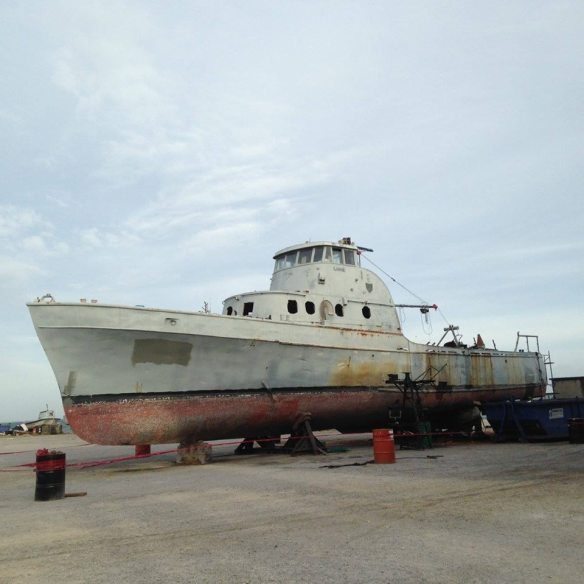
Photo by Sanjay Badri-Maharaj
After a number of years with almost no serviceable vessels, the period 1999-2001 saw the TTCG receive a boost with the acquisition of the ex-Royal Navy Island class OPV, HMS Orkney as the TTS Nelson (CG-20) and four 82ft Point-class cutters, each displacing some 66tons, from the United States (TTS Corozal Point CG7, TTS Crown Point CG8, TTS Galera Point CG9 and TTS Bacolet Point CG10). The Point class cutters were nominally on strength until 2009-10 when they were decommissioned, but in reality, they had been unseaworthy for some years prior. A half-hearted attempt was made to refit CG-7 but was abandoned. It is a depressing fact that these vessels were well over 20 years old when procured. The stark reality was that not a single new-build patrol vessel was acquired between 1980 and 2009.
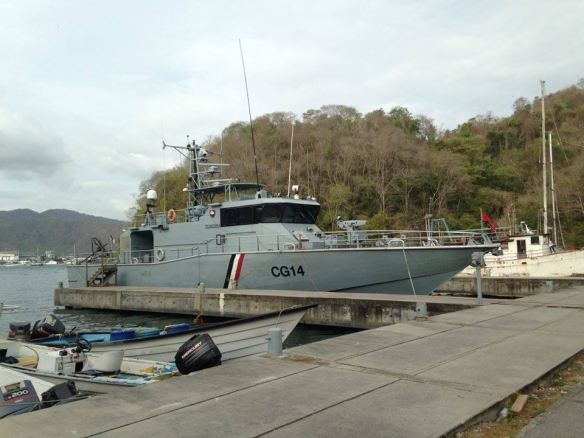
Photo by Sanjay Badri-Maharaj
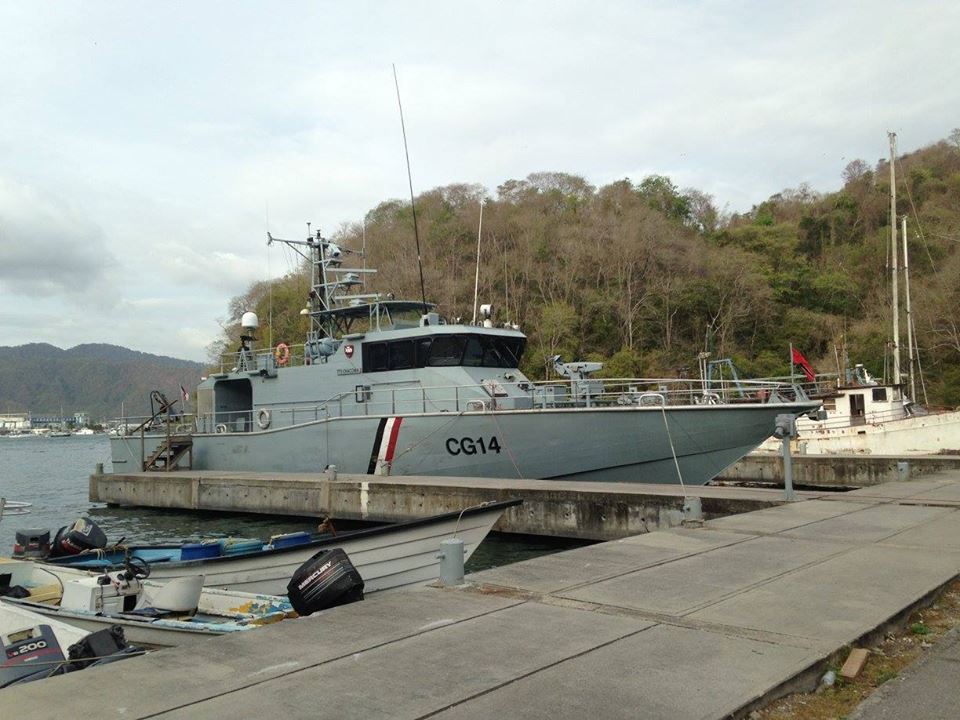
In 2003-2004, the then Government of Patrick Manning, began a phased expansion of the formation which included the purchase of six new Austal PB30 Fast Patrol Craft (FPC) –CG11 TTS Scarlet Ibis, CG12 TTS Hibiscus, CG13 TTS Humming Bird, CG14 TTS Chaconia, CG 15 TTS Poui and CG16 TTS Teak – commissioned between 2009-2010 and two modified oilrig support vessels – each over 15 years old – armed and re-tasked as Coastal Patrol Vessels (CPVs) – CG-21 TTS Gaspar Grande and CG-22 TTS Chacachare – commissioned on 23rd April 2008. In addition, 4 Midnight Express Interceptors were delivered in 2005 and were extensively deployed in anti-narcotics operations.
The “crown jewels” of this expansion plan were three 90m long OPVs – to be named the Port of Spain, Scarborough and San Fernando – ordered from VT Shipbuilding (later BAE Systems Surface Ships). Easily the most advanced vessels in the Caribbean (after the demise of the Cuban navy), the OPVs were adequately armed with 25mm and 30mm guns and possessed the ability to stage medium-lift helicopters from their flight decks. However, an overly-ambitious integrated fire-control system and some unrealistic expectations from the TTCG in respect of the performance of the 30mm guns led to significant delays and problems during trials. In September 2010, the Government of then Prime Minister Kamla Persad-Bissessar, cancelled the contract in decision that in retrospect may have been ill-advised.
Of interest is the fact that the procurement of new vessels did not lead to a commensurate increase in the TTCG operational budget relative to the larger fleet. In addition, archaic bureaucratic procedures together with shortcomings in the TTCG engineering and maintenance branches combined to cripple efforts to restore serviceability to repairable vessels with contractors going unpaid for work done and vessels being laid-up for extended periods of time. Procurement and payment procedures and policy have also played a significant part handicapping the ability of the TTCG to meet its commitments to suppliers and contractors, largely because of a bureaucratic system that moves slowly and which fails to accord due priority to essential items necessary for the operations of the TTCG. It is a continuing area of concern that there has been no attempt to streamline urgent procurement or even payment of suppliers with basic necessities such as fuel running dangerously low on occasions. The then government attempted to circumvent these problems by entering into comprehensive logistics and support arrangements with VT and Austal. However, the former was stillborn through the cancellation of the OPVs and the latter never worked as planned, in part because of inherent deficiencies in the TTCG maintenance structure and in part because of unreformed bureaucratic processes that ensured that the TTCG was unable to meet its contractual obligations in respect of the Austal support contract.
Thus between 2001 and 2010, the TTCG, while still not improving its serviceability or operational efficacy, did formulate plans, which were accepted which led to the signing of contracts for the purchase of OPVs and FPCs. However, a change in government let to budgetary priorities shifting to the detriment of the TTCG. Despite an impressive strength on paper, the TTCG was, by 2013, in dire straits, leading to an operational audit of the TTCG surface assets which revealed the extremely poor state of repair of the surface fleet:
| Type |
Quantity |
Age
(years) |
Assigned Area of Operation |
Status |
| OPV
TTS Nelson |
1 |
37 |
Offshore – EEZ and beyond |
Unserviceable |
| CPV
Chacachacare
Gaspar Grande |
2 |
19
17 |
Offshore & Territorial Sea |
Unserviceable |
| Austal Built FPCs |
6 |
4 |
Territorial Sea &
Inshore |
Serviceability is variable.
2 serviceable, 4 unserviceable. |
| Interceptors |
17 |
2-4 |
Inshore & Internal Waters |
4 serviceable, 13 unserviceable. |
Source: Author’s primary research
Acquiring New Vessels for the TTCG
In January 2014, the Government appointed the Naval Assets Acquisition Implementation Team (NAAIT) and tasked them with procuring, inter alia, 7 new CPVs and 2 OPVs (now curiously termed Long-Range Patrol Vessels or LRPVs) within the very short period of two years. For budgetary reasons the figures were reduced to 4 CPVs and 1 LRPV. The new procurement attracted some international attention and shipyards invited the NAAIT to inspect the yards and the products available. Directed by the Government, the NAAIT visited the Hyundai Heavy Industries (HHI) shipyard in Ulsan, Republic of Korea, the China State Shipbuilding Company (CSSC) in Guangzhou, COTECMAR at Cartagena, Colombia and Damen Shipyards Ltd at Gorinchem, Holland. Damen, COTECMAR and HHI offered viable products meeting TTCG requirement but CSSCs products were viewed as not quite meeting TTCG specifications.
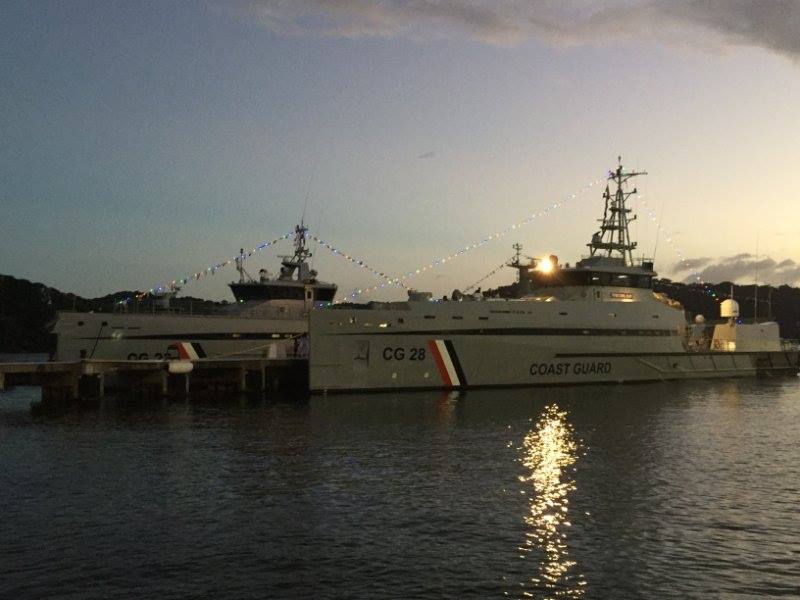
After deliberating and assessing the vessels and designs on offer, the NAAIT recommended that the 4 CPVs be acquired from Damen with two additional vessels of a similar design being acquired as “utility vessels” but so armed and equipped that they could augment the 4 dedicated CPVs in the patrol role. The vessels selected were the SPa 5009 CPV and the FCS 5009 utility vessel. The CPVs were fitted with a surveillance system which drew heavily on high-end civilian products. In addition they were fitted with a remotely controlled 20mm gun. The FCS 5009 was delivered in standard configuration but with accommodation increased for a larger crew, a manually operated 20mm gun (from TTCG stocks) and a slightly enhanced surveillance fit.
The bureaucratic procurement process, however, was slower than expected as the bureaucracy initially questioned the NAAIT’s authority, grudgingly acquiescing to the fact that it had Cabinet sanction. Furthermore, unforeseen lethargy among the bureaucrats tasked with enabling procurement, ignorance of systems and a failure to communicate in a timely fashion very nearly stymied the process. In addition, the NAAIT faced a deliberate attempt at sabotage when accusations were made by a highly-connected individual who was representing the interests of another shipyard. These accusations were found to be untrue but the procurement of the vessels was delayed. Eventually, the contract was signed enabling delivery of the vessels
The LRPV procurement was not so fortunate as the NAAIT recommendation for a formal Request for Proposals to be sent out to all the shipyards visited by the team was initially approved and then, to the surprise of the NAAIT, circumvented by the direct intervention of Prime Minister Persad-Bissessar who decided, against advice, to procure a ready-made, unarmed, LRPV from CSSC of China which compared badly with the cancelled OPVs.
Potential Lessons for Procurement
The NAAIT wound down at the end of February 2016 having completed much of its mandate. In the Trinidadian context, the NAAIT was a unique experiment. While its experience may not translate easily for other countries some lessons can be shared:
- Technical expertise must be an integral part of the procurement process and operate in conjunction with bureaucratic procedures. The bureaucracy must be willing to learn and understand requirements of military formations. They may not be technical experts but complete ignorance on the part of the bureaucrats involved will inevitably lead to frustrating delays. Bureaucratic lethargy is potentially lethal to any procurement process. It may be necessary to stipulate time frames for tasks and hold officials to account. This will inevitably meet with resistance from the affected parties.
- Bypassing the bureaucracy is not an effective option. A bureaucracy that does not feel part of the system can create additional delays by questioning the legality of the procurement being undertaken. Complete synergy of effort has to be sought.
- Political interference must be avoided where possible. The NAAIT experienced the effects of this where technical advice was overruled and a questionable purchase of the LRPV from CSSC China was initiated by the then Prime Minister.
- Above all, never let military formations decay to the extent where urgent procurement becomes necessary to restore even a veneer of capability. Rushed procurements have the potential to be as detrimental as delayed ones and run the risk of being questioned by successor governments.
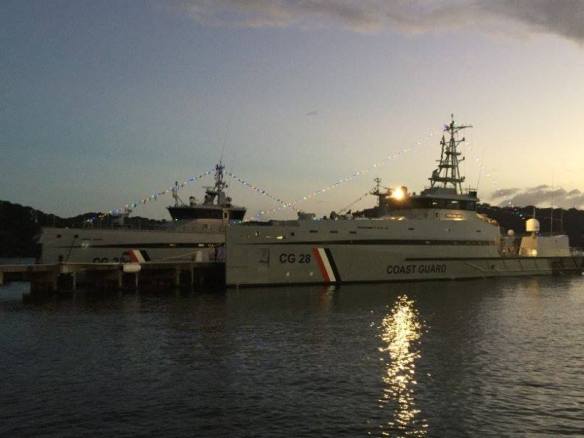
Photo from Damen Shipyards, Netherlands
Conclusion
One of the most intriguing points to note is that the TTCG followed a systematic and rational procurement process until 1980. After that, its recovery from decades of neglect has been slow, painful and littered with the false dawn of the ill-fated OPV contract. Nonetheless, the frantic efforts to rejuvenate the TTCG have finally produced results. It remains to be seen whether the new vessels will meet a better end.




 Chuck Hill's CG Blog