Interview: Adm. Paul Zukunft demands Coast Guard respect–Defense News

DefenseNews had an interview with the Commandant. You can read it here. I will not repeat the Commandant’s responses here, but I will repeat one of the questions and add my own thoughts.

Admiral, you have said that the Coast Guard’s identity as an armed service is forgotten. Can you tell me what you mean by that?

The Commandant talks here about budget, but I think this starts with self image. We do SAR. We rescue sea turtles. Armed services are first and foremost ARMED. We are by law a military service, but we are currently inadequately armed for even our peacetime counter terrorism, DHS mission. We are less capable of forcibly stopping a ship than we were 90 years ago.

Do our people know what their role will be if there is a major conflict with the Chinese or Russians? You can bet Navy and Marine Personnel have a pretty good idea of their roles.

We have had a quarter century hiatus in a mono-polar world where no one could challenge American seapower. That is changing rapidly and it is time for the Coast Guard to see itself in a new light. Just as the nation has benefited from having two land forces (Army and Marines), it can benefit from having two sea forces. The Coast Guard is a substantial naval force. Certainly we will not replace the Navy’s sophisticated systems, but there is a need for a high low mix and the marginal cost of adding capability to Coast Guard vessels that are going to be built anyway is very small.

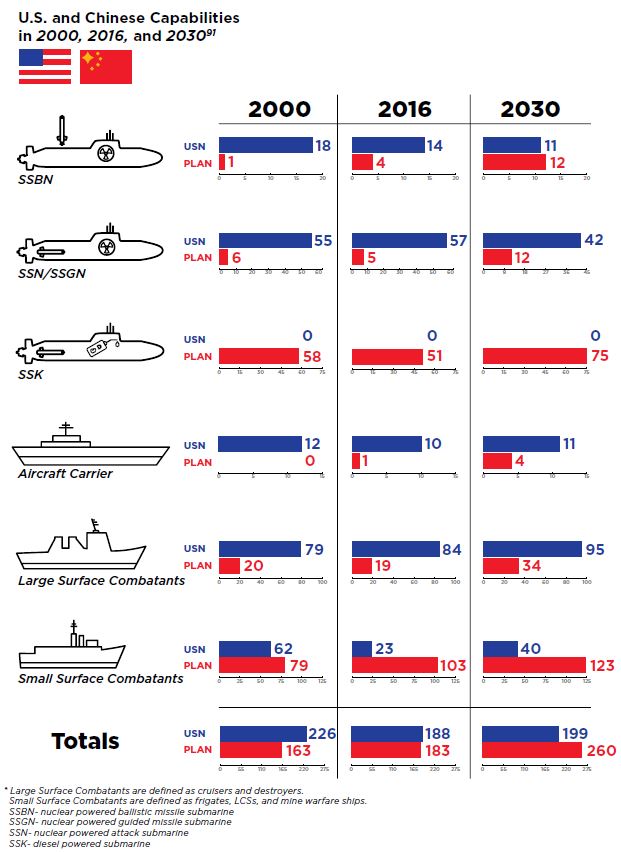
We are currently in an unrecognized naval arms race with China. It is time to give the Coast Guard back the ASW and ASuW capabilities it was building before the collapse of the Soviet Union.
When I reported to the academy in 1965, it had a gun lab, and we were taught ASW (badly) during swab summer. The Coast Guard had 36 ships equipped with sonar, ASW torpedoes and 5″ guns. The ships were old (not as old as now), but we were building a new fleet of 36 Hamilton Class WHECs equipped with a better sonar in addition to torpedoes and a 5″ gun. Being armed did not stop us from doing SAR, fisheries, or aids to navigation.

At that time (1965) in terms of personnel, the US Navy was about 25 times larger than the Coast Guard and had 287 cruisers, destroyers, and frigates. Now it is only eight times as large as the Coast Guard and has only 85 ASW equipped surface ships. We also had a powerful naval ally in Europe in the form of the Royal Navy. Now the Coast Guard is supplying personnel to the Royal Navy and in terms of personnel the Coast Guard is larger than the Royal Navy or the French Navy. Equipping our planned 33 to 35 large cutters as true surface combattants could make a real difference.

Even if we never go to war, preparation can make us better at our peacetime roles. Drug interdiction, migrant interdiction, and even SAR benefit from military grade ISR and C4I. Recognition of naval capabilities in the Coast Guard may justify additional resorces that have dual use for peacetime missions. Its a win-win.


Marines (or Army) Sink Ship with Missiles from Coast Guard Ship–It Could Happen

PACOM wants the services to operate across domains. The Navy already operates aircraft over land, but he also wants the Army, Air Force, and Marine Corp to help control the sea areas. We noted earlier, that it appears the Army may be moving to form something like the old Coast Artillery.

Now the US Naval Institute reports the Army is set to sink a ship during the 2018 RIMPAC exercise, presumably from land. In addition,

“Headquarters Marine Corps and [Marine Corps Forces Pacific] are working to deploy HIMARS (M142 High Mobility Artillery Rocket System) rapidly aboard ships to shoot at other ships.”

Now the Marines will probably do this from a Navy amphibious assault ship, but wouldn’t it be cool if the Army did this from a Coast Guard Cutter. That would really demonstrate cross service cooperation.

It is also something we might want to do operationally from an Icebreaker in the Arctic some day.

Webber Class WPC Bailey Barco Tour

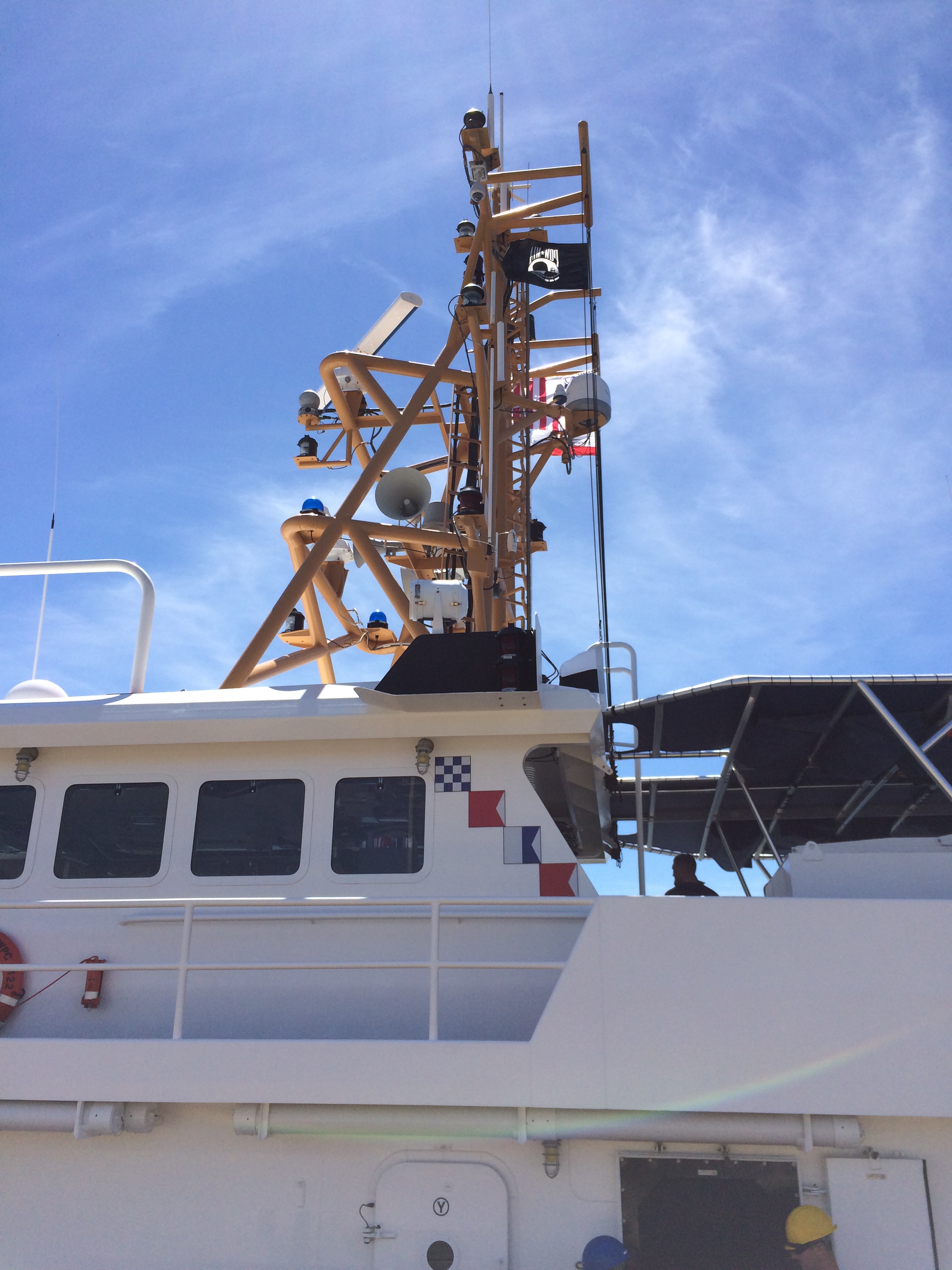
I recently had the opportunity to board the yet to be commissioned Webber Class cutter Bailey Barco (WPC-1122), during a stop, as she made her way from the Gulf coast to her new home port in Ketchikan, Alaska. The Captain, Frank Reed, generously took the time to show me around. She was transporting a lot of spares and other gear to her new homeport, so may appear a bit more cluttered than normal, but everything was securely stowed.

I took some photos. I’m providing the diagram below for reference. Click on it to enlarge.

Mast and call sign

Bridge looking forward and a proud CO.

The bridge is large and spacious. Underway it becomes a secure space combining the functions of the CIC, Engineering Control Booth, Radio Room, and Firecontrol Shack in addition to the normal bridge functions. A secure space below passes information up to the bridge.  Normal underway manning is a three person watch.

Bridge displays and controls

Bridge looking aft.

Looking aft from the bridge, the watch can look back at the embarked over the horizon boat and observe as it is launched and recovered.

Ship’s boat.

Why a water tight door? As an XO who spent a lot of time making sure we could properly set Material Condition Zebra, these things are really important and can be a pain in the ass. The CO said earlier cutters of this class had had problems with their doors, but these were an improved version. The action was very positive and quick, requiring only a quarter turn instead of a three quarter turn for full actuation like the Quick Acting Water Tight Doors I was accustomed to.

Quick Acting Water Tight Door

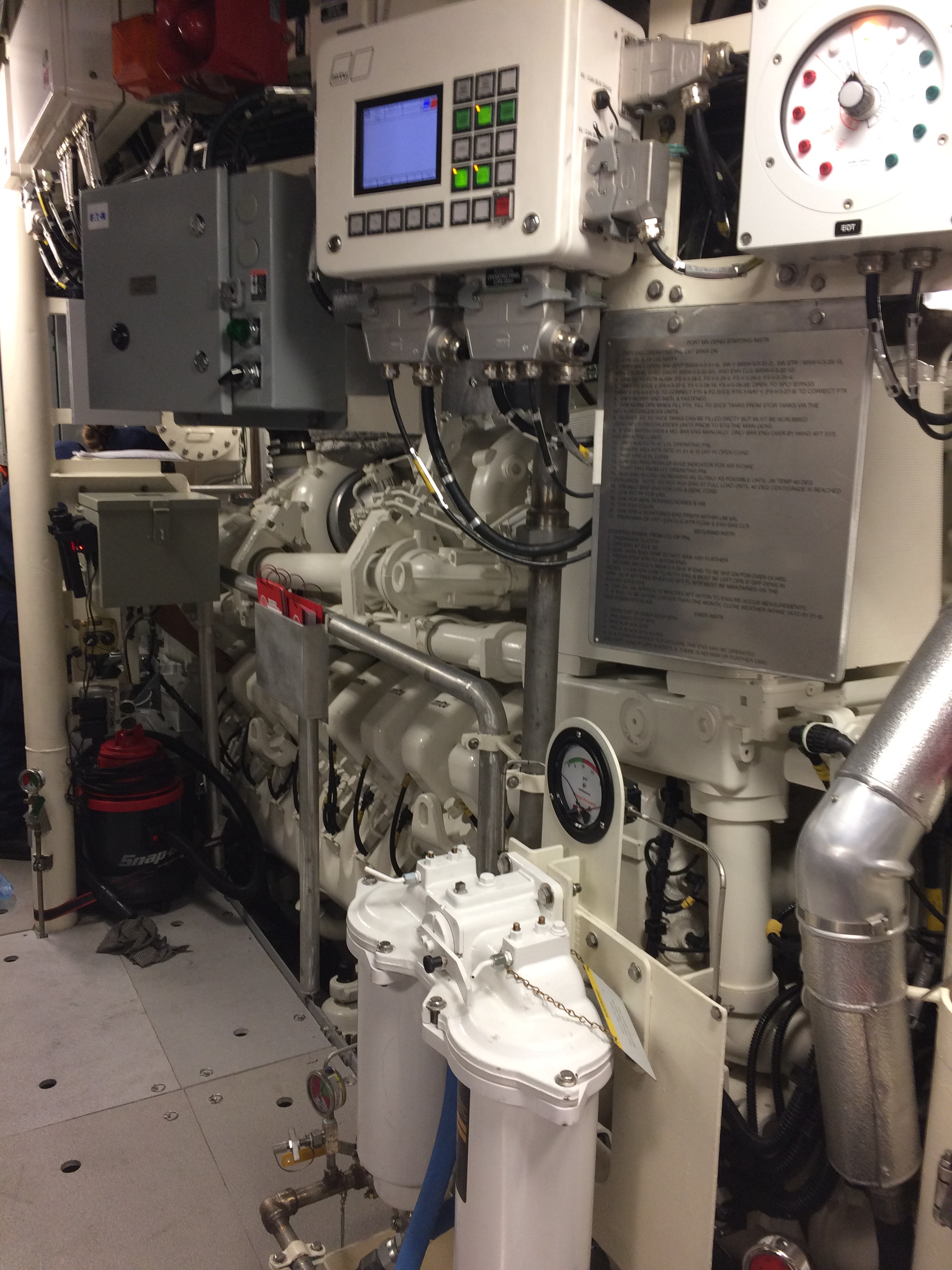
Engine Room amidships looking aft

Engineroom port side looking aft.

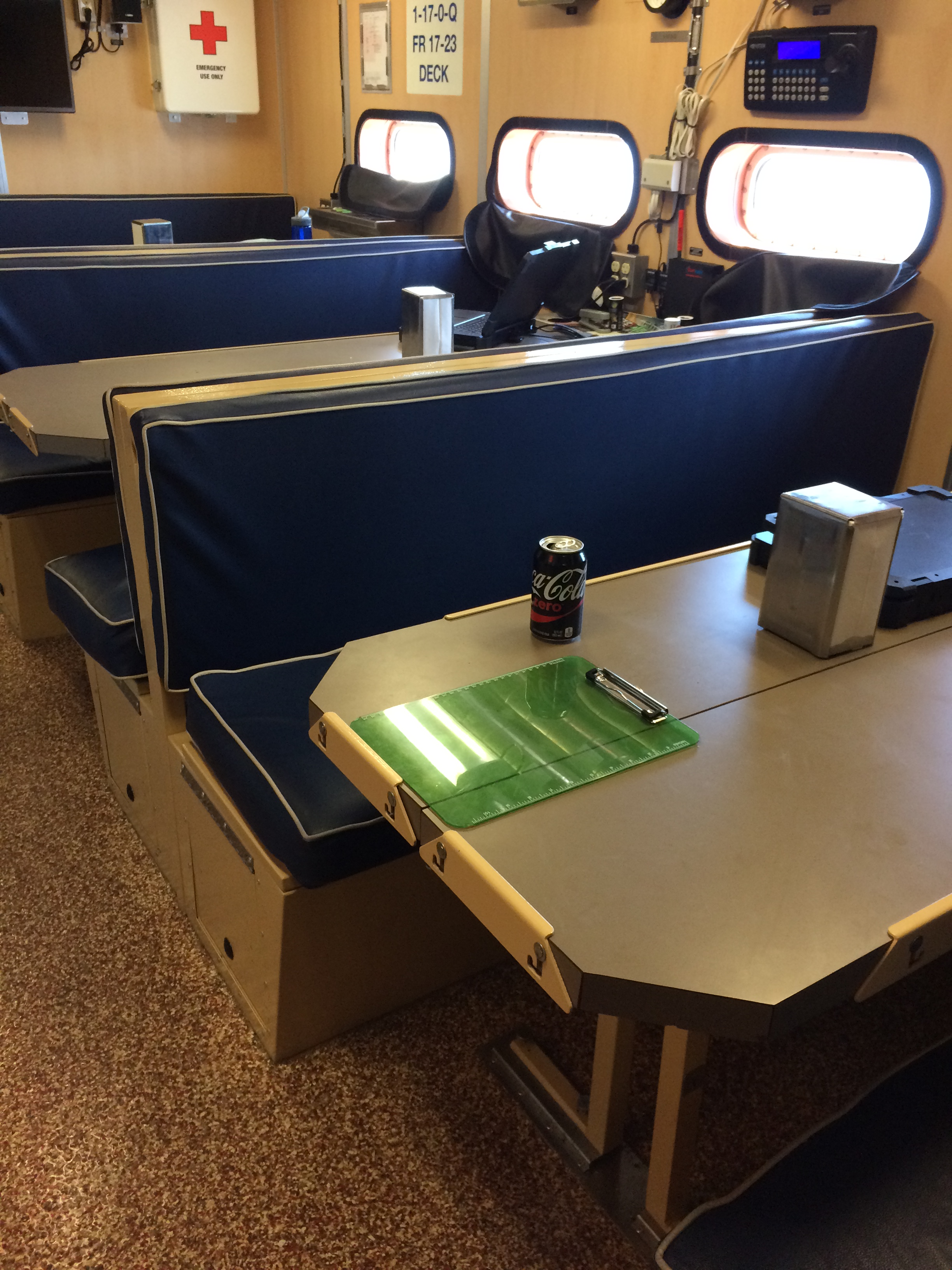
Mess deck

The mess deck (above) is on the main deck and benefitted from natural light. The panels they use to cover the ports are apparently leatherette mounted using velcro. The crew probably thinks of these a way to cut annoying glare, but I see it as a much improved way to darken ship, compared with the way it was done on 378s and 210s. 
I was told the anchor and ground tackle is an improvement over that used on the earlier cutters. It was beautifully chromed.

Weapons Testing: During my visit the gunners mate told me that Bailey Barco had been used as a test platform for a stabilized .50 caliber mount. A number of Navy and Marine in addition to Coast Guard Personnel observed test firing. Apparently it got a bit crowded. I did not confirm this while there, but I suspect this was a stabilized gun platform rather than a remotely controlled weapon. I did an earlier post on one of these. Good to see the Coast Guard doing some weapons testing. If we have to use weapons in a US port we really need a high degree of precision.

Stress Monitoring: The Captain pointed out a device that he said monitored hull stress and that it automatically submitted a report monthly. It is permanently installed. Made me wonder if perhaps some day this might be used real-time as a decision aid in determining how hard the ship can be pushed.

JANUS, the Standard Underwater Language

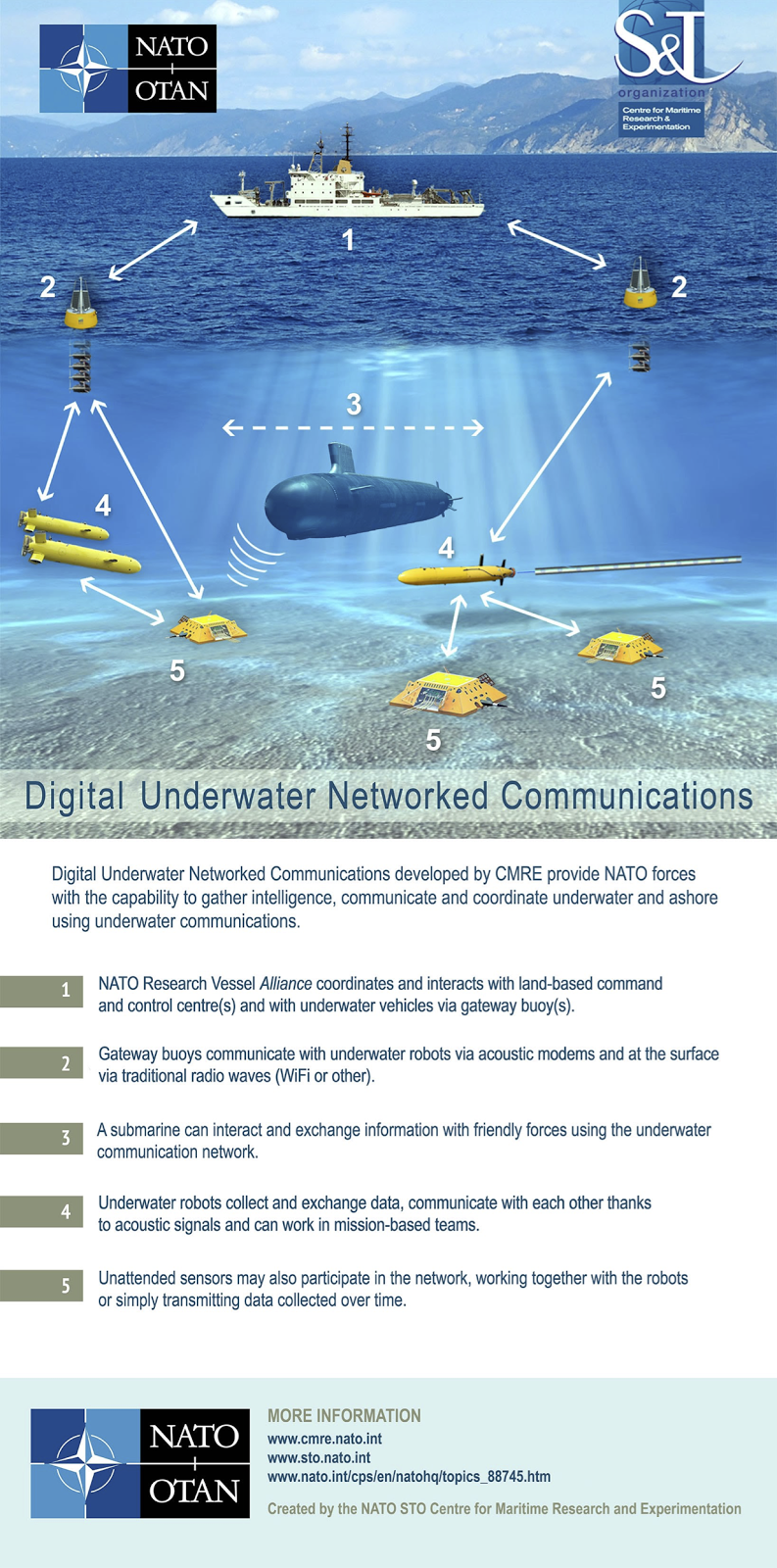
NATO has announced,

The NATO Science and Technology Organization’s Centre for Maritime Research and Experimentation has developed a standard for underwater acoustic communications called JANUS, which is recognised as a NATO standard by all NATO Allies since 24 March 2017. This marks the first time that a digital underwater communication protocol has been acknowledged at international level and opens the way to develop many exciting underwater communication applications.

I think this might become important to us. It is not just a military system.

Thanks to EagleSpeak for bringing this to my attention. 

China’s Undeclared Foreign Policy at the Poles–Lowy Institute

An interesting post on China’s actions and intentions, particularly with regard to Antarctica, from the Lowy Institute, an Australian international policy think tank.

The Chinese government currently spends more than any other Antarctic state on new infrastructure such as bases, planes, and icebreakers. China has doubled its number of bases in Antarctica and now has four research stations, two field camps, and three air fields there, and it is getting ready to build a fifth base in the Ross Sea region, not far from the USA’s McMurdo Station. China has the second largest number of citizens visiting and working in Antarctica. Chinese polar scientists have made significant geographical discoveries and named hundreds of geographical sites. The Chinese Antarctic science programme has fully self-sufficient air, land, and sea capabilities in Antarctica. It has two ice-strengthened vessels operating in Antarctic waters, with a further vessel under construction. China’s icebreaker has circumnavigated the continent twice, mapping uncharted Antarctic waters.

WHEC Disposals

The Morgenthau has just been transferred to Vietnam’s Coast Guard.

This leaves us four remaining 378 foot WHECs. According to a MARAD report, “Office of Ship Disposal Programs Annual Report for FY2016” dated December 2016, page 43, Annex J, USCGC Sherman (WHEC-720) will be decommissioned in FY2018, Midgett (WHEC-726) in FY2019, Mellon (WHEC-717) in FY2020.

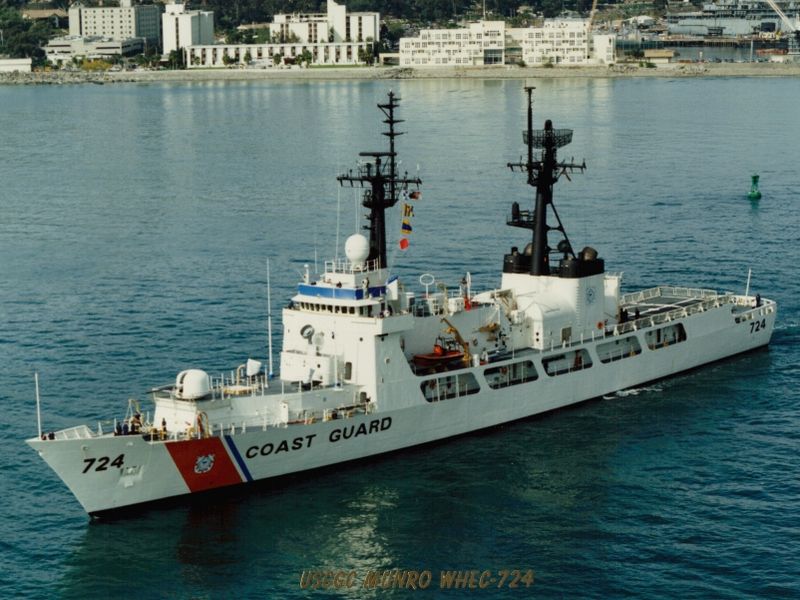
Decommissioning for USCGC Douglas Munro (WHEC-724) (note the full name–the Coast Guard has two USCGC Munros now, both in the Pacific, hope there is no confusion) was listed as, to be determined (TBD). FY2021 seems likely, but they may be holding off until they get an Offshore Patrol Cutter to take her place in Kodiak.

Thanks to Edrick Masangkay for bringing this to my attention.

“Breaking Ice: The Next Icebreaker Will Be a Navy-Coast Guard Partnership”–Office of Naval Research

US Coast Guard photo by PO Patrick Kelley

The Office of Naval Research’s online magazine, “Future Force,” has some insights into how they are approaching the task of helping to design the Coast Guard’s new heavy icebreakers.

It also seems to indicate the Navy is increasingly thinking about operating surface ships in the Polar regions and that they are realizing, its very hard.

They are looking at the capabilities of non-ice-strengthened ships in polar regions and at the effects of ice loading. Considering we have been sending National Security Cutters into the Arctic their findings should also be of some interest to us.

U.S. Coast Guard Admiral Admits to Not “Aggressively Enforcing” Firefighting Rules–gCaptain

A report from gCaptain.

Marine inspection has never been my area, but this does not sound good.

“A top U.S. Coast Guard official admitted at a recent congressional oversight hearing that the U.S. Coast Guard “has not been aggressively enforcing the compliance” of vessel response plans filed under federal Salvage and Marine Firefighting (SMFF) regulations. The rules, derived from the Oil Pollution Act of 1990, are meant to prevent a worst-case discharge resulting from fire or explosion aboard a vessel.”