Attack on Saudi Frigate was by “Drone Boat”


DefenseNews reports that the 30 January attack on the Saudi frigate, previously reported as a suicide attack, was actually done using unmanned, remote-controlled boat filled with explosives.

The story makes it sound like this is hard to do, but in fact it has become very simple just as has the use of hobby drones.

“Donegin is concerned “first that it is in the hands of someone like the Houthis. That’s not an easy thing to develop. There have been many terrorist groups that have tried to develop that, it’s not something that was just invented by the Houthis. There’s clearly support there coming from others, so that’s problematic.”

What does it require? I presume this boat had no real autonomy, that it was simply radio controlled (RC). Presumably it was supported and controlled by the boat from which the Houthi rebels filmed the attack.


Steering a collision course may be difficult from a half mile to a mile away, but it can be simplified by mounting a camera on the RC boat and broadcasting the picture back to the controlling boat. Then all you need to do is keep the target in your camera’s field of view and close the range to zero.

Theoretically it is relatively easy to disrupt the radio control and television links, but unless you anticipate the need it won’t happen.

We know these remote control boats are not easy to stop because the “swarming boat,” remote control targets we use take an awful lot of punishment and can seem impossible to stop.


If you are a terrorist, you can also make the boats very hard to sink by putting the explosives and critical components low in the boat and covering them with a steel plate. Laid near horizontal the steel plate would deflect small arms and resist fragment. Follow that up with liberal use of expanding foam filler to maintain flotation.

Unfortunately, it is just not that hard.


Blacks in the Revenue Cutter Service, Unrecognized

Bill Wells put this on his Facebook page. I am reproducing it here with his permission. 

Coast Guard Black History Gap:

The Revenue Cutter Ingham built by Colonel John Patterson at St. Mary’s, Georgia in 1831 was schooner rigged about 36 feet in length, 12-foot beam, and 5 feet 6 inches in depth and was of about 19 tons burthen. She was small and purposely so for her cruising grounds of the South Georgia waters from the South end of Cumberland Island to South end of Jekyll Island.

He first commander was the Inspector of the Revenue John Nicholson. His crew was one man at 30 dollars per month and two other men at 20 dollars. One of these men was a slave named Thomas Paine, the “property of the Collector of Customs Archibald Clark, also of St. Mary’s. Following Nicholson, a succession of commissioned USRCS officers were in command of the cutter including 1st Lt. Levy C. Harby, USRCS, one of the first Jews to serve in the USRCS.

Thomas Paine served as a seaman aboard and a constant factor. His knowledge of the cruising grounds was noted by the USRCS officers as was his skill in handling the vessel and other related jobs. Paine became the quintessential public servant and remained with the cutter until sold in the late 1840s. Unlike other cutters where there was a separation between officers and crew, this cutter’s size and accommodations only allowed close berthing. It was the first true racially integrated cutter.

Although a slave, like so many others of the period, Paine created for himself a position in the U. S. Revenue Cutter Service that endured. The fact that he was paid a salary showed the respect and trust held in him.

Bill added the following in a comment:

Nothing is presently known about his life other than his service aboard a cutter.

Maybe someone will pick up the mantel and find him.

There are also six revenue cutter seaman buried on the north end of Kiawah Island (South Carolina–Chuck) and three more on the south that the Coast Guard has ignored. The Coast Guard doesn’t bring them home.

Changes Ahead, Acquisition, Organization? and Again, Where is the Damn Unfunded Priority List?

Two new posts regarding the Coast Guard’s future, both from Defense News.

The first, “Commentary: US Coast Guard deserves military level funding,” by Representative Duncan D. Hunter (R-CA) is a plea for better funding of the Coast Guard. Its significance is less what it says, than who is saying it.

The second, “US Coast Guard urged to step up requirements,” by Christopher P. Cavas, quotes Representative Hunter and his chief of staff, Joe Kasper. It primarily encourages the Coast Guard to provide a comprehensive unfunded priority list, primarily with regard to icebreakers, Unmanned Air Systems, and, some what obliquely, the inland tender fleet, but it goes further, indicating Hunter will attempt to have the Coast Guard moved into the DOD and have our larger cutters better armed.

So who is Representative Hunter?  He is the son of long serving representative Duncan L. Hunter. He serves on the Armed Services, Education and the Workforce and Transportation and Infrastructure committees, and most importantly for us, he chairs the Transportation Subcommittee on Coast Guard and Maritime Transportation. He is a Marine Reserve Major. The day after the September 11 attacks, Hunter quit his job and joined the Corps. He served two tours in Iraq as an artillary officer and was recalled to duty for a tour in Afghanistan.

Perhaps significantly he and Rep. Chris Collins (R-NY) were the first members of Congress to endorse Trump.

I first became aware of him watching the video you can see here, “Coast Guard and Maritime Transportation Subcommittee Hearing on Coast Guard Arctic Implementation Capabilities 7/12/16.” I should have been paying more attention earlier when I included another video of a subcommittee hearing here, “Subcommittee on Coast Guard and Maritime Transportation: Examining Cutter, Aircraft, and Communications Needs.”

If you look, particularly at the first video from 2016, you will see his frustration with the Coast Guard leadership. This call for an “expansive” unfunded priority list seems to be an effort to teach the Coast Guard leadership how to “play the game.”

“We’re trying to instill some courage in the Coast Guard,” he added. “They’re taking on a bigger role, doing more things. We’re talking about the Arctic, about inland waterways. Until you ask for it, it is going to be increasingly difficult for us on the Hill to sound the need. There is no confusion around the Navy’s fleet size, there’s good awareness on where the Navy needs to be. The Navy knows how to play this game, to advocate for its needs.  Until you start getting out in front and making the case for where you need to be and not worrying about the effect on your budget, you’re never going to get what you need.”

I have expressed my own inability to understand why the Coast Guard will not provide an unfunded priorities list even when it is requested by Congress. Here in 2013, and again in 2014.

Hopefully we will see one this year.

Thanks to Luke for bringing these to my attention.


USCG Cooperative Research & Development Agreement w/British Diesel Outboard Developer, Cox Powertrain

cox-powertrain

MarineLink reports,

“The US Coast Guard has entered into a Cooperative Research and Development Agreement (CRADA) with British diesel engine innovator, Cox Powertrain. The CRADA will evaluate and test the advantages, disadvantages, required technology enhancements, performance, costs and other issues associated with diesel outboard engine technology.
 –
“There a been a big swell of interest in diesel outboards since NATO introduced its single fuel policy, with the military and naval forces of member countries keen to phase out petrol-fuelled outboards in favour of cleaner diesel alternatives.”
 –
Obvious advantages if we do not need to deal with two different fuels, in addition to the additional range advantage. Reading the rest of the post, sounds like this is close to realization.

USCG in Packistani Naval Exercise?

USS Hurricane (PC-3)

USS Hurricane (PC-3)

Interesting note from the German Navy Blog, “Marine Forum”

“10 February, PAKISTAN, Opening ceremony in Karachi for Pakistan-hosted multinational naval exercise „Aman 2017“ … until 14 Feb, three phases in and off Karachi: in-port, at-sea maritime, anti-terror (special forces/naval infantry) … participants from 37 countries, 9 of which with naval units … 24th Chinese task group (destroyer „Harbin“, frigate „Handan“, replenishment ship „Dongpinghu“), Russian Northern Fleet task group (destroyer „Severomorsk“, tanker „Dubna“, salvage tug „Altay“), USA with patrol boat „Typhoon“, AKE „Amelia Earhart“ plus two USCG vessels (emphasis applied–Chuck) … frigate „Arunta“ (Australia), frigate „Sultan Iskandar Muda“ (Indonesia), OPV „Samudra“ (Sri Lanka), frigate „Gelibolu“ (Turkey), destroyer „Daring“ (UK) … and, of course, hosting Pakistan Navy”

I can only think that since the Navy PC “Typhoon” is there, the two USCG vessels might be 110s out of Bahrain. Kind of surprising we have not seen any press releases on this.

110 foot WPB USCGC Jefferson Island

110 foot WPB USCGC Jefferson Island

Worried about the Size of the U.S. Navy? Rearm the Coast Guard–The National Interest

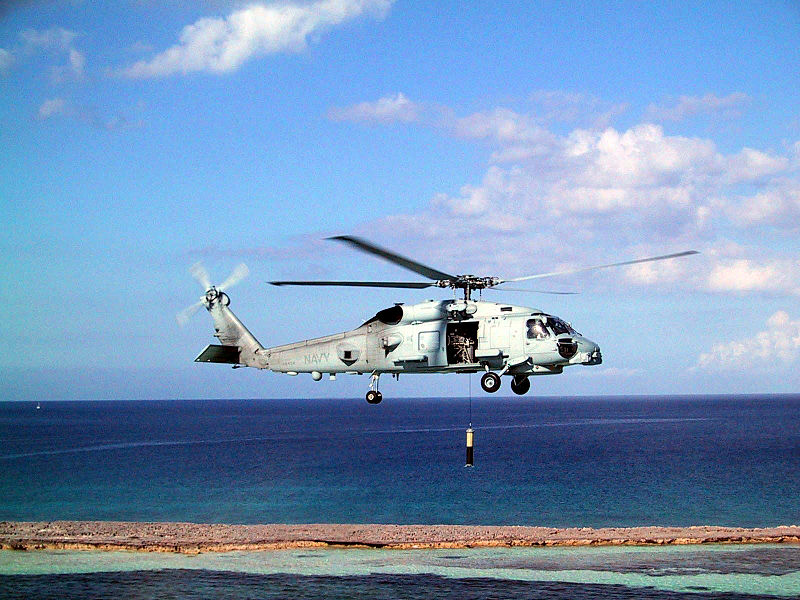
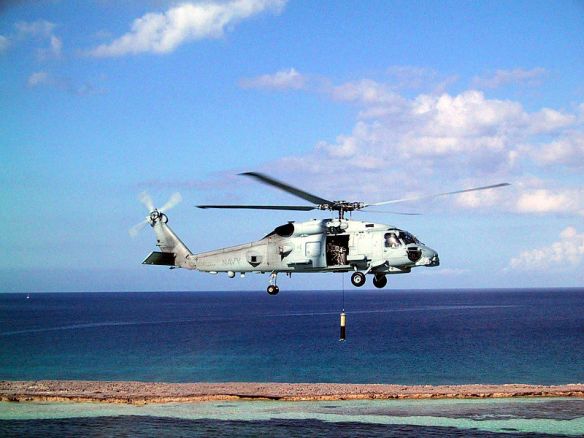
Navy photo. MH-60R “Knighthawk” helicopters conducts an airborne low frequency sonar (ALFS) operation during testing and evaluation

Navy photo. MH-60R “Knighthawk” helicopters conducts an airborne low frequency sonar (ALFS) operation during testing and evaluation

The National Interest has a post subtitled, “A new challenge for Trump: redefine the U.S. Coast Guard’s defense roles” you might find interesting.

The author, a Coast Guard Officer and Cutterman, wants to see our larger cutters better armed. He recommends specifically, provision for support of the Navy’s MH-60R

“The U.S. Coast Guard should explore adding the ability to embark, operate with, maintain and rearm these aircraft from both the National Security Cutter and Offshore Patrol Cutter. Only complete solutions that see cutters equipped with ordnance handling facilities, surge berthing for a full-maintenance detachment and sensor integration through data links should be considered.”

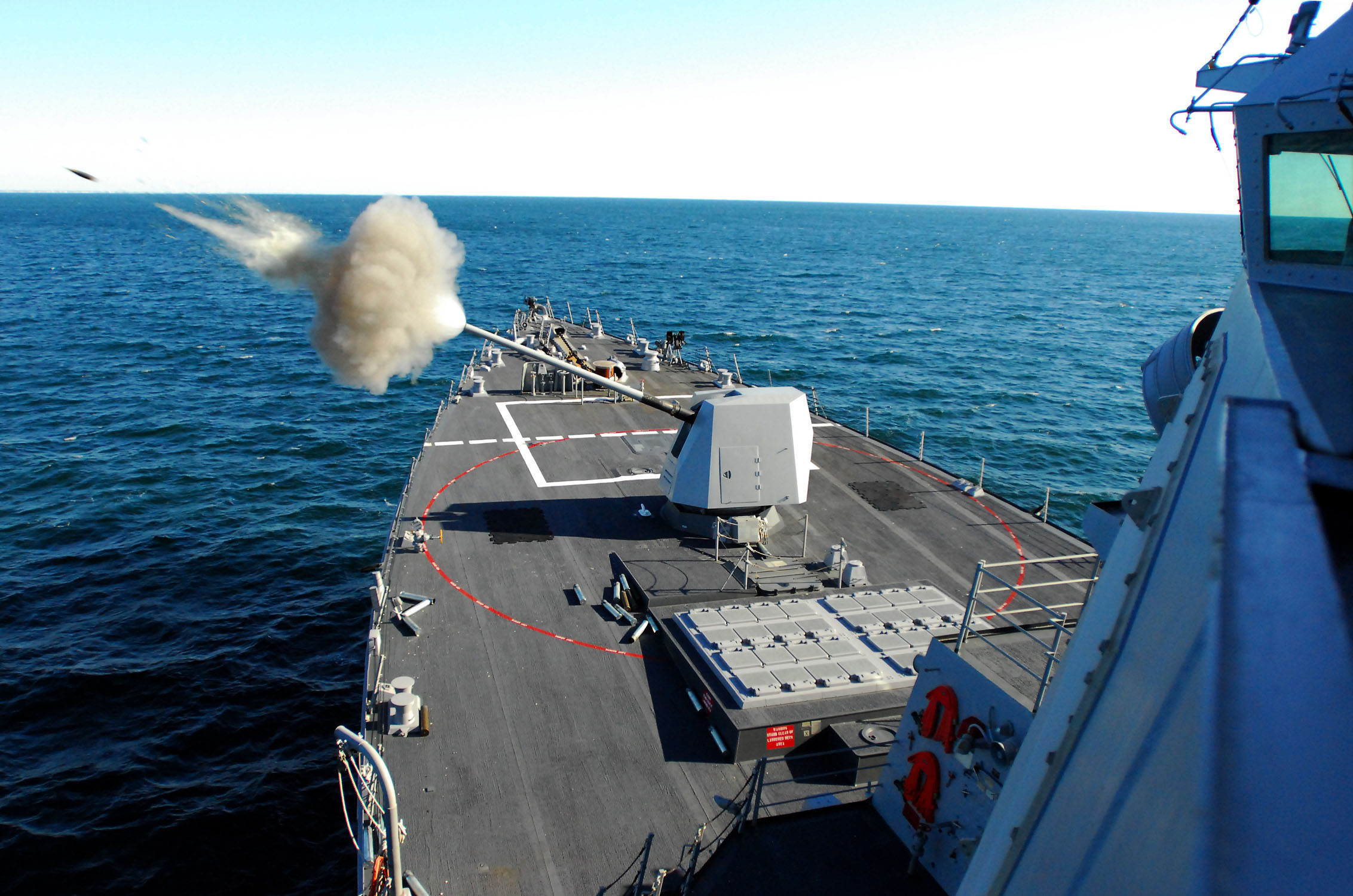
and the 5″ Mk45 for the National Security Cutter.

“The addition of a true major caliber-deck gun offers immediate utility, but the system’s real potential will be unlocked if efforts to develop hypervelocity projectiles bear fruit. If so, the National Security Cutter would emerge as a true utility warship capable of providing fires to forces ashore at substantial range and meaningfully contributing to air defense.”
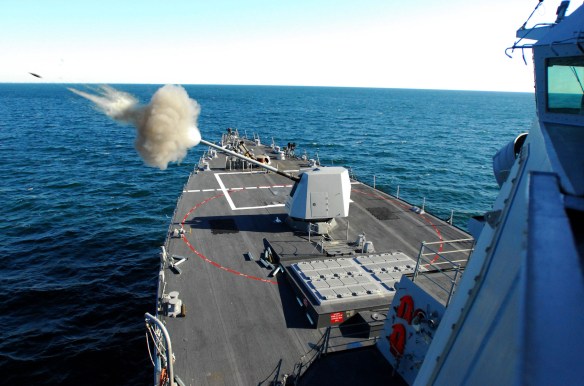
070111-N-4515N-509 Atlantic Ocean (Jan. 9 2007) - Guided missile destroyer USS Forest Sherman (DDG 98) test fires its five-inch gun on the bow of the ship during training. The Sherman is currently conducting training exercises in the Atlantic Ocean. U.S. Navy photo by Mass Communication Specialist Seaman Apprentice Joshua Adam Nuzzo (RELEASED)

Atlantic Ocean (Jan. 9 2007) – USS Forest Sherman (DDG 98) test fires its five-inch Mk 45 mod4 gun during training.U.S. Navy photo 070111-N-4515N-509 by Mass Communication Specialist Seaman Apprentice Joshua Adam Nuzzo

He does, however, see the services culture as an impediment.

“The lesson of the twenty-five years following the Hamilton experience is that a challenge to maintaining the U.S. Coast Guard’s warfighting capability lies in managing the service’s perception of its character…

He also notes that previous concepts of the Coast Guards wartime environment may be unrealistic.

“Attempts to define the U.S. Coast Guard’s defense roles following the Cold War have been challenging. Published in 1998, Coast Guard 2020 proclaimed that the “Coast Guard will be prepared to operate in low-threat conflict environments, and to provide specialized functions at all levels of operation.” The notions of low-threat operations and service-unique specialization are obstacles to interoperability. While U.S. Coast Guard buoy tenders and icebreakers absolutely provide specialized capability, the major cutter fleet’s warfighting role was never—nor should it have ever been—unique to the U.S. Coast Guard. Rather, the major cutter fleet provided an active augmentation force trained and equipped to provide service in any theater of war. This should be the target for the fleet’s future employment as the community of nations returns to its more normal mode of great power competition. As for the limitation of a low-threat environment, U.S. Coast Guard cutters have deployed recently to Southeast Asia, the Black Sea, the Arctic and the Arabian Gulf. Saber rattling among great powers and the HSV-2Swift incident demand that we ask: which of these locations will qualify as a low-threat environment on the first day of a global or major regional war?

Generally I agree with the thrust,

“The immediate challenges are acquiring and integrating combat systems and training crews in their employment. These are not trivial tasks and will necessarily consume time and resources. Better to act with dark clouds forming on the horizon, however, than in the midst of the storm.”

It is a two page post. The first page is mostly history lesson on the Coast Guard’s participation in past conflicts, but if he gives the impression the Coast Guard was historically ready for these roles on day 1, that would be a mistake. The Coast Guard entered WWII terribly unprepared. The cutters had no sonar or radar and no depth charge racks. There is nothing new about our current lack of readiness for war, it is not the exception, it is the norm.

Trouble is, we tend to have a binary approach. Either we are at peace and could care less about war-time roles, or we are all in after an attack. We need a more measured approach that responds to changing circumstance.

We really need to do better at preparing for a transition from peace to war. 

I don’t necessarily think removing the ASW systems from the 378s following the collapse of the Soviet threat was a mistake. It was a rational response to rapidly changing circumstance. Since then, we have had a quarter century without a substantial ASW threat, and the 378s are now on their way out. We probably should have removed the CIWS too, unfortunately it did mean we lost all the Coast Guard’s accumulated expertise in ASW. Hopefully we can rebuild it with the Navy’s help if needed.

But circumstances have changed again.

To me, a major conflict now appears more likely in the next ten to twenty years than at any time since I entered the Academy in 1965. We have a true peer challenger, with a chip on its shoulder and a belief in its inherent right to rule, in China. If that was not enough, Russia is rearming and acting increasingly obnoxious. Iran and North Korea may be annoying, but they are really not in the same league, at least in terms of a naval threat. Dealing with them would not stress our Navy, so would not really require Coast Guard assistance. China is the real threat, and if Russia sides with them, things could get dicey. Even without the Russians, the Chinese are building credible surface combattants at least as fast as the US. They already have a local superiority in the Western Pacific. We have to spread our fleet out, while they can concentrate their forces. To concentrate our forces in the Western Pacific, the US will be fighting at arm’s length with long vulnerable supply lines.

I don’t necessarily think war with China inevitable, but we need to recognize the possibility and plan for it.

Theoretically the process should start with an agreement between the Navy and the Coast Guard about what the Coast Guard, particularly its vessels and aircraft, will do in a general war. I see few indications that is happening. Certainly the OPC Concept of Operations did not include anything beyond a simple contingency operation.

I may be wrong about this, since I am way out of the loop, but if the service had an established general war mission focus to prepare for, it should be generally known. It should be reflected in our procurements. Perhaps the Navy thinks it would be presumptuous of them to assign the Coast Guard missions, and the Coast Guard does not want to push itself into Navy planning, but this is too important for delicate feelings to get in the way. Right now the Coast Guard is probably proportionately larger compared to the Navy than at any time in the last 100 years. When I entered the service, the Navy was 22 times larger than the Coast Guard in terms of personnel. Now it is only eight times larger. A combat ready Coast Guard may be the difference between victory and defeat.

Plans:

The Coast Guard has potentially important roles to fill in any general conflict. If the Navy cannot envision these roles, perhaps the Coast Guard should think for itself. Plans should include our aircraft as well as our vessels, but I will stick to the vessels for now.

What we need is not an overall strategy to defeat China, but a well developed range of options for employment and a good idea of what upgrades would be required.

In a major war, I see a major shortfall in open ocean escorts. Thirty years ago, when the threat was the Soviet Navy and the problem was projecting American power across the shorter distances of the Atlantic, the US had 36 cruisers, 69 destroyers, and 115 frigates (plus 12 WHEC 378s). Now they have 22 cruisers, 63 destroyers, and 8 LCS.

Then we had the advantage, that the Soviet Fleet was split into four parts and their egress to our supply lines was limited by the presence of powerful European Allied navies that restricted their access to our supply lines.

In a Pacific War with China, the distances are much greater, our allies fewer, and, with the exception of Japan and S. Korea, much weaker. Our Navy’s fleet, currently 274 ships, with ambitions of 355, is scattered across three oceans while China’s fleet, likely soon to be 500 ships, is geographically concentrated.

If we needed over a hundred frigates to cross the Atlantic, we probably need at least that many to push across the Pacific. As it is, the Navy cannot meet their current peacetime commitments, and replenishment ships cross the oceans unescorted and unarmed.

The Navy seems to have belatedly recognized this with moves toward a new frigate to be based on one of the LCS designs, but even if they complete all 52 small surface combattants currently planned, less than half will be completed as frigates, and if based on the LCS designs, they will have limited range, survivability, and crew size. The Independence class LCS will likely be permanently employed as mine countermeasures (MCM) vessels (There were 22 of those in 1987). The Freedom class will likely be employed in enforcing a blockade (perhaps with help from Webber class WPCs). Even with some backfitting of LCS  25-32, that leaves at most 28 frigates in the current plan. 35 ASW equipped cutters could make a huge difference.

The Cutters:

Cutters should be designed with wartime roles in mind, even if they will not be initially fully equipped with combat systems.

In the Bertholf class and Offshore Patrol Cutters, we will have most of the elements of modern warships. To not be prepared to add the few systems necessary to make them effective warships, if the nation were engaged in combat, would be criminal. If we do not already have plans to upgrade the Bertholf class National Security Cutters and the Offshore Patrol Cutters to give them significantly improved ASW, AAW, and ASuW capability we should start those plans.

At some point perhaps we should prototype an installation of these capabilities on at least one NSC and one OPC. Then we need to wring them out by deploying with the Navy and getting feedback on their performance, and periodically update plans for mobilizing their war-time potential.

The People: 

Just as we have marine inspection, fisheries, and drug enforcement specialist, the Coast Guard needs a cadre of officers in the Office of Counter Terrorism and Defense Operations Policy (CG-ODO) who have a deep understanding of the needs of modern naval warfare, who will advocate for naval capabilities consistent with both wartime missions and the Ports, Waterways, and Coastal Security (PWCS) mission. Likely this means revival or strengthening of officer exchange programs, Tactical Action Officer training, and War College education.

Perhaps the longest lead time item in mobilizing the Coast Guard for war would be the senior enlisted we would need for rating not currently found in the peacetime Coast Guard. It might be possible for the Navy to identify some reservist to augment the crews of Coast Guard cutters upon mobilization, but even a small cadre within the Coast Guard, founded on prototyping systems on at least a couple of cutters would provide valuable continuity and advice in defining required capabilities.

Bottom Line–When we get in trouble, we cannot make it up as we go along. Sweat now, saves blood later.

Thanks to Lyle for bringing this to my attention.

Sinking of SS Marine Electric – 12 February 1983

An interesting note from Bryant’s Maritime Consulting,

clip_image020“The SS Marine Electric sank during a storm in the North Atlantic on 12 February 1983. Of the 34 crew members on board, three survived, but only after enduring 90 minutes in extremely cold water. The ship had passed all required inspections and surveys, but the subsequent USCG Marine Casualty Report revealed the inspections and surveys to have been perfunctory. As a result, inspection standards were drastically improved. In addition, carriage of survival suits became mandatory for ships on winter routes and the Coast Guard rescue swimmer program was initiated. The circumstances are detailed in Robert Frump’s book “Until the Sea Shall Free Them”.”

USCG in February USNI Proceedings

united_states_naval_institute

The February issue of the US Naval Institute Proceedings has three articles of particular interest to the Coast Guard. Two are available to non-members

The third is behind the membership firewall.

“The Coast Guard Needs More Than Another Icebreaker,” by LCdr. Shawn Lansing, USCG

Recently Proceedings has added a new feature, “World’s Coast Guard” again by Jim Dolbow. The February issue looks at the revival of the Trinidad and Tobago Coast Guard. This is also behind the membership firewall.

(Jim Dolbow is a Coast Guard reservist and was editor of the Coast Guardsman’s Manual, 10th edition, published by the Naval Institute Press. On a personal note, he also encouraged me to get into blogging.)

Drone Launch and Recovery System in 20 foot Container

NavyRecognition reports DARPA is working on a system that will launch and recover drones of up to 900 pounds that will fit inside a standard 20 foot container.

These could easily handle the Scan Eagle, which is only about 50 pounds currently planned fo the National Security Cutters. Significantly it could handle even more capable UAVs. The UAV in the video weighs 400 pounds.

This is a part of DARPA’s TERN program we discussed earlier.

Convoy SG-19 and the Sinking of USAT Dorchester–When Things Went Terribly Wrong

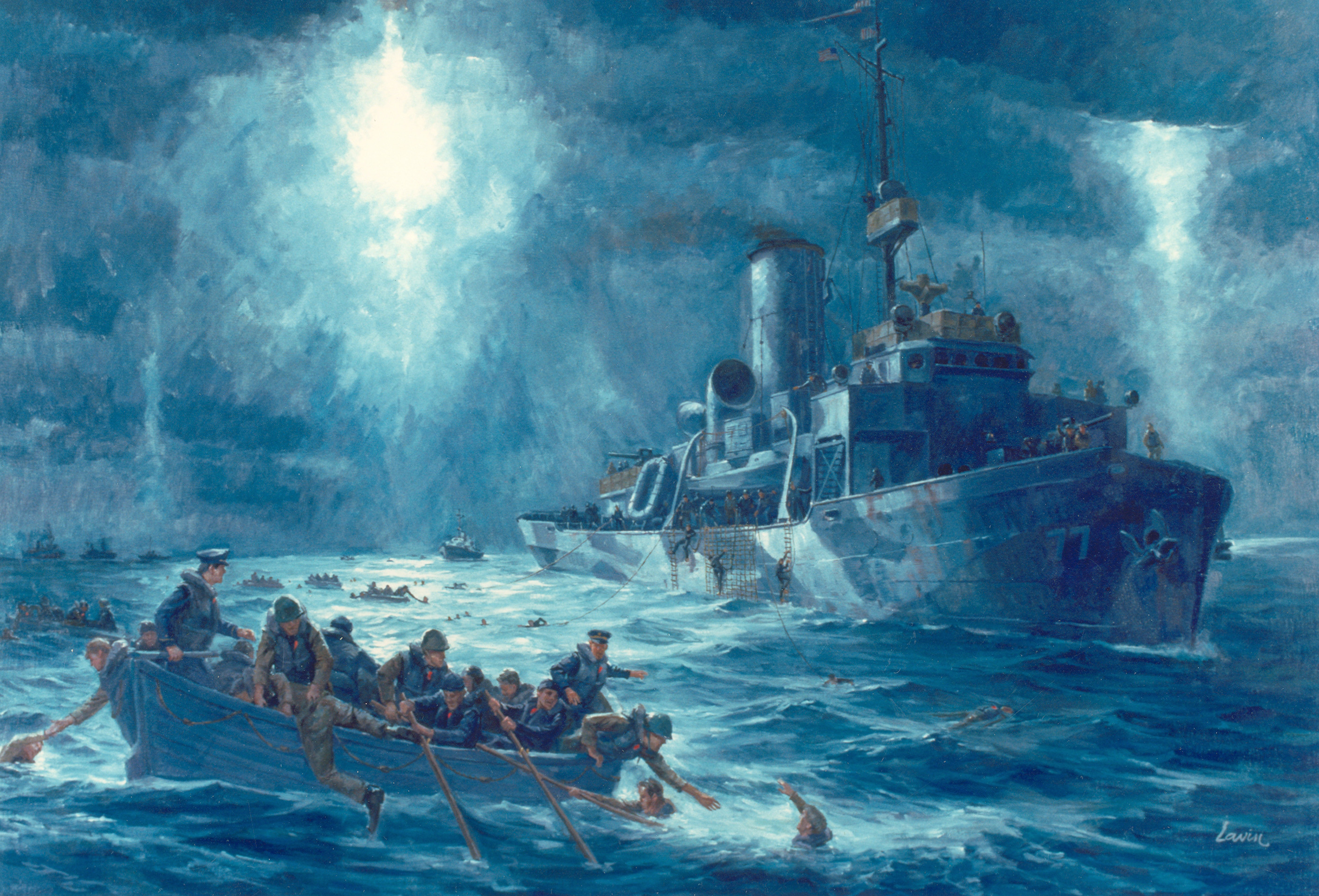
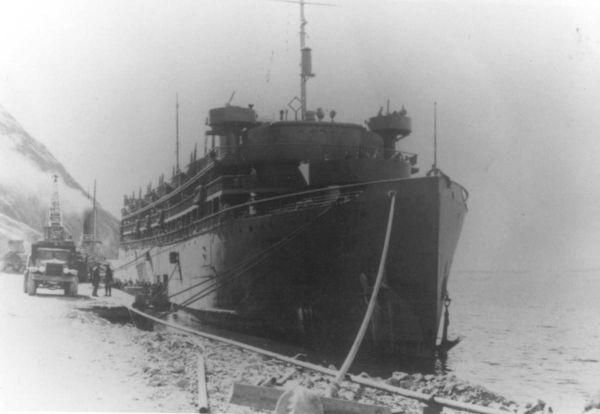
Escanaba rescuing survivors from USAT Dorchester. USCG Image.

Escanaba rescuing survivors from USAT Dorchester. USCG Image.

The following is based on Samuel Eliot Morison’s History of the United States Naval Operations in World War II, Volume I, The Battle of the Atlantic, 1939-1943, pp 330-334 and information from Uboat.net.

The current list of names selected for the Webber class WPCs includes the names of Charles Walter David Jr. and most recently Forrest O. Rednour. These two men are representative of about two dozen rescue swimmers who risk their lives to rescue survivors from the chartered US Army Transport Dorchester. torpedoed on February 3, 1943, 74 years ago.

These men did the best they could to mitigate a disaster, but it was still a disaster. This was the largest loss of personnel on a US flag merchant vessel during WWII.

SG-19 was a small convoy bound from St Johns Newfoundland to Greenland, three ships, two merchantmen and the 5,252 ton Army transport Dorchester, with about 1000 tons of cargo, a crew of 130 men, an armed guard of 23, and 751 passengers, mostly Army reinforcements, and among them some 23 Coast Guard personnel, for a total of 904, of these only 229 would survive. As might be expected, the weather was cold and nasty as they approached Greenland.

The convoy was escorted by three cutters, the 240 foot Tampa (WPG-48) and two 165 foot “A” class cutters, Escanaba (WPG-77) and Comanche (WPG-76). The convoy escort was commanded by Capt. Joseph Greenspun, USCG. Tampa, commissioned in 1921, was fairly old, her speed, officially 15.5 knots but according to Morison actually 14.5, was less than that of a surfaced U-boat (17.7), but it was similar to that of the smaller Flower Class corvettes that made up the majority of convoy escorts and she was larger and better armed than a corvette.

The two 165 foot cutters, Escanba and Comanche, were really ill-suited for the mission. They were small with a low freeboard, and while credited with a speed of 12.8 knots, according to Morison their actual speed was 11.5 knots, and this was further reduced by icing, slowing the convoy. Icing also effected the escorts’ weapons. According to Morison, “At times they had to heave-to and remove ice with live steam; guns, depth charges and mousetraps (anti-submarine rockets–Chuck) sealed tight by thick ice, and excessive water noise rendered sound gear of little value.” Unable to do more than keep up with the convoy, the two smaller cutters struggled to maintain station on the flanks of the convoy.

US Army Tansport Dorchester

US Army Tansport Dorchester

The convoy was sailing at a speed of ten knots. The three merchant ships were in line abreast with Dorchester in the center. Tampa led 3,000 yards ahead of Dorchester, and Comanche and Escanaba were 5,400 yards on the flanks, to port and starboard respectively.

On Feb. 2 the weather had moderated, but the convoy was informed that there was U-boat activity in the area.

59 degrees 22′ N, 48 degrees 42′ W, 150 miles West of Cape Farewell, Greenland, during the night, very early on 3 Feb., a torpedo struck the Dorchester on the starboard side in the machinery spaces. About 20 minutes later the Dorchester had sunk.

U-223, on her first war patrol, had approached the convoy from starboard, probably on the surface in the dark, probably having passed between Tampa and the Escanaba. Even at this late date the Escanaba still had no radar.

The U-boat had loosed five torpedoes, meaning she had fired all four of her bow tubes and turned and fired the single stern tube as well. One of the first hit the Dorchester. All the rest missed.

There was confusion on the transport. Many never heard the order to abandon ship. “Three of the 14 lifeboats had been damaged by the explosion, the crew managed only to launch two more overcrowded boats and 33 men left with rafts, but many men evidently did not realize the seriousness of the situation, stayed aboard and went down with the ship.” Most went into the water with nothing more than a lifebelt.

Initially Escanaba and Comanche attempted to find the U-boat, but Escanaba then moved in to rescue survivors while Comanche attempted to protect Escanaba. Comanche joined the rescue effort about two hours after the torpedoing.

From Uboatnet,

“Escanaba … picked up 81 survivors from the water and rafts and 51 from one lifeboat. Comanche picked up 41 survivors from another lifeboat and 56 from rafts and the water. Hundreds of floating bodies or frozen to wreckage were checked for signs of life. The survivors were landed at Narsarssuak (Greenland) later the same day. 675 lives were lost: the master, three officers, 98 crewmen, 15 armed guards and 558 troops and passengers (including 16 Coast Guardsmen). The following were saved: three officers, 25 crewmen, 44 civilian workers, three Danish citizens, twelve armed guards, seven US Coast Guard personnel and 135 US Army personnel.”

U-223 was a reasonably successful U-boat being responsible for the loss of three merchant ships, a frigate, and a destroyer. She was sunk 30 March 1944 in the Mediterranean Sea, 60 nautical miles northeast of Palermo, Sicily, in a battle with four British destroyers in which she sank one of her pursuers, HMS Laforey.

Four months after the loss of Dorchester, 13 June, 1943, at 0510 Escanaba blew up and sank within three minutes in the North Atlantic.  All but two of her crew of 103 were lost.

Would the result have been any different if the cutters had been more capable? We will never know, but it suggest that if we are ever again in a general war, prepared or not, our cutters will be pressed into service even if they are unsuitable, poorly trained, or inadequately equipped.