“Houthi Drone Boat Strikes Ship For First Time Since Red Sea Crisis Erupted” –The War Zone

The War Zone reports,

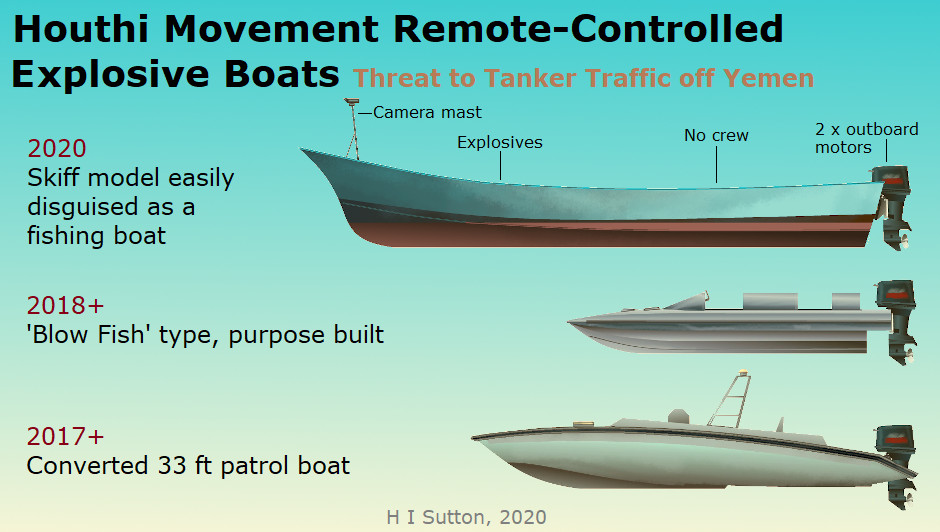
“A Liberian-flagged bulk carrier is taking on water and not under the command of its crew after being hit by a Houthi drone boat…The Liberian bulk carrier Tutor was struck by a Houthi uncrewed surface vessel (USV) while transiting the Red Sea, the first such successful strike since the Yemen-based rebel group began attacking shipping in the region…”

The Houthi ballistic missiles and Unmanned Air Systems (UAS) have gotten a lot of press, but if you really want to hurt a ship, nothing works as well as placing large amounts of explosive next to the hull at or below the waterline.

Not impossible we will see something like this used in a terrorist attack.

“Coast Guard transfers 109 migrants to Bahamas, repatriates 196 migrants to Haiti” –D7 News Release

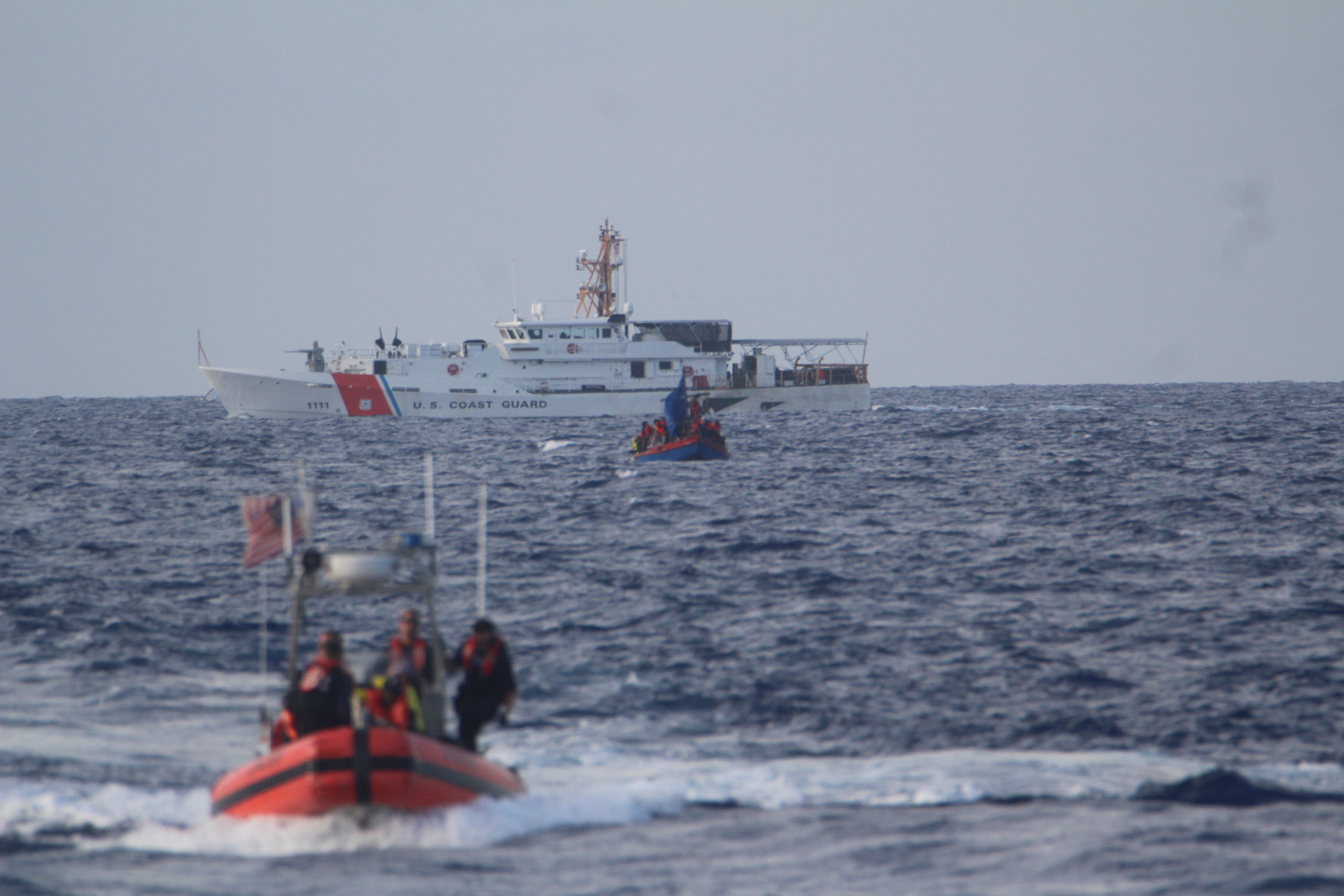
U.S. Coast Guard Cutter William Trump’s crew intercepts a migrant vessel 34 miles north of Île de la Tortue, Haiti, June 6, 2024. A U.S. Customs and Border Protection aircrew notified Coast Guard District 7 watchstanders who diverted a Coast Guard assets to interdict the migrants for repatriation at a later date. (U.S. Coast Guard photo by Petty Officer 2nd Class Eric Briganty)

Below is a District 7 news release. This follows a couple of reports that WMECs that had patrolled the area for almost two months each without picking up any migrants, here and here. The post includes link to documentation of steps being taken to discourage immigrant smuggling.

In the three interdictions, it appears, they were stopped close to their point of origin. I would really like to see some measures of effectiveness for this program, but it seems we are being very successful in detecting and interdicting these dangerous attempts.


June 10, 2024

Coast Guard transfers 109 migrants to Bahamas, repatriates 196 migrants to Haiti

MIAMI – U.S. Coast Guard crews returned a combined 305 migrants to the Bahamas and Haiti, Sunday and Monday, following multiple interdictions of unlawful maritime migration attempts over the last week in support of Operation Vigilant Sentry.  

The Coast Guard and its Homeland Security Task Force – Southeast federal, state, local, and international partners will continue to patrol by land, air and sea to rescue and repatriate anyone attempting to enter the U.S. unlawfully by sea.

The crews of Coast Guard Cutter Raymond Evans and Cutter Richard Etheridge transferred 109 people to the Royal Bahamas Defence Force, Sunday, following an interdiction near Anguilla Cay, Bahamas. U.S. Customs and Border Protection Air and Marine Operations (CBP-AMO) aircrews notified Coast Guard Sector Key West watchstanders of a migrant venture near Anguilla Cay and crews diverted to interdict them.

The crew of Coast Guard Cutter Thetis repatriated 196 people to Haiti, Monday, following two migrant voyage interdictions on June 5 and June 6. A CBP-AMO aircrew notified Coast Guard District Seven watchstanders, Wednesday, of a migrant venture north of Cap-Haitien, Haiti. Another CBP-AMO aircrew notified Coast Guard District Seven watchstanders, Thursday, of a migrant venture north of Île de la Tortue, Haiti. Crews diverted to interdict both vessels.

“Irregular maritime migration is unlawful and extremely dangerous. The OVS maritime border security mission is often equal parts law enforcement and humanitarian response, especially as we enter hurricane season and marine weather becomes more severe and unpredictable,” said Lt. Nick Fujimoto, Coast Guard District Seven enforcement officer. “The Coast Guard urges any potential migrants considering the journey: don’t take to the sea and risk your life just to be sent back. Use the safe, orderly and lawful pathways available like the CHNV process.”

Once aboard a Coast Guard cutter, migrants are processed to determine their identity and are provided food, water, shelter, and basic medical attention before repatriation to their country of origin or return to the country from which they departed.

For more information about Operation Vigilant Sentry including imagery, visit these links:

On June 5, the Department of Homeland Security announced that U.S. immigration enforcement and asylum procedures across the southern border are more strict. Last Tuesday, the Secretary of Homeland Security and the Attorney General jointly issued an interim final rule that generally restricts asylum eligibility for those who irregularly enter across the southern border – including the southwest land border and the southern coastal borders. These new measures are designed to increase the processing and consequences for those who cross our borders irregularly or who attempt to present themselves at Ports of Entry without authorization, allowing DHS to more quickly remove individuals who do not establish a legal basis to remain in the United States.

For more information, follow these links to Department of Homeland Security fact sheets:

For breaking news, follow us on X (formerly Twitter). For Task Force updates, follow @HSTF_Southeast on X. For additional information, find us on Facebook and Instagram.

“U.S. Coast Guard Cutters return home after successful Central American deployment” –D11 News Release

USCGC Forrest Rednour (WPC 1129) and Blackfin (WPB 87317) in Costa Rica

Below is a District 11 news release. Did an earlier post on this unusual deployment.

The 800 operational hours claimed for each vessel works out to 33.3 operational days out of 49 deployed, so I presume that means about 16 days in transit, there and back.

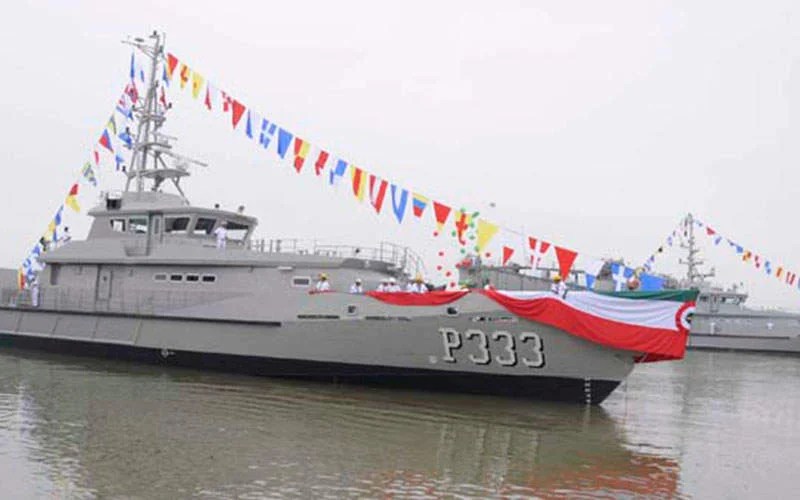
The Mexican Navy vessel mentioned, ARM PALENQUE, the third of ten Tenochtitlan-class patrol vessels, looks a lot like a Webber class Fast Response Cutter. It is also a Damen design, but a bit smaller (a Stan Patrol 4207 vs 4708 for the FRC). Damen has been very successful with this design. More than 50 have been built for more than a dozen agencies. (USCGC Blackfin and the other Marine Protector class patrol boats are also based on a Damen design.)

Mexican Navy ARM Palenque (PC-333) at launching March 2014. Credit Secrtaria de Marina.


June 10, 2024

U.S. Coast Guard Cutters return home after successful Central American deployment

SAN PEDRO, Calif. — U.S. Coast Guard cutters Forrest Rednour and Blackfin have returned to their homeports after a 49-day deployment in Central America, where they played a crucial role in multiple operations.

During this period, both cutters demonstrated outstanding readiness and operational capability, significantly contributing to international cooperation, search and rescue missions, and efforts to combat criminal activities. This deployment was part of a broader strategy to enhance regional security and strengthen partnerships. Throughout the mission, Forrest Rednour covered over 8,200 miles and logged 800 operational hours, while Blackfin covered over 8,300 miles and also logged 800 operational hours.

“The amount of effort and commitment from both crews during this 49-day deployment was remarkable,” said Rear Adm. Andrew Sugimoto, commander, Coast Guard District 11. “Their readiness and professional exchanges provided an invaluable experience to our partner nations and crews. The enthusiasm to lead multiple engagements with several international maritime organizations helped strengthen ties and fortify continued collaboration between all.”

Key Achievements:

Search and Rescue Exercises (SAREX):

  • Manzanillo, Mexico: Blackfin led a successful SAR operation, including helicopter rescue exercises with the Mexican Navy.
  • Puerto Quetzal, Guatemala: Hosted tours and conducted SAR exercises with the Guatemalan Navy, building stronger maritime partnerships.
  • La Union, El Salvador: Rednour led a SAR exercise and joint operations with the Salvadoran Navy, marking the first U.S. vessel visit to this port in two years.

Partnership and Training:

  • Amapala, Honduras: Engaged in discussions and training on maritime law enforcement and security with the Honduran Navy and Merchant Marine.
  • Golfito, Costa Rica: Shared knowledge on maritime governance with the Costa Rican Coast Guard, enhancing mutual understanding.
  • Rodman, Panama: Provided damage control and medical evacuation training to Panamanian forces, marking the first U.S.-Panama Coast Guard engagement in over two years.
  • PASSEX with ARM PALENQUE: Forrest Rednour and Blackfin conducted a passage exercise (PASSEX) with the Mexican Navy’s ARM PALENQUE. This included formation steaming, code exercises, and a crew exchange to enhance mutual operational understanding and cooperation.

“This patrol was truly an amazing experience and a testament to the incredible devotion to duty that the crews of the Forrest Rednour and Blackfin have,” said Lt. Kevin Ng, commanding officer of Coast Guard Cutter Forrest Rednour. “Both crews adapted and overcame several challenges leading up to and during the patrol, but never took their eyes off the main objective. As a result, the Coast Guard was able to strengthen the valuable relationships that the United States has with our international partners throughout Central America and unify our efforts to address critical maritime security initiatives in the Eastern Pacific. Thank you to crews on a job well done, District 11 and Sector Los Angeles/Long Beach for the coordination, and the families and friends of the crew for all of the support; the success of this historic patrol could not have been accomplished without them all.”

“I could not be prouder of both crews for the incredible amount of hard work they have dedicated to making this historic patrol possible. The success of this Surface Action Group is a testament to the Coast Guard’s ability to overcome dynamic challenges in the completion of unprecedented mission sets. It also signifies the Coast Guard’s steadfast commitment to advancing our vital maritime partnerships in the Eastern Pacific. The international relationships formed and strengthened during this deployment have set the groundwork for future engagements which I look forward to watching,” said Lt. j.g. James Morrison, commanding officer of Coast Guard Cutter Blackfin.

Commissioned in 2018, the Coast Guard Cutter Forrest Rednour is one of the Coast Guard’s Sentinel-class fast response cutters homeported in San Pedro, California. Sentinel-class cutters are 154 feet long and 25 feet wide and have a 353 long-ton displacement. They have a top speed in excess of 28 knots and a range of 2,500 nautical miles. They can hold a crew of up to 24. The namesake of the Forrest Rednour is Petty Officer 2nd Class Forrest O. Rednour, who heroically rescued survivors from the torpedoed USAT (US Army Transport–Chuck) Dorchester during World War II and was posthumously awarded the Navy and Marine Corps Medal.

Commissioned in 2000, the USCGC Blackfin is one of the Coast Guard’s Marine Protector-class patrol boats homeported in Santa Barbara, California. Marine Protector-class patrol boats are 87 feet long and 19.5 feet wide and have a 100 long-ton displacement. They have a top speed of 25 knots and a range of 900 nautical miles. They can hold a crew of up to 10. The Blackfin is equipped with advanced electronics and navigation systems for multi-mission operations, including search and rescue, law enforcement, and homeland security. The Blackfin shares the name of the USS Blackfin (SS-322), a submarine that participated in World War II and the Korean War.

“Coast Guard Academy official resigns, says she was directed to lie to Congress as part of ‘cruel’ sexual assault coverup” –CNN

CNN has a troubling report here.

This is not just an Academy problem. Normally I would not comment on personnel issues. I have been out of the service for too long to know what is going on, but I am going to make an exception.

If the actions in question happen in the US and if they may constitute a crime under the laws of a local jurisdiction, it would be best to immediately turn the case over to the local authorities. It is the only way to truly insulate the service from charges of a coverup or favoritism, from either the victim or the alleged perpetrator. Not only does it protect the service, but it also means that the staff will not be unnecessarily distracted, performing an investigation they are really ill prepared for.

Sexual harassment may not be a crime, but any of the following probably are: assault, indecent exposure, sexual assault, stalking, illegal recording or photography. That is not necessarily an exhaustive list. Laws are expanding to include exploitation of social media and deep fake technology.

There will still be plenty of opportunities for the command to take action against forms of harassment that do not violate local laws, but that hurt morale and disrupt good order and discipline.

Thanks to Mike for bringing this to my attention.

“U.S., Japan, and Korea Coast Guards Conduct Trilateral Operations” –News Release

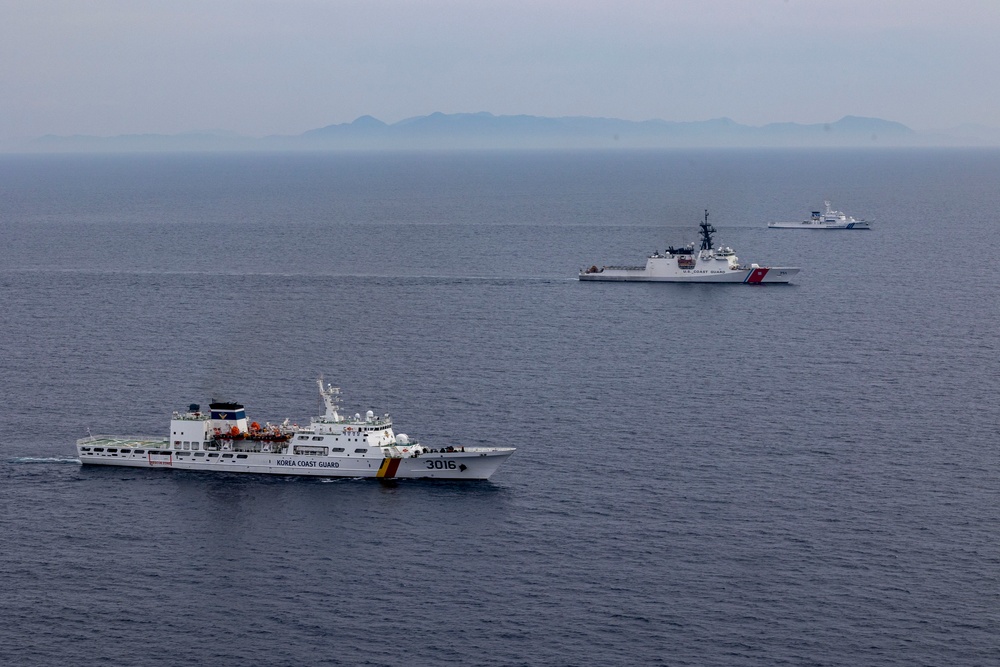
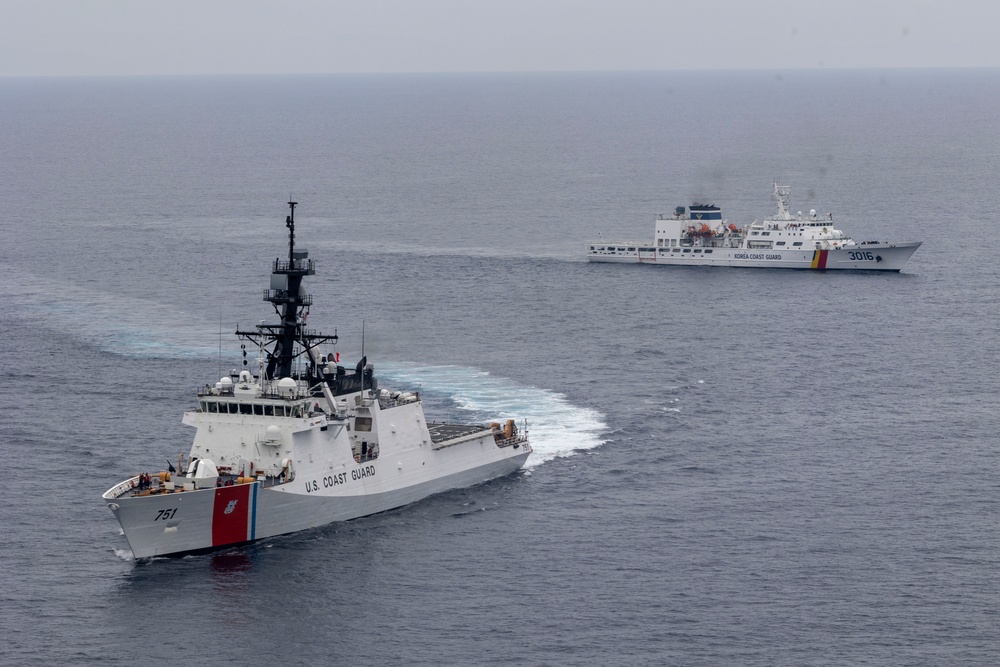
Republic of Korea Coast Guard vessel KCG Taepyongyang (KCG-3016), U.S. Coast Guard Cutter Waesche (WMSL-751) and Japan Coast Guard vessel JCGC Wakasa (PL-93) patrol in formation during a trilateral exercise in the East Sea, June 6, 2024. U.S. Coast Guard missions in the Indo-Pacific focus on issues directly supporting and advancing our regional partners’ efforts to protect fish stocks, ensure safety of life at sea, support environmental response, and provide disaster relief. (U.S. Marine Corps photo by Cpl. Elijah Murphy)

Below is a release from Coast Guard News. Once again, we have a National Security Cutter in the far Western Pacific (here, here, here, and here). A couple of things worth noting.

The Cutter is operating under a 7th Fleet Destroyer Squadron (DESRON 15) rather than US Coast Guard Operational Control.

While S. Korea has an EEZ 2.65% that of the US, the South Korean Coast Guard with about a quarter the number of personnel as the US Coast Guard, operates about the same number of large patrol cutters (>1,000 tons, 36 vs 34) as its US counterpart.

Japan has an EEZ about 39.5% that of the US. The Japan Coast Guard with about a third the personnel of the USCG, operates about twice as many large patrol cutters (70+).

Both the S. Korean and Japan Coast Guards have far fewer aircraft than the USCG.
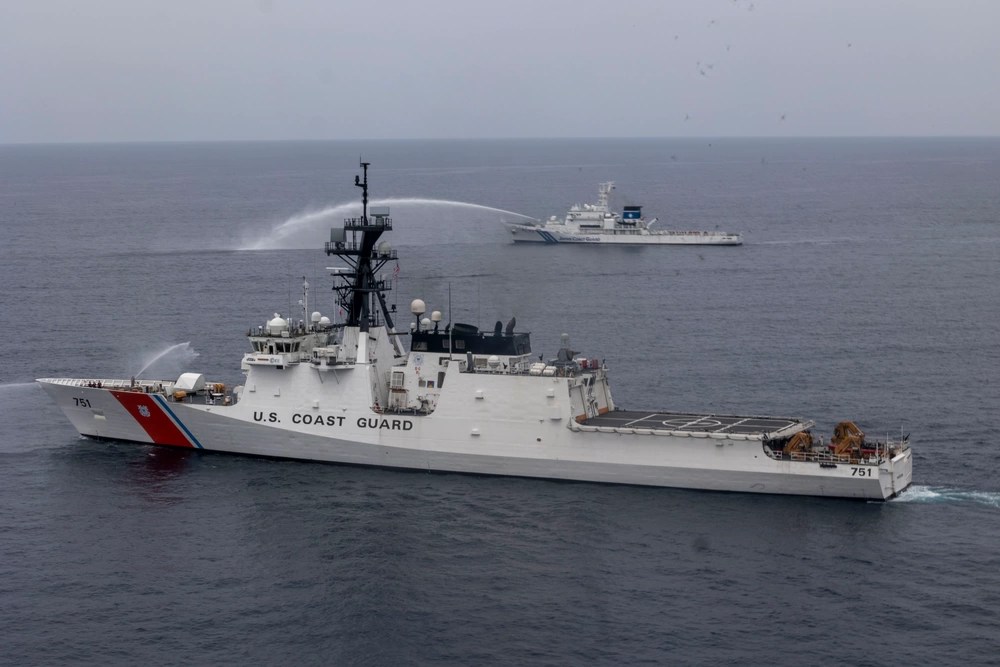
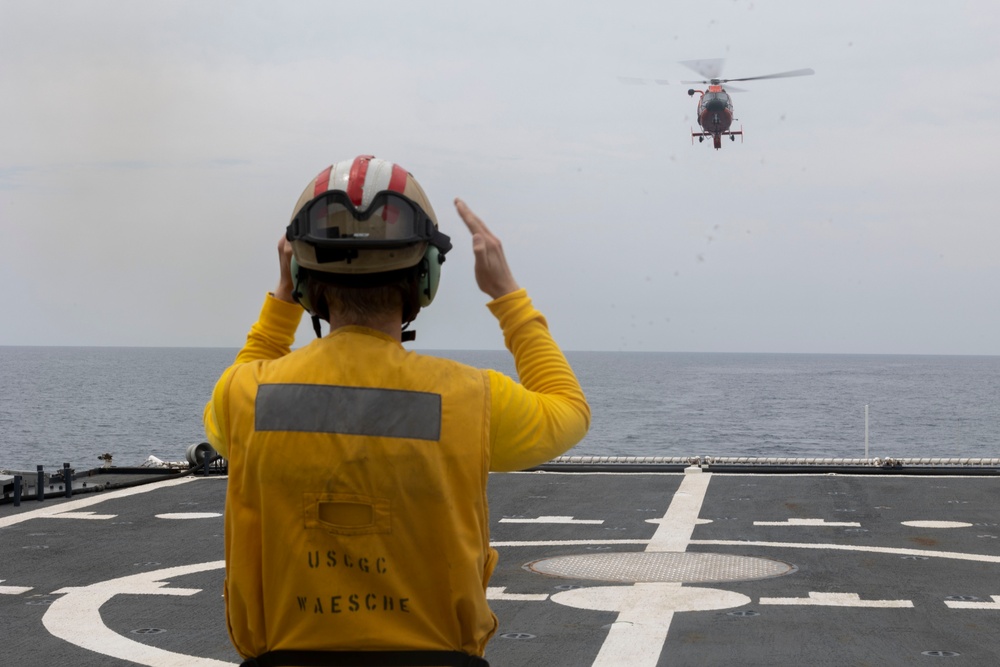
U.S. Coast Guard Cutter Waesche and Japan Coast Guard vessel JCGC Wakasa (PL-93) test their water cannons during a trilateral search and rescue exercise in the East Sea, June 6, 2024. (U.S. Marine Corps photo by Cpl. Elijah Murphy)


June 9, 2024

U.S., Japan, and Korea Coast Guards Conduct Trilateral Operations

MAIZURU, Japan – U.S. Coast Guard Cutter Waesche (WMSL 751) departed Maizuru, Japan, June 6, following several engagements with the Japan Coast Guard, Republic of Korea Coast Guard and multiple Japanese dignitaries. Once underway, the Waesche, the Japan Coast Guard vessel Wakasa (PL 93), and the Republic of Korea Coast Guard patrol vessel Taepyongyang (KCG 3016) conducted a joint search and rescue exercise at sea.

Waesche arrived on June 3 and is the first U.S. Coast Guard cutter to pull into Maizuru.

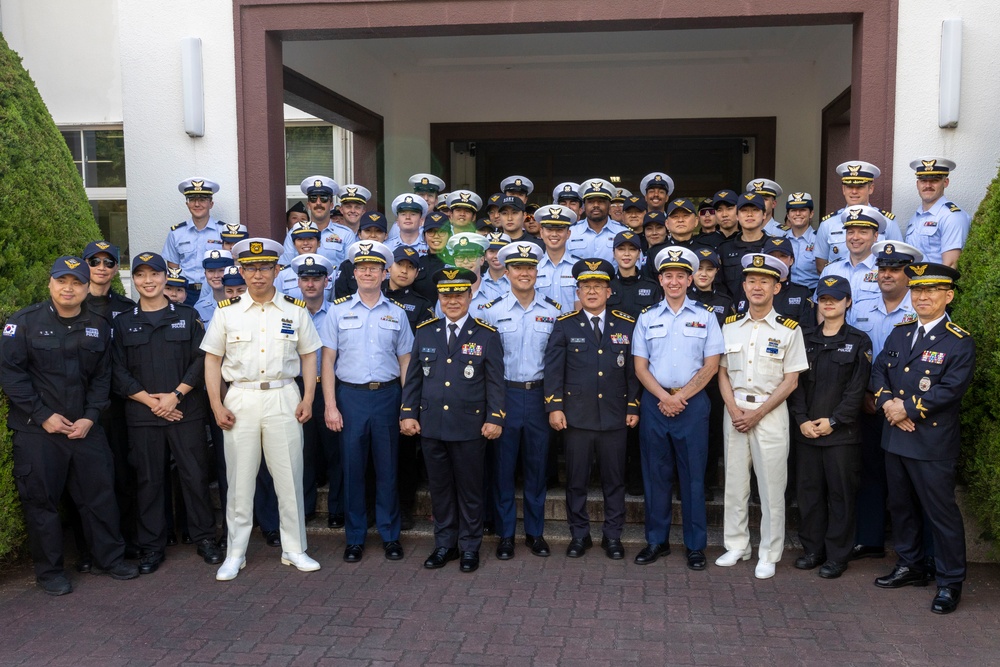
While moored in Maizuru, the Waesche crew attended a reception to commemorate the first joint search and rescue exercise between the three coast guards. Capt. Tyson Scofield, U.S. Coast Guard Cutter Waesche commanding officer, met with Rear Adm. Hisada Takahiro, Japan Coast Guard 8th Regional commander and Maizuru Mayor Akitsu Kamota to discuss the continued cooperation between the three nations, specifically recognizing the importance search and rescue response efforts.

“This joint search and rescue exercise with the Japan Coast Guard, Republic of Korea Coast Guard and U.S. Coast Guard highlights the strong bond between our maritime nations,” said Tyson. “Increasing interoperability to assist mariners at sea, highlights the strength of our maritime cooperation. Together, we continue to build strong relationships with like-minded nations throughout the Indo-Pacific.”

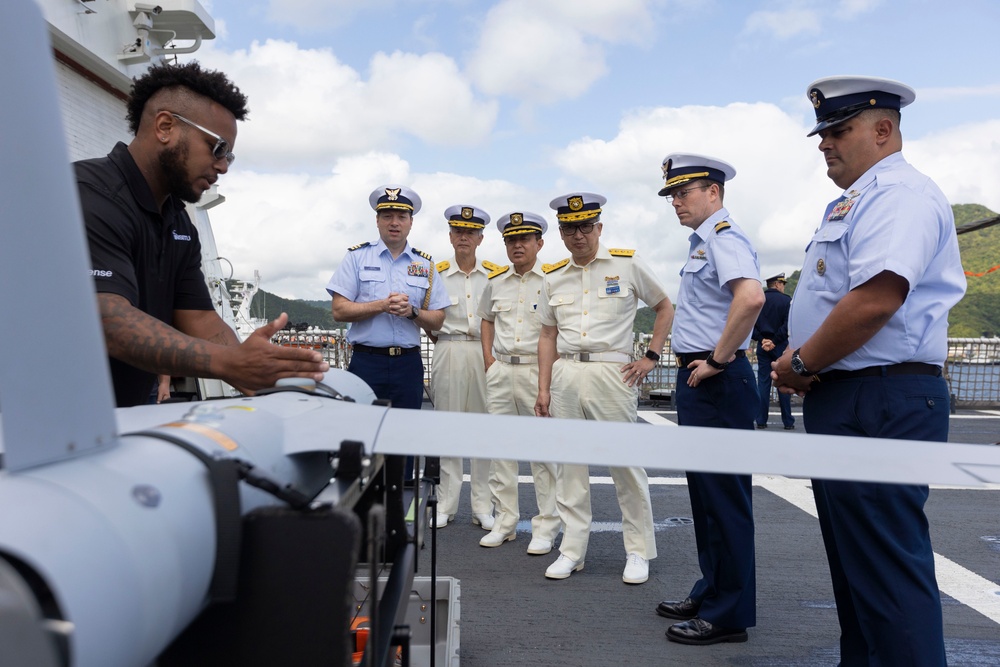
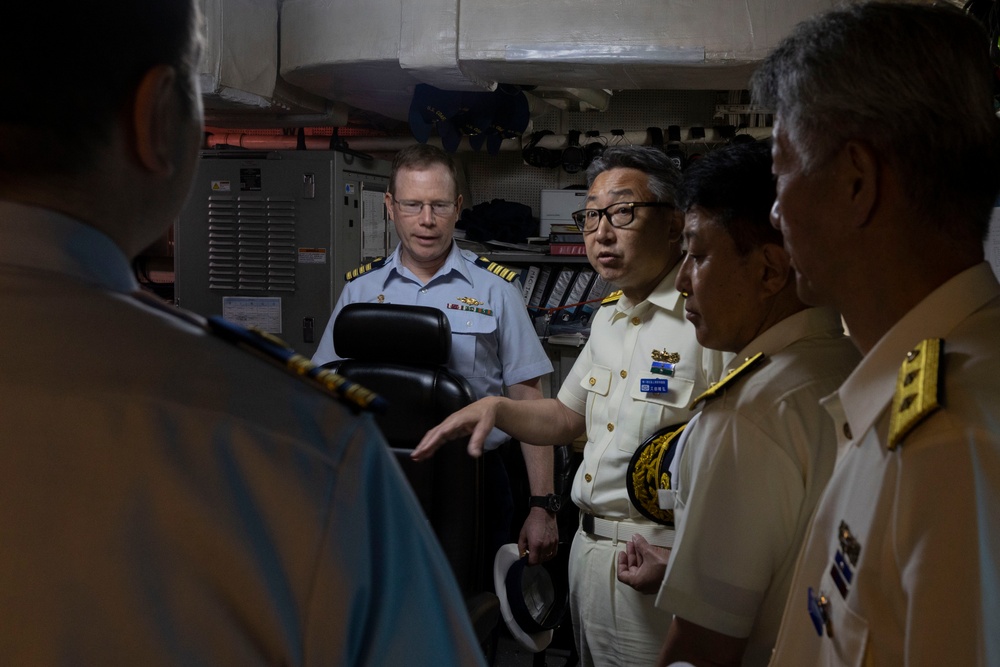
During the search and rescue exercise, officers from the three coast guards joined as observers on each nation’s ship to share best practices and learn from each other. This provided each coast guard an opportunity to work together with each other’s crews during the exercise.

Waesche is proud to support the United States’ continued efforts to facilitate force-multiplying partnerships in the region to bolster interoperability across the Indo-Pacific.

Waesche is assigned to Destroyer Squadron (DESRON) 15, the Navy’s largest DESRON and the U.S. 7th Fleet’s principal surface force. DESRON 15 regularly assumes tactical control of surface units operating in the area.

Commissioned in 2010, Waesche is the second legend-class national security cutter and is homeported in Alameda, California. National security cutters are 418-feet long, 54-feet wide, and have a 4,600 long-ton displacement. They have a top speed in excess of 28 knots, a range of 12,000 nautical miles, and can hold a crew of up to 170. The advanced technologies of the national security cutter class ships are designed to support global operations and missions.

Russian Navy Coming to the Straits of Florida Next Week

Map of the Caribbean Sea and its islands. Photo credit: Wikipedia Commons, author–Kmusser, all data from Vector Map.

MSN reports three Russian Navy surface ships and a nuclear-powered submarine are expected call on Havana next week.

“Russian ships are expected to make port calls in Cuba and perhaps Venezuela. The regional exercises are expected to last through the summer and culminate in a global naval exercise in the fall.”

Of course, the US is not objecting to the presence of a few Russian Ships operating in waters close to the US. Nevertheless, the Coast Guard may encounter these ships.

It would be interesting to know what kind of ships they are sending.

Meanwhile close to Russia, “NATO to Kick Off Largest Baltic Operations Exercise to Date.”

Three Apparent Fatalities in Drug Interdiction Incident

HNLMS Groningen’s crew interdicts a suspected drug boat in the Caribbean Sea, Sept. 27, 2020. HNLMS Groningen is a Holland-class offshore patrol vessel operated by the Royal Netherlands Navy. (Royal Netherlands Navy photo)

Below is a news release from District 7. It is unusual in that smugglers apparently turned toward the boarding party and prompted a response using deadly force. It appears likely this resulted in three fatalities among the smugglers. “There were no reported injuries to the combined law enforcement team members.”


June 6, 2024

Coast Guard, Dutch suspend search for missing persons following counter drug mission in Caribbean Sea

MIAMI – The U.S. Coast Guard, Royal Netherlands Navy and Dutch Caribbean Coast Guard suspended a search for three suspected smugglers who went overboard during pursuit of a non-compliant vessel suspected of smuggling illicit narcotics in the Caribbean Sea, June 4, 2024.

Active search efforts were suspended, Tuesday evening, pending new information.

In the early morning hours on Tuesday, a Royal Netherlands Navy ship with an embarked U.S. Coast Guard law enforcement detachment deployed for a counter drug patrol identified a vessel suspected of smuggling narcotics in international waters. The vessel failed to stop when signaled and the smuggling vessel operator instead increased speed and changed direction toward the Dutch pursuit boat, called a fast-raiding interception and special forces craft (FRISC).

The FRISC boat crew, consisting of Dutch and U.S. Coast Guard boarding team members, discharged their weapons at the go-fast vessel in self-defense and defense of others in response to the life-threatening situation. The go-fast vessel caught fire and sank, and three suspected smugglers went overboard into the water and were not recovered.

There were no reported injuries to the combined law enforcement team members.

“The Coast Guard is America’s primary maritime law enforcement agency, and our crews work hard to safely bring suspected smugglers to face federal prosecution in the United States for alleged crimes,” said Lt. Cmdr. John W. Beal, Coast Guard District Seven public affairs officer. “The missions our Coast Guard servicemembers and allied partners do every day to deny transnational criminal organizations access to maritime smuggling routes are inherently dangerous. The decision to suspend active search efforts is not one we take lightly, and the Coast Guard is working to investigate the incident in accordance with Coast Guard policy.”

Assets and crews involved in the search efforts included:

  • Royal Netherlands Navy ship HNLMS Groningen
  • Royal Netherlands Navy ship HNLMS Pelikaan
  • U.S. Coast Guard helicopter
  • Kustwacht Caribisch Gebied helicopter
  • Kustwacht Caribisch Gebied cutter Jaguar

Detecting and interdicting illegal drug traffickers on the high seas involves significant interagency and international coordination. Once interdiction becomes imminent, the law enforcement phase of the operation begins, and control of the operation shifts to the U.S. Coast Guard throughout the interdiction and apprehension phases. Interdictions in the Caribbean Sea are performed by members of the U.S. Coast Guard under the authority and control of the Coast Guard’s Seventh District, headquartered in Miami.

“Coasties, Marines and Sailors Awarded for Seizing Millions of Pounds of Explosive Materials in Middle East” –Military.com

220822-A-KS490-1182 STRAIT OF HORMUZ (Aug. 22, 2022) From the left, U.S. Coast Guard fast response cutters USCGC Glen Harris (WPC 1144), USCGC John Scheuerman (WPC 1146), USCGC Emlen Tunnell (WPC 1145) and USCGC Clarence Sutphin Jr. (WPC 1147) transit the Strait of Hormuz, Aug. 22. The cutters are forward-deployed to U.S. 5th Fleet to help ensure maritime security and stability across the Middle East. (U.S. Army photo by Spc. Noah Martin)

Military.com reports,

“Hundreds of service members earned an award for seizing two million pounds of “explosive precursor material” in the Gulf of Oman last year, according to a citation obtained by Military.com. It is one of the U.S. military’s largest publicly revealed hauls as it works to stifle arms smuggling in the region.”

The award was made to “192 Marines and sailors with the 26th MEU, 342 sailors assigned to the USS Carter Hall” and unreported numbers of additional personnel “aboard the USS Stethem and Coast Guard Cutters Emlen Tunnell, Glen Harris and John Scheuerman…”

This is not the first time PATFORSWA cutters have stopped shipments of explosives.

I had never heard of the Meritorious Team Commendation (MTC). It is a Coast Guard unit award created in 1993 for groups or teams that are not identifiable by OPFAC as a United States Coast Guard unit.