“Coast Guard to commission new ship in New London, Connecticut”

USCGC MELVIN BELL (WPC-1155) Photo by: Petty Officer 2nd Class Briana Carter VIRIN: 240131-G-HT254-1095.JPG

Below is a Coast Guard news release. This may be the first time many cadets will get an opportunity to see a Webber class WPC. Note the approximately four and a half months between delivery and commissioning. The next two FRCs will go to Astoria, Oregon.


March 25, 2024

MEDIA AVAILABILITY: Coast Guard to commission new ship in New London, Connecticut

WHO: Rear Adm. John W. Mauger, the First Coast Guard District commander, Lt. Patrick Kelly, the Coast Guard Cutter Melvin Bell (WPC-1155) commanding officer, Rita Mayer, the cutter’s sponsor, along with additional Bell family members.
WHAT: Commissioning Ceremony for Coast Guard Cutter Melvin Bell
WHEN: Thursday, March 28, at 10:00 a.m.
WHERE: Coast Guard Academy at 31 Mohegan Ave Pkwy, New London, CT 06320.

Editor’s Note: Media interested in attending must RSVP to D1PublicAffairs@uscg.mil by 8 a.m. Wednesday to gain access to the ceremony.

New London, CT. — The Coast Guard Cutter Melvin Bell (WPC-1155) is scheduled to be commissioned during a ceremony Thursday at 10 a.m. at the Coast Guard Academy in New London.

The Coast Guard’s newest cutter was accepted by the Coast Guard on November 16, 2023, and will be the sixth and final fast response cutter homeported in Boston.

The Sentinel-class fast response cutter (FRC) is designed for multiple missions, including drug and migrant interdiction; ports, waterways and coastal security; fishery patrols; search and rescue; and national defense. The Coast Guard has ordered a total of 65 FRCs to replace the 1980s-era Island-class 110-foot patrol boats. The FRCs feature advanced command, control, communications, computers, intelligence, surveillance and reconnaissance equipment; over-the-horizon cutter boat deployment to reach vessels of interest; and improved habitability and seakeeping.

All Coast Guard fast response cutters are named after an enlisted Coast Guard hero who distinguished themselves in the line of duty. Melvin Kealoha Bell was a master chief electronics technician and served in the Coast Guard from November 1938 to December 1958. ETCM Melvin Bell distinguished himself during World War II by transmitting the first warning messages to military installations in Pearl Harbor on the morning of December 7, 1941, when the Japanese attacked. He continued to prove instrumental throughout the war as he helped break enemy codes leading to numerous victories, including the Battle of Midway and in an operation to break up a Nazi espionage network in New York City. ETCM Bell became the first Pacific Islander to achieve the rank of chief petty officer, the first master chief electronics technician and the first master chief petty officer of color.

“Coast Guard Cutter Procurement: Background and Issues for Congress, Updated March 25, 2024” –CRS

USCGC David Duren is the first of three FRCs to be homeported in Astoria, OR

The Congressional Research Service (CRS) has again updated their “Report to Congress on Coast Guard Cutter Procurement”. (This link will always take you to the most recent edition of the report.) My last post on this evolving document was in reference to the October 19,2023 update. I have reproduced the one-page summary in full below. It gives a good picture of where we are. (The CRS report on icebreakers has also been updated.)

There have been other updates in the interim, but I have been looking forward to this one because it reports the 2024 budget as enacted into law, and (surprise, surprise) it includes two Fast Response Cutters that were not in the 2024 budget request. From page 35,

“Enacted The explanatory statement for Division C of H.R. 2882/P.L. 118-47 of March 23, 2024, provides the funding levels shown in the “Enacted” column of Table 1. The explanatory statement states that the increase of $200.0 million for the FRC program is for “no less than two Fast Response Cutters and the economic price adjustment for Fast Response Cutters funded in prior years”.”

There was a request for four additional FRCs in the Unfunded Priorities List. The House Appropriations Committee had wanted to fund four ($355M) while the Senate Appropriations Committee approved none. Apparently, they compromised. (Nice to see bipartisan support.)

Two Additional FRCs ($216M) are also in the 2025 budget request. (The appropriation amounts include addition funds for FRC program support over and above shipyard construction costs.)

If you do the math, you will see that there has been a departure from the original “Program of Record” (8 NSCs, 25 OPCs, and 58 FRCs for 91 total). The current program will provide 11 NSCs, 25 OPCs, and 67 FRCs (one of which severely damaged in a fire) for a total of 102 operations ships, 104 if we get the two additional FRCs in the FY2025 budget.

While this may look like a large gain, the number of large patrol cutters (36 over 1000 tons) is well below historical norms (=>41), while demands on the cutter fleet have grown substantially, no OPCs have been actually delivered, and the entire WMEC fleet is already well overage.


Summary
The Coast Guard’s program of record (POR), which dates to 2004, calls for procuring 8 National Security Cutters (NSCs), 25 Offshore Patrol Cutters (OPCs), and up to 71 Fast Response Cutters (FRCs) as replacements for 90 aging Coast Guard high-endurance cutters, medium-endurance cutters, and patrol craft.

National Security Cutters are the Coast Guard’s largest and most capable general-purpose cutters; they are replacing the Coast Guard’s 12 Hamilton-class high-endurance cutters. NSCs have an estimated average procurement cost of about $670 million per ship. Congress has fully funded the procurement of 11 NSCs—three more than the 8 in the Coast Guard’s POR. The Coast Guard’s proposed FY2024 budget requested $17.1 million in procurement funding for the NSC program. The Coast Guard’s proposed FY2025 budget requests $7.0 in procurement funding for the NSC program, and the Coast Guard’s FY2025 Unfunded Priorities List (UPL) includes an item for an additional $50.0 million in procurement funding for activities relating to the 11th NSC. Nine NSCs have entered service; the Coast Guard accepted delivery of the 10th on October 13, 2023, and plans to commission it into service in 2024. The 11th is under construction.

Offshore Patrol Cutters are intended to replace the Coast Guard’s 29 aged medium-endurance cutters. Coast Guard officials describe the OPC program and the Polar Security Cutter (PSC) program (which is covered in another CRS report) as the service’s highest acquisition priorities. The first four OPCs are being built by Eastern Shipbuilding Group (ESG) of Panama City, FL. The Coast Guard held a full and open competition for a new contract to build the next 11 OPCs (numbers 5 through 15). On June 30, 2022, the Coast Guard announced that it had awarded a fixed-price incentive (firm target) contract to Austal USA of Mobile, AL, to produce up to 11 offshore patrol cutters (OPCs). The Coast Guard’s proposed FY2024 budget requested $579.0 million in procurement funding for the construction of the sixth OPC and other OPC program costs. The Coast Guard’s proposed FY2025 budget requests $530.0 million in procurement funding for the construction of (once again) the sixth OPC and other OPC program costs, and states that the requested FY2024 procurement funding would now be for the construction of the fifth OPC rather than the sixth.

A June 2023 Government Accountability Office (GAO) report on the OPC program states “The OPC’s total acquisition cost estimate increased from $12.5 billion to $17.6 billion between 2012 and 2022…. In addition, the program incurred a 1.5-year delay in the delivery of the first four OPCs…. GAO also found indicators that the shipbuilder’s significant level of complex, uncompleted work may lead to further delays.”

Fast Response Cutters are considerably smaller and less expensive than OPCs; they are replacing the Coast Guard’s 49 aging Island-class patrol boats. The Coast Guard’s FY2020 budget submission estimated the total acquisition cost of the 58 cutters intended for domestic use at $3.748 billion, or an average of about $65 million each. A total of 65 FRCs have been procured through FY2023. As of March 25, 2024, 54 FRCs have been commissioned into service. The Coast Guard’s proposed FY2024 budget requested $20.0 million in procurement funding for the FRC program, and the Coast Guard’s FY2024 UPL included an item for $400.0 million in procurement funding for procuring four more FRCs at an average cost of $100 million each, to provide increased Coast Guard presence and engagement with allied and partner countries in the Indo-Pacific region. The Coast Guard’s proposed FY2025 budget requests $216.0 million in procurement funding for the FRC program for the procurement of two more FRCs for operations in the Indo-Pacific region, plus additional FRC program costs.

Coast Guard’s Commercial Icebreaker To Be Based In Juneau?

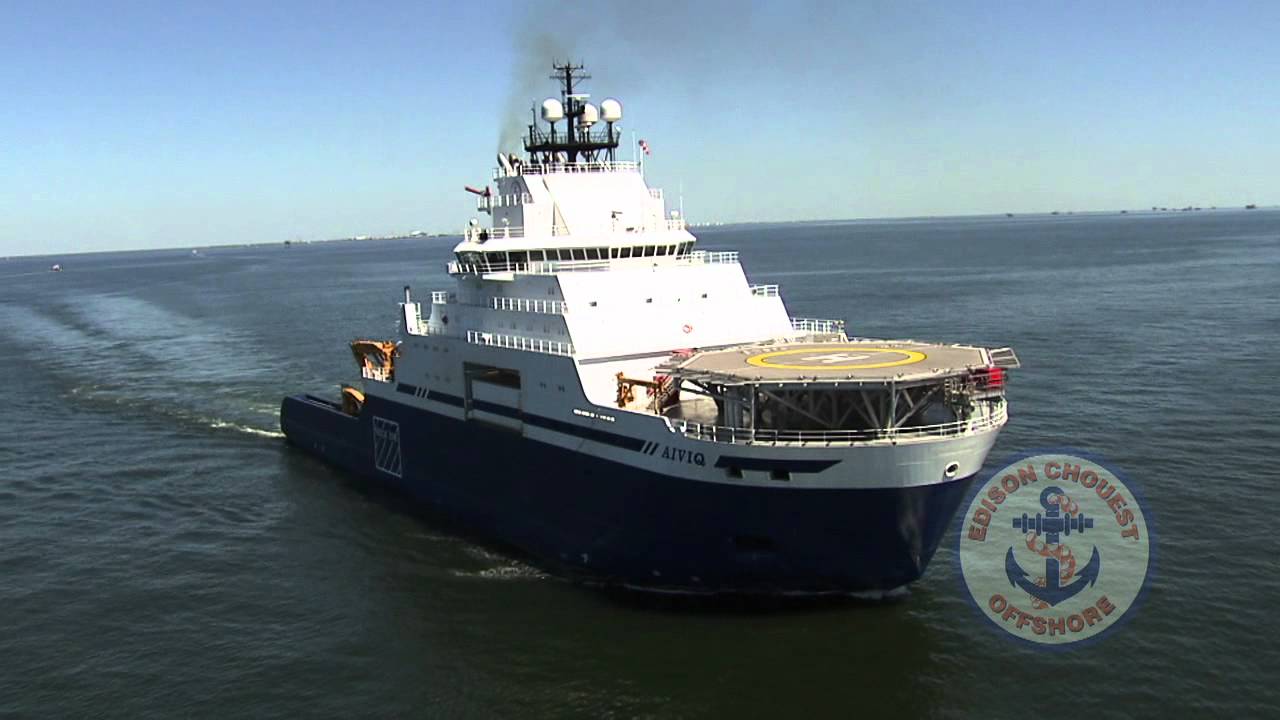
Icebreaking Anchor Handling Vessel Aiviq

There have been several reports like this one, that, if as expected, the Coast Guard buys what is apparently the only US built commercially owned icebreaker, that it will be based in Juneau.

This choice of homeport is something of a surprise. I would have thought Seattle, Kodiak, Anchorage, or even Dutch Harbor before Juneau, but it is the Capital of Alaska. It may have been seen as offering more amenities than Kodiak. It is a cruise destination.

Thanks to David for bringing this to my attention.

Helicopter Door Gunner Takes Down Kamikaze Drone

French Armed Forces via X

The War Zone reports, “A French Navy helicopter used machine gun fire to shoot down a Houthi drone over the Red Sea today.”

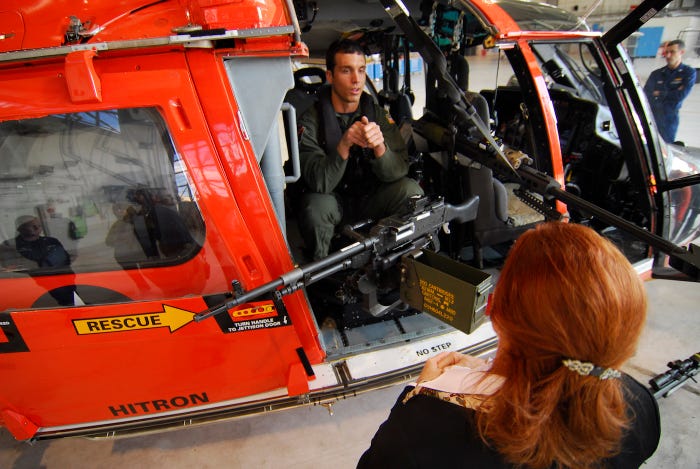
This is a potential Coast Guard capability, given its airborne use of force capability includes a door mounted rifle caliber machine gun, though I do not know if every Coast Guard Air Station has qualified gunners. The .50 caliber sniper rifle included in the package might even be more effective than the machine gun.

I am not suggesting the Coast Guard send helicopters to the Red Sea, but when the Coast Guard provides protection for vessels transiting to sea, it has generally been done with small boats with crew served rifle caliber machine guns. Ballistic Missile submarines have been an exception. They may be escorted by 82 foot patrol boats with .50 caliber machine guns in remote weapon stations. Perhaps the Coast Guard should consider providing an armed helicopter overwatch. An armed helicopter could be effective against hostile surface systems as well as air systems.

Petty Officer 2nd Class Anthony Phillips, a precision marksman at Helicopter Interdiction Tactical Squadron, displays the weaponry used by a HITRON during missions, February 23, 2010. US Coast Guard/Petty Officer 1st Class Bobby Nash

Below is a video taken by the French helicopter (an AS565 Panther, similar to the Coast Guard’s H-65s) as it shoots down the drone.

A US Navy helicopter demonstrated this capability over eight years ago. It is certainly less expensive than bringing down a drone with a missile. On the other hand, I would not want to be in a helicopter near a drone if the Navy decides to use a missile to destroy the drone.

“Coast Guard completes air station transitions to upgraded MH-65E with delivery to Corpus Christi” –CG-9

MH-65E cockpit

Below is news from the Acquisitions Directorate (CG-9).

This is a very large deal. The MH-65E looks very much like the Dolphins that entered service about 40 years ago, but they are very different aircraft with more power, a different radar, air borne use of force, and very different avionics.

Extending their life to 30,000 hours, that is 1,250 x 24 hour days or almost three and a half years airborne. Looks like we are getting our money’s worth out of these aircraft.

Looks like his we will be continuing to use the H-65s for some time. This indicates that we will not see an all H-60 rotary wing fleet until the 2040s. By then, all the WMECs should be out of service.


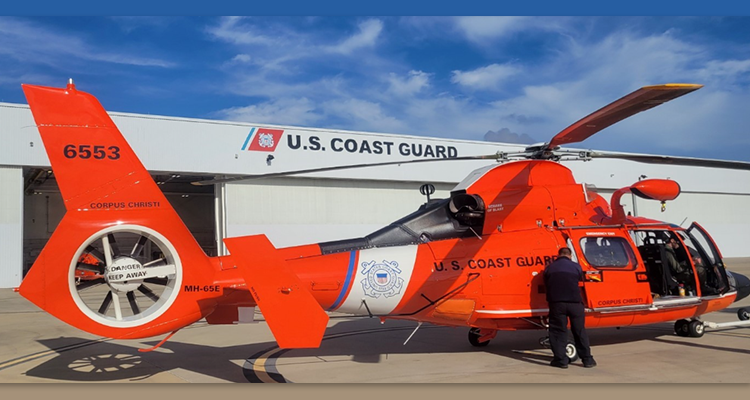
Upgraded MH-65E Dolphin CGNR 6553 is delivered to Air Station Corpus Christi, Texas, Feb. 7, marking the full transition of Coast Guard air stations to the upgraded Dolphin short range recovery aircraft. U.S Coast Guard photo


The Coast Guard reached an important milestone in its MH-65 Conversion and Sustainment program on Feb. 7 when it delivered CGNR 6553 to Air Station Corpus Christi, Texas. This was the third and final upgraded MH-65E for Corpus Christi, which is the last air station to transition to the upgraded short range recovery helicopter.

“The third and final MH-65E delivery to Air Station Corpus Christi marks a significant accomplishment for the H-65 Conversion/Sustainment Program,” said Cmdr. Jen Ahearn, program manager. “All H-65 operational units have now been fielded with modernized aircraft that have received improvements to address reliability and obsolescence issues as well as increase the service life of the asset from 20,000 to 30,000 flight hours. We have heard from the fleet through operational assessments, transition working groups and post-flight reports that the MH-65E upgrade enhances situational awareness and decreases pilot workload, things that are valued by crews executing high-risk, dynamic missions.”

CGNR 6553 was the 79th Dolphin upgraded to the Echo or “E” configuration. The upgrade includes an improved automatic flight control system; enhanced digital weather/surface search radar; installation of a robust command, control, communications, intelligence, surveillance and reconnaissance and computers suite; and modernization of the digital flight deck.

“Successfully fielding this asset to the fleet is a testament to the years of hard work and dedication of professionals committed to improving the Coast Guard’s readiness and short-range recovery capabilities,” Ahearn said. “We still have work ahead of us, but it’s nice to take a pause and recognize this program milestone, especially as we celebrate the H-65’s 40th anniversary this year.”

Another 11 conversions will be completed, for a total of 90, to allow operational aircraft to rotate into programmed depot maintenance, an intensive maintenance process completed at the Coast Guard Aviation Logistics Center that keeps the fleet in its best condition possible.

Continued operation of the MH-65E fleet is needed to maintain the Coast Guard’s rotary wing capability while preparing for the eventual transition to an all MH-60T medium range helicopter fleet sometime in the 2040s.

The MH-65E Conversion/Sustainment program of record was reduced from 98 aircraft based on the notional MH-60T transition schedule. Stopping the program at 90 conversions will help mitigate shortages of Echo replacement parts, sustaining the existing fleet longer.

The upgraded MH-65E aircraft increases aircrew situational awareness through its standardized “glass cockpit” technology. In addition to improved search and rescue capabilities, the advanced navigation systems allows pilots to safely maneuver through the highly congested, complex air traffic that can be encountered during a disaster response.

Adding a third MH-65E to Air Station Corpus Christi enhances the station’s ability to carry out its missions throughout its 11,250 square-mile jurisdiction. That area covers Texas from the U.S. southern border, north to the Colorado River and westward, including the entire state of New Mexico as well as 200 nautical miles offshore in the Gulf of Mexico.

“Being the last unit in the Coast Guard to transition to the 65E was a unique experience,” said Cmdr. Mary Bender, Air Station Corpus Christi deputy of operations. “We had the advantage of watching each unit transition before us and we tried to use the wisdom gained to create as seamless of a transition as possible. Our maintenance team has been truly amazing as they work to understand and repair this model.”

Bender recalls the first search and rescue case they conducted with the upgraded Echo. “It was a week after we received our second bird, and it was the ‘standard Coast Guard Day,’ low visibility, fog and icing on the way. A man had experienced anaphylactic shock, was intubated and running out of oxygen on a rig 180 nautical miles offshore. Our crews safely transported the patient to land, and he survived.

“We were so thankful to have all the new modes and ADS-B (Automatic Dependent Surveillance-Broadcast) while conducting the very unique mission during less-than-ideal conditions,” Bender said.

For more information: MH-65 Short Range Recovery Helicopter Program page

“Commandant delivers the 2024 State of the Coast Guard Address”

Above is a video of the Commandant’s 2024 State of the Coast Guard address. Below is the MyCG look at the address.

The video does not actually start until about time 1:40 and we don’t see the Master Chief of the Coast Guard until minute 3:00. He notes that the Coast Guard is making “great progress” on addressing workforce shortages.

As the MyCG story notes, “The State of the Coast Guard Address is mainly intended for Congress and external stakeholders” so a lot of this is introductory, but the address has a lot of meat beginning about time 16:00.

The Commandant reports that the maintenance budget will only address about 50% of planned maintenance–that is pretty serious. I have heard rumblings about deferred maintenance but this is both more definitive and worse than anything I had heard before.

Admiral Fagan has talked more about infrastructure than any previous Commandant I have heard, and she talked here about the need for more infrastructure maintenance.

Admiral Fagan has pushed lowering barriers to service. She also reports the Coast Guard is fielding more recruiters.

She addressed the need to stop harmful behaviors such as sexual harassment and measures being taken.

During the presentation, the Commandant talked about how much more the Coast Guard has been doing in the Pacific but considering that 47% of the entire US EEZ is inside the 14th District, it still looks like the Coast Guard is underrepresented in the Pacific. 


March 21, 2024

Commandant delivers the 2024 State of the Coast Guard Address

By AJ Pulkkinen, MyCG writer

The Commandant, Adm. Linda Fagan, focused on operations, the workforce, and the future as she delivered her 2nd State of the Coast Guard address to Congress last night. You can view it on YouTube or Vimeo.

Operations 

Adm. Fagan highlighted the response to Lahaina wildfires on Maui, narcotics interdictions in the Caribbean and Eastern Pacific, and maritime migrant interdictions in the Pacific, Caribbean, and Straits of Florida. She cited the HARRIET LANE’s homeport shift from Portsmouth, Virginia, to Honolulu, Hawaii, as evidence of the importance of the Indo-Pacific region. She also pointed to the HEALY’s Artic transit as an important step to ensuring our national sovereignty in the northern high latitudes.

“Last year, the United States Coast Guard saved nearly five thousand lives, and ensured the safety of thousands more through our work to prevent maritime accidents before they happen,” said Adm. Fagan.

People 

The Talent Management Transformation Task Force “hit the ground running, challenged long-held assumptions, and are writing new personnel policies that make it easier to join and serve in the United States Coast Guard,” said Adm. Fagan.

Adm. Fagan advocated for our families to have access to affordable housing, childcare, and medical facilities. She pointed to the creation of the Talent Acquisition Specialist rating, the opening of new recruiting offices, and broadening the applicant pool as key steps to closing our current workforce shortage. The Commandant celebrated the tailored approach offered by Agile A-Schools that get trained Petty Officers to the field quicker than before. She celebrated the changes to how the Service manages talent and makes it easier to serve.

“The Coast Guard of the future will increasingly rely on data, analytics, and artificial intelligence to inform our missions,” said Adm. Fagan.

Future 

Adm. Fagan expressed her excitement in launching the ARGUS, the first offshore patrol cutter (OPC). She set her top acquisition priority as starting construction of the Polar Security Cutter – the first new heavy icebreaker built in the United States since the 1970s. She cited the Office of Data Analytics and use of unmanned systems as force multipliers. Finally, Adm. Fagan highlighted efforts to strengthen service culture.

The State of the Coast Guard Address is mainly intended for Congress and external stakeholders. The Commandant will hold a Townhall for all members of the Service on April 3. Stay tuned to find out how you can be a part of the Townhall.

-USCG-

Resources: 

“BOLLINGER SHIPYARDS DELIVERS US COAST GUARD CUTTER DAVID DUREN (FRC 1156) TO U.S. COAST GUARD” –Bollinger News Release

USCGC David Duren is the first of three FRCs to be homeported in Astoria, OR

Below is a Bollinger news release.

This delivery is a little more than 16 weeks after the delivery of USCGC Melvin Bell (WPC-1155) on November 16, 2023. There are still nine more on order, and the FY 2025 budget request asks for two more. The Coast Guard has said all 65 on order will be delivered by 2025, but that seems unrealistic. Delivery rates have generally been five per year or less, and it appears there will be only three in 2024. Looks like deliveries will extend into at least 2026.

The next Fast Response Cutter, the future USCGC Florence Finch (WPC-1157) will also go to Astoria and is expected to be delivered June 13, 2024. Sector Columbia River will have to wait a bit for their third FRC since WPC-1158 is expected to go to Kodiak with delivery expected October 24, 2024.

As noted below, deliveries are made at Key West. Typically, it has been about three months from delivery to commissioning of units this class.


LOCKPORT, La., — (March 18, 2024) – Bollinger Shipyards (“Bollinger”) recently delivered the USCGC David Duren to the U.S. Coast Guard in Key West, Florida. This is the 182nd vessel Bollinger has delivered to the U.S. Coast Guard over a 35-year period and the 56th Fast Response Cutter (“FRC”) delivered under the current program.

“We’re incredibly proud to deliver the USCGC David Duren, the first of three Fast Response Cutters to be homeported in Astoria, Oregon,” said Bollinger President & CEO Ben Bordelon. “We’re confident that pound for pound, the quality and capabilities of the FRC platform are unmatched and that this vessel will outperform its mission requirements and expectations in the challenging conditions where it will operate in the Pacific Northwest. Our unique experience building for the Coast Guard is unparalleled and has shown time and time again that we successfully deliver the highest quality vessels on a reliable, aggressive production schedule. We look forward to continuing our historic partnership with the U.S. Coast Guard.”

The USCGC David Duren will be the first of three FRCs to be homeported in Sector Columbia River, which is known as “The Protectors of the Pacific Northwest.” The sector is responsible for coastal safety, security, and environmental protection, as well as protecting and securing vital infrastructure, rescuing mariners in peril at sea, enforcing federal law, maintaining navigable waterways, and responding to all hazards impacting the maritime transportation system along the Oregon coast.

As the U.S. Congress continues to debate Fiscal Year 2024 government funding, the future of the Fast Response Cutter Program remains uncertain. While the House Homeland Security Appropriations Bill included funding for four new FRCs, the Senate bill did not include funding for any new vessels. The prospect for a year-long Continuing Resolution (CR) at last year’s funding level introduces a critical level of uncertainty, as funding levels continue to lag behind the meteoric rise in raw material and input costs. The Coast Guard’s Fiscal Year 2025 Budget to Congress includes procuring two more FRCs to provide increased Coast Guard presence and engagement with allied and partner countries in the Indo-Pacific region. Last year, Adm. Linda Fagan, the Commandant of the U.S. Coast Guard, said, “The Indo-Pacific is clearly a consequential region for America’s future. The United States Indo-Pacific Strategy identifies an expanded role for the U.S. Coast Guard as a top Administration priority as we seek to ensure a region that is free and open. The U.S. Coast Guard will continue its long history of operational presence in the region with additional cutter patrols and deployable specialized forces.”

Each FRC is named for an enlisted Coast Guard hero who distinguished themselves in the line of duty. Boatswain’s Mate Master Chief David N. Duren was one of the most iconic figures in the history of Coast Guard surfmen. Considered perhaps the finest boat driver in the history of the modern Coast Guard, he is remembered by his shipmates and mentees not only for his expertise in seamanship, but also for his leadership and character. Between 1979 and 1983, Duren deployed on search and rescue cases more frequently than any other officer-in-charge and, in one year, executed over 250 cases. During this tour, Duren received two Coast Guard Medals for exceptional heroism, and the Douglas A. Munro Inspirational Leadership Award. Perhaps more remarkable was the fact that the personnel under his watch at Depoe Bay earned a total of 24 medals and awards.

ABOUT THE FAST RESPONSE CUTTER PLATFORM

The FRC is an operational “game changer,” according to senior Coast Guard officials. FRCs are consistently being deployed in support of the full range of missions within the United States Coast Guard and other branches of our Armed Services due to its exceptional performance, expanded operational reach and capabilities, and ability to transform and adapt to the mission. FRCs have conducted operations as far as the Marshall Islands—a 4,400 nautical mile trip from their homeport. Measuring in at 154 feet, FRCs have a flank speed of 28 knots, state of the art C4ISR suite (Command, Control, Communications, Computers, Intelligence, Surveillance, and Reconnaissance), and stern launch and recovery ramp for a 26-foot, over-the-horizon interceptor cutter boat.

ABOUT BOLLINGER SHIPYARDS

Bollinger Shipyards (www.bollingershipyards.com) has a 78-year as a leading designer and builder of high-performance military patrol boats and salvage vessels, research vessels, ocean-going double hull barges, offshore oil field support vessels, tugboats, rigs, lift boats, inland waterways push boats, barges, and other steel and aluminum products from its new construction shipyards as part of the U. S. industrial base. Bollinger has 13 shipyards, all strategically located throughout Louisiana and Mississippi with direct access to the Gulf of Mexico, the Mississippi River and the Intracoastal Waterway. Bollinger is the largest vessel repair company in the Gulf of Mexico region.

“The huge, resource rich territory China will snatch while the West dithers” –The Telegraph

The Telegraph has an opinion piece by retired Royal Navy Commander and former CO of the Ice Patrol Vessel HMS Endurance, Tom Sharpe OBE.

He feels, as I do, that we are headed for conflict over claims to Antarctica. It is after all, the last land area on earth where no nation exercises sovereignty.

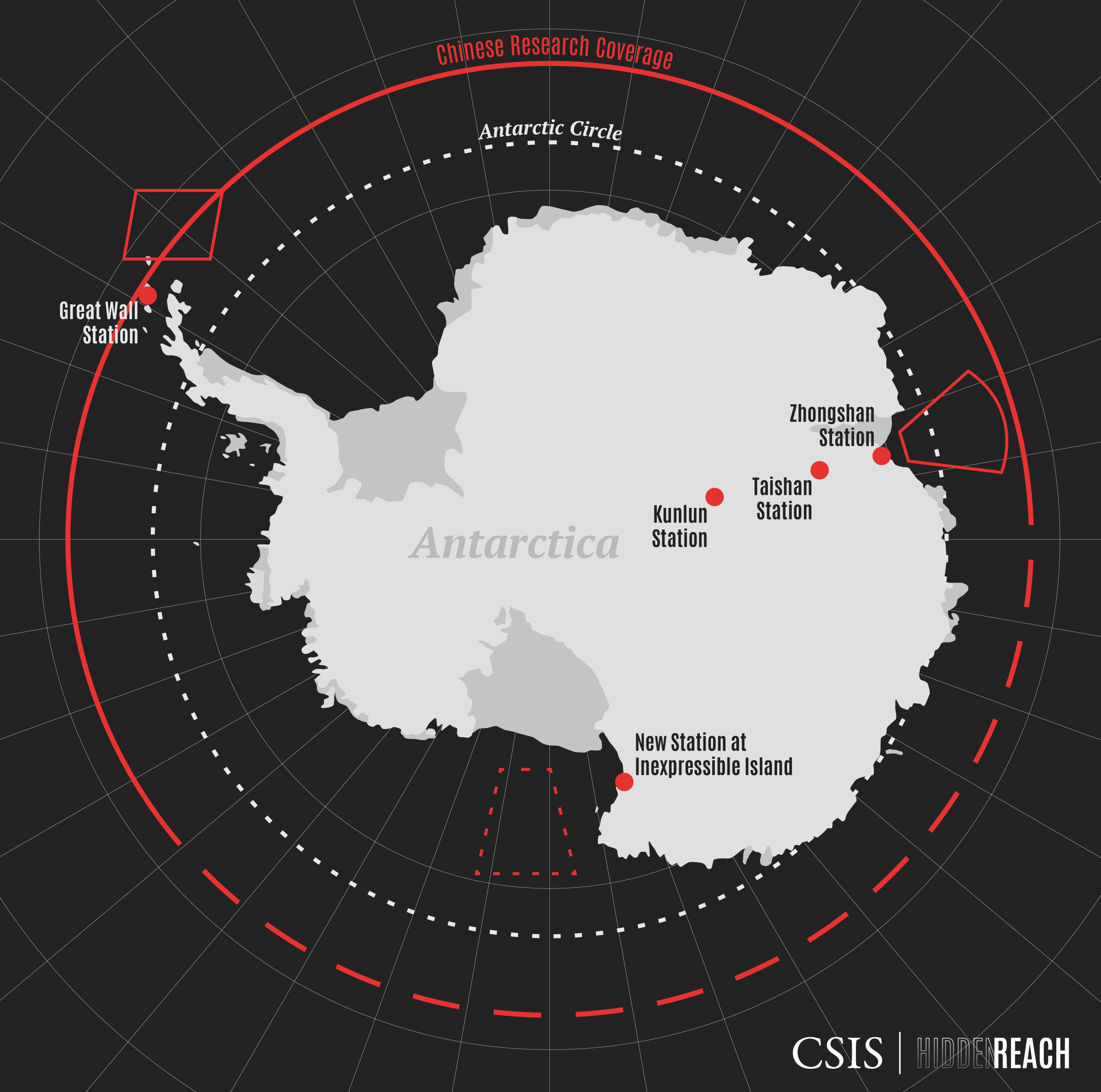
China’s presence in the Antarctic is growing rapidly and, as they have shown in the South China Sea, they may choose not to accept the decisions of international courts.

Adapted from a 2021 Chinese environmental evaluation report submitted to the Secretariat of the Antarctic Treaty. Source CSIS

What this boils down to is that, after courts make their decisions, we may have to fight in Antarctic to make those decisions stick.

We don’t seem to have given much thought to the possibility of combat in and around Antarctica, but I believe it is a real possibility, perhaps not soon, but beginning in 2048 when the Antarctic Treaty comes up for renegotiation. 24 years may seem to be a long way off, but we are building now the assets that will be available in 2048.

By then the rapidly growing Chinese presence in Antarctic, as well as their Navy are likely to be in a very strong position. We are already seeing the Chinese apparently establishing dual use (civilian and military) facilities in Antarctica.

In the interim, we can expect China and perhaps others to try to skirt the rules to strengthen their presence. We need to monitor and challenge any gray zone operations.

Command Structure:

These are the Unified Combatant Commander’s Areas of Responsibility.

There is an obvious reason that Antarctica does not seem to be on anyone’s radar. Looking at who is potentially responsible for operations in the Antarctic, it is a hodgepodge. Various parts of the Continent might fall under SOUTHCOM, AFRICOM, and INDO-PACOM.

US Navy Fleet Organization

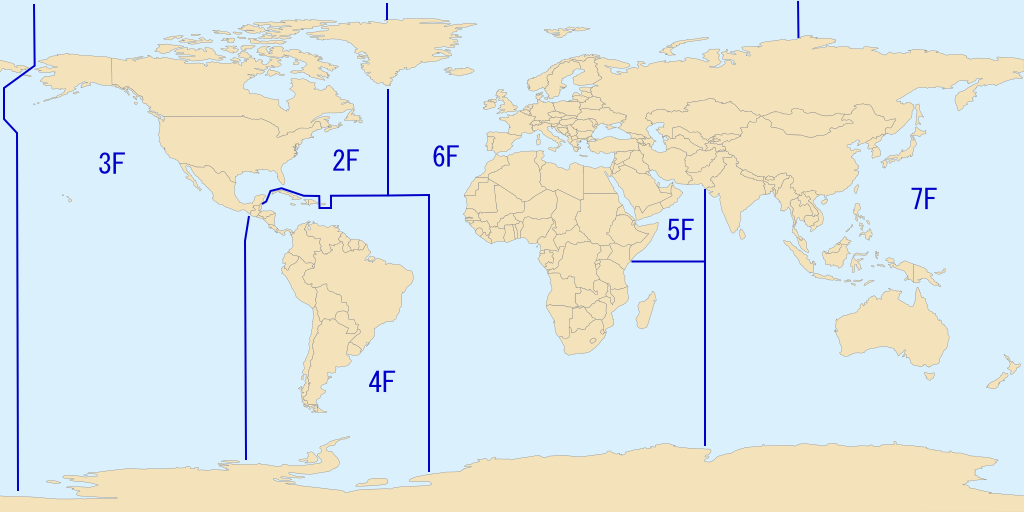
3rd Fleet, 4th Fleet, 6th Fleet, and 7th Fleet all have a nominal slice, but none of these commands consider the area their primary concern.

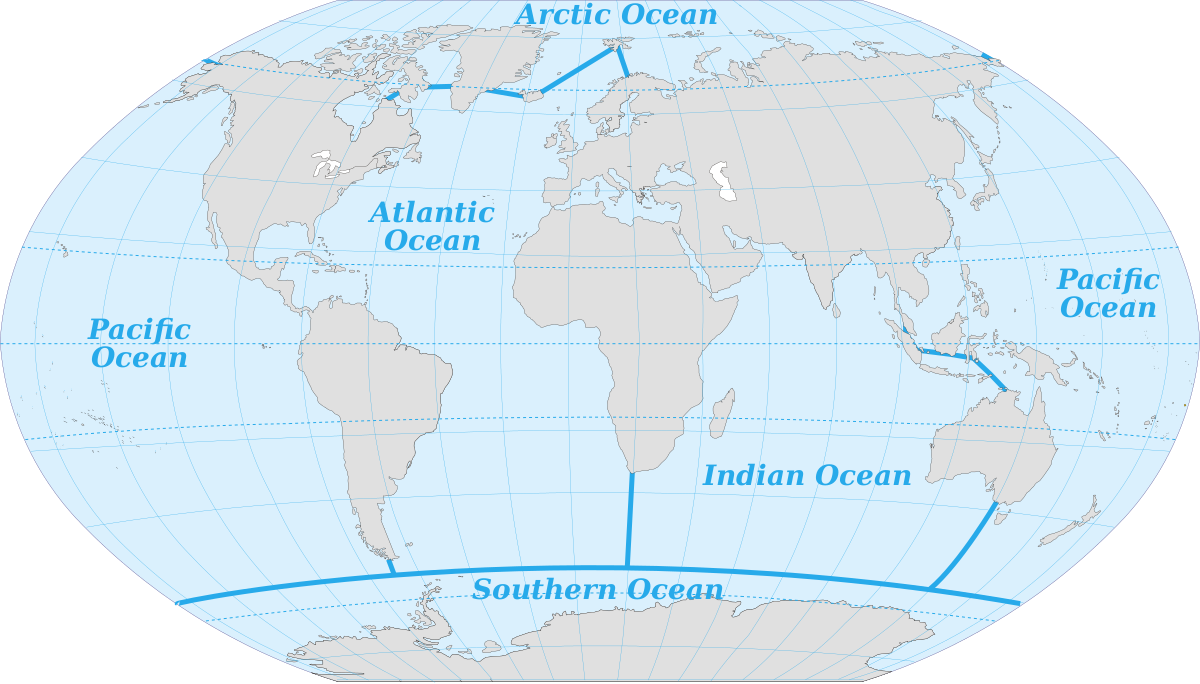
World map of oceans : English version. By Pinpin via Wikipedia.

There is no single national command authority that covers all of Antartica or the Southern Ocean. Really no one is in responsible for the area below 60 degrees South.

It seems likely that in the near term, Southern Ocean fisheries will require some protection. The only nation I have heard of doing fisheries protection in the Southern Ocean outside their own EEZ is New Zealand.

The Coast Guard currently operates the only US polar icebreakers. At some point the Coast Guard may become involved in fisheries protection in the Southern Ocean. If there is conflict in Antarctica, Coast Guard assets will likely be needed to gain access.

Related: 

“DHS Center for Countering Human Trafficking Year-in-Review” –MyCG

A Coast Guard Cutter Campbell law enforcement crew stopped a grossly overloaded, unsafe vessel near Turks and Caicos, May 9, 2022. (U.S. Coast Guard photo by Petty Officer 3rd Class Erik Villa-Rodriguez)

Below is a news release from MyCG regarding a new DHS report. 


March 19, 2024

DHS Center for Countering Human Trafficking Year-in-Review

By DHS Center for Countering Human Trafficking

In FY 2023, the Coast Guard screened 257 unaccompanied children for human trafficking after encountering them during migrant interdictions at sea. The children were then referred to interagency partners as part of our service’s efforts to address human trafficking in collaboration with the U.S. Department of Homeland Security (DHS)

You can learn more about these and similar efforts in the DHS Countering Human Trafficking: Year-in-Review, just released by the DHS Center for Countering Human Trafficking (CCHT). The report is designed to help readers understand DHS’s multifaceted work, and to use the many available resources to support their own counter-trafficking work.

Employees of DHS and its components work every day to end sex trafficking and forced labor through a wide range of efforts, including:

  • Identification and screening for victims of human trafficking
  • Victim protection and assistance
  • Criminal investigations of human trafficking crimes
  • Enforcement of laws related to the importation of goods produced with forced labor and
  • Training, outreach and engagement with law enforcement, government, industry, non-governmental organizations, and the public.

In 2023, approximately 13,000 Coast Guard personnel completed the DHS Blue Campaign Human Trafficking Awareness Training module to ensure they were prepared to identify potential indicators of human trafficking while conducting maritime operations.

Coast Guard Pacific Area went further during its third Forced Labor and Human Trafficking tabletop exercise. During this training, participants honed interagency response to the discovery of forced labor during inspection of a foreign fishing vessel outside of the U.S. Exclusive Economic Zone. The exercise included representatives from the National Oceanic and Atmospheric Administration, Department of State, Department of Justice, and DHS, and DOJ. Lessons learned from this exercise were leveraged to create a curriculum for a first-of-its-kind multinational maritime labor seminar.

Every year, nearly 25 million men, women, and children are trafficked worldwide – including here in the United States. DHS is a global leader in this fight and works with partners at every level to prevent this heinous crime, identify and protect victims, and bring perpetrators to justice.

The DHS Center for Countering Human Trafficking (CCHT) integrates the efforts of 16 Agencies and Offices within DHS that carry out our anti-trafficking mission. These efforts range from criminal investigations, victim assistance, and combating forced labor in exports destined for the United States to external outreach and public education, intelligence, and training.

All Coast Guard members are encouraged to read the report here.

“U.S., Indian Coast Guards Drill Against Drone Attacks In Sea Defenders 2024” –Naval News

USCGC Bertholf and an ICG offshore patrol vessel sail together during Sea Defenders 2024.

Naval News reports,

U.S. and Indian Coast Guards held this year’s Sea Defender with recent events in the Red Sea in mind, training against both drone and piracy threats…Taking place off the Malacca Strait off the Andaman and Nicobar Islands, USCGC Bertholf (WMSL-750) and Indian Coast Guard vessels and aircraft held several maritime security activities in port and at sea over four days. This exercise also marked the first time a U.S. Coast Guard vessel visited New Delhi’s southernmost territory, strategically located at the entrance to the Malacca Strait between the Indian and Pacific oceans. 

The Indian Navy and Coast Guard both operate large numbers of Offshore Patrol Vessels. Established in 1978, the Indian Coast Guard has been growing rapidly and is now one of the largest in the world. Following the 2008 Mumbai Terrorist Attack, which came by sea, the Indian Coast Guard grew even more rapidly.

The Indian Coast Guard now operates 27 Offshore Patrol Vessels (OPV), all commissioned within the last 28 years, 18 within the last ten years. The Indian CG has ordered six more. The Indian Navy also operates ten OPVs, all commissioned in the last 35 years, four commissioned within the last eleven years. The Indian Navy has ordered eleven more OPVs.

The US Coast Guard operates, I believe, 36 OPVs now, soon to be 34. Only six of those have been commissioned in the last ten years. 26 of the USCG OPVs are over 33 years old.

The NSCs are doing things we would have never expected when they were conceived.

As included in this exercise, it appears there is an emerging requirement for the Coast Guard to be prepared to counter unmanned systems of various types, both for self defense and for the defense of maritime assets. Unmanned systems are likely the weapon of choice for future terrorist attacks.

Of all Coast Guard assets, the large cutters are currently the most capable against the various types of one-way attack unmanned systems, but they are unlikely to be involved in the most likely scenarios. Attacks on passenger ships, submarines, or aircraft carriers, during transit from port to open sea seem most probable. Here we are decidedly unprepared, but perhaps PATFORSWA is leading the way.