“The More ‘Eyes On The Water’, The Better” –Marine News

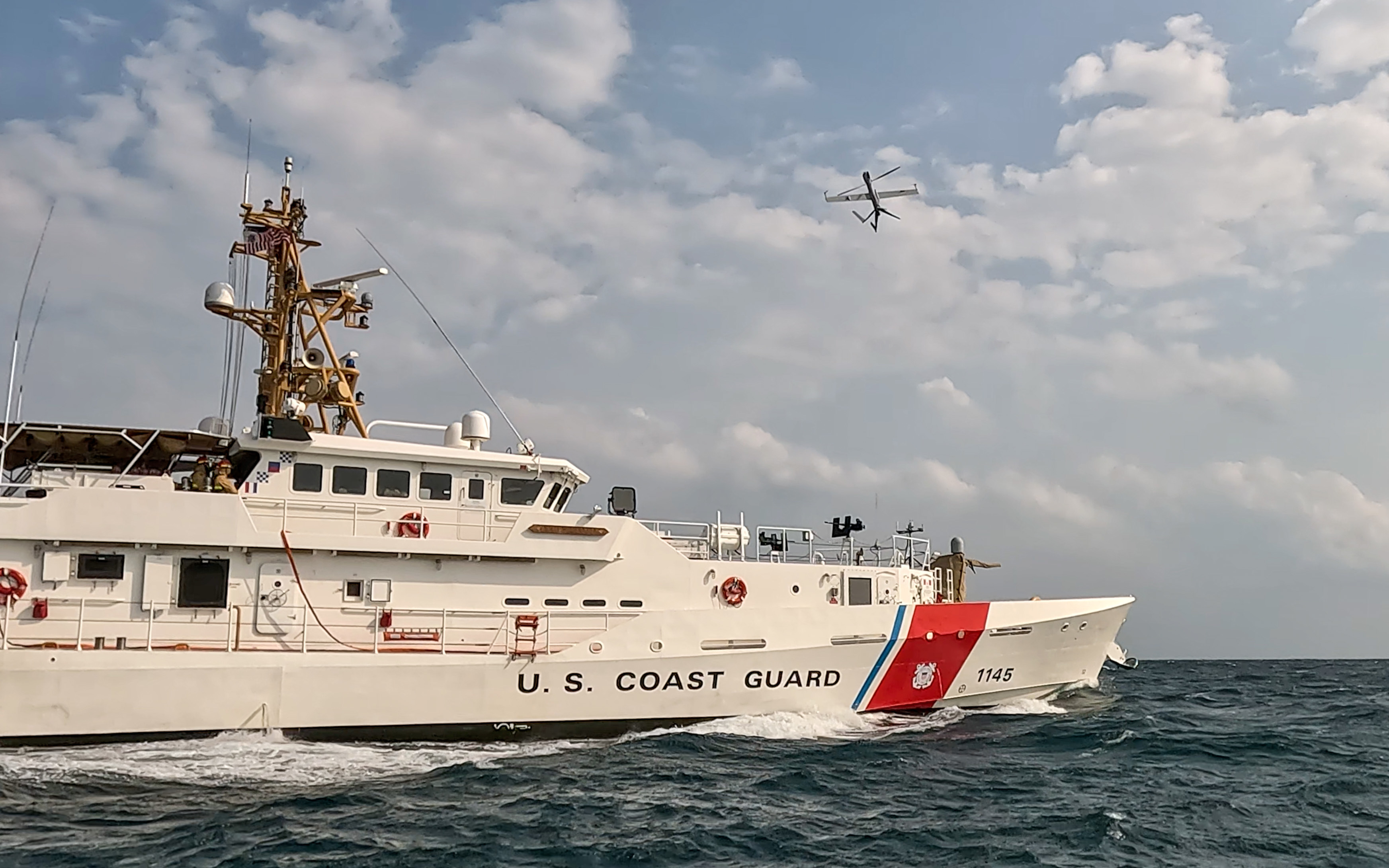
221207-N-NO146-1001 ARABIAN GULF (Dec. 7, 2022) An Aerovel Flexrotor unmanned aerial vehicle (UAV) takes off from U.S. Coast Guard fast response cutter USCGC Emlen Tunnell (WPC 1145) transiting the Arabian Gulf, Dec. 7. U.S. 5th Fleet’s Task Force 59 launched the UAV during Digital Horizon, a three-week event focused on integrating new unmanned and artificial intelligence platforms, including 10 that are in the region for the first time. (U.S. Navy photo)

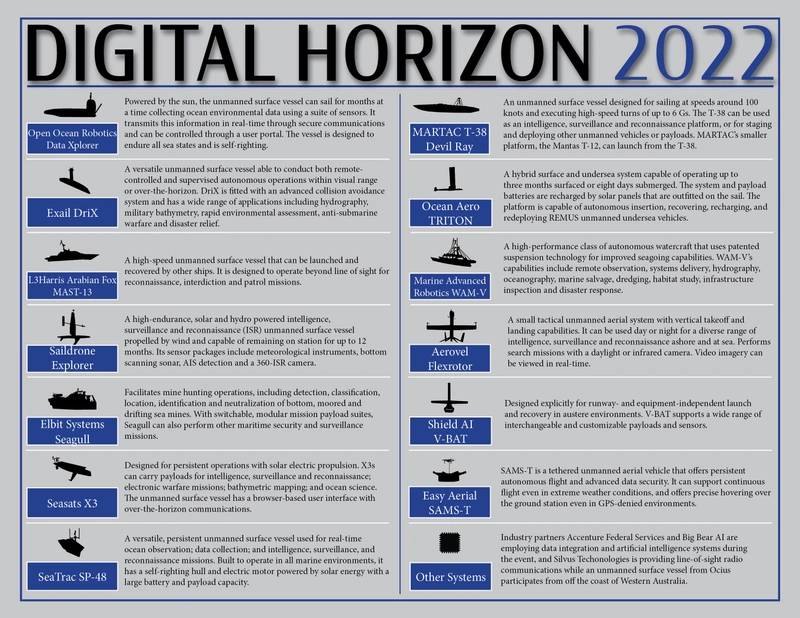
Marine News has an interesting story that discusses both PATFORSWA’s operations using the recently arrived Webber class WPCs and the recent Digital Horizon 2022 exercise. There is also a bit of a tie in between the two in that at least one WPC was operating as part of Task Force 59, the 5th Fleet element charged with operating unmanned systems. We have heard a bit about the exercise before, but the list of participants in the graphic below seems particularly revealing.

Graphic illustration depicting the unmanned systems that participated in exercise Digital Horizon.

USCGC Spencer (WMEC 905) arrives in Praia, Cabo Verde” –LANT Area

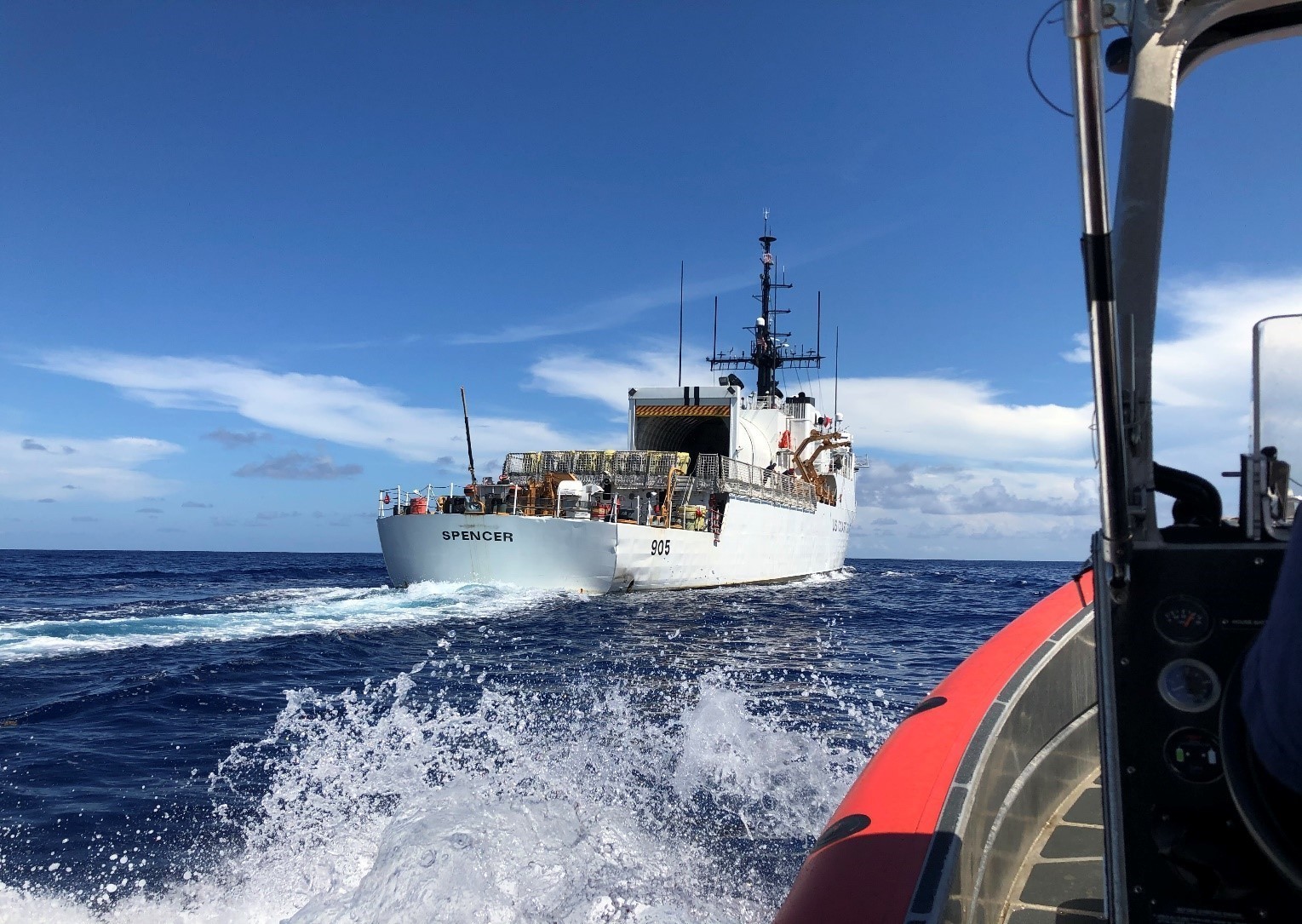
U.S. Coast Guard Cutter Spencer (WMEC 905) underway on patrol in the Eastern Pacific, January 2021. The crew covered over 11,000 miles seizing over $10 million of drugs and assisted in disrupting transnational crime organizations. (U.S. Coast Guard courtesy photo/Released)

Below is an Atlantic Area news release reporting the arrival of Cutter Spencer for operations off West Africa. This is getting to be almost routine, and it seems to have become a regular assignment for 270 foot WMECs. As can be seen by these previous reports, Spencer was preceded by Mohawk, Bear, and Thetis.

These operations, as well as those in the Western Pacific and SW Asia, demonstrate a recognition of the Coast Guard’s utility as an instrument of foreign policy and show that smaller cutters can be used in some of these roles, in some cases, reaching ports larger vessels might not be able to enter.

News Release

U.S. Coast Guard Atlantic Area

USCGC Spencer (WMEC 905) arrives in Praia, Cabo Verde

Download Image Link

Editors’ Note: To view more or download high-resolution imagery, click on the photo above

By U.S. Naval Forces Europe and Africa/U.S. Sixth Fleet

PRAIA, Cabo Verde – The Famous-class medium endurance USCGC Spencer (WMEC 905) arrived in Praia, Cabo Verde for a scheduled port visit Monday.

This port visit marks the first stop for Spencer, while employed by U.S. Sixth Fleet in the U.S. Naval Forces Europe and Africa (NAVEUR-NAVAF) area of operations. Spencer’s visit to Praia demonstrates NAVAF and the U.S. Coast Guard’s commitment and longstanding partnership to work with our African partners to counter illicit maritime activity in the Atlantic Ocean. During the port visit, Spencer will embark maritime counterparts from Cabo Verde, Senegal and The Gambia.

“The crew is excited for this unique opportunity, and we look forward to working with our partners to regulate fisheries and combat illegal, unreported, and unregulated fishing,” said Cmdr. Corey Kerns, Spencer’s commanding officer.

The U.S. Coast Guard regularly integrates and operates within the NAVAF area of operations. The U.S. Coast Guard’s authorities and capabilities provide the Joint Force with unique tools that bridge the cooperation-to-conflict continuum.

Cabo Verde is an important partner of the United States in promoting peace and security in Africa. In December 2022, the U.S. and Cabo Verde signed a memorandum of understanding for defense cooperation between the two countries, which will focus on continuing to counter illicit maritime activities through security cooperation. Later this month, Cabo Verde will participate in the NAVAF-led exercise Obangame Express 2022, the largest annual maritime security exercise in Western Africa. These types of exercises strengthen partnerships and allow countries to work more closely on shared transnational maritime challenges.

“The U.S. Embassy in Praia proudly welcomes the arrival of U.S. Coast Guard Cutter Spencer to Cabo Verde.  This ship visit is yet another example of the growing cooperation between U.S. and Cabo Verdean maritime forces, which is improving safety and security for our two nations and the entire region,” said Jeff Daigle, U.S. Ambassador to Cabo Verde.

The U.S. shares a common interest with African partner nations in ensuring security, safety, and freedom of navigation on the waters surrounding the continent, because these waters are critical for Africa’s prosperity and access to global markets.

In April 2022, as part of the African Maritime Law Enforcement Partnership (AMLEP), the U.S. and African maritime forces, led by Cabo Verde, worked in coordination with the Maritime Analysis and Operations Centre – Narcotics (MAOC-N), the International Police (INTERPOL), and Cabo Verde’s national Maritime Operations Center (COSMAR) to conduct a compliant boarding of a fishing vessel, which led to the seizure of approximately 6,000 kilograms of suspected cocaine with an estimated street value of more than $350 million.

The Famous-class medium endurance cutters support the U.S. Coast Guard’s maritime law enforcement and search and rescue missions. These cutters are capable of supporting flight operations with either a MH-65 Dolphin or a MH-60 Jayhawk.

U.S. Coast Guard Atlantic Area, headquartered in Portsmouth, Virginia, oversees all Coast Guard operations east of the Rocky Mountains to the Arabian Gulf, spanning across five Coast Guard districts and 40 states.

For over 80 years, U.S. Naval Forces Europe-U.S. Naval Forces Africa (NAVEUR-NAVAF) has forged strategic relationships with allies and partners, leveraging a foundation of shared values to preserve security and stability.

Headquartered in Naples, Italy, NAVEUR-NAVAF operates U.S. naval forces in the U.S. European Command (USEUCOM) and U.S. Africa Command (USAFRICOM) areas of responsibility. U.S. Sixth Fleet is permanently assigned to NAVEUR-NAVAF, and employs maritime forces through the full spectrum of joint and naval operations.

-USCG-

“Navy’s Digital Horizon exercise showcases power of ‘mesh networks,’ AI” –Defense News

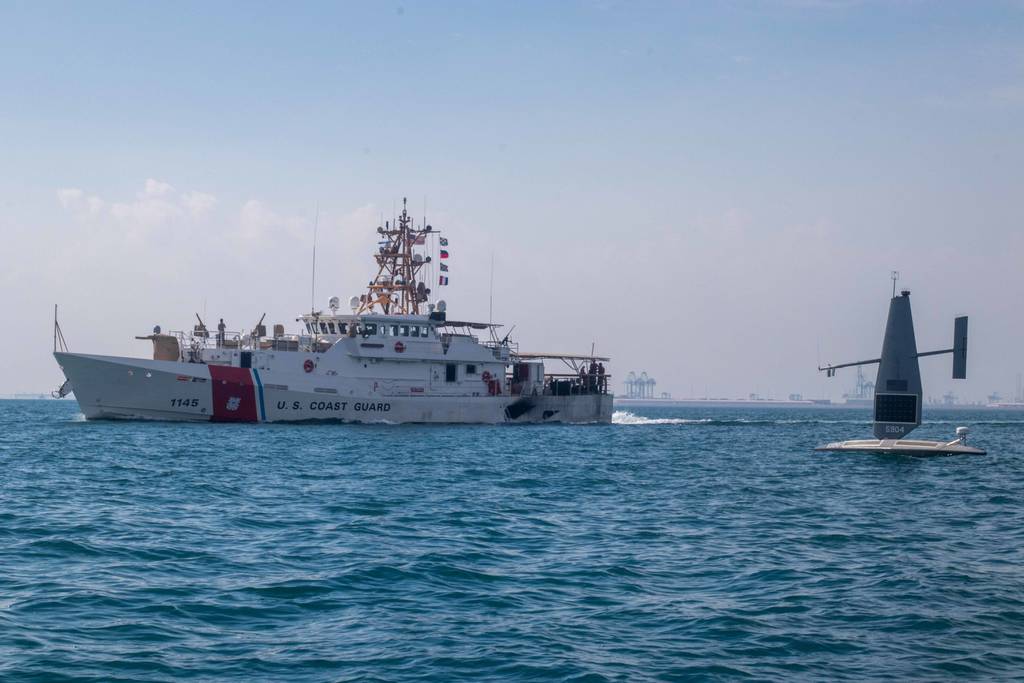
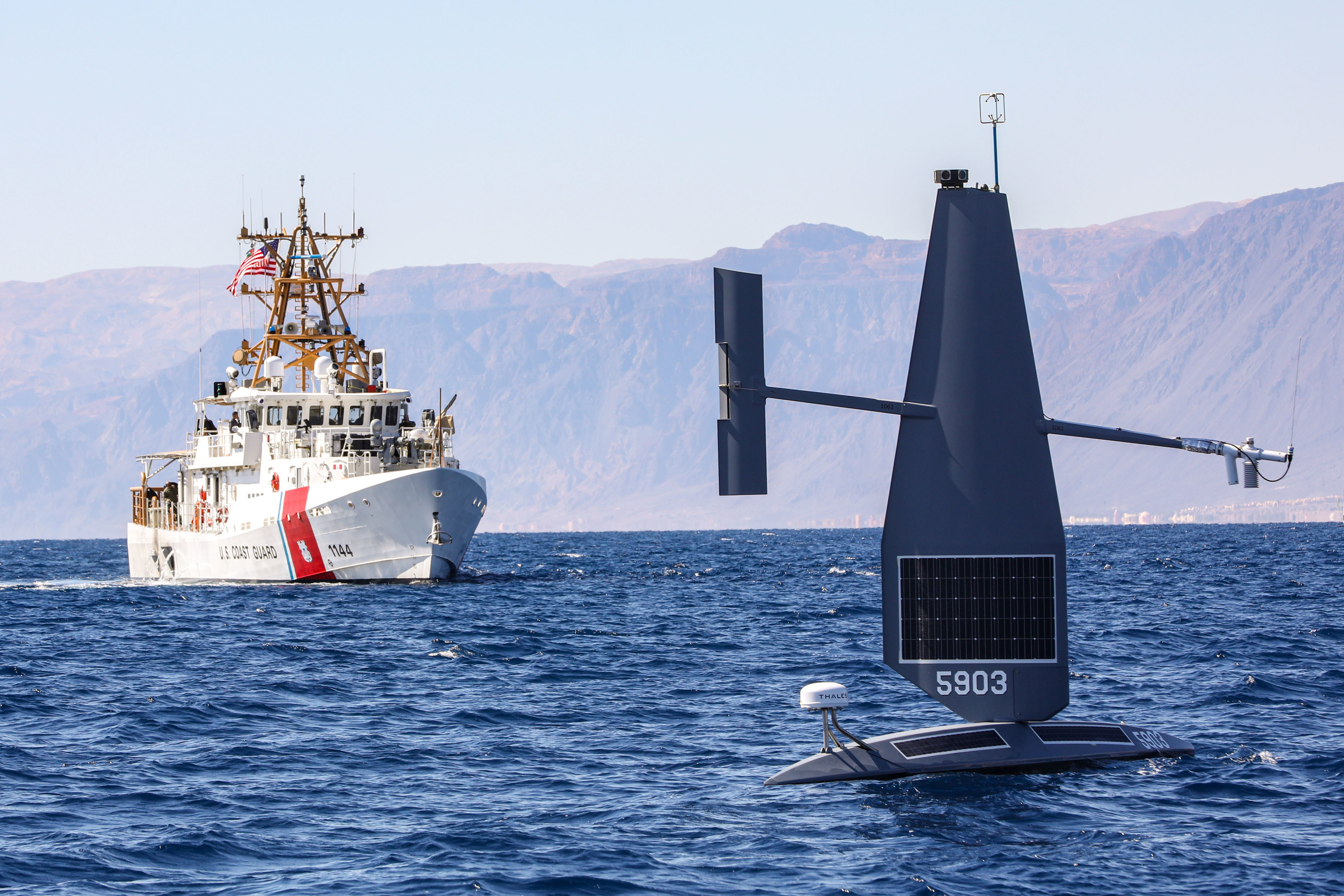
A Saildrone Explorer unmanned surface vessel operates alongside U.S. Coast Guard fast response cutter USCGC Emlen Tunnell (WPC 1145) in the Arabian Gulf, Nov. 29, during Digital Horizon 2022. (Sgt. Brandon Murphy/US Army)

Defense News reports on 5th Fleet’s “Digital Horizon” exercise.

“We have done a lot of work with AI previously, and we’ve done computer vision, we’ve done anomalous behavior detection, we’ve done AI-enabled [command and control], but we’ve done all of those separately,” the commodore explained. “At Digital Horizon, for the first time ever, we did that together on a single stack, and that’s all integrated on a single pane of glass.”

They have been trying a number of new systems, “10 of which are being operated in 5th Fleet for the first time.” We got a look at a portion of this exercise earlier, “Task Force 59 Launches Aerial Drone from Coast Guard Ship in Middle East” –NAVCENT. Also, among the systems they tested was V-Bat UAS.

There is also confirmation here that a similar effort will be going into 4th Fleet (Latin American/Caribbean Waters); that it will involve partner nations; and that it will look at IUU fishing as well as drug interdiction.

Fortunately, it looks like Coast Guard personnel and assets have been intimately involved in this effort and it looks like it will benefit our Maritime Domain Awareness (MDA) efforts.

(Will the Coast Guard’s next class of ships be USV tenders?)

“Task Force 59 Launches Aerial Drone from Coast Guard Ship in Middle East” –NAVCENT

221207-N-NO146-1001 ARABIAN GULF (Dec. 7, 2022) An Aerovel Flexrotor unmanned aerial vehicle (UAV) takes off from U.S. Coast Guard fast response cutter USCGC Emlen Tunnell (WPC 1145) transiting the Arabian Gulf, Dec. 7. U.S. 5th Fleet’s Task Force 59 launched the UAV during Digital Horizon, a three-week event focused on integrating new unmanned and artificial intelligence platforms, including 10 that are in the region for the first time. (U.S. Navy photo)

Below is a December 07, 2022, news release by U.S. Naval Forces Central Command / U.S. 5th Fleet Public Affairs.

To me this is really exciting news. The Webber class has been doing some great work at surprising long distances, performing most of the functions of a medium endurance cutter. Their primary weakness as a patrol ship has been the lack of an organic search aircraft. I assume this UAS is operating from the area on the O-1 deck forward of the bridge that had been designated for vertical replenishment.

This from Aerovel, maker of the Flexrotor (follow the link for dimensions and performance),

Boasting a flight endurance of more than 30 hours and a 120-kilometer communications range, this all-weather aircraft has operated in some of the harshest conditions on earth. Flexrotor is excellent for expeditionary missions. Needing only a 20’ by 20’ area for launch and recovery, it takes off and lands vertically and easily transitions into horizontal wing-borne flight. The STUAS flies completely automatically after takeoff, with no pilot intervention needed. Flexrotor quickly assembles for flight and can be boxed and stowed in minutes by a single person.

The Flexrotor is, in most respects, in the same class as the Scan Eagles that are currently being deployed on National Security Cutters. It is not as fast as Scan Eagle but apparently comparable or greater endurance and requires no launch or recovery equipment. These systems may actually constitute an improvement, compared to searches by manned helicopters, because of their much greater endurance and sensors like the VIDAR used on Coast Guard Scan Eagle UAS..


Task Force 59 Launches Aerial Drone from Coast Guard Ship in Middle East

By By U.S. Naval Forces Central Command / U.S. 5th Fleet Public Affairs | December 07, 2022

MANAMA, Bahrain —

A U.S. Navy unmanned task force in the Middle East launched an aerial drone from a U.S. Coast Guard vessel operating the Arabian Gulf, Dec. 7.

U.S. 5th Fleet’s Task Force 59 launched an unmanned aerial vehicle (UAV) from USCGC Emlen Tunnell (WPC 1145), marking a first for the task force with a U.S. Coast Guard vessel since the task force’s establishment in September 2021.

The launch also demonstrated close collaboration between the U.S. Coast Guard and Task Force 59 as U.S. 5th Fleet rapidly integrates unmanned systems and artificial intelligence to enhance monitoring of regional waters.

Task Force 59 is conducting Digital Horizon, a three-week event focused on integrating new unmanned and artificial intelligence platforms, including 10 that are in the region for the first time.

“Each day during Digital Horizon we have pushed to discover new capabilities, fast,” said Capt. Michael Brasseur, commodore of Task Force 59. “I am so proud of the team for their steadfast commitment to not only imagine new possibilities, but to deliver them.”

An Aerovel Flexrotor successfully took off and landed vertically aboard Emlen Tunnell, showcasing close collaboration between Navy, Coast Guard and industry partners to advance technology integration.

“We are so excited to be part of Digital Horizon and play a critical role by helping integrate new technologies into the fleet,” said Lt. Patrick Kelly, Emlen Tunnell’s commanding officer. “I am so proud of the crew for their dedication, commitment and professionalism, which made today’s success possible.”

The Flexrotor can support intelligence, surveillance and reconnaissance (ISR) missions day and night using a daylight or infrared camera to provide a real-time video feed.

In addition to providing ISR capability, UAVs like the Flexrotor enable Task Force 59 to enhance a resilient communications network used by unmanned systems to relay video footage, pictures and other data to command centers ashore and at sea.

U.S. 5th Fleet established Task Force 59 more than 14 months ago. Since its launch, the task force has deployed a suite of new unmanned systems while integrating artificial intelligence at operational hubs in Jordan and Bahrain.

Emlen Tunnell is one of the Coast Guard’s newest Sentinel-class fast response cutters forward-deployed to Bahrain where U.S. 5th Fleet is headquartered. The ship helps ensure maritime security and stability across the Middle East.

Iran’s Shahid Soleimani Catamaran Missile Corvette and Torpedo Armed RHIB

Iranian torpedo armed RHIB carried by Shahid Soleimani class catamaran corvette.

Covert Shores reported on new Iranian missile armed catamaran corvettes, but the report also included the photo above. What we are seeing is a boat suspended from the stern of the corvette. The boat is equipped with what appears to be a torpedo tube for a lightweight torpedo. Presumably there is a second tube on the other side. Diameter is likely to be the same as the NATO standard, 324mm or 12.75″. Unlike most lightweight torpedoes, this is unlikely to be intended for use against submarines. Almost certainly, it is intended for use against surface ships.

There is not a lot of public source information about Iranian torpedoes but their partners in crime, Russia and China, are both believed to have cloned the US made Mk46 torpedo and both passive and active acoustic and wake homing technology is readily available. Passive acoustic homing in the search phase, and wake homing in the terminal phase, seems likely. Range is probably at least 8,000 yards.

This means, these torpedoes can be launched from well outside the effective range of typical Close In Weapon Systems (CIWS) of 20 to 40mm. 

We can’t take much comfort in the fact that the warhead of these torpedoes would be about 100 pounds. That is way less than the approximately 600 pounds of a heavy weight 21″ torpedo like the Mk48, but the effects of an underwater explosion are not linear. The effect of a 100-pound warhead is about half that of heavy weight torpedoes that we have repeatedly seen break ships in half. So, a lightweight torpedo, exploding under the keel, might not break a ship in half, but it is going to hurt.

I have long felt an anti-surface light weight torpedo like this would provide Coast Guard cutters a relatively low-cost way to forcible stop a medium to large vessel, regardless of size, a capability they do not currently have. Apparently, the Iranians think it will work.

Shahid Soleimani Catamaran Missile Corvette:

This is a significant departure for the Islamic Revolutionary Guard Corps. Apparently, they have recognized that their naval swarm forces are vulnerable to attack from the air, and, I believe, particularly helicopters.

hIran Shahid Solemani class corvette top view

With its array of VLS AAW weapons, these corvettes constitute a serious threat to USN and allied helicopters that might be used to counter Iranian swarm tactics.

When engaged in force protection, if the force protection package includes aircraft, and one of this class shows up, a PATFORSWA Webber cutter class might be doing useful service, if they take station a couple hundred yards behind the corvette and maintain a fire control solution on that probably highly flammable and explosive collection of weapons in the center of the superstructure, behind the bridge–without pointing the gun, of course.

“Navy to establish additional unmanned task forces inspired by Task Force 59” –Defense Scoop

GULF OF AQABA (Feb. 13, 2022) The U.S. Coast Guard Sentinel-class cutter USCGC Glen Harris (WPC 1144) sails near a U.S sail drone explorer during the International Maritime Exercise/Cutlass Express (IMX) 2022, Feb. 13, 2022. IMX/CE 2022 is the largest multinational training event in the Middle East, involving more than 60 nations and international organizations committed to enhancing partnerships and interoperability to strengthen maritime security and stability. (U.S. Army photo by Cpl. DeAndre Dawkins)

Defense Scoop reports:

“The Navy plans to stand up additional unmanned task forces around the globe modeled after Task Force 59 in the Middle East, Navy Secretary Carlos Del Toro told reporters Saturday…“We’ve demonstrated with Task Force 59 how much more we can do with these unmanned vehicles — as long as they’re closely integrated together in a [command and control] node that, you know, connects to our manned surface vehicles. And there’s been a lot of experimentation, it’s going to continue aggressively. And we’re going to start translating that to other regions of the world as well,” Del Toro said during a media roundtable at the Reagan National Defense Forum.”

The report goes on to mention 4th Fleet and Oceana specifically, both regions of intense interest to the Coast Guard in regard to drug interdiction and Illegal, Unregulated, Unreported (IUU) fishing respectively.

This could be a big boost to our Maritime Domain Awareness. In the Eastern Pacific Drug Transit Zone we might need uncrewed surface vessels with passive acoustic sensors since the targets of interest are poor targets for radar and optical sensors. That could lead to practical experience that could improve our ASW capability.

“US Navy seizes massive shipment of ammo, explosive material in Gulf of Oman” –Task and Purpose

The U.S. Navy released photos of a fishing trawler it says carried more than 50 tons of ammunition rounds, fuses and propellants for rockets when it was boarded Dec. 1., 2022 in the Gulf of Oman. (U.S. Navy 5th Fleet via Stars and Stripes)

Task and Purpose reports,

“For the second time in less than a month, the U.S. Navy intercepted a ship passing through the Gulf of Oman and seized a large shipment of illicit weapons bound for Yemen..The Navy made the interception on Thursday, Dec. 1. Sailors with the Navy’s 5th Fleet stopped a fishing trawler in the gulf. During a flag verification boarding, they found a large cargo of munitions and chemical propellant. The sailors seized 1.1 million rounds of 7.62mm ammo, as well as an additional 25,000 12.7mm rounds. The trawler also was carrying almost 7,000 rocket fuses and more than 2,000 kilograms of a propellant used in rocket propelled grenades. The cargo totaled more than 50 tonnes.”

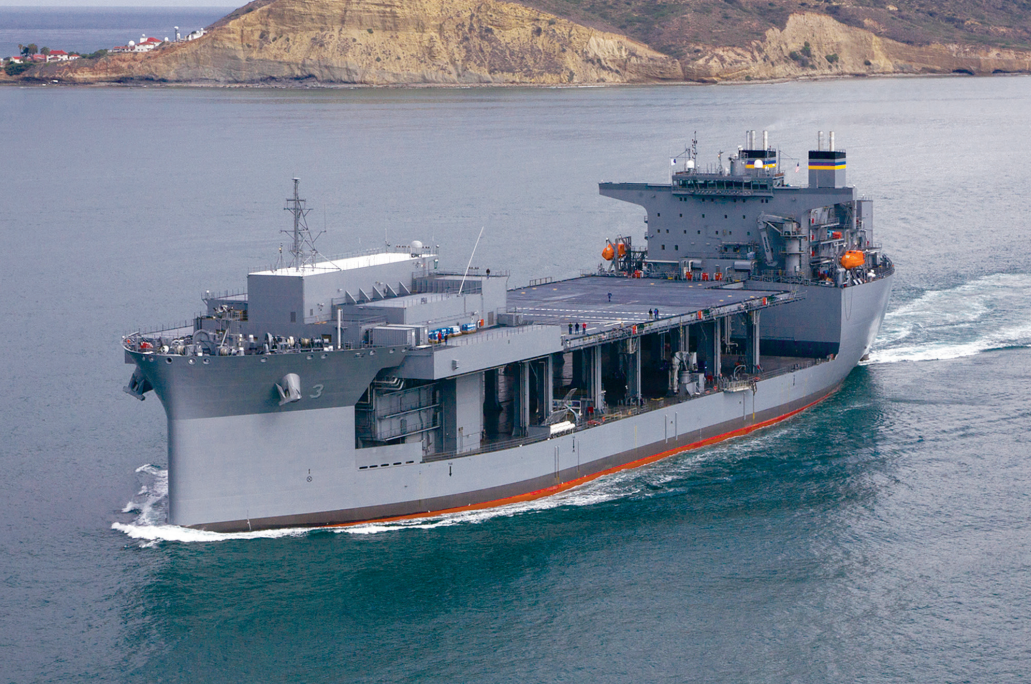
The boarding party came from the expeditionary sea base USS Lewis B. Puller, but I think it is a safe bet Coast Guard personnel were involved in the boarding.

USS Lewis B. Puller (ESB-3)


Fast Response Cutter / Navy MkVI Patrol Boat –Peter Ong

Today we have a guest author, Peter Ong. This is Peter’s sixth post on this blog, and he is now a regular contributor to Naval News. In this post, he reports a conversation with Coast Guard Cutter Forces about why the success of the Coast Guard’s Fast Response Cutter program has allowed  the Navy to cancel their MkVI patrol boat program that at one time was expected to produce 48 patrol boats.

The MkVI had only very austere galley and messing facilities, a Microwave and MREs. They were not expected to be underway more than 24 hours. The FRCs endurance, allowing days, rather than hours, on station to intercept drug and arms smugglers and their abilitiy to support counter UAS systems may be providing capabilities the MkVI simply could not have.
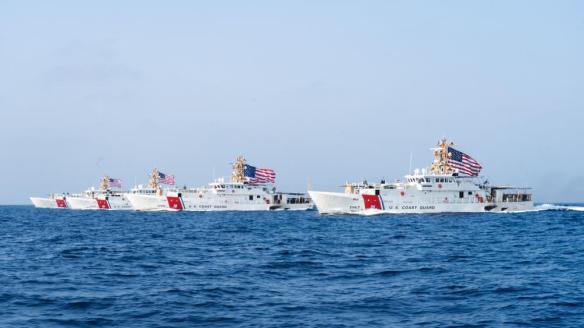
220822-A-KS490-1182 STRAIT OF HORMUZ (Aug. 22, 2022) From the left, U.S. Coast Guard fast response cutters USCGC Glen Harris (WPC 1144), USCGC John Scheuerman (WPC 1146), USCGC Emlen Tunnell (WPC 1145) and USCGC Clarence Sutphin Jr. (WPC 1147) transit the Strait of Hormuz, Aug. 22. The cutters are forward-deployed to U.S. 5th Fleet to help ensure maritime security and stability across the Middle East. (U.S. Army photo by Spc. Noah Martin)

When is a ship a boat and when is a boat a ship? When is an apple an orange and when is an orange an apple? Answer: they are not as these are two different and distinct things when it comes to comparing the warships of the U.S. Coast Guard to the MkVI patrol boats of the U.S. Navy.

A U.S. Navy Mark VI patrol boat with Maritime Expeditionary Security Squadron TWO moves through the water prior to a live fire exercise in the Philippine Sea, Feb. 27, 2021. (U.S. Marine Corps photo by 1st Lt. Stephanie Murphy).

The U.S. Navy is divesting of their 12 in-service Mark VI Patrol Boats, which at the Surface Navy Association 2021, Major General Tracy King, USMC, Director, Expeditionary Warfare (N95) stated that the twelve Mark VIs “Were very expensive to maintain.” However, many critics and pundits of the Mark VIs’ early retirement cite that the Mark VIs still have a lot of life left in them and that their high speeds and heavy armament makes them an asset to special forces, Marines, and Navy SEALs. Mark VIs also perform capital ship escort screenings and contribute to Distributed Lethality and Distributed Maritime Operations by having a smaller vessel signature that might help U.S. Marines move around and slip ashore undetected.

In a phone interview on September 29, 2022 with United States Coast Guard (USCG) Captain John J. Driscoll, Office of Cutter Forces (CG-751), the U.S. Coast Guard captain made a comment about the Sentinel-class Fast Response Cutters (FRC) substituting for the U.S. Navy’s Mark VI Patrol Boats in the Patrol Forces Southwest Asia (PATFORSWA) region and other parts of the globe.

The U.S. Navy plans to replace the Mark VIs and the aging Patrol Coastal boats in the PATFORSWA region with USCG FRCs. When asked how the cutter fleet is integrated with the U.S. Navy and the Department of Defense, the captain replied that the cutter fleet is built into different operational security plans within the U.S. Department of Defense, but these plans are not discussable.

Captain Driscoll said that the Coast Guard’s Fast Response Cutters and the Mark VI are different assets and have different capabilities. The 65 planned FRCs have much greater range and greater endurance (5 days, 2,500 nautical miles (4,600 km; 2,900 mi) and are designed to be on patrol 2,500 hours per year) than the U.S. Navy’s Mark VI Patrol Boats (750 nautical miles (860 mi; 1,390 km) at 25 knots; 690 nautical miles (790 mi; 1,280 km) at 30 knots).

The captain mentioned that the FRC is tremendously capable and different in how it integrates with the Department of Defense and one can’t make comparisons between the Navy’s Mark VI and the USCG’s Fast Response Cutters because the FRC is a commissioned warship of the United States with an assigned crew whereas the Mark VI is just a patrol boat—a ship versus a boat—the ship is larger. The FRC is 154-feet long (46.9 m) with a beam of 25-feet (7.6 m) whereas the Mark VI Patrol Boat is 84.8-feet (25.8 m) long with a beam of 20.5-feet (6.2 m).

Armament is about the same between the two vessels (a Mark 38 MOD 2 25mm autocannon forward with crew-served 12.7mm heavy machine guns and grenade launcher(s) aft) with the Mark VI sporting more armament (another potential Mark 38 25mm autocannon aft and potential crew-served 40mm automatic grenade launchers or 12.7mm heavy machine guns. Some PATFORSWA FRCs will receive the Mark 38 MOD 3 with a 7.62mm coaxial chaingun to the bow 25mm autocannon and a 40mm automatic grenade launcher).

Nonetheless, one can see the huge difference in operational range. Furthermore, the success of the 65 planned Coast Guard FRCs eclipses the 12 Mark VI U.S. Navy Patrol Boats in terms of production numbers. Furthermore, the Mark VI is propelled by waterjets to 45 knots (52 mph; 83 km/h) whereas the FRC has propellers that drive it at 28+ knots. Repeated requests to the U.S. Navy asking for explanation on “[The Mark VIs are] very expensive to maintain” were not answered, but one can assume that it takes a lot of time, labor, and money to clean out the Mark VI’s waterjet intakes and impellers compared to the more easily accessible external shaft and propellers on the Fast Response Cutters when operating in littoral waters potentially teeming with flotsam and seaweed.

FRC range and endurance are important. Captain Driscoll stated that the FRCs are working in the Papua New Guinea and Indonesian region to combat Illegal, Unreported and Unregulated (IUU) fishing and are working with partner nations to address the competition for maritime resources.

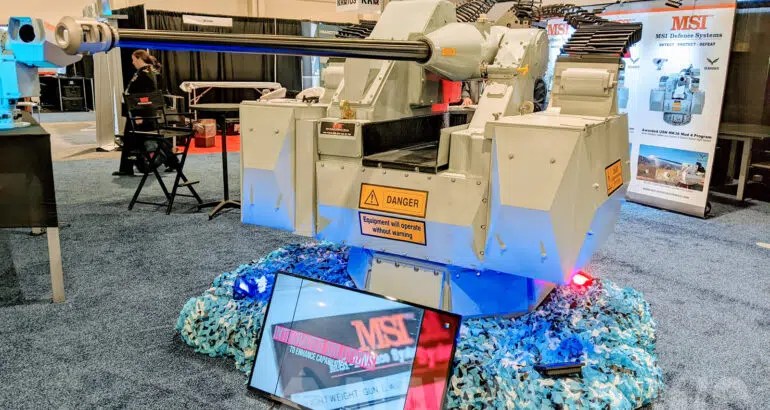
As for possible up-arming of the FRCs with the Mark 38 MOD 4 30mm autocannon, that is a retrofit possibility, noted the captain, although the upcoming Polar Security Cutter (PSC) heavy icebreakers will receive the 30mm autocannons first, two on each PSC. Captain Driscoll mentioned that the 30mm autocannon is in the U.S. Navy acquisition system and that the USCG and U.S. Navy both decide on future cutter armament. Programmable and airbursting 30mm ammunition options are not discussable although if the U.S. Navy has the specialized and advanced 30mm ammunition in its inventory, the USCG can also use it depending on the cutter’s mission parameters.

The new Mark 38 Mod 4 30mm naval gun system on display on MSI Defence stand at Sea Air Space 2022. It can, in theory and with funding, be retrofitted aboard existing USCG cutters if agreed upon between the U.S. Navy and the U.S. Coast Guard. Photo: NavalNews

“U.S. 5th Fleet Reveals New Details on Iranian Drone Attack on Tanker” –USNI

Graphic illustration and images captured by a U.S. Navy explosive ordnance disposal team aboard M/T Pacific Zircon, Nov. 16, showing the location where an Iranian-made unmanned aerial vehicle (UAV) penetrated M/T Pacific Zircon’s outer hull during an attack Nov. 15. The one-way UAV attack tore a 30-inch-wide hole in the outer hull on the starboard side of the ship’s stern, just below the main deck. US Navy graphic

The US Naval Institute has a post providing addition detail about the November 15  drone attack on tanker Pacific Zircon.

The primary thrust of the post seems to be, to confirm that the drone was of Iranian origin, but then, that was almost assumed. They seem to have proven that, identifying it as a Shahed-136 design, a “loitering munition.”

For me the new information was where the tanker was targeted and the extent of the resulting damage.

When I first heard that this drone had hit the hull, I thought perhaps the Iranians had decided it was not to their advantage to kill crew members, as had happened in the July 30 attack on the tanker Mercer Street, but apparently that was not the case, since this strike was also on the stern where it is more likely to effect crewmembers.

As to the weapon’s effect, the Shahed–136 reportedly has a 30–50 kilograms (66–110 lb) warhead. referencing a 5th Fleet report, USNI notes,

On Nov. 15, a Shahed 136 explosive-tipped drone flew into the aft section of the merchant oil tanker M/T Pacific Zircon punching a hole through the hull, “while subsequently penetrating and damaging internal compartments. The UAV’s explosive impact also damaged a shipboard boiler, potable water tank and life raft,” reads the statement.

That they managed to damage engineroom equipment, which presumably required penetration of multiple internal bulkheads, after penetrating the hull, is more than I would have expected. The anti-armor, shaped charge version of the munition, which would result in a narrowly focused path of destruction, may have been used.

Another report from Business Insider vis Yahoo that includes more photos here.

“U.S. Blames Iran for Drone Attack on Tanker Near Oman” –USNI

Shahed 136 drones. Iranian military photo

US Naval Institute’s News Service reports,

U.S. Central Command and Israeli officials are blaming Iran for a Tuesday attack on an oil tanker linked to an Israeli billionaire off the coast of Oman.

Tanker Pacific Zircon was 150 miles off the coast of Oman when what U.S. officials said was an unmanned aerial vehicle hit the ship at about 3:30 p.m. local time, according to the shipping company.

Interestingly this second attack was on a ship linked to Idan Ofer, brother of the Israeli billionaire, Eyal Ofer, linked to the tanker, Mercer Street, attacked in a similar manner in July 2021.

The latest attack did not result in any injuries, unlike the earlier attack that resulted in the death of two crewmembers. Both attacks occured South of Oman in the Northern Indian Ocean.