Video–“Coast Guard Readiness: How Far Can We Stretch Our Nation’s Only Multi-Mission, Military Force?”

Above is the video of the Senate Subcommittee hearing for which I provided the Commandant’s prepared remarks earlier.

Participating Senators I noted were:

  • Dan Sullivan, Sub-Committee chair (R, Alaska)(Lt.Col., US Marine Corps Reserve)
  • Gary Peters, ranking member (D, Michigan)(LCdr. US Navy Reserve, Supply Corps)
  • Bill Nelson, ranking member of the Commerce Committee (D, Florida)(Capt. US Army Reserve)(NASA Scuttle payload specialist)
  • Roger Wicker, Chairman of the Seapower sub-committee (R, Mississippi)(Lt.Col. ret. USAF reserve)
  • Richard Blumenthal (D, Connecticut) (USMC Reserve 1970 to 1976 discharges as Sargent)
  • Brian Schatz (D, Hawaii)
  • Ed Markey (D, Mass.) (Spec4, US Army Reserve, 1968-73)
  • Jim Inhofe (R, Oklahoma) (Spec4, US Army, 1956-1958)
  • Maria Cantwell (D, Washington)

You can also check out the original post from the Senate Committee on Commerce, Science, and Transportation. (Same video is available there, but the meeting does not actually start on that version of the video until minute 36.) There you can also find the written statements of the other three witness who constituted the second panel. The Commandant was the sole witness on the first panel.

This was something of a love fest for the Coast Guard with repeated praise for the people and actions of the Coast Guard.

This hearing was reputedly about how the Coast Guard had been impacted by the unusually severe Hurricane season. There is not a lot new here but there were some interesting remarks.

Polar Icebreaker Contracts

The intention is to Contract for the first Icebreaker and then employ block buy for the next two (28m). To me this seems to negate most of the advantage of a block buy. I don’t believe we will or should buy one and then wait until we have tried it out before contracting for the next two. That would necessitate a delay of at least five years during which we would still have the nightmare scenario of our only heavy icebreaker having no rescue if it should break down in the ice–certainly not an impossibility even with a new ship. If we are going to contract for the remaining two before testing the first, we might as well block buy all three.

First of class is always the most expensive. If the shipyard gets a block buy they know that initial improvements in productivity can be amortized over the entire block buy quantity. In some cases, in order to win the whole project, the shipyard will cut the price of the first ship substantially knowing they will make a profit over the entire project.

If we buy one and then block buy the second and third, we have paid for improvements to the winning yard with the first contract and minimized the chances for a competitive bid for numbers two and three.

Legislation has capped DOD participation in icebreaker procurement, so the bulk of icebreaker procurement costs will come out of the Coast Guard budget.

Authorization

There was a lot of discussion about the need to have the Coast Guard Authorization Bill signed into law, still not approved. You can see it here.

Other topics

There was a discussion of the high cost of the Coast Guard response to the recent series of Hurricanes.

Representative Sullivan spent a lot of time, discussing and advocating for an eleven mile road from King Cove  (population estimate–989) to Cold Bay, Alaska (population estimate–122) which has an all-weather airport with two runways, one 10,180 feet and one 6285 feet in length. The Coast Guard connection is that the road would minimize or eliminate the necessity for the Coast Guard to Medivac emergencies from King Cove by helicopter, which is frequently hazardous. It is a Federal issue, because the road would run through a Federal reserve. The Commandant fully supported the desirability of completing the proposed single lane gravel road as a means of minimizing the requirement for helicopter medivac.

Video Breakdown

28m Domestic icebreakers–Design work on new domestic icebreakers is expected to start in 2030. That sounds a bit late to me. Mackinaw was commissioned in 2006 so if that is what he is really talking about, that makes sense, but the 140 foot icebreaking tugs are a different story. The first for of these will be 51 years old in 2030. More than  half of them have already completed in-service which was expected to add 15 years to their service life. Morro Bay, at least, is expected to reach the end of her service life in 2030, and considering how long it takes us to build a ship we really need to start the process not later than 2025.

45m Western Pacific Fisheries Protection–They have not seen much risk of Illegal, Unregulated, or Unreported fishing. 

51m Inland River Tenders

56m We may need to replace the 52 ft MLBs with something larger than the 47 foot MLB sometime in the future, but their end of life is not yet apparent

58m Coast Guard Museum in New London

60m Sexual Assault in the CG

1h02m Puerto Rico/Virgin Islands continuing commitment and its effects on drug seizures and alien migrant interdiction.

1h05m Vessel homeporting

1h08 CG center of expertise, particularly in regard to clean up spills in ice and fresh water

1h16m Army Corp of Engineers dredging backlog.

1h17m  Second Panel begins.

1h19m Medivac from King Cove

1h31m Mr Smithson regarding Deepwater Horizon experience, unified approach, investment in mitigation.
 

Acoustic Systems from Our Canadian Friends

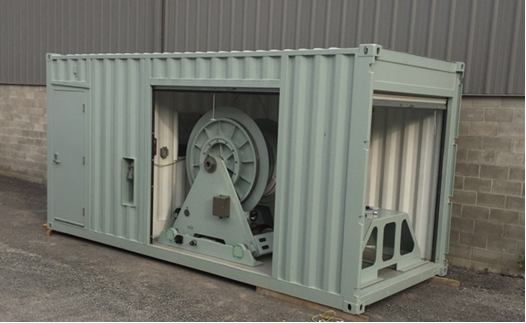
TRAPS containerized active/passive towed array from GeoSpectrum Technologies.

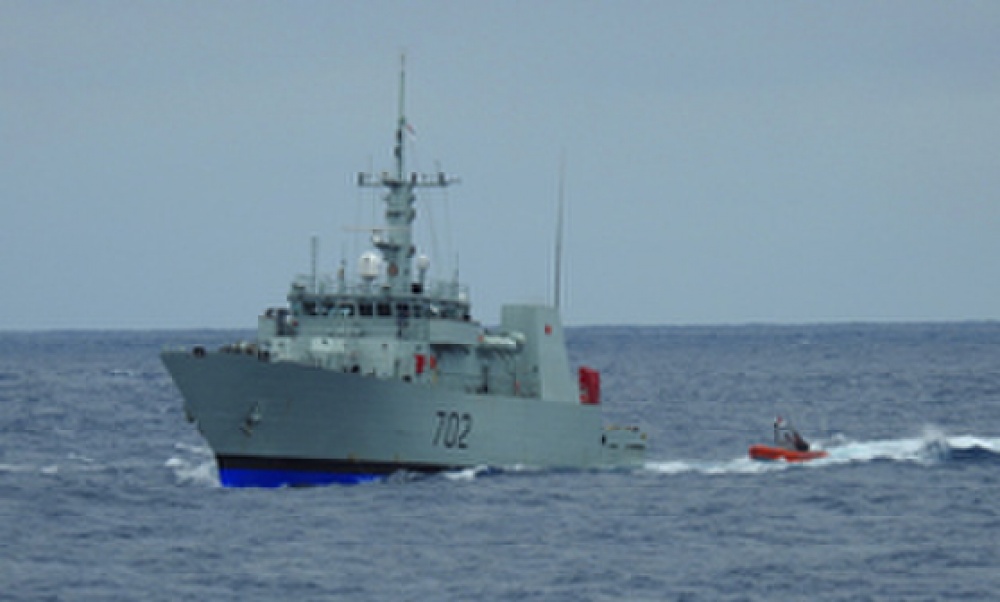
We talked about the possibility of using TRAPS earlier. I had an email discussion with a GeoSpectrum Technologies representative, Geoff Lebans. He tells me the Canadian Navy will test TRAPS from a Kingston class ship in March. 

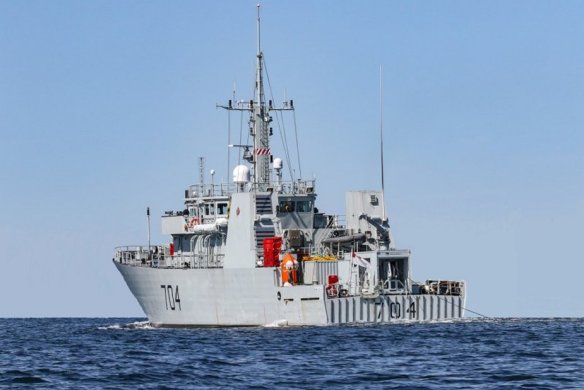
The Kingston class are a little smaller and slower than the 210 foot WMECs, but they have regularly assisted the Coast Guard in drug interdiction.

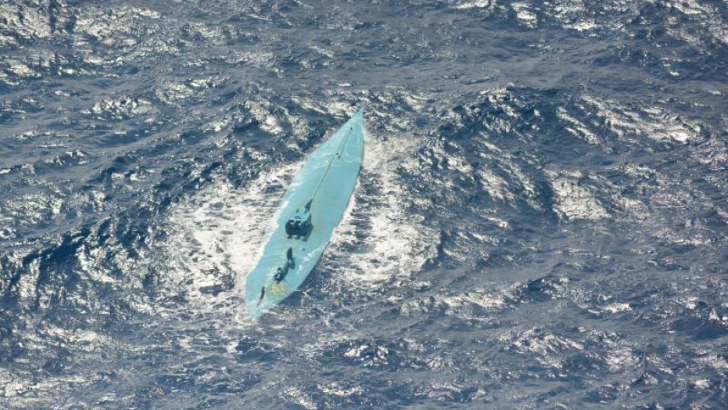
Would love to see how effective this system might be in detecting semi-submersibles.

The Coast Guard has expressed an interest in having unmanned systems providing networked sensors and GeoSpectrum makes a much smaller towed acoustic directional sensor that they believe would work with the Liquid Robotics™ Wave Glider™ and other small autonomous vehicles. Frankly, I could see the drug cartels putting a bounty on recovery of unmanned surface vessels and their sensors. Still the Navy might also be interested in this sort of network for ASW and they could probably fund the program out of loose change they might find in the sofa. Forth Fleet would probably more than happy to test it in the Eastern Pacific and cutters could probably deploy them.

TRAPS_towed_reel-able_Active_Passive_Sonar

TRAPS, towed reel-able Active Passive Sonar, deployed from HMCS Shawinigan, a 970 ton Kingston-class coastal defense vessel (photo added 7/03/2020)

Hopefully the Canadians will send their TARPS equipped ship down to the Eastern Pacific transit zones. If they do not, it might make a good Coast Guard R&D project to mount one on the back of a WMEC and use it to help define competitive contract requirements.

An acoustic system like this should be good for detection of something like a semi-submersible out to at least the first convergence zone, well beyond the visual and radar horizon. Mounted in a container they could be placed on WMECs bound for the Eastern Pacific and then transferred to the OPCs as they replace the MECs.

HMCS Nanaimo, a Royal Canadian Navy maritime coastal defense vessel operating in support of Operation Martillo


Semi-Submersible Intercepted Near Texas? Don’t Think So

Quoting one of the articles below, “© U.S. Customs and Border Protection, Military intercepted a self-propelled semi-submersible vessel loaded with more than 3,800 pounds of cocaine right outside U.S. borders.” 

I have seen a couple of articles lately that claim a self propelled semi-submersible was seized off Texas.

The first was, “Self-Propelled vessel intercepted smuggling more than 3,800 pounds of cocaine near Texas”

A U.S. Coast Guard cutter intercepted a self-propelled semi-submersible vessel engaged in smuggling more than 3,800 pounds of cocaine, federal officials said Sunday.

According to the U.S. Customs and Border Protection (CBP), on November 13, CBP and Marine Operations (AMO) arrested the crew during operations in international waters (I don’t think this could be true–Chuck), and all three suspects will face charges in the U.S.

“The drug cartels are relentless and extremely innovative,” National Air Security Operations Center – Corpus Christi Director Allen Durham said.

“Interdicting self-propelled semi-submersible vessels requires expertise and the right aircraft. Air and Marine Operations will continue to beat the cartels at their own game to protect our borders.”

The multi-day operation from surveillance to interception, according to CBP, involved several interagency partners including the U.S. Coast Guard and the U.S. Navy.

AMO operates maritime patrol aircraft from Corpus Christi, Texas, and Jacksonville, Florida, to conduct long-range aerial patrols and surveillance missions along the U.S. borders and in drug transit zones in Central and South America, according to CBP.

The second was, “Narco subs: Texas mobilises to stem invasion of narcotic carrying submarines.”

“”The drug cartels are relentless and extremely innovative,” the Corpus Christi director for the National Air Security Operations Center said earlier this month. “Interdicting self-propelled semi-submersible vessels requires expertise and the right aircraft.”

“Texas is mobilising its drug agents and prosecutors to specifically target drug submarine builders and operators, ABC America reports.”

These both appear to stem from a press release that originated in Texas from Customs and Border Protection, presumably the National Air Security Operations Center – Corpus Christi Director Allen Durham.  Apparently the semi-submersible was detected by a CBP P-3.

As far as I can tell, the interdiction, which apparently occurred on November 13, actually happened off Panama.

If and when we ever get self propelled semi-submersibles going directly into the US, it will be a significant event with its possible implications for terrorism, but I don’t think we have any public knowledge of that happening yet.


Navy Ships to Return to the Drug War

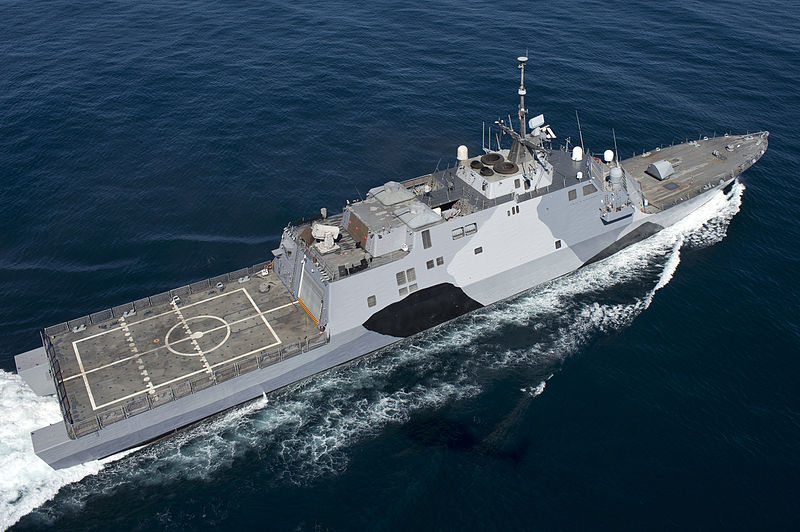
USS Freedom (LCS-1)

The US Naval Institute reports, “SECNAV Memo: Navy Won’t Reactivate Perry Frigates for SOUTHCOM Mission; Will Send Ships to Fight Drug War in 2018.”

The Navy has not been providing ships in support of the SouthCom drug interdiction mission since the last USN Oliver Hazard Perry class frigate was decommissioned in 2015, but it looks like the Navy will return to the mission.

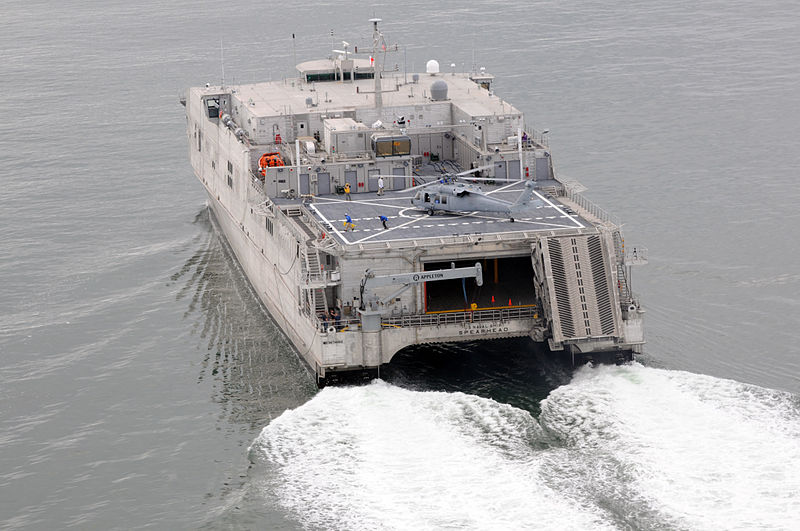
SecNav has directed the Navy provide four ship years in the form of either LCS or Spearhead-class expeditionary fast transports (T-EPF)(formerly called the Joint High Speed Vessel).. In addition, they will be bringing with them an unmanned air system, probably Scan Eagle.

They will certainly need Coast Guard Law Enforcement Detachments aboard, but the mention of Scan Eagle makes me wonder about the aviation support planned. No mention of helicopter or the larger MQ-8 UAS. Are they going to want a Coast Guard Airborne Use of Force helicopter detachment?

The Military Sealift Command joint high-speed vessel USNS Spearhead (JHSV 1) (Now T-EPF-1)conducted high-speed trials, reaching speeds of approximately 40 knots off the coast of Virginia. (U.S. Navy photo by Mass Communication Specialist 1st Class Phil Beaufort/Released) 130820-N-ZO696-135

A Navy Patrol Craft Working With the Coast Guard

USS Zephyr (PC 8) and U.S. Coast Guard Law Enforcement Detachment Pacific personnel, conducting operations in support of JIATF-S Operation Martillo. U.S. Navy photo by MC3 Casey J. HopkinsDefenseMediaNetwork has an interview with the then CO of USS Zephyr (PC-8), LCdr Cameron Ingram, shortly after they had participated in the seizure of a GoFast under Seventh District Operational Control.

The CO, obviously enjoyed working with the LEDET, and it appears he likes the Coast Guard’s Over the Horizon boat which operated from the Zephyr.

USS Zephyr crew members operate a Puma UAV.

They have aboard the Puma UAV. Seems it could work on the Webber class as well. On Zephyr the UAV is operated by an HM and an EN.

They also have the new Mk38 mod3 which includes a coaxial 7.62 mm machinegun. This gun should start showing up on Webber class WPCs soon. Interestingly while he appreciates the optics that come with the Mk38 mod3, he would still like to have a FLIR on the mast.

There is an interesting discussion following the interviewers question, “It’s good to have an extra watchstander,” about the benefits of having a Merchant Marine Academy cadet aboard.

Interview with Commandant

https://1yxsm73j7aop3quc9y5ifaw3-wpengine.netdna-ssl.com/wp-content/uploads/2017/10/102017-dhs-15.mp3?_=1

Federal News Radio has an interview with the Commandant. There is a short written summary here or you can listen to it on their page or above. Some interesting developments with regard to drug interdiction in the Eastern Pacific. Sea story about actual employment of a sea based Unmanned Air System.

Interestingly he again refers to Russia arming Icebreakers so I think perhaps we may see some movement to arm or at least make provision for arming our new icebreakers.

“Effective Border Security: Addressing the Causes and Root Problems South of Mexico,” Video

If you did not see the U.S. Naval Institute presentation, “Effective Border Security:
Addressing the Causes and Root Problems South of Mexico,”
when it aired live on Tuesday, 29 August, you can still watch it. The US Naval Institute News Service has both commentary and a video of the discussion here.

The discussion featured ADM Kurt W. Tidd, USN, Commander, U.S. Southern Command and The Hon. Earl Anthony Wayne, Career Ambassador (Ret.)
former Ambassador of the United States to Mexico (2011-2015) and Public Policy Fellow, Woodrow Wilson International Center for Scholars. The conversation was moderated by ADM Thad W. Allen, USCG (Ret.) former Commandant, U.S. Coast Guard (2006-2010).

It is an hour and 20 minutes. I will mention a couple of things that caught my attention.

The transnational criminal organizations are evolving. Adm. Tidd indicated that illegal gold mining, which is wrecking the environment in several Latin American countries is yielding an estimated $3.5B in profits compared to $2B (wholesale) from the sale of cocaine, and once taken outside the country is no longer “illegal.”

Heroin, primarily from Mexico, and synthetic opioids primarily from China but entering the US from Mexico are becoming more of a problem than Cocaine.

The US has finally acknowledged that we are part of the problem, that $19B to $29B profit in drug sales in the US, buys a lot of influence and arms.

SOUTHCOM is attempting to build capacity in Latin American militaries and sees developing these four principles within those services as essential.

  • Respect for human rights.
  • Need for professional NCOs
  • Talent from all parts of society including women
  • Jointness not only among the military but also law enforcement and diplomatic

Adm. Tidd both complemented the Coast Guard and noted the absence of the Navy when he said, “My Navy all has white hulls and orange stripes.”

Question at 58:15 about how we might interdict the established target of 40%. Adm. Tidd talked around the question, suggested we could get help from our allies but he also said there were not enough ships in the USN and USCG to interdict our way out of the problem, which may be true, but if we really do have good information of 80% of the traffic as has been reported repeatedly, then there are enough ships to achieve a 40% interdiction rate.  It is simply not a priority. Earlier in the presentation, Admiral Tidd acknowledged that in an earlier assignment he had allocated Navy resources and had decided against assigning them to SOUTHCOM.

Opinion on the border wall 1h01m

1h07 capabilities of our allies

Positive aspects of NAFTA 1h11

Effective Border Security: Addressing the Causes and Root Problems South of Mexico–Discussion

Passing along an announcement of an event coming up Tuesday, 29 August. Below is the announcement edited slightly. 

Livestream will be available here on 29 August at 1900.

As part of

The U.S. Coast Guard Academy 2017- 2018 Leadership Lecture Series

The U.S. Naval Institute presents

Effective Border Security:
Addressing the Causes and Root Problems South of Mexico

Featuring

ADM Kurt W. Tidd, USN
Commander, U.S. Southern Command

and

The Hon. Earl Anthony Wayne, Career Ambassador (Ret.)
former Ambassador of the United States to Mexico (2011-2015) and
Public Policy Fellow, Woodrow Wilson International Center for Scholars

in a conversation moderated by ADM Thad W. Allen, USCG (Ret.)
former Commandant, U.S. Coast Guard (2006-2010) 

29 August 2017, 1900-2000 Eastern

U.S. Coast Guard Academy, Leamy Hall

Space is limited, please contact conferences@usni.org if you have questions or are interested in attending in person.

This event is made possible with support from The William M. Wood Foundation.

U.S. Coast Guard: Priorities for the Future–CSIS/USNI

The video above records an recent event, a “Maritime Security dialogue” presented by the Center for Strategic and International Studies (CSIS) and the United States Naval Institute (USNI) featuring Admiral Paul F. Zukunft, Commandant of the U.S. Coast Guard, for a discussion on the “U.S. Coast Guard’s future priorities.”

Despite the title, don’t expect a recitation of Coast Guard priorities. Most of the material is familiar, but there were a few interesting comments, including some that might be surprising. A number of things the Commandant said here made news.

  • That the NSCs could be made into frigates.
  • That the Polar Icebreaker would cost less than $1B
  • His support of transgender CG personnel.

I’ll give a quick outline of what was talked about. At the end I will rant a bit about some of my pet peeves.

The Commandant’s prepared statement is relatively short beginning at time 2m45s and ending about 11m.

6m00 In our listing of missions, the Commandant said Defense Operations should be listed first. He noted that there are 20 ships chopped to Combatant Commanders including eleven  ships operating under SOUTHCOM.

Q&A begins at 11:00.

16m20s The Commandant noted there is a Chinese ship rider on a USCG cutter off Japan and that Coast Guard aircraft are flying out of Japan.

17m30s Boarder protection/drug interdiction

20m Called the OPCs “light frigates”

22m As for priorities the Commandant noted a need to invest in ISR and Cyber

23m Cyber threat.

24m Expect return to sea duty because of length of training.

26m30s “Demise of the cutterman”/Human Capital Plan–fewer moves–removed the stigma of geographic stability

29m25s Highest percentage of retention of all services–40% of enlisted and 50% of officers will still be in the service after 20 years

30m Law of the Sea. Extended continental shelf in the Arctic.

32m30s Need for presence in the Arctic.

36m ISR, 38m15s Firescout. An interesting side note was that the Commandant seemed to quash any possibility of using the MQ-8 Firescout. He noted when they deployed on a cutter 20 people came with the system.  He called it unoccupied but not unmanned.

40m Icebreakers

43m30s Comments on transgender members

45m15s Icebreakers–will drive the price down below $1B.

47m NSC as frigate–no conversations with the Navy about this. Performance of Hamilton.

49m50s Count the NSCs toward the 355 ship Navy.

50m30s Illegal migration and virulent infectious disease

53m35s CG training teams in the Philippines and Vietnam to provide competency to operate platforms to be provided by Japan. Two patrol boats going to Costa Rica. Other efforts to build capacity.

56m DHS is the right place for the CG.

The Commandant touched on a couple of my pet peeves, specifically

  • He called the OPCs “Light Frigates,” so why aren’t they designated that way? WMSM and WMSL are just wrong in too many ways.  Give our ships a designation our partners and politicians can understand. A WLB is a cutter and also a buoy tender. The OPC can be both a cutter and a light frigate. I have suggested WPF. Maybe WFF for the Bertholfs and WFL for the Offshore Patrol Cutters. If we want to be thought of as a military service, we need to start using designations that will be seen and understood as military.
  • He mentioned the possibility of including the Bertholfs in the 355 ship fleet total. Coast Guard combatants should be included when the country counts its fleet. No, the cutters are not aircraft carriers or destroyers, but the current fleet of about 275 ships includes about 70 ships that have no weapons larger than a .50 cal. These include eleven MCM ships and about 60 ships manned by civilian crews such as tugs, high speed transports, salvage ships, underway replenishment ships, and surveillance ships. Counting the Cutters as part of the National Fleet would raise  our profile as a military service. The Navy might not like it, but it does give a better idea of our actually available assets for wartime, which is the point of such a listing.