Alameda-based Coast Guard cutter and crew depart for Western Pacific patrol


Got a news release reporting the departure of Bertholf from Alameda California for a Patrol in the Western Pacific which I have quoted below. Normally I would leave reporting of ship deployments to other sites, but, I don’t think this is routine.

We have sent cutters into the Western Pacific (since Vietnam). Munro (WMSL-755) visited Fiji and the Solomon Islands in 2018 (Paying More Attention to the Western Pacific, Dec. 8, 2018). Waesche made the trip back in 2012 (Waesche Enroute to SE Asia Apr. 4, 2012).There could have been others, but I don’t think there were a lot more, but coming on the heels of Munro’s deployment this may be a trend.

There is also a video here. The Captain tells the crew, “We’re going to be doing a national security mission. When we get underway, we are going to be working for the United States Indo-Pacific Command, Combatant Commander. We’re going to be executing national security operation throughout the Pacific.”

What is the mission? Certainly they will be doing some capacity building, exercising with partner navies and coast guards. They will probably do some fisheries enforcement both, in the US EEZ and with shipriders to assist in the EEZs of friendly nations, certainly in Oceana and perhaps in SE Asia. We have a huge expanded Pacific Remote Islands Marine National Monument wit  490,000 square statute miles or about 390,000 square nautical miles of Ocean to police (Huge New Marine Reserve, Pacific Remote Islands Marine National Monument, Sep. 26, 2014). Plus there are the island nations of Micronesia, the Marshall Islands, and Palau joined with the U.S. in “Compacts of Free Association.”

There have been calls for more US Coast Guard presence in the Pacific from New Zealand and from the 7th Fleet. Some, including the previous Commandant see the US Coast Guard as a counter weight to China Coast Guard in the South China Sea.

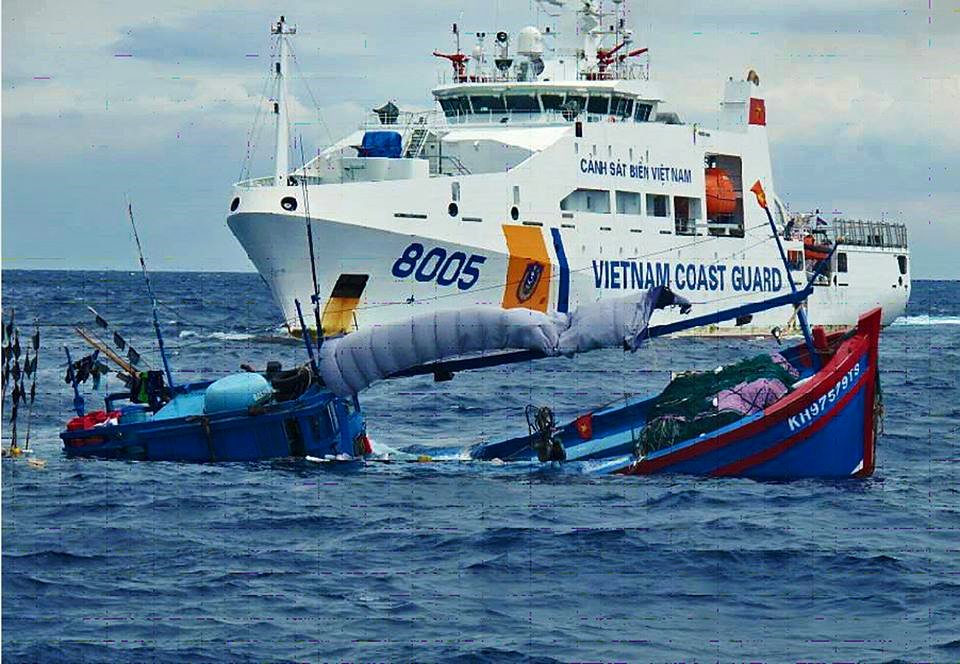
Maybe Bertholf will stop in at Guam and check it out as a possible future base for Offshore Patrol Cutters. We already have indication three Webber class FRCs will replace the two 110s currently there.) Will they operate in the South China Sea? Will they do Freedom of Navigation Ops? Taking Vietnamese ship riders aboard and doing fisheries enforcement in the Vietnam EEZ inside the Chinese claimed Nine Dash Line, could get exciting. Guess we will have to wait and see.

Will they have a UAS aboard? And If we have no budget or continuing resolution to pay our people, how are we paying for fuel?

The News Release

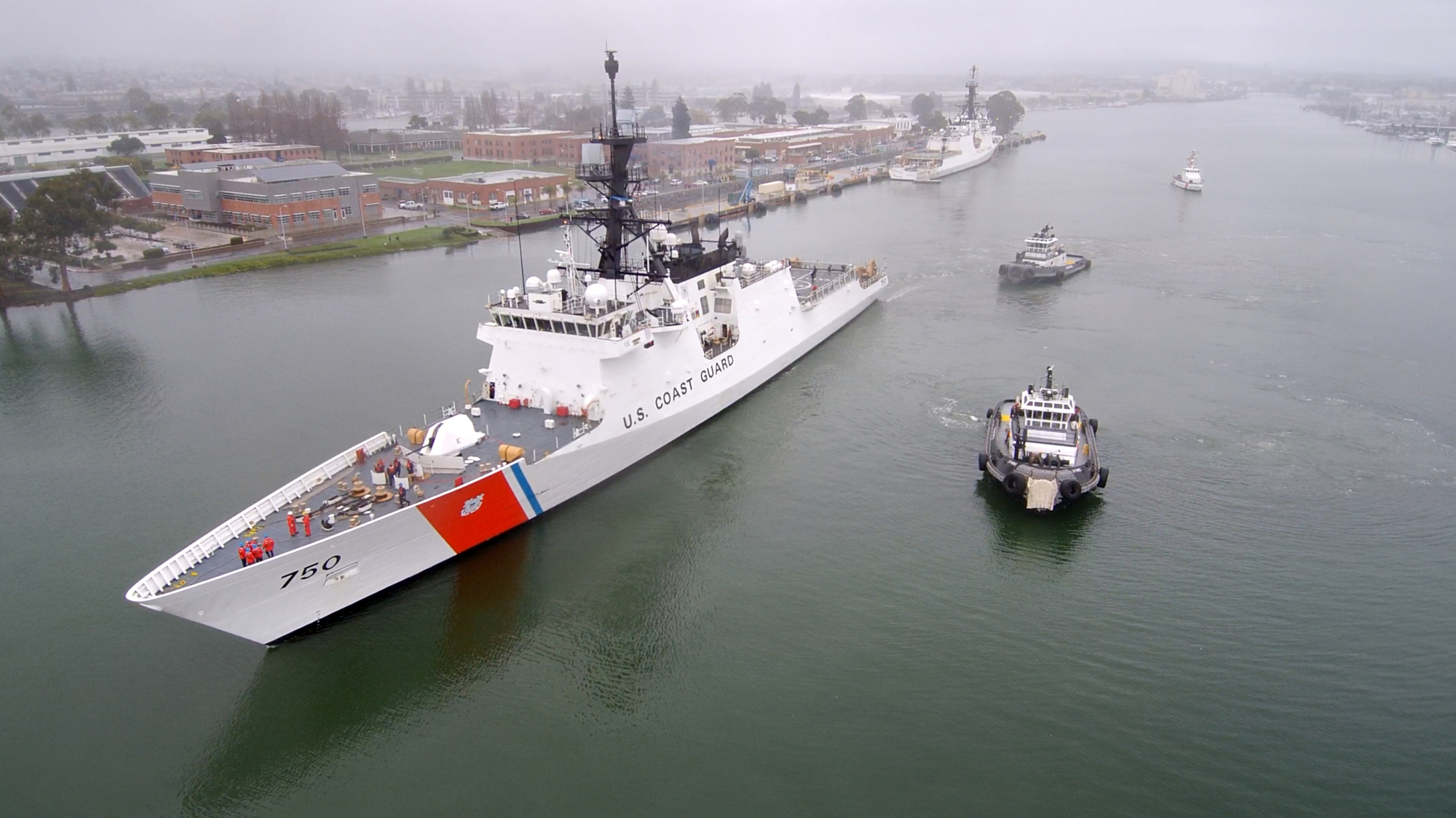
On a gray and foggy morning, tears intermingled with rain as family members braved the elements to say goodbye to the 170 crewmembers of Coast Guard Cutter Bertholf (WMSL-750), a 418-foot national security cutter, which departed Alameda, California, Sunday for a patrol in the Western Pacific Ocean.

The U.S. Coast Guard has an enduring role in the Indo-Pacific going back over 150 years. The service’s ongoing deployment of resources to the region directly supports U.S. foreign policy and national security objectives in the Indo-Pacific Strategy and the National Security Strategy.

“The United States is a Pacific nation,” said Vice Adm. Linda Fagan, commander Coast Guard Pacific Area, who was present to see the cutter depart. “We have deep and long-standing ties with our partners in the region, and more importantly, we share a strong commitment to a free and open Indo-Pacific, governed by a rules-based international system that promotes peace, security, prosperity and sovereignty of all nations.”

Bertholf will be operating in support of United States Indo-Pacific Command, which oversees military operations in the region. As part of its planned operations, the cutter will engage in professional exchanges and capacity building with partner nations.

“Security abroad equals security at home,” said Fagan. “Enhancing our partners’ capabilities is a force multiplier in combating transnational criminal and terrorist organizations and deterring our adversaries.”

As both a federal law enforcement agency and an armed force, the Coast Guard is uniquely positioned to conduct defense operations in support of Combatant Commanders on all seven continents. The service routinely provides forces in joint military operations worldwide, including the deployment of cutters, boats, aircraft and deployable specialized forces.

“I’m excited to see Bertholf sail today to the Indo-Pacific region of operations,” said Fagan, who described the cutter as one of the most capable in the Coast Guard fleet.

“They will be serving alongside other DoD military forces, particularly the U.S. Navy, and I know they will contribute key capabilities to that mission set. This crew has worked incredibly hard to get ready for today’s sailing, and I can’t think of a better ship and crew to be sending to the Indo-Pacific.”

Commissioned in 2008, Bertholf is the first of the Coast Guard’s legend class national security cutters. These advanced ships are 418-feet long, 54-feet wide, and have a 4,600 long-ton displacement. They have a top speed in excess of 28 knots, a range of 12,000 nautical miles, endurance of up to 90 days and can hold a crew of up to 170.

The cutter is named for Coast Guard legend Ellsworth P. Bertholf, who served as captain of the Revenue Cutter Bear during the famous Overland Relief Expedition, earning the Congressional Gold Medal. As the Coast Guard’s fourth commandant, Bertholf oversaw the transfer of the Coast Guard into the Department of the Navy during World War I and advocated for the successful postwar reconstitution of the service.

National security cutters feature advanced command and control capabilities, aviation support facilities, stern cutter boat launch and increased endurance for long-range patrols to disrupt threats to national security further offshore.

The Coast Guard is scheduled to commission its seventh national security cutter, the Coast Guard Cutter Kimball, in 2019. Kimball, along with the Midgett, which is currently under construction, will be homeported in Honolulu and will enhance the Coast Guard’s presence throughout the Indo-Pacific.

“The U.S. Coast Guard’s unique authorities, capabilities, and missions make us the maritime safety and security partner of choice for sea-going countries around the world,” said Capt. John Driscoll, Bertholf’s commanding officer. “Our increased presence throughout the Indo-Pacific will enhance regional stability and improve maritime governance and security.”

In an address to the families and crew before the cutter set sail, Driscoll emphasized how critical family support is to crew wellbeing and readiness.

“Support from our families, wherever they live, is vital to ensuring we are ready to sail and answer the demands of our nation,” Driscoll said. “We must ensure our families are ready to weather the storm at home. We operate in a dangerous and high-consequence environment, and your ability to focus on mission can become easily compromised if you are worried about family.”

Fagan acknowledged the current lapse in appropriations and government shutdown has added stress and feelings of uncertainty to the typical emotions that surround a cutter departure.

“I know it is hard for these crews to be leaving behind their dependents and spouses – it’s a thousand times more so when everyone is wondering when our next paycheck will be, and how they can support the family they are leaving behind,” Fagan said.

“There has been an incredible outpouring of support for the families here in the Alameda area, but the tension and the anxiety for the crew is real,” said Fagan. “We are standing by to help support those families who are left behind the same way that we are going to support the crew as they sail for the Western Pacific.”
French Fisheries Fight

gCaptain brings us news of clash between British and French scallop fishermen.

“The French Navy is ready to intervene if clashes between French and British fishermen over access to scallop-rich seabeds erupt again on the open seas, Agriculture Minister Stephane Travert said on Tuesday.

“Travert said he had spoken to his British counterpart and that talks between the two sides were due on Wednesday after French vessels chased their rivals out of the Baie de Seine last week.

“British fishermen accused the French of ramming their vessels and hurling projectiles. Disgruntled French fishermen, unhappy that their British rivals can dredge for scallops year round while they are barred from doing so during summer months, said they came under a violent counter-attack.”

The full article provides more information.

CIMSEC Event Invite: 20 JUN DC Discussion: The USCG in the SCS

Join CIMSEC’s DC chapter for an evening happy hour discussion on the challenges and opportunities presented by the potential for an expanded role of the U.S. Coast Guard in Southeast Asia, and in particular a focus on the question of what role, if any, it should play in the South China Sea.  Discussants will be announced shortly.
Time: Wednesday, 20 June, 6:00-8:00pm

Place: Fuel Pizza Farragut Square, 1606 K St NW, Washington, DC 20006 (via Farragut North or West Metro Station).

RSVPs not necessary but appreciated: director@cimsec.org

Combined Maritime Security Task Force Pacific

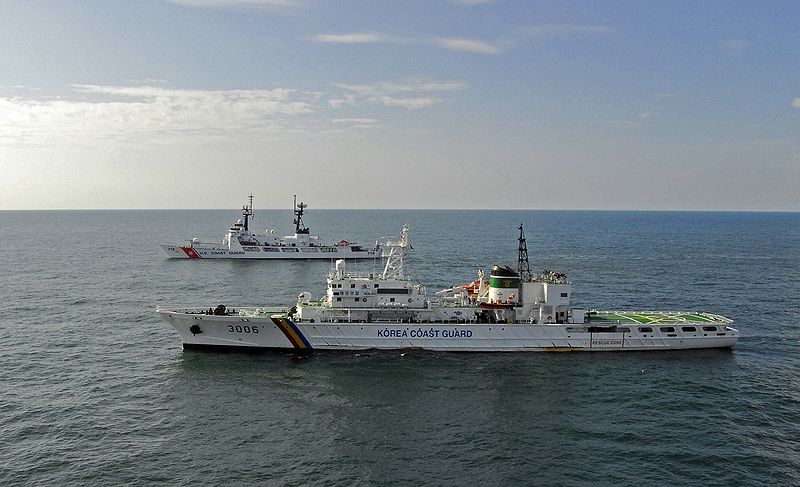
Republic of Korea Coast Guard vessel #3006 in company with U.S. Coast Guard cutter USCGC Boutwell (WHEC-719) during the North Pacific Coast Guard Forum in August 2007. This forum was created to increase international maritime safety and security in the Northern Pacific Ocean and its borders. The Boutwell worked with the Korean coast guard while on their way to Yokosuka, Japan. The Japanese coast guard is one of the six nations involved in the forum.

War on the Rocks offers a suggestion as to how to build greater cooperation and trust and support international norms in the Western Pacific.

“…establishment of a Combined Maritime Task Force Pacific that would be modeled off the Standing Naval Forces Atlantic construct that NATO operated in the 1970s and 1980s… It included 6-10 surface ships (destroyers, cruisers, frigates and support ships) that attached to the squadron for up to six months at a time…the real utility was that its permanent and consistent nature allowed contributing navies to work together to build interoperability during peacetime…it was always signaling contributing navies’ growing alignment and desire to work together.”

This seems like a pretty good idea, but I would suggest one change. Make the purpose of the force Law Enforcement (particularly fisheries), SAR, and Disaster Relief/Humanitarian Assistance and use primarily Offshore Patrol Vessels instead of conventional warships.

Signaling a shared belief in the norms of international behavior, and a determination to uphold those norms, would be the primary objective.

There are lots of potential participants beside the USCG, they might include navies or coast guards of Vietnam, Indonesia, Brunei, Singapore, Australia, India, Malaysia, Thailand, Japan, S. Korea, and the Philippines. COM7thFleet has already asked for a USCG presence, but this would not be under the COCOM. It would be a cooperative enterprise between participating nations, in most cases, coast guard to coast guard.

Vietnamese Coast Guard Damen 9014 Offshore Patrol Vessel. Photo: lancercell.com

All the vessels involved could host ship riders from the nation(s) where the force is operating.

We already plan to have most of the Bertholf class cutters in the Pacific, and putting three OPCs in Guam could further facilitate the arrangement.

This avoids the complications of a military alliance, but strengthens the hand of SE Asian nations that might otherwise be intimidated by China.

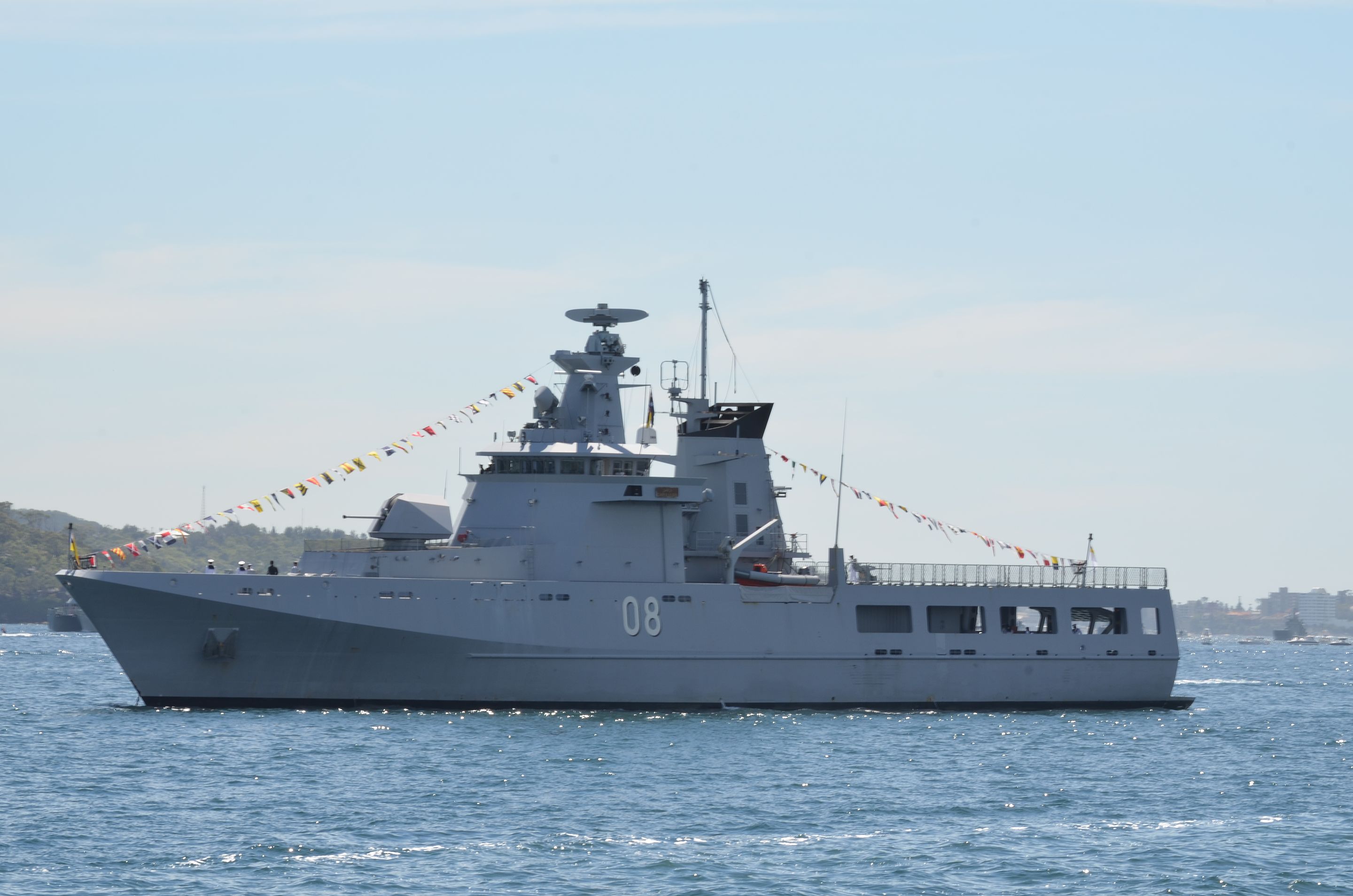
Photographs taken during day 3 of the Royal Australian Navy International Fleet Review 2013. The Bruneian patrol vessel Darulaman moored in Sydney Harbour. Australia is building 12 similar ships. Photo by Saberwyn.


“Small Dots, Large Strategic Areas: US Interests in the South Pacific”

The Commandant talks about how the Coast Guard goes to areas the DOD tends to overlook, the Eastern Pacific and the Arctic. There is another area that the US seems to have taken for granted, These are the island nations of Micronesia, the Marshall Islands, and Palau joined with the U.S. in “Compacts of Free Association.”

The Lowy Institute has a reminder of how important these little “dots” on the map are and what we have to loose if we don’t pay attention.

The Coast Guard is uniquely qualified to provide the help these nations need in terms of capacity building for policing their fisheries resources.


Japan Coast Guard expands Liquid-Robotics’ Wave Glider Fleet–NavyRecognition

We have discussed the Liquid Robotics Wave Glider before, as a way to improve Maritime Domain Awareness, noting it is being used by the Brits for fisheries monitoring and by Boeing in support of the US Navy.

Now NavyRecognition brings us a report that the Japanese are using it to monitor the environment providing real time information

Certainly better information about surface currents could help us in search planning.

Video–“Coast Guard Readiness: How Far Can We Stretch Our Nation’s Only Multi-Mission, Military Force?”

Above is the video of the Senate Subcommittee hearing for which I provided the Commandant’s prepared remarks earlier.

Participating Senators I noted were:

  • Dan Sullivan, Sub-Committee chair (R, Alaska)(Lt.Col., US Marine Corps Reserve)
  • Gary Peters, ranking member (D, Michigan)(LCdr. US Navy Reserve, Supply Corps)
  • Bill Nelson, ranking member of the Commerce Committee (D, Florida)(Capt. US Army Reserve)(NASA Scuttle payload specialist)
  • Roger Wicker, Chairman of the Seapower sub-committee (R, Mississippi)(Lt.Col. ret. USAF reserve)
  • Richard Blumenthal (D, Connecticut) (USMC Reserve 1970 to 1976 discharges as Sargent)
  • Brian Schatz (D, Hawaii)
  • Ed Markey (D, Mass.) (Spec4, US Army Reserve, 1968-73)
  • Jim Inhofe (R, Oklahoma) (Spec4, US Army, 1956-1958)
  • Maria Cantwell (D, Washington)

You can also check out the original post from the Senate Committee on Commerce, Science, and Transportation. (Same video is available there, but the meeting does not actually start on that version of the video until minute 36.) There you can also find the written statements of the other three witness who constituted the second panel. The Commandant was the sole witness on the first panel.

This was something of a love fest for the Coast Guard with repeated praise for the people and actions of the Coast Guard.

This hearing was reputedly about how the Coast Guard had been impacted by the unusually severe Hurricane season. There is not a lot new here but there were some interesting remarks.

Polar Icebreaker Contracts

The intention is to Contract for the first Icebreaker and then employ block buy for the next two (28m). To me this seems to negate most of the advantage of a block buy. I don’t believe we will or should buy one and then wait until we have tried it out before contracting for the next two. That would necessitate a delay of at least five years during which we would still have the nightmare scenario of our only heavy icebreaker having no rescue if it should break down in the ice–certainly not an impossibility even with a new ship. If we are going to contract for the remaining two before testing the first, we might as well block buy all three.

First of class is always the most expensive. If the shipyard gets a block buy they know that initial improvements in productivity can be amortized over the entire block buy quantity. In some cases, in order to win the whole project, the shipyard will cut the price of the first ship substantially knowing they will make a profit over the entire project.

If we buy one and then block buy the second and third, we have paid for improvements to the winning yard with the first contract and minimized the chances for a competitive bid for numbers two and three.

Legislation has capped DOD participation in icebreaker procurement, so the bulk of icebreaker procurement costs will come out of the Coast Guard budget.

Authorization

There was a lot of discussion about the need to have the Coast Guard Authorization Bill signed into law, still not approved. You can see it here.

Other topics

There was a discussion of the high cost of the Coast Guard response to the recent series of Hurricanes.

Representative Sullivan spent a lot of time, discussing and advocating for an eleven mile road from King Cove  (population estimate–989) to Cold Bay, Alaska (population estimate–122) which has an all-weather airport with two runways, one 10,180 feet and one 6285 feet in length. The Coast Guard connection is that the road would minimize or eliminate the necessity for the Coast Guard to Medivac emergencies from King Cove by helicopter, which is frequently hazardous. It is a Federal issue, because the road would run through a Federal reserve. The Commandant fully supported the desirability of completing the proposed single lane gravel road as a means of minimizing the requirement for helicopter medivac.

Video Breakdown

28m Domestic icebreakers–Design work on new domestic icebreakers is expected to start in 2030. That sounds a bit late to me. Mackinaw was commissioned in 2006 so if that is what he is really talking about, that makes sense, but the 140 foot icebreaking tugs are a different story. The first for of these will be 51 years old in 2030. More than  half of them have already completed in-service which was expected to add 15 years to their service life. Morro Bay, at least, is expected to reach the end of her service life in 2030, and considering how long it takes us to build a ship we really need to start the process not later than 2025.

45m Western Pacific Fisheries Protection–They have not seen much risk of Illegal, Unregulated, or Unreported fishing. 

51m Inland River Tenders

56m We may need to replace the 52 ft MLBs with something larger than the 47 foot MLB sometime in the future, but their end of life is not yet apparent

58m Coast Guard Museum in New London

60m Sexual Assault in the CG

1h02m Puerto Rico/Virgin Islands continuing commitment and its effects on drug seizures and alien migrant interdiction.

1h05m Vessel homeporting

1h08 CG center of expertise, particularly in regard to clean up spills in ice and fresh water

1h16m Army Corp of Engineers dredging backlog.

1h17m  Second Panel begins.

1h19m Medivac from King Cove

1h31m Mr Smithson regarding Deepwater Horizon experience, unified approach, investment in mitigation.


In the Arctic Ocean, at Least, Diplomacy Works–gCaptain

gCaptain reports on a ten nation accord to protect fisheries in the central Arctic Ocean.

For the next 16 years, commercial fishing will be prohibited in the central Arctic, a Mediterranean-sized patch of icy ocean more than 200 nautical miles from any nation’s coastline. This will give scientists time to study whether fishing might safely be allowed there. The goal is to avoid the overfishing that has depleted fish populations in other parts of the world — pollock in the Bering Strait, for instance, or krill in the Antarctic Ocean.”