Chuck Hill's CG Blog

Chuck Hill's CG Blog

“Charting a Course U.S., Partners increasing engagements throughout Pacific” –Indo-Pacific Defense Forum

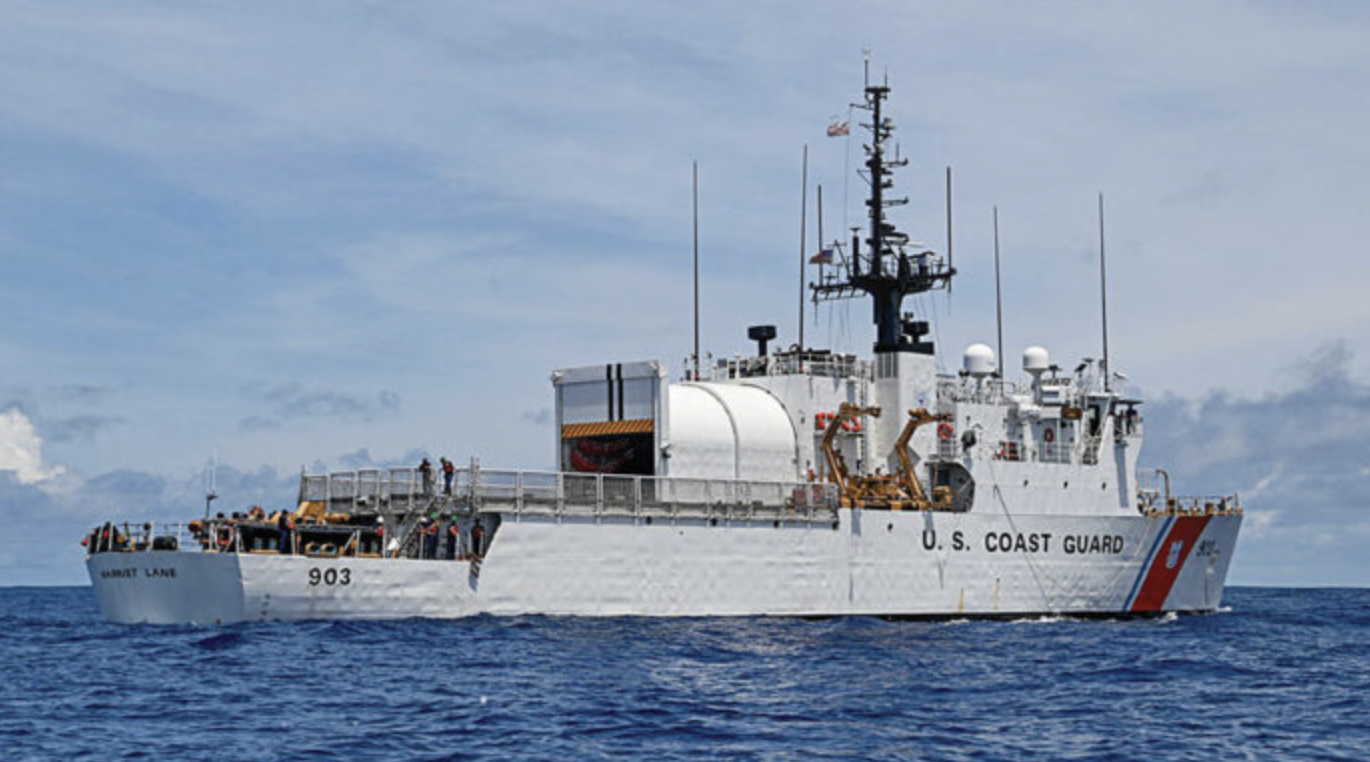
The U.S. Coast Guard cutter Harriet Lane conducts a February 2024 patrol for Operation Blue Pacific, which included combating illegal fishing with local partners. SENIOR CHIEF PETTY OFFICER CHARLY TAUTFEST/U.S. COAST GUARD

The Indo-Pacific Defense Forum has a nice overview of Coast Guard cooperative operations in the Western Pacific.

The significance, for me, is that the article is published by the Indo-Pacific Combatant Commander, and is intended for an international audience. This is affirmation of the importance of the effort.

“Trump Administration Opens Pacific Remote Islands Marine Monument to Commercial Fishing” –gCaptain

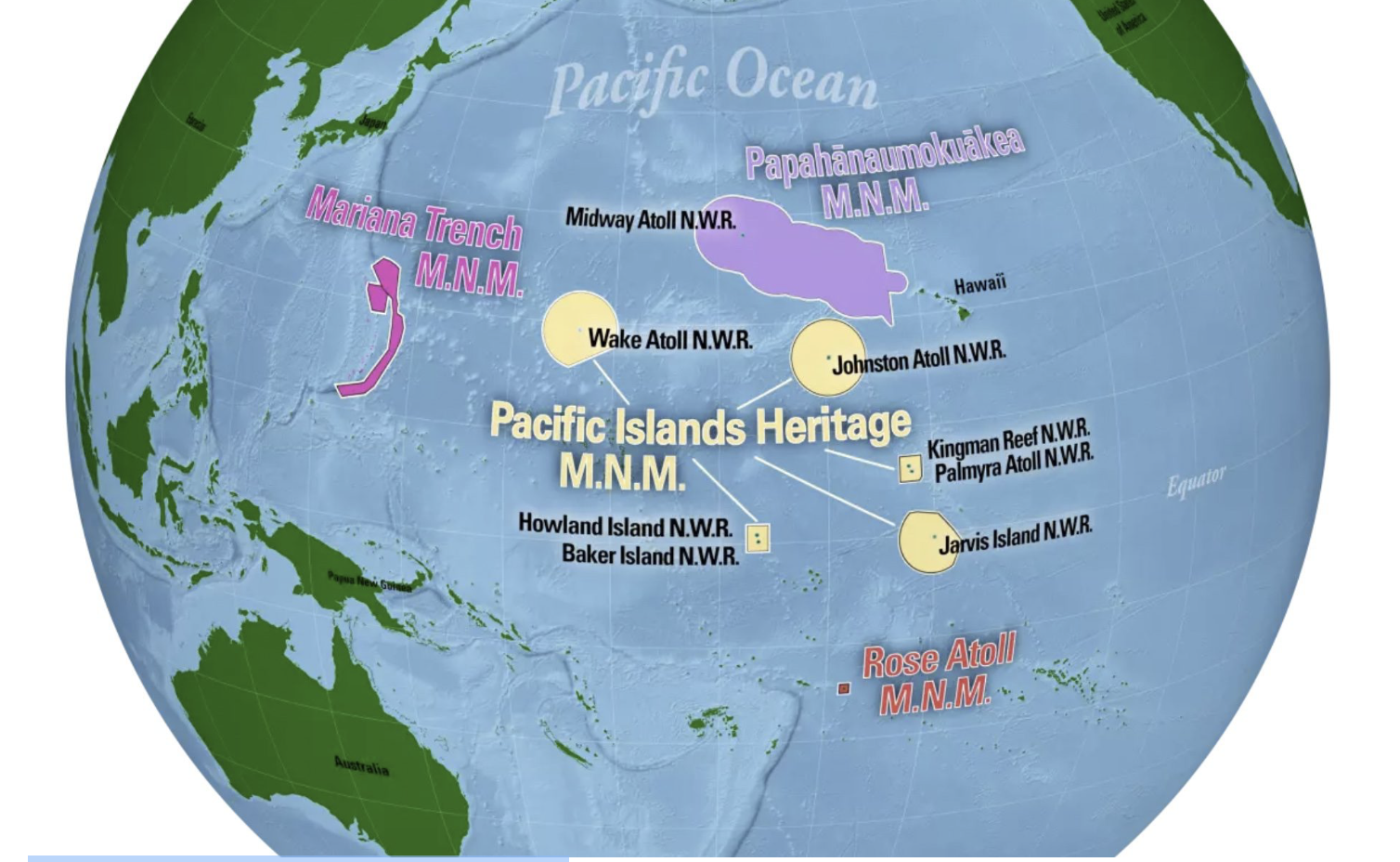
Pacific Remote Islands Marine Monument. Map courtesy U.S. Fish and Wildlife Service

gCaptain reports,

President Donald Trump signed a proclamation on Thursday opening the Pacific Remote Islands Marine National Monument (PRIMNM) to commercial fishing, marking a substantial change in U.S. fishing policy.

The proclamation specifically permits U.S.-flagged vessels to conduct commercial fishing operations within 50 to 200 nautical miles of the PRIMNM’s boundaries. This decision affects an expansive marine protected area spanning approximately 495,189 square miles in the central Pacific Ocean – a region nearly five times the size of all U.S. National Parks combined.

This would seem to provide additional justification for a Coast Guard base and cutters (presumably Webber class WPCs) in American Samoa to provide additional safety for US fishermen and to keep unwelcome foreign fishermen out.

Coast Guard teams deploy to American Samoa to patrol border, conduct boardings” –News Release

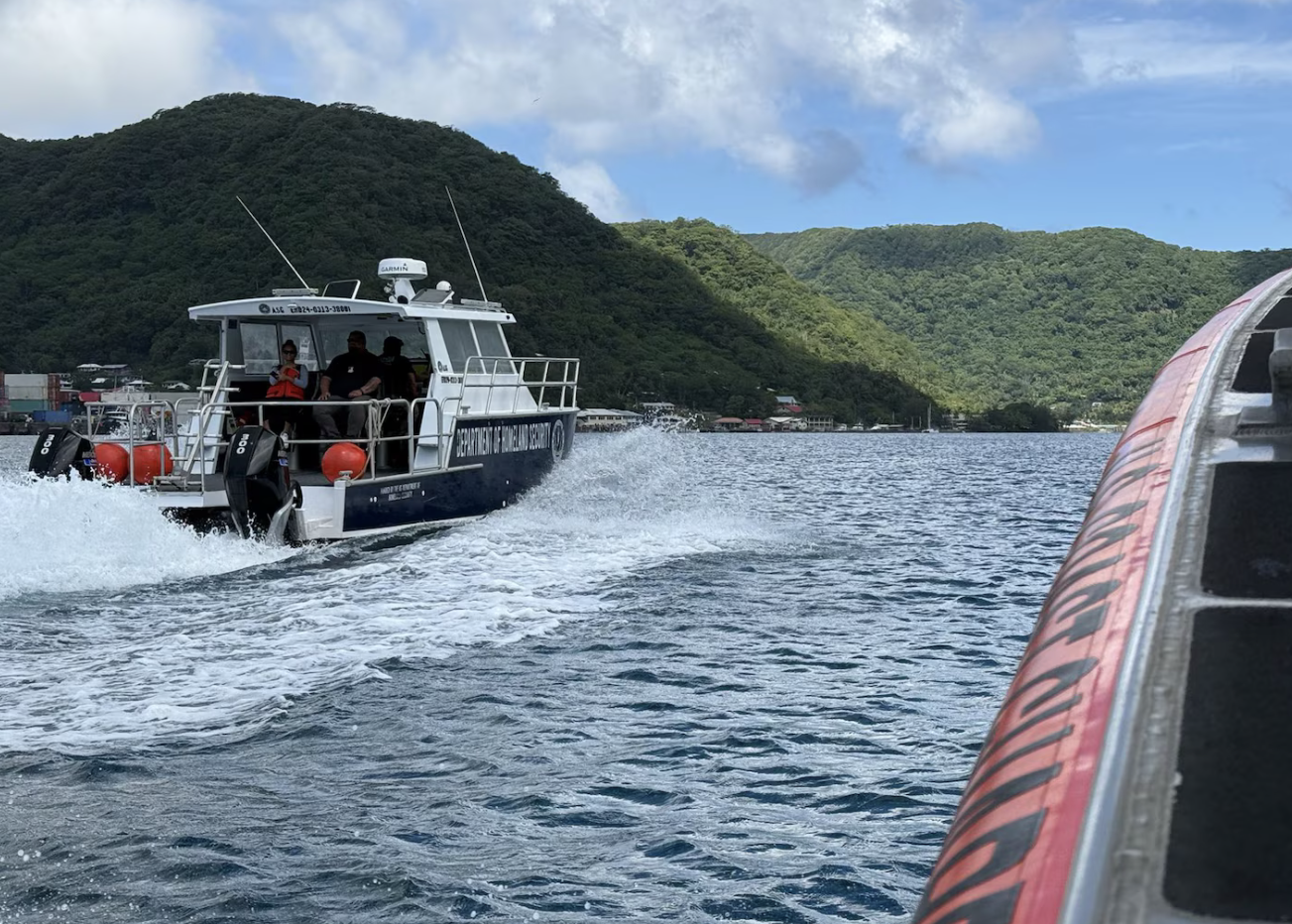
A boat crew assigned to U.S. Coast Guard Maritime Safety and Security Team Honolulu gets underway alongside an American Samoa Department of Homeland Security boat crew to conduct search and rescue training offshore Pago Pago, American Samoa, Feb. 24, 2025. MSST Honolulu and Coast Guard Sector Honolulu personnel deployed to American Samoa to train alongside agency partners, patrol the U.S. maritime border, and enforce U.S. laws and regulations. (U.S. Coast Guard photo, courtesy Maritime Safety and Security Team Honolulu)

Below is a District 14 news release. Link has short video of boats underway and a additional photo.

The long term answer to providing Coast Guard services to this part of the United States is to have a Coast Guard base in American Samoa. There are indications this will happen. I think we will ultimately base three Webber class WPCs there.


March 4, 2025

Coast Guard teams deploy to American Samoa to patrol border, conduct boardings

HONOLULU – Coast Guard Maritime Safety and Security Team Honolulu personnel and a boarding team from Coast Guard Sector Honolulu deployed to American Samoa from Feb. 10-27 to protect the U.S. maritime border, enforce U.S. laws and regulations, enhance maritime domain awareness and coordinate with agency partners.

During the deployment, team members boarded six U.S.-flagged commercial fishing vessels, six foreign-flagged commercial fishing vessels, and five recreational boating safety boardings, resulting in the termination of one recreational voyage due to deficient safety equipment.

Crews patrolled the U.S. territorial maritime border and the U.S. Exclusive Economic Zone surrounding American Samoa, which extends up to 200 miles offshore.

Additionally, MSST Honolulu and Sector Honolulu personnel conducted over 26 hours of training with the American Samoa Department of Homeland Security and American Samoa Marine Patrol, a law enforcement unit within the American Samoa Department of Marine and Wildlife Resources. Training primarily focused on boarding procedures and weapons proficiency.

“Working closely with partners in American Samoa heightens our awareness of any illicit activities in the area and hones our combined ability to safeguard the maritime border,” said Lt. Cmdr. Nic Iannarone, enforcement division chief, Sector Honolulu. “Teamwork is a key component of taking a stand against threats to our ports and waterways.”

In accordance with the President’s Executive Orders and direction from Adm. Kevin Lunday, the acting commandant of the Coast Guard, the Coast Guard is increasing cutter patrols and operations in American Samoa. The Coast Guard is surging assets to increase presence in key areas to protect America’s maritime borders, territorial integrity, and sovereignty.

Maritime Safety and Security Team Honolulu is a specialized unit of the Coast Guard dedicated to enhancing maritime security and safety in the Pacific region. With a highly trained personnel team equipped to conduct law enforcement operations, port security assessments, and emergency response activities, MSST Honolulu collaborates closely with local, state, and federal agencies to safeguard vital maritime infrastructure and natural resources.

Sector Honolulu serves a broad expanse of the Pacific that includes 200 nautical miles surrounding the State of Hawaii, the islands and atolls of the Hawaiian Island Chain and American Samoa. The sector’s primary missions include ensuring maritime security, conducting search and rescue operations, enforcing environmental protection laws, and facilitating law enforcement activities.

“CHINA IS FIGHTING THE THIRD OPIUM WAR WITH FISH” –CIMSEC

Chinese fishing vessel fleet (Photo: The Maritime Executive)

CIMSEC has an interesting take on China’s use of its Distant Waters Fishing Fleet (DWF).

“If the U.S. is serious about “Great Power Competition,” it at least needs to stop scoring “own goals” by funding and emboldening the main competitor. But from the standpoints of both defense and security, these issues cannot be overlooked or marginalized. China is using its DWF globally in a manner that accrues tremendous benefits to the Chinese armed forces.”

The US Coast Guard is certainly trying to help other nations protect their EEZs from unauthorized exploitation by Chinese Fishing Vessels, but currently many nations license Chinese exploitation of their EEZ and there is no way we can prevent the Chinese from fishing in the waters beyond national boundaries. Even if the US stopped buying Chinese caught fish, there are other ready markets. The only result would be raising the cost of fish to US consumers.

What we need are alternative competitive provider of seafood. 

We could have a true win/win by helping the Compact of Free Association States, (Federated States of Micronesia (FSM), the Republic of the Marshall Islands (RMI), and the Republic of Palau) develop distant waters fishing fleets of their own. This would help keep their interests aligned with ours. Motivate them to keep the Chinese out of their EEZ, and direct more cash flow into these small, friendly and strategically important nations.

“End of NASSE Operation 2023” –Sea Waves

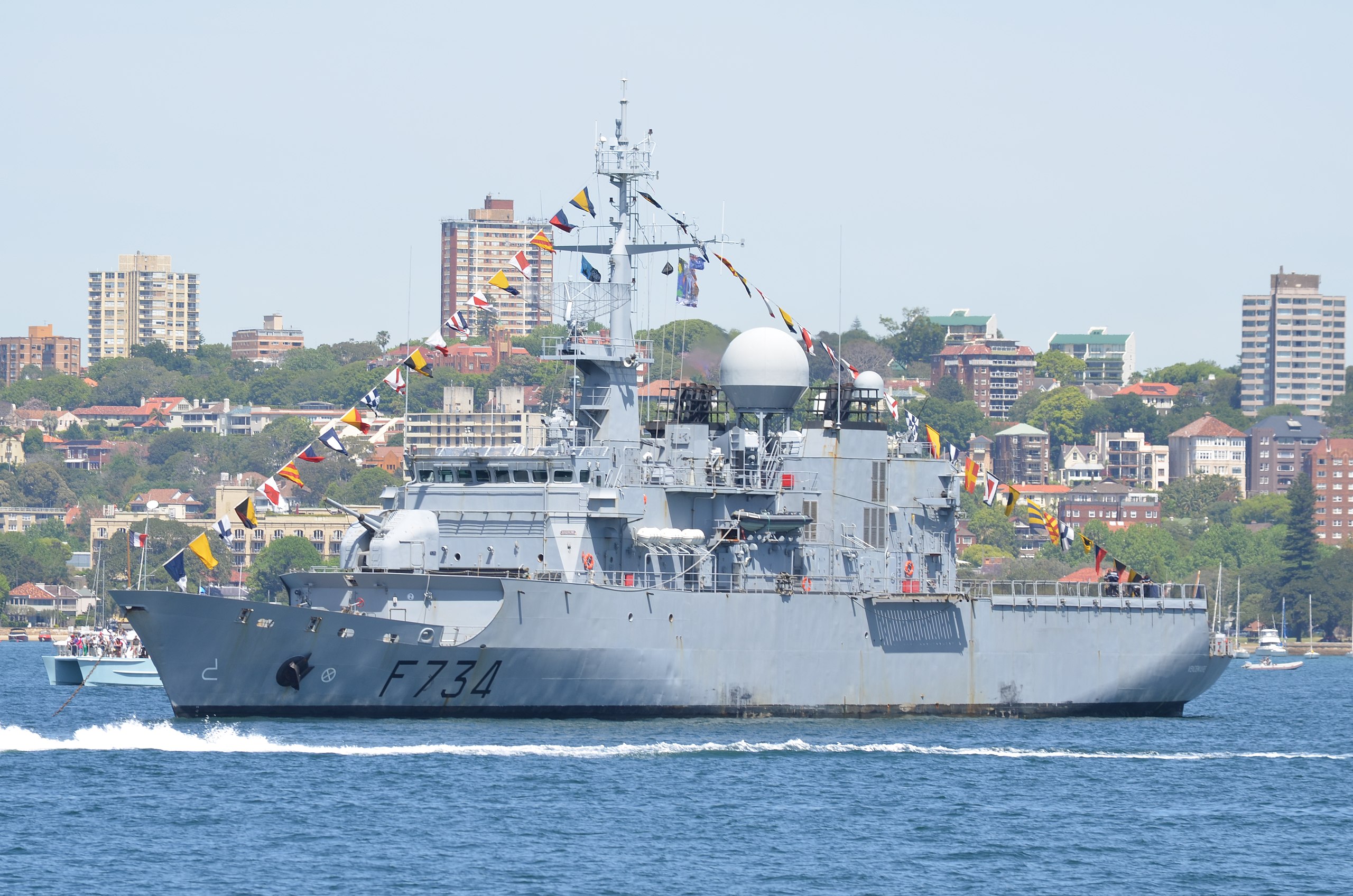
French frigate Vendemiaire, moored in Sydney Harbour. This 20 knot ship of the Floréal class looks a lot like a coast guard cutter. Photo by Saberwyn

Sea Waves reports the completion of a multi-national Fisheries Management exercise involving the US, Australia, New Zealand, France, and Fiji, from 20 June to 15 August.

The US Coast Guard deployed a C-130 to participate in the exercise. US vessels were involved but they were not identified. I am a bit surprised I have seen nothing from the USCG on this exercise.

The Sea Waves report appears to be a French news release. There is a New Zealand Defense Force view of the exercise here.

More on the developing relationship between Australia and France here. including an explanation of the “Pacific quadrilateral defense coordinating group* (PQUAD),” e.g., Australia, France, New Zealand, and the US, referred to in the post, as opposed to the “Quad,” e.g., Australia, India, Japan, and the US.

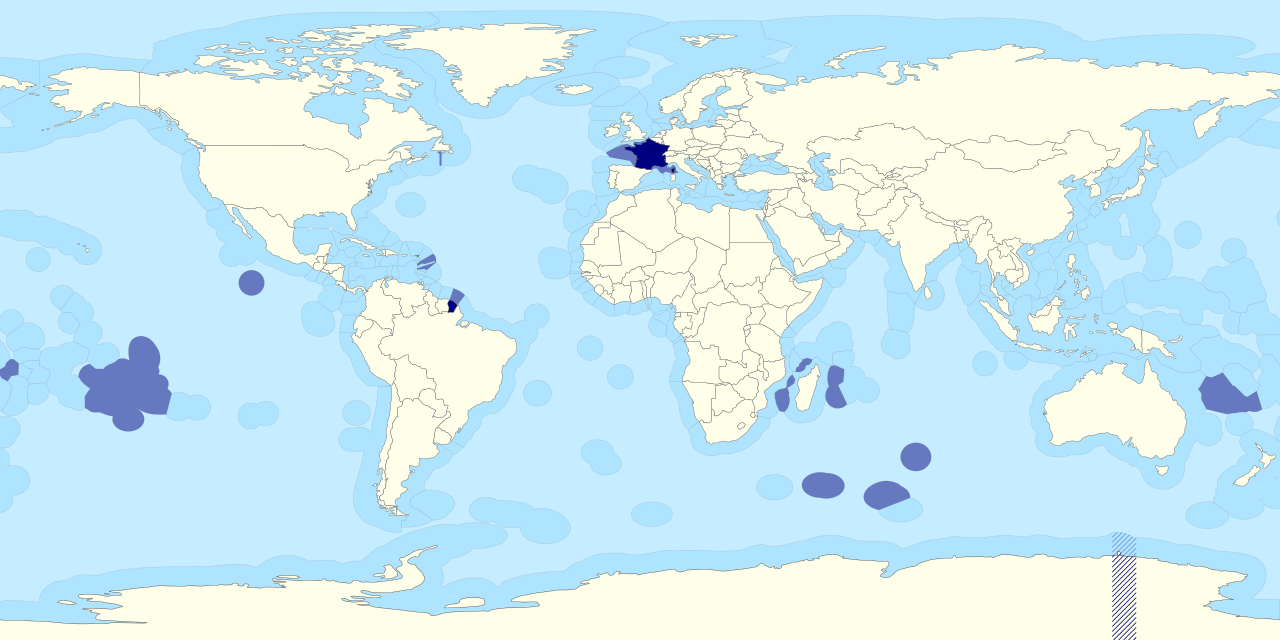
The French don’t normally have a lot of military assets in the Pacific. Much of what they have looks like coast guard, but they have the largest EEZ in the world and great strategic geography.

French Exclusive Economic Zone. Photo credit: B1mbo via Wikipedia.

This exercise is another step along the way to what appears to be inevitable international fisheries management and enforcement.

“U.S. Coast Guard Forces Micronesia Sector/Guam’s Fast Response Cutters bolster Pacific Partnership Strategy and strengthen Pacific Island Country relations” –USCG Forces Micronesia/Sector Guam

The Sentinel-class fast response cutter USCGC Oliver Henry (WPC 1140) crew arriving in Port Moresby for a port visit on Aug. 23, 2022, following a patrol in parts of the Coral Sea, the Solomon Islands and PNG Exclusive Economic Zones. The U.S. Coast Guard was conducting a routine deployment in Oceania as part of Operation Blue Pacific, working alongside Allies, building maritime domain awareness, and sharing best practices with partner nation navies and coast guards. (U.S. Coast Guard photo by USCGC Oliver Henry)

Below is a news release from U.S. Coast Guard Forces Micronesia/Sector Guam. Webber class cutters there are developing a new norm for Coast Guard assistance to Pacific Island nations. It is not clear if this is now the norm, or if this was an unusual period, but from June 21 to August 3, there was only one day (June 17) that they did not have an FRC underway for at least part of the day. This is what I believe should be the norm and probably the reason FRCs are so frequently based in groups of three or six. Typically three ships would be, one underway, one in maintenance, and one in workup/standby (I don’t know if they are employing standby). 

On the other hand, none of these patrols was more than 16 days long and the shortest only five, which suggest why, given the long transit distances, we need some cutters with greater endurance in the Western Pacific (I would say three to have one underway at all times and be able to surge two when needed).

Thanks to Paul for bringing this to my attention.

Aug. 18, 2023

U.S. Coast Guard Forces Micronesia Sector/Guam’s Fast Response Cutters bolster Pacific Partnership Strategy and strengthen Pacific Island Country relations

SANTA RITA, Guam — In a robust display of maritime commitment, U.S. Coast Guard Forces Micronesia/Sector Guam’s Fast Response Cutters conducted four patrols over 44 days, enhancing safety and prosperity in the Pacific Islands region while combatting illicit maritime activity, including illegal, unregulated, and unreported fishing and the illegal and unsafe transport of passengers.

The crews of USCGC Frederick Hatch (WPC 1143), USCGC Myrtle Hazard (WPC 1139), and USCGC Oliver Henry (WPC 1140):

– Conducted seven boardings and five observation reports.
– Completed over 20 training evolutions.
– Qualified 18 new shipboard members.
– Supported the investigation into the transport of 11 people aboard an overloaded vessel transiting to Guam from the Commonwealth of the Northern Mariana Islands on an illegal charter following their rescue by DoD partners.
– Supported operations such as Operation Blue Pacific, Operation Rematau, Operation Nasse, and Operation Koa Moana.

“Our Fast Response Cutter crews exhibit both efficacy and presence as a consistent and trusted partner in the region. Our Pacific Island Country partners’ warmth and regard for the Coast Guard is a testament to the strong connections we have nurtured over the years. It is our commitment to the people of the Pacific Island Countries to protect Oceania and its resources for them from undue strategic competition that would undermine those relationships and destabilize the region,” said Cmdr. Greg Sickels, deputy sector commander of U.S. Coast Guard Forces Micronesia/Sector Guam.

Operational Achievements and Highlights

– USCGC Frederick Hatch (June 21 – July 2 and July 18 – Aug. 3): Enhanced international relations, streamlined boarding processes, qualified new personnel, and improved communication with FSM Maritime Police.

– USCGC Myrtle Hazard (July 3 – 16): Strengthened connection with CNMI, ensured maritime law enforcement presence in less patrolled areas, and enhanced collaboration with customs and public safety departments.

– USCGC Oliver Henry (July 18 – 23): Increased U.S. presence, enforced fishing regulations, and fostered crew readiness with weapons proficiency and collaboration.

These accomplishments underscore the U.S. Coast Guard’s pivotal role in promoting maritime governance, ensuring good relations, and fostering strategic competition in the Pacific Islands region. The U.S. Coast Guard remains a consistent and reliable partner, working collaboratively with Pacific Island Countries to achieve shared objectives and bolster regional security.

Operation Rematau, an integral part of Operation Blue Pacific, is spearheaded by the U.S. Coast Guard Forces Micronesia/Sector Guam. This initiative fosters security, safety, sovereignty, and economic prosperity throughout Oceania. Rematau translates to “people of the deep sea” and embodies the Coast Guard’s unwavering commitment to safeguarding the people of this region.

The U.S. Coast Guard actively exercises 12 bilateral maritime law enforcement agreements with Pacific Island Countries, reinforcing maritime law enforcement operations and domain awareness in the region. In October 2022, the Service, on behalf of the U.S., signed the first enhanced bilateral agreement with the Federated States of Micronesia. This landmark agreement builds on the existing shiprider arrangement, allowing the U.S. Coast Guard to conduct boardings in the FSM’s exclusive economic zone with prior approval working with the FSM National Police, but without an FSM officer physically present. This expansion significantly amplifies the FSM’s capacity to protect its sovereignty and resources across an area spanning 1 million square miles and more than 600 islands. Boardings have already been conducted under this enhanced shiprider agreement, attracting interest in similar arrangements from other nations in the area.

In May 2023, the U.S. signed a new bilateral agreement with Papua New Guinea, richly endowed with natural resources like gold, copper, oil, and natural gas. While its formal sector focuses on exports of these commodities, most of its people rely on subsistence agriculture. As of 2020, agriculture, forestry, and fishing reportedly account for nearly 19 percent of PNG’s GDP. The agreement aligns with the PNG government’s efforts to safeguard their islands and 1.2 million square miles of EEZ, which are vital to their economic well-being. Recently ratified by their parliament, this partnership, at the request of the Papua New Guinea government, further extends the reach and impact of maritime law enforcement efforts. In line with this initiative, a U.S. Coast Guard cutter from Guam will be collaborating with Papua New Guinea to enact their new agreement shortly, continuing to foster security and collaboration across the Pacific.

U.S. Coast Guard Forces Micronesia/Sector Guam comprises more than 300 members based in Guam and the Commonwealth of the Northern Mariana Islands spread across shoreside and afloat units committed to maritime safety, security, and stewardship in Oceania.

For more information on the U.S. Coast Guard Forces Micronesia Sector/Guam’s operations and achievements, please visit the official DVIDS account at https://www.dvidshub.net/unit/USCG-FMSG.

“US Coast Guard Seeks Bigger Role to Search, Board Vessels in Pacific” –gCaptain

The USCGC Oliver Henry (WPC 1140) crew arrives in Manus, Papua New Guinea, on Aug. 14, 2022, from Guam as part of a patrol headed south to assist partner nations in upholding and asserting their sovereignty while protecting U.S. national interests. The U.S. Coast Guard is participating with partners to support the Pacific Islands Forum Fisheries Agency-led Operation Island Chief and the larger Operation Blue Pacific through patrols in the Western Pacific in August and September 2022. (U.S. Coast Guard photo by SW3 Victor Villanueva, NMCB-FOUR)

gCaptain reports,

“The United States Coast Guard is in talks with Pacific Island countries to expand its maritime law enforcement role by allowing U.S. officers to board and search vessels suspected of illegal activity within their economic zones, officials said.”

This is about expanding and streamlining the shiprider program. In one case the Coast Guard already have permission to work with a national command center and act on behalf of another nation, Federated States of Micronesia, even if there is no shiprider physically aboard the cutter.

“More specifically, the agreement provides a coordinating mechanism and process for U.S. law enforcement personnel to work with the FSM National Police through command centers to receive approval from the FSM to act.”

Thanks to Lee for bringing this to my attention. 

“French, Canadian, U.S. Forces collaborate with local responders in successful rescue operation off Rota, CNMI”

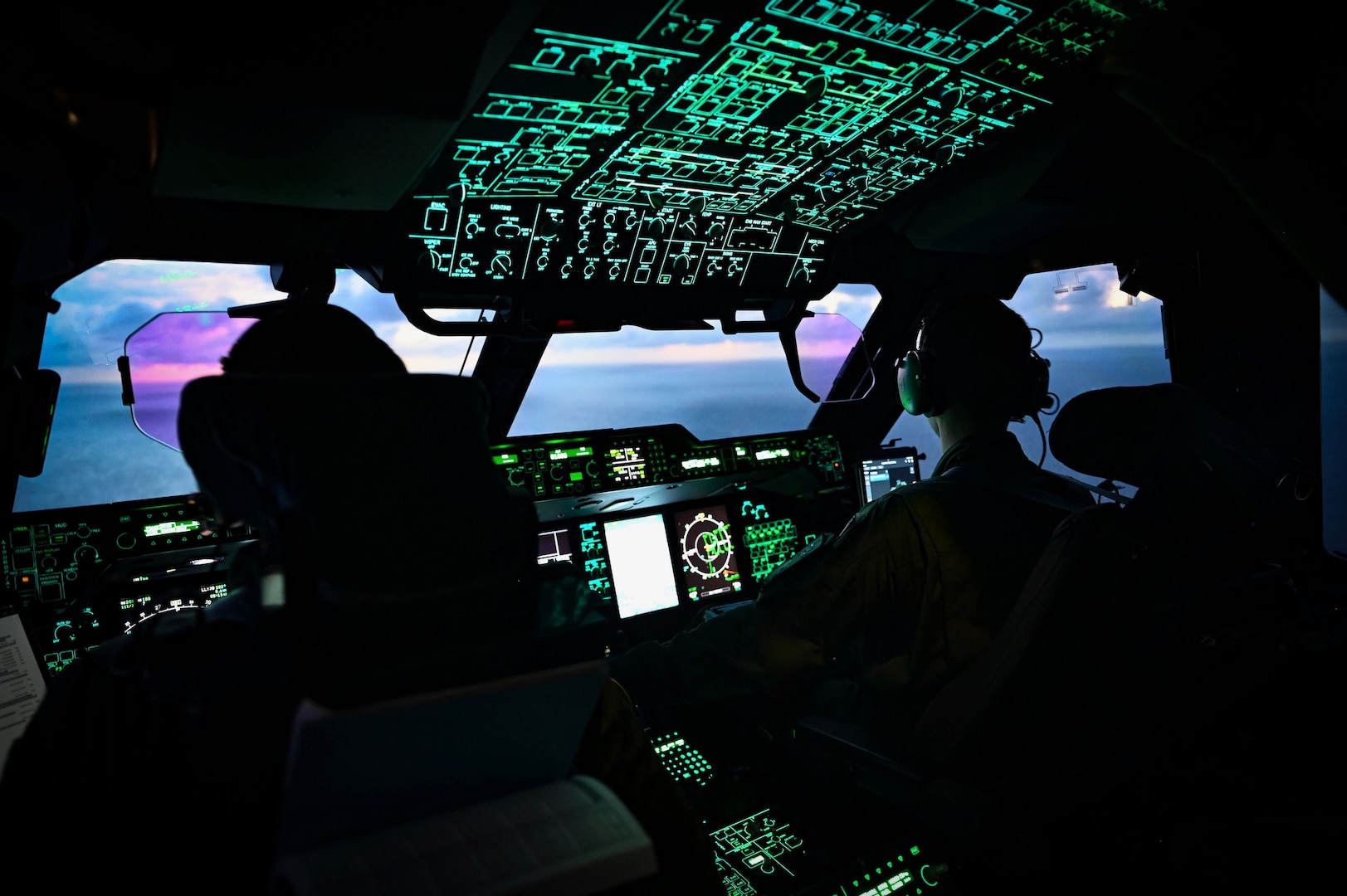
French Air Force A400

Below is a U.S. Coast Guard Forces Micronesia/Sector Guam news release, I don’t normally pass along reports on SAR cases, but this one was extremely unusual. 

This probably does show another reason we need some Coast Guard fixed wing aircraft out there. 

July 11, 2023

French, Canadian, U.S. Forces collaborate with local responders in successful rescue operation off Rota, CNMI

SANTA RITA, Guam — French, Canadian, and U.S. Forces, with local responders, successfully conducted a search and rescue operation to save the operator and passengers of a distressed vessel off the coast of Rota, Commonwealth of the Northern Mariana Islands, on July 10.

Thanks to the coordinated efforts of local partnerships and the utilization of aircraft resources, all 11 people from the center console fishing vessel are safely in Rota.

At 5:05 p.m. on July 10, Watchstanders at U.S. Coast Guard Forces Micronesia/Sector Guam’s Joint Rescue Sub-Center Guam received a distress call on VHF channel 16 from the operator of the 21-foot vessel Full 20 Horizon, stating the vessel was disabled and adrift in 6-foot seas and 12 mph winds with 11 people aboard, approximately 30 nautical miles northwest of Rota. Due to the lack of GPS onboard and the inability to use a cell phone to acquire a GPS position, the situation became even more critical.

In response, the watchstanders promptly issued an Urgent Marine Information Broadcast, alerting mariners in the area to be aware of the distressed vessel. They also established a 15-minute communications schedule with the vessel operator and instructed the passengers to wear their flotation devices for safety.

Watchstanders initiated coordinated efforts with the CNMI Department of Public Safety in Rota, who launched their 27-foot vessel to aid in the rescue operation. Additionally, partnerships with the U.S. Air Force 36th Wing and U.S. Navy Helicopter Sea Combat Squadron 25 at Andersen Air Force Base proved invaluable in securing the assistance of multiple aircraft crews for the response.

Capt. Nick Simmons, commander of U.S. Coast Guard Forces Micronesia/Sector Guam, emphasized the importance of aircraft in search and rescue operations at sea, stating, “Aircraft crews play a crucial role in our efforts to save lives in challenging maritime situations. Using aerial assets, combined with our local partnerships, ensures a swift and effective response to distress calls, ultimately increasing the chances of a successful rescue.”

A French Air and Space Force A400 Atlas military transport aircraft and crew were the first aircrew to respond, launching from Andersen Air Force Base and locating the vessel at about 8 p.m. after running a search pattern. They worked to vector in the Department of Public Safety crew.

Unfortunately, the initial rescue attempt by the Department of Public Safety’s crew was hindered by severe sea conditions as winds increased to 18 mph and seas built to 8 feet, forcing them to abort the mission. However, the French Air and Space Force A400 crew remained on the scene and maintained visual contact with the disabled vessel. Recognizing the severity of the situation, the crew of USCGC Myrtle Hazard (WPC 1139), on a port call in Saipan, was recalled, and watchstanders reengaged with HSC-25 to address the evolving circumstances.

Watchstanders also requested additional overhead support from the U.S. Air Force 36th Wing, who offered a Royal Canadian Air Force HC-130 airplane and crew to replace the French crew due to fuel constraints. At 11:15 p.m., the Canadian crew then on scene informed watchstanders that the lights on the distressed vessel went out, but they maintained visual contact with its position.

The U.S. Navy MH-60 Nighthawk helicopter and crew launched to aid the rescue efforts further. After a swift transit, the Nighthawk crew arrived at approximately 1 a.m. and immediately commenced hoisting the operator and passengers. The aircrew transported those rescued to the Rota airport, where local emergency responders and law enforcement met them. The passengers did not report any injuries, and the aircrew did not observe any.

The Nighthawk and Canadian aircrews returned to Andersen Air Force Base at 2:40 a.m., successfully concluding their part in the rescue operation. Meanwhile, the Myrtle Hazard crew continued their search for the vessel relocating it around 10 a.m. Weather conditions improved, and they will take the vessel in tow to deliver it to Rota.

Nine of the 11 people rescued are reportedly citizens the People’s Republic of China. Local law enforcement in Rota is currently addressing these matters. The U.S. Coast Guard remains committed to working closely with local authorities to ensure the safety of those at sea and the security of our maritime borders.

Notably, the French and Canadian aircraft crews participating in Exercise Mobility Guardian 2023 are contributing their expertise to this successful rescue operation. Exercise Mobility Guardian, Air Mobility Command’s largest full-spectrum readiness exercise, involves seven participating countries and supports over 15,000 U.S. forces, Allied, and partner participants in the Indo-Pacific region.

For more information or media inquiries about the multilateral rescue operation, please contact CWO Sara Muir at 671-688-6096 or sara.g.muir@uscg.mil. For information about the vessel or the disposition of the those rescued, please contact the CNMI Department of Public Safety at (670) 664-9035 or pio@dps.gov.mp.

-USCG-

About U.S. Coast Guard Forces Micronesia/Sector Guam:
U.S. Coast Guard Forces Micronesia/Sector Guam is responsible for ensuring U.S. waters’ safety, security, and stewardship and enforcing maritime laws in the Pacific region. With a steadfast commitment to protecting lives at sea, preserving the marine environment, and promoting maritime safety, the Coast Guard collaborates closely with local, federal, and international partners to serve the community and safeguard our nation’s interests.

Coast Guard in Oceania in the News

The USCGC Oliver Henry (WPC 1140) crew arrives in Manus, Papua New Guinea, on Aug. 14, 2022, from Guam as part of a patrol headed south to assist partner nations in upholding and asserting their sovereignty while protecting U.S. national interests. The U.S. Coast Guard is participating with partners to support the Pacific Islands Forum Fisheries Agency-led Operation Island Chief and the larger Operation Blue Pacific through patrols in the Western Pacific in August and September 2022. (U.S. Coast Guard photo by SW3 Victor Villanueva, NMCB-FOUR)

A couple of recent articles about the US relations with Palau and Papua New Guinea.

Map of the exclusive economic zones in the Pacific.

There has long been interest in a US base on Manus, Papua New Guinea, but this is politically sensitive. Basing cutters there that protect an important economic resource and occasionally rescue the locals when they get in trouble, would probably be most welcome.

On the map above, Manus and Guam do not look that far apart, but Manus is 1,737.88 km (938 nautical miles) SSE of Guam. That is about the distance from Miami to New York City. 

Cutters based in Manus would be closer to parts Freely Associated States (FAS) of Palau and Federated States of Micronesia than cutters based in Guam and much closer to most non-FAS Micronesian nations. It might also be a good place to site a fixed wing forward operating base (CGAS Honolulu DET).

I am beginning to think we will see two new bases in the Western Pacific, one in American Samoa and one in Manus.

If we do end up with additional Webber class based outside Hawaii and Guam, we might need a squadron support organization similar to, and perhaps even larger than, PATFORSWA, to support all FRCs based in the Pacific South and West of Hawaii, e.g. a PATFORSWPAC.

“U.S. Coast Guard invests time with Oceania partners, initiates Operation Rematau” –D14

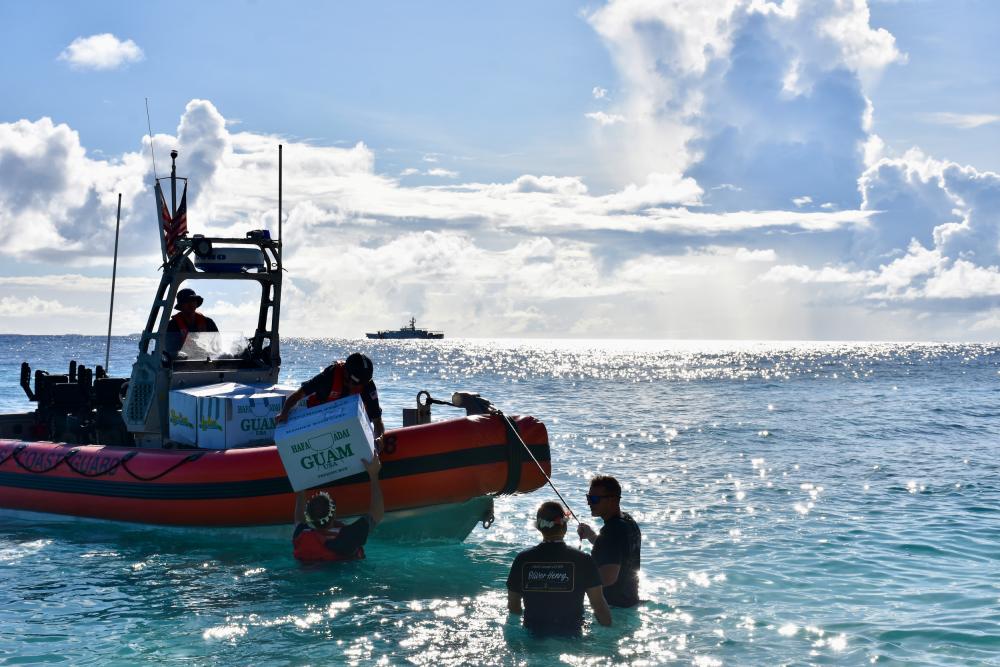
The crew USCGC Oliver Henry (WPC 1140) visit Ulithi Atoll on Oct. 31, 2022, the first time a fast response cutter visited the atoll and delivered 20 boxes of supplies, 50 personal floatation devices, and sporting equipment donated by the cutter crew, the extended U.S. Coast Guard Guam family, Ulithi Falalop Community Action Program, Guam Island Girl Power Foundation, and Ayuda Foundation. Ulithi was a central U.S. staging area during World War II, and home to a U.S. Coast Guard Loran-C communications station from 1944 to 1965 before operations relocated to Yap and ultimately shuttered in 1987. (U.S. Coast Guard photo by Petty Officer 3rd Class Zena Suzuki)

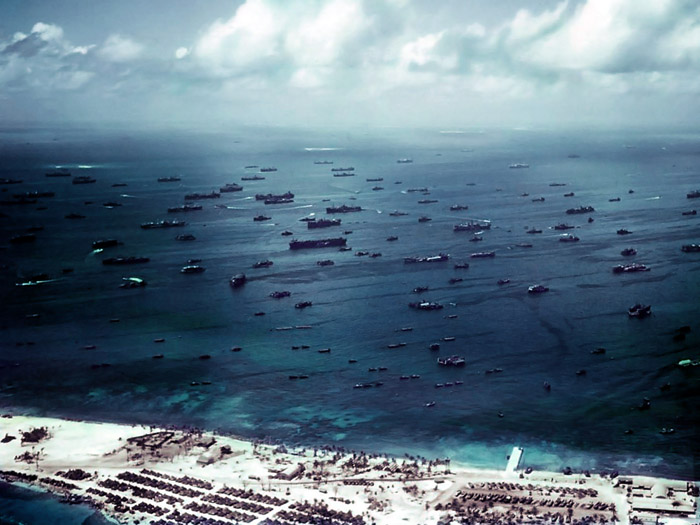
Below is a press release by US Coast Guard Forces Micronesia/Sector Guam, part of District 14. The photo above shows how loaded Oliver Henry was for the trip to Ulithi. I have included a photo of only part of the US Fleet at anchorage in the Ulithi Lagoon in WWII to show how important this location was to us in WWII.  Looks like the crew had quite an adventure.

Ulithi Atoll north anchorage and Sorlen Island, late 1944.

News Release

U.S. Coast Guard Forces Micronesia / Sector Guam

U.S. Coast Guard invests time with Oceania partners, initiates Operation Rematau
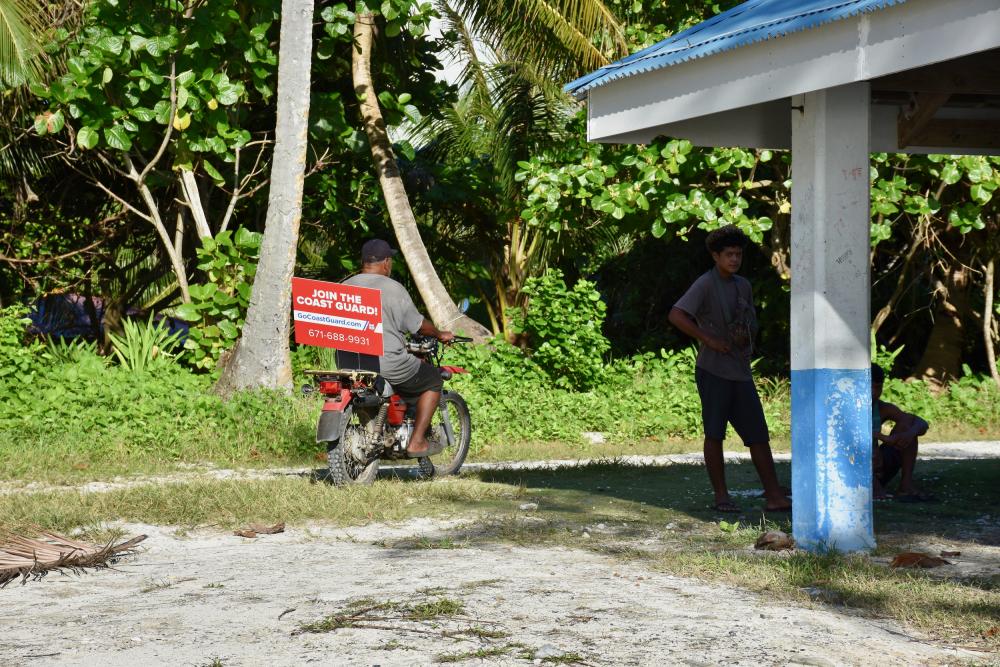
The crew USCGC Oliver Henry (WPC 1140) delivers supplies to Ulithi Atoll The crew USCGC Oliver Henry (WPC 1140) visit Ulithi Atoll A Ulithi Atoll resident departs the beach with a Go Coast Guard sign
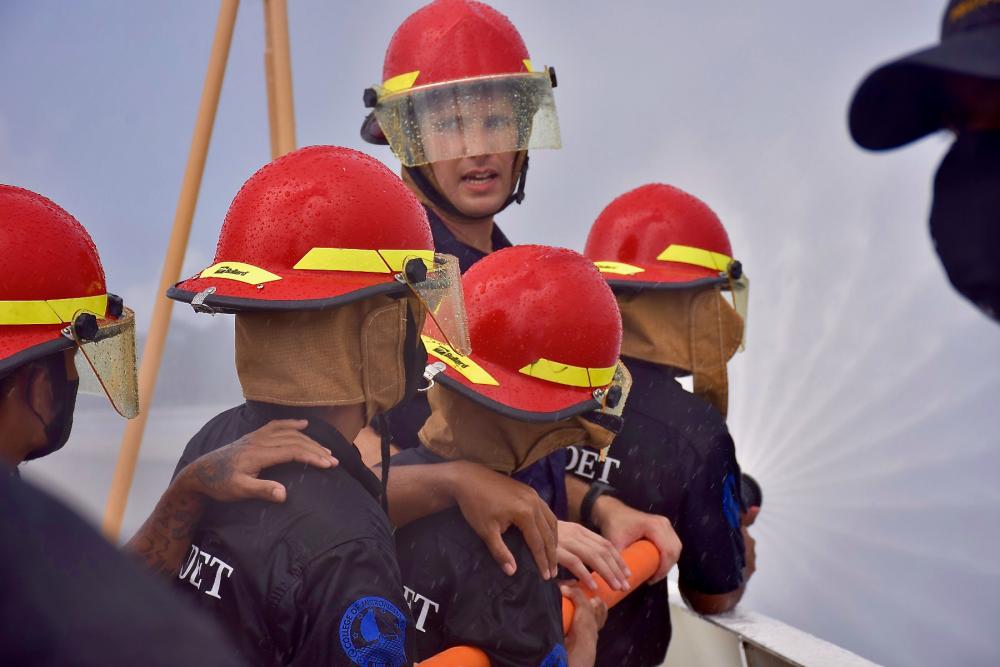
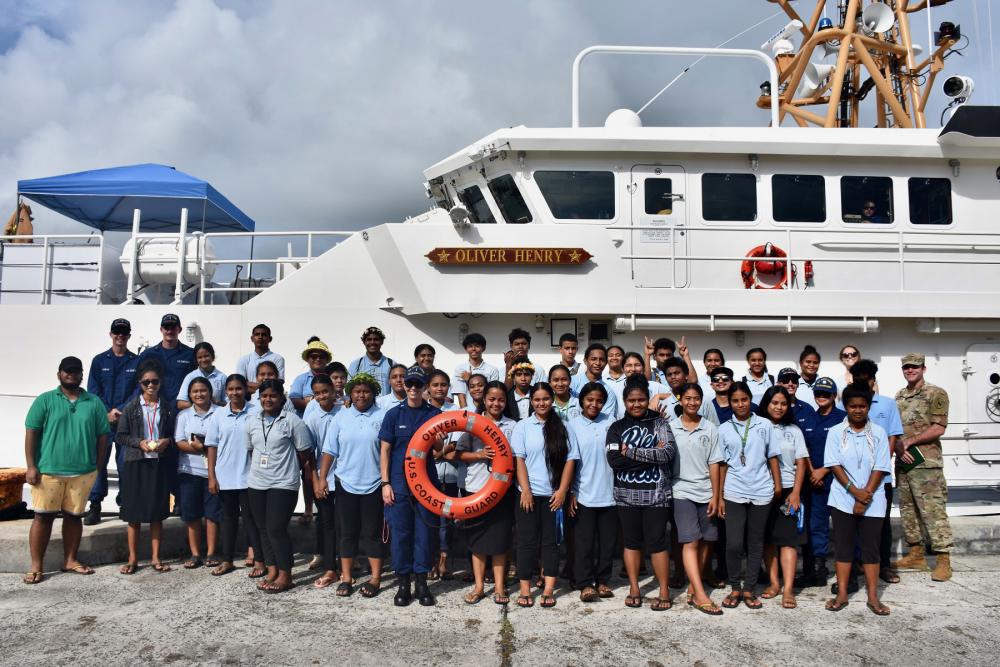
USCGC Oliver Henry (WPC 1140) crew conducts training with FSM Fisheries and Maritime Institute cadets USCGC Oliver Henry crew attend World Coconut Day Yap Catholic High School students stand for a photo with the crew of USCGC Oliver Henry

Editor’s Note: Click on the images above to view more or download high-resolution versions.

SANTA RITA, Guam — The crew USCGC Oliver Henry (WPC 1140) kicked off Operation Rematau conducting a two-week, nearly 2,000 nautical mile deployment to the high seas and the Federated States of Micronesia countering illegal fishing and strengthening partnerships from Oct. 24 to Nov. 6.

“Operation Rematau is how U.S. Coast Guard Forces Micronesia Sector Guam supports the overarching Coast Guard endeavor Operation Blue Pacific to promote security, safety, sovereignty, and economic prosperity in Oceania,” said Capt. Nick Simmons, commander, CGFMSG. “Rematau means people of the deep sea. It recognizes what our Pacific Island Forum leaders know — securing the future requires long-term vision and a carefully considered regional strategy for the Blue Pacific Continent. It reinforces our commitment to working together to advance Pacific regionalism based on the Blue Pacific narrative, action which supports our national security objectives, bolstering maritime governance and security.”

The Oliver Henry crew conducted multiple engagements and patrolled the exclusive economic zone of FSM during the deployment. FSM is a group of more than 600 islands in the North Pacific Ocean spanning a swath of ocean 1,480 nautical miles end to end. It sits about three-quarters of the way from Hawaii to Indonesia, consisting of four states – Pohnpei, Chuuk, Yap, and Kosrae.

“The U.S. Coast Guard, present in the region since before World War II, continues operations in the Federated States of Micronesia, supporting our partners to ensure their sovereignty and resource security,” said Simmons. “I am proud of this team. We consider this a regular patrol for our cutters at Forces Micronesia, but regular still means transiting over 460 nautical miles to reach our partners.”

Oliver Henry’s first stop was Ulithi Atoll, the first time a fast response cutter visited the atoll. Ulithi was a central U.S. staging area during World War II, and home to a U.S. Coast Guard Loran-C communications station from 1944 to 1965 before operations relocated to Yap and ultimately shuttered in 1987. Oliver Henry delivered 20 boxes of supplies to Ulithi, 50 personal floatation devices, and sporting equipment donated by the cutter crew, the extended U.S. Coast Guard Guam family, Ulithi Falalop Community Action Program, Guam Island Girl Power Foundation, and Ayuda Foundation.

Their second stop was Yap. With coordination from the U.S. Department of State and U.S. Army Pacific colleagues, the crew undertook several community engagements and Subject Matter Expert Exchanges, meeting leaders, working with students, and providing tours to interested residents.

“It was a privilege to host Yap’s Council of Pilung – the council of traditional chiefs aboard the cutter,” said Lt. Freddy Hofschneider, commanding officer of Oliver Henry. “The council protects the traditions and customs of the people, and to be welcomed in by them is no small matter. Our visit culminated in our invitation to attend Yap’s first-ever World Coconut Day celebration as honorary guests. It was a whole of community event that included a parade, a large spread of island cuisine, ceremonial dances, and fun activities.”

The SMEE took place with 42 cadets and 28 faculty from FSM’s Fisheries and Maritime Institute, which included shipboard familiarization covering seamanship, navigation, law enforcement, damage control, engineering casualty control, and small boat operations. In addition to the knowledge exchange, the Oliver Henry crew presented FSM FMI with 100 PFDs donated by CGFMSG.

“We appreciate Dean Tioti Teburea’s time and support to make this event a success. The cadets truly enjoyed their time with us, and it is always an honor for the crew to showcase shipboard life and Coast Guard operations across the island communities. It was a mutually beneficial event, where we exchanged nautical knowledge and best practices,” said Hofschneider. “Numerous cadets showed strong interest in maritime work and the Coast Guard. We look forward to expanded engagements and underway opportunities with the cadets.”

The Oliver Henry team held recruiting events in Yap with visits to two local high schools and speaking with juniors and seniors. The crew provided ship tours to interested students from both schools, with 65 students visiting the cutter.

The U.S. and its Allies are trusted partners in Oceania. Regular regional patrols support the shared goals of Indo-Pacific Command and the Pacific Quadrilateral Defence Coordination Group (Australia, France, New Zealand, and the United States) in support of PIF countries to combat the significant threat of illegal, unregulated, and unreported fishing in their EEZs and improve food security. The scope of U.S. Coast Guard activities helps address maritime security concerns expressed by the PIF in the 2018 Boe Declaration, echoed in the recent U.S.-Pacific Island Country Summit held in Washington, D.C.

“Our Service’s capability and reach were noted during the biannual FSM joint committee meeting last month,” said Simmons. “Sending Oliver Henry now and doing further engagements in the country soon delivers on U.S. commitments to our Blue Pacific partners. Our exchanges enhance good maritime governance and build capacity that continues a generational legacy of positive bilateral relations with FSM.”

The Oliver Henry is the 40th 154-foot Sentinel-class fast response cutter named for Oliver T. Henry, Jr., an enlisted African American Coast Guard member first to break the color barrier of a then-segregated Service. During World War II, Henry served under Lt. Cmdr. Carlton Skinner. The latter became the first civilian Governor of Guam and played a critical role in developing the Organic Act in 1950. Henry blazed a trail for minorities in the U.S. military as he climbed from enlisted ranks while serving on ten Coast Guard cutters, finally retiring as a chief warrant officer in 1966.

The U.S. Coast Guard commissioned Oliver Henry, along with sister ships Myrtle Hazard (WPC 1139) and Frederick Hatch (WPC 1143), in Guam in July 2021. These cutters are a vital part of the U.S. Coast Guard’s enduring regional presence serving the people of the Pacific by conducting 10 of the Service’s 11 statutory missions with a focus on search and rescue, defense readiness, living marine resources protection, and ensuring commerce through marine safety and ports, waterways, and coastal security.

For more U.S. Coast Guard Forces Micronesia/Sector Guam news, visit us on DVIDS or subscribe! You can also visit us on Facebook or Instagram at @USCGForcesMicronesia or Twitter @USCGFMSG.