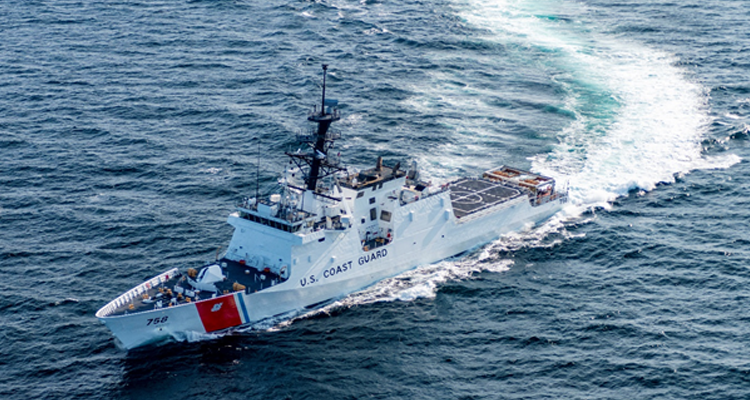
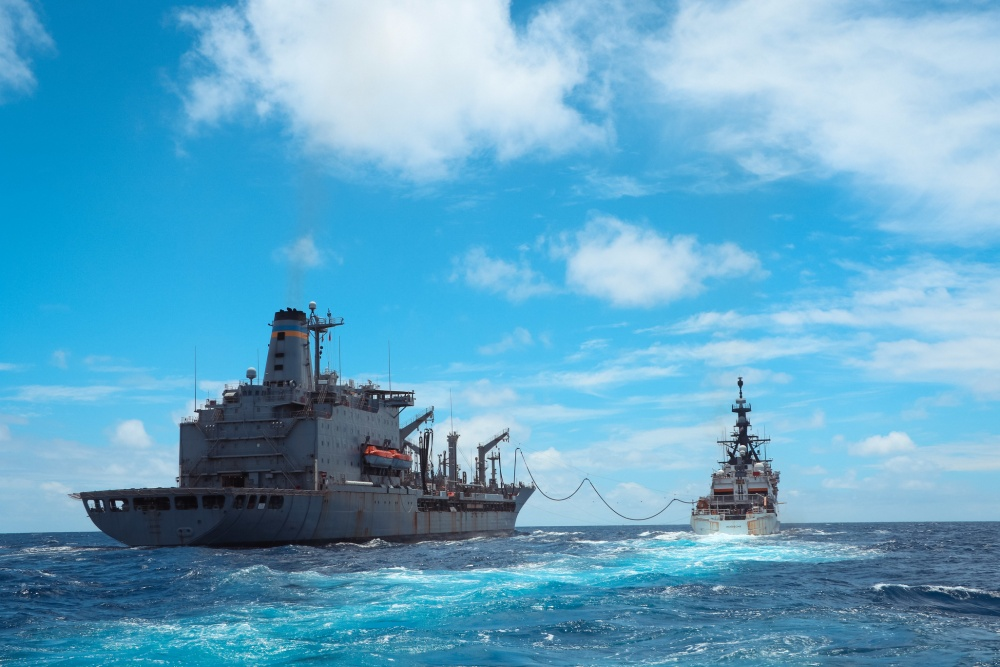
“Coast Guard Cutter to Deploy to U.S. 5th Fleet; Escort New FRCs to Bahrain” –Seapower

CARIBBEAN SEA
09.04.2019
Courtesy Photo
U.S. Coast Guard District 7 PADET Jacksonville
Subscribe 19
The Coast Guard Cutter James conducts Hurricane Dorian relief operations alongside the Coast Guard Cutter Paul Clark in the Caribbean Sea, Sept. 6, 2019. During their 62-day counter-drug patrol, the James’ crew, along with members from Tactical Law Enforcement Team-South, Helicopter Interdiction Tactical Squadron, Cryptologic Direct Support Element and multiple partner agencies, contributed to the interdiction of 7 drug-smuggling vessels and were responsible for the seizure of more than 12,677 pounds of cocaine and 4,085 pounds of marijuana bound for the United States. (U.S. Coast Guard photo courtesy of Coast Guard Cutter James)

The Navy League’s on line magazine, Seapower, reports that a Bertholf class cutter will escort two Webber class WPCs when they transit to Bahrain to begin the replacement of the six 110 foot WPBs that are currently there. Presumably this will be happening a couple of additional times, as the new ships are commissioned. Since typically, about 5 cutters are completed annually, deployments will likely be four to six months apart. It will be interesting to see how long the larger cutters remain in 5th Fleet’s AOR.

It would not be surprising to see them doing some “capacity building” in East Africa before returning home.

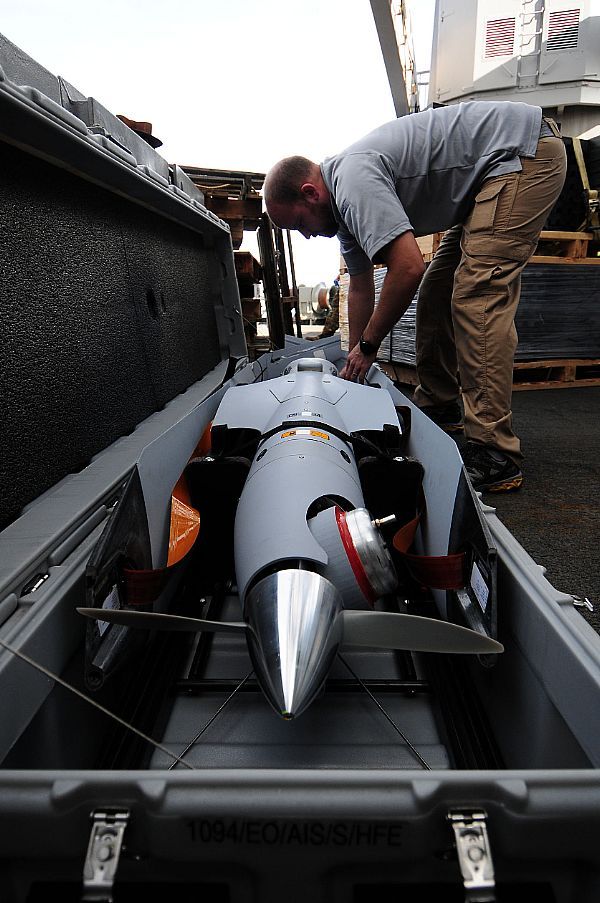
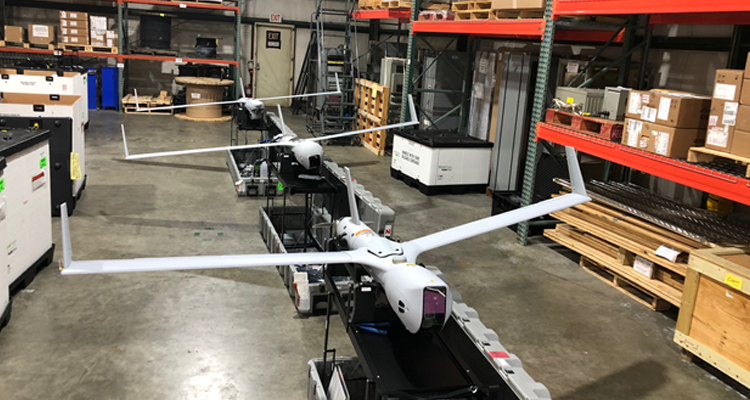
“sUAS for NSC continues accelerated production schedule” –CG-9

110225-N-RC734-011
PACIFIC OCEAN (Feb. 25, 2011) Guy Mcallister, from Insitu Group, performs maintenance on the Scan Eagle unmanned aerial vehicle (UAV) aboard the amphibious dock landing ship USS Comstock (LSD 45). Scan Eagle is a runway independent, long-endurance, UAV system designed to provide multiple surveillance, reconnaissance data, and battlefield damage assessment missions. Comstock is part of the Boxer Amphibious Ready Group, which is underway in the U.S. 7th Fleet area of responsibility during a western Pacific deployment. (U.S. Navy photo by Mass Communication Specialist 2nd Class Joseph M. Buliavac/Released)

Below is a story from the Acquisitions Directorate (CG-9) updating the Coast Guard’s acquisition of small Unmanned Air Systems (sUAS), with particular focus on those being used on the Bertholf class cutters.

“,,,2,600 flight hours on 14 NSC patrols” as mentioned below translates to about 186 flight hours per patrol. As I recall, when we were using an attached helicopter for searches, four hours per day was about the best we could expect. It appears that, for the search function, the sUAS at least approximates that of a manned helicopter.

Hopefully, when on interdiction missions, we are using the Operations Research derived search patterns for detecting a non-cooperative moving target, rather than the typical SAR search patterns which assume a non-moving cooperative target.

I have to question the description “narco-terrorists” for those captured. Narcotics trafficers certainly, terrorists, maybe not.


sUAS for NSC continues accelerated production schedule

The unmanned aircraft sensor payload capability is varied based on the Coast Guard’s desired mission and search conditions: MWIR 3.5 is a mid-wave infrared for thermal imaging capability, for use at night or periods of low visibility; EO-900 is a high-definition telescopic electro-optical (EO) imager to zoom in on targets at greater distance; and ViDAR is a visual detection and ranging wide-area optical search system that is a comprehensive autonomous detection solutions for EO video. Courtesy Photo.


The Coast Guard small unmanned aircraft system for the national security cutter (NSC) program recently completed the system operation verification test for the unmanned aircraft system (UAS) installation on Coast Guard Cutter Bertholf, the sixth NSC to be equipped with UAS capability. This milestone is the latest in a series of key acquisition program activities to accelerate the scheduled for equipping the first eight NSCs with UAS capability. Installations underway on Coast Guard cutters Hamilton and Midgett have expected completions in January 2021 and March 2021, respectively.

Since the first installation, the UAS capability has completed more than 2,600 flight hours on 14 NSC patrols. Since their deployment, UAS platforms have supported 53 interdictions, assisted in the seizure of 48 tons of illicit narcotics worth over $1.2 billion and helped facilitate the capture of 132 narco-terrorists.

The UAS capability on the NSCs has also been used to:

  • Provide real-time damage assessments of the Bahamas in the aftermath of Hurricane Dorian in September 2019. This event was the first time the Coast Guard used UAS overland for humanitarian relief efforts; the added surveillance capability allowed the service to focus recovery assets on emergent search and rescue and critical infrastructure needs.
  • Aid a medical evacuation off a container ship in the Bering Sea, saving one life.
  • Aid in a person-in-the-water search and rescue case off Hawaii in September. Work groups are underway to determine how to use UAS for search and rescue in the future.
  • Identify more than 35 Chinese vessels illegally fishing by sorting through 150+ Automatic Identification System contacts in a fishing fleet off the coast of the Galapagos Islands.

The deployment of an UAS-enabled NSC and its comprehensive sensor suite packages can support day and night operations. UAS capability can conduct surveillance, detection, classification and identification of a wide range of targets, and is capable of up to 18+ hours of continuous flight time per day.

The Coast Guard is deploying a contractor-owned, contractor-operated solutions to provide UAS capability onboard the NSCs; the current contract includes options that could extend service through June 2026. The Coast Guard is also conducting preliminary efforts to explore the potential benefits of deploying UAS across several surface, and potentially land-based, platforms.

For more information: Unmanned Aircraft Systems program page

CRS’s “Coast Guard Cutter Procurement: Background and Issues for Congress” –an Update

US Capital West Side, by Martin Falbisoner

It has been seven months since we last looked at this Congressional Research Service document. (Clicking on this link will always take you to the latest version of the report). Since then, there have been six revisions, with the latest Oct. 14, 2020.

Notable changes include report of the issuance of a draft RFP for the follow-on Offshore Patrol Cutter competition (page 12)

There is no report of any action by the Senate, but the House has been working on two bills that could effect Cutter procurement, the FY2021 DHS Appropriations Act (H.R. 7669) (page 23) and the FY2021 National Defense Authorization Act (H.R. 6395) (pages 23-26)

H.R. 7669, if made into law, would add four Fast Response Cutters to the FY2021 budget, bumping the FRC line item from $20M to $260M and would not include the proposed rescission of $70,000,000 of the $100,500,000 provided in fiscal year 2020 for the acquisition of long lead time materials for the construction of a twelfth National Security Cutter, leaving the door open for NSC#12.

Division H of H.R. 6395 is the Elijah E. Cummings Coast Guard Authorization Act of 2020:

  • Section 8004 (page 23) would authorize NSC #12,
  • Section 8012 (page 24) would authorize four Webber class Fast Response Cutters (page 24)
  • SEC. 9211 (page 24) addresses modification of acquisition process and procedures, specifically the “Extraordinary relief” granted Eastern.
  • SEC. 9422 (page 25) requires a report on the combination of Fast Response Cutters, Offshore Patrol Cutters, and National Security Cutters necessary to carry out Coast Guard missions not later than 90 days after the date of the enactment of this Act. Sounds like a revisit to at least parts of the “Fleet Mix Study.”
  • SEC. 11301. Directs that the Coast Guard better align its mission priorities  to direct more effort to the Arctic and develop capabilities to meet the growing array of challenges in the region; including providing a greater show of Coast Guard forces capable of providing a persistent presence. Additionally it directs that the Coast Guard must avoid overextending operational assets for remote international missions at the cost of dedicated focus on this domestic area of responsibility (meaning the Arctic).

“Coast Guard accepts ninth national security cutter” –CG-9

Ingalls Shipbuilding successfully completed acceptance trials for the Coast Guard’s ninth national security cutter (NSC), Stone, in October 2020. NSC Stone was accepted Nov. 9, 2020, by the Coast Guard in a socially distanced ceremony. Photo by Lance Davis of Huntington Ingalls Industries.

The Acquisitions Directorate (CG-9) reports that the ninth Bertholf class cutter has been accepted.

“Stone is scheduled for commissioning in February 2021 at its Charleston, South Carolina, homeport, also home to cutters Hamilton and James.”

Polar Security Cutters and Coast Guard ASW

The US Naval Institute Proceedings web page has a couple of Coast Guard related articles that did not appear in the print version of Proceedings,

I have reproduced my comments on these topics below.


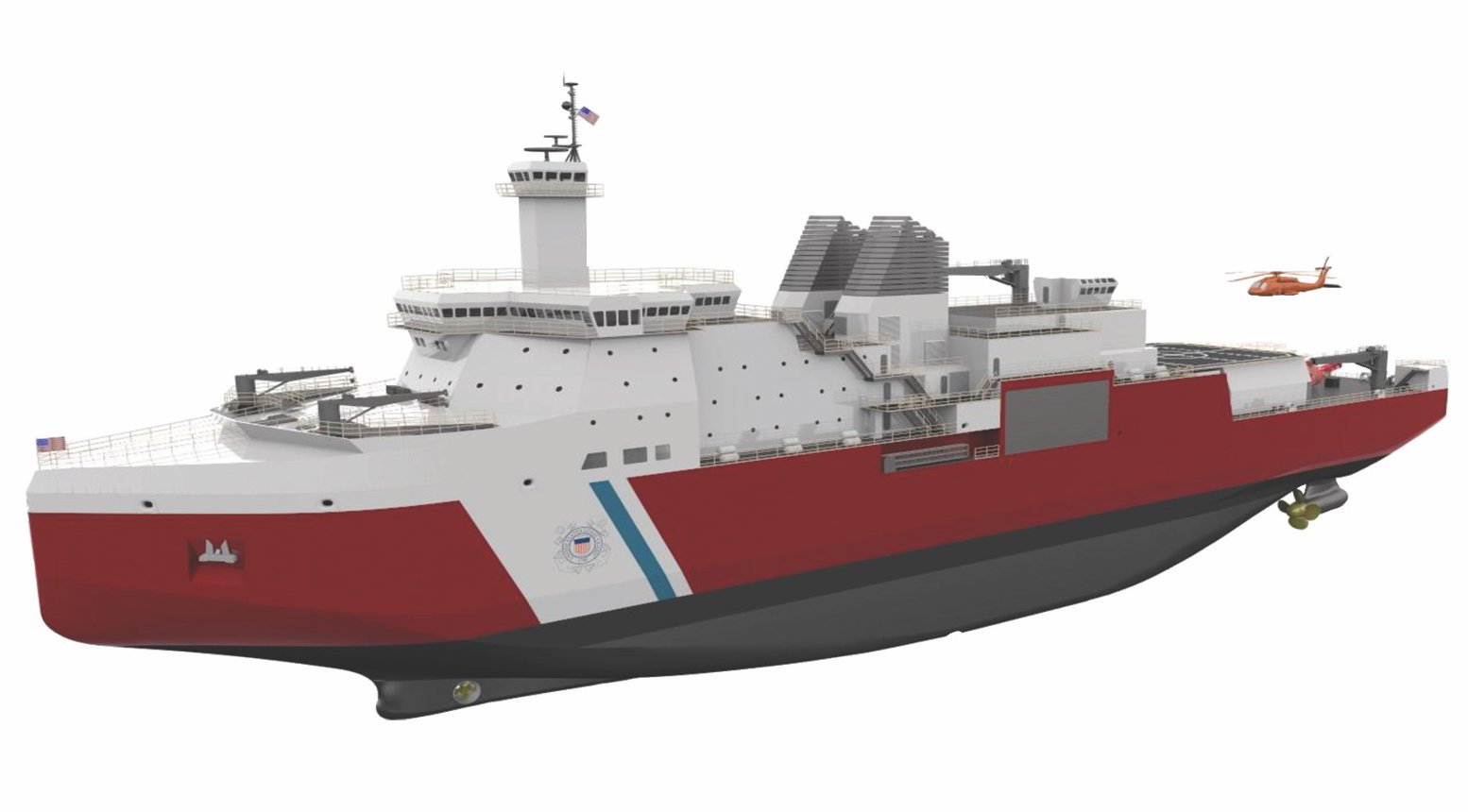
In regard to arming the Polar Security Cutters (the author seemed fixated on cruise missiles. We did discuss this topic earlier here)

There are limits to what we want to put on ships bound for Antarctica, since they have to be open for inspection. On the other hand if we ever do have a near peer conflict involving the Arctic or Antarctic, these will become rare and essential naval auxiliaries. As such they will probably operate with other vessels, including more powerful warships if appropriate, but that does not mean they should not be able to defend themselves against the possibility of leakers. We need to make provision for last ditch defense with systems like SeaRAM.

Meanwhile the fact that they are law enforcement vessels means they should be able to forcibly stop any private or merchant vessel regardless of size. So far it seems they will have at most, 25mm Mk38 Mod3 guns.

The follow on Medium Icebreakers or Arctic Security Cutters, which are unlikely to go to Antarctica, are more likely to be more heavily armed from the start.


Coast Guard ASW (comments were generally surprisingly adverse):

It is a fact that in WWII most U-boats were sunk by aircraft, but about a third (about 230) were sunk by surface vessels, primarily those of our allies Britain and Canada.

Even when surface vessels did not sink U-boats, they often performed valuable service in blocking access to convoys and in rescuing mariners from sunken ships.

US Naval vessels only sank about 38 U-boats. Coast Guard cutters and Coast Guard manned Navy ships were involved in sinking a disproportionate number of those (ten) for various reasons. Most of the US Navy effort went into the Pacific and most of the USN effort in the Atlantic at least through mid-1943, was in escorting high speed troop convoys than largely avoided contact with U-boats.

Circumstances we will face in any near peer conflict may be very different.

The advantages provided by code breaking in WWII are unlikely.

The advantages provided by radar equipped aircraft detecting U-boats charging their batteries or transiting the Bay of Biscay on the surface during the night no longer exists.

The Chinese surface and air threat would divert the most capable USN assets from ASW tasks.

Unlike the Japanese during the Pacific campaign, the Chinese are likely to make a concerted effort to disrupt our logistics train.

We simply do not have enough ASW assets.

Augmenting Coast Guard cutters to allow them to provide ASW escort and rescue services for ships that are sunk by hostile subs, in lower threat areas, is a low cost mobilization option that can substantially increase the number of escorts at low cost.

This could be facilitated by augmenting cutter with USN Reserves. Navy reserve ASW helicopter squadrons could be assigned to fly from cutters.
LCS ASW modules could be placed on cutters and manned by reactivated Navy reservists with LCS ASW module experience.

Our few US merchant ships need to be protected and when inevitably, some are sunk, we need someone to rescue those mariners, because they have become a rare and precious commodity.

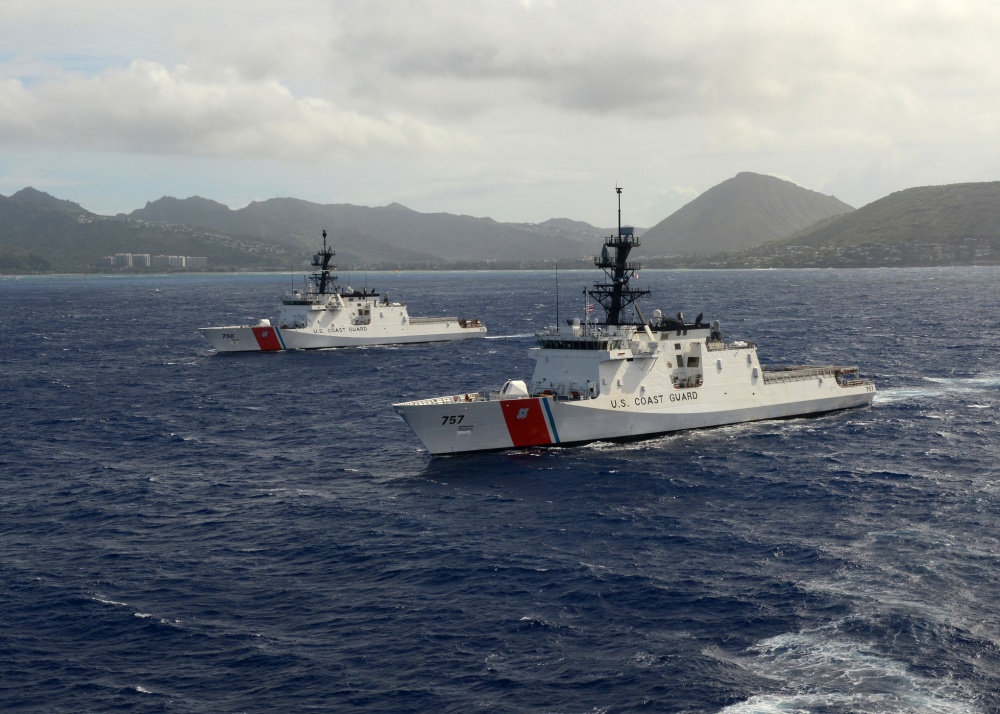
The crews of the Coast Guard Cutters Midgett (WMSL 757) and Kimball (WMSL 756) transit past Koko Head on Oahu, Hawaii, Aug. 16, 2019. The Kimball and Midgett are both homeported in Honolulu and two of the newest Coast Guard cutters to join the fleet. (U.S. Coast Guard photo by Petty Officer 3rd Class Matthew West/Released)


In answer to this comment from James M

Add : For (millions)

ASIST : 6.263
Mk 32 SVTT : 3.237
SLQ-25 Nixie: 1.727
AN/SRQ-4 LAMPS III: 4.625
VDS/MFTA combo: 14.802
ASW Combat Suite: 33.684
64.338 total. I am sure something could be arrived at for less. I look at this as what it takes to fit out an NSC the whole way. For one, OPC will never fit that VDS/MFTA on its stern. At best it would be a Nixie, maybe a container towed sonar we don’t yet use, and the mods for MH-60R. It would be good to know the plan for MUSV as it might help the equation. After all, the 64.338 would buy 2 MUSVs without payload. It could also buy an additional FRC.

So, we could equip ASW equip all eleven projected Bertholf class National Security Cutters (NSC) for less than the cost of a single frigate.

Why do you believe the VDS/MFTA would not fit on the Offshore Patrol Cutter? It is fully as large as the NSCs and does not have the boat launch ramp cut into the stern. They are also substantially larger than the LCSs.

OPC “Placemat”

“New Missions Push Old Coast Guard Assets To The Brink” –Forbes

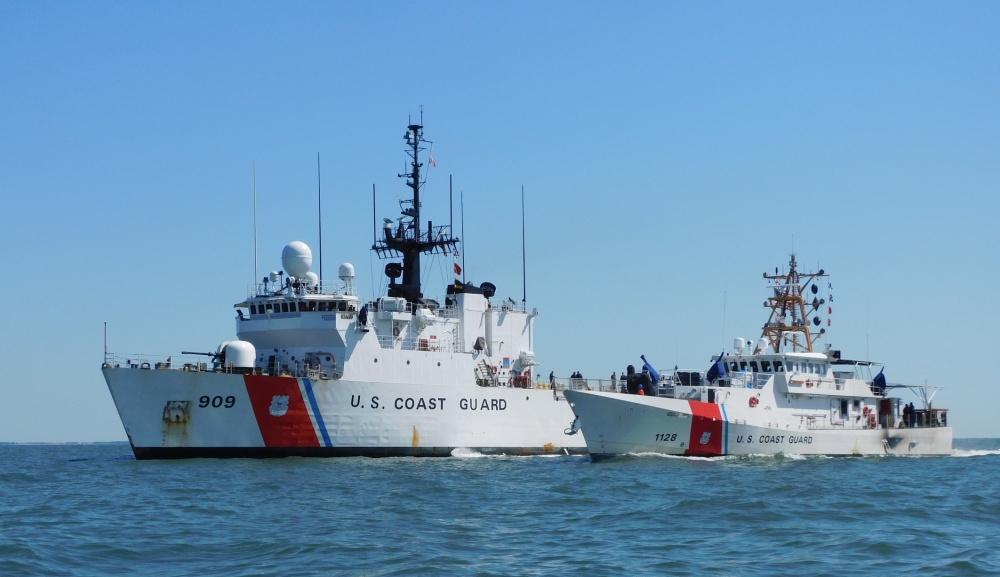
The crew of the Coast Guard Cutter Bruckenthal participates in a fueling exercise with the Coast Guard Cutter Campbell on the Chesapeake Bay, April 11, 2020. The Coast Guard acquired the first Sentinel Class cutter in 2012, with the namesake of each cutter being one of the service’s many enlisted heroes. (U.S. Coast Guard photo by Petty Officer 3rd Class Isaac Cross)

Forbes evaluates the Coast Guard’s performance and the dangers inherent in its aging fleet.

“With all the new interest, America’s Coast Guard is transitioning from an overlooked national security afterthought into a more significant geopolitical player, befitting what is, after all, the world’s 12th largest naval force.”

But,

“It all looks pretty good so far. America’s Coast Guard can be proud of its current operational record and new strategic potential. But as the geopolitical importance of Coast Guard missions ramp up, so too will the ramifications of mission failure. The Coast Guard has a lot of fragile ships that can break at any time. The stress may already be showing…”

There is a lot of criticism of the 270 foot WMECs here. I have never been a great fan. When they were being built, the Chief Engineer made keeping the cost down a number one priority. He saw cost closely related to length. Contrary to stories that they were supposed to have been longer, in fact the original design was three feet shorter. I heard at the time, that Naval engineers went “down on bended knees” to get an additional three feet of shear on the bow.

USCGC Citrus, 1984, after conversion from buoy tender to WMEC. US Coast Guard photo.

When the 270 program began, the Coast Guard still had 18 World War II vintage WHECs and WMECs

  • Six larger, slightly faster, and much loved 327 foot cutters.
  • USCGC Storis, 230′, but actually a little larger in displacement
  • Three 213′ former Navy rescue and salvage  vessels, Escape, Acushnet, and Yacona
  • Five 205′ former Navy fleet tugs, Chilula, Cherokee, Tamaroa, Ute, and Lipan
  • three converted 180′ buoy tenders, Clover, Evergreen, and Citrus

Twelve of those, including all the 327s, were decommissioned 1980 to 1991. Tamaroa and Citrus were decommissioned in 1994, Escape in 1995, Yacona in 1996, Storis in 2007, and Acushnet hung on until 2011.

210s Courageous and Durable were decommissioned September 2001.

Until the first National Security Cutter, Bertholf, was commissioned Aug. 4, 2008, the only addition to the fleet, after the completion of the 270s, was 283′ Alex Haley, transferred from the Navy in 1999.

So at the end of 1991, the year the last 270 was delivered, we had 47 WHECs and WMECs (12 x 378s, 13 x 270s, 16 x 210s and 6 WWII vintage ships). By the time the first NSC came out, we were down to 41 (12 x 378s, 1 x283, 13 x 270s, 14 x 210s and 1 WWII vintage ship). We are currently at 37 (8 x NSCs, 1 x 378s, 1 x283, 13 x 270s, 14 x 210s) and working toward 36 (11 NSCs and 25 OPCs). I suspect we will the the number drop below that before the OPC program is complete.

USCGC Tahoma (WMEC-908)

While I always felt we would have been better off evolving an improved 327, the 270 was a net improvement. Unlike the ships they replaced, they had a helicopter deck and hangar. Even the 378s did not have a hangar at that point. The 270s introduced the digital Mk92 fire control, 76mm Mk75 gun, SLQ-32 ESM, and Mk36 SRBOC. They were a half knot slower than the 327s, but were substantially faster than the other ships they replaced, none of which were capable of more than 16 knots.

It was perhaps a lost opportunity to build something better, for only a little more money, but they were an improvement. We should have built at least six more to replace the WWII built ships, and maybe another 16 to replace the 210s beginning in 1994 (perhaps a block 2 with a bit more bow). We should have awarded contracts to start replacing the 270s more than a decade ago.

Now that we do have bipartisan support in Congress, we need to translate that into consistently larger Procurement, Construction, and Improvement funding and an accelerated build rate for the OPCs. After all, we currently have only one WMEC less than 30 years old, that just barely. We really should not wait 17 or 18 years to replace them all.


A Reevaluation, Ruminating on Homeports While Playing the Red Cell, Part 2

This is the second part of a reexamination of where critical ports are in the US and where the cutters that might be needed to protect them are homeported.

Consolidated Target and Homeport List:

I have reproduced this listing from part 1. It has been changed slightly to reflect the move of USCGC Seneca from Boston to Portsmouth, VA. Again, we have 31 target ports or port complexes in bold  and 23 current or planned cutter homeports with the cutters in bold. In many cases a critical port is also a homeport for cutter(s).

CCGD1:

  • Bath, Me–Major Naval shipbuilder
  • Kittery, ME/Portsmouth, NH –Naval Shipyard: 2×270 (908, 909)
  • Boston, MA: 2×270 (905, 907)
  • Newport, RI Plan to add 2xOPC (919, 920)
  • Groton, CT–Submarine base
  • Hudson River complex, New York, NY/Elizabeth and Bayonne, NJ–a major cultural target, #3 US Port by tonnage, #3 Container port, #4 Cruise ship port (NYC) and #13 cruise ship port (Cape Liberty, NJ)

CCGD5:

  • Delaware Bay/River Complex–Strategic Seaport (Philadelphia), Wilmington DE/Cape May, NJ: 3xFRC (1119, 1120, 1135)
  • Chesapeake Bay Complex, VA–Base for aircraft carriers and submarines, Major naval shipbuilder, Strategic Port, #9 port by tonnage, #5 container port; plus water route to Washington, DC (major cultural target) and Baltimore, MD–#14 port by tonnage, #13 container port, #12 cruise ship port/ 7×270 (Portsmouth 901, 902, 903, 904, 906, 911, 912), 2×210 (Little Creek 626, 627)
  • Morehead City, NC–Strategic Seaport/Atlantic Beach, NC: 2xFRC (1127, 1128)
  • Cape Fear River–Strategic Seaport, Wilmington, NC

CCGD7:

  • Charleston, SC–#7 container port, #15 cruise ship port, Strategic Seaport/ 2xNSC (753, 754) Plan to add 3xNSC (758, 759, 760)
  • Savannah, GA–#4 container port, Strategic Seaport
  • Jacksonville complex, FL (including Kings Bay, GA)–SSBNs, Navy Base Mayport, #14 cruise ship port, Strategic Seaport/ Mayport, FL: 1×210 (617)
  • Port Canaveral, FL–#3 Cruise Ship port/ Cape Canaveral, FL: 2×210 (619, 621)
  • Port Everglades/Fort Lauderdale, FL–#11 container port, #2 Cruise Ship port
  • Miami, FL–#12 container port, #1 Cruise Ship port/ 6xFRC (1101 to 1106)
  • Key West, FL: 2×270 (910, 913), 6xFRC (1107 to 1112)
  • San Juan, PR–#5 Cruise Ship port, #15 container port/ 7xFRC (1113 to 1118, 1133)
  • Tampa, FL–#7 Cruise Ship port/
  • St. Petersburg, FL: 2×210 (620, 625)

CCGD8

  • Pensacola, FL–4×210 (615, 616, 624, 629)
  • Mobile, AL–major naval shipbuilder, #11 port by tonnage
  • Pascagoula, MS–major naval shipbuilder/ 2xFRC (1123, 1125)
  • Gulfport, MS–Strategic Seaport
  • Mississippi River Complex, LA–New Orleans #6 port by tonnage, #14 container port, +#10 Cruise Ship port; South Louisiana #1 port by tonnage; Baton Rouge #8 port by tonnage; Port of Plaquemines #13 port by tonnage.
  • Lake Charles, LA–#12 port by tonnage
  • Sabine Pass complex (Beaumont/Port Author/Orange, TX)–#4 port by tonnage (Beaumont), Strategic Seaport (both Beaumont and Port Author), It also has an LNG exporting terminal
  • Houston/Galveston/Texas City, TX–#2 port by tonnage (Houston),  #13 port by tonnage (Texas City), #5 container port (Houston), #6 Cruise ship port (Galveston)/Galveston, TX: 3xFRC (1136, 1137, 1138)
  • Corpus Christi, TX–#7 port by tonnage, Strategic Seaport

CCGD11:

  • San Diego, CA–Base for aircraft carriers and submarines, major naval shipbuilder (NASSCO), Strategic Seaport
  • Los Angeles/Long Beach/Port Hueneme, CA–A major cultural target, #5 port by tonnage (Long Beach), #9 port by tonnage (Los Angeles), #1 container port (Los Angeles), #3 container port (Long Beach), #9 cruise Ship port (Long Beach), #11 cruise ship port (Los Angeles), Strategic Seaport (Long Beach and Port Hueneme)/San Pedro: 4xFRC (1129 to 1132) Plan to add 2xOPC (915, 916)
  • San Francisco Bay complex,, CA–A major cultural target, #6 container port (Oakland), Strategic Seaport (Oakland and Concord)/Alameda, CA: 4xNSC (750, 751, 752, 755)

CCGD13:

  • Warrenton, OR: 2×210 Plan to add two FRCs (Longview, WA is a significant port, but it is 66 miles up the Columbia River, so unlikely to be a target)
  • Puget Sound Complex, Seattle/Tacoma, WA–Base for aircraft carriers (Bremerton), SSBNs (Bangor), and submarines, major naval bases, #8 container port (Seattle), #10 container port (Tacoma), #8 Cruise ship port (Seattle), Strategic Seaport (Indian Island and Tacoma, WA)/Port Angeles, WA: 1×210

CCGD14:

  • Honolulu/Pearl Harbor, HI–Major Naval base, including submarines/2xNSC (756, 757), 3xFRC (1124, 1126, 1134)
  • Apra, Guam–Submarine Base, Strategic Seaport/ Plan to add 3xFRC (1139, 1140, 1143)

CCGD17:

  • Ketchikan, AK: 2xFRC (1121, 1122)
  • Kodiak, AK: 1xWHEC, 1×282 WMEC Plan to add 2xOPC (917, 918)
  • Planned to be based in Alaska, ports have not been identified 4xFRC
  • Anchorage, AK–Strategic Seaport

The Present and Future Coast Guard Fleet: 

Bertholf class National Security Cutters: 

These ships are only based in three ports, all three of these are potential target ports.

  • Charleston, SC two NSCs now, three additional planned
  • San Francisco Bay Complex, CA, four NSCs
  • Honolulu, HI, two NSCs

That might suggest that these ports are well protected, but as I have said, these ships don’t spend any time on standby, and when they are in port they are usually down hard.

Honolulu is also a Naval bases and has three Webber class WPCs assigned, so it is about as well protected as any port could be with our current equipment.

The Webber class WPCs:

As I have noted, currently the Webber class are potentially the most important asset for port protection.

Of the 31 potential target ports, these nine have, or we know will have, two or more Webber class cutters assigned.

  • Delaware Bay/River Complex–Strategic Seaport (Philadelphia), Wilmington DE/Cape May, NJ: 3xFRC (1119, 1120, 1135)
  • Morehead City, NC–Strategic Seaport/Atlantic Beach, NC: 2xFRC (1127, 1128)
  • Miami, FL–#12 container port, #1 Cruise Ship port/ 6xFRC (1101 to 1106)
  • San Juan, PR–#5 Cruise Ship port, #15 container port/ 7xFRC (1113 to 1118, 1133)
  • Pascagoula, MS–major naval shipbuilder/ 2xFRC (1123, 1125)
  • Houston/Galveston/Texas City, TX–#2 port by tonnage (Houston),  #13 port by tonnage (Texas City), #5 container port (Houston), #6 Cruise ship port (Galveston)/Galveston, TX: 3xFRC (1136, 1137, 1138)
  • Los Angeles/Long Beach/Port Hueneme, CA–A major cultural target, #5 port by tonnage (Long Beach), #9 port by tonnage (Los Angeles), #1 container port (Los Angeles), #3 container port (Long Beach), #9 cruise Ship port (Long Beach), #11 cruise ship port (Los Angeles), Strategic Seaport (Long Beach and Port Hueneme)/San Pedro: 4xFRC (1129 to 1132) Plan to add 2xOPC (915, 916)
  • Honolulu/Pearl Harbor, HI–Major Naval base, including submarines/2xNSC (756, 757), 3xFRC (1124, 1126, 1134)
  • Apra, Guam–Submarine Base, Strategic Seaport/Plan to add 3xFRC (1139, 1140, 1143)

With four additional FRCs going to Alaska, I have to assume Anchorage, AK will be protected. Its geography protects it to a great extent. It is far up Cook Inlet. Kodiak’s position South of Cook Inlet pushes the US EEZ out, so it is much further than 200 miles from the edge of the EEZ to Anchorage. Homer, at the mouth of Cook Inlet, has been an Island class WPB in the past and may be a Webber class homeport in the future.

These seven potential target ports have, or we know will have, two or more Webber class cutters homeported within 100 nautical miles, offering some degree of protection.

  • Cape Fear River–Strategic Seaport, Wilmington, NC (WPCs from Atlantic Beach)
  • Port Everglades/Fort Lauderdale, FL–#11 container port, #2 Cruise Ship port (WPCs from Miami)
  • Mobile, AL–major naval shipbuilder, #11 port by tonnage (WPCs for Pascagoula)
  • Gulfport, MS–Strategic Seaport (WPCs for Pascagoula)
  • Lake Charles, LA–#12 port by tonnage (WPCs from Galveston)
  • Sabine Pass complex (Beaumont/Port Author/Orange, TX)–#4 port by tonnage (Beaumont), Strategic Seaport (both Beaumont and Port Author), It also has an LNG exporting terminal (WPCs from Galveston)
  • San Diego, CA–Base for aircraft carriers and submarines, major naval shipbuilder (NASSCO), Strategic Seaport (WPCs from San Pedro)

The following 14 potential target ports have no Webber class WPCs assigned or currently planned to be based within 100 nautical miles:

  • Bath, ME, –Major Naval shipbuilder
  • Kittery, ME/Portsmouth, NH–Naval Shipyard, currently homeport 2×270(908, 909)
  • Groton, CT–Submarine base
  • Hudson River complex, New York, NY/Elizabeth and Bayonne, NJ–a major cultural target, #3 US Port by tonnage, #3 Container port, #4 Cruise ship port (NYC) and #13 cruise ship port (Cape Liberty, NJ)
  • Chesapeake Bay Complex, VA–Base for aircraft carriers and submarines, Major naval shipbuilder, Strategic Port, #9 port by tonnage, #5 container port; plus water route to Washington, DC (major cultural target) and Baltimore, MD–#14 port by tonnage, #13 container port, #12 cruise ship port/7×270 (Portsmouth 901, 902, 903,904, 906, 911, 912), 2×210 (Little Creek 626, 627)
  • Charleston, SC–#7 container port, #15 cruise ship port, Strategic Seaport/ 2xNSC (753, 754) Plan to add 3xNSC (758, 759, 760)
  • Savannah, GA-#4 container port, Strategic Seaport
  • Jacksonville complex, FL (including Kings Bay, GA)–SSBNs, Navy Base Mayport, #14 cruise ship port, Strategic Seaport/ Mayport, FL currently homeport for 1×210 (617)
  • Port Canaveral, FL–#3 Cruise Ship port/ Cape Canaveral, FL: 2×210 (619, 621)
  • Tampa, FL–#7 Cruise Ship port/
  • Mississippi River Complex, LA–New Orleans #6 port by tonnage, #14 container port, +#10 Cruise Ship port; South Louisiana #1 port by tonnage; Baton Rouge #8 port by tonnage; Port of Plaquemines #13 port by tonnage.
  • Corpus Christi, TX#7 port by tonnage, Strategic Seaport
  • San Francisco Bay complex,, CA–A major cultural target, #6 container port (Oakland), Strategic Seaport (Oakland and Concord)/Alameda, CA: 4xNSC (750, 751, 752, 755)
  • Puget Sound Complex, Seattle/Tacoma, WA–Base for aircraft carriers (Bremerton), SSBNs (Bangor), and submarines, major naval bases, #8 container port (Seattle), #10 container port (Tacoma), #8 Cruise ship port (Seattle), Strategic Seaport (Indian Island and Tacoma, WA)/Port Angeles, WA: 1×210

Most likely future Webber Class Homeports: 47 of the planned 64 Webber class cutters have already been paired with their homeports as noted above (including six to go to Bahrain). Of the 17 remaining we know two will go to Astoria OR, and four will go to Alaska.  That leaves eleven to potentially protect other ports. Grouped two or three to a port, that means we will have no more than four or five additional Webber class homeports. In my view, the most likely additional ports are:

  • Kittery, ME/Portsmouth, NH (also within 100 nmi of Boston and Bath, ME)
  • New London, CT (to protect sub base at Groton, CT might also protect the Long Island Sound approaches to Hudson River complex, New York, NY/Elizabeth and Bayonne, NJ)
  • Corpus Christi, TX–#7 port by tonnage, Strategic Seaport
  • San Francisco Bay complex,, CA–A major cultural target, #6 container port (Oakland), Strategic Seaport (Oakland and Concord)/Alameda, CA: 4xNSC (750, 751, 752, 755)
  • Puget Sound Complex, Seattle/Tacoma, WA–Base for aircraft carriers (Bremerton), SSBNs (Bangor), and submarines, major naval bases, #8 container port (Seattle), #10 container port (Tacoma), #8 Cruise ship port (Seattle), Strategic Seaport (Indian Island and Tacoma, WA)/Seattle, WA: 1xWHEC, Port Angeles, WA: 1×210

Where we are naked: Potential target ports that likely will not have a Webber class within 100 nmiles:

  • Hudson River complex, New York, NY/Elizabeth and Bayonne, NJ)
  • Chesapeake Bay Complex, VA–Base for aircraft carriers and submarines, Major naval shipbuilder, Strategic Port, #9 port by tonnage, #5 container port; plus water route to Washington, DC (major cultural target) and Baltimore, MD–#14 port by tonnage, #13 container port, #12 cruise ship port/6×270 (Portsmouth 901, 902, 903,904, 911, 912), 2×210 (Little Creek 626, 627)
  • Charleston, SC–#7 container port, #15 cruise ship port, Strategic Seaport/ 2xNSC (753, 754) Plan to add 3xNSC (758, 759, 760)
  • Savannah, GA-#4 container port, Strategic Seaport
  • Jacksonville complex, FL (including Kings Bay, GA)–SSBNs, Navy Base Mayport, #14 cruise ship port, Strategic Seaport/ Mayport, FL currently homeport for 1×210 (617)
  • Port Canaveral, FL–#3 Cruise Ship port/ Cape Canaveral, FL currently homeport for 2×210 (619, 621)
  • Tampa, FL–#7 Cruise Ship port/ St. Petersburg, FL currently homeport for 2×210 (620, 625)

The Hudson River Complex is protected to some extent by geography, given the length of its approaches. WPCs at Cape May and New London would provide a degree of protection though both are a bit more than 100 nmi away.

The strong Navy presence in the Chesapeake Bay Complex, VA should provide a degree of protection. 

7th District has 8 of the 31 critical ports and 19 of the 58 Webber class homeported in the US (I understand they will get a 20th), but all are in three ports, Miami, San Juan, and Key West, which is not a critical port. Five ports have no Webber class within 100 nautical miles.

  • Charleston, SC–#7 container port, #15 cruise ship port, Strategic Seaport/ 2xNSC (753, 754) Plan to add 3xNSC (758, 759, 760)
  • Savannah, GA-#4 container port, Strategic Seaport
  • Jacksonville complex, FL (including Kings Bay, GA)–SSBNs, Navy Base Mayport, #14 cruise ship port, Strategic Seaport/ Mayport, FL currently homeport for 1×210 (617)
  • Port Canaveral, FL–#3 Cruise Ship port/ Cape Canaveral, FL currently homeport for 2×210 (619, 621)
  • Tampa, FL–#7 Cruise Ship port/ St. Petersburg, FL currently homeport for 2×210 (620, 625)

There are of course other considerations, but from the perspective of protecting ports we would be much better off redistributing all but three WPCs in Miami and three in San Juan to Charleston (which would also provide a degree of protection for Savannah), Jacksonville, Port Canaveral, and Tampa/St Pete. This would leave Key West without WPCs, but it does look like a good place for OPCs.

We would also have no Webber class within 100 miles of the Mississippi River Complex.

  • Mississippi River Complex, LA–New Orleans #6 port by tonnage, #14 container port, +#10 Cruise Ship port; South Louisiana #1 port by tonnage; Baton Rouge #8 port by tonnage; Port of Plaquemines #13 port by tonnage.

Fortunately it is protected to some extent by the long and relatively difficult passage up the Mississippi River before these ports can be reached. You are not likely to make it up the Mississippi with a ship without getting a pilot. Also Webber class at Pascagoula are only a little over 100 nautical miles from the mouth of the Mississippi.

HECs and MECs and OPCs, Oh My:

There are currently 29 WHECs/WMECs. They are to be replaced by 25 Offshore Patrol Cutters (OPCs). Because of the nature of their operations and scheduling, they are unlikely to respond to a threat from their homeport, but they may be employed locally off shore for fisheries, drug, or Alien Migrant enforcement. Where will they be based?

We could say 25 ships divided among eight districts means three ships in seven districts and four in one. That might not be a bad way to start, but in all likelihood the OPCs will be distributed much as the one remaining WHEC and 28 WMECs are now, but some changes are likely because of tendencies observed of late.

  • There will be a tendency to base in groups, so at least two and preferably three or more will be based together.
  • There will be a tendency to move closer to the drug transit zones in order to shorten transit.
  • There may also be a tendency to put some additional emphasis on the Western Pacific.

Breaking it down by district even though they are Area assets, I will note how many in the district and what percentage of the current WHEC/WMEC fleet that constitutes.

CCGD1: 4 or 13.8%

  • Kittery, ME/Portsmouth, NH 2×270(908, 909)
  • Boston, MA: 2×270 (905, 907)
  • (Newport, RI Plan to add 2xOPC (919, 920))

CCGD5: 9 or 31%

  • Chesapeake Bay Complex, VA 7×270 (Portsmouth 901, 902, 903, 904, 906, 911, 912), 2×210 (Little Creek 626, 627)

CCGD7: 7 or 24.1%

  • Jacksonville complex, FL  Mayport, FL: 1×210 (617)
  • Port Canaveral, FL–#3 Cruise Ship port/ Cape Canaveral, FL: 2×210 (619, 621)
  • Key West, FL: 2×270 (910, 913)
  • Tampa/St. Petersburg, FL: 2×210 (620, 625)

CCGD8: 4 or 13.8%

  • Pensacola, FL– 4×210 (615, 616, 624, 629)

CCGD13: 3 or 10.3%

  • Warrenton, OR: 2×210
  • Puget Sound Complex, Seattle/Tacoma, WA Port Angeles, WA: 1×210

CCGD17: 2 or 6.9%

  • Kodiak, AK: 1xWHEC, 1×282 WMEC (Planned homeport for 2xOPC (917, 918))

If we distributed the 25 OPCs in the same proportion we would have:

  • D1: 3
  • D5: 8
  • D7: 6
  • D8: 3
  • D11: 0
  • D13: 3
  • D14: 0
  • D17: 2

But we already know that two OPCs will be based in San Pedro, they probably represent a movement Southward from D13, and there is a good possibility they will be joined by a third OPC.

In the same vain I think we will see one or two fewer OPCs in D5. They might go to D7, but there is also a possibility they could go to PAC Area.

This is what I think we will ultimately see, with destination of three OPCs much less certain. Possible locations for these three are in parenthesis. It is going to be a very long time (Late 2030s) before we see the last three, so much can change.

  • D1: 3 (we already know two are going to Newport, RI. Probably the third as well.)
  • D5: 6 (presumably all in Portsmouth)
  • D7: 6 (+1 or 2) (Most likely in Key West and St. Petersburg, possibly Mayport or Charleston)
  • D8: 3 (presumably in Pensacola)
  • D11: 2 (+1) (We already know two are going to San Pedro, CA. Probably a third as well)
  • D13: 0 (+2) (If it happens, Port Angeles, WA)
  • D14: 0 (+2) (Honolulu)
  • D17: 2 (+1) (We already know two are going to Kodiak. A third is less likely here.)

Historically the Coast Guard has based two thirds of its large cutters in Atlantic Area and one third in the Pacific Area. If that were to be the case, PAC Area should get six OPCs in addition to the six NSCs they have now, and LANT Area should have 19 OPCs in addition to the five NSCs currently planned.

If you look at the distribution of the US EEZ, I think there is a strong case for more ships in the Pacific.

  • Total US EEZ: 11,351,000 km2
  • East Coast EEZ: 915,763 km2
  • Gulf Coast EEZ: 707,832 km2
  • Puerto Rico EEZ: 177,685 km2
  • Total LANT Area EEZ: 1,801,280 km2 15.9%
  • Total PAC Area EEZ: 9,549,720 km 84.1%

With the increased emphasis on IUU and capacity building in the Western Pacific, we may see up to eight OPCs going to PAC AREA.

Alternative Mission Set:

PAC Area has been very aggressive in the use of their resources for drug interdiction, sending FRCs down to the Eastern Pacific transit zones off Central and South America, but PAC AREA could have more cutter time for operations in the Western Pacific, without adding cutters, if LANT AREA took full responsibility for the Eastern Pacific drug interdiction effort. There are good reasons, that might be desirable.

  • East Coast ships, particularly those based in the South East, are generally closer to the drug transit zone than PAC Area ships.
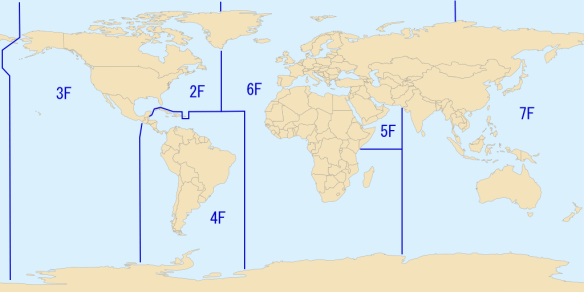
  • Forth Fleet is the Naval component commander for SOUTHCOM. Fourth Fleet is part of LANT Fleet and is headquartered in Mayport, Jacksonville, FL.  SOUTHCOM is located in Doral, FL, part of greater Miami.
  • LANT AREA is the Coast Guard counterpart of LANT Fleet and so should be the primary point of contact between Navy and Coast Guard for the Eastern Pacific drug transit zone.
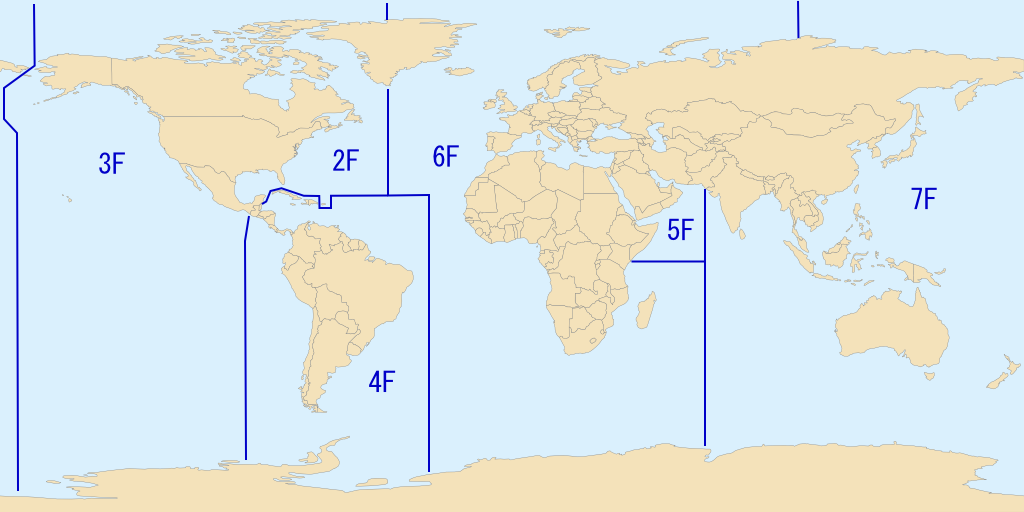
US Navy Fleet Organization

The Missing Class–Response Boat, Large–the WPB replacement:

All along, I have been saying our cutter are not adequately armed to have a high probability of being able to stop a terrorist controlled vessel. Currently the Webber class WPCs seem to be the most likely craft to be in a position to take on that role, but in many scenarios they simply would not be up to the task. In addition we know that about half the critical ports or port complexes will have no Webber class homeported there so that they might respond most rapidly in the case of an attack.

We still need to replace the 87 foot Marine Protector class WPBs. As we have discussed here and here, properly equipped, a vessel half the size of the Webber class could take on this job.

There were 74 Marine Protector class built. Wikipedia indicates there are 73 currently active and we know there is a proposal to decommission eight in the belief that their missions will be performed by Webber class and response boat, mediums. That would still leave 65.

Assuming we put two WPB replacements in position to protect each of the 31 critical ports, so that we could always have one either on standby or underway near by, it would only require 62. It the Webber class were better armed, and we only needed to protect those critical ports with no Webber class homported there, we would need no more than 34. If we also redistributed the D7 Webber class as suggested we would need only 26.

“Cutting Coast Guard funds threatens our security, at home and in the Pacific” –The Hill

The U.S. Coast Guard Cutter Bertholf (left) moves in formation with Philippine coast guard vessels Batangas (center) and Kalanggaman during an exercise on May 14. U.S. Coast Guard/Chief Petty Officer John Masson

The Hill argues for increased Coast Guard presence in the Pacific including greater interaction with the nations of the Western Pacific.

After explaining why China is a greater threat than Germany, Japan, or the Soviet Union ever were, the author, Seth Cropsey, explains:

“The U.S. Coast Guard (USCG) is uniquely situated to act as a bridge between U.S. combat forces and their allied counterparts precisely because of its dual political-legal role. Its engagement in answering grey zone challenges is also a helpful encouragement to the maritime services’ cooperation that allows each service to perfect its unique skills.”

He argues for the 12th NSC.

“As it stands, the Coast Guard’s long-range cutters have been cut from ten in the Pacific to only six (actually we still have six NSCs and two WHECs–Chuck). If Congress does not fund the 12th National Security Cutter, it will undermine the Coast Guard’s mission in the Western Pacific and weaken U.S. security.”

Most importantly, as we have done several times here, he calls for a reevaluation of the services needs and recurrent long term planning.

Even more broadly, U.S. policymakers – within the Coast Guard, the Armed Forces, and the Pentagon – must consider the Coast Guard’s strategic role. The USCG has not produced a fleet plan, termed the “Fleet Mix Analysis,” since 2004. Even in 2008 and 2012, when it revisited the document, it concluded that its fleet could only meet three-fifths of its missions. In 2004, Chinese fighter aircraft seldom conducted night operations, North Korea had not yet tested a nuclear weapon, and the U.S. had toppled Iraq’s Saddam Hussein just a year before; Hamas was a small but noted Palestinian terrorist organization, while al-Qaeda in Iraq was still consolidating power.

After 16 years, any service’s missions and equipment must change as it adapts to new threats; the same is true for the Coast Guard. A robust force review is in order, potentially modeled off the Navy’s 30-year plan which will generate a new fleet capable of meeting the demands of great-power competition, especially in the Asia-Pacific.

“Navy Frigate (FFG[X]) Program: Background and Issues for Congress,” Updated June 8, 2020, CRS

The Congressional Research Service has updated their analysis of the FFG(X) program. You can view the 38 page pdf here.

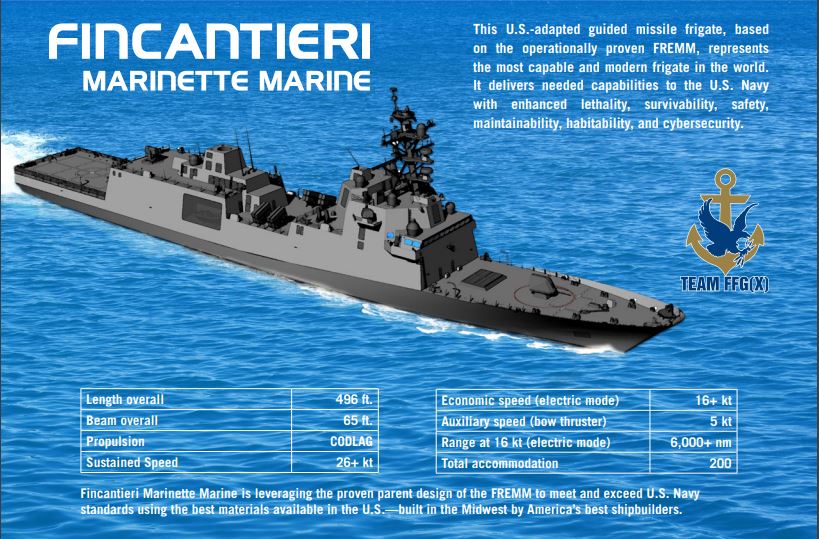
The FFG(X) equipment lists, which you might be better able to see here constitutes a list of possibilities for upgrades to the Polar Security Cutters, Coast Guard National Security Cutters, and Offshore Patrol Cutters.


“New Normal” in the Eastern Pacific?

A Pacific Area news release (reproduced at the end of the post) concerning a change of command aboard USCGC Waesche while at sea, along with the captions of the accompanying photos, show how drug interdiction operations are changing to deal with COVID-19. If you don’t have it on your ship, the best way to avoid it, is to stay underway.

The U.S. Coast Guard Cutter Waesche (WMSL 751) conducts a replenishment-at-sea with the fleet replenishment oiler USNS Laramie (T-AO 203) while patrolling the Eastern Pacific Ocean, April 20, 2020. Waesche is deployed to the U.S. Southern Command area of responsibility to support Joint Interagency Task Force South’s mission, which includes counter illicit drug trafficking in the Caribbean and Eastern Pacific. U.S. Coast Guard photo by Chief Petty Officer Dave Horning.

Waesche was underway for 90 days, apparently without a port call, replenishing underway. In the photos there is an indication of at least two underway replenishments from USNS Laramie (T-AO-203) an MSC oiler, on April 20 and on May 23. There is a good chance there may have been more.

This probably would not have been possible prior to the Navy’s surge of additional assets to the Forth Fleet for law enforcement.

The U.S. Coast Guard Cutter Waesche (WMSL 751) conducts a replenishment-at-sea with the fleet replenishment oiler USNS Laramie (T-AO 203) while patrolling the Eastern Pacific Ocean, May 23, 2020. Waesche is deployed to the U.S. Southern Command area of responsibility to support Joint Interagency Task Force South’s mission, which includes counter illicit drug trafficking in the Caribbean and Eastern Pacific. U.S. Coast Guard photo by Petty Officer 3rd Class Vincent Gordon.

Waesche in turn, replenished the Webber Class USCGC Terrell Horne (WPC-1131) on several occasions over an unspecified period. This is more evidence of the wide ranging operation of Webber class cutters, particularly in the Pacific Area.

The U.S. Coast Guard Cutter Waesche (WMSL 751) conducts an astern fueling at sea (AFAS) with the Coast Guard Cutter Terrell Horne (WPC 1131) while patrolling the Eastern Pacific Ocean during surface action group (SAG) operations, May 11, 2020. The cutters conducted multiple astern fueling at sea (AFAS) evolutions and one underway replenishment (UNREP) for food stores, which extended operations beyond normal patrol leg lengths for the Terrell Horne without foreign port calls by providing supply and logistics needs at sea, and protecting the crew from coronavirus and ensuring sustained Coast Guard operations. U.S. Coast Guard photo.


Alameda Coast Guard cutter conducts change-of-command ceremony during transit home from counterdrug deployment

News Release

June 4, 2020
U.S. Coast Guard Pacific Area
Contact: Coast Guard Pacific Area Public Affairs
D11-DG-M-PACAREA-PA@uscg.mil
Pacific Area online newsroom

Alameda Coast Guard cutter conducts change-of-command ceremony during transit home from counterdrug deployment

The Coast Guard Cutter Waesche conducts a change-of-command ceremony during their transit home following a 90-day counterdrug patrol
The Coast Guard Cutter Waesche conducts a change-of-command ceremony during their transit home following a 90-day counterdrug patrol The Coast Guard Cutter Waesche conducts a change-of-command ceremony during their transit home following a 90-day counterdrug patrol The Coast Guard Cutter Waesche conducts a change-of-command ceremony during their transit home following a 90-day counterdrug patrol The Coast Guard Cutter Waesche conducts a change-of-command ceremony during their transit home following a 90-day counterdrug patrol
Coast Guard Cutter Waesche conducts counterdrug operations in the Eastern Pacific Ocean The Coast Guard Cutter Waesche conducts a change-of-command ceremony during their transit home following a 90-day counterdrug patrol Coast Guard Cutter Waesche conducts counterdrug operations in the Eastern Pacific Ocean Coast Guard Cutter Waesche conducts counterdrug operations in the Eastern Pacific Ocean
Coast Guard Cutter Waesche conducts counterdrug operations in the Eastern Pacific Ocean Coast Guard Cutter Waesche conducts counterdrug operations in the Eastern Pacific Ocean Coast Guard Cutter Waesche conducts counterdrug operations in the Eastern Pacific Ocean Coast Guard Cutter Waesche conducts counterdrug operations in the Eastern Pacific Ocean

Editors’ Note: Click on images to download high resolution version.

ALAMEDA, Calif. — The crew of the Coast Guard Cutter Waesche (WMSL 751) held a modified change-of-command ceremony Thursday while anchored in the San Francisco Bay.

Capt. Jason H. Ryan relieved Capt. Patrick J. Dougan as commanding officer during the ceremony.
 
The change-of-command ceremony is a historic military tradition representing the formal transfer of authority and responsibility for a unit from one commanding officer to another. The event reinforces the continuity of command and provides an opportunity to celebrate the crew’s accomplishments.

The crew conducted the ceremony following a 90-day counterdrug patrol, stemming the flow of illicit narcotics trafficked across international waters of the Eastern Pacific Ocean amid the coronavirus pandemic.
 
Waesche coordinated efforts with the Coast Guard Cutter Terrell Horne and used their unmanned aerial system to disrupt criminal networks’ vital smuggling routes.
 
The crew self-quarantined for 14 days off the coast of California prior to the start of their patrol to ensure their health and safety. Instead of making international port calls, the crew took on fuel, food and supplies during replenishments at sea with the U.S. Navy.
 
Ryan reported to Waesche from the 7th Coast Guard District, headquartered in Miami, where he served as the Enforcement Branch chief. Ryan oversaw the Coast Guard’s enforcement of U.S. laws, from the protection of marine resources to drug and migrant interdiction efforts in the Southeast U.S and the Caribbean basin. 
 
Following the change of command, Dougan reported to the Coast Guard’s Pacific Area Command in Alameda, where he will serve as Pacific Area’s chief of operations. 
 
“Waesche has been successful because Captain Dougan provided the vision and leadership that allowed the crew to flourish.” said Vice Adm. Linda Fagan, commander, Pacific Area, who presided over the ceremony.

Dougan served as Waesche’s commanding officer from June 2018 to June 2020 and supported Coast Guard operations throughout the Eastern Pacific by conducting two counterdrug patrols. The crew seized more than 6,000 pounds of narcotics under Dougan’s command worth an estimated wholesale value over $200 million.
 
Dougan also oversaw an eight-month in-port maintenance period for the installation of a small unmanned aircraft system and reinstallation of fabricated parts to the main reduction gear worth a total of $15 million.
 
“This crew has faced extraordinary challenges over the last two years, and faced every one head on with vigor and a can-do spirit,” said Dougan. “Leading change is hard. Changing momentum is hard. It takes focused effort, perseverance and involved leadership at all levels. Fortunately, the Waesche crew has all three and then some.”