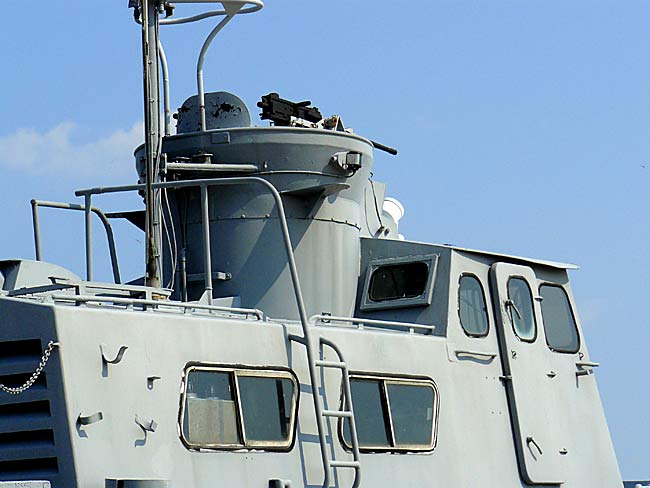
PATFORSWA Photo from USNI

Five U.S. Coast Guard Sentinel-class fast-response cutters and two Avenger-class mine countermeasures (MCM) ships sail together in the Gulf of Oman, Nov. 3, 2023. Click on the photo to enlarge. US Navy Photo

An unusual photo from the December 28 edition of the US Naval Institute News Service’s Fleet and Marine Tracker. The Avenger class, like the cutters, are based in Bahrain.

Why this get together? I presume this is an exercise in which the FRCs protect the MCM ships from Iranian drones or small craft swarm tactics. Alternately the exercise may have been for the cutters to protect high value units, with the MCM ships simulating larger ships, but FRCs already routinely escort high value units, though I don’t think I have seen this many involved in a single operation.

Late addition: 

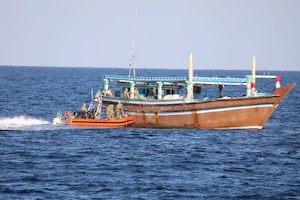
“U.S. Coast Guard Cutter Seizes Illegal Narcotics in Gulf of Oman” –NAVCENT

GULF OF OMAN (Dec. 12, 2023) Coast Guardsmen from the U.S. Coast Guard Sentinel-class fast response cutter USCGC Glen Harris (WPC 1144) seize illegal narcotics thrown over the side of the fishing vessel in the Gulf of Oman, Dec. 12. Glen Harris operates in the U.S. 5th Fleet area of operations to help ensure maritime security and stability in the Middle East region. (Photo by U.S. Coast Guard )

Below is a news release from U.S. Naval Forces Central Command Public Affairs. While apparently drugs were seized, there is no indication they seized the smuggling vessel nor arrested its crew. That seems surprising.


MANAMA, Bahrain —A U.S. Coast Guard ship seized illegal drugs worth over $6 million from a fishing vessel in the Gulf of Oman, Dec. 12.

Crewmembers from the Sentinel-class fast response cutter USCGC Glen Harris (WPC 1144) observed individuals on a fishing vessel throw seven bales of material over the side. The material was discovered to be 174 kilograms of heroin.

Glen Harris arrived in the Middle East region last year and operates from Naval Support Activity Bahrain.

The fast response cutter is part of a contingent of U.S. Coast Guard ships forward-deployed to the region under Patrol Forces Southwest Asia (PATFORSWA). PATFORSWA deploys Coast Guard personnel and ships alongside U.S. and regional naval forces throughout the Middle East.

APKWS for Counter Drone

At about $30,000 each APKWS is a low-cost way to provide a precision counter to a number of threats.

We have already seen reports of the 70mm APKWS guided rocket being used against relatively small Class 2 unmanned aerial systems.

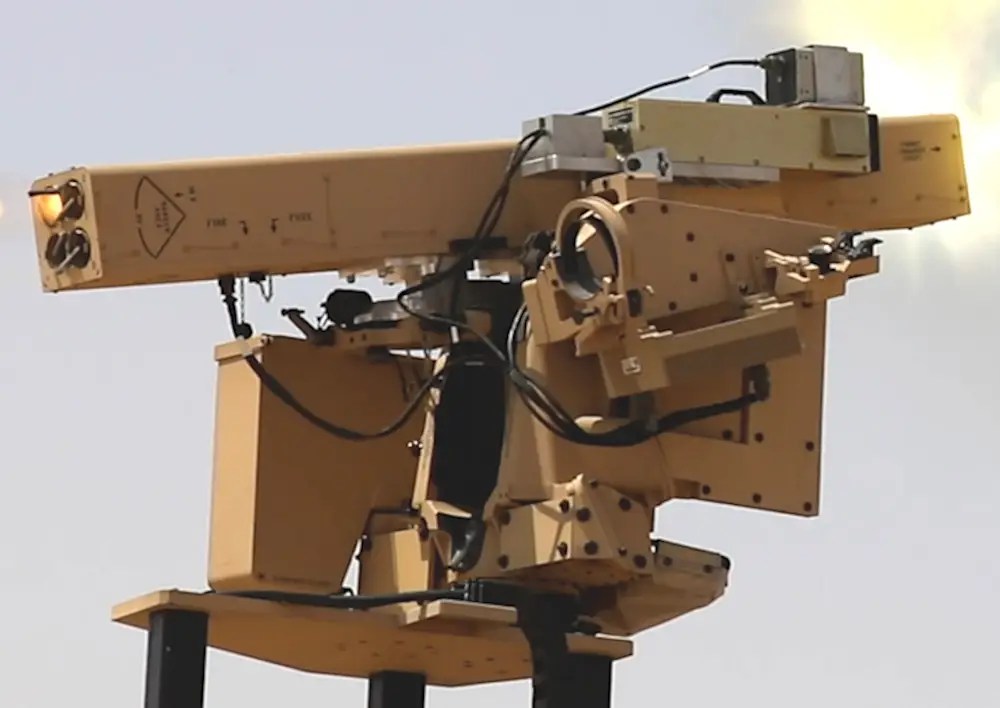
A close-up of the modified CROWS II, a small remote weapons system mount, fitted with the LAND-LGR4 launcher and the added sensor or other system (silver/gray rather than tan). US Army

Here we have a better picture of how the system might be deployed on the PATFORSWA Webber class patrol craft.

The PATFORSWA cutters already have the air search/detection or “hunter” part of a C-UAS system. Reportedly their Mk38 systems have been upgraded to 30mm capable of firing airburst munitions that can provide close in UAS kill capability. Adding a CROWS II RWS with LAND-LGR4 launcher and a laser designator mounted on the O-1 deck, above and behind the Mk38, would allow them to begin engaging UAS and other threats at triple the effective range of the 30mm.

“USNI News Fleet and Marine Tracker: Oct. 30, 2023” / “U.S. Naval Forces in Middle East Interdict $29 Million in Illegal Drugs”

Total Battle Force Deployed Underway
291
(USS 232, USNS 59)
107
(USS 74, USNS 33)
85
(57 Deployed, 28 Local)

The US Naval Institute’s news service’s latest Fleet and Marine Tracker only mentions two Coast Guard Units, The USCGC Healy and Patrol Forces Southwest Asia (PATFORSWA). They are respectively reported in the Western Atlantic and the Persian Gulf. Healy is pictured stopped in Reykjavík, Iceland on Oct. 24, 2023. From there, looks like she headed SW. No info on where she will stop next. They do have a photo from a drug bust by PATFORSWA cutter Charles Moulthrope (WPC 1141) on Oct. 12 that I have not seen reported elsewhere. I have included the news release I found as a result below.

The usual data indicating how many Navy units are operating under the various Fleet Commanders was not included, so we don’t know how many Navy ships are operating under 4th fleet.

It does look like the Navy is busier than usual with five carrier strike groups underway including four deployed, two in the Med and two in the Pacific.


U.S. Naval Forces in Middle East Interdict $29 Million in Illegal Drugs

13 October 2022

From U.S. Naval Forces Central Command Public Affairs

MANAMA, Bahrain – A U.S. Coast Guard fast response cutter seized an estimated $29 million worth of illicit narcotics from a fishing vessel while patrolling the Gulf of Oman, Oct. 12, two weeks after another sizable interdiction.

USCGC Charles Moulthrope (WPC 1141) confiscated 2,980 kilograms of opium and 400 kilograms of methamphetamines as the fishing vessel transited international waters. The Coast Guard cutter was operating in support of Combined Task Force 150, which oversees maritime security operations for Combined Maritime Forces in the Arabian Sea, Gulf of Oman and Gulf of Aden.

“A success like this is a team effort. I am proud of each and every member of our crew,” said Lt. Cmdr. Stephen Hills, Charles Moulthrope’s commanding officer. “We remain committed to countering the flow of illegal contraband and promoting security and stability across the region.”

Hills’ crew previously interdicted another fishing vessel Sept. 27 while patrolling the Gulf of Oman, which led to the seizure of $85 million worth of illegal drugs.

Charles Moulthrope arrived in the Middle East in May and operates from the U.S. Navy base in Bahrain where U.S. Naval Forces Central Command, U.S. 5th Fleet and Combined Maritime Forces are headquartered.

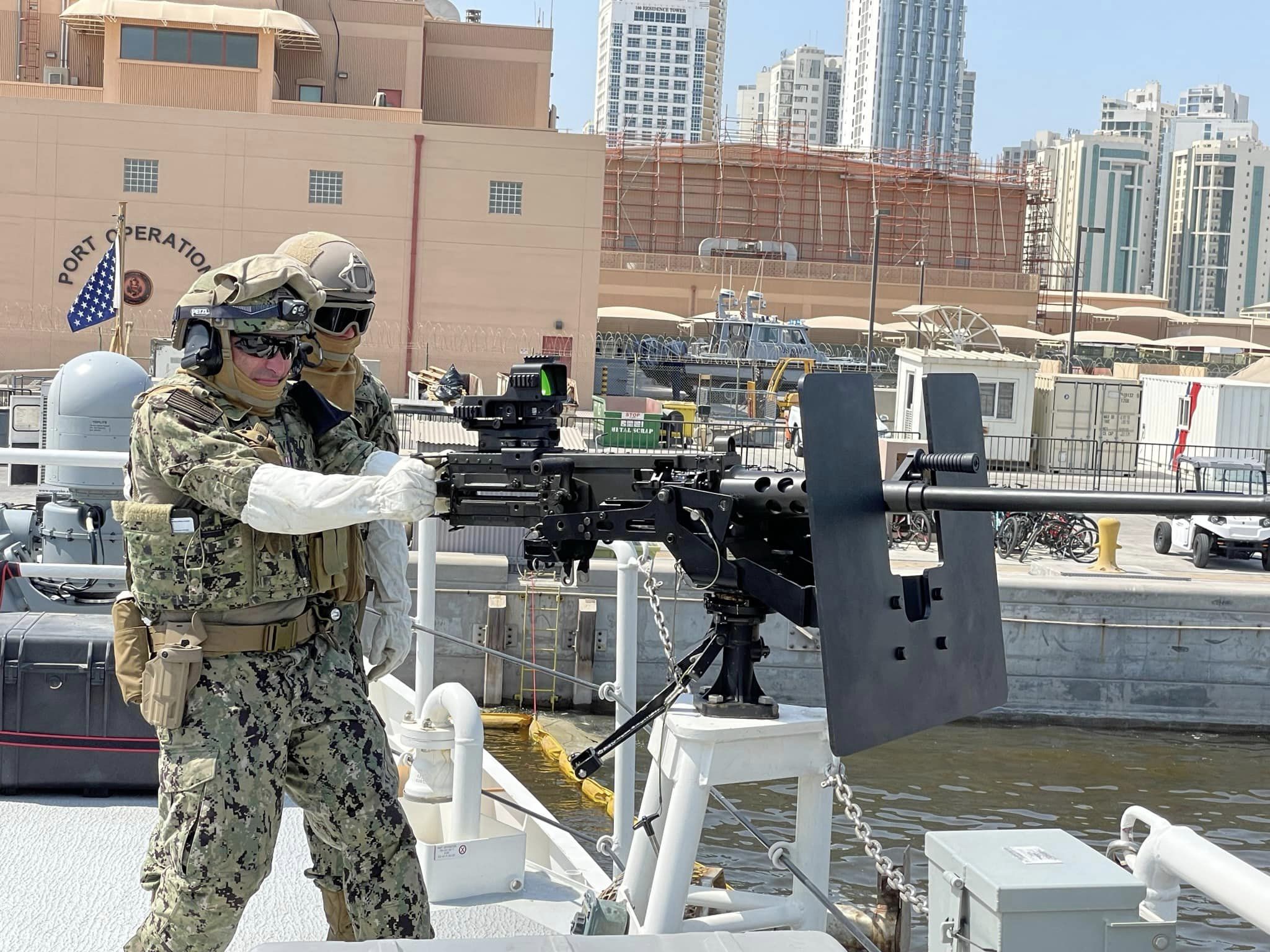
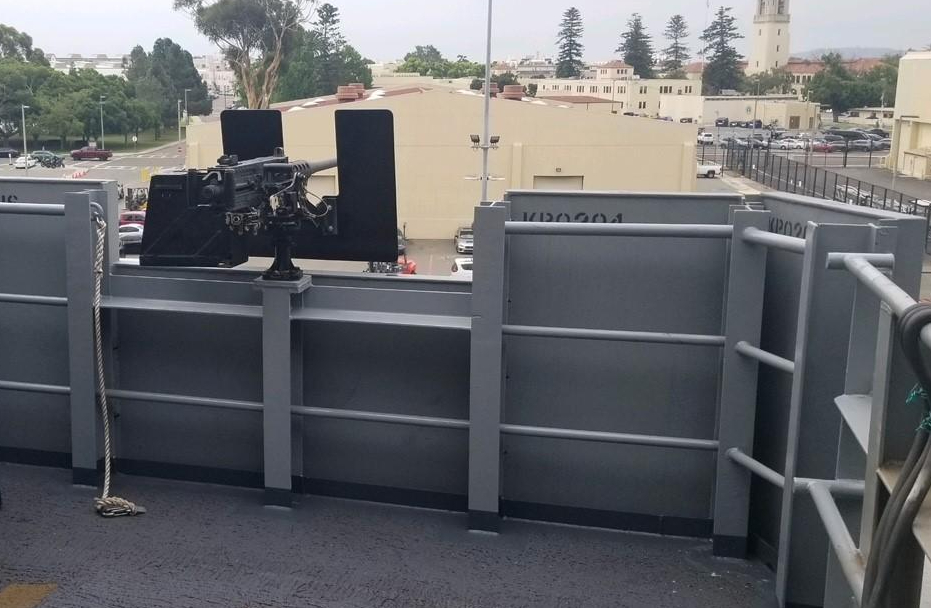
PATFORSWA has sophisticated gun sight on .50 cal.

I ran across the photo above on the PATFORSWA Facebook page. (The photo was posted in Oct. 2022.) For some time, I have been advocating for improvements over our existing crew served .50 caliber mounts, if not outright replacement, then at least better protection and greater accuracy. When I saw this photo, I was pleased to see this more sophisticated gun sight. I believe this is the sight I did a 2017 post about. The post was in reference to a report from Defense News. There is a night vision version of this sight.

I don’t have any knowledge about the extent of the use of this sight. It may have been a one-of-a-kind evaluation, but I found it encouraging. It is perhaps, something to look for. Would not hurt if these became standard on all cutters.

Late addition:

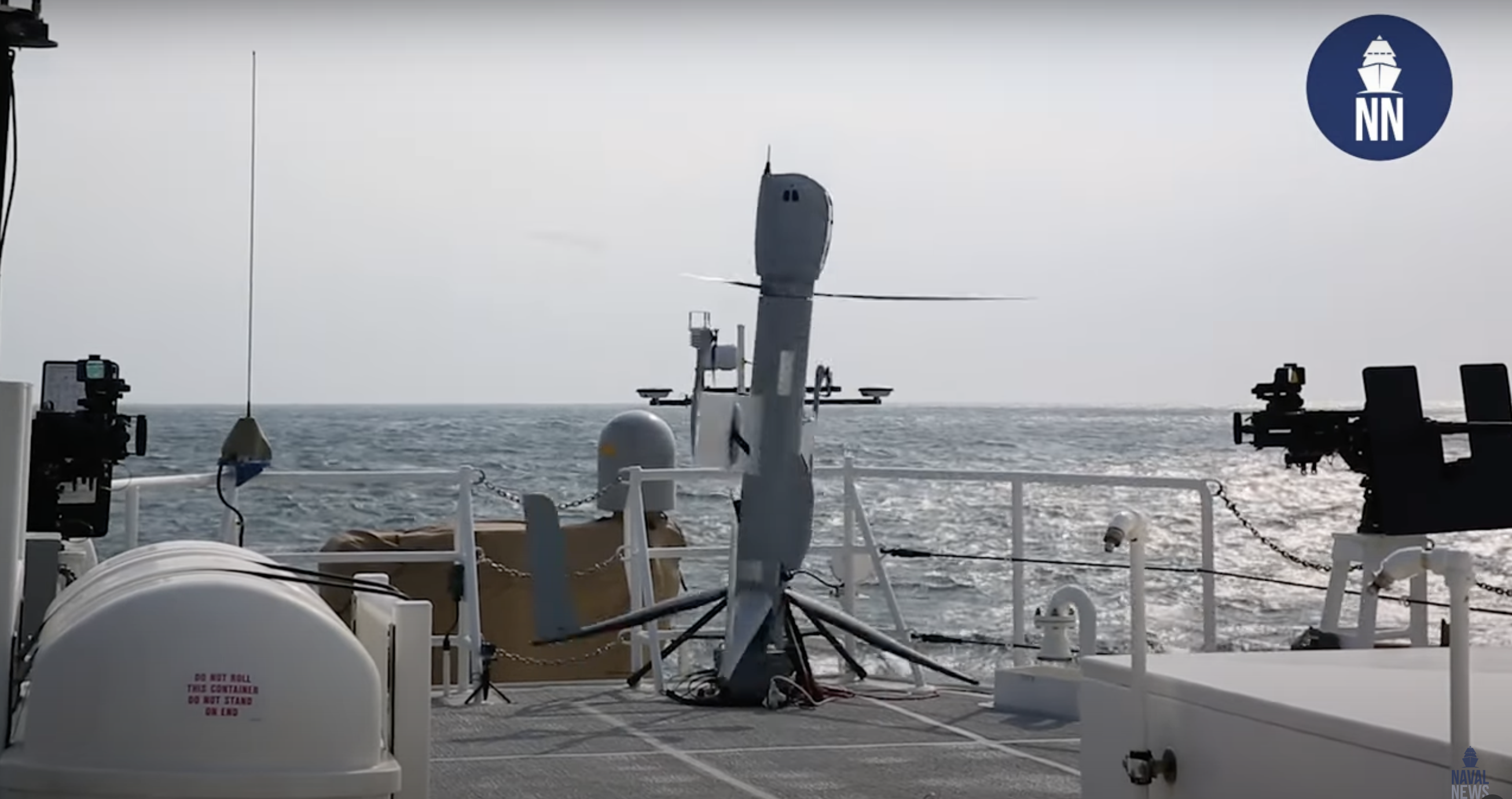
Screen grab. Flexrotor launching from USCGC Emlen Tunnell (WPC 1145). Also note the sight on the M2 .50 caliber machine gun mounts.


We Need the Ship to Accomplish the Mission, the Gunner Protects the Ship, So We Need to Protect the Gunner

Crew Served Weapons protection by Kinetic Protection LLC on USN CV.

I have been talking about the need to protect the gunners for our crew served gun mounts since 2013. We revised the topic in 2016, in 2019, and in 2021.

With the current Conflict in the Mid-East, there is perhaps more reason than ever to take another look.

I am particularly concerned about the need to protect gunners at crews served weapon stations (normally .50 caliber machine guns) on the PATFORSWA cutters, against the kinds of 12.7mm and 14.5mm machine guns commonly mounted on the Islamic Revolutionary Guard Corps Navy’s thousands of inshore attack craft. To me the powerful 14.5x114mm round might be regarded as the pacing threat and probably the largest weapon we could provide protection against (MIL-STD-3038 Type XI class B armor).

I would really like to see the crew served weapons replaced by remote weapons stations, but if we are not going to do that, we at least need to protect the gunners.
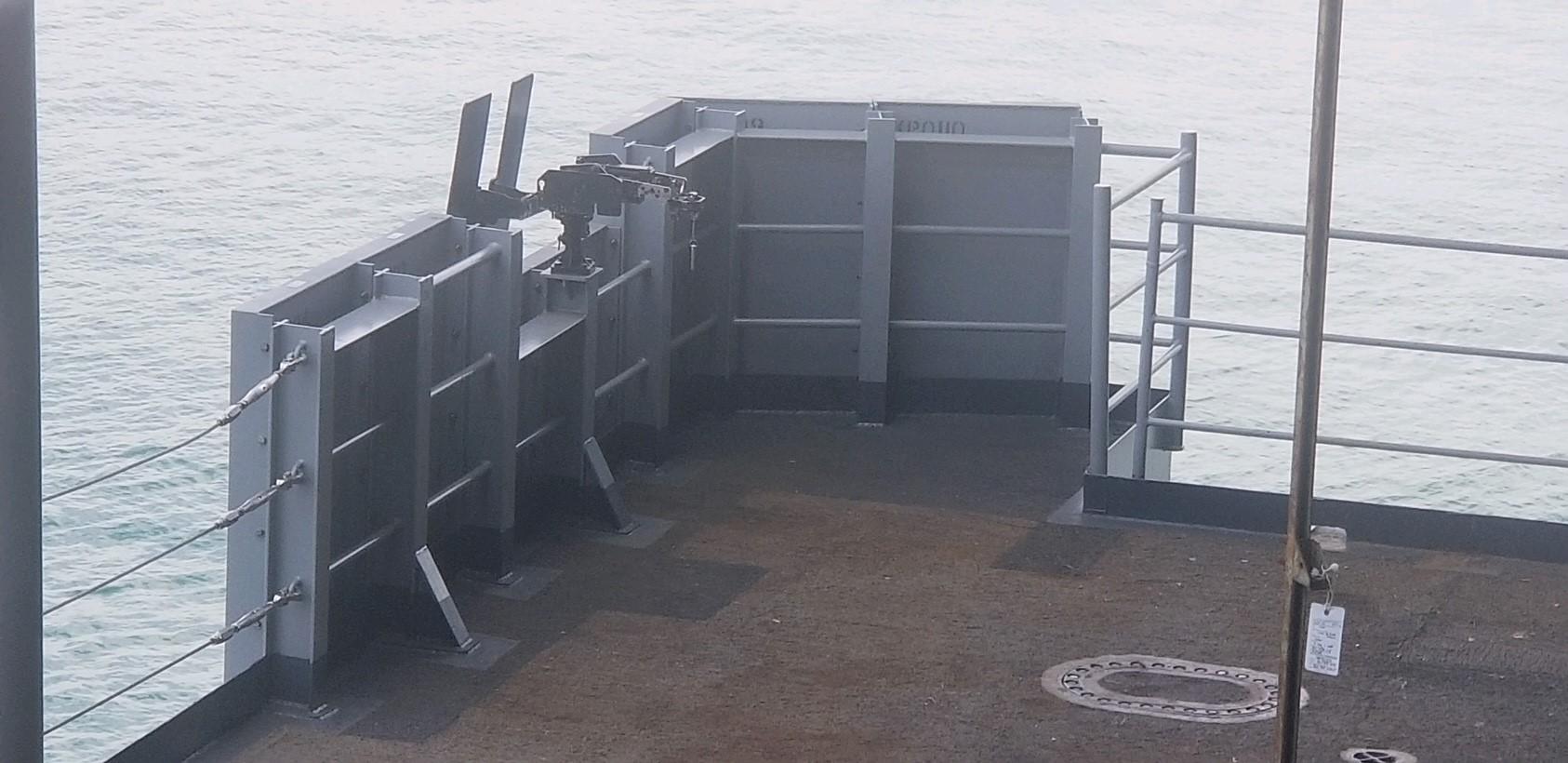
Crew Served Weapons protection by Kinetic Protection LLC on USN aircraft carrier. Similar protection, with modifications for intended arc of fire for the after .50 caliber gun mounts on the PATFORSWA FRCs which are mounted on the aft corners of O-1 Deck seems appropriate. This mount, on a carrier is relatively low, to allow the gunner to depress the gun, raising the inboard end of the gun, and still aim at targets close aboard to engage targets at very close range. Mounts on cutter might be higher to permit a smaller cutout since the gun would not have to be depressed at as great an angle.

I had an opportunity to talk to the CEO and representatives of Kinetic Protection, LLC who provide the only currently Navy recognized ballistic shielding for crew served weapons that meet DOD requirements (MIL STD 3038 and MIL PRF 32379).
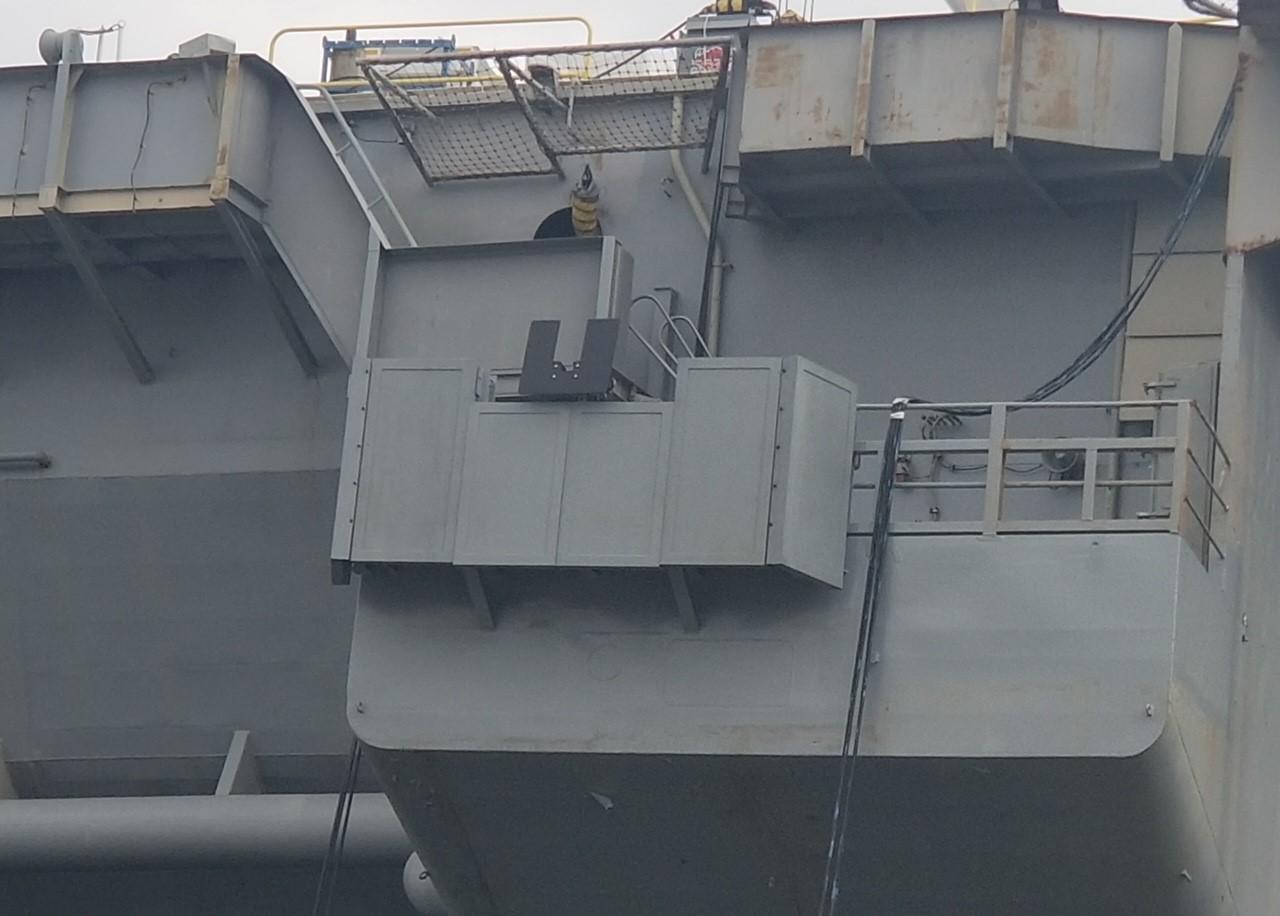
Crew Served Weapons protection by Kinetic Protection LLC on USN aircraft carrier.

I was surprised to learn that their product is metallic rather than a composite. I was told this was because composite armor was found to deteriorate due to environmental exposure while the metallic plates have a 25 year life.

Their armor is customizable by ship class and can be bolt-on or permanently installed. It can be various lengths but currently they have been making sections 30 inches wide and 30, 35 and 60 inches long.

The armor weighs about 20 pounds per square foot so it looks like we could provide 12.5 to 14.6 sq. feet of protection (two panels 30×30 or 30×35 inches) for each of the four crew served weapons positions for a total of about 1200 pounds of additional weight. This should not be a problem, considering how many people are frequently crammed on these small ships when they are used to repatriate aliens.

While considering how to help these ships survive in conflict, there are other things we can do to make the weapons more effective, like stabilizing systems and better sights.

The USCGC Oliver Henry (WPC 1140) in Manus, Papua New Guinea, Aug. 14, 2022 (U.S. Coast Guard photo by SW3 Victor Villanueva, NMCB-FOUR). Enlarging this photo by touching on it provides a view of both the forward and after crew served mounts located on the O-1 deck and the probable location of armor to protect the gunners. It is not clear if the current aft positions would allow the weapons to point directly astern, but every effort should be made to provide maximum arcs of fire. Pipe guards could be installed to prevent guns being depressed far enough to fire into the ship or personnel on the main deck.

This kind of protection used to be common. I have included some examples below.

A 20mm gun tub. The steps allowed the gunner, strapped to the gun, to point the weapon from the horizon to near vertical.

“Inside the U.S. Navy’s Cutting-Edge Drone Boat Tech”–WSJ

A reader brought the video above to my attention, recognizing the significant Coast Guard participation in the program. 

Below I have reproduced the text that accompanied the video on YouTube. 


Drone boats appear to be on the cusp of a revolution. The U.S. Navy’s Task Force 59 has been pairing cutting-edge unmanned surface vehicles with artificial intelligence to expand the military’s eyes and ears in the Middle East. Now, similar efforts will be rolled out in the Pacific and Central and South America. The military’s objective is to leverage machine learning to detect and anticipate threats before they occur. Experts say the U.S. is currently the leader in this field, but competitors like China and Russia are racing to catch up. I traveled to Manama, Bahrain to see the high-tech drones in action and speak to officials about how they’re preparing for a future with robots in the world’s waters. 0:00 A rare look at the U.S. Navy’s drone boat operation 0:30 Meet the Navy’s Task Force 59 2:14 Drone boat capabilities 4:05 How artificial intelligence is layered with the drone boats 5:11 The global race to advance unmanned marine vehicles 7:23 What’s next for the U.S. military? Check out more from my exclusive interview with Vice Admiral Brad Cooper, commander of U.S. Naval forces in the Middle East, about unmanned vessels and the Navy’s future fleet:    • Drone Boats, AI and the Future of Mar…   I’m Shelby Holliday, a reporter for WSJ. Subscribe to join me as I explain some of today’s most pressing geopolitical events, from superpower showdowns and conflicts to supply chain snarls and natural resource struggles.


The link embedded above was to this video. 

Thanks to David for bringing this to my attention.

“French-Led Combined Task Force 150 seized more illegal narcotics in the Arabian Sea” –NAVCENT

ARABIAN SEA (Sept. 7, 2023) United Kingdom Royal Navy Sailors assigned to frigate HMS Lancaster (F 229) inventory illicit drugs seized in the Arabian Sea, Sept. 7. (Photo by Courtesy photo)

Below is a news release from US Naval Forces Central Command.

5th Fleet (NAVCENT) has been doing some interesting stuff. They have assembled a coalition called “Combined Maritime Forces” that might serve as a model for operations in the South China Sea, Western Pacific, and the Eastern Pacific/Caribbean drug transit zones. Of course, the US Coast Guard is playing a part here and here.


MANAMA, Bahrain —On September 7, UK warship HMS Lancaster (F229), operating in support of the French-led Combined Task Force (CTF) 150 seized more than 450kg of illegal drugs including heroin and hashish in the Arabian Sea.

With a street value of approximately $9.5 million this is the first narcotics seizure since the French Navy took over command of CTF 150 from the UK in July. The Combined Maritime Forces (CMF) remain committed to disrupting criminal and terrorist activities by restricting their freedom of maneuver in the maritime environment.

Capt Yannick Bossu, CTF 150 Commanding officer said, “This seizure demonstrates once again the operational effectiveness of CTF 150 and illustrates the UK and France’s commitment to maritime security alongside their regional and international partners.”

Cmdr Chris Sharp, HMS Lancaster Commanding Officer remarked, “This success again demonstrates how international partners can work together in stopping illegal maritime activity which funds terrorist activity. This was a great success shared by all those involved.”

CTF 150 is one of the five operational forces of CMF, a 38-nation maritime partnership headquartered in Bahrain. CMF strengthens the maritime security in this strategic area, by countering activities that finance terrorism and international crime. This is the twelfth time that France commanded CTF 150.

“Drone Boat Leading Navy Ships In The Strait Of Hormuz A Sign Of Things To Come” –The Drive

Strait of Hormuz, August 6, USS Thomas Hudner (DDG-116), Lewis and Clark class cargo ship USNS Amelia Earhart (T-AKE-6) and USCGC Charles Moulthrope (WPC-1141) with L3Harris Arabian Fox uncrewed surface vessel (USV) in the foreground.

The Drive has a post discussing 5th Fleet/NAVCENT’s pioneering work with Unmanned surface systems (UAS) and the creation of Task Force 59.

Coast Guard Webber class patrol craft are prominent in the operation as they have been in previous UAS operations. I suspect this is because the WPCs are readily available to the 5th Fleet commander. Their size and maneuverability make them easier to operate in close proximity to the small UAS (and in the vicinity of Iranian Revolutionary Guard Corp (IRGC) small craft). They are heavily armed enough to prevent the IRGC from stealing the UAS. They have tried to do it in the past

Specs on the 13 foot L3 Harris Arabian Fox (40 knot maximum speed and 36 hour endurance) lend credibility to the long-range reported for Ukrainian Kamikaze UAS, up to 450 nautical miles (approximately 833 km).

“Greece Receives First Island Class Patrol Vessels From The U.S.” –Naval News

(Since today is the 4th of July) As part of 5th Fleet’s PATFORSWA, crewmembers aboard the U.S. Coast Guard cutter USCGC Adak (WPB-1333) raised the American flag.  U.S. Coast Guard photo by Seaman Frank Iannazzo-Simmons

Naval News reports that four of the six PATFORSWA 110 foot Island Class WPBs are being transferred to the Greek Navy, and it goes on to speculate they may ultimately get all six.

“The four Island-class boats that will join soon the Greek naval fleet are the former Wrangell (WPB-1332), Adak (WPB-1333), Monomoy (WPB-1326) and Aquidneck (WPB-1309).”

The boats are to be refurbished and are expected to be equipped with a 20mm remote weapon station (RWS), the LIONFISH 20 by Leonardo, new “surveillance radar, electro-optical sensor (Naval News verified that it will be a Miltech Hellas product), communications equipment and machine guns will be installed as well.”

The post notes that former US Coast Guard Island class cutters now also serve with Pakistan (Pakistan Maritime Security Agency), Georgia (Georgian Coast Guard), Costa Rica (Costa Rican Coast Guard), and Ukraine (Ukrainian Navy) in addition to the Greek Navy.

Additional transfers can be expected in the future.