“Coast Guard Cutter Stratton returns to Alameda following 97-day South Pacific patrol” –News Release

U.S. Coast Guard Cutter Stratton (WMSL 752) participates in a exercise with the Australian maritime surveillance aircraft in the South Pacific Ocean, Feb. 23, 2022. The Stratton is currently underway conducting exercises and operations with partner nations in the South Pacific region. (U.S. Coast Guard photo by U.S. Marine Corps Sgt. Sarah Stegall)

Just a news release, but it is about one of those increasingly common long deployments to the Western Pacific. Notable are the use of the small unmanned air system, presumably Scan Eagle, shiprider program with Fiji, and laying the ground work for a shiprider program with Papua New Guinea.

220130-N-CD319-1014 SOUTH PACIFIC OCEAN (Jan. 30, 2022) The Arleigh Burke-class guided-missile destroyer USS Sampson (DDG 102) participates in Divisional Tactics (DIVTAC) formations with U.S. Coast Guard Cutter Stratton (WMSL 752) and British Royal Navy ship HMS Spey (P 234). Sampson is positioned to conduct lifesaving actions in support of disaster relief efforts in Tonga. The ship is operating in support of the Australian Defence Force (ADF). The Australian Government response is coordinating closely with France and New Zealand under the FRANZ partnership, alongside Fiji, Japan, United Kingdom and the United States to assist Tonga in its time of need. Sampson is on a scheduled deployment in the U.S. 7th Fleet area of operations to enhance interoperability with alliances and partnerships while serving as a ready-response force in support of a free and open Indo-Pacific region. (U.S. Navy photo by Mass Communication Specialist 3rd Class Tristan Cookson)

News Release

March 21, 2022
U.S. Coast Guard Pacific Area

Coast Guard Cutter Stratton returns to Alameda following 97-day South Pacific patrol
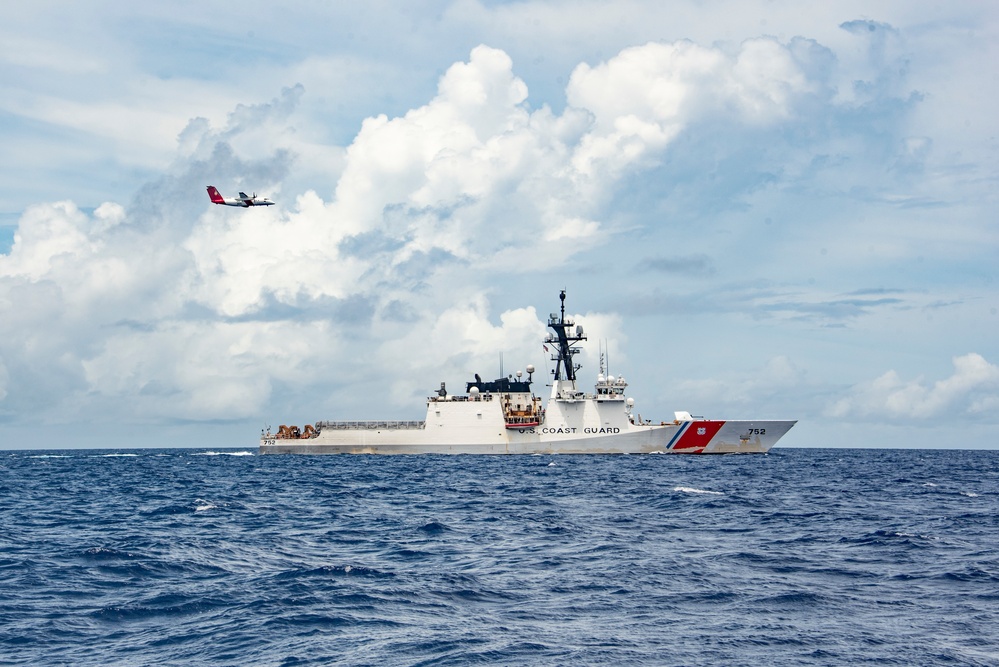
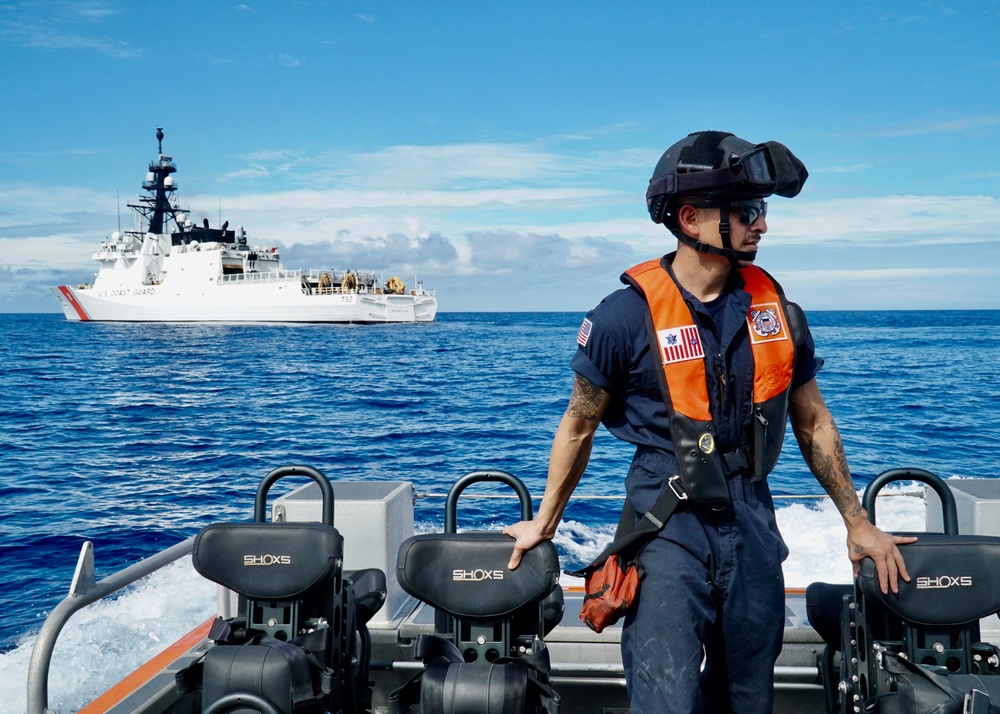
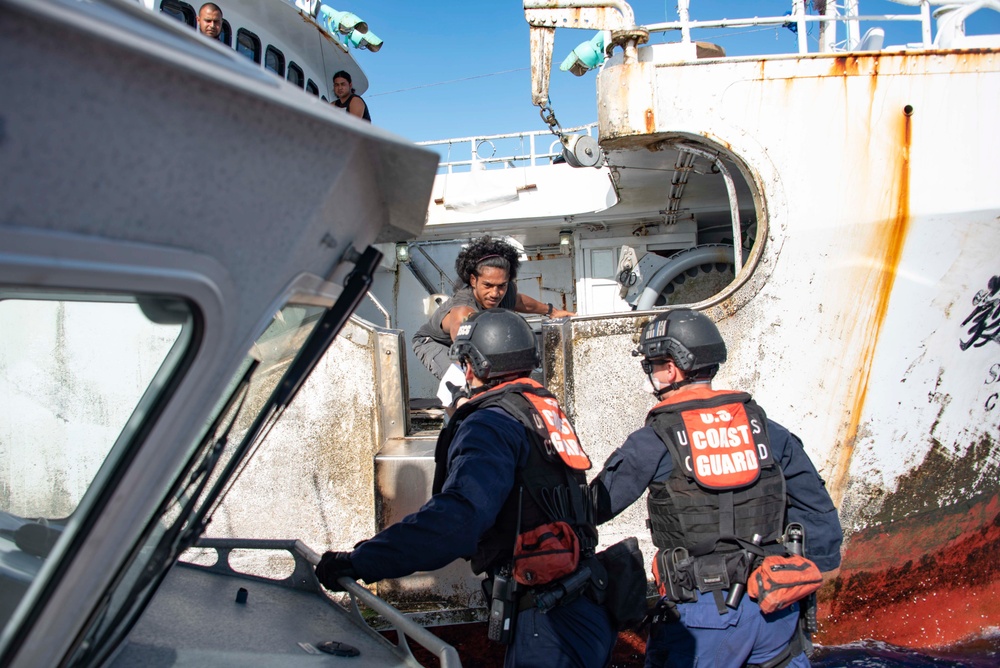
Photo of CGC Stratton Photo of CGC Stratton Photo of boarding
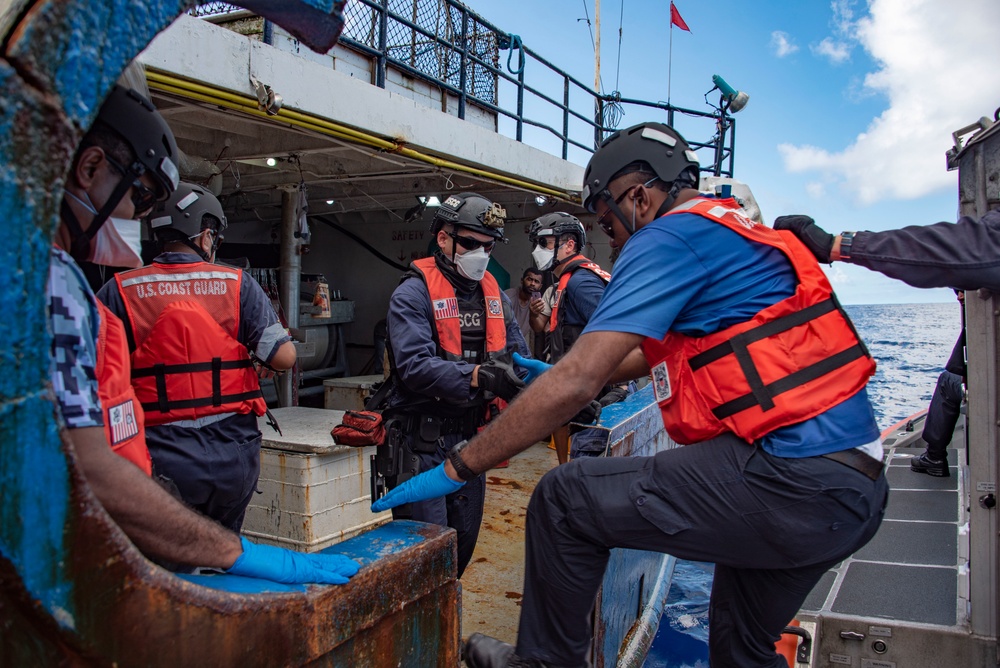
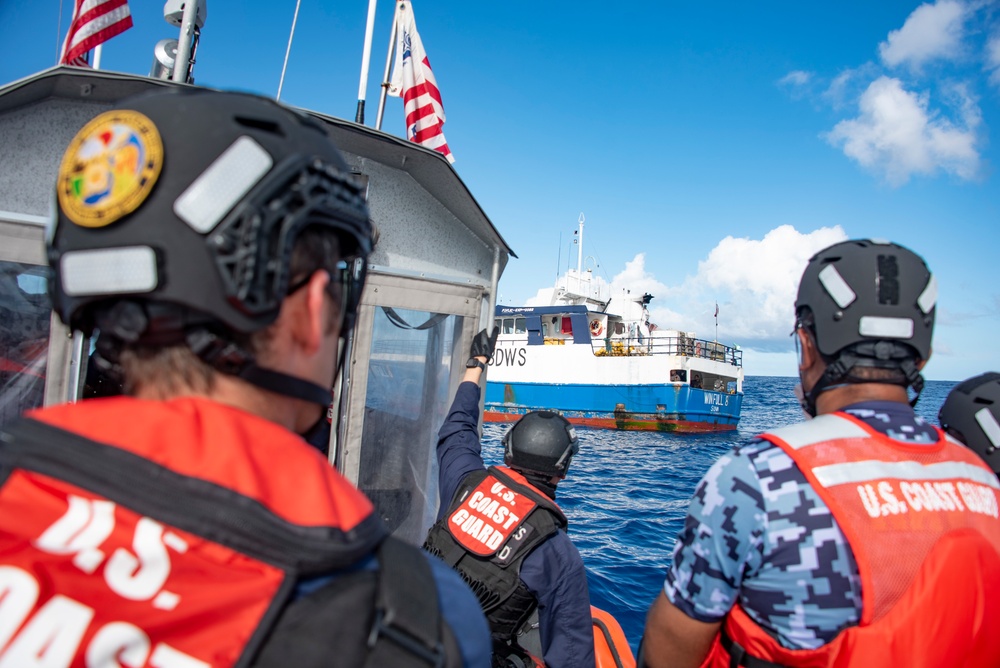
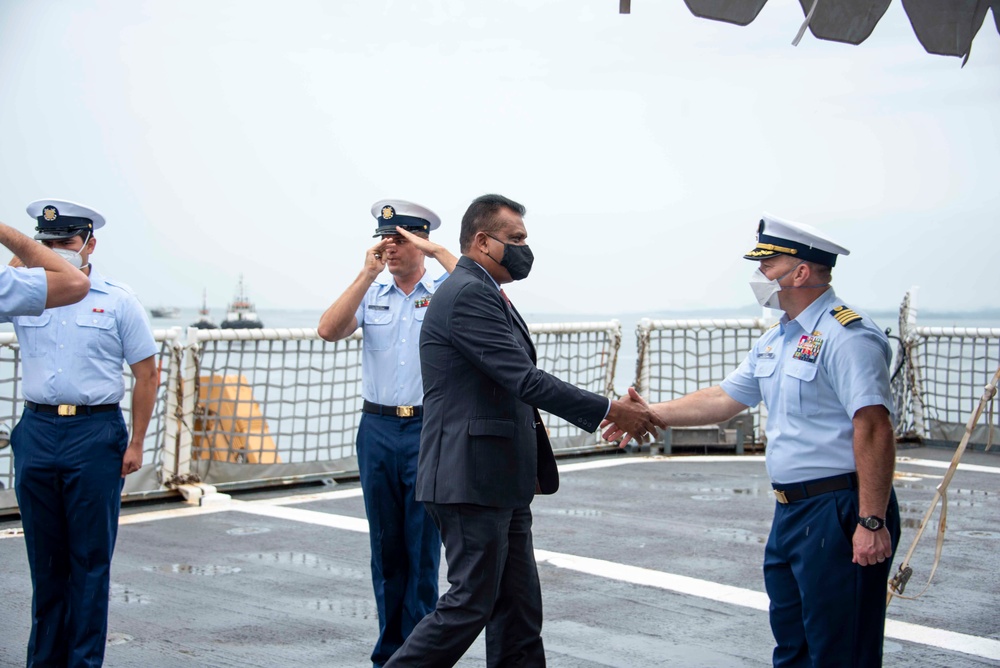
Photo of boarding Photo of Fiji press event Photo of boarding

Editors’ Note: Click on images above to download high resolution versions. Additional photos are available here.

ALAMEDA, Calif. — The crew of Coast Guard Cutter Stratton (WMSL 752) returned to Alameda Saturday after completing an Operation Blue Pacific Patrol in the south Pacific.

While underway, Stratton’s crew worked with Pacific partner nations, including Fiji, France, New Zealand, Papua New Guinea, Australia, and the United Kingdom on an array of missions and prioritized combating Illegal, Unreported, and Unregulated fishing on the high seas or in partner nations’ exclusive economic zones.

In the effort to combat IUU fishing, Stratton teams boarded 11 vessels during the 20,348-mile patrol and found 21 violations.

“Our collaboration with our partners and utilization of our shiprider agreements gave us the ability to accomplish our mission of combatting illegal, unreported, and unregulated fishing in order to maintain regional stability and protect the fishing industry,” said Capt. Steve Adler, Stratton’s commanding officer. “By bringing aboard shipriders from Fiji, we were able to patrol their exclusive economic zones to better assist them in enforcing their maritime laws.”

In February, Stratton embarked three shipriders from Fiji with representatives from the Fiji Revenue and Customs Services, the Fiji Ministry of Fisheries, and the Republic of Fiji Navy, who led bilateral enforcement efforts for Stratton to patrol their exclusive economic zones.

There is a shared interest for both Fiji and the United States, as well as other partner nations, to protect fisheries as they provide a renewable source of food and income to the Pacific nations.

The Stratton crew also used small Unmanned Aircraft Systems to increase the ship’s capabilities and further extend the cutter’s patrol area.

“Stratton’s capacity for employing cutting edge technology like sUAS, gives the Coast Guard the upper hand in the fight against IUU fishing,” said Cmdr. Charter Tschirgi, Stratton’s executive officer. “The vast area covered during patrols like these displays the reach the Coast Guard has and the length we will go to assist our partners in the Pacific.”

Stratton visited multiple countries while deployed, including Tahiti, Fiji, and Papua New Guinea. While in Suva, Fiji, Stratton hosted a joint media engagement with the Fijian Permanent Secretary for Ministry of Defense, Manasa Lasuma, and the Fijian Permanent Secretary for the Ministry of Foreign Affairs, Yogesh Karan. While anchored in Port Moresby, Papua New Guinea, Stratton also hosted an engagement and law enforcement demonstration in conjunction with U.S. Ambassador Erin McKee and representatives of Papua New Guinea: Chief Inspector Christopher Smith, Terry Udu, Moses Teng, Hiribuma Dabuma, MAJ Norbeth Fehi, and Ivan Salonica. This discussion and demonstration of law enforcement operations and regional partnerships helped facilitate a future signing of a bilateral shiprider agreement between Papua New Guinea and the United States.

“Communicating with our allies face-to-face is extremely valuable,” said Ensign Alexander Mastel, Stratton’s public affairs officer. “With IUU fishing replacing piracy as the leading global maritime security threat, it is more important than ever to join efforts in ensuring economic security in the Pacific.”

While on patrol, Stratton’s crew also participated in multiple joint exercises with partners in the region. These included a formation sailing with the HMS Spey, a tactical maneuvering drill with HMS Spey and USS Sampson, a joint patrol with an Australian Border Force patrol aircraft, fueling-at-sea with New Zealand’s newest replenishment vessel HMNZS Aotearoa, and joint steaming with the French Naval vessel FMS Arago and Fijian Patrol vessel Savenaca.

“Partnerships across the Pacific are the key to success in combatting illegal, unreported, and unregulated fishing. I am extremely proud of the crew for demonstrating tremendous success in partnering and operating with our regional partners and allies across Oceania, including navies and law enforcement officials from French Polynesia, Fiji, Papua New Guinea, New Zealand, Australia, and the United Kingdom,” said Adler. “Only by building these continued relationships and joint operations with patrols like Stratton’s Operation Blue Pacific will we be able to truly make a difference and impact against the global problem of IUU fishing. By training with our partners, we further our interoperability and cooperation, ultimately advancing a peaceful, free and open Indo-Pacific.”
“The Coast Guard’s MH-65 Helicopter Fleet Is Headed For Trouble” –Forbes + Maybe MQ-8Bs

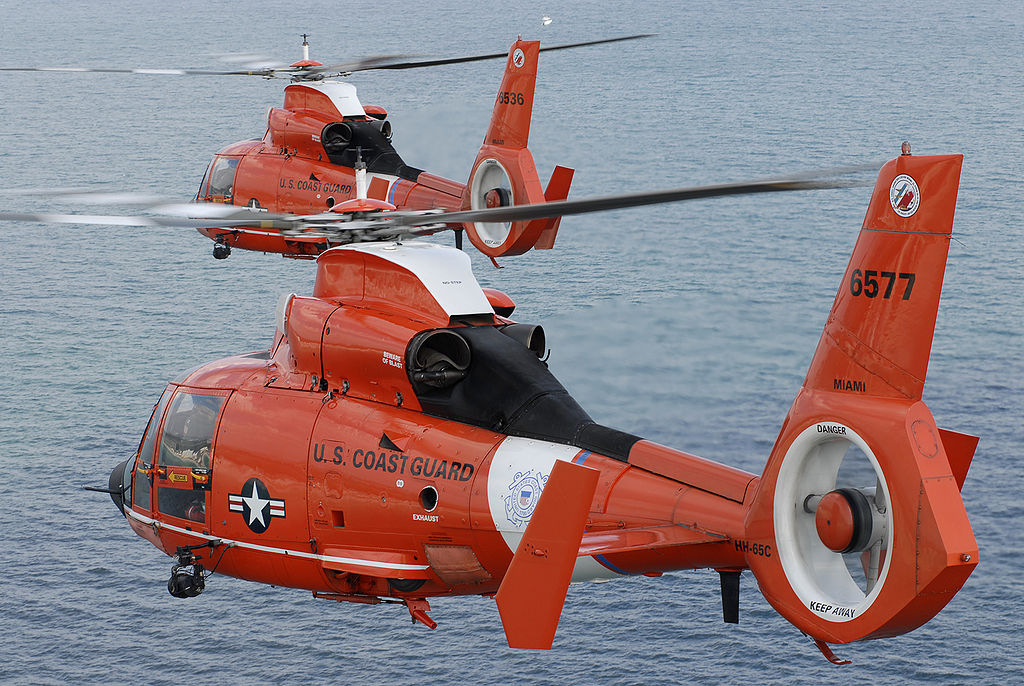
US Coast Guard photo, by PAC Dana Warr

Craig Hooper, writing for Forbes, brings us a warning about the status of the H-65 fleet.

We knew the Coast Guard was in the process of replacing H-65s with H-60s because they have become increasingly difficult to support.

The Coast Guard has on-going life extension programs for both H-60s and H-65s, but the author thinks progress is too slow.

There are two issues here.

  1. Replacing land-based H-65s
  2. Having helicopters that can operate off the WMECs.

I would like to think the Coast Guard has a workable plan to replace the land based H65s but waiting way too long to start replacement programs does seem to be part of the Coast Guard’s DNA.

As to the helicopters for WMECs, Cooper notes,

“At sea, the Coast Guard’s 27 aged mid-sized cutters cannot fully support the larger footprint of an MH-60 platform. Delays in getting the Coast Guard’s highly anticipated Offshore Patrol Cutter into service means the old cutters will remain in the fleet—and needing Dolphin helicopters—for years.”

As I recall, the 13 WMEC 270s were designed to operate H-60s and Alex Haley looks like her facilities may be large enough as well. Certainly, operating H-60s from the 14 WMEC 210s is a non-starter.

The number of H-65s required solely to support 210 operations is relatively small. Judicious use and cannibalization could probably keep a few operational until the last 210 goes out of service.  That should happen about 2032.

If that is not possible, there is another alternative, UAVs. They could certainly operate Scan Eagle. Another possibility is Fire Scout.

The Navy is phasing out their MQ-8B VTOL drone in favor of the larger MQ-8C. Perhaps the Coast Guard could take over some or all 30 ot the B models and operate them from 210s. They might also be operated alongside H-60s from Bertholf class NSCs and Argus class OPCs. Although they probably cannot do armed overwatch (or maybe they could), they might be a better search asset than the H-65, given their greater endurance. This would also prep the Coast Guard to also participate in the MQ-8C at some time in the future.

PACIFIC OCEAN (Sept. 18, 2019) Sailors push an MQ-8B Fire Scout assigned to the Wildcards of Helicopter Sea Combat Squadron (HSC) 23 on the flight deck of the Independence-variant littoral combat ship USS Gabrielle Giffords (LCS 10).  (U.S. Navy photo by Mass Communication Specialist 3rd Class Josiah J. Kunkle/Released)190918-N-YI115-1004

Interestingly, there is also a comment about the Coast Guard’s role in DOD’s Future Vertical Lift (FVL) Program,

“Replacement helicopters will be slow to arrive. The U.S. Coast Guard Commandant, Admiral Karl L. Schultz, says the Service is “looking fifteen or so years down the road at our rotary wing aviation program.” Unless the Coast Guard acts quickly to have their basic performance requirements folded into the Department of Defense’s Future Vertical Lift Initiative, a Coast Guard variant of whatever the Navy gets will likely take two decades—or more—to obtain and field.”

The FVL program is expected to produce at least two airframes, one to replace the H-60 and a smaller aircraft to replace the Army’s scout helicopters.

Thanks to Paul for bringing this to my attention. 

“THERE’S A RACE FOR ARCTIC-CAPABLE DRONES GOING ON, AND THE UNITED STATES IS LOSING” –Modern War Institute

Modern War Institute alerts us to the limitations of US drone technology in the Arctic.

“America’s drones struggle to compete against Russia in the Arctic. In 2019, Russia’s equivalent of the Defense Advanced Research Projects Agency announced a drone capable of remaining airborne for four consecutive days in the Arctic. Russian state sources report their drones can navigate in the Arctic without the use of jammable satellite-based navigation instead employing the alternative GIRSAM system. While the processes behind this system are unknown, supposedly it does not rely on GPS satellites or those of the Russian-developed GLONASS. Not until 2021—two years later—did an American MQ-9A Reaper drone complete a flight navigating with satellites past the seventy-eighth parallel north. Additionally, Russia plans to build an Arctic drone reconnaissance base four hundred and twenty miles off the Alaskan coastline. By 2025, the ability of Russian drones to monitor air, surface, and subsurface activity will far outpace the United States in the Arctic region.”

This is certainly an area the Coast Guard is interested in and one where the Coast Guard’s assets can be of assistance.

“Unmanned and on Guard: A New Approach to Coast Guard Operations” –USNI Blog

The US Naval Institute Blog has a post by LCdr John H Walters, USCG, who is the MQ-9A platform manager within the CG Office of Unmanned Aircraft Systems.

It pleads the case for unmanned systems (and satellite systems). The author is obviously a true believer (as am I to an extent).

The thing that I find encouraging is that there is a Coast Guard Office of Unmanned Aircraft Systems. What I find discouraging is that the Coast Guard has yet to procure its own shore based UAS and is still riding the coat tails of the Customs and Border Protection program that is still operating old versions of the MQ-9 that are not optimized for the Marine environment and do not have the “see and avoid” capability that would allow them to operate in airspace where mid-air collision is a possibility. There may be operational reasons to continue a relationship with the CBP unit, but as a learning experience, it has served its purpose. DBP has been operating their MQ-9s for 16 years. It is time for the Coast Guard to field its own land based unmanned air systems.


“This company’s drone set flight-time records. But what it really wants is more work with the Pentagon” –Defense News

A Vanilla ultra endurance land-launched unmanned aerial vehicle (UAV) operates during U.S. Pacific Fleet’s Unmanned Systems Integrated Battle Problem (UxS IBP) 21 at Naval Base Ventura County, Point Mugu, on April 24, 2021. UxS IBP 21 integrates manned and unmanned capabilities into challenging operational scenarios to generate warfighting advantages. (MC2 Michael Schutt/U.S. Navy)

Defense News report,

WASHINGTON — Small business Platform Aerospace continued to set records in 2021 with its Vanilla Unmanned family of drones, but the company says it’s working to ensure it’s building a relevant warfighting platform, not just an aerospace novelty.

The Vanilla UAV in its long-endurance configuration set a world record in September and into October, when it flew for eight days, 50 minutes and 47 seconds out of Edwards Air Force Base in California. The aircraft had previously demonstrated a five-day flight.

We talked about this UAS, from veteran-owned small business Platform Aerospace, when it set the earlier record. Since then, there have been some significant developments including a drug interdiction capability test with SOUTHCOM.

“… in July with U.S. Southern Command. The vehicle flew out of Key West with a mesh radio, satellite communications, a radar pod and an electro-optical/infrared camera, demonstrating what a multi-day drone with a complex payload package could accomplish.”

There is also this mention of a sensor, that might be applied to other UAS, that could come in handy for icebreakers.

“While the bulk of Platform Aero’s work has been with the military, and chiefly the Navy, Pappianou said the aircraft flew a mission with a proprietary radar designed by the University of Kansas to measure snow and ice depths in the Arctic Circle.”

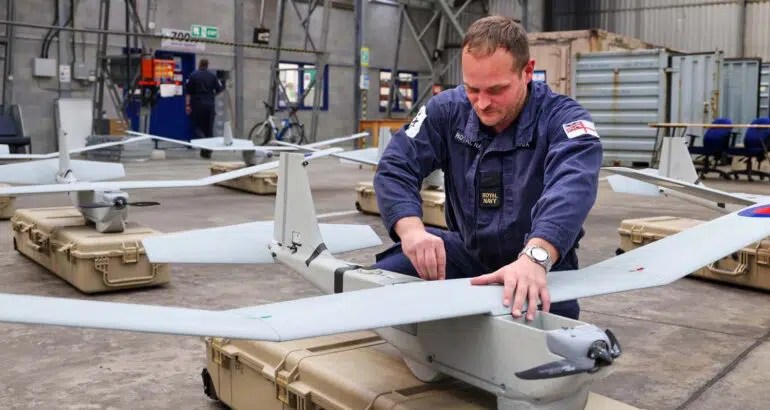
Two About Puma sUAS

Royal Navy Photo

Naval News reports on the Royal Navy’s increasing use of the Puma small Unmanned Air System (sUAS).

And we have this from Seapower, regarding a new night time imaging system.

The Puma is a system the Coast Guard has experimented with more than once, and the Canadians have also adopted it. My last look at this small UAS with comments on its suitability and links to previous posts here.

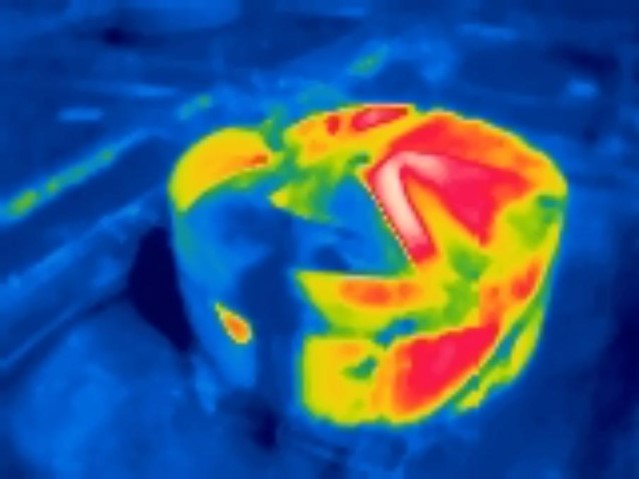
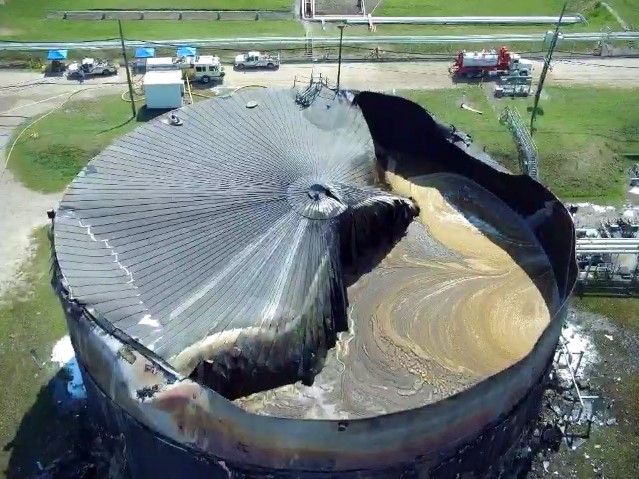
“Coast Guard drones can see underwater and inside vessels during response to hurricanes and extreme weather events” –MyCG

US Coast Guard Photo

US Coast Guard photo

These two photos which accompany the post appear to be of the same tank but taken from opposite sides. 

MyCG has as post about the increasing use of Unmanned Air Systems. In this case primarily concerning the use of small commercially available systems. Take a look.

Deploying Lifeboat, A New Capability for European Maritime Safety Agency Drones –Naval News

Naval News reports,

“TEKEVER has signed a new contract with the European Maritime Safety Agency for maritime surveillance by remotely piloted aircrafts. This innovative contract includes the deployment of lifeboats and many new sensors.”

I have to wonder if the capability is worth the trade-off? Most UAVs are weight constrained. To carry an inflatable boat would mean either less fuel or fewer sensors. Is this a capability that will be carried at all times, or is it an option to be loaded when needed? How often is this needed? Coast Guard aircraft frequently drop pumps, but I don’t remember hearing of their dropping life boats recently. In the European environment this may have something to do with the influx of migrants using unseaworthy craft.

The UAV they are using appears large in the photo, but it is actually smaller than the MQ-1 Predator. “The AR5 “has a maximum take-off weight of 180kg. It can reach a cruising speed of 100km/h with an endurance of 20 hours,” and has a SATCOM capability. A 20 hour endurance is good, but a 100 km/h (54 knot) cruise is relatively low.

On the other hand, they at least have a shore based UAS capability, something the US Coast Guard still does not have.

“Airbus showcases DeckFinder technology during COMPASS2020” –NavyRecognition

Original caption, “When landing on small or moving helidecks, a difference of a few centimeters can compromise and endanger a whole mission. To avoid such risk, DeckFinder provides a 3-dimensional image of the RPASs relative position, aiding in landing the aerial vehicle safely (Picture source: Airbus)”

NavyRecognition reports on an interesting innovation for landing Vertical Take-off and Landing (VTOL) aircraft, manned or unmanned, on small moving platforms.

“DeckFinder is a local positioning system that lets manned and remotely piloted aerial vehicles (RPAS) determine their relative position in the harshest environmental conditions. The independent navigation system contributes to easier and safer take-off and landing procedures in GPS-shaded environments that lack reference points or visual cues.”

The maximum range is relatively short, “up to 300 metres,” but the claimed precision is high, “positioning accuracy of more than 20 cm,” about 8 inches.

“DeckFinder excels at aiding rotorcraft landings on moving ship decks, as during offshore operations. For landings involving a pitching and rolling ship deck, DeckFinder’s system of reference points integrated on the ship deck itself provides a crucial advantage to safe navigation.”

Such a system might allow us to operate VTOL UAS from the Webber class.


“Coast Guard Booth Presentations at Sea Air Space 2021” –CG-9

22 meter saildrone Ocean Mapping UAS

The Acquisitions Directorate (CG-9) has provided media used in the Coast Guard’s presentation booths at Sea Air Space 2021, August 2 and 3. While certainly not a substitute for being there, they do provide insights into programs and concerns.

Coast Guard Booth Presentations at Sea Air Space 2021

  • Blue Technology Center of Expertise (BTCOE)
    Overview Blue Technology Center of Expertise presentation
    Ms. Jennifer Ibaven and Dr. Peter Vandeventer, BTCOE Program Managers, Office of Research, Development, Test & Evaluation and Innovation (CG-926)
    Tuesday, Aug. 3, 2021, 3-3:30p.m.
  • Coast Guard Detachment at DOD’s Defense Innovation Unit
    DIU & USCG Overview presentation
    Cmdr. Michael Nordhausen, Liaison Officer to Defense Innovation Unit
    Tuesday, Aug. 3, 2021, 4-4:30p.m.
  • Unmanned Systems
    U.S. Coast Guard Unmanned Systems presentation
    Capt. Thom Remmers, Assistant Commandant for Capabilities Unmanned Systems Cross-Functional Team Lead
    Monday, Aug. 2, 2021, 2:30-3p.m.
  • The Future of the Arctic
    U.S. Coast Guard Arctic Policy presentation
    Mr. Shannon Jenkins, Senior Arctic Policy Advisor
    Tuesday, Aug. 3, 2021, 11-11:30a.m.
  • Illegal, Unreported and Unregulated Fishing
    U.S Coast Guard IUU Fishing Strategic Outlook presentation
    Cmdr. James Binniker, Office of Law Enforcement Policy, Living Marine Resources and Marine Protected Resources Enforcement Division
    Tuesday, Aug. 3, 2021, 2:30-3p.m.