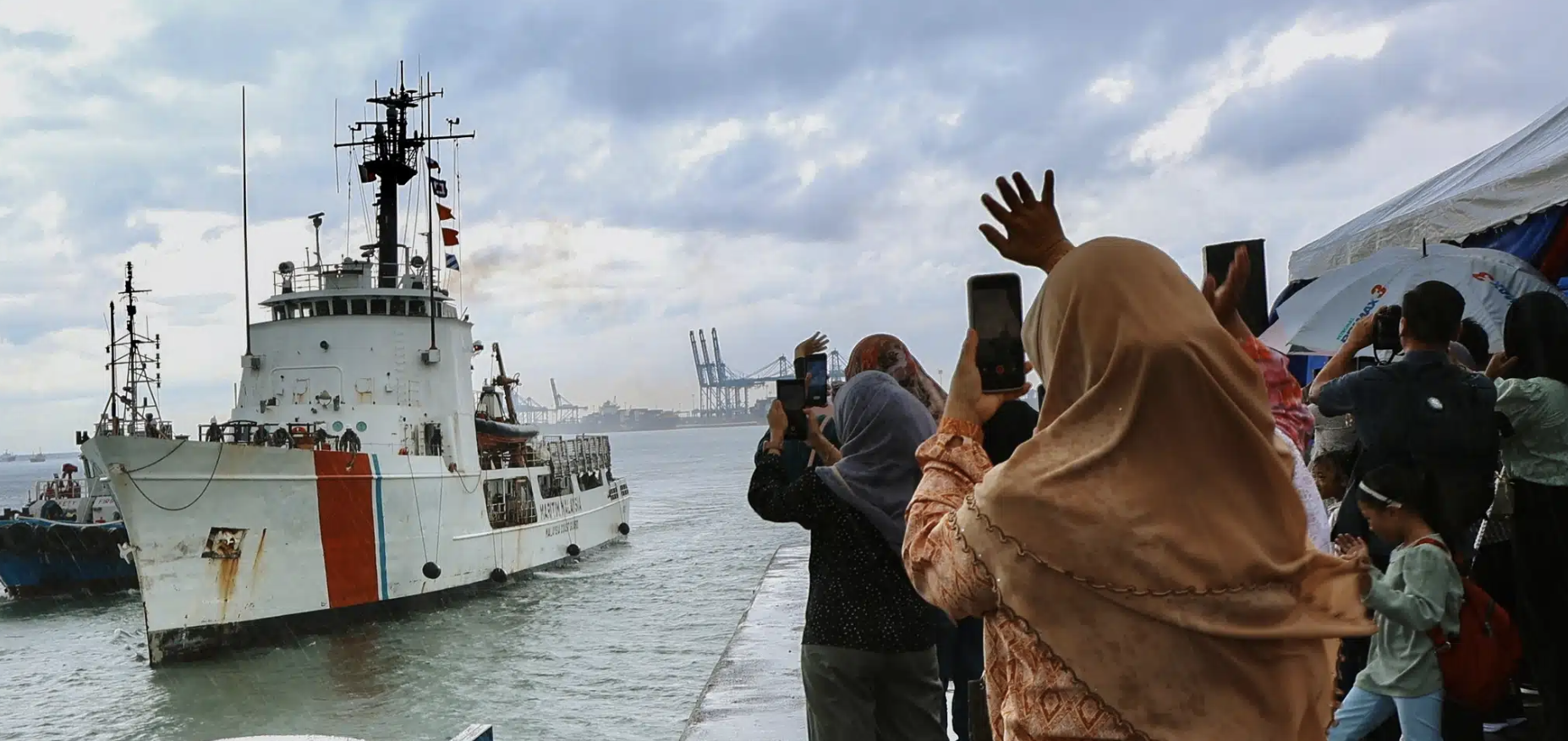
“Ex-US Coast Guard Cutter Steadfast Arrives In Malaysia” –Naval News

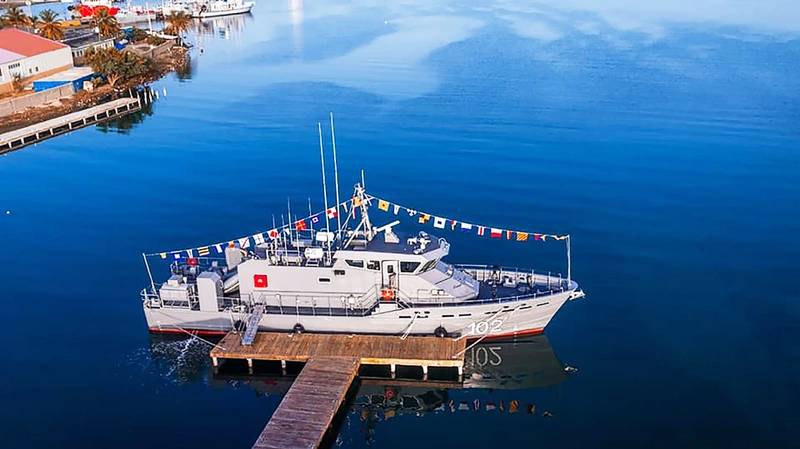
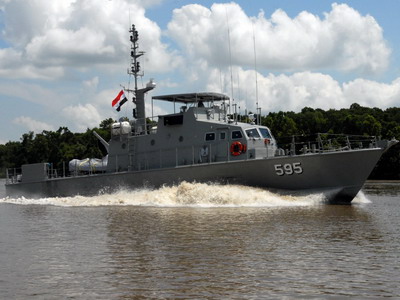
The ex-U.S. Coast Guard cutter Steadfast arriving at the National Hydrographic Centre, Port Klang on November 4, 2025 (U.S. Embassy Kuala Lumpur)

Naval News reports,

“The former United States Coast Guard cutter Steadfast arrived in Malaysia on 4 November, completing a 10,600 nautical mile journey from Baltimore to begin its service with Malaysia’s coast guard, the Malaysian Maritime Enforcement Agency.”

Look at the picture. This ship, the former USCGC Steadfast was commissioned 7 October,  1968. She is over 57 years old and her Malaysian crew has just completed a voyage from Baltimore, across the Atlantic, through the Straits of Gibraltar, across the Mediterranean, through the Suez Canal, down the length of the Red Sea, through the Gulf of Aden, across the Indian Ocean, and through the Strait of Malacca.

How did that happen? The Coast Guard has been recapitalizing its fleet and as a result a lot of vessels became excess property. Rather than incur the cost of scrapping these now over age ships, the Coast Guard has set up a command at Curtis Bay that works with the Coast Guard Yard to prepare these ships for transfer to the navies and coast guards of friendly nations making sure the ships are seaworthy and the crews are adequately trained.

The twelve Hamilton class cutters have been transferred to five different nations.

Two 210 foot Medium Endurance Cutters, Courageous and Durable, were decommissioned in September 2001. Courageous was transferred to Sri Lanka in 2004 and Durable was transferred to Colombia in 2003. Since March 2023 five more WMEC210s have been decommissioned or placed in “in commission, special” status. Steadfast is the first of these five to be transferred to another user.

“The United States announced at the end of October that it plans to provide another retired cutter to the Malaysian Maritime Enforcement Agency.”

22 of the Island class WPBs have been transferred to eight different nations including five to Ukraine where at least one was sunk in combat.

9 of the Marine Protector class 87 foot WPBs have been transferred to Lebanon (2), Uraguay (3), Malta (2), and Yemen (2).

I visited the Coast Guard Yard in August 2024 with the intention of writing a post. I was very impressed, but other priorities got in the way. I have regretted not telling their story ever since.

I was told that from March to July 2024 a decommissioned arrived at the yard every nine days.

This is an important story and it deserves more attention.

“Honoring the legacy of the Island-Class patrol boats” –My CG

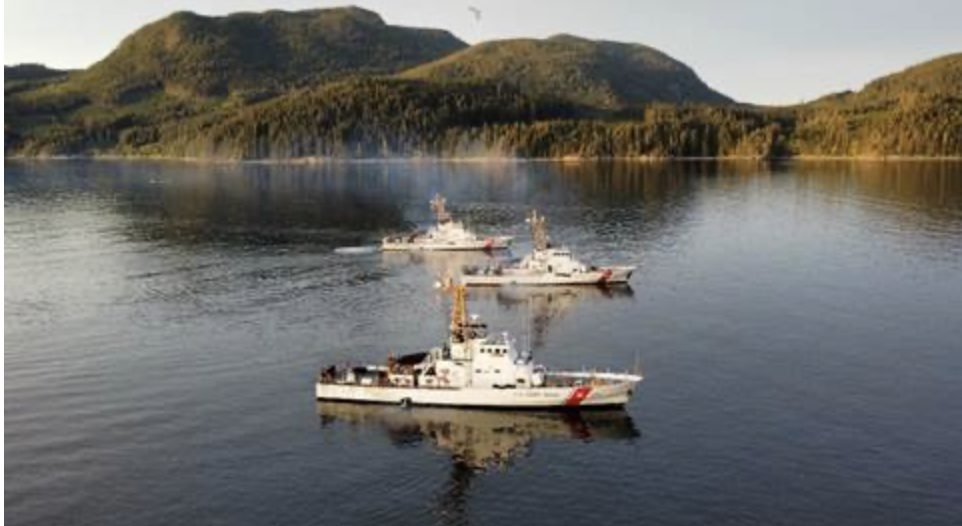
U.S. Coast Guard Cutters Naushon (WPB 1311), Mustang (WPB 1310), Liberty (WPB 1334) transit through Seymour Narrows in British Columbia, Canada, May 2025. Through the Excess Defense Articles program, these boats will find a second life with the Colombian navy. (U.S. Coast Guard photo courtesy of USCGC Mustang)

MyCG has a retrospective on the history of the Island class 110 foot WPBs, including some excellent photos.

USCGC Naushon (WPB 1311) conducts a familiarization patrol in Glacier Bay, Alaska, Oct. 21, 2008. Patrols like this one demonstrate the Coast Guard’s dedication to ports, waterways and coastal security, regardless of the wind, water or seas. This photo won second place in the 2009 Coast Guard Photo Contest. (U.S. Coast Guard photo by Petty Officer 3rd Class Logan Wright)

Spike NLOS Missile System Photos and Video

A FaceBook friend alerted me to photos and the video above of an exercise launch of Spike NLOS missiles from a Philippine Acero class Fast Attack Craft (FAC), a version of the Israeli Shaldag V.

I see a need for something similar in the Coast Guard.

There was a discussion of Spike NLOS in earlier post. That post showed two smaller four round launchers fitted to an 11.9 meter craft.

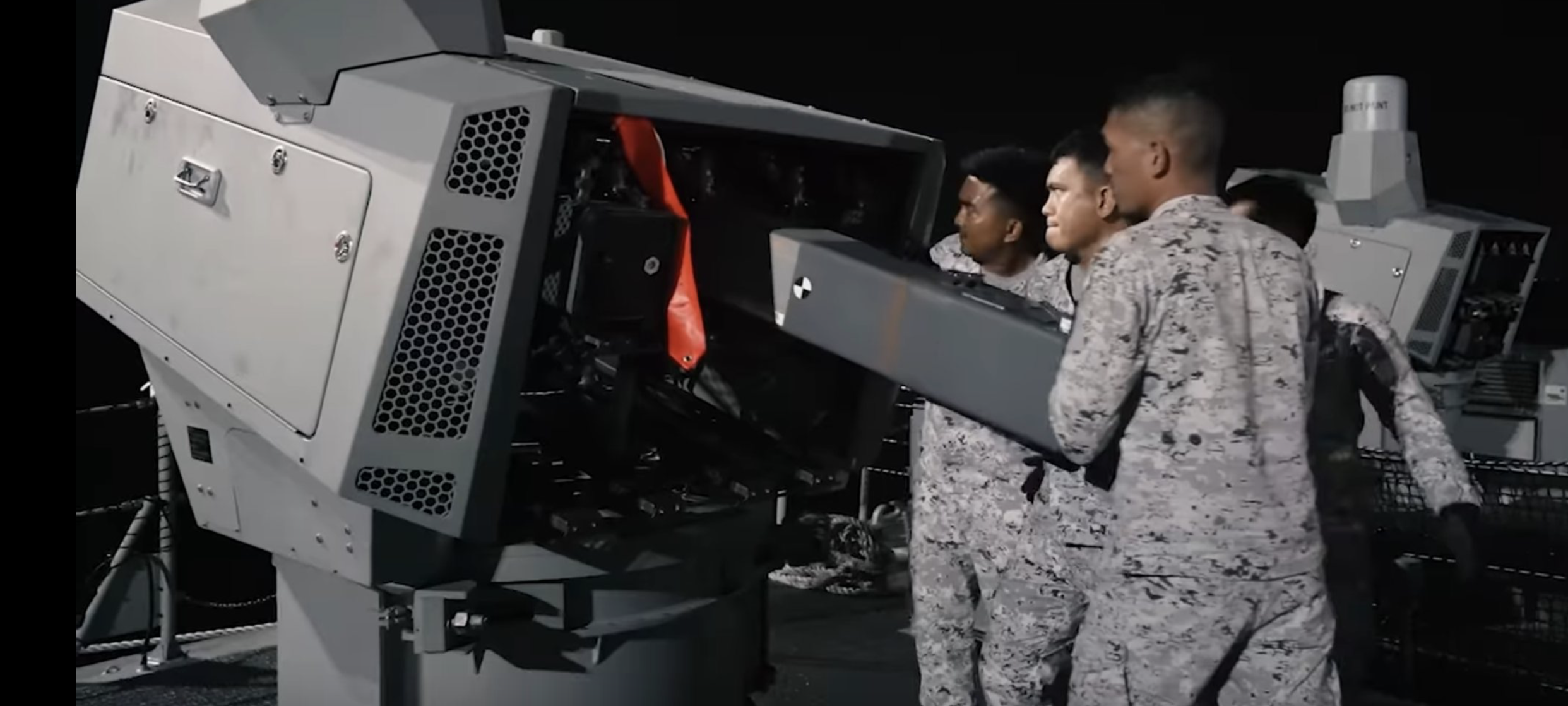
The missile never leaves its shipping container until it is launched.

“Spike NLOS is delivered as a ‘wooden roound’ enabling long shelf life, low maintenance, and low life-cycle cost.”

TYPHOON MLS NLOS has an eight cell Spike NLOS missile launcher and integrated Toplite stabilized observation and target acquisition system (same as on the Mk38 mod2 and mod3). Photo: RAFAEL via defense-update.com

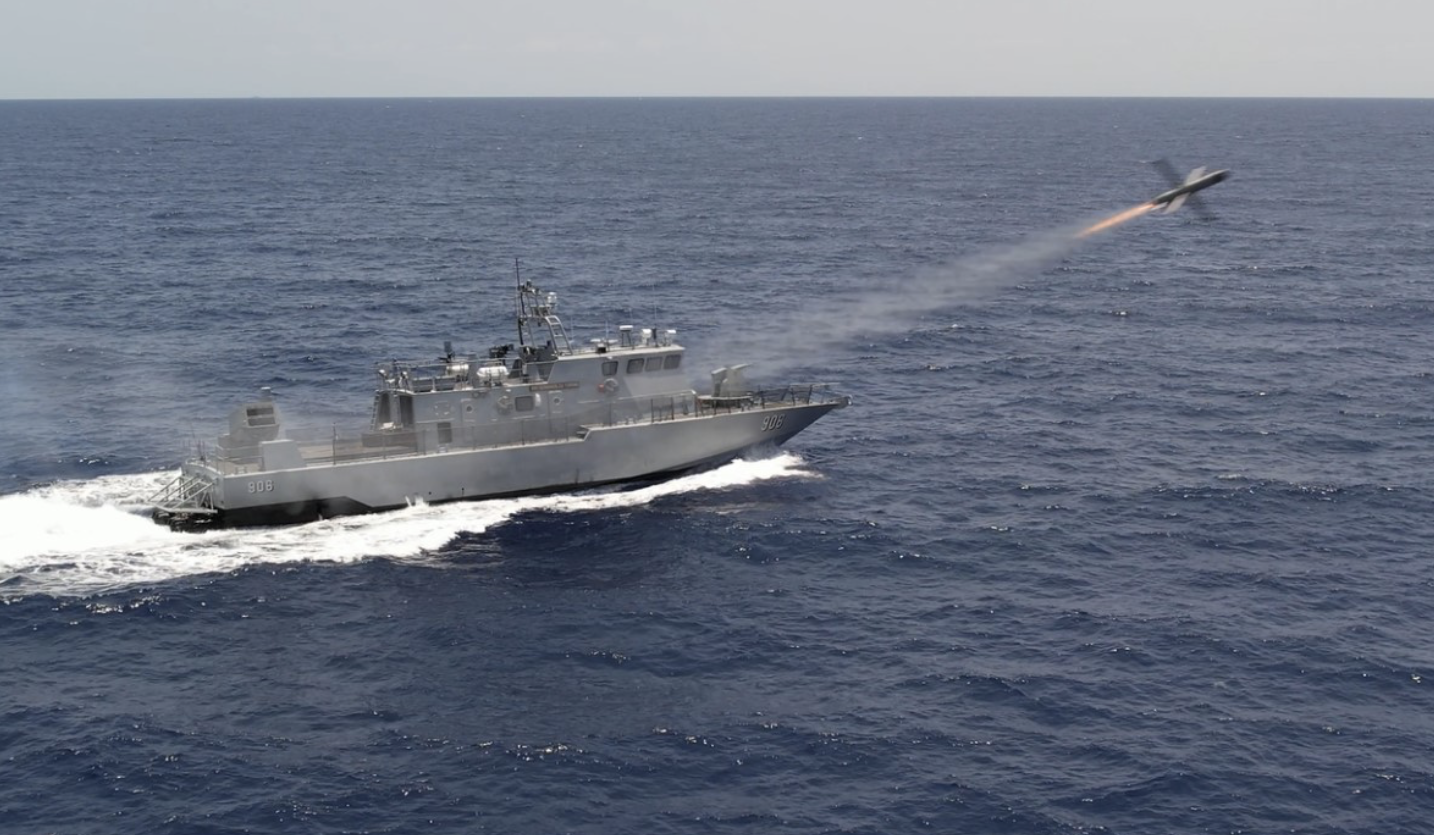
Below is one of the Philippine Acero class launching a Spike NLOS. In the US, Spike NLOS is currently used by the US Army and it is marketed through Lockheed Martin.

Philippine Navy Acero class patrol boat launches Rafael Spike NLOS. The vessel features a Rafael Typhoon MLS-NLOS missile launcher capable of carrying 8 Spike-NLOS surface-to-surface missiles (limited to 4 ships only). Additionally, it is armed with one Mk.44 Bushmaster II autocannon mounted on a Rafael Typhoon Mk 30-C remote-controlled weapon station, two M2HB Browning 12.7 mm/50-cal. heavy machine guns mounted on Rafael Mini Typhoon remote-controlled weapon stations, and two M60 7.62 mm/30-cal. GP machine guns.

USCGC Naushon (WPB-1311) to be Decommissioned March 21, 2025

USCGC Naushon (WPB-1311)

Got the announcement below from a former crew member, Mark Herrick. 

He wondered if this was the last WPB110 to be in commission with the CG–we know some are in service with other navies and coast guards including the Ukrainian Navy. Two others might still be in Coast Guard service, Mustang (WPB-1310) home-ported in Seward and Liberty (WPB-1334) home-ported in Valdez. I googled both but found no mention of decommissioning.


The Homer-based USCG Cutter NAUSHON will be decommissioned on Friday. If you want to take a tour of the vessel before it leaves Homer, public tours are available starting TODAY!
Tours of the Naushon will take place:
March 19-21 4-6pm
March 22nd 10am-12pm and 2-6pm
Tours of the ship will be available on a first come, first served basis.
All are invited to attend the decommissioning ceremony on Friday the 21st, which will start at 1200 noon (following the sounding of the ship’s bells) and will be held at the Homer Spit near the cutter’s homeport mooring at 4373 Freight Dock Rd, Homer, AK, 99603.

“Philippine Coast Guard to Receive 40 Patrol Boats from France in $438 Million ODA Project” –USNI

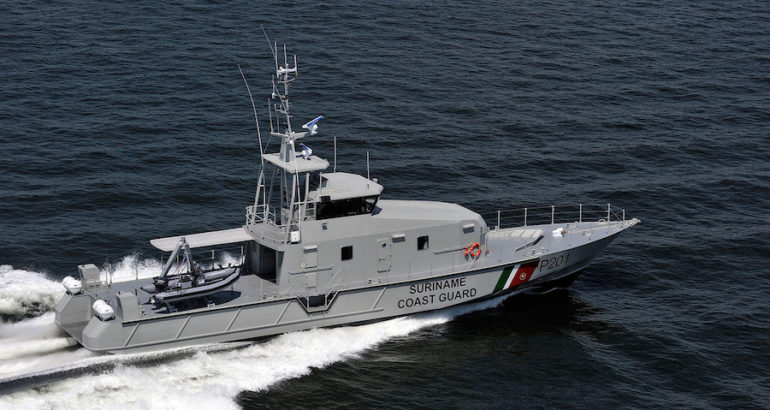
A Suriname Coast Guard FPB 98 patrol boat (Credit: OCEA)

The US Naval Institute News Service reports,

France is set to provide 40 patrol vessels and logistical support to the Philippine Coast Guard following the approval of a $438 million aid project to enhance Manila’s maritime security capabilities across the country’s waters.

The French official development assistance-funded acquisition project of 40 Fast Response Crafts, approved during Tuesday’s National Economic and Development Authority Board meeting, will effectively quadruple the Philippine Coast Guard’s fleet.

The craft are reported to be 30-35 meters in length. 20 are to be built in France and 20 in the Philippines.

There are no specifications for the patrol boats included in the article, but it does state that OCEA is expected be the French shipbuilder that will provide the design and build the first 20. OCEA has already committed to building a shipyard in the Philippines and has previously built vessels for the Philippine Coast Guard (here and here).

There is a good chance the new patrol boats will look a lot like the one pictured above, a class built for Suriname, Algeria, Ukraine, and French Customs. They are powered by two 3,660 HP Caterpillar diesels using waterjets. Specs on the Algerian boats as follows.

  • Displacement: 100 tons
  • Length: 31.8 meters (104’4″)
  • Beam: 6.3 meters (20’8″)
  • Draft: 1.2 meters (3’11”)
  • Speed: 30 knots
  • Range: 900 nmi @ 14 knots
  • Crew: 13

These will be faster and more maneuverable than most of the China Coast Guard and maritime militia vessels that contest Philippines sovereignty in the South China Sea. If they can stand up against Chinese water cannon, they should be a valuable asset.

The Philippine Coast Guard is still not arming even their largest vessels with anything larger than .50 caliber.

Metal Shark / Damen Foreign Military Sales Patrol Boat

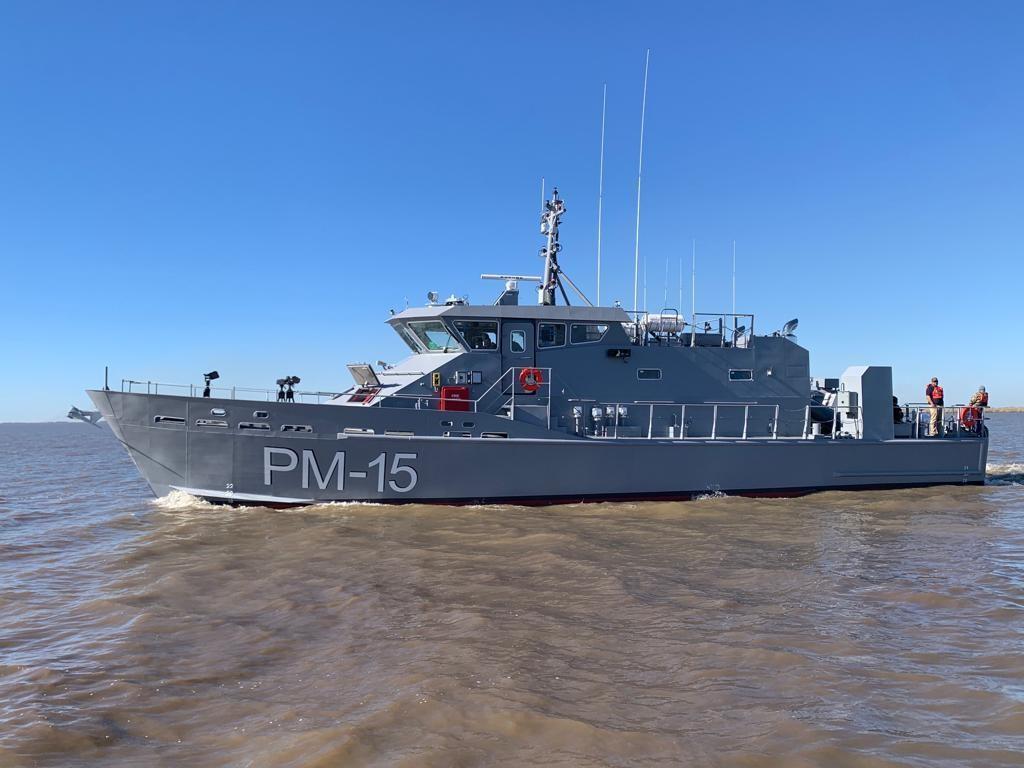
The NCPV Betelgeuse is docked during a ceremony at La Calderas naval base in Peravia, Dominican Republic, on August 6, 2020. The U.S. is delivering Near Coastal Patrol Vessel (NCPV)s to navies and coast guards in the U.S. Southern Command area of operations. The 85-foot NCPVs are built by Metal Shark at Franklin, La., for the Dominican Republic, El Salvador, Honduras, Costa Rica, Guatemala, and other United States partner nations. Photo courtesy Dominican Navy

Back in 2017 I passed along a report from NavyRecognition that Metal Shark had been awarded a contract

“…potentially worth upwards of $54 million, Metal Shark will build up to thirteen 85-foot Defiant-class welded aluminum cutters for the Dominican Republic, El Salvador, Honduras, Costa Rica, Guatemala, and other United States partner nations. Additionally, Metal Shark will supply electro-optical infrared sensors, diagnostic equipment, in-country reactivation, crew familiarization, and test support to NCPV (Near Coastal Patrol Vessel–Chuck) operators.

These are referred to as Defiant class patrol vessels.

Found a photo (above) of one in a Marine Link post, “Navy Combat Craft – Boats Evolve to Keep Pace with Threats.” The photo below is from Wikipedia.

The PM-15, a Defiant class patrol vessel the USA gave to El Salvador, in 2021. US State Department photo.

It appears only five of the class were delivered, one each to the Dominican Republic, Honduras, Panama, El Salvador, and Costa Rica. No idea what happened to the contract for the remaining eight.

If it looks familiar, it is because it is an evolution of the Damen design that gave us the Marine Protector class 87 foot WPBs.

“U.S. Coast Guard Cutters return home after successful Central American deployment” –D11 News Release

USCGC Forrest Rednour (WPC 1129) and Blackfin (WPB 87317) in Costa Rica

Below is a District 11 news release. Did an earlier post on this unusual deployment.

The 800 operational hours claimed for each vessel works out to 33.3 operational days out of 49 deployed, so I presume that means about 16 days in transit, there and back.

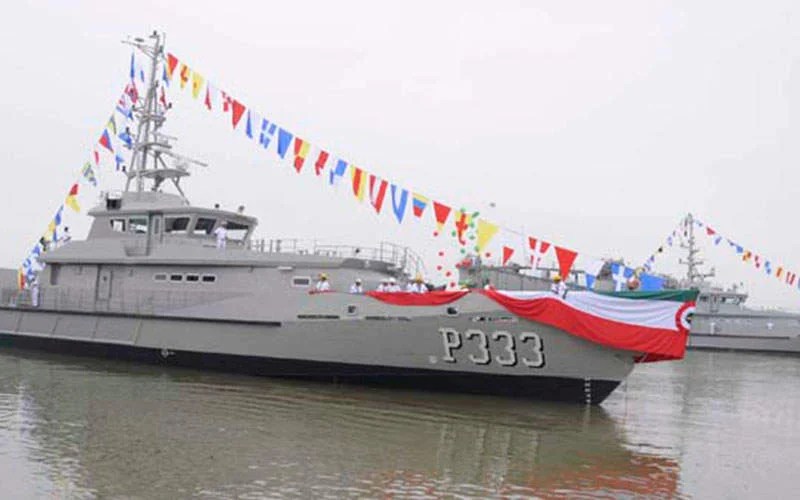
The Mexican Navy vessel mentioned, ARM PALENQUE, the third of ten Tenochtitlan-class patrol vessels, looks a lot like a Webber class Fast Response Cutter. It is also a Damen design, but a bit smaller (a Stan Patrol 4207 vs 4708 for the FRC). Damen has been very successful with this design. More than 50 have been built for more than a dozen agencies. (USCGC Blackfin and the other Marine Protector class patrol boats are also based on a Damen design.)

Mexican Navy ARM Palenque (PC-333) at launching March 2014. Credit Secrtaria de Marina.


June 10, 2024

U.S. Coast Guard Cutters return home after successful Central American deployment

SAN PEDRO, Calif. — U.S. Coast Guard cutters Forrest Rednour and Blackfin have returned to their homeports after a 49-day deployment in Central America, where they played a crucial role in multiple operations.

During this period, both cutters demonstrated outstanding readiness and operational capability, significantly contributing to international cooperation, search and rescue missions, and efforts to combat criminal activities. This deployment was part of a broader strategy to enhance regional security and strengthen partnerships. Throughout the mission, Forrest Rednour covered over 8,200 miles and logged 800 operational hours, while Blackfin covered over 8,300 miles and also logged 800 operational hours.

“The amount of effort and commitment from both crews during this 49-day deployment was remarkable,” said Rear Adm. Andrew Sugimoto, commander, Coast Guard District 11. “Their readiness and professional exchanges provided an invaluable experience to our partner nations and crews. The enthusiasm to lead multiple engagements with several international maritime organizations helped strengthen ties and fortify continued collaboration between all.”

Key Achievements:

Search and Rescue Exercises (SAREX):

  • Manzanillo, Mexico: Blackfin led a successful SAR operation, including helicopter rescue exercises with the Mexican Navy.
  • Puerto Quetzal, Guatemala: Hosted tours and conducted SAR exercises with the Guatemalan Navy, building stronger maritime partnerships.
  • La Union, El Salvador: Rednour led a SAR exercise and joint operations with the Salvadoran Navy, marking the first U.S. vessel visit to this port in two years.

Partnership and Training:

  • Amapala, Honduras: Engaged in discussions and training on maritime law enforcement and security with the Honduran Navy and Merchant Marine.
  • Golfito, Costa Rica: Shared knowledge on maritime governance with the Costa Rican Coast Guard, enhancing mutual understanding.
  • Rodman, Panama: Provided damage control and medical evacuation training to Panamanian forces, marking the first U.S.-Panama Coast Guard engagement in over two years.
  • PASSEX with ARM PALENQUE: Forrest Rednour and Blackfin conducted a passage exercise (PASSEX) with the Mexican Navy’s ARM PALENQUE. This included formation steaming, code exercises, and a crew exchange to enhance mutual operational understanding and cooperation.

“This patrol was truly an amazing experience and a testament to the incredible devotion to duty that the crews of the Forrest Rednour and Blackfin have,” said Lt. Kevin Ng, commanding officer of Coast Guard Cutter Forrest Rednour. “Both crews adapted and overcame several challenges leading up to and during the patrol, but never took their eyes off the main objective. As a result, the Coast Guard was able to strengthen the valuable relationships that the United States has with our international partners throughout Central America and unify our efforts to address critical maritime security initiatives in the Eastern Pacific. Thank you to crews on a job well done, District 11 and Sector Los Angeles/Long Beach for the coordination, and the families and friends of the crew for all of the support; the success of this historic patrol could not have been accomplished without them all.”

“I could not be prouder of both crews for the incredible amount of hard work they have dedicated to making this historic patrol possible. The success of this Surface Action Group is a testament to the Coast Guard’s ability to overcome dynamic challenges in the completion of unprecedented mission sets. It also signifies the Coast Guard’s steadfast commitment to advancing our vital maritime partnerships in the Eastern Pacific. The international relationships formed and strengthened during this deployment have set the groundwork for future engagements which I look forward to watching,” said Lt. j.g. James Morrison, commanding officer of Coast Guard Cutter Blackfin.

Commissioned in 2018, the Coast Guard Cutter Forrest Rednour is one of the Coast Guard’s Sentinel-class fast response cutters homeported in San Pedro, California. Sentinel-class cutters are 154 feet long and 25 feet wide and have a 353 long-ton displacement. They have a top speed in excess of 28 knots and a range of 2,500 nautical miles. They can hold a crew of up to 24. The namesake of the Forrest Rednour is Petty Officer 2nd Class Forrest O. Rednour, who heroically rescued survivors from the torpedoed USAT (US Army Transport–Chuck) Dorchester during World War II and was posthumously awarded the Navy and Marine Corps Medal.

Commissioned in 2000, the USCGC Blackfin is one of the Coast Guard’s Marine Protector-class patrol boats homeported in Santa Barbara, California. Marine Protector-class patrol boats are 87 feet long and 19.5 feet wide and have a 100 long-ton displacement. They have a top speed of 25 knots and a range of 900 nautical miles. They can hold a crew of up to 10. The Blackfin is equipped with advanced electronics and navigation systems for multi-mission operations, including search and rescue, law enforcement, and homeland security. The Blackfin shares the name of the USS Blackfin (SS-322), a submarine that participated in World War II and the Korean War.

Force Protection Unit “Coast Guard cutters Sea Dog, Sea Dragon decommissioned in St. Marys, Georgia” –News Release

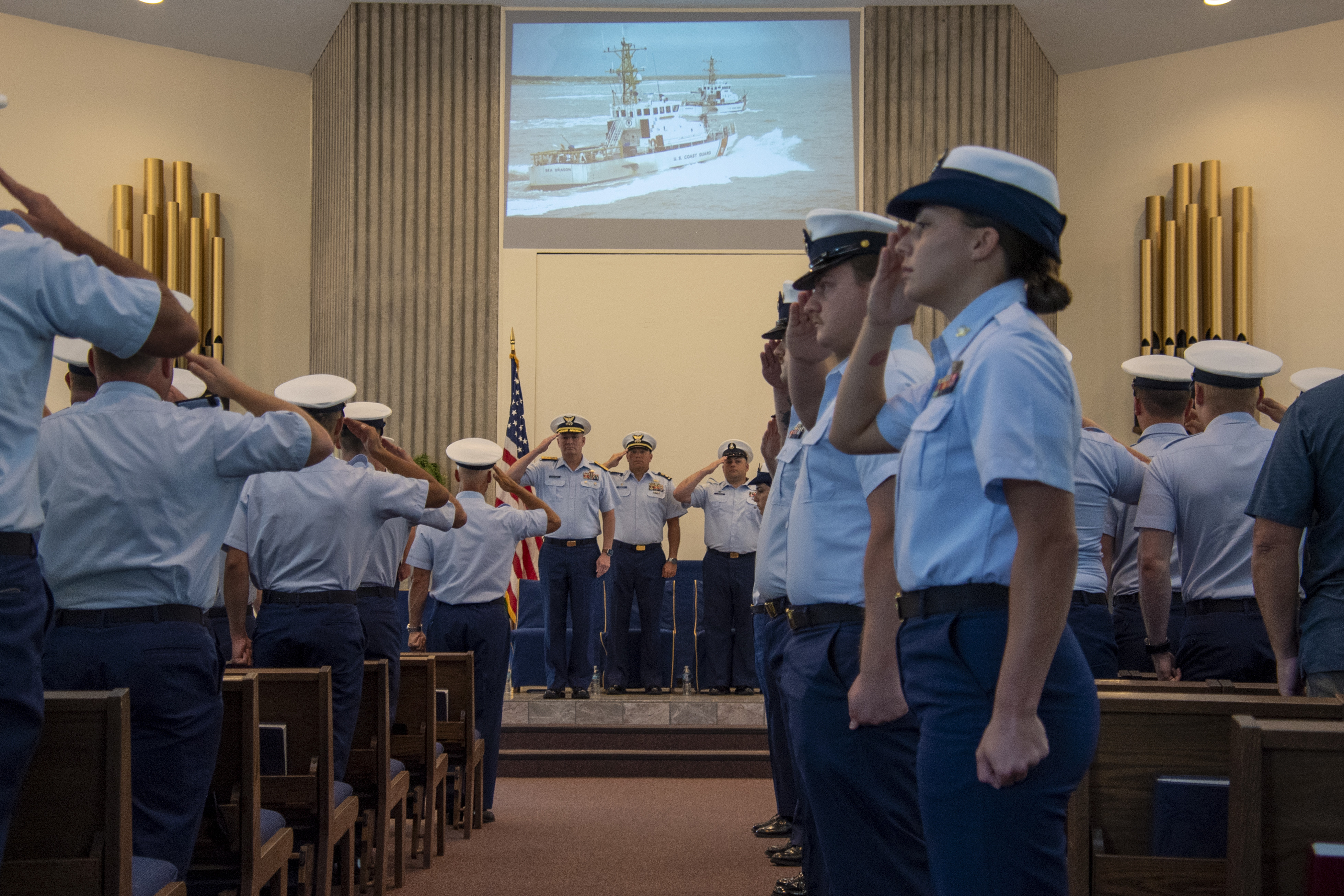
Coast Guard members salute during the playing of the national anthem during a decommissioning ceremony for the Coast Guard Cutters Sea Dog and Sea Dragon in St. Marys, Georgia, May 29, 2024. Rear Adm. Douglas M. Schofield, Coast Guard District Seven Commander, presided over the ceremony honoring the years of service the Sea Dog and Sea Dragon and their crews provided to the nation. (U.S. Coast Guard photo by Petty Officer 1st Class Ryan Dickinson)

Below is a press release. The two 87 foot patrol boats were assigned to a Force Protection unit for the Fleet Ballistic Missile Submarines (SSBNs) based at Kings Bay, GA.

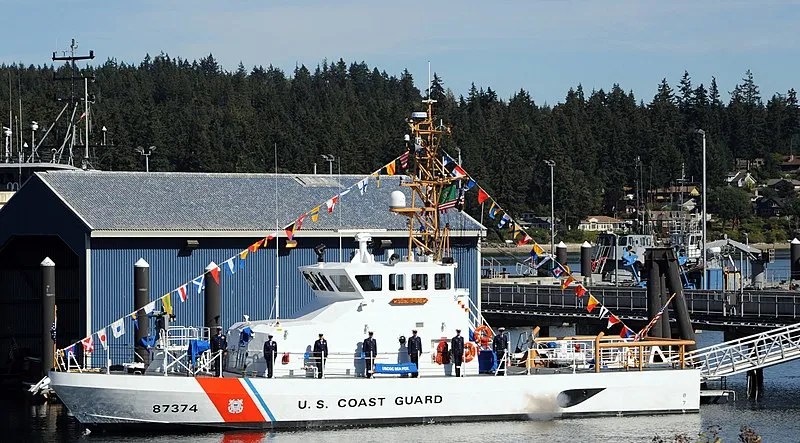
“The Coast Guard cutters Sea Devil (WPB 87368) and Sea Fox (WPB 87374) have relocated from Bangor, Washington, to replace the Sea Dog and Sea Dragon.”

Sea Devil and Sea Fox were assigned to the Force Protection Unit that escorts SSBNs from Bangor, WA. Is that unit being decommissioned, or are they being reequipped? The two WPBs at each unit were not the only boats used by these units.

As I recall these WPBs and their operating costs were paid for by the Navy Department. In any case these decommissionings do not affect normal Coast Guard operations.

These four WPBs were equipped a bit differently from standard Marine Protector class 87 footers, including having a .50 cal. mounted in a remote weapon station on a band stand on the bow.

KEYPORT, Wash. (Aug. 18, 2009) U. S. Coast Guardsmen man the rails as the U.S. Coast Guard Cutter Sea Fox (WPB 87374) is brought to life at Naval Base Kitsap. (U.S. Navy photo Ray Narimatsu/Released)

Thanks to Paul for bringing this to my attention.


May 29, 2024

PHOTO RELEASE: Coast Guard cutters Sea Dog, Sea Dragon decommissioned in St. Marys, Georgia

JACKSONVILLE, Fla. — The Coast Guard decommissioned the U.S. Coast Guard cutters Sea Dog (WPB 87373) and Sea Dragon (WPB 87367), Wednesday, during a ceremony in St. Marys, Georgia.

Rear Adm. Douglas M. Schofield, Coast Guard District Seven commander, presided over the ceremony honoring the years of service the Sea Dog and Sea Dragon provided to the nation.

The Sea Dog and Sea Dragon were 87-foot marine protector-class cutters assigned to Coast Guard Maritime Force Protection Unit Kings Bay in the Coast Guard’s Seventh District.

Maritime Force Protection Unit Kings Bay is designed to support the Navy’s efforts to provide anti-terrorism and force protection for its Ohio-class ballistic missile submarines and to assist in meeting its Presidential mandates for ballistic weapon security.

The Sea Dragon was commissioned in January 2008 and the Sea Dog was commissioned in July 2009.

“The men and women of the cutters Sea Dog and Sea Dragon, past and present, have exemplified unwavering professionalism and dedication, safeguarding our nation’s waters and supporting critical defense missions,” said Capt. David Vicks, commanding officer of Maritime Force Protection Unit Kings Bay. “I extend my profound gratitude to these courageous crews as we honor their steadfast service.”

Following the decommissioning ceremony, the cutters will be transferred to Marine Corps Air Station Cherry Point.

The Coast Guard cutters Sea Devil (WPB 87368) and Sea Fox (WPB 87374) have relocated from Bangor, Washington, to replace the Sea Dog and Sea Dragon.

For breaking news, follow us on X (formerly Twitter). For additional information, find us on Facebook and Instagram.

“US approves possible sale of Swiftships patrol boats to Egypt” –Defense Web

Defense Web reports,

“A DSCA statement on 10 January reported the proposed sale of an undisclosed number of 28 metre patrol craft kits and related equipment was approved, at an estimated cost of $129 million.”

This would be the latest in an ongoing program of coproduction of Swiftship patrol boats assembled in Egypt.

I would question the claim that 49 vessels would make this “The World’s Most Serial Produced Vessel” since there are already 54 Webber class FRCs and there were 73 Coast Guard 87 footers.

Presumably these are going to the Egyptian Coast Guard which is a branch of the Egyptian Army.

A previous contract for 6 of these cost $22.1M or about $4M each. That would suggest that this $129M contract would buy 32 boats. The contract may include some additional equipment to backfit boats already completed or under contract, but still, this should at least bring their entire fleet up to about the 50 boats which is their reported requirement.

“Egypt and Swiftships have started co-market the 28-meter CPC to North African allied partners to the US.”

So, it is possible some of these vessels may go to other North African nations.

Technical specifications are here.

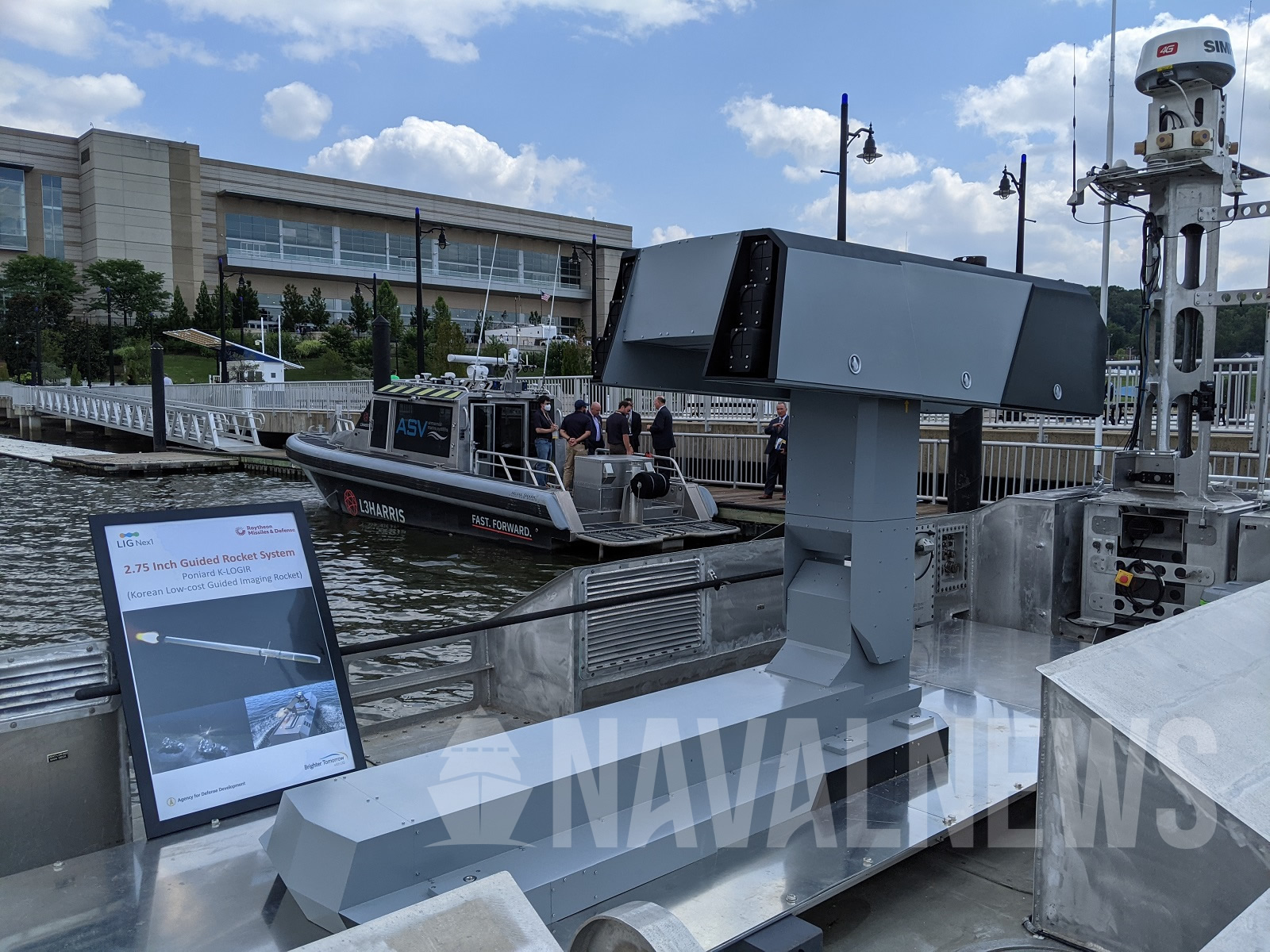
K-LOGIR, Korean Low cOst Guided Imaging Rocket and Launcher

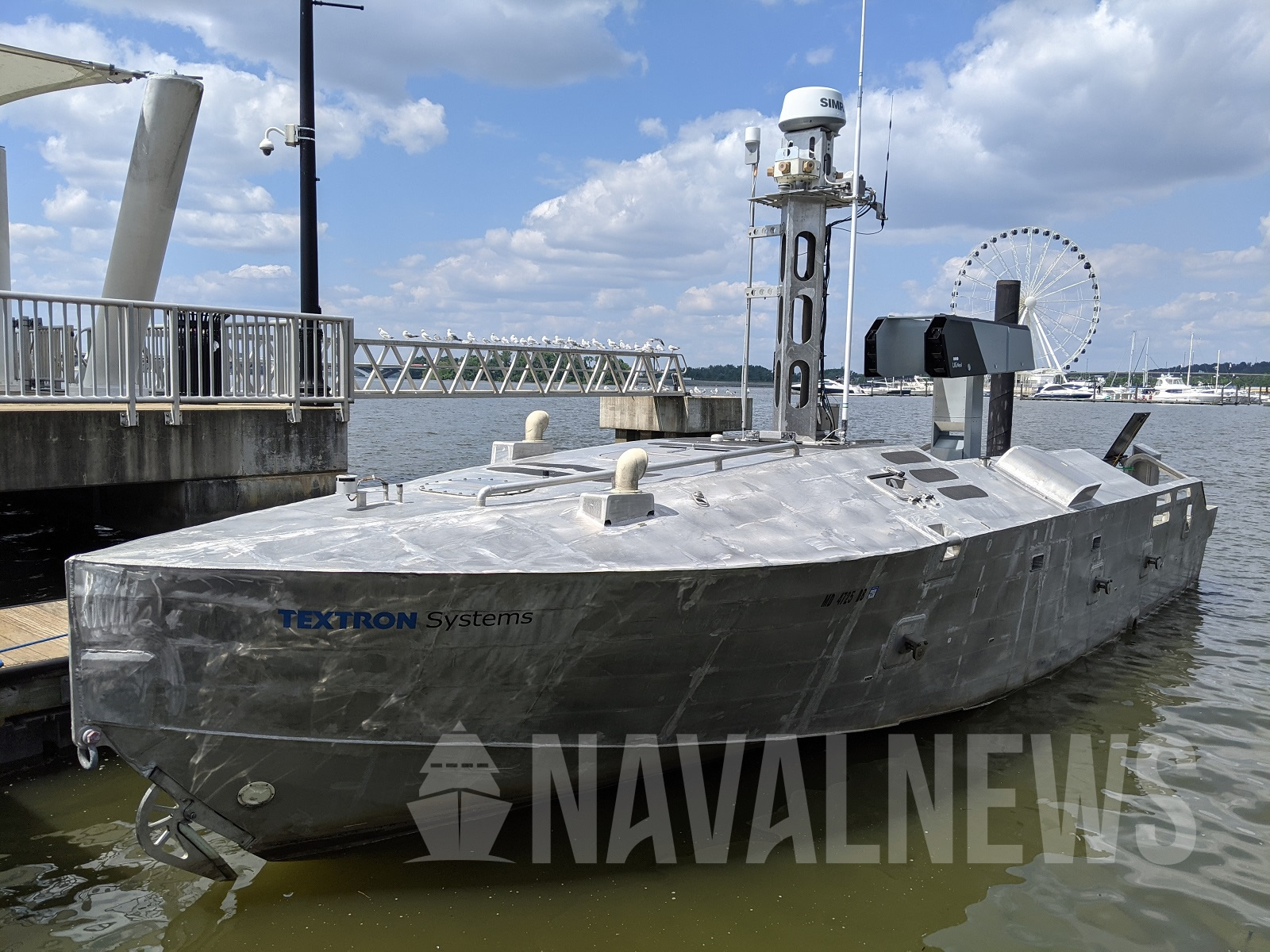
K-LOGIR launcher fitted on a Textron CUSV USV at Sea Air Space 2021. The system was showcased by Raytheon and LIG Nex1.

Naval News recently did a post highlighting a 4th Fleet live fire test combining a Korean developed fire and forget guided rocket system with the Common Uncrewed Surface Vessel (CUSV) cued to a target by a Radiosonde UAS for a fully uncrewed kill chain.

The “Poniard” Korean-Low cOst Guided Imaging Rocket (K-LOGIR) is closely related to the APKWS, both being based on the 70mm Hydra unguided rocket. Unlike the semi-active laser homing APKWS, the K-LOGIR is a fire-and-forget system allowing multiple simultaneous engagements.

Most of the reports I have read on this exercise are unclear if six missiles hit a single target or if six missiles hit six different targets, but this Defense Mirror report, “Textron’s Unmanned Boat Uses South Korean Weapon to Engage Multiple Targets.” makes it clear that multiple targets were engaged in a single salvo.

I don’t fully understand how they designate different targets for the missiles in the salvo, but it may be that they are sending them to different waypoints before they initiate their search.

The ability to engage several targets simultaneously makes this system attractive for countering surface swarm tactics like those that might be encountered by PATFORSWA, but for the Ports, Waterways, and Coastal Security mission, the APKWS’ semi-active laser homing might be a better solution, in that we are unlikely to have to engage numerous targets in a single salvo and we may want to target particular parts of an adversary’s vessel or perhaps engage low-level air targets such as UAS, helicopters, or general aviation aircraft. Presumably, APKS could be fired from the same launcher.

Textron USV fitted with LIG Next1’s Poniard guided rocket. Textron photo.

Take a look at the launcher above and below. Here it is mounted on an unmanned 39-foot boat. In the photo above you can see that it traverses and elevates. It appears to hold up to six rockets. It might be an appropriate way to arm Coast Guard patrol boats and larger cutters with APKWS, but “Vampire” might be even simpler.

K-LOGIR launcher fitted on a Textron CUSV USV at Sea Air Space 2021. The system was showcased by Raytheon and LIG Nex1.

I would really like to see 4th Fleet make more effort to publicize their experimentation efforts. I’m surprised I was not able to find a YouTube video that documented this test and I have seen no mention of it on the 4th Fleet website.

I am also curious to know if the Navy’s 39′ CUSV could be operated from the stern ramp of a National Security Cutter. Interoperability?