“AUSTAL USA EXPANDS MANUFACTURING CAPACITY WITH DESIGN FOR NEW FACILITY AND SHIPLIFT” –News Release

Austal’s planned new assembly building and ship lift. Ships featured in the illustration, Constellation class FFG, 496 ft (151.18 m) loa, and an Offshore Patrol Cutter, 360 ft (110 m), provide scale.

Below is a Austal USA news release.

June 2022 Austal was awarded a contract with options for up to eleven Offshore Patrol Cutters (OPCs #5 to #15). OPC #5 was in the FY2023 budget. It appears OPC #6 will be in the FY2024 budget. I expect we may see OPC #5 delivered in 2027, #6 in 2028, #7 in 2029 and both #8 and #9 in FY2030.

Eastern launched the future USCGC Argus, OPC #1, in Oct. 2023. Even so, it is not expected to be commissioned until 2025. Eastern has said they will deliver OPC#4 in 2026. I have a hard time being that optimistic. It might be more reasonable to expect delivery of one per year, #2 in 2025, #3 in 2026, and #4 in 2027.

If Eastern turns out a good product at a competitive price, a renegotiation of their contract options for five more cutters included in the original contract could accelerate procurement of these long-delayed ships, and reduce the resource shortfall that now seems inevitable.


FEBRUARY 6, 2024

MOBILE, Ala. – Austal USA announced the start of design for a new manufacturing facility signifying a major expansion of the company’s Mobile, Ala. shipyard capability.  The infrastructure expansion, which will be to the south of Austal USA’s current waterfront facility, will include a new assembly building, waterfront improvements, and a new shiplift system.  Start of construction on the project is planned for summer 2024.

The construction of this new building and waterfront support area, which includes a Pearlson-designed shiplift, continues the expansion Austal USA began in March 2021 with the groundbreaking of the steel panel line. In addition to the manufacturing capacity of the new buildings, the shiplift will provide a safe and reliable system to launch ships as they are completed in the assembly buildings. The system will also enable retrieving ships and bringing them back on the land-side facility.

“With the steel panel line in full production our expansion focus has shifted to the erection and launch facilities required to support our growing backlog,” commented Austal USA acting President Michelle Kruger.  “This new facility is continuing evidence of the close relationship we have with our local community including our community leaders; local, state and federal political leaders; and, regional organizations such as the Mobile Area Chamber of Commerce.”

Austal USA has partnered with Pearlson & Pearlson Inc, program manager and owner’s representative; Kiewit Infrastructure South Co., lead for design and construction; and, Pearlson Shiplift Corporation, designer and builder of the shiplift system, to execute the project.  The new assembly building will consist of three bays and enable erection of recently awarded steel ship contracts as well as provide the flexibility to manufacture modules for submarine and other surface ship programs.  The assembly building will be approximately 400 feet long by 480 feet wide providing over 192,000 square feet of covered manufacturing space occupying four and a half acres.

The Pearlson-designed shiplift system will feature an articulated lifting platform approximately 450 feet long by 125 feet wide, capable of lifting and launching vessels in excess of 18,000 long tons. This capacity will facilitate the launch and docking of the U.S. Navy Constellation-class Frigates, TAGOS-25 class Ocean Surveillance Ships, Independence-variant Littoral Combat Ships, and the U.S. Coast Guard Heritage-class Offshore Patrol Cutters.

When complete Austal USA’ s Mobile, Ala. facility will include a 117,000 square foot steel panel line, two module manufacturing facilities totaling over one million square feet of covered manufacturing space optimized for serial production, and seven assembly bays providing over 400,000 square feet of indoor erection space.  In all, the Mobile facility covers 180 acres and, when this project is complete, over 1.5 million square feet of indoor manufacturing space.

“Army Cancels High-Speed Armed Reconnaissance Helicopter Program” –The WarZone

Sikorsky’s Raider X, advanced compound helicopter design (FARA prototype)

The Warzone reports,

The U.S. Army says it is cancelling its Future Attack Recon Aircraft (FARA) program which had been centered on the acquisition of a new type of high-speed armed scout helicopter. This is part of a larger restructuring the Army plans for its future fleets of helicopters and other crewed and uncrewed aircraft.

This is essentially half of the Army’s Future Vertical Lift program. The Coast Guard has been following the program in anticipation of development of vertical takeoff and landing aircraft that would offer “twice the range and twice the speed” of existing helicopter types. We might still see that in a version of the Bell V-280 for land-based operations.

Note this video is four years old, so the prototype has been flying for a long time. I have heard concern about the downwash, but if you look at the windsock visible from time 2:20, downwash does not seem to be excessive. My back of the envelope calculations suggests the overpressure directly under the rotor discuses would be about 67% higher under the V-280’s props compared to the H-60J’s rotor. That might be mitigated at the hoist pickup point because, unlike in the H-60, the props are not rotating over the fuselage of the V-280.

It does appear that the H-60s may have a new engine option in the future.

The FARA cancellation is part of what the Army is currently calling the Aviation Investment Rebalance. The service says it will delay production of the General Electric T901 turboshaft engine developed under the Improved Turbine Engine Program (ITEP), which had been heavily tied to FARA, as part of this plan. The immediate focus will now be on integrating T901s onto existing AH-64 Apache attack helicopters and UH-60 Black Hawk utility helicopters.

GE Aerospace claims, “The T901 engine provides 50% more power 25% better specific fuel consumption, and reduced life cycle costs -with fewer parts, a simpler design, and proven, reliable technology.” 

Basically, the Army has decided that Unmanned aircraft and Satellites can do the job of scouting better and cheaper, as well as safer, than a helicopter. This means they will be putting more money into those areas.

The Coast Guard might still benefit in its maritime domain awareness and its search function. I have not put much thought into the possibility that UAS (and perhaps satellites) might supplement or replace fixed wing for the SAR search function or MEP detection, but those are real possibilities.

I am disappointed that we are not likely to see a ship-based helicopter with twice the range and twice the speed any time soon, but on the other hand, we are already using UAS for search that have many times the endurance of the H-65 or even the H-60. For that function, endurance is more important that speed.

“Research and Development Center projects continue to enhance Coast Guard mission success” –CG-9

The Coast Guard Research and Development Center workforce is based in New London, Connecticut. U.S. Coast Guard photo.

Below is a news release from the Acquisitions Directorate (CG-9). If you follow the links there is a huge amount of information.

There is a lot of ongoing work, including cooperation with 4th Fleet in their efforts to operationalize unmanned systems. I had hoped the Coast Guard was doing that, and it’s gratifying to see they in fact are.

The projects listed are wide ranging and may potentially impact every mission area.

Perhaps the biggest surprise was that they are working on detect and avoid systems for small UAS. It appears they are looking at beyond visual line of sight UAS that could be used by the Fast Response Cutters and other vessels that do not have a flight deck. Apparently, they are also looking at using Unmanned Surface Vessels (USVs) to fire warning shots, presumably to stop drug runners. Would that mean they would also use USVs for disabling fire?

They are also looking at counter UAS alternatives, at ways to operate more effectively in polar regions, maritime domain awareness, and a lot more. It’s very impressive, especially when you consider how little the Coast Guard spends on R&D.


In fiscal year 2023, the Coast Guard Research and Development Center in New London, Connecticut, supported a research portfolio of 54 projects, covering the full scope of the Coast Guard’s missions. This video highlights a few of those projects, including beyond visual line of sight unmanned aircraft system detect and avoid technology, cutter-based unmanned systems integration with the Ship Control and Navigation Training System, International Maritime Organization polar code validation through advanced simulation modeling, and laser corrosion removal.

View video here.

Related: FY24 RDT&E Project Portfolio

For more information: Research and Development Center page and Research, Development, Test & Evaluation and Innovation Program page


“USS LEYTE GULF DEPLOYS FROM NORFOLK TO U.S. 4TH FLEET” –2ND FLEET

040501-N-7586B-122, Gulf of Oman (May 1, 2004) – Members of the Vessel Board Search and Seizure (VBSS) team return to the guided missile cruiser USS Leyte Gulf (CG 55) in a Rigid Hull Inflatable Boat (RHIB) after searching several fishing dhows in the Gulf of Oman. U.S. Navy photo by Photographer’s Mate 1st Class Bart Bauer. (RELEASED)

Below is a US 2nd Fleet news release.

News about Navy ships deployed to 4th Fleet has been sparse, but recently I noted the return of a destroyer, USS Farragut, from the 4th Fleet and remarked on how I was surprised they used a DDG rather than an LCS for this drug interdiction mission. Before they were all decommissioned, these missions were typically done by Perry class frigates. DDGs have been used in the past but lately the mission has been done almost exclusively by LCS. At one point in 2020, the administration made a big point of “surging” ships to the Drug interdiction zone, but in fact, that only happened because the carrier in a carrier strike group was unable to make its deployment and the escorts were suddenly at loose ends and available.

Cruisers are normally AAW coordinators for carrier strike groups. Deploying one independently to 4th Fleet is rare indeed.

Again, I suspect they may be there for reasons unrelated to drug interdiction. The DDG apparently stayed in the Caribbean rather than entering the Eastern Pacific, where we have a greater shortage of capable drug interdiction assets.


USS LEYTE GULF DEPLOYS FROM NORFOLK TO U.S. 4TH FLEET

By Lt.J.G. Jayden Hodgson, USS Leyte Gulf Public Affairs

28 January 2024, 

The Ticonderoga-class guided-missile cruiser USS Leyte Gulf (CG 55) departed Naval Station Norfolk on deployment, Jan. 28.

Leyte Gulf will independently deploy to the U.S. 4th Fleet area of operations.

Throughout the fall, the ship conducted extensive underway operations throughout the Western Atlantic in preparation for their tasking.

“Leyte Gulf and her crew are excited to work with our partner nations and services to maintain maritime security and interoperability in the Caribbean and South American areas of operation,” said Capt. Nate Diaz, commanding officer of Leyte Gulf.

The ship’s crew is comprised of more than 40 officers and nearly 350 enlisted Sailors.

“The crew continued to display a high level of proficiency and readiness during our sustainment phase,” said Leyte Gulf Command Master Chief Jason Kutsch. “We look forward to exercising the capabilities of our ship and crew while deployed.”

While deployed, Leyte Gulf will host Helicopter Maritime Strike Squadron (HSM) 50 and Coast Guard Law Enforcement Detachment 404 to provide robust expertise in keeping illegal drugs from reaching the shores of the U.S. and its regional partner nations. Leyte Gulf is scheduled to conduct passing exercises with other regional partners as well as several theater security cooperation port visits to strengthen maritime partnerships, enhance U.S. maritime posture and counter threats such as illicit drug trafficking.

Leyte Gulf was commissioned Sept. 26, 1987, and commemorates the largest naval battle in modern history fought in Oct. 1944. The Battle of Leyte Gulf was critical in turning the tide in the Pacific during World War II.

“Rebrand the Coast Guard Districts” –USNI

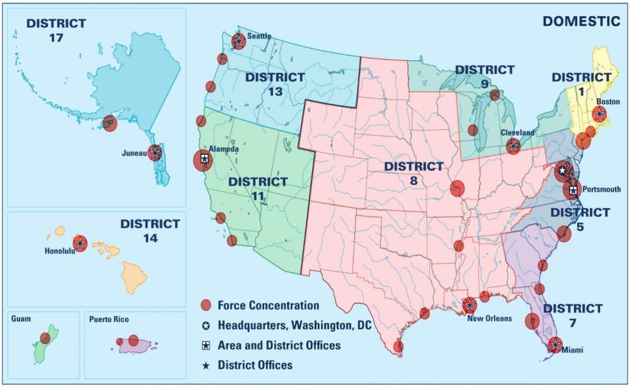
The February edition of US Naval Institute Proceedings has a one page, “No Body Asked Me, But,” article on page 18, by Cdr. Leah Cole, USCG, suggesting that the Coast Guard Districts be given geographic names rather than numbers.

I’ll just list the proposed names without linking them to the existing numbers because, you will find them obvious and intuitive.

  • Forces New England
  • Forces Mid-Atlantic
  • Forces South and Caribbean
  • Forces Heartland and Gulf Coast 
  • Forces California and Southwest Border
  • Forces Pacific Northwest
  • Forces Pacific Islands
  • Forces Alaska and Arctic

I think she pretty much nailed it, though I think Forces Southeast and Caribbean might be more descriptive for D7, and for D11, Forces Pacific Southwest.

Along with these, she would rebrand the Areas Forces Atlantic and Forces Indo-Pacific.  There is a potential glitch here, in that PATFORSWA, which frequently operates in the Indian Ocean, is currently under Atlantic Area. (Both the Combatant Commanders and the Navy’s Fleet structure have the Indian Ocean split up three ways.) Just Forces Pacific should suffice.

She goes on to suggest,

“As an additional step, the Coast Guard could time the renaming to align with a new recruiting initiative for both the active-duty and reserve force that offers candidates the opportunity to serve in their home regions or a region in which they would like to live and serve long-term. This could create a sense of purpose, build belonging, and also reduce barriers to accessions.”

She also suggests how district Reserve programs could be tuned for predicable surge operations–it’s a short read.

As I am sometimes told, this makes too much sense to actually happen, but it is definitely worthy of serious consideration.

“Commander Cole, a permanent cutterman, is executive officer of the USCGC Bertholf (WMSL-750). She is the 2023 recipient of the John G. Witherspoon Award for inspirational leadership.”

“USS Farragut Returns Home Following a Successful SOUTHCOM Deployment” –4th Fleet

190914-N-KK394-029.MAYPORT, Fla. (Sept. 14, 2019) USS Farragut (DDG 99) (U.S. Navy photo by Mass Communication Specialist 2nd Class Anderson W. Branch/Released)

Below is a news release from USNAVSOUTH/4TH FLEET PUBLIC AFFAIRS.

We have not seen much recently about Navy support of drug interdiction efforts. The US Naval Institute’s Fleet and Marine Tracker no longer includes tabular information about the number of Navy ships deployed to the various fleets, which used to give us some indication. Hopefully we will be seeing more reports like the one below.

Does seem like an LCS would have been a more appropriate choice for the operation, but perhaps there were other considerations. Farragut was deployed for more than three months. Sounds like they spent their time in the Caribbean rather than the Eastern Pacific. Their Deployment began long before the Venezuela/Guyana flap, but I am sure Guyana and the British felt more comfortable, knowing a DDG and other assets were in the neighborhood.


Feb. 3, 2024

MAYPORT, Fla. – The Arleigh Burke-Class Destroyer USS Farragut (DDG 99) returned to U.S. Naval Station Mayport, Fla., Feb. 3, 2024, following the ship’s successful deployment under U.S. 4th Fleet to the U.S. Southern Command area of responsibility.

Farragut, along with the “Valkyries” of Helicopter Maritime Strike Squadron (HSM) 50 Det 2 deployed in September 2023 to support Joint Interagency Task Force (JIATF)-South’s counter-narcotics operations in the Caribbean Sea.

During the deployment, Farragut, with her embarked U.S. Coast Guard Law Enforcement Detachment (LEDET), apprehended or disrupted an estimated 1,770 kilograms of cocaine worth an estimated street value of more than $44 million and the detention of 18 suspected illicit drug runners.

“Every Sailor and Coast Guardsmen had a role in this team effort,” said Farragut Commanding Officer Cmdr. Tom Roberts. “We, alongside allies and partners, seized the opportunity to advance regional and strategic objectives in the area of operations, supporting our nation and our Navy. I could not be more proud of our team and their accomplishments.”

Farragut, the LEDET, and HSM 50 Det 2 conducted operations with the Dominican Navy and British Royal Navy to assist with the apprehension and transfer of personnel and cargo. Farragut also conducted deck landing qualifications with Joint Task Force Bravo (JTF-B) Soldiers, qualifying 18 UH-60A Black Hawk helicopter pilots for maritime operations.

Farragut’s port visits included Willemstad, Curacao, where the ship hosted local students and military personnel to showcase the capabilities of Farragut and discuss the daily lives of Sailors onboard a U.S. naval warship.

“The crew of USS Farragut demonstrated tremendous proficiency and professionalism while executing theater security cooperation events and counter illicit trafficking operations throughout their extended 4-month deployment.” said Capt. Bryan Gallo, Commodore of Task Force FOUR FIVE.

CTF 45 is the U.S. 4th Fleet surface task force charged with executing combined naval operations, building and strengthening regional maritime partnerships, and acting as a DoD-ready service provider to JIATF-South in support of counter-illicit trafficking operations in Central and South American waters.

U.S. Naval Forces Southern Command/U.S. 4th Fleet is the trusted maritime partner for Caribbean, Central and South America maritime forces leading to improved unity, security and stability.

“U.S. Approves Potential $3.9B MQ-9B UAV Sale to India” –USNI

An MQ-9 Sea Guardian unmanned maritime surveillance aircraft system flies over the Pacific Ocean during U.S. Pacific Fleet’s Unmanned Systems Integrated Battle Problem (UxS IBP) 21, April 21. UxS IBP 21 integrates manned and unmanned capabilities into challenging operational scenarios to generate warfighting advantages. US Navy Photo

The US Naval Institute News Service reports,

The State Department greenlit a potential $3.9 billion deal of General Atomics MQ-9B drones to India today…The proposed package for the Indian military includes 31 SkyGuardian unmanned aerial vehicles, 310 Small Diameter Bombs and 170 Hellfire missiles. Associated radars and anti-submarine equipment for the maritime-focused SeaGuardian variant, a derivative of the SkyGuardian, were also included.

It appears, India will join Allies Australia, Belgium, Canada, Italy, Japan (Coast Guard and Maritime Self Defense Force), the Netherlands, and the UK as operators of the MQ-9 for Maritime Domain Awareness.

$3.9B is a scary number if you are the Coast Guard, but this is a large, comprehensive, and probably multi-year procurement, probably including training and support. This is also a joint service procurement with the Indian Air Force getting eight aircraft, the Indian Army eight, and the Indian Navy sixteen.

This is what the US Coast Guard Acquistions Directorate (CG-9) says about Land-based UAS,

“The Coast Guard has validated a mission need for land-based UAS to significantly enhance ocean surveillance in support of the service’s operations. Coast Guard land-based UAS flight crews are jointly operating maritime-variant Predator UAS (Guardian) on maritime missions with Customs and Border Protection to enhance the Coast Guard’s understanding of potential land-based UAS solutions and support the development of a land-based UAS requirements package.”

That sounds suspiciously like, we are doing the same thing we have been doing for what, the last two decades? I can understand the hesitance to get into land based UAS before Sense and Avoid systems, allowing Remotely Piloted Air Systems (RPAS) to operate in the national airspace, were developed, but they are available now. Time to move on this.

We don’t have to jump in with both feet. We can do what we are still doing with Scan Eagle and use contractor owned and operated systems, but let’s at least see what the latest systems can do for us.

Maybe a detachment of land based UAS like the MQ-9B Sea Guardians in Florida or Puerto Rico, where they can support the 20 Webber class District 7 FRCs that do not have organic air assets.

USCGC Steadfast (WMEC-623) Decommissioned

The crew of USCGC Steadfast holds a decommissioning ceremony for the cutter in Astoria, Oregon, Feb. 1, 2024. Steadfast was commissioned in 1968 and spent nearly 30 years in Astoria.

From the Coast Guard Pacific Area Facebook page.

Yesterday, the commissioning pennant was lowered for the final time, as U.S Coast Guard Cutter Steadfast (WMEC 623) conducted her decommissioning ceremony in Astoria, Ore.
The Steadfast proudly served the people of the United States for over five decades. Since commissioning in 1968, she has completed over 340 Search and Rescue cases, interdicted over 1.276 million pounds of marijuana and 209, 470 pounds of cocaine, and conducted 251 living marine resource boardings. Steadfast was the first, and one of only two cutters, awarded the gold marijuana leaf, symbolizing one million pounds of marijuana seized.
We are now down to 12 WMEC210s of the original 16.

The Navy is Looking for Counter Drone Systems

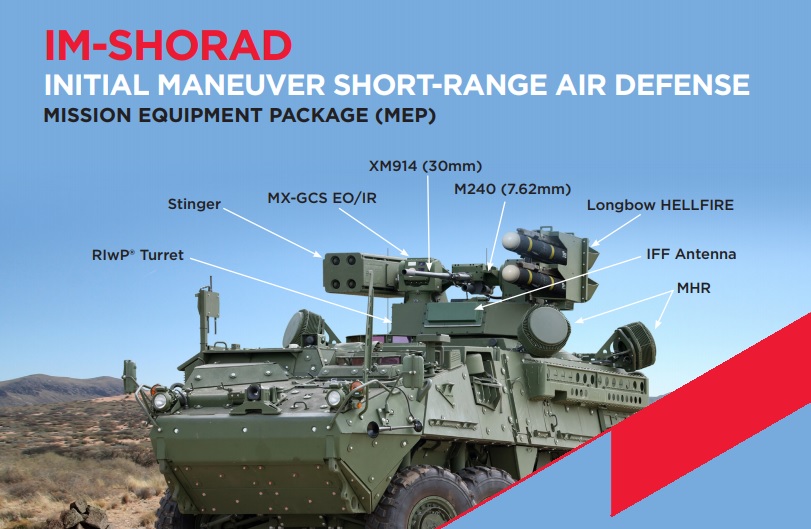
Interim Maneuver Short-Range Air Defense (IM-SHORAD). The sensors and remote weapon system used here looks like it might be a contender.

The Navy is looking for mature counter Unmanned Air Systems (c-UAS) that can be rapidly deployed. They have issued a Request For Information (FRI). Responses are due today, so we are talking near term if it happens. 

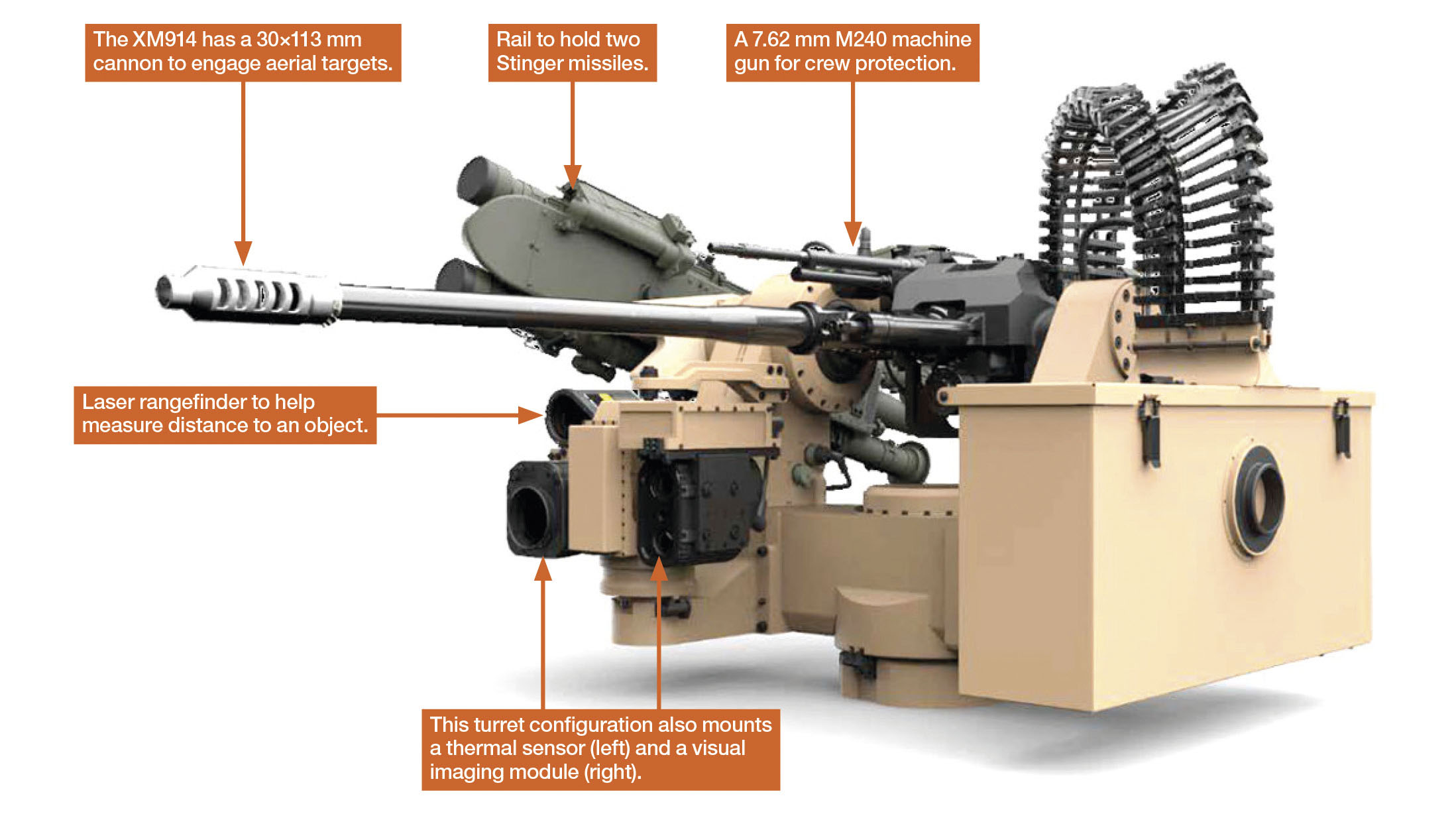
Looks like it might be something the Coast Guard could use,

Marine Air Defense Remote Weapon Station. Use of this Remote Weapons Station would require an interface with cueing sensors.

Below is SECTION 3: [Requirements Overview]


PEO IWS 11.0 is looking for respondents to submit feasibility and capability information on innovative, mature solutions to counter Group 3-5 UAS from surface ships.  System requirements include:

  1. Mature systems that are in production and can be deployed in 1-6 months (preferred), or 6-12 months at the latest.
  2. Demonstrated performance against Groups 3 to 5 UAS, with demonstrated capability against other classes of UAS’s being of interest.
  3. Minimal integration requirements with Naval combat systems; with independent, self-contained capability highly desirable.

If the system is capable against Group 5 UAS (the largest UASs, over 1320 pounds (600 kg) and with no limit on their maximum speed) it’s likely the system will also have a capability against at least subsonic cruise missiles and manned aircraft and perhaps against winged smart bombs. After all, a Naval Strike missile fits the definition of a Group 4 UAS. Surface launched Harpoon or Tomahawk would be Group 5 UAS.

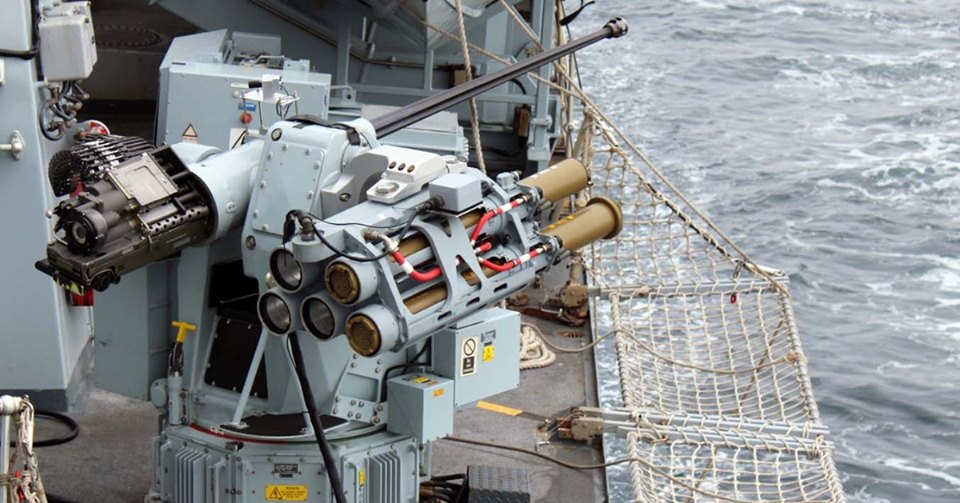
The War Zone has a fairly long post about this including discussion of alternatives. They seem to think these systems are destined for DDGs, but I think the need to equip other types, that do not have robust AAW capabilities, may be more urgent. If a C-UAS has an anti-surface capability, I could see such a system replacing Mk38 mounts. Alternately a 30mm Mk38 Mod4 mount that also mounts AAW missiles (like Stinger) might meet the requirement.

Martlet Light Multirole Missile launchers mounted on MSI 30mm gun mount that will be used in US Navy service as the 30mm Mk38 Mod4.

Mine Countermeasures Ships and MSC ships are currently essentially unarmed. They might be recipients.

Minimal integration requirements with Naval combat systems; with independent, self-contained capability highly desirable” would certainly mean it should not be too difficult to add to a cutter.

“Ukraine Sinks Russian Navy Missile Corvette In Drone Boat Attack” –The War Zone

The War Zone reports,

“A dramatic new view released by the Ukrainian Defense Intelligence Directorate (GUR) shows several of its uncrewed surface vessels (USVs) strike and sink the Russian Tarantul-III class missile corvette Ivanovets. The attack took place Wednesday night local time on the Black Sea near Lake Donuzlav in western Crimea, the GUR said on its Telegram channel.

“A 128-second video posted on Twitter shows what appears to be a complex attack on the Ivanovets by what Lt. Gen. Kyrylo Budanov, commander of GUR, told us were Maritime Autonomous Guard Unmanned Robotic Apparatus (MAGURA V5) USVs operated by the GUR’s Group 13 drone unit.”

Tarantul-class corvette

The vessel in the video is a Tarantul class missile corvette. These vessels are powered by four engines totaling 32,000 HP making them very fast (42 knots). The hot gas turbine exhausts on either side of the transom glow brightly early in the video.

They have a pair of 30mm gatling guns on the aft superstructure with a clear field of fire aft.

This ship appears well equipped to defeat an unmanned surface vessel (USV) attack.

The Drive post analyses the attack, but I would point out that I don’t see as many splashes as I would have expected, if the 30mm guns were functioning. I don’t see muzzle flashes. What I did see appeared to be from heavy machine guns (12.7 or 14.5mm) rather than 30mm.

Many USVs were involved in this attack. The Ukrainians claimed six USVs hit the little corvette. Still other USVs filmed the ultimate explosion and sinking.

Perhaps the 30mm guns had run out of ammunition engaging other USVs by the time the drone in the first video recorded attack gets as close as seen in the video.

The report included this statement,

““The Ivanovets MRK sank while repelling a night attack by the Ukrainian Armed Forces on Sevastopol,” the Russian VoenkorKotenok Telegram channel wrote.”

The Russians have historically stationed a “guard ship” off their ports to prevent surprise attack. Ivanovets may have been stationed off Sevastopol specifically as a counter to a drone attack.