French Navy Gets New Icebreaker

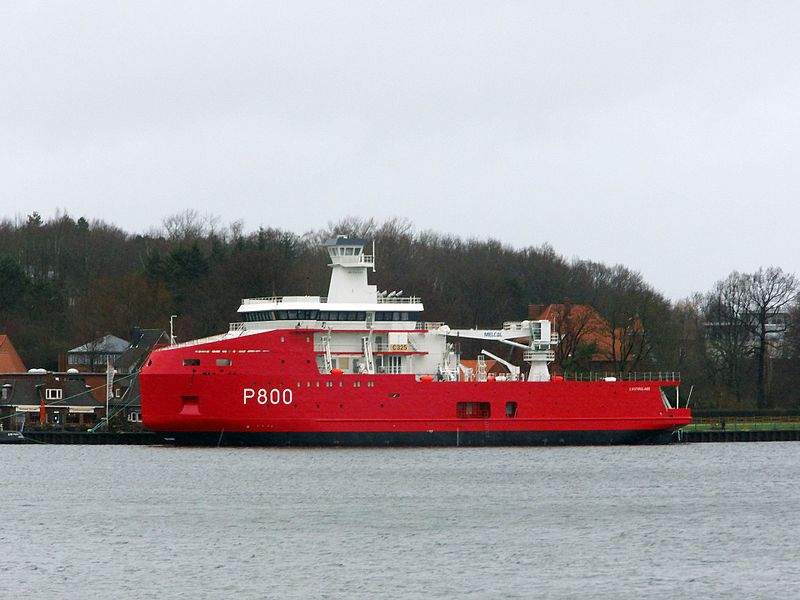
L’Astrolabe (2017) in Kiel, 3 January 2017, photo by HenSti

NavalToday reports that the French Navy will soon accept a light icebreaker/ supply vessel to be named L’Astrolabe. It will replace a smaller vessel of the same name.

It is 72 metres (236 ft) long and 16 metres (52 ft) of beam, somewhat larger than her 66-metre (217 ft) predecessor.

Aker Arctic provided the basic design.

Late addition: Check out NavyRecognition’s report for a better selection of photos.

LATIN AMERICAN NAVIES AND ANTARCTICA–CIMSEC

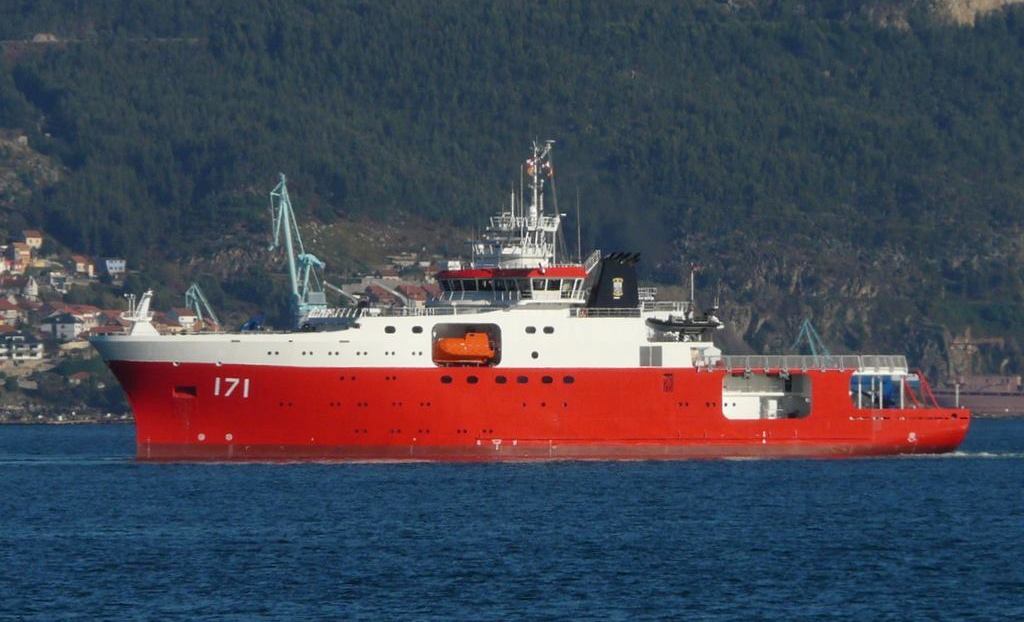
Peru’s BAP Carrasco (BOP-171). Photo by Alejo Marchessini (amarchessini@edefa.acom)

CIMSEC has a review of Latin American efforts in the Antarctic. It refers to the efforts of the Navies of Argentina, Brazil, Chile, Peru, Colombia and Uruguay. The post provides links, (mostly in Spanish) but few photos, so I am providing some photos to illustrate some of the major vessels refered to in the post. There were earlier post about the planned new Chilean icebreaker/supply vessel and Argentina’s newly refurbished icebreaker. Below is a chart of the current claims on Antarctica as reported in Wikipedia.

Chile’s current icebreaker, 6500 ton former Canadian icebreaker, Almirante Oscar Viel

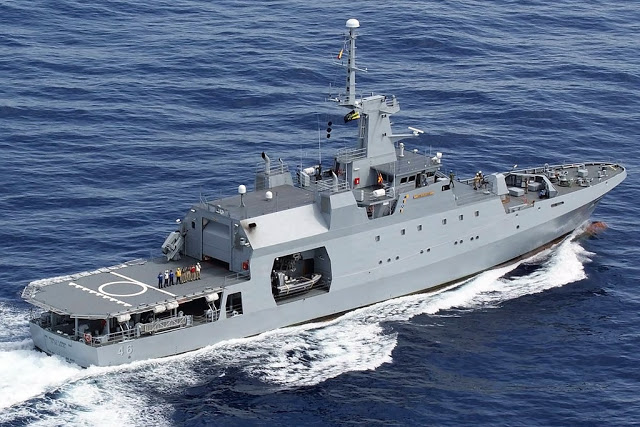
Colombia’s ARC 20 de Julio (PZE-46) which has been modified for operations in the Antarctic. Photo by Juan Nation

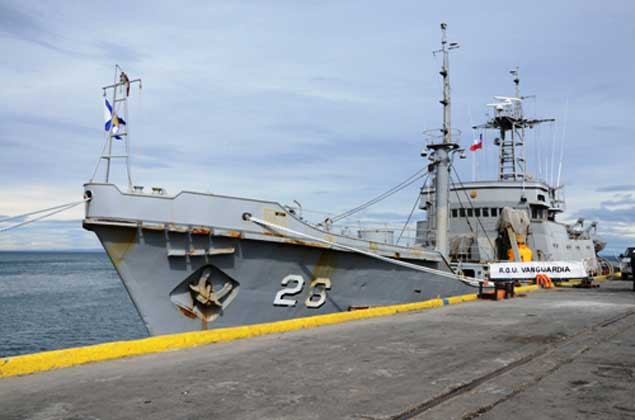
Uruguay’s Vanguardia

Brazil’s Almirante Maximiano (H-41) a 5,450 ton icebreaking supply vessel. Brazilian Navy photo

Brazil’s Ary Rongel, Brazilian Ministry of Defense photo, 06/10/2014, Niterói – RJ
Fotos: Felipe Barra

Building a 21st Century Infrastructure for America: Coast Guard Sea, Land, and Air Capabilities–House Subcommittee Hearing


The hearing recorded above was held 7 June. The original video was found here. That page also provides the chairman’s opening statement and links to the witnesses’ written statements that are also provided immediately below. The video does not actually start until time 4:30.

Below, you will find my outline of the highlights.

Witness List:

  • Vice Admiral Charles W. Ray, Deputy Commandant for Operations, United States Coast Guard | Written Testimony
  • Vice Admiral Sandra L. Stosz, Deputy Commandant for Mission Support, United States Coast Guard | Written Testimony Ms. Marie A. Mak, Director, Acquisition Sourcing & Management Team, Government Accountability Office | Written Testimony
  • Mr. John Acton, Chairman, Coast Guard Affairs Committee, Navy League of the United States | Written Testimony

The GAO’s written testimony is particularly comprehensive. They report that new assets (NSCs and FRCs) are not meeting planned availability. There have been an unexpected number of engine replacements. In the case of the National Security cutters it appears to me the down time was predictable, a normal part of introducing new ships and availability should return to planned levels as more ships join the fleet. The known defect, that when operating in waters 74 degrees or warmer, the NSCs cannot maintain maximum speed has apparently not been corrected. Max speed must be reduced two to four knots to allow adequate cooling.

Planning Documents:  The Congressional Representatives repeatedly complained that they were not getting an unsensored statement of the Coast Guard’s needs. It appears the Coast Guard is not being allowed provide this information. Rather it appears the GAO is telling the Coast Guard how much they will be getting and told to submit a budget that fits the predetermined amounts. Reportedly the Unfunded priorities list will be provided by the end of June. They also asked for the 5 year and 20 year plan (1h04:30). Coast Guard representatives were repeatedly told the Coast Guard does not say what they really need, that information provided by the Coast Guard is inadequate for the sub-committee to make decisions (1h48m).

It appears that the GAO continues to ask the Coast Guard to plan procurements based on historically low AC&I appropriations that were adequate for a time because of the sporadic character of Coast Guard ship building. They acknowledge that the current budget is not realistic. (43:45)

The Coast Guard is now consistent in requesting $2B in the AC&I annually and a 5% annual increase in its operating budget and that we need 5,000 additional active duty billets and 1,100 addtional reservists. There was a statement from one of the Representatives to the effect, We need you to fight for yourselves (1h50:30). The representatives were informed that the 5 year, 20 year plans and unfunded will be delivered together (1:56)

My opinion: we need a regularly revised Fleet Mix Study. That in turn should feed directly into a 30 year ship and aircraft procurement plan

Webber Class WPCs: The Coast Guard is reportedly pushing WPCs operations down as far as the coast of South America. (50:00) This confirms my earlier speculation that these ships would be operated in what had been WMEC roles. Six cutters for CENTCOM The representative confirmed that they had approved procurement of six Webber class requested by CENTCOM. Apparently their approval was in the form of the Coast Guard reauthorization bill which has still not been made law. Adm. Ray stated that these would be in addition to the 58 currently planned (9:30) and it is not clear how or when they would be funded. Adm Stosz indicated it was not certain six Webber class would be the Coast Guard’s choice in how to fill this requirement and the question required more study. (1h11)(1h41m).

Shore Facilities: Reportedly there is a $1.6B shore construction backlog. $700M shore facilities maintenance backlog. Some infrastructure improvements that directly support new operational platforms.are being accomplished under the platform programs (55:00) The representatives asked, why we have asked for only $10M if the total shore facilities backlog is $2.3B?(1h35)

Icebreakers: The possibility of leasing the commercial icebreaker Aiviq is still being considered. (1h27) The owners have offered a plan for Ice trials and the Coast Guard has said it would be interested in observing. (1h29:50)

Great Lakes Icebreaker: Rep. Lewis brought up icebreaker for Great Lakes.Adm Ray says for now we will address with the existing fleet. (1h00:30) Priority is still Polar Ice Breakers.

eLoran: There seems to be considerable interest in eLoran to deal with GPS vulnerabilities. (1:22) The Navy League representative supported the need. The Re-Authorization Bill directs Secretary of Transportation to initiate E-Loran testing. There was a clear anticipation that the Coast Guard would support implementation.

Coast Guard Health Care: Looks like the Coast Guard heath care records system which reverted to paper now may be able to piggy back on the VA’s conversion to the DOD system. (1h25)/(1h32:30) There is currently a major gap in funding for medical care of CG retirees

A Better Armed Coast Guard: Not that the Representatives were specific, but there was a statement, “We want to weaponize you.” (5:55) I think I heard essentially a second time as well. I’m not sure what that means.

Rising Sea Levels: There was concern expressed regarding rising sea level and how they might impact shore facilities (1h12:20)

WMEC Service Life Extension: The Coast Guard was given money several years ago to plan a service life extension program for 270. The Congress has not seen or heard any result and they questioned, why delay? (1:09) See fig. 4 on page 17 of the GAO’s written testimony

Operating Expenses: Replacement ships are costing more.(26:25)(50:55). This is becoming problematic without an increase in operating budget.

Changing the way we buy ships: Included in the Reauthorization Bill are changes in the way the Coast Guard can fund its shipbuilding, putting us on par with the Navy (5:50)

Cyber: Budget includes 70 additional billets. (19:45)  What are we doing for the ports? (1h13:45)

Inland Tender Fleet: Budget includes $!M to investigate alternatives. (52:30) (1h19)

It is remarkable that there seemed to be no sentiment that the Coast Guard budget should be cut, while there was considerable evidence the Representatives believe the Coast Guard is underfunded.

Marines (or Army) Sink Ship with Missiles from Coast Guard Ship–It Could Happen

PACOM wants the services to operate across domains. The Navy already operates aircraft over land, but he also wants the Army, Air Force, and Marine Corp to help control the sea areas. We noted earlier, that it appears the Army may be moving to form something like the old Coast Artillery.

Now the US Naval Institute reports the Army is set to sink a ship during the 2018 RIMPAC exercise, presumably from land. In addition,

“Headquarters Marine Corps and [Marine Corps Forces Pacific] are working to deploy HIMARS (M142 High Mobility Artillery Rocket System) rapidly aboard ships to shoot at other ships.”

Now the Marines will probably do this from a Navy amphibious assault ship, but wouldn’t it be cool if the Army did this from a Coast Guard Cutter. That would really demonstrate cross service cooperation.

It is also something we might want to do operationally from an Icebreaker in the Arctic some day.

China’s Undeclared Foreign Policy at the Poles–Lowy Institute

An interesting post on China’s actions and intentions, particularly with regard to Antarctica, from the Lowy Institute, an Australian international policy think tank.

The Chinese government currently spends more than any other Antarctic state on new infrastructure such as bases, planes, and icebreakers. China has doubled its number of bases in Antarctica and now has four research stations, two field camps, and three air fields there, and it is getting ready to build a fifth base in the Ross Sea region, not far from the USA’s McMurdo Station. China has the second largest number of citizens visiting and working in Antarctica. Chinese polar scientists have made significant geographical discoveries and named hundreds of geographical sites. The Chinese Antarctic science programme has fully self-sufficient air, land, and sea capabilities in Antarctica. It has two ice-strengthened vessels operating in Antarctic waters, with a further vessel under construction. China’s icebreaker has circumnavigated the continent twice, mapping uncharted Antarctic waters.

“Breaking Ice: The Next Icebreaker Will Be a Navy-Coast Guard Partnership”–Office of Naval Research

US Coast Guard photo by PO Patrick Kelley

The Office of Naval Research’s online magazine, “Future Force,” has some insights into how they are approaching the task of helping to design the Coast Guard’s new heavy icebreakers.

It also seems to indicate the Navy is increasingly thinking about operating surface ships in the Polar regions and that they are realizing, its very hard.

They are looking at the capabilities of non-ice-strengthened ships in polar regions and at the effects of ice loading. Considering we have been sending National Security Cutters into the Arctic their findings should also be of some interest to us.

FY2018 Budget Request

The Homeland Security “FY2018 Budget in Brief” has been published. You can see it in pdf form here.

The Coast Guard portion is on pages 44-48. The breakdown of the elements of the Coast Guard budget request are on page 47.

The total DHS budget request is $70,692,491,000. Of that, the Coast Guard portion is 15.1%. The DHS request is 7.1% greater than the FY2017 annualized continuing resolution. By comparison, the Coast Guard request is down 2.4%.

Highlights of the Coast Guard budget request noted include:

(“FTE refers to personnel changes. They are “Full Time Equivilents”)

  • Offshore Patrol Cutter (OPC) ……………………………………. $500.0M, 0 FTE Provides funding to begin construction of the first OPC, which is scheduled for delivery in 2021. The OPC will replace the Medium Endurance Cutter classes that conduct missions on the high seas and coastal approaches;
  • Fast Response Cutter (FRC)……………………………………….$240.0M, 0 FTE Funds procurement of four FRCs. These assets replace the less capable 110-foot patrol boats, enhancing the Coast Guard’s coastal capability to conduct Search and Rescue operations, enforce border security, interdict drugs, uphold immigration laws, prevent terrorism, and enhance resiliency to disasters;
  • Polar Icebreaker ……………………………………………………. $19.0M, 0 FTE Continues efforts toward awarding a contract for detail design and construction in 2019. This acquisition is recapitalizing the Coast Guard’s heavy polar icebreaker fleet;
  • Inland River and Western Rivers Tender ……………………….. $1.1M, 0 FTE Supports exploratory activities to analyze potential options to replace the capabilities provided by an obsolete fleet of inland tenders and barges commissioned between 1944 and 1990;
  • C-27J ………………………………………………………………… $52.0M, 0 FTE Funds support continued activities of the C-27J Asset Project Office (APO), which organizes logistics, training development, maintenance support, and ensures that these newly acquired aircraft are ready for induction into the operational fleet. Continues funding for initial spares and logistics, training, and mission system development;
  • Pay and Allowances……………………………………………….$109.8M, 0 FTE Maintains parity with DOD for military pay, allowances, and health care, and for civilian pay raise and retirement contributions, including providing a 2.1 percent military and 1.9 percent civilian pay raise in FY 2018. As a branch of the Armed Forces of the United States, the Coast Guard is subject to the provisions of the National Defense Authorization Act, which include pay and personnel benefits for the military workforce;
  • Operating and Maintenance of New Assets……………………$98.6M, 233 FTE Increases funding for operations and maintenance of shore facilities and provides sustainment funding for new cutters, boats, aircraft, and associated C4ISR subsystems delivered through acquisition efforts;
  • Mission Essential Systems and Cyber Security …………… ……$26.2M, 2 FTE Funds sustainment of critical Coast Guard network infrastructure and pays DOD working capital fund increases necessary to comply with DOD information network and cybersecurity requirements; and
  • Workforce Support Improvements ………………………………….$9.1M, 34 FTE Provides funding and personnel to manage the new Blended Retirement System, increase the frequency of Personnel Security suitability background investigations, and enhance capabilities to handle sexual assault allegations.

FY 2018 Major Decreases:

  • Decommissioning of Legacy Assets…………………………. ($14.1M) (129 FTE) Decommissions one 378-foot high endurance cutter, three 110-foot patrol boats, and one HC-130H aircraft in line with the Coast Guard decommissioning plan; and
  • Management and Support Efficiencies ………………………. ($13.9M) (13 FTE) Reflects savings generated from an enterprisewide efficiency review that can be taken with no direct operational impacts and a minimal loss of current service delivery

This is neither the disastrous cuts that were talked about earlier, nor is it a substantial boost. While less than the FY2017 budget as ultimately funded, it compares favorably to the initial FY2017 request. If the Congress does what it has done in the past, and adds some to the AC&I budget, we may feel this is a better than workable budget.

Compared to the enacted FY2017 budget, Operating Expenses are up $333,772,000 while AC&I is down $720,382,000. Hopefully the Congress will bump this up to nearer what we need annually, about $2B. I would be very surprised if the Congress does not increase the Fast Response Cutter buy from four to six, and NSC#10 and another C-130J are possibilities.

Hearing: Coast Guard Requirements, Priorities, and Future Acquisition Plans (FY-2018)


May 18, the Commandant, Admiral Paul F. Zukunft, addressed the House Appropriations Homeland Security Subcommittee. The recorded testimony is above. It is fairly long (1h40m). The Commandant’s initial statement, following the introductions, begins at 8m40s and ends approximately minute 14.

The administration’s FY 2018 budget request was not available, but the Commandant was there to discuss future priorities, requirements, and programs. The Department Secretary, General Kelly, is expected to address the Subcommittee on May 24 at 3PM Eastern.

I will just mention a few of the items I thought significant.

Admiral Zukunft noted that Huntington Ingalls has begun cutting steel for NSC #9. Questioned about NSC#10, he said, if it were funded, the Coast Guard would of course use it, but that the Offshore Patrol Cutter (OPC) is the Coast Guard’s #1 priority. His response, that another NSC would have an effect on long-range operating cost, seemed to suggest anticipated significantly lower operating costs for the OPC. Significantly, there has been no mention of reducing the OPC program by one ship to offset the addition of NSC #9. (There is already a strong push to build more NSCs, a bill to authorized a multi-year buy of three more.)

He contended that the Coast Guard has taken a harder hit, due to budget restrictions, than other armed services and would need 5% annual growth and at least $2B annually for Acquisitions, Construction, and Improvements (AC&I). Later he stated that this annual AC&I appropriation would included about $300M annually for shore facilities. He pointed to a need to restore 1100 Reserve Billets and add 5,000 active duty military billets while retaining current levels of Civilian staff.

Apparently the FY2918 budget will begin a program to replace 35 Inland tenders at an estimated cost of approximately $25M each ($875M total). (Even if, in the unlikely event, this program were funded in only five years, that would only average $175M/year, so it is not a big program, but one that should have begun at least a decade ago.)

Cyber security for ports was discussed. The Commandant sees the Coast Guard role as decimating best practices, rather than imposing regulation. We now have a cyber program of record–still very small, two CG Academy graduates going directly into the program. The fact that two billets is worth mentioning, is probably the best indication of how really small the program is. A much smaller pre-World War II Coast Guard probably had more people working on breaking German and Japanese codes. 

Marine Inspection was addressed. The Commandant noted the increased demand for Inspections because 6,000 tugs have been added to inspection program. He noted a need for more stringent oversight of 3rd party inspectors, who in some cases have not been as meticulous as they should have been. He also noted that the US flag merchant fleet, notably the MSC’s Afloat Prepositioning Fleet, will need replacement, which will also raise demand for marine inspectors.

The Commandant also voiced his support for the Jones Act. He noted, we only have three shipyards building Jones Act ships in the US, and their loss would be short-sighted.

There was much discussion about the Arctic and the Icebreaker Fleet. Looks like follow-on funding for icebreaker program (at least after the first) will have to come from CG AC&I rather than the Navy budget. This may be difficult, but it is the way it should be. The chair of committee expressed his reservations about attempting to fund such big-ticket items through the DHS budget. The Commandant stated that the Coast Guard is still considering the acquisition of the commercial Icebreaker Aiviq (but apparently they are doing it very slowly–the chairman of the committee seemed a bit irritated about this).

The committee members seemed to latch onto the idea that the USCG, rather than the Navy, would be responsible for enforcing US sovereignty in the Arctic (which by US definition includes the Aleutians), and seemed to be asking if the Coast Guard was prepared to fight the Russians and/or Chinese in the Arctic. The Commandant suggested instead, that our role was to provide presence in the pre-conflict phase in order assert US sovereignty. He acknowledged that the National Security Cutters are only armed defensively and are not suitable for conventional naval warfare against an enemy combatant.

The Commandant acknowledged that, at some point it may be desirable to arm Polar Icebreakers, meaning they should be built with space, weight, and power reservations for additional weapons.

(I am all for keeping open the option of arming our icebreakers, so that they can defend themselves and do their part, if there is a conflict in a polar region, but there did not seem to be recognition among the Congression Representatives, that an Arctic conflict is most likely to be determined by submarines and aircraft. The icebreakers’ role is likely to be primarily logistical.)

The Commandant apparently does expect that there may be disagreements with regard to the extent of the US authority over certain areas of the Arctic.

In discussing the need for land based Unmanned Air Systems, there was a curious note at minute 40 about go-fast boats going south. Where are they going?

Alien Migrant Interdiction (AMIO). We have gone for seven weeks without a single Cuban Migrant being interdicted. This is because of the end of Wet Foot/Dry Foot Policy. This has allowed reallocation of resources to drug interdiction South of Cuba and human trafficking from the Bahamas

A Congressional Representative, from Texas pointed out there is no CG presence on the Rio Grande River, in spite of it being an international waterway. There was no mention of it, but perhaps he was thinking of the Falcon Lake incident in 2010 when an American was allegedly shot in the head by Mexican drug runners. Maybe something we should reconsider.

The Commandant promised the CG would have an unfunded priority list for FY2018.

Russian Icebreaker Development

Project 10510 Leader class

NavyRecognition reports on Russian icebreaker development. They have a diverse and very impressive program. Not content with the Arctika class nuclear powered icebreakers, they are now expecting to build even bigger icebreakers, the Project 10510 Leader class.

The Iceberg Design Bureau also is developing the world’s most powerful nuclear icebreaker of the Project 10510 Leader class. According to Ryzhkov, “its power is 120MW and its maximum ice-breaking capability equals 4.3 m, and if ice is 2 m thick, the ship can lead convoys at a speed of more than 11 knots, thus ensuring cost-effective traffic via the Northern Sea Route.”

120 MW, that is about 160,000 HP. That is about twice as powerful as the Polar Star.

There is a lot of interesting stuff in this post.

It is important to remember that most of these program are for the development of the Arctic for Economic purposes. That is not to say the Russians could not turn them to military purposes, but the Russians have ample reason to see them, not so much as military assets, but as economic necessities.

Will the CG Again Arm Icebreakers?

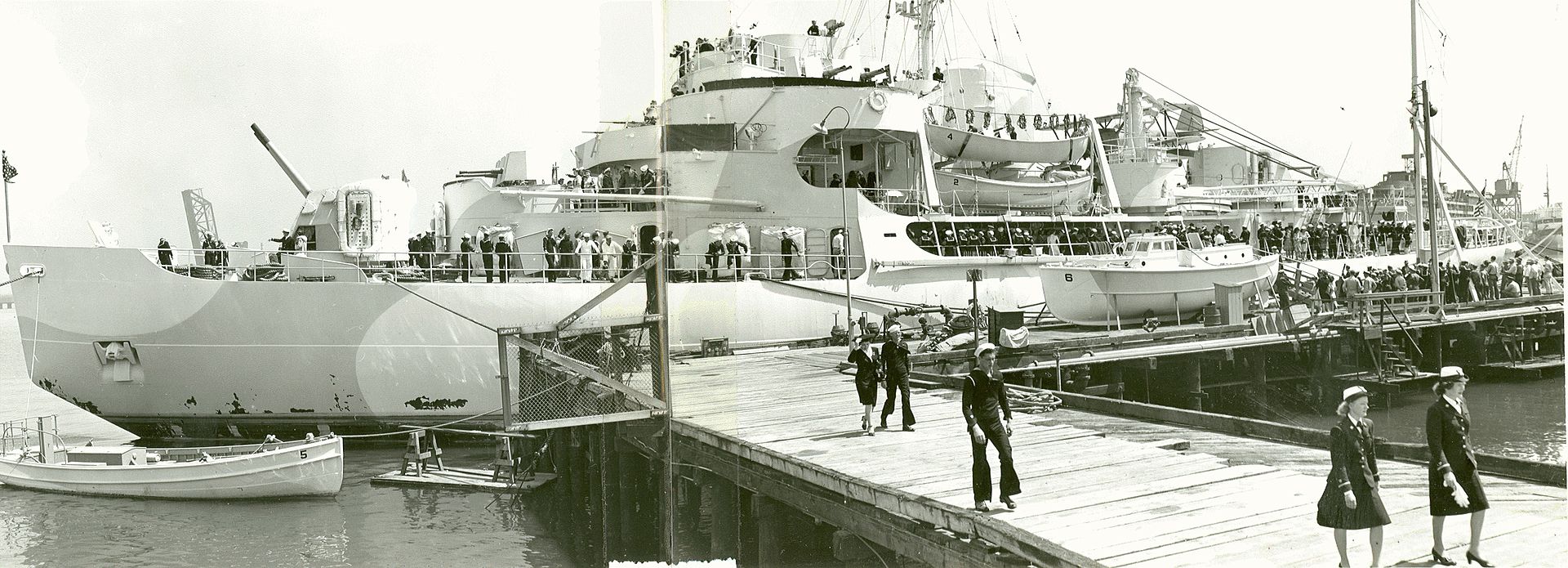
USCGC Southwind Commissioning. As built, their armament included two twin 5″/38 mounts, three quad 40mm mounts, six 20mm, depth charge racks and depth charge throwers, and hedgehog ASW rockets. (Wonder how long the sonar dome lasted?)

The Washington Examiner reports 

President Trump’s team could decide to arm future Coast Guard icebreakers in order to counteract Russian cruise missiles in the Arctic, the Coast Guard’s top admiral said following a meeting with the administration.

No statement from the administration, but the Commandant is quoted,

“They understand that it’s good that you have a U.S. Coast Guard that is a military service,” Adm. Paul Zukunft, the U.S. Coast Guard commandant, told the Center for Strategic and International Studies on Wednesday. “So what might an icebreaker of the 21st century need to be? You might want to reserve space, weight and power where you have an offensive and a defensive armed capability as a military service … that could be a future requirement for our icebreaking fleet.”

What Do they Need?:

This rethink seems to have been prompted by the Russian construction of the Project 23550 arctic patrol vessels which are capable of breaking up to 1.5 meters of ice (only one meter continuous) and which are armed with a 76mm gun and have been pictured hosting two containerized cruise missile launch systems. The Russians probably see these as replacements for the Ivan Susanin class, armed icebreakers, although cruise missiles would make a huge improvement in capability.

I have noted, the missile systems may be more for publicity than for actual usage. The first of class has emerged without the missiles installed, but after all, that is the point of the containerized cruise missile system. You can put them on almost anything.

In any case, these two ships, and their possible 16 missiles, do not substantially change the security situation in the Arctic. There have been a substantial number of Russian cruise missile launchers in the Arctic for decades. Their long range aircraft and submarines are far more dangerous. As has been noted, Russia gets a great deal of its wealth from the Arctic and consequently has strong motivation to put military assets in the Arctic. They have been respectful of international law in the region, settling disputes peacefully. Still, if it comes to a fight, they appear to have overwhelming strength in the Arctic, and the Canadians cannot help us very much.

The Arctic may be peaceful now, but these ships may be in service for 50 years and things change. We could even see a conflict over the Antarctic during the life of these ships.

The Commandant’s remarks seem to suggest that Icebreakers will be built “fitted for but not with” weapons. This is probably a wise choice, except that we need more than .50 caliber machine guns, if the Icebreaker is to perform its professed peacetime missions. Like all Coast Guard vessels it needs the ability to forcibly stop vessels of any size even if they refuse to stop. Beyond that, the question is, what do we want to be able to add?

We should recognize that these will be large ships, not just by Coast Guard standards, but by warship standards. The Polar Star is almost 14,000 tons full load. The Healy is over 17,000 tons.  Many Russian Icebreakers are much larger. I will be surprised if the new icebreaker is not at least 20,000 tons full load, so there are a lot of options. 20,000 tons is more than three times as large as the Wind Class icebreaker pictured above (6,500 tons), bigger than a WWII heavy cruiser, twice as large as a Burke class DDG (8,300 to 9,800 tons full load), a third larger than a Zumwalt class DDG (less than 15,000 tons). It may even approach the size of Huntington Ingalls Ballistic Missile Defense ship concept which at one point included 288 vertical launch missile cells (about 25,000 tons full load).

Huntington Ingalls LPD based Ballistic Defense Ship Concept

If we take the “fitted for but not with” approach, then the design process should start with some preliminary design for a fully armed ship, then see where and how much we want to back off. That will free up space for peacetime missions like scientific research. We can then decide how much additional space should be provided in the design for other peacetime purposes. There could be many opportunities for dual use of spaces provided for war fighting systems–magazine spaces as storage, additional birthing and messing, etc.

After a decision is made about systems to be included in the fully equipped design, we should of course figure crew size and provide hotel services accordingly, keeping in mind the crew may have to accept more crowding. It is entirely possible crew size may double as was the case with many warships designed before WWII, when they actually entered combat. Including extra hotel service capacity can also serve a dual purpose, the ability to support more passengers, or perhaps mitigate problems if the ship has to respond to a disaster such as a sinking cruise ship.

The following is a list of possible capabilities we might consider, in more or less, what I see as the priority of the systems, going from mild to wild, from gunboat to ballistic defense ship. All are feasible at this stage in the planning process. As the design develops, we will be closing off options. I will talk about each.

  1. Ship stopper weapons
  2. Navy type helicopters and their special equipment and weapons
  3. Electronic Warfare Systems/ECCM
  4. Self-defense missiles to counter anti-ship cruise missiles
  5. Multi-function radar system with fire control capability
  6. Towed array sonar system
  7. Anti-ship cruise missiles
  8. Local area AAW missile (Mk56 VLS and ESSM)
  9. Mk41/Mk57 vertical launch system
  10. Energy weapons
  11. Anti-Ballistic Missile Radar

Ship Stopper Weapons:

This is a requirement in both peace and war. We have to be able to forcibly stop a ship of any size, even if they refuse to stop, even after warning shots and being fired into. For very small vessels this might be done with a .50 caliber machine gun. If the vessel is a bit bigger maybe a 25 or 30mm gun might work. For any substantial ship we need something more.
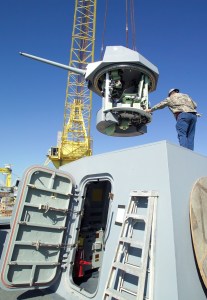
Photo: Mk 46 30mm gun mount

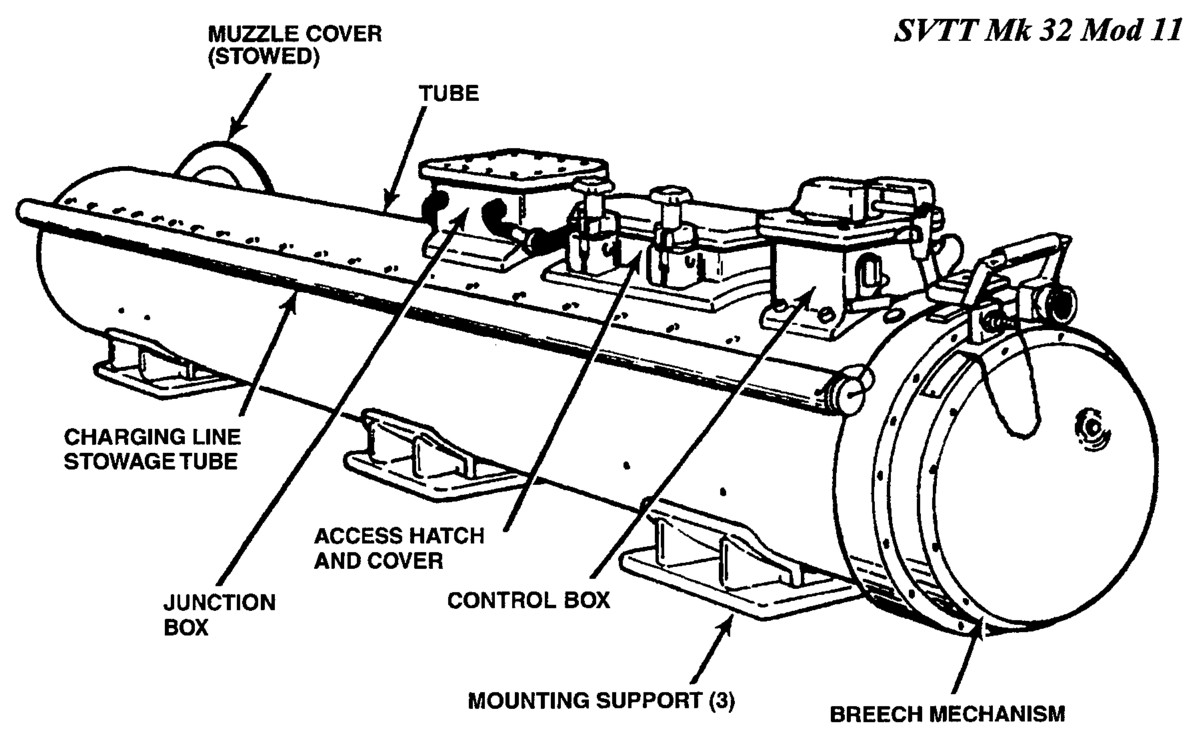
As I have expressed several times, a light weight torpedo seems the least impactful effective way to achieve that. We may not need new torpedoes after all. Recently I have seen a statement that the Mk46 Mod5 has an anti-surface capability. The Navy must certainly have reserve stocks in storage given today’s much smaller surface fleet. If they do have an anti-surface capability, even if only against deep draft targets, torpedoes in combination with Mk38 mount(s) for warning shots, is the easiest solution. Before going to Antarctica, the torpedoes themselves could be removed. I doubt there is anything classified about the tubes. There is no requirement that icebreakers going to Antarctica be unarmed, only that they be open for inspection.

Surface Vessel Torpedo Tube, Mk32 mod11

The Mk32 mod 11 fixed single barrel torpedo tube illustrated above weighs only 1160 pounds loaded, is only about 11’4″ long and less than two feet wide. It does need 9’6″ clear space behind the breech for the loading tray. An Icebreaker would probably not have any problem handling these or the more familiar trainable triple torpedo tubes. (Incidentally, the torpedo tubes to include heating systems.)

While not as effective against really large targets, if an older version of the 5″ Mk45 has been declassified it might be paired with a simple electro optic fire control, we could put declassified weapons even the breakers going to Antarctica. Equipped this way, they could be upgraded relatively easily by adding a more sophisticated fire control system and by upgrading to the latest mod of the Mk45. Any ground combat in a polar region is likely to involve only small units. If a 5″ could be brought within range, it would likely dominate the field.

Navy type helicopters and their special equipment and weapons:

The Polar Icebreaker is of course expected to support a couple of Coast Guard helicopters and probably some type of drone. One of the most versatile weapons systems would be the ability to support a couple of Navy MH60s and MQ-8C drones. The flight deck and hangar requirements will not be much if any different from normal peacetime requirements, but we should not forget the requirement for storage of weapons, other expendables, and support equipment.

Planning for support of Navy helos will probably also facilitate support of Army or Airforce helicopters if contingencies require.

Electronic Warfare Systems/ECCM:

If combat requires access to polar regions, heavy icebreakers are likely to be prized and virtually irreplaceable assets that will justify significant investment in self-defense. Even if we have all three planned heavy icebreakers, we will have many more destroyers, big deck amphibs, and even aircraft carriers. Losing even one may become a strategically important loss.

We can not take ESM/ECCM systems to Antarctica now, but so far these have proven the most effective defense against anti-ship cruise missile. We need to plan to add them.

Self-defense missiles to counter anti-ship cruise missiles:
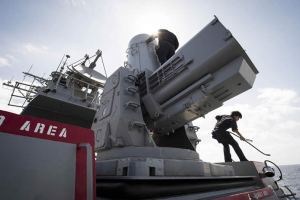
SeaRAM launcher

While soft kill systems have so far outperformed hard kill systems, this is likely to change. Anti-ship cruise missiles are increasing employing multiple sensors and target recognition systems that will be difficult to fool. A pair of SeaRAM launchers to provide 360 degree coverage and 22 ready rounds seems appropriate. Additionally, like the Phalanx CIWS they are derived from, they are stand alone systems that can engage threats without cueing from other sensors or human decision making.

Multi-function radar system with fire control capability:

A multi-function radar like those on the National Security Cutters and planned for the Offshore Patrol Cutter will improve situational awareness and improve employment of other systems.

Towed array sonar system:

Submarines are the primary warships of the ice covered Arctic region. Both for self defense and for the protection of accompanying vessels, the ability to deploy sonar systems, particularly passive ones could be extremely useful.

I have to wonder how effective long range torpedoes launched from submerged submarines under the ice would be against surface vessels operating in ice. There might be unseen ice ridges extending below the surface that might take the hit.

To me this suggest that subs may have to break through to the surface and launch cruise missiles to engage surface ships in ice fields (this is largely speculation so don’t take it as proven).

Anti-ship cruise missiles:

The concept of distributed lethality suggests putting cruise missiles on virtually everything (“If it floats, it fights.”) There is no reason that should not include icebreakers. Again not something we want to take to Antarctica, but an option that perhaps should be left open.
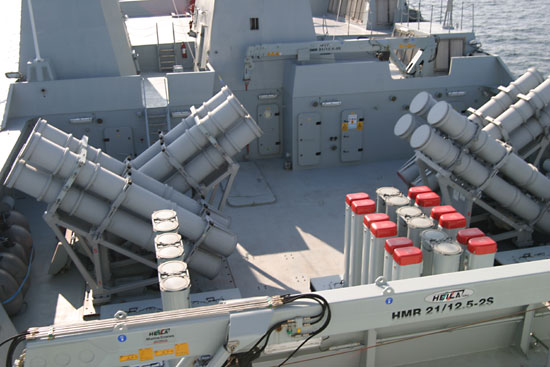
Harpoon and ESSM on Danish Navy Absalon class Support Ship. This area supports 16 Harpoon and 36 ESSM launchers.

It should not be too difficult to provide an open space like the one pictured above for the future mounting of weapons. In the mean time it could serve as a flex deck for mounting experiments and other modular systems.

Local Area AAW Defense (Mk56 VLS and ESSM):

Evolved Sea Sparrow Missile can extend a layered defense around own ship and provide a degree of protection for ships and facilities that may be near the ship.

Mk41/Mk57 vertical launch system:

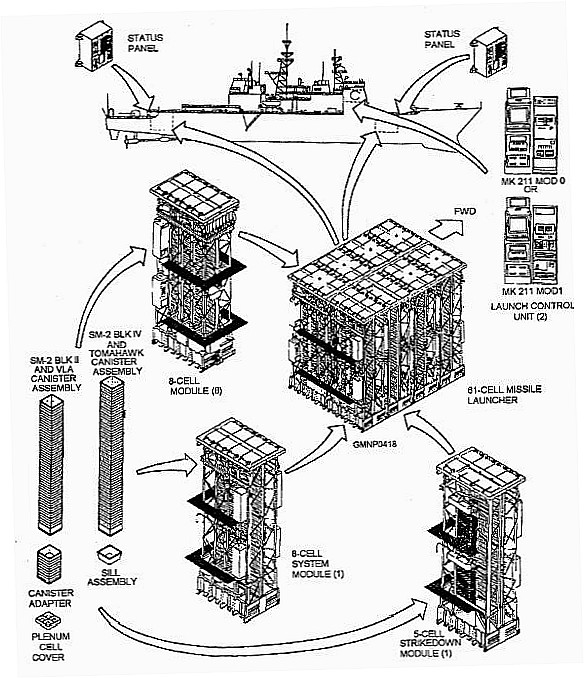
This is near the bottom of my priority list, but providing the space for this may require little more than converting a cargo hold. It doesn’t even have to be very deep. They are at most 26 feet high, meaning perhaps three decks down or only two decks deep and some protrusion above the deck. These can support Sea Sparrow, Evolved Sea Sparrow Missile (ESSM), Vertical Launch Anti-Submarine Rocket (VL–ASROC), all the various Standard Missiles, and Tomahawk cruise missile.

The strike length Mk41 and particularly the 57 VLS are likely going to be able to launch any future USN surface launched anti-ship or land-attack missile for the life of the new icebreakers. These ships could make a contribution to the concept of distributed lethality.

Unless we see my last possible system added, the icebreakers are unlikely to be able to use the capabilities of a Standard Missile independently, but systems are available that would permit cooperative engagement in which a unit, such as an airborne early warning aircraft, could make a detection and take control of a missile launched from a surface unit.

Energy weapons:

Certainly not something for the near future, but an electrically powered icebreaker might be a good candidate for high energy weapons like lasers and rail guns because they will generate so much electricity. Diverting power from propulsion to weapons sounds very “Star Trek” but it is being worked on right now

Anti-Ballistic Missile Radar:

The AN/SPY-6 (v) is the new generation Air and Missile Defense Radar. It is to be used on the Arleigh Burke Flight III destroyers. In this installation it is a major improvement over the existing AN/SPY-1 installations, but because it is scalable being made up of independent Radar Modular Assemblies (RMAs), it would actually benefit from a larger installation than will fit on the new Burke class ships. Consequently Huntington Ingalls has proposed using the LPD-17 class hull for a missile defense ship.

The Polar Icebreaker is likely to be much larger than the Burke Flight III ships and may approach the size of the LPD-17 class and could be designed to accept the radar if the needed.

Do we now or will we in the future require an icebreaking missile defense ship in the Arctic? Not my area, but if we are worried about Russian missiles coming across the pole, the geography looks favorable.

Conclusion:

At this point, “arming” Polar Icebreakers could mean a lot of things.

Hopefully these ships will live out their lives in a peaceful world and will never need to be substantially better armed than they come out of the building yard, but hedging our bets with reserved space, weight, and stability margins is smart.

Keeping some of these options open may cost very little. Hope we choose wisely.