U.S. Coast Guard wraps up support for Operation Kurukuru 2024, joins Niue in celebrating 50th Constitution Day –USINDOPACOM

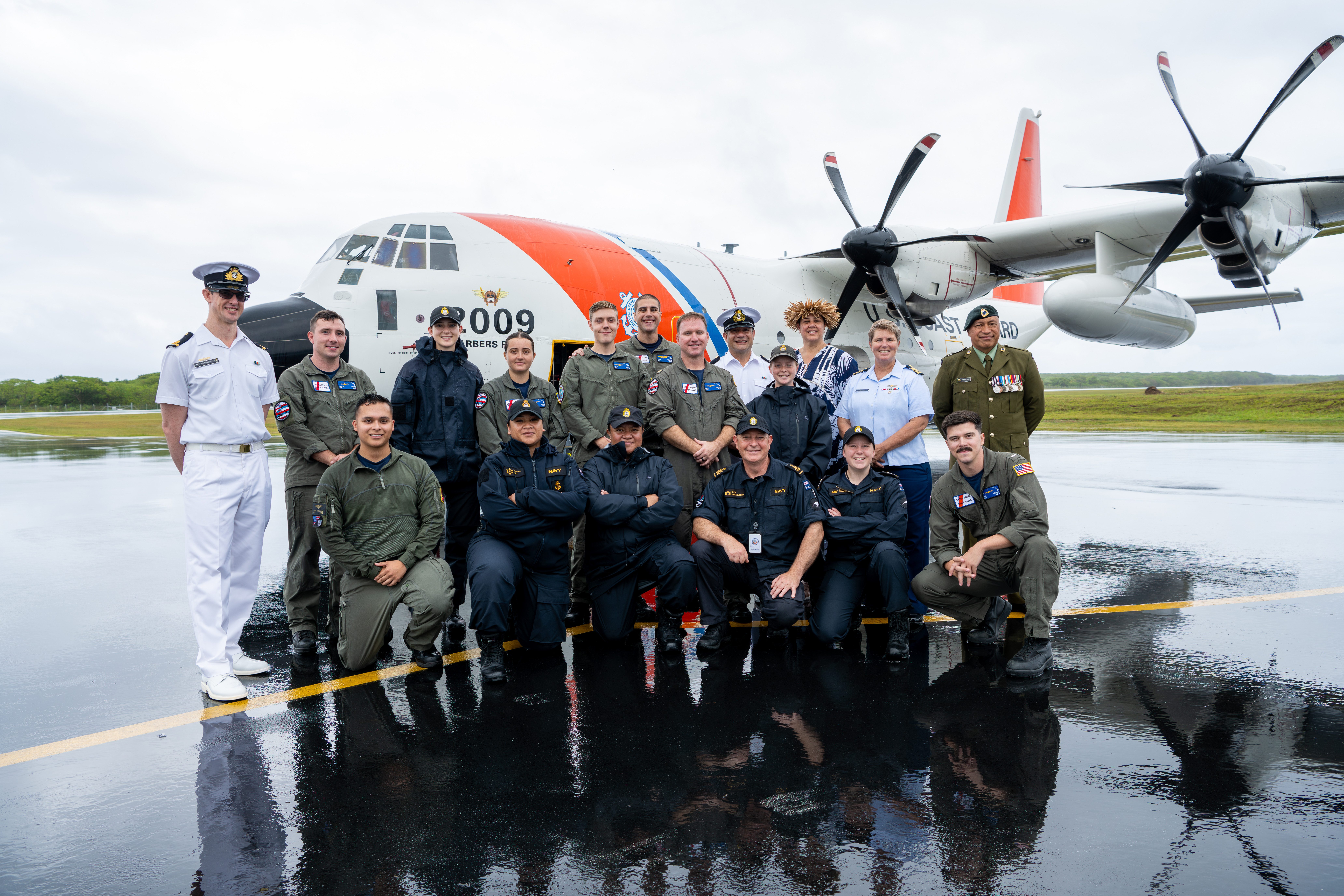
Members of an HC-130J Hercules airplane crew from Coast Guard Air Station Barbers Point and Coast Guard Fourteenth District staff pose for a photo with members of the Royal New Zealand Navy at Hanan Niue International Airport in Alofi, Niue, Oct. 19, 2024. The U.S., New Zealand, Australia, the Cook Islands, Fiji, France and Japan were among the countries represented at Niue’s 50th Constitution Day celebration. (U.S. Coast Guard photo, courtesy U.S. Embassy New Zealand)

Below is a news release from USINDOPACOM. I was a little surprised this was not on the Coast Guard News website, but maybe it will show up after the long weekend.

The country in whose waters this operation took place, Niue, is an independent nation in free association with New Zealand.

The population was reported as 1681 in 2022. Niue is considered part of the Realm of New Zealand. They have no armed forces of their own, but their people have New Zealand citizenship and have served in the New Zealand armed forces.

I was not able to find the size of Niue’s exclusive economic zone, but it should be close to the area enclosed by a circle with a radius of 200 nautical miles, or 125,664 sq nautical miles (431,015.5 sq. km) or about 1600 times the land area. Wikipedia notes,

“In 2022, Niue declared its entire EEZ to be a marine park, though enforcement of that declaration would be a challenge. The entire Fisheries Division was reported to have only five staff and there were no locally based patrol boats. Enforcement would depend on stronger support from the New Zealand Defence Forces, though its ability to maintain a continuous presence was limited.”

Since some fish are migratory, protecting their fish from illegal, unregulated, and unreported (IUU) fishing, also protects our fish so we have an interest.

Thanks to Paul for bringing this to my attention.


Nov. 9, 2024

U.S. Coast Guard wraps up support for Operation Kurukuru 2024, joins Niue in celebrating 50th Constitution Day

By Chief Warrant Officer Sara Muir, U.S. Coast Guard Forces Micronesia / Sector Guam

The U.S. Coast Guard recently concluded its support for the Pacific Islands Forum (PIF) Forum Fisheries Agency’s (FFA) Operation Kurukuru, a vital annual operation led by Pacific Island countries across the region’s vast maritime territory from Oct. 21 to Nov. 1, 2024.

This coordinated effort, conducted over two weeks, covered approximately 23.3 million square kilometers, reinforcing regional resilience and promoting sustainable fisheries management across the Pacific. The Coast Guard’s support underscores the United States’ enduring commitment to its Pacific partners, who rely on these rich marine resources for economic stability and food security.

“Our role in Operation Kurukuru is supporting our Pacific neighbors in protecting what matters most to their communities,” said Capt. Jennifer Conklin, lead for Operation Blue Pacific. “From coordinating patrols to participating in Niue’s 50th Constitution Day celebration, the Coast Guard is here to lend our expertise and resources wherever we can make a positive impact. It’s also a chance to celebrate each Pacific Island country’s unique culture and proud sovereignty. By working together, we strengthen regional bonds and show our commitment to supporting a Pacific that thrives on its own terms.”

Throughout the operation, the USCGC Frederick Hatch (WPC 1143) crew from Guam and an HC-130 Hercules aircrew from Air Station Barbers Point, Hawai’i, worked alongside Pacific Island countries’ personnel, strengthening capabilities through patrols, data sharing, and shiprider operations. In Palau’s exclusive economic zone (EEZ) and despite heavy weather, Frederick Hatch conducted a bilateral patrol with a Palau Marine Law Officer aboard under the Palau-U.S. bilateral agreement, building on previous efforts to enhance enforcement and address local maritime challenges and discussing plans for future joint steaming with Palau’s patrol boat crew PSS H.I. Remeliik II. The team also completed inspections of two fishing vessels on the high seas under the Western and Central Pacific Fisheries Council (WCPFC) authority, identifying potential violations and gathering critical data that enables targeted enforcement of sustainable fishing practices.

“Working alongside Palau and our Pacific partners, we build skills together, ensuring a secure and sustainable future,” said Lt. Niki Kirchner-Hope, commanding officer of USCGC Frederick Hatch, who helped lead coordination efforts in Palau. “When we team up with Palauan shipriders, it’s not just about enforcement—it’s about trust, shared responsibility, and protecting the ocean for everyone.”

The U.S. Coast Guard’s HC-130 aircrew conducted extensive aerial surveillance throughout the high seas pockets off the Federated States of Micronesia, key fishing zones. It delivered valuable data to help guide surface assets across the region. The aircrew logged over 45 flight hours and flew more than 11,400 nautical miles, monitoring for illegal fishing activities while also standing by to assist with search and rescue (SAR) operations when needed.

“The HC-130 is truly a workhorse for our missions in the Pacific,” said Conklin. “With its incredible range and versatility, it allows us to cover immense distances, monitor vast areas, and respond quickly to emerging needs, whether that’s surveillance or search and rescue. It’s the ideal aircraft for supporting our partners in this part of the world, where a single search or patrol can span thousands of miles of open ocean.”

This dual role is an example of the U.S. Coast Guard’s unique mission profile in the Pacific, where cooperation and responsiveness are crucial to supporting isolated communities across immense distances.

Both the Hercules and the Frederick Hatch crews were diverted during the operation to support the Chuuk Disaster Control Office’s (DCO) request for assistance in searching for three men reported overboard from a small vessel in Chuuk Lagoon. The crews searched for three days before the DCO suspended efforts.

As part of the operation, the U.S. Coast Guard team joined Niue’s Constitution Day celebrations, marking 50 years of self-governance and deepening diplomatic ties. U.S. Coast Guard representatives met with Niue’s leaders to discuss advancing maritime law enforcement collaboration and future cooperation. The Coast Guard’s Hercules aircrew also hosted a static display for local students, allowing over 100 visitors to learn about the United States’ commitment to Pacific maritime security and environmental protection.

Niue, often called the “Rock of Polynesia,” is a small island country in the South Pacific known for its dramatic limestone cliffs, lush coral reefs, and warm, clear waters. With a population of just over 1,500, Niue is one of the world’s largest coral islands and boasts a rich Polynesian heritage. Despite its remote location, Niue has established itself as a leader in marine conservation, with 40 percent of its EEZ designated as a protected area.

“During Niue’s Constitution Day, our crew had a fantastic time hosting the static display,” added Conklin. “The local students were full of excitement and curiosity—seeing their enthusiasm up close was a special reminder of why we’re here. Moments like these show the importance of the connections we build, not just through our missions but by being part of these communities.”

Participation in the FFA operations is a critical element of the Coast Guard’s Operation Blue Pacific and Operation Rematau initiatives, which aim to strengthen maritime security across Oceania, foster regional partnerships, and counter illegal activities threatening Pacific Island countries’ well-being. By supporting the PIF and working with partners to detect, deter, and disrupt illegal fishing, the U.S. Coast Guard helps ensure Pacific Island communities can continue to benefit from the ocean’s resources. The efforts conducted at sea with partners from the Freely Associated States also build on relationships strengthened under Operation Irensia in Guam in June, which brought together maritime personnel from the Republic of Palau, the Federated States of Micronesia, the Republic of the Marshall Islands, the Royal Australian Navy and Australian Defence Force Pacific Maritime Security Program.

“As the Coast Guard, we have a unique role here, helping build resilience against maritime threats while respecting the lead of our Pacific Island partners,” said Conklin. “By working together, we’re making the region safer, stronger, more secure and more prosperous.”

-USCG-

About Operation Kurukuru
Conducted in the combined area of the 15 participating PIF members’ EEZ and the adjacent high seas pockets, Operation Kurukuru emphasized boarding activities at sea and in port, cooperative surveillance engagements, the utilization of remote sensing data to drive intelligence-led operations, and the use of all available Maritime Domain Awareness (MDA) tools to provide timely and effective MDA information to members. These members include Australia, Cook Islands, Fiji, Federated States of Micronesia, Kiribati, Nauru, Niue, Palau, Papua New Guinea, Nauru, New Zealand, Republic of the Marshall Islands, Solomon Islands, Tuvalu, and Vanuatu. The operation also saw active participation from the Pacific Quadrilateral Defense Coordination Group (Pacific QUADs) countries—Australia, France, New Zealand, and the United States, demonstrating international collaboration in the fight against IUU fishing.

About USCGC Frederick Hatch
The Frederick Hatch is the 43rd 154-foot Sentinel-class fast response cutter named for a surfman and lighthouse keeper who was a two-time Gold Life Saving Medal recipient. They are also the 2023 Hopley Yeaton Award winners for small cutter excellence.

About U.S. Coast Guard Air Station Barbers Point
U.S. Coast Guard Air Station Barbers Point provides critical air support across the Pacific, enhancing maritime safety, security, and environmental protection. Located on the western tip of Oahu, Hawaii, the air station conducts search and rescue, law enforcement, and disaster response missions over vast and remote areas, including the Hawaiian Islands, American Samoa, and the Western Pacific.

About Operation Blue Pacific
Operation Blue Pacific is the U.S. Coast Guard’s strategic effort to support a peaceful, secure, inclusive, and prosperous Pacific region. Focused on partnership, capacity-building, and enhancing maritime governance, the operation emphasizes collaboration with Pacific Island countries to address shared challenges such as illegal fishing, search and rescue, environmental protection, and regional security.

For further details on the U.S. Coast Guard efforts, please contact District 14 Public Affairs at hawaiipacific@uscg.mil.

For further details about FFA or Operation Kurukru, please contact Ernest Ta’asi, FFA Communications Officer, at ernest.ta’asi@ffa.int.
“End of NASSE Operation 2023” –Sea Waves

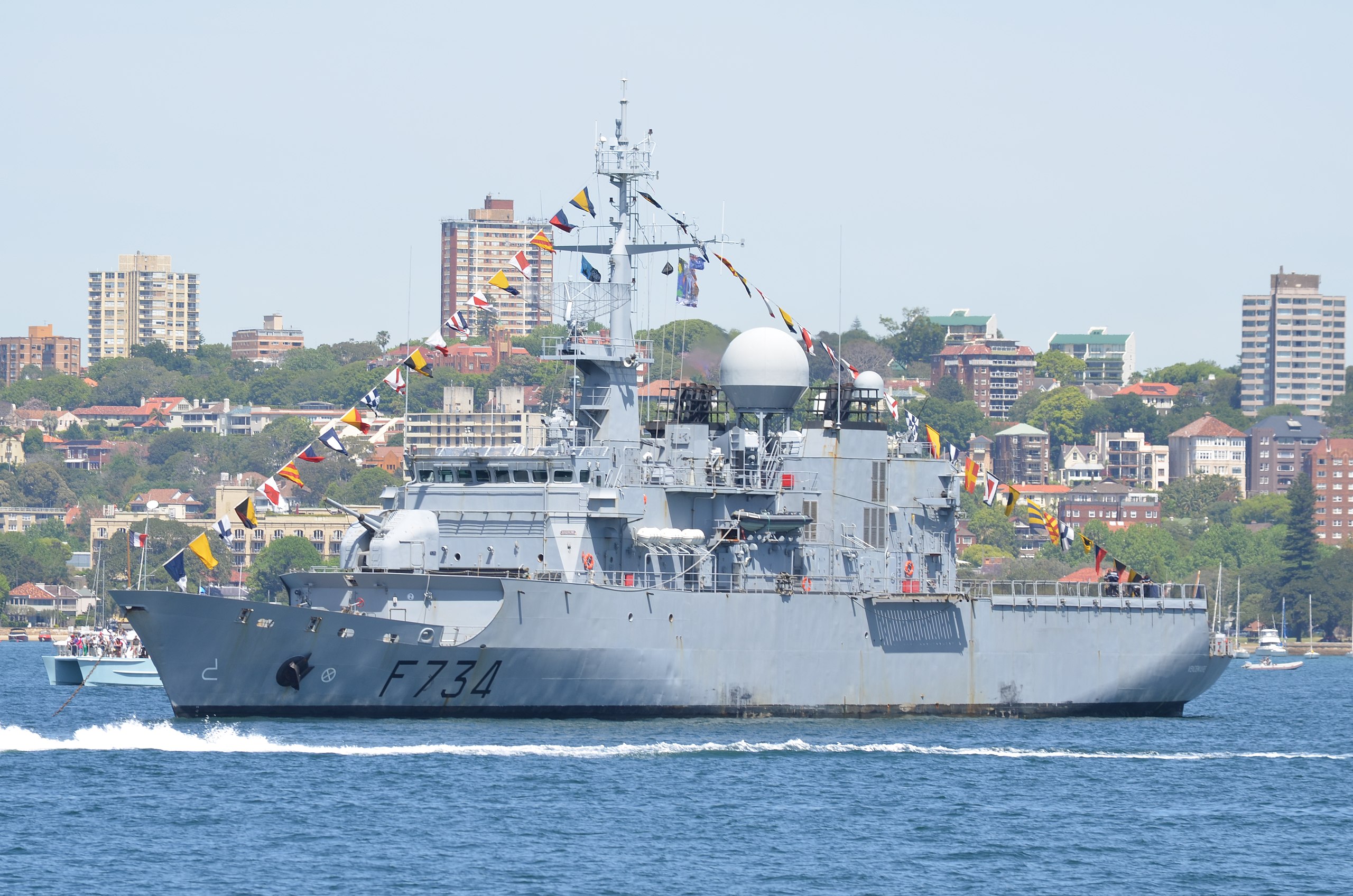
French frigate Vendemiaire, moored in Sydney Harbour. This 20 knot ship of the Floréal class looks a lot like a coast guard cutter. Photo by Saberwyn

Sea Waves reports the completion of a multi-national Fisheries Management exercise involving the US, Australia, New Zealand, France, and Fiji, from 20 June to 15 August.

The US Coast Guard deployed a C-130 to participate in the exercise. US vessels were involved but they were not identified. I am a bit surprised I have seen nothing from the USCG on this exercise.

The Sea Waves report appears to be a French news release. There is a New Zealand Defense Force view of the exercise here.

More on the developing relationship between Australia and France here. including an explanation of the “Pacific quadrilateral defense coordinating group* (PQUAD),” e.g., Australia, France, New Zealand, and the US, referred to in the post, as opposed to the “Quad,” e.g., Australia, India, Japan, and the US.

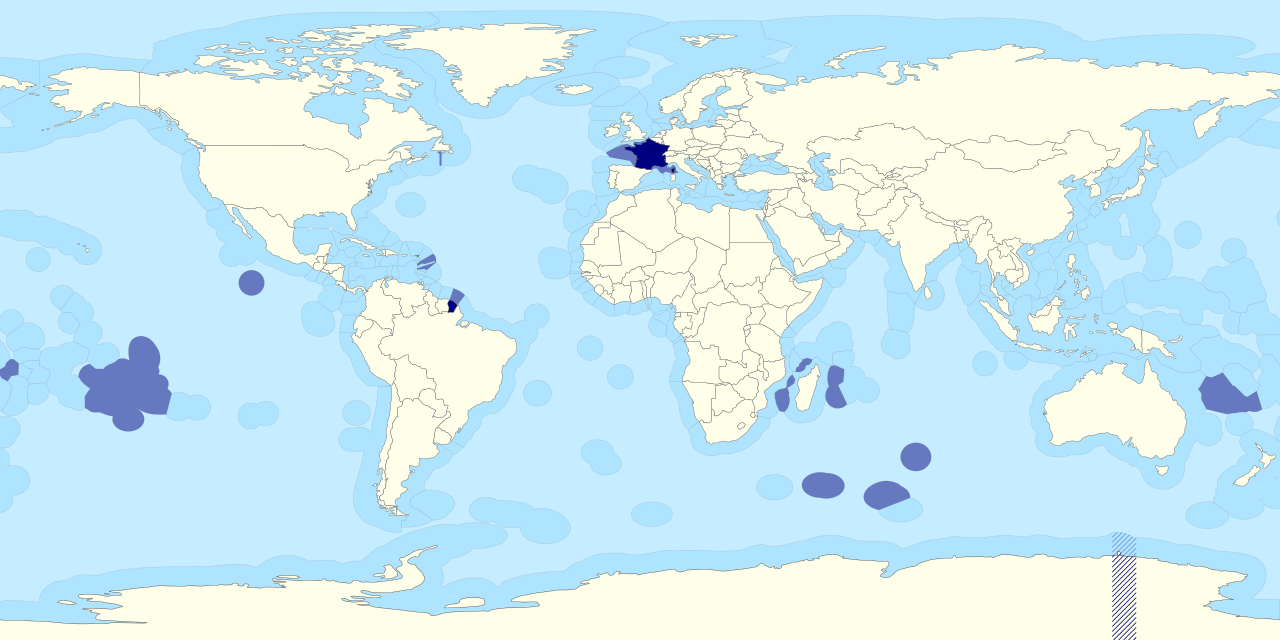
The French don’t normally have a lot of military assets in the Pacific. Much of what they have looks like coast guard, but they have the largest EEZ in the world and great strategic geography.

French Exclusive Economic Zone. Photo credit: B1mbo via Wikipedia.

This exercise is another step along the way to what appears to be inevitable international fisheries management and enforcement.

“The Pacific Islands” –Congressional Research Service (CRS) Report

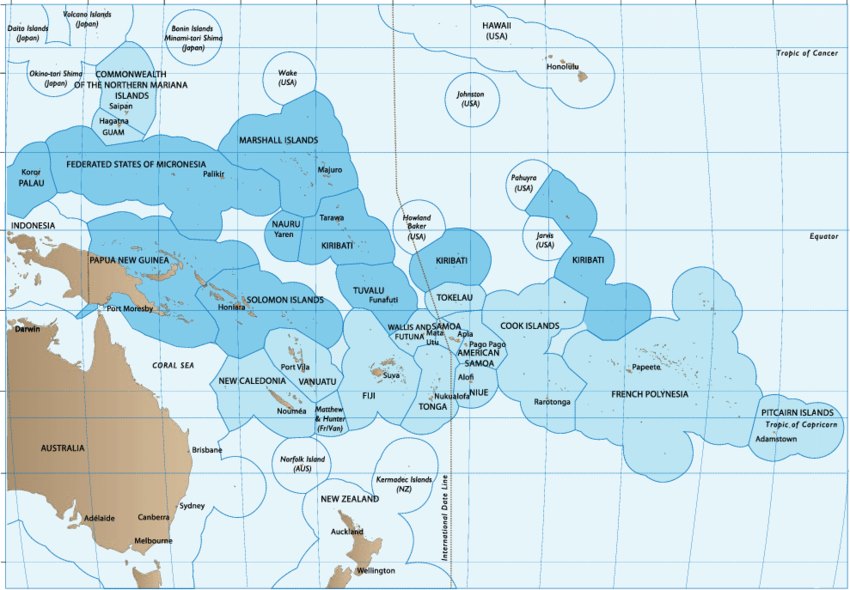
Estimated exclusive economic zones (EEZs) of Pacific Island countries and territories (PICTs). The EEZs of countries that are the Parties to the Nauru Agreement are shown in darker blue. Note that not all EEZs of PICTs have been officially delineated under the United Nations Convention on the Law of the Sea. Source: Patrick Lehodey

The Congressional Research Service (CRS) has published a two page “IN FOCUS” brief on “The Pacific Islands” of Micronesia, Melanesia, and Polynesia. Like all my links to CRS reports, this link will always take you to the latest version. It has already been updated at least once, 17 August, 2022.

Given the increased Coast Guard activity in the region, the report may provide useful background. The topics discussed are:

  • Overview
  • Geopolitical Context
  • The United States and the Region
  • The Freely Associated States
  • International Assistance
  • China’s Influence
  • Security Challenges
  • Self Determination

Indo-Pacific Strategy of the United States

U.S. Coast Guard Cutter Munro and Japan Coast Guard Patrol Vessel Large Aso, transit together in formation during a maritime engagement in the East China Sea Aug. 25, 2021. U.S. Coast Guard members aboard the Munro deployed to the Western Pacific Ocean to strengthen alliances and partnerships and improve maritime governance and security in the region. (Photo courtesy of Japan Coast Guard)

The Whitehouse has issued a new Indo-Pacific Strategy, and it specifically mentions the US Coast Guard.

The document calls out China for its aggressive behavior,

This intensifying American focus is due in part to the fact that the Indo-Pacific faces mounting challenges, particularly from the PRC. The PRC is combining its economic, diplomatic, military, and technological might as it pursues a sphere of influence in the Indo-Pacific and seeks to become the world’s most influential power. The PRC’s coercion and aggression spans the globe, but it is most acute in the Indo-Pacific. From the economic coercion of Australia to the conflict along the Line of Actual Control with India to the growing pressure on Taiwan and bullying of neighbors in the East and South China Seas, our allies and partners in the region bear much of the cost of the PRC’s harmful behavior. In the process, the PRC is also undermining human rights and international law, including freedom of navigation, as well as other principles that have brought stability and prosperity to the Indo-Pacific.

It recognizes the value and values of our allies and partners,

For centuries, the United States and much of the world have viewed Asia too narrowly—as an arena of geopolitical competition. Today, Indo-Pacific nations are helping to define the very nature of the international order, and U.S. allies and partners around the world have a stake in its outcomes. Our approach, therefore, draws from and aligns with those of our closest friends. Like Japan, we believe that a successful Indo-Pacific vision must advance freedom and openness and offer “autonomy and options.” We support a strong India as a partner in this positive regional vision. Like Australia, we seek to maintain stability and reject coercive exercises of power. Like the ROK, we aim to promote regional security through capacity-building. Like ASEAN, we see Southeast Asia as central to the regional architecture. Like New Zealand and the United Kingdom, we seek to build resilience in the regional rules-based order. Like France, we recognize the strategic value of an increasing regional role for the European Union (EU). Much like the approach the EU has announced in its Strategy for Cooperation in the Indo-Pacific, American strategy will be principled, long-term, and anchored in democratic resilience.

It calls for action in five areas:

  1. ADVANCE A FREE AND OPEN INDO-PACIFIC
  2. BUILD CONNECTIONS WITHIN AND BEYOND THE REGION
  3. DRIVE REGIONAL PROSPERITY
  4. BOLSTER INDO-PACIFIC SECURITY
  5. BUILD REGIONAL RESILIENCE TO TRANSNATIONAL THREATS

There is mention of the Coast Guard is in the section “BOLSTER INDO-PACIFIC SECURITY” on page 13.

We will also innovate to meet civilian security challenges, expanding U.S. Coast Guard presence, training, and advising to bolster our partners’ capabilities. We will cooperate to address and prevent terrorism and violent extremism, including by identifying and monitoring foreign fighters traveling to the region, formulating options to mitigate online radicalization, and encouraging counterterrorism cooperation within the Indo-Pacific. And we will strengthen collective regional capabilities to prepare for and respond to environmental and natural disasters; natural, accidental, or deliberate biological threats; and the trafficking of weapons, drugs, and people. We will improve cybersecurity in the region, including the ability of our partners to protect against, recover from, and respond to cybersecurity incidents.

Coast Guard roles presumably extend beyond interdiction and fisheries to include assistance with intelligence, port security, and maritime industry cybersecurity.

The strategy refers to ten lines of effort that are to be pursued in the next 12 to 24 months. The first is “Drive New Resources to the Indo-Pacific” (p.15),

Building shared capacity requires the United States to make new regional investments. We will open new embassies and consulates, particularly in Southeast Asia and the Pacific Islands, and increase our strength in existing ones, intensifying our climate, health, security, and development work. We will expand U.S. Coast Guard presence and cooperation in Southeast and South Asia and the Pacific Islands, with a focus on advising, training, deployment, and capacity-building. We will refocus security assistance on the Indo-Pacific, including to build maritime capacity and maritime-domain awareness.

Sounds like this may include Coast Guard attachés attached to diplomatic staffs and possibly some new basing.

There is a second line of effort that will undoubtably involve the Coast Guard, “Partner to Build Resilience in the Pacific Islands” (p.17),

The United States will work with partners to establish a multilateral strategic grouping that supports Pacific Island countries as they build their capacity and resilience as secure, independent actors. Together, we will build climate resilience through the Pacific Region Infrastructure Facility; coordinate to meet the Pacific’s infrastructure gaps, especially on information and communications technology; facilitate transportation; and cooperate to improve maritime security to safeguard fisheries, build maritime-domain awareness, and improve training and advising. We will also prioritize finalization of the Compact of Free Association agreements with the Freely Associated States.

A Maritime Executive post, New U.S. Indo-Pacific Strategy Singles Out China’s “Coercion”, notes,

In the security arena, the new strategy reiterates that the United States has maintained “a strong and consistent defence presence necessary to support regional peace, security, stability, and prosperity”, pointing to the South China Sea and the East China Sea as a priority. However, it is interesting that while the document underscores the importance of freedom of navigation in the Indo-Pacific, not a single paragraph mentions the US Freedom of Navigation Operations Program (FONOPS) carried out by the US Navy, which has stirred controversy. Conversely, the strategy emphasises the importance of the Coast Guard to lead maritime security cooperation in the region, in “advising, training, deployment, and capacity-building … including to build maritime capacity and maritime-domain awareness”. Indeed, in 2021, the US Coast Guard announced a joint maritime training centre with the Indonesian Coast Guard in Batam.

The emphasis on coast guard cooperation can be seen as a positive gesture since it will be less provocative and sensitive compared to a military presence in the region. And more importantly, coast guard operations in Southeast Asia are very much required to tackle maritime security threats such as illegal fishing.

Thanks to Paul for bringing this to my attention. 

“USCG’s Schultz on Halifax Forum, Budget, Pacific, Arctic” –Defense and Aerospace Report

Above is a Defense and Aerospace report interview with the Commandant, Adm. Karl Schultz. It is worth a look.

There is a lot here about what is going on in the Western Pacific and our response to China’s changing behavior. There is a lot of discussion about the Philippine Coast Guard which is apparently growing at a tremendous rate. There is also some discussion about other coast guards in South East Asia and the USCG’s place with “The Quad” (US, Australia, New Zealand, and France).

Thanks to Lee for bringing this to my attention. 

More Coast Guard in the Western Pacific, “U.S. Coast Guard Mulling More Operations in Oceania” –USNI

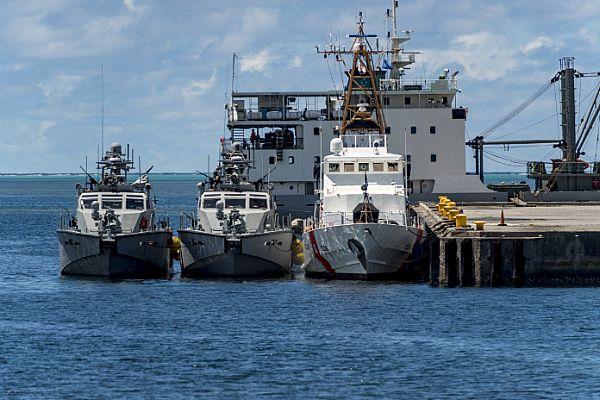
COLONIA, Yap (July 4, 2019) The U.S. Coast Guard Island-class patrol boat USCGC Kiska and Mark VI patrol boats assigned to Coastal Riverine Squadron (CRS) 2, Coastal Riverine Group 1, Detachment Guam, moored in the Micronesia port of Yap. CRG 1, Det. Guam’s visit to Yap, and engagement with the People of Federated States of Micronesia underscores the U.S. Navy’s commitment to partners in the region. The Mark VI patrol boat is an integral part of the expeditionary forces support to 7th Fleet, capability of supporting myriad of missions throughout the Indo-Pacific. (U.S. Navy photo by Mass Communication Specialist 2nd Class Jasen Moreno-Garcia/Released)

The US Naval Institute News Service reports comments by the Commandant”

“KUALA LUMPUR — The U.S. Coast Guard is looking at longer deployments to the Western Pacific region following the successful execution of the Operation Aiga deployment to Samoa and American Samoa, commandant Adm. Karl Schultz told reporters on Monday.

This is in reference to an operations discussed in a previous post. Earlier USCGC Oliver F. Berry (WPC-1124) also supported by the USCGC Walnut (WLB-205) had completed a similar mission to the Republic of the Marshall Islands

The Commandant apparently sees this as a prototype for future operations.

“We are looking at taking that proof of concept 30-day operation and pushing that probably into a little longer duration in the future,” he said.

This is only the latest statement from Coast Guard officers at the highest levels indicating that the Coast Guard’s intent to put more emphasis on operations in the Western Pacific: the Commandant: July 23, 2019; Commander, Pacific Area: August 17, 2019.

Changes are coming that will make maintaining that presence a bit easier. Three Webber class Fast Response Cutters will replace two 110 foot WPBs in Guam, that will give CCGD14 six Webber class WPCs, three homeported in Honolulu in addition to the three in Guam. Two National Security Cutters were recently commissioned in Oahu. The switch to longer ranged J model C-130s equipped with Minotaur will make providing air reconnaissance easier and more effective.

I do have some concerns about the ability to exploit these additional Webber class. The long range WPC and WPB operations have been supported by 225 foot buoy tenders, but there are only two in the Fourteenth District, one each in Guam and Hawaii. They may have already reached their limit in the amount of support they can provide. Other large ships might be able to take on this role and aviation asset in support are certainly desirable.  A second WLB in Guam would be very useful. They are almost ideal for disaster response to small island communities, but there are no new ones being built and all are likely fully committed where they are. Some of these operations have been conducted in cooperation with assets from Australia and New Zealand. France also has interests in the region. They could provide both material support and an air element. An ultimate solution might be Offshore Patrol Cutters (OPC) based in Guam.

In order to continue NSC operations with the 7th Fleet similar to those undertake recently by Bertholf and Stratton, a third NSC in the Fourteenth district would be useful, either the potential NSC#12 or one of the five currently expected to be homeported in Charleston. The need for this, would of course, go away if we had two or three OPCs in Guam.