Sea-Air-Space 2019 Virtual Tour

Like most of you I did not make it to the Navy League’s 2019 Sea-Air-Space Exposition, so I have found some YouTube reports that can at least provide some of the information passed along at the event. The descriptions below each video are from the YouTube description.

Day 1 video coverage at the Sea Air Space 2019 exposition. In this video we cover:
– Boeing MQ-25 Stingray aerial refueling drone with Rear Admiral Corey
– Future USVs and XLUUV/Orca programs with Captain Pete Small
– Austal USA new range of medium and large size USVs
Textron Systems CUSV with surface warfare payload
– ST Engineering range of USVs

Day 2 video coverage at the Sea Air Space 2019 exposition. In this video we cover:
– Raytheon SPY-6 radar
– Raytheon / Kongsberg NSM for USMC
– Northrop Grumman PGK for naval 5 Inch and 155mm guns
– Lockheed Martin Freedom-class lethality and survivability upgrade
– Lockheed Martin FFG(X)
– Navantia / BIW FFG(X)

Day 3 video coverage at the Sea Air Space 2019 exposition. Washington-based naval expert Chris Cavas is our guest speaker for this third and final day at Sea Air Space 2019. Cavas covers the follow topics:
– Bell V-247 Vigilant VTOL tilt-rotor UAV in U.S. Navy configuration
– Austal USA USV concepts
– Austal USA FFG(X) Frigate
– Fincantieri FFG(X) Frigate
– GD Bath Iron Works FFG(X) Frigate
– Lockheed Martin Type 26 CSC
– Lockheed Martin hypervelocity missile
– Mic drop

“Coast Guard Polar Security Cutter (Polar Icebreaker) Program: Background and Issues for Congress, Updated May 9, 2019”

The Congressional Research Service has updated their report on the Polar Security Cutter Program. This is the first revision since the award of the contract, so there are significant changes, including a section on the selected design found on pages 5-9.

Vard explores concepts for Canadian Coast Guard future fleet

MarineLog reports,

“Vancouver, B.C., based Vard Marine, Inc. reports that the Canadian Coast Guard has awarded it an engineering services contract to explore concepts for the Coast Guard’s future fleet renewal program.

“…The work is intended to explore requirements for multiple future fleet ship types and could stretch over several years.

Vard was of course a designer of the Offshore Patrol Cutter.

Waterways Commerce Cutter Update

USCGC Smilax (WLIC-315), commissioned 1944

Here is a link to a power point style update on the Waterways Commerce Cutter apparently given at the Navy League’s Sea-Air-Space Exposition, 7 May, 2019.

They are hoping for initial operational capability for the new vessels in FY2024 and full operational capability (which I interpret as all the new vessels in commission FY2030.

Thanks to Lee for bring this to my attention. 

“Coast Guard Hopes to Have 3 Polar Security Cutters Fielded by 2028” –USNI

The US Naval Institute reported on the Commandant’s remarks from the service chiefs panel at the Navy League’s annual Sea Air Space conference regarding the Polar Security Cutter program.

“right now my sense is we enjoy support from the administration, we enjoy bipartisan, bicameral support” in Congress, he said

The first ship is supposed to deliver to the Coast Guard in 2023..The Commandant did not speculate on the future funding profile, saying only that he expected three PSCs operational by 2028. USNI noted,

…buying the second and third ships in FY 2021 and 2023, respectively – would allow for all three to be in the fleet by 2027 or 2028.

Chief of Naval Operations Adm. John Richardson also remarked on Freedom of Navigation Operations in the Arctic and the Navy’s intention to operate in the Arctic.

“VT Halter Marine to Build New Coast Guard Icebreaker” –USNI

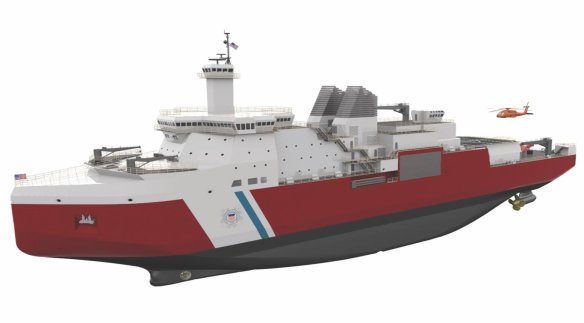
PSCconcept1

An artist’s rendering of VT Halter Marine’s winning bid for the U.S. Coast Guard Polar Security Cutter. VT Halter Marine image.

US Naval Institute News Service reports that the first Polar Security Cutter (Heavy Icebreaker) contract has been awarded to VT Halter, and it is notably cheaper than initial estimates. Cost is actually not a lot more than for a National Security Cutter. The contract includes options for two additional ships, if all options are exercised total contract would be $1.9B.

Carderock Researchers Contribute to Book on Ship Stability

Below is a Navy news release. Just passing it along for those readers who might have an interest in this topic. 

Story Number: NNS190226-15Release Date: 2/26/2019 3:17:00 PM
By Kelley Stirling, Naval Surface Warfare Center, Carderock Division Public Affairs

WEST BETHESDA, Md. (NNS) — To say this book is a collection of research would be an understatement. “Contemporary Ideas on Ship Stability: Risk of Capsizing” is more like a preservation of knowledge covering the last nine years.

Dr. Vadim Belenky, a naval architect in the Simulations and Analysis Branch at Naval Surface Warfare Center, Carderock Division, was the editor in chief for the book, the chapters of which are papers from engineers, naval architects and professors from around the world. Belenky himself co-authored four of the papers, along with 15 other current or former Carderock employees who authored these papers.

Carderock’s Dr. Art Reed was a co-author on the first chapter of the book, “TEMPEST—A New Computationally Efficient Dynamic Stability Prediction Tool.” His co-author was Bill Belknap, a former Carderock employee and now a technical warrant holder at Naval Sea Systems Command (NAVSEA).

The abstract for chapter one says, “TEMPEST is designed to be computationally efficient to support real-time training simulators, as well as high-resolution evaluation of surface-ship, dynamic-stability performance across a wide range of possible environmental conditions. TEMPEST aims to improve the state of the art for real-time computations through the inclusion of nonlinear (body-exact) hydrodynamic perturbation forces and physics-based, viscosity-influenced lift and cross-flow drag forces.”

Reed, the Navy’s senior research scientist and technical consultant for high-speed ship hydrodynamics, said TEMPEST has been very important software in the field of dynamic stability research, and it was a multi-million-dollar investment for the U.S. Navy.

Reed said that having this chapter start the book just showcases the important contribution Carderock has to the world in the realm of fluid mechanics. He said basing stability assessments solely on previous experience doesn’t allow for novel, unconventional design.

“This book provides an avenue by which the international community concerned with the stability of ships can learn of and be informed about the work on ship stability that we here at Carderock have performed,” Reed said.

Belenky said that while the research in the book, much of it experimental in nature, was not published in peer-reviewed journals, it deserved to be preserved in the form of this book, which seeks to highlight contemporary research that results in products like TEMPEST.

Dr. Jack Price, Carderock’s director of research, said having this research in a one-volume piece of referable materials is very helpful to anybody in the field.

“It really is a compilation of the knowledge of the field as it is right now,” Price said.

He said that within the Navy, there’s a tendency to focus on the advanced engineering and engineering integration that Carderock does, without the understanding that there’s a lot of comprehensive research and foundational research done at Carderock that only Carderock can do.

“We are the only Navy entity that has this understanding and they (the Navy) rely upon us, even if they don’t realize they do, to maintain that research capability,” Price said. “Because if we didn’t do it, for the naval applications that we do, there wouldn’t be anybody in the world that could do that for us—anybody we would trust.”

While the book does include research from laboratories and universities worldwide, the Carderock contribution contains the necessary research specific to the Navy as the seaborne branch of the U.S. military.

Reed said the research presented in this book has been and is being used in support of several ship design efforts. The statistical methods are being used to provide quantitative metrics as to the bounds of Carderock’s seakeeping experimental results; the statistical-extrapolation methods are being used to develop operator guidance and safe-operating envelopes for use onboard ship; and the more fundamental techniques for assessing stability are being investigated for use to provide dynamic stability assessments during early stage design.

“It serves as a resource that anyone needing to assess ship stability can use to develop their own methodologies. This includes intact stability; damaged stability; stability in waves; the verification, validation and accreditation of assessment tools; etc.,” Reed said. “This is becoming critical with the International Maritime Organization (IMO) planning to issue its Second Generation Intact Stability guidance in the next year.”

According to Reed, the book serves as a mechanism to showcase the valuable work being done at Carderock to their sponsors, both internal and external, who can then show their superiors the significance of supporting this important work.

“These papers would not have been chosen by the international editorial board if the work did not constitute a valuable contribution to the literature,” Reed said.

The book contains material from two International Ship Stability Workshops and one International Conference on Stability of Shops and Ocean Vehicles: the 2010 workshop at Wageningen, Netherlands; the 2011 workshop in Washington, D.C.; and the 2012 conference in Athens, Greece.

Belenky worked with four other editors to make the selections for the book: Dr. Kostas Spyrou from the National Technical University of Athens in Greece; Dr. Frans van Walree from the Maritime Research Institute Netherlands; Dr. Marcelo Almeida Santos Neves from the Federal University of Rio de Janeiro in Brazil; and Dr. Naoya Umeda from Osaka University in Japan.

“We pick the most important contributions that were not published in journals, and that will make into the book,” Belenky said.

The book has four major parts:

Part A: Mathematical model of ship motions in waves (15 chapters)

Part B: Dynamics of large motions (12 chapters)

Part C: Experimental research (11 chapters)

Part D: Requirements, regulation and operation (17 chapters)

Belenky said that each chapter had two independent reviewers, mostly authors looking at other chapters. The reviewers were able to send the authors their comments, thus giving them an opportunity to make adjustments to their research.

“They could significantly change their paper, or update it since it was happening over the course of a few years. This allowed them to improve the content, make it modern,” Belenky said, adding that this is the point of the book, to accumulate relevant knowledge in ship stability and preserve it.

FY2019 Budget


US Capital West Side, by Martin Falbisoner

With a bit of help from a friend, the actual FY2019 budget documents were located:  “The Joint Explanation” and “The Conference Report.”

I found the Joint Explanation easiest to wade through. The Budget breakdown is found on pages 65 to 69 of the 612 page pdf.

Note in some cases I have rounded to the nearest $0.1M


Our total Coast Guard FY2019 budget is $12,015,921,000. This is $91,803,000 less than last year, but $577,720,000 more than the budget request.

The Operations and Support allocation is $7,808.2M. That is $434.9M more than last year (a 5.6% increase), and $215.1M more than requested.

I have provided information on the PC&I budget below including a complete list of line items that I was unable to provide before.

PROCUREMENT, CONSTRUCTION, AND IMPROVEMENTS (PC&I) $2,248.26M

Vessels and Boats

  • Survey and design:                      5.5M
  • In service vessel sustainment:   63.25M
  • National Security Cutter:              72.6M (Follow up on ships already funded)
  • Offshore Patrol Cutter:                  400M (Second of class + LLTM for third)
  • Fast Response Cutter: 340M (Six Webber class including two for PATFORSWA)
  • Cutter boats                                       5M
  • Polar Security Cutter:                     675M (First of class + LLTM for second)
  • Waterways Commerce Cutter:           5M
  • Polar sustainment:                            15M (Polar Star Service Life Extension)

—-Vessels Subtotal:  $1,581.35M

Aircraft

  • HC-144 Conversion/Sustainment:         17M
  • HC-27J Conversion/Sustainment:         80M
  • HC-1330J Conversion/Sustainment:   105M
  • HH-65 Conversion/Sustainment:           28M
  • MH-60 Conversion/Sustainment:         120M
  • Small Unmanned Aircraft:                        6M

—Aircraft Subtotal:  $356M

Other Acquisition Programs:

  • Other Equipment and System:                                               3.5M
  • Program Oversight and Managemen:                                    20M
  • C4ISR                                                                                    23.3M
  • CG-Logistics Information Management System (CG-LIMS):   9.2M

—Other Acquisitions Programs Subtotal:   $56M

Shore Facilities and Aids to Navigation:

  • Major Construction; Housing; ATON; and Survey and Design: 74.51M
  • Major Acquisition Systems Infrastructure:                                 175.4M
  • Minor Shore                                                                                      5M

—Shore Facilities and Aids to Navigation Subtotal:  $254.91M

The PC&I total, $2,248.26M, was $446.48M less than FY2018, but it was $361.51M above the budget request.

R&D was cut by almost a third. This is probably a place to spend more not less.

Reserve Training disappeared as a separate line item, so I can’t tell what happened there.

Also included in the new budget is $5M for the National Coast Guard Museum

Incidentally, the total amount appropriated for the polar security program includes $359.6M (FY2018 and prior) + $675M (FY2019), or $1,034.6M, of which $20M is for Long Lead Time Material for the second ship, and the remainder is for the first ship and other program-related expenses.

With Operations and Support up more than 5% over 2018 and Procurement Construction &Improvement (PC&I) over $2B for the second year in a row, this is the kind of budget we can live with. It just needs to keep happening.

FY2019 PC&I Appropriations

I have not been able to find a complete FY2019 Coast Guard budget as it was signed into law, but we do have at least a partial list of Procurement, Construction, and Improvement appropriations for ships and aircraft based on two Congressional Research Service reports (Coast Guard Polar Security Cutter (Polar Icebreaker) Program: Background and Issues for Congress” and “Coast Guard Cutter Procurement: Background and Issues for Congress “) and a Homeland Security Today report.

$1,507.6M For Ships (LLTI refers to Long Lead Time Material):

  • $675M   for the first Polar Security Cutter and LLTM for the second
  • $400M   for the second Offshore Patrol Cutter and LLTM for the third
  • $340M   for six Fast Response Cutters
  • $72.6M  for the National Security Cutter program
  • $15M     for life extension work on Polar Star
  • $5M       for initial work on procuring an additional Great Lakes Icebreaker

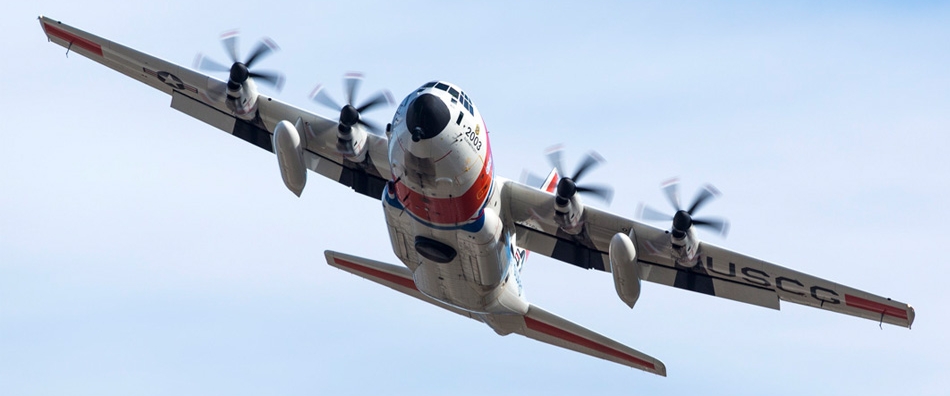
Coast Guard C-130J

$208M For Aircraft:

  • $105 for the HC-130J program (I think that is one aircraft)
  • $95M for MH-60T recapitalization (reworking existing aircraft I believe)
  • $8M for upgrades to the MH-65s

That is $1,715M for the items above. This, hopefully, is not all. I don’t have a figure for the Waterways Commerce Cutter (a small figure at this point), no information on unmanned systems, and there should also be money to address the backlog of shoreside improvements, but this does seem to show a recognition of the real needs of the Coast Guard for recapitalization. Looks like the $2+B annually for PC&I the Coast Guard has been saying they need is within reach.


First Polar Security Cutter Fully Funded

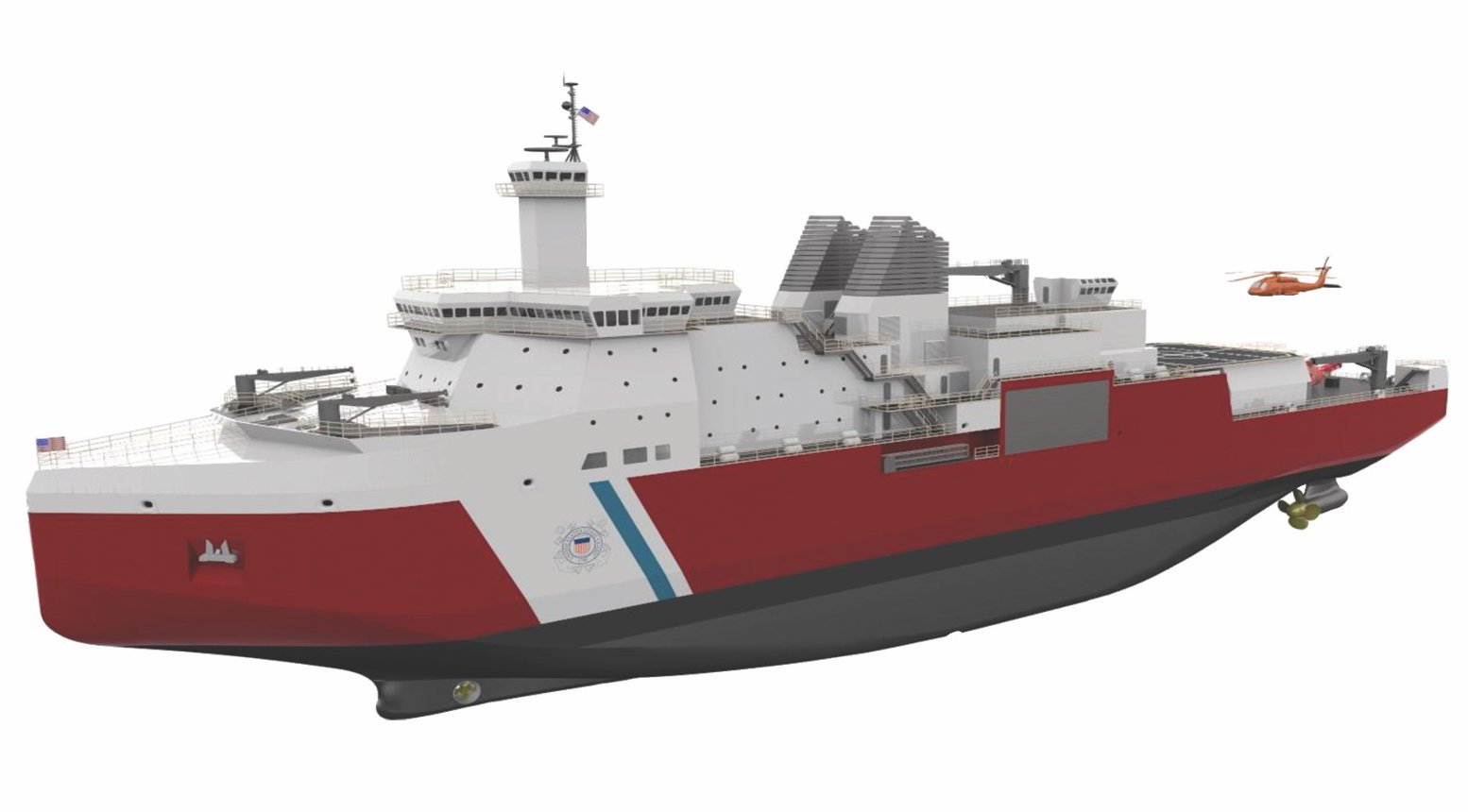
Polar Security Cutter Concept by Fincantieri Marinette Marine

If you have been wondering if the $655M allocated for the first Polar Security Cutter was enough, let me set your mind at ease. The original FY2019 request was for $750M and only $655M was included in the budget, so it appears we are $95M short. There is an explanation.

Incredibly Mr Ronald O’Rourke has already updated “Coast Guard Polar Security Cutter (Polar Icebreaker) Program: Background and Issues for Congress” (as well as “Coast Guard Cutter Procurement: Background and Issues for Congress “) to reflect passage of the FY2019 budget.

A footnote on page 19 of the report on the Polar Security Cutter (PSC) explains.

“47 The Coast Guard’s proposed FY2019 budget was submitted before Congress finalized action on the Coast Guard’s FY2018 budget. In its action on the FY2018 budget, Congress approved the Coast Guard’s request for $19 million in Coast Guard acquisition funding for the program, and provided $150 million in unrequested acquisition funding for the program in the Navy’s shipbuilding account. If the FY2019 request for $750 million is intended solely to complete the funding for the first ship, and if this figure does not assume that more than $19 million would be provided for the program in FY2018, then approving the $750 million request would provide $150 million more than needed to fully fund the first ship. “

There is also  $15M for Service Life Extension work on the Polar Star (see Table 3 on page 35.

So, if I understand this correctly, we have $824M for the completion of design work and the construction of the first Polar Security Cutter. Additionally we have $20M for long lead items for the second PSC. If as reported earlier, the first three ships should cost approximately $2.1B, then we have a little over 39% of the funding for the three ship buy.

I would really like to see us do a block buy. Congress has authorized it, and the request for proposal asked for Block Buy quotes, so it should not be impossible.