The U. S. Coast Guard in the South China Sea: Strategy or Folly?–CIMSEC

CIMSEC has a brief discussion of the possibility of deploying a Coast Guard presence in the South Chia Sea.

First let me say, I don’t think using cutters for Freedom of Navigation demonstrations would be an improvement. Our warships have every right to be there. Substituting Coast Guard Cutters to be less offensive to the Chinese might be seen as a sign of  weakened resolve, and it would be a whole lot easier for them to make a move against a cutter than a DDG.

The presumption in these discussions seems to be, that if we do put a presence in the South China Sea, it will be a large cutter. There is another alternative. If we want a Coast Guard presence in the area, perhaps we should start small. We could move three 110 foot WPBs to a port in the South China Sea. When enough Webber class become available, we could replace the WPBs with the newer WPCs and donate the 110s to a navy or coast guard in the area. (It would not hurt if some of the members of the WPB crews were of Asian descent.)

They could do the same kind of capacity building our cutters in South West Asia do. They could help with local fisheries enforcement, particularly the increasingly aggressive members of Chinese maritime militia units. If our cutters occasionally provide force protection or operate with a DDG conducting a Freedom of Navigation Exercise, that’s good too.


Interview with Commandant

https://1yxsm73j7aop3quc9y5ifaw3-wpengine.netdna-ssl.com/wp-content/uploads/2017/10/102017-dhs-15.mp3?_=1

Federal News Radio has an interview with the Commandant. There is a short written summary here or you can listen to it on their page or above. Some interesting developments with regard to drug interdiction in the Eastern Pacific. Sea story about actual employment of a sea based Unmanned Air System.

Interestingly he again refers to Russia arming Icebreakers so I think perhaps we may see some movement to arm or at least make provision for arming our new icebreakers.

Libyan Coast Guard Sinks Tanker

We have reports from NavalToday and Maritime-Executive that the Libyan Coast Guard, using a 30mm auto-cannon, opened fire on and sank a Russian owned, Comoros-flagged oil products tanker, the GOEAST, believed to have been smuggling Libyan oil.

It is not the first time the Libyan Coast Guard has used deadly force, and apparently not the first time the GOEAST’s parent company has been accused of smuggling.

I found this particularly interesting because it seemed to contradict my long held belief that the Coast Guard is unlikely to be able to forcibly stop, much less sink, a medium to large merchant ship in a timely manner with gun fire if it were employed in a terrorist attack. There are many questions about the sinking for which I have not seen answers. What might this incident say about our own ability to stop a terrorist attack using a merchant ship?

The GOEAST was a small and elderly tanker. Admittedly a terrorist organization is more likely to have control of a ship like this, than a larger and more modern vessel. It displaced 9700 tons and was built forty years ago in 1977. It would have been considered relatively large in WWII, but not now. We don’t know its state of maintenance, but it was probably poor. We don’t know how it was loaded, incomplete or asymmetrical loading, and the resulting free surface effect may have contributed to its loss. We don’t know how long it took to sink or how long it could steer and make way. Even after being damaged, could it have completed a terrorist mission before sinking?

The actions of the Libyan Coast Guard were probably an excessive use of force. We have no information about what happened to the crew of the amount of pollution that resulted. Whatever the justification for the attack on the GOEAST, it is good to see a degree of success in using a relatively small gun to stop a sink a ship, but there are reasons why we may not be able to take much comfort in this example.

The Libyan Coast Guard vessel appears to have been a former Italian Bigliani II  class patrol boat equipped with a twin Oto Melara-Mauser 30mm gun.

The Bigliani IIs are not big ships. They are 84.7 tons full load and 27 meters (88.6 feet) in length, 6.95 m (22.8 feet) of beam, with a draft of 1.26 m (4.13 feet). That is actually  slightly smaller than our 91 ton full load 87 foot Marine Protector class WPBs. This illustrates that even our small patrol boats could carry much heavier weapons.

The 30mm gun, visible in the video has a relatively high rate of fire, but that is largely irrelevant for our purposes (unless we are being shot at) since even our 180 round per minute chain guns can exhaust their ammunition in only a few minutes.

The 30mm gun fires common NATO rounds which include the armor piercing fin stabilized discarding sabot (APFSDS-T) round that A-10 Warhogs use against tanks. Compared to our 25mm gun’s corresponding APDS-T round, the 30mm has a higher muzzle velocity and weighs 71.6% more. This long rod tungsten penetrator is more likely to be able to disable a ship than even our 57mm rounds, which may penetrate the hull but will likely explode before reaching the engine.

The tanker was not returning fire, which could have kept the patrol boat at a distance, and radially reduced the accuracy of fire.

I still have doubts about the ability of a gun to reliably stop a medium to large merchant ship with a determined crew. There are other alternatives, but an upgrade to a 30mm gun on our patrol boats and larger vessels would certainly increase our chances of success.

DARPA Tests TALONS from Webber WPC sized ship

NavyRecognition reports DARPA conducted a three day demonstration of the “Towed Airborne Lift of Naval Systems” (TALONS) aboard the Cyclone class patrol coastal USS Zephyr (PC-8).

The Cyclone class is very familiar to the Coast Guard, three of them including Zephyr, having been loaned to the Coast Guard. Ten of the class are now homeported in Bahrain alongside six USCG 110s. The remaining three are stationed in Mayport and regularly work with the Coast Guard performing drug interdiction. As built they were slightly smaller than the Webber class, but most, including Zephyr, were lengthened and are now slightly larger than the Webbers (387 tons vs 353)

We have talked about TALONS previously here and here.

Reportedly they are working toward a fully automated launch and recovery system that would make the system even easier to use. The installation on Zephyr looked rather neat.

Building a 21st Century Infrastructure for America: Coast Guard Sea, Land, and Air Capabilities–House Subcommittee Hearing


The hearing recorded above was held 7 June. The original video was found here. That page also provides the chairman’s opening statement and links to the witnesses’ written statements that are also provided immediately below. The video does not actually start until time 4:30.

Below, you will find my outline of the highlights.

Witness List:

  • Vice Admiral Charles W. Ray, Deputy Commandant for Operations, United States Coast Guard | Written Testimony
  • Vice Admiral Sandra L. Stosz, Deputy Commandant for Mission Support, United States Coast Guard | Written Testimony Ms. Marie A. Mak, Director, Acquisition Sourcing & Management Team, Government Accountability Office | Written Testimony
  • Mr. John Acton, Chairman, Coast Guard Affairs Committee, Navy League of the United States | Written Testimony

The GAO’s written testimony is particularly comprehensive. They report that new assets (NSCs and FRCs) are not meeting planned availability. There have been an unexpected number of engine replacements. In the case of the National Security cutters it appears to me the down time was predictable, a normal part of introducing new ships and availability should return to planned levels as more ships join the fleet. The known defect, that when operating in waters 74 degrees or warmer, the NSCs cannot maintain maximum speed has apparently not been corrected. Max speed must be reduced two to four knots to allow adequate cooling.

Planning Documents:  The Congressional Representatives repeatedly complained that they were not getting an unsensored statement of the Coast Guard’s needs. It appears the Coast Guard is not being allowed provide this information. Rather it appears the GAO is telling the Coast Guard how much they will be getting and told to submit a budget that fits the predetermined amounts. Reportedly the Unfunded priorities list will be provided by the end of June. They also asked for the 5 year and 20 year plan (1h04:30). Coast Guard representatives were repeatedly told the Coast Guard does not say what they really need, that information provided by the Coast Guard is inadequate for the sub-committee to make decisions (1h48m).

It appears that the GAO continues to ask the Coast Guard to plan procurements based on historically low AC&I appropriations that were adequate for a time because of the sporadic character of Coast Guard ship building. They acknowledge that the current budget is not realistic. (43:45)

The Coast Guard is now consistent in requesting $2B in the AC&I annually and a 5% annual increase in its operating budget and that we need 5,000 additional active duty billets and 1,100 addtional reservists. There was a statement from one of the Representatives to the effect, We need you to fight for yourselves (1h50:30). The representatives were informed that the 5 year, 20 year plans and unfunded will be delivered together (1:56)

My opinion: we need a regularly revised Fleet Mix Study. That in turn should feed directly into a 30 year ship and aircraft procurement plan

Webber Class WPCs: The Coast Guard is reportedly pushing WPCs operations down as far as the coast of South America. (50:00) This confirms my earlier speculation that these ships would be operated in what had been WMEC roles. Six cutters for CENTCOM The representative confirmed that they had approved procurement of six Webber class requested by CENTCOM. Apparently their approval was in the form of the Coast Guard reauthorization bill which has still not been made law. Adm. Ray stated that these would be in addition to the 58 currently planned (9:30) and it is not clear how or when they would be funded. Adm Stosz indicated it was not certain six Webber class would be the Coast Guard’s choice in how to fill this requirement and the question required more study. (1h11)(1h41m).

Shore Facilities: Reportedly there is a $1.6B shore construction backlog. $700M shore facilities maintenance backlog. Some infrastructure improvements that directly support new operational platforms.are being accomplished under the platform programs (55:00) The representatives asked, why we have asked for only $10M if the total shore facilities backlog is $2.3B?(1h35)

Icebreakers: The possibility of leasing the commercial icebreaker Aiviq is still being considered. (1h27) The owners have offered a plan for Ice trials and the Coast Guard has said it would be interested in observing. (1h29:50)

Great Lakes Icebreaker: Rep. Lewis brought up icebreaker for Great Lakes.Adm Ray says for now we will address with the existing fleet. (1h00:30) Priority is still Polar Ice Breakers.

eLoran: There seems to be considerable interest in eLoran to deal with GPS vulnerabilities. (1:22) The Navy League representative supported the need. The Re-Authorization Bill directs Secretary of Transportation to initiate E-Loran testing. There was a clear anticipation that the Coast Guard would support implementation.

Coast Guard Health Care: Looks like the Coast Guard heath care records system which reverted to paper now may be able to piggy back on the VA’s conversion to the DOD system. (1h25)/(1h32:30) There is currently a major gap in funding for medical care of CG retirees

A Better Armed Coast Guard: Not that the Representatives were specific, but there was a statement, “We want to weaponize you.” (5:55) I think I heard essentially a second time as well. I’m not sure what that means.

Rising Sea Levels: There was concern expressed regarding rising sea level and how they might impact shore facilities (1h12:20)

WMEC Service Life Extension: The Coast Guard was given money several years ago to plan a service life extension program for 270. The Congress has not seen or heard any result and they questioned, why delay? (1:09) See fig. 4 on page 17 of the GAO’s written testimony

Operating Expenses: Replacement ships are costing more.(26:25)(50:55). This is becoming problematic without an increase in operating budget.

Changing the way we buy ships: Included in the Reauthorization Bill are changes in the way the Coast Guard can fund its shipbuilding, putting us on par with the Navy (5:50)

Cyber: Budget includes 70 additional billets. (19:45)  What are we doing for the ports? (1h13:45)

Inland Tender Fleet: Budget includes $!M to investigate alternatives. (52:30) (1h19)

It is remarkable that there seemed to be no sentiment that the Coast Guard budget should be cut, while there was considerable evidence the Representatives believe the Coast Guard is underfunded.

Contract Award for FRC 39-44, Thoughts on Patrol Craft

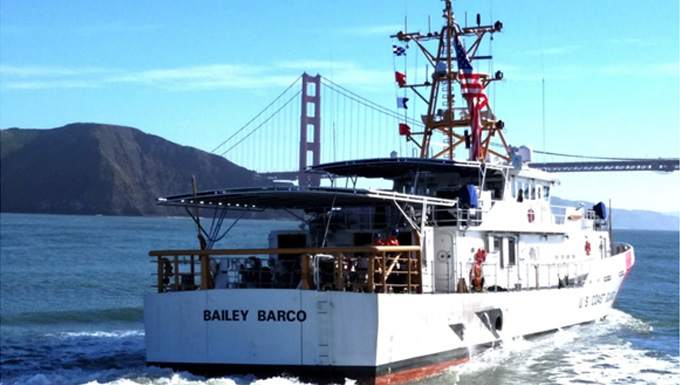
Coast Guard Cutter Bailey Barco (WPC-1122) enters San Francisco Bay during the 6,200-mile trip from Key West, Florida, to its homeport in Ketchikan, Alaska, April 28, 2017. The cutter is the second fast response cutter based in Alaska. U.S. Coast Guard photo.

Following is quoted verbatim news from the Acquisitions Directorate (CG-9) Website.

Acquisition Update: Coast Guard Exercises Contract Option For FRCs 39-44

June 16, 2017

The Coast Guard awarded a $289 million contract option to Bollinger Shipyards of Lockport, Louisiana, June 9 for the production of six more fast response cutters (FRCs). This option award brings FRCs 39-44 under contract with Bollinger. The current FRC contract contains options for up to 58 cutters and is worth $1.5 billion if all options are exercised.

The Coast Guard is acquiring 58 FRCs to replace the 1980s-era Island-class 110-foot patrol boats. FRCs feature advanced command, control, communications, computers, intelligence, surveillance and reconnaissance equipment; over-the-horizon cutter boat deployment to reach vessels of interest; and improved habitability and seakeeping. The cutters are designed for multiple missions, including drug and migrant interdiction; ports, waterways and coastal security; fishery patrols; search and rescue; and national defense.

Twenty-two FRCs are in service, with six stationed in Miami; six in Key West, Florida; six in San Juan, Puerto Rico; two in Cape May, New Jersey; and two in Ketchikan, Alaska. Future FRC homeports include: Pascagoula, Mississippi; Atlantic Beach, North Carolina; San Pedro, California; and Honolulu.

Note a few things:

  1. While this is not the total cost of the vessel, the shipyard cost is less than $48.2M. As I recall this is a decrease from previous buys, reflecting the maturity of the program and the decision to order six at a time.
  2. This is presumably FY2017 money and it leaves 14 vessels for future funding. Both the previous and current administration have consistently requested four or fewer vessels be funded, but the Congress has been fairly consistent in funding six per year. It seems likely the remaining 14 will be funded over the next three years. If so all 58 will be fully funded by FY2020.
  3. Bollinger is delivering at a rate of five per year. We just commissioned #22, so we can expect the last of the currently planned 58 in FY2024.
  4. The first three of the 87 foot Marine Protector class WPB were commissioned in 1998. It was 26 years from the commissioning of the first 110 to the commissioning of the first Webber class WPC. If there is a similar 26 year span from the first 87 footer to the commissioning of the first of its replacement class, we should see that boat come on line in FY2024, just as Webber class construction is ending. To make that happen, we need to start market research and planning in FY2021, the year after the last WPC is funded or FY2022 at the latest.
  5. There is talk of building six additional WPCs to replace the six 110s currently in Bahrain. I’ll have more on this later.

Webber Class WPC Bailey Barco Tour

I recently had the opportunity to board the yet to be commissioned Webber Class cutter Bailey Barco (WPC-1122), during a stop, as she made her way from the Gulf coast to her new home port in Ketchikan, Alaska. The Captain, Frank Reed, generously took the time to show me around. She was transporting a lot of spares and other gear to her new homeport, so may appear a bit more cluttered than normal, but everything was securely stowed.

I took some photos. I’m providing the diagram below for reference. Click on it to enlarge.

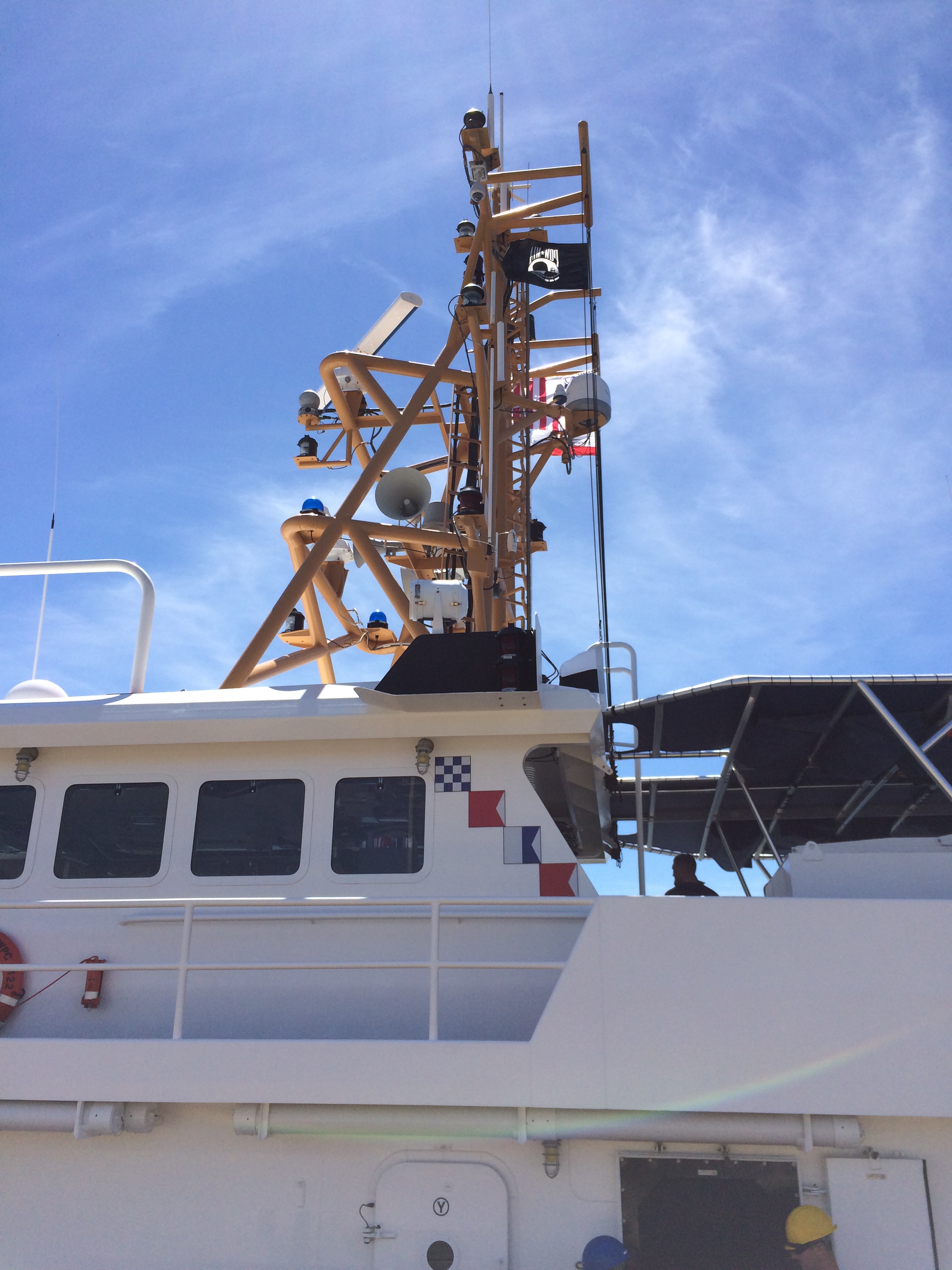
Mast and call sign

Bridge looking forward and a proud CO.

The bridge is large and spacious. Underway it becomes a secure space combining the functions of the CIC, Engineering Control Booth, Radio Room, and Firecontrol Shack in addition to the normal bridge functions. A secure space below passes information up to the bridge.  Normal underway manning is a three person watch.

Bridge displays and controls

Bridge looking aft.

Looking aft from the bridge, the watch can look back at the embarked over the horizon boat and observe as it is launched and recovered.

Ship’s boat.

Why a water tight door? As an XO who spent a lot of time making sure we could properly set Material Condition Zebra, these things are really important and can be a pain in the ass. The CO said earlier cutters of this class had had problems with their doors, but these were an improved version. The action was very positive and quick, requiring only a quarter turn instead of a three quarter turn for full actuation like the Quick Acting Water Tight Doors I was accustomed to.

Quick Acting Water Tight Door

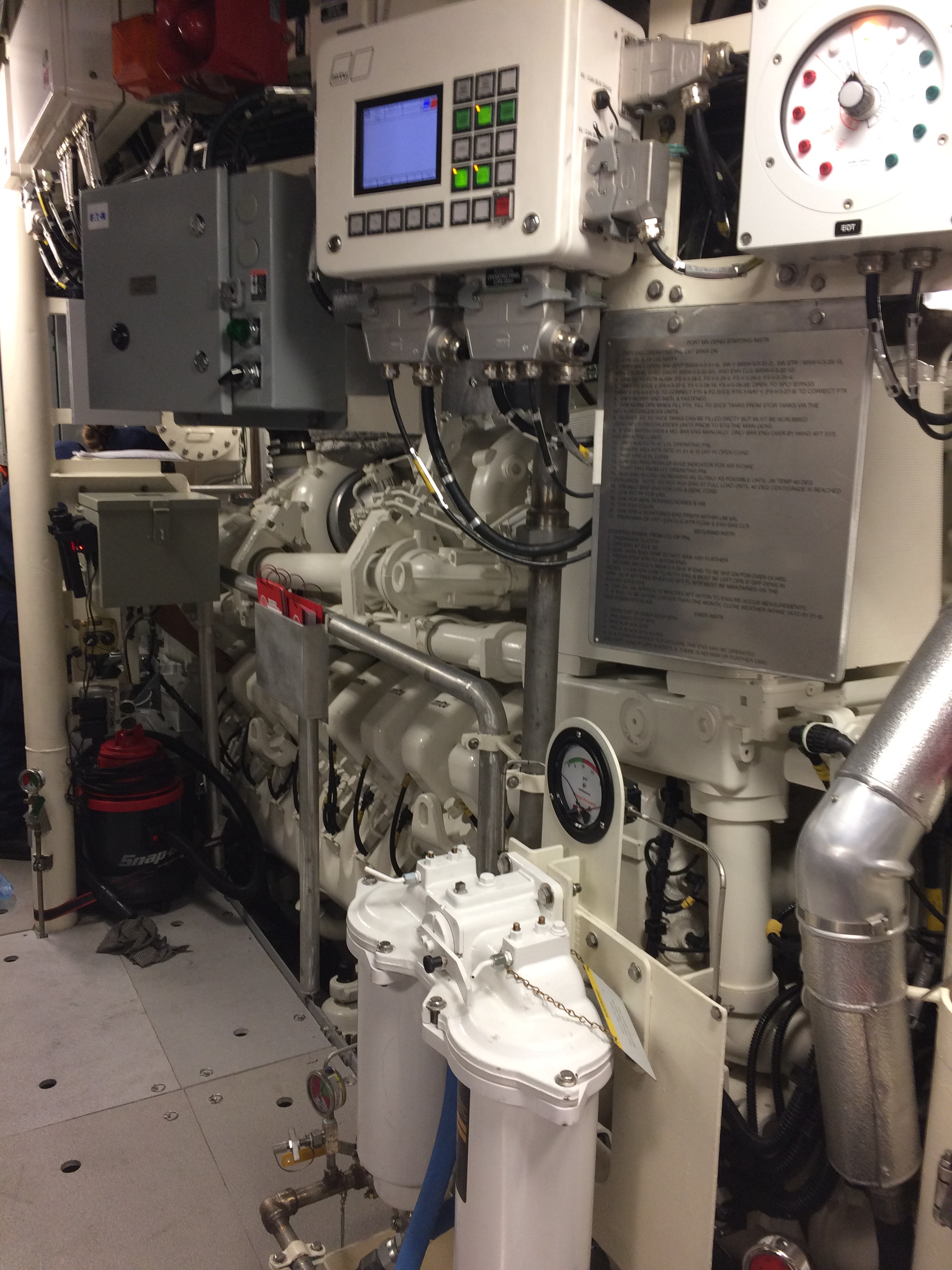
Engine Room amidships looking aft

Engineroom port side looking aft.

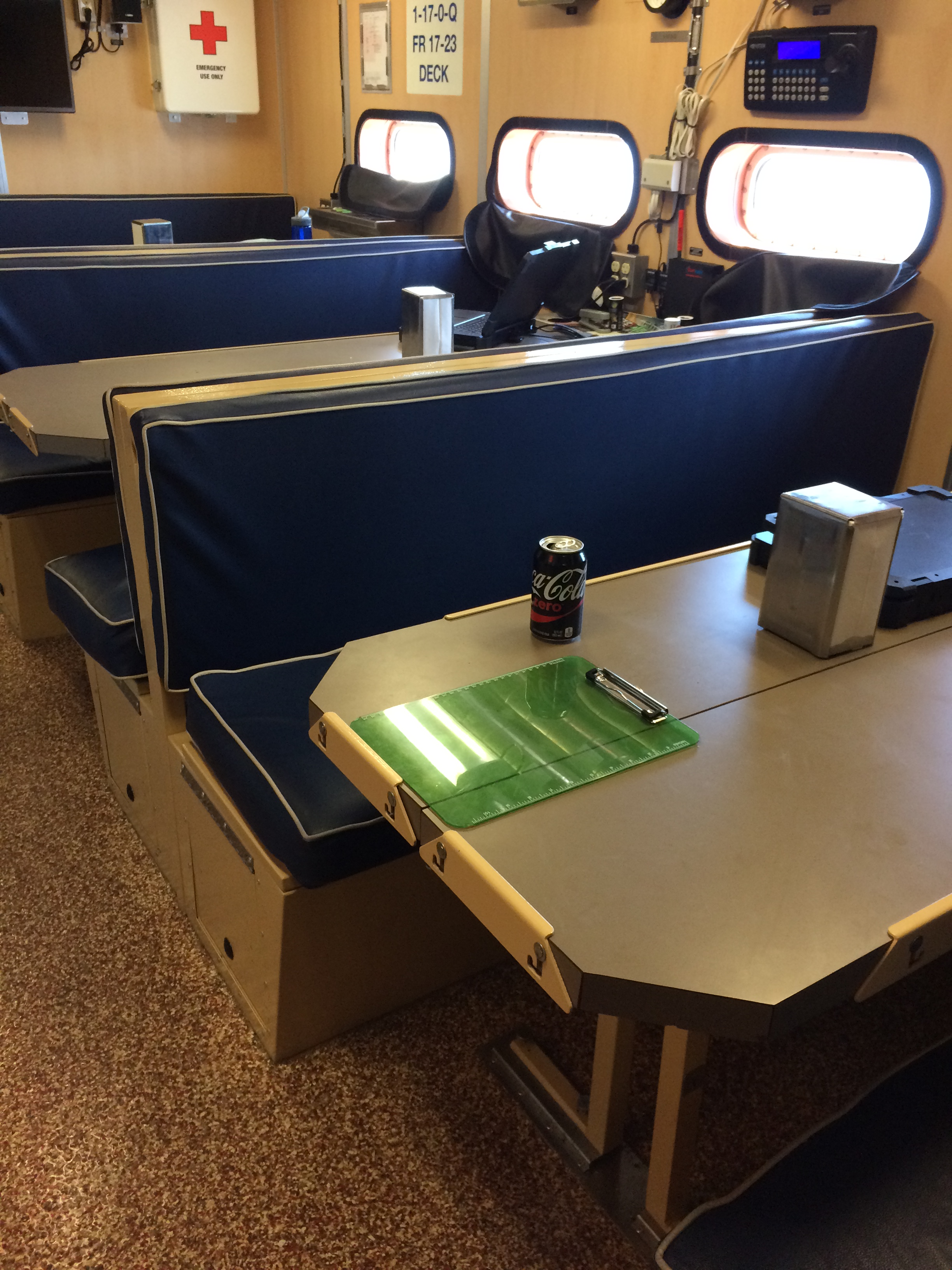
Mess deck

The mess deck (above) is on the main deck and benefitted from natural light. The panels they use to cover the ports are apparently leatherette mounted using velcro. The crew probably thinks of these a way to cut annoying glare, but I see it as a much improved way to darken ship, compared with the way it was done on 378s and 210s. 
I was told the anchor and ground tackle is an improvement over that used on the earlier cutters. It was beautifully chromed.

Weapons Testing: During my visit the gunners mate told me that Bailey Barco had been used as a test platform for a stabilized .50 caliber mount. A number of Navy and Marine in addition to Coast Guard Personnel observed test firing. Apparently it got a bit crowded. I did not confirm this while there, but I suspect this was a stabilized gun platform rather than a remotely controlled weapon. I did an earlier post on one of these. Good to see the Coast Guard doing some weapons testing. If we have to use weapons in a US port we really need a high degree of precision.

Stress Monitoring: The Captain pointed out a device that he said monitored hull stress and that it automatically submitted a report monthly. It is permanently installed. Made me wonder if perhaps some day this might be used real-time as a decision aid in determining how hard the ship can be pushed.

Webber Class WPC Homeport Update

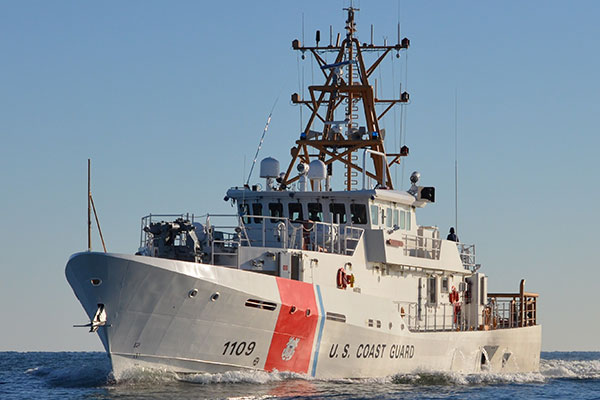
USCGC Kathleen Moore (WPC-1109)

Below is a news release quoted fully. “US Coast Guard to base 2 new cutters in Astoria, Oregon” (sent 04/28/2017 04:31 PM EDT) Note this will happen “starting in 2021.” My estimate is, the first WPC going to Astoria will be FRC #42 give or take one or two numbers. If so, the first Astoria based WPC will probably be funded in FY2017.  This news release may have been intended to asssure the Oregon Congressional delegation that they would be getting some benefit from the FY2017 CG budget.

WASHINGTON — The U.S. Coast Guard announced Friday it will homeport two of the service’s new Sentinel-Class 154-foot Fast Response Cutters (FRC) in Astoria, Oregon, starting in 2021. These two ships have not yet been named, but the FRCs are named after enlisted Coast Guard personnel who distinguished themselves in the line of duty.
Each of the two Astoria-based FRCs will provide the coastal maritime community with a 30 percent increase in annual operating hours on regional waters over the Coast Guard’s legacy 110-foot Island class patrol boats like the Coast Guard Cutter Orcas, homeported in Coos Bay, Oregon.
The FRC is equipped with improved command and control capability as well as increased sea-keeping abilities, operational range, a larger crew and higher transit speeds than the aging110-foot patrol boats. A larger, more capable stern launch cutter boat allows the FRC to conduct search-and-rescue and interdiction operations up to 50 miles away from the cutter, which greatly extends the vessel’s reach over the Coast Guard’s legacy patrol boat fleet.
The Orcas will continue to operate from its homeport in Coos Bay until its service is replaced by the first of the Astoria-based FRCs in 2021.
The Coast Guard is presently examining potential homeport sites within Astoria for the two as-yet-to-be-named FRCs.

Where are they now?

I have only seen definite homeports for ships through #23. There are 18 in D7 (six in Miami, six in Key West, and six in Puerto Rico), two in Cape May, two will be in Ketchikan, and one in Pascagoula. That leaves 35.

Where will they be going?

Wikipedia indicates USCGC Oliver F. Berry (WPC-1124) will go to Honolulu. (The Wiki entry lists the vessels by name and hull number and provides their homeports.)

Honolulu and Pascagoula will likely get at least one additional cutter. Other future homeports already identified are:

San Pedro, CA
Atlantic Beach, NC
Apra, Guam

I’ve seen indication we will have three in Apra. If we put three in San Pedro and two in Atlantic Beach (only a guesstamate) that only takes us to #34, with 24 still to allocate.

Where will the rest go?:

Homeports of the remaining 110 foot Island class WPBs is probably the best indication. Other than the ports already mentioned these include:

  • South Portland, ME
  • Gloucester, MA
  • Woods Hole, MA (two)
  • Bayonne, NJ
  • San Diego, CA
  • Port Angeles, WA
  • Hilo, HI
  • Auke Bay, AK
  • Homer, AK
  • Petersburg, AK
  • Seward, AK
  • Valdez, AK
  • Manama, Bahrain (six)

Looking at my earlier post, “Ruminating on Homeports While Playing the Red Cell,” other ports we might want to think about include:

  • Houston/Galveston/Texas City
  • San Francisco Bay
  • Anchorage, AK–a Strategic Seaport


My Unfunded Priority List

An earlier post reported a plea by Representative Duncan Hunter, Chair of the Transportation Subcommittee on Coast Guard and Maritime Transportation, for the Coast Guard to provide an unfunded priority list to include six icebreakers and unmanned Air System.

Thought perhaps I would list my own “unfunded priorities.” These are not in any particular order.

PLATFORM SHORTFALLS

Icebreakers: We have a documented requirement for three heavy and three medium icebreakers, certainly they should be on the list. Additionally they should be designed with the ability to be upgraded to wartime role. Specifically they should have provision for adding defensive systems similar to those on the LPD–a pair of SeaRAM and a pair of gun systems, either Mk46 mounts or Mk38 mod 2/3s. We might want the guns permanently installed on at least on the medium icebreakers for the law enforcement mission. Additionally they should have provision for supporting containerized mission modules like those developed for the LCS and lab/storage space identified that might be converted to magazine space to support armed helicopters.
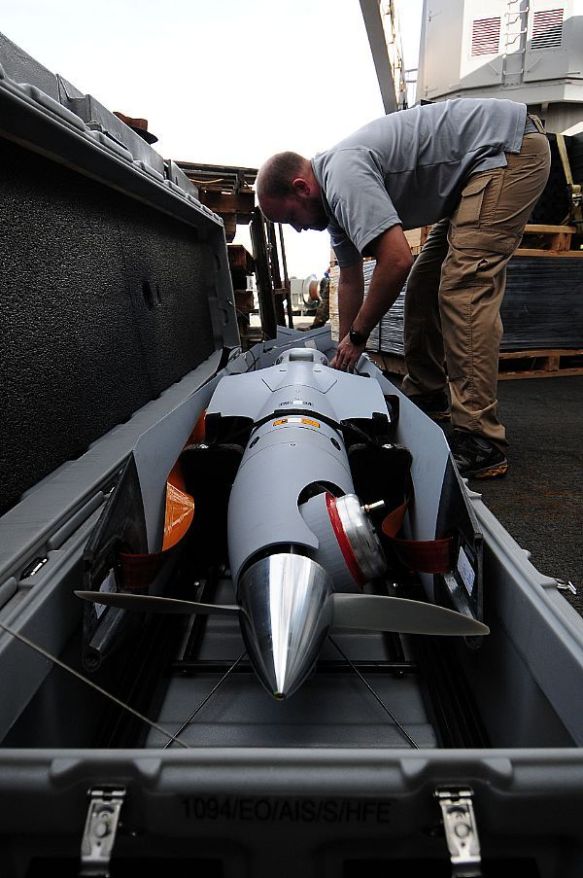
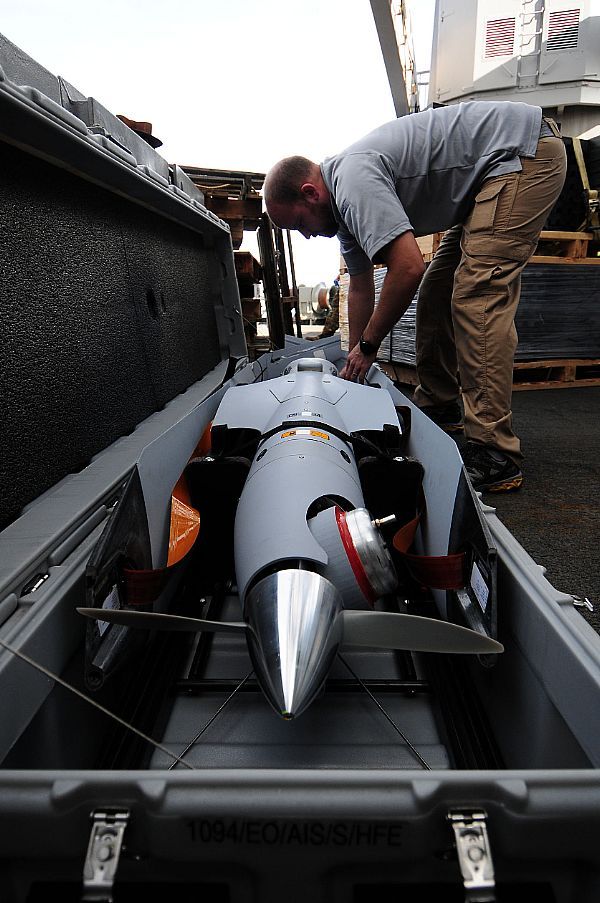
110225-N-RC734-011 PACIFIC OCEAN (Feb. 25, 2011) Guy Mcallister, from Insitu Group, performs maintenance on the Scan Eagle unmanned aerial vehicle (UAV) aboard the amphibious dock landing ship USS Comstock (LSD 45). Scan Eagle is a runway independent, long-endurance, UAV system designed to provide multiple surveillance, reconnaissance data, and battlefield damage assessment missions. Comstock is part of the Boxer Amphibious Ready Group, which is underway in the U.S. 7th Fleet area of responsibility during a western Pacific deployment. (U.S. Navy photo by Mass Communication Specialist 2nd Class Joseph M. Buliavac/Released)

110225-N-RC734-011
PACIFIC OCEAN (Feb. 25, 2011) Guy Mcallister, from Insitu Group, performs maintenance on the Scan Eagle unmanned aerial vehicle (UAV) aboard the amphibious dock landing ship USS Comstock (LSD 45). Scan Eagle is a runway independent, long-endurance, UAV system designed to provide multiple surveillance, reconnaissance data, and battlefield damage assessment missions. Comstock is part of the Boxer Amphibious Ready Group, which is underway in the U.S. 7th Fleet area of responsibility during a western Pacific deployment. (U.S. Navy photo by Mass Communication Specialist 2nd Class Joseph M. Buliavac/Released)

Unmanned Air Systems (UAS): We seem to be making progress on deploying UAS for the Bertholf class NSCs which will logically be extended to the Offshore Patrol Cutters. So far we see very little progress on land based UAS. This may be because use of the Navy’s BAMS system is anticipated. At any rate, we will need a land based UAS or access to the information from one to provide Maritime Domain Awareness. We also need to start looking at putting UAS on the Webber class. They should be capable of handling ScanEagle sized UAS.

File:USCGC Bluebell - 2015 Rose Festival Portland, OR.jpg

Photo: The Coast Guard Cutter Bluebell sits moored along the Willamette River waterfront in Portland, Ore., June 4, 2015. The Bluebell, which celebrated its 70th anniversary this year, is one of many ships participating in the 100th year of the Portland Rose Festival. (U.S. Coast Guard photo by Chief Petty Officer David Mosley.)

Recapitalize the Inland Tender Fleet: This is long overdue. The program was supposed to begin in 2009, but so far, no tangible results. It seems to have been hanging fire for way too long.

Expand the Program of Record to the FMA-1 level: The Fleet Mix Study identified additional assets required to meet the Coast Guard’s statutory obligations identifying four asset levels above those planned in the program of record. Lets move at least to first increment.

Alternative Fleet Mix Asset Quantities

————–POR       FMA-1      FMA-2      FMA-3       FMA-4
NSC                8             9                 9                 9                  9
OPC              25           32               43                50               57
FRC              58           63               75                80               91
HC-130         22            32               35                44               44
HC-144A       36            37               38                40               65
H-60              42            80               86                99             106
H-65             102         140             159              188            223
UAS-LB           4            19                21                21              22
UAS-CB        42            15                19               19               19

At the very least, looks like we need to add some medium range search aircraft (C-27J or HC-144).

Increase Endurance of Webber Class Cutters: The Webber class could be more useful if the endurance were extended beyond five days (currently the same as the 87 cutters, which have only one-third the range). We needed to look into changes that would allow an endurance of ten days to two weeks. They already have the fuel for it.

MISSION EQUIPMENT SHORTFALLS

Seagull_torpedo_trial_1

Ship Stopper (Light Weight Homing Torpedo): Develop a system to forcibly stop even the largest merchant ships by disabling their propulsion, that can be mounted on our patrol boats. A torpedo seems the most likely solution. Without such a system, there is a huge hole in our Ports, Waterways, and Coastal Security mission.
121211-N-HW977-692

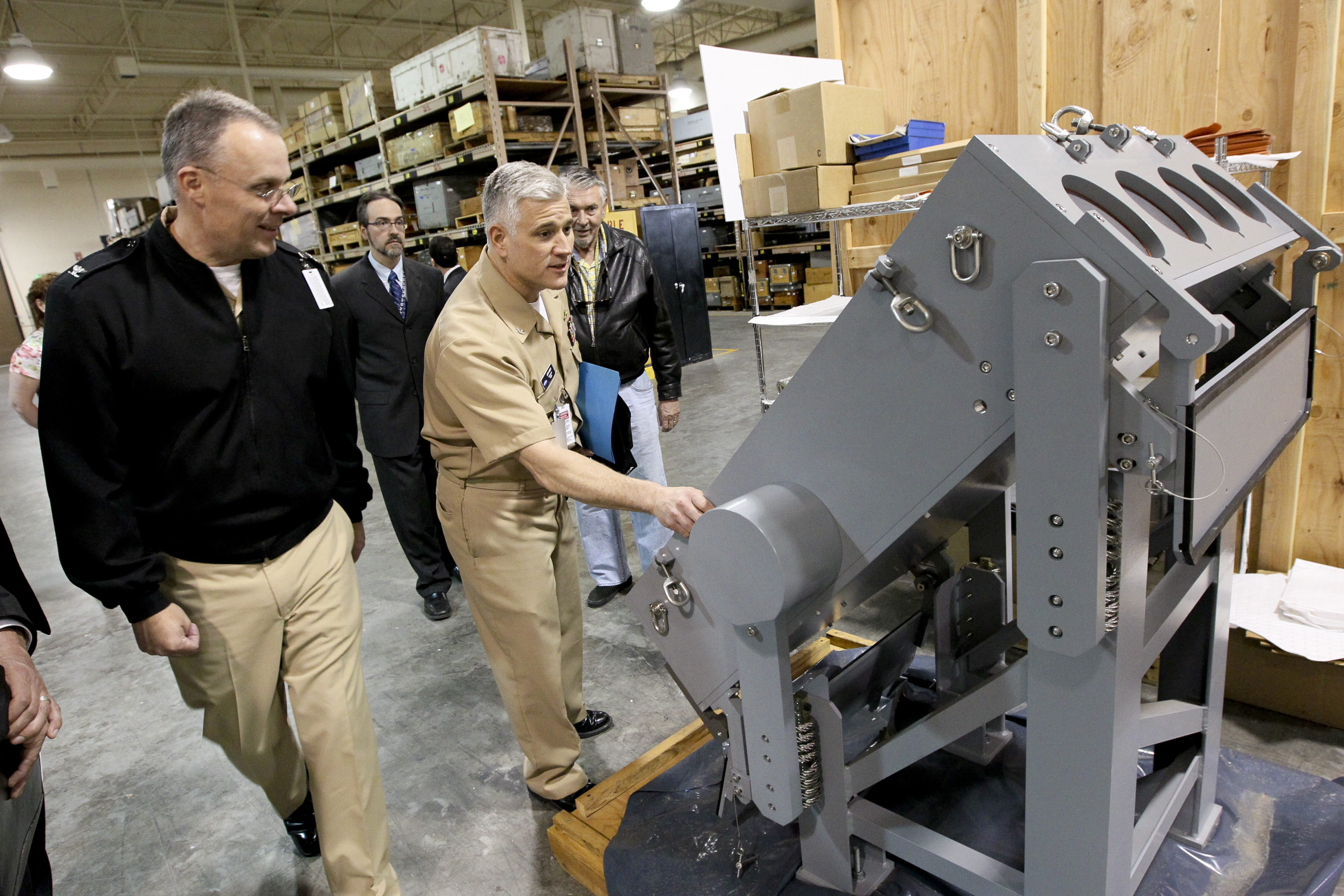
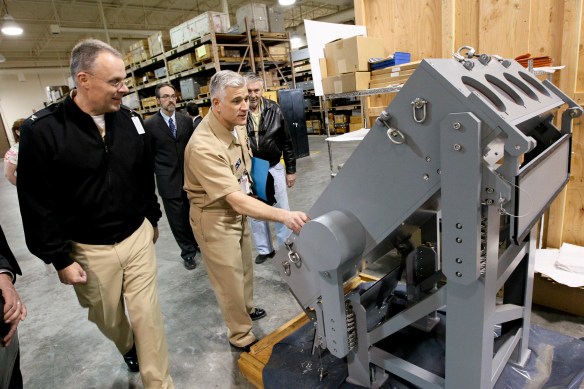
Photo: SeaGriffin Launcher

Counter to Small High Speed Craft (Small Guided Weapon): Identify and fit weapons to WPB and larger vessels that are capable of reliably stopping or destroying small fast boats that may be used as fast inshore attack craft and suicide or remote-controlled unmanned explosive motor boats. These weapons must also limit the possibility of collateral damage. Small missiles like SeaGriffin or Hellfire appear likely solutions.
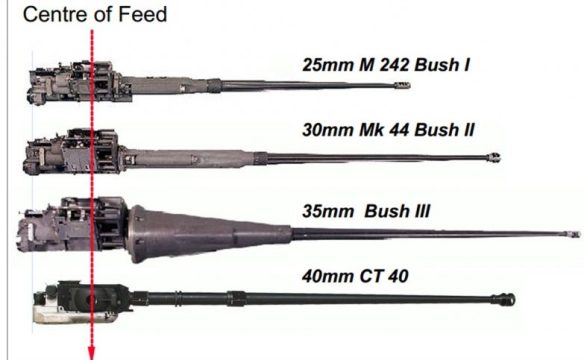
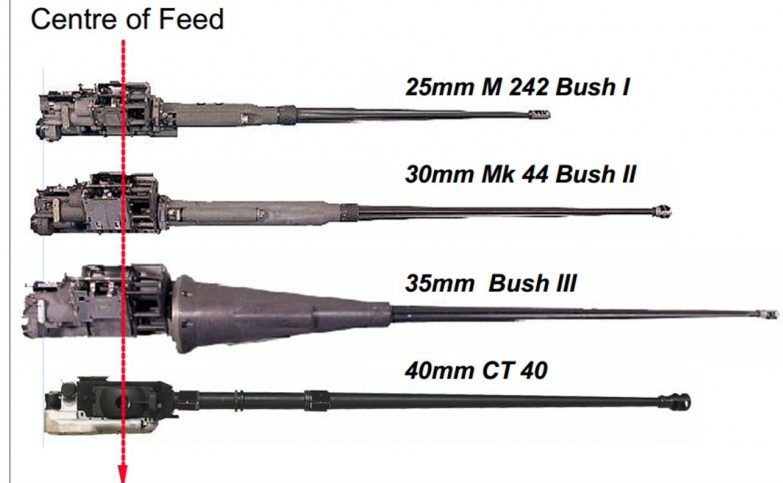
40 mm case telescoped gun (bottom) compared to conventional guns.

40 mm case telescoped gun (bottom) compared to conventional guns.

Improved Gun–Penetration, Range, and Accuracy: The .50 cal. and 25mm guns we have on our WPBs and WPCs have serious limitations in their ability to reach their targets from outside the range of weapons terrorist adversaries might improvise for use against the cutters. They have limited ability to reach the vitals of medium to large merchant vessels, and their accuracy increases the possibility of collateral damage and decreases their probability of success. 30, 35, and 40 mm replacements for the 25 mm in our Mk38 mod2 mounts are readily available.

Laser Designator: Provide each station, WPB, and WPC with a hand-held laser designator to allow them to designate targets for our DOD partners.

CONTINGENCY PLANNING SHORTFALLS

Vessel Wartime Upgrades: Develop plans for a range of options to upgrade Coast Guard assets for an extended conflict against a near peer.


Malaysia Builds 6 WPC w/sUAS, 3 Cutter X, and Gets 2 JCG cutters

Malaysia‘s counterpart of the USCG, the Malaysia Maritime Enforcement Agency (MMEA), or APMM in Malay, was formed in 2005 and has approximately 7,000 members.

Malaysia has an EEZ of 334,671 sq km, or about 3% of that of the US. In addition they have a substantial continental shelf of about the same size. The country itself is in two main parts, one on the Malay Peninsula and one part on the island of Barneo. It borders the busiest waterway in the world, the Straits of Malacca.

They have recently begun to replace the vessels incorporated in the service when the agency was formed.

The first new class is the “New Generation Patrol Craft.”

Malaysia's New Generation Patrol Craft.

Malaysia’s New Generation Patrol Craft (NGPC)

It is in many ways similar to the Webber class in size and function. It is a FASSMER design. It is a little smaller (44.5 meters or 146 feet) and a little slower at 24 knots, but it is a bit better armed, having a 30mm gun and it has one trick we do not. It will have a small Unmanned Air System and associated launch and recovery system.

The Malaysian Maritime Enforcement Agency has selected to the Fulmar UAV to equip their NGPC. The Fulmar is similar in most respects to the ScanEagle.

Aerovision Fulmar UAV, 5 May 2008, by Txema1

Aerovision Fulmar UAV, 5 May 2008, by Txema1

MalaysianDefence reports they expect to build three Offshore Patrol Vessels, at least 80 meters in length.  The RM740 Million reported allocated equates to about $167M each .

Reportedly the new OPVs will be a version of the Damen 1800 (ton) design (similar to those being built for South Africa, but with a conventional bow) 83 meters (272 feet) in length and 22 knots from 4×2350 kW diesels providing 12,600 HP.

Damen 1800 OPV, from the rear.

Damen OPV 1800 Concept Illustration

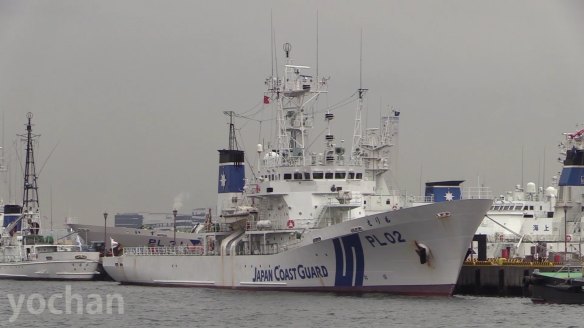
As part of their effort to build capacity among their neighbors, the Japanese are transfering two Japan Coast Guard cutters to the MMEA. The first of these, Erimo (PL-02) is, by USCG standards, still young, having entered service in 1991. She is 91.4 meters in length over all, 2,006 tons full load and capable of 20 knots with a crew of 38. The second ship wll be of the same class.

Japan CG Cutter Erimo (PL-02)

Japan CG Cutter Erimo (PL-02)

References: