COVID strikes USCGC Stratton

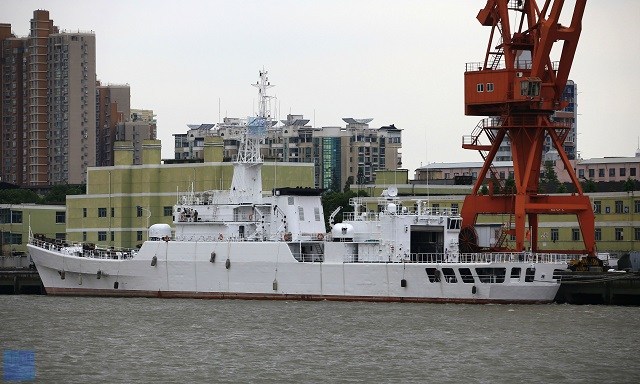
USCGC Stratton moored in San Diego, California. Photo by BryanGoff

Below is a PacArea news release. 


united states coast guard

News Release

Nov. 18, 2020
U.S. Coast Guard Pacific Area
Contact: Coast Guard Pacific Area Public Affairs
D11-DG-M-PACAREA-PA@uscg.mil
Pacific Area online newsroom

Coast Guard cutter returns home after crewmembers test positive for COVID

ALAMEDA, Calif — The U.S. Coast Guard Cutter Stratton (WMSL-752) returned to its homeport Wednesday at Coast Guard Island in Alameda after 11 crew members tested positive for COVID-19 during the deployment. 

The affected crew members reported mild symptoms and are receiving medical care. 

The cutter was met by Coast Guard medical staff, who conducted testing of the entire crew.  Following testing, the crew went into quarantine.  The cutter will continue to meet all inport watchstanding requirements while at homeport. 

“The crew’s health and safety is my highest priority,” said Capt. Bob Little, Stratton’s commanding officer.  “Stratton has a highly resilient crew, always dedicated to the mission.  Our mission today is to get healthy so we can continue our service to the nation.”  

The Stratton departed Alameda Oct. 28 to begin a counter-narcotics patrol in the Eastern Pacific.  Prior to getting underway, the crew underwent a restriction-of-movement period where members were required to self-quarantine and pass two COVID tests.  

On Nov. 11 and Nov. 12, several crew members began to develop COVID symptoms and were administered rapid testing kits.  All affected personnel and close contacts were identified and quarantined.  

“The safety of our people and the public remain my top priority,” said Vice Adm. Linda Fagan, U.S. Coast Guard Pacific Area commander.  “We continue to perform all statutory missions while taking the necessary precautions to protect our members and the public. We are committed to maintaining our operational readiness and will continue to perform critical missions that protect our national interests, promote economic prosperity and ensure public safety.”

“GPS unreliability” –Maritime Reporter & Engineering News – November 2020

A short explanation of why we need to get on with providing a terrestrial alternative to the GPS system by Dennis L. Bryant, Capt. USCG (retired).

Reportedly GPS can be spoofed for as little as $300.

With the Coast Guard’s increasing use of drones that use GPS navigation, its not unlikely drug smugglers will start spoofing GPS. We should be ready to detect such efforts and perhaps home in on them. Maybe need an inertial navigation alternative on our UAVs? (Not really sure what we are using right now.)

“Military activity is picking up in the quiet waters between the US and Russia” and a Deep Water Port at Nome

Northeast Russia and Alaska are in close proximity and the U.S. Coast Guard will interact more and more as Russian maritime activity in the Arctic grows. Photo: Shutterstock

Business Insider gives us a post about the strategic importance of the Bering Sea and Aleutians. In addition, there is some news about the proposed “Arctic” deepwater port.

The US Army Corps of Engineers recently approved plans to expand the port of Nome, on Alaska’s Bering coast. That “will not only help from a national-security perspective but … help [local communities] to reduce the cost of living,” Alaska Sen. Lisa Murkowski said at another event in October.

CRS, “Coast Guard Cutter Procurement: Background and Issues for Congress Updated November 11, 2020”

It has been only four days since we last looked at this document, but Congressional Research Service’s Ronald O’Rourke has come out with another revision. (You can always find the latest edition in full here.) The latest revision added Senate action on the DHS Appropriations Act (H.R. 7669/S. XXXX). Unlike the House Appropriations Committee, the Senate Appropriations Committee would fund two rather than four Webber class FRCs (Providing $160M rather than $260M) and seems to close the door on the possibility of a twelfth Bertholf class NSC.

Table 2 (page 23) provides a Summary of Appropriations Action on FY2021 Procurement Funding Request. Figures are in millions of dollars, rounded to nearest tenth. HAC=House Appropriations Committee. SAC=Senate Appropriations Committee. No final action has been take as of publication. The table is reproduced below.

______________Request__HAC__SAC___Final
NSC program         31            31        31
OPC program      546           546      546
FRC program        20           260      160
TOTAL                 597           837      737

We are now eleven weeks into FY2021. The continuing resolution ran out 11 November. Hopefully we will see this move to final action soon.

I have reproduced the section regarding Senate Appropriations Committee action below. (From pages 23/24, there are some minor format changes.)


Senate

The Senate Appropriations Committee, in the explanatory statement for S. XXXX that the committee released on November 10, 2020, recommended the funding levels shown in the SAC column of Table 2.

The explanatory statement states (emphasis added):

Full-Funding Policy.—The Committee again directs an exception to the administration’s current acquisition policy that requires the Coast Guard to attain the total acquisition cost for a vessel, including long lead time materials [LLTM], production costs, and postproduction costs, before a production contract can be awarded. This policy has the potential to make shipbuilding less efficient, to force delayed obligation of production funds, and to require post-production funds far in advance of when they will be used. The Department should position itself to acquire vessels in the most efficient manner within the guidelines of strict governance measures. The Committee expects the administration to adopt a similar policy for the acquisition of the Offshore Patrol Cutter [OPC] and heavy polar icebreaker.

Domestic Content.—To the maximum extent practicable, the Coast Guard is directed to utilize components that are manufactured in the United States when contracting for new vessels. Such components include: auxiliary equipment, such as pumps for shipboard services; propulsion equipment, including engines, reduction gears, and propellers; shipboard cranes; and spreaders for shipboard cranes. (Pages 71-72)

The explanatory statement also states:

National Security Cutter [NSC].—The Committee is disappointed that the Coast Guard has not officially conveyed to the Committee a determination on whether a twelfth NSC is required; based on the lack of direct communication and the inclusion of a proposed rescission of funds provided in fiscal year 2020 in the budget request, the Committee infers that an additional vessel is not required at this time. While funding a twelfth NSC would undoubtedly allow the Coast Guard to better conduct its mission operations and likely result in the prevention of thousands of tons of contraband from reaching the United States, the Committee is not positioned to recommend funding for another vessel when faced with budgetary constraints and additional requests for vessel classes well short of the Coast Guard’s program of record. The Committee directs that the remainder of funding provided above the request in 2020 for this program shall support the NSC fleet.

Offshore Patrol Cutter [OPC].—The Committee notes that the Coast Guard has declared the OPC as its highest recapitalization priority and provides the requested amount of $546,000,000 to continue construction, procurement of LLTM, and related program management costs. While the Committee supports OPC procurements, the Committee remains concerned about costs for the program and continues the requirement directing the Coast Guard to brief the Committee within 1 week prior to taking any procurement actions impacting estimated costs for the OPC program.

Fast Response Cutter [FRC] Program.—In accordance with the Coast Guard’s  recapitalization plan, the Committee has supported the replacement of legacy 110-foot
Island Class patrol boats with FRCs that will operate similarly in the coastal zone. The
Committee is aware of the need for four additional FRCs to sustain the Coast Guard’s
critical mission in support of the Department of Defense in Patrol Forces Southwest Asia; however, the budget request did not include any funding for new FRCs. The Committee recommends an additional $140,000,000 for two additional FRCs and directs the Coast Guard to negotiate favorable pricing for each vessel. (Pages 72-73)

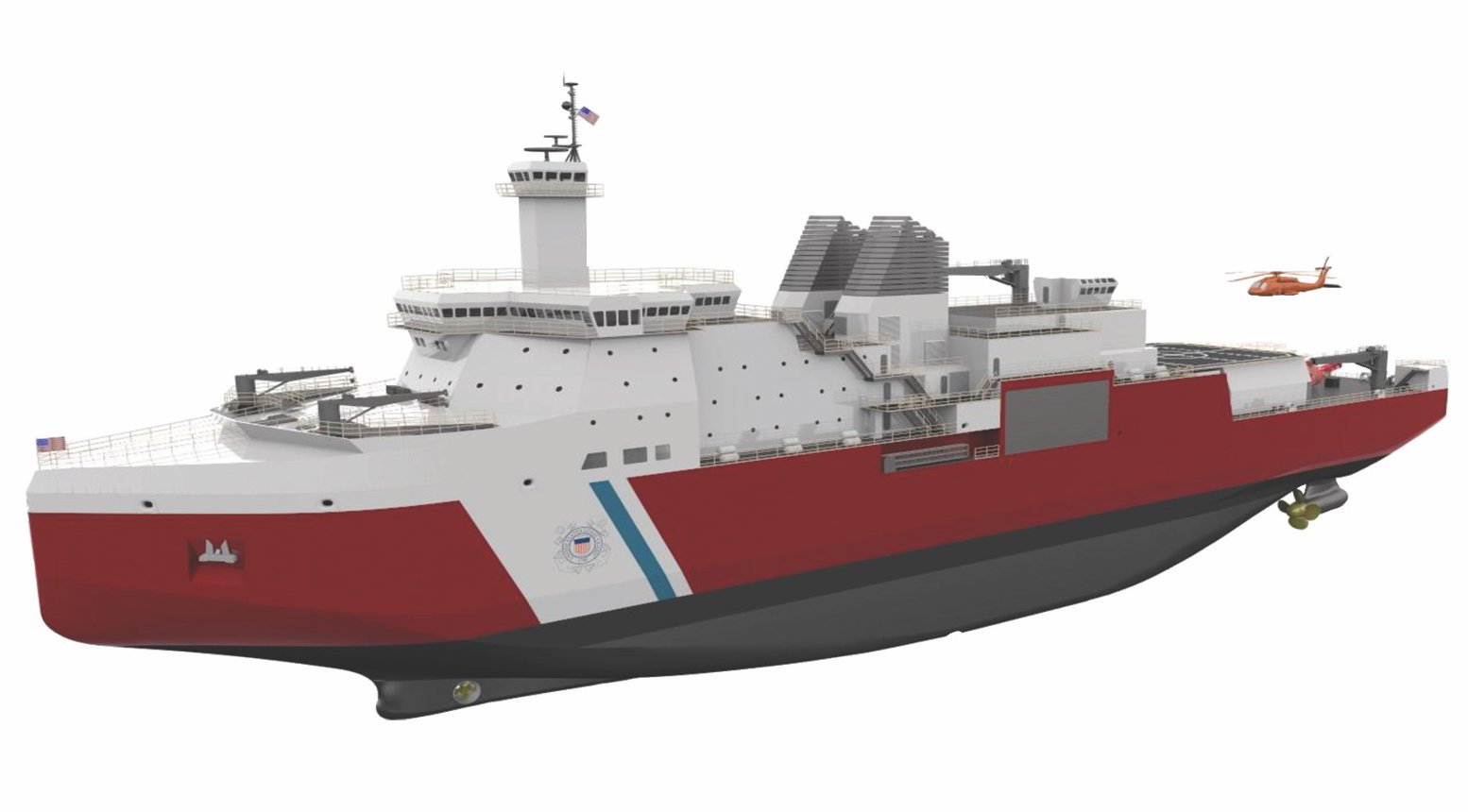
CRS, “Coast Guard Polar Security Cutter (Polar Icebreaker) Program: Background and Issues for Congress Updated November 11, 2020”

Since our last look at this report, there have been four updates. (See the latest version here.)

We now have the Senate Appropriations Committee’s (SAC) views on this part of the FY2021 DHS Appropriations Act. The Senate committee, like its counterpart in the House, has recommended approval of the Administration request for $555M that would fund the second Polar Security Cutter.

I have reproduced the section on Senate Activity (page 25/26) below. Note there is also mention of renovation of the Polar Star and acquisition of a future Great Lakes icebreaker as well:


Senate

The Senate Appropriations Committee, in the explanatory statement for S. XXXX that the committee released on November 10, 2020, recommended the funding level shown in the SAC column of Table 2.

The explanatory statement states (emphasis added):

Full-Funding Policy.—The Committee again directs an exception to the administration’s current acquisition policy that requires the Coast Guard to attain the total acquisition cost for a vessel, including long lead time materials [LLTM], production costs, and postproduction costs, before a production contract can be awarded. This policy has the potential to make shipbuilding less efficient, to force delayed obligation of production funds, and to require post-production funds far in advance of when they will be used. The Department should position itself to acquire vessels in the most efficient manner within the guidelines of strict governance measures. The Committee expects the administration to adopt a similar policy for the acquisition of the Offshore Patrol Cutter [OPC] and heavy polar icebreaker.

Domestic Content.—To the maximum extent practicable, the Coast Guard is directed to
utilize components that are manufactured in the United States when contracting for new
vessels. Such components include: auxiliary equipment, such as pumps for shipboard
services; propulsion equipment, including engines, reduction gears, and propellers;
shipboard cranes; and spreaders for shipboard cranes. (Pages 71-72)

The explanatory statement also states:

Great Lakes Icebreaking Capacity.—The recommendation includes $4,000,000 for preacquisition activities for the Great Lakes Icebreaker Program for a new Great Lakes
icebreaker that is as capable as USCGC MACKINAW. The Coast Guard shall seek
opportunities to accelerate the acquisition and request legislative remedies, if necessary. Further, any requirements analysis conducted by the Coast Guard regarding overall Great Lakes icebreaking requirements shall not assume any greater assistance rendered by Canadian icebreakers than was rendered during the past two ice seasons and shall include meeting the demands of United States commerce in all U.S. waters of the Great Lakes and their harbors and connecting channels. (Page 72)

The explanatory statement also states:

Polar Ice Breaking Vessel.—The Committee recognizes the value of heavy polar icebreakers in promoting the national security and economic interests of the United States in the Arctic and Antarctic regions and recommends $555,000,000, which is the requested amount. The total recommended for this program fully supports the Polar Security Cutter program of record and provides the resources that are required to continue this critical acquisition.
Polar Star.—The recommendation includes $15,000,000 to carry out a service life extension program for the POLAR STAR to extend its service life as the Coast Guard continues to modernize its icebreaking fleet. (Page 73)

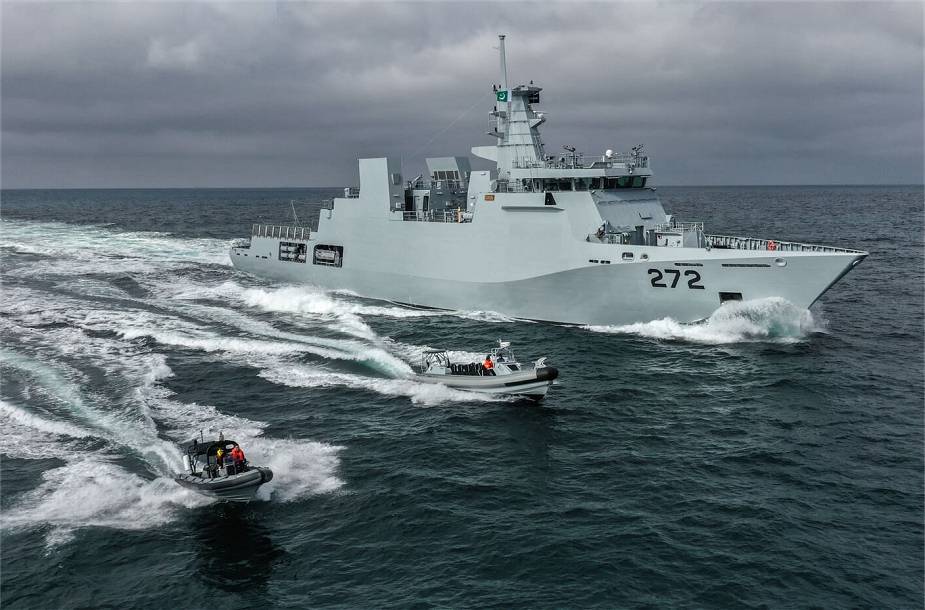
“Pakistan Navy commissioned its new PNS Tabuk Damen corvette OPV 1900” –Navy Recognition

PNS Tabuk during sea trials. (Picture source Damen)

NavyRecognition reports the commission of the second of two Damen designed offshore patrol vessels (OPV) built in Romania for the Pakistani Navy.

The Damen OPV 1900 has a hull-length of 90 m, a maximum speed of 22 knots, and a full-load displacement of 1,900 tons. The ship can launch two high-speed RHIBs of 11.5 meters and 6.5 meters simultaneously and also has the capability to accommodate two TEUs for special mission-based operations. The rear deck of the ship is able to transport both a helicopter and a UAV.

According to Janes, the ships are 2,300 tons (presumably full load), 91.3 meters (299.5′) in length, with a beam of 14.4 m (47.2′), a draft of 4 m (13.1′), and a complement of 138.

Below is a video shot on the first ship of the class. You can see that it also includes a hangar. Weapons and additional sensors are to be fitted in Pakistan. The video indicates the ship will be equipped with two 30mm cannon and anti-ship cruise missiles. The model, seen in the video at time 1m30s, shows the vessel equipped with what appears to be a single barrel mount similar to the Mk38 forward, but the mount on the aft starboard corner of the superstructure, looks like a Chinese Type 730 CIWS that includes a seven barrel Gatling gun. That weapon is currently in service with the Pakistani Navy. You would think the same weapon would be used in both positions, but the more sophisticated CIWS might not take kindly to the green water that is likely to come over the bow. The model also shows launchers for eight anti-ship cruise missiles, presumably of Chinese origin, like the C-802. The ships are also reportedly being given an ASW capability. 

“sUAS for NSC continues accelerated production schedule” –CG-9

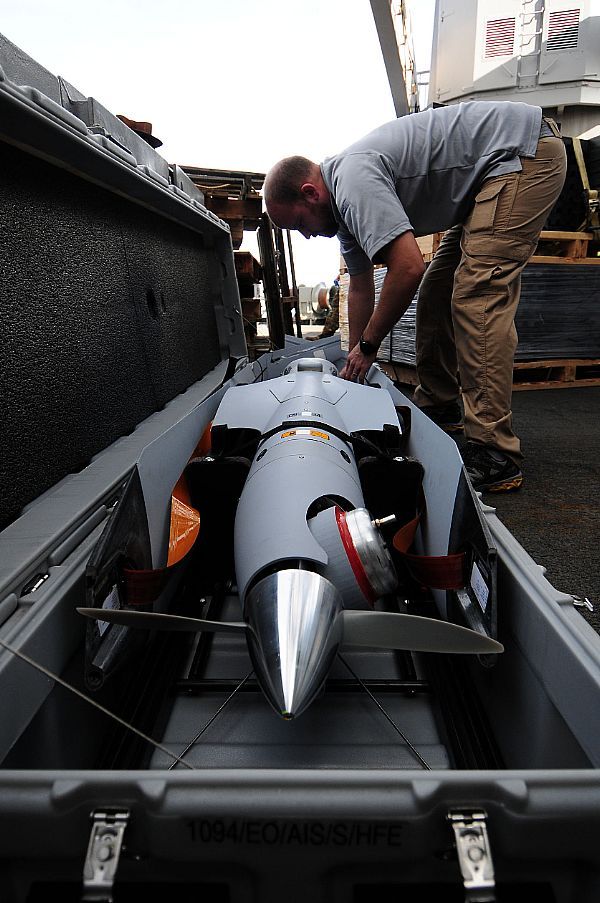
110225-N-RC734-011
PACIFIC OCEAN (Feb. 25, 2011) Guy Mcallister, from Insitu Group, performs maintenance on the Scan Eagle unmanned aerial vehicle (UAV) aboard the amphibious dock landing ship USS Comstock (LSD 45). Scan Eagle is a runway independent, long-endurance, UAV system designed to provide multiple surveillance, reconnaissance data, and battlefield damage assessment missions. Comstock is part of the Boxer Amphibious Ready Group, which is underway in the U.S. 7th Fleet area of responsibility during a western Pacific deployment. (U.S. Navy photo by Mass Communication Specialist 2nd Class Joseph M. Buliavac/Released)

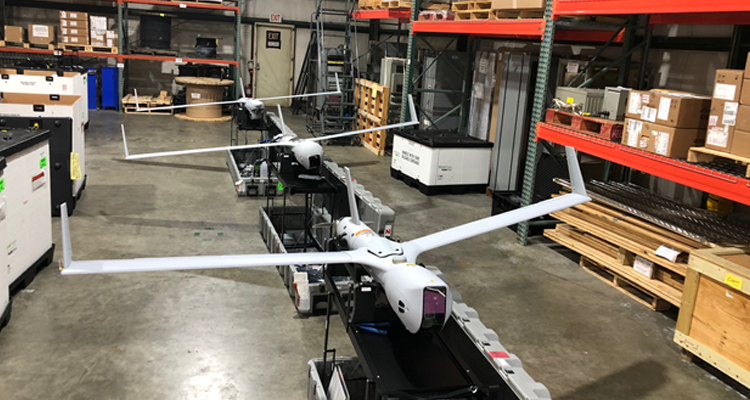
Below is a story from the Acquisitions Directorate (CG-9) updating the Coast Guard’s acquisition of small Unmanned Air Systems (sUAS), with particular focus on those being used on the Bertholf class cutters.

“,,,2,600 flight hours on 14 NSC patrols” as mentioned below translates to about 186 flight hours per patrol. As I recall, when we were using an attached helicopter for searches, four hours per day was about the best we could expect. It appears that, for the search function, the sUAS at least approximates that of a manned helicopter.

Hopefully, when on interdiction missions, we are using the Operations Research derived search patterns for detecting a non-cooperative moving target, rather than the typical SAR search patterns which assume a non-moving cooperative target.

I have to question the description “narco-terrorists” for those captured. Narcotics trafficers certainly, terrorists, maybe not.


sUAS for NSC continues accelerated production schedule

The unmanned aircraft sensor payload capability is varied based on the Coast Guard’s desired mission and search conditions: MWIR 3.5 is a mid-wave infrared for thermal imaging capability, for use at night or periods of low visibility; EO-900 is a high-definition telescopic electro-optical (EO) imager to zoom in on targets at greater distance; and ViDAR is a visual detection and ranging wide-area optical search system that is a comprehensive autonomous detection solutions for EO video. Courtesy Photo.


The Coast Guard small unmanned aircraft system for the national security cutter (NSC) program recently completed the system operation verification test for the unmanned aircraft system (UAS) installation on Coast Guard Cutter Bertholf, the sixth NSC to be equipped with UAS capability. This milestone is the latest in a series of key acquisition program activities to accelerate the scheduled for equipping the first eight NSCs with UAS capability. Installations underway on Coast Guard cutters Hamilton and Midgett have expected completions in January 2021 and March 2021, respectively.

Since the first installation, the UAS capability has completed more than 2,600 flight hours on 14 NSC patrols. Since their deployment, UAS platforms have supported 53 interdictions, assisted in the seizure of 48 tons of illicit narcotics worth over $1.2 billion and helped facilitate the capture of 132 narco-terrorists.

The UAS capability on the NSCs has also been used to:

  • Provide real-time damage assessments of the Bahamas in the aftermath of Hurricane Dorian in September 2019. This event was the first time the Coast Guard used UAS overland for humanitarian relief efforts; the added surveillance capability allowed the service to focus recovery assets on emergent search and rescue and critical infrastructure needs.
  • Aid a medical evacuation off a container ship in the Bering Sea, saving one life.
  • Aid in a person-in-the-water search and rescue case off Hawaii in September. Work groups are underway to determine how to use UAS for search and rescue in the future.
  • Identify more than 35 Chinese vessels illegally fishing by sorting through 150+ Automatic Identification System contacts in a fishing fleet off the coast of the Galapagos Islands.

The deployment of an UAS-enabled NSC and its comprehensive sensor suite packages can support day and night operations. UAS capability can conduct surveillance, detection, classification and identification of a wide range of targets, and is capable of up to 18+ hours of continuous flight time per day.

The Coast Guard is deploying a contractor-owned, contractor-operated solutions to provide UAS capability onboard the NSCs; the current contract includes options that could extend service through June 2026. The Coast Guard is also conducting preliminary efforts to explore the potential benefits of deploying UAS across several surface, and potentially land-based, platforms.

For more information: Unmanned Aircraft Systems program page

“China Coast Guard to be allowed to use force in case of territorial infringement” –People’s Liberation Army Daily

This Chinese People’s Liberation Army Daily post concerning use of deadly force, linked here, may be particularly interesting for its call out of the US Coast Guard.

Law enforcement on land, sea and in airspace under its own jurisdiction, with the use of weapons on necessary occasions, are the rights granted to sovereign states by international law. The Japan Coast Guard (JCG) also stipulates that lethal weapons can be used when enforcing the law in waters under its own jurisdiction. For the US Coast Guard (USCG), the use of force is even more common, and it is even planning to apply long-arm jurisdiction to China.

Admiral Karl Schultz, Commandant of the USCG, claimed to strengthen deployment in the Asia-Pacific region and participate in security patrols in the waters surrounding China in response to Chinese maritime militia’s declaration of sovereignty in the South China Sea in April last year. Robert O’Brien, US National Security Advisor, announced on October 24 that the USCG would deploy Enhanced Response Cutters in the Western Pacific. . Without providing any evidence, he accused Chinese fishing boats of illegal fishing and claimed that the sovereignty of the United States and its neighbors in the Pacific had thus been threatened.

If they should choose to employ force against one of our cutter in their claimed “Nine Dash Line,” it is likely they would attempt to get several units in at very close range before opening fire, as they did in this engagement.

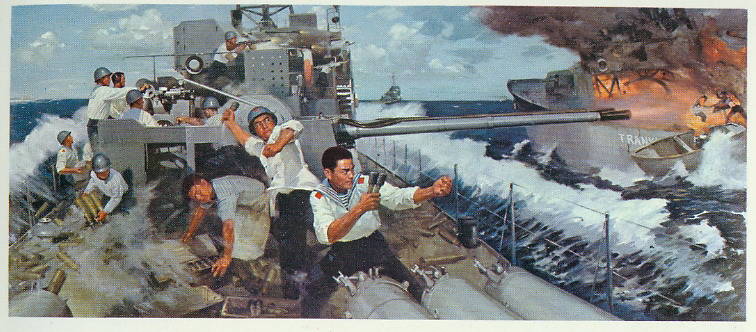
Chinese depiction of the fighting Battle of Paracels Islands

Next time we send a cutter into this area, it might be a good idea to have a squad of Marines along armed with shoulder fired missile or rocket launchers.

Might also be a good idea to provide a bit of ballistic protection (and here) for our .50 cal. gun crews. Not too difficult because you can buy it on the GSA catalog.

Most China Coast Guard Cutters are not as well armed or as fast as the Bertholfs, but there are exceptions. In all likelihood they would be more interested in causing casualties and chasing us off, than actually sinking a cutter. This is more likely to serve their purpose without getting themselves in a war. Not that I think such an attack would go unanswered, but they, or a mid-level commander, might be foolish enough to think they could get away with it. Still probably better not to have a lone cutter doing “Freedom of Navigation Operations,” although air cover might be sufficient. Really I would like to see an international repudiation of their claims in the form of an multi-national demonstration.

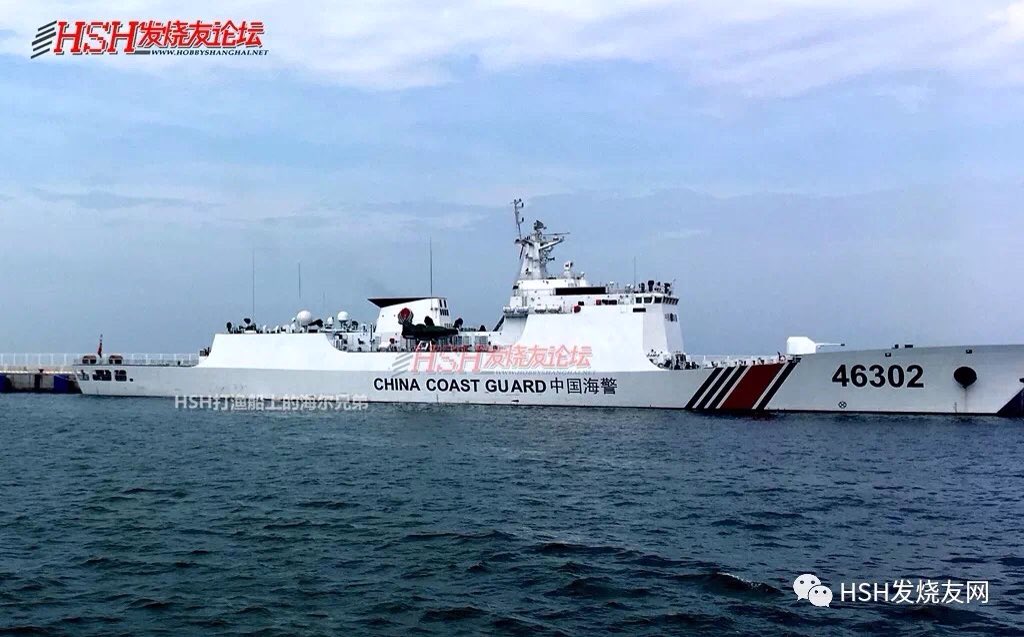
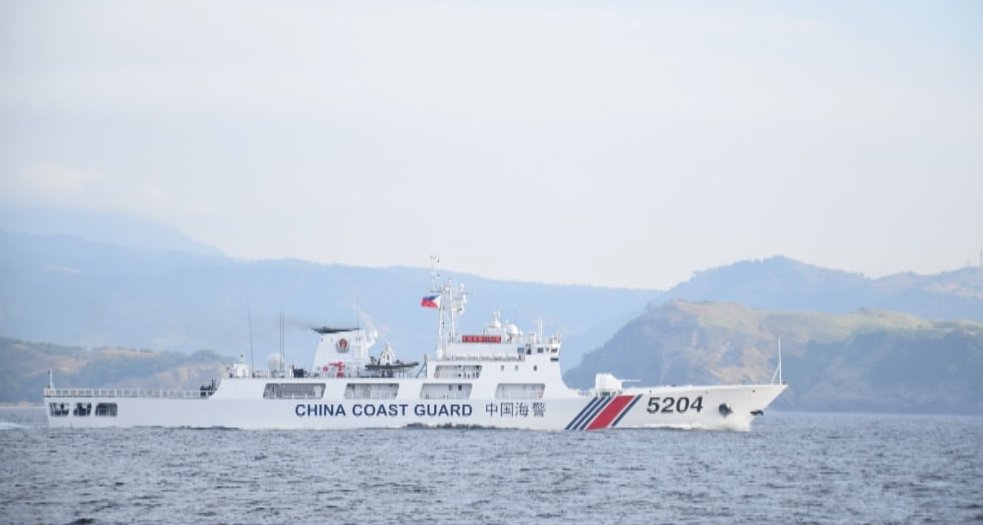
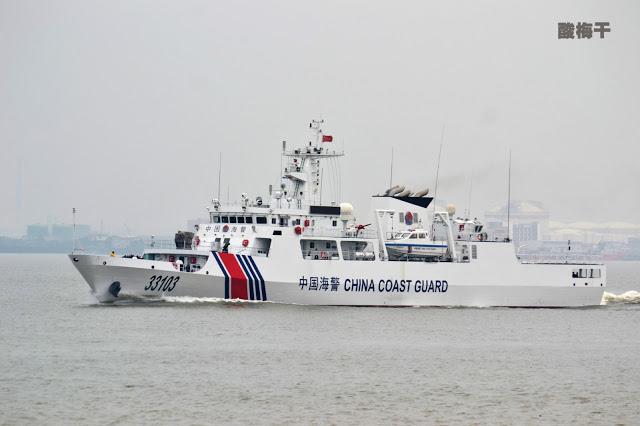
Combinations of CCG cutters with weapons larger than 14.5mm machine guns could be extremely dangerous at close range. Some of those are shown below.

The China CG version of the Type 056 Corvette


China Coast Guard Cutters Converted  from Type 053H2G frigates

“MARTIN UAV PARTNERS WITH SOUTHCOM ON ENHANCED COUNTER NARCOTICS OPERATIONS” –Press Release

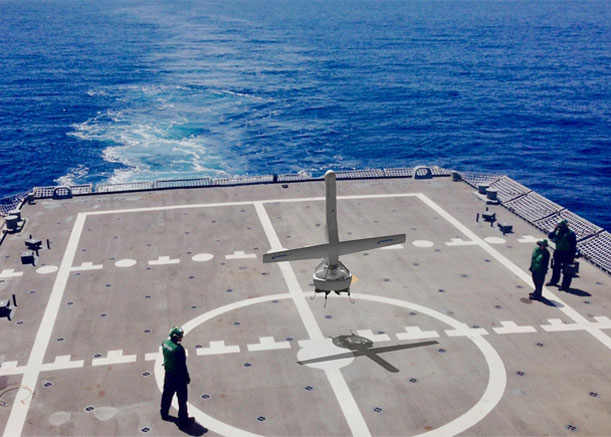
V-Bat from Martin UAV

Below is a press release about a vertical take-off Small Unmanned Air System (sUAS) that we discussed earlier, after it was flown from USCGC Harriet Lane August 13-14, 2020. The deployment reported below occurred shortly before the demonstration on the Harriet Lane.  

We have no indication of how many of the airframes and how many people were people were involved in the demonstration, but the sortie rate appears impressive. Over a 300 day period, the system(s) flew 273 sorties for a total of 1340.7 flight hours. Given that the ship was probably not underway all 300 days, looks like they got at least one sortie per day with an average of 4.9 hours per sortie.


PLANO, Texas, November 10, 2020 – Martin UAV successfully demonstrated the shipboard integration of its V-BAT as well as its impressive maritime capabilities in support of United States Southern Command’s counter-narcotics operations in the Eastern Pacific from October 6, 2019, to July 31, 2020.

Support for the mission included the highly visible Enhanced Counter Narcotics Operations that began April 1 and was kicked off by the President of the United States.

The 10-month mission started with a demonstration of the V-BAT’s small footprint, quick set-up, rapid deployment, and true Vertical Takeoff and Landing (VTOL) capabilities. Upon successful completion, a technology assessment to support the USSOUTHCOM Exercises and Coalition Affairs Directorate, Long Duration, Long Dwell (LD2) started upon successful completion of the shakedown.

By leveraging commercial off-the-shelf technologies, LD2’s goal is to enhance the execution of the Department of Defense’s strategic objectives. Over the course of the demonstration, the V-BAT flew an unprecedented 273 sorties for a total of 1340.7 flight hours.

“This mission helped catapult Martin UAV’s V-BAT into the maritime environment, showcasing its ability to withstand and perform in tropical conditions, including strong crosswinds and unexpected storms with rain exceeding 10mm per hour,”

– Heath Niemi, VP of Global Sales & Development.
Night Landing with Martin UAV’s V-BAT

About Martin UAV:

Martin UAV is a private, advanced technology company based in Plano, TX. The company specializes in building wholly-unique, unmanned aircraft systems and associated flight control software. The company’s systems are commercially developed to fill critical operational needs in tactical & confined operational environments. Its V-BAT series aircraft is the only single-engine ducted fan VTOL that has the ability to launch & recover from a hover, fly 8+ hours in horizontal flight, and make mid-flight transitions to “hover & stare” at any time throughout a given mission set.

“Beyond the Tip of the Iceberg Tech: RDT&E’s Annual Arctic Technology Evaluation” –MarineLink

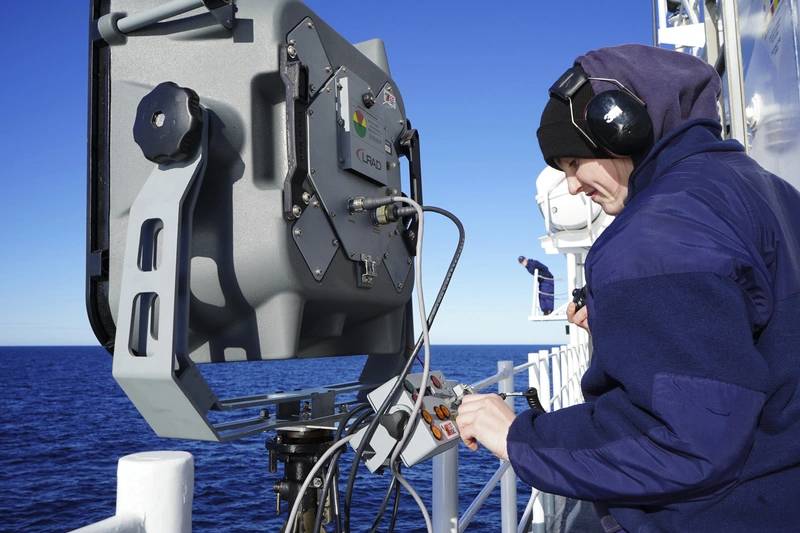
ENS Jordan Solseth runs a test for the Long Range Acoustic Device (LRAD) 500. U.S. Coast Guard photo by SN Kate Kilroy

Marine Link reports on the Coast Guard’s evaluation of five technologies during USCGC Campbell’s Arctic cruise. Five different technologies were evaluated. All were deemed successful:

  • Insight Mini Thermal Monocular (MTM) and AN/PSQ-20 Monoculars (enhanced night vision devices) for improved law enforcement and ice detection.
  • Handheld Glare Helios laser for stand-off hailing capabilities.
  • FiFish Remotely Operated Vehicle for underwater inspections in cold weather.
  • Long Range Acoustic Device 500X-RE for enhanced communication with vessels at longer distances.
  • Iridium Certus Terminal, which helped provide internet access for the crew to maintain communications with Atlantic Area.

These systems were referred to in the earlier linked post, but there is much more information in the Marine Link article.

I think that we are going to start seeing the Long Range Acoustic Device (LRAD) on all our cutters. We really should have them on our Webber class bound for PATFORSWA. In addition to its communications capabilities, it can be an effective less than lethal weapon for discouraging approach or breaking down resistance to a boarding. (Remember when we played rock music for Noriega down in Panama.)

The Iridium Certus Terminal helped communications that are always difficult in the Arctic, and probably provided in major morale boost for the crew.

While I see the utility of the night vision devices, for the larger ships I would really like to see us take a look at this. It appears it could do everything the night vision devices can do, plus allow transmission of bearing and elevation information, along with its nominal function of quickly bringing weapons to bear on a visually detected threat. Maybe another good addition for Webber class going to SW Asia.