Why Can’t We Get a Movie Like This?

Forget “Finest Hours” or “The Guardian,” the Chinese have made a real coast guardesque superhero movie, “The Rescue.” Somehow it did not make it onto IMDB, but it did get some love on “Rotten Tomatoes.” There is a review here. It was release in the US, UK, and Canada at the same time it was released in China, January 25, 2020. Maybe it was a victim of COVID-19.

(Does look like maybe they have a nicer “Dilbert Dunker” than we do.)

Thanks to Amanda for bring this to my attention.

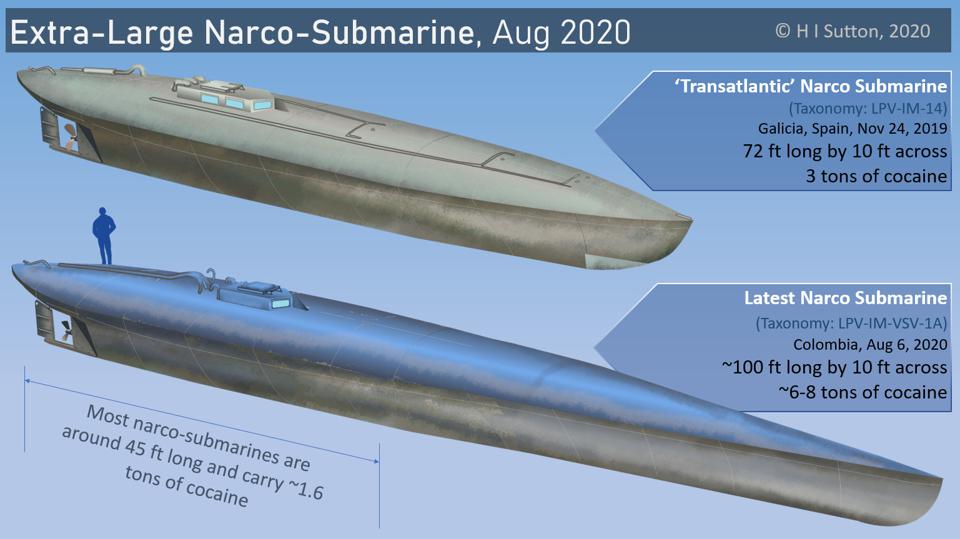
Narco Sub, Size XXL

Forbes brings us an article by blogger H I Sutton (Covert Shores), probably the best unclassified source on maritime smuggling technology in the English language, reporting discovery of an exceptionally large self propelled semi-submersible seized by Colombian forces before it could sail. The mystery is why so large and what was it expected to do? My guess–going to the Western Pacific for transshipment somewhere in Oceania.


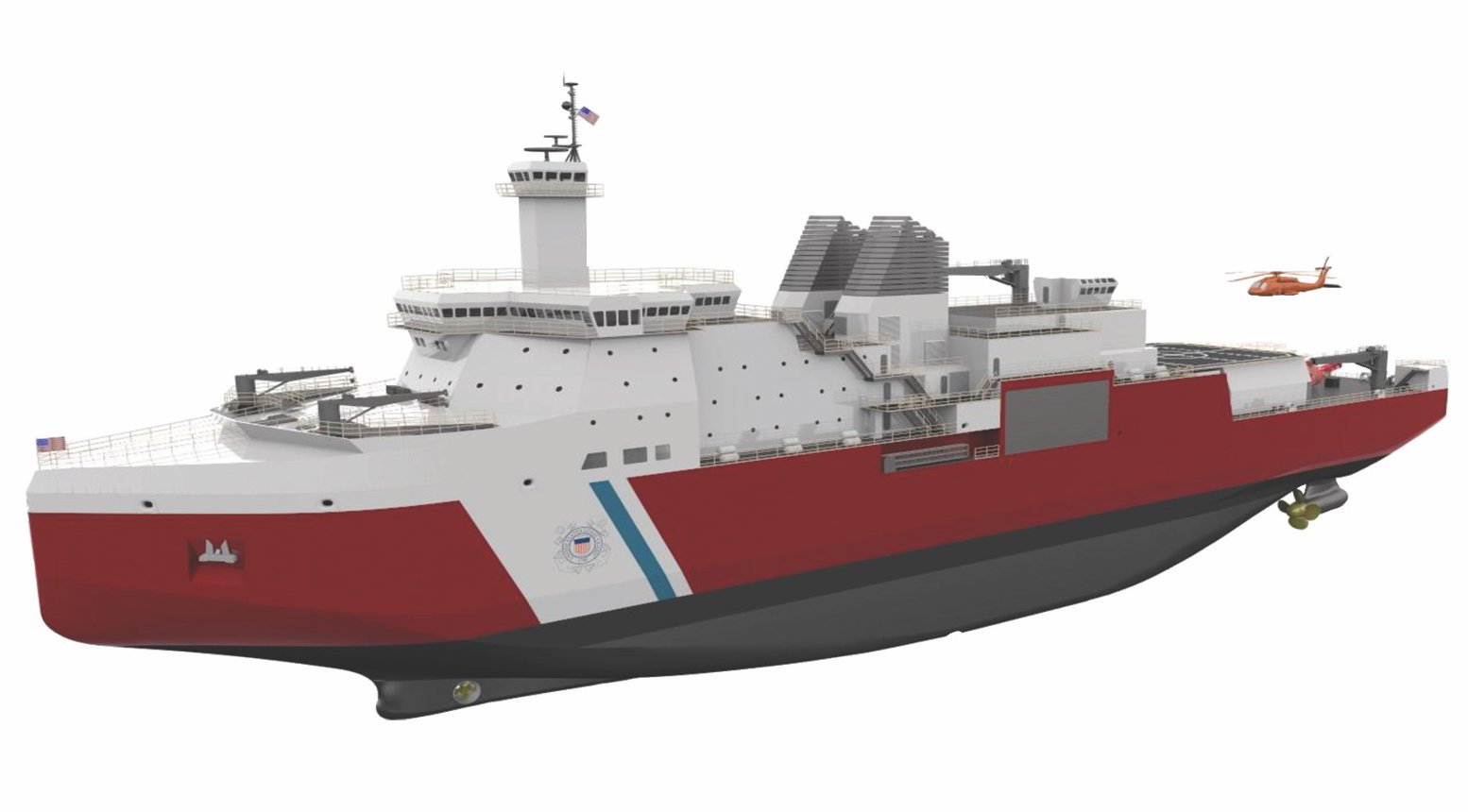
“NORTHCOM Nominee Supports Building New U.S. Arctic Base for Icebreakers” –USNI

The US Naval Institute News service reports that  Air Force Lt. Gen. Glen VanHerck, nominee to the post of NORTHCOM commander, “told a Senate panel he would support placing a base for the Coast Guard’s new icebreaker fleet in the Arctic.”

That could mean different things. Is it a support base or a home base? There has been talk of a base in the Alaskan Arctic for a while now (here and here). The Alaska Congressional delegation would obvious like investment in additional infrastructure in Alaska.

If the thought is that one or more icebreaker should be homeported at a new port in the Arctic, or anywhere in Alaska, that would be a mistake. The benefits of proximity to the operating are proportional to the number of sorties. The fewer sorties to the operating area, the less important. The Polar Security Cutters will probably have the greatest endurance of any ships in the Coast Guard. They will probably deploy to the Arctic only once or twice a year at most. There are a number of other important considerations.

Where will the ships go into dry dock? Ideally, it should be in their homeport. At least there should be good, reasonably priced, frequent transportation between the homeport and the location of the dry dock.

Where will the crew train? Both as teams and as individuals? A lot of training is done at Naval Bases. How easy is it to get there? There are travel costs to consider.

We should consider the quality of life of both the crew and the dependents. Spouses frequently have careers of their own. Families need or want a second income. Will spouses, who want to work, be able to find a job? A good job, in their career field?

For the next few year we can really only consider what will happen to the first three Polar Security Cutters.

  • For logistics and support reasons, we will want to base all three of the first Polar Security Cutters together.
  • We know the first and second will be used primarily in support of operations in Antarctica.
  • Even when we get three, we would not be able to say that number three will never deploy south.

So basing any of the first three PSCs in Alaska is unnecessary, unwise, and perhaps unworkable.

The Coming Showdown, China vs Japan, Over Islands NE of Taiwan

Image: Facebook

Asia Times offers an analysis of a likely coming confrontation between China and Japan.

“Japan’s Sankei newspaper reports that Beijing has warned the Japanese government that many Chinese fishing boats may soon enter waters near the Japanese-held Senkaku Islands, which China also claims as its Diaoyu Islands.”

The ranking US military representative in Japan says the US will help the Japanese monitor incursions.

“The United States is 100 percent absolutely steadfast in its commitment to help the government of Japan with the situation,” Lieutenant General Kevin Schneider said during an online press conference.

“They (Chinese ships) would go in and out a couple of times a month and now we are seeing them basically park and truly challenge Japan’s administration,” he added.

What is going on?

  • There are likely mineral resources in the EEZ around these islands which China would like to exploit.
  • They would like to turn the South and East China Seas into sovereign Chinese territory to the exclusion of everyone else.
  • The Chinese will always welcome a chance exact a bit of revenge on Japan for the aggression suffered during WWII and earlier.
  • Perhaps most importantly, in the long run, taking over these islands would potentially complete the encirclement of Taiwan with Chinese bases with shore based missiles that could enforce a blockade.

The Chinese may actually have a valid claim to these islands, but they are unwilling to go to an international tribunal with their case, because they cannot add to the legitimacy of tribunal decisions when their other claims would not hold up in international court.

We can expect the Japanese will attempt to use their Coast Guard to deal with this. The Chinese will counter with their own Coast Guard.

We may end up see seeing more ramming than at any time since the Battle of Salamis.

“Japan To Build Six Patrol Vessels For Vietnam’s Coast Guard” –Naval News

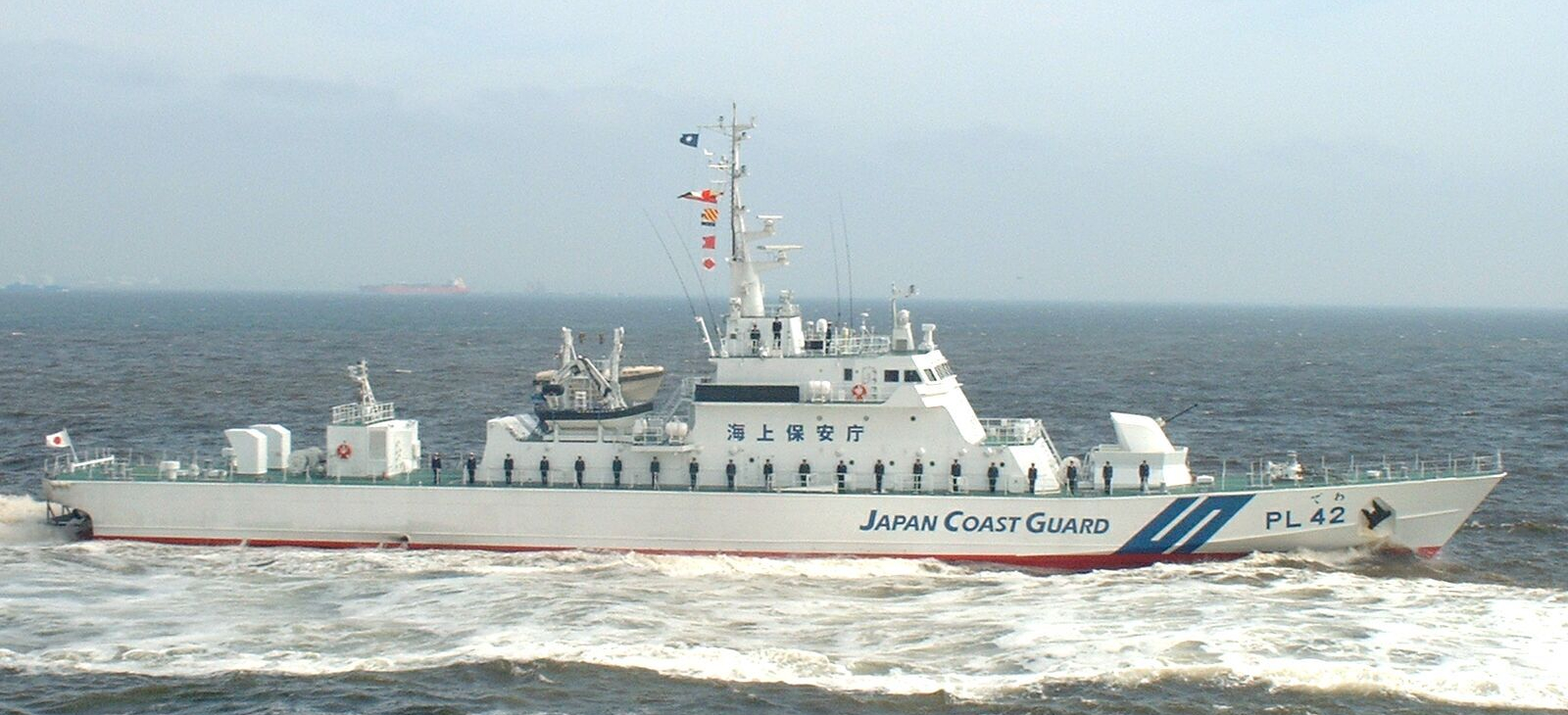
Japan Coast Guard(JCG) PL42 Dewa. Photo credit: Wikipedia, No machine-readable author provided. Sizuru~commonswiki assumed (based on copyright claims).

Naval News reports that,

The Vietnamese government signed an agreement with the Japan International Cooperation Agency (JICA) on July 28 to finance a project to build six patrol vessels for the Vietnamese Coast Guard (VCG). The vessels, based on the Aso-class of the Japan Coast Guard (JCG) will be built in Japan.

There are some things that are noteworthy here.

  • Japan has started providing assistance to many of its neighbors and helping to strengthen their coast guards seems to be a favorite method. Helping the Philippines here and here. Malaysia here.
  • In this case it is in the form of a very low interest loan (0.1%) with generous repayment terms, to have ships constructed in Japan (good for the Japanese shipbuilding industry).
  • The speed of construction is also noteworthy, six ship with the last to be delivered Oct. 2025.
  • The cost of each of these 79.0 m (259 ft 2 in) cutters is about the same as that for our Webber class WPCs.

The ASO class has not been built since 2006, but they are smaller and presumably cheaper than the larger classes of Japanese Coast Guard large patrol vessels (PL) that followed. The class was built shortly after the Battle of Amami-Ōshima and apparently incorporated lessons from that engagement including a heavier weapon, the Bofors 40mm/70, and ballistic protection for selected areas of the ship. They are also relatively fast at over 30 knots.

“Watchful Eyes, Task Force Chief: Indo-Pacific Partners Collaborate to Disrupt Traffickers” –Indo-Pacific Forum

Rear Adm. Robert Hayes, director of Joint Interagency Task Force (JIATF) West since April 2019 leads U.S. Indo-Pacific Command’s counterdrug activities

The Indo-Pacific Forum has an interview with Rear Adm. Robert Hayes, director of Joint Interagency Task Force (JIATF) West. He provides a look at the trans-Pacific drug problem including the interdiction of precursor chemicals and Fentanyl.

Polar Landing Craft

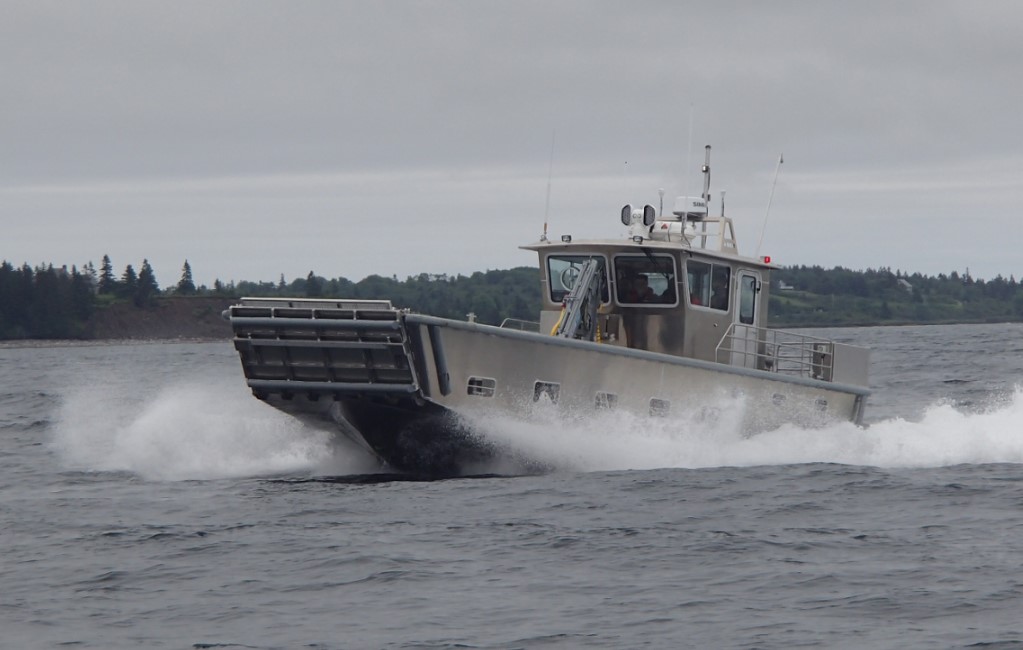
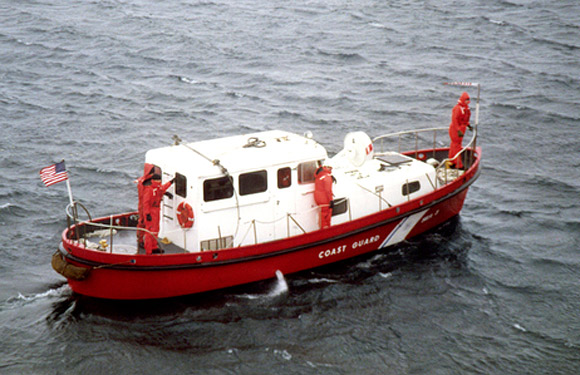
Arctic Survey Boat

The Coast Guard has issued a Request for Information (RFI) for a “Polar Landing Craft” (PLC) to be used from the Polar Security Cutter (apparently one per ship). (See the link on the photo caption as the foot of the post for information on a similar craft developed for the Canadian Arctic Offshore Patrol Ship.)

The U.S. Coast Guard intends to procure three Polar Landing Craft (PLC) as utility boats for the Polar Security Cutter (PSC) Class heavy icebreakers.  The two existing utility boats used by the USCG’s existing Icebreakers, the USCGC POLAR STAR and HEALY, are the Arctic Survey Boat (ASB) and the Landing Craft Vehicle and Personnel (LCVP).  The performance capabilities of these two boats, have been combined in the attached Specification and Statement of Work to create the desired capabilities of the PLC for deployment and use from the PSC.

Basic specifications are:

  • Maximum Length: 38 feet
  • Max Beam: 12 feet
  • Max Displacement: 20,000 pounds
  • Max Height, Keel to Highest Point (Antennas in stowed position) 15 feet

I have copied and pasted here some of the more salient specifications included in the 68 page draft specification document (accessible from the RFI linked above).

051-2.1 Operate – The PLC shall be capable of operating and conducting missions in mid Sea State 3.

051-2.2 Survive – The PLC shall be capable of surviving in Sea State 4.
051-2.3 Water Temperatures – The PLC shall be capable of being operated continuously in water temperatures ranging from 28 degrees to 95 degrees Fahrenheit.
051-2.4 Air Temperatures – The PLC shall be capable of being stowed continuously and
operated continuously in air temperatures ranging from -40 degrees to 95 degrees
Fahrenheit.
051-2.5 The PLC shall operate in ice and slush not to exceed 1/2 inch. Shall operate in
brash ice and ice floes of a minimum of 3/10 coverage.

051-2.6 Speed – The PLC, in the Performance Condition Weight, shall be capable of
transiting at full speed in Sea State 0, 10 knots in Sea State 3, and at a minimum of
6 knots in Sea State 4 without damage to the boat’s structure, equipment or harm
to the crew or embarked passengers.

051-4.1 Full Speed – The PLC shall be capable of achieving 25 knots sustained speed in Sea State 0 in the Performance Condition Weight.
051-4.2 Range – The PLC shall be capable of transiting 100 NM (threshold) or 200 NM
(objective) in the Performance Condition Weight at the most economical speed
with a useable 10% fuel reserve in Sea State 0.

051-7.1 The PLC shall be capable of towing a variety of craft of similar displacement and weight, astern and alongside, in conditions up to Sea State 3.
051-7.2 The PLC shall be capable of being towed by the bow or alongside.

070-3.1 The PLC shall have a fully enclosed pilothouse and shall include seating for 5
persons (threshold) or 6 persons (objective) onboard.

070-3.7 The PLC shall be capable of operating with a total of twelve (threshold) or fifteen (objective) persons onboard.
070-3.8 The PLC machinery and systems shall be capable of being easily reached for
inspection, removal, or maintenance without removal of permanent boat structure.
070-3.9 The PLC shall be equipped with a powered bow ramp with a minimum width of at least 6 feet and rated for at least 1,000 lbs.
070-3.9.1 The bow ramp shall have a minimum length of at least 4 feet 6 inches.
070-3.9.2 The bow ramp shall be capable of deployment up to 45 degrees below
horizontal.
070-3.9.3 The bow ramp shall be electrically or hydraulically powered.
070-3.12 The PLC shall have at least 75 square feet of recessed open deck space forward of the pilothouse to store a minimum of 3,000 lbs of cargo, personnel and
equipment. (assuming the width of the recessed open deck space is the same as the minimum width of the ramp-6′, then the space would be at least 12.5′ long, less than a third of the maximum permissible length–Chuck)

“Naval Warfare, Naval Doctrine Publication 1”

The U.S. Coast Guard Cutter Waesche (WMSL 751) conducts a replenishment-at-sea with the fleet replenishment oiler USNS Laramie (T-AO 203) while patrolling the Eastern Pacific Ocean, April 20, 2020. Waesche is deployed to the U.S. Southern Command area of responsibility to support Joint Interagency Task Force South’s mission, which includes counter illicit drug trafficking in the Caribbean and Eastern Pacific. U.S. Coast Guard photo by Chief Petty Officer Dave Horning.

CIMSEC has provided us with both a pdf copy of the new Naval Warfare Doctrine and a comparative analysis of the 2020 version with the preceding 2010 version, done by Jimmy Drennan, President of the Center for International Maritime Security (CIMSEC).

The doctrine is jointly published under the signature of the Coast Guard Commandant as well as that of the CNO and Commandant of the Marine Corps. The Coast Guard is mentioned 58 times in the 88 pdf pages.

The new doctrine is easy to read, and appears to be written for a wide audience. Acronyms are kept to a minimum. It is really a return to the fundamental concepts of Seapower. In particular it talks about five enduring functions:

  • Sea Control,
  • Power Projection,
  • Deterrence,
  • Maritime Security, and
  • Sea Lift

The Coast Guard certainly has major roles in Maritime Security and Sea Lift, along with possible lesser roles in other areas.

It is not difficult reading at all, 68 pages in the basic document, in large format, with lots of pictures. There is a ten page glossary and just over a page of acronyms at the end, most of which you will not need.

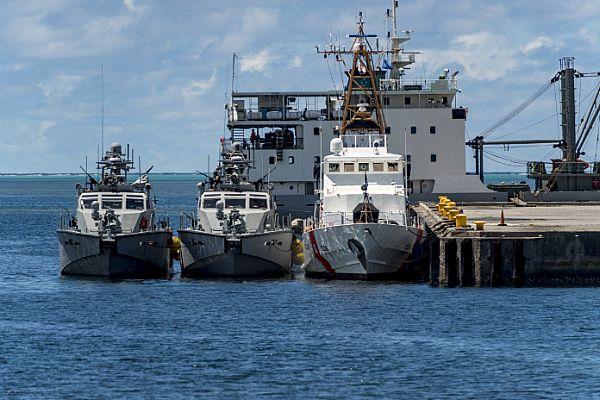
COLONIA, Yap (July 4, 2019) The U.S. Coast Guard Island-class patrol boat USCGC Kiska and Mark VI patrol boats assigned to Coastal Riverine Squadron (CRS) 2, Coastal Riverine Group 1, Detachment Guam, moored in the Micronesia port of Yap. CRG 1, Det. Guam’s visit to Yap, and engagement with the People of Federated States of Micronesia underscores the U.S. Navy’s commitment to partners in the region. The Mark VI patrol boat is an integral part of the expeditionary forces support to 7th Fleet, capability of supporting myriad of missions throughout the Indo-Pacific. (U.S. Navy photo by Mass Communication Specialist 2nd Class Jasen Moreno-Garcia/Released)

“Coast Guard Sails Medium Cutter North of Arctic Circle as Nanook Exercise Kicks Off” –USNI

The US Naval Institute News reports that

“The Coast Guard for the first time in years sent one of its medium-endurance cutters to the Atlantic Ocean north of the Arctic Circle, as the sea service joins the U.S. and Canadian navies for a yearly maritime exercise.”

This is Operation NANOOK-TUUGAALIK 2020, the maritime portion of Operation NANOOK. In past years, when the Coast Guard participated, we usually sent a buoy tender. I don’t believe it has ever happened before, but this year the US Navy is sending a destroyer. According to Naval Technology,

“Participating assets include USS Thomas Hudner (DDG 116) guided-missile destroyer, the Royal Canadian Navy ships HMCS Glace Bay, HMCS Ville de Quebec, and MV Asterix; DDG 116, US Helicopter Maritime Strike (HSM) 46.2, the US Coast Guard cutter USCGC Tahoma, French Navy coastal patrol vessel FS Fulmar, and the Royal Danish Navy frigate HDMS Triton.” (Photos below–Chuck)

The Navy seems to be particularly concerned about doing small boat ops in the Arctic environment.

“We’ve really heavily relied on partners, including the Coast Guard, who have recent experience operating there,” he said.

Arleigh Burke-class guided missile destroyer USS Thomas Hudner (DDG 116) (U.S. Navy photo by Mass Communication Specialist 1st Class Brian G. Reynolds/Released)

Canadian frigate HMCS Ville de Quebec

Danish frigate HDMS Triton F358 in Reykjavik – Iceland (2016). Photo credit: CJ Sayer via Wikipedia

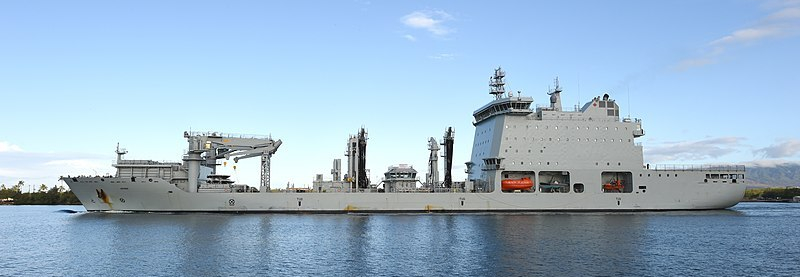
Royal Canadian Navy supply ship MV Asterix (U.S. Navy photo by Mass Communication Specialist 1st Class Jimmie Crockett/Released)

Canadian navy Kingston-class maritime coastal defense vessel HMCS Glace Bay (MM 701) (U.S. Navy photo by Mass Communication Specialist 2nd Class Rafael Martie/Released)

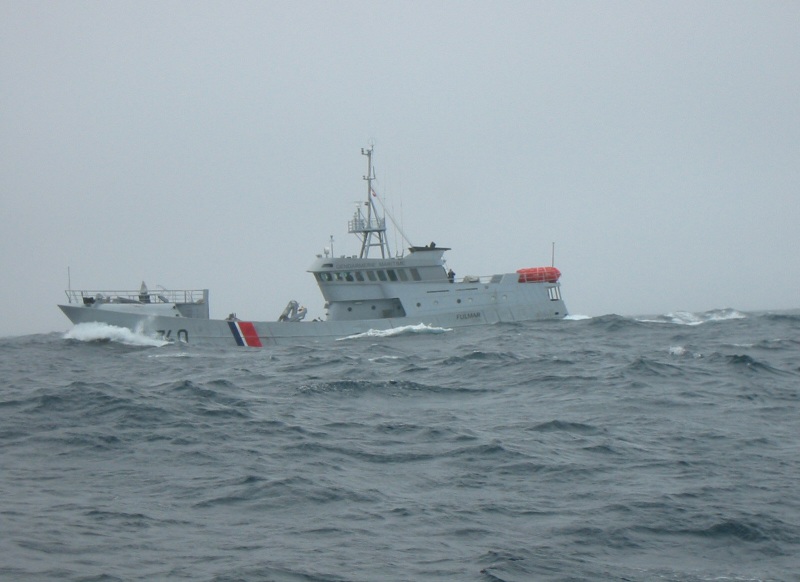
FS FULMAR P740. Description: Owned by French Navy and crewed by Gendarmarie. Built as fishing vessel ‘Jonathan’1991 at Boulogne,re-built 1996/97 at Lorient for French Navy as patrol boat, LOA 39M; beam 8.5M; draught 4.7M. Displmt:680 tons full load. Note French Coastguard (AEM) stripes on bow. Vessel based on St.Pierre et Miquelon,off S.West coast Newfoundland.Photo credit © tabarly

USCGC Tahoma (WMEC-908)

Containerized Sonar

Naval News reports that the French Navy is testing a containerized Thales CAPTAS-1 active/passive variable depth sonar (VDS).

This not the only such sonar available. The Canadians offer a similar system.

Should it be necessary, such systems could conceivably allow sonar systems to be added to all Coast Guard cutters the size of the Webber class Fast Response Cutters and larger.