“SEAOWL TECHNOLOGY SOLUTIONS completes sea trials of its IPD aboard La Confiance-class patrol vessel” –Naval News

We talked about this device earlier here and here. I have to believe these devices have more uses than just target designation including navigation and man-overboard recovery. It quickly, quietly, and accurately passes information to the bridge, CIC, or remote weapons operator.

Both the text and video talk about 3D designation. I have to assume that means range and elevation as well as bearing. They also claim to have solved the potential parallax problem (differences in target bearing when taken from different locations on own ship).

This could be particularly useful for the Webber class going to PATFORSWA where they might be confronted with the asymmetric threat of large numbers of fast inshore attack craft.

“National Security” –Proceedings of the Marine Safety and Security Council

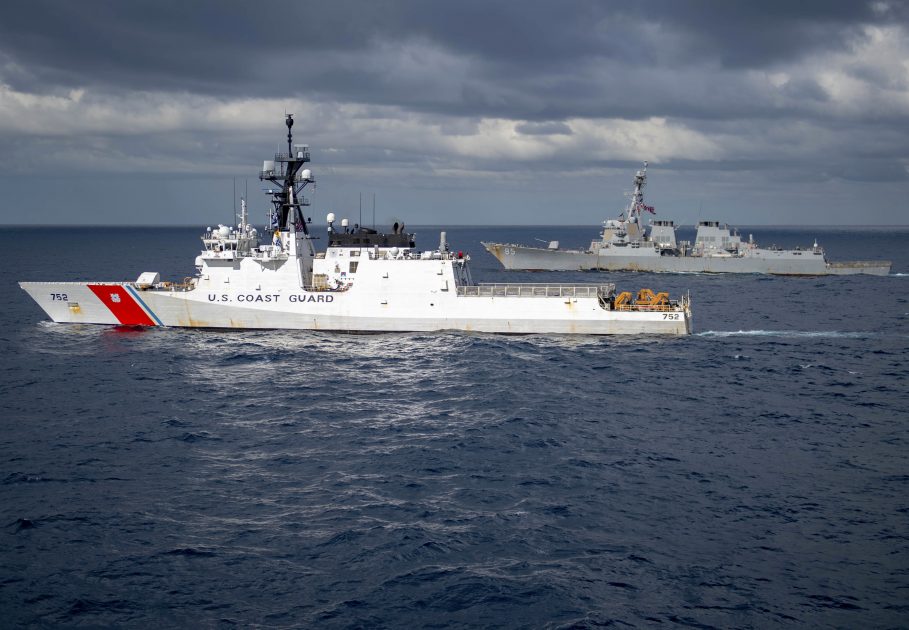
USCGC Stratton (WMSL-752), left, and the U.S. Navy Arleigh Burke-class guided-missile destroyer USS McCampbell (DDG-85) maneuver in formation during Talisman Sabre 2019 on July 11, 2019. US Navy Photo

A new issue of the Proceedings of the Marine Safety and Security Council has been issued, and it is a bit unusual in that it is themed “National Security.” You can down load it here.

It is 80 pages, and I have just quickly glanced through it, but looks well worth some time.

France Allocates One Billion Euros to Build Ten Offshore Patrol Vessels

Marine Nationale photo, FS Lieutenant_de_vaisseau_Lavallée, one of seven 80 meter (263′) 1,270 ton D’Estienne d’Orves-class avisos or corvettes being used as Offshore Patrol Vessels that are to be replaced.

France has been building a lot of Coast Guard Cutter like vessels recently and it looks like they will be building more. Naval News reports:

Ten new generation OPVs will replace the A69 type (D’Estienne d’Orves-class) PHM (formerly Aviso / light frigates and then reclassified as patrol vessels) based in Brest (Atlantic Coast–Chuck) and Toulon (Mediterranean- Chuck) and the PSP patrol boats based in Cherbourg (English Channel-Chuck).

Cormoran (P677), one of three 23 knot, 54 meter (177′), 477 ton French navy PSP patrol boats. Brest, Finistère, Bretagne, France. Photo by Gary Houston (Notice the striping similar to that carried by USCG cutters)

The one billion Euro contract awarded to Naval Group (formerly DCNS) would mean a unit cost of approximately 100M Euros ($112M).

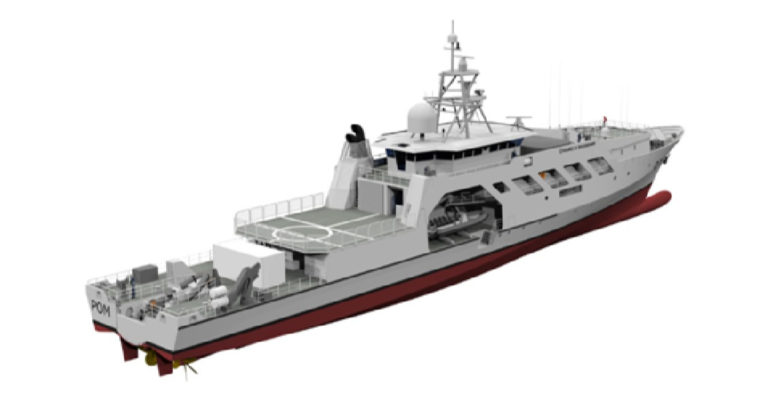
Rendering of the future “POM” OPV of the French Navy.

Apparently, based on price, they will be larger than the six recently contracted 70 meter, 22knot “POM” patrol vessels. (224 million euros, 37.3 Euros or about $42M each)

Not long ago Naval Group and ECA group was given a 2B Euro contract to produce twelve 2800 ton Mine Countermeasures ships for the Dutch and Belgium Navies. Given that ship yard prices for similarly complex ships tend to be proportional to their displacement, and that these ships are probably less complex than the MCM, I would suspect that the new OPVs will be about 1,680 tons. That would make them similar in size to the WMEC 270s. Given the ships they are replacing and the character of recent construction, they will probably a bit longer and faster than the 270s, probably about 90 meters long, at least 20 knots but probably more, with a flight deck for a medium helicopter like the NH90, a hangar for a smaller helicopter similar to the H-65 and probably the 700 kilo rotary wing unmanned aircraft planned for POM. There will probably be space for containers. The crew will be small by Coast Guard standards, maybe less than 50, but will likely have additional accommodations for about 30 in addition to the crew.

Weapons: It will almost certainly have the Nexter Narwhal 20 mm cannon and .50 caliber machine guns, but there is no indication if they will have anything larger. French Navy vessels that wear the “Coast Guard Stripe” apparently have no weapons larger than .50 cal. (12.7mm). The seven A69 corvettes to be replaced have 100mm guns, but these ships were not originally designed as law enforcement vessels, and once also had Exocet anti-ship cruise missiles, so a medium caliber gun may not be seen as a requirement. If they wanted to put a medium caliber gun on these at small cost, the French Navy almost certainly has numerous, surplus, still very effective 100mm guns, but their newer ships mount the Super Rapid 76mm, which weighs less than half as much. The quoted French Ministry of Armed Forces statement might suggest they see a need for stronger armament.

“In a context marked by the increase in maritime traffic and the toughening of threats at sea, patrol boats fulfill a very broad spectrum of missions: support for deterrence, presence in areas of sovereignty and interest, evacuation, protection, escort and intervention in the framework of State action at sea.”

The linked Naval News post mentions the European Patrol Corvette program as a possible basis for this program, but given their projected displacement of 3000 tons, they would be beyond the projected budget.

There is a good chance these ships will emerge as an upgraded version of the the 87 meter (285′), 1450 ton L’Adroit (above) which was sold to Argentina along with three similar ships. The Naval News post indicates that the projected cost of the new OPVs is almost twice the cost so of the L’Adroit class, but they were designed for export. Meeting Navy standards with better equipment and improved survivability can substantially increase cost. When the Royal Navy built their River Batch II OPVs it was based on OPVs originally ordered by Trinidad and Tobago. Modifying the design to meet Royal Navy standards caused a great increase in price. The three vessels were built for Trinidad and Tobago cost £150M pound (US$237.8 M). When the Royal Navy contracted for three ships that met their standards, the outwardly almost identical ships came in at a fixed price of £348 million–a few years later, but more than double the price.

Freedom of Navigation off Venezuela

Orthographic map of Venezuela centered on Caracas
Controlled territory in dark green.
Claimed territory in light green.
From Wikipedia, Author: Addicted04

Perhaps significantly for the Coast Guard’s drug interdiction efforts in the Caribbean, Navy Times is reporting that the Navy has been conducting Freedom of Navigation Operations off the Venezuelan coast in response to excessive claims not in accordance with the United Nations Convention on the Law of the Sea (UNCLOS).

A command official said the mission was undertaken “to challenge Venezuela’s excessive maritime claim of security jurisdiction from 12 to 15 nautical miles along its coastline and prior permission requirement for military operations within the Exclusive Economic Zone, which are contrary to international law.”

These are waters where Coast Guard cutters conduct law enforcement operations. If Venezuela wants to make a show of opposing US operations in these waters, it would be a lot easier for them to take on a 210 that a DDG or even an LCS.

Wintering Over in the Arctic

A large number of research teams conduct very different experiments

As you may know, there is currently an expedition underway utilizing the German Icebreaker Polarstern to winter over in the Arctic, drifting with the ice. A German friend and blogger, Sven, pointed me to a 19 Sept 2019 German language interview that provides background on the purpose of the expedition and how it was to be conducted. The original article has more pictures and links to additional information. Using Google Translate I have provided a rough English translation below. Hopefully Deutsche Welle will forgive me. 

MOSAiC: Great Arctic Expedition Launches
For a year, the research vessel Polarstern will drift frozen through the Arctic Ocean. Researchers want to better understand the influence of the Arctic on the climate, says tour manager Christian Haas in the DW interview.

Deutsche Welle: On 20 September, a large-scale expedition of the Alfred Wegener Institute will take off with the research vessel Polarstern to the Arctic. What is it going to be about?
Christian Haas: On the expedition, we want to better understand the processes and energy flows between the air, the ocean and the ice. For this purpose, we will be freezing in the Arctic for a whole year with our research icebreaker Polarstern.
The processes and conditions there change greatly over the course of the seasons. In winter, we examine the factors that affect the freezing and growing of the ice. In the summer, the situation reverses. Then the ice melts and the ice sheet breaks open to form ice floes.
As the ice is several years old, it is necessary to know the interplay between winter freezing and summer melting in order to be able to assess whether the ice is getting thicker or thinner.

The polar star will drift through the Arctic Ocean with the ice. How exactly does it work?
The sea ice of the Arctic becomes only a few meters thick. Because it is so thin, it can easily break and be driven away by winds and currents, so it is constantly moving. We use this movement, the so-called ice drift, to drift from Siberia over the North Pole to Greenland.
It also has a crucial advantage to drive with the same ice, because we can only judge how the ice is exposed to all the external influences and changes.

There have already been some expeditions to the Arctic. What makes MOSAiC so special?
The special thing about MOSAiC is that we are really there over the course of a year, i.e. throughout the freezing and melting season, and we can observe the processes in all their diversity. We are also a huge team of researchers from 19 nations. A total of 300 scientists are involved.
But everyone will only be on board for two months. We take turns and travel with Russian icebreakers to the POLARSTERN and away again. There are a total of six sections of the journey, each with 50 scientists on board. I myself will be there from December to February.

And what will be your task on the ground?
I am the tour leader of the expedition for my journey section. That means I take overall responsibility for the whole company during the two months. Our group deals with the properties of ice, with a focus on ice ceiling measurement.
In order to measure the thickness of the ice, it was necessary to drill holes earlier, which is very complex. We have developed a new procedure at the AWI. Using electromagnetic probes, we can measure the conductivity of the subsurface.
The ice is solid and therefore a bad electrical conductor while the salt water underneath is very good. This allows us to determine the distance between ice and water, i.e. the thickness of the ice, very precisely.
We will then compare the data with satellites, in particular the European CryoSat, which has been launched specifically for ice ceiling measurement. So we can then observe how the ice grows and becomes thinner.

You spoke of a variety of processes being investigated. What are the other groups exploring?
The main aim is to investigate why the thickness of the ice changes. This depends on a huge number of influences, such as the air temperature and humidity of the winds, solar radiation and also how much heat gets from the water to the ice.
All these factors are measured simultaneously in high temporal resolution – all with the question “How does this affect the thickness of the ice?”

Working at home and in the Arctic is certainly different. They have been there many times. What are the working conditions there?
Of course, there are risks that we do not have. You can get frostbite, break into the water or meet polar bears. I’ve met many polar bears. Everyone who moves in the Arctic carries a gun with them.
However, the Polarstern has never fired a shot at a polar bear. Because they are primarily curious and come because of it. Since they are also very anxious, they can easily be expelled with noise. So these are not risks that pose great dangers if you behave correctly.
The far bigger challenges are more in the extreme situation of being so far away from home, for so long. Especially in winter we work in complete darkness. In addition, we are constantly there with many other people, there is no more privacy.
In addition, all the means of communication that we are used to here, i.e. the Internet, satellite communications and telephone, are only possible to a very limited extent. Because there is only one satellite communication system that still works north of 75 degrees North.

Nevertheless, this expedition is very important – keyword: climate change?
The whole world is worried about climate change. The Arctic is the hotspot, or the epicenter of global climate change. Because in the Arctic we are seeing the most significant climate changes.
These are also particularly well observed due to the retreat of the ice. The Arctic is warming faster than the rest of the world. That’s why you have to go to the Arctic to understand what’s happening there and to be able to make predictions for the world.
And how is sea ice doing at the moment?
The area of arctic ice in summer has decreased by more than 50 percent in the last 40 years. Now, in September, the ice retreats most every year before expanding again in autumn and winter.
This year we are seeing the second smallest sea ice extent ever observed in the Arctic. From this point of view, it is good that MOSAiC is starting this year. This means that the initial conditions are among the most extreme and we are just looking at how the Arctic has changed in recent years and what the state of the ‘new Arctic’ is.

Metal Shark 70 knot “Super Interceptor”

Metal Shark has announced that they are producing fifteen high speed interceptors for “overseas military and law enforcement interests.” (I would think somewhere in the Persian Gulf.)

I have reproduced their press release below.


June 18th, 2020: Metal Shark Introduces 52-Foot, 80 MPH Military “Super Interceptor” with Production Underway

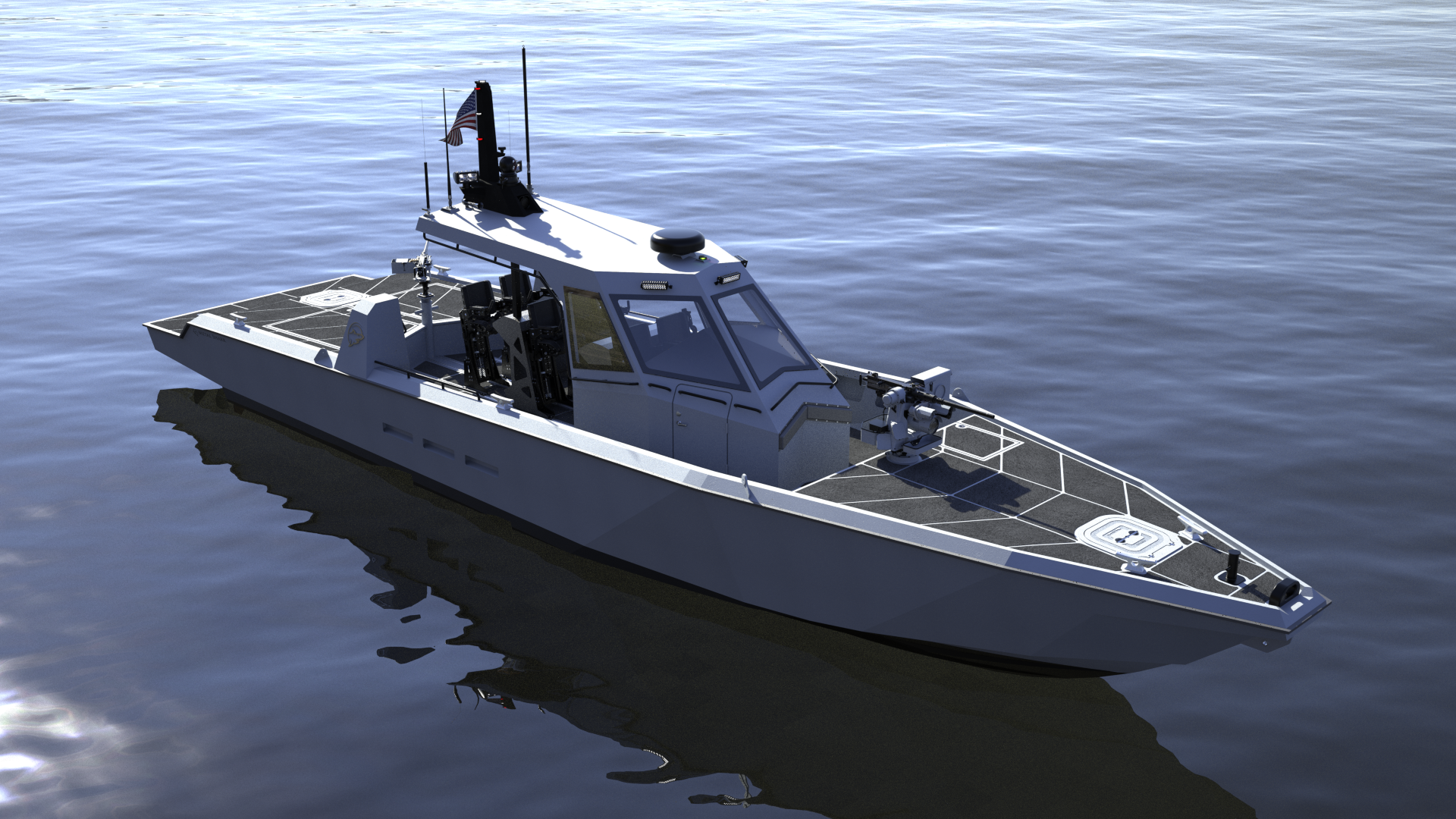
Jeanerette, LA – June 18th, 2020: Shipbuilder Metal Shark has introduced the welded-aluminum “52 Fearless Super Interceptor,” an offshore-capable, ultra-high-performance military patrol vessel delivering 70-knot top speeds. Production has commenced at Metal Shark’s Jeanerette, Louisiana USA production facility, with fifteen vessels currently on order for overseas military and law enforcement interests.

Metal Shark developed the 52 Fearless Super Interceptor in response to growing demand among military operators for larger and faster interdiction craft with greater range and better sea keeping.

“Customers from around the world have asked for a blue water-capable interdiction vessel with 60+ knot capabilities,” explained Henry Irizarry, Metal Shark’s Vice President of International Business Development. “With the 52 Fearless Super Interceptor, we have exceeded that requirement by a significant margin, with a multi-mission high-performance vessel delivering unmatched speed, handling, and sea keeping while also leveraging over a decade of parent craft Fearless-class past performance.”

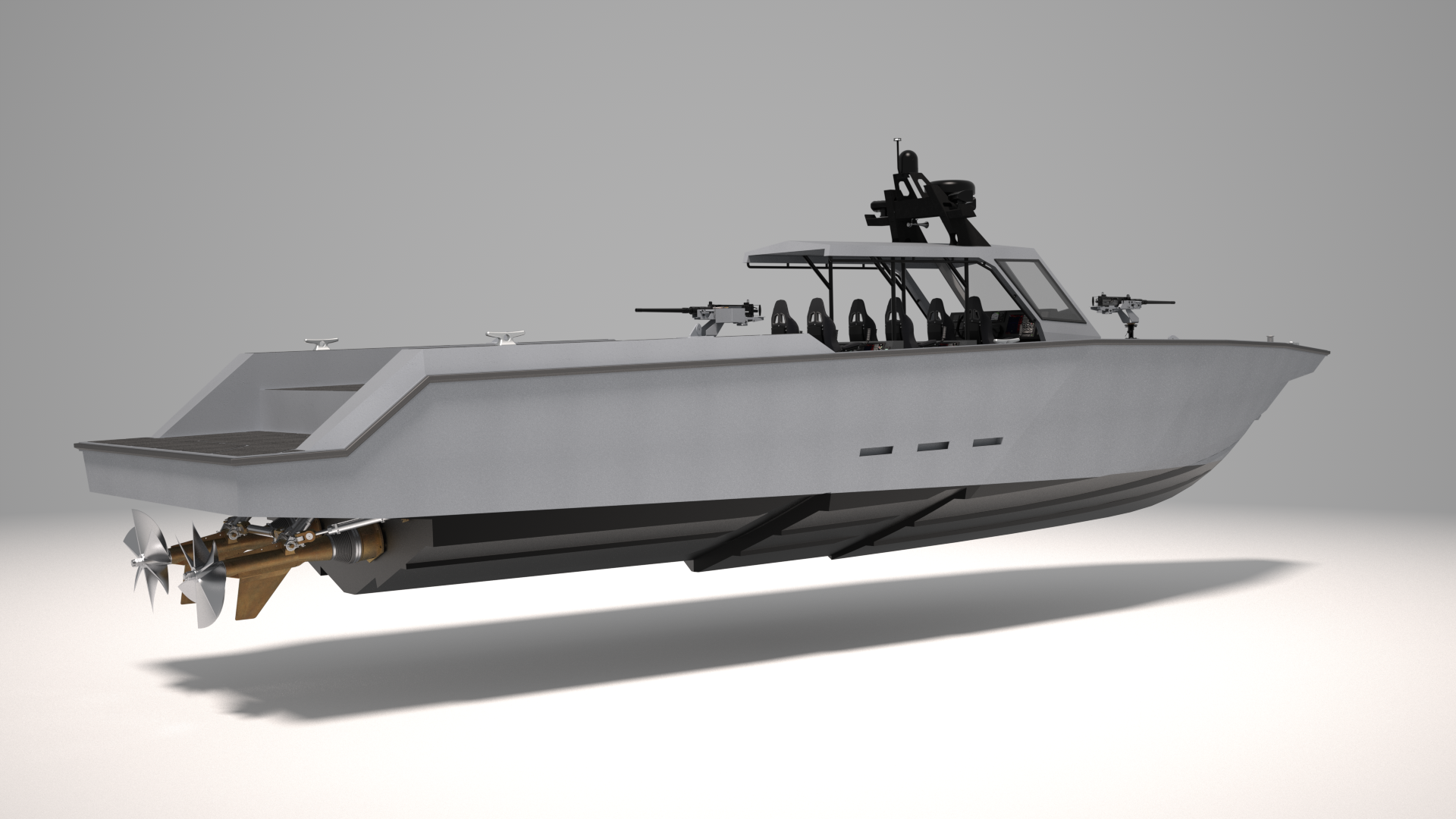
The new offering is a highly optimized version of Metal Shark’s 52-foot Fearless high-performance center console vessel, utilizing the proven Stepped Vee, Ventilated Tunnel (SVVT) running surface designed by naval architect Michael Peters. Metal Shark’s Fearless-class stepped bottom vessels are currently in service with the US Navy, NOAA, and multiple law enforcement agencies in the United States and Caribbean.

A custom-configurable platform designed for missions ranging from counter narcotics to the protection of exclusive economic zones and other related maritime enforcement activities, the new vessel is available with multiple pre-engineered configuration, propulsion, and equipment options.

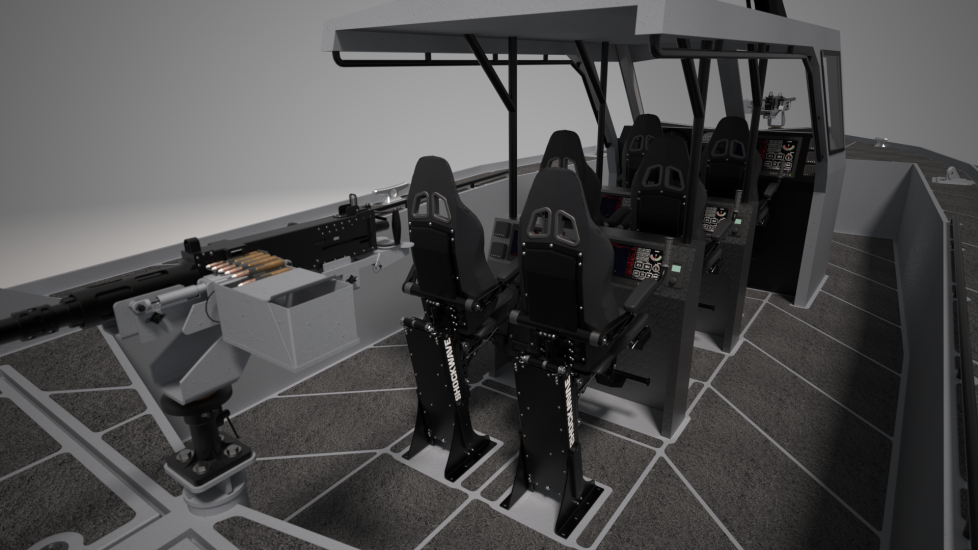
The first fifteen Super Interceptors are being built in a center console configuration with seating for six crew in Shockwave shock-mitigating seats beneath an integrated aluminum hard top. The vessels will be powered by twin 1,650-horsepower MAN 12-cylinder diesel inboard engines mated to Arneson ASD14 surface drives via ZF transmissions. Thus equipped, the Super Interceptor will reach a projected top speed in the 70-knot range. The vessel’s flexible configuration allows for a maximum fuel capacity of 1,000 gallons, which results in an incredible 12.5 hours endurance at 50 knots.

With an overall length of nearly 58’ (17.5 m), a beam of over 11’ (3.5 m) and an operational displacement of up to eight tons, the vessel is large and imposing. To satisfy modern military visual-deterrent requirements, the Super Interceptor boasts chiseled and menacing lines, including the distinctive “faceted hull” initially developed by Metal Shark for the US Navy and now being widely incorporated across Metal Shark’s product portfolio.

“In terms of speed, size, endurance, and sheer awe factor, this vessel represents a radical leap forward,” said Metal Shark CEO Chris Allard. “The Fearless Super Interceptor will be made available for our customers in a range of styles and sizes to meet various operational requirements. We look forward to showcasing the superlative performance of this next-generation military patrol platform and providing additional details in the months ahead.”

To see a gallery of images click here.

Metal Shark is a diversified shipbuilder specializing in the design and construction of welded aluminum and steel vessels from 16’ to over 300’ for defense, law enforcement, and commercial operators. Key customers include the United States Coast Guard, Navy, Air Force, Army, foreign militaries, law enforcement agencies, fire departments, passenger vessel operators, pilot associations, towboat operators, and other clients worldwide. With three fully self-contained shipbuilding facilities in Alabama and Louisiana USA plus a dedicated engineering facility in Croatia, Metal Shark’s 500+ employees produce over 200 vessels per year with a proud and proven track record of high quality, on time deliveries.

“Navy of Cameroon plans to purchase two Island-class American patrol boats” –NavyRecognition

The Coast Guard Cutter Naushon (WPB 1311) 110-foot Island-class patrol boat and crew conduct training in Kachemak Bay near Homer, Alaska, Feb. 16, 2018.(Picture source U.S. Defense Visual Information)

NavyRecognition is reporting that two of the 110 foot Island class cutters will be going to Cameroon.

Cameroon is one of several West African nations that share coast lines on the Gulf of Guinea. The area has been a hot spot for piracy and other forms of maritime criminal activity.

Fathers’ Day Remembrance

This Sunday is Fathers’ Day. For many it seems, the military is a family affair. Many of today’s coasties came from military families. For my generation, many of our parents went through World War II in uniform.

Capt. Bob Gravino, USCG (ret.) is the scribe for my Academy class Alumni Bulletin class notes. He had been told the stories of fathers and other family members who had military experience in WWII and was concerned that those stories would be lost, so he has tried to recover them. I suggested we post them here.

It seems men of that generation seldom talked about their experiences. My father-in-law was an aircraft mechanic and tail gunner on B-25s as part of General Kenney’s Fifth Air Force in the SW Pacific. Of French Canadian parents, he spoke fluent French, so of course the Army did not send him to Europe. He had been shot down and spent a day in a raft in the Pacific before being rescued, but my wife had never heard that until I drew him out.

Here are some of my classmates’ stories. If you would like to add your own remembrances, please put them in the comments.

From George D. Bond, II

My father was Army and Gayle’s Navy (his wife-Chuck).  Both in the Pacific Theater.

My father, George D Bond, was I the CCC (Civilian Conservation Corps) until they disbanded it in 1942.  Like many he joined the Army as a 2nd LT, CWO1.  Don’t ask me!  CWO was permanent rank and 2nd LT reserve one.  He was in training somewhere and then was in the Alaska Aleutian operations.  He told me nothing other than there was a woman behind every tree and not a tree in sight and of crawling over the tips of hills as the wind was so bad.  I learned more reading “The 1000 Mile War”.  He was involved (he was infantry) when they kicked the Japanese out of the tip of the Aleutian Islands.  In the book they say the US fought Japan and the weather.  Japan fought the US and the weather.  The weather won.  He got home earlier than most as I was born May 1946.
Gayle’s father, Clyde William Solt, was an oiler on a Navy refueling vessel all around the Pacific.  Gayle says he also said little other than they wrapped their tools in cloth so no potential spark could occur and set them off. (Sounds like a gasoline tanker–Chuck)
My grandfather tried to serve but they said no as he was a minister.  One of Gayle’s grandfathers was in the Navy and after his enlistment was up signed up for the Coast Guard and help set up the Ocean Stations we did.  He ended up XO of the CG training station Groton at Avery Point.
From James T. Doherty, Jr.:

WOJG James T. Doherty (Sr.), 1946

My father, James T. Doherty (Sr.), was a Warrant Officer Junior Grade in the US Army during World War II. He voluntarily enlisted in US Army in February 1941, ten months before Pearl Harbor, and served until his final discharge in January 1946. He was trained as a combat medic. He served in the European theater from May 1943 through October 1945, including operations in North Africa, Italy, and France. He never spoke of his wartime experiences, but my aunts (his younger sisters) told me that his pre-war carefree attitude had been changed significantly after he treated men injured in horrific combat operations, particularly during the Italian Campaign. He was in Italy from October 1943 through October 1944. Regarding the rest of my family, four uncles served, two Navy in Pacific, one Army and one Army Air Corps in Europe. Additionally, one aunt was a Navy WAVE in Pacific, and a much older uncle had served in Army in Europe during World War I. My wife’s father, Harold J. Doebler, was a Navy radioman in an LST in the Pacific, and two of her uncles were Army and Army Air Corps in Europe. Like my relatives, my father-in-law and Patti’s uncles also voluntarily enlisted. All are gone now, my personal Greatest Generation.
From David Frydenlund:
This is a tale of three brothers from the plains of eastern North Dakota who, after having to quit school early because of the Great Depression and the loss of the family farm, were swept up in the events of WWII.   These are my recollections based on stories told at family gatherings. The fundamental arc is right but the dates and details are a little sketchy and I have no way to research them. Interestingly, like many veterans, none of them talked a lot about their experiences and they usually only shared after some alcoholic release of inhibitions or when, after I entered the military, they thought some experience that they had had would provide a useful lesson to me.
The oldest, my father, Marvin Frydenlund, entered the Navy in the summer of 1941. He had tried to enlist earlier but was under weight. His recruiter gave him a special “fattening” diet and, after a couple of weeks and with the aid of pockets full of rocks he passed the threshold. He then went straight to Great Lakes Naval Receiving Center. On graduating from Boot Camp he was ordered to the USS Maryland (BB-46), a Colorado Class battleship, as a fireman. He arrived at Pearl Harbor in early November. On December 7 Maryland was moored inboard of USS Oklahoma on Battleship Row. When GQ sounded he went to the engine room, but after the first (of two) bombs hit Maryland he was sent up on deck with a fire ax to cut away the mooring lines to Oklahoma as she had taken 7 to 9 torpedoes, was listing badly, and it was feared she would drag Maryland under as she rolled. As soon as the lines were cut, Oklahoma rolled. After the attack was over he spent the rest of the day, and most of the next two, as part of a boat crew collecting bodies, mostly from Oklahoma and Arizona, and stacking them on the beach for Graves Registration.
After temporary repairs were done to Maryland she sailed to Puget Sound for permanent repairs. She then deployed for picket duty along the West Coast and then to North Australia (Christmas Islands) to block Japanese ship movements. In late May she went back to Pearl just in time to deploy as part of the south wall for the Battle of Midway, but saw no direct action. Some where in here he became an Electricians Mate.
After Midway it was back to San Francisco where, by freak chance, he got to spend the only day during the war where he saw his brother Roy. After a brief refit in San Francisco, Maryland went to Fiji and then to the New Hebrides as a blocking action to stop the Japanese from attacking Australia. He then received orders to the pre-commissioning crew of the USS Hornet (CV-12), Essex Class, in Newport News. Lacking transport, he was assigned to a Free Dutch tramp steamer as the loader on a newly installed 3” 50 gun. They fired it twice to make sure it worked and had an uneventful steam from West Pac to San Francisco. He reported in to Hornet and was assigned to schools to become an interior communications electrician (synchros, gyros, telephones, alarm systems). Hornet deployed west in February of 1944. Somewhere in here Marvin made “clean sleeve” Chief Electricians Mate. Unlike the relatively peaceful time he spent on Maryland (after Pearl…), Hornet was nearly continuously in action, but being a “lucky ship” she was rarely seriously damaged by enemy action, though she frequently suffered damage from her own planes accidents on landing.
She went an extended period without making any port calls doing a combination of UNREP and short refits at Ulithi Atoll. Just listing major actions I can remember, she participated in strikes on Japanese installations in New Guinea, Palau, and Truk and then took part in the Mariana and Palau Islands Campaign followed by the Battle of the Philippine Sea in June (nicknamed the “Great Marianas Turkey Shoot”). Then the liberation of the Philippines in late 1944, and the Volcano and Ryuku Islands Campaign in the first half of 1945. Then there were attacks on Formosa and Indo China. My dad’s GQ  station during much of this time was to a Damage Control team fighting flight deck fires and repairing deck damage caused by crashes of returning aircraft. He got to see way too much carnage.
Hornet’s luck ran out in a typhoon in June of 1945. Her flight deck was warped down at the bow by wind and wave. After steaming backwards at high speed into the wind to launch her aircraft off the stern she headed for San Francisco for repairs. My dad frequently said he did not regret missing the final preparations for the invasion of Japan.

The war ended abruptly with a couple of bombs. Hornet was assigned “Magic Carpet” duty and crossed the Pacific several times returning men and material from forward deployment. My dad claimed this was the most important thing he did during the war. Magic Carpet ended in February of 1946. Shortly thereafter my father was advised that his enlistment, which had been extended “For the Duration” was ended and he had to reenlist or be demobilized. Under the influence of my mother, he elected not to reenlist and left the Navy.

The next brother, Roy, has a much shorter story. He was also rejected by the Navy for being under weight and so enlisted in the Army in late January 1942. He was assigned to Basic Training (even he did not remember where) but did not go because his Basic Battery showed him to be a candidate for a special program. He was assigned directly to Signals Intelligence Schools where he learned first radio electronics, and then wire recorders, and then Morse code (to 60 wpm) and finally rudimentary Japanese. As he described it, an excellent shot his whole life, he never officially touched a gun in the Army. On finishing school he was ordered, with the highest priority, to Oahu via San Francisco. He was put on an express train to SF and, on arrival, was given priority transport to Angel Island for transport to Hawaii. And then, in a way only the military can really do, they lost track of him, and despite the fact that he appeared every Monday at the transport desk with his orders, and the fact that at least two ships left for Hawaii each week, he spent 4 months on Angel Island with no duties. It was during this time that he got to spend a day with Marvin in SF so it was a mixed bag. He then went to Oahu and spent the rest of the war listening in on Japanese communications and recording them both by hand and on wire recorders. Interestingly, he claimed that when his number came up for Magic Carpet he missed the cutoff for being assigned to Hornet to ride home (with his brother) by less than 100.

The last brother, Earl, was too young to enlist at the beginning of the war. He finally enlisted in the Marines after VE day. By the time he had finished his training the war was over. Except his war was not over. At some point (he was pretty vague and mumbled about still “Secret”) his company was deployed to China as part of an advisory team to the Nationalist Government Army which was engaged in a losing fight against the Peoples Liberation Army. He was also pretty vague about what he did in China or even when he left. He was not vague about some bits. His company suffered heavy casualties. He counted himself as lucky to not be one of them. It was the ugliest thing he had ever done and beyond the ugliest thing he could have imagined. He liked the Chinese peasants in the ranks (farm boys a lot like himself he would say), but had no use for their ruling class (officers and politicians). They had a reckless disregard for human life, except their own. The only thing he had a lower regard for was the Chinese Communist Party who shared the reckless disregard for life but added, in his view, a casual cruelty to what they did. Noting that promotion was almost non-existent, that a wider war was probably coming, and that he had seen all the war he needed in his lifetime, he left the Corps just in time to avoid the Korean Police Action.

I don’t know why, but these stories in no way deterred my brother and I from seeking commissions in the sea services of the United States.

Bob Gravino:

My father was in the US Army during WWll and served in the invasions of North Africa and Sicily, and then fought up the Italian peninsula to Rome.  He died at age 64, and never spoke about his time in the service.  My mother would talk about him waking up in the middle of the night screaming, which went on for five or more years after they were married in 1945.

Robert Henry: 

1st Lt. Harold F. Henry, lower left.

Dad flew out of North Africa and Italy in 1944 with the 15th  AAF. He participated in numerous missions including Ploesti, Budapest,, Bucharest and Vienna, and earned two Distinguish Flying Crosses. He never talked about his war time experiences and we only found out about his achievements after he passed away. I can only imagine what he went thru along with the rest of his generation to give us the freedom we now take for granted.

Mike Moore: 

When Thomas T. Moore Jr. passed away 14 years ago, our family and the nation lost a wonderful gentleman and patriot. He loved his creator, his family, and his country with all his heart and soul. My sisters and I think of him every day and miss his warm demeanor and endless optimism. Dad served in the Army Air Force during World War II as a radio operator in B-29s and in the Air Force during the Korean War as a radio operator in C-119s. He remained in the Air Force Reserve for a number of years after Korea. Dad never spoke about the missions he flew during either war, only saying that the flights were very long. When asked about his service experiences, he talked about the places he had been stationed, his crew, life on Guam during WW Ii, and life in Ashiya, Japan the Korean War. I only learned about the missions he flew after his passing by reading some of his service personnel papers in order to put together an obituary. That was the first time I found that he was in the 6th Bombardment Squadron (very heavy), 29th Bombardment Group, 314th Bombardment Wing, 20th Air Force. Dad played baseball (catcher) and football (line) on squadron teams. He was a St. Louis Browns fan and, after the Browns moved to Baltimore, an Orioles fan. He was a huge Tennessee Volunteers fan. Among my fondest memories was listening to play-by-play radio broadcasts on fall Saturdays. Dad was a virtual handbook on how to be a good father. He instilled in us a desire to do our best, do the right thing, and a strong sense of persistence to never give up. We miss him greatly and know there is a special place in heaven for him.
I know that the purpose was to honor our fathers. There are other fathers in our lives who are important to us. My father in law enlisted in the Navy prior to WW II, served destroyers, destroyer escorts, and transports in both the Atlantic and Pacific theaters. He ended his service as a Chief Watertender (forerunner of the BT rating). He later earned an education degree and taught school for 20 years. He was a wonderful father for Alice, her sister, and her brothers.
Gary Pavlik:

Photo: William Pavlik, gun captain of this twin 40mm. As a GM2 he would go AWOL to marry Aldia, Gary’s mother. For that he was busted to GM3.

My dad was on a completely CG crewed USN DE, the USS Lowe (DE-325), that did convoy escorts between NYC and ports in the Med. Had one confirmed sub kill and two probables.

USS Lowe (DE-325) in its later guise as USCGC Lowe (WDE-425). Maybe we could name an Offshore Patrol Cutter after her to commemorate the 351 Coast Guard manned Navy vessels and craft of World War II.–Chuck

When I was young what I heard about WWII from Dad was during conversations with his brothers, my uncles. One who served on subs in the Pacific theatre.

Dad’s youngest sister’s husband, my uncle Jack, was an 18 year old crew member of the USS Belleau Wood, an Independence-class light aircraft carrier, that took a Kamikaze hit and lost 92 crew members. At the end of the war he came home on leave and told everyone he was on an extended leave. He had gone AWOL. Eventually the shore patrol came and got him. He was discharged with a 100% disability and sent home. He did not talk about his war experiences until the last few years of is life.
A recollection burned into my memory is from mid-late 50s with my Dad at the barbershop in our small blue collar Western PA mill town. I am reasonably sure of the time frame because much after that I would have gone to the barber by myself. Keep in mind this was only about 10 years after WWII.
The barbershop was pretty full. As I recall a 3 or 4 chair business. Biggest in our blue collar town. A guy in a suit (rare to work in one where I was raised) came in and sat down and started talking about burning a hole in his suit(!!??). I was only vaguely paying attention and didn’t get alert until the barbershop owner, who I knew well from our church, said something to the “suit” like “say you weren’t in the service right?” He replied in a nervous fashion that he had a bad hip or leg or something, was in bad shape, and couldn’t pass the physical. Even as a kid I could recognize embarrassment. And that Pete the barber asked the question in a purposeful manner.
It was only when I got older that I realized the guy was embarrassed about not serving. And the other grown men in the room, who like my Dad certainly did serve, spoke with their silence.
In retrospect I recall almost no regular casual conversations about WWII in the barbershop or anywhere else. Only very occasionally among my Dad and his brothers. And then about high jinks on liberty. Not about the action they saw. And as I found out in later years, they saw a lot.
From Stuart (Stu) White: 

LTjg Daniel H. White: Dan had attended two years at Yale University before enlisting in the Coast Guard. He was stationed in Seattle where he met Mom. Dan went through Coast Guard OCS at the Academy’s Splinter Village (wooden barracks and buildings where Munro Hall and parking lots are now) and recalled the old Cadet Auditorium, Cadet Recreation Hall and the old Field House (Alumni Center area) on our Fourth Class Parent’s Weekend. He attended diesel power school at Penn State before picking up LST-763 in New Orleans and trans packing to the Pacific Theater. His LST saw action during the D-Day landings on Iwo Jima and Okinawa. The story I’ve been told is that a roommate he had for the D-Day landing on Iwo Jima was photo-journalist Joe Rosenthal. An uncle was a navy officer who served in Europe and another uncle who survived the attack on Pearl Harbor serving on one of the battleships.

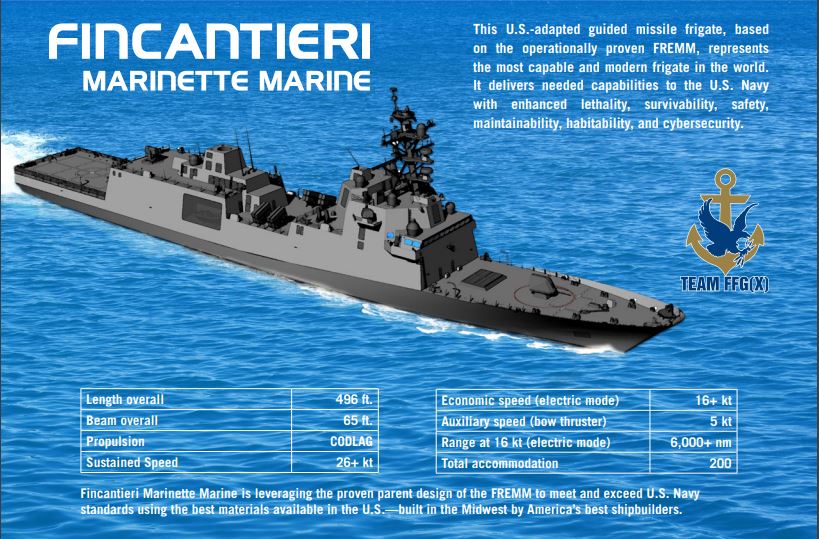
“Navy Frigate (FFG[X]) Program: Background and Issues for Congress,” Updated June 8, 2020, CRS

The Congressional Research Service has updated their analysis of the FFG(X) program. You can view the 38 page pdf here.

The FFG(X) equipment lists, which you might be better able to see here constitutes a list of possibilities for upgrades to the Polar Security Cutters, Coast Guard National Security Cutters, and Offshore Patrol Cutters.


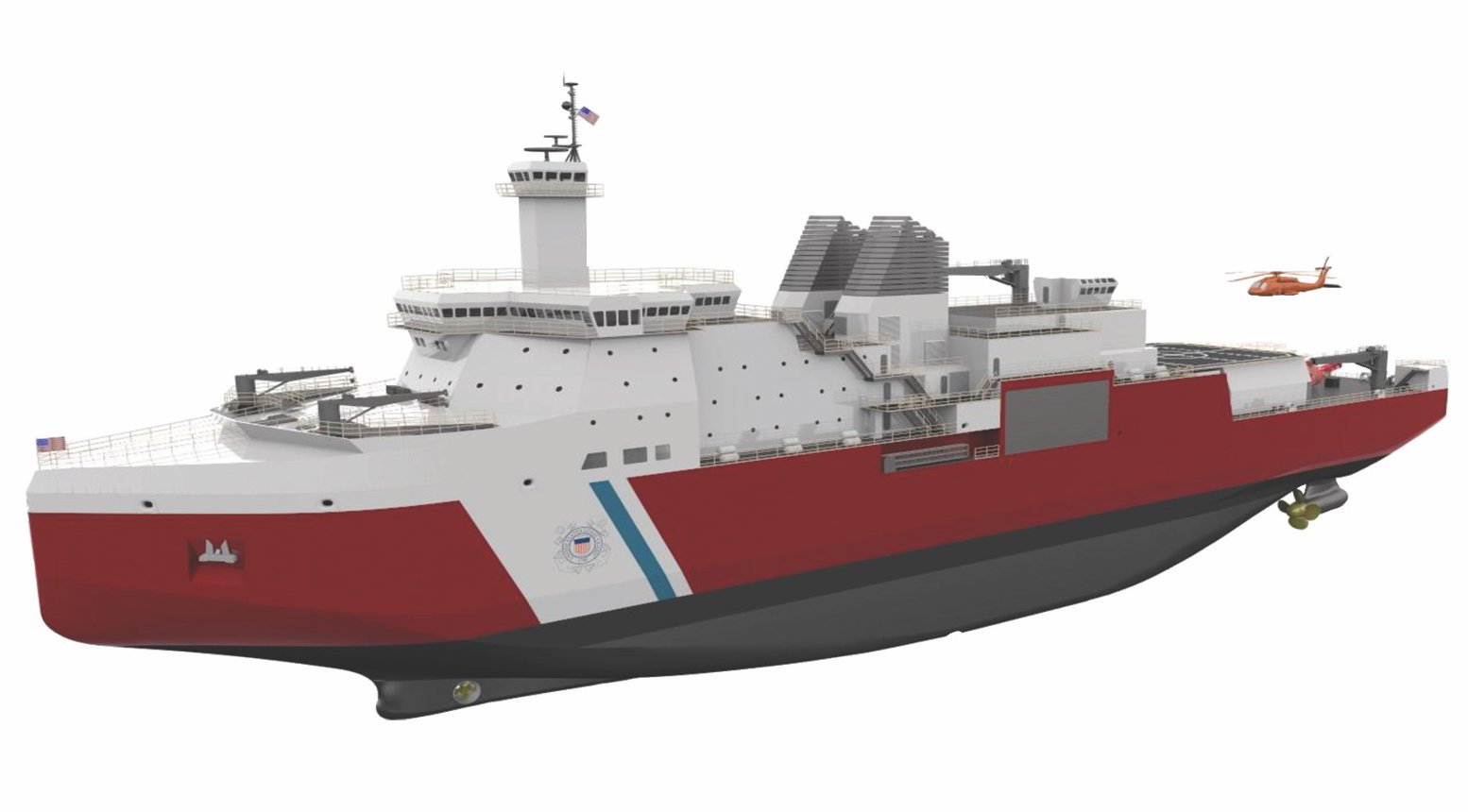
“Coast Guard Polar Security Cutter (Polar Icebreaker) Program: Background and Issues for Congress” Updated 10 June, 2020, CRS

The Congressional Research Service has once again updated their report on the Polar Security Cutter. You can see the whole report here. I have reproduced the one page summary below. The entire report is a 66 page pdf. 

Summary

The Coast Guard Polar Security Cutter (PSC) program is a program to acquire three new PSCs (i.e., heavy polar icebreakers), to be followed years from now by the acquisition of up to three new medium polar icebreakers. The PSC program has received a total of $1,169.6 million (i.e., about $1.2 billion) in procurement funding through FY2020, including $135 million in FY2020, which was $100 million more than the $35 million that the Coast Guard had requested for FY2020. With the funding it has received through FY2020, the first PSC is now fully funded and the second PSC has received initial funding.

The Coast Guard’s proposed FY2021 budget requests $555 million in procurement funding for the PSC program. It also proposes a rescission of $70 million in FY2020 funding that Congress had provided for the procurement of long lead time materials (LLTM) for a 12th National Security Cutter (NSC), with the intent of reprogramming that funding to the PSC program. The Coast Guard states that its proposed FY2021 budget, if approved by Congress, would fully fund the second PSC.

The Coast Guard estimates the total procurement costs of the three PSCs as $1,039 million (i.e., about $1.0 billion) for the first ship, $792 million for the second ship, and $788 million for the third ship, for a combined estimated cost of $2,619 million (i.e., about $2.6 billion). Within those figures, the shipbuilder’s portion of the total procurement cost is $746 million for the first ship, $544 million for the second ship, and $535 million for the third ship, for a combined estimated shipbuilder’s cost of $1,825 million (i.e., about $1.8 billion).

On April 23, 2019, the Coast Guard-Navy Integrated Program Office for the PSC program awarded a $745.9 million fixed-price, incentive-firm contract for the detail design and construction (DD&C) of the first PSC to VT Halter Marine of Pascagoula, MS, a shipyard owned by Singapore Technologies (ST) Engineering. VT Halter was the leader of one of three industry teams that competed for the DD&C contract. The first PSC is scheduled to begin construction in 2021 and be delivered in 2024, though the DD&C contract includes financial incentives for earlier delivery.

The DD&C contract includes options for building the second and third PSCs. If these options are exercised, the total value of the contract would increase to $1,942.8 million (i.e., about $1.9 billion). The figures of $745.9 million and $1,942.8 million cover only the shipbuilder’s costs; they do not include the cost of government-furnished equipment (GFE), which is equipment for the ships that the government purchases and then provides to the shipbuilder for incorporation into the ship, or government program-management costs. When GFE and government program management costs are included, the total estimated procurement cost of the first PSC is between $925 million and $940 million, and the total estimated procurement cost of the three-ship PSC program is about $2.95 billion.

The operational U.S. polar icebreaking fleet currently consists of one heavy polar icebreaker, Polar Star, and one medium polar icebreaker, Healy. In addition to Polar Star, the Coast Guard has a second heavy polar icebreaker, Polar Sea. Polar Sea, however, suffered an engine casualty in June 2010 and has been nonoperational since then. Polar Star and Polar Sea entered service in 1976 and 1978, respectively, and are now well beyond their originally intended 30-year service lives. The Coast Guard plans to extend the service life of Polar Star until the delivery of at least the second PSC. The Coast Guard is using Polar Sea as a source of spare parts for keeping Polar Star operational.