“US Navy seizes suspected Iranian missile parts set for Yemen” with Coast Guard Assistance –AP

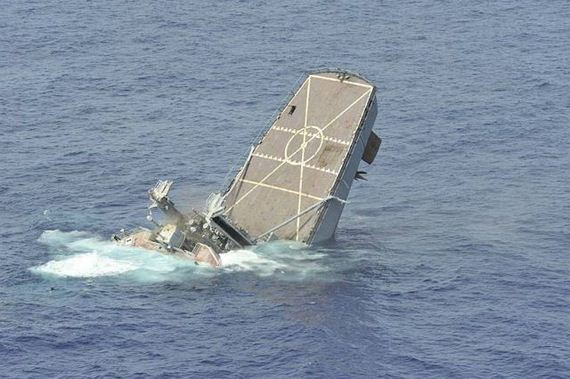
Attack on the Saudi Frigate Al Madinah (702), 30th Jan 2017

AP is reporting,

A Navy warship has seized a “significant cache” of suspected Iranian guided missile parts headed to rebels in Yemen, U.S. officials said Wednesday, marking the first time that such sophisticated components have been taken en route to the war there.

The seizure from a small boat by the U.S. Navy and a U.S. Coast Guard boarding team happened last Wednesday in the northern Arabian Sea, and the weapons have been linked to Iran.

“SOCARENAM Shipyard Selected to Deliver 6 French Navy OPVs for Overseas Territories” –Naval News

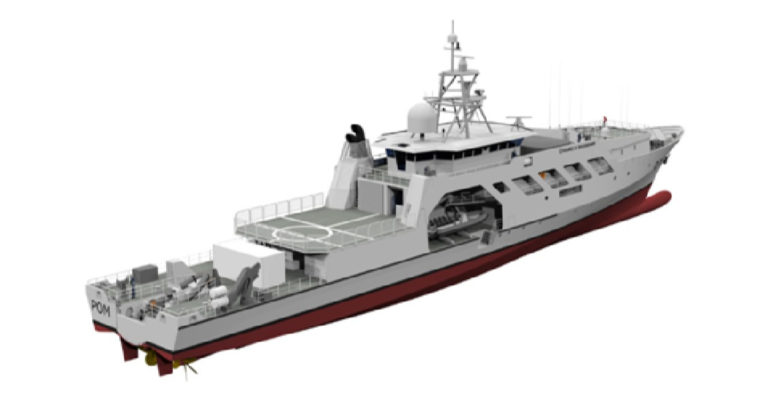
Rendering of the future “POM” OPV of the French Navy

Naval News reports,

French President Emmanuel Macron announced today a procurement order of 6 new patrol vessels to be based overseas, a program known as POM in French (for patrouilleurs outre-mer).

They will be about 70 meters (230 feet) in length with a speed of 22 knots. They will be equipped with an unmanned air system (UAS) (apparently that flight deck is not really intended for helicopters).

Basing will be two ships in New Caledonia at Nouméa naval base (Pacific), two ships in La Reunion Island at Port Réunion naval base (Indian Ocean), and one ship in French Polynesia at Fare Ute Papeete (Tahiti) naval base (Pacific), basing of the sixth ship has not yet been decided.

This will be a significant upgrade over their current assets in the Western Pacific and will complement the Coast Guard’s increased presence in the area, as well as the efforts of Australia and New Zealand to curb Illegal, Unregulated, and Unreported fishing. When disaster strike, like Australia, New Zealand, and the US, the French Navy will come to the aid of their neighbors. They are developing technology to enhance maritime domain awareness, here and here.  

The French do not have the same kind of Coast Guard that the US does. The French Navy handles many coast guard type missions. Clearly they recognize the importance of these functions. These ships come on the heels of other French Navy Offshore Patrol Vessel projects, here and here.

French territory, territorial waters, and EEZ. By B1mbo, via Wikipedia

Despite the recent kerfuffle at the NATO get together, France is our oldest ally. They and the US have the largest Exclusive Economic Zones in the world.

Both the US and France benefit from a close working relationship between the US Coast Guard and the French Navy. Beside, occasional visits by Coast Guard vessels or aircraft to New Caledonia (a major base during WWII) and Tahiti might not be bad for morale.

“China Can’t Be Trusted in the Arctic –USNI

A picture taken on November 16, 2011 from a South Korean helicopter shows Chinese fishermen wielding sticks to stop an attack by South Korean coastguard commandoes armed with clubs aboard rubber boats during a crackdown on alleged illegal fishing in South Korean waters in the Yellow Sea off the southwestern coast county of Buan. South Korea’s coastguard mobilised 12 ships, four helicopters and commandoes for a special three-day crackdown on illegal fishing by Chinese boats this week. REPUBLIC OF KOREA OUT AFP PHOTO / DONG-A ILBO (Photo credit should read DONG-A ILBO/AFP/Getty Images)

The US Naval Institute Proceedings has a post by Commander William Woityra, U.S. Coast Guard

China’s failure to enforce treaties and sanctions and lack of corporate accountability should serve as a warning for the international community when it comes to Chinese participation in international agreements and instruments. Of recent interest is their 2018 signature of the Agreement to Prevent Unregulated High Seas Fisheries in the Central Arctic Ocean. The signatory parties committed to curbing high seas commercial fishing in the Arctic until the ecosystem is better understood, no sooner than 2034. Beijing’s participation in the negotiations, and signing of the fisheries moratorium, helps bolster its long-term narrative of China’s identity as a “near-Arctic state” with a legitimate right to involve itself in decisions about the future of the region.

Lately I have come to suspect that China’s lax attitude toward Illegal, Unreported, Unregulated (IUU) Fishing is not due to poor enforcement or even corruption, but that it is actually state policy and a part of a strategy to impoverish third world countries dependent on fishing, so that, encouraged by bribery, they will turn to China for loans for poor investment, that will default and ultimately allow the Chinese to take over their assets. Overfishing is perhaps an element in a new form of economic colonialism.

“Reclaim the Coast Guard’s Military Roots” –USNI

“Convoy WS-12: A Vought SB2U Vindicator scout bomber from USS Ranger (CV-4) flies anti-submarine patrol over the convoy, while it was en route to Cape Town, South Africa, 27 November 1941. The convoy appears to be making a formation turn from column to line abreast. Two-stack transports in the first row are USS West Point (AP-23) — left –; USS Mount Vernon (AP-22) and Coast Guard manned USS Wakefield (AP-21). Heavy cruisers, on the right side of the first row and middle of the second, are USS Vincennes (CA-44) and USS Quincy (CA-39). Single-stack transports in the second row are Coast Guard manned USS Leonard Wood (AP-25) and Coast Guard manned USS Joseph T. Dickman (AP-26).”

A short article in the new US Naval Institute Proceedings makes a case for better understanding of the Coast Guard’s history as a specialized military service.

Although the Coast Guard faces myriad challenges, ranging from an aging fleet to a small budget, there is a bigger problem lurking: The service has trouble defending its place as a fighting force. This may seem trivial, but if we cannot explain how the Coast Guard fits into the national defense constellation, how can we expect politicians and taxpayers to understand the same? How can the Coast Guard expect to secure funding for its military role when even many Coasties cannot describe what makes the service military?

So why do we even want to seen as a military service? Why were we the only military service that was not paid during the last partial government shutdown. Many see the DOD as well funded while the Coast Guard survives on a shoe string (I would argue that that is not the case, but our military missions are another reason the Coast Guard should be kept healthy). If there is a war, particularly if it is a big one, the Coast Guard will be in the fight, readyor not.

It is a good article and explains why I find the repeated reminders to the public that we only have one medal of honor recipient less than useful.

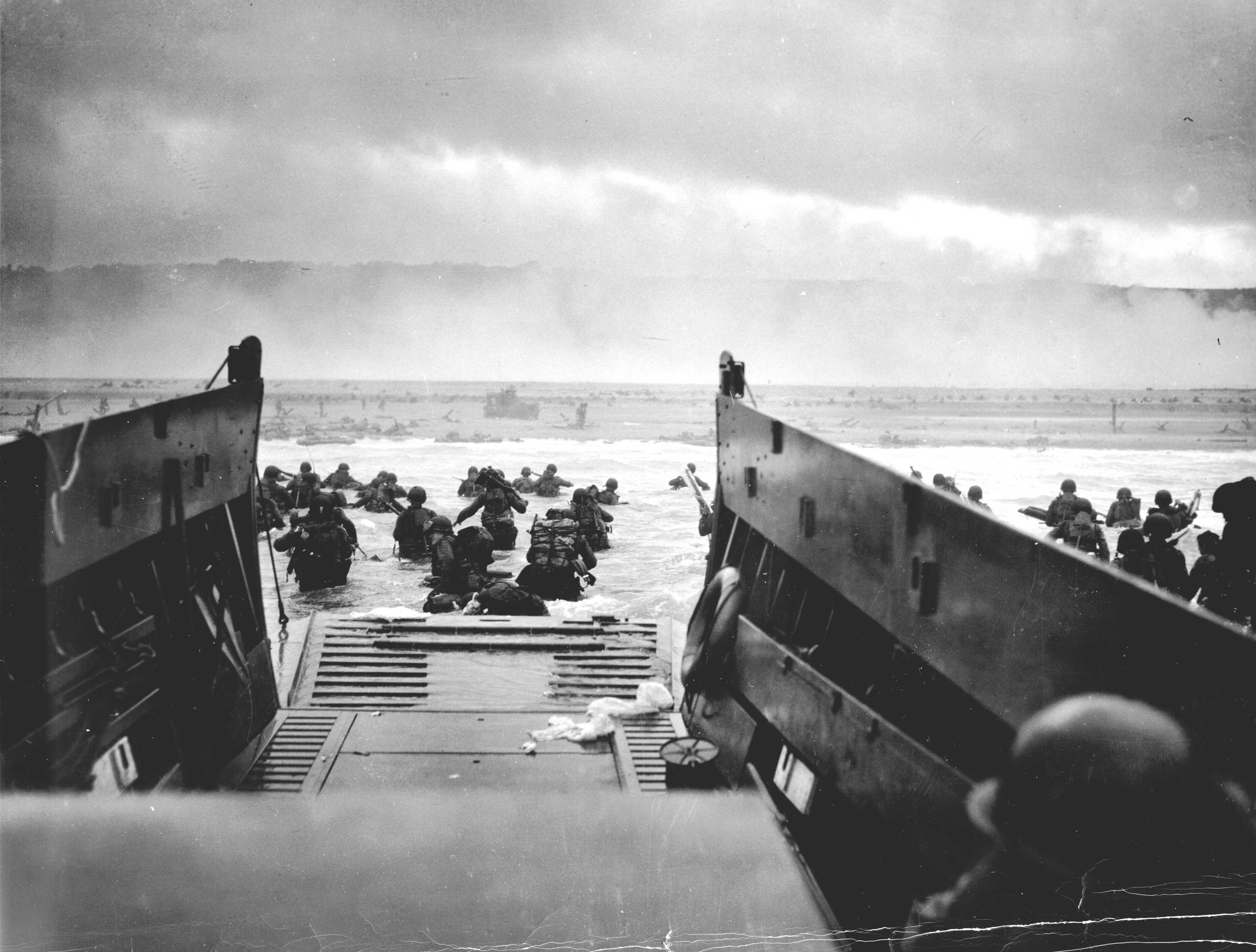
A LCVP (Landing Craft, Vehicle, Personnel) from the U.S. Coast Guard-manned USS Samuel Chase disembarks troops of Company E, 16th Infantry, 1st Infantry Division (the Big Red One) wading onto the Fox Green section of Omaha Beach (Calvados, Basse-Normandie, France) on the morning of June 6, 1944. American soldiers encountered the newly formed German 352nd Division when landing. During the initial landing two-thirds of Company E became casualties.

USCG Monomoy (WPB-1326) and Adak (WPB-1333), elements of PATFORSWA

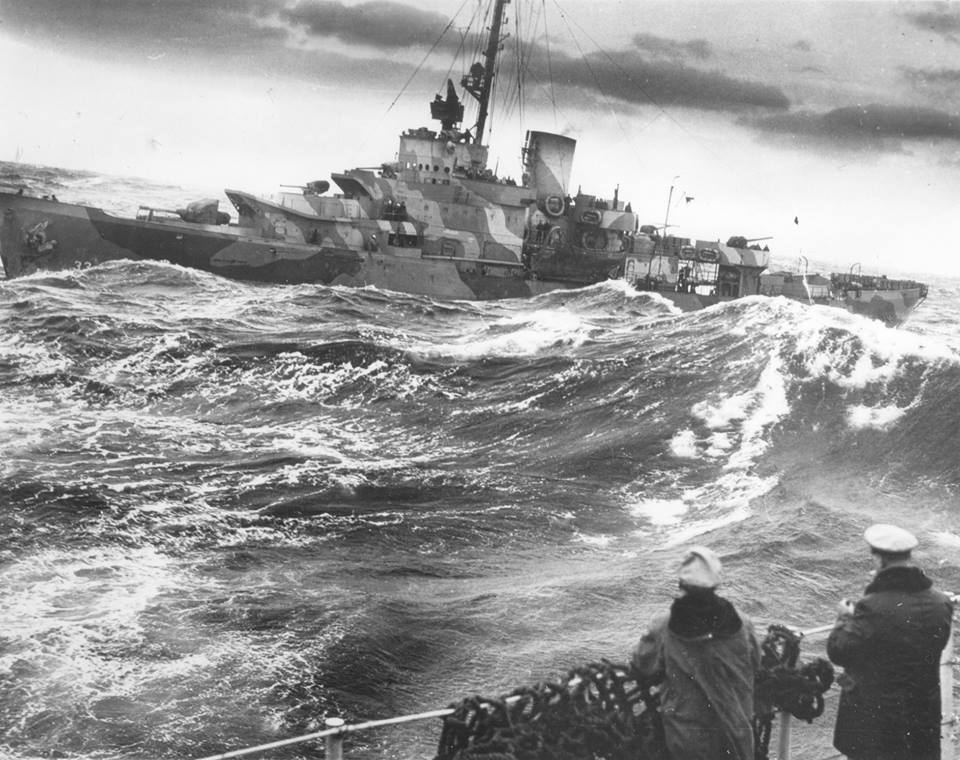
USCGC Duane on North Atlantic Convoy Duty

“Coast Guard Cutter Procurement: Background and Issues for Congress Updated November 27, 2019” –CRS

The Congressional Research Service (CRS) has again updated their report on Cutter Procurement. You can see it here. Actually it was updated twice in rapid succession, on 25 Nov. to reflect the Coast Guard’s action, and on 27 Nov. to reflect the action of the House Transportation and Infrastructure Committee and the Chair and Ranking Member of that committee’s Coast Guard and Maritime Transportation subcommittee in the form of what could only be described as a scathing letter to the Acting Secretary, Department of Homeland Security.

First, I will address the changes included in the 25 Nov. update. (Page numbers are where these changes appear in the 27 Nov. update, linked above.)

Second, I will discuss the 27 Nov. update including verbatim the quoted portions of the letter that were included in the CRS report.

There are a number of alternatives to the current plan to continue construction of the first four ships at Eastern and recompete the contract for ships of essentially the same design, but that is a subject for a separate post.

—–

The 25 Nov. Update.

The Coast Guard’s November 22 update and the draft Statement of Work, which we discussed earlier, are covered on pages 14-16.

Growth in the OPC’s estimated displacement, which was also revealed in the Statement of Work, is noted at the bottom of page 4, continuing to page 5, as part of the OPC Program Overview.

OPCs … are to be less expensive and in some respects less capable than NSCs. OPCs are to have a length of 360 feet, which will make them about 86% as long as NSCs, which have a length of 418 feet. OPCs were earlier estimated to have a full load displacement of 3,500 tons to 3,730 tons, which would have made them about 80% as large in terms of full load displacement as NSCs, which have a full load displacement of about 4,500 tons. As the OPC design has matured, however, its estimated displacement has grown to about 4,500 tons, making it essentially as large as the NSC in terms of full load displacement

The decision to recompete has raised a number of “Issues For Congress” beginning on page 19 and continuing through page 23, including consideration of a 12th National Security Cutter in view of the delays in the delivery of Offshore Patrol Cutters.

—–

The 27 Nov. Update

This update reflected the HTIC’s November 25 letter to DHS regarding the program. The November 25 letter is covered on pages 16 (as part of the background information), page 23 (as part of the issues for Congress), and 27-29 (as part of the legislative activity).

November 25, 2019, Letter from House Transportation and Infrastructure Committee to DHS Regarding OPC Program

A November 25, 2019, letter to the Acting Secretary of DHS from the Chair and Ranking Member of the House Transportation and Infrastructure Committee and the Chair and Ranking Member of that committee’s Coast Guard and Maritime Transportation subcommittee regarding the OPC program states in part:

The Committee on Transportation and Infrastructure has reviewed your proposal to provide extraordinary relief under Public Law 85-804 as requested by Eastern Shipbuilding Group (ESG) for the construction of the Offshore Patrol Cutter (OPC). We are skeptical that such truly extraordinary relief is justified given that this “crisis” was foreseeable and mostly avoidable. Further, we are concerned that this relief sets a damaging precedent that any current or future contract with the United States Coast Guard (Coast Guard or Service) could be renegotiated outside the Federal Acquisition Regulations.

As you know, the Coast Guard is in the middle of a rnulti-decade, multi-billion-dollar recapitalization of its cutter fleets. Last fall, the Service entered into a fixed price contract with ESG for the largest single acquisition in its history for the OPC. Shortly after entering into that contract, on October 10, 2018, Hurricane Michael hit the ESG shipyard and devastated the surrounding Panama City, Florida area where much of the shipyard workforce lived. The shipyard claims the impacts of the disaster rendered its facilities and workforce incapable of meeting the terms of the contract. The Department of Homeland Security (DHS) and the Service now propose to expand the timeframes for the delivery of each of the first four OPCs, spend up to an additional $659 million to complete those cutters, and then re-compete the contract earlier than previously planned. The decision to proceed with the current contractor raises a number of concerns for the Committee. Foremost among those concerns being the delay in delivering the cutters as well as the use of the Public Law No. 85-804 authority, which ultimately eliminates the Coast Guard’s claim of getting the best value through a firm, fixed-price contract. If that were a priority for the Service, it would make more sense to pivot to a contractor who had competed for the original contract and is positioned to execute on it rather than create continued uncertainty around the OPC.

For more than a decade, the Committee has tracked the widening capability gap between the existing legacy fleet of Medium Endurance Cutters (MECs)—several built during the Vietnam War—and the commissioning of new OPCs. During that time, the Committee has repeatedly urged the Coast Guard to undertake a ship life extension program (SLEP) for the MECs and advocated for the Service to look at alternative methods to acquire new mission capabilities. Due to limited funding provided for the Coast Guard’s Procurement, Construction and Improvements account, the Service made the decision to defer initiating an MEC SLEP to partially offset the loss of MEC capability as those cutters aged out. Rather than heeding the Committee’s caution, the Service decided to prioritize construction of the OPCs at the earliest possible time to allow the Coast Guard to continue to effectively carry out its law enforcement, drug and migrant interdiction, and search and rescue missions.

The Service then compounded the risks of this “all-or-nothing” strategy by entering into a contract with ESG; a company that has never built a ship for the Federal government and whose bid came in at a per-vessel price far below that of other qualified bidders. This action led many observers to question whether the Coast Guard was taking too great a risk, but the Service believed, nonetheless, that the risk was acceptable.

Regrettably, ESG began lobbying lawmakers for “relief” from the contract barely six months after agreeing to its terms. Within nine months, ESG formally notified the Coast Guard that they could no longer meet the contractual schedule or deliver the OPC at the contract price.

In all, it appears the Coast Guard’s initial failure to adequately examine the risks of using a shipyard with no government shipbuilding experience could be perpetuated by DHS granting this extraordinary relief under Public Law No, 85-804. The Committee is concerned that the Coast Guard, along with DHS, embarked on exploring options to resuscitate ESG and prevent it from defaulting on the OPC contract without first completing a transparent and objective alternatives analysis. Additionally, the veil of secrecy regarding its analysis and the absence of any meaningful consultation by the Coast Guard and DHS with the Committee, provides us scant confidence that any revised OPC contract will not encounter a similar fate as the original contract.

Accordingly, the Committee would like to know: 

  • Why did the Coast Guard fail to stop construction on hull #1 as soon as they learned the contractor was informing lawmakers that it would be unable to meet the terms of the contract? 
  • What interim measures are available to mitigate the lost mission capabilities while the OPC contract is being delayed and recompeted? 
  • Is the Coast Guard considering the use of leased barges to support helicopter operations, the acquisition of additional National Security Cutters or Fast Response Cutters, or other available options? 
  • What national security missions will be carried out by each of the four OPCs for which relief is sought? 
  • What is the status of the ship life extension program for the 270B MECs?

Regarding a revised OPC contract, the Committee would like to know? 

  • Has the Department requested authority from Congress to expedite the re-compete of the OPC contract? 
  • How will the Coast Guard ensure that no additional extraordinary relief will be needed beyond the potential upward limit of $659 million and the proposed schedule extensions? 
  • Are the federal/non-federal share lines for each of the first four OPCs set in the DHS decision granting limited Public Law No. 85-804 extraordinary relief, and if not, what are these share lines and what is their justification request? 
  • In which fiscal years will it be necessary to request funds above the amounts projected for the OPCs in the Coast Guard’s latest Capital Improvement Plan? In what amounts? 
  • On what ship design will the re-compete be based? 
  • Can you confirm that the Coast Guard owns the OPC design? 
  • How many additional construction hours above the amount on which the initial bid was based are now anticipated for each of hulls #1-4? 
  • What controls will be instituted to ensure that there is no excessive overage in production hours? 
  • What conditions do the Coast Guard intend to include in a revised contract to ensure transparency in all financial transactions; accountability with all performance metrics and timetables for deliverables; certification and notification standards and protocols before the Coast Guard or DHS exercises an option on hulls #2-4? 
  • Given the fact that the contractor is unable to perform under the terms of the original contract, will any effort be made to receive the performance bond associated with the contract?

The Committee will continue to investigate these issues and closely monitor this situation. We are concerned about the impacts any further delays of this contract will have on the Service’s ability to carry out its critical mission responsibilities and the overall impact the escalated cost of producing these assets will have on the Coast Guard’s Procurement, Construction and Improvements account for the foreseeable future. As we begin negotiations with the Senate on the Coast Guard Authorization Act of 2019, we will examine if further legislation is necessary to protect U.S. taxpayers from profligate, unwise spending, notwithstanding the urgent need to provide the Coast Guard with the modern assets it needs to remain the world’s preeminent Coast Guard.

“The Long Blue Line: Warren Gill—Oregon’s forgotten Navy Cross hero” –Coast Guard Compass

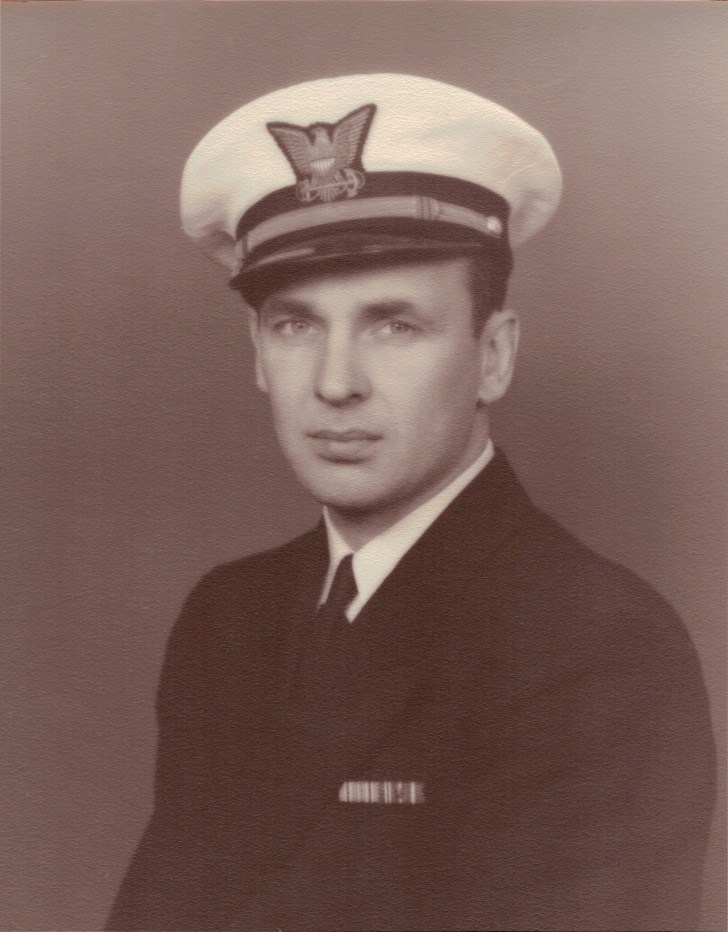
LT Warren Gill’s official portrait in dress uniform photographed by the U.S. Coast Guard. (The Gill Family)

Coast Guard Compass has a short article about a World War II Coast Guard Reserve Navy Cross, Legion of Merit, and Purple Heart recipient that I had not been aware of. This is all the more remarkable because he got the Legion of Merit for actions while an Ensign and the Navy Cross for actions as a Lt (jg). After leaving the Coast Guard, he went on to lead an exemplary life of public service including leadership in the Coast Guard Auxiliary.

This is another hero we might want to name a ship after.

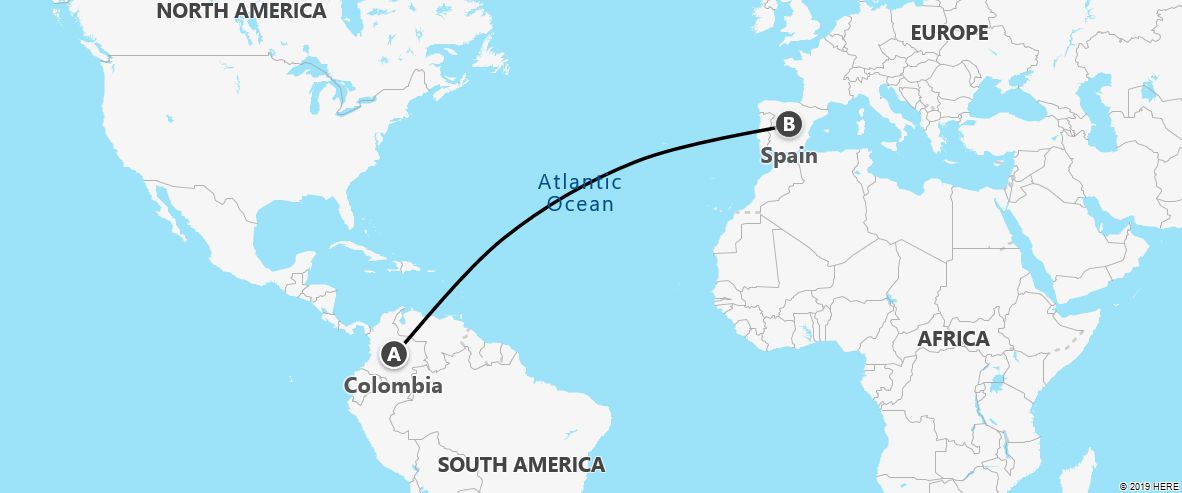
“”Narcosubmarine” a First for Europe -Spanish Officials” –Marine Link

Marine Link reports.

“The discovery of a submarine carrying 3,000 kg (3.3 tons) of cocaine off the coast of Spain marks a “historic” turning point in the battle against drug trafficking, Spanish authorities said on Wednesday.”

That looks like an awful long way for a Self Propelled Semi-Submersible (SPSS), about 4,000 nautical miles. Have to wonder if the goods were not shipped first to Africa and perhaps the SPSS was built there? Alternately could the SPSS have been transported part of the way by a larger vessel?

NarcoSPSStoSpain

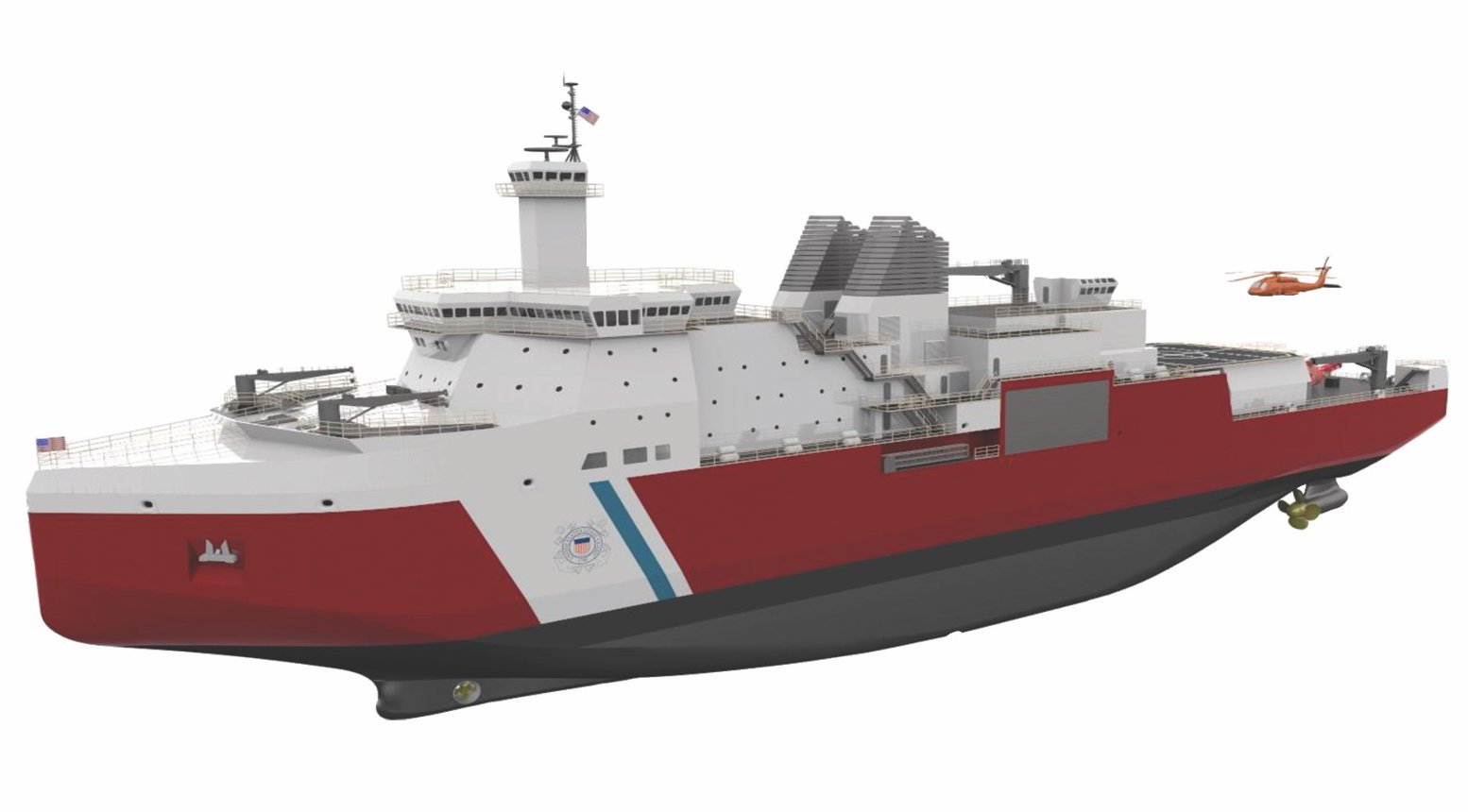
Polar Star Sails for McMurdo, and We Need Six PSC

Below is quoted a press release about the departure of the Polar Star for the annual McMurdo resupply mission.

I may be reading too much into this, but the paragraph regarding the Polar Security Cutter program seems to represent a change from previous pronouncements.

The Coast Guard … is seeking to increase its icebreaking fleet with six new polar security cutters in order to ensure continued national presence and access to the Polar Regions.

The same message is now on the Acquisitions Directorate Polar Security Cutter page, “The Coast Guard needs six new PSCs to ensure national year-round access to the polar regions and to provide self-rescue capability.”

The High Latitude study that the number six was based upon, said the Coast Guard needed three heavy icebreakers and three medium icebreakers. The heavy icebreaker became the Polar Security Program. Are medium icebreakers also being called Polar Security Cutters? It does not seem so. There is no mention of this second type.

There is logic to simply building only a single class. It would save the development costs of a new, second class. The cost of the PSC is less than originally estimated and with the cost potentially dropping as the shipyard continues the learning curve with each new ship, building three less capable ship may not save much. Having instead six of the more capable ships would increase flexibility, and commonality pays dividends in logistics and training. Six more capable ship could allow a Northern Hemisphere winter deployment of two ships to McMurdo, while a second pair of ships could alternate, one on patrol in the Arctic, and the other on standby in Seattle, while a third pair are in the yard for maintenance to be ready for deployment during summer months.

Of course for any mission requiring an icebreaker, a heavy icebreaker Is more likely to get there quicker and be capable of doing more than a smaller ship when it gets there.

The Press Release

united states coast guard

News Release

Nov. 26, 2019
U.S. Coast Guard Pacific Area
Contact: Coast Guard Pacific Area Public Affairs
Office: (510) 437-3319
After Hours: (510) 333-6297
D11-DG-M-PACAREA-PA@uscg.mil
Pacific Area online newsroom

Nation’s only heavy icebreaker departs for Antarctic military operation

Coast Guard Cutter Polar Star Departs Seattle for Operation Deep Freeze 2020
USCGC Polar Star crew departs Seattle for Operation Deep Freeze 2020 https://www.dvidshub.net/image/5941169/uscgc-polar-star-crew-departs-seattle-operation-deep-freeze-2020 USCGC Polar Star crew departs Seattle for Operation Deep Freeze 2020

Editors’ Note: Click on images to download high resolution version.

SEATTLE — The crew aboard the U.S. Coast Guard Cutter Polar Star (WAGB 10) departed Tuesday commencing their annual deployment to Antarctica where the cutter and crew will support Operation Deep Freeze 2020, a joint military service mission to resupply U.S. interests in Antarctica.

“We set out today on an important mission, saying goodbye to the friends and families who have supported us and our ship for the past seven-months since we returned from Operation Deep Freeze 2019,” said Capt. Gregory Stanclik, commanding officer of the Polar Star. “We are looking forward to this year’s mission to McMurdo Station with a ship that is running the best it has since reactivation. This mission is critical to the United States and our continued strategic presence on the Antarctic Continent and I have the best crew possible to ensure we safely accomplish our goal.”

Homeported in Seattle, the 43-year-old Coast Guard cutter is the United States’ last remaining operational heavy icebreaker. This is the cutter’s seventh deployment in as many years to directly support the resupply of McMurdo Station – the United States’ main logistics hub in Antarctica.

Each year, the crew aboard the 399-foot, 13,000-ton Polar Star create a navigable path through seasonal and multi-year ice, sometimes as much as 21-feet thick, to allow a resupply vessel to reach McMurdo Station. The supply delivery allows Antarctic stations to stay operational year-round, including during the dark and tumultuous winter.

Commissioned in 1976, the Polar Star is showing its age. Reserved for Operation Deep Freeze each year, the Polar Star spends the winter breaking ice near Antarctica, and when the mission is complete, the cutter returns to dry dock in order to complete critical maintenance and repairs in preparation for the next Operation Deep Freeze mission.

The Coast Guard has been the sole provider of the nation’s polar icebreaking capability since 1965, and is seeking to increase its icebreaking fleet with six new polar security cutters in order to ensure continued national presence and access to the Polar Regions.

In the fiscal year 2019 budget, Congress appropriated $655 million to begin construction of a new polar security cutter this year, with another $20 million appropriated for long-lead-time materials to build a second.

The Coast Guard and U.S. Navy, working through an integrated program office, awarded VT Halter Marine Inc., a fixed price incentive contract in April for the detail design and construction of the Coast Guard’s lead polar security cutter, including options for the construction of two additional PSCs.

“The Coast Guard greatly appreciates the strong support from both the Administration and Congress for funding the polar security cutter program,” said Adm. Karl Schultz, the commandant of the Coast Guard. “These new cutters are absolutely vital to achieving our national strategic objectives in the Polar Regions – presence equals influence, and we must be present to meet the Nation’s national security and economic needs there in the future.”

“Coast Guard releases draft statement of work for Offshore Patrol Cutter Program Industry Studies” –CG-9

OPC “Placemat”

The Acquisitions Directorate, CG-9, has issued a draft statement of work for Offshore Patrol Cutter Program Industry Studies.

The deadline for comments is short.

A draft statement of work (SOW) was released by the Coast Guard Nov. 22 in support of the Offshore Patrol Cutter (OPC) Program. The service is seeking industry feedback; responses to the draft SOW will be used to inform a future solicitation for industry studies to support OPC follow-on production.

The draft SOW can be found here.

The deadline to submit responses to this request is Dec. 6 at noon EST.

For more information: Offshore Patrol Cutter program page

Looking at the draft statement of work, one of the first things I noticed is that it describes the OPC as “360ft LOA and 4500LT.” I think that displacement should be full load. Even at that, it is significantly larger than previously stated. I had previously noted that dimensions and displacement did not seem to correspond, that the dimension for the OPC was larger than the Holland class OPV which are 3750 tons full load, but previous statements indicated that the ships would be 3730 tons full load. This was repeated in the Congressional Research Service Reports. If their full load displacement is actually 4500 tons, that means they are almost exactly the same size as the National Security Cutters which have been variously reported as 4500 or 4600 tons full load.

The draft SOW indicates, “The re-competed contract scope will be to complete the OPC Detail Design and to construct an initial OPC using that Detail Design, with options for constructing up to 10 additional OPCs.”

Section 2.2.2.2 does at least mention the possibility of a block buy.

 “The impact of block buys of OPCs as a cost reduction strategy shall be addressed in this section.”

The draft SOW states:

“References Available at Award.  The following references will be made available not later than award of the Industry Studies contract.

1. Updated draft OPC System Specification

2. List of Long Lead Time Materials (LLTM)

3. Selected Detail Design Deliverables for information only, including Functional Design artifacts, ABS design review information, Transitional (3D) Design artifacts, Production Design artifacts, Schedules, Test Procedures, and Test Reports.  The maturity of the Functional Design artifacts exceeds 95%.

4. Selected Construction Deliverables for information only, including: Equipment Configuration List, Test results, Engineering Change documents, and schedules

5. Selected Non-Proprietary Management Planning Deliverables for information only

6. USCG Notional OPC Detail Design and Construction (DD&C) Schedule

7. Placemat summarizing OPC Functional Design “

Frankly, I don’t see how you could bid on the contract without having this information first.

The notional schedule does not appear to have changed, meaning, if followed, the contract will not be awarded until the end of FY2022, and the first ship (OPC#5) will not be delivered until near the end of FY2026 and the last ship of the class will not be delivered until near the end of FY2037, three years after the previous plan. At that time the youngest 270 would be 56 years old. We will not have fourteen OPCs to replace the 210s until 2032, by which time the youngest 210 will be 63 years old. This is starting to look ridiculous, but it does looks like there may be some flexibility.

“Contractors will evaluate the referenced design artifacts and propose their most cost effective and schedule efficient plan to transition the Functional Design into a Production Design and to construct OPCs per the contract scope described above. “

This has to be very frustrating. We already went through a year of proposal evaluations, a year of competing preliminary designs, and a year of detail design, and now it looks like we are starting over almost from ground zero.

I anticipate these ships are going to cost considerably more than the original Eastern contract or the original benchmark cost. That, and the considerable delay, are a good argument for funding a 12th NSC in FY2020.

Hopefully the contractors would offer options that would depart from the notional timeline and allow earlier completion of the program as a cost reduction strategy.

On the other hand, if we are going to take this much time, maybe we could make the  ship a bit faster and better armed, since it appears we are firmly back in the great power competition mode.

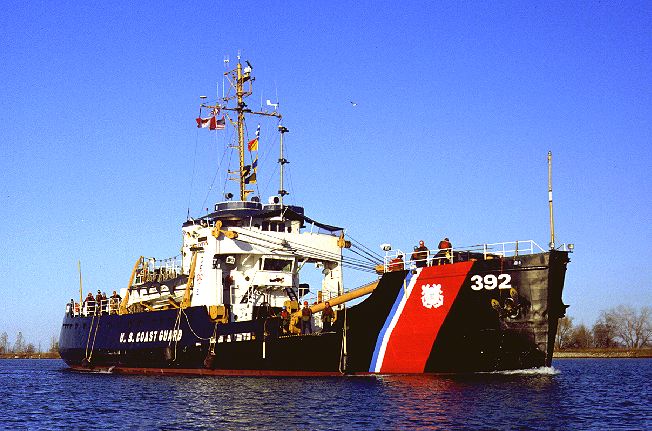
ex-USCGC Bramble Arrested, Now Up for Sale, Dec. 4

USCGC Bramble (WLB-392), USCG photo

Maritime Executive has as a short article about what has become of the former USCGC Bramble, a buoy tender that transited the North West Passage in 1957 along with USCGC Spar and USCGC Storis.

Museum ships are certainly desirable, but they are very hard to keep in presentable condition. Two very significant and unique museum ships, USS Olympia and USS Texas, have been constantly on the brink of failure. In addition to a fairly large number of light ships, we are fortunate to have Taney at the Baltimore Maritime Museum, in Baltimore, Maryland, and Ingham in Key West.

Thanks to Paul for bringing this to my attention.