NAS Adak Reopening?

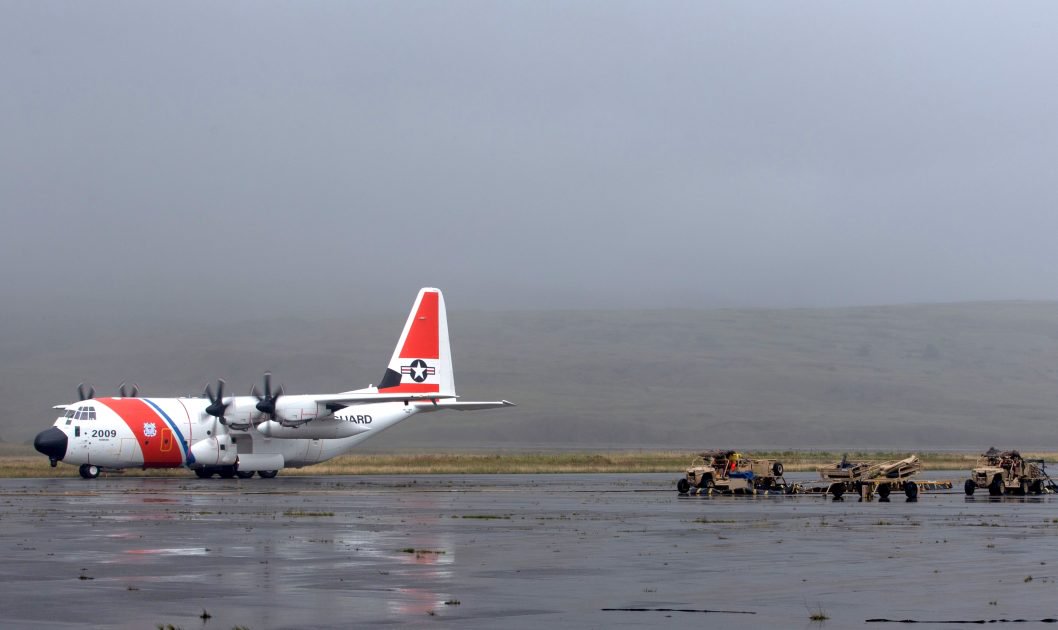
A U.S. Coast Guard C-130 participates in forward arming and refueling point (FARP) operations during Arctic Expeditionary Capabilities Exercise (AECE) in Adak, Alaska on Sept. 18, 2019. US Marine Corps Photo

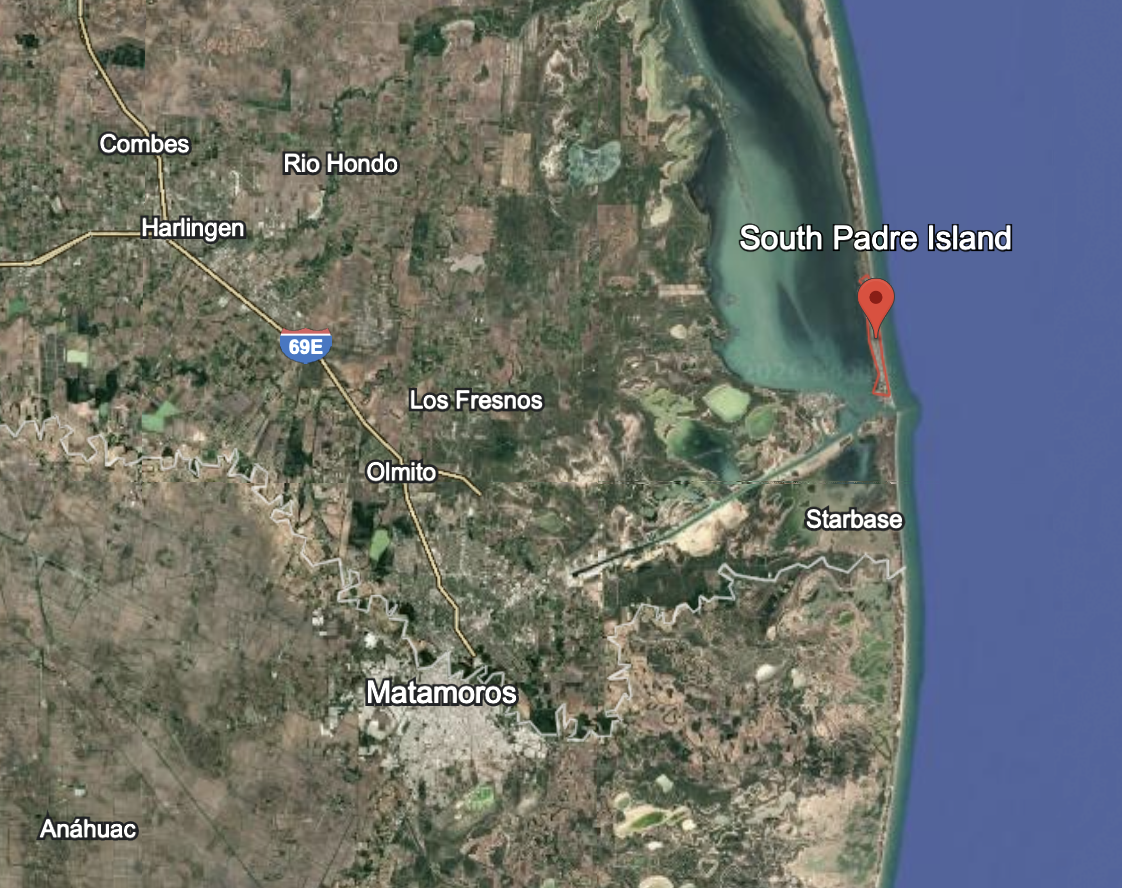
I am seeing strong indications that DOD may reopen the former US Naval Air Station Adak.

First there was this from Task and Purpose, “The Navy may revive this forgotten Alaskan base that sits halfway to Russia,” published April 17, 2025.

The this, “Shuttered Aleutian naval air base straddling Arctic and Pacific oceans may reopen,” from a more official source, The Watch, NORTHCOM’s on line magazine. 

There is more discussion here.

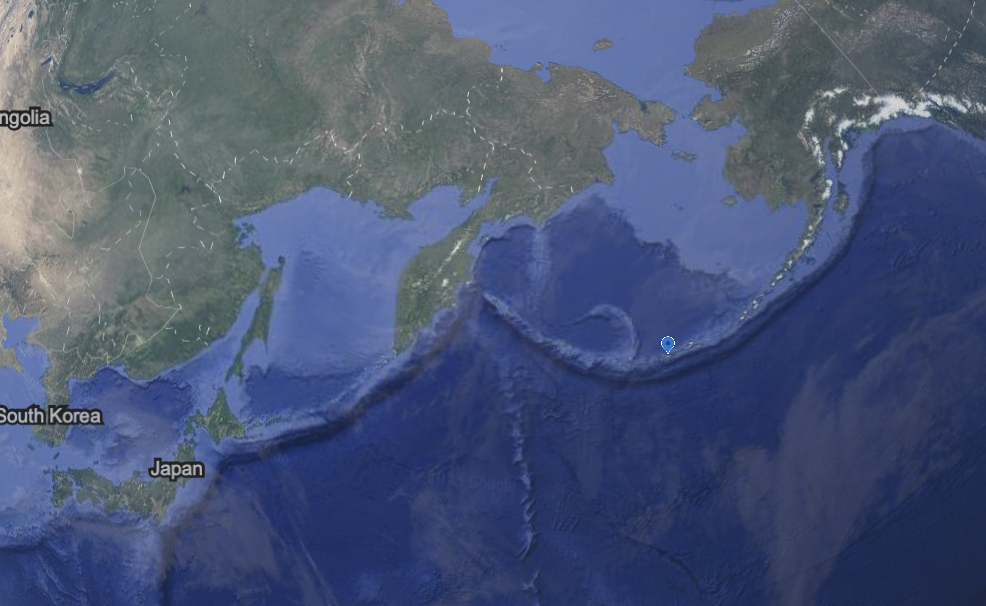
Adak, one of the Aleutian Islands, approximately 877 nautical miles South of the Bering Strait. About 901 nmi from Kodiak, about 2075 imi from Vladivostok.

Why do we care?

For the Coast Guard, it is a potential forward operating base for fixed wing aircraft monitoring fishing in the Bering Sea, and a fueling/replenishment stop for cutters on Alaska Patrol.

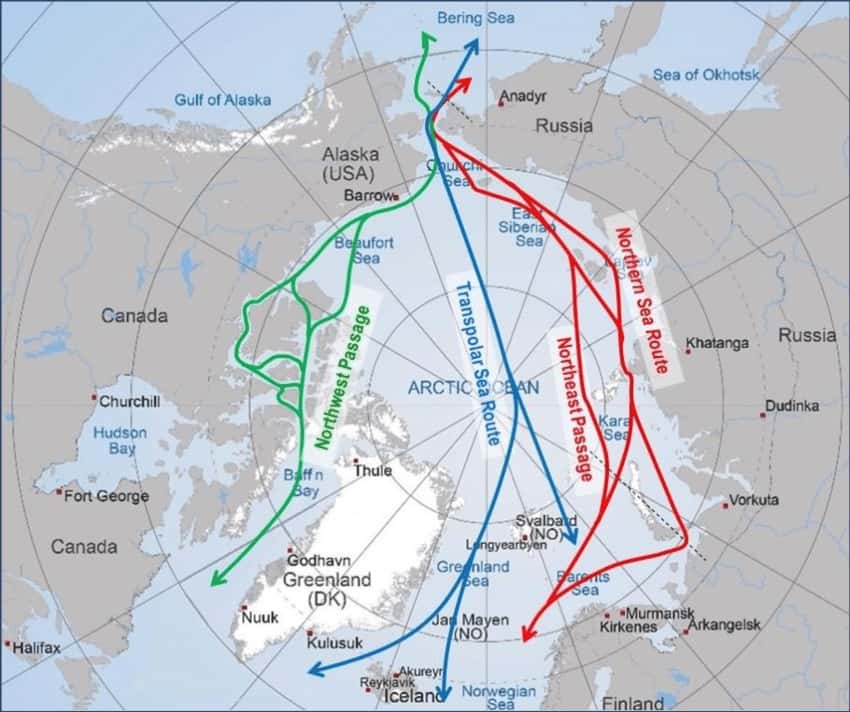
For Defense it puts assets in place to protect allied shipping and movements between the US and Asia and to prevent the passage of potentially enemy shipping and movements between the Russian Arctic and China, North Korea, and Russia ports in Asia via the Northern Sea Route and the Bering Strait.

The Coast Guard and DHS should add their voices in support of the idea. 

Ports along the Northern Sea Route have seen a quadrupling of cargo since 2003 from 26.4 million tons in 2003 to 104.8 million tons by 2019 (if slipping to 96 million tons last year (2020) due to Corona). They now handle as much cargo every year as the entire Baltics, which have stagnated for more than a decade.

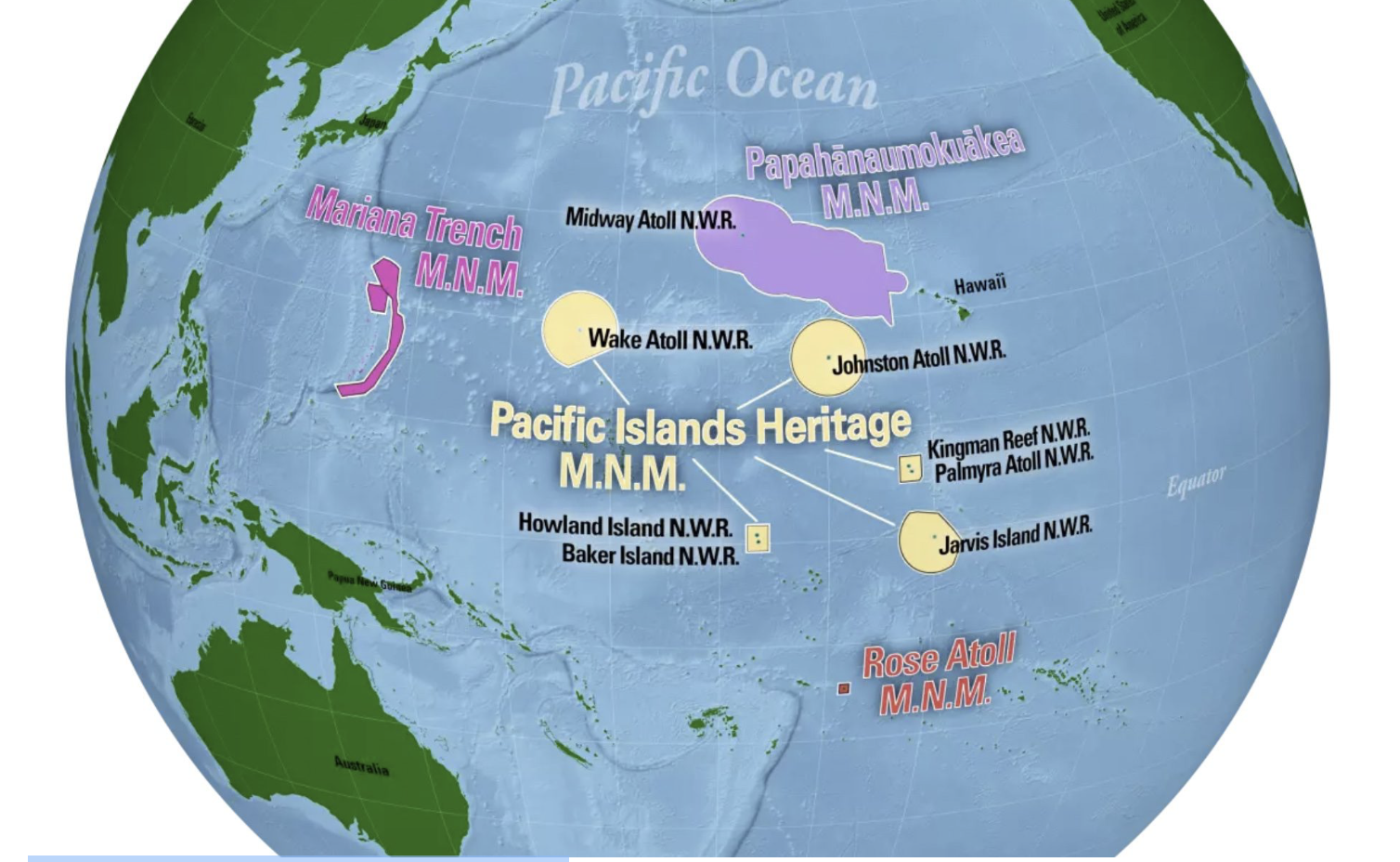
“Trump Administration Opens Pacific Remote Islands Marine Monument to Commercial Fishing” –gCaptain

Pacific Remote Islands Marine Monument. Map courtesy U.S. Fish and Wildlife Service

gCaptain reports,

President Donald Trump signed a proclamation on Thursday opening the Pacific Remote Islands Marine National Monument (PRIMNM) to commercial fishing, marking a substantial change in U.S. fishing policy.

The proclamation specifically permits U.S.-flagged vessels to conduct commercial fishing operations within 50 to 200 nautical miles of the PRIMNM’s boundaries. This decision affects an expansive marine protected area spanning approximately 495,189 square miles in the central Pacific Ocean – a region nearly five times the size of all U.S. National Parks combined.

This would seem to provide additional justification for a Coast Guard base and cutters (presumably Webber class WPCs) in American Samoa to provide additional safety for US fishermen and to keep unwelcome foreign fishermen out.

No Helicopters on Cutters in Alaska / More Helicopters Will Operate from Forward Bases

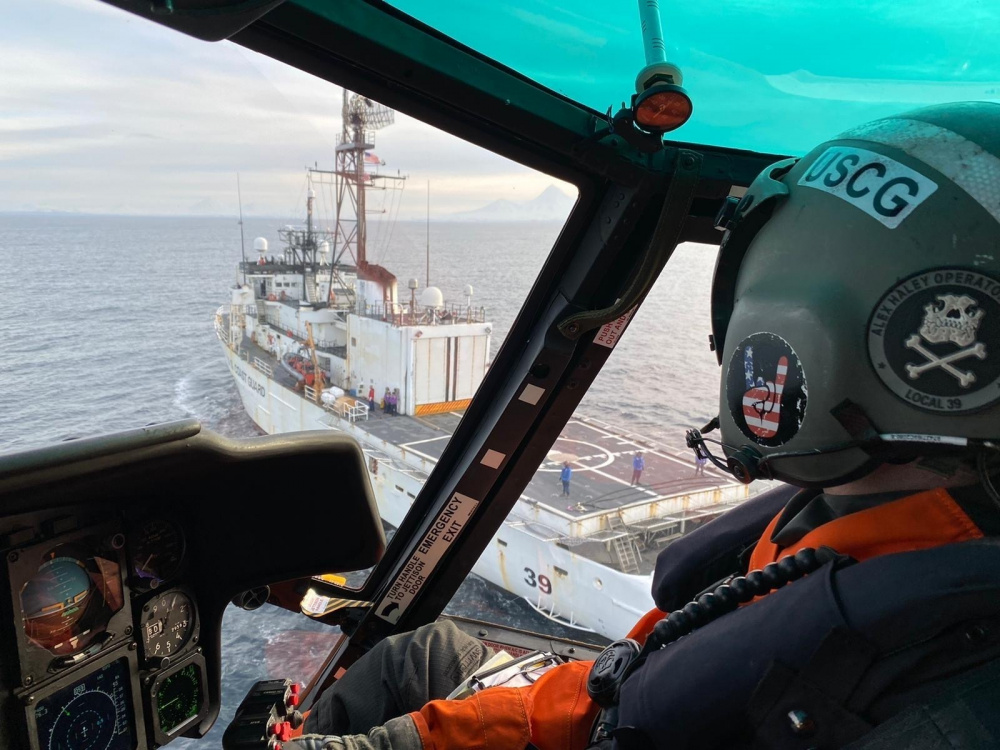
An MH-65 Dolphin helicopter crew based out of Air Station Kodiak and
deployed aboard Cutter Alex Haley, prepares for a helicopter in-flight refueling at sea evolution with the cutter crew during a search and rescue case near Dutch Harbor, Alaska, Wednesday, Dec. 30, 2020. The crew hoisted an injured fisherman from the vessel Magnus Martens and placed him in the care of awaiting Guardian Flight Alaska personnel for further transport to Anchorage. (U.S. Coast Guard photo by Lt. Benjamin DeGroot)

National Defense reports,

“With an aging aircraft fleet under scrutiny and the phase-out of an older airframe, the Coast Guard has stopped sending its cutters to sea in the Arctic with helicopters onboard.”

We are not just talking about icebreakers. When a US government entity says the “Arctic” they include the  Aleutians and Bering Sea, even though they are below the Arctic Circle so this really means no helicopters on any Coast Guard vessels in District 17 (Alaska).

http://www.state.gov/e/oes/ocns/opa/arc/uschair/258202.htm . This map of the Arctic was created by State Department geographers as part of the U.S. Chairmanship of the Arctic Council.

Cutters carried helicopters for two reasons, for reconnaissance and as a mobile SAR air station. All the National Security Cutters (NSC) now have unmanned air systems (drones) that are more effective search aircraft than helicopters. Hopefully USCGC Alex Haley (WMEC-39) (really a high endurance cutter) which is home-ported in Kodiak will also be so equipped if it is not already.

Rather than having helicopters on ships which are increasingly going North of the Bering Strait, far from most fishing vessels, the helicopters will be forward deployed.

“Coast Guard District 17 and Air Station Kodiak maximized aviation forward operating sites staffed by shipboard landing capable MH-60T crews in Kotzebue, Cold Bay and Prince William Sound, a model that streamlines search-and-rescue response and enables flexible movement of the helicopter crews in support of deployed Coast Guard cutters and seasonal mission demands,” officials said in a statement provided to National Defense.

This will keep the helicopters nearer the concentrations of population and fishing vessels. Because they are shipboard capable MH-60Ts, they will have longer range than the H-65s that had been deployed on ships, and will still be able to use cutters to extend their range by HIFR (Helicopter In Flight Refueling) or by transit on a cutter’s flight deck to get within range.

The announcement makes it sound like the Coast Guard will be less capable of responding than they were before, but really this seems to be a net improvement based on the incorporation of more capable assets–Unmanned Air Systems and more numerous longer ranged helicopters.

Officials with Coast Guard headquarters said the change was made in summer 2024 as Air Station Kodiak phased out four retiring MH-65 Dolphin helicopters and transitioned to the newer MH-60T Jayhawk. The base now operates six Jayhawks and will eventually have nine, officials said. (emphasis applied–Chuck)

The trade-off is that cutters will not have helicopters immediately available on board, but having a cutter with helicopter in the right place at the right time was always a matter of luck.

(I have to wonder why this information was not included in a Coast Guard news release. I looked for it as a CG news release and found nothing.)

Thanks to Peter for bringing this to my attention.

“Coast Guard holds groundbreaking ceremony for new Base Charleston campus” –CG News

Base Charleston, The Base is moving from this location.

Below is a news release from CG News (photos of the ceremony at the link). While it seems the Coast Guard is contracting in some areas, it is important to remember that the Coast Guard is also being improved in others. Yes, we are decommissioning or laying up ten cutters, three 210s and seven 87 footers, but we also have 54 FRCs, compared with the 41 WPB 110s that we had when the FRC program started, and we will soon have eleven more.

The Coast Guard is also replacing and weather proofing much of its aging shoreside infrastructure.

Really, the news is not all bad. 

Jan. 26, 2024

CHARLESTON, S.C. — Coast Guard Base Charleston held a groundbreaking ceremony, Friday, for a new 64-acre campus in North Charleston.

Adm. Linda Fagan, Commandant of the Coast Guard, presided over the ceremony.

The 64-acre campus along the Cooper River will support the five Charleston-based national security cutters, their crews and the support personnel with completion expected in late 2026.

Marking a new trajectory for the Coast Guard in Charleston, Base Charleston is slated to become the service’s largest homeport and a base for global operations, training and support.

Since its commissioning in 2015, Base Charleston has delivered customer-focused premiere support to all Coast Guard members, assets, and mission partners from Northern Florida to South Carolina. Moreover, the base generates Coast Guard global operational readiness.

Growth estimates show that the Coast Guard workforce may double in the Charleston area by 2030 and continued prioritization and investment in the future of Base Charleston is needed to make this vision a reality.

As one of the original 10 homeports for the Revenue Cutter Service, the greater Charleston area has proudly supported members of the Coast Guard and its predecessor agencies for more than 230 years.

The Coast Guard footprint in Charleston includes eight major commands; Coast Guard Base Charleston, Coast Guard Sector Charleston, and the Maritime Law Enforcement Academy, as well as numerous tenant commands and personnel in supporting roles throughout the region.

The Coast Guard is a seagoing service; Charleston is the homeport of four Legend-class cutters, the Hamilton (WMSL 753), James (WMSL 754), Stone (WMSL 758) and Calhoun (WMSL 759). The Coast Guard Cutter Friedman (WMSL 760), the eleventh Legend-class cutter, is currently under construction and will be homeported in Charleston. Additionally, the cutters Willow (WLB 202), Anvil (WLIC 75301) and Kingfisher (WPB 87322) are homeported here.

“U.S. Coast Guard formally establishes Base Guam” –CG News

APRA HARBOR, Guam (Aug. 11, 2021) – An aerial view of U.S. Naval Base Guam shows several vessels moored in Apra Harbor, including vessels from the United Kingdom Carrier Strike Group 21, Aug. 9. The deployment is the U.K.’s first by a carrier strike group in the Indo-Pacific for almost 25 years and marks a historic achievement in the bilateral partnership between the U.S. and U.K. The Arleigh Burke-class guided missile destroyer, USS The Sullivans (DDG-68) is deployed with the strike group, as are F-35B Lightning II Joint Strike Fighters of Marine Fighter Attack Squadron 211, HMS Queen Elizabeth (R08), HMS Kent (F78), HMS Defender (D63), RFA Fort Victoria (A387), RFA Tidespring (A136), Royal Netherlands Navy frigate HNLMS Evertsen (F805). French Ship Dupuy de Lome (A759), USNS Rappahannock (T-AO 204), USNS Salvor (T-ARS 52), USS Jackson (LCS 6), USS America (LHA 6), along with the 31st Marine Expeditionary Unit (MEU), were also in Guam for a scheduled port visit. (U.S. Navy photo by Mass Communication Specialist 3rd Class Naomi Johnson)

Below is a news release from Coast Guard News. This is another step in the growing Coast Guard presence in the Western Pacific. We have gone from a WLB and two 110s in Guam to a WLB and three FRCs and occasional CG helicopter presence. (A Navy MH-60S squadron normally provides SAR coverage.) I think we may see additional resources in the near future. Coast Guard Base Guam is a tenant command of Naval Base Guam. (Thanks to Bob for bringing this to my attention.)

Nov. 7, 2023

U.S. Coast Guard formally establishes Base Guam

U.S. Coast Guard Base Guam

SANTA RITA, Guam — The U.S. Coast Guard is proud to announce the establishment of U.S. Coast Guard Base Guam on Nov. 8, 2023, in a ceremony presided over by Rear Adm. Carola List, commander of Operational Logistics Command.

Led by Cmdr. Dana Hiatt, Base Guam, will be pivotal toward enhancing the U.S. Coast Guard’s mission support logistics in the region. This strategic move aligns with the Service’s commitment to increase mission support throughout Oceania. Given Guam’s vital importance to national security, this initiative takes center stage.

The establishment of Base Guam is part of the Consolidated Appropriations Act of 2023 and expands the U.S. Coast Guard’s mission support in the Indo-Pacific region. The establishment will shift current facilities engineering, naval engineering, comptroller and base operations, health, safety, and work life, personnel support, information technology, and procurement billets and responsibility from the existing U.S. Coast Guard Forces Micronesia/Sector Guam to a new Base Guam command structure. The establishment of Base Guam will consist of 17 additional personnel billets and will rely on the realignment of existing elements to provide logistical efficiencies improving U.S. Coast Guard mission support on Guam.

U.S. Coast Guard Base Guam will operate under the direction of the Operational Logistics Command, responsible for mission support logistics across the entire U.S. Coast Guard enterprise while coexisting with U.S. Coast Guard Forces Micronesia/Sector Guam. The base is taking on the role of the lead logistics and support command, a strategic decision aimed at better serving the needs of the operational community and partners. Forces Micronesia/Sector Guam retains the role of operational authority for U.S. Coast Guard activity in the Western Pacific.

The Base crew’s responsibilities encompass contingency logistics planning for joint operational plans, integration of logistics services, and support for tactical logistics needs for deployed operational assets. Additionally, the enterprise maintains a national-level logistics common operating picture and commands the Coast Guard’s 22 existing bases, ensuring the execution of assigned tasking through each of the U.S. Coast Guard’s Logistics and Service Centers.

The establishment of Base Guam marks a significant milestone in strengthening the U.S. Coast Guard’s presence and capabilities in the region. The unit is physically located on the existing U.S. Coast Guard footprint within U.S. Naval Base Guam.

-USCG-

About the DOL commander:
Rear Adm. Carola List currently serves as the commander of Operational Logistics Command in Norfolk, Virginia, overseeing the delivery of mission support logistics and administering procurement policy, guidance, and advocacy while also providing operational procurement and contracting services for all supported commands and units.

About Forces Micronesia/Sector Guam:
U.S. Coast Guard Forces Micronesia/Sector Guam comprises more than 300 dedicated members based in Guam and the Commonwealth of the Northern Mariana Islands. Capt. Nicholas Simmons currently leads Forces Micronesia and serves as the U.S. Coast Guard Captain of the Port for Guam and the CNMI. The U.S. Coast Guard is committed to maritime safety, security, and stewardship in Oceania, operating under the U.S. Coast Guard 14th District umbrella, which oversees Central and Western Pacific operations.

“First US deep water port for the Arctic to host military, cruise ships” –Navy Times

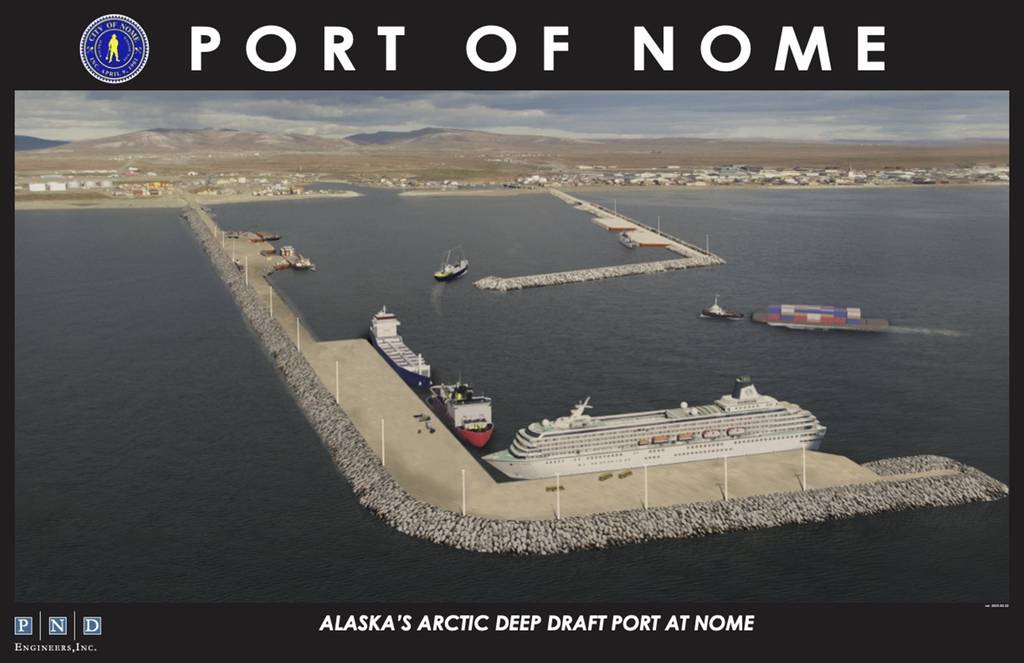
This rendering provided by the City of Nome shows how the Port of Nome, Alaska, will appear following an expansion project that will cost more than $600 million. Shipping lanes that were once clogged with ice for much of the year along Alaska’s western and northern coasts have relented thanks to global warming, and the nation’s first deep water Arctic port should be operational in Nome by the end of the decade. (PND Engineers Inc./City of Nome via AP)

Navy Times reports,

Workers will dredge a new basin 40 feet (12.2 meters) deep, allowing large cruises ships, cargo vessels, and every U.S. military ship except aircraft carriers to dock, Port Director Joy Baker said.

Nome in red. Adapted from Wikipedia’s AK borough maps by en:User:Seth Ilys.

We have been talking about a deepwater port in the area for some time,

Alaska and the Bering Strait

Nome isn’t actually in the Arctic, despite the fact that the US government defines the Arctic to include the Bering Sea. The Arctic Circle runs just a little North of Nome, essentially at the Bering Strait. The Bering Strait connects the Pacific with the Arctic Ocean and is about 44 nautical miles (82 kilometers) wide at its narrowest point. Whoever controls the Bering Strait can regulate traffic between the Pacific and the Arctic Oceans. Having a nearby deepwater port would certainly help, if it were desirable to regulate that traffic. Nome is within 160 nautical miles of the Russian side of the Strait.

Traffic through the Strait has increased and the possibility of a cruise ship disaster in the Arctic is probably a District 17 nightmare, but I think the probability is low that large numbers of CG units will be based at Nome. As noted earlier, I don’t think we will see either large patrol cutters (unless it is the Alex Haley) or FRCs based there but moving one of the Juniper class seagoing buoy tenders there, with its light icebreaking capability might make sense. A medium icebreaker might be a possibility, but that is a very long shot.

As I have noted before, the US Navy’s Pacific Fleet surface ships have not really shown much interest in operating in the Arctic. Their “Arctic” exercises have been in the Gulf of Alaska or little, if at all, North of the Aleutians.

We might see Air Force and Marines in the area in time of War. Airpower and/or shore based anti-ship missiles could control surface traffic through the Strait. Those forces would have to be supplied, which would mean logistics shipping to what we now know will be the deepwater port at Nome. The shipping would presumably require naval protection, air and/or surface.


Coast Guard in Oceania in the News

The USCGC Oliver Henry (WPC 1140) crew arrives in Manus, Papua New Guinea, on Aug. 14, 2022, from Guam as part of a patrol headed south to assist partner nations in upholding and asserting their sovereignty while protecting U.S. national interests. The U.S. Coast Guard is participating with partners to support the Pacific Islands Forum Fisheries Agency-led Operation Island Chief and the larger Operation Blue Pacific through patrols in the Western Pacific in August and September 2022. (U.S. Coast Guard photo by SW3 Victor Villanueva, NMCB-FOUR)

A couple of recent articles about the US relations with Palau and Papua New Guinea.

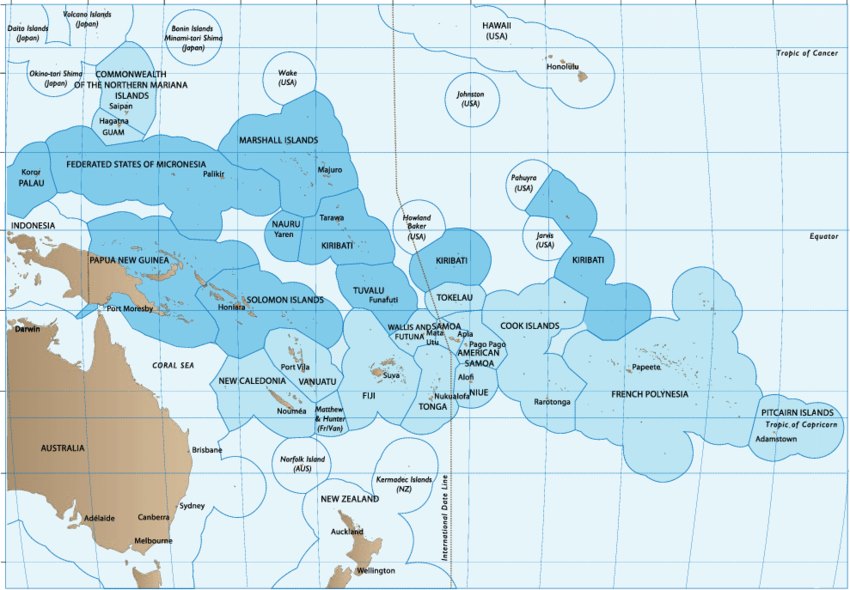
Map of the exclusive economic zones in the Pacific.

There has long been interest in a US base on Manus, Papua New Guinea, but this is politically sensitive. Basing cutters there that protect an important economic resource and occasionally rescue the locals when they get in trouble, would probably be most welcome.

On the map above, Manus and Guam do not look that far apart, but Manus is 1,737.88 km (938 nautical miles) SSE of Guam. That is about the distance from Miami to New York City. 

Cutters based in Manus would be closer to parts Freely Associated States (FAS) of Palau and Federated States of Micronesia than cutters based in Guam and much closer to most non-FAS Micronesian nations. It might also be a good place to site a fixed wing forward operating base (CGAS Honolulu DET).

I am beginning to think we will see two new bases in the Western Pacific, one in American Samoa and one in Manus.

If we do end up with additional Webber class based outside Hawaii and Guam, we might need a squadron support organization similar to, and perhaps even larger than, PATFORSWA, to support all FRCs based in the Pacific South and West of Hawaii, e.g. a PATFORSWPAC.

Some Posts of Interest

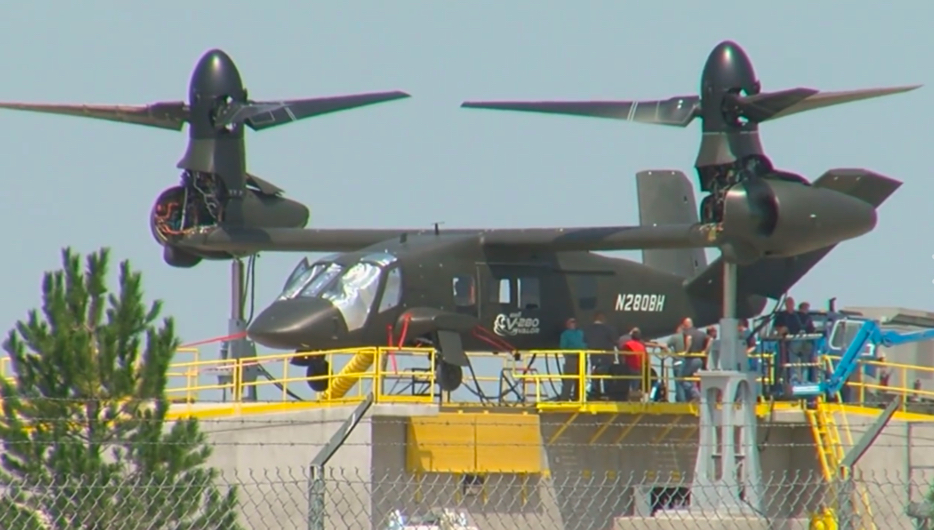
Bell’s V-280 prototype

There have been some posts that may be of interest published recently that I will point to below, with only brief comments.

“The New Coast Guard Funding Bill Is Really Good For The USCG” –Forbes There is a lot here, but you should recognize that this is the National Defense Authorization Act (NDAA), not an actual budget. It is not uncommon to have items in the authorization that are not included in the corresponding budget, so we have to wait a little longer to see what is actually funded.

The Coast Guard is directed to complete a number of studies. I hope they will be completed and delivered to Congress, but they may not be and if they are, we may never know. I have been told, a lot of reports get delivered late, because there is little penalty, and the committees don’t need to inform anyone else of whether they have received a report they requested.

“Some Fun Coast Guard Reads In Forbes” –Next Navy: This talks about the post above and a second post that suggests that the Coast Guard replace the C-27 with the Army’s recently selected V-280. I think the production version of the V-280 has a good chance of finding a place in the Coast Guard. Ultimately it might even replace all our land-based helicopters and all the fixed wing aircraft except the C-130, but that is many years in the future. It’s premature to consider replacing the C-27. (Thanks to Walter for bringing this to my attention.)

“Expand Seattle Coast Guard base without impacting working waterfront”: The local longshoremen’s union takes issue with the three proposals for expansion of Base Seattle. (Thanks to Mike for bringing this to my attention.)

“MOAA Interview: Coast Guard Commandant Charts the Path Forward” Admiral Zukunft emphasized the Cutter recapitalization. Admiral Schultz spent a lot of time talking about shoreside infrastructure. Admiral Fagan’s emphasis is on personnel issues, e.g., recruiting, incentives for afloat billets, afloat billets for women, and women the Coast Guard in general. There is also a nod to the Arctic.

A New Coast Guard Base In the Western Pacific?

Estimated exclusive economic zones (EEZs) of Pacific Island countries and territories (PICTs). The EEZs of countries that are the Parties to the Nauru Agreement are shown in darker blue. Note that not all EEZs of PICTs have been officially delineated under the United Nations Convention on the Law of the Sea. Source: Patrick Lehodey

Recently there has been indicators that there may be more Coasties deployed to the Western Pacific, including perhaps a desire to replicate PATFORSWA somewhere in the Western Pacific in support of USINDOPACOM. There have also been suggestions that the Coast Guard should be based in Palau and in American Samoa

South and West of Hawaii, Why a New Base?

The US has a huge EEZ in the areas South and West of Hawaii. This area constitutes more than 29% of the entire US EEZ. By comparison the entire EEZ in Atlantic Area only constitutes a little over 16% of the total US EEZ. Despite the distortion of the map below, this Area is nearly as large as the US EEZ surrounding Alaska, and certainly larger than the parts of the Alaska EEZ we actually patrol with any regularity.
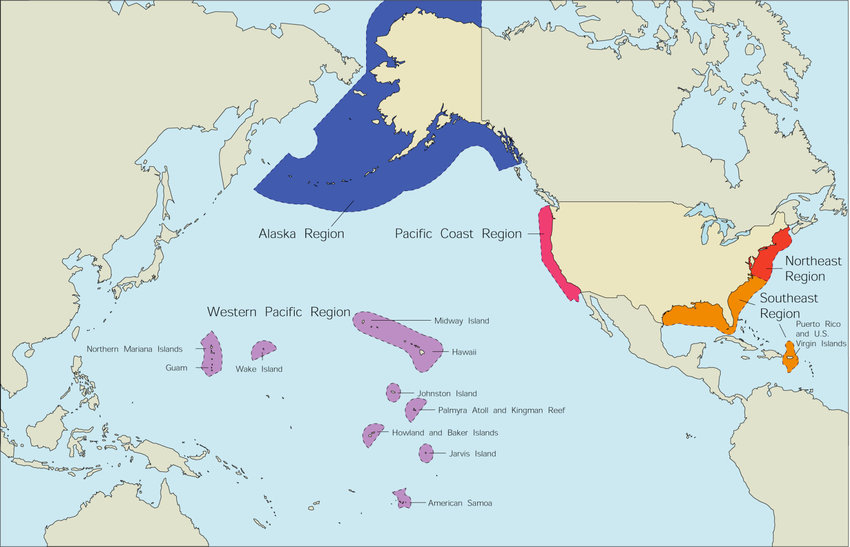
In the past this area has been given essentially only benign neglect, but things have changed. There has been the explosion of Illegal, Unregulated, and Unreported (IUU) fishing, primarily, but not exclusively by China. In addition to fishing in US waters, these activities undermine the economies of the three Pacific Island nations of the Compact of Free Association: the Federated States of Micronesia (FSM), the Republic of the Marshall Islands (RMI), and the Republic of Palau, to whom we have treaty obligations, as well as other Pacific Island nations including the Solomon Islands

Following on the heels of their fishing fleet, China seems to be seeking strategic basing in this area in the guise of loans and other forms of economic aid made necessary in part, at least, due to the devastation of local fishing. This has given rise to a general suspicion about Chinese intentions in the area.

Fortunately, the Coast Guard is generally seen as a welcomed partner in capacity building by many Pacific Island nations

In spite of the “tyranny of distance” in the Pacific, the only patrol assets we have in this area are three, relatively small Webber class patrol craft in Guam. There is not a single Coast Guard aircraft stationed in the area. In Guam a Navy helicopter squadron is used to provide SAR Response. From Guam, the nearest Coast Guard Airstation is 3440 nautical miles (6370 kM) away. It is over 2230 nmi (4129 kM) from Hawaii to American Samoa.

What Kind of Base?

Most of the talk has been about basing ships but there is also a need for supporting air reconnaissance. Air support might not require a full time Coast Guard Air Station, but a forward based rotating detachment might be appropriate. A mobile land based medium altitude long endurance unmanned air system might also serve us well. Even to base surface assets, we would need not only a port, but also a nearby airfield to provide access and support, so we will talk about airports. 

The Coast Guard is not going to want to spend a huge amount of money to create facilities where none currently exist, so there is probably no point in looking at locations that do not already have at least basic port or airport facilities. 

Since this is an attempt to help the local population, it makes sense to go where there is a local population. Happily, the people are where the sea and airports are.

These considerations limit the choices, eliminating places that might be good geographically, but don’t have even basic infrastructure. We are probably not going to establish a base on an uninhabited island. 

DOD is also interested in establishing additional bases to allow greater distribution of their assets, and we might ride their coattails. If the DOD base is on foreign soil, including a Coast Guard presence might be seen by the locals as sweetening the deal.

The Coast Guard would probably prefer to have the base on US territory, but if that were not to be the case, then proximity to currently under-served US territories, including uninhabited islands, would be a plus.

So Where?

As can be seen in the first chart, the area of the EEZs surrounding the various islands in the Pacific are very large. To give an idea of how large they are, I will use the area of the Atlantic Area EEZ (East Coast, Gulf Coast, Puerto Rico, and US Virgin Islands, 1,835,024 sq kilometers) as a benchmark. I will note percentage of Atlantic Area Exclusive Economic Zone (% AA EEZ)

US Territories

According to Wikipedia, the US has the following territory South and West of the Hawaiian Islands, their associated EEZ in square kilometers and EEZ size compared to that of Atlantic Area are in parenthesis: 

  • Northern Marianas Islands (749,268, 40.8% AA EEZ)
  • Johnston Atoll (442,635, 24.1% AA EEZ)
  • Howland and Baker Islands (434,921, 23.7% AAEEZ) 
  • Wake Island (407,241, 22.2% AA EEZ)
  • American Samoa (404,391, 22.0% AA EEZ)
  • Palmyra Atoll and Kingman Reef (352,300, 19.2% AA EEZ)
  • Jarvis Island (316,665, 17.3% AA EEZ)
  • Guam (221,504, 12.1% AA EEZ)

The total EEZ of these small islands is more than 81% greater that of the entire Atlantic Area EEZ. 

Pacific Remote IslandsBaker IslandHowland IslandJarvis IslandJohnston AtollKingman ReefPalmyra Atoll, and Wake Island are all included in the Pacific Remote Islands Marine National Monument, managed by the US Fish and Wildlife service and NOAA. These islands extend 717 to 2,298 nautical miles South and West from Honolulu. None of these islands has a permanent resident population. 

Johnston Atoll does have an airport and pier space. Palmyra has only an unpaved airstrip left over from WWII. Wake Island is administered by the USAF and has a 9,800-foot (3,000 m) runway used for refueling and emergency landings, “The island’s only harbor between Wilkes and Wake is too narrow and shallow for sea-going vessels to enter.”

None of the “Pacific Remote Islands” sound promising. That leaves only

  • American Samoa (404,391)
  • Guam (221,504)
  • Northern Marianas Islands (749,268)

Guam: Guam is 6,126 kilometers or 3,308 nautical miles West of Honolulu. We already have a Coast Guard presence in Guam. It is homeport to a buoy tender and three Webber class WPCs. There is, however, no Coast Guard air station closer than Honolulu. A Navy Helicopter squadron provides SAR response. 

American Samoa: “American Samoa consists of five main islands and two coral atolls. The largest and most populous island is Tutuila.” It has 95% of the population of American Samoa, 56,000 inhabitants, and includes a large natural harbor and airport as part of the capital, Pago Pago. Pago Pago is 4,179 kilometers or 2,256 nautical miles South of Honolulu.

Commonwealth of the Northern Mariana Islands (CNMI): “The CNMI includes the 14 northernmost islands in the Mariana Archipelago; the southernmost island, Guam, is a separate U.S. territory.” Of the approximately 53,883 people living there (2010 census), about 47,565 (2017 estimate) live in Saipan. Recently it was announced that an expeditionary sea base, USS Miguel Keith (ESB 5), would be homeported in Saipan. This may offer an interesting option for collaboration in capacity building. Saipan is only 217 kilometers or 117 nautical miles from Guam, so what might have been potential base seems less likely; however, it does offer an alternative for replenishment while operating in the Northern Marianas. 

Pacific Remote Islands Marine National Monument. The previous (2011) boundaries of the Pacific Remote Islands Marine National Monument are outlined in light blue.

Members of the Compacts of Free Association

Foreign Policy recently published a proposal for “After the Debacle: Six Concrete Steps to Restore U.S. Credibility.” The article claimed there was bipartisan support for each step. Perhaps surprisingly three of the proposed steps involved the Coast Guard. They included:

  •  Open embassies in the Pacific island nations of Kiribati, Nauru, Tonga, and Tuvalu and provide each with a Navy or Coast Guard attaché.
  • A permanent Coast Guard presence at Pago Pago in American Samoa.
  • Basing an icebreaker in Sydney or Hobart, Australia.

That does not constitute US policy but clearly there is pressure to put more Coast Guard West of Hawaii both to protect the huge US EEZ in the Western Pacific and to do capacity building and work with Pacific island nations, particularly those who are Compact of Free Association members (the Federated States of Micronesia (FSM), the Republic of the Marshall Islands (RMI), and the Republic of Palau).
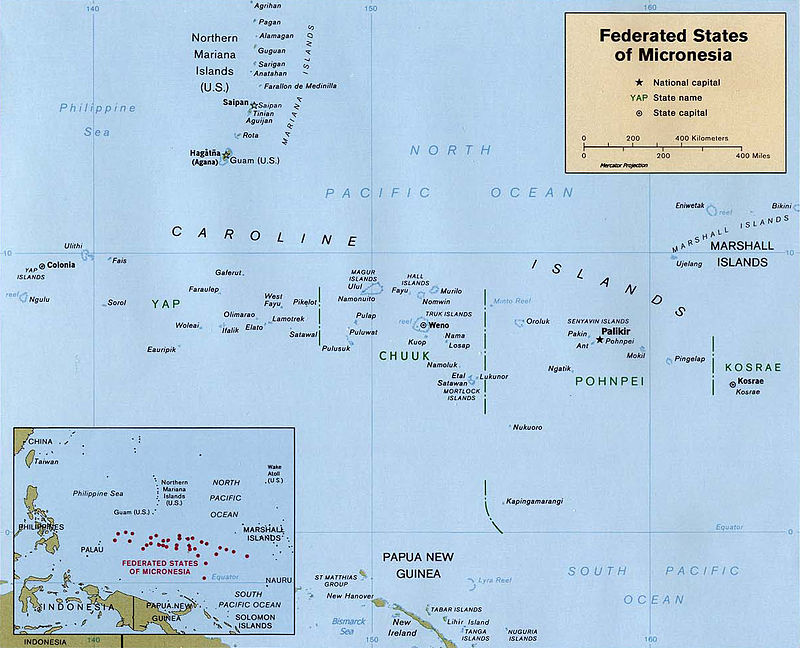
U.S. Central Intelligence Agency – Federated States of Micronesia (Political) 1999 from Perry-Castañeda Library Map Collection: Federated States of Micronesia Maps

Federated States of Micronesia (FSM, 163.3% AA EEZ)

The Federated States of Micronesia (FSM) consist of “around 607 islands (a combined land area of approximately 702 km2 or 271 sq mi) that cover a longitudinal distance of almost 2,700 km (1,678 mi) just north of the equator.”

The island of Pohnpei is the most developed in the FSM and has a population of 36,832 (2020) out of a total population of 104,468 (2019 estimate). It includes the capital Palikir. It is 1635 kilometers / 883 nautical miles SE of Guam. The most Easterly FSM State, Kosrae, lies 2186 kilometers / 1180 nautical miles from Guam. 

The possibility of a Coast Guard base in the Federated States of Micronesia has gotten a bit more likely. According to MSN and the Pacific Island Times,

“The United States and the Federated States of Micronesia have agreed on a plan to build a military base in the Pacific Island nation, in line with the Pentagon’s strategic ambition to increase its footprint in the Indo-Pacific region and keep China at bay.”

In all probability the “base” will be a port and an airfield, both dual-purpose, used for both commercial and military purposes. I would not expect DOD ships or aircraft to be based there permanently. There probably will be a small cadre of support personnel.

Republic of the Marshall Islands (RMI, 108.5% AA EEZ)

The 2020 population was projected to be 59,190. Total land area is only 70.05 square miles. The capital is on the atoll of Majuro, population 27,797 (2011). Majuro’s airport is 2984 kilometers / 1611 nautical miles ESE of Guam’s, and 1443 kilometers / 779 nautical miles East of Pohnpei in the Federated States of Micronesia.
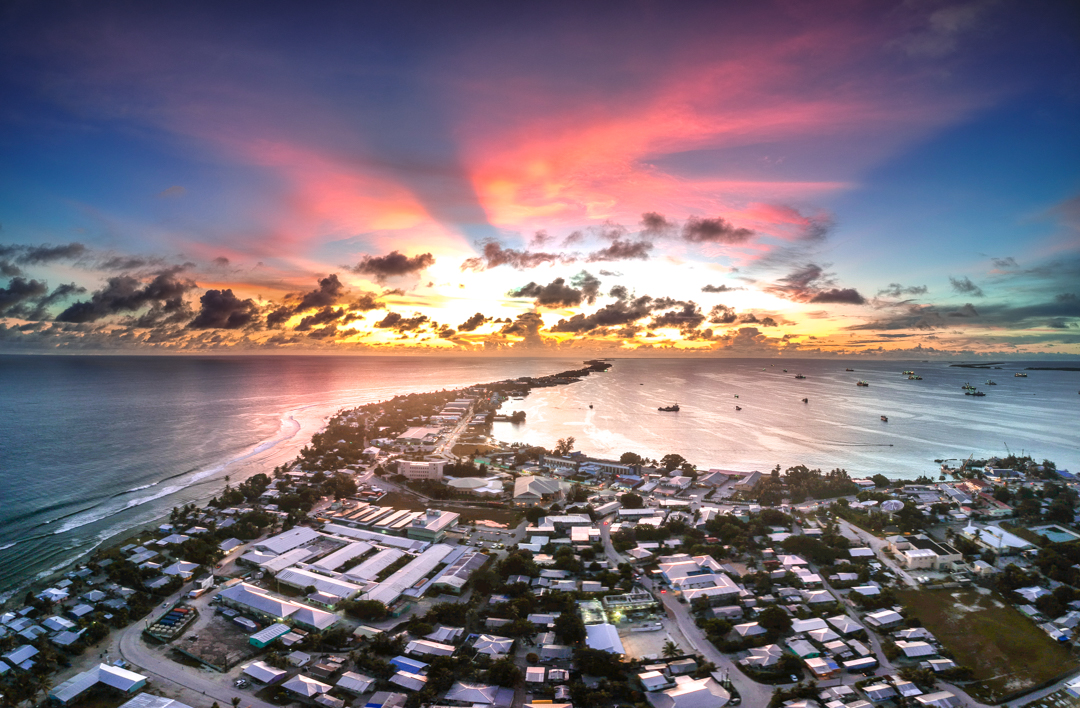
Sunset in Majuro, over Delap-Uliga-Darrit in the Marshall Islands from a drone. Jamison Logan photo.

At one point during WWII Majuro was the busiest port in the world. “Majuro Lagoon is…one of the busiest tuna transshipment ports in the world, with 306,796 tons of tuna being moved from purse seine vessels to carrier vessels in 2018.”
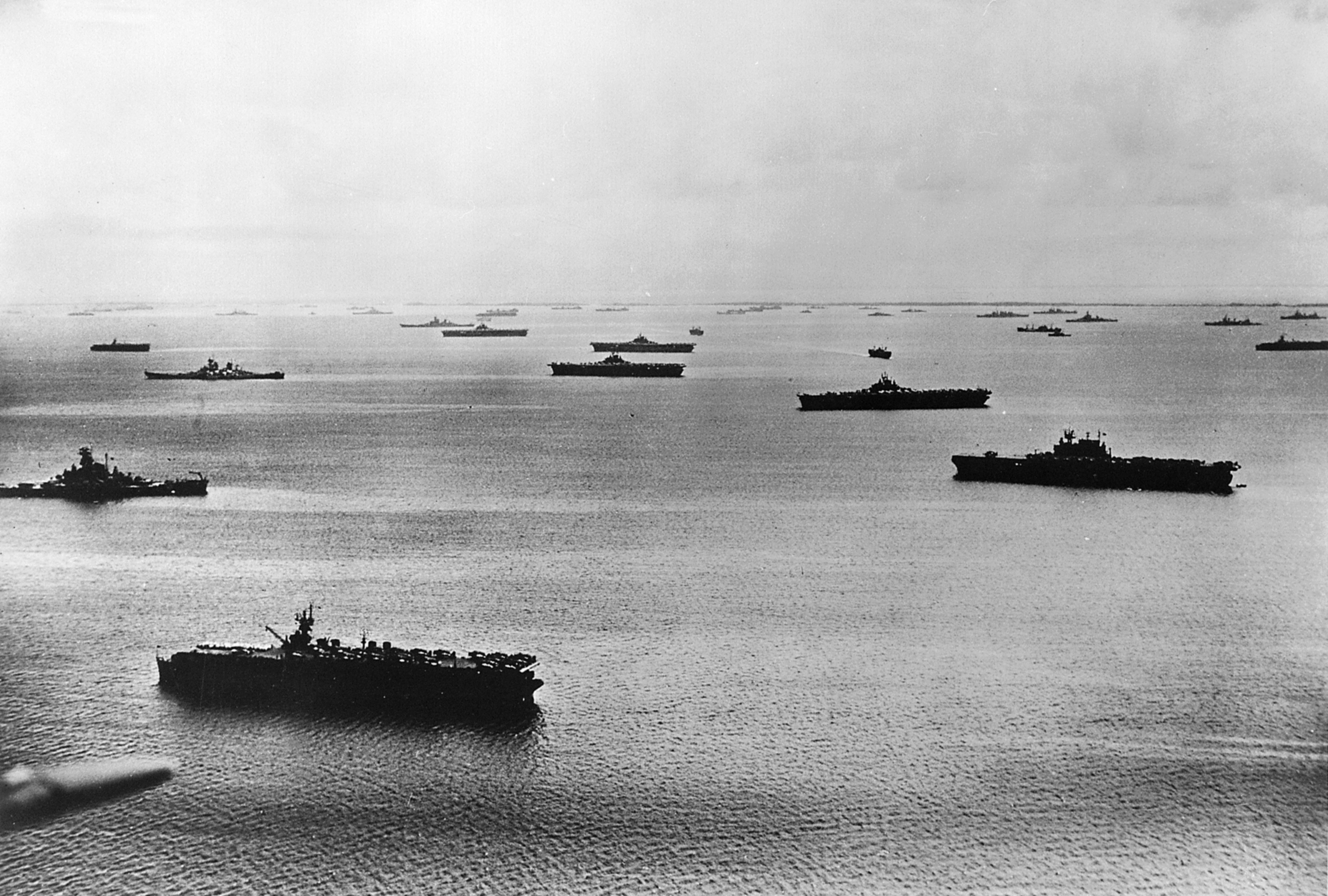
The U.S. fleet at Majuro Atoll in 1944. Visible (among many other ships) are three Independence-class light carriers, four Essex-class carriers, USS Enterprise (CV-6, right front), a South Dakota-class battleship, and two Iowa-class battleships. U.S. Navy photo 80-G-225251

Palau (32.9% AA EEZ)

Koror City is the largest city and its commercial center in Palau, home to about half of the country’s population, about 14,000 in the metropolitan area. It is served by an airport about four miles away. Koror, Palau is 704 nautical miles (1,304 kM) from Guam

Non-US, Non-Compact of Free Association Island Nations. 

There are eleven other small Island nations in the area.

  1. Kiribati (187.6% AA EEZ)
  2. Papua New Guinea (130.9% AA EEZ)
  3. Cook Islands (106.8% AA EEZ)
  4. Solomon Islands ((86.6% AA EEZ)
  5. Fiji (69.9% AA EEZ) 
  6. Tuvalu (40.9 % AA EEZ) 
  7. Vanuatu (36.1% AA EEZ) 
  8. Tonga (35.9% AA EEZ) 
  9. Niue (17.3% AA EEZ) 
  10. Nauru (16.8% AA EEZ) 
  11. Samoa (7.0% AA EEZ) 

These eleven have a combined EEZ more than 7.3 times that of the Atlantic Area EEZ. 

What I Think We Will Do

Putting two or three Webber class at Pago Pago appears likely. It would require we add to the currently planned and funded fleet of 64 Webber class FRCs. 

If the Navy does establish a base in the Federated States of Micronesia (FSM), then the Coast Guard might well provide a small support and advisory detachment to assist the local maritime authorities. Pohnpei, Federated States of Micronesia looks like it might be a good central location to operate Fixed Wing aircraft from. They have a 6,000 foot (1829 meter) runway

What We Should Do

If we have bases in Honolulu, Guam and American Samoa, they form the corners of a triangle that encloses most of the area of interest, but those bases are near the extremes. American Samoa is well South and East but it is at least surrounded by island nations. Guam is near the Western edge. Honolulu is in the Northeast corner. 

Another possible complementary, more central location is Manus Island, Papua New Guinea. Manus is 1,737.88 km (938 nautical miles) SSE of Guam. The population is reported to be 50,351 (2011). The US and Australia both see Manus as strategically significant

Current discussion seems to concentrate on where we might put additional cutters. This has gained a sense of urgency because we are at a decision point with regard to the Webber class FRC program and these little ships are seen as the likely assets to provide a Coast Guard presence in this underserved area. Will we let the program die at the currently planned 64 vessels or will we exercise all or part of an existing option for 12 more cutters that will expire in May 2023? 

This is prompted in part by the House Armed Services Committee’s report (H.Rept. 117-118 of September 10, 2021) on H.R. 4350 which states in part:

Given the successes of the U.S. Coast Guard’s Sentinel-class Fast Response Cutter in support of the Navy’s Fifth Fleet as a part of Patrol Forces Southwest Asia, the committee believes there are similar roles for Sentinel-class Fast Response Cutters in other areas of responsibility. Therefore, the committee directs the Secretary of the Navy to submit a report to the congressional defense committees not later than February 1, 2022, that details the current mission sets and operating requirements for the Sentinel-class Fast Response Cutter and expands on how successes in the U.S. Central Command area of responsibility would translate to other regions, including the U.S. Indo-Pacific Command. Further, the committee directs the Secretary of the Navy to assess the requisite upgrades to the Sentinel class Fast Response Cutter required to meet Navy standards and evaluate the concept of operations for employing these vessels in Southeast Asia. This report should be unclassified but may include a classified annex. (Page 21)

In addition to placing two or better yet three FRCs in American Samoa, it might be wise to also increase the number of FRC in Guam to emulate the success of PATFORSWA. This would allow two boats to be away from base almost continuously. This could allow significantly better coverage particularly in Palau and the Northern Marianas. 

Ideally these island nations should have their own enforcement mechanisms, capable of patrolling their own waters, but comprehensive coverage is probably beyond their means. It seems they all have some basic capabilities. We should complement rather than replace existing capability.  Local forces should be the point of the spear. To this end we can provide training and donate assets including perhaps excess 87 foot Marine Protector class patrol boats. 

Given the huge area, surface units are not enough. Satellites can help. but air surveillance is also required. The increased range of the “J” model C-130s will certainly help, but to provide any degree of persistence we will probably at least need to rotate crews and aircraft out of an advanced base. 

Our efforts should be coordinated with the already significant efforts of our allies Australia, New Zealand, and France, are doing in the area. 

The distances are great. The areas of concern are huge. The Coast Guard, our allies, and the Island nations themselves don’t have enough assets to patrol these waters effectively. In addition to patrol vessels and aircraft we need better Maritime Domain Awareness including use of satellites and artificial intelligence to cue the limited enforcement assets. 

A cooperative multi-national law enforcement intelligence exchange might be the most important addition we could make. 

“The Long Blue Line: Charleston—over 230 years of Coast Guard service and growth in South Carolina!” –MyCG

Coast Guard Base Charleston. The Base is moving from this location to the former Charleston Navy Base

MyCG has another in the Long Blue Line series, The Long Blue Line: Charleston—over 230 years of Coast Guard service and growth in South Carolina!

I have added it to my Heritage Page, but there was an interesting note in the next to last paragraph discussing the recent past and future of Base Charleston,

“In October 2015, the North Charleston cutter base was officially commissioned as Coast Guard Base Charleston with new National Security Cutters Hamilton and James replacing the old Gallatin and Dallas. The recently commissioned National Security Cutter Stone has joined its two sister cutters and future plans see the facility becoming a “super base” supporting two more NSCs, as well as units of the new medium-endurance class of Offshore Patrol Cutters and, possibly, one or two new Polar Security Cutters.” (Emphasis applied–Chuck)

We have begun to see indications of an intent to base icebreakers on the Atlantic side, but I had assumed these would be the Medium Icebreakers (Arctic Security Cutters). This may reflect an anticipation the Coast Guard will have more than three Polar Security Cutters.

When you realize that, in relationship to the Eastern Pacific Drug Transit Zone, Charleston is about 1,000 nautical miles closer than San Diego and about 1,400 nautical miles closer than Alameda, you can understand why the Coast Guard decided to base five Bertholf class NSCs there. Its why 4th Fleet, which is responsible for all of South America is an Atlantic Fleet Command.  Add to that the lower cost of living and it makes a lot of sense.

The U.S. Coast Guard Cutter James arrives at its new homeport of Charleston, S.C. Aug. 28, 2015. (U.S. Coast Guard photo by Petty Officer 1st Class Melissa Leake)