
We got a premature look at the naming sources being planned for the Offshore Patrol Cutters. It was perhaps the default choice in recycling old names, but I believe we owe recognition to many of our heroes that have been neglected. I had hoped we would continue the successful practice of recognizing our heroes, as has been done with the Webber Class WPCs, but extending the sources to include officers as well as enlisted. I had a post in the works to identify candidates for the honor.
Perhaps it is not too late to rethink this. If you agree, I will offer a suggestion how you might be able to make your voice heard.
Our large cutters are the Coast Guard’s equivalent of the Navy’s destroyers or frigates. The Navy names these after heroic Navy and Marine Corps personnel. We should follow this tradition and name our Offshore Patrol Cutters after notable personnel of the Coast Guard or its legacy services.
Additionally we might have to stretch to find 25 ships whose accomplishments really justify namesakes, particularly if we want to use names with an Arctic connotation like Bear, Northland, Storis, and Eastwind for icebreakers. Have we really thought out all 25 names?
We certainly have enough heroes. For most, we cannot reflect their accomplishments by reprising ship names. Particularly during WWII, many of their vessels (e.g. LCIs, PCs, or 83 foot WPBs) were nameless, designated only by a number that defies reuse. In other cases they were not assigned to ship.
Naming ships is about more than honoring the past. It is message to the future, written to the crews, the Coast Guard, the rest of the Government, to the American people, and the world, including our allies and our enemies. It tells them all, what should be expected of the Coast Guard and its people. For this purpose, I believe more recent examples are more effective than those from the early 19th century.
The Commandant has recently had to remind Congress and the Administration that we are a military service. It could not hurt if many of the names chosen for the OPCs illustrate this.
Naming our ships for heroes rather than recycling previous ship names allows us to highlight the deeds of Coast Guardsmen who were not aboard ships including aviators and Port Security personnel.
I will highlight a few I found particularly significant and list some others that might be worth consideration. The list is incomplete. I had not exhausted all my sources, so there are others that might be worthy of consideration. I believe I excluded all those that have or are planned to have Webber class namesakes.
My list of primary candidates consist of 39 names. There is representation from the Vietnam War, WWII, WWI, the Spanish-American War, and the War of 1812 as well as peacetime heroics with heavy emphasis on events in the 20th century. It includes many junior officers and reflects the diversity of Coast Guard missions.
If you would like to express an opinion on the naming of the OPCs I suggest you contact:
CDR Charlotte Pittman, USCG, Deputy Chief of Public Affairs
Email: Charlotte.E.Pittman@uscg.mil
THE PRIMARY CANDIDATES

USCG Cmdr Harold S. Berdine of cutter Spencer talking with US Navy Capt Paul Heineman of the Escort Group A-3 after sinking German submarine U-175, North Atlantic, 500 nautical miles WSW of Ireland, 17 Apr 1943. US Coast Guard photo by Jack January
BERDINE, Harold S., Cdr. (later RAdm.) WWII, Battle of the Atlantic, 2 Legion of Merit, CO of USCGC Spencer when she sank U-boat U-175 and possibly a second U-boat. Citation: “The President of the United States of America takes pleasure in presenting the Legion of Merit with Combat “V” to Commander Harold Sloop Berdine, United States Coast Guard, for exceptionally meritorious conduct in the performance of outstanding services to the Government of the United States as Commanding Officer of the U.S.C.G.C. SPENCER when that ship engaged and sank a German submarine on 17 April 1943. While escorting a large convoy, the SPENCER made contact with a submarine and went into action immediately. With a splendid demonstration of ship handling, prompt action, and accurate judgment, and with the convoy bearing down on his ship and the submarine, Commander Berdine boldly maneuvered his ship into position for two attacks while the U-Boat was still ahead of and close aboard the convoy. He maintained contact with the enemy ship while passing down through the convoy columns, and close stern of the convoy, delivered a third accurate depth charge attack. The submarine was forced to the surface, was then engaged with gunfire and sank shortly after. Many of the enemy crew were captured. Commander Berdine’s outstanding performance of duty on this occasion reflected great credit upon himself and upheld the highest traditions of the United States Naval Service. (Commander Berdine is authorized to wear the Combat “V”.)” Later a second Legion of Merit.
BREWSTER, Caleb, Revolutionary War/War of 1812 (One of the characters on the television series “Turn, Washington’s Spies.) Revolutionary War Spy, 20 years in the Revenue Cutter Service, and CO of the Revenue cutter Active during the War of 1812. http://coastguard.dodlive.mil/2014/07/caleb-brewster-revolutionary-war-hero/ also https://en.wikipedia.org/wiki/Caleb_Brewster
BLUE, Victor, Lieutenant, Spanish American War, USLHS, of SUWANNEE (formerly MAYFLOWER) went ashore to make a visual reconnaissance of Santiago Bay and the ships in it. Guided by a member of the Cuban insurgent forces, he passed through enemy lines and observed the Spanish squadron on 12 June. His report confirmed that all of Admiral Cervera’s squadron had in fact entered the bay, thus enabling the blockade by heavy ships of the Navy to be concentrated at that point, without having to worry about threats to the troop convoys preparing to depart from Tampa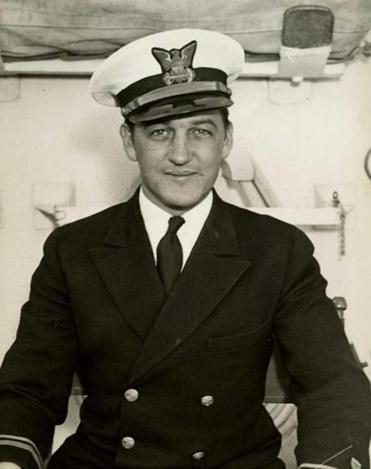
Photo: Thomas James Eugene Crotty
CROTTY, Lt Thomas James Eugene, WWII, Mine warfare expert. Captured by the Japanese on Corregidor and died in POW Camp.
DEXTER, Dwight, CO of NOB Cactus, (Guadalcanal, WWII). Silver Star, “In action against an armed enemy as commanding officer of the Naval Local Defense Force and Anti-Submarine Patrol, Guadalcanal-Gavutu, Lieut. Comdr. Dexter landed with the Marines on August 7, 1942, and established and administered the Naval Local Defense Forces in these occupied islands until November 5, 1942, on which date he was evacuated due to illness. During the three months while he was in command of this unit, he was subjected to almost daily aircraft bombing attack and, for many weeks, to an almost nightly naval bombardment. Throughout this entire period, his courage, determination and zeal made it possible to maintain in operation a signal station and a boat operating organization which was essential to the successful unloading.”
EAGAN, Lance A., Lieutenant, USCG, Vietnam War, Silver Star, “The President of the United States of America takes pleasure in presenting the Silver Star (Air Force Award) to Lieutenant Lance A. Eagan, United States Coast Guard, for gallantry in connection with military operations against an opposing armed force while attached to the 37th Aerospace Rescue and Recovery Squadron (USAF), as rescue Crew Commander of an HH-3E helicopter in Southeast Asia on 2 July 1968. On that date Lieutenant Eagan penetrated a heavily defended area of North Vietnam to attempt the rescue of an injured downed pilot after three helicopters had previously been severely damaged and driven off by the intense, hostile ground fire. Lieutenant Eagan with undaunted determination, indomitable courage and professional skill established a hover and deployed a Pararescueman to assist the injured airman. Disregarding the hostile fire that originated from beneath his hovering helicopter, Lieutenant Eagan maintained a stable hover until the downed pilot and Pararescueman were safely recovered from the hostile area. By his gallantry and devotion to duty, Lieutenant Eagan reflected great credit upon himself and the United States Coast Guard.”
ERICKSON, Frank A., WWII, Rotary Wing Pioneer
FINCH, Florence, SN1, USCG, WWII, Medal of Freedom, (for acts committed prior to joining the Coast Guard) For meritorious service which had aided the United States in the prosecution of the war against the enemy in the Philippine Islands, from June 1942 to February 1945. Upon the Japanese occupation of the Philippine Islands, Mrs. Finch (then Mrs. Florence Ebersole Smith) believing she could be of more assistance outside the prison camp, refused to disclose her United States citizenship. She displayed outstanding courage and marked resourcefulness in providing vitally needed food, medicine, and supplies for American Prisoners of War and internees, and in sabotaging Japanese stocks of critical items. . .She constantly risked her life in secretly furnishing money and clothing to American Prisoners of War, and in carrying communications for them. In consequence she was apprehended by the Japanese, tortured, and imprisoned until rescued by American troops. Thought her inspiring bravery, resourcefulness, and devotion to the cause of freedom, Mrs. Finch made a distinct contribution to the welfare and morale of American Prisoners of War on Luzon. (Heroic acts were not done while in the Coast Guard, but she became one of us.)
FRITZCHE, Edward H. CAPT, USCG, WWII, Legion of Merit, For exceptionally meritorious conduct, both in the preparation and execution of the amphibious assault on the coast of France June 6, 1944. Captain Fritzche was in command of a main group of the Assault Force, composed of a mixed fleet of American and British transports and American landing craft. He brought these ships and craft to their predetermined stations in the transport area, successfully effected their prompt and efficient unloading and expedited the assault troops and equipment to the designated beaches.—Gold Star in lieu of a second Legion of Merit, For meritorious conduct as commanding officer of a Coast Guard transport prior to and during the amphibious invasion of Southern France August 15, 1944. He efficiently organized and trained his ship and boat group to execute the assigned mission of loading transporting to the assault area and landing the embarked Army assault units on the invasion beaches. His able conduct contributed materially to the effective establishment of the beachhead and to the over all success of the invasion.
GISLASON, Gene R., LT, USCGR, WWII, Silver Star, For outstanding heroism as Commanding Officer of the USS LCI (L) 94, while landing assault troops in Normandy June 6, 1944. He successfully directed his ship through numerous beach obstacles to the proper beach, discharged his troops and retracted while his ship was seriously damaged from heavy enemy fire. Ship’s communications, engine telegraph and electric steering were disabled by direct hits on the pilothouse which killed three crewman and one screw and shaft were rendered inoperative by beach obstacles. By his coolness under fire and excellent seamanship, Lt Gislason overcame these difficulties and brought his ship off the beach on hand steering and one screw. He later supervised repairs and in four hours enable the LCI (L) to remain operative in the assault area for three weeks.
GOFF, Willis J., GM1, Vietnam War a crewman on board the cutter Point Banks on patrol in Vietnam, was awarded the Silver Star for “his heroic courage and gallantry in action while engaged in armed conflict against North Vietnamese and Viet Cong aggressors in the Republic of Vietnam on Jan. 22, 1969.” He and fellow Point Banks crewman EN2 Larry D. Villarreal volunteered to man the cutter’s launch to rescue a group of nine South Vietnamese soldiers who were trapped along a beach by two Viet Cong platoons. Under continuous enemy fire, they made two landings on the beach to rescue successfully all of the South Vietnamese soldiers. His citation read, in part: “. . .with courageous disregard for their own safety, Petty Officer Goff and his fellow crewmember were able to rescue nine South Vietnamese Army personnel who would have met almost certain death or capture without the assistance of the two Coast Guardsmen. Petty Officer Goff’s outstanding heroism, professionalism, and devotion to duty and to his fellow man were in the highest traditions of the United States Naval Services.
HENLEY, Coit T., LTJG, USCGR, WWII, Normandy invasion, Silver Star, For heroism as Commanding Officer of the USS LCI(L) 85 while landing assault troops in Normandy, France, June 6, 1944. Lt Hendley successfully landed his troops despite the mining of his vessel, fire in three compartment and concentration of enemy fire while unloading. His courage and seamanship in directing repairs and retracting from the beach resulted in saving the lives many wounded aboard.
HICKEY, Eugene J., Lieutenant, Junior Grade, USCG, Vietnam War, Operation Markettime, Silver Star, “The President of the United States takes pleasure in presenting the Silver Star Medal to Eugene J. Hickey, Lieutenant, Junior Grade, U.S. Coast Guard, for conspicuous gallantry and intrepidity in action while Commanding the U.S.C.G.C. POINT WHITE (WPB 82308), in action against the enemy in the Republic of Vietnam on 9 March 1966. In response to the Secretary of the Navy’s request for maintaining waterborne surveillance patrols of the inland and coastal waters of Vietnam, Lieutenant, Junior Grade, Hickey was assigned as one of the first Commanding Officers to lead a contingent of Coast Guard 82 foot patrol boats assigned to the mission. In January 1966, Lieutenant, Junior Grade, Hickey took command of U.S.C.G.C. POINT WHITE with additional duties as Chief Staff Officer for the new Division. Point White had not been in-country a month when she started patrols in a Viet Cong controlled area of the Soi Rap River in the Long An Province. Point White soon spotted a junk crossing the river and attempted to stop it. The junk had 14 Viet Cong aboard who opened fire with small arms and automatic weapons. Point White returned the fire and Lieutenant, Junior Grade, Hickey achieved decisive victory by ramming and sinking the junk. Point White killed eight Viet Cong and captured four. During the engagement, one of the prisoners fell overboard and Lieutenant, Junior Grade, Hickey dove over the side to rescue the wounded man.”
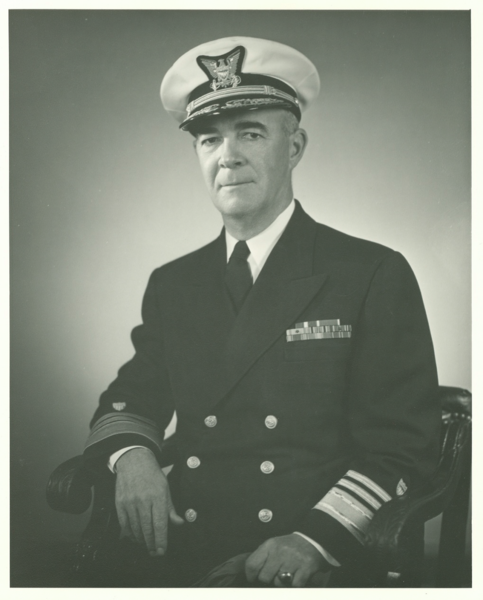
Official photograph of Vice Admiral James A. Hirshfield
HIRSHFIELD, James A., CAPT, USCG, WWII, Battle of the Atlantic, Navy Cross, For extraordinary heroism and distinguished service in action as commanding officer of the USCGC CAMPBELL of February 22 1943, when an enemy submarine was severely damaged and sunk and during the ensuing period when the CAMPBELL, which was damaged in the engagement, was towed safely to port. The CAMPBELL was engaged in escort operations when she caught an enemy.
IMLAY, Miles Hopkins, CAPT, USCG, WWII, Invasion of Sicily and Normandy, Legion of Merit, For exceptionally meritorious conduct as Commander of the Reserve Attack Group during the Sicilian invasion campaign. With outstanding skill and expert seamanship, Captain Imlay brought the group under his command to the scene of action and with speed and precision dispatched them to the designated beaches, as they were required. Following the initial assault, he assisted in the support of the Army at Licata, and later was temporarily Commander of the Advance Base at Porto Empedocles, participating in the opening of that port while under enemy gunfire.—Gold Star in lieu of Second Legion of Merit, For exceptionally meritorious conduct as Commander of the LST convoy of a Major Task Force during the assault upon Italy in September 1943. Charged with the difficult assignment of brining the vessels under his command safely through the hazardous course between Bizerte, Tunisia , and the Gulf of Salerno, Italy, Captain Imlay (the Commander) performed his essential duties with outstanding skill, successfully reaching the designated assault beaches at the assigned time despite extremely adverse weather conditions and fierce enemy aerial opposition.—Silver Star, For conspicuous gallantry as Deputy Commander of an Assault Group participating in the initial invasion on the coast of France , June 6, 1944. Undaunted by heavy enemy fire, Captain Imlay courageously took station close to the shore on the early morning of D-Day and throughout the most bitter period of the fighting, coolly and promptly made spot decision on the reorganization, grouping and dispatching of craft to the beach, subsequently relieving the Task Group Commander of his duties when he withdrew his transport from the assault area, immediately thereafter, he was placed in charge of operations afloat as assistant to the naval Officer in Charge of one of the beaches and discharging the duties of this responsibility with distinctive professional ability, contributed essentially to the rapid clearing of the backlog of ships.
JARVIS, David Henry, first lieutenant (later Captain), United States Revenue Cutter Service. During the harsh winter of 1897–1898, Jarvis, then serving aboard the U.S. Revenue Cutter Bear, led the Overland Relief Expedition, bringing a three-man rescue team with a herd of about 400 reindeer across 1,500 miles of tundra and pack-ice to Point Barrow, Alaska, to bring needed food to 265 whalers whose ships had become stranded in the ice off the northern Alaska coast.
JESTER, Maurice D., CDR, USCG (ret.), WWII, Battle of the Atlantic, Navy Cross, For distinguished service as commander of the CGC ICARUS during a successful action on May 9, 1942, with a German submarine. His persistence, alertness, determination and judgment both during and after the attack resulted in sinking the enemy submarine and capturing the commanding officer one other officer and 31 crewmember. More here.
LEE, Fredrick, CO of the Revenue Cutter Eagle when attacked by HMS Dispatch.
McCAUSLAND, Francis, Lt(jg) USCG. WWII, Port Security, Lead firefighting effort on the SS El Estero, a ship loaded with ammunition that endangered New York and New Jersey. Seriously injured during the fire fighting effort. http://coastguard.dodlive.mil/2016/04/the-long-blue-line-s-s-el-estero-and-the-coast-guards-rescue-of-new-york-city-part-1/
McCORMICK, Nelson C., LCDR, USCG, WWII, Battle of the Atlantic, Legion of Merit, CO of USCGC Thetis when she sank U-157 Jun, 1942., “For exceptionally meritorious conduct as Commanding Officer of a Coast Guard Cutter during action against an enemy German submarine off the Florida coast June 11 to 13, 1942. Proceeding to the area where a hostile submarine had been located, he began a determined search in cooperation with Coast Guard patrol planes. The cutter tracked her target doggedly and forced the sub to remain submerged for long intervals until the appearance of continuing oil slicks debris and clothing gave evidence of the probable destruction of the hostile vessel. More here
MOSHER, Charles B., Lieutenant (Junior Grade), USCG, Vietnam War, Citation:
The President of the United States takes pleasure in presenting the Silver Star Medal to Charles B. Mosher, Lieutenant (Junior Grade), U.S. Coast Guard, for conspicuous gallantry and intrepidity in action while serving as Commanding Officer of the USCGC POINT GREY (WPB-82328), Coast Guard Squadron ONE, engaged in Market Time Operations to interdict Viet Cong infiltration attempts near the mouth of the Co Chien River on 10 May 1966. While on patrol, the POINT GREY engaged an enemy trawler attempting to infiltrate arms and ammunition to the Viet Cong. After forcing the trawler to ground in shoal water near the shoreline, POINT GREY laid down an effective, intermittent barrage along the shore to prevent Viet Cong forces from removing the trawler’s cargo. Lieutenant, Junior Grade, Mosher twice drove his cutter through a withering blast of enemy gunfire in attempts to put a boarding party on the trawler, He ceased these valiant attempts to put a boarding party on the trawler only after three of his crewmembers were wounded. He then joined with newly arrived friendly forces in destroying the enemy vessel and confiscating part of its cargo. Lieutenant, Junior Grade, Mosher’s outstanding leadership and professional skill were in keeping with the highest traditions of the United States Coast Guard.”

First Lieutenant, Frank H. Newcomb, USRCS
NEWCOMB, Frank H., First Lieutenant, USRCS, Gold Medal, CO of the Revenue Cutter Hudson during the Spanish American War. Hero of the Battle of Cardenas. As I noted earlier I believe the first OPC should be named for Newcomb.
NIRSCHEL, Fred W. LCdr, WWII, Silver Star, As a member of a reconnaissance patrol transported to a Japanese held island in the Pacific Area during the latter part of December 1943, with no knowledge of enemy strength or the attitude of natives to the Allied Nations, and with limited means of escape, he went ashore in the face of certain danger, and, within a brief space of time secured information concerning the strength of Japanese forces and their equipment and had determined the most suitable beach for future landing as well as favorable sites for bomber and fighter strips. Discovered by the enemy and in danger of being captured by a hostile party possessing superior arms, he fought gallantly, assisting in ambushing, and killing three Japanese, wounding one and putting the remainder to flight before struggling back through heavy surf to the rendezvous with friendly craft.
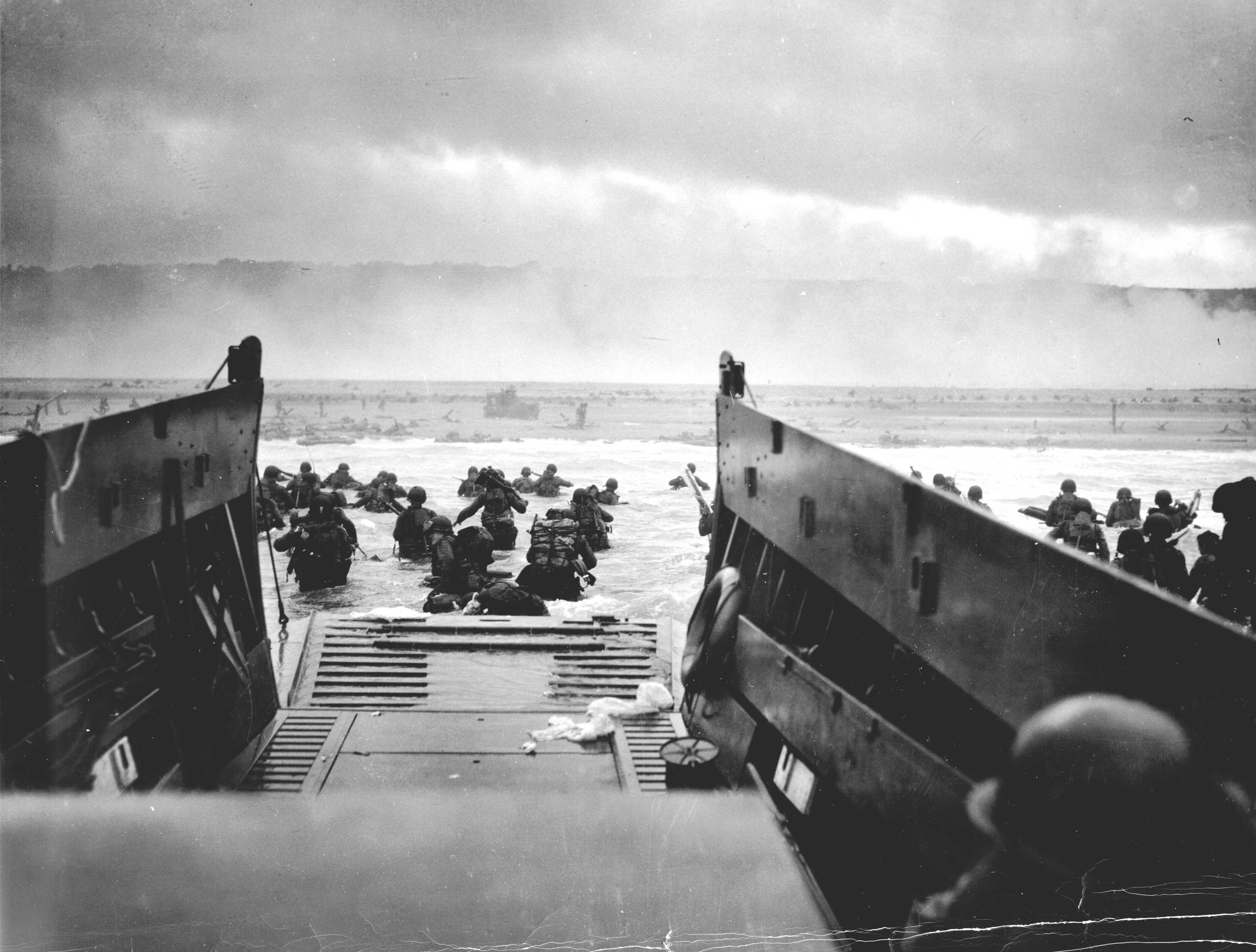
“The Jaws of Death.” A photo by CPHOM Robert F. Sargent, USCG. A Coast Guard-manned LCVP from the U.S.S. Samuel Chase disembarks troops of Company E, 16th Infantry, 1st Infantry Division on the morning of 6 June 1944 at Omaha Beach. Coast Guard Photo #2343.
NIVENS, Delba L. as representative of all the USCG coxswains that piloted assault craft into the invasion beaches during WWII.
OXLEY, Gene E., Sea. 1c [ Seaman, First Class], WWII, USCGR, Silver Star, For gallantry while on the USS LCI(L) 85 during the assault on the coast of France June 6, 1944 and for extraordinary courage in volunteering and twice taking a line ashore, in the face of heavy machine gun and shell fire in order to assist troops unloading from the ship to the bench through chest deep water.
PETERSON, Carl Uno, LCDR, USCG, WWII, Legion of Merit (posthumously), For outstanding services as commanding officer of the USCGC ESCANABA while that vessel was engaged in rescue operations in behalf of an American transport, which was torpedoed and sunk on February 3, 1943. Proceeding through heavy seas in total darkness, LCDR Peterson under imminent threat of enemy attack, took immediate action that involved great skill with the result that 133 men were rescued from the sea.
PFISTER, Arthur F., LCDR, USCGR, WWII, Port Security, Navy & Marine Corps Medal, For heroic conduct as officer in charge of the fireboat Fleet, Port Security Command, Third Naval District, during fire fighting operations aboard the SS EL ESTERO, loaded with a cargo of explosives in New York harbor, New York, on April 24, 1943. Realizing the ever present danger of an explosion he boarded the burning vessel and skillfully directed the activities of three Coast Guard fireboats which assisted in controlling and extinguishing the fire. By his calm ad courageous leadership he inspired the personnel under his command and working tirelessly for hours contributed in large part to preventing an explosion which would have done incalculable damage to other vessels and vital installations in the harbor.
PRITCHARD, John A. Jr., LT, USCG, WWII, Distinguished Flying Cross (Posthumously), For heroism while participating in aerial flights as pilot of a plane which rescued Army fliers stranded on the Greenland Ice Cap November 28-29, 1942. After safely landing on the Ice Cap, he took aboard two of the injured men and, with superb airmanship, successfully took off for his ship, arriving safely. The following day, he again volunteered to resume rescue operations for remaining Army fliers. After getting one more on board, he started for his ship, but failed to arrive.—Navy & Marine Corps Medal, For heroic conduct while serving aboard the Coast Guard Cutter NORTHLAND during the rescue November 23, 1942, of three members of the Royal Canadian Air Force stranded on the Greenland Ice Cap for 13 days. Volunteering to lead a rescue party from the ship, lieutenant Pritchard reached the exhausted airmen and succeeded in bringing them safely to the ship.
RITTICHIER, Jack Columbus, Lt. USCG, Silver Star, Killed in Action (Vietnam) attempting to rescue a downed pilot.
ROOT, Charles S., Hero of the Galveston Hurricane of 1900, engineer, and founder of Coast Guard Intelligence organization.
SALMON, Robert M., LT, USCGR, WWII, Normandy invasion, Silver Star, For gallantry as commanding officer of a U.S. LCI (L) while landing assault troops in Normandy, France June 6 1944. He pressed the landing of troops despite the mining of his vessel a serious fire forward and heavy enemy gunfire. He supervised the unloading of troops, directed the fire fighting despite the loss of proper equipment and exhibiting courage of high degree remained with the ship until it was impossible to control the progress of the fire and it was necessary to abandon ship over the stern. After abandoning he directed a party searching for fire fighting equipment and subsequently fought the fire on another LCI (L) and assisted her commanding officer until she was abandoned.
SHOEMAKER, Charles Frederick, military head of the Revenue Cutter Service, March 1895 to March 1905, oversaw numerous reforms in the service and procurement of the modern cutters used in WWI. In 1878, after an investigation he had Richard Etheridge, appointed as the first African American keeper of Pea Island Life-Saving Station.
SMITH, Edward H., RADM, USCG, Distinguished Service Medal, “For exceptionally meritorious service as Commander of the Greenland Patrol and later SWEENEY as commander of a task force in the Atlantic Fleet from December, 1941 to November 1944. During the critical years organized and administered the naval bases and stations in Greenland and in the Arctic for the support of the Army in those areas and the Naval control of the North Atlantic. Under extremely difficult conditions the forces of his command successfully operated patrols and escorts, maintained a system of weather stations and provided full logistic and tactical support of the Army. As commander of a task force he directed vital weather, patrol and escort services which were of inestimable assistance in connection with the ferrying of aircraft and the operation of transport planes to and from the European theaters of war and effectively protected valuable convoys.”
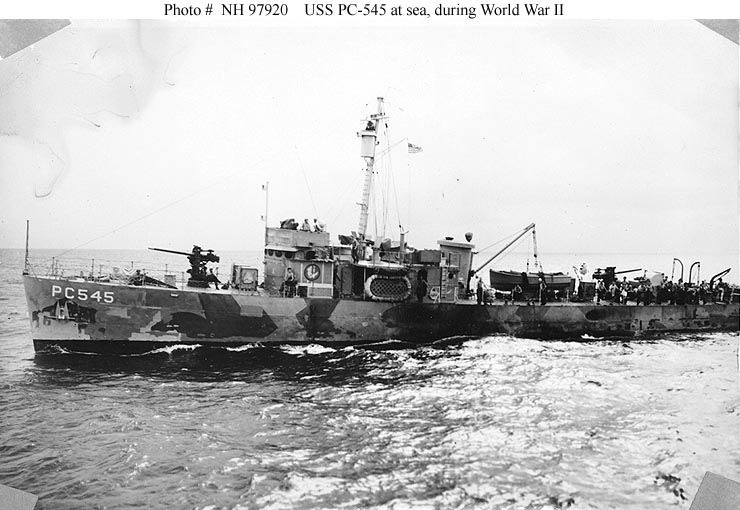
Photo: USS PC-545, Commanded by Lt. String, At sea during World War II. Probably photographed in 1942-43, while wearing rather weathered pattern camouflage. Donation of Phil Wagner, 2001. U.S. Naval Historical Center Photograph.
STRING, John F. Jr., LT, USCGR, WWII, Anzio invasion, Silver Star, For conspicuous gallantry in action while serving as commanding officer of the USS PC 545 off Anzio, Italy on March 18, 1944. When an enemy motor torpedo boat was sighted at night. Lt. String immediately ordered the attack. With an expert display of seaman ship, he so skillfully maneuvered the ship that the first shots scored hits on the enemy craft before it was able to maneuver into position to effectively use its torpedoes and the resulting fire caused it to disintegrate in an explosion. This successful action against the enemy contributed materially to the protection of shipping in the Anzio area and to the successful maintenance of forces ashore.
STANLEY, John Theodore LCDR, USCG, WWII, Port Security, Legion of Merit, For exceptionally meritorious conduct while serving as munitions Officer, Port Security Command. Third Naval District during fire fighting operations aboard the SS EL ESTERO loaded with a cargo of explosives, in New York Harbor on April 24, 1943. Realizing the ever present danger of an explosion, LCDR Stanly boarded the burning vessel and for three hours heroically directed a large detail of men engaged in controlling and extinguishing the fire. By his calm and courageous leadership, he inspired the personnel under his command and skillfully coordinated their activities, thereby preventing an explosion, which might have done incalculable damage to other vessels and vital installations in the harbor.
ULMER, Stephen T., Lieutenant (Junior Grade), Vietnam War, Operation Markettime, Citation: “The President of the United States takes pleasure in presenting the Silver Star Medal to Stephen T. Ulmer, Lieutenant (Junior Grade), U.S. Coast Guard, for conspicuous gallantry and intrepidity in action while serving as Commanding Officer of the USCGC POINT LEAGUE (WPB-82304), Coast Guard Squadron ONE, engaged in Market Time Operations to interdict Viet Cong infiltration attempts near the mouth of the Co Chien River on 20 June 1966. While on night patrol, POINT LEAGUE engaged a 100-foot armed supply vessel attempting to deliver a large cargo of arms and ammunition to the Viet Cong. For hours, Lieutenant, Junior Grade, Ulmer directed his command in a short-range gun battle with the infiltrator and forced her to ground on the beach. The enemy crew abandoned the vessel and made their way to the shore where they joined with Viet Cong forces. The fight then shifted to the beach where the Viet Cong forces, equipped with machine guns and heavier weapons, attempted to destroy the cutter and recoup the grounded vessel and its cargo. POINT LEAGUE, at first by itself and later joined by POINT SLOCUM and POINT HUDSON, raked the enemy forces with machine gun and mortar fire in exposing their positions to friendly aircraft support. Lieutenant, Junior Grade, Ulmer remained calm and in control despite his exposed position in the pilot house which took several hits, all of them penetrating the aluminum bulkheads. When a fire broke out in the grounded vessel, he organized a damage control party to suppress the flames to the point where POINT LEAGUE was able to come alongside and fight the fire. Lieutenant, Junior Grade, Ulmer’s valor, determination, and leadership were in keeping with the highest traditions of the United States Coast Guard.”
WALSH, Quentin R., CDR, (Retired as Captain) USCG, Navy Cross, For heroism as Commanding Officer of a U.S. Naval party reconnoitering the naval facilities and naval arsenal at Cherbourg June 26 and 27, 1944. While in command of reconnaissance party, Commander Walsh entered the port of Cherbourg and penetrated the eastern half of the city, engaged in street fighting with the enemy. He accepted the surrender and disarmed 400 of the enemy force at the naval arsenal and later received unconditional surrender of 350 enemy troops and at the same time released 52 captured U.S. Army paratroopers.
WILCOX, Robert, LCDR, USCG, WWII, battle of the Atlantic, Legion of Merit, “For exceptionally meritorious conduct as commanding officer of a U.S. DE [USS Joyce, DE-317] in offensive action against an enemy submarine. Proceeding to the area of an attack, he established contact and attached with such accuracy that the first depth charge pattern straddles the submarine, threw the enemy completely out of control and forced him to the surface. He immediately opened very effective gunfire on the U-Boat as its conning tower broke the surface. Combined attacks including concentrated fire from three destroyer escorts and final ramming attach by one of the attacking escorts completed the destruction of the helpless enemy submarine.”
YOST, Paul A., Jr., Admiral, USCG, two Distinguished Service Medals, the Silver Star, the Legion of Merit Medal with combat “V”, with a gold star, the Meritorious Service Medal, the Combat Action Ribbon, the Korean Service Medal, and the United Nations Service Medal. He also received the Cross of Gallantry with Silver Star (RVN), the Presidential Unit Citation, the Navy Meritorious Unit Commendation and the Distinguished Service Medal (RVN). Citation for Silver Star: “The President of the United States takes pleasure in presenting the Silver Star Medal to Paul Alexander Yost, Jr., Commander, U.S. Coast Guard, for conspicuous gallantry and intrepidity in action while serving with naval forces engaged in armed conflict with the Viet Cong and North Vietnamese Communist aggressors in the Republic of Vietnam. On 12 April 1969, Commander Yost was Officer in Tactical Command of a PCF (Patrol Craft Fast), UDT and Vietnamese Marine Corps movement unit into the Duong Keo River in An Kuyen Province as part of Operation SILVER MACE II. The five boats inserted their embarked troops at the mouth of the river and commenced a sweep up the river while the remaining eight boats proceeded up river to insert their embarked troops at a point several kilometers north of the first troop insertion. Commander Yost was embarked in PCF 31 in the second group of boats. As the PCF’s were proceeding up river in a column formation, they encountered an enemy ambush. The enemy forces used claymore mines, recoilless rifles, B40 rockets, 50 caliber machine guns and small arms. The two lead boats took severe damage but all boats returned fire until clear of the ambush area. Upon discovering that PCF 43 had lost control and was aground in the middle of the ambush site, Commander Yost personally returned to rescue the UDT personnel and crew of PCF 43 with two boats while the remaining boats beached out, set a defense perimeter and called in Medevac helicopters. Upon arriving at the point where PCF 43 was aground, Commander Yost discovered the survivors engaged in battle with enemy forces only 20 feet from their positions. In spite of heavy enemy fire, he brought the two rescuing PCF’s to the river bank and brought aboard the survivors and the bodies of the Officer in Charge of PCF 43 and one UDT Chief Petty Officer who had been killed in the action. Upon clearing all personnel from PCF 43, a series of explosions totally destroyed the craft. Commander Yost returned to the area where a perimeter defense had been set up, coordinated a Medevac for the wounded and dead and prepared his forces for the completion of the mission. Commander Yost exhibited tenacious and inspirational leadership. His valiant actions under fire saved the lives of the fifteen USN personnel rescued from PCF 43 and were in keeping with the highest traditions of the United States Naval Service.”
OTHERS WORTHY OF CONSIDERATION
ANDERSON, Langford, LT, USCGR, Navy & Marine Corps Medal, For extremely heroic conduct in effecting the rescue of survivors from the torpedoed SS DORCHESTER 3 February 1943. When benumbed survivors of the DORCHESTER were unable because of heavy seas and freezing winds, TO MAKE ANY EFFORT TO CLIMB ON BOARD THE RESCUING SHIP, Lt. Anderson was the first to volunteer for the dangerous task of going over the side and working in the rough freezing water in order to assist the exhausted and helpless survivors in reaching the safety of the CGC COMANCHE. He worked in and out of the water aiding survivors until he was physically exhausted and required assistance to return on board his ship. Largely inspired by the courage a number of men followed his leadership and volunteered for the performance of sillier duty. As a result of the combined efforts of the rescuers under Lt. Anderson leadership a total of 93 survivors were saved.
BARTLETT, David H., CDR, USCG, Legion of Merit, “For meritorious conduct in the performance of outstanding service as commanding officer of a Patrol Frigate in action against a Japanese submarine. Through skillful maneuvering and sound attacking fundamentals, he was instrumental in the destruction of the submarine.”
BROWN, FLETCHER W., First Lieutenant, U.S. Coast Guard, U.S.S. Seneca, Date of Action: September 16, 1918, Citation: The Navy Cross is presented to Fletcher W. Brown, First Lieutenant, U.S. Coast Guard, for distinguished and heroic service in the line of his profession as officer of the U.S.S. Seneca in volunteering to lead a party of men to board the British steamer Wellington, following the torpedoing of that vessel on September 16, 1918, and her abandonment by her crew. Lieutenant Brown and the men form Seneca’s crew, with a few of the original crew of the Wellington, persisted heroically in their attempt to save the Wellington, and finally abandoned the ship only when she was on the point of sinking in a heavy sea.
BURKE, Richard Leon, CAPT., USCG, Two Distinguished Flying Crosses
BUTCHER, Reginald W., LCDR, USCG, Legion of Merit, For outstanding services as commanding officer of U.S. Coast Guard cutter in offensive operations against enemy forces north of the Arctic Circle during the period from July until September 1944. He utilized the limited combat capabilities of his ship to the fullest extent in inflicting major damage on the enemy. Despite the difficulties of traversing sections of the Polar Ice Pack he put ashore a formidable landing force, which located and destroyed an important enemy installation. Later while conducting a patrol in an isolated area, a unit attached to his command sighted a small-armed enemy speed and maneuverability. After a 70-mile chase through ice fields he successes in outmaneuvering the enemy closing effective gun range and forcing the enemy to surrender and scuttle.
Campbell, Hugh G., Quasi-war with France, CO of Revenue Cutter Eagle, that captured or assisted in the capture of 22 vessels. http://www.history.navy.mil/danfs/e1/eagle-i.htm, and while he was US Navy, he also was apparently a Revenue Cutter Service Officer. http://www.semperparatus.com/usrcs_officers.html It does not hurt that this would continue the name Campbell in Coast Guard service, even if the namesake was different.
Cantillon, Matthew P. Lieut. (jg) USCGR, Silver Star, As a member of a Navy Beach Party in the amphibious attack on Biak Island, Schouten Group, Dutch New Guinea, on 27 May, 1944, when members of the party landed on Green Beach and were subjected to severe hand ground fire from Japanese troops in two caves in the cliff near the beach, he procured hand grenades, a weapon with which he was unfamiliar, from a soldier, returned to the cliff area, and by ground fire eliminated the enemy resistance, killing the four Japanese in the caves.

CARDEN, Godfrey L., Capt. USCG. During World War I, CAPT Godfrey L. Carden, commander of the Coast Guard’s New York Division, was named COTP in that harbor. The majority of the nation’s munitions shipments abroad left through New York. For a period of 1 1/2 years, more than 1,600 vessels, carrying more than 345 million tons of explosives, sailed from this port. In 1918, Carden’s command was the largest single command in the Coast Guard. It was made up of 1,400 officers and men, four Corps of Engineer’s tugs and five harbor cutters. His pioneering work defined the Coast Guard’s port security mission for the next 60 years.
CLARK, George C., LTJG, USCGR, British Distinguished Service Cross, During the landing of Commandos at Quistreham by LCI (S) on 6 June 1944 Lt. Clark’s cutter was detailed to act as escort to LCI (S). HM LCI(S) 524 on clearing the beach after landing troops received a direct hit and blew up in a sheet of flames leaving a mass of blazing Octane petrol on the water. Although his cutter burned Octane petrol, he did not hesitate to street is craft into the flames and rescue the commanding officer and some of his men.
CONE, Burtis P., LT, USCG, Navy & Marine Corps Medal (Posthumously), For heroic conduct as executive officer of the USS LEOPOLD when that vessel was sunk by submarine in the Atlantic March 9, 1944. Unmindful of his own danger and refusing to save himself while members of his crew were still in danger, LT Cone worked desperately to assist his companions and remained in the water with them when an enemy vessel forced the rescue ship to retire from the scene.
CULLEN, John C., B.M. 2c [Boatswain’s Mate, Second Class], USCG, Legion of Merit, For exceptionally meritorious conduct while on patrol at Long Island, New York, on the night of June 13, 1942. When several Nazi saboteurs bearing boxes of TNT and other destructive apparatus landed on the beach at Amagansett Cullen, unarmed and helpless against their menacing threat cleverly allayed their suspicions and thwarted their subversive intentions by promptly accepting a proffered bribe then sounding an alarm that led to their eventual capture. Subsequently volunteering as member of a searching party, he remained on the beach all night and after apprehension of the enemy agents. Furnished vital and incriminating testimony before a special military commission conducting trial. His keen presence of mind and discerning judgment in a grave emergency undoubtedly prevented the successful culmination of hostile intrigue designed to sabotage our national war effort.
CURRY, Ralph R., CDR, USCG, Legion of Merit, For exceptionally meritorious conduct as Commanding Officer of the USS PRIDE during an attack on an enemy submarine of the Algerian coast in May, 1944. When a sound contact was established indicating an enemy submarine in the area, Commander Curry maneuvered his ship so skill fully that his actions greatly assisted in the search and the delivery of successful depth charge attack, which forced the submarine to the surface. The enemy was forced to scuttle and abandon ship. (U-371—USS Joseph E. Campbell, the French destroyer escort Sénégalais and the British escort destroyer HMS Blankney also participated in the sinking. 3 dead and 49 survivors.–Chuck)
EMERSON, Robert E., LTJG, USCG, Silver Star, For gallantry in action during the assault on Eniwetok Atoll, Marshall Islands , February 17-22, 1944, as boat group Commander, he led his landing boat group, under fire, in three separate attacks upon islands of Eniwetok Atoll. His cool and skillful direction, initiative and efficiency contributed materially to the successful participation of his ship in the assault.
GILL, Warren C., Lt (jg) USCGR, WWII, Sicily and Salerno invasions, Legion of Merit, citation, “For meritorious conduct in the. pre-assault training of officers and men for small boat operations, and as Commander of an assault force during the assault on Sicily. His effort and enthusiasm inspired in the small boat flotillas a spirit of determination that was largely responsible for their success.”
Navy Cross, citation, “For extraordinary heroism as commander of an assault flotilla during the amphibious invasion of Salerno, Italy, in September 1943. Although severely wounded by heavy enemy gunfire while directing the lowering of small boats from his ship, Lieut, (then Lieut, (jg)) Gill steadfastly remained at his post, carrying on his vital duties with dauntless courage and outstanding efficiency and giving important last minute instructions to his officers and men before collapsing as a result of his injuries.”
Goldman, Robert, HM2, Bronze Star
GOLENIECKI, John V., B.M. 1c [Boatswain’s Mate, First Class], USCGR, Legion Merit, For exceptionally meritorious conduct while attached to a U.S. Transport during the assault on and occupation of French Morocco, November 8-11 1942. When the members of his support boat landing northeast of Fedala, were attacked by hostile planes and ground forces, consequently being cut off the from the other landing groups. Goleniecki volunteered to man a rubber boat in order to contact our forces and obtain assistance. With the aid of a shipmate he affected a daring escape despite difficult conditions and hostile fire and reaching his objective the same evening, furnished the Attack Force Commander with the first information of the beleaguered group.
Graham, CDR Stewart, the 2nd U.S. Coast Guard helicopter pilot, credited with many helicopter firsts, including the first wartime anti-submarine patrol requiring him to perform the first take-off and landing from a vessel on the high seas
HARWOOD, Charles W., CAPT, USCG, Legion of Merit, For outstanding services as commander of a Naval Task Group during the amphibious assault on the Island of Sicily. In addition to his duty as commanding officer of the USS JOSEPH T. DICKMAN, Captain Harwood commanded the Naval Task Group, which landed battalions directly on the beaches fronting Gela, Sicily. By his sound judgment in planning, thorough indoctrination of his forces, and by his cool and skillful leadership under fire the assault battalions were expeditiously landed and supported, thereby greatly contributing to the success of the invasion.
HEMINGWAY, Henry George, Captain, USCG, in 1928, awarded the Gold Lifesaving Medal
HIGBEE, Frank D., CAPT, USCG, Legion of Merit, For distinguishing himself by exceptionally meritorious conduct while in command of a group of ships. He displayed seamanship and leadership of the highest order while commanding echelons in the assault landing s on enemy territory and on numerous re-supply echelons. His services contributed materially to the successful conclusion of an important campaign
HOYLE, Robert, LTJG, USCG, Silver Star, For conspicuous gallantry in action against the enemy at Engebi and Parry Islands, Eniwetok Atoll, Marshall Island, where he landed with the assault waves February 18 and 22, 1944 under devastating enemy fire and without regard for his personal safety he immediately and continuously exposed himself to enemy fire in order to perform his duties and beach master. On both Engebi and Parry Island he acting on his own initiative, made his ay through heavy enemy fire to relation urgent messages to the Landing Team commander.
Peterson, Clarence H. Captain, USCG, Silver Star, As Commander of a Task Unit of Landing Ships Tanks during action against enemy Japanese forces at Cape Gloucester, New Britain, December 26, 1943, and at Saidor, New Guinea, January 2, 1944, subjected to a withering hostile air attack during departure from the beach at Cape Gloucester, Captain Peterson fought his command aggressively and inflicted severe losses upon the enemy with a minimum of damage to his own units. A cool and proficient leader despite extremely difficult conditions, he skillfully organized and guided succeeding echelons throughout the vital re-supply of these two important strongholds. More here.
POLLARD, Francis C., LCDR, USCG (Ret.), Navy & Marine Corps Medal, For heroic conduct as commanding officer of the USCGC NORTHLAND during the rescue of three members of the Royal Canadian Air Force from the Greenland Ice Cap on November 23, 1942. Upon receiving the message that an A-20 bomber with three crew members were marooned on the Ice Cap LCDR Pollard immediately proceeded to the position given and for four days through heavy fog and snow storms, stood off and on position. Finally when the fog lifted and the latitude could be determined by sunlight, he maneuvered his ship through dangerous ice and with the aid of a volunteer crew from the ship directed the perilous operations, which resulted in the rescue of the stranded man, who might otherwise have perished.
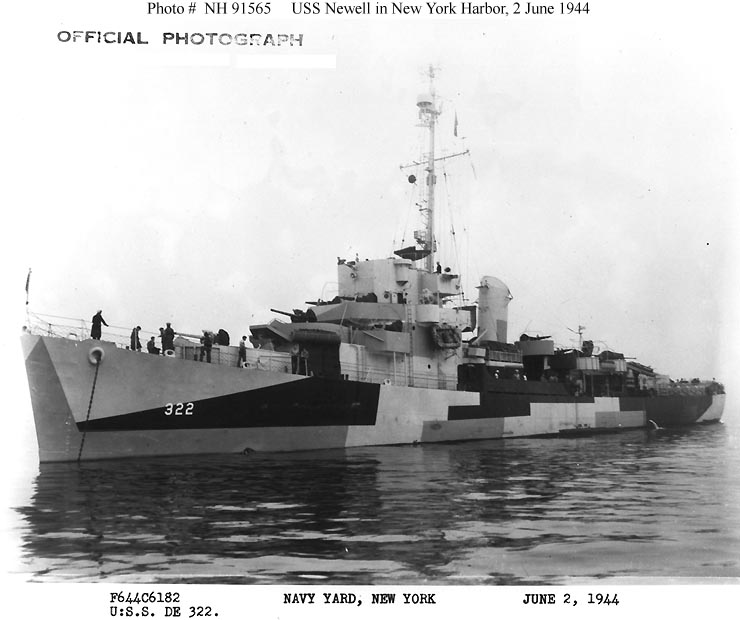
SCHLESINGER, Rudolph T., C.Ph.M. [Chief Pharmacist’s Mate], USCGR, Legion of Merit, For exceptionally meritorious conduct while serving on the USS NEWELL on 20 April 1944, in the Mediterranean. Subsequent to an enemy air attack on an allied convoy the USS NEWELL was engaged in picking up one hundred and nineteen survivors of the USS LANSDALE. During and after this rescue operation, Schlesinger and pharmacist’s mates aboard his ship administered all medical treatment without aid of the doctor. Several of the survivors where unconscious and had to be resuscitated [while] several others had fractured limbs; others were stretcher cases; and all of them had been in oil polluted water for a period of one the four hours. In addition Schlesinger organized the wardroom as a dressing station with such thoroughness that it was converted into a virtual hospital with great dispatch. By his able and expeditious treatment of survivors suffering from shock, immersion and minor injuries, his efforts undoubtedly contributed to the saving of many lives.
THOMAS, Charles W., CAPT , USCG, Legion of Merit, For exceptionally meritorious conduct as Commander of a Greenland Patrol task unit and commanding officer of a Coast Guard ice breaker during the fall of 1944. Captain Thomas, operating north of the Arctic Circle, inflicted severe damage on enemy installations and outposts in Northeast Greenland . He landed a force, which destroyed a Nazi weather station and later captured an enemy armed trawler.
Thompson, Barham F., III, Lieutenant (Junior Grade), Silver Star, CO Point Slocum (WPB-82313), “The President of the United States of America takes pleasure in presenting the Silver Star to Lieutenant, Junior Grade, Barham F. Thomson, III, United States Coast Guard, for conspicuous gallantry and intrepidity in action while serving as Commanding Officer of the U.S.C.G.C. POINT SLOCUM (WPB-82313), Coast Guard Squadron ONE, engaged in Market Time Operations to interdict Viet Cong infiltration attempts near the mouth of the Co Chien River on 20 June 1966. POINT SLOCUM went to the assistance of Coast Guard Cutter POINT LEAGUE, which was engaged in a fierce fire fight with a vessel attempting to infiltrate 100 tons of arms and ammunition to the Viet Cong. Upon arrival on the scene, Lieutenant, Junior Grade, Thomson found that the infiltrator had been forced aground by POINT LEAGUE and that Viet Cong forces concealed on the shore were attempting to drive off the cutter so that the cargo could be retaken. When friendly air support arrived, he made passes close to the shoreline in order to draw enemy fire and force the Viet Cong to disclose their positions to the aircraft. During these valiant maneuvers, POINT SLOCUM received several hits from small arms fire and two near misses from recoilless rifles. When the grounded trawler was set afire, Lieutenant, Junior Grade, Thomson put POINT SLOCUM along side and proceeded to extinguish the fire. His bravery and skill in risking his vessel, first to draw the enemy fire, and then to save the captured ship and its cargo greatly contributed to the United States efforts against insurgent forces in the Republic of Vietnam and were in keeping with the highest traditions of the United States Armed Forces.
TILLMAN, William N., ENS, USCG, Bronze Star (deceased), For heroic service while serving as assistant gunnery and torpedo officer aboard the USS LEOPOLD during the sinking of that vessel in the Atlantic on March 9, 1944. Unmindful of his own danger, ENS Tillman courageously remained in the after section of the ship following the attack and working desperately to effect all possible safety measures, continued his valiant efforts until the LEOPOLD went down. His inspiring devotion to duty in the face of grave peril was in keeping with the highest.
VANN, George D., Sea . 1c [ Seaman, First Class], USCG, Navy & Marine Corps Medal, For heroic conduct while service aboard a destroyer escort during the rescue of survivors of the torpedoed LEOPOLD in the North Atlantic March 9, 1944. Courageously volunteering to assist in the rescue activities, Vann went over the side into ice, oil-covered waters and secured life lines around exhausted survivors.
VERNON, Albert, LTJG, USCGR, Bronze Star, For meritorious service as Commanding Officer of a Coast Guard Cutter in rescuing survivors of the invasion off the coast of France June 6, 1944. During D-Day, his cutter rescued 97 men. Each rescue was effected in the face of constant enemy fire from the beach which was in no way allowed to deter the splendid rescue operations.
Von PAULSEN, Carl C., CAPT, USCG, Legion of Merit, For outstanding service in position of great responsibility in the Greenland Patrol. During period from late July 1941 to mid September 1943. Captain von Paulsen as commanding officer, USCGC NORTHLAND and later as Commander Northeast Greenland Task unit, conducted tactical operation against enemy outposts in Northeast Greenland and by his detailed supervision and execution of these operations materially strengthened U.S. naval control over these regions. He was responsible for careful reconnaissance and surveying of the east coast of Greenland, thereby obtaining accurate hydrographic information of then little know East Greenland waters. In addition as Senior Officer Present, Afloat, Greenland , Captain von Paulsen made important contribution to organization and coordination of the activities of the U.S. Atlantic Fleet in the Greenland Area.
VYN, Arend, Jr., LTJG, USCGR, Silver Star, For gallantry in action as commanding officer of USS LCI 91 in the assault on the cost of France June 6, 1944. LTJG Vyn beached his ship and discharged the Army elements therein the face of murderous fire and a labyrinth of obstacles and mines. In spite of the fact that his ship was mined and repeatedly struck by artillery fire and small arm fire, he continued to land the army load in the face of certain loss of his ship. his determination to put the Army ashore was in keeping with the highest traditions of the offensive spirit of the U.S. Naval Service.
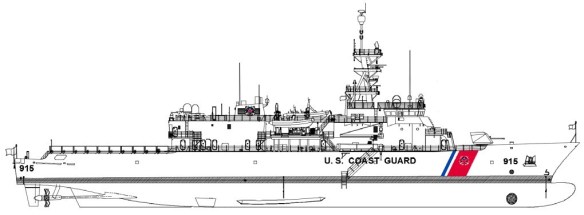 OPC Characteristics:
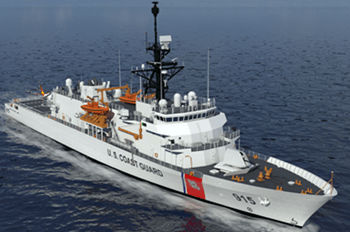 Coast Guard public affairs asked me to take down this post, as previously written, because “The page was still under construction and not meant for public release.” The page that provided the information is no longer accessible.

 Chuck Hill's CG Blog