

Crew Served Weapons protection by Kinetic Protection LLC on USN CV.
I have been talking about the need to protect the gunners for our crew served gun mounts since 2013. We revised the topic in 2016, in 2019, and in 2021.
With the current Conflict in the Mid-East, there is perhaps more reason than ever to take another look.
I am particularly concerned about the need to protect gunners at crews served weapon stations (normally .50 caliber machine guns) on the PATFORSWA cutters, against the kinds of 12.7mm and 14.5mm machine guns commonly mounted on the Islamic Revolutionary Guard Corps Navy’s thousands of inshore attack craft. To me the powerful 14.5x114mm round might be regarded as the pacing threat and probably the largest weapon we could provide protection against (MIL-STD-3038 Type XI class B armor).
I would really like to see the crew served weapons replaced by remote weapons stations, but if we are not going to do that, we at least need to protect the gunners.
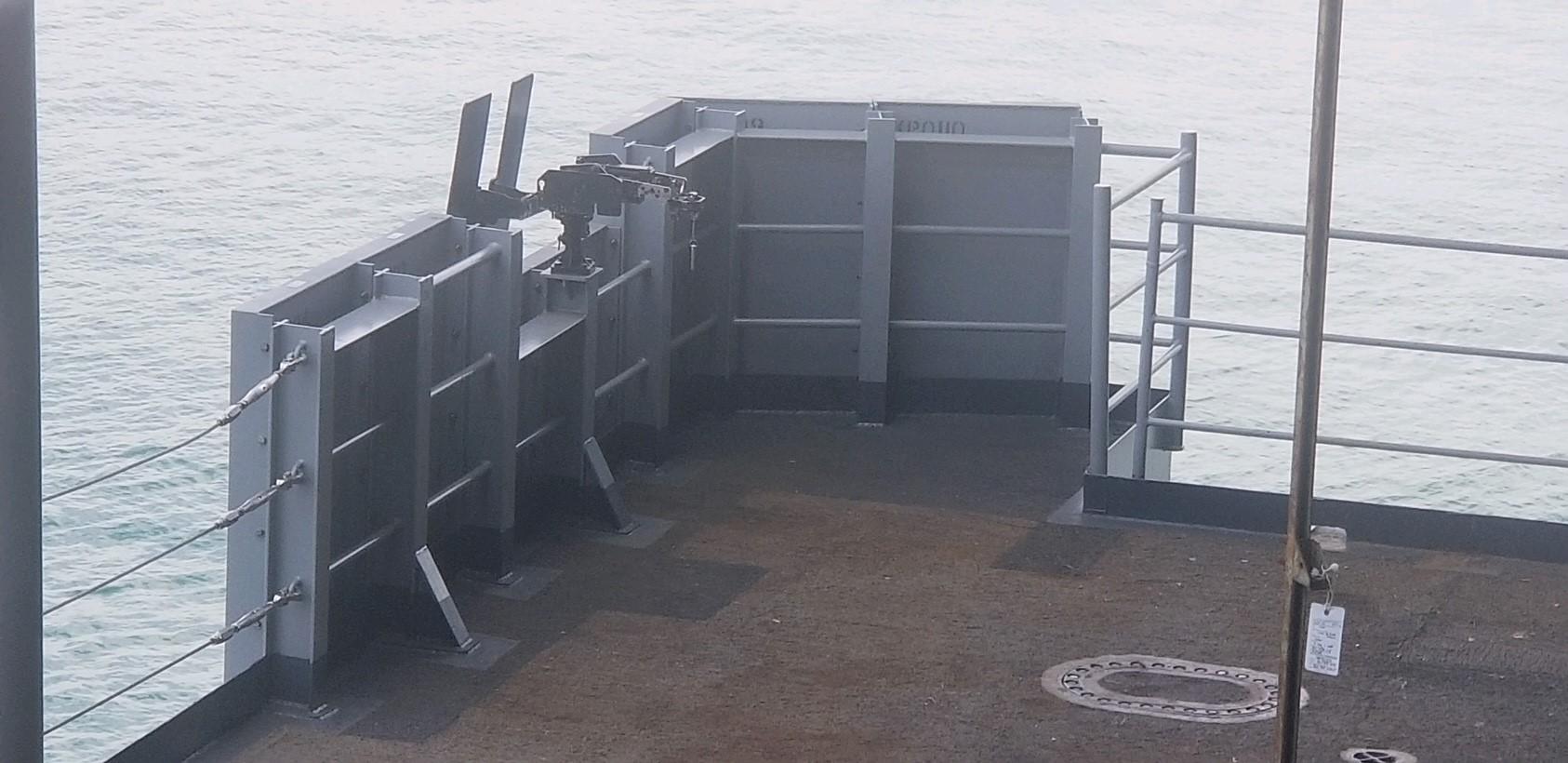
Crew Served Weapons protection by Kinetic Protection LLC on USN aircraft carrier. Similar protection, with modifications for intended arc of fire for the after .50 caliber gun mounts on the PATFORSWA FRCs which are mounted on the aft corners of O-1 Deck seems appropriate. This mount, on a carrier is relatively low, to allow the gunner to depress the gun, raising the inboard end of the gun, and still aim at targets close aboard to engage targets at very close range. Mounts on cutter might be higher to permit a smaller cutout since the gun would not have to be depressed at as great an angle.
I had an opportunity to talk to the CEO and representatives of Kinetic Protection, LLC who provide the only currently Navy recognized ballistic shielding for crew served weapons that meet DOD requirements (MIL STD 3038 and MIL PRF 32379).
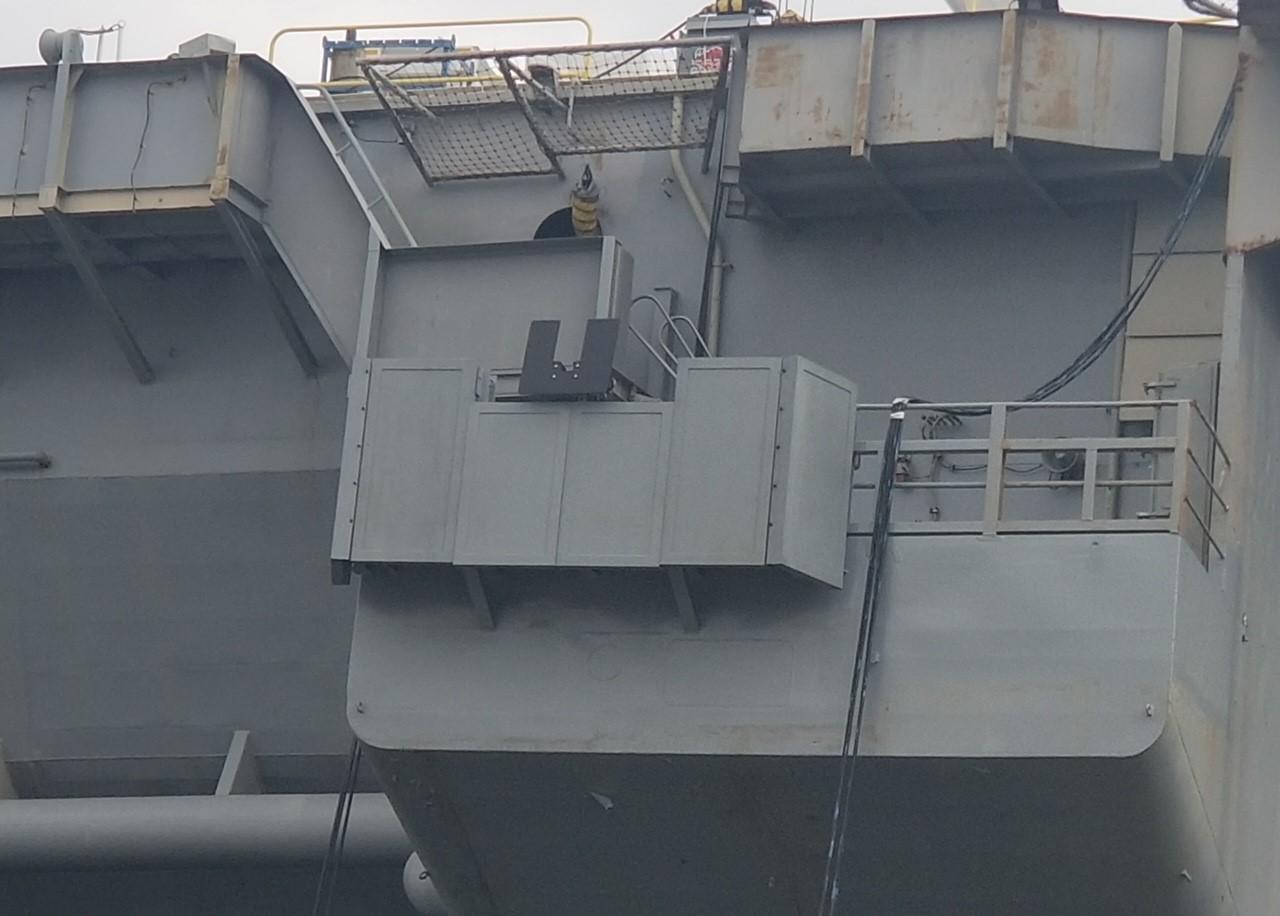
Crew Served Weapons protection by Kinetic Protection LLC on USN aircraft carrier.
I was surprised to learn that their product is metallic rather than a composite. I was told this was because composite armor was found to deteriorate due to environmental exposure while the metallic plates have a 25 year life.
Their armor is customizable by ship class and can be bolt-on or permanently installed. It can be various lengths but currently they have been making sections 30 inches wide and 30, 35 and 60 inches long.
The armor weighs about 20 pounds per square foot so it looks like we could provide 12.5 to 14.6 sq. feet of protection (two panels 30×30 or 30×35 inches) for each of the four crew served weapons positions for a total of about 1200 pounds of additional weight. This should not be a problem, considering how many people are frequently crammed on these small ships when they are used to repatriate aliens.
While considering how to help these ships survive in conflict, there are other things we can do to make the weapons more effective, like stabilizing systems and better sights.

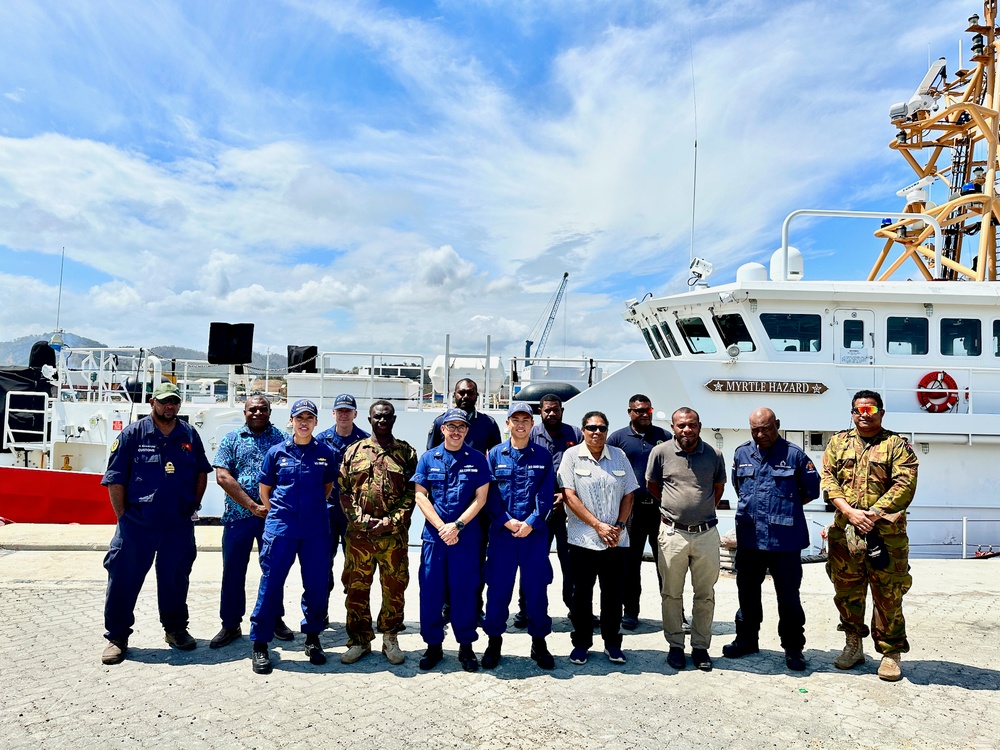
The USCGC Oliver Henry (WPC 1140) in Manus, Papua New Guinea, Aug. 14, 2022 (U.S. Coast Guard photo by SW3 Victor Villanueva, NMCB-FOUR). Enlarging this photo by touching on it provides a view of both the forward and after crew served mounts located on the O-1 deck and the probable location of armor to protect the gunners. It is not clear if the current aft positions would allow the weapons to point directly astern, but every effort should be made to provide maximum arcs of fire. Pipe guards could be installed to prevent guns being depressed far enough to fire into the ship or personnel on the main deck.
This kind of protection used to be common. I have included some examples below.

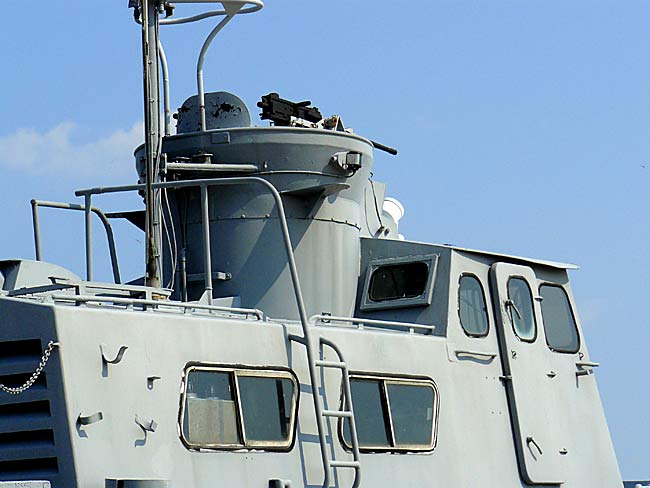


A 20mm gun tub. The steps allowed the gunner, strapped to the gun, to point the weapon from the horizon to near vertical.







 Chuck Hill's CG Blog