“Coast Guard, partners tracking Russian vessel off Hawaiian Coast” –D14

Vishnya class intelligence ship Kareliya (Picture source: Russian MoD)

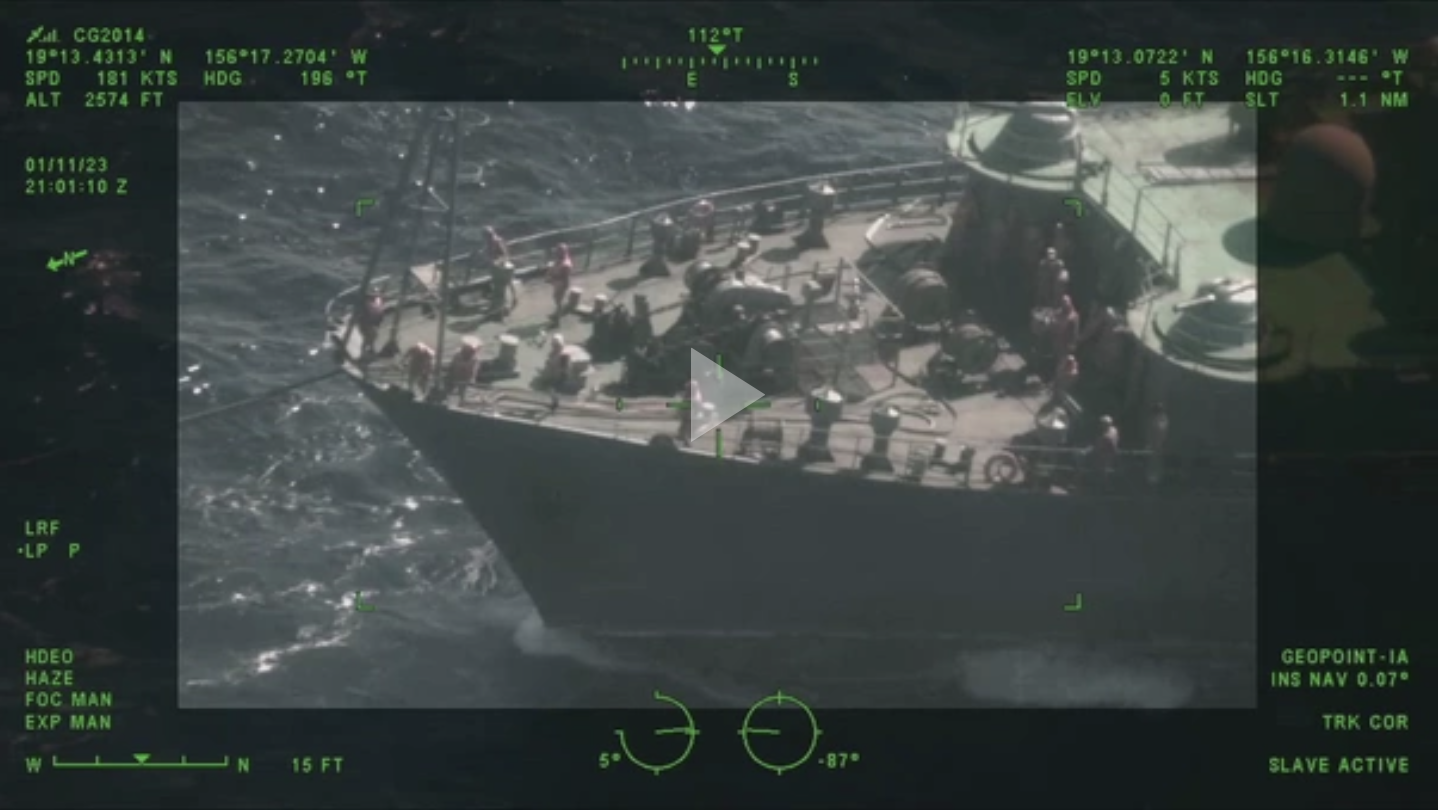
Below is a news release from D14. The subject is a bit unusual. The accompanying video shows two vessels. One is a Russian Navy Vishnya class intelligence ship, presumably Kareliya, being either towed or perhaps receiving fuel from a ship that appears to be a merchant tanker. The tanker does have some unusual structures forward and amidships. It is not the first time this particular intelligence ship has operated off the coast of Hawaii.

The intelligence vessel (AGI) is probably there to observe missile tests from Barking Sands.

News Release

U.S. Coast Guard 14th District Hawaii and the Pacific

Coast Guard, partners tracking Russian vessel off Hawaiian Coast

Russia Spy

Editors’ Note: Click on video to download a high-resolution version.

HONOLULU — In recent weeks, the U.S. Coast Guard has continued to monitor a Russian vessel, believed to be an intelligence gathering ship, off the coast of the Hawaiian Islands.
 
While foreign military vessels may transit freely through the U.S. economic exclusive zone (EEZ), as per customary international laws, foreign-flagged military vessels have often been observed operating and loitering within Coast Guard District Fourteen’s area of response.
 
The Coast Guard continues to coordinate with Department of Defense partners, providing updates to foreign vessel movements and activities and to appropriately meet presence with presence to encourage international maritime norms.  
 
“The U.S. Coast Guard is currently monitoring the Russian vessel operating in the vicinity of Hawaii,” said Cmdr. Dave Milne, chief of External Affairs. “As part of our daily operations, we track all vessels in the Pacific area through surface and air assets and joint agency capabilities.
The Coast Guard operates in accordance with international laws of the sea to ensure all nations can do the same without fear or contest. This is especially critical to secure freedom of movement and navigation throughout the Blue Pacific.” 
 
As a part of the Department of Homeland Security, the Coast Guard is the lead federal agency for at-sea enforcement of U.S. fisheries laws; additionally, the Coast Guard assists in the enforcement of laws on the high seas subject to the jurisdiction of the United States’ exclusive economic zone. Law and treaty enforcement account for approximately 1/3 of the Coast Guard’s annual budget. 

For breaking news follow us on twitter @USCGHawaiiPac

Austal–OPC, EMS, and Saildrone

Above is a video of interviews with representatives of Austal Shipbuilding in regard to the Offshore Patrol Cutter (OPC) and the Expeditionary Medical Ship (EMS).

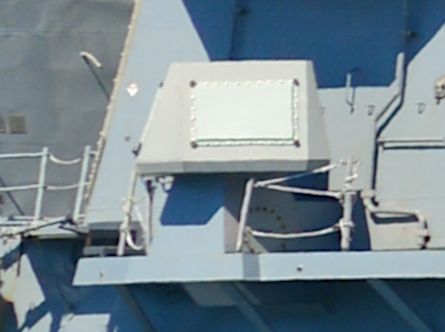
There isn’t much new here about the OPC, but there is an opportunity to get a good look at a model of the ship. Looking at the Mk38, mount atop the hangar, it appears the field of fire and, perhaps more importantly, field of view for its optics are severely limited. (Using the 30mm Mk38 Mod4 with its separately located optics might improve this situation.) It is also not clear where the .50 caliber remote weapon stations (and their associated optics) will be located since the model only includes crew served .50 mounts. Presumably at least one and probably both will be forward, below the bridge and above and behind the 57mm Mk 110 gun mount.

The EMS is a ship the Coast Guard is likely to work with during disaster response operations and possibly during capacity building efforts. Operating Coast Guard helicopters from these ships during a natural disaster would seem a natural partnership.

This video was included in a Naval News report, “Austal Diversifies Revenue Base, Announces New Contracts.” Perhaps also of interest to the Coast Guard, included in the report was the statement that Austal was now “…the exclusive manufacturer of Saildrone, Inc.’s wind and solar-powered Surveyor USV…”, a system the Coast Guard has extensively tested.

International Exercise Obangame Express 2023 Set to Begin

U.S. Coast Guard Cutter Spencer (WMEC 905) underway on patrol in the Eastern Pacific, January 2021. The crew covered over 11,000 miles seizing over $10 million of drugs and assisted in disrupting transnational crime organizations. (U.S. Coast Guard courtesy photo/Released)

Below is a US Navy press release. I anticipate USCGC Spencer will participate along with Coast Guard special teams.

International Exercise Obangame Express 2023 Set to Begin

09 January 2023

From U.S. Naval Forces Europe and Africa / U.S. Sixth Fleet Public Affairs

NAPLES, Italy – Exercise Obangame Express 2023 (OE23), the largest multinational maritime exercise in Western and Central Africa, will kick off its 12th year with 29 participating nations at an opening ceremony in Lagos, Nigeria, Jan. 23, 2023.

Conducted by U.S. Naval Forces Africa (NAVAF) and sponsored by U.S. Africa Command (AFRICOM), OE23 is designed to improve regional cooperation, information-sharing practices, and tactical interdiction expertise to enhance the collective capabilities of participating nations to counter Illegal, Unreported, Unregulated (IUU) fishing and other sea-based illicit activity.

AFRICOM assists African partners with protecting their maritime economy in order to ensure continued sustainable use of maritime resources and enable the security and stability of global maritime trade.

OE23, one of three NAVAF-facilitated regional exercises, provides collaborative opportunities for African and U.S. forces, and international partners to address shared transnational maritime concerns. NAVAF’s ongoing maritime security cooperation with African partners focuses on maritime safety and security through increased maritime awareness, response capabilities, and infrastructure.

“Exercise Obangame Express 23 provides an excellent opportunity to strengthen regional cooperation and share tactics, techniques and procedures for deterring transnational maritime security challenges,” said Rear Adm. Chase Patrick, director of maritime headquarters, NAVAF. “Together, we are creating a more secure, safe, and economically prosperous maritime environment for Africa’s coastal nations and the global community.”

Nigeria will host this year’s exercise in its capital city of Lagos. The exercise will also feature multiple at sea and ashore training events throughout the Gulf of Guinea and the Southern Atlantic Ocean, including exchanges on boarding techniques, search and rescue operations, medical casualty response, radio communication, and information management techniques.

The 29 nations scheduled to participate in OE23 include Angola, Benin, Brazil, Cabo Verde, Cameroon, Canada, Cote d’Ivoire, Democratic Republic of Congo, Denmark, Gabon, Gambia, Ghana, Guinea-Bissau, Italy, Liberia, Morocco, Namibia, Netherlands, Nigeria, Poland, Portugal, Republic of Congo, Sao Tome & Principe, Senegal, Sierra Leone, Togo, and the United States. Also participating will be the Economic Community of West African States (ECOWAS) and the Economic Community of Central African States (ECCAS).

For more than 80 years, U.S. Naval Forces Europe-U.S. Naval Forces Africa (NAVEUR-NAVAF) has forged strategic relationships with allies and partners, leveraging a foundation of shared values to preserve security and stability.

Headquartered in Naples, Italy, NAVEUR-NAVAF operates U.S. naval forces in the U.S. European Command (USEUCOM) and U.S. Africa Command (USAFRICOM) areas of responsibility. U.S. Sixth Fleet is permanently assigned to NAVEUR-NAVAF and employs maritime forces through the full spectrum of joint and naval operations.

Cuban Migrant Interdiction

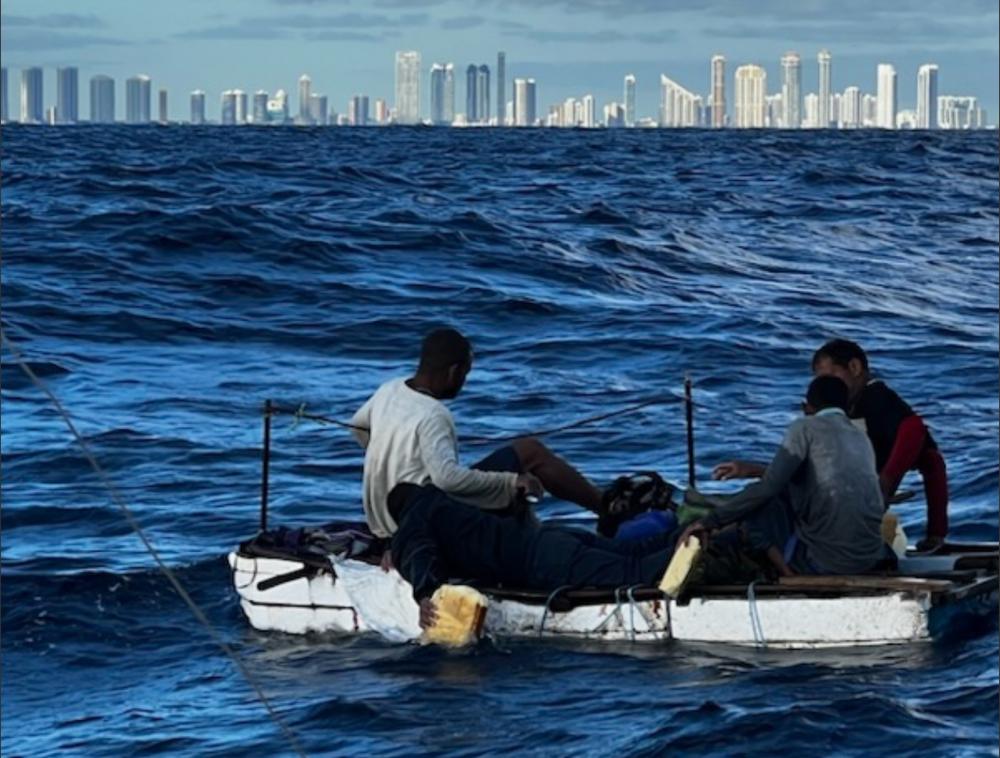
A good Samaritan notified Sector Miami watchstanders of a migrant vessel about 10 miles east of Sunny Isles, Florida, Jan. 8, 2023. The people were repatriated to Cuba on Jan. 16, 2023. (U.S. Coast Guard photo)

I don’t normally post press releases about migrant interdiction. It is a routine dirty job, with little reward, but something the Coast Guard does virtually every day. Just wanted to post the statistics below, that I lifted from a press release about a recent repatriation, to show the current trend to much higher frequency of interceptions.

Since Oct. 1, 2022, Coast Guard crews interdicted 4,962 Cubans compared to: 

  • 6,182 Cuban Migrants in Fiscal Year 2022
  • 838 Cuban Migrants in Fiscal Year 2021
  • 49 Cuban Migrants in Fiscal Year 2020
  • 313 Cuban Migrants in Fiscal Year 2019
  • 259 Cuban Migrants in Fiscal Year 2018
  • 1,468 Cuban Migrants in Fiscal Year 2017
  • 5,396 Cuban Migrants in Fiscal Year 2016

WMEC 210s and Webber class FRCs tend to be the workhorses of this effort, supported by aviation assets of both the Coast Guard and partner agencies.

For perspective, it is still nothing close to the Mariel Boatlift, 15 April and 31 October 1980, when 125,000 Cubans and 25,000 Haitians made it to the US.

“Global Piracy Incidents Fall to Lowest Level in Decades” –gCaptain

USCGC Mohawk sails alongside a Nigerian navy ship in the Atlantic Ocean, Aug. 22, 2022. Mohawk was on deployment in the U.S. Naval Forces Africa area of operations. (Jessica Fontenette/U.S. Coast Guard)

gCaptain reports,

“Incidents of maritime piracy and armed robbery attacks last year fell to the lowest recorded level in almost three decades…”

While incidents are up in Southeast Asia, there has been a notable drop in incidents in the Gulf of Guinea, where the Coast Guard has been actively engaged in capacity building.

“The Gulf of Guinea saw a continued and much needed reduction is attributed to an overall decrease of pirate activity, with the number of incidents falling from 35 in 2021 to 19 in 2022.”

Off Somalia there has been both a sustained counterpiracy effort and allied patrols to interdict arms bound for rebels in Yemen.

“For a fourth year in row, there were no incidents of piracy or armed robbery by Somali-based pirates…”


“SEWIP Roll-Out Continues To US Fleet / Northop Grumman Tests Ultra-Lite Electronic Attack System” –Naval News

Cropped version focusing on the AN/SLQ-32(V)6 suite, USS Porter (DDG-78). Photo by Johan Fredriksson CC-BY-SA

Naval News provides an update on Electronic Warfare (EW) modernization. The paragraph of particular interest to the Coast Guard is below.

A compact SEWIP Lite variant, known as AN/SLQ-32C(V)6, has been developed for smaller ships. Initial deliveries of this scaled version – designed to provide early detection, signal analysis and threat warning for small ships – are supporting the US Coast Guard Heritage class Offshore Patrol Cutter program and the navy’s Littoral Combat Ship.

There is a second Naval News report that may be related, “Northop Grumman Tests Ultra-Lite Electronic Attack System,”

The Ultra-Lite EA System is a scaled-down, onboard EA system for anti-ship missile defense for smaller ships.

Presumably, those smaller ships are again the Heritage (Argus) class Offshore Patrol Cutters and the Navy’s Littoral Combat Ships.

“U.S. Navy Intercepts More Than 2,000 Assault Rifles Shipped from Iran”

Thousands of AK-47 assault rifles sit on the flight deck of guided-missile destroyer USS The Sullivans (DDG 68) during an inventory process, Jan. 7. U.S. naval forces seized 2,116 AK-47 assault rifles from a fishing vessel transiting along a maritime route from Iran to Yemen. (Photo by U.S. Navy)

Below is a press release from U.S. Naval Forces Central Command reporting interdiction of an arms smuggling operation. The initial interception and boarding were done by, soon to be decommissioned, Cyclone class patrol ship USS Chinook. She was supported by another, soon to be decommissioned, Cyclone class USS Monsoon and destroyer USS The Sullivans.

At one time there were ten Cyclone class patrol ships based in Bahrain, along with six Island class patrol boats and for a while some MkVI patrol boats. Apparently, there are still five Cyclone class, based in Bahrain, doing useful work for the USN. Looks like soon, there will only be the six Webber class of Coast Guard Patrol Forces Southwest Asia.

Apparently, 5th Fleet expects the unmanned systems of Task force 59 to perform some of the patrol functions, but I have to wonder if six patrol craft are enough?


MANAMA, Bahrain —

U.S. naval forces intercepted a fishing vessel in the Gulf of Oman, Jan. 6, and discovered it smuggling 2,116 AK-47 assault rifles while transiting international waters along a maritime route from Iran to Yemen.

A U.S. Navy boarding team from patrol coastal ship USS Chinook (PC 9) initially discovered and seized the weapons with support from USS Monsoon (PC 4) and guided-missile destroyer USS The Sullivans (DDG 68). The intercepted vessel, which was sailing on a route historically used to traffic illicit cargo to the Houthis in Yemen, was crewed by six Yemeni nationals.

The direct or indirect supply, sale or transfer of weapons to the Houthis violates U.N. Security Council Resolution 2216 and international law. The transfer of the vessel and its crew for repatriation is in progress.

“This shipment is part of a continued pattern of destabilizing activity from Iran,” said Vice Adm. Brad Cooper, commander of U.S. Naval Forces Central Command, U.S. 5th Fleet and Combined Maritime Forces. “These threats have our attention. We remain vigilant in detecting any maritime activity that impedes freedom of navigation or compromises regional security.”

In the past two months, U.S. 5th Fleet has also intercepted two other fishing vessels in the Gulf of Oman smuggling lethal aid from Iran to Yemen.

Forces operating from expeditionary sea base USS Lewis B. Puller (ESB 3) seized more than 50 tons of ammunition rounds, fuses and propellants for rockets, Dec. 1. Weeks earlier on Nov. 8, The Sullivans, USS Hurricane (PC 3) and U.S. Coast Guard ship USCGC John Scheuerman (WPC 1146) intercepted more than 70 tons of ammonium perchlorate, a powerful oxidizer commonly used to make rocket and missile fuel, as well as 100 tons of urea fertilizer.

The U.S. 5th Fleet operating area includes 21 countries, the Arabian Gulf, Gulf of Oman, Red Sea, parts of the Indian Ocean and three critical choke points at the Strait of Hormuz, Bab al-Mandeb and Suez Canal.

“USNI News Interview: Coast Guard Commandant Adm. Linda Fagan”

Adm. Linda Fagan in front of the Coast Guard Cutter Eagle in New London, Conn., Aug 19, 2022. US Coast Guard Photo

The US Naval Institute has an excellent interview with the Commandant. The lead off is about steps being taken to lower barriers to both service entry and long-term service.

“The Coast Guard commandant has a message for the country – she’s hiring.

“The Coast Guard is feeling an acute recruiting crunch across both officer and enlisted ranks, so reforming the service workforce is at the top of Adm. Linda Fagan’s agenda and the centerpiece of the Coast Guard’s latest strategy that rolled out in October.”

But there is a lot more to the interview. She also talks about cutter recapitalization, the helicopter fleet, and the Coast Guard’s increasing role internationally.

You may have noticed that “we are hiring” signs are up all over the country. There is a structural labor shortage in the country as job creation is way up, unemployment is at record lows, and “boomers” are finally leaving the work force. As a result, the Commandant is looking hard at ways to recruit and retain members, including recognizing prior work experience. Likely the average age of the workforce is going to increase. This is all to the good. Experience and guile beat youth and enthusiasm every time.

It is worth noting that, over the last 30 years, the number of Coast Guard personnel authorized has increased while the size of the other four military branches, not surprisingly, have decreased. (DOD active-duty personnel are down 36%.) While I don’t have a figure for 1993, in Oct 1989, it appears the Coast Guard’s active-duty allowance was 36,899 personnel. Current authorization is 44,500. That would be a 20.6% increase.

“USCGC Frederick Hatch (WPC 1143) completes expeditionary patrol in Oceania, home for Christmas” –Forces Micronesia / Sector Guam

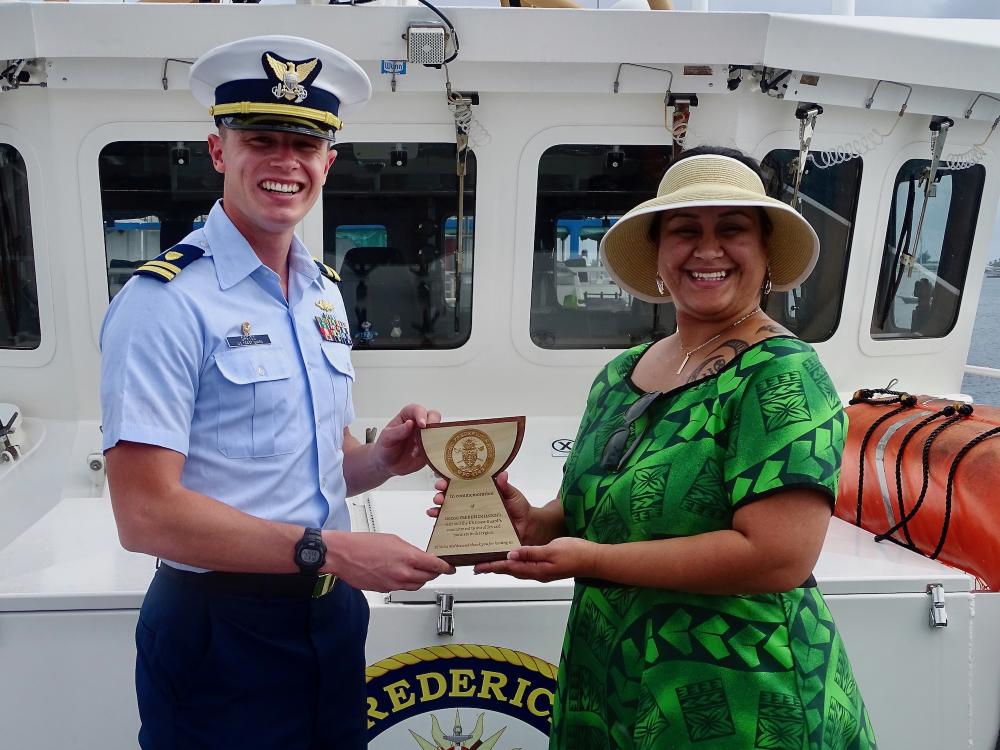
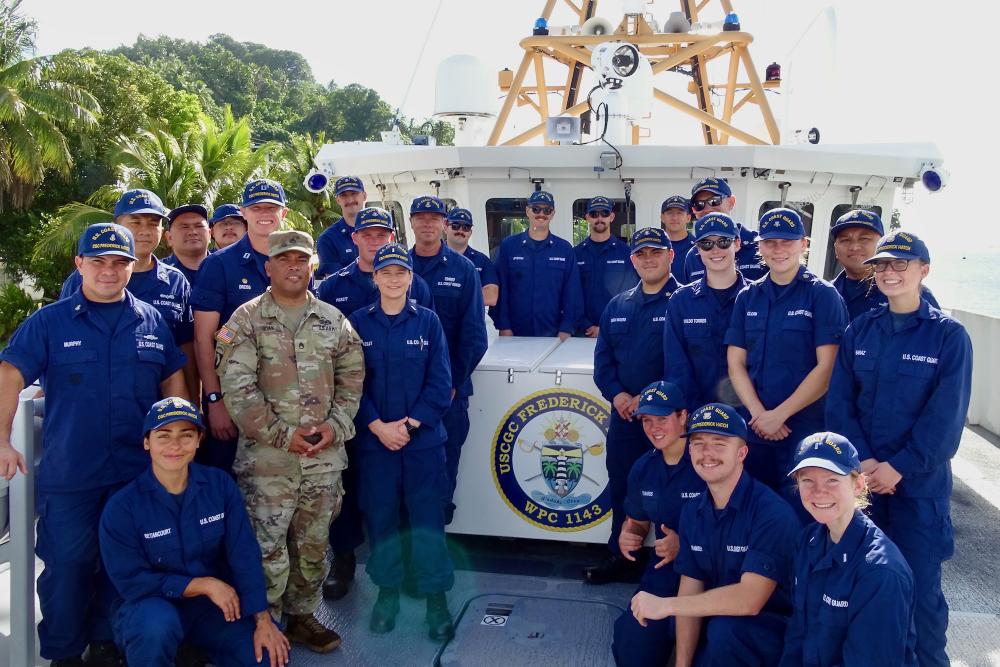
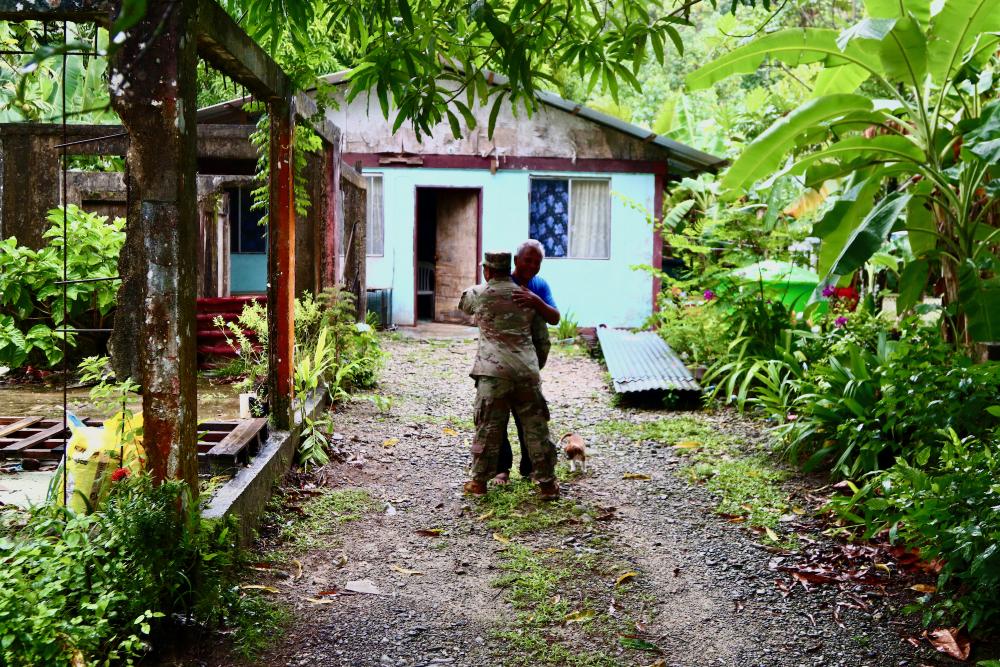
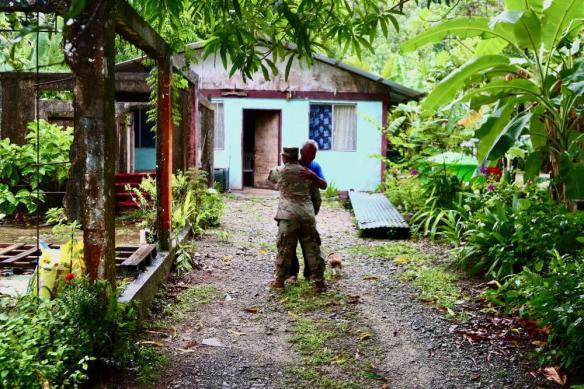
The crew of the USCGC Frederick Hatch (WPC 1143) arrive in Kosrae, Federated States of Micronesia, on Dec. 15, 2022, and also brought Staff Sgt. Gary Likiak, U.S. Army and part of the local FSM embassy team, home for the first time in six years. The Frederick Hatch crew completed a 41-day 7100-nautical mile expeditionary patrol throughout Oceania returning home in time for Christmas 2022. Under Operations Rematau and Blue Pacific, this patrol countered illegal, unreported, and unregulated fishing in the exclusive economic zones of the Federated States of Micronesia, the Republic of the Marshall Islands, and the Republic of Nauru by enforcing applicable laws, regulations, and individual countries’ sovereignty. The crew strengthened partnerships through established bilateral maritime law enforcement agreements, shiprider operations, subject matter exchanges, and community engagements. (U.S. Coast Guard photo)

Another Guam based WPC makes an extended patrol in the Western Pacific.

Apparently, this was the first patrol under an “Expanded Maritime Law Enforcement Agreement” with the Federated States of Micronesia (FSM).

“The expanded agreement builds on the existing bilateral shiprider agreement between the two countries. It establishes procedures for authorizing the U.S. to conduct maritime law enforcement boardings on behalf of FSM to combat illicit maritime activity when an FSM law enforcement officer is not present. More specifically, the agreement provides a coordinating mechanism and process for U.S. law enforcement personnel to work with the FSM National Police, Division of Border Control and Maritime Surveillance to receive approval from the FSM to act under the agreement.”

News Release

U.S. Coast Guard Forces Micronesia / Sector Guam

USCGC Frederick Hatch (WPC 1143) completes expeditionary patrol in Oceania, home for Christmas
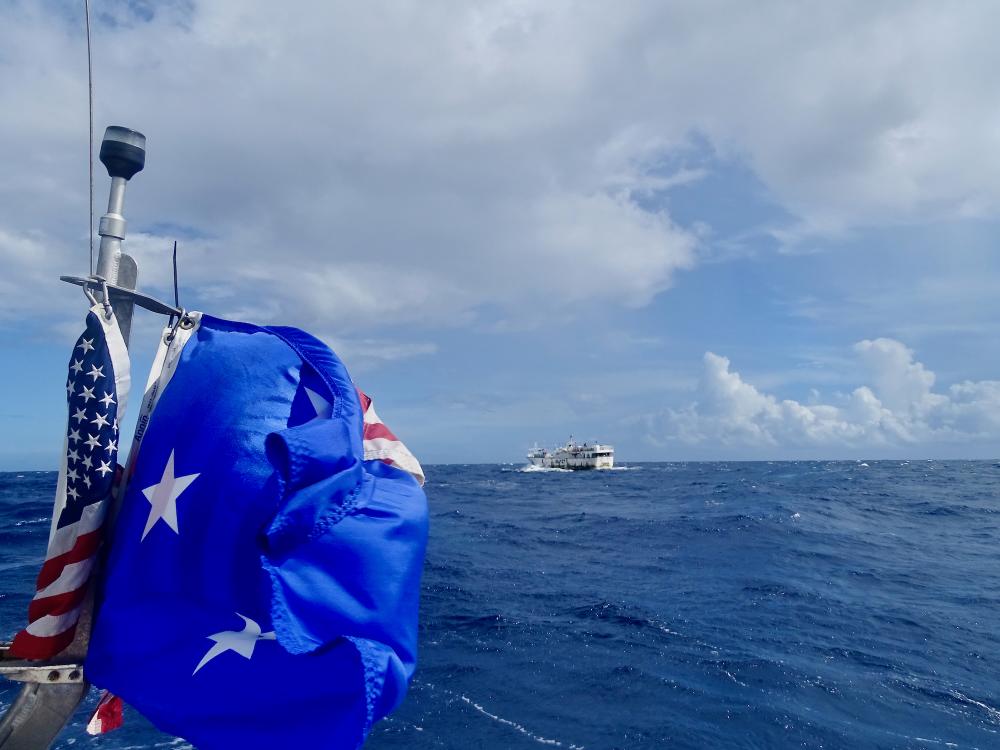
The USCGC Frederick Hatch (WPC 1143) crew conduct a fisheries boarding in the Federated States of Micronesia exclusive economic zone on Nov. 17, 2022 The command of the USCGC Frederick Hatch (WPC 1143) hosts Minister of Foreign Affairs and Trade Kitlang Kabua, and her team while in Majuro, Republic of the Marshall Islands, on Dec. 5, 2022.  The crew of the USCGC Frederick Hatch (WPC 1143) arrive in Kosrae, Federated States of Micronesia, on Dec. 15, 2022, and also brought Staff Sgt. Gary Likiak, U.S. Army and part of the local FSM embassy team, home for the first time in six years.
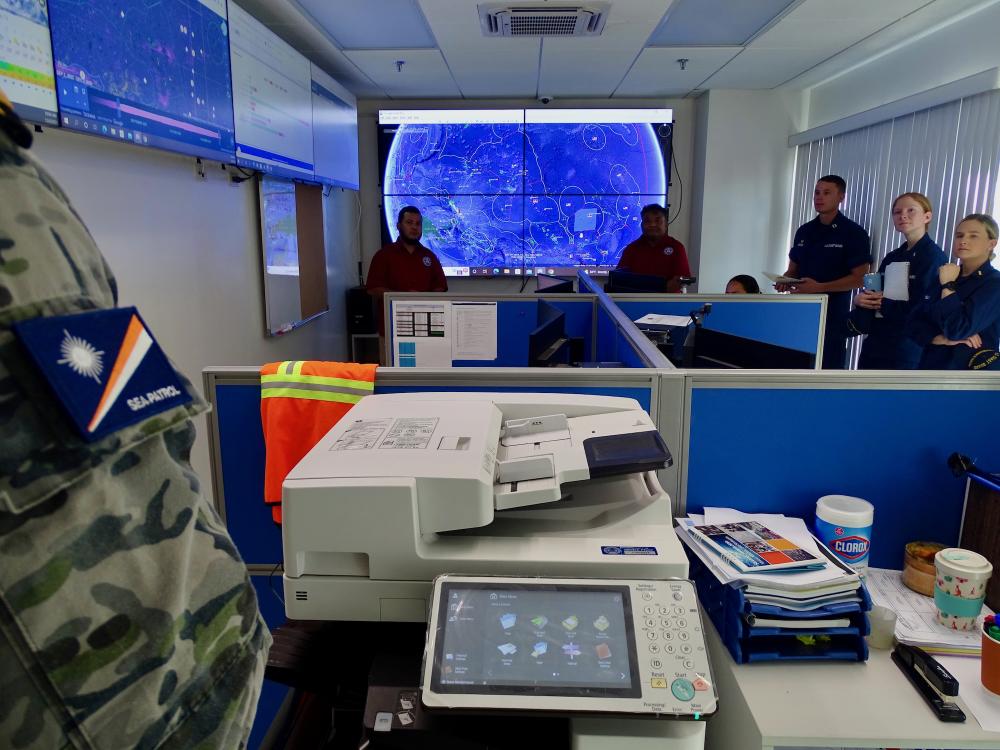
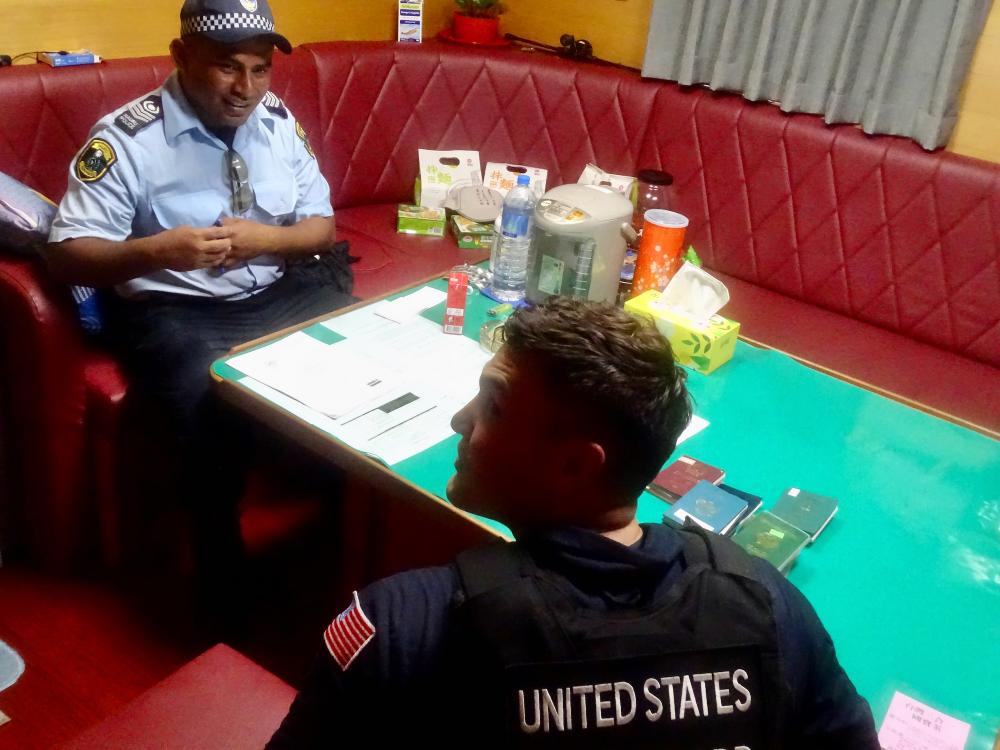
The USCGC Frederick Hatch (WPC 1143) crew visit the Republic of the Marshall Islands Sea Patrol Maritime Surveillance Administration on Dec. 5, 2022 Petty Officer 2nd Class Brandon Chapleau and a shiprider from the Nauru National Police conduct a boarding on the fishing vessel New Splendor off Nauru on Dec. 11, 2022.  Lt. j.g. Mary Sims of the USCGC Frederick Hatch (WPC 1143) sits with youth in Majuro, Republic of the Marshall Islands, on Dec. 5, 2022.

Editor’s Note: Click on the images above to view more or download high-resolution versions.

SANTA RITA, Guam — The crew of the USCGC Frederick Hatch (WPC 1143) completed a 41-day 7100-nautical mile expeditionary patrol throughout Oceania on Dec. 23, returning home in time for Christmas.

Under Operations Rematau and Blue Pacific, this patrol countered illegal, unreported, and unregulated fishing in the exclusive economic zones of the Federated States of Micronesia, the Republic of the Marshall Islands, and the Republic of Nauru by enforcing applicable laws, regulations, and individual countries’ sovereignty. The crew strengthened partnerships through established bilateral maritime law enforcement agreements, shiprider operations, subject matter exchanges, and community engagements.

“This patrol exemplified the operational advantage the Fast Response Cutter provides the Coast Guard in Oceania, displaying our ability to successfully complete fisheries enforcement and search and rescue missions over 1,800 nautical miles from home. Mixed with fantastic port calls and impactful community relations events, the last 41 days were a testament to the Hatch crew’s adaptability and diligence that made this patrol so successful. It has been an honor to sail with each of them. Making it home for Christmas is a great reward, especially after being away for Thanksgiving,” said Lt. Patrick Dreiss, USCGC Frederick Hatch’s commanding officer.

The crew hosted students from high schools and colleges as well as community members during their port calls to share the missions of the U.S. Coast Guard and provide a look at the ship itself. They also participated in local sporting events and cultural activities. When departing the Republic of the Marshall Islands, the team took on an additional temporary crewmember, Staff Sgt. Gary Likiak, U.S. Army, and part of the local embassy team. Likiak rode along to Kosrae, which is also home for him – the first time he’s been home in six years.

“Reinvigorating our bi-lateral agreements with our partners in the region after COVID-19 was the main objective of this patrol, and our successes with shipriders aboard and warm hospitality received at each island both allowed us to achieve this goal,” said Dreiss.

Of note, on this patrol, the Frederick Hatch team hosted shipriders from the maritime enforcement branches of the FSM, RMI, and Nauru governments. This activity was the first time shipriders could accompany U.S. Coast Guard crews in several years as Pacific Island partners resume normal operations after limiting travel as a COVID precaution.

The team conducted 16 boardings, issued five warnings, and found no significant violations. The fishing vessels were tuna longliners and purse seiners.

On Dec. 17, the Frederick Hatch crew, after departing Kosrae, enacted the newly expanded agreement for maritime law enforcement operations, conducting two boardings on licensed fishing vessels operating in the FSM exclusive economic zone.

“It was very fulfilling to have an opportunity to enact the Expanded Maritime Law Enforcement Agreement for the first time after watching the program develop over the last year,” said Dreiss. “It provides the U.S. Coast Guard with another avenue to support our regional partners and continues to lay the groundwork for increasing Illegal, Unregulated, and Unreported Fishing enforcement in the region.”

The expanded agreement builds on the existing bilateral shiprider agreement between the two countries. It establishes procedures for authorizing the U.S. to conduct maritime law enforcement boardings on behalf of FSM to combat illicit maritime activity when an FSM law enforcement officer is not present. More specifically, the agreement provides a coordinating mechanism and process for U.S. law enforcement personnel to work with the FSM National Police, Division of Border Control and Maritime Surveillance to receive approval from the FSM to act under the agreement.

“This was an excellent warm-up of our bilateral relations and fisheries enforcement process following COVID. It was great to have local experts with us again and provide services to our FSM, RMI, and Nauru partners,” said Capt. Nick Simmons, the commander of U.S. Coast Guard Forces Micronesia/Sector Guam. “The successful application of the expanded agreement now allows us to support our partners better. FSM occupies more than one million square miles of the Pacific Ocean and ranges 1,700 miles from West (Yap) to East (Kosrae) with the enforcement team in Pohnpei. This agreement allows us to help our partners overcome the logistics that limited enforcement in the past when it is difficult to get a shiprider out to the field.”

The U.S. Coast Guard flags IUU-F as one of the top threats to our oceans and a significant regional destabilizing factor. The United States continues to emphasize the ocean’s health and good governance, as evidenced by expanded measures to combat illegal fishing in the FY2023 National Defense Authorization Act. Notable items include an expanded High Seas Drift Net Act, improvements to NOAA’s Seafood Import Monitoring Program, programs aimed at reducing the impacts of ships and other vessels on marine mammals, and a federal ban on buying or selling shark fins in the U.S.

The U.S. Coast Guard regularly exercises 11 bilateral fisheries law enforcement agreements on behalf of the United States with countries throughout the Pacific islands. Shiprider agreements allow maritime law enforcement officers to observe, board, and search vessels suspected of violating laws or regulations within a designated EEZ or on the high seas. These law enforcement activities bolster maritime law enforcement operations and maritime domain awareness and provide a mechanism to conduct integrated operations within the Pacific. This expanded agreement is the first of its kind. It seeks to overcome the challenges of the Oceania region’s vast distances while leveraging limited enforcement resources and the trust built between nations over decades.

The U.S. Coast Guard maintains strong partnerships with the maritime forces in the region through extensive training and subject matter expert exchanges. FSM, also known as the Big Ocean State, has one of the world’s largest EEZs, with waters rich in sea life. RMI, located halfway between Hawaii and Australia north of the equator, is an archipelago of 29 atolls, five low coral islands, and 1,151 islets that shares maritime borders with FSM, Kiribati, and Nauru.

RMI’s exclusive economic zone of 1.2 million square kilometers (463,322 square miles). Nauru is the smallest island nation and the third smallest country in the world, with around 10,000 inhabitants. Fishing is essential to their food security. FSM and RMI are signatories to a Compact of Free Association with the United States. They are Pacific Islands Forum Fisheries Association members and party to the South Pacific Tuna Treaty, as is Nauru.

In addition to fisheries enforcement, the Frederick Hatch crew conducted a search and rescue case medically evacuating a 31-year-old Vietnamese fisherman to a higher level of medical care in Pohnpei on Nov. 20.

The cutter’s boarding team learned of the fisherman’s injuries while conducting a bilateral fisheries boarding with an FSM Marine Police Officer aboard the fishing vessel Ocean Galaxy 195 nautical miles (224 statute miles) south of Pohnpei. The ship is a 69.4-meter (227-foot) purse seiner flagged out of Nauru. The fisherman reportedly fell 12 feet earlier the same day, sustaining a head and possible spinal injury. He was conscious and talking but lost feeling and motion in his right arm and both legs, exhibiting severe concussion symptoms.

“It was an absolute team effort by every member of Frederick Hatch to medevac the injured crewmember from the Ocean Galaxy successfully. Witnessing each crewmember perform at the highest level after completing two boardings earlier the same day to help a fellow mariner was awesome to watch,” said Dreiss.

Operation Rematau is how U.S. Coast Guard Forces Micronesia/Sector Guam supports the overarching Coast Guard endeavor Operation Blue Pacific to promote security, safety, sovereignty, and economic prosperity in Oceania. Rematau means people of the deep sea. It recognizes the wisdom of the Pacific Island Forum leaders in that securing the future requires long-term vision and a carefully considered regional strategy for the Blue Pacific Continent. Op Rematau reinforces U.S. commitment to working together to advance Pacific regionalism based on the Blue Pacific narrative. This action supports U.S. national security objectives, bolstering regional maritime governance and security.

The Frederick Hatch is the 43rd 154-foot Sentinel-class fast response cutter named for a surfman and lighthouse keeper who was a two-time Gold Life Saving Medal recipient. The Service commissioned the ship along with its sister ships, Myrtle Hazard (WPC 1139) and Oliver Henry (WPC 1140), in Guam in July 2021. These cutters are a vital part of the U.S. Coast Guard’s enduring regional presence serving the people of the Pacific by conducting 10 of the Service’s 11 statutory missions with a focus on search and rescue, defense readiness, living marine resources protection, and ensuring commerce through marine safety and ports, waterways, and coastal security.

For more U.S. Coast Guard Forces Micronesia/Sector Guam news, visit us on DVIDS or subscribe! You can also visit us on Facebook or Instagram at @USCGForcesMicronesia or Twitter @USCGFMSG. 

“The More ‘Eyes On The Water’, The Better” –Marine News

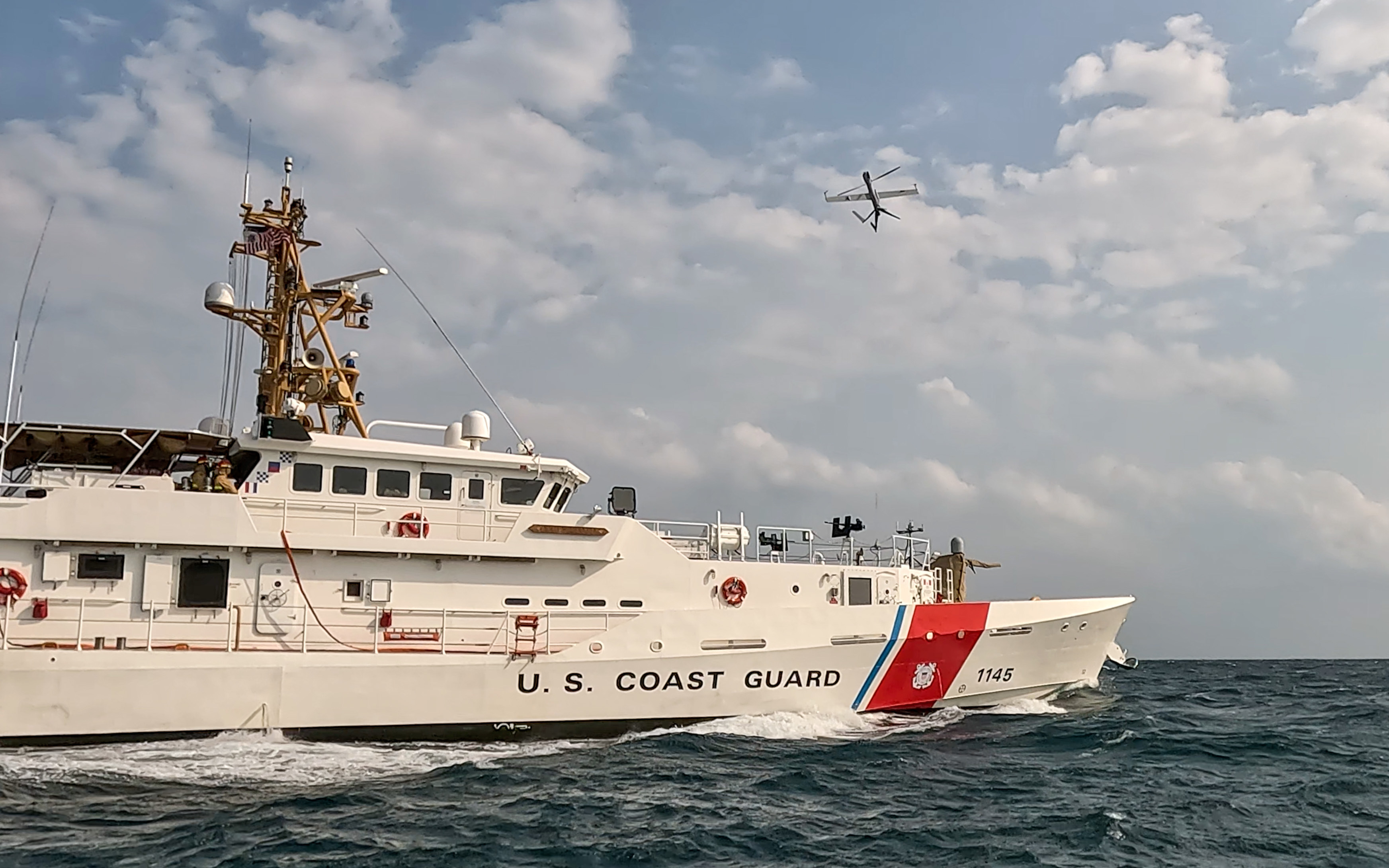
221207-N-NO146-1001 ARABIAN GULF (Dec. 7, 2022) An Aerovel Flexrotor unmanned aerial vehicle (UAV) takes off from U.S. Coast Guard fast response cutter USCGC Emlen Tunnell (WPC 1145) transiting the Arabian Gulf, Dec. 7. U.S. 5th Fleet’s Task Force 59 launched the UAV during Digital Horizon, a three-week event focused on integrating new unmanned and artificial intelligence platforms, including 10 that are in the region for the first time. (U.S. Navy photo)

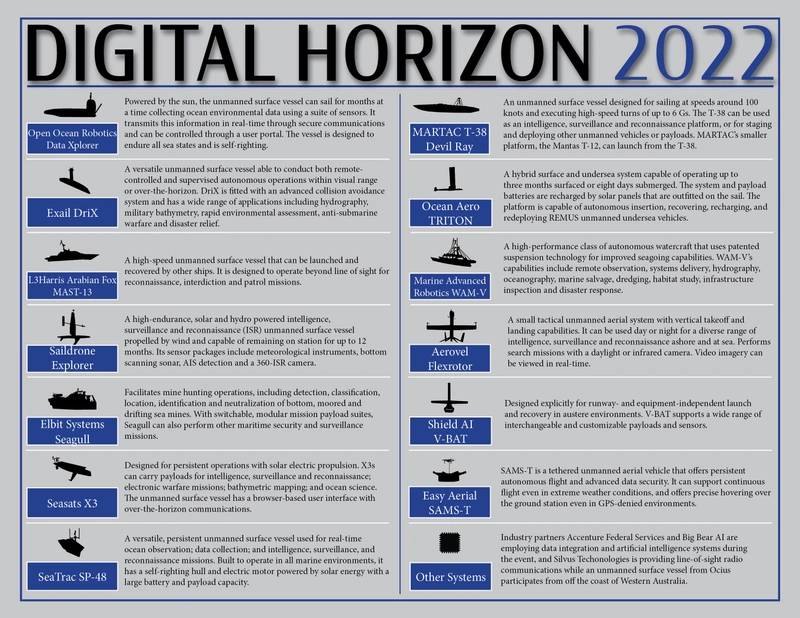
Marine News has an interesting story that discusses both PATFORSWA’s operations using the recently arrived Webber class WPCs and the recent Digital Horizon 2022 exercise. There is also a bit of a tie in between the two in that at least one WPC was operating as part of Task Force 59, the 5th Fleet element charged with operating unmanned systems. We have heard a bit about the exercise before, but the list of participants in the graphic below seems particularly revealing.

Graphic illustration depicting the unmanned systems that participated in exercise Digital Horizon.