The Very First US Naval Helicopters and Their Coast Guard Pilot

CDR Frank Erickson, USCG, the first US Naval Aviation helicopter pilot.

I am sharing a post written by Coast Guard Aviator, Capt. Sean M. Cross, that appeared on his Facebook Page. Captain Cross’s Facebook page provides daily stories about Coast Guard aviation history. I have a bit of a personal connection, because his dad, former Vice Commandant, VAdm. Terry M. Cross, USCG (ret.), served with me, on my first active duty station, USCGC McCulloch. Even then, it was clear he was a standout.

TODAY IN COAST GUARD AVIATION HISTORY – 03 SEPTEMBER 1943: On 3 September, the U.S. Navy Chief of the Bureau of Aeronautics requested that Coast Guard CDR Frank Erickson, who was assigned to the Sikorsky Factory in Bridgeport, CT, prepare a weekly report for the Bureau outlining the progress made on various model helicopters, estimates of completion, trial and delivery dates; and in addition, such other technical information determined from time to time which had or may have a bearing on present or future operations of this type aircraft.
[Some excerpts from “1943: Coast Guard Assigned the Sea-going Development of the Helicopter” on the Coast Guard Aviation History website] This arrangement came about because U.S. Navy CDR Charles Booth, the naval aviator in the initial helicopter training class at Sikorsky, was involved in moving the Navy’s flight test facility from NAS Anacostia to the Naval Test Center at Patuxent River, Maryland and as a result had not followed through on his qualification. Erickson thus remained the only naval aviator qualified in the helicopter. Hence, in the summer of 1943 Erickson had taken charge of the Navy’s helicopter development program.
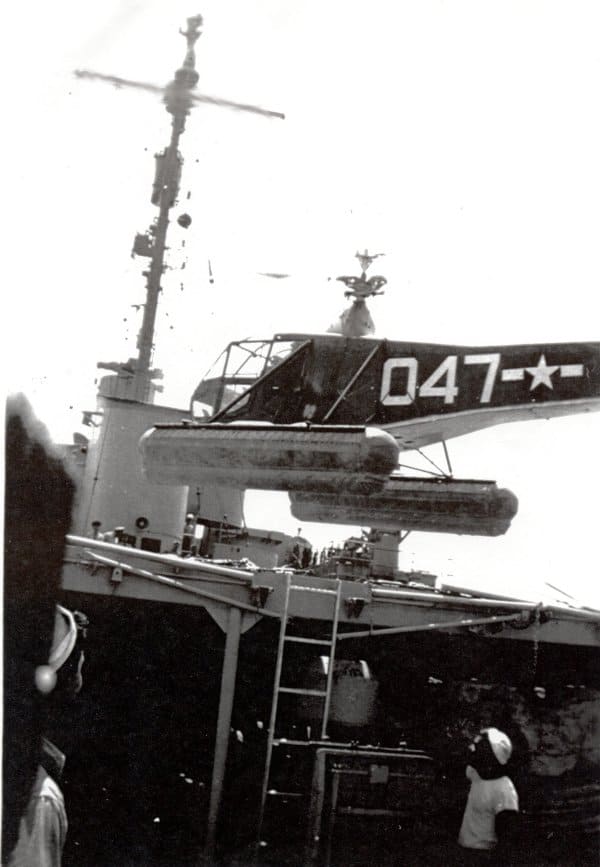
Erickson submitted his first report on 18 September. It noted that the YR-4s for the joint evaluation program were on schedule. The two British helicopters had been completed but had not yet been delivered because of rotor problems. He further stated the problems were being addressed. On 25 September a YR-4A was released to the British. On October 16, 1943 – the U.S. Navy accepted its first helicopter, a Sikorsky YR-4B, Navy designation XHNS-1, BuNo 46445, at Bridgeport, Connecticut. However, and this is rich, Coast Guard LCDR Frank Erickson, CGA ’31 flew the one-hour acceptance test flight because the Navy had no helicopter pilots. I will admit – they were pretty busy fighting WWII and winning.
Regardless, the Navy celebrates 16 October as the Birthday of Navy Helicopter Aviation^^^. CDR Charles T. Booth, USN, went to Bridgeport to qualify as a helicopter pilot and to fly the XHNS-1 to the Naval Air Test Center (NATC), NAS Patuxent River, MD. CDR Booth was the first U.S. Navy Officer to become qualified to fly helicopters.
With the acceptance of two additional helicopters at the end of October 1943, the Sikorsky facilities became very crowded. Erickson sought to transfer all operation to Coast Guard Air Station Brooklyn at Floyd Bennett Field. The Chief of Naval Operations approved and designated the Coast Guard Air Station Brooklyn as the Helicopter Training and Development Base. On 20 November, LCDR John Miller, USN and LTJG Stewart Graham, USCG completed flight training. Graham received Coast Guard Helicopter Pilot Designation Number Two.
[NOTE: the Coast Guard celebrates this anniversary on 15 June 1943 when LCDR Erickson was designated Coast Guard Helicopter Pilot #1 at the Sikorsky Aircraft plant]

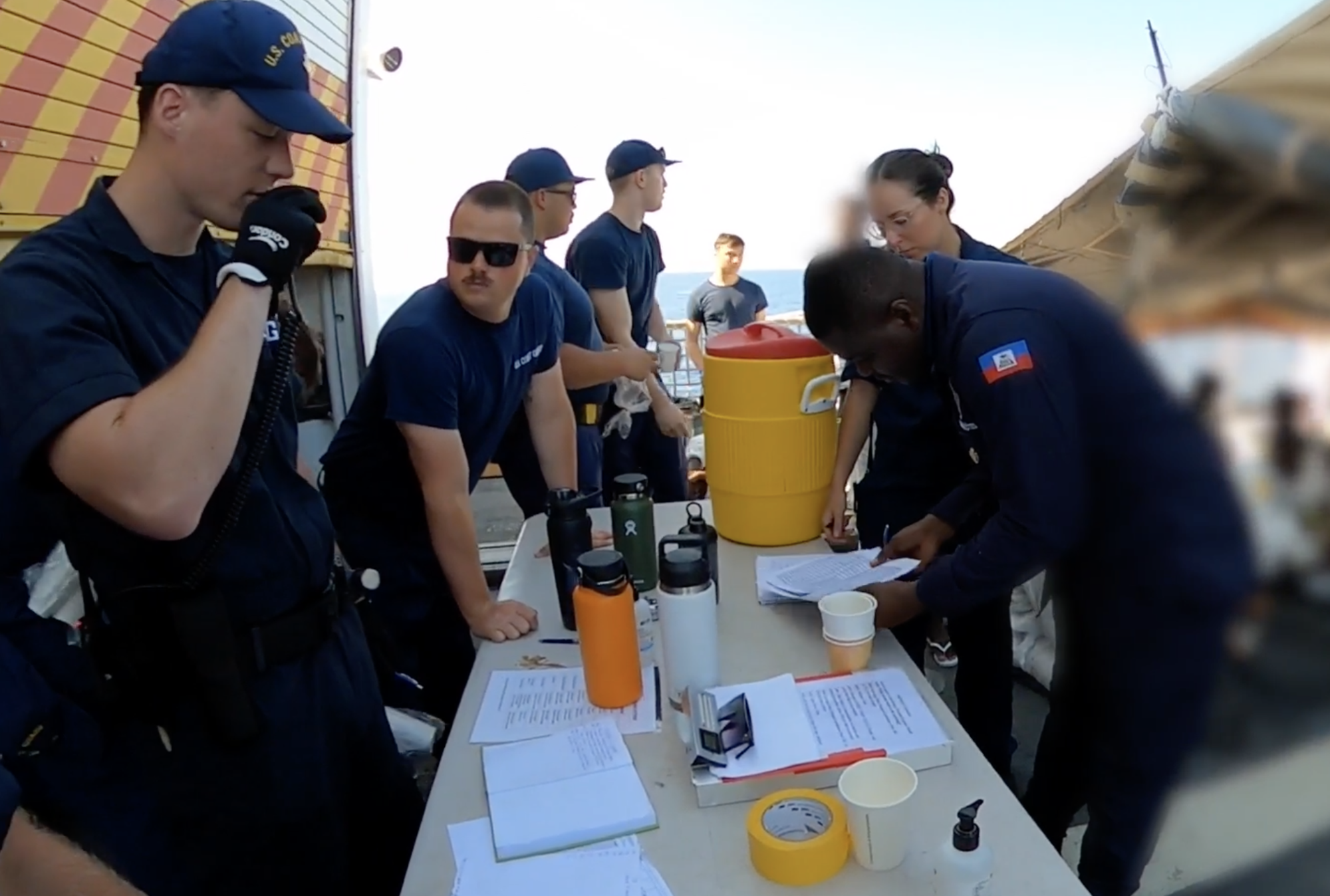
“Homeland Security Task Force Southeast partners increase illegal migration enforcement patrols in Florida Straits, Caribbean” –D7

An overloaded migrant vessel sails next to the U.S. Coast Guard Cutter Confidence off the northwest coast of Haiti on Thursday, May 20, 2022. The Coast Guard said the boat collided with the bow of the cutter. U.S. Coast Guard

Below is a District Seven (HQ Miami) news release.

There has been a significant increase in illegal maritime immigration attempts. Figures below were culled from previous press releases:

Since Oct, 1, 2021, Coast Guard crews have interdicted 7,173 Haitian migrants compared to:

  • 1,527 Haitian Migrants in Fiscal Year 2021
  • 418 Haitian Migrants in Fiscal Year 2020
  • 932 Haitian Migrants in Fiscal Year 2019
  • 609 Haitian Migrants in Fiscal Year 2018
  • 419 Haitian Migrants in Fiscal Year 2017

Since Oct. 1, 2021, Coast Guard crews interdicted 5,006 Cubans compared to: 

  • 838 Cuban Migrants in Fiscal Year 2021
  • 49 Cuban Migrants in Fiscal Year 2020
  • 313 Cuban Migrants in Fiscal Year 2019
  • 259 Cuban Migrants in Fiscal Year 2018
  • 1,468 Cuban Migrants in Fiscal Year 2017
  • 5,396 Cuban Migrants in Fiscal Year 2016

Since Oct. 1, 2021 through June 30, 2022, the Coast Guard has carried out 72 illegal voyage interdictions in the Mona Passage and waters near Puerto Rico.  Interdicted during this period, are 1,919 non-U.S. citizens including 1,414 Dominicans, 404 Haitians, 01 Cuban, 1 Ecuadorian, 52 Venezuelan, 12 Uzbek, and 35 of unknown nationalities.

News Release

U.S. Coast Guard 7th District Southeast

Homeland Security Task Force Southeast partners increase illegal migration enforcement patrols in Florida Straits, Caribbean

Coast Guard Cutter Campbell stops unsafe, overloaded Haitian sailing vessels Coast Guard shows safety of life at sea interdiction process

Editor’s Note: Click on still images above to view high-resolution versions of migrant interdiction videos.

MIAMI — Homeland Security Task Force – Southeast enhanced its operational posture and readiness to address a recent increase in irregular maritime migration originating from the Bahamas and Cuba through the Florida Straits, from Haiti through the Windward Pass, and from the Dominican Republic to Puerto Rico through the Mona Pass.

Task Force partners are increasing patrols and enforcement by land, air and sea, day and night.

HSTF-SE is a Department of Homeland Security-led, standing interagency task force responsible for deterring, preventing, and responding to illegal maritime migration under Operation Vigilant Sentry. The primary objectives of the Task Force are to prevent loss of life at sea and to deter and dissuade maritime migration using DHS forces, reinforced by other federal, state, and local assets and capabilities.

“Illegal maritime voyages in the Caribbean are always dangerous and very often deadly,” said Rear Adm. Brendan C. McPherson, Commander, Seventh Coast Guard District and Director, HSTF-SE. “Smugglers routinely exploit vulnerable migrants for profit while putting their lives at risk aboard overloaded and unseaworthy vessels. These dangerous voyages must not be attempted. Safe, legal, and orderly migration saves lives.”

OVS is HSTF-SE’s comprehensive, integrated, national operational plan for a rapid, effective, and unified response of federal, state, and local capabilities in response to maritime migration in the Caribbean. OVS describes the basic organization and structure by which the Task Force will deploy resources and coordinate multi-agency operations to address illegal maritime migration patterns in the Southeast region of North America. The plan allows for the task force to adjust resources and posture as necessary based upon illegal maritime migration trends.

“The U.S. Border Patrol Miami Sector is committed to working alongside our federal, state, and local law enforcement partners in a whole-of-government effort to prepare for and address any potential increases in irregular maritime migration or border security threats in Florida,” said Walter N. Slosar, Chief Patrol Agent for Border Patrol Miami Sector and deputy director, HSTF-SE.

The Coast Guard and federal partners maintain a continual presence with land, air and sea assets in the Florida Straits and in the Caribbean Sea, as part of a multi-layered approach to interdict migrants attempting to enter the U.S. Those without a legal basis in the United States will be removed.

In 2003, the DHS established HSTF-SE for the purpose of responding to maritime migration events in the Caribbean. The Task Force provides the organizational framework to detect maritime migration indicators, monitor maritime migration trends, and conduct joint training, exercises, and planning. Members of the Task Force include the U.S. Coast Guard, the departments of Defense, State, Justice, Health and Human Services, Homeland Security, the Federal Emergency Management Agency, the Transportation Security Administration, U.S. Citizenship and Immigration Services, U.S. Secret Service, and state and local agencies including representatives from FDEM, FDLE, Palm Beach, Broward, Miami-Dade and Monroe counties.

HSTF-SE represents an all-of-government approach. CBP-AMO officers embarked on aircraft and boats work alongside Coast Guard units to detect and interdict illegal maritime migrant ventures. CBP-OFO officers and USBP agents coordinate efforts with maritime branches to detect and interdict migrants who land on Florida beaches and U.S. islands and territories in the Caribbean. HSI special agents specifically target individuals who are involved in human smuggling events and investigate the transnational criminal organizations that profit from these illegal activities. U.S. Public Health Service officers from the ICE Health Service Corps Special Operations Unit work with the Coast Guard and provide medical care to migrants on board Coast Guard vessels and treat any immediate needs.

The Coast Guard is simultaneously a federal law enforcement agency and a branch of the military. Among its 11 statutory missions, the Coast Guard is charged with the enforcement of U.S. immigration law and U.S. government policy to secure our maritime borders and prevent illegal migration attempts by sea. People trying to enter the country illegally by sea will be interdicted and repatriated to their country of origin or the country they departed from, consistent with U.S. law, policies, and international treaty obligations.

Follow Homeland Security Task Force – Southeast on Twitter @HSTF_Southeast.

For more breaking news follow us on Twitter and Facebook.

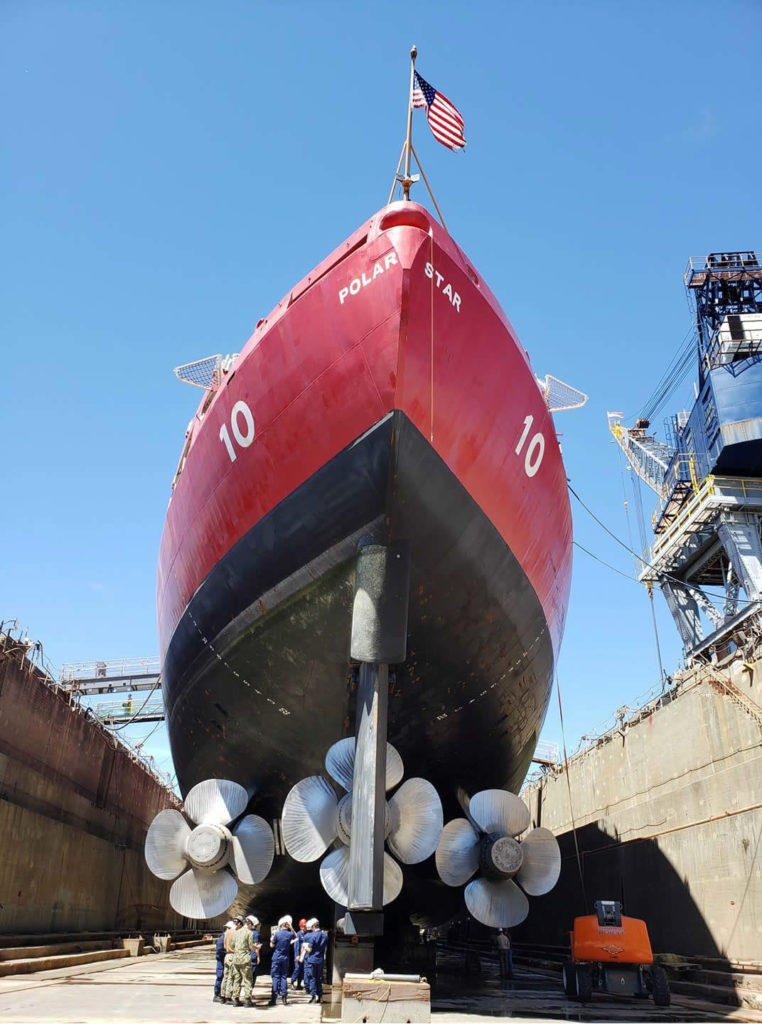
“Polar Star arrives at homeport after completion of dock work and sea trials during second phase of service life extension project” –CG-9

Photo: Official USCG Polar Star Facebook

The Acquisitons Directorate (CG-9) reports that USCGC Polar Star has returned to Seattle, after at least 146 days away from homeport (April 8 to Sept. 1) following the second phase of a five phase Service Life Extension program at Mare Island Dry Dock, Vallejo, California.

Now that is a long time. I know steps have been taken to mitigate the hardship this time away from homeport has caused, but knowing the ship will be spending months every year in Vallejo, wouldn’t it be worthwhile to change the ships homeport? It might also have allowed the ship to make an Arctic Summer cruise.

After all that is going into remaking this ship, I wonder if perhaps we will keep it around, even after the second Polar Security Cutter is delivered?


Polar Star arrives at homeport after completion of dock work and sea trials during second phase of service life extension project

Sept. 1, 2022 —

Polar Star

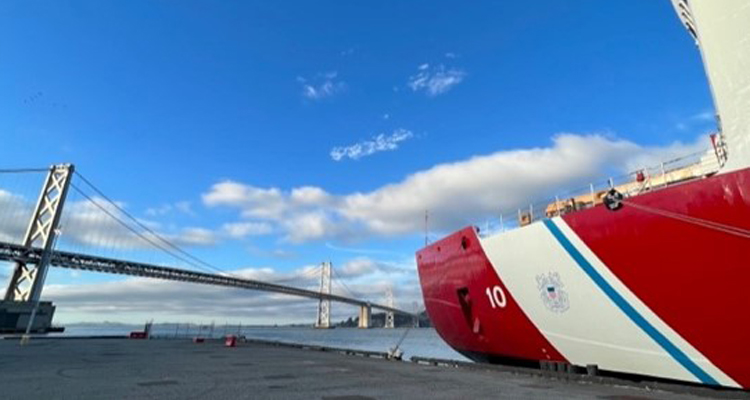
Coast Guard Cutter Polar Star sits moored in San Francisco following completion of dock trials on Aug. 12, 2022, for the second phase of its service life extension project completed by Mare Island Dry Dock. U.S Coast Guard photo.


Coast Guard Cutter Polar Star has completed sea trials for the second phase of its service life extension project (SLEP), as part of the In-Service Vessel Sustainment Program, and returned to its homeport of Seattle. The remaining contracted production work will be completed by Sept. 30 at the homeport, as well as final testing of the newly installed machinery control systems.

Polar Star commenced the second phase of SLEP work items and recurring maintenance on April 8. Service life extension program work is taking place over a five-year, annually phased production schedule that runs through 2025, and each phase is coordinated to support operational commitments, such as the annual Operation Deep Freeze deployment to Antarctica, and to take advantage of planned maintenance availabilities. During the second phase, all of the galley equipment was recapitalized, reflecting the modern upgrades of commissary equipment available on extended voyage seagoing ships.

In addition, Naval Surface Warfare Center Philadelphia Division and Coast Guard Yard installed two machinery control systems. The Coast Guard Machinery Control System (CGMCS) recapitalizes the Main Propulsion Control and Monitoring System that was installed during Polar Star’s reactivation in 2013. The CGMCS increases system reliability and operator familiarity, as this newly installed propulsion control system is standard across much of the service’s surface fleet. The new Propulsion Power Distribution System replaced the analog diesel electric propulsion suite that was installed when Polar Star entered service in 1976. The new system features improved reliability as compared to the legacy system and reduces maintenance requirements that previously took approximately 45 days and 1,600 maintenance-hours to complete.

The Polar Star crew will conduct integrated operational testing of both new systems prior to departing for Operation Deep Freeze in 2023. The cutter regularly completes Operation Deep Freeze deployments to resupply McMurdo Station in Antarctica.

Polar Star is the Coast Guard’s only active heavy icebreaker. The 399-foot cutter supports nine of the 11 Coast Guard statutory missions. The Coast Guard is investing in a new fleet of polar security cutters (PSC) that will sustain the service’s capabilities to meet mission needs in both the Arctic and Antarctic regions. The first PSC is on contract for delivery in 2025.

For more information: In-Service Vessel Sustainment Program page and Polar Security Cutter Program page

Keyword

“Coast Guard releases a request for proposal for long range interceptor III cutter boats” –CG-9

Long Range Interceptor, Length: 35 feet
Maximum Speed: 40 knots
Range: 240 nautical miles
MEDITERRANEAN SEA (April 23, 2021) Crew prepare to depart from the U.S. Coast Guard Legend-class national security cutter Hamilton (WMSL 753)… (U.S. Coast Guard courtesy photo)

The Acquistions Directorate (CG-9) has issued a Request for Proposal (RFP) for a new, third generation of Long Range Interceptors. This is an 11 meter (35 foot) boat, unique to the National Security Cutters. For convinence, I have reproduced the CG-9 announcement below.

If you want to look more closely at the specs, go here and select Attachment 1. A couple of interesting items you will find among the specs are references to removable ballistic protection panels (p.66) and “OVER-THE-HORIZON SATELLITE BLUE FORCE TRACKING (SBFT) SYSTEM” (p.97).


Coast Guard releases a request for proposal for long range interceptor III cutter boats

The Coast Guard released a request for proposal (RFP) today to acquire the third generation of long range interceptor boats (LRI III). The Coast Guard plans to acquire up to 17 LRI IIIs. The RFP is available here.

The acquisition is being conducted as a total small business set-aside under Federal Acquisition Regulation Subpart 19.5.

Proposals are due by Nov. 1.

The LRI cutter boat platform is designed to augment Coast Guard national security cutter mission effectiveness by providing over-the-horizon capability in search and rescue, drug and migrant interdiction, living marine resources, defense readiness, and ports, waterway and coastal security missions.

For more information: Boat Acquisition Program page.

“U.S. Coast Guard Cutter James’ commanding officer temporarily relieved” –LANTAREA

Hate to see this sort of thing. Just passing it along. No comment.

News Release

U.S. Coast Guard Atlantic Area

U.S. Coast Guard Cutter James’ commanding officer temporarily relieved

PORTSMOUTH, Va. — The commanding officer of USCGC James (WMSL 754), Capt. Marc Brandt, was temporarily relieved of duties Friday, Aug. 26, 2022.

Vice Adm. Kevin Lunday, commander of Coast Guard Atlantic Area, effected the relief due to a loss of confidence in Brandt’s ability to command the cutter. The circumstances leading to a loss of confidence involved a mishap aboard the cutter. No personnel were injured.

Lunday appointed Capt. John Driscoll to assume temporary command of the cutter pending the results of an investigation into the mishap. 

Brandt has been temporarily assigned to Coast Guard Atlantic Area.

James is a Legend-class national security cutter (NSC) homeported in Charleston, South Carolina, with a crew of 148 officers and enlisted personnel. NSCs are the Coast Guard’s most technologically-advanced cutters in the fleet.

“U.S. Coast Guard arrives for planned port visit in Cairns, Australia” –Adventures in Paradise with the Webber Class

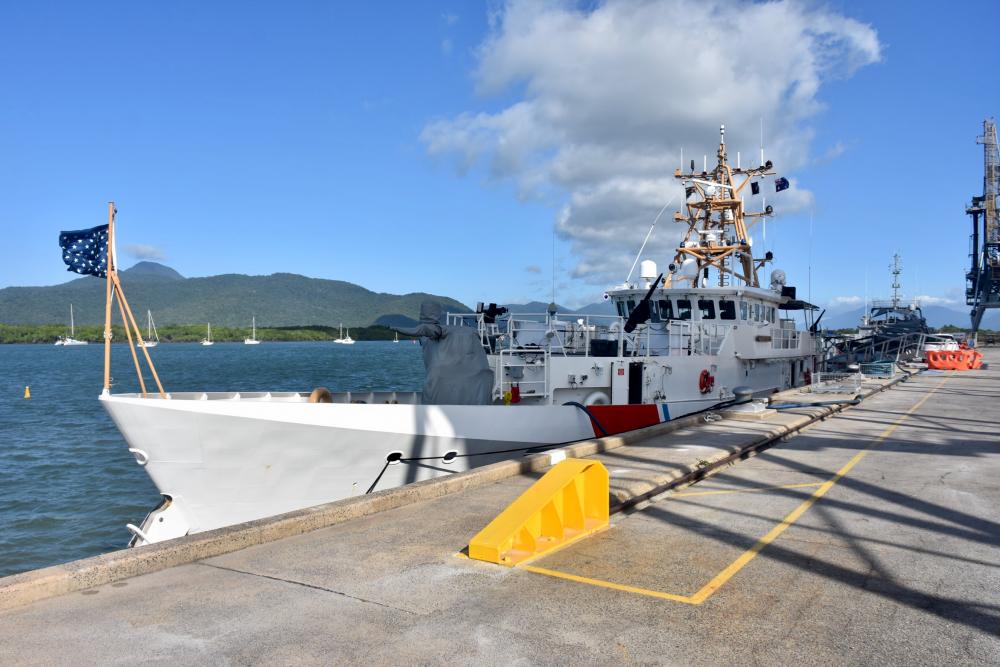
The Sentinel-class fast response cutter USCGC Oliver Henry (WPC 1140) arrive in Cairns for engagements with Australian Defence and Home Affairs partners and local representatives, Aug. 31, 2022. The U.S. Coast Guard is conducting a routine deployment in Oceania as part of Operation Blue Pacific, working alongside Allies, building maritime domain awareness, and sharing best practices with partner nation navies and coast guards. Op Blue Pacific is an overarching multi-mission U.S. Coast Guard endeavor promoting security, safety, sovereignty, and economic prosperity in Oceania while strengthening relationships with our regional partners. (U.S. Coast Guard photo courtesy USCGC Oliver Henry)

The six Hawaii and Guam based Webber class Fast Response Cutters do seem to get around. USCGC Oliver Henry made it to North Eastern Australia, mooring at Her Majesty’s Australian Station Cairns, which is home to some Australian Navy patrol, hydrographic, and survey vessels. Cairns looks like a delightful little city (population in June 2019 was 153,951). Not bad after no one tossed out the welcome mat in the Solomon Islands. The crew is going to have a lot of sea stories.

Cairns is a bit over 1800 nautical miles South of Oliver Henry’s homeport in Guam.

News Release

U.S. Coast Guard Forces Micronesia / Sector Guam

U.S. Coast Guard arrives for planned port visit in Cairns, Australia

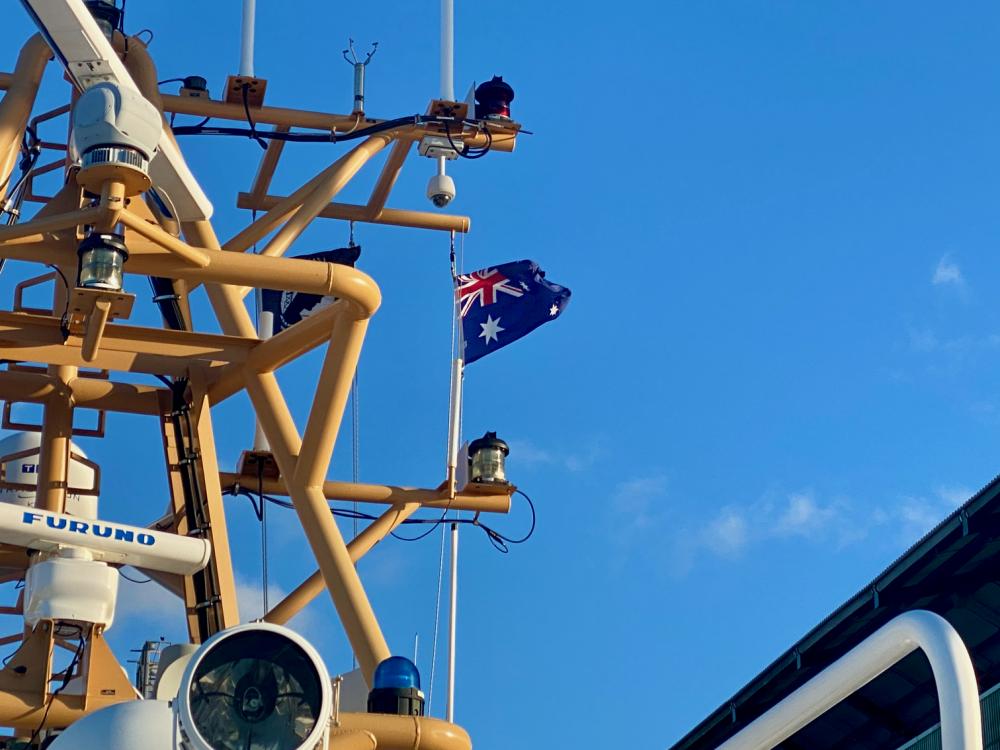
The Oliver Henry is the first U.S. Coast Guard fast response cutter ever to fly the Australian ensign.  The Sentinel-class fast response cutter USCGC Oliver Henry (WPC 1140) command stand for a photo with Cmdr. Alfonso Santos, commander of HMAS Cairns, and Capt. Toby Reid, U.S. Coast Guard representative to the defense attache office of the U.S. Embassy in Australia,
USCGC Oliver Henry meets with Cairns regional Council and mayor The Sentinel-class fast response cutter USCGC Oliver Henry (WPC 1140) arrive in Cairns for engagements with Australian Defence and Home Affairs partners and local representatives, Aug. 31, 2022

Editor’s Note: Click on the images above to view or download more.

CAIRNS, Australia — The Sentinel-class fast response cutter USCGC Oliver Henry (WPC 1140) crew arrived in Cairns for engagements with Australian Defence and Home Affairs partners and local representatives, Aug. 31.

“A cutter arrival to Australia is another first, not only for U.S. Coast Guard Forces Micronesia but also our fast response cutter fleet and is a reminder of our Service’s commitment to our partners and our enduring presence in the region,” said Capt. Nick Simmons, commander U.S. Coast Guard Forces Micronesia/Sector Guam. “The ship driver in me was envious when Lt. Hofschneider reported ‘OH transiting southbound along Inner Great Barrier Reef Passage enroute to Cairns. No issues or concerns.’ Not the kind of thing many Coast Guard members have ever written or said.”

Before arrival in port, Oliver Henry’s crew operated at sea with aerial support from the Australian Border Forces in the Torres Strait. While in port, the two nations will continue to build on the relationship forged at sea. Upon arrival, the crew was greeted by representatives from the Royal Australian Navy HMAS Cairns and the U.S. embassy. They were also guests of the Cairns Regional Council.

“It is an honor for Oliver Henry and her crew to visit and host our Australian friends,” said Lt. Freddy Hofschneider, the Oliver Henry commanding officer. “The U.S. and Australia have been standing side-by-side for more than 100 years. This is more than a partnership, it is mateship. The U.S. Coast Guard looks forward to more opportunities where we can work with the Australian Border Force, Royal Australian Navy, and other Australian partners to advance the rule of law at sea.”

During their stop in Cairns, members of Oliver Henry anticipate engagements with local officials and the community while also experiencing local culture.

The U.S. Coast Guard is conducting a routine deployment in Oceania as part of Operation Blue Pacific, working alongside Allies, building maritime domain awareness, and sharing best practices with partner nation navies and coast guards. Op Blue Pacific is an overarching multi-mission U.S. Coast Guard endeavor promoting security, safety, sovereignty, and economic prosperity in Oceania while strengthening relationships with our regional partners.

The Oliver Henry is the 40th Sentinel-class fast response cutter. The ship was commissioned along with its sister ships, Myrtle Hazard and Frederick Hatch, in Guam in July 2021. In the time since, the crew has participated in several search and rescue cases, completed a counternarcotics patrol off Guam with the Japan Coast Guard, and conducted sovereignty and fisheries patrols in the Forces Micronesia/Sector Guam area of responsibility.

For more U.S. Coast Guard Forces Micronesia/Sector Guam news, visit us on DVIDS or subscribe! You can also visit us on Facebook at @USCGForcesMicronesia.

For more U.S. Coast Guard Forces Micronesia/Sector Guam news, visit us on DVIDS or subscribe! You can also visit us on Facebook at @USCGSectorGuam.

“Coast Guard FRC Seizes Illegal Narcotics in Gulf of Oman” –Seapower/Same Job, Different Hemisphere

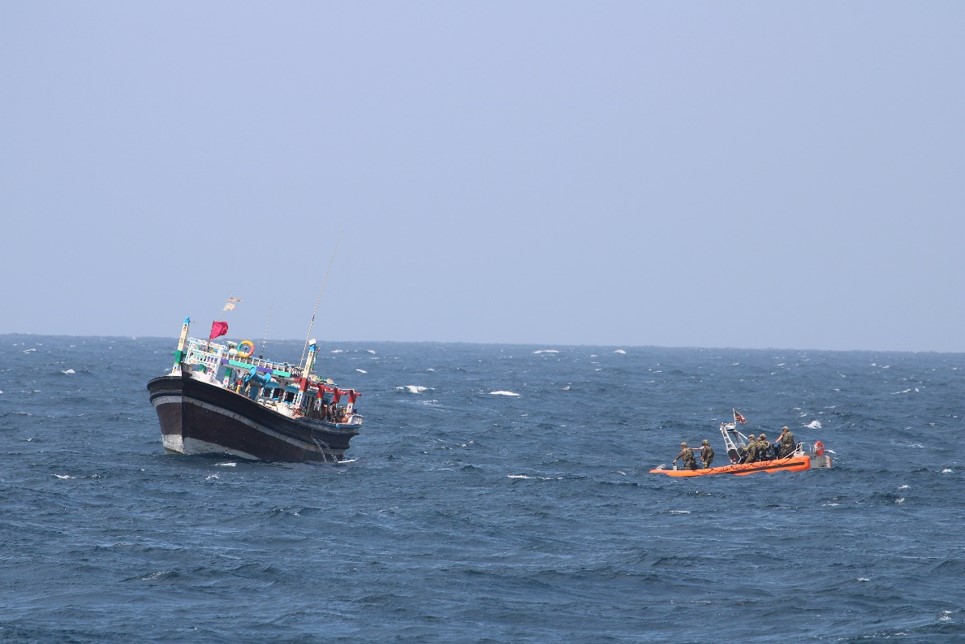
Personnel from U.S. Coast Guard fast response cutter USCGC Glen Harris (WPC 1144) interdict a fishing vessel smuggling illegal narcotics in the Gulf of Oman, Aug. 30, 2022. U.S. COAST GUARD

The Navy League’s on-line magazine, Seapower, reports,

A U.S. Coast Guard fast response cutter interdicted a fishing vessel smuggling illegal drugs worth an estimated U.S. street value of $20 million while patrolling the Gulf of Oman, Aug. 30, NAVCENT Public Affairs said Aug. 31.

USCGC Glen Harris (WPC 1144) seized 2,980 kilograms of hashish and 320 kilograms of amphetamine tablets during operations in support of Combined Task Force (CTF) 150.

This is USCGC Glen Harris’ third drug bust since joining Patrol Forces SW Asia in January.

“Coast Guard, other agencies to remove 2 abandoned vessels from Columbia River in Portland, Ore.” –One of Them Is a Former US Coast Guard Cutter

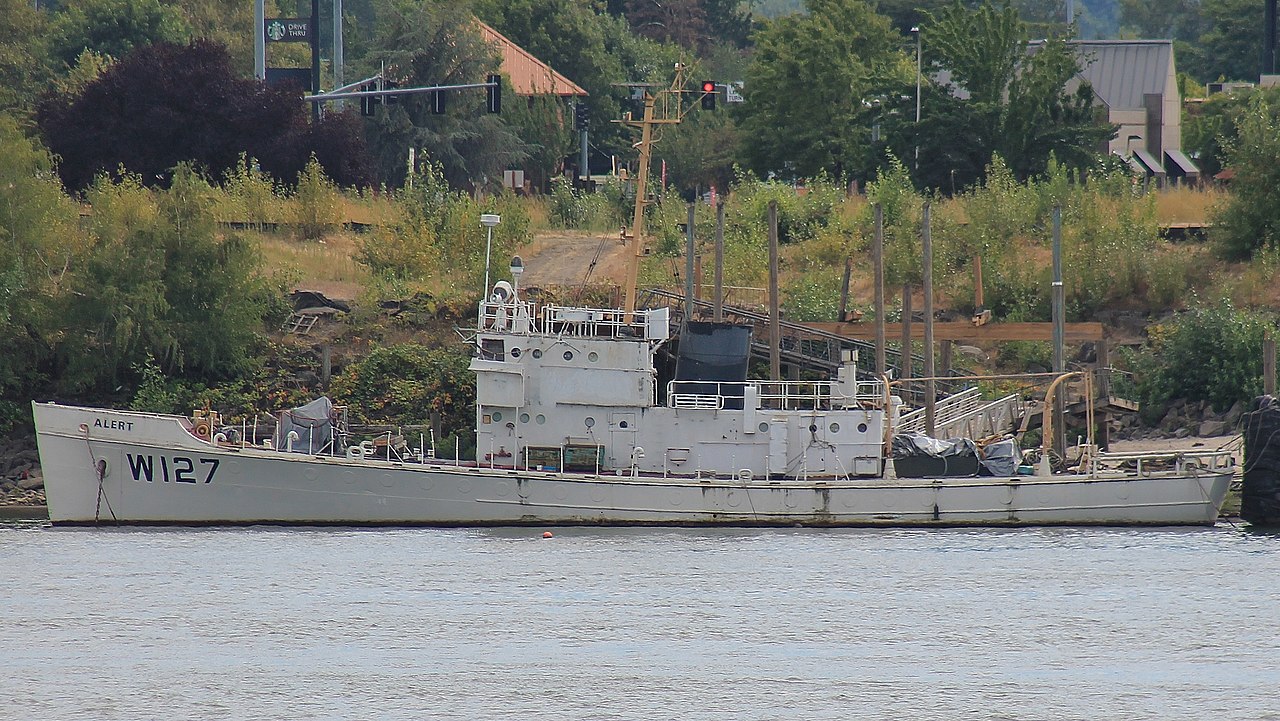
The Active-class cutter USCGC Alert (WMEC-127) moored on the Columbia River, by Hayden Island in Portland, Oregon. Seen on 14 August 2019. Photo from Wikipedia by godsfriendchuck.

Just saw this news release and realized they were talking about the former USCGC Alert (WMEC-127). We talked about this ship and its unfortunate post Coast Guard history earlier including a lot of information in the comments.

Since this was what passed for a WMEC when I entered the academy in 1965, you can see why I sometimes see the Webber class FRCs as MECs. The FRCs have more freeboard.

News Release

U.S. Coast Guard 13th District PA Detachment Astoria

Coast Guard, other agencies to remove 2 abandoned vessels from Columbia River in Portland, Ore.

PORTLAND, Ore. – The Coast Guard and other agencies have approved a plan Wednesday to remove two abandoned vessels from the Columbia River in Portland.

The vessels Alert, a 125-foot vessel, and Sakarissa, a 100-foot vessel, are currently sunk off Hayden Island. They are adjacent to the Interstate 5 Bridge and a mile upriver from the Burlington Northern Santa Fe (BNSF) railroad bridge.

Due to hull deterioration and oil saturation of the vessels’ interiors, they have been discharging a sheen into the waterway. They also pose a collision hazard for vessels operating outside the navigation channel.

“Even though the Coast Guard oversaw the removal of thousands of gallons of diesel and oily water from these vessels in 2020, they still pose a risk,” said L.t. Lisa Siebert, the Incident Management Division Supervisor at Coast Guard Sector Columbia River – Detachment Portland. “We have worked closely with our State and local partners to develop an integrated plan to remove these vessels and protect the public and the environment.”

This project will be funded in two phases. During the first phase, the Coast Guard plans to use the Oil Spill Liability Trust Fund (OSLTF) to raise the vessels and transport them to a facility in order to safely pump any remaining oil waste product from the vessels. During the second phase, the Oregon Department of State Lands, with funding support from Metro, is scheduled to assume custody of the vessels for final disposal.

The Coast Guard was granted authorization to access the OSLTF for $1 million for its phase of the project. There is currently a ceiling amount of $500,000 for each vessel. This amount is determined for the response based on anticipated obligations. Since this is just an estimate, this ceiling is subject to change during the response.

The Coast Guard plans to begin operations in early September, starting with dive assessments to determine the safest way to raise and transport the two vessels. The Coast Guard plans to conduct operations to raise the vessels throughout the month of September. 

“These plans are preliminary and we will continuously assess our plan and make adjustments if needed,” Siebert said. “Throughout this response, the safety of the public and responders will remain our top priority.”

During project activities, the immediate vicinity of the area will be closed to public access.

“I’m incredibly happy our partnerships and hard work resulted in a much-needed plan to remove these vessels,” Siebert said. “This project is truly a team effort and we can’t do it alone.”

Involved in developing the plan were the Coast Guard, Oregon Department of State Lands, Metro, Oregon Department of Environmental Quality, and the National Oceanic and Atmospheric Administration.

For the most up-to-date information about this project, follow us on Twitter at @USCGPacificNW.

“Coast Guard carves out strategic niche in Africa” –Stars and Stripes

USCGC Mohawk manns the rail as she sails alongside a Nigerian navy ship in the Atlantic Ocean, Aug. 22, 2022. Mohawk is on a scheduled deployment in the U.S. Naval Forces Africa area of operations. (Jessica Fontenette/U.S. Coast Guard)

Stars and Stripes reports on the Coast Guard’s latest capacity building and counter IUU efforts in West African waters.

Previous related reports:

The second link immediately above includes additional links regarding previous similar efforts.

“Coast Guard, North Slope Borough Search and Rescue to conduct exercise near Utqiagvik, Alaska” –D17

Utqiagvik, the city formally know as Barrow, AK (File photo courtesy of Wikipedia)

This may look like a routine announcement, but I found it interesting because of where it is, and the fact that it will include “Coast Guard helicopters, and Coast Guard cutters” –both plural. Utqiagvik, Alaska, formerly Barrow, is the Northern most city in Alaska, 71°17′26″N, 284 nautical miles above the Arctic Circle. The helicopters will probably come with the cutters (maybe not?), but what cutters? USCGC Healy, an icebreaker, seems likely, but there has got to be at least one more. Maybe Alex Haley, out of Kodiak, or a Bertholf class NSC on Alaska Patrol?

Hopefully we will hear more.

News Release

U.S. Coast Guard 17th District Alaska

Coast Guard, North Slope Borough Search and Rescue to conduct exercise near Utqiagvik, Alaska

JUNEAU, Alaska – The 17th Coast Guard District and North Slope Borough Search and Rescue are scheduled to conduct an exercise near Utqiagvik, Alaska, August 31, 2022 through September 3, 2022.

The exercise is a small-scale search and rescue mission offshore of Utqiagvik named Operation Itqanaiyaq, meaning Get Ready or Get Prepared in Iñupiaq. The purpose of the exercise is for the Coast Guard and North Slope Borough Search and Rescue to practice procedures for maritime distress response.

The public will notice an increase in emergency responder and military presence in the vicinity of Utquiagvik during the exercise dates. The increased presence will consist of Coast Guard helicopters, and Coast Guard cutters.

“This search and rescue exercise provides a great opportunity for the Coast Guard to train alongside the North Slope Borough in an Arctic environment,” said Lt. Lindsay Wheeler from the 17th Coast Guard District. “We never know when we will need to respond with our aerial or surface assets to help find and rescue missing or injured people.”