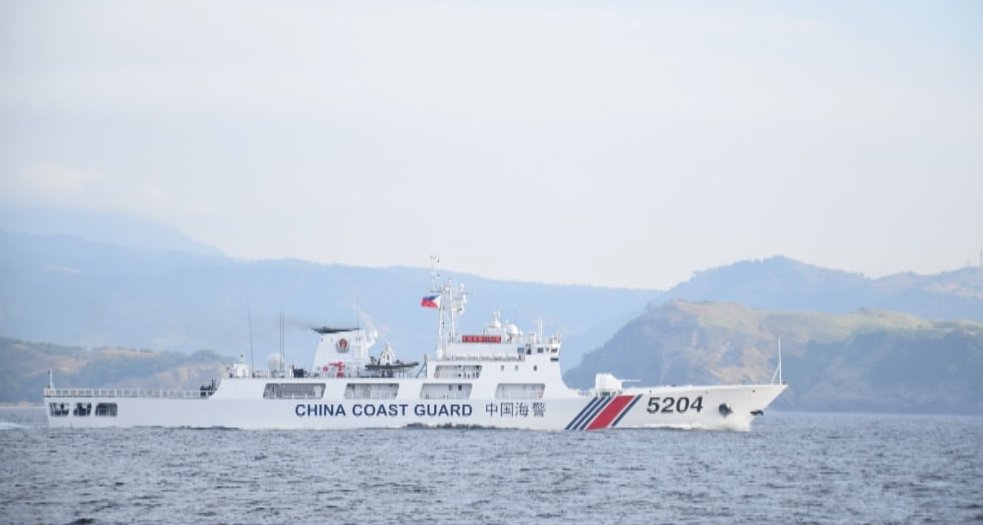
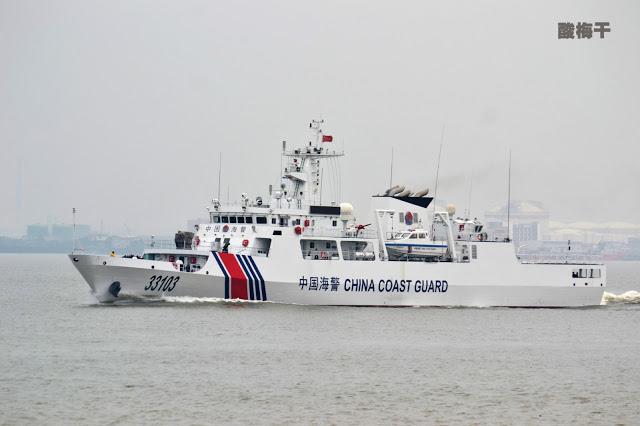
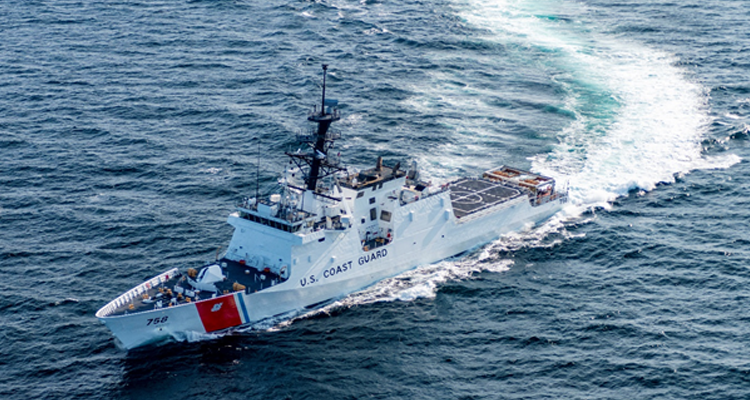
“China Coast Guard to be allowed to use force in case of territorial infringement” –People’s Liberation Army Daily

This Chinese People’s Liberation Army Daily post concerning use of deadly force, linked here, may be particularly interesting for its call out of the US Coast Guard.

Law enforcement on land, sea and in airspace under its own jurisdiction, with the use of weapons on necessary occasions, are the rights granted to sovereign states by international law. The Japan Coast Guard (JCG) also stipulates that lethal weapons can be used when enforcing the law in waters under its own jurisdiction. For the US Coast Guard (USCG), the use of force is even more common, and it is even planning to apply long-arm jurisdiction to China.

Admiral Karl Schultz, Commandant of the USCG, claimed to strengthen deployment in the Asia-Pacific region and participate in security patrols in the waters surrounding China in response to Chinese maritime militia’s declaration of sovereignty in the South China Sea in April last year. Robert O’Brien, US National Security Advisor, announced on October 24 that the USCG would deploy Enhanced Response Cutters in the Western Pacific. . Without providing any evidence, he accused Chinese fishing boats of illegal fishing and claimed that the sovereignty of the United States and its neighbors in the Pacific had thus been threatened.

If they should choose to employ force against one of our cutter in their claimed “Nine Dash Line,” it is likely they would attempt to get several units in at very close range before opening fire, as they did in this engagement.
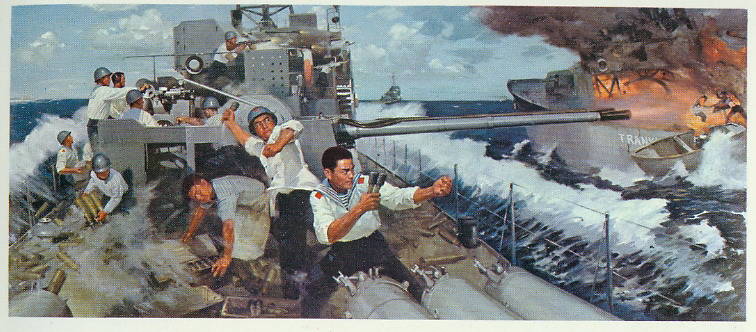
Chinese depiction of the fighting Battle of Paracels Islands

Next time we send a cutter into this area, it might be a good idea to have a squad of Marines along armed with shoulder fired missile or rocket launchers.

Might also be a good idea to provide a bit of ballistic protection (and here) for our .50 cal. gun crews. Not too difficult because you can buy it on the GSA catalog.

Most China Coast Guard Cutters are not as well armed or as fast as the Bertholfs, but there are exceptions. In all likelihood they would be more interested in causing casualties and chasing us off, than actually sinking a cutter. This is more likely to serve their purpose without getting themselves in a war. Not that I think such an attack would go unanswered, but they, or a mid-level commander, might be foolish enough to think they could get away with it. Still probably better not to have a lone cutter doing “Freedom of Navigation Operations,” although air cover might be sufficient. Really I would like to see an international repudiation of their claims in the form of an multi-national demonstration.

Combinations of CCG cutters with weapons larger than 14.5mm machine guns could be extremely dangerous at close range. Some of those are shown below.
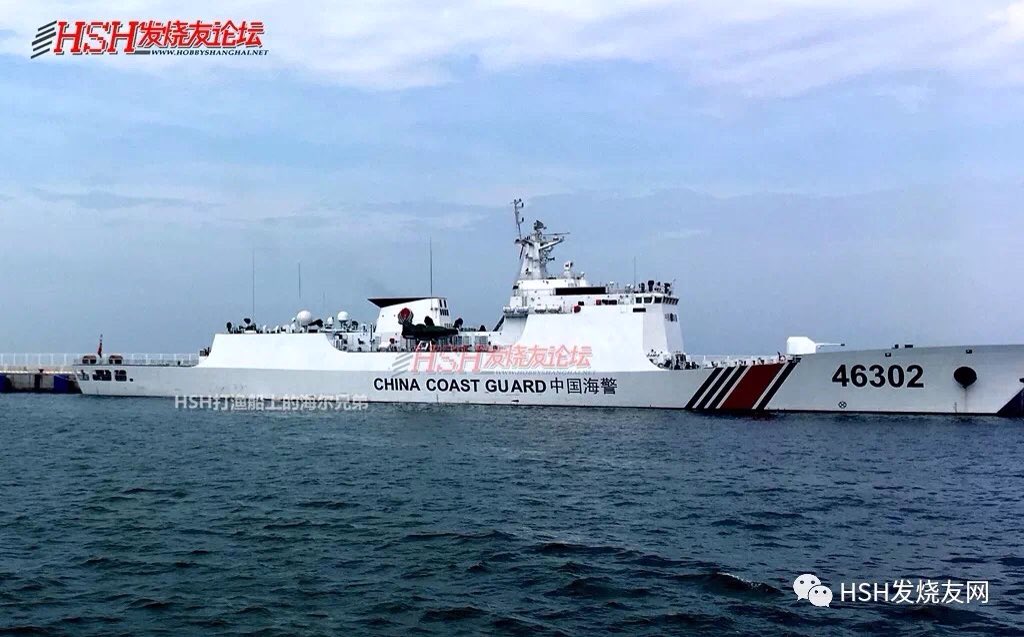
The China CG version of the Type 056 Corvette
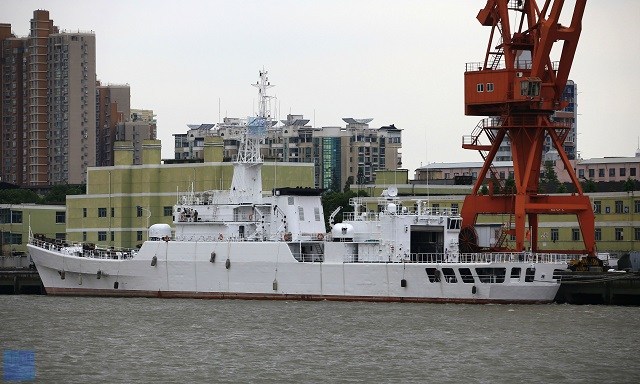
 

China Coast Guard Cutters Converted  from Type 053H2G frigates
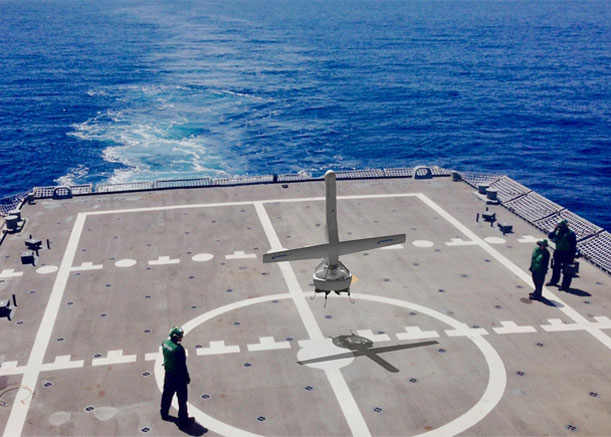
“MARTIN UAV PARTNERS WITH SOUTHCOM ON ENHANCED COUNTER NARCOTICS OPERATIONS” –Press Release

V-Bat from Martin UAV

Below is a press release about a vertical take-off Small Unmanned Air System (sUAS) that we discussed earlier, after it was flown from USCGC Harriet Lane August 13-14, 2020. The deployment reported below occurred shortly before the demonstration on the Harriet Lane.  

We have no indication of how many of the airframes and how many people were people were involved in the demonstration, but the sortie rate appears impressive. Over a 300 day period, the system(s) flew 273 sorties for a total of 1340.7 flight hours. Given that the ship was probably not underway all 300 days, looks like they got at least one sortie per day with an average of 4.9 hours per sortie.


PLANO, Texas, November 10, 2020 – Martin UAV successfully demonstrated the shipboard integration of its V-BAT as well as its impressive maritime capabilities in support of United States Southern Command’s counter-narcotics operations in the Eastern Pacific from October 6, 2019, to July 31, 2020.

Support for the mission included the highly visible Enhanced Counter Narcotics Operations that began April 1 and was kicked off by the President of the United States.

The 10-month mission started with a demonstration of the V-BAT’s small footprint, quick set-up, rapid deployment, and true Vertical Takeoff and Landing (VTOL) capabilities. Upon successful completion, a technology assessment to support the USSOUTHCOM Exercises and Coalition Affairs Directorate, Long Duration, Long Dwell (LD2) started upon successful completion of the shakedown.

By leveraging commercial off-the-shelf technologies, LD2’s goal is to enhance the execution of the Department of Defense’s strategic objectives. Over the course of the demonstration, the V-BAT flew an unprecedented 273 sorties for a total of 1340.7 flight hours.

“This mission helped catapult Martin UAV’s V-BAT into the maritime environment, showcasing its ability to withstand and perform in tropical conditions, including strong crosswinds and unexpected storms with rain exceeding 10mm per hour,”

– Heath Niemi, VP of Global Sales & Development.
Night Landing with Martin UAV’s V-BAT

About Martin UAV:

Martin UAV is a private, advanced technology company based in Plano, TX. The company specializes in building wholly-unique, unmanned aircraft systems and associated flight control software. The company’s systems are commercially developed to fill critical operational needs in tactical & confined operational environments. Its V-BAT series aircraft is the only single-engine ducted fan VTOL that has the ability to launch & recover from a hover, fly 8+ hours in horizontal flight, and make mid-flight transitions to “hover & stare” at any time throughout a given mission set.

“Beyond the Tip of the Iceberg Tech: RDT&E’s Annual Arctic Technology Evaluation” –MarineLink

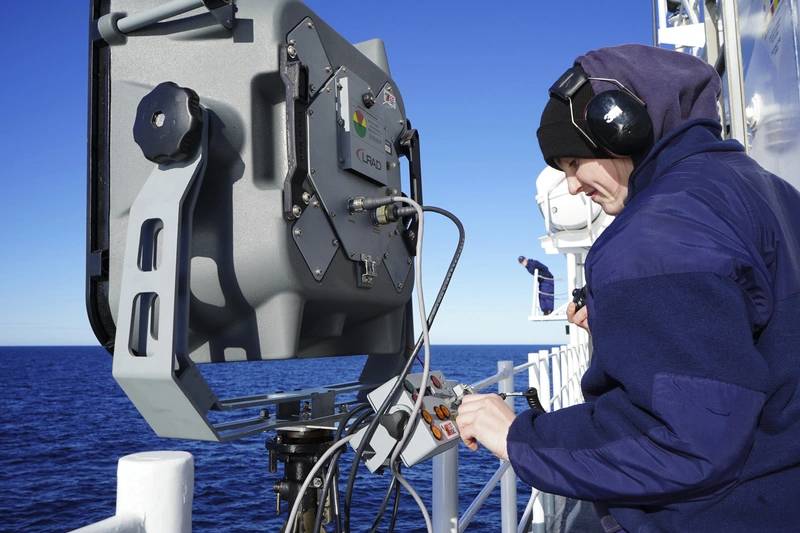
ENS Jordan Solseth runs a test for the Long Range Acoustic Device (LRAD) 500. U.S. Coast Guard photo by SN Kate Kilroy

Marine Link reports on the Coast Guard’s evaluation of five technologies during USCGC Campbell’s Arctic cruise. Five different technologies were evaluated. All were deemed successful:

  • Insight Mini Thermal Monocular (MTM) and AN/PSQ-20 Monoculars (enhanced night vision devices) for improved law enforcement and ice detection.
  • Handheld Glare Helios laser for stand-off hailing capabilities.
  • FiFish Remotely Operated Vehicle for underwater inspections in cold weather.
  • Long Range Acoustic Device 500X-RE for enhanced communication with vessels at longer distances.
  • Iridium Certus Terminal, which helped provide internet access for the crew to maintain communications with Atlantic Area.

These systems were referred to in the earlier linked post, but there is much more information in the Marine Link article.

I think that we are going to start seeing the Long Range Acoustic Device (LRAD) on all our cutters. We really should have them on our Webber class bound for PATFORSWA. In addition to its communications capabilities, it can be an effective less than lethal weapon for discouraging approach or breaking down resistance to a boarding. (Remember when we played rock music for Noriega down in Panama.)

The Iridium Certus Terminal helped communications that are always difficult in the Arctic, and probably provided in major morale boost for the crew.

While I see the utility of the night vision devices, for the larger ships I would really like to see us take a look at this. It appears it could do everything the night vision devices can do, plus allow transmission of bearing and elevation information, along with its nominal function of quickly bringing weapons to bear on a visually detected threat. Maybe another good addition for Webber class going to SW Asia.

CRS’s “Coast Guard Cutter Procurement: Background and Issues for Congress” –an Update

US Capital West Side, by Martin Falbisoner

It has been seven months since we last looked at this Congressional Research Service document. (Clicking on this link will always take you to the latest version of the report). Since then, there have been six revisions, with the latest Oct. 14, 2020.

Notable changes include report of the issuance of a draft RFP for the follow-on Offshore Patrol Cutter competition (page 12)

There is no report of any action by the Senate, but the House has been working on two bills that could effect Cutter procurement, the FY2021 DHS Appropriations Act (H.R. 7669) (page 23) and the FY2021 National Defense Authorization Act (H.R. 6395) (pages 23-26)

H.R. 7669, if made into law, would add four Fast Response Cutters to the FY2021 budget, bumping the FRC line item from $20M to $260M and would not include the proposed rescission of $70,000,000 of the $100,500,000 provided in fiscal year 2020 for the acquisition of long lead time materials for the construction of a twelfth National Security Cutter, leaving the door open for NSC#12.

Division H of H.R. 6395 is the Elijah E. Cummings Coast Guard Authorization Act of 2020:

  • Section 8004 (page 23) would authorize NSC #12,
  • Section 8012 (page 24) would authorize four Webber class Fast Response Cutters (page 24)
  • SEC. 9211 (page 24) addresses modification of acquisition process and procedures, specifically the “Extraordinary relief” granted Eastern.
  • SEC. 9422 (page 25) requires a report on the combination of Fast Response Cutters, Offshore Patrol Cutters, and National Security Cutters necessary to carry out Coast Guard missions not later than 90 days after the date of the enactment of this Act. Sounds like a revisit to at least parts of the “Fleet Mix Study.”
  • SEC. 11301. Directs that the Coast Guard better align its mission priorities  to direct more effort to the Arctic and develop capabilities to meet the growing array of challenges in the region; including providing a greater show of Coast Guard forces capable of providing a persistent presence. Additionally it directs that the Coast Guard must avoid overextending operational assets for remote international missions at the cost of dedicated focus on this domestic area of responsibility (meaning the Arctic).

“SEA CONTROL 210 – THE SPACE FORCE AND THE COAST GUARD WITH DR. STEVE GOFF” –CIMSEC

Just passing this along for anyone who might be interested. 

SEA CONTROL 210 – THE SPACE FORCE AND THE COAST GUARD WITH DR. STEVE GOFF

By Andrea Howard

Sea Control welcomes Dr. Steve Goff, an Emergency Management Specialist for the United States Coast Guard, to discuss the maritime forces’ budding relationship with the newest arm of the Department of Defense: the Space Force!

Sea Control 210 – The Space Force and the Coast Guard with Dr. Steve Goff

Links

The U.S. Coast Guard and the U.S. Space Force: An Essential Partnership in Maritime Security,” Dr. Steven Goff, U.S. Naval Institute Blog, October 13, 2020.
The Guardians of Space: Organizing America’s Space Assets for the Twenty-First Century,” Cynthia McKinley, Aerospace Power Journal, January 2000.
Andrea Howard is a Co-Host of the Sea Control podcast. Contact the podcast team at Seacontrol@cimsec.org.

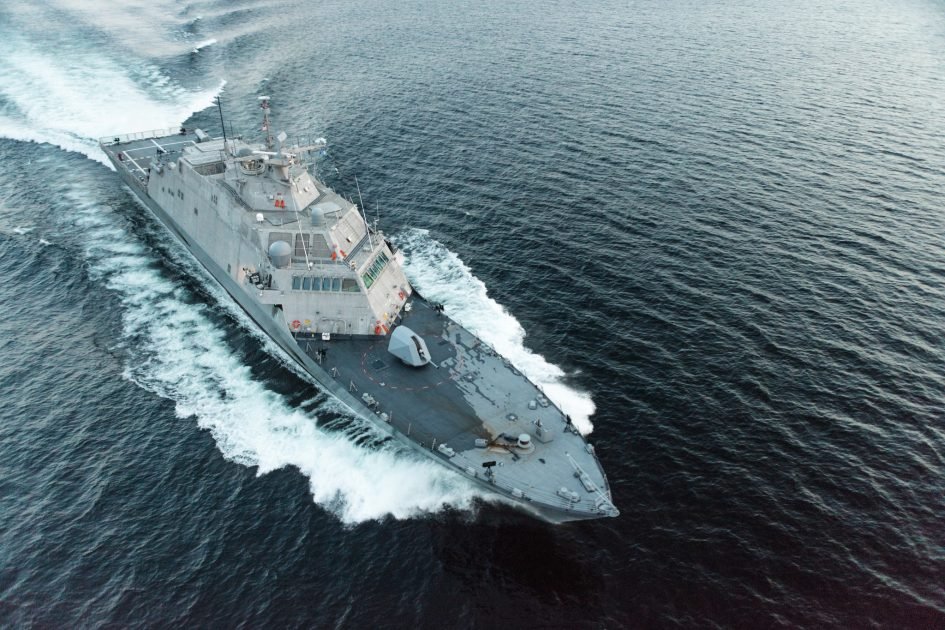
Shed the Freedom Class LCS, Build FFGs and Navalized Webber Class?

Littoral combat ship Little Rock (LCS 9) is underway during a high-speed run in Lake Michigan during acceptance trials. Lockheed Martin Photo

Not that I think it is going to happen, but Forbes has a proposal, “Now Is The Perfect Time To Sink The Freedom Class Littoral Combat Ship,” by Craig Hooper. He suggests the Navy end its long embarrassing association with the Freedom class LCS, handing them over to Foreign Navies who might be able to use them. The Navy could then accelerate introduction of the new FFG that are to be built at Marinette which is currently building the Freedom class. If we really need more LCS, we could continue construction of Austal’s more successful Independence class. or

“Alternatively, the Navy could fund a smaller, simpler patrol boat. The U.S. Coast Guard’s cost-effective Sentinel class Fast Response Cutter is already in the field, demonstrating value every day—with about 40 already in service, these reliable, 154-foot ships are doing everything that the Freedom class vessels are not. Sentinel class Fast Response Cutters are deploying throughout the Pacific, forward-basing in Hawaii and Guam, and 6 of the ultimately 64-hull fleet will soon operate out of Bahrain. They may even be based in deepest parts of the American Pacific, operating out of American Samoa. A navalized version of this useful patrol ship—potentially leveraging the powerful F-35 radar system and other useful, off-the-shelf systems—can be whipped up in almost no time, quickly replacing the Freedom class ships currently based in Mayport Florida with a lower-cost, more functional and more strategically-useful platform.”


“Coast Guard accepts ninth national security cutter” –CG-9

Ingalls Shipbuilding successfully completed acceptance trials for the Coast Guard’s ninth national security cutter (NSC), Stone, in October 2020. NSC Stone was accepted Nov. 9, 2020, by the Coast Guard in a socially distanced ceremony. Photo by Lance Davis of Huntington Ingalls Industries.

The Acquisitions Directorate (CG-9) reports that the ninth Bertholf class cutter has been accepted.

“Stone is scheduled for commissioning in February 2021 at its Charleston, South Carolina, homeport, also home to cutters Hamilton and James.”

“PROMULGATION OF THE COAST GUARD CUTTER SEAMANSHIP MANUAL” –Commandant Note

CARIBBEAN SEA
09.04.2019
Courtesy Photo
U.S. Coast Guard District 7 PADET Jacksonville
Subscribe 19
The Coast Guard Cutter James conducts Hurricane Dorian relief operations alongside the Coast Guard Cutter Paul Clark in the Caribbean Sea, Sept. 6, 2019. During their 62-day counter-drug patrol, the James’ crew, along with members from Tactical Law Enforcement Team-South, Helicopter Interdiction Tactical Squadron, Cryptologic Direct Support Element and multiple partner agencies, contributed to the interdiction of 7 drug-smuggling vessels and were responsible for the seizure of more than 12,677 pounds of cocaine and 4,085 pounds of marijuana bound for the United States. (U.S. Coast Guard photo courtesy of Coast Guard Cutter James)

Below is a Commandant Notice promulgating a new publication, the “COAST GUARD CUTTER SEAMANSHIP MANUAL”. The link to the internet version only takes you to a catalog of publications and it takes some effort to actually find the manual, so I am providing a direct link

The manual is quite comprehensive, 93 pages, and covers a lot and is searchable. “Control F” is your friend.

united states coast guard

ALCOAST COMMANDANT NOTICE                           CANCEL DATE  08 NOV 2021

R 091334 NOV 20
FM COMDT COGARD WASHINGTON DC//CG-7//
TO ALCOAST
UNCLAS //N03120//
ACN 131/20
SUBJ:  PROMULGATION OF THE COAST GUARD CUTTER SEAMANSHIP MANUAL
A. Coast Guard Astern Fueling At Sea (AFAS), COMDTINST M3120.8
B. Shipboard Launch and Recovery Procedures Manual, COMDTINST M3120.6
C. Cutter Surface Swimmer Program, COMDTINST 16134.2D
D. Coast Guard Cutter Seamanship Manual, COMDTINST M3120.9
1. This ACN announces the cancellation of REFs (A) through (C), and the
promulgation of REF (D).
2. REF (D) prescribes policy and doctrine for cutter seamanship. Corresponding
Tactics, Techniques and Procedures (TTP) are listed throughout as references. 
3. No paper distribution will be made of this Manual. This Manual is available
on CGPortal: https://cg.portal.uscg.mil/library/directives/SitePages/Home.aspx
and the Internet at: http://www.dcms.uscg.mil/directives/.
4. For recommendations of changes to this Manual, contact the Office of Cutter
Forces (CG-751) via email: HQS-SMB-CG-751-CMD@USCG.MIL.
5. Released by RDML John W. Mauger, Assistant Commandant for Capability.
6. Internet release is authorized.

“Rare Fully-Submersible Narco Submarine Captured In Colombia” –Covert Shores

Apparently fully submersible narco-sub. Source: Covert Shores

H. I. Sutton’s “Covert Shores” reports discovery of an apparently fully submersible narco-sub.

 “Early indications are that it is a fully-electric device. It may have been intended to be towed some of the way.”

The Covert Shores post has some original art work that better reveals the configuration along with more photos.