Feb. 5, 2021 —As a sea service, we celebrate the perseverance of our shipmates who serve in the cutter community. While many industries went dark or slowed in response to COVID-19, the missions of the afloat community have continued to protect our Nation’s interests, deterring threats around the globe and in an especially complex maritime environment.
This growing demand has continued amid the COVID-19 global pandemic, where cutter crews are experiencing pre-deployment restrictions of movement, a reduction in liberty port calls, and extended time underway, away from loved ones.
The Coast Guard has increased compensation as they address urgent challenges for the sea-going workforce, while also looking for new ways to thank our members for continuing the traditions of the service. This past year, the Coast Guard increased internet connectivity speeds underway and arranged for wifi internet connectivity inport for deployed cutters, which enable reliable communication with friends and families.
Despite the challenges the pandemic presented, Coast Guard ships interdicted either a go-fast boat or a semi-submersible boat on a near daily basis, sending boarding teams to confiscate contraband and apprehend suspected smugglers. Cutter crews across the enterprise have seen some of the greatest successes in 2020. Crews surged to support an enhanced counter-narcotics operation resulting in a 37% increase in cocaine and other drugs interdicted between April and September of last year.
What is it that keeps our members returning to sea? After interviewing several junior officers, and one commanding officer, three central tenants of sea duty were named: the adventurous nature of the mission, the simple beauty of the sea, and—most importantly—the people.
“Every day on the water presents a new challenge that I’m excited to overcome,” said Lt. j.g. Ryan Brumm, supply officer aboard Coast Guard Cutter Alert, a Medium Endurance Cutter.
Lt. j.g. Matthew Nagle aboard Coast Guard Cutter Munro, a National Security Cutter, discussed excitedly watching aerial footage of the small boats underway from a small unmanned aircraft with his shipmates. “Seeing the live-action video after six months of hard work preparing and testing the hardware was incredible.”
Brumm’s shipmate aboard the Alert, Ensign Erin Mullen, also loves the missions underway. A self-proclaimed ocean nerd, Mullen also discussed her love of nature as a reason she plans to keep returning to sea. “Being on the bridge, seeing thousands of stars reflecting off that calm ocean,” said Mullen. “It really takes your breath away.”
The number one reason given, however, for enjoying sea duty was the friendships formed, “It seems cliché to say,” said Lt. j.g. Brooke Harkrader, assistant navigator aboard the Coast Guard Cutter Munro, “but the reason I love sea duty is because of the people.”
Cuttermen discussed the atmosphere aboard cutters—the comradery found afloat—as a reason they keep returning. As Lt. Cmdr. Laura Foster, commanding officer of the Coast Guard Cutter William Hart, a Fast Response Cutter, puts it: “The reason I’ve gone back to sea so many times is because of the family atmosphere aboard. The comradery among shipmates is unbelievable. I’ve never found it anywhere else.”
Ensign Kimberly Bryon, aboard the Coast Guard Cutter Munro, described her favorite memory underway during an otherwise difficult year, “We were at a port call in Alaska, and because of COVID we decided to stop at these uninhabited islands,” said Bryon. “I and three others spent the day shuttling people to and from the islands. While we didn’t get to go hiking ourselves, I had the absolute best time with the small crew I was working with. The comradery I felt with them was something I really can’t describe.”
While members speak openly of their love of sea duty, there is no doubt life afloat is challenging. “Being underway is the hardest thing you’ll ever do, but it is hands down the most rewarding work,” said Harkrader who, despite struggling with occasional seasickness, plans to stay afloat as long as possible.
Sea duty inconveniences are not insignificant. Like many in the Coast Guard, Foster has to spend prolonged periods of time away from her family. In her most recent trip, she was underway for 144 days. While it can be difficult, Foster doesn’t shy away from the challenge. “I feel honored to be able to take this job, and show other females that it is possible to rise to the position you want, and have a family,” she said.
Pandemic operating conditions have presented challenges to our members afloat, further complicated by social distancing measures advised by the Center for Disease Control (CDC) are not always possible. Those aboard the Munro, for example, faced extra hardships when 19 members from their crew tested positive for COVID-19 prior to going underway. “Everyone’s morale suffers when the workload increases so much,” said Hakrader.
Harkrader, Nagle, and Bryon both applauded the efforts commanding officers took aboard the Munro to keep things underway. The cutter was able to keep operating in a COVID-safe and smart environment, working to push through modified conditions, completing a mission through the waters of Alaska not usually completed by the crew.
Taking into account the challenges posed by the pandemic compounded already demanding life afloat make the successes these crews saw this year nothing short of extraordinary. A short sample of successes cutter forces saw this year, as detailed in Sea Duty Readiness ALCOAST 016/21.
While going to sea may not always be the easiest choice, being underway is a rewarding experience with benefits not found with other duties. “The goodbyes never get easier,” said Foster. “But the hugs you get when you return home never get old.” The Coast Guard is thankful to have members with a passion for sea duty, who see their work as so much more than just a job.
Coast Guard Cutter Successes in 2020:
- Coast Guard Cutter Tahoma, a Medium Endurance Cutter, participated in Operation Nanook with Canadian, Danish, and U.S. Navy Forces.
- Coast Guard Cutter Campbell, a Medium Endurance Cutter, participated in the high-latitude Search-and-Rescue Exercise Argus off Greenland, operating alongside Canadian, Danish, and French Naval Forces.
- Coast Guard Cutter Cheyenne, a river buoy tender, responded to record high flooding on the Mississippi River.
- Coast Guard Cutter Axe, a construction tender, responded to multiple Gulf Coast hurricanes, that, alongside other black hull cutters, surveyed, serviced, and corrected thousands of aids to navigation, restoring the smooth flow of efficient maritime commerce.
- Coast Guard Cutter Kimball, a National Security Cutter, recently supported Pacific Island nations in building organic capability and law enforcement expertise to combat illegal, unreported, and unregulated (IUU) fishing.
- Coast Guard Cutter Oliver Berry, a Fast Response Cutter, just returned to its homeport in Hawaii supporting the Pacific Island Forum Fisheries Agency, a collaborative international organization to promote sustainable fisheries. The cutter traveled nearly 10,000 miles round-trip to strengthen maritime domain awareness within the exclusive economic zone of both the Republic of the Marshall Islands and Federated States of Micronesia.
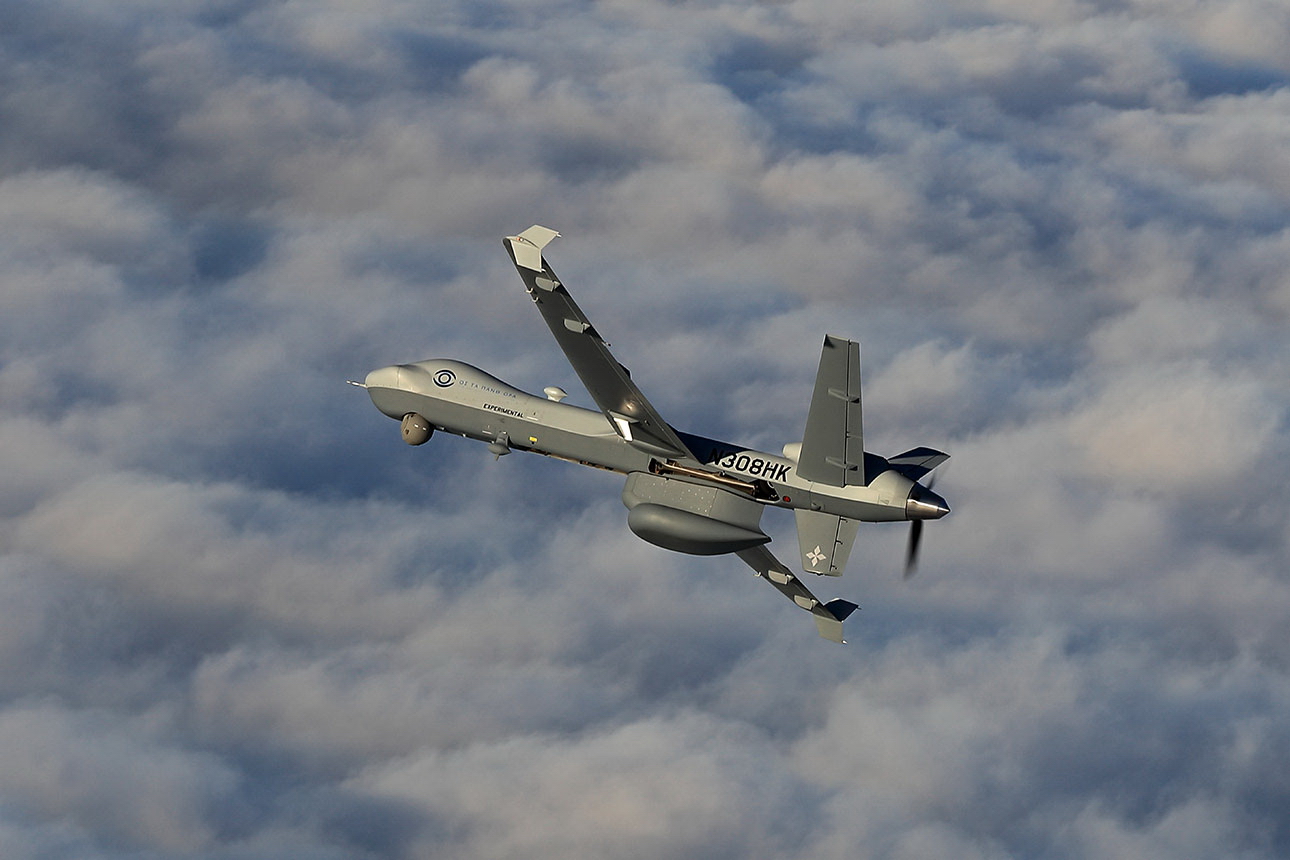
- Coast Guard Cutter Bertholf, a National Security Cutter, used its ScanEagle unmanned-aerial system to surveil a group of 350 Chinese fishing vessels and make right-of-approach inquiries near the Galapagos Islands, at the request of Ecuador. They identified 15 potential IUU indicators of that particular fleet.
- Coast Guard Cutter Bear, a Medium Endurance Cutter, deployed to Cabo Verde and increased partnerships with a key U.S. ally at the request of our National Security Council, on extremely short notice.
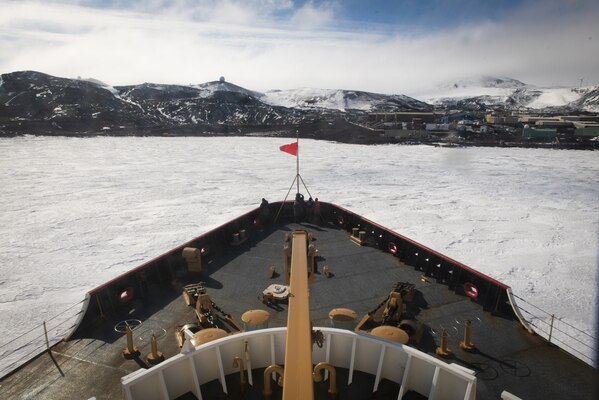
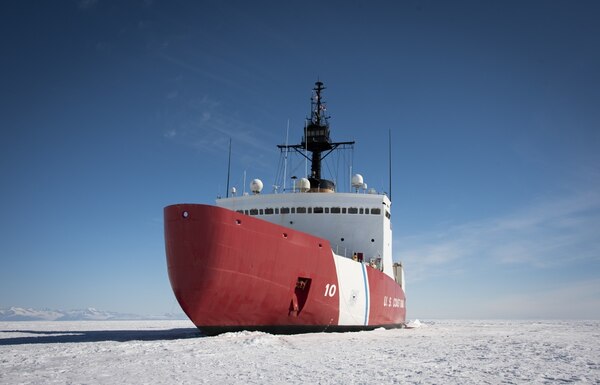
- Coast Guard Cutter Polar Star, a Polar-class icebreaker, sailed for the first time in several years to the U.S. Arctic to project U.S. sovereignty.




 Chuck Hill's CG Blog