A Conversation with Admiral Karl Schultz, Commandant of the U.S. Coast Guard–CSIS

CSIS and the United States Naval Institute (USNI) conduct an interview with Admiral Karl L. Schultz, the 26th Commandant of the United States Coast Guard, conducted 1 August, 2018.

Below I will attempt to outline the conversation, noting the topics and in some cases providing a comment.

The first question is about immigration. Coast Guard is the “away game.” minimizing the factors that push immigration to the US.

The Commandant does not expect a substantial increase in help from the Navy, because they are already heavily tasked, but would welcome any additional help.

06:30 Talk about Inland fleet. Congressional support is evident. $25M provided so far.

9:20 House Appropriations Committee decision to divert $750M from the icebreaker program to fund “the Wall” in their markup of the FY2019 budget bill. The Commandant is “guardedly optimistic”

11:30 Human capital readiness? Operating account has been flat and effectively we have lost 10% in purchasing power. Want to increase leadership training.

16:30 Support for combatant commanders.

18:00 Capacity building and partnering. Detachments working on host nation platforms.

21:00 Defense Force planning–Not going back to the MARDEZ model.

22:30 Situation in Venezuela/Preparation for dealing with mass migration.

24:30 Arctic forums–Need to project our sovereignty

29:00 UNCLOS

30:00 Maritime Domain Awareness (MDA)

32:30 Tracking cargo as an element of MDA

34:00 Cyber

36:15 High Latitude engagement/partnerships.

39:30 Perhaps the icebreaker should be the “Polar Security Cutter?”

40:00 International ice patrol, still an important mission.

41:00 CG role in response to Chinese aggressiveness in the South China Sea. In discussion with Indo-Pacific Command. Will see more CG presence there.

44:00 Offshore Patrol Cutter (OPC)–on track

46:30 Border issue — passed on that

48:00 Small satellites–we are looking at them

49:00 African Capacity building/cooperation. May send an MEC.

51:30 Tech modernization. Looking at it more holistically.

Other Coverage:

This interview prompted a couple of notable posts.

SeaPower’s coverage of the discussion is here. They focused on the growth of demands on the Coast Guard.

Military.com reported on the possibility of a greater Coast Guard role in South East Asia and capacity building in Africa. It probably should be noted that the title, “Coast Guard Could Send Ship to Pacific to ‘Temper Chinese Influence’,”is a bit deceptive in that the Commandant’s remark about tempering Chinese Influence was in regard to Oceania, the islands of the Central and Western Pacific. The Commandant was quoted in the Seapower post, “In the Oceania region, there are places where helping them protect their interests, tempering that Chinese influence, is absolutely essential.”

ALCOAST 269/18 – AUG 2018 SOLICITATION FOR RESEARCH DEVELOPMENT TEST AND EVALUATION (RDT&E) IDEA SUBMISSIONS

The following ALCOAST is quoted directly with minor reformatting to better fit the page..

R 020955 AUG 18
FM COMDT COGARD WASHINGTON DC//CG-9//
TO ALCOAST
UNCLAS//N07044//
ALCOAST 269/18
COMDTNOTE 7044
SUBJ: SOLICITATION FOR RESEARCH DEVELOPMENT TEST AND EVALUATION (RDT&E) IDEA SUBMISSIONS
1. The RDT&E Program is calling all Coast Guard Innovators to submit new potential project ideas for the FY20 R&D portfolio! Do you have a creative or innovative idea that could help address a current operational challenge or improve mission effectiveness? Now is the time to share them! All active duty personnel, civilians, contractors, and key stakeholders are encouraged to submit. Please check out our current portfolio and website here:http://www.dcms.uscg.mil/acquisition/rdte.
2. We will be collecting ideas through the CG_Ideas@Work website (https://cg-ideasatwork.ideascale.com), the Coast Guard’s idea crowdsourcing platform. You can submit your ideas directly to: https://cg-ideasatwork.ideascale.com/a/ideas/top/campaigns/21252. You can also upload a video (up to 1 minute in duration) to accompany idea submissions. If you do not yet have a CG_Ideas@Work account, you will need to register using your ‘.mil’ email address. If you are unable to access the idea submission form, you can submit your idea via email to: innovation@uscg.mil. Be sure to include the title, the problem statement, operational impact, and your contact information.
3. The deadline to submit ideas for the FY20 Project Portfolio is 12 September 2018. Submitted ideas will be reviewed and ranked according to their potential impact on CG missions; regardless of funding, feasibility, or policy. Stakeholders from across the service will meet 17-18 October 2018 to conduct the annual Idea Submission Review (ISR). ISR rank-ordered results are critical to the process of building the annual RDT&E Project Portfolio.
4. POC: Ms. Alexandra Swan, COMDT (CG-926), at: 202-475-3056 or Alexandra.P.Swan@uscg.mil.
For any questions or assistance with CG_Ideas@Work, please contact innovation@uscg.mil.
5. RADM M.J. Haycock, Assistant Commandant for Acquisition and Chief Acquisition Officer, sends.
6. Internet release authorized.

Philippine Navy Launches Missile from 56 foot Boat

The Philippine Navy has recently demonstrated a new capability, launching the small Israeli made Spike ER missile from a 17 meter (56 foot) Multipurpose Assault Craft (MPAC).

The Spike ER has a maximum range of eight kilometers and weighs 34 kg (74 lb 15 oz). It is similar to the slightly larger American made Hellfire.

The launcher is an adaptation of the Israeli Typhoon Remote Weapon Station that is also the basis of the Coast Guard’s Mk38 mod2/3 25 mm gun mounts.

The MPAC is a 17 ton 45 knot aluminum assault/attack craft designed to land up to 16 troops on a beach.

The Webber class WMECs

Since the Coast Guard chose to base six Webber class in each of three different ports (18 total in Miami, Key West, and San Juan), it has seemed apparent that the Webber class were more than “fast response cutters,” sitting in port waiting for an alarm to ring sending them rushing off to a SAR case. It seemed likely these little ships, more than twice as large as the Island class 110 foot WPBs, would be used for offshore patrols much like an MEC.

This is perhaps colored by my recollection of WMECs (and even WHECs) that had no helicopter facilities. There were at one time 165, 143, and even 125 foot WMECs.

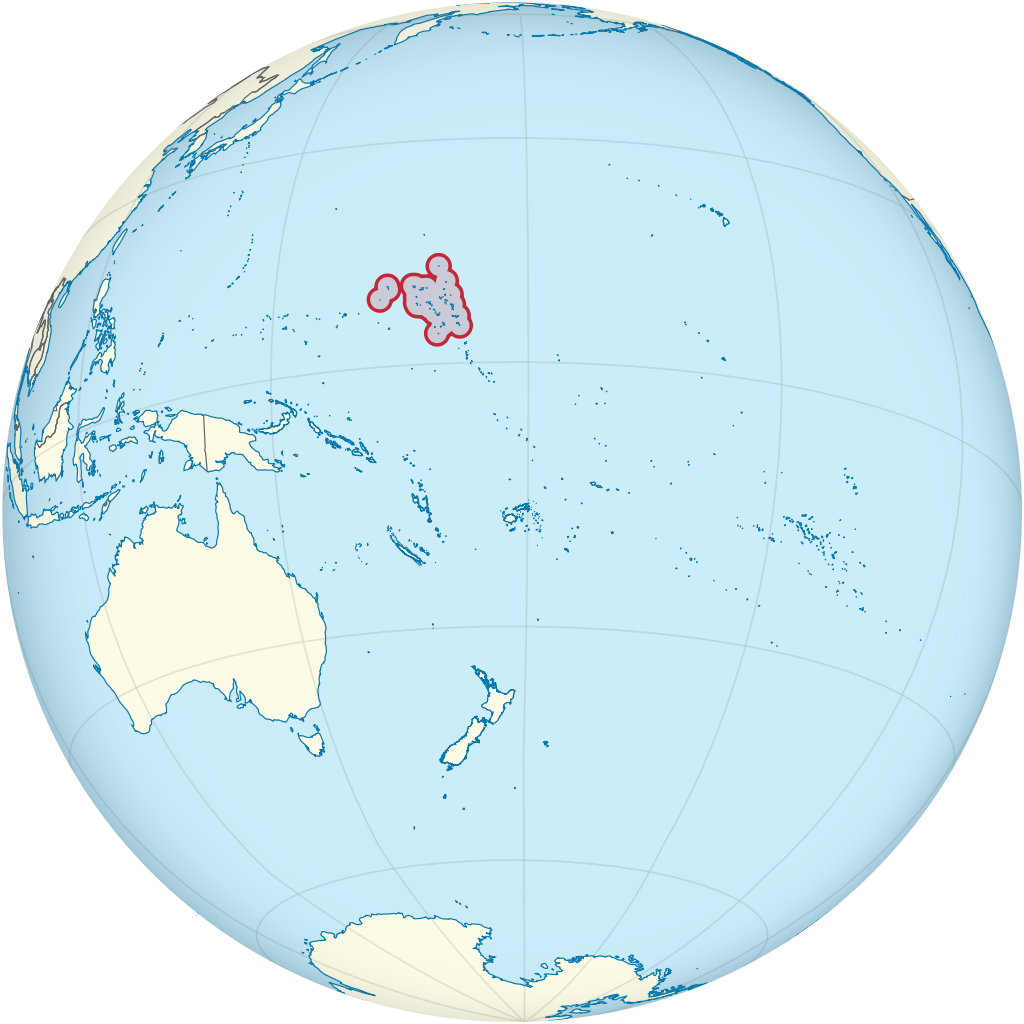
Coast Guard Compass brings us confirmation of the offshore capability of these vessels. USCGC Oliver F. Berry (WPC-1124) has completed a mission to conduct operations in the Republic of the Marshall Islands, 2,200 miles from her homeport. She conducted fisheries enforcement and capacity building, and laid the foundations for future missions to the Central Pacific.

Coast Guard cutter crews visit and work in the exclusive economic zone of partner nations throughout the year to help exercise bilateral agreements protecting sovereignty and resources in the Pacific. The ability of the FRCs to patrol this region increases the number of Coast Guard assets capable of operating in the area. About 66 percent of the world’s tuna comes from the Western and Central Pacific according to the National Fisheries Institute and fisheries are the primary economic driver in the Pacific, especially for small Pacific Island Nations. Illegal, unreported and unregulated fishing results in losses of more than an estimated 21 to 46 percent of catch representing a $1.5 billion revenue loss in the region according to the Marine Resource Assessment Group. This loss can have a direct effect on peace, governance and a continued American presence as transnational crime may supplant traditional fishing to fill voids created by economic declines. This threat is why a robust multilateral enforcement presence is crucial.

This is an area that has been seldom patrolled in the past. China is interested in replacing American influence with their own. It is an area we should not ignore. (see also)

Republic of the Marshall Island. Illustration by TUBS from Wikipedia

Beyond our obligation to other Pacific Island nations, 29.3% of the US EEZ is around Pacific islands beyond Alaska and Hawaii,  including the Pacific Remote Islands Marine Monument which is larger than the entire Atlantic coast EEZ.

The eight day transit to and from the Marshall Islands was facilitated by USCGC Walnut (WLB-205) which transferred 8,000 gallons of fuel during two underway replenishments.

CCGD14 was in deed thinking outside the box, but maybe it will lead to other things. Webber class are already doing drug enforcement missions far South into the Caribbean. It appears, with a little support from larger vessels, the 18 District Seven Webber class ought to be able to continuously provide three FRCs in the Eastern Pacific.

Incidentally I am not suggesting a designation change. The WPC designation for the Webber class is the only one we have done since the start of the “Deepwater” program that makes any sense


Lighthouse Act – 7 August 1789

Passing this along from Bryant’s Maritime Blog

clip_image008 The Lighthouse Act was the ninth statute adopted by the First Congress of the United States. It provided for the voluntary cession by the various states of all lighthouses, beacons, buoys, and public piers to the federal government and tasked the Secretary of the Treasury with building and maintaining the aids to maritime navigation. The Lighthouse Establishment (later named the United States Light House Service) is the oldest of the various components of the present-day United States Coast Guard, joining in 1939.

ALCOAST 268/18 – AUG 2018 SOLICITATION FOR CUTTER NAMING SUGGESTIONS

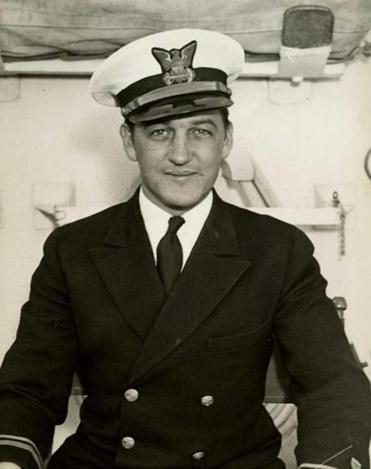
First Lieutenant, Frank H. Newcomb, USRCS

Would like to call attention to an ALCOAST that solicits names for future Coast Guard cutters which I have reproduced at the end of the post. It refers specifically to naming cutters for people but I have to believe they will consider names of previous cutters for the Offshore Patrol Cutters as well.

Of the planned 58 Webber class WPCs, 54 have been named. That leaves at least four to be named, plus an additional six if they are built additional boats to replace the 110s in Bahrain.

Of the 25 Offshore Patrol Cutters, only eleven names have been identified.

Of the Bertholf class “National Security Cutters”, only nine names have been identified for the eleven funded, with the possibility of a twelfth, opening the possibility of two or three names.

Noticeably missing from the list are:

Newcomb, Frank H, captain of the cutter Hudson when it rescued the Navy torpedo boat Winslow.  The man was so respected the Navy named a destroyer after him. That destroyer managed to torpedo a Japanese battleship at the Battle of Surigao Strait and  subsequently survived five Kamikaze hits.

USS Newcomb (DD-586), awarded eight battlestars, was struck by five Kamikazes off Okinawa, but survived.

Cutter Hudson, itself

BREWSTER, Caleb, Revolutionary War/War of 1812 (One of the characters on the television series “Turn, Washington’s Spies.) Revolutionary War Spy, 20 years in the Revenue Cutter Service, and CO of the Revenue cutter Active during the War of 1812. http://coastguard.dodlive.mil/2014/07/caleb-brewster-revolutionary-war-hero/ also https://en.wikipedia.org/wiki/Caleb_Brewster

Lt. Thomas Crotty

CROTTY, Lt Thomas James Eugene, WWII, Mine warfare expert. Captured by the Japanese on Corregidor and died in POW Camp.

DEXTER, Dwight, CO of NOB Cactus, (Guadalcanal, WWII). Silver Star, “In action against an armed enemy as commanding officer of the Naval Local Defense Force and Anti-Submarine Patrol, Guadalcanal-Gavutu, Lieut. Comdr. Dexter landed with the Marines on August 7, 1942, and established and administered the Naval Local Defense Forces in these occupied islands until November 5, 1942, on which date he was evacuated due to illness. During the three months while he was in command of this unit, he was subjected to almost daily aircraft bombing attack and, for many weeks, to an almost nightly naval bombardment. Throughout this entire period, his courage, determination and zeal made it possible to maintain in operation a signal station and a boat operating organization which was essential to the successful unloading.”

WALSH, Quentin R., CDR, (Retired as Captain) USCG, Navy Cross, For heroism as Commanding Officer of a U.S. Naval party reconnoitering the naval facilities and naval arsenal at Cherbourg June 26 and 27, 1944. While in command of reconnaissance party, Commander Walsh entered the port of Cherbourg and penetrated the eastern half of the city, engaged in street fighting with the enemy. He accepted the surrender and disarmed 400 of the enemy force at the naval arsenal and later received unconditional surrender of 350 enemy troops and at the same time released 52 captured U.S. Army paratroopers.

There are a whole slew of candidate names listed here.
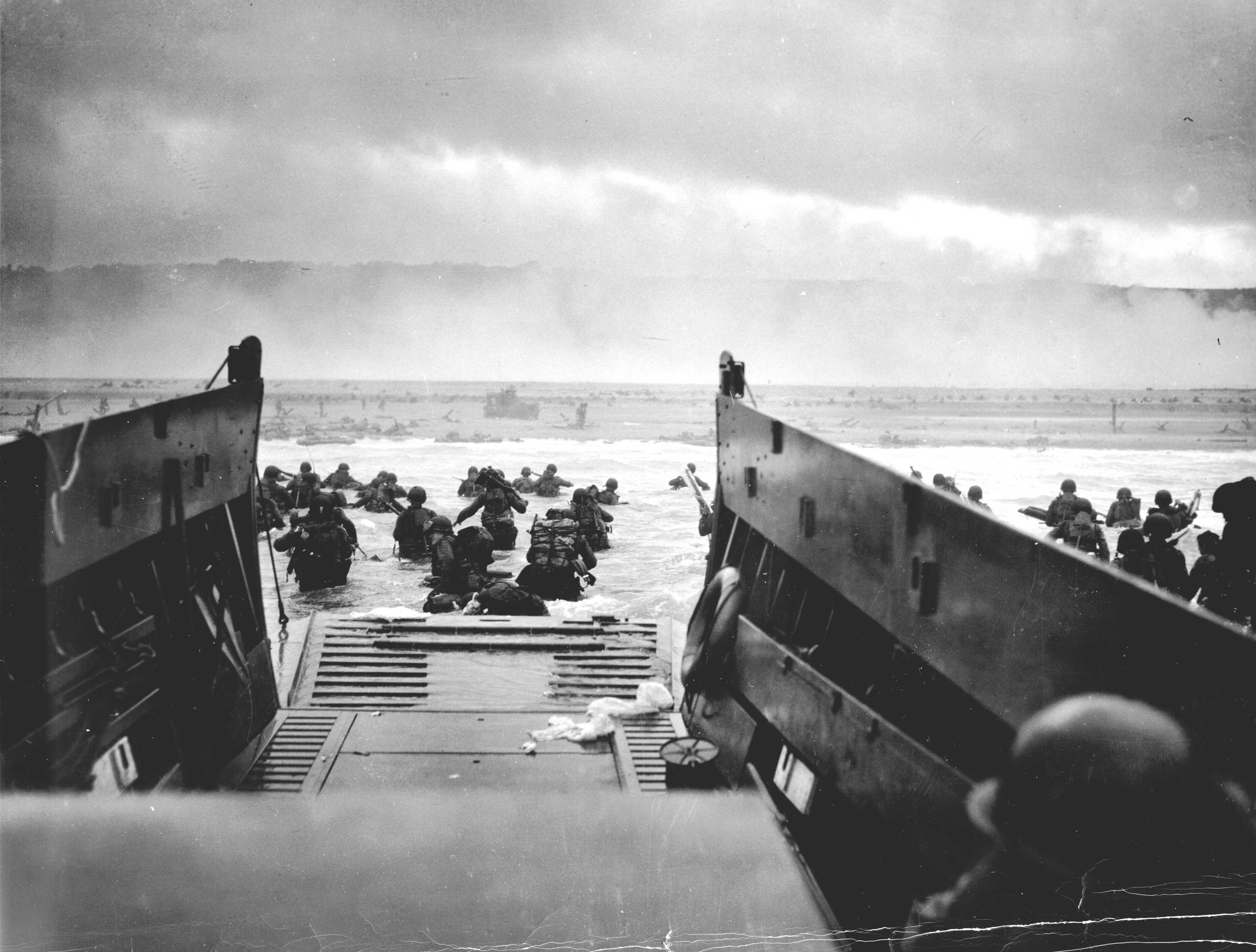
A LCVP (Landing Craft, Vehicle, Personnel) from the U.S. Coast Guard-manned USS Samuel Chase disembarks troops of Company E, 16th Infantry, 1st Infantry Division (the Big Red One) wading onto the Fox Green section of Omaha Beach (Calvados, Basse-Normandie, France) on the morning of June 6, 1944. American soldiers encountered the newly formed German 352nd Division when landing. During the initial landing two-thirds of Company E became casualties.

Along with cutter names, it might also be appropriate to reprise names of Navy ships that were Coast Guard manned. Reference (a) para 5.b.(1) does state cutters may be named after “… other service ships that were manned by Coast Guard personnel.” Examples would include USS Wakefield (AP-21), USS Samuel Chase (APA-26), USS Hunter Liggett (APA-14), USS Leopold (DE-319) (sunk after being hit by an acoustic homing torpedo, 9 Mar. ’44, 171 dead), USS Menges (DE-320) (hit by an acoustic homing torpedo but survived), or USS Lowe  (DE-325/WDE-425) (which sank U-866 under CG command and was later transferred to the CG), USS Serpens (AK-97) (14,250 tons, destroyed as a result of an apparent internal explosion of its cargo, 29 Jan. ’45, 196 CG fatalities. Largest single loss of CG personnel)

I urge you to respond with your recommendations. It certainly would not hurt for the board to see the same name(s) recommended more than once.

—–

ALCOAST 268/18 – AUG 2018 SOLICITATION FOR CUTTER NAMING SUGGESTIONS

R 011457 AUG 18
FM COMDT COGARD WASHINGTON DC//CG-092//
TO ALCOAST
UNCLAS//N05700//
ALCOAST 268/18
COMDTNOTE 5700
SUBJ: SOLICITATION FOR CUTTER NAMING SUGGESTIONS
A. Policy for Naming of Cutters and Shore Facilities, COMDTINST 5726.10 (series)
1. The Coast Guard is recapitalizing its cutter fleet, continuing a process now entering its second decade. Each new cutter requires a name.
2. The Standing Board for the Naming of Cutters and Shore Facilities is soliciting nominations for worthy names of these new cutters. The Naming Board requests submissions from across the spectrum of Coast Guard stakeholders, including active, reserve, auxiliary, civilian, retired, family members, commercial maritime industry, and port partners.
3. Guidelines for acceptable submissions are outlined in REF (A). Specifically, “the actions of the individual must reflect Honor, Respect, Devotion to Duty, and must be in keeping with the highest traditions of the Coast Guard. The individual must be considered a distinguished Coast Guard person or someone who had a great influence on Coast Guard history. The individual must be deceased with sufficient time lapsed to ensure that the name will withstand the ‘test of time.’”
4. Such namesake submissions should have distinguished themselves and brought great credit upon the service by their actions. Others may have served as important leaders or as significant role models, path-reakers or trailblazers for those who might otherwise be underrepresented. The Naming Board encourages the submission of possible namesakes from across the spectrum of Coast Guard history, to include the junior ranks and less well known figures in Coast Guard history who have made important contributions to the service.
5. The Naming Board looks for submissions that will resonate with today’s Coast Guard personnel. Prospective cutter names should represent the diversity of our service and our rich heritage.
6. Please submit your nominations to Mr. Joshua Buck at Joshua.M.Buck@uscg.mil. Your nomination should include the individual’s name and a brief narrative summary of why you believe the individual would merit this honor. Please limit the summary to one page. The deadline for submissions is October 31, 2018.
7. The Naming Board encourages those who have already submitted names to resubmit their nominations for this latest cutter naming effort under this ALCOAST.
8. The Naming Board will publish a list of all names submitted in a future ALCOAST. Names not selected for the latest round of new cutters will be kept on file for future use.
9. For a list of names recently selected, please see:
https://content.govdelivery.com/accounts/USDHSCG/bulletins/1cbb0e6
10. For more information please see REF (A) at:
https://media.defense.gov/2017/Mar/14/2001716387/-1/-1/0/CI_5726_10C.PDF
11. For questions please contact Scott Price, Chief Historian, at Scott.T.Price@uscg.mil or
call (202) 372-4653.
12. RDML Melissa Bert, Director of Governmental and Public Affairs, sends.
13. Internet release authorized.


Coast Guard Cutter Maria Bray Crew Helps Create Underwater Reef Habitat

Something a bit unusual.

Caption from YouTube,

“Coast Guard Cutter Maria Bray crew members deploy concrete reef balls and old navigation anchors, July 18, 2018, off the coast of northeast Florida. The Maria Bray crew assisted in the deployment of reef balls, built by Mandarin High School students, and old navigation anchors for Think It, Sink It, Reef It, or TISIRI in order to create an underwater reef habitat. (U.S. Coast Guard photo by Petty Officer 3rd Class Ryan Dickinson)”

Thanks to Lee for bringing this to my attention. 

National Defense Authorization Act, 2019 Authorizes Six Icebreakers

USCGC Polar Sea

The National Defense Authorization Act has been passed and forwarded to the President. It is too early for anyone to get too excited about this, since it is an authorization rather than an approved budget, but it does authorize up to six polar icebreakers.

SEC. 153. AUTHORITY TO PROCURE ADDITIONAL POLAR-CLASS ICEBREAKERS. Section 122 of the National Defense Authorization Act for Fiscal Year 2018 (Public Law 115–91) is amended— (1) in the section heading, by striking ‘‘ICE-BREAKER VESSEL’’ and inserting ‘‘AUTHORIZA-TION TO PROCURE UP TO SIX POLAR-CLASS ICEBREAKERS’’;  (2) by striking subsections (a) and (b); (3) by inserting before subsection (c) the following new subsection: ‘‘(a) AUTHORITY TO PROCURE ICEBREAKERS.—The Secretary of the department in which the Coast Guard is operating may, in consultation with the Secretary of the Navy, enter into a contract or contracts for the procurement of up to six polar-class icebreakers, including— ‘‘(1) polar-class heavy icebreakers; and ‘‘(2) polar-class medium icebreakers.’’; (4) by redesignating subsections (c) and (d) as subsections (b) and (c), respectively; and (5) in paragraph (1) of subsection (b), as redesignated by paragraph (4) of this section, by striking ‘‘subsection (a)(1)’’ and inserting ‘‘subsection (a)’’.

The bill also provides for a Selected Reserve end strength of 7000 Coast Guard Reservists, almost $40.9M for Coast Guard weapons, $40.7M for other Electronic support, $24.1M for Mobilization Support, $165M for Coast Guard mobilization support (presumably PATFORSWA?). There may actually be more that I may have missed. The bill is huge. I just used the “Control F” function to search for Coast Guard.

Thanks to the Bryant’s Maritime Consulting Blog for bringing this to my attention.

Call for Articles: Bringing Back Sea Control–CIMSEC

Center for International Maritime Security (CIMSEC) had issued a call for articles on the topic of bringing back sea control. Here is a copy of their post.

By Dmitry Filipoff

Articles Due: September 3, 2018
Week Dates: September 10-14, 2018

Article Length: 1000-3000 words 
Submit to: Nextwar@cimsec.org

Great power competition is back, and with it new demands for capability and deterrence. After years of focusing on power projection and low-end missions, many first rate navies have allowed high-end skillsets to erode. As security priorities shift, navies too must change.

One vital mission for winning and deterring great power conflict is sea control, the ability to secure command of the seas. Today sea control has morphed into something of enormous complexity. It can be a convoluted contest, with platforms and payloads projecting influence across multiple domains. Navies are ever more reliant on electronic effects for warfighting functions, turning cyberspace and electronic warfare into pivotal battlegrounds for sea control. Sea control is the sum of many elements of oceanic warfare, requiring diverse skills and tactics.

In spite of technological change, sea control will remain an important mission so long as the oceans remain crucial to human progress. It is the vital prerequisite for projecting power and securing access via the maritime domain. It can enable blockades and commerce raiding, allowing a navy to exert tremendous pressure on a nation’s vitality. Sea control is a mission as timeless as naval power itself, and one deserving of thorough preparation.

How can the navies of today revitalize their sea control capabilities? How can they become proficient in high-end missions and tactics? What will achieving sea control require, and how best to use it once attained? Authors are encouraged to consider these questions and more as navies around the world reconsider their development in the context of renewed great power competition.

Dmitry Filipoff is CIMSEC’s Director of Online Content. Contact him at Nextwar@cimsec.org

This is an opportunity for some of our readers here to express their opinions and practice their writing skills.

Does the Coast Guard have a role? I think so. Sea Control first has to be won and the USN is prepared for that fight, but it also has to be exercised. That requires a lot of low tech grunt work, not unlike boarding fishing boats. It requires separating good guys from bad guys who may try to conceal their true nature. We did this off Vietnam as part of Operation MarketTime. The Navy really has few units capable of this sort of work, but it is the sort of work the Coast Guard does every day.

I have worked with Dmitry Filipoff and he is a good guy. Time to start writing.