“U.S. Coast Guard strengthens historic relationship with Philippines during landmark visit to Tacloban” –USCG Forces Micronesia/Sector Guam

Below is a U.S. Coast Guard Forces Micronesia/Sector Guam news release. We seem to be pushing the little Webber class FRCs further and further. Because they are small, they are effective good will ambassadors. Clearly, they are not there to intimidate. There are more photos at the link. 

Oct. 23, 2023

U.S. Coast Guard strengthens historic relationship with Philippines during landmark visit to Tacloban

TACLOBAN, Philippines — In a historic first, the USCGC Frederick Hatch (WPC 1143) visited partners in Tacloban, Philippines, from Oct. 19 to 23, 2023, and the crew conducted engagements marking a significant milestone in the enduring relationship between the United States and the Philippines.

This visit of several days coincided with the observance of the Battle of Leyte Gulf, a crucial event in World War II history where U.S. Coast Guardsmen were a significant part of the U.S. forces and among the first to hit the beaches as the U.S. sought to retake the Philippines.

“We are deeply honored to be part of this observance and to strengthen the bond between the United States and the Philippines,” said Lt. Patrick Dreiss, commanding officer of the USCGC Frederick Hatch. “It is a privilege to bring a U.S. Coast Guard Fast Response Cutter to the Philippines for the first time and to visit the historic city of Tacloban. My crew was excited to collaborate with the Philippine Coast Guard to deepen our connections with our fellow seagoing Service and explore this unique city and island.”

An advance team from U.S. Coast Guard District 14 and U.S. Coast Guard Forces Micronesia/Sector Guam held planning meetings in collaboration with the U.S. Embassy to prepare for this visit and the Battle of Leyte Gulf observance. Discussions revolved around mutual capabilities, training opportunities, and community engagement, part of the Coast Guard’s Operation Blue Pacific mission.

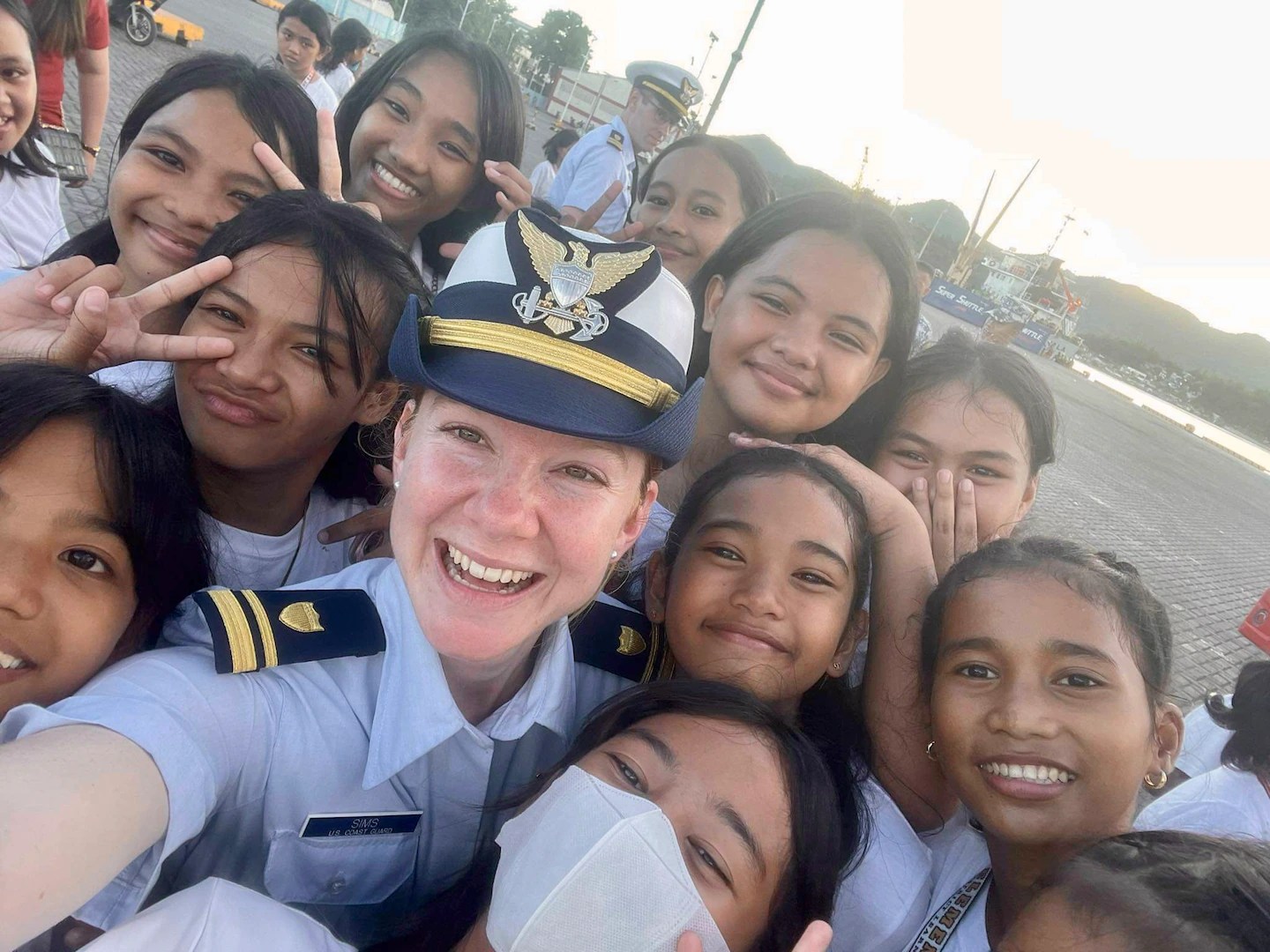
While in Tacloban, the crew, with support from the Maritime Security Response Team West, hosted a subject matter expert exchange on maritime law enforcement with Philippine Coast Guard colleagues, observed the 79th Leyte Gulf Landing Anniversary, hosted local school children and government officials, held working meetings, and experienced the culture of the Eastern Visayas region of the Philippines.

“The expanded capabilities of the Fast Response Cutter represent more than just advanced technology; they symbolize the bridge of cooperation and goodwill between nations. The FRCs and their dedicated crews regularly play a pivotal role in international diplomacy. These vessels, along with their highly trained and professional crews, are ambassadors of peace and collaboration, said Capt. Nick Simmons, commander of U.S. Coast Guard Forces Micronesia/Sector Guam. “They foster understanding and trust across borders, making the seas safer not only for our own nations but for all nations that rely on the freedom of navigation and maritime security.”

This visit is part of the USCGC Frederick Hatch’s regularly scheduled expeditionary patrol as part of the ongoing Operation Blue Pacific. It follows previous interactions between the U.S. Coast Guard and the Philippine Coast Guard, including the recent arrival of the USCGC Stratton (WMSL 752) in Manila for professional exchanges and joint operations.

The visit of Pacific Area commander Vice Adm. Andrew Tiongson in April to discuss shared challenges and opportunities for partnership further exemplifies the U.S. Coast Guard’s commitment to the region. The Service’s role as a federal law enforcement agency and an armed forces branch uniquely positions the agency’s teams to conduct security cooperation operations supporting combatant commanders, upholding governance, and ensuring regional stability. Through Operation Blue Pacific, an overarching multi-mission Coast Guard endeavor, the Service seeks to promote security, safety, sovereignty, and economic prosperity in Oceania while strengthening relationships between partner nations in the Pacific.

The Tacloban visit underscores the shared strategic efforts toward a stable and prosperous Indo-Pacific and aligns with the Pacific Area Commander’s goals to prepare a ready force, generate combined effects, and uphold governance. It also supports U.S. Coast Guard District 14 and U.S. Coast Guard Forces Micronesia/Sector Guam’s commitment to be a trusted partner in Oceania and deliver operational excellence.

-USCG-

About the U.S. Coast Guard in the Pacific Region:

The U.S. Coast Guard is a vital force ensuring maritime safety, security, and stewardship across a vast Pacific expanse, spanning six continents, 71 countries, and 74 million square miles of ocean. U.S. Coast Guard Pacific Area leads coordination and integration efforts in this vast region, promoting collaboration with partners.

Within this framework, U.S. Coast Guard District 14 oversees 14 million square miles in the Central and Western Pacific, serving as the Coast Guard’s largest district with 1,750 personnel operating 25 units. Their mission includes maritime safety, resource protection, security, and national defense, making them indispensable in the Pacific.

Reporting to District 14, the U.S. Coast Guard Forces Micronesia/Sector Guam team focuses on maritime safety, security, and stewardship in Oceania. With a base in Guam and over 300 members across Guam and the Commonwealth of the Northern Mariana Islands, they maintain a strong U.S. presence in the Micronesia sub-region and adjacent areas, closely tied to local communities.

About USCGC Frederick Hatch (WPC 1143)
The Frederick Hatch is the 43rd 154-foot Sentinel-class fast response cutter named for a surfman and lighthouse keeper who was a two-time Gold Life Saving Medal recipient. The Service commissioned the ship along with its sister ships, Myrtle Hazard (WPC 1139) and Oliver Henry (WPC 1140), in Guam in July 2021. They are currently on patrol representing the United States Coast Guard in the Indo-Pacific region, fostering international cooperation and maritime security.
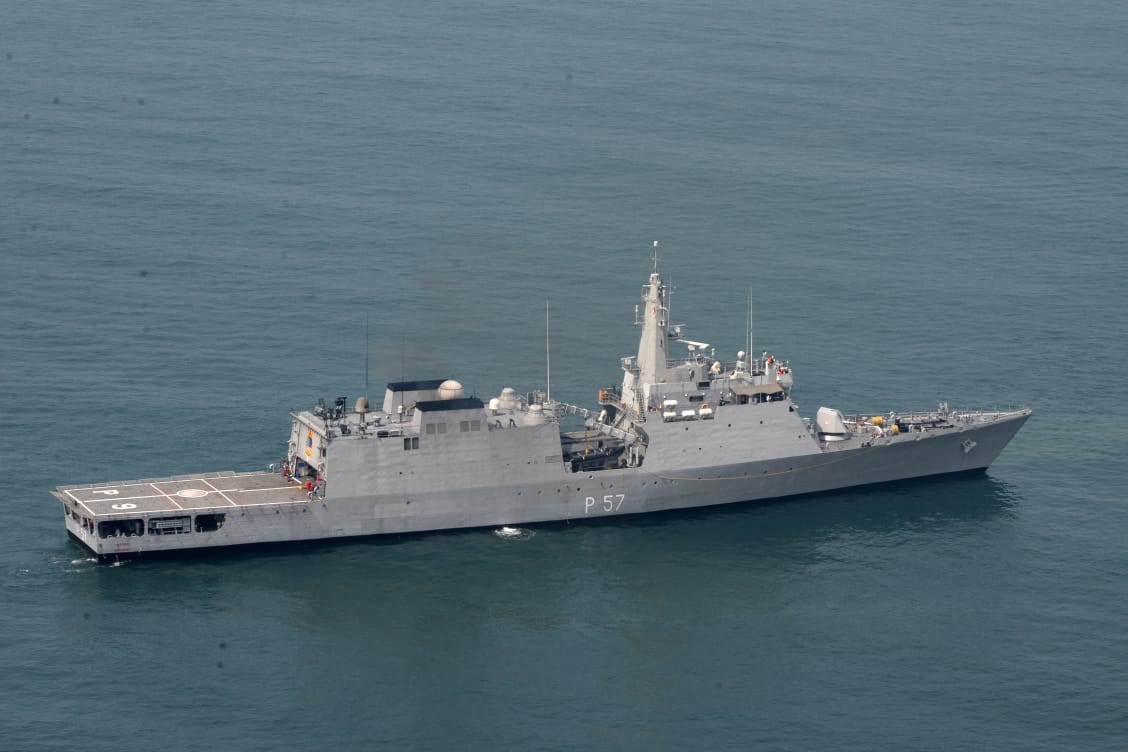
“Indian Navy’s INS Sunayna Pays Visit to Beira, Mozambique” –BNN

INS Sunanya (P57) at sea, 21 May 2020. Photo Credit: Indian Ministry of Defence.

BNN reports on the visit of the Indian Navy Offshore Patrol Vessel Sunayna to the Nation of Mozambique.

During the port call, personnel from the Indian Navy and the Mozambique Navy engaged in a variety of professional and training engagements, deck visits, and sporting events. Joint training sessions in navigation, fire fighting, damage control, VBSS, and asymmetric warfare were held as part of the maritime partnership exercise.

Sounds like they were engaged in the same sort of “capacity building” the US Coast Guard engages in. Fishing is an important part of the Mozambique economy so Illegal, Unregulated, and Unreported fishing is a problem for them.

There has been increasing cooperation between the US and India in response to Chinese aggressiveness. We might want to spend a little time with the Indian Navy/Coast Guard to gain their insights and benefit the efforts of both nations. Perhaps the Coast Guard should participate in the annual Malabar exercise.

INS Sunayna (P57) is a 105 meter (344 foot) Saryu class Offshore Patrol Vessel. May be worth noting that this visit was done by the Indian Navy rather than the Indian Coast Guard, though they have similar ships.

Coast Guard in Oceania in the News

The USCGC Oliver Henry (WPC 1140) crew arrives in Manus, Papua New Guinea, on Aug. 14, 2022, from Guam as part of a patrol headed south to assist partner nations in upholding and asserting their sovereignty while protecting U.S. national interests. The U.S. Coast Guard is participating with partners to support the Pacific Islands Forum Fisheries Agency-led Operation Island Chief and the larger Operation Blue Pacific through patrols in the Western Pacific in August and September 2022. (U.S. Coast Guard photo by SW3 Victor Villanueva, NMCB-FOUR)

A couple of recent articles about the US relations with Palau and Papua New Guinea.

Map of the exclusive economic zones in the Pacific.

There has long been interest in a US base on Manus, Papua New Guinea, but this is politically sensitive. Basing cutters there that protect an important economic resource and occasionally rescue the locals when they get in trouble, would probably be most welcome.

On the map above, Manus and Guam do not look that far apart, but Manus is 1,737.88 km (938 nautical miles) SSE of Guam. That is about the distance from Miami to New York City. 

Cutters based in Manus would be closer to parts Freely Associated States (FAS) of Palau and Federated States of Micronesia than cutters based in Guam and much closer to most non-FAS Micronesian nations. It might also be a good place to site a fixed wing forward operating base (CGAS Honolulu DET).

I am beginning to think we will see two new bases in the Western Pacific, one in American Samoa and one in Manus.

If we do end up with additional Webber class based outside Hawaii and Guam, we might need a squadron support organization similar to, and perhaps even larger than, PATFORSWA, to support all FRCs based in the Pacific South and West of Hawaii, e.g. a PATFORSWPAC.

“Coast Guard Cutter Kimball returns home following Western Pacific patrol” –CG News

Following is from the Coast Guard News Page. Not only does this show the increasing cooperation between the US and Japan coast guards, it also explains how a Barbers Point H-65 made it to Guam. (“U.S. Coast Guard, Guam Fire Department conduct rescue hoist training in Guam” –Forces Micronesia / Sector Guam)

March 14, 2023

Coast Guard Cutter Kimball returns home following Western Pacific patrol

HONOLULU — The Coast Guard Cutter Kimball (WMSL 756) and crew returned to their Honolulu homeport, Friday, following a 42-day, 10,000 nautical mile Western Pacific patrol.

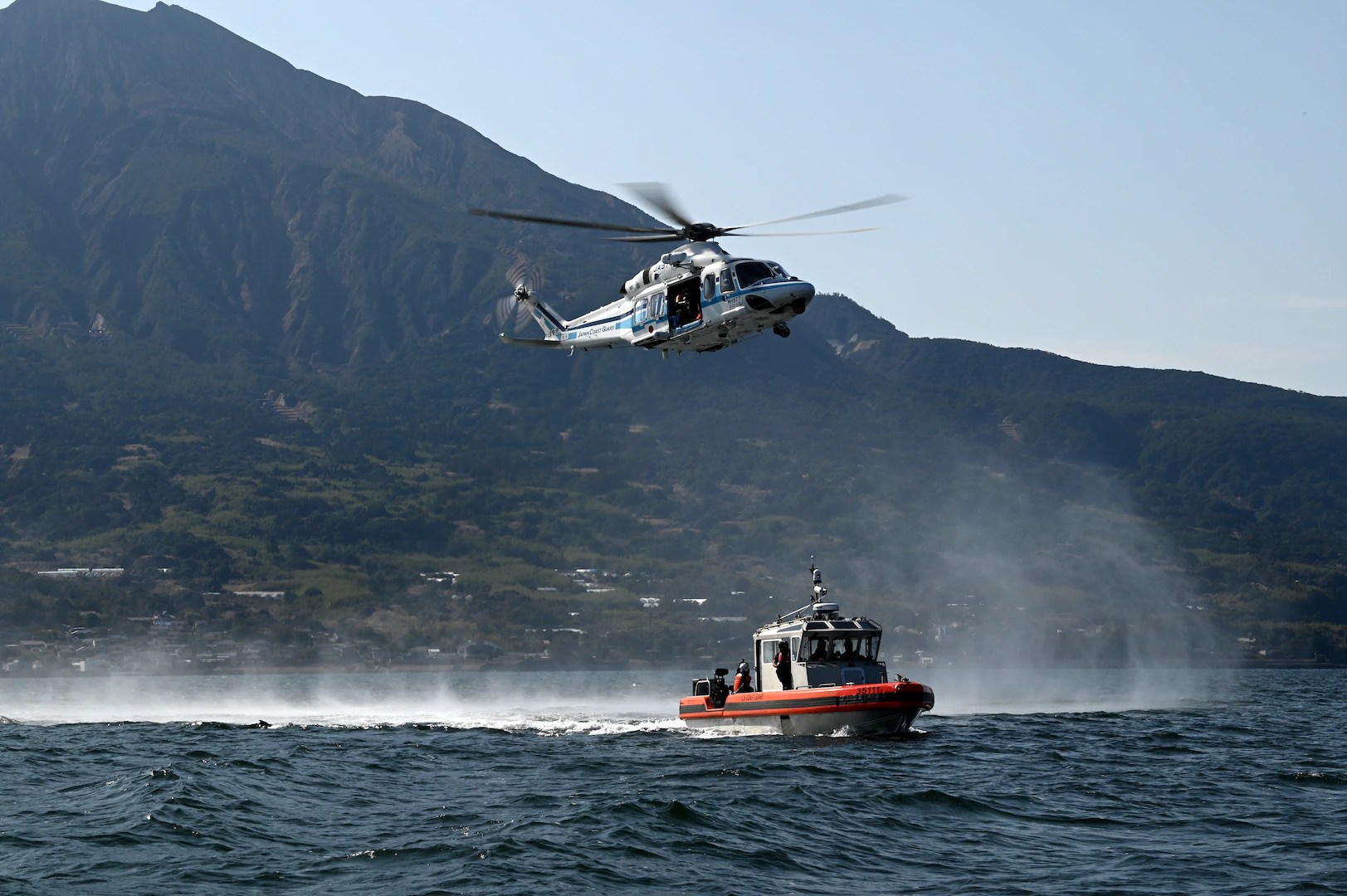
Kimball was the first U.S. military ship in recent history to visit the port city of Kagoshima, Japan, where the crew partnered with servicemembers from Japan Coast Guard’s 10th District to plan and conduct combined operations and search-and-rescue exercises.

Kimball’s crew met with Japan Coast Guard senior leadership and hosted Japan Coast Guard servicemembers, U.S. Consulate Fukuoka staff, community leaders and local media aboard the cutter during the port visit in support of Operation SAPPHIRE.

Operation SAPPHIRE is a joint agreement between the U.S. and Japan Coast Guards signed in 2022 for enhancing cooperation between the two sea services. SAPPHIRE is an acronym for the ‘Solid Alliance for Peace and Prosperity with Humanity and Integrity on the Rule of law-based Engagement.’

“By collaborating with Japan Coast Guard members and conducting evolutions that enhanced communication and inter-operability during the patrol, the crew continued to strengthen a solid foundation for the positive and productive relationship with the maritime service of a like-minded nation,” said Captain Tom D’Arcy, Kimball’s commanding officer.

Kimball’s crew demonstrated proficiency in the ship’s aviation program by working with an air operations inspection team to conduct a biennial Shipboard-Aviation Standardization Inspection (AVSTAN). By achieving their AVSTAN certification, Kimball can continue deploying with aviation detachments during future patrols.

Kimball also supported U.S. Coast Guard efforts to increase its presence in the Indo-Pacific. Kimball’s crew delivered a MH-65 Dolphin helicopter from Air Station Barber’s Point to Santa Rita, Guam, to enable forward operations that extend the service’s air coverage in the region.

During the patrol, the cutter’s engineering department was presented with the Rear Admiral R. S. Lucas Plaque Award for their outstanding contributions to the Coast Guard’s naval engineering program. Members from Kimball’s engineering department were cited for excellence and ingenuity during recent patrols and for completing three extensive industrial periods encompassing significant maintenance, contractual repair projects, and casualty repairs valued at over $4.4 million.

“I am extremely proud of our crew’s accomplishments,” said D’Arcy. “Kimball continues to remain on the front lines of the Coast Guard’s strategic plan. Our engagements in Japan strengthened our existing relationships with international partners who uphold good maritime governance. Kimball’s patrol re-affirmed the U.S. Coast Guard’s commitment to facilitating a free and open Indo-Pacific.”

Commissioned in 2019, Kimball is the Coast Guard’s seventh national security cutter and one of two homeported in Honolulu. National security cutters are 418-feet-long, 54-feet-wide and have a displacement of 4,500 long-tons. With a range of 12,000 nautical miles, the advanced technologies of Legend-class national security cutters are designed to support the national objective to maintain the security of America’s maritime boundaries and provide long range search-and-rescue capabilities.

“U.S. Coast Guard Is Helping Southeast Asians Protect Their Seas” –Foreign Policy

U.S. Coast Guard Forces Micronesia Sector Guam Commander Capt. Nicholas R. Simmons and the Honorable Joses R. Gallen, Secretary of Justice, Federated States of Micronesia, signed an expanded shiprider agreement allowing remote coordination of authorities, the first of its kind aboard the USCGC Myrtle Hazard (WPC 1139) in Guam, on Oct. 13, 2022. The agreement will enable to U.S to act on behalf of the FSM to combat illicit maritime activity and to strengthen international security operations. (U.S. Coast Guard photo by Chief Warrant Officer Sara Muir)

Foreign Policy reports,

 “…the United States has increasingly looked to its Coast Guard as an option to assist regional states with their maritime challenges, advance security partnerships, and serve as a potent soft-power tool. As agencies focused primarily on law enforcement and safety, coast guards are perceived as an increasingly useful regional tool because they can assert national interests without being overtly militaristic and escalatory.”

The post is an excellent look at what the Coast Guard has been doing in the Western Pacific as well as the challenges of dealing with the tyranny of distance. There is not a lot here we have not heard, but there are several links to earlier documentation. This one is interesting, and we did not discuss it earlier, “Rebalance U.S. Coast Guard Cutters to Help Advance a ‘Free and Open’ Indo-Pacific.”

There is reference to the Medium Endurance Cutter to be deployed to the Western Pacific that may clarify its mission.

“The narratives surrounding these commitments have strongly focused on the deployment of Coast Guard cutters. One of the key announcements regarding the Coast Guard at the U.S.-ASEAN summit, for example, was that a Coast Guard vessel would be assigned to the region to operate as a “training platform,” providing multinational crewing opportunities and participating in cooperative maritime engagements.”

“Japanese, Malaysian coast guards hold South China Sea security drill” –Indo-Pacific Defense Forum

This photo released by Malaysian Maritime Enforcement Agency shows the Japan Coast Guard ship Tsugaru (PLH02) and helicopters of the Malaysian Maritime Enforcement Agency during a joint exercise between the both agencies off Kuantan, Malaysia, Monday, Jan. 29, 2018. (Malaysian Maritime Enforcement Agency via AP)

Indo-Pacific Defense Forum reports on efforts by the Japan Coast Guard to assist the Malaysia Coast Guard, including, in this case, with Long Range Acoustic Devices that are being provided by Japan.

The Malaysia Coast Guard is a relatively young organization, having become operational in 2005. Two of the largest vessels in the Malaysia CG have been provided by Japan.

Japan has been helping to strengthen other coast guards in SE Asia as well, including those of Vietnam and the Philippines

“Expanding partnerships: U.S. Coast Guard Cutter Stone arrives in Port of Suape, Brazil” –LANTAREA

Coast Guard’s ninth national security cutter (NSC), USCGC Stone, October 2020. Photo by Lance Davis of Huntington Ingalls Industries.

Below is an Atlantic Area News Release. Looks like USCGC Stone is taking the counter IUU road show to the South Atlantic Coast of South America a second time. The first time she did this was before she had even been commissioned and after a long quarantine for COVID. The press release reporting the conclusion of their Previous South American voyage is here.

More info about their previous South American adventure:

Suape is part of the Recife metropolitan area. Recife is located on the most Eastern part of South America where it projects toward Africa. During WWII Brazil was an allied nation, declaring war on the Axis 22 August 1942. US Navy ships and aircraft based in Recife and nearby Natal patrolled this narrowest part of the Atlantic to intercept Axis blockade runners.

News Release

U.S. Coast Guard Atlantic Area

Expanding partnerships: U.S. Coast Guard Cutter Stone arrives in Port of Suape, Brazil

USCGC Stone arrves in Suape, Brazil  USCGC Stone partners with Brazliian Navy

Editors’ Note: To view more or download high-resolution photos, click on the images above.

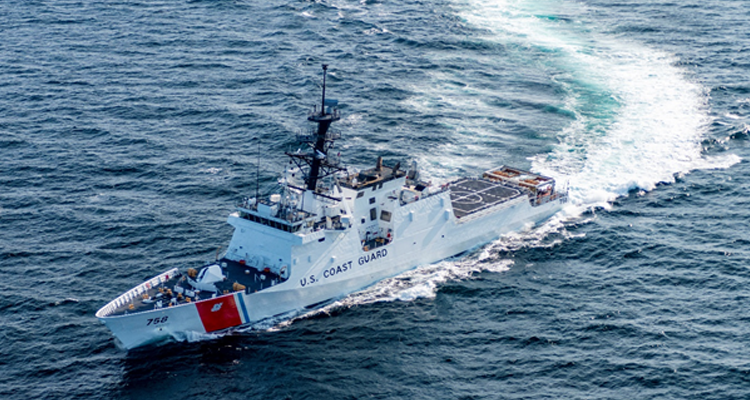
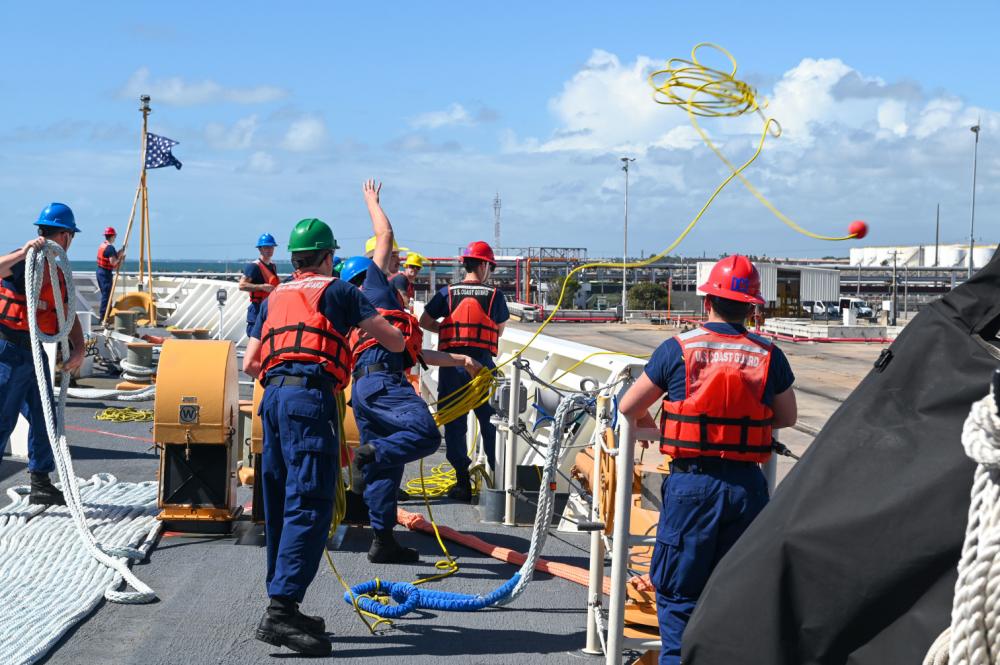
SUAPE, Brazil – The USCGC Stone (WMSL 758) arrived in the Port of Suape, Pernambuco, Brazil for a scheduled port visit Monday.

This port visit marks the first stop for Stone on its scheduled multi-mission deployment in the South Atlantic to counter illicit maritime activities and strengthen relationships for maritime sovereignty throughout the region. This visit also highlights the partnership between U.S. and Brazil to counter illegal, unreported and unregulated fishing.

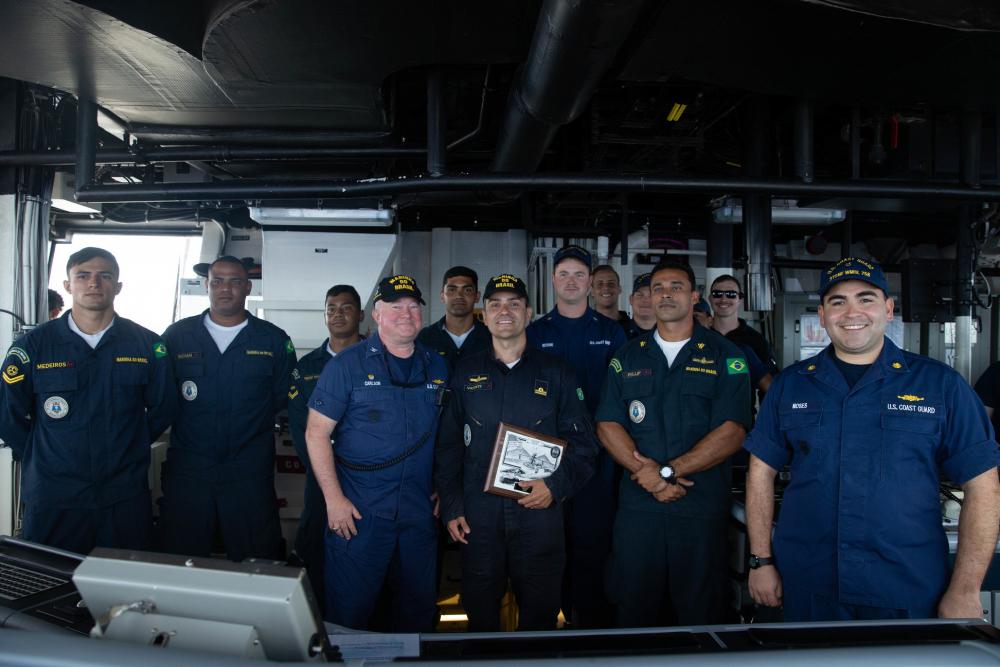
“All nations benefit from free and open access to the maritime domain,” said U.S. Coast Guard Capt. Clinton Carlson, Stone’s commanding officer. “It’s a real privilege to work with Brazil’s maritime forces as we increase our interoperability and work together to uphold the rules-based international order at sea.”

Stone last deployed to the South Atlantic from December of 2020 to February of 2021. During the deployment, Stone operationalized the U.S. Coast Guard’s Illegal, Unreported, and Unregulated Fishing Strategic Outlook, published in September of 2020.

“Our current deployment seeks to deepen our interagency and international partnerships,” said Carlson. “We have embarked personnel augments from the U.S. Navy and Marine Corps as well as representatives from the Brazilian Navy to enhance our capabilities. In leveraging our connections at home and abroad, we provide a flexible, mobile and integrated team capable of enforcing international laws, ensuring regional security and safeguarding free and open access to the sea for all law-abiding nations.”

The United States and Brazil enjoy active, cooperative relations encompassing a broad span of internationally shared political and economic concerns. Ten bilateral agreements signed in March 2011 and five more signed in April 2012 codified the nations’ shared commitment to maritime security and environmental stewardship in the Atlantic Ocean. Both countries participate in the International Commission for the Conservation of Atlantic Tunas, which studies and manages highly migratory fish species and can facilitate the enforcement of conservation and management measures regarding fish covered by the commission.

Stone is the ninth Legend-class national security cutter in the Coast Guard fleet and currently homeports in Charleston, South Carolina. The national security cutters can execute the most challenging national security missions, including support to U.S. combatant commanders.

Stone is under the command of U.S. Coast Guard Atlantic Area. Based in Portsmouth, Virginia, U.S. Coast Guard Atlantic Area oversees all Coast Guard operations east of the Rocky Mountains to the Arabian Gulf. In addition to surge operations, they also allocate ships to work with partner commands and deploy to the Caribbean and Eastern Pacific to combat transnational organized crime and illicit maritime activity.

For information on how to join the U.S. Coast Guard, visit GoCoastGuard.com to learn about active duty and reserve, officer and enlisted opportunities. Information on how to apply to the U.S. Coast Guard Academy can be found here.

“Sri Lankan CARAT 2023 Completed” –SeaWaves

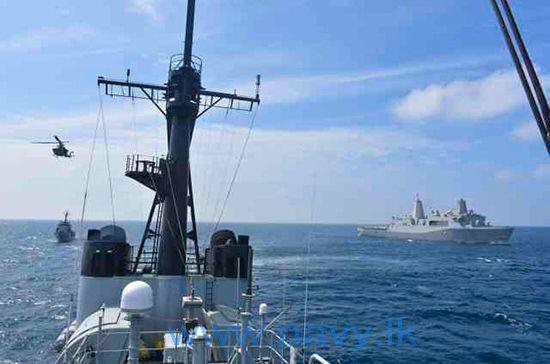
USS Anchorage seen from Sri Lanka’s SLNS Gajabahu. CARAT 2023

SeaWaves Magazine reports,

“Taking part in the sea phase of Cooperation Afloat Readiness and Training (CARAT) exercise 2023, SLNS Gajabahu and SLNS Samudura of the Sri Lanka Navy and ‘USS Anchorage’ of the U.S. Navy successfully conducted a series of naval exercises off Negombo on 22nd and 23rd January 2023.”

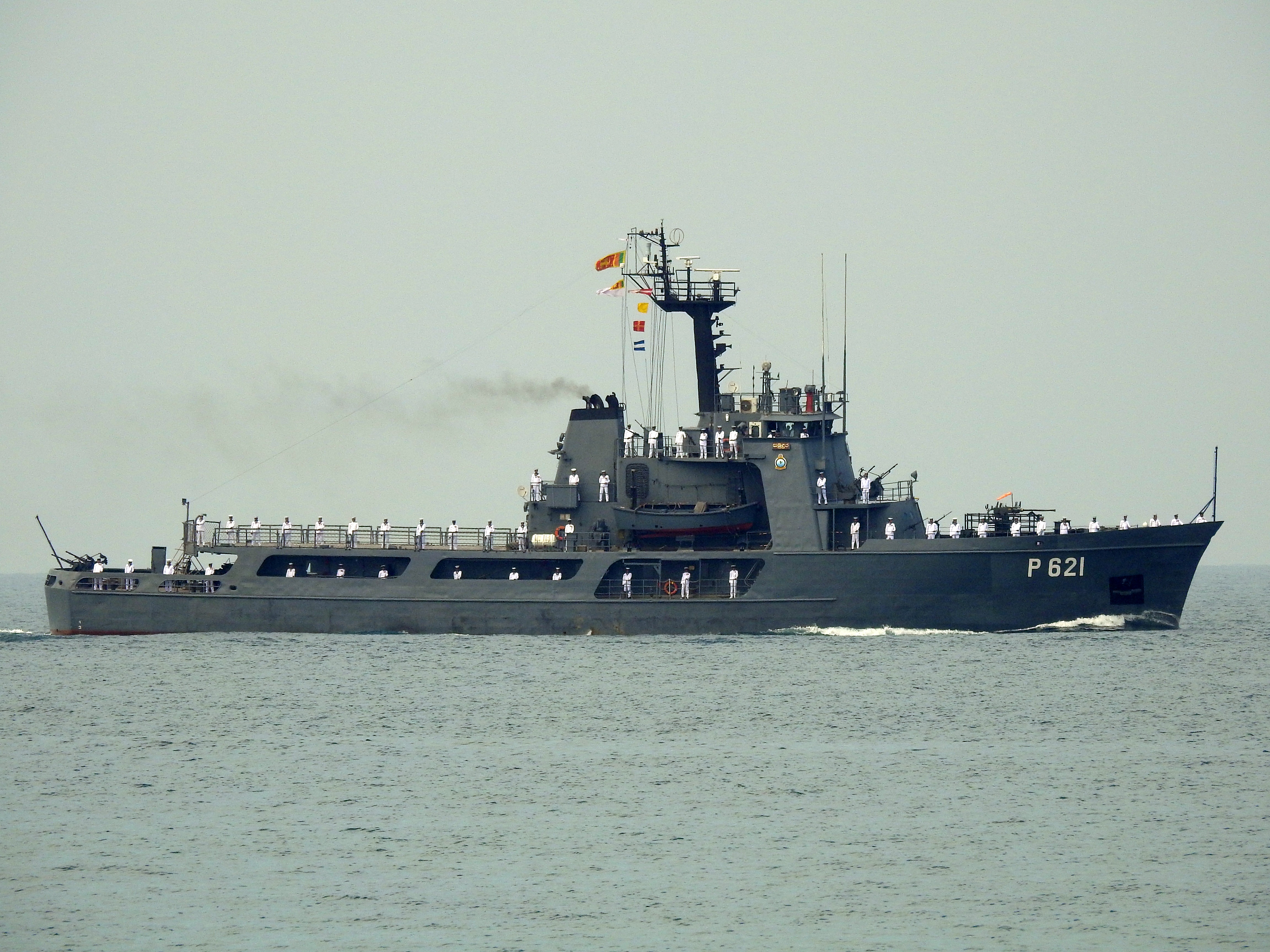
I had to point this out because both Sri Lankan ships mentioned are former US Coast Guard Cutters. SLNS Samudura is the former USCGC Courageous (WMEC-622) transferred to Sri Lanka in 2004 and SLNS Gajabahu is the former USCGC Sherman (WHEC-720) transferred to Sri Lanka in 2018.

Former USCGC Courageous, now SLNS Samudura P621. Photo by Rehman Abubakr

SLNS Gajabahu (P626), SLNS Sayurala (P623) and SLNS Sindurala (P624) during 2022 Colombo Naval Exercise. SLNS Samudura (P261) also visible in the distance. Photo defence.lk

“USCGC Spencer (WMEC 905) completes multinational maritime security patrol, arrives in Dakar, Senegal” –U.S. Naval Forces Europe and Africa/U.S. Sixth Fleet

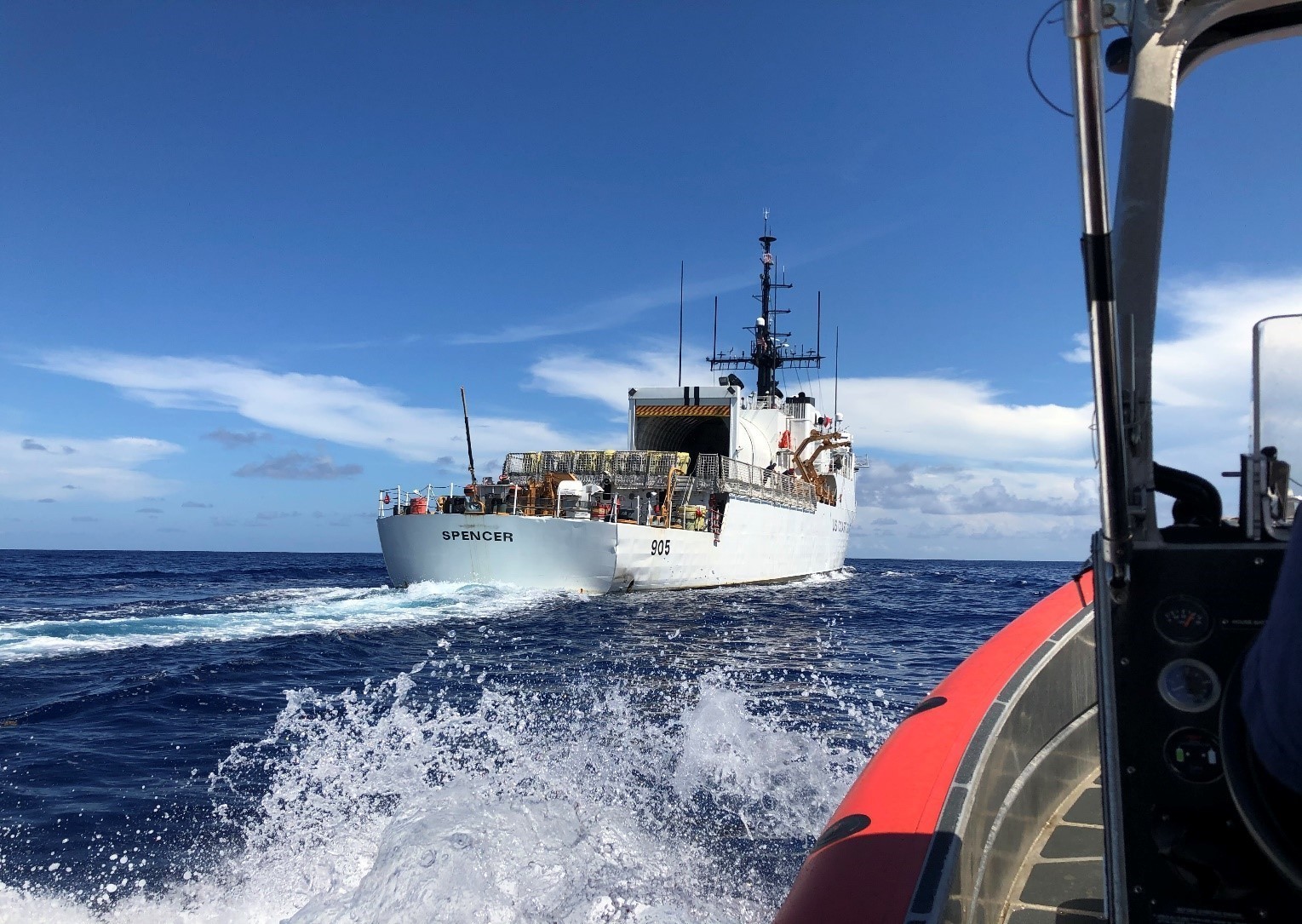
DAKAR, Senegal – U.S. Coast Guard Lt. Cmdr. Nicholas Forni, executive officer aboard USCGC Spencer (WMEC 905) and Lt. Jacob Balchikonis, operations officer aboard Spencer, meet with Lt. Col. Sam Kunst, U.S. Marine Corps Attaché to Dakar, Senegal, Jan. 17, 2023. Spencer is on a scheduled deployment in the U.S. Naval Forces Africa area of responsibility, employed by the U.S. Sixth Fleet, to carry out joint training, exercises, and maritime security operations alongside AFRICOM partners in support of U.S. interests abroad, regional partnerships, and to strengthen international maritime governance. (U.S. Coast Guard photo)

The activities reported in the news release below have become a fairly routine deployment for Atlantic Area 270 foot WMECs. I expect Spencer will also participate in Exercise Obangame Express 2023.

Jan. 19, 2023

USCGC Spencer (WMEC 905) completes multinational maritime security patrol, arrives in Dakar, Senegal

By U.S. Naval Forces Europe and Africa/U.S. Sixth Fleet

The Famous-class medium endurance USCGC Spencer (WMEC 905) arrived in Dakar, Senegal for a scheduled port visit following a multinational maritime security patrol, Jan. 17, 2023.

Spencer’s visit to Dakar included meetings with Capt. Karim Mara, Senegalese deputy chief of naval staff, as well as leaders from the Senegalese Navy and the U.S. Office of Security Cooperation. Prior to the port visit, Spencer embarked maritime counterparts from Cabo Verde, Senegal and The Gambia for a security patrol to identify and deter illegal, unreported, unregulated (IUU) fishing as well as build living marine resource enforcement capacity with African partner nations.

“We were able to build maritime domain awareness with our partners by establishing an offshore law enforcement presence that demonstrated Cabo Verde’s, Senegal’s, and The Gambia’s commitment to maritime security and living marine resource enforcement. We did this by conducting combined maritime law enforcement operations and effectively communicating and coordinating with each country’s Maritime Operations Center,” said Cmdr. Corey Kerns, Spencer’s commanding officer.

This deployment demonstrates NAVAF and the U.S. Coast Guard’s commitment and longstanding partnership to work with our African partners to counter illicit maritime activity in the Atlantic Ocean. The U.S. Coast Guard regularly integrates and operates within the NAVAF area of operations. The U.S. Coast Guard’s authorities and capabilities provide the Joint Force with unique tools that bridge the cooperation-to-conflict continuum.

Senegal and the United States share a proud history of promoting peace and security in Africa. Later this month, Senegal will participate in the NAVAF-led exercise Obangame Express 2023, the largest annual maritime security exercise in Western Africa. These types of exercises strengthen partnerships and allow countries to work more closely on shared transnational maritime challenges.

“The United States and Senegal enjoy an exceptional security partnership that bolsters our shared efforts to promote peace and security in West Africa, combat illegal, unreported, and unregulated fishing, and protect marine resources,” said Mike Raynor, U.S. Ambassador to Senegal. “The arrival of USCGC Spencer to Dakar reflects that robust partnership.”

The U.S. shares a common interest with African partner nations in ensuring security, safety, and freedom of navigation on the waters surrounding the continent, because these waters are critical for Africa’s prosperity and access to global markets.

U.S. Coast Guard Atlantic Area, headquartered in Portsmouth, Virginia, oversees all Coast Guard operations east of the Rocky Mountains to the Arabian Gulf, spanning across five Coast Guard districts and 40 states.

For over 80 years, U.S. Naval Forces Europe-U.S. Naval Forces Africa (NAVEUR-NAVAF) has forged strategic relationships with allies and partners, leveraging a foundation of shared values to preserve security and stability.

Headquartered in Naples, Italy, NAVEUR-NAVAF operates U.S. naval forces in the U.S. European Command (USEUCOM) and U.S. Africa Command (USAFRICOM) areas of responsibility. U.S. Sixth Fleet is permanently assigned to NAVEUR-NAVAF, and employs maritime forces through the full spectrum of joint and naval operations.

USCGC Spencer (WMEC 905) arrives in Praia, Cabo Verde” –LANT Area

U.S. Coast Guard Cutter Spencer (WMEC 905) underway on patrol in the Eastern Pacific, January 2021. The crew covered over 11,000 miles seizing over $10 million of drugs and assisted in disrupting transnational crime organizations. (U.S. Coast Guard courtesy photo/Released)

Below is an Atlantic Area news release reporting the arrival of Cutter Spencer for operations off West Africa. This is getting to be almost routine, and it seems to have become a regular assignment for 270 foot WMECs. As can be seen by these previous reports, Spencer was preceded by Mohawk, Bear, and Thetis.

These operations, as well as those in the Western Pacific and SW Asia, demonstrate a recognition of the Coast Guard’s utility as an instrument of foreign policy and show that smaller cutters can be used in some of these roles, in some cases, reaching ports larger vessels might not be able to enter.

News Release

U.S. Coast Guard Atlantic Area

USCGC Spencer (WMEC 905) arrives in Praia, Cabo Verde

Download Image Link

Editors’ Note: To view more or download high-resolution imagery, click on the photo above

By U.S. Naval Forces Europe and Africa/U.S. Sixth Fleet

PRAIA, Cabo Verde – The Famous-class medium endurance USCGC Spencer (WMEC 905) arrived in Praia, Cabo Verde for a scheduled port visit Monday.

This port visit marks the first stop for Spencer, while employed by U.S. Sixth Fleet in the U.S. Naval Forces Europe and Africa (NAVEUR-NAVAF) area of operations. Spencer’s visit to Praia demonstrates NAVAF and the U.S. Coast Guard’s commitment and longstanding partnership to work with our African partners to counter illicit maritime activity in the Atlantic Ocean. During the port visit, Spencer will embark maritime counterparts from Cabo Verde, Senegal and The Gambia.

“The crew is excited for this unique opportunity, and we look forward to working with our partners to regulate fisheries and combat illegal, unreported, and unregulated fishing,” said Cmdr. Corey Kerns, Spencer’s commanding officer.

The U.S. Coast Guard regularly integrates and operates within the NAVAF area of operations. The U.S. Coast Guard’s authorities and capabilities provide the Joint Force with unique tools that bridge the cooperation-to-conflict continuum.

Cabo Verde is an important partner of the United States in promoting peace and security in Africa. In December 2022, the U.S. and Cabo Verde signed a memorandum of understanding for defense cooperation between the two countries, which will focus on continuing to counter illicit maritime activities through security cooperation. Later this month, Cabo Verde will participate in the NAVAF-led exercise Obangame Express 2022, the largest annual maritime security exercise in Western Africa. These types of exercises strengthen partnerships and allow countries to work more closely on shared transnational maritime challenges.

“The U.S. Embassy in Praia proudly welcomes the arrival of U.S. Coast Guard Cutter Spencer to Cabo Verde.  This ship visit is yet another example of the growing cooperation between U.S. and Cabo Verdean maritime forces, which is improving safety and security for our two nations and the entire region,” said Jeff Daigle, U.S. Ambassador to Cabo Verde.

The U.S. shares a common interest with African partner nations in ensuring security, safety, and freedom of navigation on the waters surrounding the continent, because these waters are critical for Africa’s prosperity and access to global markets.

In April 2022, as part of the African Maritime Law Enforcement Partnership (AMLEP), the U.S. and African maritime forces, led by Cabo Verde, worked in coordination with the Maritime Analysis and Operations Centre – Narcotics (MAOC-N), the International Police (INTERPOL), and Cabo Verde’s national Maritime Operations Center (COSMAR) to conduct a compliant boarding of a fishing vessel, which led to the seizure of approximately 6,000 kilograms of suspected cocaine with an estimated street value of more than $350 million.

The Famous-class medium endurance cutters support the U.S. Coast Guard’s maritime law enforcement and search and rescue missions. These cutters are capable of supporting flight operations with either a MH-65 Dolphin or a MH-60 Jayhawk.

U.S. Coast Guard Atlantic Area, headquartered in Portsmouth, Virginia, oversees all Coast Guard operations east of the Rocky Mountains to the Arabian Gulf, spanning across five Coast Guard districts and 40 states.

For over 80 years, U.S. Naval Forces Europe-U.S. Naval Forces Africa (NAVEUR-NAVAF) has forged strategic relationships with allies and partners, leveraging a foundation of shared values to preserve security and stability.

Headquartered in Naples, Italy, NAVEUR-NAVAF operates U.S. naval forces in the U.S. European Command (USEUCOM) and U.S. Africa Command (USAFRICOM) areas of responsibility. U.S. Sixth Fleet is permanently assigned to NAVEUR-NAVAF, and employs maritime forces through the full spectrum of joint and naval operations.

-USCG-