UAE’s New, and very well Armed OPV

UAE offshore patrol vessel Arialah

UAE offshore patrol vessel Arialah (note the concept above is incorrect in that the gun is a BAE 57mm rather than the 76mm illustrated).

DefenseNews reports first impressions of a new Offshore Patrol Vessel (OPV) built for UAE’s Critical Infrastructure and Coastal Protection Agency (CICPA) shown at the NAVDEX (naval) portion of the IDEX international Defense Exposition in Abu Dhabi.

The ships are 67 meters (220 feet) in length, 11 meters (36 feet) of beam, and 5.4 meters (18 feet) of draft, with a speed of 20+ knots provided by four MTU engines driving four propellers.

Most of the armament is typical OPV, a 57 mm gun and two 30mm auto-cannon in remote weapon stations. What really sets it apart, is the Mk49 Rolling Airframe Missile launcher.

On the other hand, the UAE is just across the Straits of Hormuz from Iran and their shore based anti-ship cruise missiles.

https://i0.wp.com/upload.wikimedia.org/wikipedia/commons/2/2c/RIM-116_Rolling_Airframe_Missile_Launcher_3.jpg

Photo: Mk49 guided missile launch system for Rolling Airframe Missile

An earlier post provides a bit more detail on the program but it appears to have a couple of errors regarding the weapon systems (indicates a 76mm as seen in the first illustration vice 57mm and says the Mk49 launcher has 11 cells rather than the actual 21). There are to be two of this class, both to be delivered this year.

“The ships themselves will be delivered from Damen’s Galati shipyard in Romania in 2017; they will then go to ADSB’s facility in Abu Dhabi’s Mussafah industrial area for combat systems installation and integration prior to delivery to the CICPA.”

This looks like a straight forward adaptation of one of Damen’s designs for Offshore Industry Support Vessels with boats, helo deck, ESM/ECM, weapons and sensors added.

According to this older source, the Coast Guard was involved in the development of the SEA AXE Bow.

“Damen … has developed the sea axe bow design in partnership with the University of Delft, Royal Netherlands Navy, US Coast Guard and the Maritime Research Institute Netherlands.”

How Does the Program of Record Compare to Historic Fleets

 The U.S. Coast Guard cutter USCGC Morgenthau (WHEC-722) heads out to sea from its home port in Alameda, California (USA), passing under the Golden Gate Bridge.


The U.S. Coast Guard cutter USCGC Morgenthau (WHEC-722) heads out to sea from its home port in Alameda, California (USA), passing under the Golden Gate Bridge.

A question from a reader prompted me to look at how the “Program of Record” (POR) compares with Coast Guard patrol fleets of the past.

The program of record is
8 NSCs
25 OPCs
58 FRCs
—————

91 vessels total

1990: Looking back at the “Combat Fleets of the World 1990/1991” the Fleet was:
12 WHEC 378′
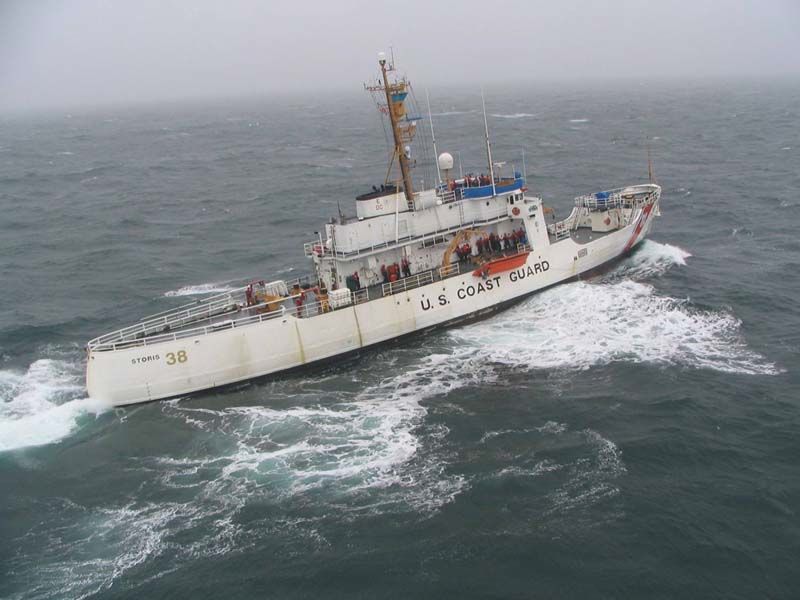
32 WMECs (16×210′, 10×270′ (three building), Storis, 3×213′, 3×205′)
34 WPB 110′ (plus 15 building)
3 WSES 110′ surface effects ships
4 WPB 95′
——————-
85 vessels total
(There were also five Aerostat Radar Balloon tenders.)
 –
2000: “The Combat Fleets of the World 2000-2001” showed
 –
12 WHEC 378′
32 WMEC (13×270′, 16×210′, Alex Haley, Storis, Acushnet)
49 WPB 110′
——————-
93 vessels total.
 –
2013: “The Combat Fleets of the World, 16th Edition,” copyright 2013 listed:
 –
3 NSCs
8 WHEC 378′
28 WMEC (13×270′, 14×210′, Alex Haley)
4 FRCs
41 WPB 110′
——————–
84 vessels total
 –
Comparing the Program of Record (plus NSC #9) to the fleet of 2000: You can look at it this way,
  • 9 NSCs and 3 OPCs is more than adequate replacement for the 12 WHEC 378s
  • 49 of the FRCs is more than adequate replacement for 49 WPB 110s (and we have only had 41 anyway since the WPB 123 screw up)
  • That leaves 22 OPCs and 9 FRCs to cover for the 32 WMECs.
Conclusion: 
I think we would all be pretty happy, if we had the Program of Record fleet in place right now. It really would be a substantial improvement, but while the NSCs and the FRCs are well on the way, the first of the long-delayed OPCs will not be delivered until 2021, and, if everything goes according to plan, the last probably not before 2034, at which time even the newest 270 will be 44 years old. A lot can happen between now and then.
The 2000 fleet was, I believe, the benchmark against which the program of record was measured in the Fleet Mix Study. By 2013 we were already down nine vessels. By my estimate, by the time the last 210 is replaced it will probably be 60 years old. That is expecting a lot. Can we possibly expect that none of these ships will become unserviceable before they are replaced? Building no more than two OPCs a year is really too slow. Once the first ship is built, tested, and approved for full rate production, we should accelerate construction to the maximum. That can’t happen until at least FY2022, probably FY 2023.
By the end of FY2022 we should have already funded 7 ships. The remaining 18 would take nine years, if we buy them at the currently projected schedule. Instead we could fund the entire remaining program from FY2023-2027 by doing a single Multi-Year Procurement of 18 ships. If Eastern alone could not do it, Marinette, which like the designer VARD, is also a Fincantieri company, would probably be more than willing to build an additional couple a year, particularly if the Navy stops building Freedom class LCS/frigates.
 –
We could have the program complete by FY2030, four years early.
 –
Thanks to Peter for initiating this line of thought. 
uscgc_citrus_1984

USCGC Citrus (WMEC-300), USCG photo

storisfoam

USCGC Storis WMEC-38)

USCGC Acushnet

USCGC Acushnet (WMEC-167), USCG photo


A Little More on the Offshore Patrol Cutter

OPC "Placemat"

OPC “Placemat”

MarineLink has a story on the OPC, and it includes a bit more detail, and it raises some questions. I’ve also seen a couple of stories about how they will be equipped that will be referred to below.

There is this:

“Zukunft’s budget suggests at least one cutter, or an immediate separate order, will be arctic capable, and Vard and Canadian engineering consultancy BMT Fleet are already understood to be working on project documents for a Canadian “arctic offshore patrol ship” of Vard 7 100 type.”

VARD 7-100 ICE, the Canadian AOPS

VARD 7-100 ICE, the Canadian AOPS

Vard actually has two designs designated “7-100,” an offshore patrol vessel (pdf) very similar to the OPC and the 7-100 ICE. Apparently, it is the 7-100 ICE they are referring to here. The VARD 7-100 ICE (pdf) is also known as the Canadian Navy’s Arctic Offshore Patrol Ship (AOPS). Does that mean the Coast Guard is looking at the Canadian AOPS as a possible Arctic Patrol Vessel, perhaps filling the role of one or two of the three medium icebreaker? They do have power similar to the old Wind class icebreakers.

We also have this indication the standard OPCs are still expected to patrol the Arctic. (Var refers to the OPC as the Vard 7 110.)

“…the Vard 7 110’s will also patrol the “increasingly accessible Arctic”, a theatre which might require a more closed superstructure, more akin to the Vard 7 100.”

The Vard 7 100 ICE has its ground tackle below the foc’sle deck to protect it from freezing. Perhaps that is what this means. This has also been done on some European Frigates.

Then there is this little bit of speculation about who will build follow on ships”

“Owned by the Italian state via Fintecna, Fincantieri doubled after its acquisition of Vard to become the fourth largest shipbuilder in the world and the largest in the Med. As we wrote these words, Financtieri’s Trieste-based minds were making a friendly offer for the 44 percent of Vard they don’t own. It’s worth noting that in January 2009, Fincantieri bought Manitowoc Marine Group and its two yards in Wisconsin, including the Marinette Marine that built the first Freedom Class littoral combat ship. So, Eastern, it seems, has a rival and a friend in Fincantieri, another maker of mid-sized vessels for the U.S. Navy. So, who knows what may be next from U.S. military-industrial strategists keen to share financial resources with capable NATO allies while also creating jobs at home. For now, all eyes will be on those remaining OPVs.

They are pointing out that there may be competition for the follow on contract. That is good for the Coast Guard.

I would also point out that it also means Marinette might make modified OPCs for the Navy, if the Navy ever realizes that the LCS is not going to make a very good “small surface combatant.”

Northrop Grumman Corporation reports they have been awarded a contract for the design of the C4ISR and machinery control systems (MCS).

“The systems being supplied include integrated bridge systems, command and control consoles, navigation and combat data distribution systems, ship-wide computer network systems, machinery control systems and propulsion control systems

“Included in the design phase of the OPC program is a MCS land-based test facility, as well as a C4ISR test and integration facility, both of which will be located in Charlottesville. Additional work will be conducted at company facilities in San Diego, and Ocean Springs, Mississippi. Northrop Grumman will also provide key C4ISR and MCS integration roles during production testing and shipboard trials to be held in Panama City, Florida.”

MarineLog identified the engines to be used.

Each 360 foot-long vessel will be powered by two FM-MAN 16V 28/33D diesel engines, each rated at 9,763 bhp at 1,000 rpm.

We have consistently seen the speed quoted as 22.5 knots sustained or 22 or more. I suspect they are being conservative. With almost 20,000 HP, the ship ought to make 24 or even 25 knots, in all but the most adverse conditions of load and bottom fouling.

I would have preferred the 20,000 KW (26820 HP) engines advertised for the VARD 7 1000 which would have assured 25 knots, but it’s not bad. If the 7 110 follows the pattern of the 7 100 OPV, than there will be hybrid propulsion, with electric motors on the shaft in addition to geared diesel drive from the main engines. For a cruising speed of 14 knots, that would require two electric motors of about 1,500 HP each.

 “In order to provide fuel efficiency and greater range, this vessel is powered by CODELAD (combined diesel and electric) which allows for instantaneous changeover.”

This would make a lot of sense, in that in addition to the fuel economy benefits it would improve the ships survivability. It could lose both main diesel engines and still have propulsion.

Navy Boosts Target Fleet Size to 355. What is the CG Target?

The Coast Guard might learn something from the way the Navy plows the ground ahead of their budget requests. The Navy creates a “Force Structure Assessment” and from this, they derive a 30 year ship building plan. the Coast Guard has neither.

The nearest thing the Coast Guard has had to a “Force Structure Assessment” (FSA) is the now seven year old, one time, Offshore and Aviation Fleet Mix Study.

Rather than a 30 year shipbuilding plan, the Coast Guard has only the now 10 year old, “program of record” that came out of the Deepwater program updated after 9/11 and a five year budget projection which is not statement of future requirements, rather it is a statement of what the administration thinks they will ask for. In short there is no comprehensive spending plan.

The Navy has announced their 2016 Force Structure Assessment only two year after the previous FSA. It adds 47 ships to the 308 that had been included in the 2014 FSA.

The new total adds 16 large surface combatants (cruisers or destroyers), 18 attack submarines and an additional carrier over the 2014 plan. There was no increase in the number of Small Surface Combattants (LCS and frigates), but they did maintain the previous requirement at 52 despite SecDef’s instruction to limit them to 40. Perhaps we will see some of them in the East Pacific transit zone.

Also of potential importance to the Coast Guard is that they want six Expeditionary Support Base (formerly called the Afloat Forward Staging Base).  Assuming they will put one in SOUTHCOM’s AOR, it might be used as a mothership. for forward deployed Webber class WPCs.

The 355 ship fleet is not an all inclusive wish list.

According to the summary, the service determined the 355 total was the “minimum force structure to comply with [Pentagon] strategic guidance” and was not “the “desired” force size the Navy would pursue if resources were not a constraint, read the summary.

“Rather, this is the level that balances an acceptable level of warfighting risk to our equipment and personnel against available resources and achieves a force size that can reasonably achieve success,” according to the summary, which notes it would take a 653-ship force to meet all global requirements with minimal risk.

This is has parallels to the results of the Fleet Mix study, in that the optimum Coast Guard fleet is about twice the size of the program of record.

The Coast Guard really needs to do something similar. We should revisit the Offshore and Aviation Fleet Mix Study at least every five years and we need a 30 year ship building plan. Additionally I believe we should parallel the Navy’s documents to the extent of using the same titles with only a “Coast Guard” modifier. Congress is familiar with the Navy’s products and it would ease acceptance and interpretation of the Coast Guard’s products.

Allow me to repeat the purported advantages of the Navy’s system from an earlier post.

  • “identifying and evaluating cost growth and schedule delays in the execution of shipbuilding programs;
  • “understanding the relationship between annual procurement rates and unit procurement cost;
  • “evaluating whether programs are achieving satisfactory production learning curves over time;
  • “evaluating whether proposed sequences of annual procurement quantities for programs would be efficient to execute from an industrial standpoint;
  • “evaluating stability in Navy shipbuilding planning by tracking year-to-year changes in the five-year shipbuilding plan;
  • “identifying potential financial and industrial-base linkages between shipbuilding programs that are being funded in overlapping years;
  • “identifying and evaluating Navy assumptions concerning service lives and retirement dates for existing ships;
  • “evaluating whether ship procurement needs are being pushed into the future, potentially creating an expensive ship procurement “bow wave” in coming years; and
  • “understanding when the Navy will achieve its ship force level goals, and whether the Navy will experience ship inventory shortfalls relative to those goals that could affect the Navy’s ability to perform its missions in coming years.”

We should also dovetail our plan with that of the Navy to remind the Congress we are part of the National Fleet. We need to show how we fit in the National Defense Organization because we are a military service at all times.

Related:

Brookings Institute–A conversation with Commandant of the U.S. Coast Guard Admiral Paul F. Zukunft

Another video, this one almost an hour.

Coast Guard Overview

If you haven’t seen it already, the Coast Guard has a web site that provides a lot of information about the status of the service. The Coast Guard Overview includes sections on Missions, Workforce, Force Laydown, Assets, Authorities, Strategy, Budget, Leadership, Partnerships, and a Resource Library. (You do have to scroll down from the intro.)

I had not seen this before. It seems to be connected to the preparation for the Presidential Transition Team.

Added a link to the web site to the top of my Reference page, so it will be easy to find. I have to say I have not kept my Reference page up to date. I’ll be pay more attention to it.

Navy Rethinks the LCS–Manning, Crew Rotation, Homeporting

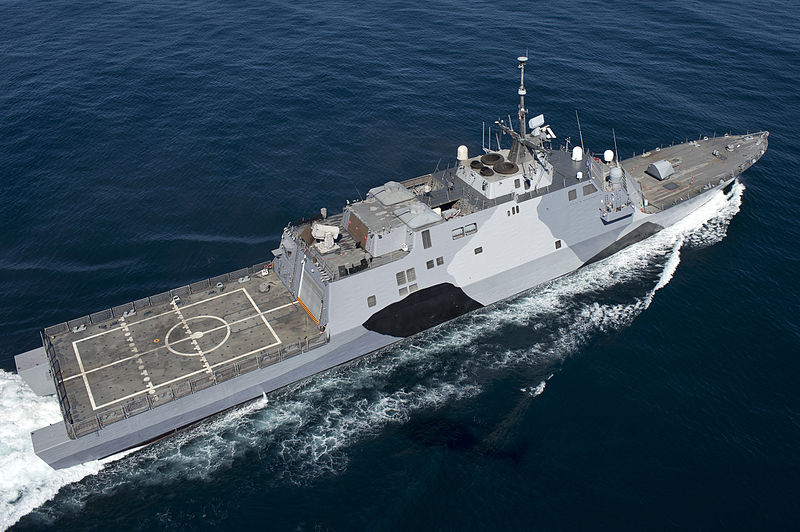
800px-USS-Freedom-rear-130222-N-DR144-367

Photo: USS Freedom (LCS-1)

The US Naval Institute news service reports “Results of New LCS Review is Departure from Original Vision.”

Why should we care?:

For one thing the LCS were planned to be multi-crewed. Their plan was a bit different from our Crew Rotation Concept, but the idea was the same, multiple crews rotating among multiple ships to provide more deployed time. The Coast Guard had planned to apply the Crew Rotation Concept to the National Security Cutters, but I have also seen it referred to with regard to the Offshore Patrol Cutters.

Earlier I called the Offshore Patrol Cutter, the other LCS, and it does look like they will continue to share some systems and training. If the OPCs emerge with space for modular systems, we may see even more cross talk between the programs. The two types (LCS and OPCs) are similar in size, so comparisons are inevitable.

Hopefully we can learn from their experience.

The results: 

The Navy is abandoning their planned rotation of three crews among two ships in favor of a plan that would assign two crews to a single ship, much like the way SSBNs are manned by blue and gold crews. The significant difference is that the crews “own” the ships, they don’t expect to walk away to a different hull and never see it again.

The size of the crews is to be increased. Originally there was to have been a core crew of 40. That was increased to 50, and it is now planned to increase the core crew to 70 plus a 23 person air detachment. Maximum berthing is reportedly 98. Adding a CG LE team should max out the berthing. This pushes the crew much closer to what the Coast Guard was planning for the OPC, (pdf) a crew of 104. That means a full crew for each LCS is really 163, two core crews of 70 and 23 in the air detachment.

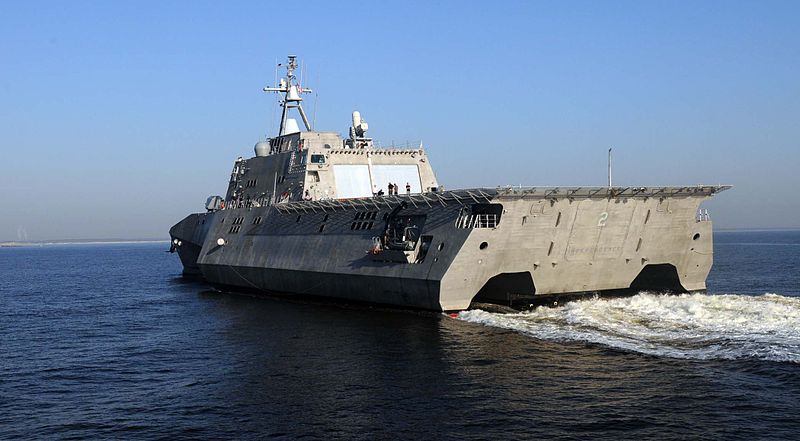
Instead of basing a mix of both types of LCS on each coast, the new plan would put the trimaran Independence class, with its longer range, on the West Coast (San Diego) while the shorter legged, monohull Freedom class will be based on the East Coast (Mayport, FL). That makes a lot of sense.

The ships will be organized into six four ship divisions with each division assigned a single mission (mine countermeasures, anti-surface, or antisubmarine). The four oldest ships will be single crewed, will not be assigned to a division and will instead be used for training and testing. Again this makes sense since subsequent ships are somewhat different, having incorporated lessons learned on the first ships.

That doesn’t necessarily mean there will be one division of each class assigned each of the three missions although that may the result. To me the Independence class appears better suited for ASW and the Freedom class by default better used as minecountermeasures ship.

uss_independence_lcs_2

Photo: USS Independence (LCS-2), U.S. Navy photo by Mass Communication Specialist 2nd Class Justan Williams 

Lessons: 

When the Coast Guard finally decides to abandon the Crew Rotation Concept, as currently envisioned–four crews for three ships. They can point to the LCS experience as justification.

As a means to allow increased time underway, permanently augmenting the NSCs’ crews to allow generous leave and TAD assignments is probably a better solution. After all, if we have a crew of 160 or so assigned to each NSC or OPC, we could probably keep them underway at least as much as the LCS are.

Applying a division staff organization to the NSCs and perhaps the OPCs is probably a good idea. In addition to a post command captain, that could, among other things, provide initial advice to newly arrived COs and possibly a relief CO function; it could provide personnel augmentation for those specialists positions that have little or no redundancy in the typical ship’s organization, allowing them some leave and/or TAD while the ship is underway, with the objective of keeping the crew members underway time at 185 days or less, while the ship is away from homeport for a considerably longer time.

Eagle to be Re-Engined

MarineLink is reporting BMT has been awarded a contract to provide support for a planned re-powering of the Barque Eagle.

The $1.5M (approx.) project involves engineering, design, supply and logistics support to install a new MTU 8V4000 engine, ZF gearbox, propeller, automation system and other related components.

Reportedly the work will be done at the Coast Guard Yard, 2017-18.

You can view the specs for an MTU 8V4000 engine here (pdf):

With 1340 HP it should be a substantial upgrade over Elmer that powered her when I was a cadet. My guess is should be good for at least 13 knots.

How About a Coast Guard Sink-Ex?

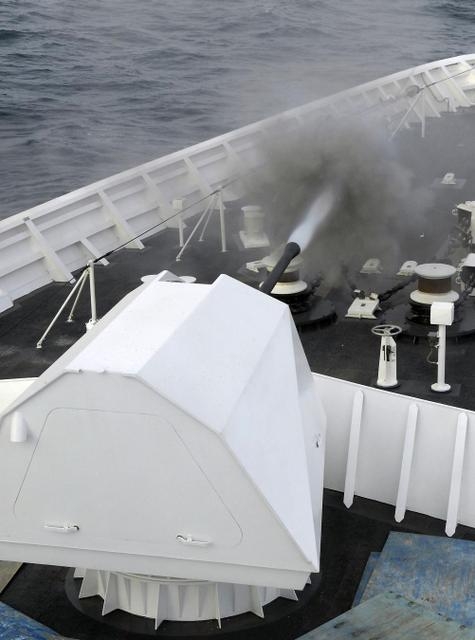
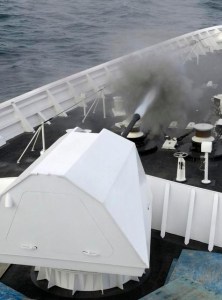
Test firing of the 57mm Bofors aboard USCGC Bertholf, photo by MMagaro

Test firing of the 57mm Bofors aboard USCGC Bertholf, photo by MMagaro

Are our weapons adequate for the Ports, Waterways, and Coastal Security Mission? Let’s find out.

The Navy Times is reporting that the Navy will have an unusually large number of ships available for “Sink-Ex” exercises in 2017.

The SINKEX fleet grew from five ships last year to seven ships available in 2017, including four frigates, the landing ship tank Racine and two attack cargo ships.

According to the source document, the Navy’s 30 year shipbuilding plan (pp 13/14), one of the stated purposes of a Sink-EX is weapons effectiveness evaluation. I think this might be a good opportunity for us to test out our weapons for the Ports, Waterways, and Coastal Security (PWCS) mission. This mission implies we must have the ability to forcibly stop a ship, regardless of its size. A Sink-Ex could be an opportunity to answer once and for all the question “Is the Coast Guard adequately armed for the mission?”  Personally I don’t think so, and what little evidence we have seems to indicate that is the case.

The two attack cargo ships are Charleston class LKAs, the ex-Durham (LKA-114) and ex-St. Louis (LKA-116), built in the late ’60s. These are medium sized auxiliary ships, 9,000 tons light and 18,500 tons fully loaded, 576 feet (176 meters) in length. Structurally they are not much different from merchant ships of the period. Unfortunately they don’t have the big diesel engines found on modern merchant ships, and the are far smaller than many current merchant ships but they are still, in most respects, representative of the target set the Coast Guard should be interested in.

USS_Charleston_(LKA-113)

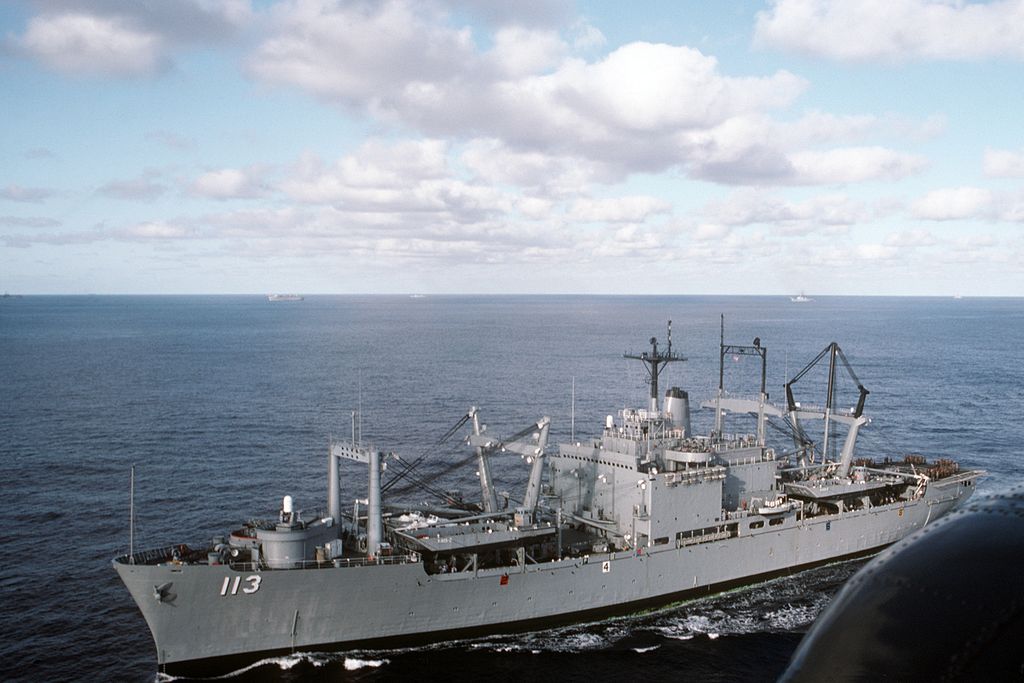
Photo: USS Charleston (LKA-113)

We have four gun systems that might be tested. .50 cal., 25 mm, 57 mm, and 76 mm. The 25 mm and 57 mm are particularly important as the .50 cal is probably too small and short ranged and the 76 mm is going out of service. Still, we should still attempt to include the 76 mm because if the 57 mm proves inadequate, our next question should be, “Would the 76 mm have been successful?” Testing the 25, 57, and 76 mm guns would require use of at least two ships, a 378 for both the 76 and 25 mm, and a Bertholf class for the 57 mm. (Alternately an LCS might provide the 57 mm, a Bear class the 76 mm, and a 110 or Webber class the 25 mm.)

1280px-USCG_Gallatin_Mk_75_firing

This could be a CG R&D project, but of course it would require Navy assistance, perhaps a joint project. Because our objective is to at least stop the target, rather than sink it, loss of power or steering would constitute a success. To determine if this is the case, we need information about what is happening inside the hull when the we get a hit. Will the round penetrate not only the hull but also critical systems, the loss of which would result in loss of power or control of the ship? Because it would probably be dangerous to go back on board the target after it has been shelled, the target would need to be instrumented with sensors and the results broadcast back. Aside from putting cameras inside the spaces, a technique might be to seal up and pressurize equipment like boilers, turbines, and steering gear and have them instrumented to detect any loss of pressure that would indicate a breach.

We would also want to conduct the exercise at a reasonable ranges. Since the real targets might be equipped with weapons that might be typically available to terrorist organizations, including anti-tank missiles and Soviet era antitank and anti-aircraft guns,that might target critical systems on the cutter, I believe the cutter should stand off at least 4000 yards, but for the 25 mm, we would probably need to close to 3,000 yards. A logical sequence might be,

  1. 378 closes to 3000 yards engages with 25 mm then withdraws
  2. NSC closes to 4,000 yards and engages, then withdraws
  3. 378 closes to 4,000 yards and engages.

We would also want to fire a reasonable number of rounds, probably about 150 rounds of 25 mm, about 100 rounds of 57 mm, and about 80 rounds of 76 mm, basically shoot enough to exhaust the ammunition normally carried on the mount.

Realistically this would have to be part of a larger Sink-Ex with more than one target, but it might be reasonable to allow the Coast Guard a day to try their systems against one of the targets before the other firing units come on scene.

Should our current systems prove not up to the task, we would also want to know the results for possible candidate systems, so we might ask that these candidate systems be used against the target as well. These might include, APKWS, Griffin, Hellfire, the 5″ gun, and the light weight torpedo. I don’t think it has ever been tried, but with the right depth settings, is it possible to hit a deep draft surface target with our current light weight torpedoes?

Let’s at least find out if we have a chance of succeeding in this mission. 

Document Alert: Cutter Procurement–Another Report to Congress

Once again, the Congressional Research Service’s Ronald O’Rourke has revised his “Coast Guard Cutter Procurement: Background and Issues for Congress” with the new edition issued April 15. This has got to be a hot topic because previous revisions were issued March 22, January 27, and December 14, 2015. That is four revisions in four months, on average every six weeks, but the latest is only 24 days after the previous edition. I have begun to sense, we may have turned a corner. The tone of the reports has changed over these four months, from, how long will it take us to reach the “Program of Record” (POR), to consideration of, if we should perhaps go beyond the POR.

The NSC, OPC, and FRC programs pose several issues for Congress, including the following:

“whether to fund the acquisition of a 10th NSC in FY2017;

“whether to fund the acquisition of four FRCs in FY2017, as requested, or some other number, such as six, which was the number projected for FY2017 under the Coast Guard’s FY2016 budget submission;

“whether to use annual or multiyear contracting for procuring FRCs;

“whether to use annual or multiyear contracting for procuring OPCs;

“planned procurement quantities for NSCs, OPCS, and FRCs;

“the cost, design, and acquisition strategy for the OPC;

“initial testing of the NSC; and

“rotational crewing of the NSC.”

The latest revision includes three substantial Appendices:

  • Appendix A. Planned NSC, OPC, and FRC Procurement Quantities (pp 17-22)
  • Appendix B. Funding Levels in AC&I Account (pp 23-26)
  • Appendix C. Additional Information on Status and Execution of NSC, OPC, and FRC Programs from March 2016 GAO Report (pp 27-34)

Appendix C is entirely new and appears to have been the reason for the revision.

Appendix A (p. 17-22) is a fairly detailed discussion of the results of the Fleet Mix Study and asks why we so seldom hear that the program of record is not enough to assure the Coast Guard to successfully accomplish its assigned missions.

The Fleet Mix Study was made public in 2012 long after its completion in 2009. It is due for a reexamination and the Commandant has said another will be done. When that happens, we seriously need to look at more than just more of the same assets. We need to look at additional technology, equipment, and weapons that might allow us to accomplish these missions without a major increase in personnel.

Looking at “Table A-3. Force Mixes and Mission Performance Gaps” (document page 18) I would note that if we get to Fleet Mix Analysis Phase 1 (FMA-1, an increase over the POR including 9 Bertholf class NSCs, 32 OPCs and 63 Webber Class FRCs, for a total of 104 vessels), we will have addressed all the “Very High Risk Gaps” found in the Fleet Mix Study that included SAR capability, “Defense Readiness Capacity,” and “Counter Drug capacity.” What will remain are “High” or lower risks in Ports, Waterways, and Coastal Security (PWCS) and Living Marine Resources (LMR), and a low to very low risk to the Alien Migrant Interdiction Operations (AMIO) mission. This total of more than 40 NSCs and OPCs certainly should not be out of the question, after all the Coast Guard has included over 40 ships larger than a thousand tons for the last several decades.

Still, I would note that, no matter how many ships we have, the Ports, Waterways, and Coastal Security (PWCS) mission will always be at risk, unless weapons are available to quickly and reliably stop terrorists’ exploitation of a larger merchant vessel to make an attack. Guns alone are simply not up to the task. I have identified two weapons that might address this threat, (1) equipping our WPCs and possibly WPBs with light weight torpedoes that target a ships propellers or (2) equipping our larger ships with the Long Range Anti-Ship Missile (LRASM) which might allow our larger cutter to effectively support our smaller cutters and respond to an attack, even if the large cutter 200 miles from the targeted port. Either would also make our ships much more capable of making a meaningful contribution to Defense Readiness.