“SEWIP Roll-Out Continues To US Fleet / Northop Grumman Tests Ultra-Lite Electronic Attack System” –Naval News

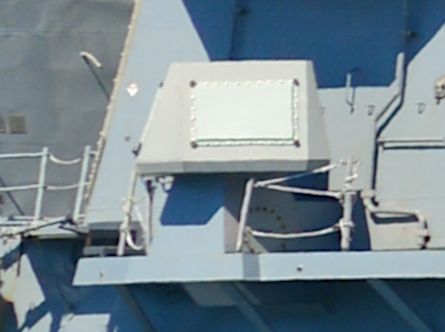
Cropped version focusing on the AN/SLQ-32(V)6 suite, USS Porter (DDG-78). Photo by Johan Fredriksson CC-BY-SA

Naval News provides an update on Electronic Warfare (EW) modernization. The paragraph of particular interest to the Coast Guard is below.

A compact SEWIP Lite variant, known as AN/SLQ-32C(V)6, has been developed for smaller ships. Initial deliveries of this scaled version – designed to provide early detection, signal analysis and threat warning for small ships – are supporting the US Coast Guard Heritage class Offshore Patrol Cutter program and the navy’s Littoral Combat Ship.

There is a second Naval News report that may be related, “Northop Grumman Tests Ultra-Lite Electronic Attack System,”

The Ultra-Lite EA System is a scaled-down, onboard EA system for anti-ship missile defense for smaller ships.

Presumably, those smaller ships are again the Heritage (Argus) class Offshore Patrol Cutters and the Navy’s Littoral Combat Ships.

“U.S. Navy Intercepts More Than 2,000 Assault Rifles Shipped from Iran”

Thousands of AK-47 assault rifles sit on the flight deck of guided-missile destroyer USS The Sullivans (DDG 68) during an inventory process, Jan. 7. U.S. naval forces seized 2,116 AK-47 assault rifles from a fishing vessel transiting along a maritime route from Iran to Yemen. (Photo by U.S. Navy)

Below is a press release from U.S. Naval Forces Central Command reporting interdiction of an arms smuggling operation. The initial interception and boarding were done by, soon to be decommissioned, Cyclone class patrol ship USS Chinook. She was supported by another, soon to be decommissioned, Cyclone class USS Monsoon and destroyer USS The Sullivans.

At one time there were ten Cyclone class patrol ships based in Bahrain, along with six Island class patrol boats and for a while some MkVI patrol boats. Apparently, there are still five Cyclone class, based in Bahrain, doing useful work for the USN. Looks like soon, there will only be the six Webber class of Coast Guard Patrol Forces Southwest Asia.

Apparently, 5th Fleet expects the unmanned systems of Task force 59 to perform some of the patrol functions, but I have to wonder if six patrol craft are enough?


MANAMA, Bahrain —

U.S. naval forces intercepted a fishing vessel in the Gulf of Oman, Jan. 6, and discovered it smuggling 2,116 AK-47 assault rifles while transiting international waters along a maritime route from Iran to Yemen.

A U.S. Navy boarding team from patrol coastal ship USS Chinook (PC 9) initially discovered and seized the weapons with support from USS Monsoon (PC 4) and guided-missile destroyer USS The Sullivans (DDG 68). The intercepted vessel, which was sailing on a route historically used to traffic illicit cargo to the Houthis in Yemen, was crewed by six Yemeni nationals.

The direct or indirect supply, sale or transfer of weapons to the Houthis violates U.N. Security Council Resolution 2216 and international law. The transfer of the vessel and its crew for repatriation is in progress.

“This shipment is part of a continued pattern of destabilizing activity from Iran,” said Vice Adm. Brad Cooper, commander of U.S. Naval Forces Central Command, U.S. 5th Fleet and Combined Maritime Forces. “These threats have our attention. We remain vigilant in detecting any maritime activity that impedes freedom of navigation or compromises regional security.”

In the past two months, U.S. 5th Fleet has also intercepted two other fishing vessels in the Gulf of Oman smuggling lethal aid from Iran to Yemen.

Forces operating from expeditionary sea base USS Lewis B. Puller (ESB 3) seized more than 50 tons of ammunition rounds, fuses and propellants for rockets, Dec. 1. Weeks earlier on Nov. 8, The Sullivans, USS Hurricane (PC 3) and U.S. Coast Guard ship USCGC John Scheuerman (WPC 1146) intercepted more than 70 tons of ammonium perchlorate, a powerful oxidizer commonly used to make rocket and missile fuel, as well as 100 tons of urea fertilizer.

The U.S. 5th Fleet operating area includes 21 countries, the Arabian Gulf, Gulf of Oman, Red Sea, parts of the Indian Ocean and three critical choke points at the Strait of Hormuz, Bab al-Mandeb and Suez Canal.

“USNI News Interview: Coast Guard Commandant Adm. Linda Fagan”

Adm. Linda Fagan in front of the Coast Guard Cutter Eagle in New London, Conn., Aug 19, 2022. US Coast Guard Photo

The US Naval Institute has an excellent interview with the Commandant. The lead off is about steps being taken to lower barriers to both service entry and long-term service.

“The Coast Guard commandant has a message for the country – she’s hiring.

“The Coast Guard is feeling an acute recruiting crunch across both officer and enlisted ranks, so reforming the service workforce is at the top of Adm. Linda Fagan’s agenda and the centerpiece of the Coast Guard’s latest strategy that rolled out in October.”

But there is a lot more to the interview. She also talks about cutter recapitalization, the helicopter fleet, and the Coast Guard’s increasing role internationally.

You may have noticed that “we are hiring” signs are up all over the country. There is a structural labor shortage in the country as job creation is way up, unemployment is at record lows, and “boomers” are finally leaving the work force. As a result, the Commandant is looking hard at ways to recruit and retain members, including recognizing prior work experience. Likely the average age of the workforce is going to increase. This is all to the good. Experience and guile beat youth and enthusiasm every time.

It is worth noting that, over the last 30 years, the number of Coast Guard personnel authorized has increased while the size of the other four military branches, not surprisingly, have decreased. (DOD active-duty personnel are down 36%.) While I don’t have a figure for 1993, in Oct 1989, it appears the Coast Guard’s active-duty allowance was 36,899 personnel. Current authorization is 44,500. That would be a 20.6% increase.

“USCGC Frederick Hatch (WPC 1143) completes expeditionary patrol in Oceania, home for Christmas” –Forces Micronesia / Sector Guam

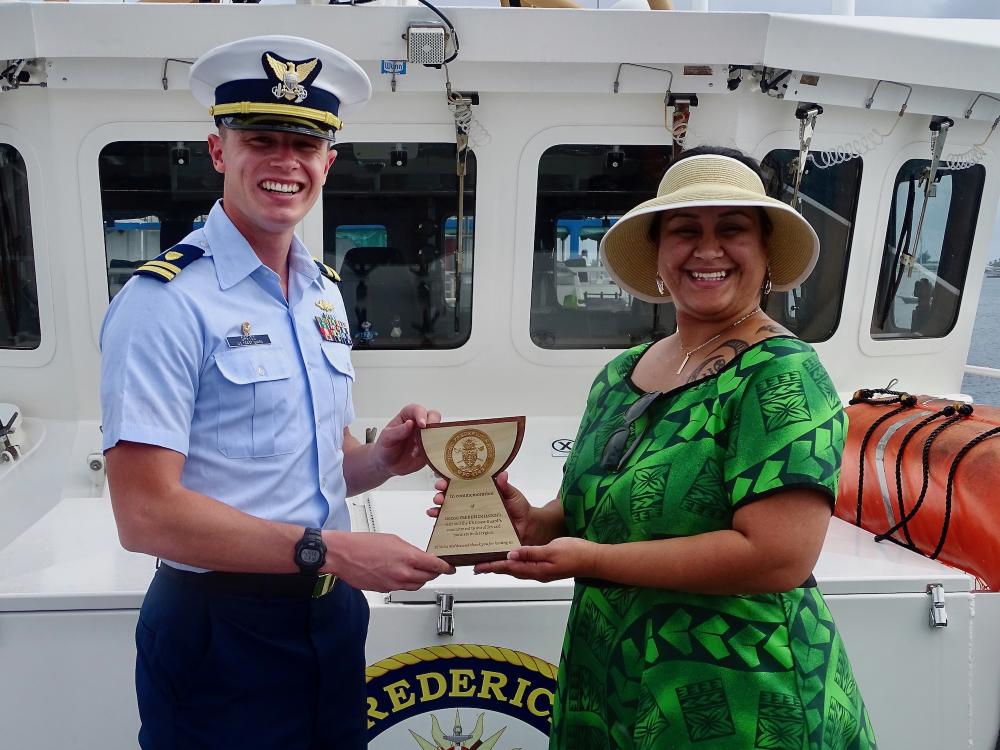
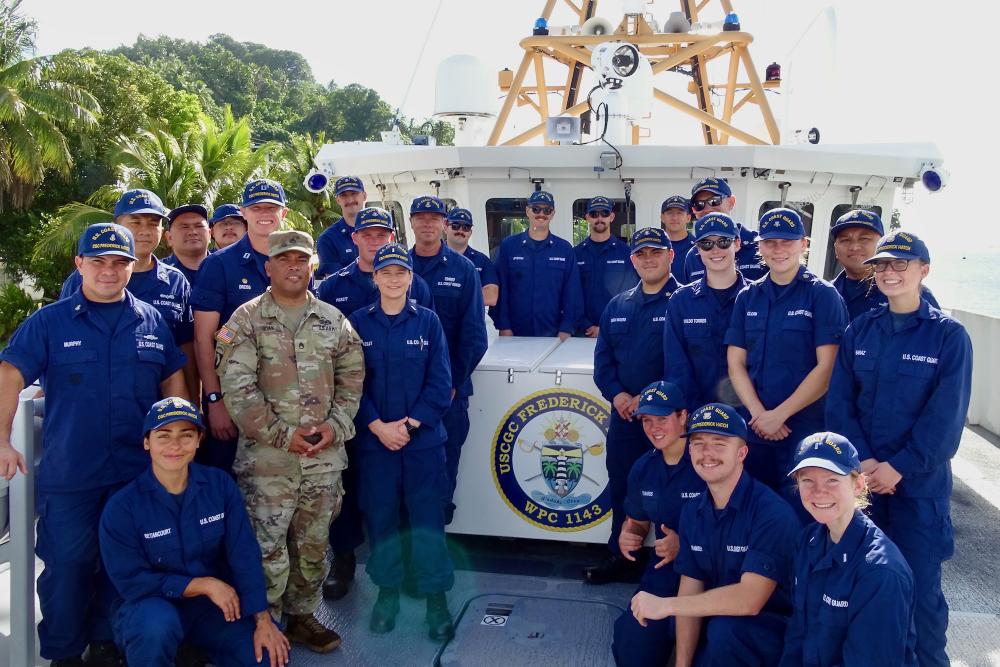
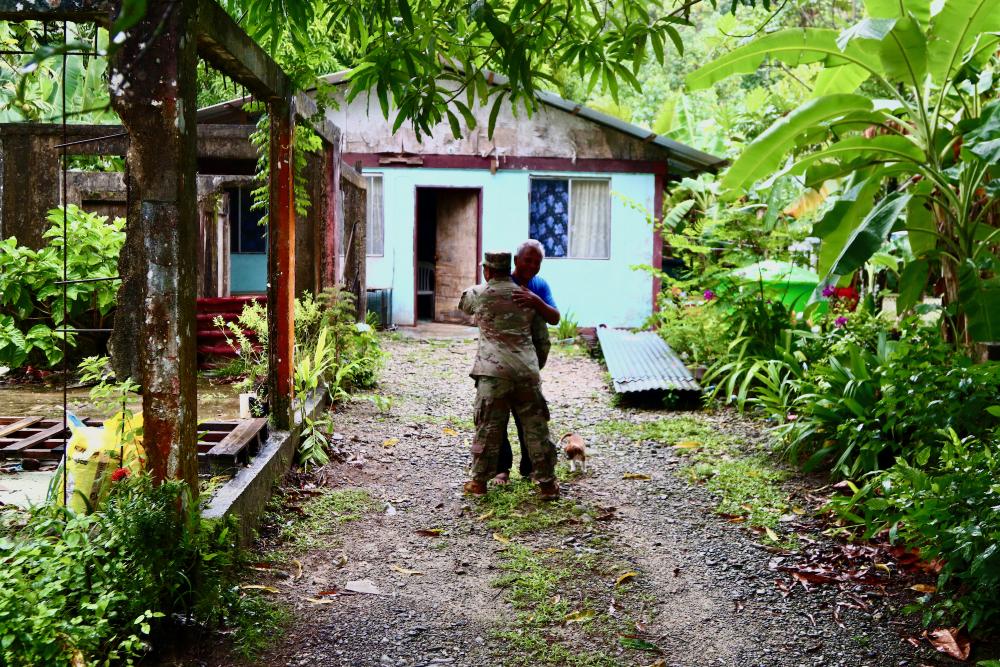
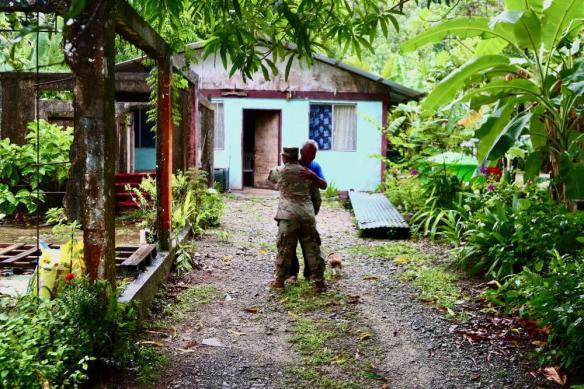
The crew of the USCGC Frederick Hatch (WPC 1143) arrive in Kosrae, Federated States of Micronesia, on Dec. 15, 2022, and also brought Staff Sgt. Gary Likiak, U.S. Army and part of the local FSM embassy team, home for the first time in six years. The Frederick Hatch crew completed a 41-day 7100-nautical mile expeditionary patrol throughout Oceania returning home in time for Christmas 2022. Under Operations Rematau and Blue Pacific, this patrol countered illegal, unreported, and unregulated fishing in the exclusive economic zones of the Federated States of Micronesia, the Republic of the Marshall Islands, and the Republic of Nauru by enforcing applicable laws, regulations, and individual countries’ sovereignty. The crew strengthened partnerships through established bilateral maritime law enforcement agreements, shiprider operations, subject matter exchanges, and community engagements. (U.S. Coast Guard photo)

Another Guam based WPC makes an extended patrol in the Western Pacific.

Apparently, this was the first patrol under an “Expanded Maritime Law Enforcement Agreement” with the Federated States of Micronesia (FSM).

“The expanded agreement builds on the existing bilateral shiprider agreement between the two countries. It establishes procedures for authorizing the U.S. to conduct maritime law enforcement boardings on behalf of FSM to combat illicit maritime activity when an FSM law enforcement officer is not present. More specifically, the agreement provides a coordinating mechanism and process for U.S. law enforcement personnel to work with the FSM National Police, Division of Border Control and Maritime Surveillance to receive approval from the FSM to act under the agreement.”

News Release

U.S. Coast Guard Forces Micronesia / Sector Guam

USCGC Frederick Hatch (WPC 1143) completes expeditionary patrol in Oceania, home for Christmas
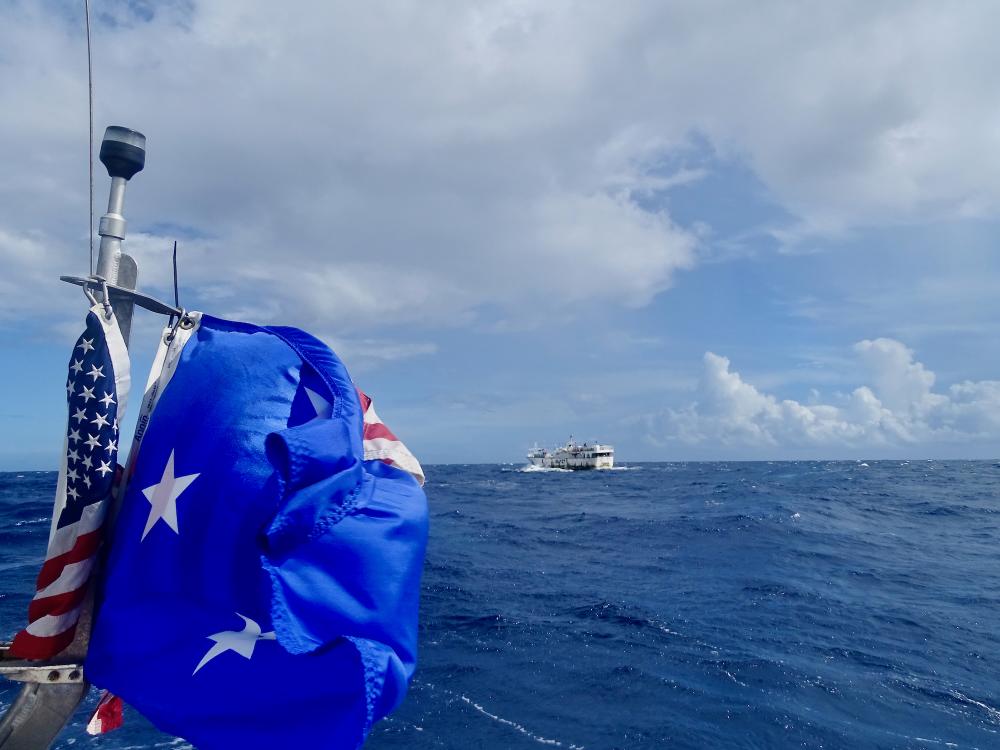
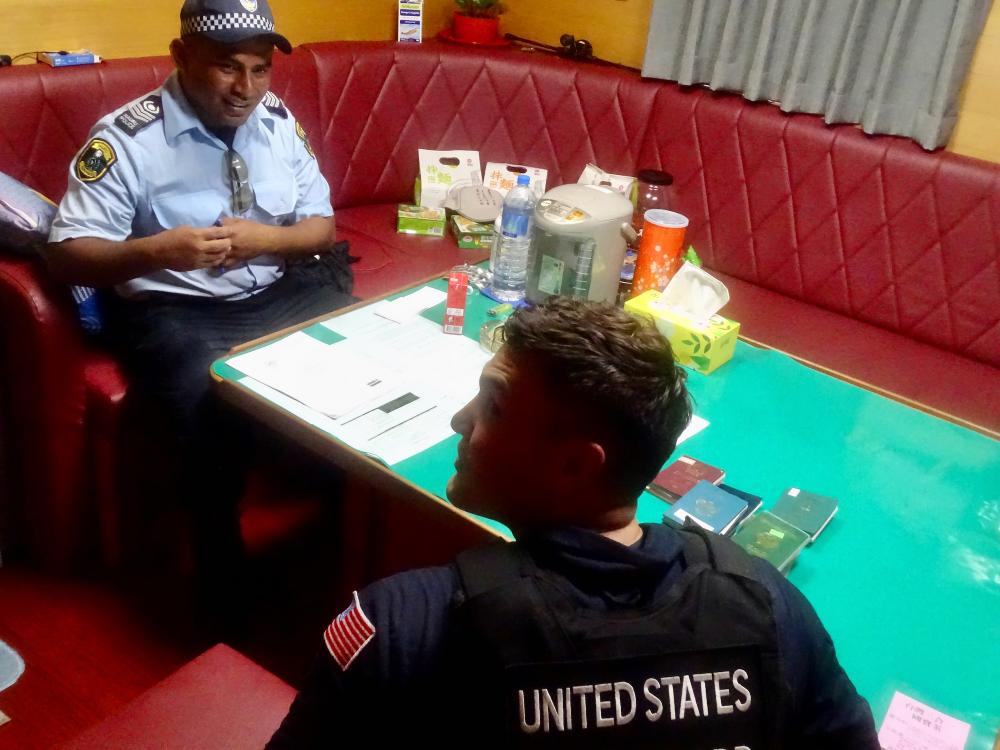
The USCGC Frederick Hatch (WPC 1143) crew conduct a fisheries boarding in the Federated States of Micronesia exclusive economic zone on Nov. 17, 2022 The command of the USCGC Frederick Hatch (WPC 1143) hosts Minister of Foreign Affairs and Trade Kitlang Kabua, and her team while in Majuro, Republic of the Marshall Islands, on Dec. 5, 2022.  The crew of the USCGC Frederick Hatch (WPC 1143) arrive in Kosrae, Federated States of Micronesia, on Dec. 15, 2022, and also brought Staff Sgt. Gary Likiak, U.S. Army and part of the local FSM embassy team, home for the first time in six years.
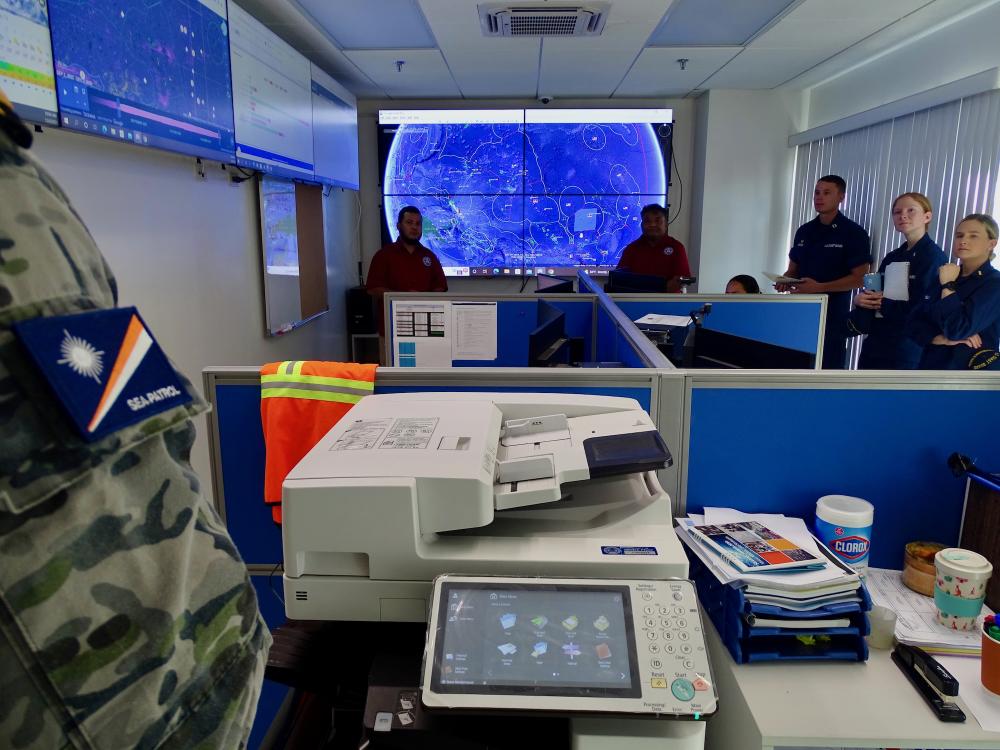
The USCGC Frederick Hatch (WPC 1143) crew visit the Republic of the Marshall Islands Sea Patrol Maritime Surveillance Administration on Dec. 5, 2022 Petty Officer 2nd Class Brandon Chapleau and a shiprider from the Nauru National Police conduct a boarding on the fishing vessel New Splendor off Nauru on Dec. 11, 2022.  Lt. j.g. Mary Sims of the USCGC Frederick Hatch (WPC 1143) sits with youth in Majuro, Republic of the Marshall Islands, on Dec. 5, 2022.

Editor’s Note: Click on the images above to view more or download high-resolution versions.

SANTA RITA, Guam — The crew of the USCGC Frederick Hatch (WPC 1143) completed a 41-day 7100-nautical mile expeditionary patrol throughout Oceania on Dec. 23, returning home in time for Christmas.

Under Operations Rematau and Blue Pacific, this patrol countered illegal, unreported, and unregulated fishing in the exclusive economic zones of the Federated States of Micronesia, the Republic of the Marshall Islands, and the Republic of Nauru by enforcing applicable laws, regulations, and individual countries’ sovereignty. The crew strengthened partnerships through established bilateral maritime law enforcement agreements, shiprider operations, subject matter exchanges, and community engagements.

“This patrol exemplified the operational advantage the Fast Response Cutter provides the Coast Guard in Oceania, displaying our ability to successfully complete fisheries enforcement and search and rescue missions over 1,800 nautical miles from home. Mixed with fantastic port calls and impactful community relations events, the last 41 days were a testament to the Hatch crew’s adaptability and diligence that made this patrol so successful. It has been an honor to sail with each of them. Making it home for Christmas is a great reward, especially after being away for Thanksgiving,” said Lt. Patrick Dreiss, USCGC Frederick Hatch’s commanding officer.

The crew hosted students from high schools and colleges as well as community members during their port calls to share the missions of the U.S. Coast Guard and provide a look at the ship itself. They also participated in local sporting events and cultural activities. When departing the Republic of the Marshall Islands, the team took on an additional temporary crewmember, Staff Sgt. Gary Likiak, U.S. Army, and part of the local embassy team. Likiak rode along to Kosrae, which is also home for him – the first time he’s been home in six years.

“Reinvigorating our bi-lateral agreements with our partners in the region after COVID-19 was the main objective of this patrol, and our successes with shipriders aboard and warm hospitality received at each island both allowed us to achieve this goal,” said Dreiss.

Of note, on this patrol, the Frederick Hatch team hosted shipriders from the maritime enforcement branches of the FSM, RMI, and Nauru governments. This activity was the first time shipriders could accompany U.S. Coast Guard crews in several years as Pacific Island partners resume normal operations after limiting travel as a COVID precaution.

The team conducted 16 boardings, issued five warnings, and found no significant violations. The fishing vessels were tuna longliners and purse seiners.

On Dec. 17, the Frederick Hatch crew, after departing Kosrae, enacted the newly expanded agreement for maritime law enforcement operations, conducting two boardings on licensed fishing vessels operating in the FSM exclusive economic zone.

“It was very fulfilling to have an opportunity to enact the Expanded Maritime Law Enforcement Agreement for the first time after watching the program develop over the last year,” said Dreiss. “It provides the U.S. Coast Guard with another avenue to support our regional partners and continues to lay the groundwork for increasing Illegal, Unregulated, and Unreported Fishing enforcement in the region.”

The expanded agreement builds on the existing bilateral shiprider agreement between the two countries. It establishes procedures for authorizing the U.S. to conduct maritime law enforcement boardings on behalf of FSM to combat illicit maritime activity when an FSM law enforcement officer is not present. More specifically, the agreement provides a coordinating mechanism and process for U.S. law enforcement personnel to work with the FSM National Police, Division of Border Control and Maritime Surveillance to receive approval from the FSM to act under the agreement.

“This was an excellent warm-up of our bilateral relations and fisheries enforcement process following COVID. It was great to have local experts with us again and provide services to our FSM, RMI, and Nauru partners,” said Capt. Nick Simmons, the commander of U.S. Coast Guard Forces Micronesia/Sector Guam. “The successful application of the expanded agreement now allows us to support our partners better. FSM occupies more than one million square miles of the Pacific Ocean and ranges 1,700 miles from West (Yap) to East (Kosrae) with the enforcement team in Pohnpei. This agreement allows us to help our partners overcome the logistics that limited enforcement in the past when it is difficult to get a shiprider out to the field.”

The U.S. Coast Guard flags IUU-F as one of the top threats to our oceans and a significant regional destabilizing factor. The United States continues to emphasize the ocean’s health and good governance, as evidenced by expanded measures to combat illegal fishing in the FY2023 National Defense Authorization Act. Notable items include an expanded High Seas Drift Net Act, improvements to NOAA’s Seafood Import Monitoring Program, programs aimed at reducing the impacts of ships and other vessels on marine mammals, and a federal ban on buying or selling shark fins in the U.S.

The U.S. Coast Guard regularly exercises 11 bilateral fisheries law enforcement agreements on behalf of the United States with countries throughout the Pacific islands. Shiprider agreements allow maritime law enforcement officers to observe, board, and search vessels suspected of violating laws or regulations within a designated EEZ or on the high seas. These law enforcement activities bolster maritime law enforcement operations and maritime domain awareness and provide a mechanism to conduct integrated operations within the Pacific. This expanded agreement is the first of its kind. It seeks to overcome the challenges of the Oceania region’s vast distances while leveraging limited enforcement resources and the trust built between nations over decades.

The U.S. Coast Guard maintains strong partnerships with the maritime forces in the region through extensive training and subject matter expert exchanges. FSM, also known as the Big Ocean State, has one of the world’s largest EEZs, with waters rich in sea life. RMI, located halfway between Hawaii and Australia north of the equator, is an archipelago of 29 atolls, five low coral islands, and 1,151 islets that shares maritime borders with FSM, Kiribati, and Nauru.

RMI’s exclusive economic zone of 1.2 million square kilometers (463,322 square miles). Nauru is the smallest island nation and the third smallest country in the world, with around 10,000 inhabitants. Fishing is essential to their food security. FSM and RMI are signatories to a Compact of Free Association with the United States. They are Pacific Islands Forum Fisheries Association members and party to the South Pacific Tuna Treaty, as is Nauru.

In addition to fisheries enforcement, the Frederick Hatch crew conducted a search and rescue case medically evacuating a 31-year-old Vietnamese fisherman to a higher level of medical care in Pohnpei on Nov. 20.

The cutter’s boarding team learned of the fisherman’s injuries while conducting a bilateral fisheries boarding with an FSM Marine Police Officer aboard the fishing vessel Ocean Galaxy 195 nautical miles (224 statute miles) south of Pohnpei. The ship is a 69.4-meter (227-foot) purse seiner flagged out of Nauru. The fisherman reportedly fell 12 feet earlier the same day, sustaining a head and possible spinal injury. He was conscious and talking but lost feeling and motion in his right arm and both legs, exhibiting severe concussion symptoms.

“It was an absolute team effort by every member of Frederick Hatch to medevac the injured crewmember from the Ocean Galaxy successfully. Witnessing each crewmember perform at the highest level after completing two boardings earlier the same day to help a fellow mariner was awesome to watch,” said Dreiss.

Operation Rematau is how U.S. Coast Guard Forces Micronesia/Sector Guam supports the overarching Coast Guard endeavor Operation Blue Pacific to promote security, safety, sovereignty, and economic prosperity in Oceania. Rematau means people of the deep sea. It recognizes the wisdom of the Pacific Island Forum leaders in that securing the future requires long-term vision and a carefully considered regional strategy for the Blue Pacific Continent. Op Rematau reinforces U.S. commitment to working together to advance Pacific regionalism based on the Blue Pacific narrative. This action supports U.S. national security objectives, bolstering regional maritime governance and security.

The Frederick Hatch is the 43rd 154-foot Sentinel-class fast response cutter named for a surfman and lighthouse keeper who was a two-time Gold Life Saving Medal recipient. The Service commissioned the ship along with its sister ships, Myrtle Hazard (WPC 1139) and Oliver Henry (WPC 1140), in Guam in July 2021. These cutters are a vital part of the U.S. Coast Guard’s enduring regional presence serving the people of the Pacific by conducting 10 of the Service’s 11 statutory missions with a focus on search and rescue, defense readiness, living marine resources protection, and ensuring commerce through marine safety and ports, waterways, and coastal security.

For more U.S. Coast Guard Forces Micronesia/Sector Guam news, visit us on DVIDS or subscribe! You can also visit us on Facebook or Instagram at @USCGForcesMicronesia or Twitter @USCGFMSG. 

“The More ‘Eyes On The Water’, The Better” –Marine News

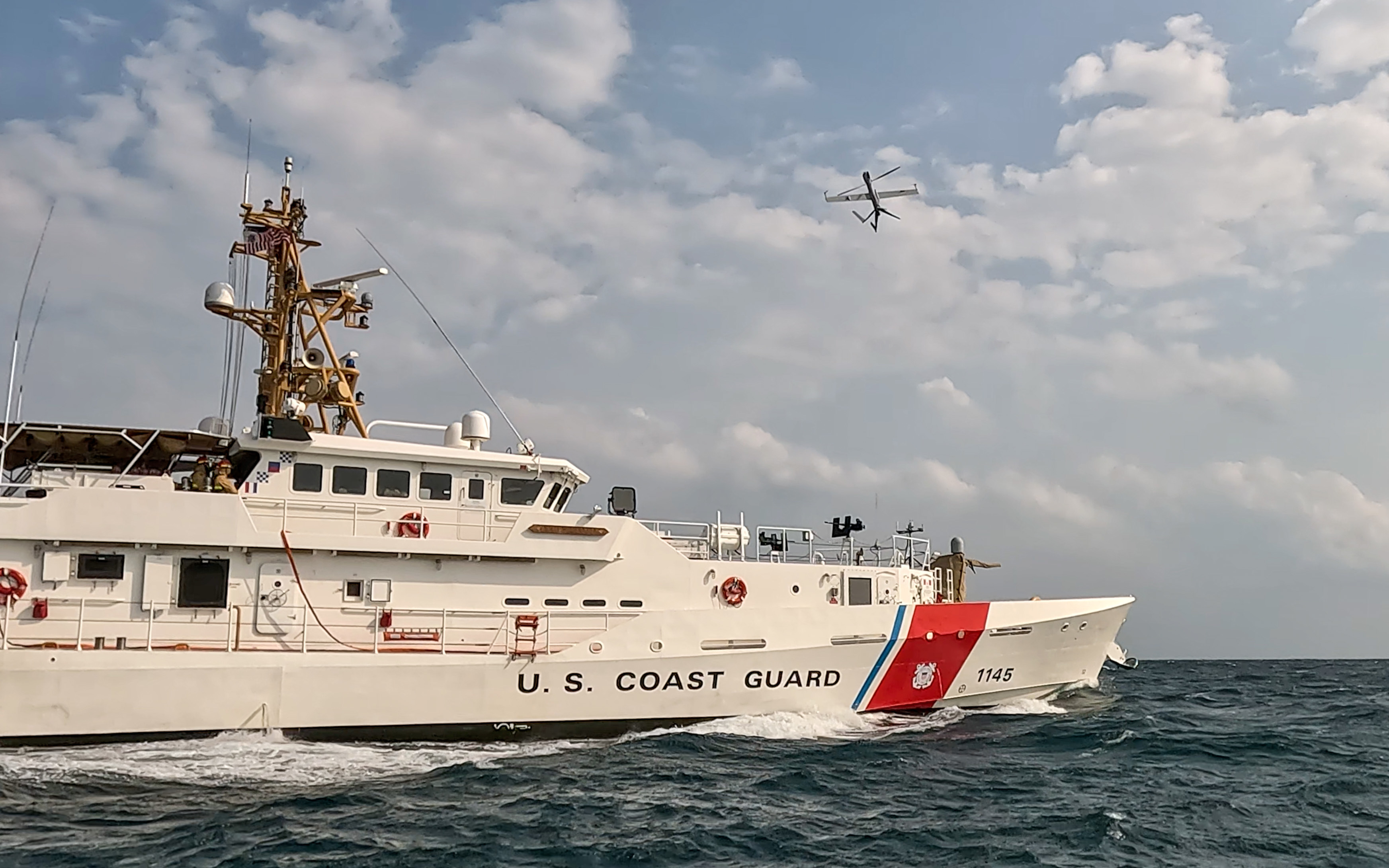
221207-N-NO146-1001 ARABIAN GULF (Dec. 7, 2022) An Aerovel Flexrotor unmanned aerial vehicle (UAV) takes off from U.S. Coast Guard fast response cutter USCGC Emlen Tunnell (WPC 1145) transiting the Arabian Gulf, Dec. 7. U.S. 5th Fleet’s Task Force 59 launched the UAV during Digital Horizon, a three-week event focused on integrating new unmanned and artificial intelligence platforms, including 10 that are in the region for the first time. (U.S. Navy photo)

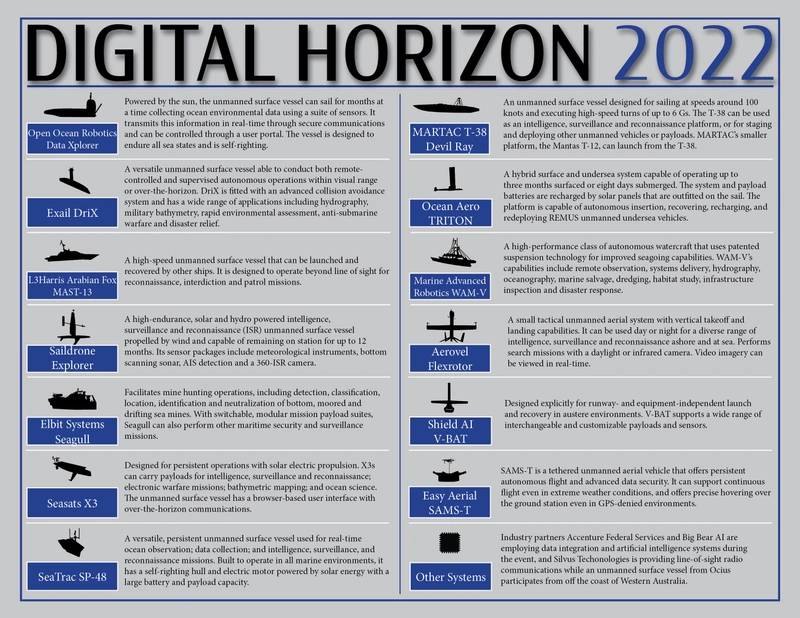
Marine News has an interesting story that discusses both PATFORSWA’s operations using the recently arrived Webber class WPCs and the recent Digital Horizon 2022 exercise. There is also a bit of a tie in between the two in that at least one WPC was operating as part of Task Force 59, the 5th Fleet element charged with operating unmanned systems. We have heard a bit about the exercise before, but the list of participants in the graphic below seems particularly revealing.

Graphic illustration depicting the unmanned systems that participated in exercise Digital Horizon.

“U.S. Building Advanced Over-The-Horizon Radar On Palau” –The Drive

The Republic of Palau on a map of the Pacific. Credit: Encyclopaedia Britannica/Universal Images Group via Getty Images

The Drive reports,

“Progress is being made on the deployment of a new long-range over-the-horizon radar system for the U.S. Air Force that will be stationed on the Pacific island of Palau. The news comes as the Pentagon’s push to drastically beef up both its offensive and defensive capabilities in the Western Pacific gains steam.

With ranges of hundreds to well over a thousand miles, these radar systems are critical early warning and cuing systems. This will make them a high priority target for early elimination in any potential conflict with China.

Keeping Chinese fishing vessels outside Palau’s EEZ would eliminate one potential delivery systems for hostile Special Operations Forces that might be tasked with eliminating the radar or the systems intended to protect it. It would also protect Palau’s fishing industry.

Doing their part to protect this essential asset is certainly something for the Coast Guard to keep in mind. This might justify basing additional Coast Guard resources in Guam–UAS, WPCs, C-27s?

USCGC Spencer (WMEC 905) arrives in Praia, Cabo Verde” –LANT Area

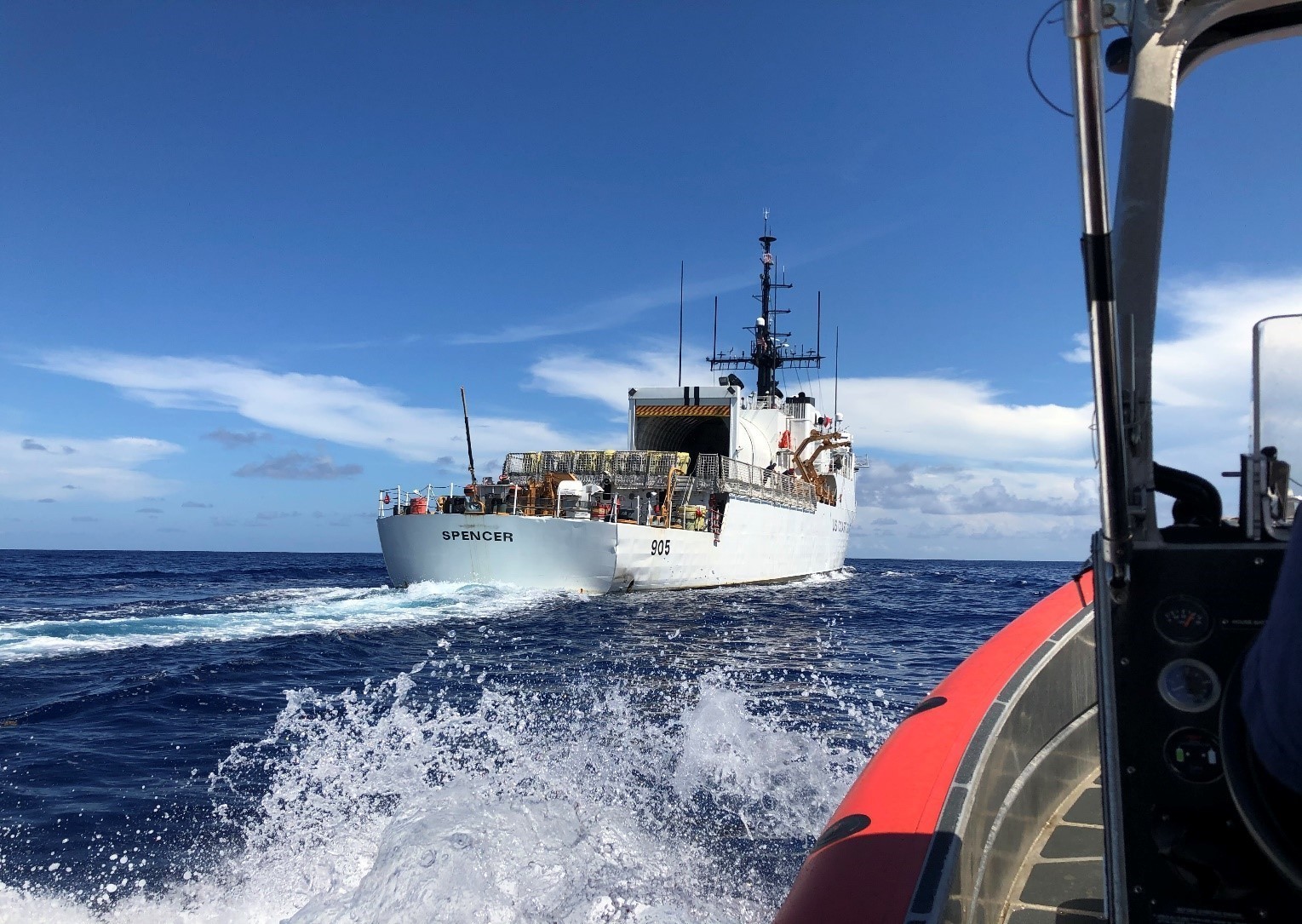
U.S. Coast Guard Cutter Spencer (WMEC 905) underway on patrol in the Eastern Pacific, January 2021. The crew covered over 11,000 miles seizing over $10 million of drugs and assisted in disrupting transnational crime organizations. (U.S. Coast Guard courtesy photo/Released)

Below is an Atlantic Area news release reporting the arrival of Cutter Spencer for operations off West Africa. This is getting to be almost routine, and it seems to have become a regular assignment for 270 foot WMECs. As can be seen by these previous reports, Spencer was preceded by Mohawk, Bear, and Thetis.

These operations, as well as those in the Western Pacific and SW Asia, demonstrate a recognition of the Coast Guard’s utility as an instrument of foreign policy and show that smaller cutters can be used in some of these roles, in some cases, reaching ports larger vessels might not be able to enter.

News Release

U.S. Coast Guard Atlantic Area

USCGC Spencer (WMEC 905) arrives in Praia, Cabo Verde

Download Image Link

Editors’ Note: To view more or download high-resolution imagery, click on the photo above

By U.S. Naval Forces Europe and Africa/U.S. Sixth Fleet

PRAIA, Cabo Verde – The Famous-class medium endurance USCGC Spencer (WMEC 905) arrived in Praia, Cabo Verde for a scheduled port visit Monday.

This port visit marks the first stop for Spencer, while employed by U.S. Sixth Fleet in the U.S. Naval Forces Europe and Africa (NAVEUR-NAVAF) area of operations. Spencer’s visit to Praia demonstrates NAVAF and the U.S. Coast Guard’s commitment and longstanding partnership to work with our African partners to counter illicit maritime activity in the Atlantic Ocean. During the port visit, Spencer will embark maritime counterparts from Cabo Verde, Senegal and The Gambia.

“The crew is excited for this unique opportunity, and we look forward to working with our partners to regulate fisheries and combat illegal, unreported, and unregulated fishing,” said Cmdr. Corey Kerns, Spencer’s commanding officer.

The U.S. Coast Guard regularly integrates and operates within the NAVAF area of operations. The U.S. Coast Guard’s authorities and capabilities provide the Joint Force with unique tools that bridge the cooperation-to-conflict continuum.

Cabo Verde is an important partner of the United States in promoting peace and security in Africa. In December 2022, the U.S. and Cabo Verde signed a memorandum of understanding for defense cooperation between the two countries, which will focus on continuing to counter illicit maritime activities through security cooperation. Later this month, Cabo Verde will participate in the NAVAF-led exercise Obangame Express 2022, the largest annual maritime security exercise in Western Africa. These types of exercises strengthen partnerships and allow countries to work more closely on shared transnational maritime challenges.

“The U.S. Embassy in Praia proudly welcomes the arrival of U.S. Coast Guard Cutter Spencer to Cabo Verde.  This ship visit is yet another example of the growing cooperation between U.S. and Cabo Verdean maritime forces, which is improving safety and security for our two nations and the entire region,” said Jeff Daigle, U.S. Ambassador to Cabo Verde.

The U.S. shares a common interest with African partner nations in ensuring security, safety, and freedom of navigation on the waters surrounding the continent, because these waters are critical for Africa’s prosperity and access to global markets.

In April 2022, as part of the African Maritime Law Enforcement Partnership (AMLEP), the U.S. and African maritime forces, led by Cabo Verde, worked in coordination with the Maritime Analysis and Operations Centre – Narcotics (MAOC-N), the International Police (INTERPOL), and Cabo Verde’s national Maritime Operations Center (COSMAR) to conduct a compliant boarding of a fishing vessel, which led to the seizure of approximately 6,000 kilograms of suspected cocaine with an estimated street value of more than $350 million.

The Famous-class medium endurance cutters support the U.S. Coast Guard’s maritime law enforcement and search and rescue missions. These cutters are capable of supporting flight operations with either a MH-65 Dolphin or a MH-60 Jayhawk.

U.S. Coast Guard Atlantic Area, headquartered in Portsmouth, Virginia, oversees all Coast Guard operations east of the Rocky Mountains to the Arabian Gulf, spanning across five Coast Guard districts and 40 states.

For over 80 years, U.S. Naval Forces Europe-U.S. Naval Forces Africa (NAVEUR-NAVAF) has forged strategic relationships with allies and partners, leveraging a foundation of shared values to preserve security and stability.

Headquartered in Naples, Italy, NAVEUR-NAVAF operates U.S. naval forces in the U.S. European Command (USEUCOM) and U.S. Africa Command (USAFRICOM) areas of responsibility. U.S. Sixth Fleet is permanently assigned to NAVEUR-NAVAF, and employs maritime forces through the full spectrum of joint and naval operations.

-USCG-

Thanks for a Successful 2022 –Best Year to Date

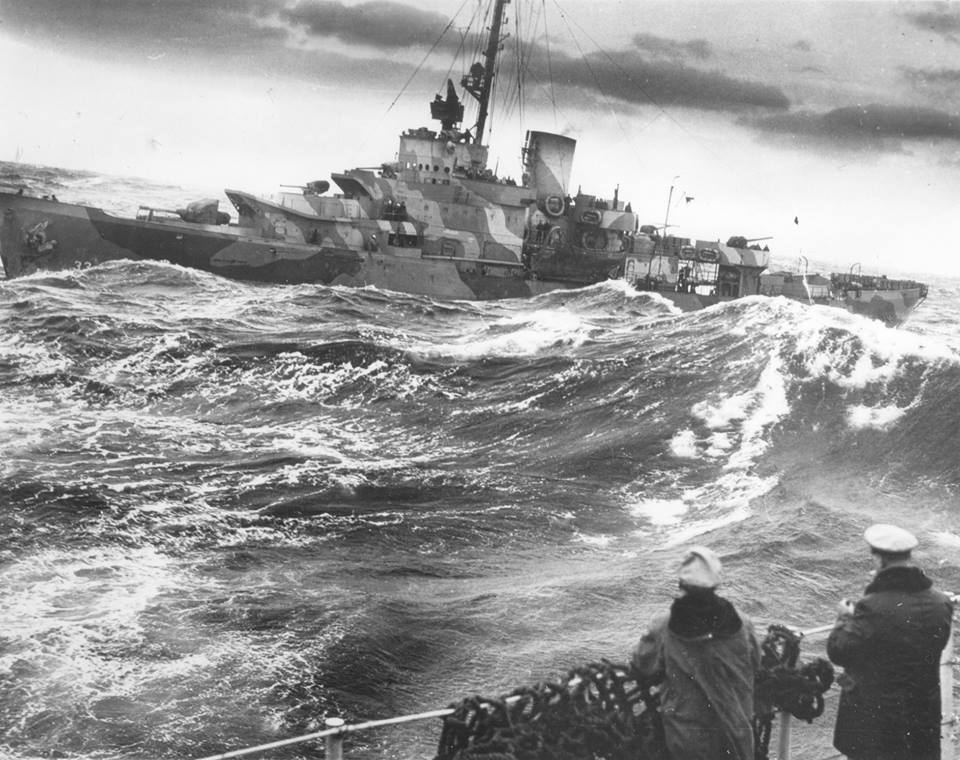
USCGC Duane on North Atlantic Convoy Duty

Thanks to all of you who have come by and made the writing worthwhile. Special thanks to those who have contributed by your comments or by simply pointing me to articles of interest.

Readership is at an all-time high with 260,989 views. and 103,295 visits.

Top ten posts of 2022

  1. “U.S. Navy’s New 40-Foot Defiant Patrol Boat” –Naval News, Plus FMS Patrol Boat (2022)
  2. A New 30mm Round –Maybe a Reason to Upgrade the Mk38 Mounts (2020)
  3. “Fixing the Coast Guard Academy’s Priorities” –USNI (2022)
  4. “Here Is What…Missiles Actually Costs” –The Drive (2020)
  5. 50mm Chain Gun, More Detail (2019)
  6. Top Ten Navies by Aggregate Displacement, 1 January 2022. Analysis and diagram by u/Phoenix_jz (2022)
  7. New 76mm Gun Mount Solves Frequent Siting Problems (2022)
  8. “Storm causes damage at beloved Portland Head Light in Maine” –WCVB5, Boston (2022)
  9. What Does It Take to Sink a Ship? (2011)
  10. Ukrainian Cutter, former USCGC Cushing, Reported Sunk (2022)

The blog has an international readership with about 30% of the views being from outside the US. Top ten nations, other than the US, in terms of views of the blog were the UK (8,563), Canada, Philippines, Australia, Germany, Singapore, Finland, New Zealand, The Netherlands, and Russia (1953). In all 33 nations had 500 or more views.

History of the blog:

The blog began in July 2012 as an offshoot of Dan Trimble’s CGBlog where I was a contributor. When Dan retired his blog, I began my own and Dan was kind enough to help me and transfer all my previous work to this blog. That is why you can still see my post that predate the blog. (Thanks Dan.)

Top ten posts of all time:

  1. What Does It Take to Sink a Ship? (2011) (24,796 views)
  2. Navy, this is Coast Guard, we need to talk (2019) (19,124)
  3. OPV to OPC (2012)
  4. Three Nations Share German OPV Design (2014) (11,061)
  5. The Navy’s New Patrol Boat (2012)
  6. Case for the Five Inch Gun (2012) (9,728)
  7. 50mm Chain Gun, More Detail (2019)
  8. Alternate Weapons for New Large Cutters? (2012)
  9. What Might Coast Guard Cutters do in Wartime? Part 2, Coast Guard Roles (2012)
  10. New 40 mm Gun (2016) (5,760 views)

(Last year’s recap here)

“2022 Hopley Yeaton Awards winners announced” –My CG

Below is an announcement from MyCG. I have added some photos.

Dec. 29, 2022

2022 Hopley Yeaton Awards winners announced

By Kathy Murray, MyCG Writer

Congratulations to the winners of the 2022 Hopley Yeaton Awards!

Named for legendary seafarer Capt. Hopley Yeaton, the first officer commissioned into the service, these annual awards recognize the individuals and crews who best exemplify what it means to be a Coast Guard cutterman.

The Douglas Munro Chapter of the Surface Navy Association announced this year’s recipients, who were selected from a highly competitive pool of nominees that a panel of 56 active duty and retired cuttermen reviewed.  By category, the winners include:

Excellence Awards  

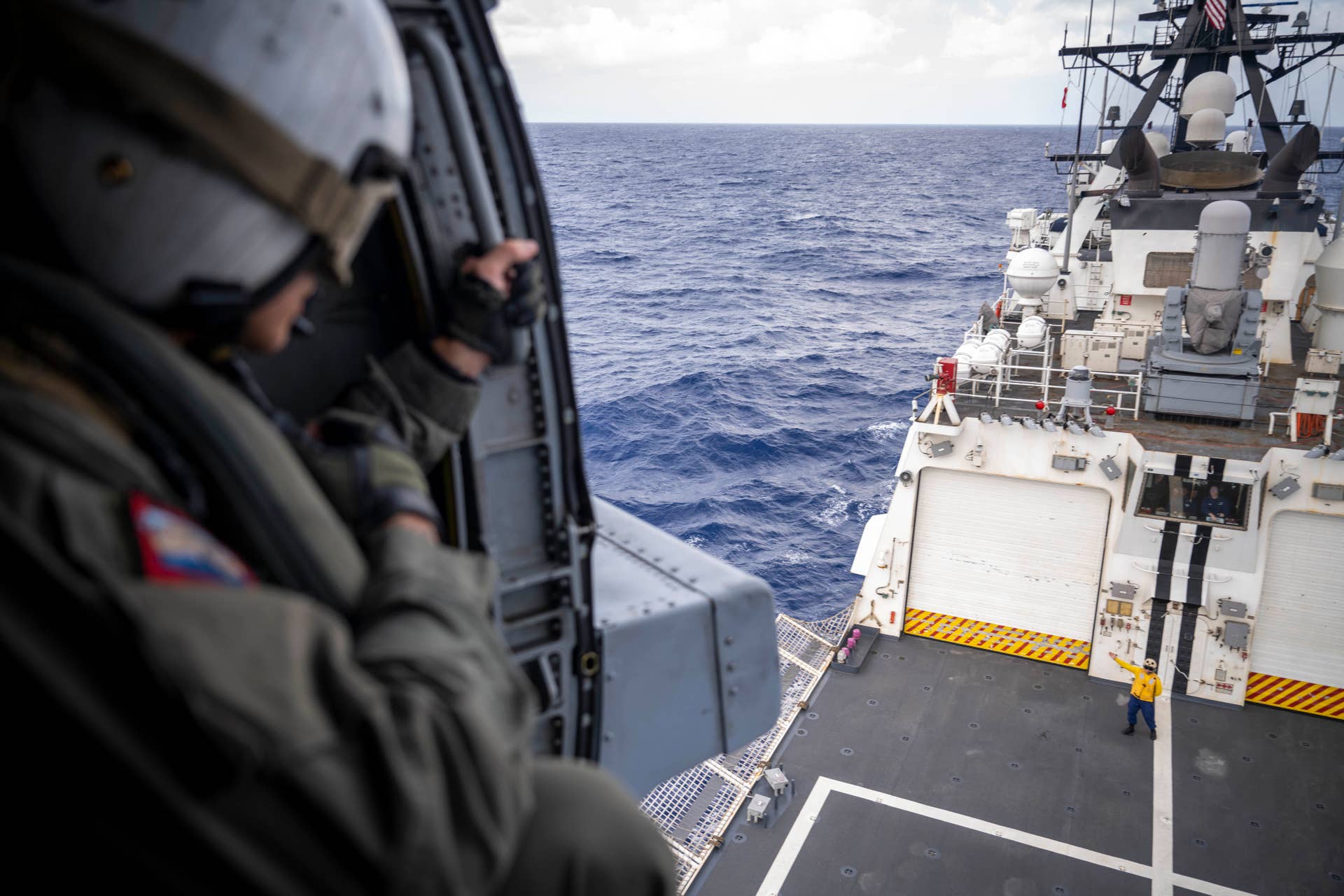
PACIFIC OCEAN (July 30, 2022) U.S. Navy Petty Officer 1st Class Humberto Alba, a naval aircrewman tactical-helicopter, attached to Helicopter Maritime Strike Squadron (HSM) 37, deployed on U.S. Coast Guard Legend-class cutter USCGC Midgett (WMSL 757), looks down at a USCGC crewmember after taking off during flight operations during Rim of the Pacific (RIMPAC) 2022. (U.S. Coast Guard photo by Petty Officer 3rd Class Taylor Bacon)

  • Large Cutter – Coast Guard Cutter Midgett. Honorable Mention: Coast Guard Cutters Hamilton and Kimball.

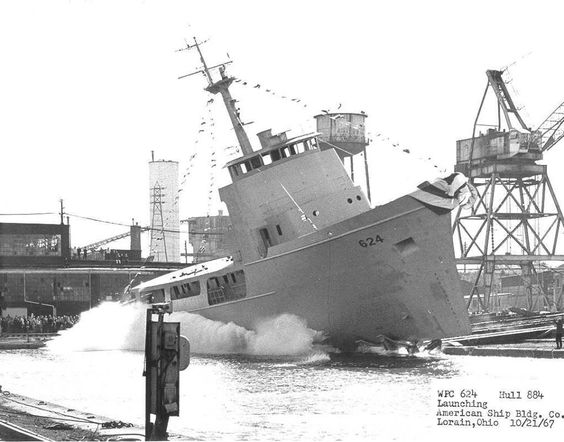
USCGC Dauntless being launched on 21 October 1967.

  • Medium Cutter – Coast Guard Cutter Dauntless. Honorable Mention: Coast Guard Cutters Alder and Diligence.

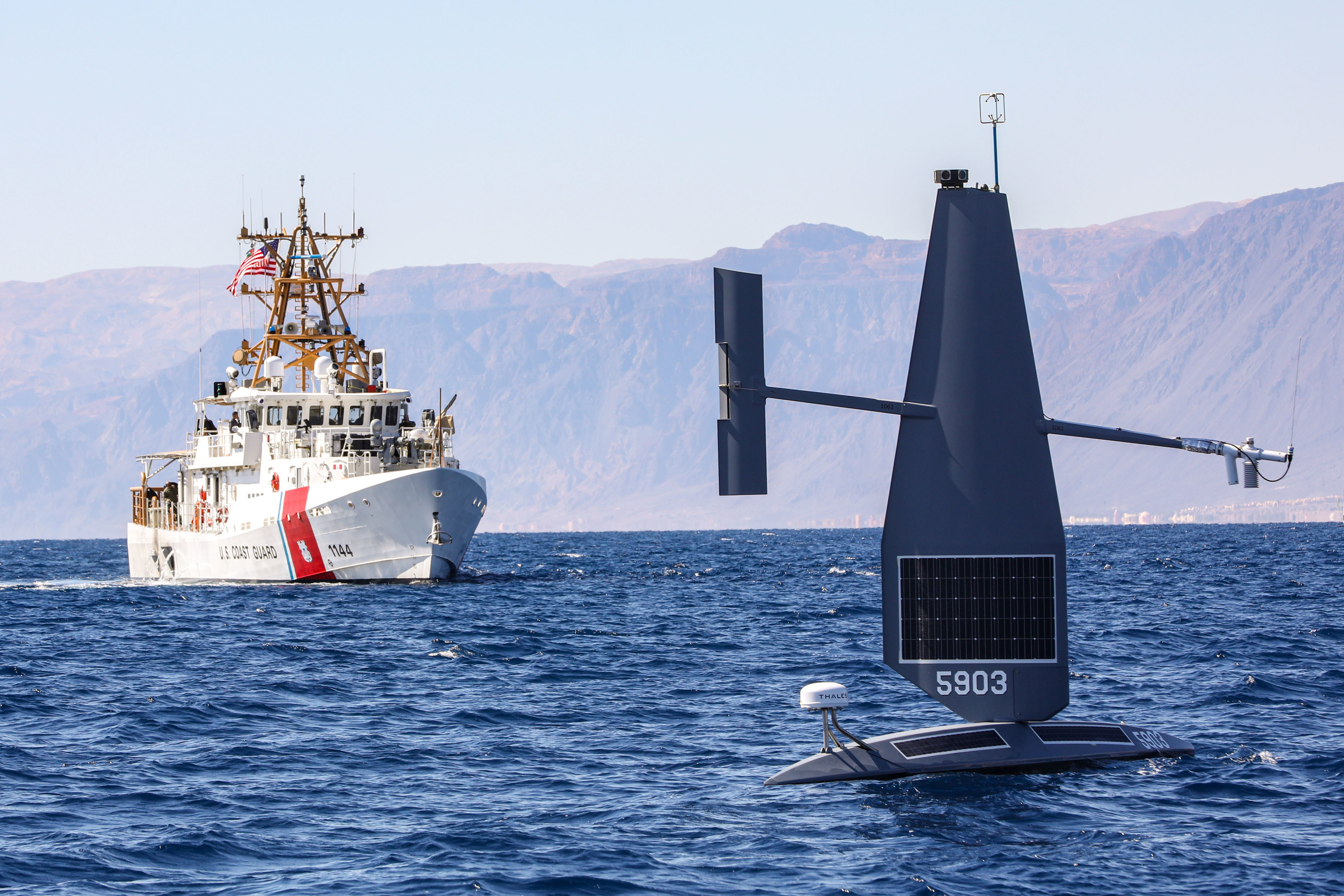
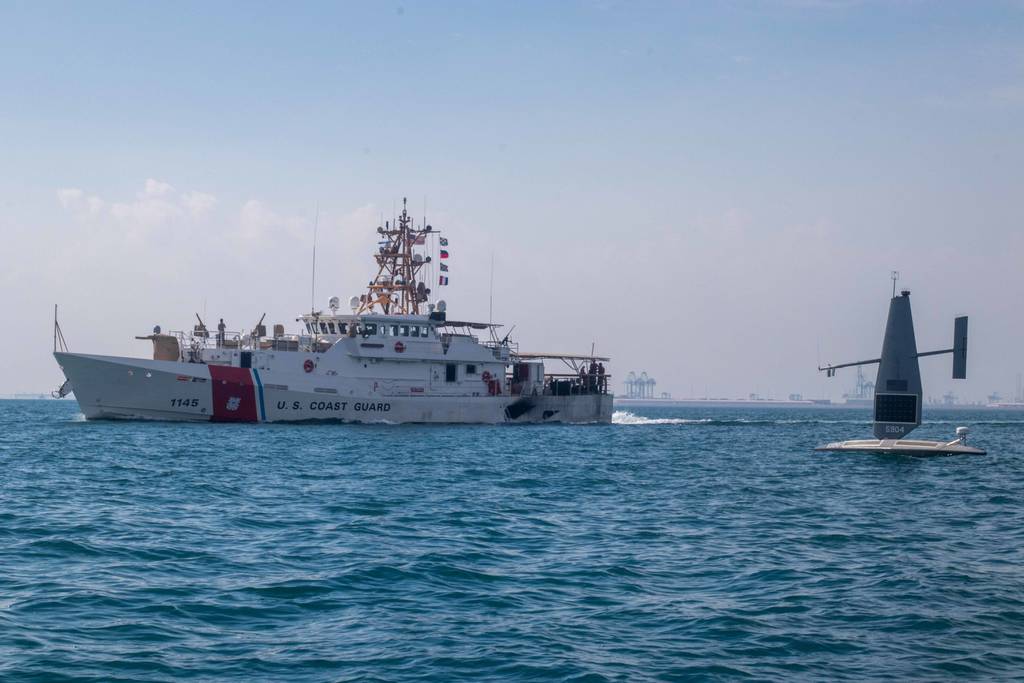
GULF OF AQABA (Feb. 13, 2022) The U.S. Coast Guard Sentinel-class cutter USCGC Glen Harris (WPC 1144) sails near a U.S sail drone explorer during the International Maritime Exercise/Cutlass Express (IMX) 2022, Feb. 13, 2022. IMX/CE 2022 is the largest multinational training event in the Middle East, involving more than 60 nations and international organizations committed to enhancing partnerships and interoperability to strengthen maritime security and stability. (U.S. Army photo by Cpl. DeAndre Dawkins)

  • Small Cutter –  Coast Guard Cutter Glen Harris. Honorable Mention: Coast Guard Cutters Emlen Tunnell.

Superior Cutterman Awards 

Katmai Bay (WTGB 101) is tied to the pier at Group Sault Saint Marie, Michigan, Sept. 2001. USCG photo by PA1 Harry C. Craft III

  • Officer:  Lt. Michael Overstreet – Coast Guard Cutter Katmai Bay. Honorable Mention: Lt. Jonathan Upton – Coast Guard Cutter Resolute and Chief Warrant Officer 2 Sean Campbell – Coast Guard Cutter Kimball.
  • EnlistedChief Petty Officer Collin Strange, an operations specialist – Coast Guard Cutter Charles Moulthrope. Honorable Mention: Petty Officer 1st Class Christian Jankuhn, a machinery technician – Coast Guard Cutter Raymond Evans and Chief Petty Officer Roberto LLamas, a boatswain’s mate – Coast Guard Cutter Dauntless.

During Rim of the Pacific (RIMPAC) 2022, the world’s largest international maritime warfare exercises, Coast Guard Cutter Midgett became the first cutter to command two combined task forces. The crew completed 33 sea events there and responded to a fire aboard a Peruvian naval vessel, saving the ship, and rescuing/arranging treatment for two severely burned crew members. While deployed with the Navy’s 7thFleet, the Midgett also successfully operated in and around some of the world’s most politically sensitive areas, including the Malacca Straits and the South China Sea.

Operating at reduced staff levels, the crew of the Coast Guard Cutter Dauntless interdicted 18 unseaworthy migrant vessels, held, processed, and repatriated 975 Cuban and Haitian migrants in two months, and heroically rescued 27 migrants from Monito Island in treacherous surf conditions.

Coast Guard Cutter Glen Harris completed the first ever South Atlantic crossing (from Florida to Bahrain) by a fast response cutter (FRC) and the first three drug interdictions in the Middle East by a Coast Guard vessel. Its crew also saved the lives of 107 migrants on a submerged raft off the coast near Morrocco, conducted military exercises with allies in the region, and defended assets traveling through the Strait of Hormuz.

Battling freezing temperatures and gale force winds Lt. Michael Overstreet led the diverted Katmai Bay on a challenging search and rescue mission. His team got the stricken passenger vessel Huron in a side tow and safely back to the pier, while averting a major environmental disaster from jagged underwater rocks. Under his leadership, the crew successfully evacuated a patient needing immediate medical care in harrowing conditions after two boiler explosions severely limited the Katmai Bay’s heating system.

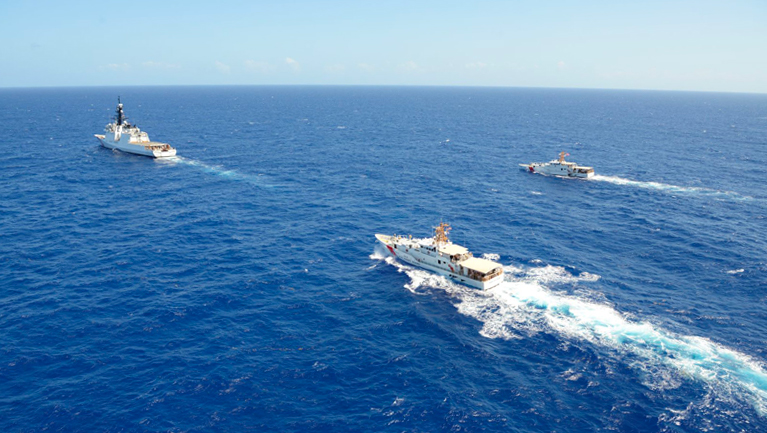
Coast Guard Cutter Hamilton leads the way for cutters Robert Goldman and Charles Moulthrope as they depart Puerto Rico April 1. National security cutter Hamilton is escorting the two fast response cutters (FRCs) across the Atlantic to Rota, Spain. From there, the FRCs will continue to their homeport of Manama, Bahrain. U.S. Coast Guard photo by Petty Officer 3rd Class Sydney Phoenix.

Acting as operations officer aboard the Charles Moulthrope for five months, Chief Petty Officer Collin Strange led planning for two large-scale international naval exercises, bolstering U.S. partnerships with the U.K., Oman, Pakistan, and the U.A.E. He also organized defense escorts through the Straits of Hormuz to protect strategic assets and counter malign Iranian activity, and led a team that collected video and evidence documenting unsafe maneuvers by Iran’s Navy in a near collision with coalition assets. In the Arabian Sea, he personally saved a ship-rider from choking, and demonstrated professionalism and technical prowess as a liaison aboard an Iraqi naval vessel during exercises with the Coast Guard, Navy, and Kuwaiti navy.

The awards will be presented at the SNA Conference awards luncheon on Jan. 11, 2023. For further details, see the ALCOAST 507/22 or email Lt. Luke Trautwein or Lt. Stephen Taylor.

Recent news: 

Resources: 

  • Winner of Hopley Yeaton 2022 cutter excellence and superior cutterman awards ALCOAST 507/22

“Could the LCS fleet be getting a new mission?” –Navy Times

181206-N-N0101-028
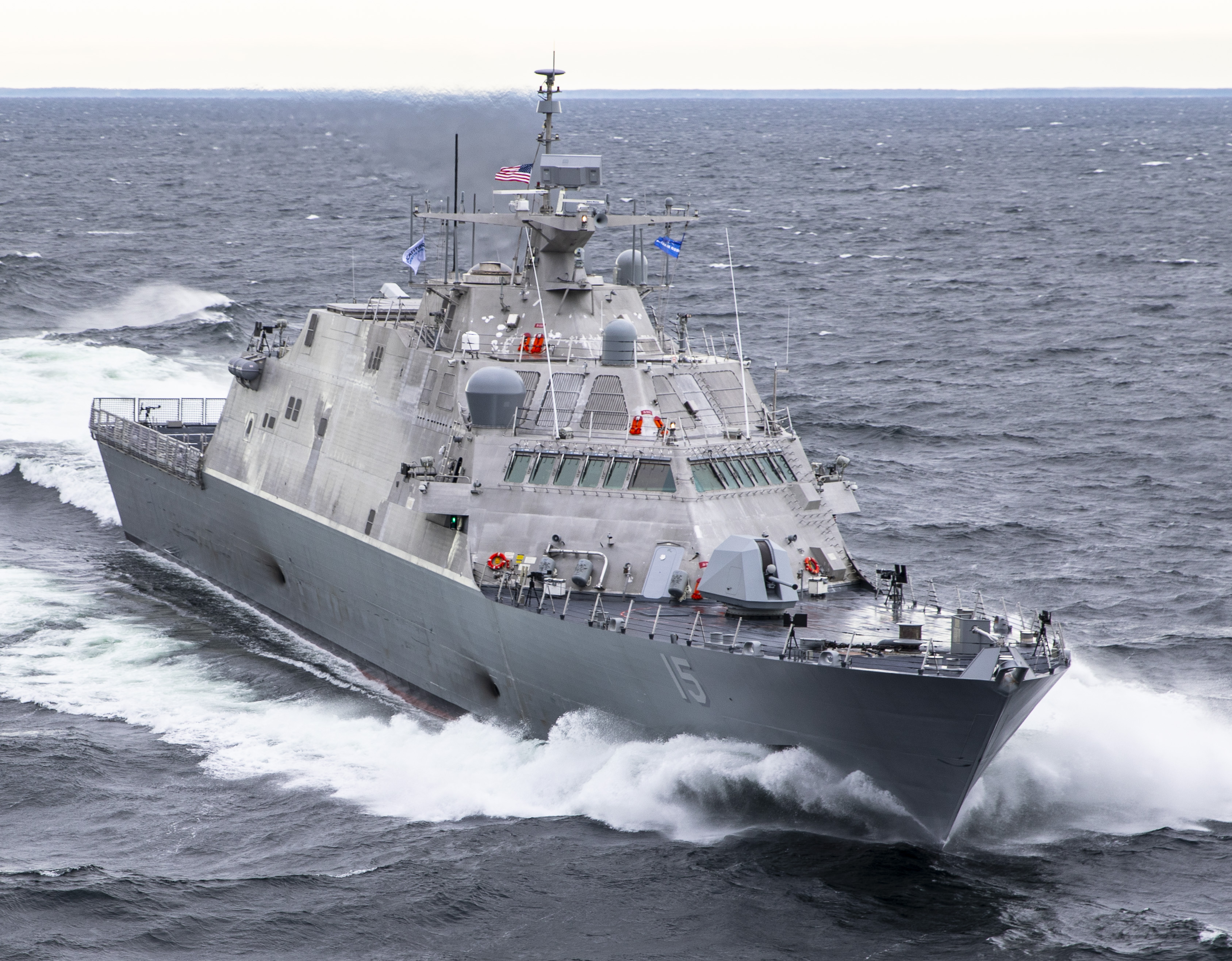
MARINETTE, Wis. (Dec. 6, 2018) The future littoral combat ship USS Billings (LCS 15) conducts acceptance trials on Lake Michigan, Dec. 6, 2018. (U.S. Navy photo courtesy of Marinette Marine/Released)

Navy Times reports,

“… Congress is tasking U.S. Southern Command with studying the feasibility of permanently assigning four to six LCSs to the combatant command.”

Is this likely?

Frequently nothing comes of these Congressionally mandated studies, but I suspect this may happen because it would complement the plan to replicate the 5th Fleets international unmanned effort, Task Force 59, in 4th Fleet.

What will not change?

Assigning up to six LCS to 4th Fleet probably would not increase the number of Navy ships underway in the SOUTHCOM Area of Operations (AOR). As the post points out, LCS are already routinely assigned to SOUTHCOM’s 4th Fleet. Typically, there is at least one and normally two doing drug interdiction with an embarked Coast Guard Law Enforcement Detachment.

Navy combatants are typically deployed less than a third of the time and underway less than 25% of the time, so six would be translate to no more than two regularly deployed. Of course, the Navy could temporarily assign other LCSs to 4th Fleet.

All the LCSs that I have heard of operating under 4th Fleet have been Freedom class monohulls like the Billings pictured above. These ships are based Jacksonville. I would not expect their homeport to change.

What might change?

4th Fleet wants to be the Fleet of Innovation. For evaluating advances in Maritime Domain Awareness, they have the unique advantage of a full time, highly motivated opposition force that is always testing their capabilities in the form of drug smugglers.

Having four to six LCS permanently assigned to 4th Fleet would provide a continuity of experience that the current system does not allow. That continuity would likely enhance both their law enforcement operations and allow progressively more complex experimentation. The vessels might be provided with better accommodations for the Law Enforcement Detachments and additional facilities for detainees and storage of seized contraband. They might operate more frequently with embarked Coast Guard airborne use of force helicopters.

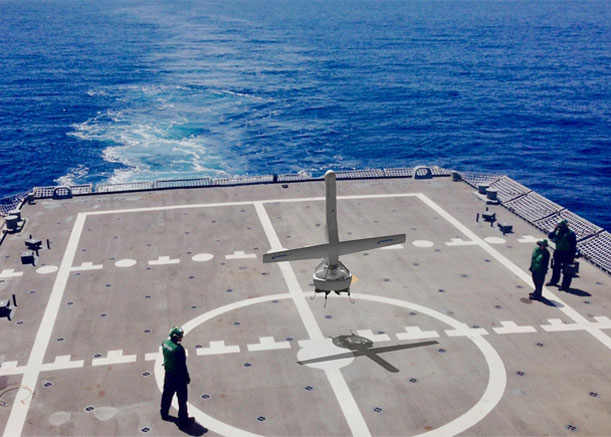
V-Bat from Martin UAV

While they have had their problems, LCS are uniquely suited for operating unmanned systems. This might include operations in support of unmanned surface vessels like Saildrones and small unmanned aircraft like V-Bat.

A Saildrone Explorer unmanned surface vessel operates alongside U.S. Coast Guard fast response cutter USCGC Emlen Tunnell (WPC 1145) in the Arabian Gulf, Nov. 29, during Digital Horizon 2022. (Sgt. Brandon Murphy/US Army)

Continuity in 4th Fleet operations might also extend to disaster response and IUU fisheries enforcement, both of which might benefit from use of unmanned systems.

Not called for the study, but a Navy oiler operating in 4th Fleet would be a real plus. The Freedom Class LCSs have relatively short range and can quickly run out of fuel if operated at high speed. An oiler might also make operating Webber class WPCs in the Eastern Pacific more practical.

Thanks to Walter for bringing this to my attention.