“U.S. attempts to stop arms smuggling to Yemen with limited resources” –Is the Coast Guard the Answer?

US Coast Guard / CENTCOM released photo of weapons seized aboard an Iranian dhow on February 15 2024. The seizure included UUV and USV components. The annotations, highlighting possible UUV parts, have been added.

The Washington Post reports,

“The Biden administration is expanding efforts to surveil and intercept Iranian weapons being smuggled to Yemen, where Houthi militants have staged a deadly campaign of violence against commercial shipping that has proved resilient to six weeks of military strikes, said U.S. officials familiar with the matter.

The initiative seeks to map seafaring routes used by Tehran and stop the arms shipments while in transit, an acknowledgment that the Houthis are likely to pose a significant security challenge for the foreseeable future. It is part of a broader strategy that also includes sanctions and diplomatic pressure but faces constraint as essential military resources are in short supply.

This sound, to an old Coastie, a lot like what lead to the creation of Coast Guard Squadron One (ultimately 26 Point class 82-foot patrol boats) and Squadron Three (five to seven High Endurance cutters) during the Vietnam War.

At the very least expect more Coast Guard boarding teams to be operating with the Navy.

The Webber class Fast Response Cutters (FRC) are the weapon of choice here. The Navy never bothers to produce small ships suitable for the interdiction of clandestine coastal shipping, while this has always been a type common in the Coast Guard fleet. Six FRCs are already operating with the 5th Fleet out of Bahrain. They are already intercepting arms smugglers, as well as drug smugglers that finance Iranian proxy movements. The Coast Guard already has 55 FRCs and is procuring at least ten more.

Will we see more cutters assigned to 5th Fleet? They are also short of air assets. Will we see Coast Guard fixed wing aircraft searching the Arabian Sea?

“Colombia Joins Combined Maritime Forces in Middle East as 41st Member” –CMF / Another Small Step Toward International Law

MANAMA, Bahrain – Graphic illustration of the flag of Colombia and the Combined Maritime Forces logo. CMF welcomed Colombia, Jan. 21th, as the 41th member of the world’s largest maritime security partnership. 240127-N-NO146-1001.JPG, Photo By: NAVCENT Public Affairs

Below is a news release from Combined Maritime Forces / US 5th Fleet.

I would not normally make a separate post about this, but recently I saw someone remark that International Law has no enforcement mechanism.

Combined Maritime Forces (CMF) is an international law enforcement mechanism.

It is, after all, not a military alliance, it is a law enforcement alliance, and while its police powers are limited, they are nevertheless real. Its power extends beyond national territorial seas and is derived from the concurrence of its members that certain behaviors are unacceptable.

It is not yet effective against nation states, but it does operate against the gray zone agents of nation states.

This is a remarkable development and overtime, hopefully, it will be extended to other geographic areas and broadened in scope.


Colombia Joins Combined Maritime Forces in Middle East as 41st Member

By Combined Maritime Forces Public Affairs | January 27, 2024

MANAMA, Bahrain —Combined Maritime Forces welcomed Colombia as the 41st member of the world’s largest maritime security partnership, Jan 21.

“It is a privilege to have Colombia as an official part of CMF,” said Vice Adm. Brad Cooper, CMF commander. “We welcome the Colombians in the largest international naval coalition, dedicated to maritime security and stability in the Middle East, and protecting some of the world’s most important waterways. I look forward to sharing our experiences and being ‘Ready Together’ with our new partners.”

CMF is comprised of a headquarters staff and five combined task forces focusing on defeating terrorism, preventing piracy, encouraging regional cooperation, and promoting a safe maritime environment. The naval partnership upholds the international rules-based order by supporting security and stability across 3.2 million square miles of water encompassing some of the world’s most important shipping lanes.

“Illegal Drugs Seized by CMF French-led Combined Task Force 150 in Arabian Sea” / “Canada Assumes Command of Combined Maritime Forces’ Combined Task Force 150” –Combined Maritime Forces

ARABIAN SEA – ARABIAN SEA (Jan. 16, 2024) Illegal narcotics seized by the U.S. Coast Guard Sentinel-class fast response cutter USCGC Emlen Tunnell (WPC 1145) sit on the deck of a vessel in the Arabian Sea, Jan. 16. Emlen Tunnell was operating under Combined Task Force 150, one of five task forces under Combined Maritime Forces, the largest multinational naval partnership in the world. CTF 150 focuses on maritime security operations outside the Arabian Gulf.

Below is a Combined Maritime Forces – U.S. 5th Fleet news release.

Below that is a second news release reporting a transfer of command of CTF 150 but also providing information about the organization.


Illegal Drugs Seized by CMF French-led Combined Task Force 150 in Arabian Sea

MANAMA, Bahrain —

A U.S. Coast Guard cutter operating under the French-led Combined Task Force 150 of the Combined Maritime Forces seized about $8.1 million worth of illegal drugs from a vessel in the Arabian Sea, Jan. 16.

The Sentinel-class fast response cutter USCGC Emlen Tunnell (WPC 1145) seized 173 kilograms of methamphetamines following a search. The Coast Guardsmen properly disposed of the drugs and released the vessel.

This is the second interdiction by CTF 150 of the year and marks the 14th time they have seized illegal narcotics at sea since France took command in July 2023. During their tenure, more than 16 tons of illegal narcotics with a street value of over $600 million were seized and disposed of, preventing criminal and terrorist organizations generating income from drug smuggling. The seizure came one day before France turned over command of the task force to the Royal Canadian Navy.

The mission of Combined Task Force 150 is to disrupt the ability of non-state actors to move weapons or drugs, or engage in other illicit activities, in the Gulf of Oman, Arabian Sea and Indian Ocean.

CTF 150 is one of five task forces under Combined Maritime Forces, the world’s largest multinational naval partnership, and focuses on maritime security operations in the Gulf of Oman, Arabian Sea and Indian Ocean.

The 39-nation naval partnership upholds the international rules-based order by promoting security and stability across 3.2 million square miles of water encompassing some of the world’s most important shipping lanes.


Canada Assumes Command of Combined Maritime Forces’ Combined Task Force 150

MANAMA, Bahrain —

The Royal Canadian Navy assumed command of a multinational maritime task force during a change-of-command ceremony Jan. 17.

French Navy Capt. Yannick Bossu turned over command of Combined Task Force 150 to Royal Canadian Navy Capt. Colin Matthews. CTF 150 was established in February 2002, and is one of five operational task forces under Combined Maritime Forces. CTF 150 conducts maritime security operations outside the Arabian Gulf against threats from non-state actors. The core staff of CTF 150 consisted of French, British, New Zealanders, Australians, and Bahrainis.

Since France took command of CTF 150 in July 2023, ships working in support of the task force carried out 14 successful boardings, in which more than 16 tons of illegal narcotics with a street value of over $600 million were seized. These seizures prevent criminal and terrorist organizations generating income from drug-smuggling.

While Commander of CTF 150, Bossu also spread CMF’s message through key partner engagements with countries including Seychelles, Mozambique and India. These engagements help strengthen ties between CMF nations and provides an opportunity to discuss the work of CMF with countries not yet members.

“Today marks the end of the French Navy’s successful 12th command of CTF 150. I would like to express my thanks to all those who have continually supported us during our tenure, including Vice Admiral Cooper, Commodore Anderson, Commodore Dennis and Rear Admiral Al bin Ali,” Bossu said. “Integral to CTF 150’s achievements over the past six months are, of course, the French, British, American, Indian, and Pakistani ships that have been working in support and my team made up of staff from a range of nations. We are pleased to welcome the Royal Canadian Navy to Combined Task Force 150; it has been a pleasure to meet your team. To everyone, keep on enjoying and serving in Combined Maritime Forces.”

Matthews joins CTF 150 following a tour as Director of Naval Information Warfare. Over the years, he has participated in numerous overseas deployments to the Arabian Gulf and Arabian Sea regions in support of counterterrorism operations.

“It is an honor to take command of Combined Task Force 150 and a privilege to lead this team of dedicated personnel from Canada, Bahrain, Australia, and New Zealand for the next six months,” Matthews said. “We are eager to build on the achievements of Capt. Bossu and his team. The success of this operation lies with our ability to work with like-minded nations toward the same goals, ensuring that legitimate commercial shipping can transit the region free from non-state threats and we are ready to face this task.”

Combined Maritime Forces, headquartered in Bahrain with U.S. Naval Forces Central Command and U.S. 5th Fleet, is the largest multinational naval partnership in the world, with 39 nations committed to upholding the international rules-based order at sea. It promotes security, stability and prosperity across approximately 3.2 million square miles of international waters, encompassing some of the world’s most important shipping lanes.

CMF’s other task forces include CTF 151, which leads regional counter-piracy efforts; CTF 152, dedicated to maritime security in the Arabian Gulf; CTF 153, providing maritime security in the Red Sea; and CTF 154, which delivers maritime training.

“Combined Maritime Forces, U.S. Coast Guard Make $21 Million Drug Seizure in the Gulf of Oman” –NAVCENT

GULF OF OMAN (Nov. 14, 2023) Illegal narcotics seized from a stateless vessel are stacked on the deck of the U.S. Coast Guard Sentinel-class fast response cutter USCGC Emlen Tunnell (WPC 1145) in the Gulf of Oman, Nov. 14. Emlen Tunnell was operating under Combined Task Force 150, one of five task forces under Combined Maritime Forces, the largest multinational naval partnership in the world. CTF 150 focuses on maritime security operations in the Gulf of Oman, Arabian Sea and Indian Ocean. (Photo by U.S. Coast Guard courtesy photo)

Below is a NAVCENT news release.


Combined Maritime Forces, U.S. Coast Guard Make $21 Million Drug Seizure in the Gulf of Oman

By U.S. Naval Forces Central Command Public Affairs | November 20, 2023

MANAMA, Bahrain —

A U.S. Coast Guard cutter crew seized about $21 million worth of illegal drugs from a stateless vessel while operating in the international waters of the Gulf of Oman, Nov. 14.

Coast Guardsmen from the Sentinel-class fast response cutter USCGC Emlen Tunnell (WPC 1145), working under the command of Combined Maritime Forces’ Combined Task Force (CTF) 150, seized 2,000 kilograms of hashish and 384 kilograms of methamphetamine from the vessel during an interdiction operation.

“This new seizure shows once again the operational effectiveness of Combined Maritime Forces assets and nations,” said French navy Capt. Yannick Bossu, CTF 150 commander. “It illustrates that nations from all around the world are committed to regional maritime security in the Indian Ocean alongside their regional partners.”

This event marks the fifth time in recent months the French-led CTF 150 has interdicted illicit narcotics at sea. In those previous operations, CTF ships seized more than 4,522 kilograms of methamphetamine, heroin, and hashish from stateless vessels during interdiction operations, with a street value of more than $94 million.

CTF 150 is one of five task forces under Combined Maritime Forces, the largest multinational naval partnership in the world. CTF 150 focuses on maritime security operations in the Gulf of Oman, Arabian Sea and Indian Ocean.

Since 2021, Combined Maritime Forces has seized more than $1 billion in illegal drugs while patrolling waters across the Middle East.

The 38-nation naval partnership upholds the international rules-based order by promoting security and stability across 3.2 million square miles of water encompassing some of the world’s most important shipping lanes.

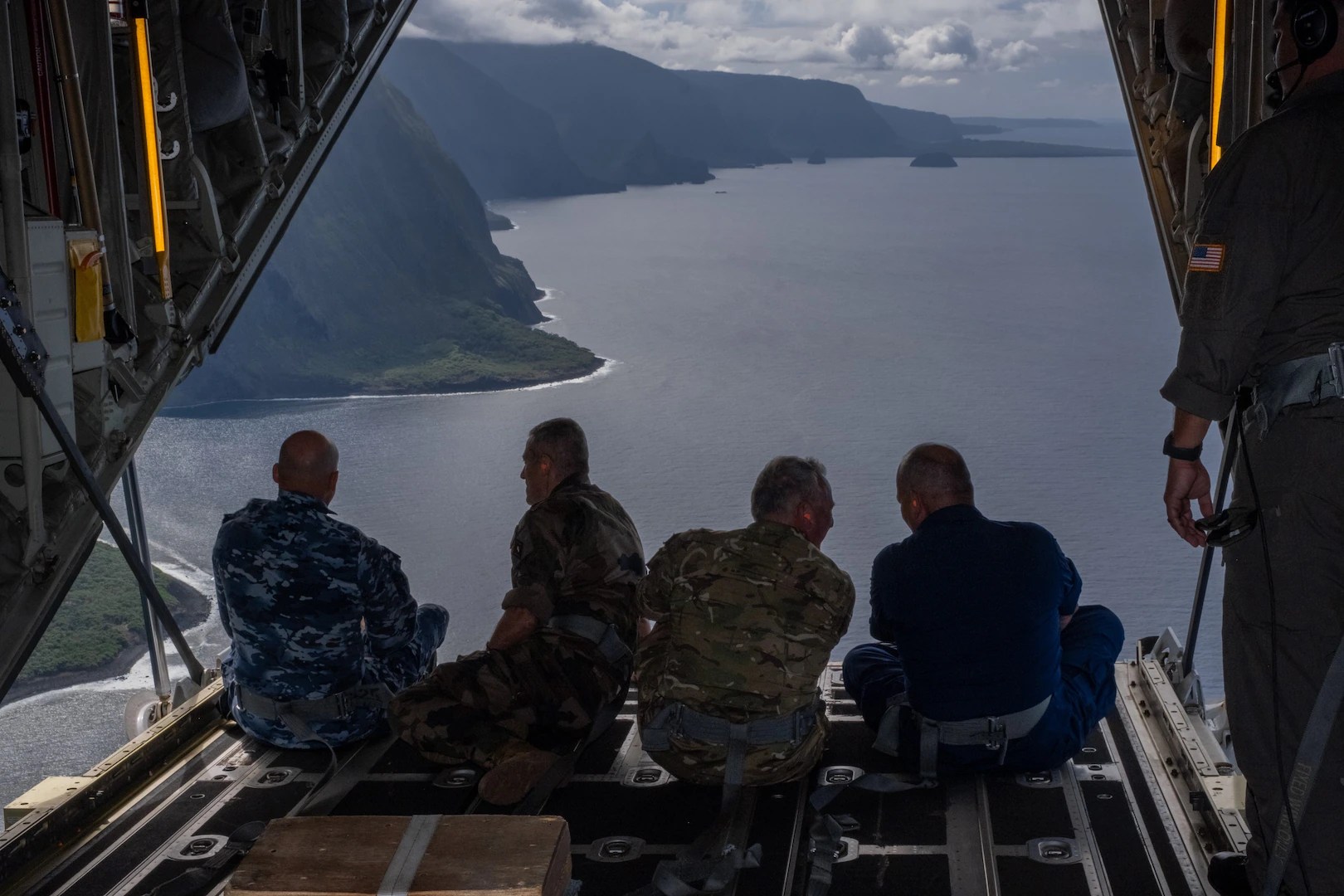
“Coast Guard hosts Pacific Quadrilateral Coordinating Group on Oahu” –CG News

Below is a news release from Coast Guard News. Looks like Western Pacific fisheries is finally getting the attention it has deserved. The “Pacific Quad” mentioned here (Australia, France, New Zealand, and the US) should not be confused with “The Quad” (Australia, India, Japan, and the US) which is an informal military association.

I am still hoping to see my “Combined Maritime Security Task Force, Pacific” formed.

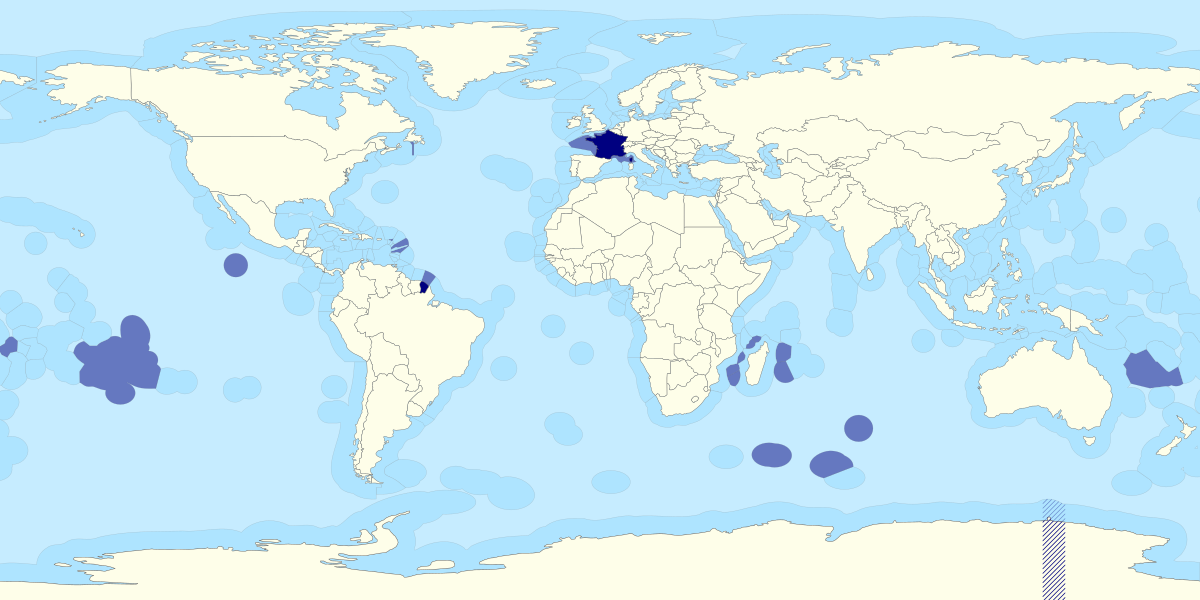
Territory of France and its Exclusive Economic Zone. (Antarctic territorial claims in lighter tone). Credit B1mbo via Wikipedia.

If you are wondering why France is in this group, take a look at their Exclusive Economic Zone, above.


Nov. 3, 2023

Coast Guard hosts Pacific Quadrilateral Coordinating Group on Oahu

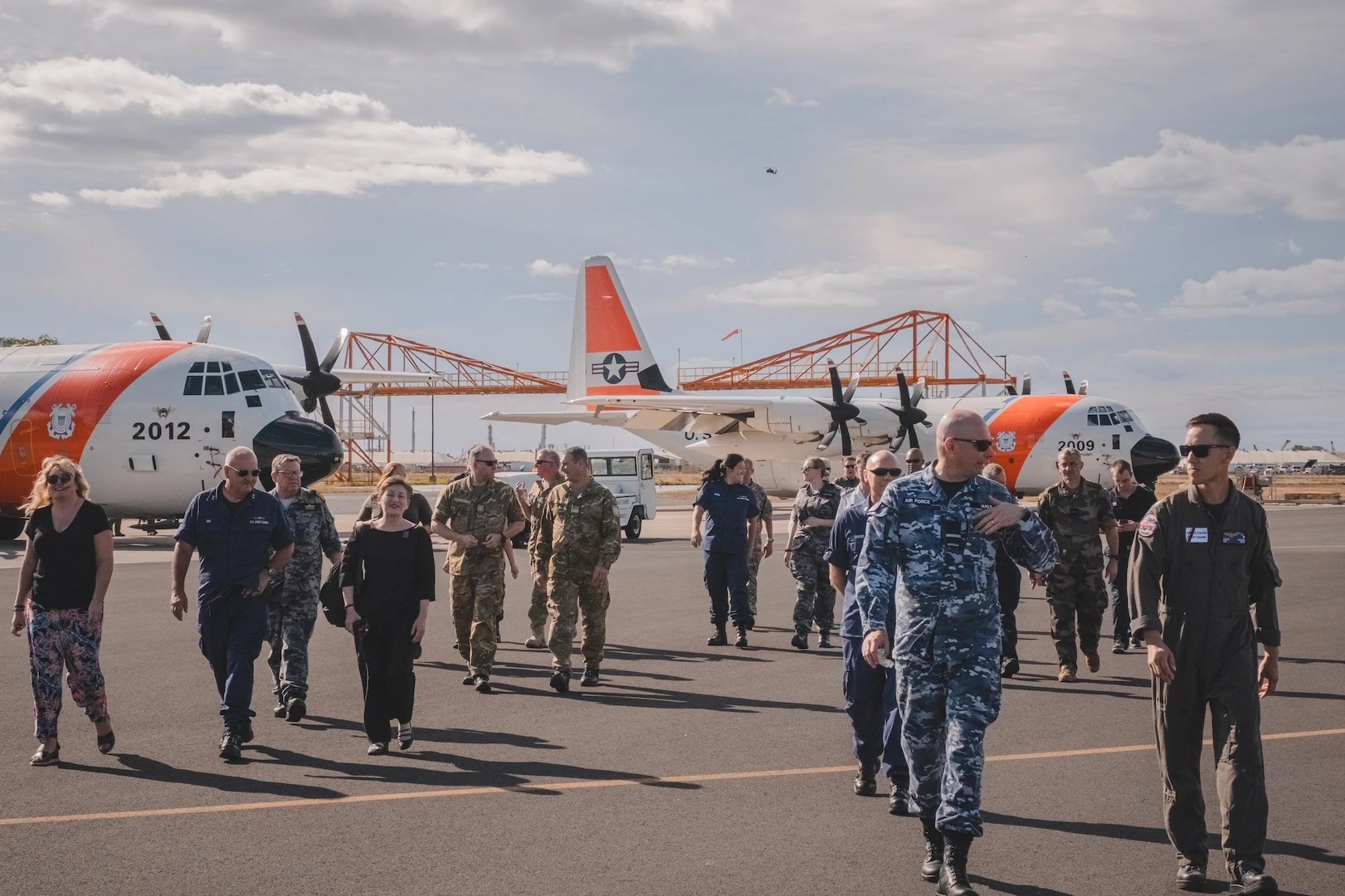
HONOLULU — The U.S. Coast Guard recently hosted the Pacific Quadrilateral Defense Coordinating Group from Oct. 9 to 11, 2023, focusing on enhancing maritime security in the Pacific.

The meeting gathered leaders from Australia, France, New Zealand, the United States, and the Forum Fisheries Agency. Rear Adm. Michael Day, U.S. Coast Guard District 14 commander, emphasized the importance of this collaboration, particularly in the context of regional challenges such as climate change and security.

“These face-to-face meetings and continued cooperation among our nations are not just strategic imperatives; they are lifelines to the people of the Blue Pacific,” said Day.

He further highlighted the impact of this collaboration, emphasizing the human element and recognizing the responsibilities of the larger nations in the Pacific, “We acknowledge the historical context, and while we do not seek to rewrite the past, we are committed to a future where the sovereignty and livelihoods of Pacific Island Countries are safeguarded. Climate change, followed by regional tensions, looms large as challenges we all face, and our shared responsibility is to address these threats. Our commitment to combating illegal fishing and ensuring maritime safety is not just about security; it’s about ensuring a sustainable and secure future for the communities who call the Pacific home.”

The Pacific QUAD was established in 1998, and brings together defense and security agencies from Australia, France, New Zealand and the United States in a mutual commitment to partnering with the Pacific Island countries to collectively enhance regional security.

During the meeting, discussions covered various topics, including their annual report, training programs, tactical calendar, information sharing and support for the Forum Fisheries Agency operations. Additionally, three new principals joined the group. Brig. Gen. Yann Latil (France), Air Comm. John Haly (Australia), and Brig. Gen. Andy Shaw (Aotearoa New Zealand).

The Pacific QUAD’s mission is to combat illegal fishing in the Southwest Pacific and collaborate closely with Pacific Island nations. The group operates at both a strategic and operational level, with annual and biannual meetings, respectively.

This year, examples of their collaboration included: an agreement with New Zealand, joint gatherings and strengthening cooperation with Australian Maritime Security Advisors, a successful search and rescue operation, and an international mass rescue exercise, highlighting the positive impact of their efforts on regional stability and maritime safety.

The Pacific QUAD, consisting of New Zealand, the United States, France, and Australia, annually rotates its principal chairmanship position as part of its collaborative approach. Last year, Air Commodore Darryn Robert Webb of New Zealand handed over the role to Rear Adm. Michael Day, who has now passed it to Brig. Gen. Yann Latil, the commander of French Forces New Caledonia. Latil is expected to transfer the responsibility to Air Commodore John Haly, the Australian Joint Operations Command, Director General Operations and Plans (J3), next year. This rotation underscores the ongoing commitment of the Pacific QUAD nations to regional stability and cooperation.

“After a very successful meeting in Honolulu this year, I am happy to take over the American coordination of the Pacific Quad’s work and I look forward to hosting my fellow principals and their teams in Noumea next year,” said Brig. Gen. Yann Latil, the commander of French Forces New Caledonia.

U.S. Coast Guard District 14, covering a vast area in the Central and Western Pacific, plays a crucial role in maritime safety, resource protection, security and national defense through partnerships and international engagement.

“‘Blue Africa’ Partnership Seeks to Curb Annual $10B Loss from Illegal Fishing” –USNI

Comparison of Africa size with other continents. From Wikipedia, by Jacopo Bertolotti.

The US Naval Institute News Service reports

“Faced with an annual $10 billion loss from Illegal, unreported and unregulated fishing, West African nations are moving to work together to better understand and police their exclusive economic zones as a group, the head of U.S. Naval Forces in Europe and Africa told USNI News last month.”

Not surprisingly the Coast Guard was involved.

The idea for a combined push emerged at the first African Maritime Forces Summit held in March at Cabo Verde organized by NAVEUR. Navy Secretary Carlos Del Toro and Coast Guard Commandant Adm. Linda Fagan represented the U.S. along with 80 other countries.

Fisheries management in African waters requires regional cooperation. As I noted in a 2014 post, among other problems, there are so many countries in Africa (54 countries, at least 32 with coastlines) that their individual EEZs are too small to manage fishing stocks. If one country attempts to rebuild stocks by reducing fishing, a neighboring country may take advantage of their sacrifice and undo their efforts.

The USNI post talks about replicating something like Joint Interagency Task Force South in U.S. Southern Command. The NAVCENT sponsored Combined Maritime Forces might also serve as a model. There is also the South Pacific Regional Fisheries Management Organisation that might also serve as a model. Bilateral shiprider agreements could also be useful.

The Coast Guard has been working with African Nations for some time now.

“U.S.-Philippine Coast Guard Patrols: Time To Provoke the Provocateur” –Real Clear Defense

Chinese fishing vessel fleet (Photo: The Maritime Executive)

Real Clear Defense has a post by the J. C. Wylie Chair of Maritime Strategy at the Naval War College, Dr. James R. Holmes, discussing the implications of the planned Philippine/US Coast Guard joint patrols in the South China Sea.

It is a thought-provoking article but I would argue for a change of emphasis. The Chinese consider what is happening war without gunsmoke, but if we engage on that basis we are already at war. Rather I would suggest we see this as purely law enforcement vigorously applied–which is of course the reason it is the US Coast Guard rather than the USN that will be conducting these joint patrols.

  • If foreign vessels fishing in the Philippine EEZ without a license is not already illegal, make it so. The Philippines should make sure the Chinese know that is how it will be viewed and act accordingly.
  • No foreign vessels should be allowed to impede Philippine vessels conducting legal activities.
  • No foreign vessels should be allowed to exploit the resources of the Philippine EEZ without a license.
  • No foreign vessels should be allowed to damage resources in the Philippine EEZ.

The Chinese maritime militia has been very useful, but they may also be viewed as China’s weakness, since they are officially civilians. As civilians violating Philippine law, they should be subject to vigorous law enforcement action.

CRASH AVERTED This photo taken on April 23, 2023 shows BRP Malapascua (right) maneuvering as a Chinese coast guard ship cuts its path at Second Thomas Shoal in the Spratly Islands. AFP PHOTO

If a vessel chooses to block a Coast Guard vessel and violates the Rules of the Road in the process, if a collision results and their engineroom floods, it was their violation of the Rules of the Road that caused the collision.

This is lawfare, not warfare, and the law is on the side of the Philippines. The Chinese are acting as a gang of thieves stealing from their weaker neighbors. Diplomatically the US and the Philippines need to work toward something similar to the Combined Maritime Forces organization in SW Asia and fielding a law enforcement alliance like my proposed Combined Maritime Security Task Force Pacific. (“Combined” used this way means multi-national.)

“Indonesia, Malaysia, Philippines renew commitment to cooperation” –Indo-Pacific Defense Forum

Coast guard leaders and personnel from member states of the Association of Southeast Asian Nations participate in the June 2023 ASEAN Coast Guard Forum in Jakarta, Indonesia. IMAGE CREDIT: Indonesian Maritime Security Agency

The Indo-Pacific Defense Forum reports,

“Joint sea and air patrols conducted by Indonesia, Malaysia and the Philippines under the 2017 Trilateral Cooperative Arrangement (TCA) continue to demonstrate success and remain critical to Indo-Pacific maritime security, according to officials and analysts. The three countries agreed in June to build on their cooperative efforts going forward.

“Regular patrols, coordination and intelligence sharing established by the TCA are known as INDOMALPHI. The patrols have successfully countered threats including piracy and terrorism with no reported threat events in the first six months of 2023, according to Indonesia’s Ministry of Defense. This compares to 99 reports of piracy and armed robbery in 2017 in the patrol area.”

This sort of cooperation might lead to my proposed Combined Maritime Security Task Force. They don’t need the US Coast Guard to do it, but US participation might add some much-needed gravitas, if they have to face down the Chinese.

French Warship Makes Four Indian Ocean Drug Seizures in 30 days

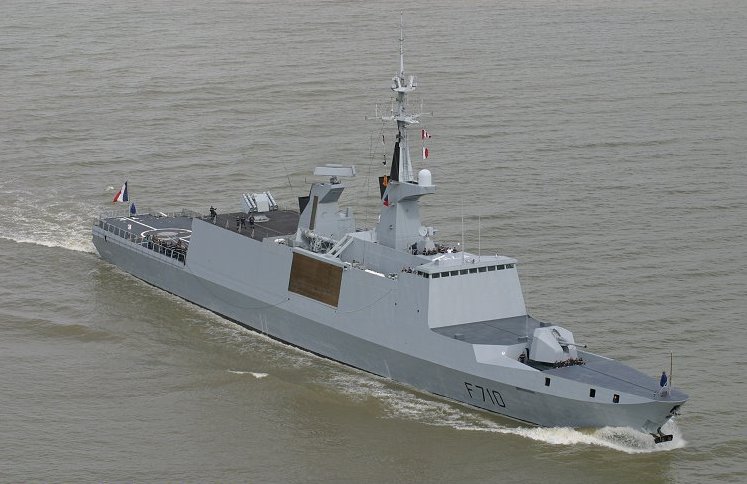
The frigate La Fayette going up the Seine river (2nd of July 2003, prior to its recent renovation). Photo credit: Guillaume Rueda

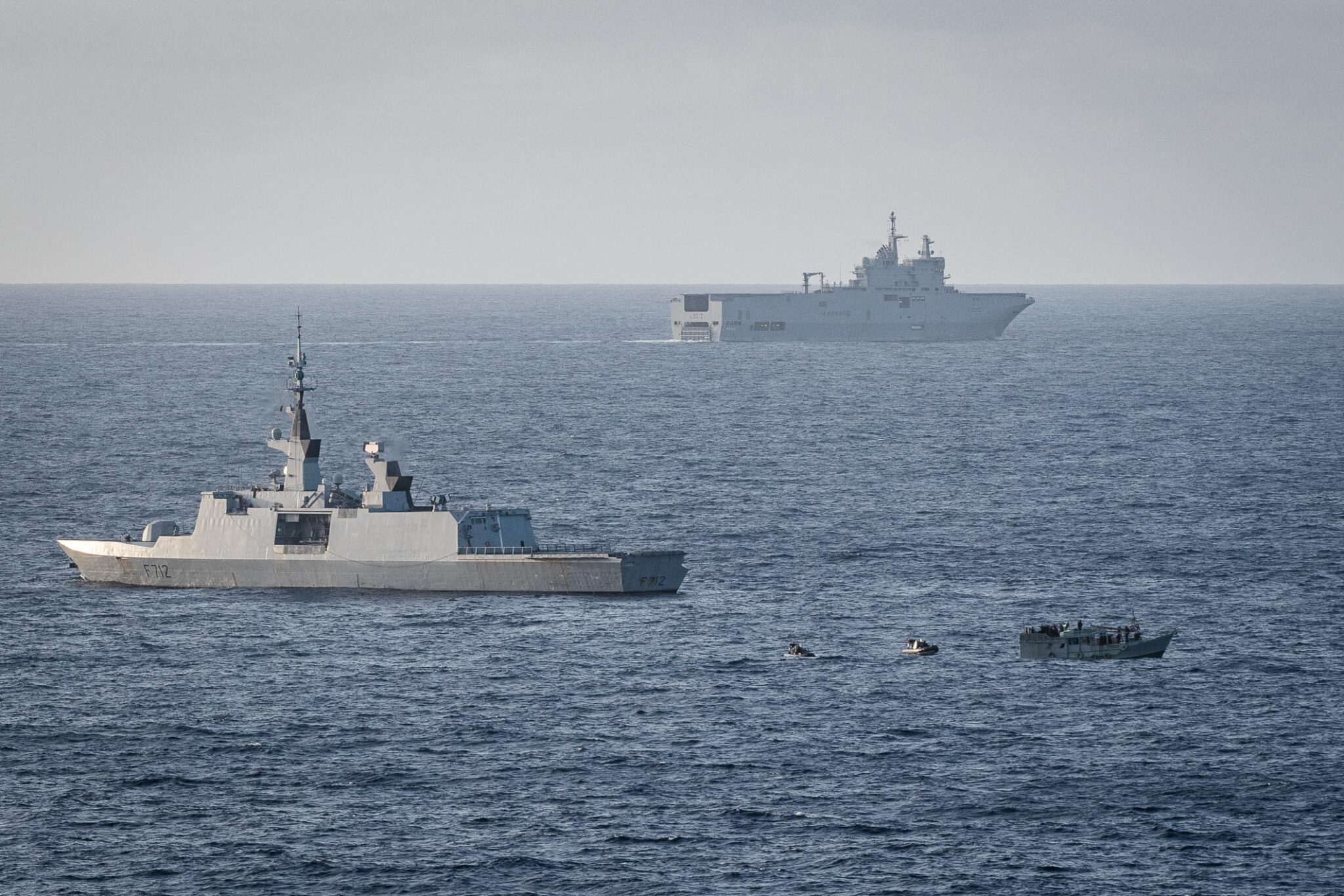
Below is a NAVCENT news release. I was a little surprised it did not include the name of the French ship. I have been unable to find the name of the ship, but it appears probable that this was done by the ships engaged in the French Navy’s annual training cruise, “MISSION JEANNE D’ARC 2023” including amphibious warship FS Dixmude (L9015) and frigate FS La Fayette (F710).

The French are not new at this, and their drug interdiction operations are frequently carried out by La Fayette class frigates. FS La Fayette probably made the interdictions, but FS Dixmude may have helped by flooding the area with search aircraft. Previous “MISSION JEANNE D’ARC” voyages have also resulted in drug interdictions. “MISSION JEANNE D’ARC 2021” resulted in a spate of five drug seizures by three French ships in six days in the same area. “MISSION JEANNE D’ARC 2022” resulted in at least one drug seizure in the Gulf of Guinea.

The crew of the frigate Courbet, supported by LHD Mistral, seized 1.7 tons of cocaine from a fishing vessel in the Gulf of Guinea, May 22, 2022. ©Marine Nationale/Défense

(US Coast Guard PATFORSWA cutters also frequently operate as part of Combined Task Force 150.)


May 24, 2023

French Warship Seizes $108 Million in Drugs during Indian Ocean Seizures

By U.S. Naval Forces Central Command Public Affairs

A French warship operating in support of Combined Task Force (CTF) 150 conducted four illegal drug seizures between April 19 and May 18 worth a total estimated U.S. street value of $108 million from fishing vessels transiting international waters in the Indian Ocean.

The warship seized 2,265 kilograms of heroin and 242 kilograms of methamphetamine from four different vessels while patrolling regional waters. CTF 150 is one of five task forces under Combined Maritime Forces, the largest multinational naval partnership in the world.

In 2023, maritime forces supporting CTF 150 have seized illegal drugs worth a combined estimated U.S. street value of $203 million, adding to record-breaking drug interdictions by U.S. and international naval units in 2021 and 2022 totaling more than $1 billion in value.

“It’s been a pleasure working with the French sailors to achieve our mission’s aims together,” said United Kingdom Royal Navy Lt. Francis Henry, a CTF 150 staff officer responsible for coordinating the task force’s counter-narcotics efforts.

CTF 150 conducts maritime security operations in the Gulf of Oman, Arabian Sea and Indian Ocean to disrupt destabilizing activity, promote international rules-based order and help ensure the free flow of commerce.

The task force is headquartered in Bahrain with Combined Maritime Forces, which is led by the commander of U.S. Naval Forces Central Command and U.S. 5th Fleet.

“Video: Interview With VADM Cooper On TF 59 Milestones, US 5th Fleet” –Naval News

Naval News provides a video of an interview with 5th Fleet/NAVCENT commander VAdm Charles Bradford (Brad) Cooper II. In addition to the video above, the Naval News post provides a transcript of the interview (always appreciated).

The video provides more than talking heads. There are snippets of video showing the operation of unmanned systems and the people mentioned.

PATFORSWA Webber class cutters show up in the video three times.

Task Force 59 is an exciting development. It appears likely this model will be replicated in other areas including with the 4th Fleet in the Drug Transit Zone. Hopefully the Coast Guard is taking the opportunity to learn as much as possible from these operations. If the Coast Guard does not have a Coast Guard R&D liaison to Task Force 59 we are missing a good bet.

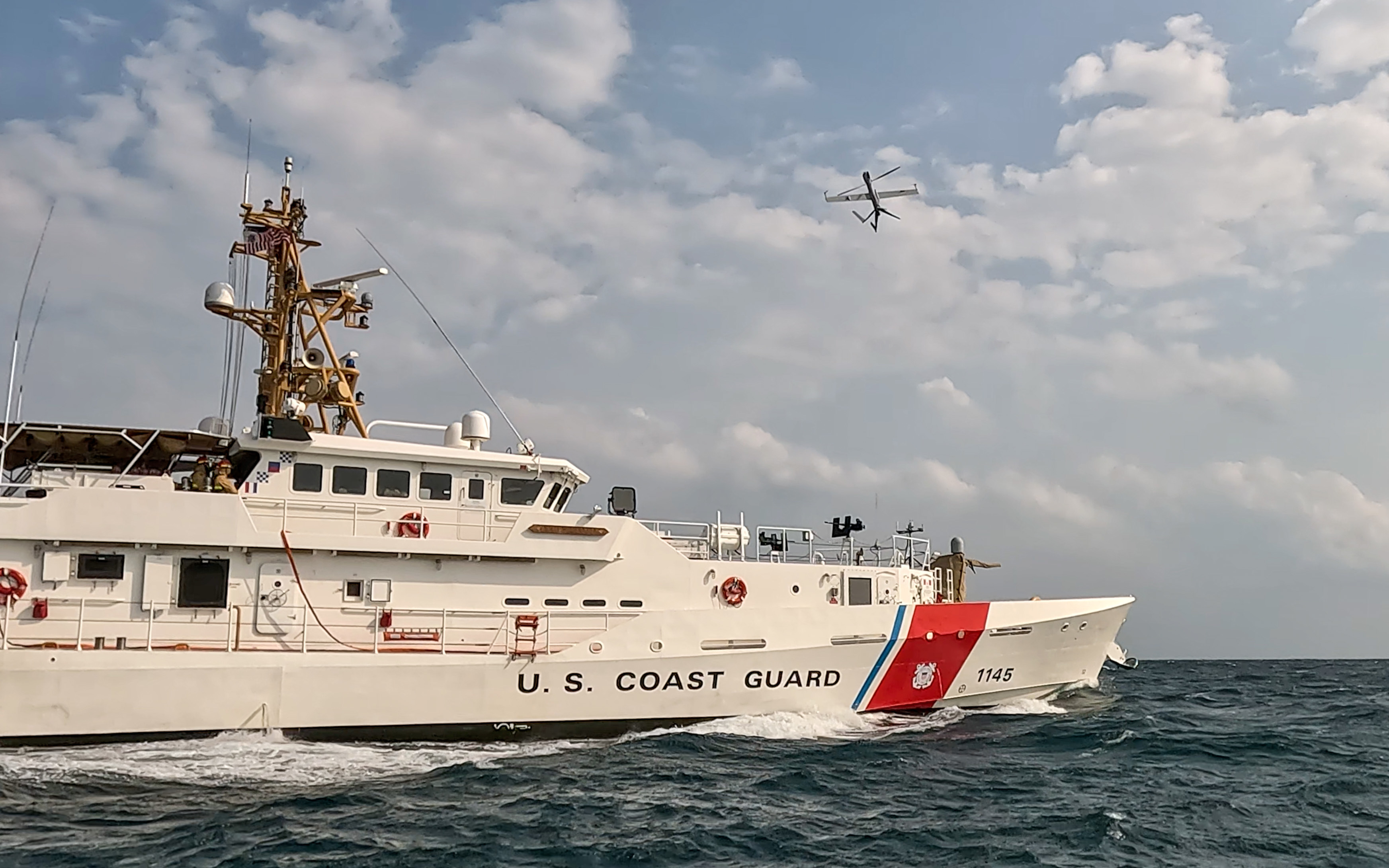
221207-N-NO146-1001 ARABIAN GULF (Dec. 7, 2022) An Aerovel Flexrotor unmanned aerial vehicle (UAV) takes off from U.S. Coast Guard fast response cutter USCGC Emlen Tunnell (WPC 1145) transiting the Arabian Gulf, Dec. 7. U.S. 5th Fleet’s Task Force 59 launched the UAV during Digital Horizon, a three-week event focused on integrating new unmanned and artificial intelligence platforms, including 10 that are in the region for the first time. (U.S. Navy photo)

Related: