Ready for Combat SAR?

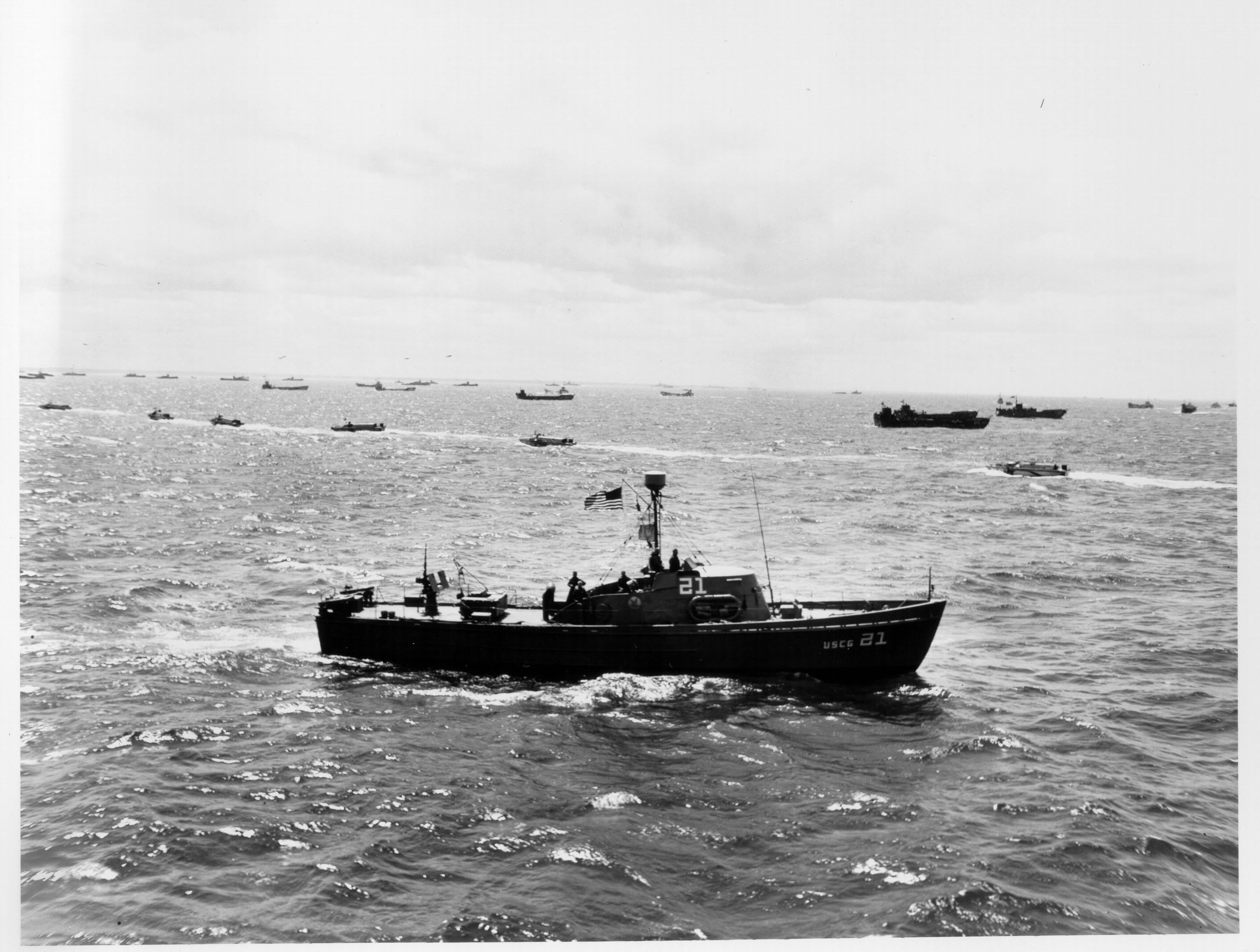
USCG 83 ft patrol boat, probably June 1944. Photographer unknown.

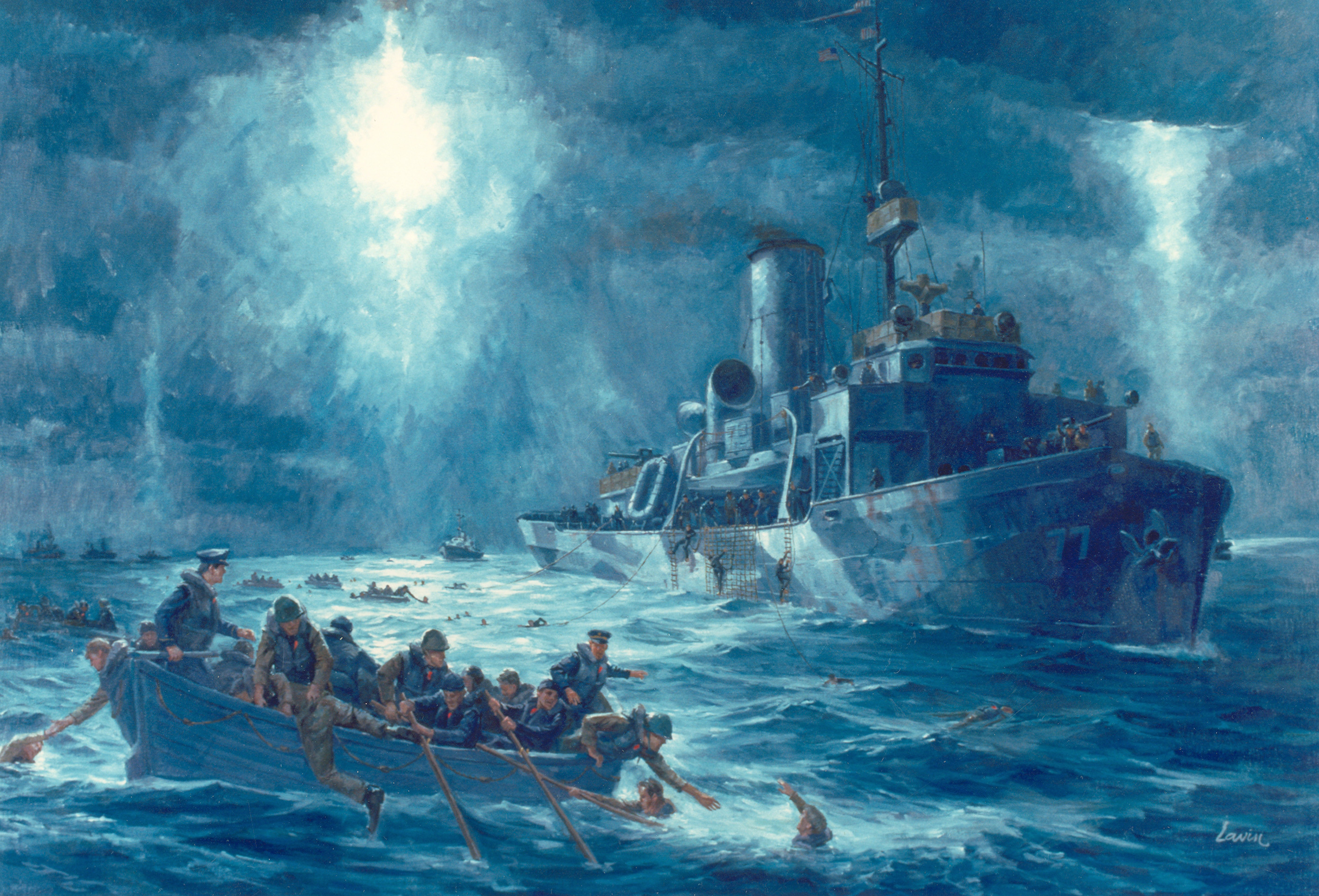
The April issue of the US Naval Institute (USNI) Proceedings has an article that contends “Combat Rescue Needs a Renaissance.” The Coast Guard has had some experience with Combat SAR. It has been decades, but if we are ever in an extended conflict with one or more near peer nations, you can be sure we will be doing it again.
Not that this could ever be exclusively a Coast Guard mission, but perhaps we ought to aggressively acknowledge a role in this mission. Make sure we are equipped for it, and train for it. Perhaps occasionally deploy with an Amphibious Ready Group and exercise the role.
Long term we might ensure that the H-60 replacement can operate from our ships in this role.
The USNI article noted:
“…all our surface vessels need a combat survivor evader locater (CSEL) radio on the bridge, so there is no delay in reporting the need for rescue. Ideally, all surface vessel lifeboats should be equipped with a CSEL as well. Even without new combat rescue aircraft, we need to start training better with the ones we have and incorporate assets such as the LCS, ESB, and EPF into fleet combat rescue events.”
Perhaps we should consider this as well.

Mine Countermeasures Modular Mission Packages for Cutters

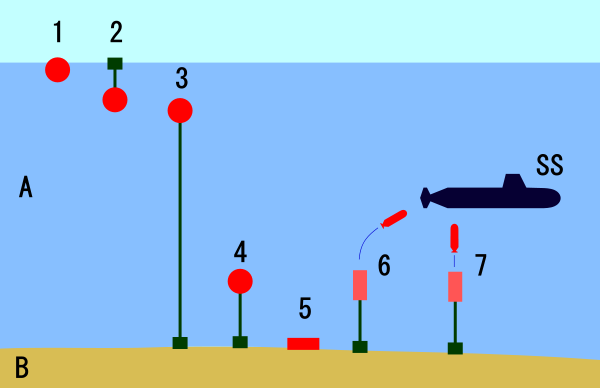
Types of Naval mine.A-underwater,B-bottom,SS-Submarine. 1-Drifting mine,2-Drifting mine,3-Moored Mine,4-Moored Mine(short wire),5-Bottom Mines,6-Torpedo mine/CAPTOR mine,7-Rising mine–by Los688

Earlier I suggested that LCS Modules, manned my Navy Reservists, might provide a mechanism that could cut mobilization time for Cutters from months to weeks. I also noted, 

There are very few Navy mine counter measures assets in the US and those we have are not spread out geographically. If there were to be a peacetime mining incident in US waters, it might be possible to airlift an MCM module to the nearest cutter to allow the problem to be dealt with more quickly.

The US Naval Institute News Service has provided access to the “Littoral Combat Ship Mission Package Annual Report, and there is a note included that addresses this possibility. Nine Mine Countermeasures Mission Packages (MCM MP) are to be provided “for use on other Vessels of Opportunity (V OOs) to meet the warfighting capability requirements and account for MCM maintenance cycles.”

If there is a mining incident at a US port, the air and, in some cases, the unmanned surface vessel portion of the package could be operated from shore. Those portions that might need to operate from a ship could possibly be operated from buoy tenders or other cutters, not just the large patrol cutters.

We probably ought to be exercising this once the MCM MPs become available.


Coast Guard’s National Security Role

The Coast Guard leadership has been hitting the Coast Guard’s National Security role pretty hard since the change of administration and the “skinny budget” scare.

Here is the Commandant’s latest pitch to “a roundtable of the Defense Writers Group, a nonprofit association of defense reporters.”

Like other service chiefs he is messaging that a continuing resolution would be a disaster.

“The good news is we are modernizing the fleet, but it’s that annual operating and maintenance account that you have to get very creative,” Zukunft said. “Where we’re seeing the most pain is we defer a lot of our shore maintenance; that backlog continues to grow.”
Zukunft said his greatest concern right now is to have budget certainty and not temporary funding measures; the current continuing resolution that funds the government runs through April 28.
“Maybe we’ll see a short extension of that, but if we don’t have an appropriation in 2017, I will have to shut down operations,” he said, adding that will affect readiness. “This is not the time to sideline any military service, including the Coast Guard, but that’s what a [continuing resolution] would do.”


To say we are in good shape in terms of modernization is at least optimistic, but perhaps the Commandant has some favorable indications from Congress. They do like things that add jobs. Still even if we start getting icebreakers the OPC is long overdue and I suspect that we may see the WMECs start failing at an ever increasing rate since we don’t expect full replacement of the fleet until about 2034. Building two a year is going to take too long.

My Unfunded Priority List

An earlier post reported a plea by Representative Duncan Hunter, Chair of the Transportation Subcommittee on Coast Guard and Maritime Transportation, for the Coast Guard to provide an unfunded priority list to include six icebreakers and unmanned Air System.

Thought perhaps I would list my own “unfunded priorities.” These are not in any particular order.

PLATFORM SHORTFALLS

Icebreakers: We have a documented requirement for three heavy and three medium icebreakers, certainly they should be on the list. Additionally they should be designed with the ability to be upgraded to wartime role. Specifically they should have provision for adding defensive systems similar to those on the LPD–a pair of SeaRAM and a pair of gun systems, either Mk46 mounts or Mk38 mod 2/3s. We might want the guns permanently installed on at least on the medium icebreakers for the law enforcement mission. Additionally they should have provision for supporting containerized mission modules like those developed for the LCS and lab/storage space identified that might be converted to magazine space to support armed helicopters.

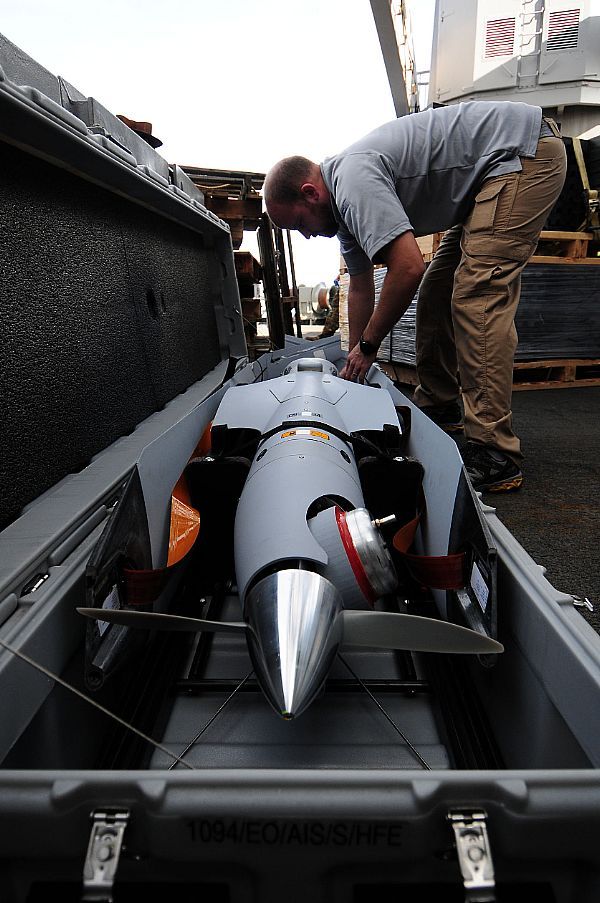
110225-N-RC734-011 PACIFIC OCEAN (Feb. 25, 2011) Guy Mcallister, from Insitu Group, performs maintenance on the Scan Eagle unmanned aerial vehicle (UAV) aboard the amphibious dock landing ship USS Comstock (LSD 45). Scan Eagle is a runway independent, long-endurance, UAV system designed to provide multiple surveillance, reconnaissance data, and battlefield damage assessment missions. Comstock is part of the Boxer Amphibious Ready Group, which is underway in the U.S. 7th Fleet area of responsibility during a western Pacific deployment. (U.S. Navy photo by Mass Communication Specialist 2nd Class Joseph M. Buliavac/Released)

110225-N-RC734-011
PACIFIC OCEAN (Feb. 25, 2011) Guy Mcallister, from Insitu Group, performs maintenance on the Scan Eagle unmanned aerial vehicle (UAV) aboard the amphibious dock landing ship USS Comstock (LSD 45). Scan Eagle is a runway independent, long-endurance, UAV system designed to provide multiple surveillance, reconnaissance data, and battlefield damage assessment missions. Comstock is part of the Boxer Amphibious Ready Group, which is underway in the U.S. 7th Fleet area of responsibility during a western Pacific deployment. (U.S. Navy photo by Mass Communication Specialist 2nd Class Joseph M. Buliavac/Released)

Unmanned Air Systems (UAS): We seem to be making progress on deploying UAS for the Bertholf class NSCs which will logically be extended to the Offshore Patrol Cutters. So far we see very little progress on land based UAS. This may be because use of the Navy’s BAMS system is anticipated. At any rate, we will need a land based UAS or access to the information from one to provide Maritime Domain Awareness. We also need to start looking at putting UAS on the Webber class. They should be capable of handling ScanEagle sized UAS.

File:USCGC Bluebell - 2015 Rose Festival Portland, OR.jpg

Photo: The Coast Guard Cutter Bluebell sits moored along the Willamette River waterfront in Portland, Ore., June 4, 2015. The Bluebell, which celebrated its 70th anniversary this year, is one of many ships participating in the 100th year of the Portland Rose Festival. (U.S. Coast Guard photo by Chief Petty Officer David Mosley.)

Recapitalize the Inland Tender Fleet: This is long overdue. The program was supposed to begin in 2009, but so far, no tangible results. It seems to have been hanging fire for way too long.

Expand the Program of Record to the FMA-1 level: The Fleet Mix Study identified additional assets required to meet the Coast Guard’s statutory obligations identifying four asset levels above those planned in the program of record. Lets move at least to first increment.

Alternative Fleet Mix Asset Quantities

————–POR       FMA-1      FMA-2      FMA-3       FMA-4
NSC                8             9                 9                 9                  9
OPC              25           32               43                50               57
FRC              58           63               75                80               91
HC-130         22            32               35                44               44
HC-144A       36            37               38                40               65
H-60              42            80               86                99             106
H-65             102         140             159              188            223
UAS-LB           4            19                21                21              22
UAS-CB        42            15                19               19               19

At the very least, looks like we need to add some medium range search aircraft (C-27J or HC-144).

Increase Endurance of Webber Class Cutters: The Webber class could be more useful if the endurance were extended beyond five days (currently the same as the 87 cutters, which have only one-third the range). We needed to look into changes that would allow an endurance of ten days to two weeks. They already have the fuel for it.

MISSION EQUIPMENT SHORTFALLS

Seagull_torpedo_trial_1

Ship Stopper (Light Weight Homing Torpedo): Develop a system to forcibly stop even the largest merchant ships by disabling their propulsion, that can be mounted on our patrol boats. A torpedo seems the most likely solution. Without such a system, there is a huge hole in our Ports, Waterways, and Coastal Security mission.

121211-N-HW977-692

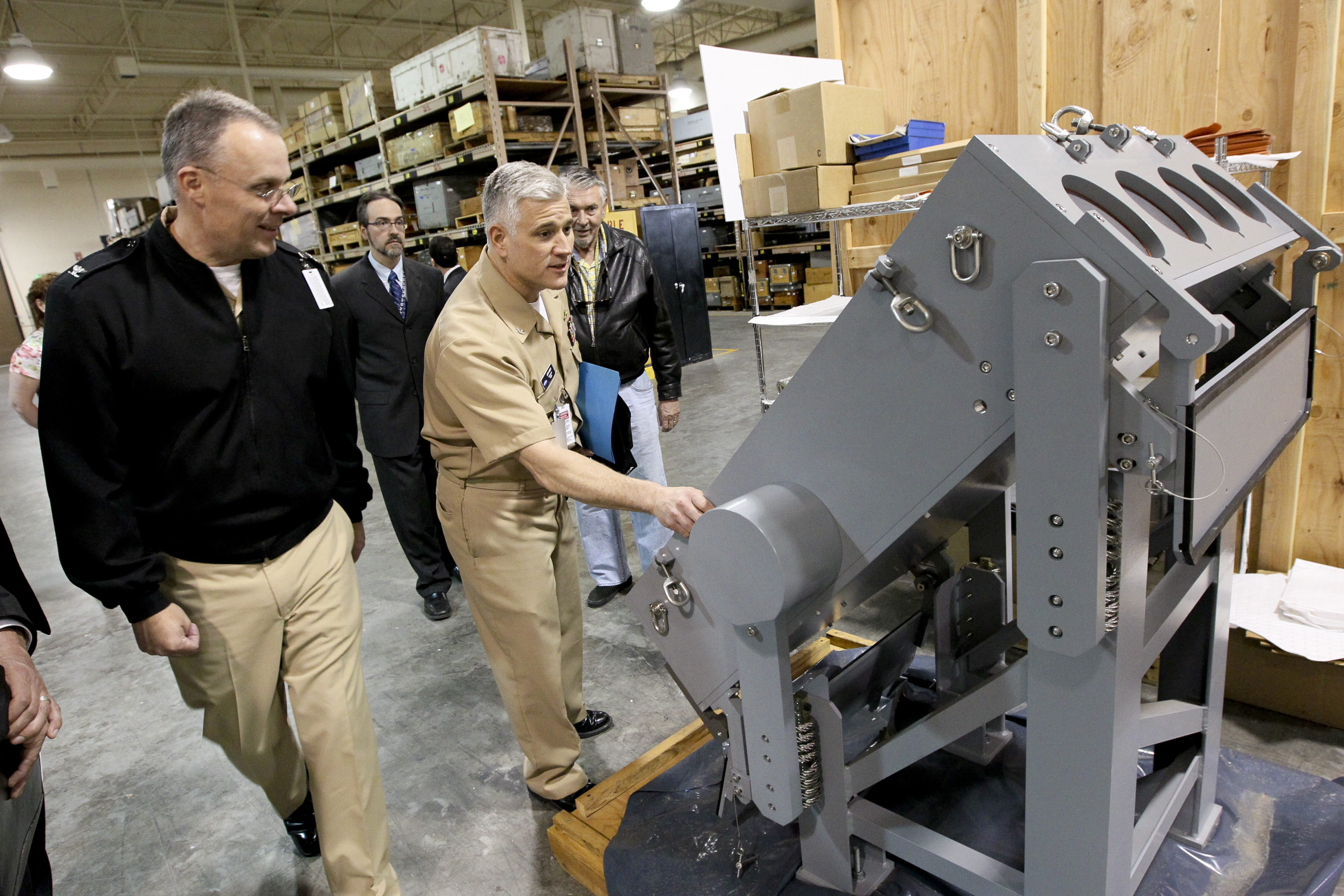
Photo: SeaGriffin Launcher

Counter to Small High Speed Craft (Small Guided Weapon): Identify and fit weapons to WPB and larger vessels that are capable of reliably stopping or destroying small fast boats that may be used as fast inshore attack craft and suicide or remote-controlled unmanned explosive motor boats. These weapons must also limit the possibility of collateral damage. Small missiles like SeaGriffin or Hellfire appear likely solutions.

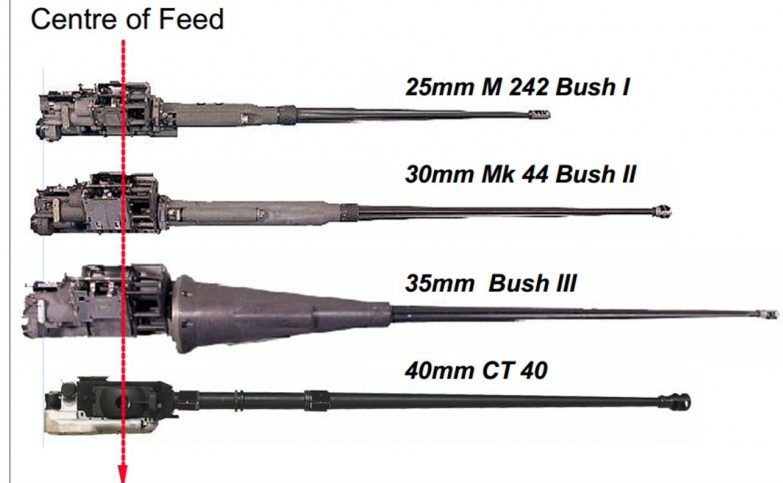
40 mm case telescoped gun (bottom) compared to conventional guns.

40 mm case telescoped gun (bottom) compared to conventional guns.

Improved Gun–Penetration, Range, and Accuracy: The .50 cal. and 25mm guns we have on our WPBs and WPCs have serious limitations in their ability to reach their targets from outside the range of weapons terrorist adversaries might improvise for use against the cutters. They have limited ability to reach the vitals of medium to large merchant vessels, and their accuracy increases the possibility of collateral damage and decreases their probability of success. 30, 35, and 40 mm replacements for the 25 mm in our Mk38 mod2 mounts are readily available.

Laser Designator: Provide each station, WPB, and WPC with a hand-held laser designator to allow them to designate targets for our DOD partners.

CONTINGENCY PLANNING SHORTFALLS

Vessel Wartime Upgrades: Develop plans for a range of options to upgrade Coast Guard assets for an extended conflict against a near peer.


Brookings Institute–A conversation with Commandant of the U.S. Coast Guard Admiral Paul F. Zukunft

Another video, this one almost an hour.

Coast Guard Overview

If you haven’t seen it already, the Coast Guard has a web site that provides a lot of information about the status of the service. The Coast Guard Overview includes sections on Missions, Workforce, Force Laydown, Assets, Authorities, Strategy, Budget, Leadership, Partnerships, and a Resource Library. (You do have to scroll down from the intro.)

I had not seen this before. It seems to be connected to the preparation for the Presidential Transition Team.

Added a link to the web site to the top of my Reference page, so it will be easy to find. I have to say I have not kept my Reference page up to date. I’ll be pay more attention to it.

LRASM for Ports, Waterways, and Coastal Security

Lockheed Martin supplied Navy Recognition with the first image showing a deck-mounted quadruple Long Range Anti-Ship Missile (LRASM) launcher. According to our source, this "top side" launcher graphic is a notional concept that could be used on an appropriately sized surface vessel, such as the Arleigh Burke class (DDG 51) or Littoral Combat Ship (LCS) classes.

Discussion on an earlier post suggesting the Coast Guard might want to fit our new major cutters “for but not with” Long Range Anti-ship Missiles (LRASM) has prompted me to rethink the suggestion and advocate for equipping them with the missile in peacetime.

One of the Coast Guard’s peacetime missions is of course Ports, Waterways and Coastal Security (PWCS).

“The PWCS mission entails the protection of the U.S. Maritime Domain and the U.S. Marine Transportation System (MTS) …prevention and disruption of terrorist attacks… Conducting PWCS deters terrorists from using or exploiting the MTS as a means for attacks on U.S. territory, population centers, vessels, critical infrastructure, and key resources.”

I have been concerned that the Coast Guard has not had adequate weapons to deal with a terrorist attack using a medium to large sized merchant ship, and currently I don’t believe there is any other organization capable of answering this threat in the 30 or more port complexes terrorists might find worthwhile targets, in a timely manner. Navy surface forces are too geographically concentrated. The over 200 nautical mile range and the ability to strike selected locations on a target ship suggest LRASM could possibly provide an answer.

If we had LRASM on all National Security Cutters (NSC) and Offshore Patrol Cutters (OPC), in perhaps a dozen ports on the Atlantic, Pacific, and Gulf coasts, Honolulu and Kodiak, its over 200 mile range fired from cutters, including possibly those in port, could cover all of these ports (except Guam), and have a weapon on target within about 20 minutes of launch.

To effectively counter the threat, I think we need to get a weapon on target within an hour of positive identification of the threat. This would require improved coordination between units. In addition to providing a datum, course, and speed, presumably an intercepting unit, boat or aircraft, would need to transmit a photograph of the target to be incorporated in the missiles memory and aim points would be chosen some time during mission planning. We would need to coordinate with air traffic control. A command decision to authorize use of the weapon and updates on the target position course and speed would also be needed. Because we might have 40 minutes or less from threat identification to launch, these steps would likely have to proceed in parallel with mission planning progressing prior to authorization.

New units appear to be on the way to developing the kind of common tactical picture we need to facilitate both decision making and targeting. We could start developing the capability with the National Security Cutters based at Alameda (San Francisco Bay) and Charleston, SC, even if the system could not be completed until the last OPCs are delivered in about 2034.

The Navy’s New Design for Maintaining Maritime Superiority–CNO

Download the pdf here.

Recently the new Chief of Naval Operations has issued a document , “A Design for Maintaining Maritime Superiority” that outlines how, hopefully, the US Navy can maintain a maritime superiority our foes will recognize and avoid confronting.

If you are looking for anything specifically regarding the Coast Guard here, you will not find it (other than the cutter in the formation on the cover). The Coast Guard is not mentioned even once, but it does talk about some things that are Coast Guard related. Perhaps we should not feel bad about this. It only mentions the Marine Corps once.

He talks about three forces that are changing the environment: 

  • The first global force is the traffic on the oceans, seas, and waterways, including the sea floor – the classic maritime system.
  • A second increasingly influential force is the rise of the global information system – the information that rides on the servers, undersea cables, satellites, and wireless networks that increasingly envelop and connect the globe.
  • The third interrelated force is the increasing rate of technological creation and adoption.”

Obviously the Coast Guard facilitates and regulates marine traffic and is tapped into the global information system. In wartime, these contacts will become essential. He also talks about new trade routes opening in the Arctic, that will only be reliable if we have new icebreakers. He also talks about illegal trafficing.

“This maritime traffic also includes mass and uncontrolled migration and illicit shipment of material and people.”

For once, finally, a document explicitly recognizes the competition,

“For the first time in 25 years, the United States is facing a return to great power competition. Russia and China both have advanced their military capabilities to act as global powers. Their goals are backed by a growing arsenal of high-end warfighting capabilities, many of which are focused specifically on our vulnerabilities and are increasingly designed from the ground up to leverage the maritime, technological and information systems. They continue to develop and field information-enabled weapons, both kinetic and non-kinetic, with increasing range, precision and destructive capacity. Both China and Russia are also engaging in coercion and competition below the traditional thresholds of high-end conflict, but nonetheless exploit the weakness of accepted norms in space, cyber and the electromagnetic spectrum. The Russian Navy is operating with a frequency and in areas not seen for almost two decades, and the Chinese PLA(N) is extending its reach around the world.

“…Coupled with a continued dedication to furthering its nuclear weapons and missile programs, North Korea’s provocative actions continue to threaten security in North Asia and beyond.

“…while the recent international agreement with Iran is intended to curb its nuclear ambitions, Tehran’s advanced missiles, proxy forces and other conventional capabilities continue to pose threats to which the Navy must remain prepared to respond.

“…international terrorist groups have proven their resilience and adaptability and now pose a long-term threat to stability and security around the world.”

He recognizes budgetary limitations.

“There is also a fourth ‘force’ that shapes our security environment. Barring an unforeseen change, even as we face new challenges and an increasing pace, the Defense and Navy budgets likely will continue to be under pressure. We will not be able to “buy” our way out of the challenges that we face. The budget environment will force tough choices but must also inspire new thinking.”

Throughout there is an emphasis on understanding history and the strategic concepts of the past. There is also a recognition of the need to work with partners.

“EXPAND AND STRENGTHEN OUR NETWORK OF PARTNERS: Deepen operational relationships with other services, agencies, industry, allies and partners – who operate with the Navy to support our shared interests.

Other than the Marine Corps, the US Navy has no closer partner than the USCG. The partnership has been a long and successful one, but I would like to see the Navy be a better partner to the Coast Guard.

What I want to see:

If we have “run out of money, now we have to think.” One thing we can do, is to try to get the maximum return from the relatively small investment needed to make the Coast Guard an effective naval reserve force.

  • We need explicit support from the Navy at every level, particularly within the Congress and Administration, for Coast Guard recapitalization.
  • We need an explicit statement from the Navy that they expect the Coast Guard to defend ports against unconventional threats, so that they can keep more forces forward deployed.
  • We need the Navy to supply the weapons we need to defend ports against unconventional attack with a probability approaching 100% ,including small missile systems like Hellfire or Griffin to stop small, fast, highly maneuverable threats and light weight anti-ship torpedoes that target propellers to stop larger threats, and we need those systems on at least all cutters of Webber class and larger.
  • We need to reactivate the Coast Guard’s ASW program and insure that all the new large cutters (NSC and OPC) have and ASW capability, if not installed on all of the cutters, at least planned, prototyped, tested, and practiced on a few ships (particularly in the Pacific).

(Note there is another post on this looking at the “design” from a Navy point of view.)

Rebuttal to Economic Case Against OPVs

Toro_air_view

Photo: Chilean Navy photo of OPV Toro, 2012

A German blogger I worked with earlier on a project for CIMSEC, Sven Ortmann, has written a post contending that building dedicated Offshore Patrol Vessels (e.g. Coast Guard cutters) does not make sense, that it is more economical to have a navy’s warships, augmented as necessary by law enforcement officers, perform these peacetime functions. He is planning to publish the post, 24 December at 6:00PM Eastern, at his Defense and Freedom Blog here.

Sven asked if I would like to write a rebuttal, and this is the product of that query.

Terminology:

For the purposes of this post, I will lump fisheries, law enforcement, and SAR together as coast guard work, or for brevity CG work.

I would contend at least some OPVs are really warships, and on the other hand, that navy auxiliaries, not normally considered warships, might also be used also be used to perform CG work, as the British Royal Navy has done, but for the sake of avoiding repeated long explanations I will lump the ships that might do this work into two categories as Sven has done: “warships” and “OPVs.”

The Contentions: Sven’s argument is based on a number of questionable assumptions. I will try to address each of these.:

  • That OPVs are not warships and that they have no value in wartime.
  • That if a nation builds a proper sized navy, it will include enough warships to also do CG work.
  • That those warships will be in geographic positions that will allow them to do CG work.
  • That a Navy crew, supplemented as necessary by a law enforcement team, can do CG work as effectively as a crew whose primary task is CG work.

Waesche Carat 2012

US Navy photo

That OPVs are not warships and that they have no value in wartime. “What do you need in war (and for deterrence of war)? Combat capability. Warships are built for it, OPVs are mere targets in combat.”

This assumes OPVs have no role in wartime. The truth of this statement depends a great deal on:

I did an earlier post which examines what Coast Guard cutters, and by extention, what OPVs might do in wartime, “What Might Coast Guard Cutters do in Wartime? Part 2, Coast Guard Roles.”  Their potential missions include Maritime Security, Blockade/Quarantine, Sea Control, Administrative Escort, Combat SAR, Deception, Special Warfare support, Naval Surface Fire Support. and with suitable modification, MCM and ASW. I would add that in the case of China’s very large OPVs, they might also be used as Attack Transports, being equipped, as they are, with extra accommodations, a number of boats, and facilities for large helicopters.

Why China Is Building The World's Largest "Coast Guard" Cutter

Image from FoxtrotAlpha, “Why China is Building the World’s Largest ‘Coast Guard’ Cutter”
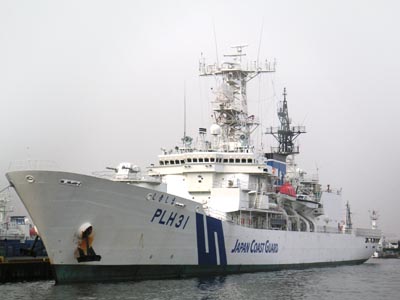
Photo: Japanese Coast Guard Cutter Shikishima, this class of two are currently the largest offshore patrol vessels in the world. China is building even larger OPVs. Photo from Japanese Wikipedia; ja:ファイル:JapanCoastGuard Shikishima.jpg

In many cases the only difference between what people see as OPVs and frigates or corvettes is how the ship is equipped.  If an OPV is upgraded and people start to see it as a frigate, is it no longer an OPV? I don’t don’t think so. Offshore Patrol is a job to do, rather than a type of vessel, though a certain type of vessel is typically used as an OPV. World wide, the typical vessel built to perform OPV duties is 1500 to 2500 tons, has a medium caliber gun, some machine guns, and a helicopter deck. Some are better equipped than others. Some even include anti-ship cruise missiles Usually they don’t have some of the more sophisticated equipment found on warships, because of both initial cost and manning requirements, but given some time, frequently they can be upgraded.

ProposedPolishCorvette

Photo: Spanish BAM, Meteoro Class OPV

That if a nation builds a proper sized navy it will include enough warships to also do CG work. “Scenario A: A fleet with warships, no OPVs. Result: Enough warships for war’s needs, enough ships for policing and rescue.”

This is what I believe Sven suggests is the best choice, but it assumes there are enough warships for marine policing and rescue, but this is not necessarily the case.

We must ask how many ship-days we need to effectively perform the CG work. Then we must ask how many ship-days the navy will have remaining after maintenance, work-up, exercises, and out of area deployments.

PacificEEZ

EEZs in the Pacific (partial)

A nation’s wealth, its perception of threat, and the size of its EEZ are not necessarily proportionate.

Germany is a wealthy nation, with a potential great power adversary relatively close at hand. It has a substantial navy and a relatively small EEZ. Consequently using a small part of their navy a small part of the time may be sufficient to perform CG tasks.

Comparing the total number of cruisers, destroyers, frigates, corvettes LCS, and OPVs, Germany has about 20. The US has a lot more, about 140, or seven times the number, but the US EEZ is 197 times larger than that of Germany. Additionally, while the German Navy’s primary operating area is near or within their territorial sea and EEZ, the US Navy’s primary operating areas are far from US Waters. The circumstances are very different. The US could not be able to build a proportionately large number of pure warships to also patrol its EEZ.

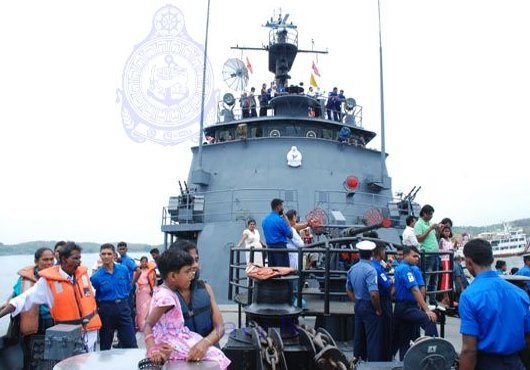
SLNS-SamuduraSriLanka

SLNS-Samudura, SriLanka

Photo: Former USCGC Courageous (WMEC-622)

There are other nations that feel relatively little threat and see little need for a navy, but have relatively large EEZs that are a major source of economic prosperity. They need to patrol their waters, they may very rationally build OPVs and they can mitigate any apprehension about their naval position by giving their OPVs more warlike capabilities.

That those warships will be in geographic positions that will allow them to do CG work. “Why the warships’ manning and fuel expenses are sunk costs? Simple; the warship would be out at sea for training anyway. Warship fuel and manning expenses may be (slightly or very much) greater in this case, but they’re sunk costs!” This assumes that policing and SAR does not interfere with the warship’s training and missions.

CG missions tend to require wide distribution of assets. Warships tend to operate in teams that are geographically concentrated. During workup they need to use the services of training facilities which are in only a few areas.

The US chooses to regularly deploys virtually all of its Navy ships far from the US EEZ as soon as they are fully worked up. If instead they hung around the US, they might be able to perform some CG missions, but it would require a change of national priorities. As it is, there are very few Navy vessels available to conduct counter-drug operations in the Forth Fleet Area (Latin America/Caribbean), and we very seldom see US Navy ships in Alaskan Waters

If we took the resources to maintain the Coast Guard’s offshore fleet and diverted it to additional Navy vessels,

  • first, there would be fewer of them, because of their higher cost and greater manning requirement
  • second, because of their more complex nature they would be available few days per ship because of the additional training they require.

I suspect Sven’s position is largely influenced by the frequent argument that OPVs should be used for counter piracy operations off Samalia. Actually we agree that using warships that are deployed to the area for other reasons, to do counter-piracy is perfectly reasonable.

On the other hand, if a nation wanted to keep its high cost navy units close to home where they can be used for defense, but it also felt an obligation to participate in counter-drug or counter-piracy operations far from any serious threat, OPVs are a relatively cheap way to fulfill the obligation without the diversion of more expensive assets.

I will note that OPVs also tend to become obsolete more slowly than more sophisticated warships. Currently the average age of USCG OPVs is over 40 years, while the average age of USN ships is about 14 years. This was not good policy, but it was possible because of the less sophisticated requirements of the OPV’s missions. In some cases frigates or corvettes are stripped of obsolete weapons and sensors and become OPVs as has been done by Spain, Portugal, and Italy.

Photo: Ship of the Spanish Navy Infanta Cristina, commissioned in 1980 as corvette with pennant F-34; in 2000 she was reclassified as oceanic patrol ship, pennant P-77, by José María Casanova Colorado, importé par Takashi kurita

That a Navy crew, supplemented as necessary by a law enforcement team, can do CG work as effective as a crew whose primary task is CG work. This will depend very much on the support provided by the command team on the ship, but I believe there is more of a tendency for those who view themselves first and foremost as warriors to view the CG missions as a distraction. They are less likely to view their career success as tied to the way they do these peacetime missions. The larger and more powerful the warship, the less likely they are to assign priorities to CG missions. This suggests a separate service, like the USCG, but at least navy officers assigned to smaller ships and OPVs that are dedicated to CG missions must feel greater pressure to succeed in these missions than those assigned to ships where these missions are well down the priority list.

121203-G-XX000-001_CPO Terrell Horne

There is another advantage to ships that are clearly intended for peacetime missions. The perception that the US Coast Guard cutters are law enforcement and search and rescue assets rather than military units, make them welcome in many places where Navy ships are not. This has opened doors for the Coast Guard that are closed to Navy ships.

File:Bad Bramstedt (BP24).jpg

Photo: German Police Coastguard ship Bad Bramstedt (BP24), by Hans Hillewaert

In conclusion. Sven’s prescription may be right for Germany, but for other nations different circumstances including EEZ size and threat perception may make OPVs a good choice. But even Germany has seen the need for at least three small OPVs (pictured above, as Sven pointed out to me).

Possible New Sonar for Even Small Cutters

NavyRecognition reports the Navy has selected the sonar for their Anti-Submarine Warfare Continuous Trail Unmanned Vessel.(ACTUV). Since this vessel is quite small at 140 tons and 132 feet long, there is a good chance the sonar would fit nicely on cutters as small as the Webber class, and certainly on the Offshore Patrol Cutter.

“MS3 (Modular Scalable Sonar System–Chuck) marks an improvement in the performance and reliability of proven sonar technologies. It performs active and passive search and tracking; incoming torpedo warning; and small-object avoidance for safer navigation.”

Maybe it is time to “Bring Back the Coast Guard ASW Mission.”