A Conversation with Admiral Karl Schultz, Commandant of the U.S. Coast Guard–CSIS

CSIS and the United States Naval Institute (USNI) conduct an interview with Admiral Karl L. Schultz, the 26th Commandant of the United States Coast Guard, conducted 1 August, 2018.

Below I will attempt to outline the conversation, noting the topics and in some cases providing a comment.

The first question is about immigration. Coast Guard is the “away game.” minimizing the factors that push immigration to the US.

The Commandant does not expect a substantial increase in help from the Navy, because they are already heavily tasked, but would welcome any additional help.

06:30 Talk about Inland fleet. Congressional support is evident. $25M provided so far.

9:20 House Appropriations Committee decision to divert $750M from the icebreaker program to fund “the Wall” in their markup of the FY2019 budget bill. The Commandant is “guardedly optimistic”

11:30 Human capital readiness? Operating account has been flat and effectively we have lost 10% in purchasing power. Want to increase leadership training.

16:30 Support for combatant commanders.

18:00 Capacity building and partnering. Detachments working on host nation platforms.

21:00 Defense Force planning–Not going back to the MARDEZ model.

22:30 Situation in Venezuela/Preparation for dealing with mass migration.

24:30 Arctic forums–Need to project our sovereignty

29:00 UNCLOS

30:00 Maritime Domain Awareness (MDA)

32:30 Tracking cargo as an element of MDA

34:00 Cyber

36:15 High Latitude engagement/partnerships.

39:30 Perhaps the icebreaker should be the “Polar Security Cutter?”

40:00 International ice patrol, still an important mission.

41:00 CG role in response to Chinese aggressiveness in the South China Sea. In discussion with Indo-Pacific Command. Will see more CG presence there.

44:00 Offshore Patrol Cutter (OPC)–on track

46:30 Border issue — passed on that

48:00 Small satellites–we are looking at them

49:00 African Capacity building/cooperation. May send an MEC.

51:30 Tech modernization. Looking at it more holistically.

Other Coverage:

This interview prompted a couple of notable posts.

SeaPower’s coverage of the discussion is here. They focused on the growth of demands on the Coast Guard.

Military.com reported on the possibility of a greater Coast Guard role in South East Asia and capacity building in Africa. It probably should be noted that the title, “Coast Guard Could Send Ship to Pacific to ‘Temper Chinese Influence’,”is a bit deceptive in that the Commandant’s remark about tempering Chinese Influence was in regard to Oceania, the islands of the Central and Western Pacific. The Commandant was quoted in the Seapower post, “In the Oceania region, there are places where helping them protect their interests, tempering that Chinese influence, is absolutely essential.”

Report to Congress on U.S. Coast Guard Polar Icebreaker Program, July 9, 2018

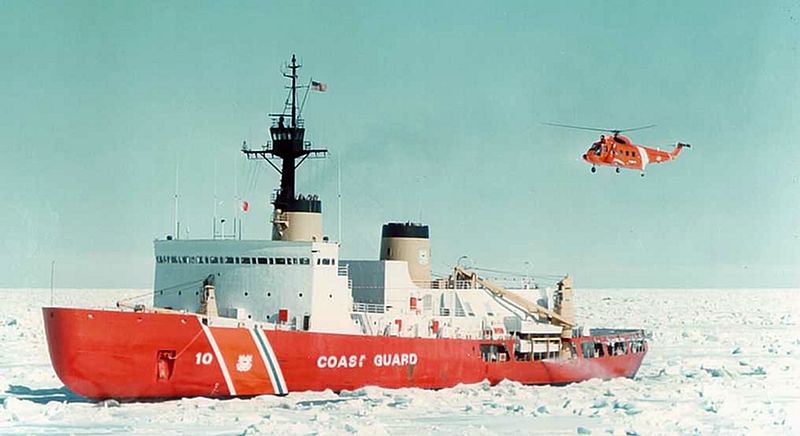
USCGC Polar Star. An old USCG photo, note the HH-52.

The Congressional Research Service has issued a new edition of its Report to Congress on U.S Coast Guard Polar Icebreaker Program by specialist in naval affairs Ronald O’Rourke, this one dated July 9, 21018. You can see it here. 

I have reproduced the summary immediately below.  

The Coast Guard polar icebreaker program is a program to acquire three new heavy polar icebreakers, to be followed years from now by the acquisition of up to three new medium polar icebreakers. The Coast Guard wants to begin construction of the first new heavy polar icebreaker in FY2019 and have it enter service in 2023. The polar icebreaker program has received about $359.6 million in acquisition funding through FY2018, including $300 million provided through the Navy’s shipbuilding account and $59.6 million provided through the Coast Guard’s acquisition account. The Coast Guard’s proposed FY2019 budget requests $750 million in Coast Guard acquisition funding for the program.

The acquisition cost of a new heavy polar icebreaker had earlier been estimated informally at roughly $1 billion, but the Coast Guard and Navy now believe that three heavy polar icebreakers could be acquired for a total cost of about $2.1 billion, or an average of about $700 million per ship. The first ship will cost more than the other two because it will incorporate design costs for the class and be at the start of the production learning curve for the class. When combined with the program’s $359.6 million in prior-year funding, the $750 million requested for FY2019 would fully fund the procurement of the first new heavy polar icebreaker and partially fund the procurement of the second.

The operational U.S. polar icebreaking fleet currently consists of one heavy polar icebreaker, Polar Star, and one medium polar icebreaker, Healy. In addition to Polar Star, the Coast Guard has a second heavy polar icebreaker, Polar Sea. Polar Sea, however, suffered an engine casualty in June 2010 and has been nonoperational since then. Polar Star and Polar Sea entered service in 1976 and 1978, respectively, and are now well beyond their originally intended 30-year service lives. The Coast Guard has used Polar Sea as a source of spare parts for keeping Polar Star operational.

A Department of Homeland Security (DHS) Mission Need Statement (MNS) approved in June 2013 states that “current requirements and future projections … indicate the Coast Guard will need to expand its icebreaking capacity, potentially requiring a fleet of up to six icebreakers (3 heavy and 3 medium) to adequately meet mission demands in the high latitudes….”

The current condition of the U.S. polar icebreaker fleet, the DHS MNS, and concerns among some observers about whether the United States is adequately investing in capabilities to carry out its responsibilities and defend its interests in the Arctic, have focused policymaker attention on the question of whether and when to acquire one or more new heavy polar icebreakers as replacements for Polar Star and Polar Sea.

On March 2, 2018, the U.S. Navy, in collaboration with the U.S. Coast Guard under the polar icebreaker integrated program office, released a request for proposal (RFP) for the advance procurement and detail design for the Coast Guard’s heavy polar icebreaker, with options for detail design and construction for up to three heavy polar icebreakers.

Issues for Congress for FY2019 for the polar icebreaker program include, inter alia, whether to approve, reject, or modify the Coast Guard’s FY2019 acquisition funding request; whether to use a contract with options or a block buy contract to acquire the ships; whether to continue providing at least some of the acquisition funding for the polar icebreaker program through the Navy’s shipbuilding account; and whether to procure heavy and medium polar icebreakers to a common basic design.

Hull Vane Experiment on 52 Meter OPV

“This project video shows the process from design to sea trials of a Hull Vane retrofit on the 52 m Offshore Patrol Vessel Thémis from the French Affaires Maritimes. The installation was done by CMN Cherbourg, which was also the builder of this vessel (delivered in 2004).”

I have posted on this particular innovation before, twice in fact, in 2017, “Hull Vane Claims Improved Performance,” and in 2015, “Hull Vane on an OPV,” but now we have another example and new information. This time the example is a mid-life up-grade on a vessel slightly larger but otherwise similar to the Webber class WPCs, the OPV Thémis from the French Coastguard (Affaires Maritimes) 409 tons, 6,310 HP, 52.5x9x2.27 meters (172.2×29.5×7.45 feet)

MarineLink reported this experiment, but I also found an excellent report with more photos here.

The results of this trial:

Comparison with the benchmark sea trials – conducted in January in exactly the same conditions – by CMN’s sea trial team showed a reduction in fuel consumption of 18 percent at 12 knots, 27 percent at 15 knots and 22 percent at 20 knots. The top speed increased from 19.7 knots to 21 knots.

The earliest post, “Hull Vane on an OPV,” reported the effects of applying the innovation to a 108 meter Dutch Holland class OPV, a ship very much like the Offshore Patrol Cutter (OPC).

  • They claimed a 12.5% reduction in fuel consumption, overall. Specifically they claimed. “…runs were done to determine the resistance at 5 knots, 12.5 knots, 17.5 knots and 22.5 knots, showing resistance reductions of 1.3%, 13.7%, 15.3% and 11.1% respectively.”
  • A 4% reduction in heave,
  • A 7%% reduction in pitch, and
  • A 13% reduction in vertical acceleration at the flight deck.

A comment on this earliest post, received from the Hull Vane team, noted.

“The performance is better however on the fuller-bodied and wider-transomed hull shapes like the typical US Coast Guard cutters, which we would very much like to do some work on.”

The Hull Vane web site has a number of publications, testimonials, and case studies, including a Nov. 2017 report on a 25 meter patrol boat. that claimed a 20% reduction in fuel consumption. It also noted  “RPA 8 is the eighth vessel to be equipped with a Hull Vane®, and ten other ships which will have a Hull Vane® are currently under construction.”

As the new ships enter service, we will probably see the Webber class using more fuel than the 110s, and almost certainly the OPCs will use more fuel than the 210s and 270s.

I would think we would want to check this out, starting with contacting the Dutch Navy and the French Affaires Maritimes to get their take on the tests. Did they think they were successful? Are they going to use Hull Vane on their own ships? If not, why not? That would cost us very little. If the responses are positive, it would make a great R&D project. Bollinger might welcome the opportunity to try one out on a new construction Webber class. The baseline capabilities of the class are already well documented.


Bollinger Wants to Build CG Icebreakers in Tampa

MarineLink provides what is almost certainly a quote of press release from Bollinger stating they hope to build the three heavy and three medium icebreakers the Coast Guard has been saying it needs in Tampa. They are reminding every one (hay, you guys in Congress) how many jobs this could mean for Florida.

This cannot hurt our case for building more than one icebreaker.

The nuclear-powered icebreaker Arktika in the Kara Sea. RIA Novosti archive, image #186141. Also keep reminding them how many icebreakers the Russians have and that the Chinese have one, are building one, and are planning a nuclear icebreaker. 


“ESG Conducts OPC Final Critical Design Review for the USCG”–NavyRecognition

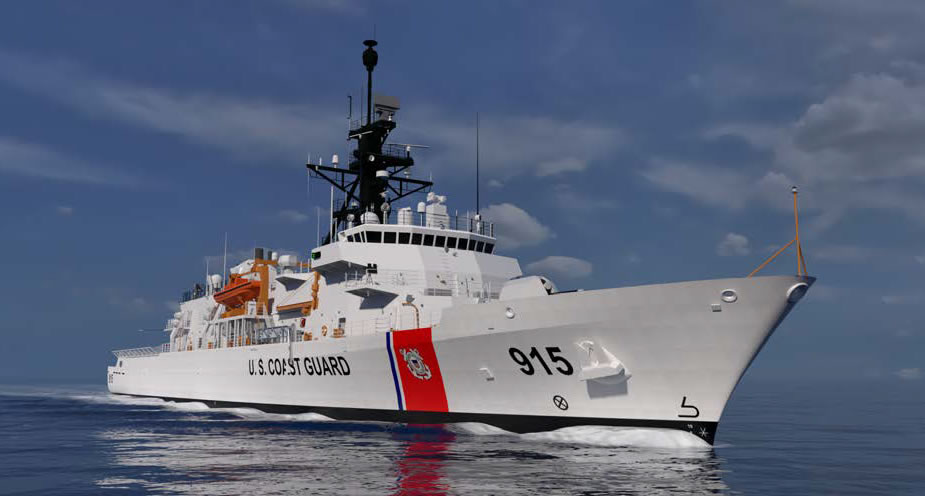
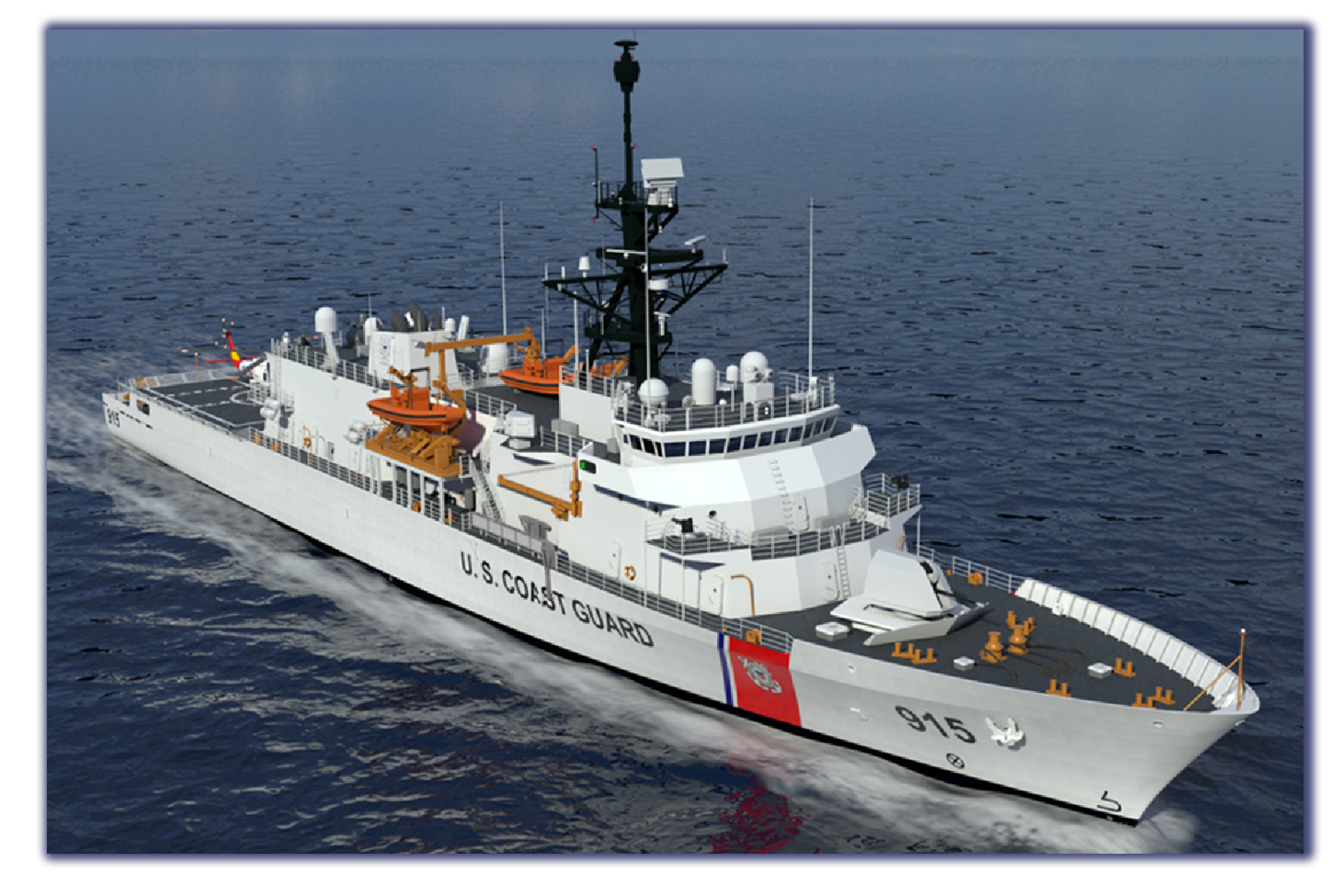
Rendering of Coast Guard Offshore Patrol Cutter. Eastern Shipbuilding Image

NavyRecognitions reports that, “Eastern Shipbuilding Group (ESG) has successfully conducted its Final Critical Design Review (FCDR) with the United States Coast Guard on 29 June 2018 for the Offshore Patrol Cutter (OPC) Program.”

Award for construction of the first of class, USCGC Argus, is expected in the Fall.

Chinese Nuclear Icebreaker Planned

China Defense Blog reports that China is has begun the process to design and build a nuclear powered icebreaker, as a prelude to building a nuclear powered aircraft carrier.

The post includes a quotation that is wrong on a couple of counts.

“The US and former Soviet Union used their experience with nuclear-powered icebreaker ships to build a nuclear-powered aircraft carrier, he noted.”

The US, of course, never built a nuclear icebreaker, and the Soviet Union never built a nuclear carrier. The Soviets did build some very large cruisers with a hybrid nuclear and conventional steam powerplants, but those were their only nuclear powered surface warships. Both nations built nuclear submarines before building nuclear surface warships. China has also already built several classes of nuclear submarines

Navy Will Release New 30-Year Ship Repair, Modernization Plan with Annual Shipbuilding Report–USNI

The Navy has announced that they will release not only a 30 year shipbuilding plan, but also a 30 year ship repair and modernization plan.

He acknowledged that the timing of ship maintenance availabilities are prone to change, as deployments are extended, one ship is swapped for another to meet a warfighter need, and so on. But while the planning is complex, he said, “the only thing I know is, the best way to start getting after a complex issue is laying out at least what you know and laying that out as a baseline, so then when you do have to do – whether it’s for operational reasons or whatever – have to do changes, you’re changing from a known baseline and you can more quickly understand what the second- and third-order effects are.”

I still don’t think the Coast Guard has ever submitted their 20 year plan as mandated by GAO and Congress. We have discussed the need for a long term shipbuilding plan numerous times. These are only two:

I suspect the 20 year plan was stalled in the Department.

It is really important to build an understanding of future needs. It seems this was a part of the problem in getting a realistic shipbuilding budget. We should anticipate replacing all our ships when they reach 30 years of age. As that time approaches we can reevaluate and perhaps delay replacement if they are holding up well, and we will be heroes.

We really have to tell the administration and the Congress what we need. To do that I would reiterate the need to periodically redo the Fleet Mix simulation and study. The last one was done about ten years ago and still assumed multiple crewing of the Bertholf Class NSCs and Offshore Patrol Cutters. (Crew Rotation Concept).

Report to Congress on U.S. Coast Guard Cutter Procurement, 23 May 2018

OPC “Placemat”

Mr. O’Rourke has been busy, in addition to the report on Icebreakers, the latest edition of the Congressional Research Service report on Coast Guard Cutter Procurement, also by Ronald O’Rourke, was also published on 23 May, 2018. You can see it here. 

I have reproduced the summary immediately below.  Note that the price for the OPCs is already surprisingly low. 

The Coast Guard’s acquisition program of record (POR) calls for procuring 8 National Security Cutters (NSCs), 25 Offshore Patrol Cutters (OPCs), and 58 Fast Response Cutters (FRCs) as replacements for 90 aging Coast Guard high-endurance cutters, medium-endurance cutters, and patrol craft. The Coast Guard’s proposed FY2019 budget requests a total of $705 million in acquisition funding for the NSC, OPC, and FRC programs.

NSCs are the Coast Guard’s largest and most capable general-purpose cutters; they are intended to replace the Coast Guard’s 12 aged Hamilton-class high-endurance cutters. NSCs have an estimated average procurement cost of about $682 million per ship. Although the Coast Guard’s POR calls for procuring a total of 8 NSCs to replace the 12 Hamilton-class cutters, Congress through FY2018 has funded 11 NSCs, including two (the 10th and 11th) in FY2018. Six NSCs are now in service, and the seventh, eighth, and ninth are scheduled for delivery in 2018, 2019, and 2020, respectively. The Coast Guard’s proposed FY2019 budget requests $65 million in acquisition funding for the NSC program; this request does not include additional funding for a 12th NSC.

OPCs are to be smaller, less expensive, and in some respects less capable than NSCs; they are intended to replace the Coast Guard’s 29 aged medium-endurance cutters. Coast Guard officials describe the OPC program as the service’s top acquisition priority. OPCs have an estimated average procurement cost of about $391 million per ship. On September 15, 2016, the Coast Guard announced that it was awarding a contract with options for building up to nine ships in the class to Eastern Shipbuilding Group of Panama City, FL. The first OPC was funded in FY2018 and is to be delivered in 2021. The Coast Guard’s proposed FY2019 budget requests $400 million in acquisition funding for the OPC program for the construction of the second OPC (which is scheduled for delivery in 2022) and procurement of long leadtime materials (LLTM) for the third OPC (which is scheduled for delivery in 2023).

FRCs are considerably smaller and less expensive than OPCs; they are intended to replace the Coast Guard’s 49 aging Island-class patrol boats. FRCs have an estimated average procurement cost of about $58 million per boat. A total of 50 have been funded through FY2018. The 27th was commissioned into service on April 20, 2018. The Coast Guard’s proposed FY2019 budget requests $240 million in acquisition funding for the procurement of four more FRCs.

The NSC, OPC, and FRC programs pose several issues for Congress, including the following: 

  • whether to fully or partially fund the acquisition of a 12th NSC in FY2019; 
  • whether to fund the acquisition of four FRCs in FY2019, as requested, or some other number, such as six, which is the maximum number that has been acquired in some prior fiscal years; 
  • whether to use annual or multiyear contracting for procuring OPCs; 
  • the procurement rate for the OPC program; 
  • planned procurement quantities for NSCs, OPCs, and FRCs; and 
  • initial testing of the NSC.

Congress’s decisions on these programs could substantially affect Coast Guard capabilities and funding requirements, and the U.S. shipbuilding industrial base.

“Build a Great White Fleet For the 21st Century”–USNI Proceedings

The US Naval Institute Proceedings May 2018 edition has an article, “Build a Great White Fleet for the 21st Century,” that recommends greater Coast Guard funding to support Combatant Commanders. It is written by Captain David Ramassini, USCG. The accompanying bio states,

“Captain Ramassini is an Operation Iraqi Freedom veteran and cutterman who has served in the Pentagon as Coast Guard Liaison on the Joint Staff and also in the Office of Secretary of Defense. Captain Ramassini is slated to assume his fifth command as the plankowner commanding officer of the national security cutter Kimball (WMSL-756).”

Unfortunately the article is “members only.” If you are a regular reader of my blog, you probably should also be a US Naval Institute member, but for those who are not, I’ll try to summarize his argument, including some quotations. After reviewing the article, I’ll offer some thought on how, and where, we might provide some assistance to the Combatant Commanders.

The Article

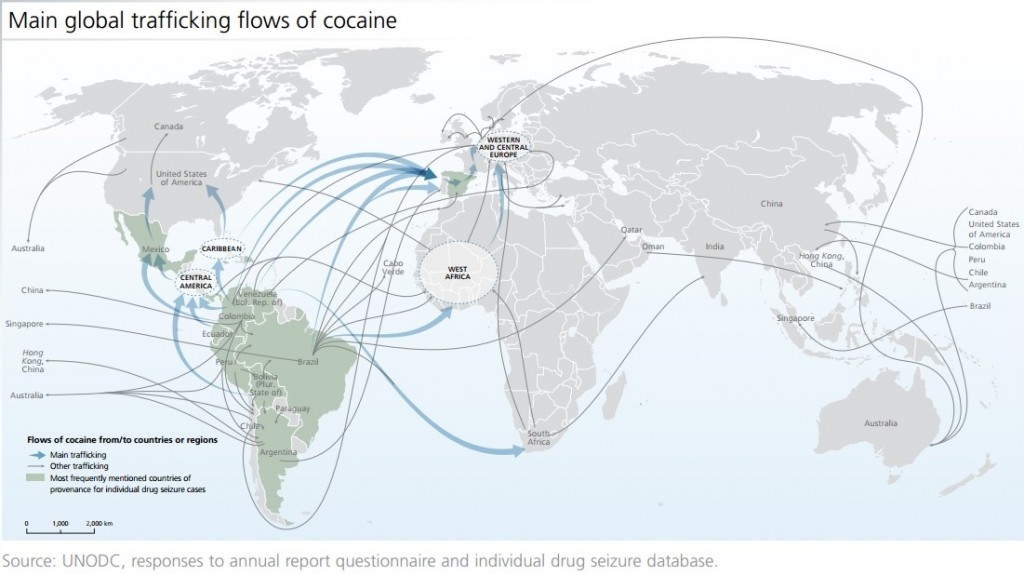
Captain Ramassini contends improved maritime governance and suppressing transnational crime is in the US interest where ever it occurs.

“As the line between terrorist and criminal activities continues to blur, the transactional connections between a wide range of unlawful organizations is likely to cloud the distinction between law enforcement and military operations.”

The Geographic Combatant Commanders (GCC) need afloat assets to aid in dealing with these problems.

Source: UNODC, responses to annual questionnaire and individual drug seizure database

The Coast Guard is uniquely qualified to leverage “vast authorities; capabilities; and interservice, interagency, intelligence community, and international partnerships” in support of Geographic Combatant Commanders (GCC).

There are not enough Coast Guard assets to do this now.

To provide additional assets funding for the fleet needs to be rebalanced, moving money from the Navy to the Coast Guard.

Rebalancing the national fleet composition would improve relationships and provide the United States and our partners advantages in a complex world filled with threats that go beyond the nation-state.

Recognizing the Coast Guard for the unique national, international, diplomatic, economic, and intelligence power that it is, the current administration has the opportunity to turn this tide and make the national fleet great again by directing a smart business decision. Specifically, prioritize Coast Guard cutter production to grow the fleet and provide a more cost-effective and adaptable instrument for the nation. A 21st-century Great White Fleet of Coast Guard cutters would begin a new era of sea power better suited to promote rule of law through cooperative partnership and distributed lethality, and allow the U.S. Navy to refocus its efforts on high-intensity conflict. It is time to rethink international engagement using the Coast Guard—an armed force at all times, but a more cooperative power known for its olive-branches-over-arrows approach.

Coast Guard national security, offshore patrol, and fast response cutters could serve as powerful instruments for GCCs. They are large enough to operate globally, yet small enough to gain access and foster cooperative partnerships. In addition, these more affordable naval assets could be produced more expediently than Navy surface combatants to build a credible national fleet. The goal of a 355-ship Navy needs to be expanded to a 400+ ship national fleet with utility across civil and military disciplines and a better return on investment.

It is time to change the costly Navy-centric approach toward peace and security and focus on restoring the underpinnings of rule of law to regain the trust and confidence of partner nations. The Coast Guard is capable of more finely tuned and less costly persistent presence. It is an affordable, accountable, and reliable instrument of national power well equipped to execute international engagement. Bolstering white hull numbers within the national fleet by doubling the number of cutters could provide a 21st century advantage to the United States and our international partners in this ever-evolving global environment.

Captain Ramassini suggests that large cutters could be upgraded so that they can fill the frigate role.

One approach worth examining is up-arming the Coast Guard’s fleet with a vertical-launch system (Mk-41 VLS) and SeaRAM close-in weapon system to provide increased warfare interoperability. Imagine a forward-deployed “international security cutter” capable of operating with a carrier strike group and/or surface action group and assuming a role historically filled by a Navy frigate.

Commentary

There are currently six Unified Combatant Commands. Two, NORTHCOM and SOUTHCOM already have substantial Coast Guard assets available, although SOUTHCOM could use more. CENTCOM has the six WPBs of PATFORSWASIA. Three Unified Combatant Commands, PACOM, EUCOM, and AFRICOM, have no regular Coast Guard representation.

EUCOM (European Command) probably has far less need for a US Coast Guard presence, since they already have several sophisticated coast guard organizations among allied nations.

PACOM probably could use more Coast Guard assets for capacity building and suppression of Illegal, Unregulated, and Unreported (IUU) fishing in the Western Pacific. Seventh Fleet has already asked for more Coast Guard presence to confront Chinese white hulls.

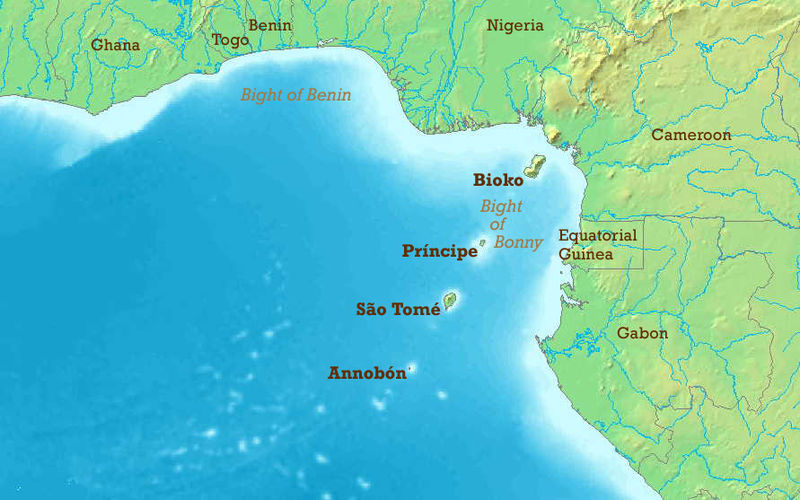
Africa has a serious problem with Maritime crime and could use training, capacity building, and more international inter-agency cooperation. The Coast Guard has sent ships to the area intermittently, but the area has been largely neglected. China is making serious inroads in Africa. We need a presence, but gray hulls are not what we need. The six boats of Patrol Force South West Asia (PATFORSWA) could help address the problem in East Africa, but that would require some sharing by CENTCOM. There is an unrealized opportunity to do a lot of good in West Africa, particularly in the Gulf of Guinea where piracy, kidnapping, IUU fishing, and other marine crimes are common.

Gulf of Guinea, from Wikipedia

To maintain a single large cutter off the West coast of Africa or in the Western Pacific would require three ships in rotation, assuming they are homeported in the US. Larger ships are more difficult to homeport in foreign ports, smaller vessels are likely more feasible.

It appears more likely we could replicate the six boat PATFORSWA organization with similar organizations in East Africa and the Western Pacific. There are several ports in each area that might be worth considering.

Obviously we would not send more now overage 110s, we would be sending Webber class WPCs. This would require extending the current program beyond the 58 in the program of record. There is already discussion about six additional WPCs to replace the six 110s assigned to CENTCOM. Adding six for AFRICOM and six for PACOM would extend the current program by two or three years. The shipbuilding costs for 12 more WPCs are on the order of $700M spread over two or three years, not much more than a single NSC. Basic personnel requirements for 12 vessels with a crew of 24 are 288 crew members. Rotational crews and supporting personnel would probably push this up to about 500, a notable increase for the Coast Guard, but “small change” in the defense budget. The PATFORSWA costs are paid for from the DOD budget, so I would expect a similar arrangement for similar squadrons assigned to AFRICOM and PACOM.

Perhaps at some point. we should also consider a similar forward deployed squadron for SOUTHCOM.


Perspective: Rejuvenating the Trinidad and Tobago Coast Guard, by Sanjay Badri-Maharaj

Once again Sanjay Badri-Maharaj provides a look inside the Trinidad and Tobago Coast Guard, (TTCG). This time, he relates its often frustrating history and its recent attempts to return to relevancy. The story should make USCG members feel very fortunate. Sanjay’s earlier post related to the TTCG’s most recent major procurement, “How the SPa was Chosen – The Trinidad and Tobago Coast Guard’s Spa 5009 fleet.”

British built OPV that was to have been the Trinidad and Tabago Ship (TTS) Port of Spain, seen here in TTS colors. Now the Brazilian Ship Amazonas.

At the Visakhapatnam International Fleet Review 2016, a ship graced the show with her presence – the Brazilian Navy Offshore Patrol Vessel (OPV) BN Amazonas (P120) commanded by Commander Alessander Felipe Imamura Carneiro. While this ship would have gone largely unnoticed by the naval fraternity so gathered, being as it is, of sound but unspectacular design and performance, the vessel has a peculiar significance for the Trinidad and Tobago Coast Guard (TTCG) as it was originally built for the said formation and was very nearly commissioned as the TTS Port of Spain. However, an abrupt and controversial cancellation of the order in September 2010, following a change in government in May 2010, brought an end to a planned expansion plan that would have allowed the TTCG to regain its place as the premiere naval unit of the Caribbean. The cancellation of the OPV contract combined with poor serviceability of surviving assets led to a scramble for assets between the years 2013 and 2015 which culminated in the procurement of a fleet of vessels that have restored a degree of capability and viability to the TTCG surface ship squadron.

Trinidad and Tobago’s Maritime Domain:

Source: Trinidad and Tobago Coast Guard

As an archipelagic island state, Trinidad and Tobago’s Maritime Domain and the TTCG’s ability to patrol and secure the same are of paramount importance for the security and the economic well-being of the country. The Maritime Domain can be divided into three parts:

Exclusive Economic Zone

Trinidad and Tobago claims an Exclusive Economic Zone (EEZ) of up to two hundred nautical miles (200 n.m.).

Territorial Sea

The territorial sea limits are up to 12 nautical miles from the archipelagic baseline.

Internal Waters

Internal waters, of up to 3 nautical miles from the archipelagic baseline are also part of the responsibility of the Coast Guard.

Activities within the Maritime Domain

Energy Exploration and Exploitation

  • The offshore oil and natural gas sectors are estimated to provide some 48% of the revenue of the Government of Trinidad and Tobago.

Commercial Shipping and Maritime Transport

  • 30 shipping companies – international and regional

Fisheries

  • 2,300 registered vessels including trawlers

Search and Rescue

  • Under the 1979 International Convention on Maritime Search and Rescue Trinidad and Tobago has an area of responsibility 68,500 sq nautical miles.
  • Trinidad and Tobago also has obligations under the ICAO for search and rescue.
  • Trinidad and Tobago also hosts the Regional Maritime Rescue Coordinating Centre

Trafficking in Narcotics, Arms and Ammunition

  1. The connection between drug trafficking and violent crime is obvious. Equally well known are the destabilizing economic and socio-political effects of the corruption and social degeneration that follows in its wake.
  2. Contrary to popular belief, The majority of drugs smuggled into Trinidad are transported, not by small fast boats, but by large, slow transport vessels. They are also transported by aircraft, submersibles, and fishing boats. Until 2016, the ability of the Trinidad and Tobago Coast Guard to intercept this multiplicity of smuggling avenues was severely limited, particularly along the South and East coasts. Furthermore, civilian marinas also provide a largely unpoliced entry route for illegal narcotics.
  3. Thus, acquiring the capability to stop the transshipment of narcotics (primarily from South America to North America and Europe) through local waters and reducing the associated arms and ammunition trade locally, is the key immediate goal of the TTCG.

Natural Resource Poaching

  1. Trinidad and Tobago claims an EEZ consistent with the United Nations Convention on the Law of the Sea. It must therefore carry out surveillance to the extremities of its EEZ (out to 200NM) to prevent unauthorized and illegal activity. Encroachments into the EEZ are always a possibility with Barbadian and Venezuelan illegal exploitation of local fisheries having occurred with regularity.

Human Trafficking and Illegal Immigration

  1. The main routes of ingress and egress in the human trafficking trade are by sea. Illegal immigration from the South American mainland by sea is increasing. An increase in illegal immigration and human trafficking has been observed within local waters.

Maritime Terrorism/ Piracy/ Natural Disasters

  1. Worldwide, the emergence of a widening range of non-state actors, including terror networks and criminal gangs has prompted a major shift in National Security Policy. These threats cannot be ignored and it can be expected that TTCG vessels may be deployed to support Counter Terrorism operations locally and regionally.
  2. Piracy has not happened to any noticeable extent, but there have been incidents within the Caribbean. Maritime crime, however, is not uncommon and needs to be addressed by deployment of Coast Guard assets. Maritime crime has been occurring in the cross border areas of local waters.

Development of the TTCG Surface Fleet

The Trinidad and Tobago Coast Guard began its operational history with two 103ft Vosper Ltd patrol boats – the TTS Trinity (CG-1) and the TTS Courland Bay (CG-2) – commissioned on 20th February 1965, each 31.4m long, displacing 123 tons. These were followed by TTS Chaguaramas (CG-3) and the TTS Buccoo Reef (CG-4), commissioned on 18th March 1972, each 31.5m long, displacing 125 tons. CG-1 and CG-2 were decommissioned in 1986 and CG-3 and CG-4 in 1992.
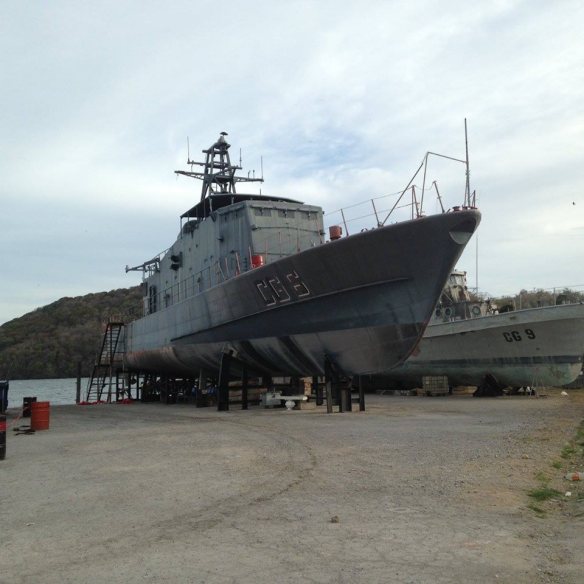
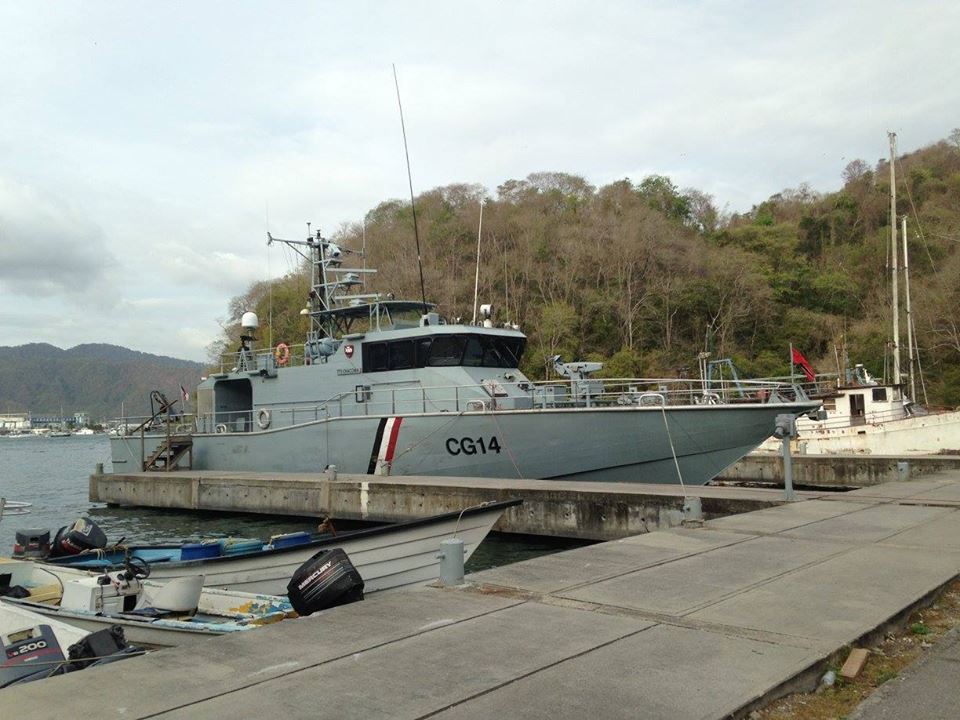
Photo by Sanjay Badri-Maharaj

These Vospers were followed on 15th June  1980 by two modified Spica class vessels – TTS Barracuda (CG-5) and TTS Cascadura (CG-6) – each 40.6m long and displacing 210 tons. After a failed attempt at local repair and refurbishment, these vessels were decommissioned after nearly 15 years of inactivity. CG-5 was scrapped while CG-6 remains at Chaguaramas Heliport completely derelict, bereft of sensors, engines, weapons and accommodation, yet the vessel remains ostensibly in commission.

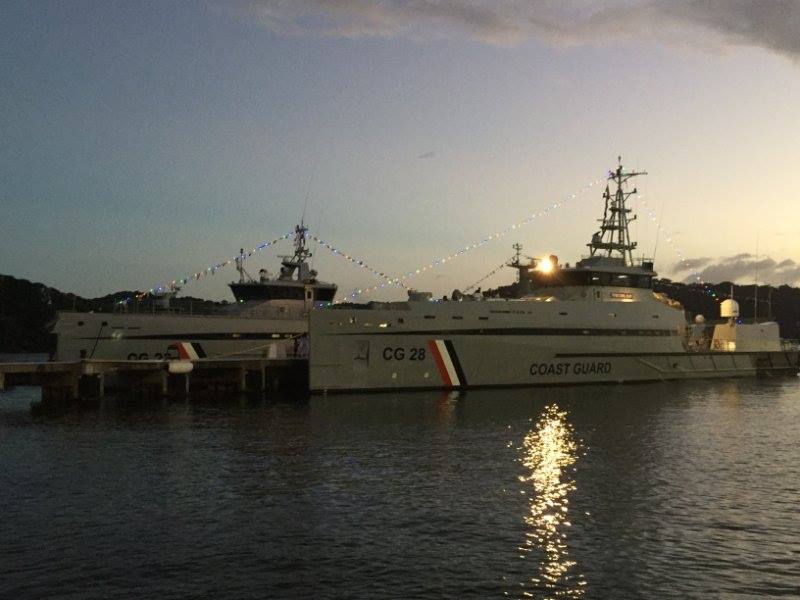
On 27th August 1982, 4 Souter Wasp 17 metre class (TTS Plymouth CG27, TTS Caroni CG28, TTS Galeota CG29, TTS Moruga CG30) were commissioned. In addition, the Coast Guard was augmented in the mid-to-late 1980s with vessels from the disbanded Police Marine Branch – 1 Sword Class patrol craft (TTS Matelot CG 33) , and 2 Wasp 20 metre class (TTS Kairi CG31 & TTS Moriah CG 32). All of these vessels have now been decommissioned.

The years 1986 to 1995 saw the decommissioning of almost all the TTCG patrol assets and the de facto retirement of CG-5 and CG-6 for lack of serviceability and an inability of the TTCG to undertake routine maintenance due to severe funding shortfalls. This left the formation incapable of performing its assigned tasks on any sort of credible basis. This period, not surprisingly, saw a significant increase in narcotics and illegal weapons shipments being transhipped through Trinidadian waters.
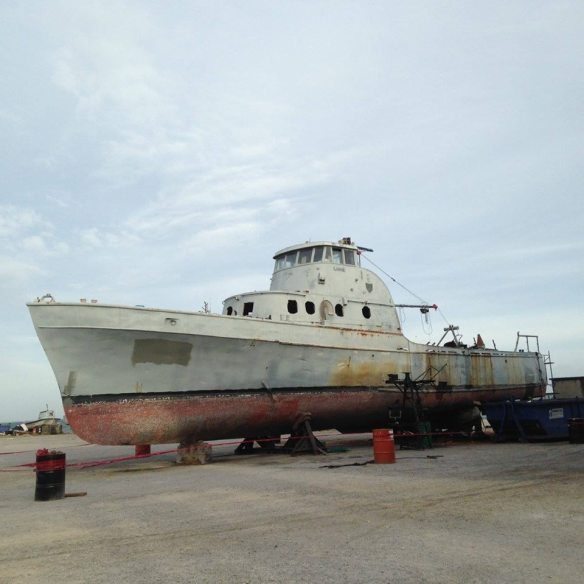
Photo by Sanjay Badri-Maharaj

After a number of years with almost no serviceable vessels, the period 1999-2001 saw the TTCG receive a boost with the acquisition of the ex-Royal Navy Island class OPV, HMS Orkney as the TTS Nelson (CG-20) and four 82ft Point-class cutters, each displacing some 66tons, from the United States (TTS Corozal Point CG7, TTS Crown Point CG8, TTS Galera Point CG9 and TTS Bacolet Point CG10). The Point class cutters were nominally on strength until 2009-10 when they were decommissioned, but in reality, they had been unseaworthy for some years prior. A half-hearted attempt was made to refit CG-7 but was abandoned. It is a depressing fact that these vessels were well over 20 years old when procured. The stark reality was that not a single new-build patrol vessel was acquired between 1980 and 2009.
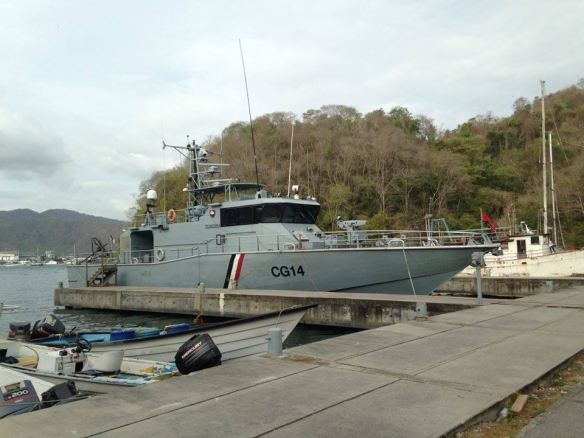
Photo by Sanjay Badri-Maharaj

In 2003-2004, the then Government of Patrick Manning, began a phased expansion of the formation  which included the purchase of six new Austal PB30 Fast Patrol Craft (FPC) –CG11 TTS Scarlet Ibis, CG12 TTS Hibiscus, CG13 TTS Humming Bird, CG14 TTS Chaconia, CG 15 TTS Poui and CG16 TTS Teak – commissioned between 2009-2010 and two modified oilrig support vessels – each over 15 years old – armed and re-tasked as Coastal Patrol Vessels (CPVs) – CG-21 TTS Gaspar Grande and CG-22 TTS Chacachare – commissioned on 23rd April 2008. In addition, 4 Midnight Express Interceptors were delivered in 2005 and were extensively deployed in anti-narcotics operations.

The “crown jewels” of this expansion plan were three 90m long OPVs – to be named the Port of Spain, Scarborough and San Fernando – ordered from VT Shipbuilding (later BAE Systems Surface Ships). Easily the most advanced vessels in the Caribbean (after the demise of the Cuban navy), the OPVs were adequately armed with 25mm and 30mm guns and possessed the ability to stage medium-lift helicopters from their flight decks. However, an overly-ambitious integrated fire-control system and some unrealistic expectations from the TTCG in respect of the performance of the 30mm guns led to significant delays and problems during trials. In September 2010, the Government of then Prime Minister Kamla Persad-Bissessar, cancelled the contract in decision that in retrospect may have been ill-advised.

Of interest is the fact that the procurement of new vessels did not lead to a commensurate increase in the TTCG operational budget relative to the larger fleet. In addition, archaic bureaucratic procedures together with shortcomings in the TTCG engineering and maintenance branches combined to cripple efforts to restore serviceability to repairable vessels with contractors going unpaid for work done and vessels being laid-up for extended periods of time. Procurement and payment procedures and policy have also played a significant part handicapping the ability of the TTCG to meet its commitments to suppliers and contractors, largely because of a bureaucratic system that moves slowly and which fails to accord due priority to essential items necessary for the operations of the TTCG. It is a continuing area of concern that there has been no attempt to streamline urgent procurement or even payment of suppliers with basic necessities such as fuel running dangerously low on occasions. The then government attempted to circumvent these problems by entering into comprehensive logistics and support arrangements with VT and Austal. However, the former was stillborn through the cancellation of the OPVs and the latter never worked as planned, in part because of inherent deficiencies in the TTCG maintenance structure and in part because of unreformed bureaucratic processes that ensured that the TTCG was unable to meet its contractual obligations in respect of the Austal support contract.

Thus between 2001 and 2010, the TTCG, while still not improving its serviceability or operational efficacy, did formulate plans, which were accepted which led to the signing of contracts for the purchase of OPVs and FPCs. However, a change in government let to budgetary priorities shifting to the detriment of the TTCG. Despite an impressive strength on paper, the TTCG was, by 2013, in dire straits, leading to an operational audit of the TTCG surface assets which revealed the extremely poor state of repair of the surface fleet:

Type Quantity Age

(years)

Assigned Area of Operation Status
OPV

TTS Nelson


1


37

Offshore – EEZ and beyond  

Unserviceable

CPV 

Chacachacare

Gaspar Grande


2


19

17

Offshore  & Territorial Sea Unserviceable
Austal Built FPCs  

6


4


Territorial Sea &

Inshore

Serviceability is variable.

2 serviceable, 4 unserviceable.

Interceptors 17 2-4 Inshore &  Internal Waters 4 serviceable, 13 unserviceable.

Source: Author’s primary research

Acquiring New Vessels for the TTCG

In January 2014, the Government appointed the Naval Assets Acquisition Implementation Team (NAAIT) and tasked them with procuring, inter alia, 7 new CPVs and 2 OPVs (now curiously termed Long-Range Patrol Vessels or LRPVs) within the very short period of two years. For budgetary reasons the figures were reduced to 4 CPVs and 1 LRPV. The new procurement attracted some international attention and shipyards invited the NAAIT to inspect the yards and the products available. Directed by the Government, the NAAIT visited the Hyundai Heavy Industries (HHI) shipyard in Ulsan, Republic of Korea, the China State Shipbuilding Company (CSSC) in Guangzhou, COTECMAR at Cartagena, Colombia and Damen Shipyards Ltd at Gorinchem, Holland. Damen, COTECMAR and HHI offered viable products meeting TTCG requirement but CSSCs products were viewed as not quite meeting TTCG specifications.

After deliberating and assessing the vessels and designs on offer, the NAAIT recommended that the 4 CPVs be acquired from Damen with two additional vessels of a similar design being acquired as “utility vessels” but so armed and equipped that they could augment the 4 dedicated CPVs in the patrol role. The vessels selected were the SPa 5009 CPV and the FCS 5009 utility vessel. The CPVs were fitted with a surveillance system which drew heavily on high-end civilian products. In addition they were fitted with a remotely controlled 20mm gun. The FCS 5009 was delivered in standard configuration but with accommodation increased for a larger crew, a manually operated 20mm gun (from TTCG stocks) and a slightly enhanced surveillance fit.

The bureaucratic procurement process, however, was slower than expected as the bureaucracy initially questioned the NAAIT’s authority, grudgingly acquiescing to the fact that it had Cabinet sanction. Furthermore, unforeseen lethargy among the bureaucrats tasked with enabling procurement, ignorance of systems and a failure to communicate in a timely fashion very nearly stymied the process. In addition, the NAAIT faced a deliberate attempt at sabotage when accusations were made by a highly-connected individual who was representing the interests of another shipyard. These accusations were found to be untrue but the procurement of the vessels was delayed. Eventually, the contract was signed enabling delivery of the vessels

The LRPV procurement was not so fortunate as the NAAIT recommendation for a formal Request for Proposals to be sent out to all the shipyards visited by the team was initially approved and then, to the surprise of the NAAIT, circumvented by the direct intervention of Prime Minister Persad-Bissessar who decided, against advice, to procure a ready-made, unarmed, LRPV from CSSC of China which compared badly with the cancelled OPVs.

Potential Lessons for Procurement

The NAAIT wound down at the end of February 2016 having completed much of its mandate. In the Trinidadian context, the NAAIT was a unique experiment. While its experience may not translate easily for other countries some lessons can be shared:

  1. Technical expertise must be an integral part of the procurement process and operate in conjunction with bureaucratic procedures. The bureaucracy must be willing to learn and understand requirements of military formations. They may not be technical experts but complete ignorance on the part of the bureaucrats involved will inevitably lead to frustrating delays. Bureaucratic lethargy is potentially lethal to any procurement process. It may be necessary to stipulate time frames for tasks and hold officials to account. This will inevitably meet with resistance from the affected parties.
  2. Bypassing the bureaucracy is not an effective option. A bureaucracy that does not feel part of the system can create additional delays by questioning the legality of the procurement being undertaken. Complete synergy of effort has to be sought.
  3. Political interference must be avoided where possible. The NAAIT experienced the effects of this where technical advice was overruled and a questionable purchase of the LRPV from CSSC China was initiated by the then Prime Minister.
  4. Above all, never let military formations decay to the extent where urgent procurement becomes necessary to restore even a veneer of capability. Rushed procurements have the potential to be as detrimental as delayed ones and run the risk of being questioned by successor governments.
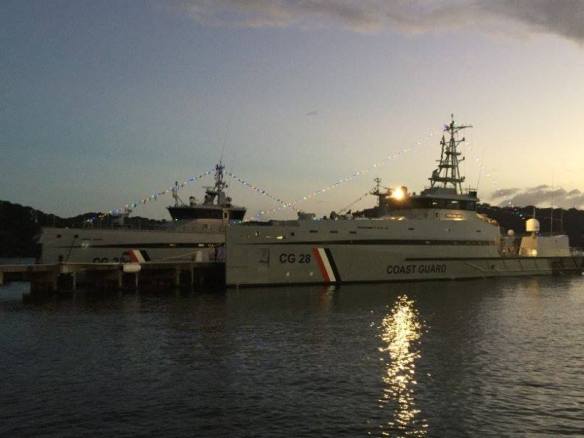
Photo from Damen Shipyards, Netherlands

Conclusion

One of the most intriguing points to note is that the TTCG followed a systematic and rational procurement process until 1980. After that, its recovery from decades of neglect has been slow, painful and littered with the false dawn of the ill-fated OPV contract. Nonetheless, the frantic efforts to rejuvenate the TTCG have finally produced results. It remains to be seen whether the new vessels will meet a better end.