Finland Builds an LNG Powered Icebreaker.

FinnishLNGicebreaker

For more photos see http://gcaptain.com/photos-worlds-first-lng-powered-icebreaker-polaris/

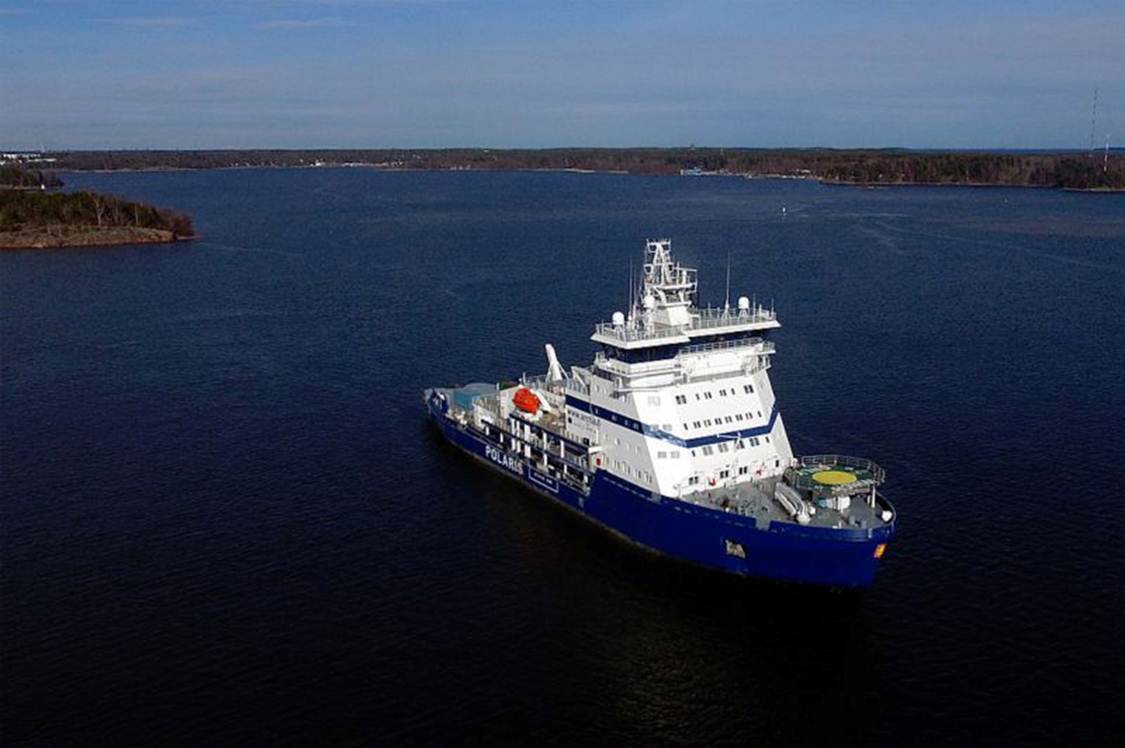
ARCTECH has completed the World’s first LNG powered (dual fuel capable, low sulfur diesel or LNG) icebreaker, NB501 Polaris, for the Finnish Transport Agency, and it is currently in sea trials.

The vessel will be able to move continuously through about 1.6 meter thick level ice, to break a 25 meter wide channel in 1.2 meter thick ice at speed of 6 knots, as well as to reach 9…11 knots of average assistance speed in the demanding icebreaking conditions in the Baltic Sea. In open water the service speed will be 16 knots.

Reportedly “It will also be able to perform oil spill response operations, emergency towing and rescue operations.”

Its dimensions are 110x24x8 meters or 361x79x26 feet. Its propulsion comes from three azimuthing propulsors totaling 19kW or about 25,500 HP. Specs here (pdf).

Crew requirements are tiny at 16.

With a 30 day endurance, it does not have the range the Coast Guard needs for Polar Operations, but with 180% more horsepower than the Mackinaw, it would make a great Great Lakes icebreaker. The US certainly has a lot of LNG. Would be good for the environment too. (Of course it would have to be built in the US, but using a foreign design is not a problem for the Coast Guard.)

Thanks to Lee for bringing this to my attention. 

China Lake Spike–the $5000 Missile

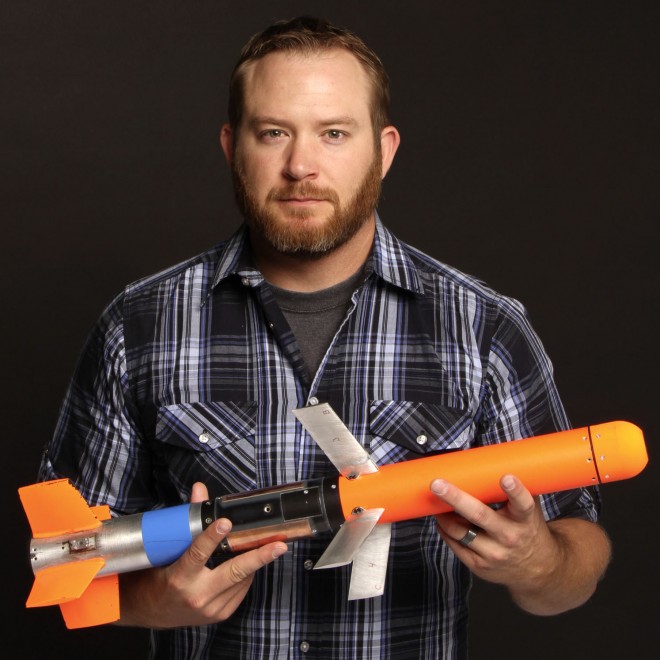
We have talked about the need for a small missile to deal with small, fast, highly maneuverable threats, with less chance of collateral damage than is inherent in using guns.  We have talked about Hellfire, Brimstone, Griffin, and guided 70mm rockets. Now it appears there is now an even smaller and much cheaper weapon that seems almost ideal for this end of the target spectrum. It has been in development for quite a while, but appears ready for production. Its range and precision appear to be much better than the machine guns we are currently using.

The Naval Air Warfare Center Weapons Division at China Lake has developed a very small missile called “Spike,” and the price is right–a marginal coast for each additional missile of only about $5000. This should not be confused with the Israeli missile family also called Spike. The following from the Wikipedia entry on the system:

Spike was designed by the U.S. Navy, with assistance from DRS Technologies, and is proclaimed to be “the world’s smallest guided missile.” Initially made to be carried by U.S. Marines, with three missiles and the launcher able to fit in a standard backpack, it weighs 5.4 lb (2.4 kg), is 25 in (640 mm) long, and 2.25 in (57 mm) in diameter. The warhead weighs about 1 lb (450 gr) and employs the Explosively Formed Projectile (EFP) effect, made to penetrate before detonating. It is powered by a small rocket motor that gives it a range exceeding 2 mi (3.2 km), making it safer and more accurate than rocket propelled grenades (RPGs). The missile is directed to its target by either an electro-optical (EO) or semi-active laser (SAL) seeker; the EO camera is similar to a basic cellphone camera, containing a 1-megapixel video camera that allows the shooter to select the area to engage in a fire-and-forget mode. The EO seeker cannot operate at night, so the SAL would have to be used. A third targeting mode is inertial, meaning the user can “snap and shoot” at a target without needing to lock on out to 200 meters. Both the Spike missile and reusable launcher each cost $5,000 and weigh 10 lb (4.5 kg) loaded, compared to 49 lb (22 kg) for a Javelin missile and fire control unit.

It has an unusual development history, being developed in house, quickly, at low cost, in response to a “rapid development capabilities” (RDC) program. Consequently the government now owns the design and can be assembled by contractors with no prior missile manufacturing experience and uses Commercial Off the Shelf (COTS) components.

It is included in the FY2017 Navy budget along with Griffin and Javalin as program element 3342: “Griffin Missile” intended to develop and deliver Counter-Swarm Small Boat defense capabilities for the Surface Fleet. (It is also interesting to see that this program still anticipates the use of the Griffin missile system (GMS) by the LCS even though the Long Bow Hellfire has already been selected to arm these ships.)

The missile is reportedly also effective against UAVs, helicopters, and some general aviation aircraft, so it should offer a degree of defense against attacks using these types of platforms.

Where should we have them? The six WPBs stationed in Bahrain and the two force protection units at King’s Bay and Bangor that escort SSBNs as they transit from homeport to deepwater come to mind as perhaps the highest priority, but we have at least 30 ports that need protection. Total distribution of the systems might be slightly more than 200 including ultimately one for each of the  37sectors, 58 Webber class WPCs, 73 Marine Protector class 87 foot WPBs, plus 34 larger ships.

If the reported costs are correct a unit might be outfitted with a shoulder launcher and three missiles for as little as $20,000. If so, 200 weapon sets would cost only $4M and they would presumably be paid for by the Navy over several years.

Of course, if we are going to use their semi-active laser homing capability at night, we will need to get past current restrictions on the use of lasers.

More info here (pdf).

SPIKEnavy-5-lb-missle-inline-660x660

U.S. Navy photo. Spike Missile Visual Demonstration by Lead Technician Jonathon Pooley

Document Alert: A Ten-Year Prioritization of Infrastructure Needs in the U.S. Arctic

There is a new report, “A Ten-Year Prioritization of Infrastructure Needs in the U.S. Arctic,” prepared by The U.S. Committee on the Marine Transportation System Arctic Marine Transportation Integrated Action Team for the U.S. Department of Transportation.

I have quoted a portion of the Executive Summary below”

EXECUTIVE SUMMARY

“This document, “A Ten-Year Prioritization of Infrastructure Needs in the U.S. Arctic” (Prioritization Framework), presents a framework to address Arctic infrastructure gaps by identifying needs that are considered to be critical requirements for a safe and secure U.S. Arctic Marine Transportation System (MTS) over the next decade.

“This report by the U.S. Committee on the Marine Transportation System (CMTS) fulfills directive 1.1.2 under the White House National Strategy for the Arctic Region (NSAR) 2014 Implementation Plan objective to “Prepare for Increased Activity in the Maritime Domain.” The deliverable for 1.1.2 is to “Deliver a 10-year prioritization framework to coordinate the phased development of Federal infrastructure through Department and Agency validated needs assessment by the end of 2016.” Transportation Secretary Anthony Foxx tasked this action to the CMTS in a May 2014 memorandum.

“Using the CMTS 2013 report U.S. Arctic Marine Transportation System: Overview and Priorities for Action (CMTS 2013 Arctic Report) definitions, this Prioritization Framework organizes the U.S. Arctic MTS into five core components:

  • Navigable Waterways
  • Physical Infrastructure
  • Information Infrastructure
  • Response Services
  • Vessels

“The recommendations set forth for consideration in this report are grouped into three categories under each of the five primary components: (1) infrastructure considerations that require both near-term planning and implementation; (2) infrastructure considerations requiring near term planning for mid- to long-term implementation; and (3) infrastructure considerations requiring long-term planning and implementation. This categorization facilitates the discussion of many coordinated infrastructure needs while acknowledging planning and funding requirements and limitations.

“Over the past five years, with the continuing trend in diminishing Arctic sea ice, discussions and projections for the Arctic as a new international trade route have increased. Some vessels, particularly smaller recreational vessels, currently operating in the Arctic are neither designed nor equipped for hazardous Arctic conditions. 2 As sea ice retreats, the lack of U.S. Arctic infrastructure to support increased maritime activity grows more apparent. Limited nautical charts, aids to navigation, communication, emergency response, and rescue capabilities make operations difficult and potentially dangerous. Other elements contributing to accident risks in the Arctic include inadequate maritime infrastructure and environmental and economic uncertainties, all major challenges identified in the CMTS 2013 Arctic Report.

“To address some of these risks, a number of studies have examined the gaps and potential infrastructure needs of the U.S. Arctic MTS. These needs include not only physical infrastructure such as ports, support vessels, and communication networks, but also the informational infrastructure enabling mariners to operate safely, such as nautical charts and electronic aids to navigation. The NSAR Implementation Plan (IP) identifies separate actions related to Arctic communications and aviation infrastructure [Objectives 1.2 Sustain and Support Evolving Aviation Requirements; and 1.3 Develop Communication Infrastructure in the Arctic]. This report synthesizes existing information on Arctic MTS infrastructure and gaps in order to distill requirements for future infrastructure needs over the next decade.

“There are 43 recommendations put forward in this report for necessary elements of a comprehensive Arctic MTS. This framework necessarily involves elements of the traditional definition of infrastructure, but also includes communication, planning, management, environmental policies, regulatory implementation, and the human element, all of which are required for safe, secure, and successful maritime transportation.

“Of the total list of recommendations, 25 are near-term recommendations to address the current gaps in U.S. Arctic infrastructure.

Presumably there will be interest in what they say about icebreakers. There are mentions elsewhere in the document, but this is a quote of the specific icebreaker section.

“The current Federal fleet of Polar icebreakers consists of one medium icebreaker (USCGC Healy) and one heavy icebreaker (USCGC Polar Star). The Polar Star is the only active heavy icebreaker and is primarily used in the Antarctic. The Healy is used primarily to support science missions in the Arctic, but may also be used to support other Coast Guard statutory missions such as search and rescue or provide persistent command and control capability, as required.

“It is important to note that capabilities of Coast Guard icebreakers often far exceed minimum international standards for icebreaking vessels, such as International Association for Classing Societies. These standards identify minimum power and structural survivability requirements of a single purpose vessel operating in ice infested waters. Unlike commercial vessels that are built to perform single missions with minimal crews, Coast Guard assets are multi-purpose vessels that incorporate aviation support, command and control, and additional power and endurance requirements necessary to perform all missions. The Coast Guard has assessed all available commercial icebreakers and has determined no currently operating vessel meets these critical mission and performance requirements for either a heavy or medium icebreaker. As a result, acquisition of new assets is the only viable option for obtaining additional icebreaking capacity.

“The Coast Guard currently has an acquisition program that will replace the capabilities of the Polar Star when complete. Due to lengthy design and production and anticipated decommissioning of the Polar Star, the Coast Guard will not provide additional capacity within the 10-year horizon. While Coast Guard icebreaking support has been used to facilitate commerce in emergency situations, such as the 2014 fuel resupply in Nome, the Coast Guard does not intend to use these vessels to facilitate routine commercial maritime traffic or to support commercial drilling operations.”

So does not look like we will even be considering vessels like the AIVIQ or the icebreakers that had been being built for Shell Oil construction of which has been suspended.

In addition to icebreakers, it looks like this will have implications for SAR, AtoN, Communications, and Marine Environmental Protection.


Russians Building Missile Armed Arctic Patrol Vessel

Project23550IceClassPatrolVessel

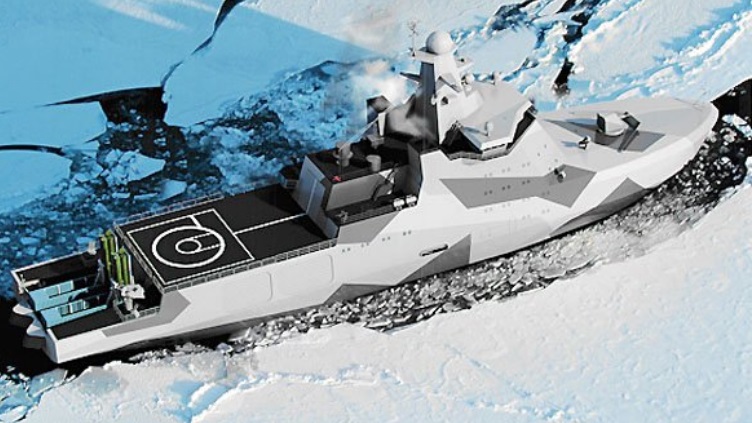
Concept image issued by the Russian Ministry of Defence of the Project 23550 ice-class patrol ships for the Russian Navy. Source: Russian MoD

Janes360 is reporting that the Russian Ministry of Defense has awarded contracts for two new ice class patrol vessels that are reportedly capable of operating in ice up to 1.5 meters thick (approx. 5 feet).

The class is described (in Russian) by the MoD as being “without analogues in the world”, and combining “the qualities of tug, ice-breaker, and patrol boat”.

To me it looks an awful lot like the Norwegian Coast Guard vessel Svalbard or Canada’s Arctic Offshore Patrol Ship that is based on the Svalbard’s design.

Jane’s notes, “A concept image released by the MoD showed the vessel armed with a medium-calibre main gun on the foredeck (likely an A-190 100 mm naval gun), a helicopter deck and hangar, and two aft payload bays each fitted with a containerised missile launch system (akin to the Club-K system offered for export) armed with four erectable launch tubes – presumably for either Club anti-ship or Kalibr-NK land-attack missiles. Although billed as patrol boats, this level of armament makes them better armed than many corvettes.”

If these are in fact containerized missile systems, then they may simply be optional equipment, added to the conceptual image to give the ship a bit more swagger, and we may never actually see this. If you are breaking ice for a vessel following close behind, you may not want missiles with their warheads and high energy fuel located near the stern where a collision with a vessel following too close might rupture a missile and start a fire.

It does suggest that a few spaces for containers could turn almost any ship into a potential missile platform.

Contract Awarded for Remaining Webber Class

USCG_Sentinel_class_cutter_features

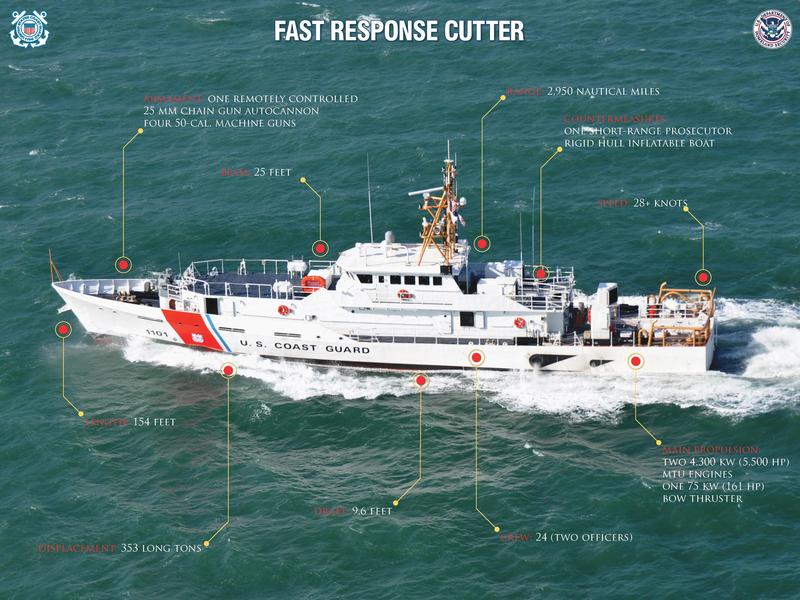
The Acquisitions Directorate has announced the award of a contract for the 26 remaining planned Webber Class Fast Response Cutters to Bollinger Shipyards LLC. Rather than the Multi-Year Procurement (MYP) I had hoped for, but really did not expect, this is a $318.6M contract for six with options for the remaining twenty in groups of four to six. It is really not to late to think about a MYP in FY2017 or 2018 since right now, neither the shipyard nor the Coast Guard have any definitive assurance that the remaining ships, beyond the first six in the contract, will be completed. Each additional year’s increment is dependent on future appropriations.

Currently the program has delivered 17 vessels. 15 more are under construction or have been funded. The 26 expected to be procured under this contract will complete the 58 in the program of record.

These vessels are 154×26.6×9.5 ft. 28 knots, with a crew of 22 (normally actually 24). They are armed with Mk38 mod2 or mod3 stabilized 25mm gun and four crew served .50 cal.

Coast Guard Denied Use of Laser Technology

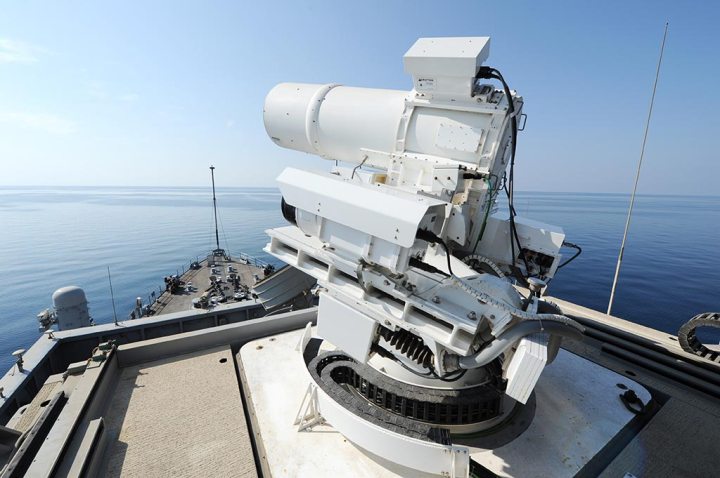
The Afloat Forward Staging Base (Interim) USS Ponce (ASB(I) 15) conducts an operational demonstration of the Office of Naval Research (ONR)-sponsored Laser Weapon System (LaWS) while deployed to the Arabian Gulf. U.S. Navy photo by John F. Williams

The Afloat Forward Staging Base (Interim) USS Ponce (ASB(I) 15) conducts an operational demonstration of the Office of Naval Research (ONR)-sponsored Laser Weapon System (LaWS) while deployed to the Arabian Gulf. U.S. Navy photo by John F. Williams

This Navy Times story is one of several I have seen that report Rep. Duncan Hunter’s (R-CA) displeasure that the Coast Guard is unable to use some of its laser equipment because of FDA regulation.

“The equipment in question is the Electro-Optical Sensor System and the PEQ-15, a laser sight with an illuminator. ESS is a turret installed on Coast Guard helicopters, with a laser illuminator that can enhance camera images, while PEQ-15 is a rifle sight with a laser illuminator. The Coast Guard is not allowed to use ESS at all, while PEQ-15 can be used on a low setting.”

Representative Hunter has done us a favor in bringing attention to the issue, but ultimately I think he will find that the FDA oversight requirement is based in law and Congress will have to change it.

There is, after all, a reason for regulating the use of lasers. We don’t like it when they are directed at our aircraft or at ships. We don’t want to blind people we are attempting to rescue. (Incidentally where is the FDA regulation of lasers in  the hands of civilians?)

“Hunter wants to cut that red tape and allow the Coast Guard to certify its own laser systems, like the other military branches…”

That is all very well, but the Coast Guard probably does not have many laser experts who can do that, and we should not trust the word of our contractors. If Representative Hunter wants to introduce a bill to cut some of the read tape, by all means allow the Coast Guard to self certify if they develop the independent expertise to do that, but it would be more immediately useful if there was simply provision for DOD certification of Coast Guard equipment. This should include automatic application of DOD certification to any DOD type Coast Guard equipment used for the purpose for which it was certified.


ALaMO–Making the 57mm Round Smart

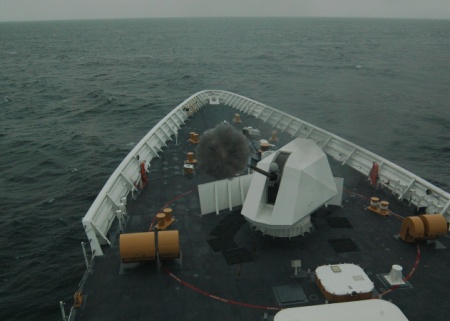
NSCfires57mm

The Navy has a program call “Navy’s Advanced Low Cost Munition Ordnance” or “ALaMO”

Justification as provided to Congress is here. The proposed budget includes $5.759M in FY2017, $25.984M in FY2018, and $24.982M in FY2019. The round is expected to be operational in 2020 (about the time the first OPC comes out).

“Advanced Low Cost Munition Ordnance (ALaMO) significantly increases 57mm MK 110 Gun Mount lethality and effectiveness against Fast Attack Craft and Fast In-Shore Attack Craft (FAC/FIAC). The 57mm ALaMO funding supports non-recurring engineering, design verification testing, environmental qualification, hazard classification, insensitive munitions and developmental testing. ALaMO will be qualified for USN use at the conclusion of the program.”

A US Naval Institute News story, “Wrapup: HASC Passes FY2017 Defense Bill With Reagan-Era Spending Levels,” indicates House Armed Services Committee interest in speeding up the program.

“A provision in the bill notes interest in the Navy’s Advanced Low Cost Munition Ordnance (ALaMO), a 57mm guided projectile that could be used on the LCS, and requests information on what it would take to achieve initial operational capability by 2019.”

Sounds like the Coast Guard should have a few of these rounds as well, both for small, fast, highly maneuverable targets, and to target specific areas on larger targets. We had some indication this was coming before.

Fatal Sinking, Five Dead–Response Delayed?

cp-bc-boat-sinking

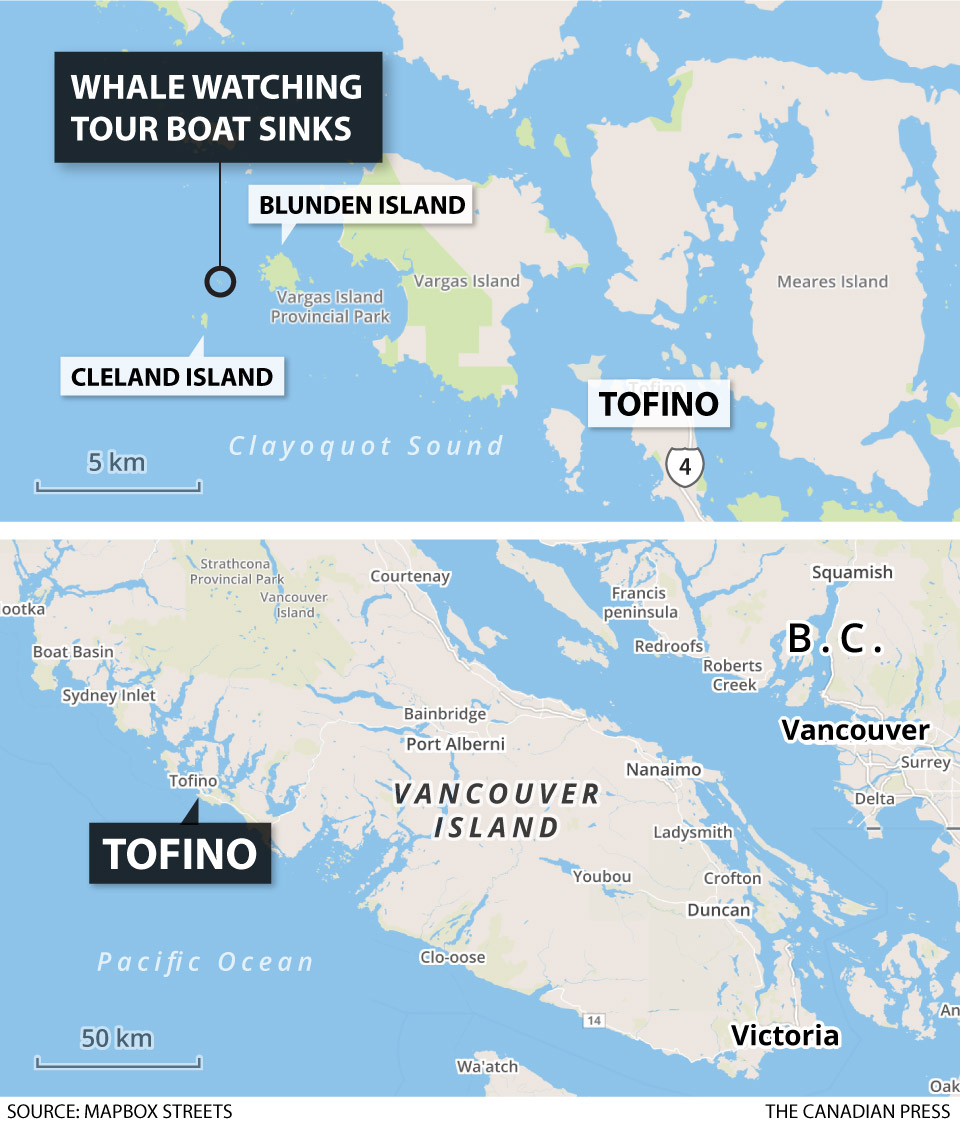
CBC British Columbia is reporting the sinking of a whale watching tour boat that resulted in at least five deaths. Weather does not appear to have been the problem. There are reports that the Canadian Coast Guard response may have been delayed as a result of a fault in a recently remoted radio receiver.

Thanks to our Canadian friend Ken for bringing this to my attention. 

Document Alert: Cutter Procurement–Another Report to Congress

Once again, the Congressional Research Service’s Ronald O’Rourke has revised his “Coast Guard Cutter Procurement: Background and Issues for Congress” with the new edition issued April 15. This has got to be a hot topic because previous revisions were issued March 22, January 27, and December 14, 2015. That is four revisions in four months, on average every six weeks, but the latest is only 24 days after the previous edition. I have begun to sense, we may have turned a corner. The tone of the reports has changed over these four months, from, how long will it take us to reach the “Program of Record” (POR), to consideration of, if we should perhaps go beyond the POR.

The NSC, OPC, and FRC programs pose several issues for Congress, including the following:

“whether to fund the acquisition of a 10th NSC in FY2017;

“whether to fund the acquisition of four FRCs in FY2017, as requested, or some other number, such as six, which was the number projected for FY2017 under the Coast Guard’s FY2016 budget submission;

“whether to use annual or multiyear contracting for procuring FRCs;

“whether to use annual or multiyear contracting for procuring OPCs;

“planned procurement quantities for NSCs, OPCS, and FRCs;

“the cost, design, and acquisition strategy for the OPC;

“initial testing of the NSC; and

“rotational crewing of the NSC.”

The latest revision includes three substantial Appendices:

  • Appendix A. Planned NSC, OPC, and FRC Procurement Quantities (pp 17-22)
  • Appendix B. Funding Levels in AC&I Account (pp 23-26)
  • Appendix C. Additional Information on Status and Execution of NSC, OPC, and FRC Programs from March 2016 GAO Report (pp 27-34)

Appendix C is entirely new and appears to have been the reason for the revision.

Appendix A (p. 17-22) is a fairly detailed discussion of the results of the Fleet Mix Study and asks why we so seldom hear that the program of record is not enough to assure the Coast Guard to successfully accomplish its assigned missions.

The Fleet Mix Study was made public in 2012 long after its completion in 2009. It is due for a reexamination and the Commandant has said another will be done. When that happens, we seriously need to look at more than just more of the same assets. We need to look at additional technology, equipment, and weapons that might allow us to accomplish these missions without a major increase in personnel.

Looking at “Table A-3. Force Mixes and Mission Performance Gaps” (document page 18) I would note that if we get to Fleet Mix Analysis Phase 1 (FMA-1, an increase over the POR including 9 Bertholf class NSCs, 32 OPCs and 63 Webber Class FRCs, for a total of 104 vessels), we will have addressed all the “Very High Risk Gaps” found in the Fleet Mix Study that included SAR capability, “Defense Readiness Capacity,” and “Counter Drug capacity.” What will remain are “High” or lower risks in Ports, Waterways, and Coastal Security (PWCS) and Living Marine Resources (LMR), and a low to very low risk to the Alien Migrant Interdiction Operations (AMIO) mission. This total of more than 40 NSCs and OPCs certainly should not be out of the question, after all the Coast Guard has included over 40 ships larger than a thousand tons for the last several decades.

Still, I would note that, no matter how many ships we have, the Ports, Waterways, and Coastal Security (PWCS) mission will always be at risk, unless weapons are available to quickly and reliably stop terrorists’ exploitation of a larger merchant vessel to make an attack. Guns alone are simply not up to the task. I have identified two weapons that might address this threat, (1) equipping our WPCs and possibly WPBs with light weight torpedoes that target a ships propellers or (2) equipping our larger ships with the Long Range Anti-Ship Missile (LRASM) which might allow our larger cutter to effectively support our smaller cutters and respond to an attack, even if the large cutter 200 miles from the targeted port. Either would also make our ships much more capable of making a meaningful contribution to Defense Readiness.

Malaysia’s New Patrol Boat–UAS Ready

MalaysiaNewGenerationPatrolCraft

IHS Jane’s 360 is reporting on Malaysian Coast Guard’s six projected “New Generation Patrol Craft (NGPC).”

“The NGPC has been based on a design by Germany-based Fassmer Shipbuilding Company. According to specifications provided by Destini, the platform features an overall length of 44.25 m an overall beam of 7.7 m and a design draught of 1.95 m. Powered by two 1920 kW MTU engines, the vessel can attain a top speed of 24 kt and a standard range of 2,000 n miles at 12 kt. The ship displaces 297 tonnes and can accommodate a crew of 41.”

This means they will be similar to, but slightly smaller than the Webber Class WPCs.

The unique thing about this class is that they are built to use a mini-Unmanned Aerial System, in this case the Thales Fulmar. NavalToday reports the purchase of these systems. Fulmar looks similar in size and capability to the Scan Eagle.

This certainly suggest that we could probably operate Scan Eagle, or something similar from the Webber class.

Photo: The Thales Fulmar